Skip to content
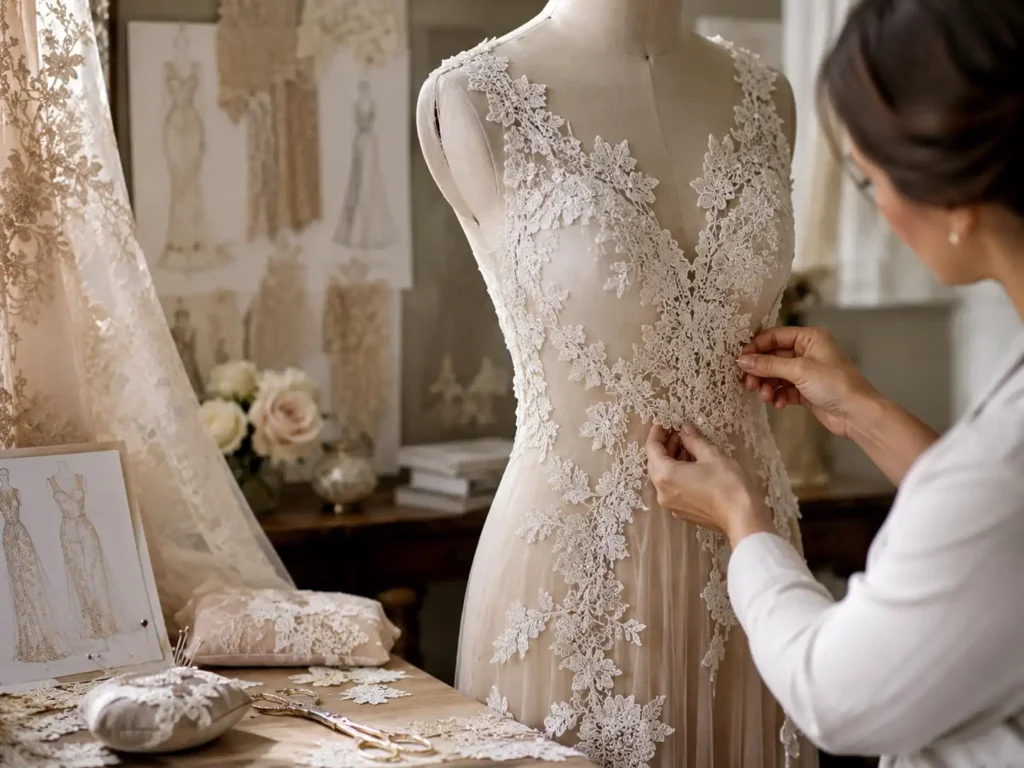
Lace Skirt Manufacturer for Womenswear Collections
Custom lace skirt development for fashion brands building coordinated seasonal, occasionwear, ecommerce and private-label womenswear collections.
Since 2008, Jinfeng Apparel has developed premium custom womenswear through fabric sourcing, pattern development, sampling, bulk production, quality control and branded packing.
6 owned women’s fashion factories, more than 10 long-term production partners, 2 sample rooms, 7+ senior pattern makers, 20+ sample machinists and 15+ QC inspectors support multi-style programs.
Lace project control covers motif direction, scalloped borders, transparency, lining length, waist and hip fit, closure stability, size grading and shade consistency.
MOQ starts from 200 pcs per style and color. Complex lace, custom dyeing, embroidery, beading, trims and packaging are reviewed by project before quotation.
Built for Multi-Style Lace Skirt Programs
Since 2008
6 Owned Factories
10+ Production Partners
2 Sample Rooms
7+ Pattern Makers
15+ QC Inspectors
Manufacturing Support for Established Womenswear Programs
Fashion Brand Teams
Multi-Style Programs
Private-Label Delivery
Lace Skirt Styles Developed for Modern Collections
A commercially useful lace skirt range needs distinct silhouettes, price points and wearing occasions. Each style below is developed around fabric behavior, lining, fit, closure and repeatable production rather than visual appearance alone.

Lace Mini Skirts

Lace Midi Skirts

Lace Maxi Skirts

Lace Pencil Skirts

Lace A-Line Skirts

Lace Fishtail Skirts

Tiered Lace Skirts

Pleated Lace Skirts

Wrap Lace Skirts

Asymmetric Lace Skirts

Sheer Overlay Skirts

Scalloped Hem Skirts
Building Lace Skirts into Cohesive Womenswear Collections

Romantic Feminine

Party and Occasion

Resort and Vacation

Evening Separates

Premium Ecommerce

Matching Lace Sets
Lace Materials Selected for Different Skirt Structures

Stretch Lace

Rigid Allover Lace

Embroidered Tulle

Guipure Lace

Corded Lace

Eyelash Lace

Border Lace

Beaded Lace
Matching Lace, Lining and Skirt Construction
Lining is selected as a structural and comfort component, not an afterthought. Stretch compatibility, opacity, color, static behavior, seam bulk and length are reviewed together with the outer lace and intended silhouette.
| Lace Structure | Suitable Skirts | Lining Direction | Main Risk | Pre-Bulk Check |
|---|---|---|---|---|
| Stretch lace | Fitted mini, pencil, body-skimming midi | Stretch knit lining with compatible direction and recovery | Outer and lining stretch at different rates | Recovery test, seam tension, waist and hip fit |
| Rigid allover lace | A-line, straight, panelled, structured midi | Light woven or stable knit lining selected by opacity | Restricted movement or visible seam shaping | Ease, slit height, lining attachment, grade rules |
| Embroidered tulle | Overlay mini, romantic midi, occasion maxi | Soft light lining or controlled partial lining | Embroidery direction and uneven density | Motif position, holes, thread security, transparency |
| Guipure lace | Statement mini, panelled midi, premium occasion skirt | Soft lining protecting skin contact and supporting weight | Seam bulk, weight and edge finishing | Waist support, joining method, hem and slit finish |
| Border lace | Scalloped mini, midi or maxi | Full or partial lining based on design coverage | Border position changes fabric use and finished length | Marker, border continuity, side seam and slit alignment |
| Beaded lace | Party mini, evening midi, statement maxi | Protective lining with stable attachment | Decoration loss, scratch risk and heavy seams | Bead security, seam treatment, pressing and packing |
Pattern and Fit Control for Lace Skirts
A strong flat sketch can still fail on the body when waist shape, hip ease, lining behavior or slit position is not resolved. Pattern work converts design intent into measurements and construction that can be graded and inspected.
Waistband Stability and Closure Control
Waist shape is reviewed against skirt rise, intended styling and the stiffness of the lace. A contoured waistband may sit cleaner on the body than a straight band, while stretch styles may use elastic support or a stabilizing tape to prevent growth.
Interlining is selected according to fabric weight and hand feel. Too much stiffness can create a visible ridge under delicate lace; too little support can cause rolling, stretching or zipper distortion.
Invisible zippers, hooks, buttons or wrap fastenings are positioned where they will not interrupt a key motif. Seam allowance, zipper tape color and lining attachment are defined before the PP sample.
Bulk checks compare closed waist measurement, top edge shape, zipper flatness, hook security and the absence of wave, twist or sharp internal edges.
Hip Fit, Ease and Size Grading
Stretch lace and rigid lace require different fit logic. Stretch styles are assessed through extension and recovery, while rigid styles need measured ease, shaping seams, darts or a controlled slit for movement.
Common ranges such as XS-XL can be graded from an approved base size, but waist, high hip, full hip, hem opening, slit and length cannot be increased by one simple percentage. Grade rules preserve the silhouette and wearing function at each size.
The lining is measured and tested with the outer shell. A smaller or less elastic lining can restrict movement even when the lace appears flexible. A lining with too much growth may twist, drop or become visible below the outer layer.
Measurement records, approved fit comments, pattern version and garment checks are maintained so a later reorder begins from controlled information rather than memory.
Length, Slit and Hem Balance
Finished length is measured from an agreed point because waistband shape, high-low hems and scalloped borders can create inconsistent references. Mini, midi and maxi styles each need separate length tolerance and wearing review.
Slit height is developed around movement and coverage, not visual impact alone. Reinforcement, lining relationship and seam allowance are reviewed during fitting so the slit opens cleanly without tearing or exposing an unfinished interior.
Soft lace, bias areas and long skirts may relax after cutting or hanging. Hem balance is checked before and after finishing where the construction requires it. Border lace uses the natural edge, so pattern length and marker placement must be locked earlier.
Bulk inspection compares left and right hem levels, side seam hang, slit position, lining length and scallop continuity against the approved sample and measurement chart.
Design Details That Shape a Lace Skirt

Structured Waistbands

Invisible Zippers

Partial Linings

Sheer Hem Panels

Side and Back Slits

Ruffles and Tiers

Scalloped Edges

Applique and Trims
Motif Placement, Cutting and Seam Engineering
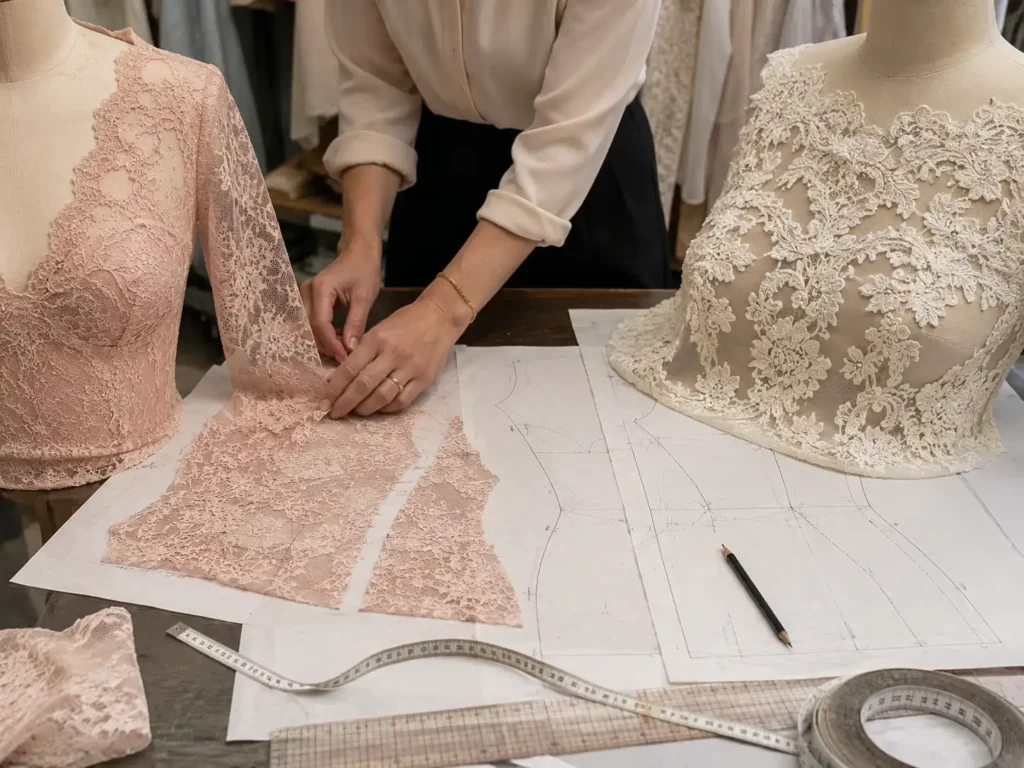
Lace exposes cutting and joining decisions more clearly than a plain woven fabric. Direction, border position, repeat size, seam placement and closure areas are planned together before material consumption and bulk standards are finalized.
Motif Direction and Visual Placement
One-way floral or geometric motifs are identified before marker planning. Center-front, center-back and side panels are reviewed so the pattern does not appear upside down, off-center or noticeably different between left and right sides.
Large motifs may need deliberate positioning around the waist, hip, slit or hem. Placement is reviewed against the base size, then checked through the graded pattern because a motif cannot occupy the identical body position across every size without affecting marker efficiency.
For matched sets, skirt and top components are reviewed as one outfit. Motif direction, color batch and border use must look coordinated even when pieces are packed and sold separately.
Approved photos, marked sample references or placement diagrams become part of the production instruction where exact location matters.
Scalloped Border and Marker Planning
Border lace reverses the usual cutting logic because the finished edge controls pattern position. Skirt length, flare, slit and side seam shape are adjusted around the available border width and repeat.
Mini, midi and maxi options may not share one marker approach. A wide sweep or curved hem can consume more border lace than a straight skirt. Fabric use is calculated after the pattern and border placement are reviewed, not from a generic consumption estimate.
Side seams can interrupt scallops. Depending on the design, joins may be aligned, shaped around motifs or moved to panel lines. Any hand trimming or local motif joining is included in the workmanship and cost review.
Incoming bulk fabric is checked against the approved width, border depth, repeat and color before cutting begins.
Seams, Closures and Reinforcement
Seam type is selected according to lace ground, thickness and transparency. Fine net lace needs controlled needle and thread choices, while guipure or corded lace may require reduced bulk, local trimming or hand finishing near joins.
Zipper seams are stabilized without creating a visible hard strip. Lace is protected from the zipper teeth, and the lining is attached so it does not catch during opening. Hook-and-eye placement and top edge alignment are checked on every finished garment.
High-stress areas include the top of a slit, waist closure, wrap fastening and tight hip seams. Reinforcement is placed where required while remaining visually discreet.
Workmanship standards include clean internal finishing, secured thread ends, smooth joins, no unintended holes, no puckering and no rough decoration against the skin.
Workmanship Standards for Finished Lace Skirts
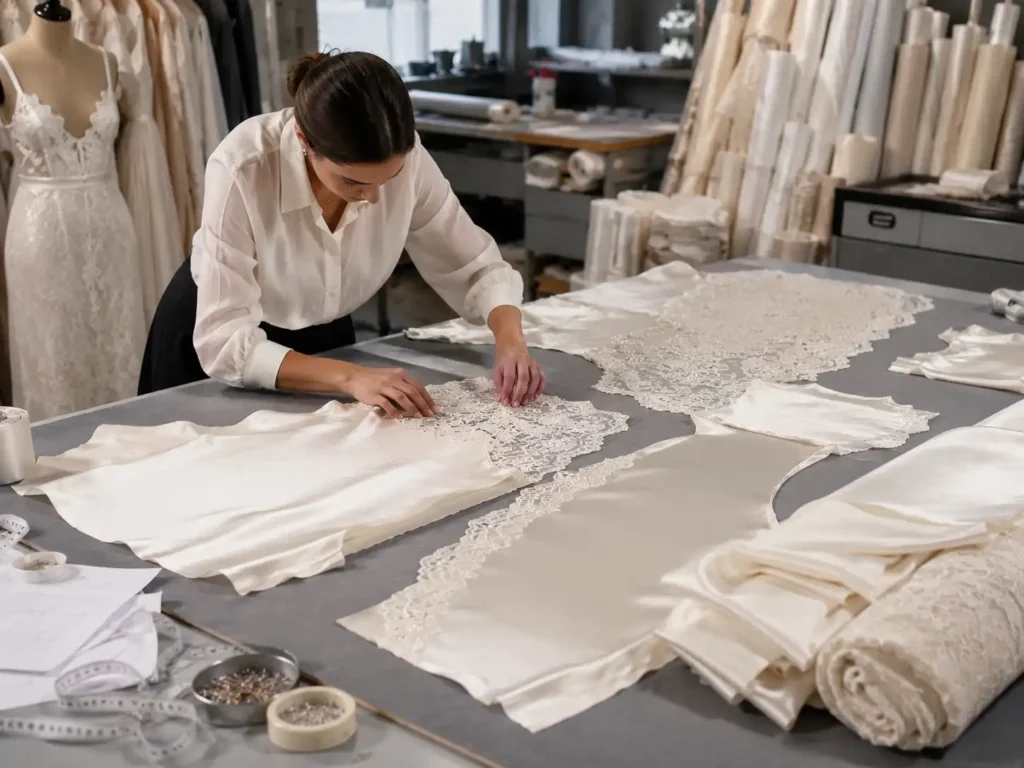
Premium workmanship is visible in the quiet areas of a garment: the top edge, zipper, lining, seams, slit, hem and interior comfort. Standards are defined during sampling and transferred into sewing instructions and inspection points.
Clean Waist and Closure Finish
The waistband or facing lies flat without twisting, rolling or visible interlining. Top edges remain smooth, and the waist measurement follows the approved chart.
Zipper tapes, hooks and internal seams are covered or finished according to the construction. The zipper closes without catching lace or lining, and the top edge aligns on both sides.
Waist joins avoid unnecessary bulk. Decorative motifs are preserved where the approved design requires a clean front or balanced side appearance.
Controlled Lace and Lining Assembly
Outer lace and lining are joined without forcing one layer to follow the other. Stretch direction, ease and hanging behavior are considered before attachment points are fixed.
Lining seams remain inside the intended coverage area and do not show through open motifs more than approved. Hem length is consistent, and the lining does not drop below the lace after pressing or hanging.
Loose embroidery, raw scratchy edges and rough embellishment backs are managed so the skirt remains comfortable during normal wear.
Balanced Hem, Slit and Final Pressing
Hems and scallops read as one controlled line. On asymmetric or curved designs, the intended difference is measured and documented rather than judged by eye alone.
Slits open cleanly, remain reinforced at the top and align with the lining. No seam allowance, raw edge or attachment thread should become visible during movement.
Pressing uses suitable pressure and temperature for the lace structure and decoration. Final review looks for shine marks, flattened cord, distorted motifs, creases, snags and packing folds.

Lace Skirt Sampling and Approval Timeline
Complex lace styles are developed through defined sample stages. Timing begins after usable design information is received and depends on fabric availability, trim development, pattern difficulty and the speed of review comments.
| Stage | Reference Timing | Main Review | Approval Output |
|---|---|---|---|
| First sample – complex lace style | 15-25 days | Lace suitability, silhouette, waist and hip fit, lining, closure, motif direction | Development comments and required revisions |
| Custom lace or special trim sample | 20-35 days or supplier schedule | Custom color, embroidery, beadwork, border or special trim feasibility | Approved material direction and updated timeline |
| Revised sample | Usually 7-15 days | Closed fit comments, pattern changes, construction and design details | Revised sample approval or final comments |
| PP sample | Usually 7-15 days after final materials arrive | Final fabric, color, trims, measurements, workmanship, labels and packing reference | Bulk production approval |
| Photo or salesman samples | Confirmed by quantity and standard | Camera appearance, selling use, size and color needs | Separate photo or sales sample approval |
| Bulk production schedule | Issued after PP, materials and order details are locked | Style count, color count, size ratio, quantity, factory allocation, QC and packing | Project production calendar and shipment plan |
Turning Approved Samples into Repeatable Bulk Production
Pattern and Measurement Lock
Material and Color Lock
Construction and Placement Lock
Packing and Shipment Lock
From Collection Brief to Retail-Ready Lace Skirts
A documented path keeps design, material and production decisions in sequence. Every stage has a clear input and output, reducing avoidable changes after fabric booking or cutting.
Brief Review
Line sheet, tech pack, reference garment, target quantity, size range, color plan, price direction, packaging and launch date are reviewed for missing information and project priorities.
Lace Direction
Available or custom lace routes are compared for look, hand feel, weight, stretch, transparency, color, MOQ, cost, lead time and suitability for the intended silhouette.
Pattern Risk Review
Waist, hip, length, slit, lining, closure, motif direction and border use are assessed before the first pattern is finalized.
First Sample
The first sample tests design interpretation, material behavior, fit, construction, transparency and workmanship. Findings are recorded rather than discussed only through informal messages.
Fit Revision
Comments are converted into pattern, measurement, material or workmanship actions. A revised sample closes the agreed points before production approval.
PP Approval
Final materials, color, construction, measurements, labels and packaging references are approved. The PP sample becomes the controlled bulk reference.
Material Booking
Bulk lace, lining, zippers, thread, labels and packaging are booked against approved specifications and supplier requirements. Incoming checks begin when materials arrive.
Bulk Production
Cutting, sewing, in-line review, measurement checks, finishing and repair follow style-specific instructions. Multi-style orders are tracked separately by style, color, size and version.
QC and Packing
Finished garments are checked for appearance, measurements, lace defects, workmanship, labels, SKU, packing and carton accuracy before final inspection and shipment release.
Quality Control Built Around Lace-Specific Risks
Incoming Lace
Shade Control
Cutting Control
Sewing Control
Measurement Control
Finishing Control
Final Inspection
Packing Control
Private-Label Delivery for Branded Lace Collections
Brand and Size Labels
Care Labels
Hangtags
Barcodes and SKUs
Individual Packing
Carton and Ratios
Anonymized Lace Collection Production Programs

US Occasionwear Capsule

European Ecommerce Collection

US Private-Label Program
Commercial Factors Behind Lace Skirt Production
MOQ Structure
Lace Availability
Cost Drivers
Sample Requirements
Production Timing
Repeat Orders
Brand Protection and Long-Term Collection Support
Testing and Audit Support
NDA and Design Protection
Repeat-Order Records
Lace Skirt Manufacturing Frequently Asked Questions

Start Your Lace Skirt Collection with Jinfeng
Send the information already available for your collection, even when several items are still under development. Kelly and the product team will review style structure, lace direction, lining, pattern risk, MOQ fit, sample route, private-label requirements and production timing before the project moves forward. A complete brief produces a more useful response than a reference image alone, especially for border lace, custom colors, partial linings, embellishment or multi-style launches. Tech packs, samples, patterns and unreleased designs can be reviewed under NDA. Project timing is planned from the intended launch or warehouse date backward through sample approval, PP approval, material arrival, bulk production, QC, packing and shipment.
- Tech pack, line sheet, detailed sketch or reference garment
- Target quantity by style and color
- Preferred lace, composition, motif or border direction
- Lining coverage, transparency and wearing requirements
- Size range and planned size ratio
- Color list and approval reference
- Brand labels, care labels, hangtags, barcode and packing files
- Target launch, warehouse or shipment date