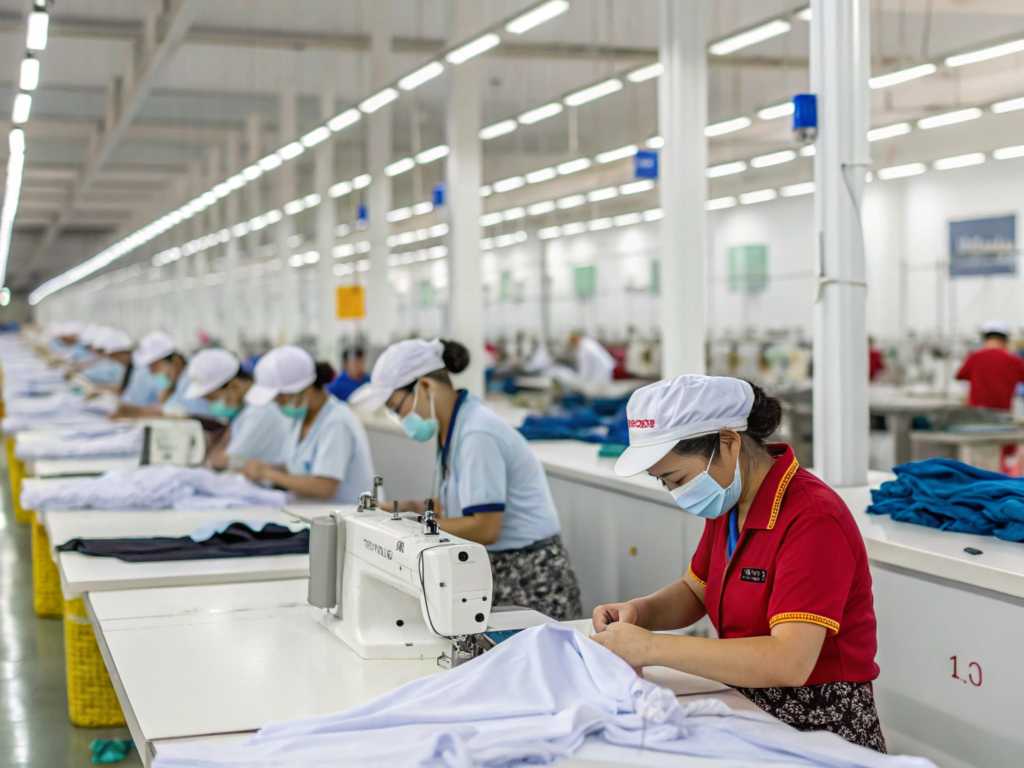
Lace Panel Dress Manufacturer
Custom lace panel dress development for established fashion labels requiring controlled placement, refined fit, repeatable bulk quality, and private-label delivery.
- 7+ senior pattern makers review panel shape, motif position, bust-waist-hip balance, neckline depth, and size grading before production patterns are released.
- 20+ sample machinists support lace, lining, satin, crepe, mesh, jersey, corset, and occasionwear structures through first sample, revision, PP sample, and Golden sample stages.
- MOQ starts from 200 pieces per style/color for suitable stock fabrics; special lace, custom colors, exclusive motifs, or complex trims may require separate material minimums.
- 15+ QC inspectors check lace damage, panel placement, seam flatness, measurement, lining coverage, zipper performance, pressing, private-label packing, and pre-shipment quality.
Brand-Level Lace Dress Development Under One Manufacturing System
OEM Development
ODM Support
Lace Sourcing
Pattern Making
Bulk Production
Private Label
Manufacturing Support for Established Fashion and Retail Programs
Occasionwear Labels
Premium Ecommerce
Retail Programs
Product Teams
Six Production Risks Behind an Attractive Lace Panel Design
Motif Misalignment
Panel Distortion
Mixed Stretch
Lining Exposure
Seam Bulk
Bulk Drift
Lace Panel Dress Categories Developed for Commercial Collections
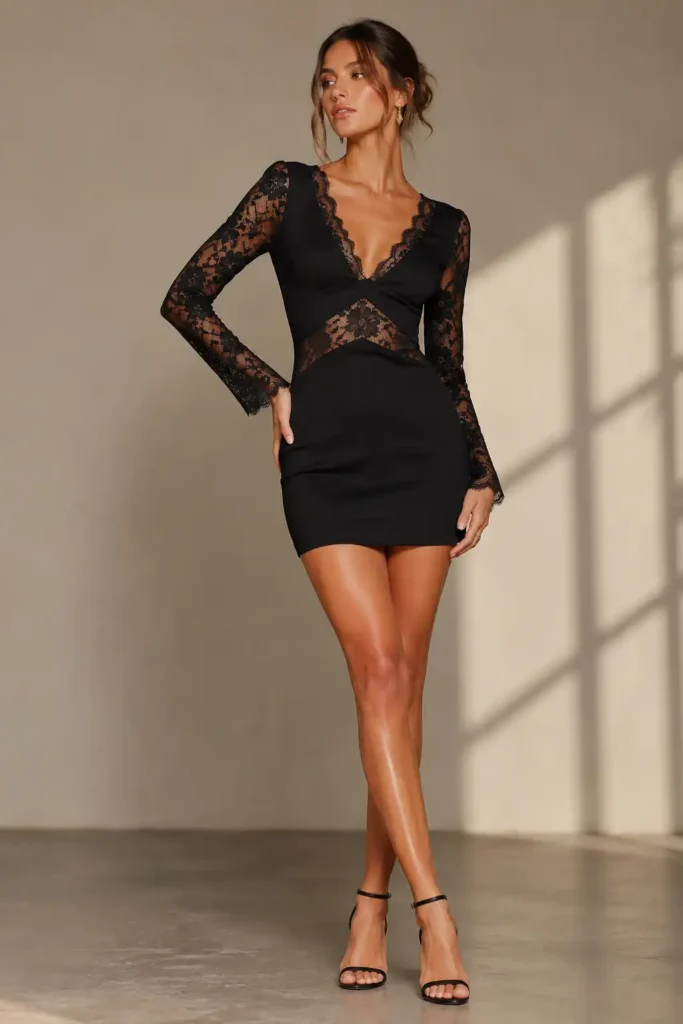
Lace Panel Mini
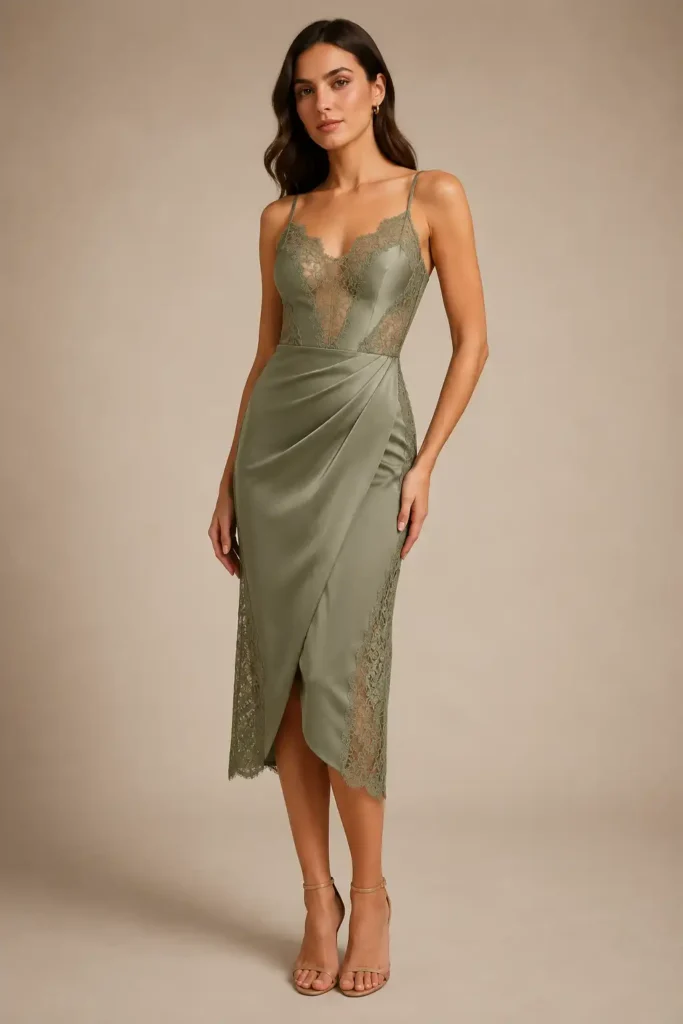
Lace Panel Midi
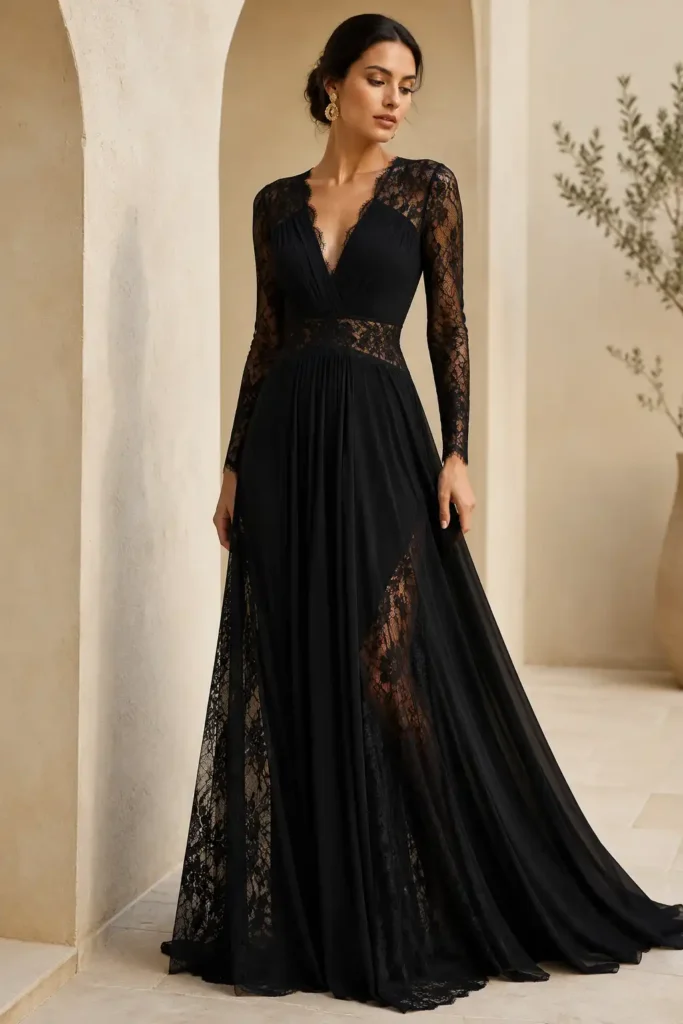
Lace Panel Maxi
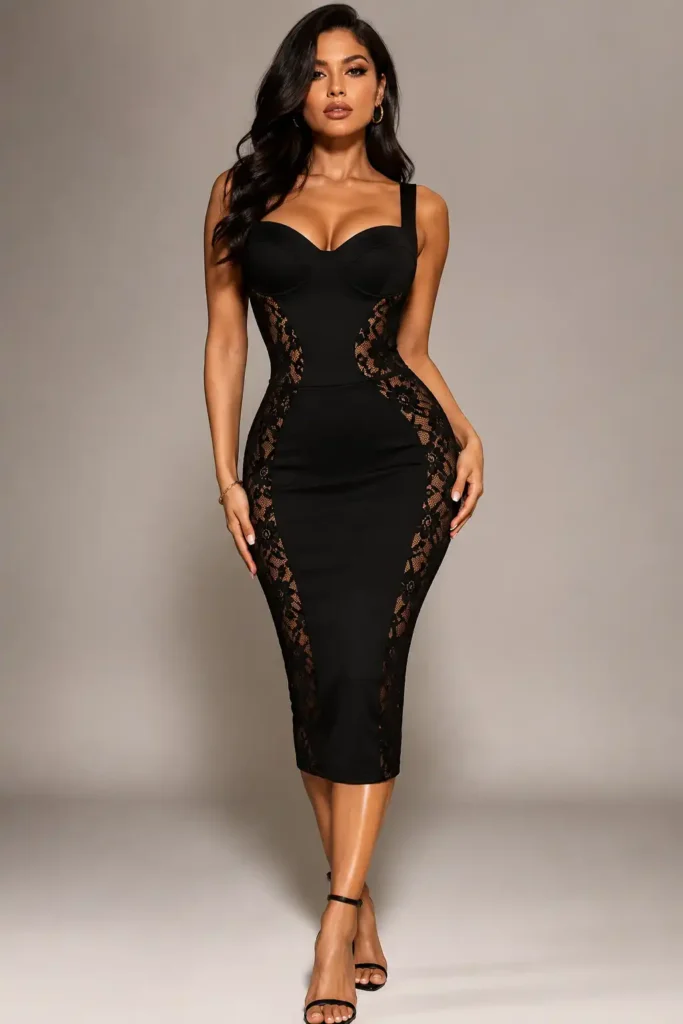
Bodycon Lace Panel
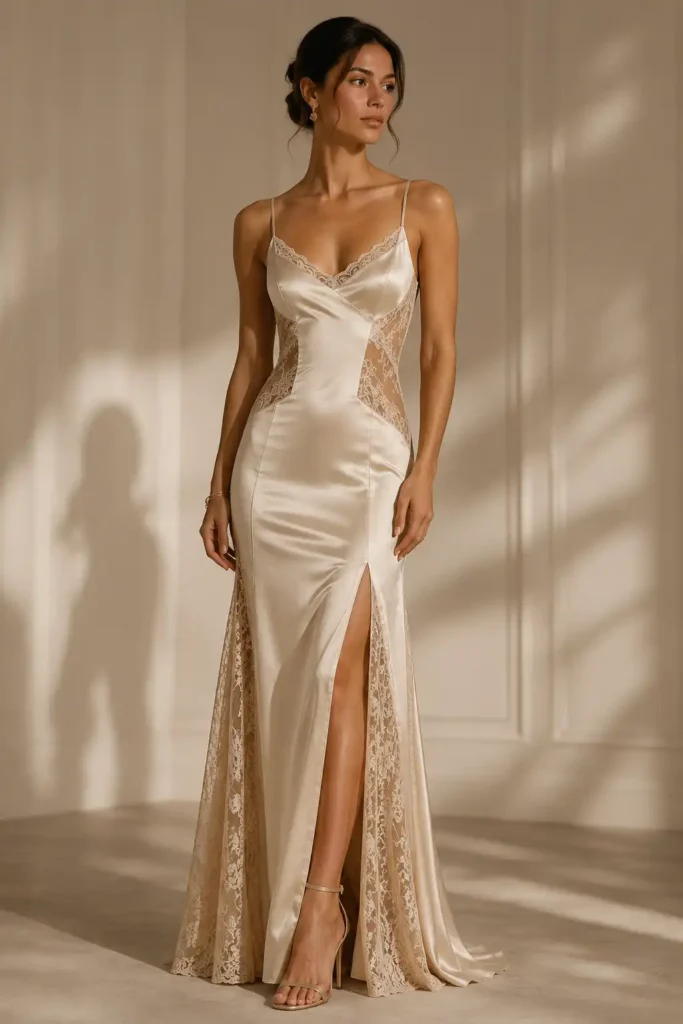
Satin Lace Panel
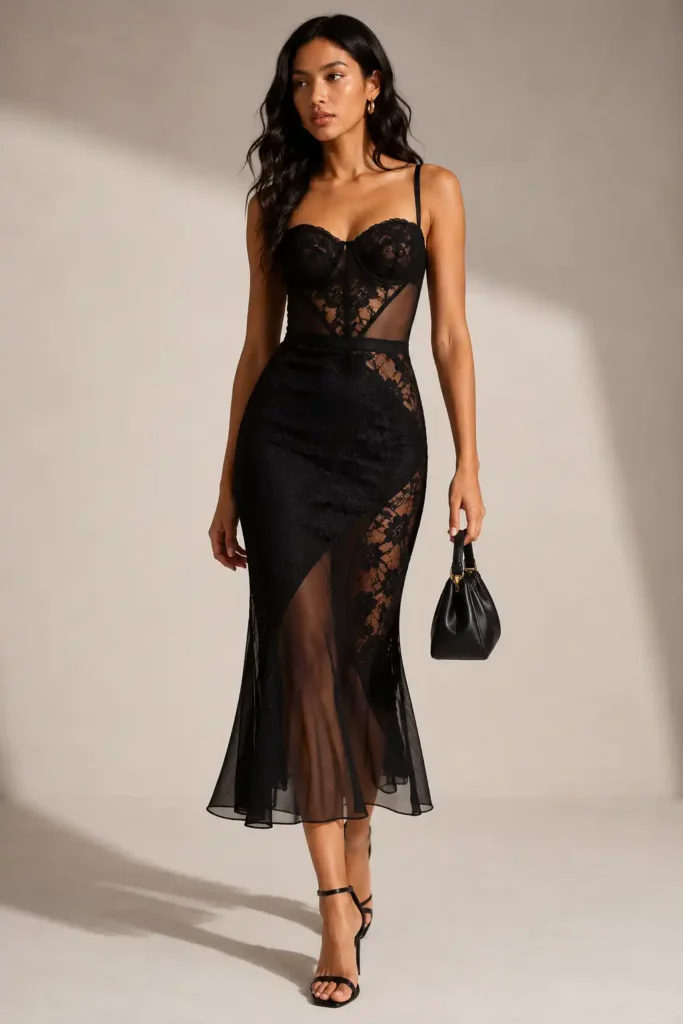
Mesh Lace Panel
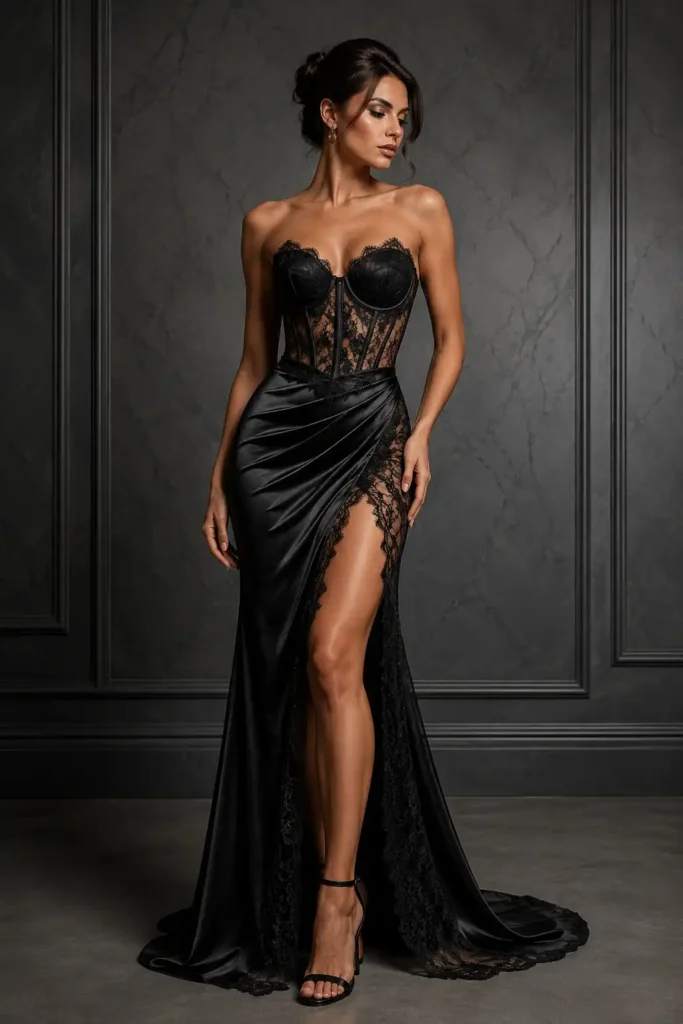
Corset Lace Panel
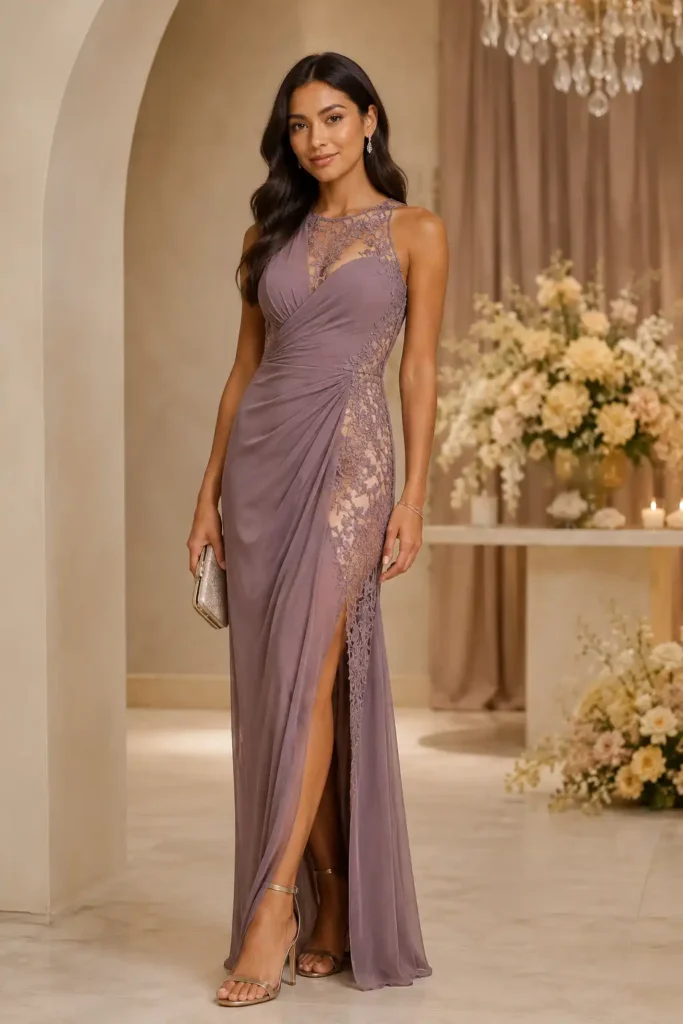
Occasion Lace Panel
Lace Placement Options That Change Fit and Visual Balance
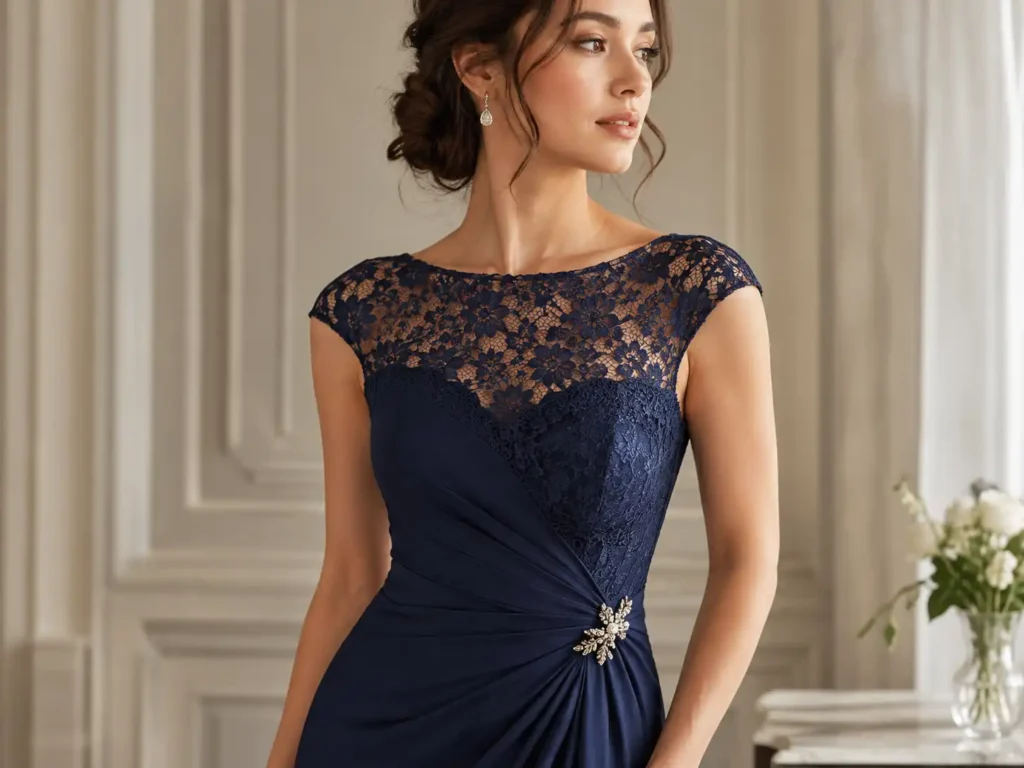
Bust Panel

Waist Inset
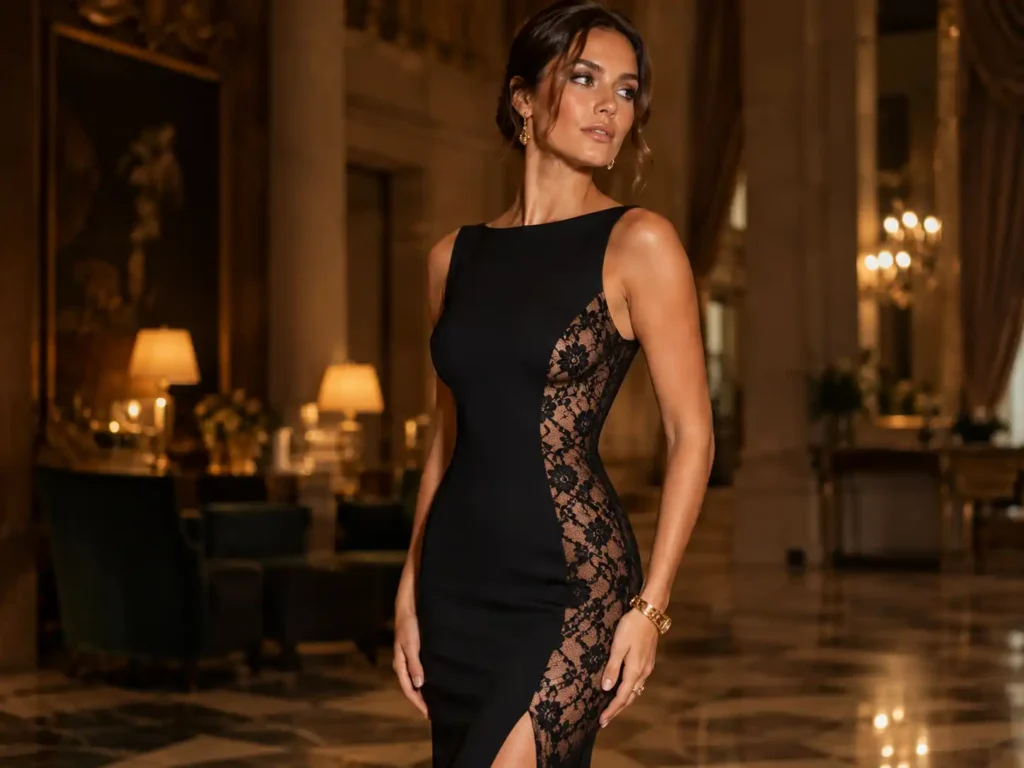
Side Panel
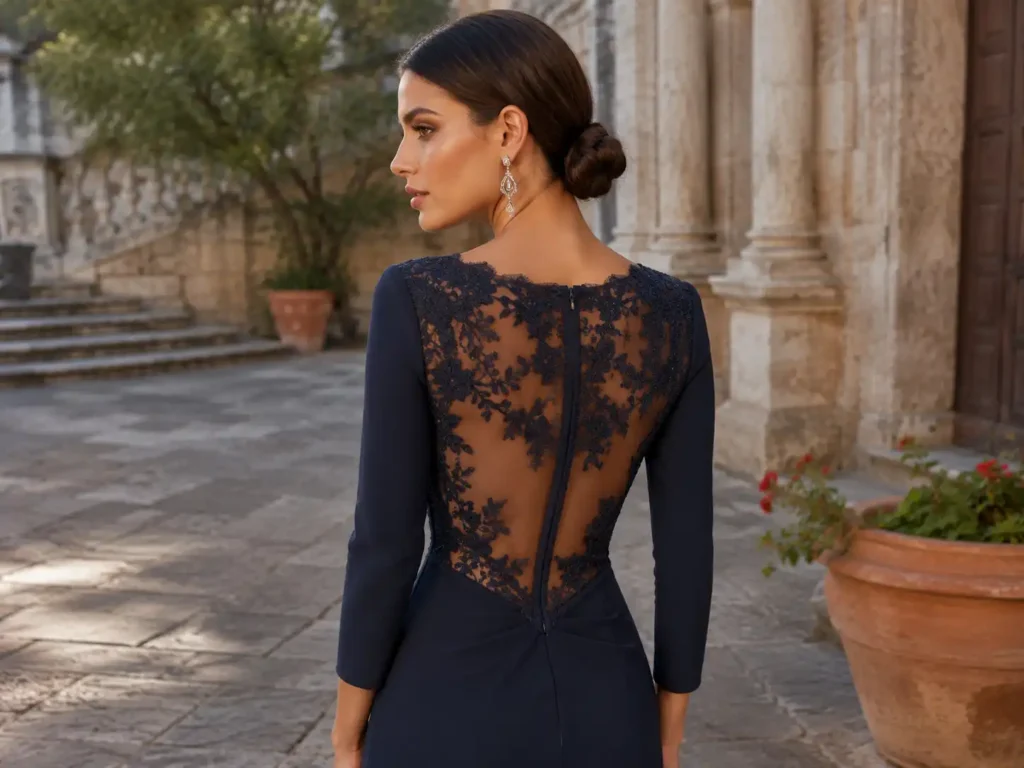
Back Panel
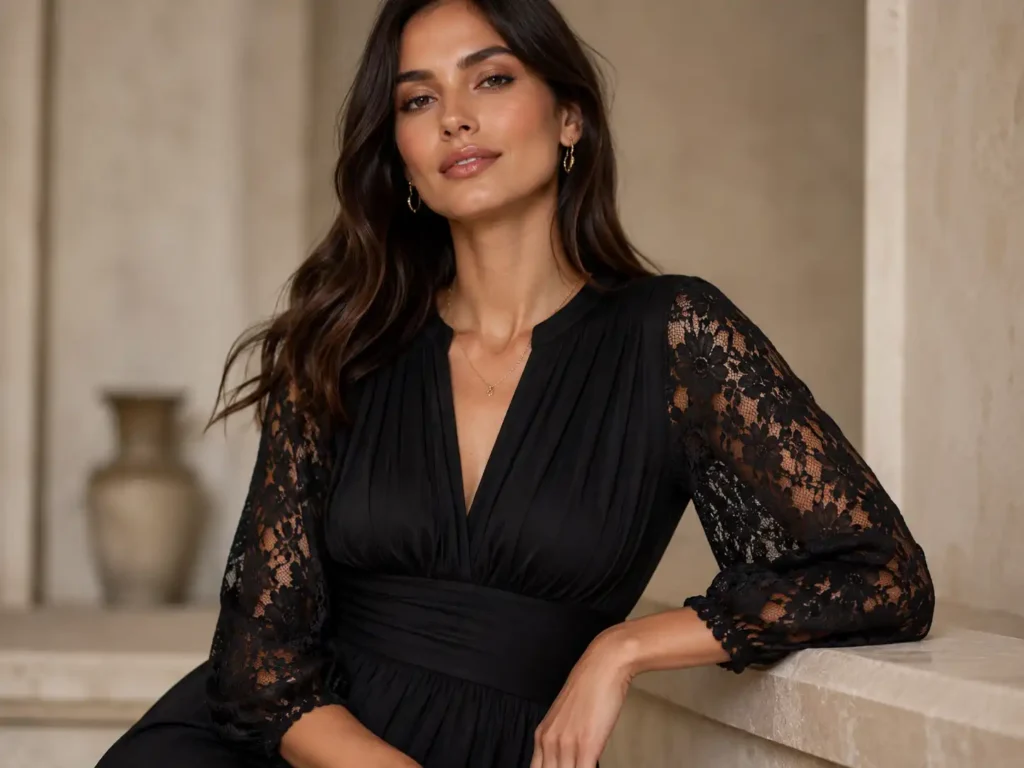
Sleeve Panel
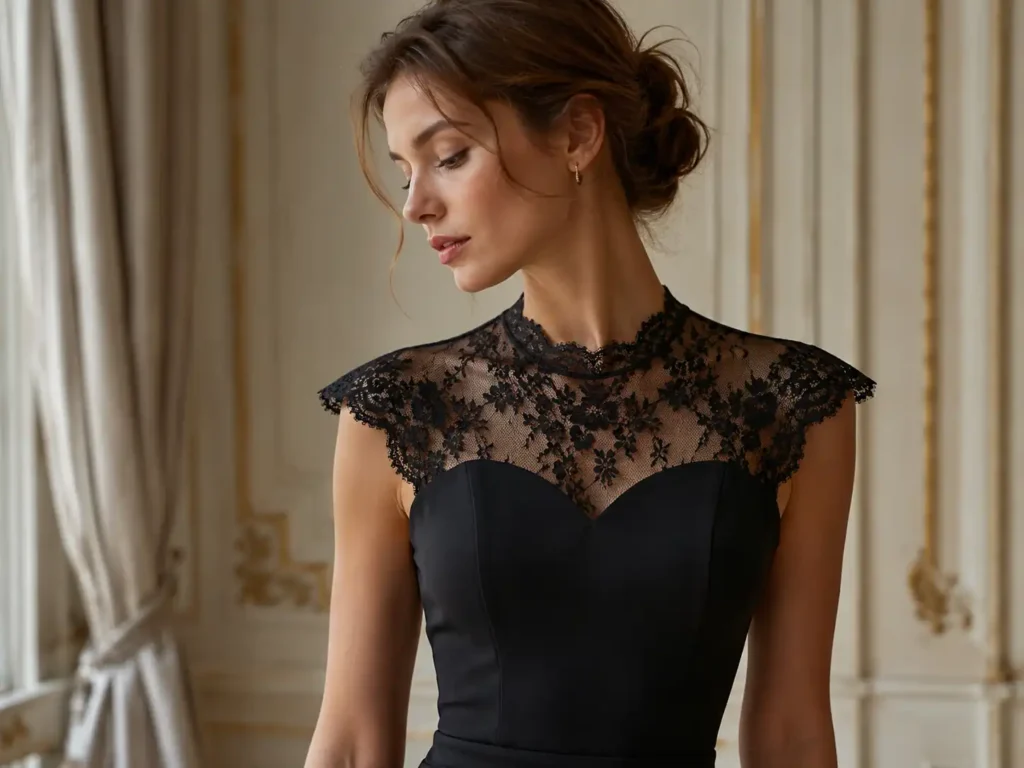
Neckline Panel
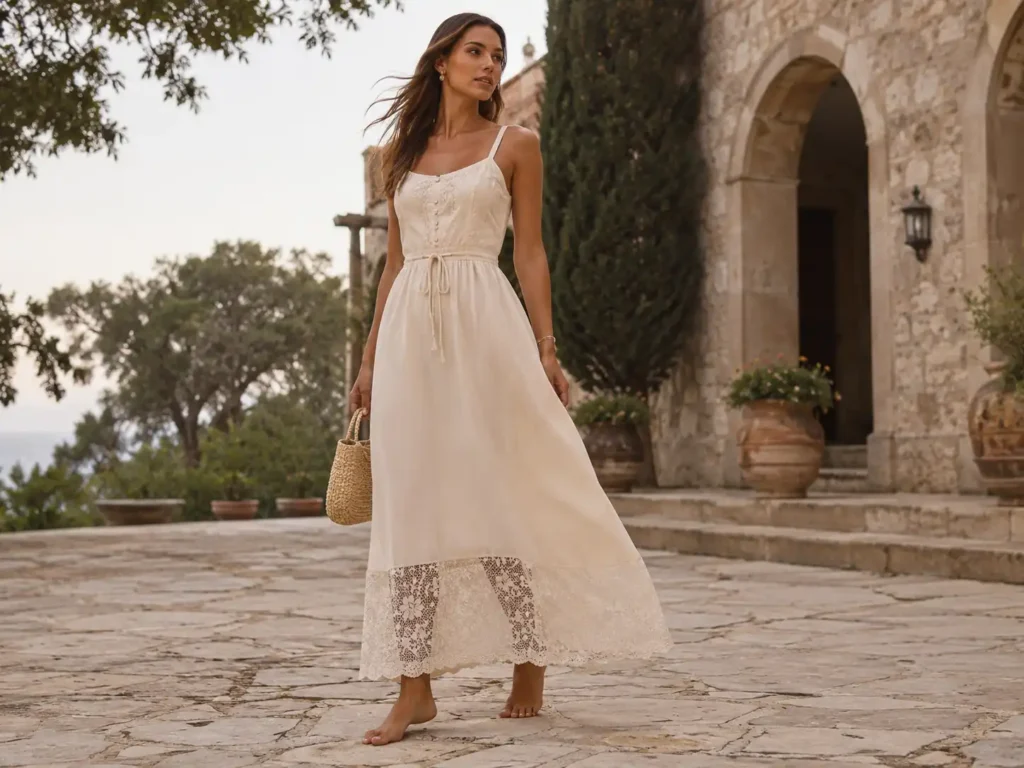
Hem Panel
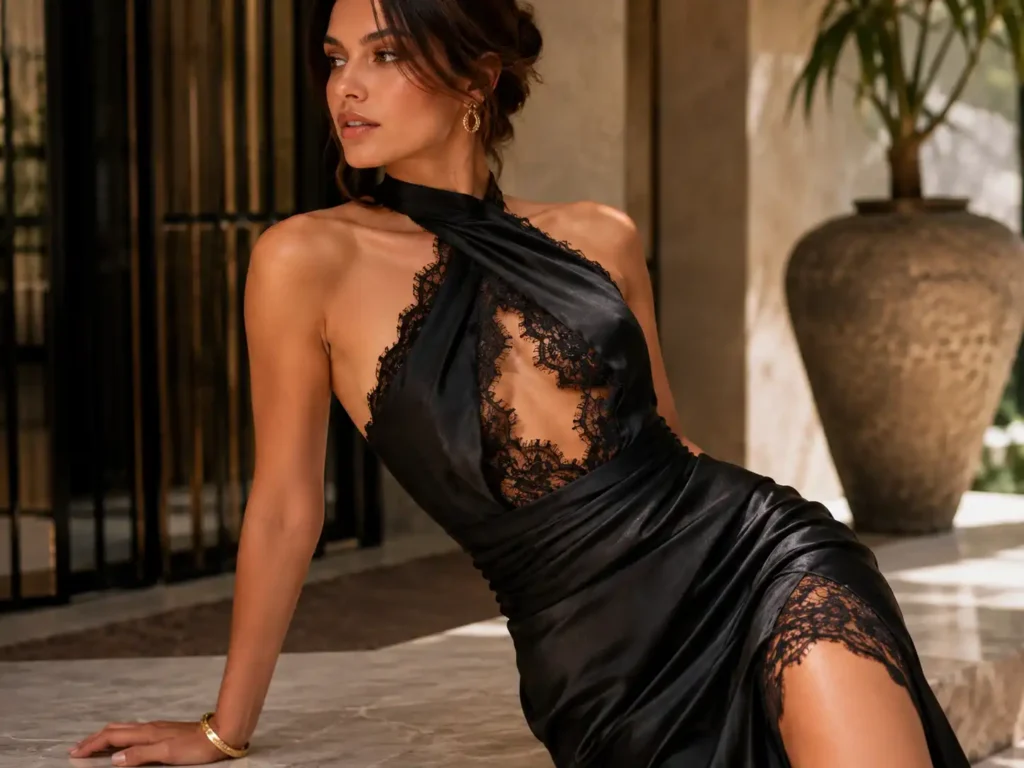
Cut-Out Panel
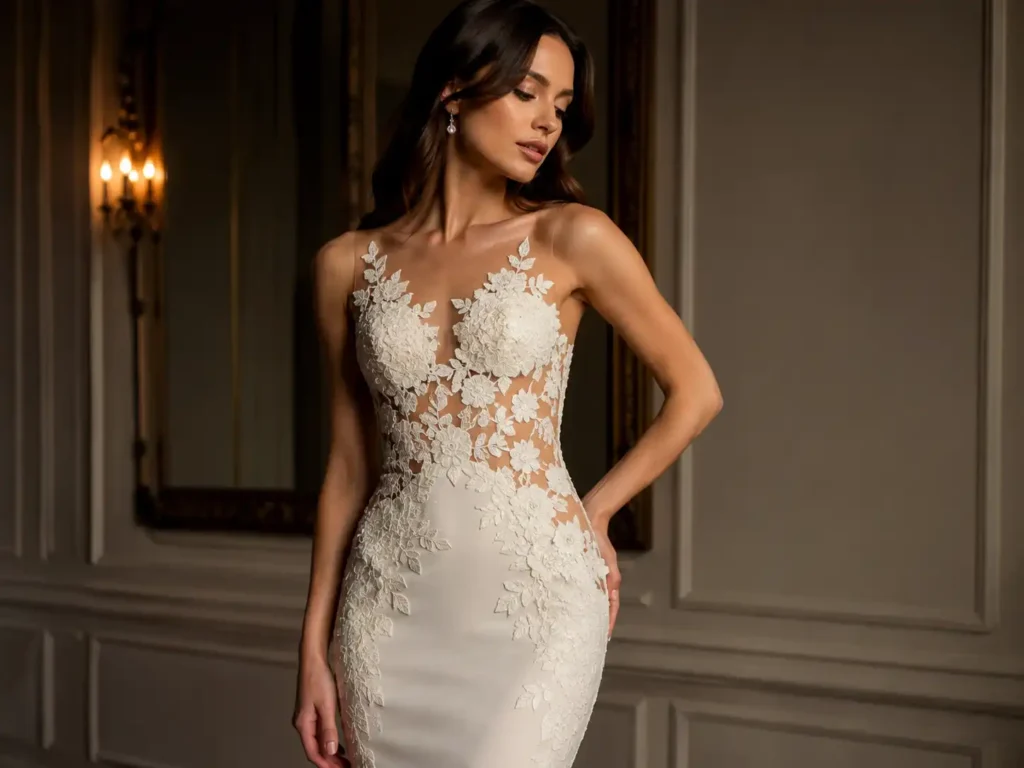
Appliqué Panel
Lace Types and Base Fabrics Selected by Construction Need
| Lace Direction | Recommended Base Fabrics | Best Uses | Main Manufacturing Risk | Control Focus |
| Stretch lace | Jersey, ponte, power mesh, stretch satin | Bodycon panels, sleeves, waist inserts | Uneven recovery and seam rippling | Stretch direction, recovery, negative ease, stabilized sewing |
| Chantilly-style lace | Matte satin, crepe, chiffon, soft lining | Occasion bodices, sleeves, necklines | Fragile motifs and visible seam allowances | Motif placement, fine handling, lining transition, edge finish |
| Guipure lace | Crepe, structured woven, satin, organza | Statement panels, waistbands, hems | Thickness and heavy seam intersections | Seam grading, trimming, support, controlled pressing |
| Corded lace | Satin, crepe, velvet, mesh | Cocktail and evening panels | Raised cords creating bulk or abrasion | Needle path, seam allowance, soft lining, edge protection |
| Embroidered tulle | Mesh, organza, satin, soft woven | Illusion panels and floral overlays | Embroidery shift and tulle damage | Placement map, temporary support, low-tension sewing |
| Eyelash lace | Satin, chiffon, crepe, lining | Necklines, sleeves, hems, overlays | Fringe loss and uneven edge width | Edge selection, cut direction, handling and packing protection |
| Scalloped lace trim | Satin, crepe, jersey, chiffon | Neckline, cuff, slit and hem details | Width variation and join visibility | Repeat matching, join location, color and shrinkage check |
| Lace appliqué | Mesh, satin, crepe, lining | Bodice motifs, cut-outs, premium details | Random placement and unsecured edges | Template positioning, symmetry, stitch security, labor planning |
Fabric Engineering Before Lace and Base Cloth Are Joined
Reliable lace-panel construction begins before pattern cutting. Material behavior must be understood in relation to the final silhouette, seam path, lining, care method, pressing, and bulk handling.
Control Stretch, Recovery, Weight, and Shrinkage as One System
A lace insert and its neighboring fabric rarely behave in exactly the same way. Stretch lace can lengthen under its own weight, jersey can recover after sewing, satin can remain rigid along one direction, and soft crepe can shift during cutting. Jinfeng Apparel compares stretch direction, stretch percentage, recovery, weight, thickness, drape, shrinkage risk, and seam response before confirming a construction method.
A panel joined across the waist needs different control from a vertical side panel. A fitted bust panel requires different support from a loose sleeve insert. Where material behavior is mismatched, the development team may adjust panel shape, ease, seam support, lining, stitch choice, or fabric direction. Test seams are useful when the design combines elastic and non-elastic materials. Bulk production should not rely on a visual swatch approval alone; the sample must prove that the joined fabrics stay flat, retain measurement, and recover after fitting and pressing.
Match Color, Transparency, and Lining Tone Under Real Light
Lace color cannot be judged only by the supplier color name. Ivory, cream, champagne, nude, blush, black, navy, and fashion colors change when placed over lining or base cloth. Open lace can appear darker over skin, while dense embroidery can look lighter than the ground fabric. Jinfeng Apparel reviews the lace, base cloth, lining, zipper tape, thread, and trim as a color group.
For transparent panels, lining boundaries are checked under daylight, studio-style lighting, and movement. A nude lining should support the intended market and skin-tone direction without creating a visible patch. Dark lace over light lining may highlight seam allowances; light lace over dark lining may exaggerate motif inconsistency. When a custom color is required, lab dips, supplier minimums, dye-lot variation, and lead time are evaluated by project. Color approval should cover both the individual material and the assembled sample.
Protect Fragile Surface Structure During Cutting, Sewing, and Pressing
Lace can snag, stretch, fray, lose fringe, distort embroidery, or mark under pressure. Handling standards therefore need to follow the selected material. Cutting plans consider motif repeat, left-right symmetry, scalloped edges, grain, stretch direction, and damaged areas. Temporary support may be used for soft or open structures. Sewing tension must avoid drawing the lace into a narrow seam.
Thick cords or appliqué may need local trimming to reduce bulk. Pressing temperature, steam, pressure, and protective layers are tested before mass use because heat can flatten raised motifs, shrink the ground, discolor synthetic fibers, or create shine on the base fabric. Finished garments also require packing protection; lace edges, appliqué, beading, and satin surfaces should not be crushed by uncontrolled folding. Material engineering connects appearance with production stability rather than treating fabric as a purchasing item alone.

Pattern and Fit Control for Clean Lace Panel Geometry
Panel lines should remain intentional across the body and across the size range. Pattern development therefore combines garment measurements, human proportion, motif placement, seam behavior, and bulk sewing tolerance.
Build Panel Curves Around the Body, Not Around a Flat Sketch
A flat drawing can show an attractive curve, but the same line may move once it crosses the bust, waist, side body, or hip. Jinfeng Apparel reviews front and back balance, bust apex position, underbust line, waist height, side-seam shape, back width, armhole, neckline, and skirt proportion before finalizing panel geometry. Curves should support the silhouette rather than creating unwanted pulling. A waist lace insert may need different heights at center front and side seam. A bust panel may require shaping through darts, princess seams, cup construction, or controlled stretch.
Placement marks are added to the pattern so the motif and seam line can be reproduced. When the lace edge itself forms part of the design, the pattern may need to follow the scallop or embroidery repeat. Fit comments are translated into revised pattern files rather than left only in email or chat records.
Control Bust, Waist, Hip, Neckline, and Lining Together
Fit cannot be separated from transparency and support. A low neckline may look correct from the front but expose too much at the side. A narrow lace waist may reduce stretch and change the dress opening. A transparent back can affect bra compatibility and shoulder tension.
Jinfeng Apparel checks bust, upper bust, underbust, waist, high waist, low waist, hip, armhole, neckline depth, strap length, back coverage, slit height, dress length, and lining length according to the style. For bodycon, corset, strapless, one-shoulder, and backless designs, fitting should include movement, sitting, walking, and raised-arm checks where relevant. Lining, cups, boning, anti-slip tape, mesh support, and zipper length can be revised with the pattern. Sample photos and videos from front, side, and back make approval clearer for overseas teams.
Grade the Lace Placement, Not Only the Garment Measurement
Size grading can damage the visual design when the lace panel is enlarged mechanically without considering motif scale or body landmarks. A side inset that looks narrow in XS may become too wide in XL. A center-front motif can shift away from the bust line. A waist panel can move vertically if length grading is not controlled. Jinfeng Apparel treats placement dimensions as part of the graded specification: panel width, panel height, distance from neckline, distance from waist, motif center, slit position, lining boundary, and lace edge depth may all need size rules.
The approved size set or key graded sizes can be checked before full bulk cutting, particularly for fitted or complex styles. Measurement tolerances follow the client’s technical standard where supplied and are adjusted by product type and material behavior. Grading records, pattern versions, and approval status remain linked to the production file and repeat-order records.
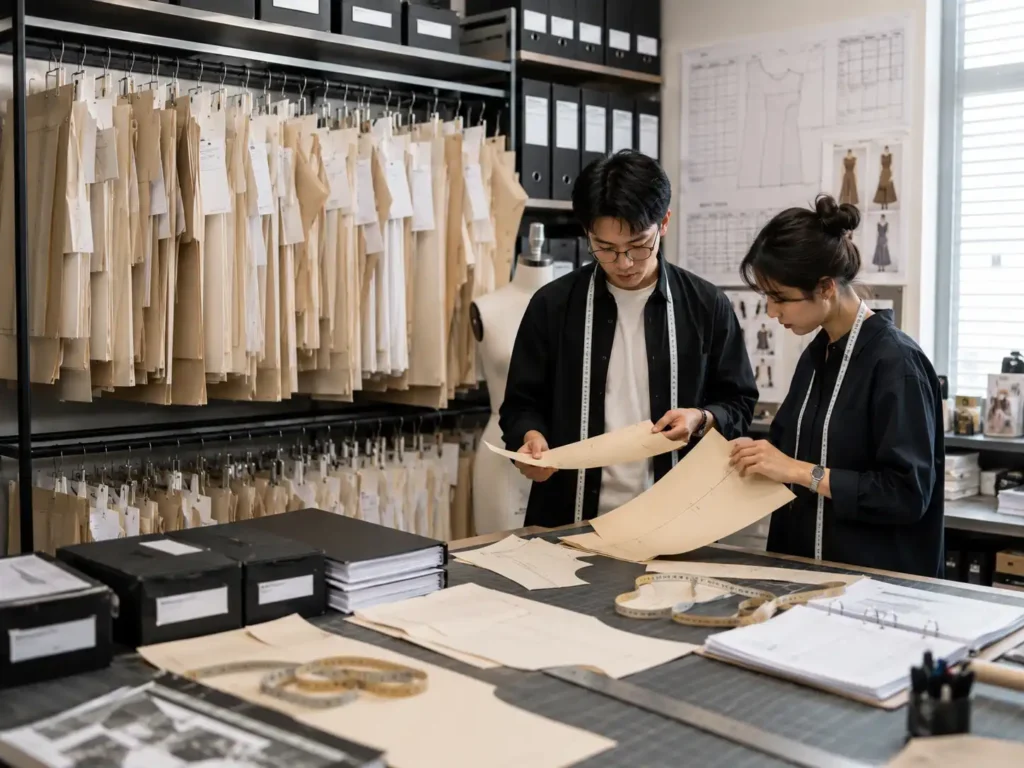
Lining, Support, and Wearability Behind the Lace Surface

Full Lining
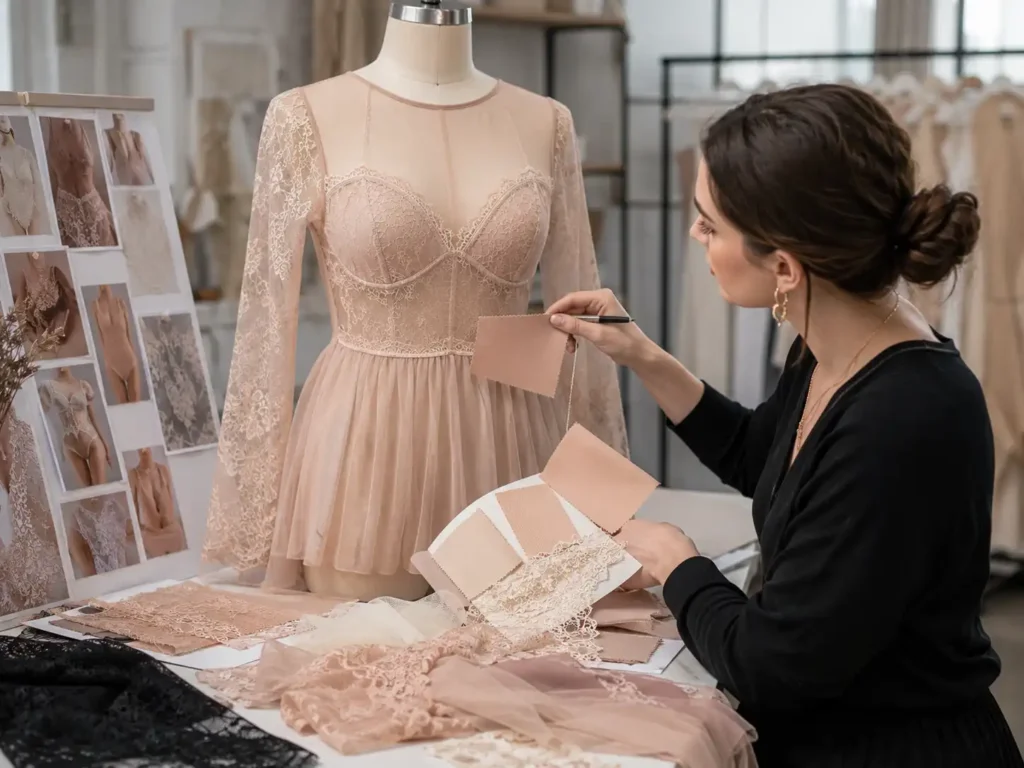
Targeted Coverage
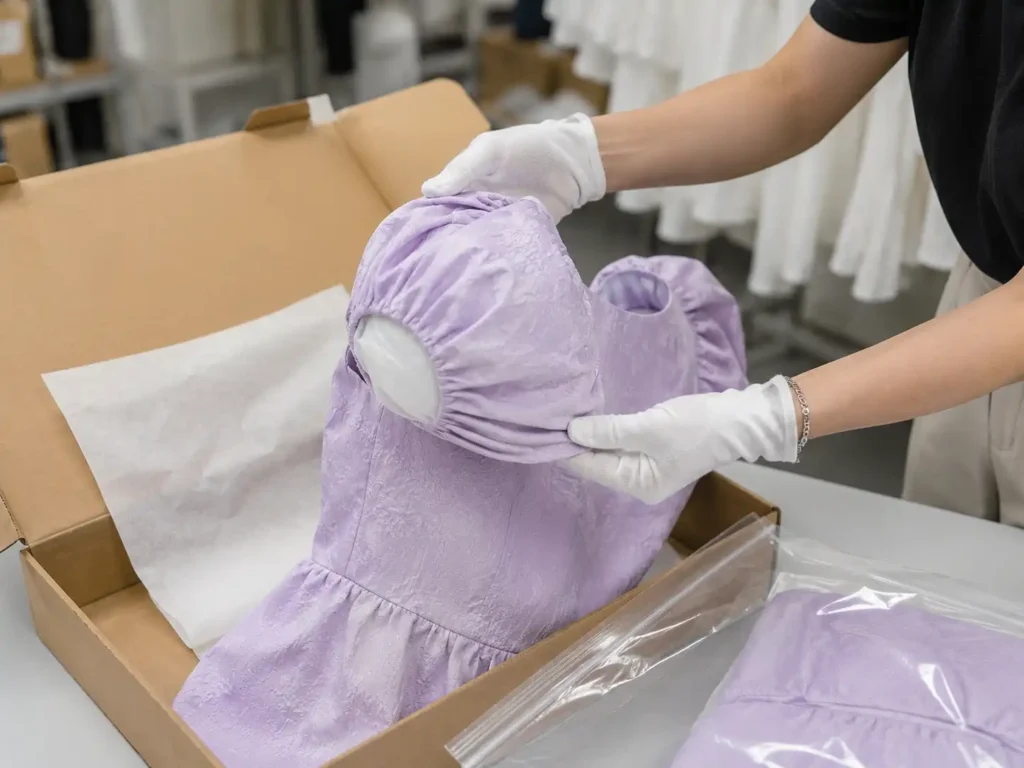
Structure Support

Skin Comfort
Sample, Approval, and Production Planning for Lace Panel Styles
| Stage | Core Objective | Planning Range | Approval Output |
|---|---|---|---|
| Project review | Assess structure, panel placement, fabric direction, MOQ fit, sample route, and information gaps | 1-2 working days | Feasibility notes and required-input list |
| Lace and fabric sourcing | Collect suitable stock swatches or supplier options; confirm color, hand feel, stretch, motif, and MOQ | 3-7 working days for regular options | Material shortlist or approved direction |
| First sample | Verify silhouette, panel geometry, lace position, lining, construction, and initial measurements | 7-15 working days; complex structures may require 10-20 | First-sample review file |
| Revised sample | Correct fit, placement, fabric, trims, sewing method, lining, and design details | 5-10 working days per revision cycle | Updated pattern, size chart, BOM, and comment record |
| Photo-ready sample | Prepare selected styles for campaign, ecommerce, or line review when required | 7-12 working days after direction approval | Appearance-focused sample and photo comments |
| PP sample | Lock material, fit, construction, measurements, labels, and packing before bulk production | 7-12 working days after major items are confirmed | Approved PP sample and production comments |
| Golden sample handoff | Create the final physical and document reference for bulk execution | 3-7 working days after PP confirmation | Golden sample, sewing instruction, QC checklist, packing instruction |
| Bulk production | Cut, sew, inspect, press, pack, and prepare shipment under the approved standards | Common planning range: 25-45 working days after PP approval and material readiness | Finished bulk, inspection records, and shipment files |
Craftsmanship Methods Used to Keep Lace Panels Clean and Stable

Motif-Aware Cutting
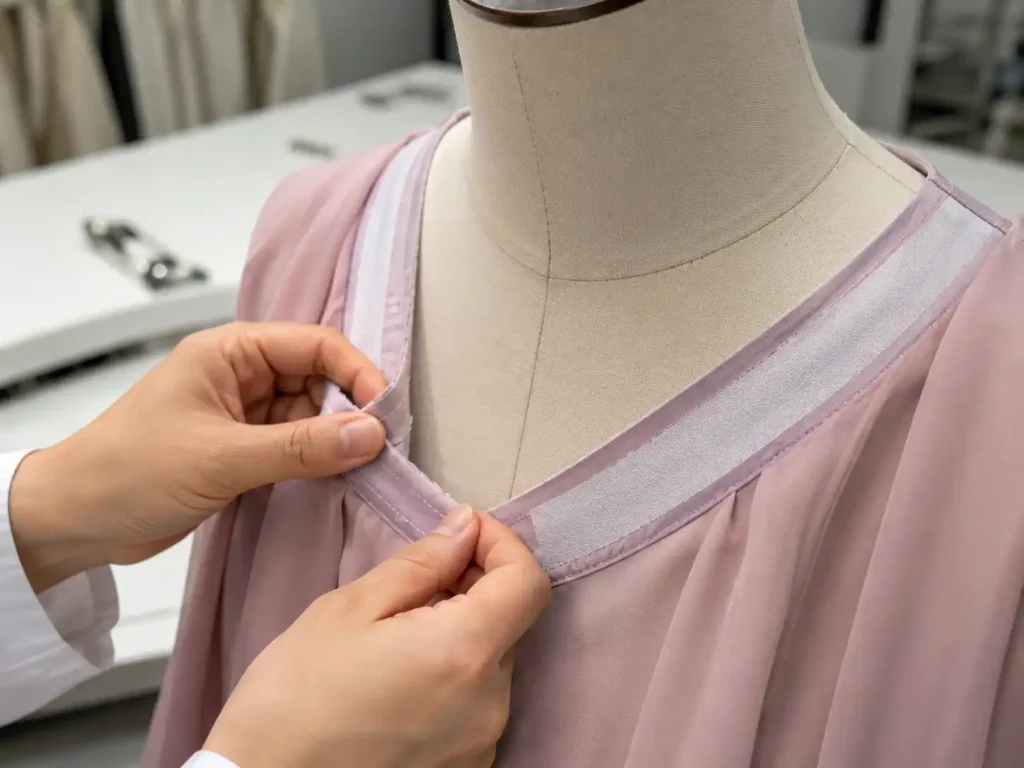
Temporary Stabilization

Controlled Seaming
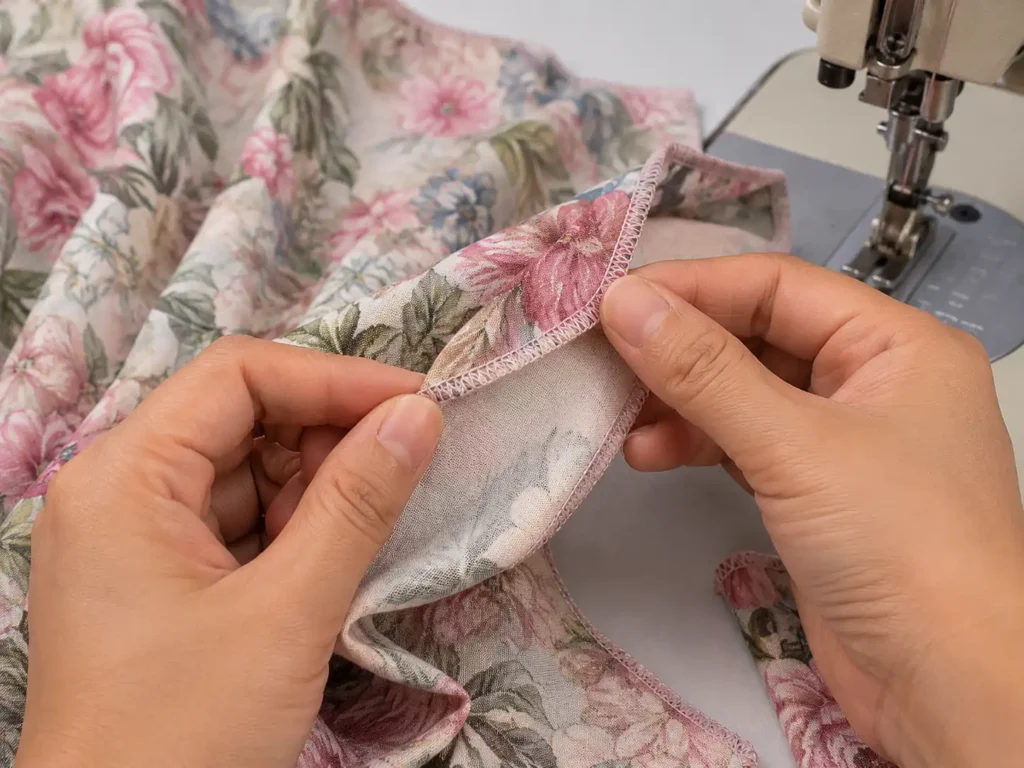
Refined Edge Finish

Invisible Zipper Control

Pressing and Recovery
Quality Control Points Specific to Lace Panel Dresses
Incoming Lace
Base Fabric
Cutting Control
Placement Check
Sewing Inspection
Measurement Review
Wearability Check
Final and Packing
From Approved Sample to Repeatable Bulk Lace Placement
Bulk consistency depends on standards that production teams can see, measure, and record. Jinfeng Apparel converts approved development decisions into a controlled production handoff.
Lock the Approved Standard Before Cutting Begins
Bulk preparation starts after the PP sample, materials, colors, trims, labels, measurements, construction, and packing direction are approved. The handoff file can include the updated tech pack, pattern version, graded nest, size chart, measurement tolerance, BOM, approved lace and base-fabric swatches, trim approvals, sewing instruction, placement map, sample comments, QC checklist, and packing instruction. A Golden sample provides a physical reference for shape, panel balance, workmanship, and presentation. Any difference between a photo-ready sample and a PP sample should be recorded so production does not follow the wrong reference. Material substitutions, color changes, new trims, or revised panel positions require updated approval before cutting. Clear standards reduce dependence on individual memory and allow merchandisers, production teams, QC staff, and client inspectors to evaluate the same requirements.
Group Styles by Construction Risk and Allocate Production Deliberately
A multi-style lace collection should not be released as one undifferentiated group. Styles can be organized by fabric family, lace type, stretch level, lining method, zipper construction, corset support, appliqué labor, and delivery priority. Similar constructions may share controlled methods, while complex styles receive focused pilot review. Jinfeng Apparel uses 6 owned women’s fashion factories, more than 10 long-term satellite production partners, 18+ sewing lines, and 6+ flexible production lines within a structured allocation system. Capacity figures represent the wider manufacturing network; actual lace-panel output depends on style complexity, labor content, material readiness, size-color split, quality standard, and schedule. Pilot pieces, early-line review, and inline inspection help detect panel distortion, seam rippling, incorrect motif position, or measurement movement before a large quantity is completed.
Retain the Records Needed for Replenishment and New Colors
Repeat orders fail when patterns, fabric references, lace lots, trim specifications, placement comments, and packing rules are not retained. Jinfeng Apparel keeps approved pattern records, size charts, BOM details, fabric references, color information, trim records, sewing instructions, Golden sample standards, QC notes, label files, and packing requirements for future production.
Replenishment still needs a new material availability review because lace stock, dye lots, base-fabric batches, and supplier conditions can change. A new color may also require lining, zipper, thread, label, barcode, and SKU updates. Retained records reduce reconstruction work and support faster review, but every repeat order receives a current confirmation rather than assuming that all inputs remain unchanged.

Production Capacity Supported by Dedicated Womenswear Teams
6 Owned Factories
10+ Long-Term Partners
18+ Sewing Lines
Development Team
Project Follow-Up
Quality and Packing
Private-Label and Retail-Ready Delivery Beyond Garment Sewing

Woven Labels

Care Labels
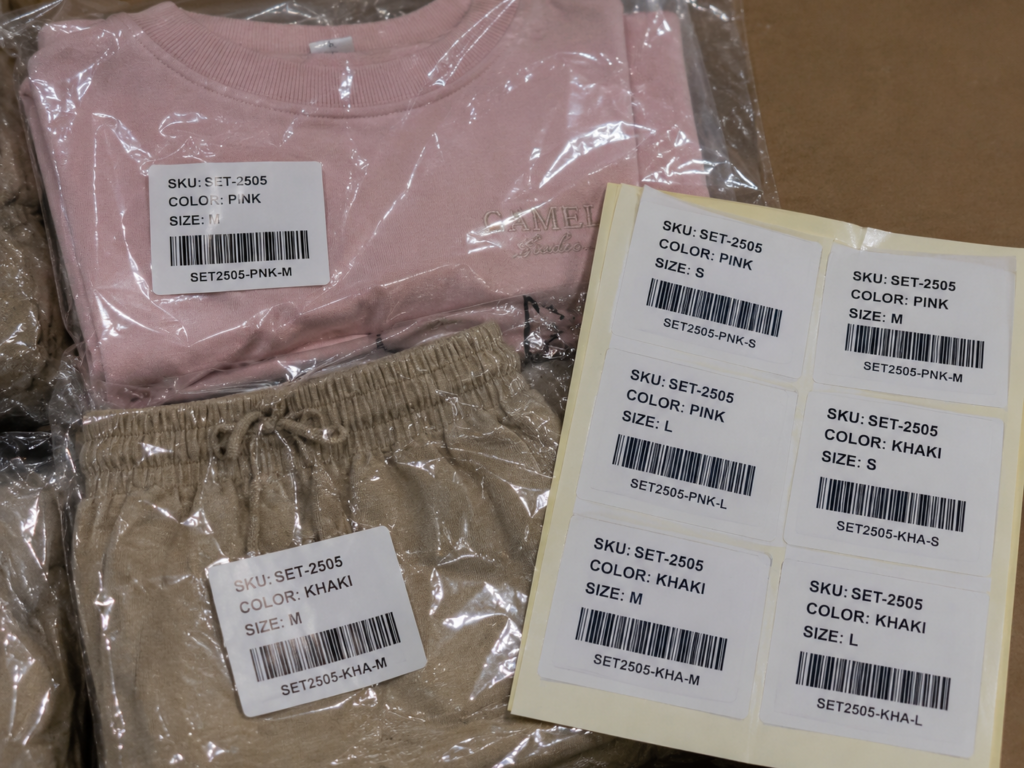
Hangtags and Barcodes
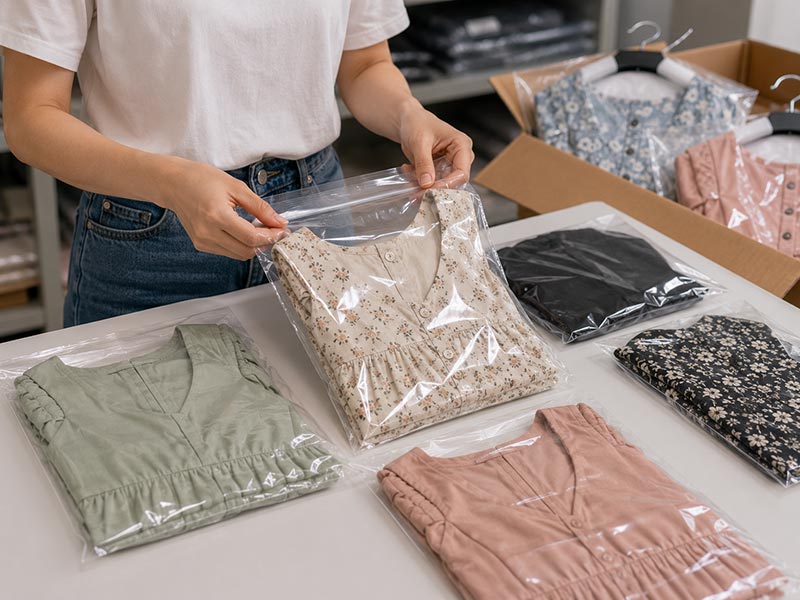
Polybags and SKU Packing
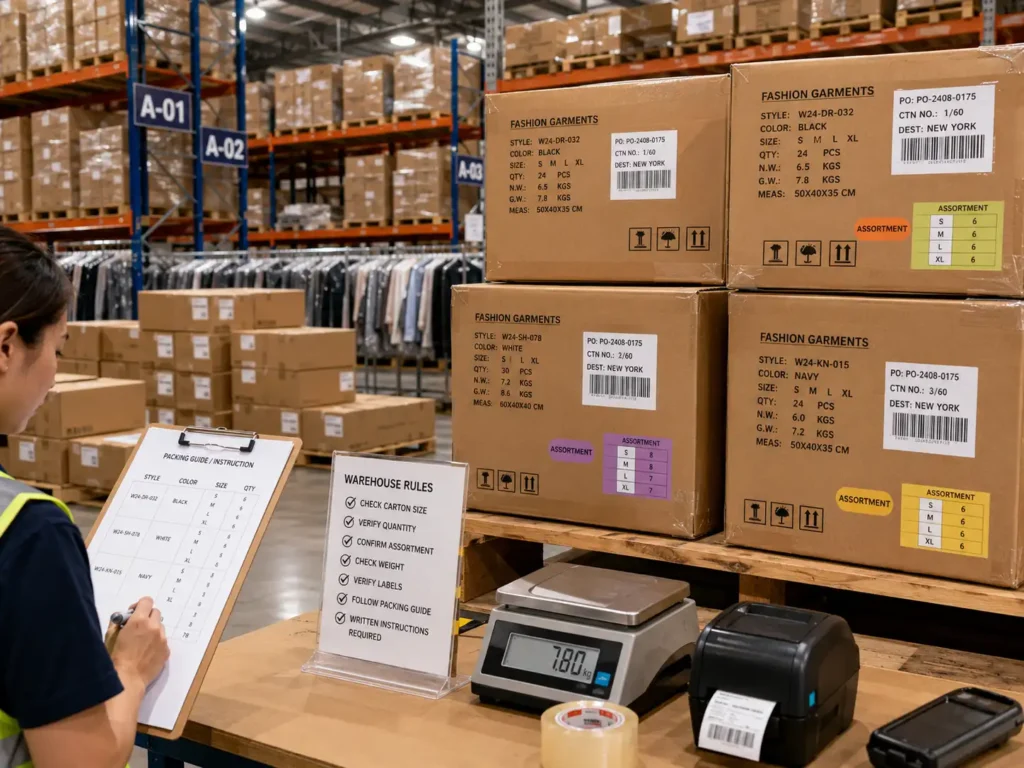
Carton Marks

Shipment Documents
MOQ, Cost Drivers, and Information Needed for a Reliable Quote
Lace-panel pricing becomes reliable only when material, placement, structure, labor, quantity, sizes, colors, packing, and schedule are defined. A single reference image can support an initial review, but not a final production price.
MOQ Starts From 200 Pieces per Style and Color
Jinfeng Apparel’s standard MOQ starts from 200 pieces per style/color for suitable stock fabrics, regular colors, standard trims, conventional packing, and workable production conditions. One style in black at 200 pieces can be evaluated as one production unit. One style split into black 100 pieces and white 100 pieces does not normally meet 200 pieces per color.
Four styles at 50 pieces each do not form a standard 200-piece structure. Special lace, custom dyeing, exclusive embroidery, custom appliqué, unusual trims, molded accessories, complex evening construction, certification requirements, or highly fragmented size-color ratios may create separate supplier minimums. MOQ should be reviewed with the exact lace and color plan rather than assumed from the garment quantity alone.
Fabric, Placement, Construction, and Labor Drive the Price
The largest cost changes often come from lace quality, motif size, width, usable yield, matched-pair cutting, placement labor, base fabric, lining, appliqué, corset support, seam complexity, sample revisions, and quality standard. Guipure or heavily corded lace can add thickness and labor. Large floral motifs may increase cutting waste. Hand-positioned appliqué requires more time than a straight trim insertion. Custom colors can add dyeing minimums and lead time. Satin combinations need controlled handling and packing. Private-label items, barcodes, special polybags, hangers, tissue, carton ratios, testing, inspection, urgent production, and air freight also affect the landed cost. Cost optimization should preserve the brand-level appearance: alternatives may change lace density, panel area, lining method, construction path, or material source without turning the design into a visibly cheaper garment.
Submit the Inputs Needed for an Actionable Project Review
For a useful initial evaluation, send the style image or tech pack, front and back views, panel placement details, target quantity per style/color, intended size range, lace preference, base fabric direction, color plan, lining requirement, trims, label and packing requirements, launch date, shipping destination, and target price position where available. A physical original sample can support construction review.
Jinfeng Apparel can then assess pattern complexity, material direction, sample route, MOQ fit, cost drivers, likely approval steps, and production risk. Final pricing is confirmed after the fabric, lace, trims, construction, measurements, packing, quantity, and production conditions are sufficiently defined.

Collection Planning for Multi-Style Launches and Repeat Orders
Style Architecture
Color and Size Plan
Launch Calendar
Repeat-Order Readiness
Compliance Support, Third-Party Inspection, and Design Protection
Case 1: Occasionwear Brand Lace Collection Development
Project Scope
A global occasionwear brand developed a seasonal lace dress collection focused on wedding guest, evening and formal event categories.
- Collection size: 20 dress styles
- Product categories: lace midi dresses, lace maxi dresses, cocktail dresses and formal occasionwear
- Materials: stretch lace, Chantilly-style lace, embroidered tulle, satin, crepe and soft lining
- Construction details: lace bodices, transparent sleeves, back panels, waist inserts and fitted silhouettes
- Requirement: premium appearance with stable bulk production quality
Development Challenges
The collection required precise control of lace placement and garment proportion.
Main challenges included:
- Maintaining lace motif balance across bust, waist and hip areas
- Matching lace color with lining and base fabrics
- Preventing stretch lace from distorting fitted silhouettes
- Controlling transparency under different lighting conditions
- Keeping elegant finishing during bulk production
Manufacturing Approach
The development team created style-specific construction standards.
Key controls included:
- Lace swatch review before material approval
- Pattern adjustment around body landmarks
- Placement references for visible lace panels
- Lining and transparency evaluation during fitting
- PP sample and Golden sample approval before bulk production
Manufacturing Value
The program achieved consistent occasionwear quality by connecting lace selection, pattern engineering, workmanship control and production inspection into one workflow.
Case 2: Ecommerce Fashion Brand Lace Dress Launch
Project Scope
An online fashion brand required a fast lace dress collection for a seasonal campaign and product launch.
- Collection size: 12 dress styles
- Product direction: party dresses, social event dresses and premium ecommerce styles
- Development source: reference images and design concepts
- Materials: lace, mesh, jersey, satin and lightweight lining
- Requirement: fast sampling with retail-ready presentation
Development Challenges
The brand needed to transform creative ideas into production-ready dresses within a limited timeline.
Key risks included:
- Different lace behavior between sample and bulk materials
- Fit issues affecting ecommerce returns
- Lace placement changing after pattern grading
- Packaging pressure damaging delicate surfaces
- Maintaining consistent photography appearance in production
Manufacturing Approach
The project followed a controlled development route:
- Design and construction review
- Lace and fabric recommendation
- First sample development
- Fit adjustment and detail correction
- Final PP approval before production
Additional controls included:
- Measurement confirmation
- Size range review
- Lace placement documentation
- Private-label packing preparation
- Final garment appearance inspection
Manufacturing Value
The structured process helped the brand launch a lace collection faster while reducing production risks caused by unclear specifications and late-stage modifications.
Case 3: Premium Designer Lace Panel Engineering Program
Project Scope
A premium fashion label developed statement lace dresses requiring advanced panel construction and detailed craftsmanship.
- Collection type: designer occasionwear and premium evening dresses
- Key styles: corset lace dresses, illusion lace dresses, appliqué lace dresses and structured gowns
- Materials: corded lace, embroidered tulle, satin, mesh, lining and support components
- Requirement: complex appearance with commercial production stability
Development Challenges
The project involved multiple technical challenges:
- Complex lace panel geometry
- Corset and support structure integration
- Lace combined with non-stretch fabrics
- Seam thickness control
- Maintaining symmetry after size grading
Manufacturing Approach
The production team focused on engineering each lace component.
Technical controls included:
- Building panel curves based on body shape
- Reviewing bust, waist and hip balance
- Testing lace and base fabric compatibility
- Controlling seam allowance and internal finishing
- Creating detailed QC standards for motif placement and workmanship
Additional attention was given to:
- Invisible zipper areas
- Lace edge finishing
- Boning and cup positioning
- Pressing protection
- Final packing methods
Manufacturing Value
The project demonstrated that premium lace dresses require more than sewing ability. Successful production depends on combining material knowledge, pattern engineering, craftsmanship and repeatable quality control.
Compliance Support, Third-Party Inspection, and Design Protection
Audit and Testing Support
Material and Label Review
NDA and Design Protection
Lace Panel Dress Manufacturing Frequently Asked Questions
Yes. Development can start from a tech pack, original sample, line sheet, sketch, or reference images. The team reviews panel geometry, lace direction, base fabric, lining, fit, construction, MOQ, sample route, bulk risk, labels, and packing before production planning.
Options may include stretch lace, Chantilly-style lace, guipure, corded lace, embroidered tulle, eyelash lace, scalloped trims, and appliqué. Final selection depends on silhouette, transparency, stretch, motif, base fabric, color, hand feel, supplier stock, MOQ, price, and certificate scope.
High-visibility motifs are reviewed against center front, bust, waist, back, sleeve, side body, and hem positions. Patterns can include placement marks and paired components. Approved samples, placement references, Golden sample standards, cutting checks, and inline inspection support repeatability.
Yes, when the construction passes a material and seam review. Stretch direction, recovery, panel shape, seam support, lining, ease, needle, thread, tension, and pressing must be tested. Some combinations require pattern adjustment or stabilization to prevent rippling and measurement change.
Not always. Full lining, partial lining, nude lining, mesh support, or intentional transparency may be selected by design and market. Coverage boundaries, seam visibility, skin comfort, bust support, movement, and studio-light appearance should be approved during sampling.
MOQ starts from 200 pieces per style/color for suitable stock fabrics and regular production conditions. Special lace, exclusive motifs, custom dyeing, custom embroidery, complex appliqué, specialty trims, certification, or fragmented colors and sizes may create separate supplier minimums.
A first sample commonly requires about 7-15 working days after materials and information are ready; complex lace or corset structures may require 10-20. Revision and PP stages follow the approved comments. Bulk commonly plans around 25-45 working days after PP approval and material readiness. Every schedule is confirmed by project.
Yes. Main labels, size labels, care labels, hangtags, barcode stickers, polybags, SKU packing, carton marks, packing lists, and warehouse instructions can be integrated after artwork, specifications, supplier MOQ, and final packing rules are approved.
The production handoff can include the PP sample, Golden sample, updated pattern, size chart, tolerance, BOM, lace and fabric approvals, trim approvals, sewing instruction, placement map, QC checklist, and packing instruction. Pilot and inline checks focus on style-specific risks.
Yes. NDA-based cooperation protects development and commercial files. Jinfeng Apparel can support client-appointed or third-party fabric, garment, AQL, packing, and pre-shipment inspection by project. Scope, timing, standards, fees, factory access, and document requirements are confirmed in advance.

Send Your Lace Panel Dress Project for Technical Review
Jinfeng Apparel will review the garment structure, lace direction, base fabric, lining, fit, sample route, MOQ, cost drivers, bulk risks, private-label needs, and proposed timing before recommending the next step. A reference image can start an initial discussion, while a tech pack, size chart, BOM, original sample, or line sheet supports a more accurate evaluation.
Complex designs are not approved blindly; panel placement, motif repeat, mixed stretch, transparency, support, zipper, seam bulk, grading, QC, and packing need a clear route before bulk production. Kelly coordinates the first review and connects qualified programs with the development, merchandising, and production teams.
- Product type and front, back, and detail images
- Tech pack, size chart, BOM, or original sample information
- Quantity per style/color and intended size range
- Preferred lace, base fabric, lining, trims, and color direction
- Private-label, barcode, polybag, carton, and warehouse requirements
- Target launch date, shipping destination, and inspection standard