 Skip to content
Lace Bodysuit Manufacturer
Custom lace bodysuit development for fashion brands that need controlled fit, refined transparency, stable stretch and repeatable bulk production.
Jinfeng Apparel develops fashion-focused lace bodysuits from reference images, original samples or complete tech packs. Product teams can combine stretch lace, sheer mesh, selective lining, corset-inspired panels, long sleeves, cut-outs, open backs and private-label finishing within one managed development route. Every project is reviewed for torso balance, bust-to-hip proportion, fabric recovery, lace placement, crotch comfort and production repeatability before bulk planning begins.
- MOQ starts from 200 pcs per style/color for standard custom production.
- 2 sample rooms, 7+ senior pattern makers and 20+ sample machinists support development and revision.
- 15+ QC inspectors follow fabric, cutting, sewing, measurement, finishing and packing control.
- 100,000+ pcs regular monthly capacity supports multi-style fashion programs and repeat orders.
A Production System Built for Fashion Bodysuits
Since 2008
6 Owned Factories
18+ Sewing Lines
2 Sample Rooms
15+ QC Inspectors
MOQ 200 Pcs
Developed for Established Fashion Programs
Global Fashion Brands
- Multi-style development
- PP and golden-sample control
- Long-term records
Partywear Brands
- Going-out silhouettes
- Sheer and lined zones
- Launch-date coordination
Clubwear Labels
- Body-conscious fit
- Cut-out stability
- Edge comfort
Premium Ecommerce
- Photo-ready samples
- SKU and barcode control
- Return-risk reduction
Product Teams
- Technical review
- Fabric alternatives
- Revision records
Private Label Programs
- Artwork confirmation
- Label placement
- Pack-out accuracy
Common Lace Bodysuit Failures We Control Early
Lace Snagging
- Review hole size and yarn strength
- Protect cut edges
- Reduce packing abrasion
Unstable Transparency
- Map opaque and sheer zones
- Test under studio lighting
- Approve lining boundaries
Weak Recovery
- Check stretch direction
- Compare recovery after cycles
- Match lace and lining behavior
Wrong Torso Length
- Measure girth and rise
- Review fit on intended size
- Correct front and back balance
Harsh Crotch Closure
- Set snap spacing
- Control gusset shape
- Test repeated opening
Bulk Drift
- Lock PP details
- Issue construction records
- Inspect inline, not only final
Custom Lace Bodysuits Across Key Fashion Categories
Each silhouette needs a different balance of lace stretch, lining, neckline security, body length and closure construction. Product development begins with the intended wearing occasion, retail image and target size range rather than a generic bodysuit block.

Long-Sleeve Lace
- Best for party and occasion drops
- Check bicep, elbow and cuff recovery
- Control sleeve-cap balance

Sleeveless Lace
- Suitable for layering or going-out looks
- Review armhole comfort
- Protect delicate scalloped edges

Sheer Mesh Lace
- Map transparent areas
- Balance mesh and lace stretch
- Reinforce high-stress joins

Selective Lining
- Choose tonal or contrast lining
- Approve coverage on body
- Match lining recovery

Corset-Inspired
- Structured partywear direction
- Review cup and boning options
- Assess support by project

Backless Lace
- Strong for evening and resort looks
- Control strap and side tension
- Test movement from front and side

Halter Lace
- Ideal for event and club collections
- Review neck comfort
- Balance bust support and openness

Cut-Out Lace
- Photo-focused fashion direction
- Grade cut-outs carefully
- Inspect edge flatness in bulk
Lace, Mesh and Lining Selected as One System
Material choices are reviewed together because a bodysuit behaves as one connected garment. Lace appearance, stretch mesh support, lining recovery, edge elastic and closure strength must remain compatible after sewing, fitting, wear and care.
Stretch Lace for Body and Sleeve Areas
Stretch lace is assessed by more than floral appearance. Development teams review composition, weight, usable width, four-way or two-way stretch, recovery, hole size, yarn strength, scallop direction, shade consistency and skin feel. A lace with attractive motifs may still be unsuitable when the pattern repeat wastes too much fabric, the edge tears during sewing, or recovery weakens after repeated extension. For fitted bodysuits, horizontal stretch normally supports bust, waist and hip expansion, while vertical allowance must still protect torso comfort. Placement planning also considers whether a central motif, mirrored chest layout or scalloped neckline is commercially important.
Fabric cutting consumption can rise when motifs must align across the center front or left and right panels. Cost review therefore separates decorative value from production waste rather than selecting lace by meter price alone.
- Commercial directions: floral stretch lace, geometric lace, embroidered lace, jacquard lace and scalloped-edge lace.
- Key approval points: stretch percentage, recovery, shade, hand feel, motif repeat, snag resistance and lining compatibility.
- Bulk risk controls: lot separation, shade review, motif planning, defect marking and protected handling.
Stretch Mesh for Transparency and Controlled Support
Stretch mesh can create transparent zones, lighten the silhouette or add support beneath lace. Soft mesh works well where skin comfort and drape are priorities; firmer power-mesh directions may be evaluated for localized control in corset-inspired fashion styles. The mesh must stretch in the same working direction as surrounding lace or lining. A mismatch can pull seams into waves, restrict the body or cause one material to carry most of the stress. Color also matters: black lace over black mesh produces depth, while nude mesh can make motifs appear suspended on the body. Shade approval should be completed under the lighting used for product photography whenever visual transparency is central to the design. Seam testing reviews needle penetration, seam extension and recovery, especially around armholes, neckline curves, side cut-outs and center-front joins.
- Use cases: sheer shoulders, sleeves, side panels, neckline bridges, back panels and layered support zones.
- Key approval points: transparency, color, stretch direction, recovery, seam stability and edge behavior.
- Bulk risk controls: lot matching, tension settings, seam-extension checks and hole inspection.
Linings and Skin-Contact Layers
Lining is used selectively rather than automatically covering the whole garment. Bust lining protects opacity and stabilizes shaped seams; front-body lining can improve comfort and reduce excessive exposure; gusset lining must remain soft, clean and compatible with care requirements. Common options may include stretch jersey, tricot, soft knit or another approved lining selected by hand feel, weight, stretch and color. The lining pattern needs its own shape and ease. Copying the outer lace panel without adjustment can create ridges, twisting or restricted recovery. Sample fitting checks whether the lining edge remains flat, whether it becomes visible through the lace, and whether the color changes the intended motif contrast. Composition, care information and supplier documentation are confirmed by material and batch when required.
- Coverage zones: bust, front body, lower body, gusset or fully lined construction.
- Color directions: tonal, skin-tone, contrast or double-layer visual effects.
- Comfort checks: seam bulk, edge pressure, moisture contact, recovery and wash behavior.

Fit Development from Neckline to Crotch
Bodysuit fit is a linked calculation. Bust, waist, hip, torso length, armhole and crotch rise cannot be corrected independently without checking how the change shifts tension through the whole garment. Brand measurement charts remain the main grading reference.
| Control Point | Typical Failure | Development Direction |
|---|---|---|
| Torso / Girth | Neckline pulled down, crotch pressure, body wrinkles | Review full girth, front length, back length and fabric vertical give; verify on fit size before grading. |
| Bust | Flattening, gaping, motif distortion or cup displacement | Balance bust width, upper bust, underbust, neckline depth, lining and stretch reduction. |
| Waist | Bagging, seam twisting or excessive compression | Set negative ease according to material recovery and intended shaping rather than a fixed percentage. |
| Hip / Seat | Leg opening cuts in, back panel rides up, snap tension rises | Review hip width, back rise, leg shape and seat coverage together. |
| Armhole | Underarm gaping, chafing or limited movement | Control armhole depth, shoulder width, edge tension and sleeve connection. |
| Sleeve | Twist, tight bicep, loose elbow or stretched cuff | Align grain and stretch direction; review bicep, elbow and cuff recovery. |
| Neckline | Rolling, gaping or unstable plunge | Refine curve, edge finish, bridge width, support layers and front-body tension. |
| Crotch / Gusset | Difficult fastening, pressure or excess bulk | Set gusset width, front/back rise, snap position, seam construction and lining thickness. |
| Leg Opening | Visible cutting-in, rolling or loose seat | Match opening shape and elastic tension to hip and seat proportions. |
| Size Grading | Large sizes become overly open or small sizes too compressed | Grade structural points separately; preserve neckline, cut-out and motif proportions across the range. |
Construction Details That Decide Wearability
A lace bodysuit must remain visually clean while carrying tension through delicate materials. Closures, gussets, edge finishes, seams and optional support parts are developed as functional components rather than decorative afterthoughts.
Crotch Snap and Gusset Engineering
The crotch closure is tested for location, opening force, spacing, alignment and comfort. Two- or three-snap configurations may be considered according to gusset width and product direction, but quantity alone does not determine security. Snap tape, reinforcement, lining thickness and seam placement all affect performance. A narrow gusset can concentrate pressure, while an overly wide gusset can create visible bulk under close-fitting bottoms. The front and back rise should meet without pulling the neckline or distorting the seat. Repeated opening tests help identify weak attachment or excessive force before approval. For thong, brief or higher-coverage cuts, gusset shape and leg opening must be graded as part of the lower body, not copied from one size to every size.
- Control points: snap spacing, tape width, reinforcement, gusset width, front/back rise and seam bulk.
- Approval method: repeated opening, seated movement, reach test and visual check under close-fitting bottoms.
- Bulk inspection: snap alignment, attachment strength, clean edges and size consistency.
Edge Finishes Around Neckline, Armhole and Leg
Edge finishing controls shape, pressure and long-term recovery. Narrow elastic can stabilize a curved neckline or leg opening, but excess tension creates cutting-in and visible rippling. Binding can offer cleaner coverage yet adds thickness to sheer areas. Scalloped lace edges preserve a premium visual when motif repeat allows, although cutting and handling require greater accuracy. Turned edges may work for stable materials but are unsuitable when lace openings expose the seam allowance. Sample approval compares flat appearance with worn tension because an edge that looks smooth on a table can roll or gap on the body. Tension settings and finished measurements are then transferred into the production instruction and checked inline.
- Available directions: narrow elastic, binding, scalloped edge, fold-over elastic or project-specific clean finish.
- Control points: stretch ratio, edge width, seam extension, skin pressure and recovery after wear.
- Bulk inspection: neckline symmetry, armhole flatness, leg opening balance and elastic join quality.
.
Seams, Panels and Skin Comfort
Seam choice depends on lace density, mesh openness, lining thickness and required stretch. A strong seam can still fail commercially when it feels sharp against the skin or becomes visually heavy through transparent material. Development tests seam allowance width, thread tension, stitch extension, reinforcement points and panel transitions. High-stress areas often include the lower side seam, shoulder, underarm, center front and cut-out corners. Soft stabilization or shaped lining can distribute tension without adding visible bulk. Thread color and seam cleanliness matter because lace exposes construction more clearly than opaque knit. After fitting, comments are written as measurable adjustments rather than vague notes such as “make it more comfortable.”
- Comfort risks: hard seam ends, bulky intersections, exposed elastic, uneven tension and rough trim contact.
- Visual risks: puckering, seam shadow, loose threads, mesh ladders and inconsistent panel width.
- Transfer to bulk: approved seam sample, stitch instruction, measurement tolerance and defect examples.
Optional Cups, Boning and Support Elements
Fashion bodysuits can include molded cups, soft cups, foam inserts, boning channels, underbust seams, stabilizing elastic or power-mesh panels when the style requires more support. The correct solution depends on cup shape, neckline, back openness, fabric recovery and the wearer profile. Jinfeng Apparel evaluates corset-inspired fashion structures within the womenswear development system. Highly technical underwire lingerie, strong compression garments or medical support products require separate engineering and testing review. Sample work confirms cup position, center-front stability, channel comfort, lining coverage and how support elements move with the body. Support should improve shape without creating hard pressure or visible distortion through lace.
- Project review includes support level, cup direction, back structure, neckline security and care requirements.
- Approval includes front, side and movement views, not only flat measurements.
- Bulk production begins only after PP details and approved components are locked.
Lace Placement, Symmetry and Coverage Control
Lace carries visual information. Motif direction, scallop placement, lining boundaries and left-right balance influence perceived quality immediately, especially in photography and close-up ecommerce imagery.
Motif Planning Before Cutting
Placement planning begins after the final pattern and approved lace are available. The team identifies center-front motifs, mirrored panels, neckline scallops, sleeve borders, high-visibility joins and areas where open holes may expose seam allowances. Pattern pieces can be shifted within the usable width to protect a key motif, although the change may increase fabric consumption. Large repeats or directional embroidery require greater allowance than all-over stretch lace. Planning also considers size grading: a motif centered on the fit size may move too far outward in larger sizes unless the layout rule is adjusted. Production instructions should distinguish mandatory placement from acceptable natural variation, giving QC a realistic and measurable standard.
- Priority zones: center front, bust, neckline, shoulder, sleeve cuff, back opening and cut-out edges.
- Commercial balance: preserve visual identity without creating uncontrolled fabric waste.
- Production record: approved placement images, pattern markers and acceptable variation examples.
Left-Right Symmetry and Panel Matching
Symmetry is most visible around the bust, shoulder line, neckline and front body. Some all-over laces can be cut without exact mirroring, while bold florals or embroidered motifs often need controlled matching.
The decision is agreed during sampling because exact symmetry affects consumption, cutting time and price. Sewing also influences alignment: correctly cut panels can shift when feed pressure or operator handling is uneven. Inline checks compare motif position, panel width, neckline balance and seam length before finishing. For asymmetrical designs, the approved sample still defines intentional placement so production does not create random variation.
- Checkpoints: paired panels, shoulder joins, center seams, neckline curves and sleeve positions.
- Tolerance is set by motif size and design intent, not one universal rule.
- Defect prevention combines cutting control, bundle identity and inline comparison.
Transparency and Lining Boundaries
when flat but become obvious when the bodysuit expands over the bust or hip. Nude lining shades must be reviewed against the target market and brand direction; one shade cannot serve every skin tone or collection concept. The lining pattern may end under a lace motif, follow a seam line or create a deliberate geometric boundary. Sheer areas near the side bust, lower front, seat or center back receive special attention because movement changes exposure. Studio lighting, flash photography and natural light can each produce a different result, so approval should reflect the intended merchandising environment.
- Approve front, back and side coverage on the fit body.
- Check lining color under flash, studio and normal indoor light when imagery is central.
- Record final coverage boundaries in the PP sample and technical file.

Design Details Developed Around Brand Direction

Neckline Shapes
- Fit effect
- Coverage effect
- Support effect

Sleeve Directions
- Stretch alignment
- Arm mobility
- Cuff control

Back Treatments
- Back openness
- Strap geometry
- Waist stability

Lace Mapping
- Motif priority
- Waste control
- Symmetry standard

Mesh Panels
- Transparency
- Support level
- Seam compatibility
Lining Coverage
- Opacity
- Comfort
- Visual boundary
Crotch Closure
- Opening force
- Gusset comfort
- Bulk consistency
Trims and Finish
- Trim specification
- Color matching
- Supplier MOQ
From Design File to Production-Ready Bodysuit
Project Review
- Clarify missing data
- Identify difficult areas
- Set next actions
Material Direction
- Send swatches or videos
- Confirm color direction
- Record approved sources
Pattern Development
- Develop fit size
- Plan seam and motif layout
- Prepare first sample
First Sample
- Measure garment
- Fit and photograph
- Collect structured comments
Fit Revision
- Correct linked fit points
- Retest coverage and tension
- Update technical records
PP Approval
- Confirm all components
- Close open comments
- Issue production standard
Bulk Handover
- Brief line and QC
- Confirm material lots
- Start inline records
Golden Record
- Preserve approved standard
- Support replenishment
- Reduce repeat-order reset
What We Validate Before PP Approval
Torso Balance
- Flat measurement
- Fit-body review
- Movement review
Lace Appearance
- Front/back images
- Close-up approval
- Placement reference
Coverage Control
- Studio light
- Normal indoor light
- Side-view review
Stretch Recovery
- Direction check
- Repeated extension
- Post-rest appearance
Closure Function
- Repeated opening
- Attachment strength
- Comfort check
Sewing Comfort
- Inside-out review
- Wear test
- Construction correction
Bulk Production Controlled from Material Receipt to Packing
Production begins after PP approval, material confirmation, size chart lock and packing confirmation. Lace bodysuits receive product-specific controls because delicate surfaces, stretch behavior and placement rules create risks not found in basic opaque garments.
Incoming Materials and Lot Control
Lace, mesh, lining, elastic, snaps, labels and packaging are checked against approved references before cutting. Fabric review covers shade, visible defects, holes, embroidery damage, usable width, stretch direction and recovery. Lot identity is retained because mixing dye lots can create visible shade variation across panels or sets of garments. Trims are checked for color, size, finish and function. When certification or testing documentation is required, availability is confirmed by supplier, batch, color, scope and current certificate rather than assumed for every material. Material shortages or deviations are raised before line release so the brand team can approve a replacement or revised plan.
- Records: supplier lot, color, quantity, approved swatch and discrepancy status.
- Lace controls: surface defects, motif damage, shade, usable width and edge condition.
- Trim controls: snap action, elastic recovery, label copy and packaging specification.
Placement Planning, Cutting and Bundling
Final markers are reviewed for grain, stretch direction, motif placement and fabric utilization. Exact left-right or center-front matching is applied only where defined by the approved standard. Cut pieces are checked for shape, notches, visible defects and placement before bundling. Lace and mesh components can look similar from the face and reverse or between lots, so bundle identity prevents mixing. High-visibility panels receive closer comparison with placement references. Delicate cut edges are protected from abrasion and excessive stacking. Size and color tickets remain linked to the bundle to avoid lower-body, sleeve or lining components entering the wrong garment.
- Control points: marker direction, motif zones, defect avoidance, cut shape and bundle identity.
- Risk reduction: size separation, lot separation and visible placement samples at cutting.
- Output record: cutting quantity, defects removed and bundle release status.
Sewing, Inline Inspection and Corrective Action
Production lines receive the approved sample, sewing instruction, measurement chart, trim references, lace-placement images and QC checkpoints. Initial pieces are reviewed before volume sewing expands. Inline inspection looks for seam extension, puckering, mesh damage, lace distortion, incorrect tension, neckline shape, snap position and garment measurements. Problems are corrected at source rather than collected at final inspection. Complex areas such as cut-out corners, center-front joins, gusset seams and elastic joins are monitored more frequently. When a change is needed, the instruction and affected work are identified so correction remains consistent across operators and bundles.
- Early-line review: first outputs compared with the PP standard.
- Inline checks: measurements, construction, motif, seam appearance and function.
- Corrective action: isolate affected bundles, adjust method and recheck before release.
Finishing, Final Inspection and Pack-Out
Finished bodysuits are measured and reviewed for surface condition, loose threads, seam balance, stretch damage, snap function, lining visibility, label placement and overall appearance. Pressing and finishing methods avoid flattening delicate lace, creating shine or distorting elastic edges. Packing protects the garment from hooks, rough carton surfaces and excessive compression. SKU, color, size, barcode, polybag and carton information are checked against the packing instruction. AQL inspection and client-appointed inspection can be coordinated according to the project. Shipment files, carton marks and logistics instructions are prepared after final quantity and packing confirmation.
- Final controls: measurement, appearance, function, labels, barcode and pack-out.
- Packing controls: fold method, tissue or protection where approved, polybag and carton loading.
- Shipment controls: carton count, packing list, marks, weights and forwarder coordination.
Lace Bodysuit Quality Control at Eight Checkpoints

Fabric Defects
- Surface condition
- Shade and lot
- Usable width

Cut Accuracy
- Pattern shape
- Placement zone
- Bundle identity

Lace Symmetry
- Front symmetry
- Panel pairing
- Approved variation

Seam Extension
- Stretch under load
- Recovery after release
- Inside comfort

Measurements
- Fit size checks
- Size-set checks
- Inline measurement

Closure Function
- Opening force
- Attachment
- Position consistency

Finished Appearance
- Surface cleanliness
- Shape and balance
- Visual consistency

Packing Accuracy
- SKU match
- Barcode match
- Carton accuracy
Private Label Finishing for Retail-Ready Delivery
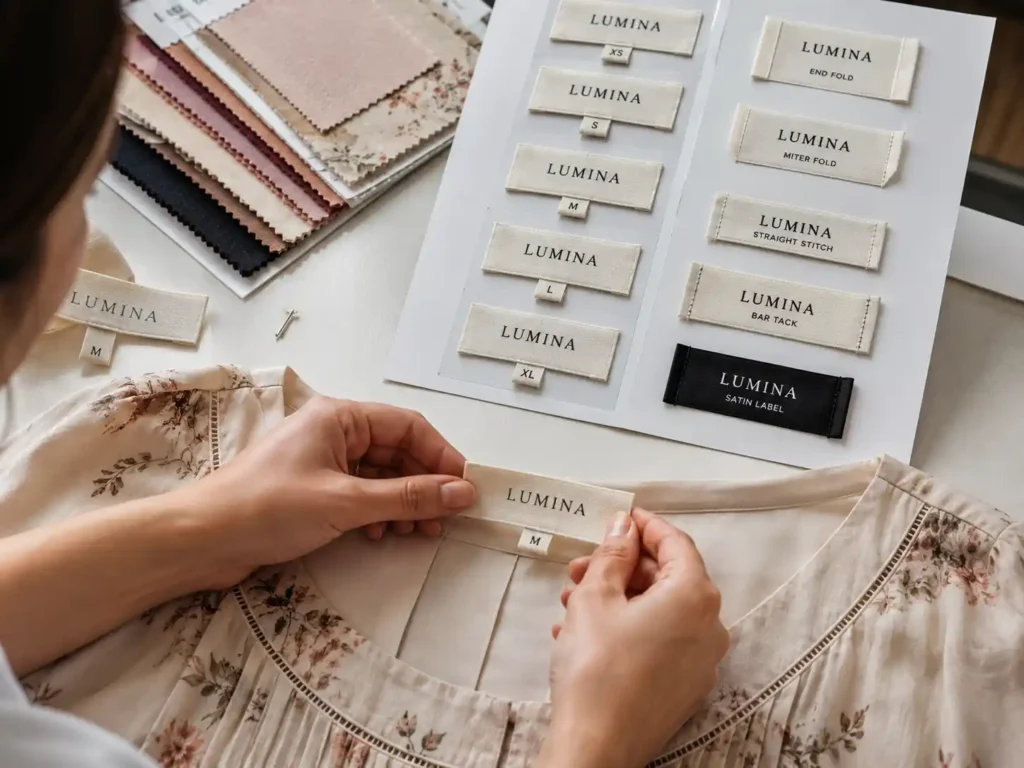
Main Labels
- Artwork approval
- Placement approval
- Attachment method

Size Labels
- Size code
- Placement
- SKU alignment

Care Labels
- Copy confirmation
- Material composition
- Market review

Hangtags
- Artwork and finish
- Attachment point
- Snag prevention
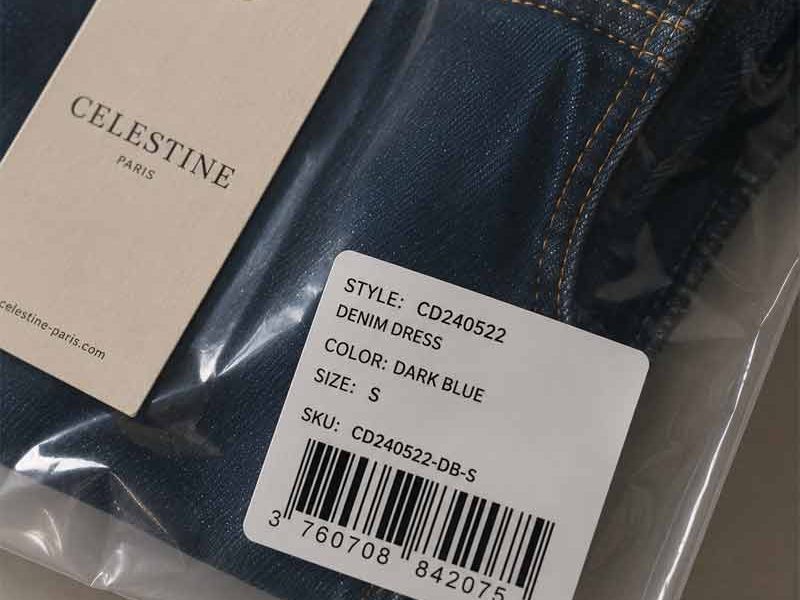
Barcode and SKU
- Data file
- Print clarity
- Pack-out match

Polybag and Carton
- Packing method
- Carton ratio
- Warehouse marks
Project Management for Multi-Style Brand Orders
Large collections create risk through style count, color count, fabric dependency, approval timing and warehouse rules. A structured team keeps development, production, QC and packing information connected across the full order.
Style Grouping and Sample Priority
A 10-30 style program is not managed as one undifferentiated list. Styles are grouped by fabric family, construction difficulty, launch priority and shared components. Photo samples, campaign styles and long-lead materials can move first, while lower-priority colors follow after fit and base construction are secured. Sample comments are logged by style and version so pattern, material and finishing changes do not disappear in email threads.
The 2 sample rooms, 7+ senior pattern makers and 20+ sample machinists support parallel development, but priority still matters when several complex lace, mesh and corset-inspired designs enter at once.
A weekly status can separate material pending, first sample, revision, PP and approved styles for clear decision-making.
- Inputs: line sheet, style priority, launch date, sample purpose and approval owner.
- Outputs: status by style, unresolved risks, next deadline and responsible team.
- Benefit: fewer approval bottlenecks and better use of sample capacity.
Factory Allocation and Production Scheduling
Jinfeng Apparel operates 6 owned women’s fashion factories and works with 10+ long-term satellite production partners. Allocation is based on product type, fabric, construction complexity, quantity, line loading and delivery plan rather than sending every style to the same line. The 18+ sewing lines and 6+ flexible production lines support multi-style programs and phased production when materials or launch priorities differ. A structured style can remain with a team familiar with lace placement and support elements, while simpler long-sleeve or lined variants may use another suitable line. Production timing is confirmed after PP approval, material readiness and packing lock. For many commercial programs, bulk sewing and finishing may be planned around 30-45 days after all approvals and materials are ready, while complex multi-style assortments are scheduled in phases. Final lead time is project-specific.
- Allocation criteria: product structure, material behavior, line skill, quantity and delivery sequence.
- Schedule gates: PP lock, material arrival, size ratio, packaging confirmation and inspection window.
- Delivery options: one shipment, phased shipment or air-and-sea split by project.
Merchandising, QC and Packing Coordination
The operating team includes 12+ merchandisers and order follow-up specialists, 15+ QC inspectors and 30+ finishing and packing workers. Merchandisers connect approvals, material status, production instructions and shipment documents; QC inspectors monitor product-specific control points; finishing and packing teams execute label, barcode, fold, polybag and carton instructions. Large programs benefit from one controlled record for style, color, size, approved components, open comments and packing requirements. When a change is approved, the update must reach pattern, material, production, QC and packing teams together. The same records support repeat orders, where pattern, fabric, trim, construction and packing references can be reopened rather than rebuilt from memory.
- Order control: versioned files, approval status, quantity matrix and issue log.
- Repeat-order control: retained pattern, fabric, trim, measurement and packing references.
- Escalation: unresolved quality, material or timing risks are raised before they affect the whole order.

MOQ, Cost and Lead Time Explained Clearly
A useful quotation separates quantity rules, material conditions, construction work, approval timing and packing requirements. The goal is cost control without weakening the brand-level appearance or the fit standard approved during sampling.
| Commercial Item | Planning Reference | Important Boundary |
|---|---|---|
| MOQ | Starts from 200 pcs per style/color | One style in two colors normally requires 200 pcs per color. Multiple styles totaling 200 pcs do not meet the standard structure. |
| Lace and Mesh | Supplier MOQ and lot availability apply | Custom-dyed, embroidered, certified or specially developed materials may require higher quantities or longer sourcing. |
| Sample Planning | Often 10-15 working days for straightforward styles; 15-25 for structured styles | Timing begins after material direction, measurements and construction are clear. Revision rounds and special trims extend the plan. |
| Bulk Planning | Often around 30-45 days after PP approval and material readiness | Multi-style, multi-color, special-material or phased programs receive a project schedule rather than one blanket promise. |
| Unit Cost | Built from fabric, trims, pattern, sewing, finishing, QC, packing and reasonable margin | Lining coverage, motif placement, cups, boning, hardware, size range and wastage can change the cost materially. |
| Private Label | Quoted from approved artwork and pack-out | Main labels, care labels, hangtags, barcode, polybag, carton marks and warehouse labels may carry separate supplier MOQ. |
| Testing | Quoted by product, material, market and test scope | Fabric or garment testing, inspection and certification documents are confirmed by project and current supplier records. |
| Delivery | Express, air, sea or split shipment by project | Transit time and cost depend on destination, shipment volume, trade term, forwarder and warehouse requirements. |
Testing, Documentation and Design Protection
Testing by Project
- Confirm target market
- Define test standard
- Approve cost and timing
Document Support
- Packing and shipment files
- Label information
- Forwarder coordination
NDA Protection
NDA-based cooperation can protect tech packs, original samples, patterns, measurements, fabric direction, trims, brand labels, packaging, order quantities, target prices and unreleased designs. Public content uses anonymous or authorized materials only. Design files and project records are shared internally according to the work needed for development and production.
- Unreleased design protection
- Private-label confidentiality
- Anonymous case presentation
How to Qualify a Lace Bodysuit Manufacturer
Relevant Samples
- Front, back and inside views
- Fit and movement evidence
- Material details
Pattern Capability
- Fit-size method
- Linked corrections
- Grade rules
Material Knowledge
- Stretch and recovery
- Lot control
- Coverage planning
Sample Process
- Version control
- Comment response
- PP lock
Bulk Transfer
- Production package
- Line briefing
- Approved references
Product QC
- Inline inspection
- Measurement tolerance
- AQL coordination
Private Label Control
- Artwork approval
- SKU accuracy
- Pack-out records
Factory Transparency
- Assigned facility
- Capacity evidence
- Production visibility
Anonymous Multi-Style Lace Bodysuit Programs
The following anonymized production profiles reflect the scale and management pattern of established fashion programs. Brand names, unreleased designs, pricing and proprietary files remain confidential under project protection rules.
United States Partywear Collection - 18 Styles, 32,400 Pieces

A United States partywear brand planned an 18-style bodysuit capsule across black, wine, ivory and selected nude tones.
The total order reached 32,400 pieces, with style quantities ranging from 1,200 to 2,400 units and a commercial XS-XL size curve. Product directions included long-sleeve floral lace, sheer mesh side panels, lined plunging fronts, open backs and corset-inspired seam work. The main development risk was inconsistent tension between stretch lace, soft mesh and front lining. Early samples showed neckline movement on two plunging styles and excess crotch pressure on three long-torso fits. Pattern corrections increased front-body stability, redistributed vertical length between front and back, widened selected gussets and adjusted elastic tension by edge location.
Lace placement rules were separated into mandatory center-front motifs, paired bust panels and natural all-over variation. Photo samples for six campaign styles moved ahead of lower-priority colors, while PP approval was completed in grouped waves by fabric family. Bulk production used separate lot records for black lace and black mesh to prevent shade mismatch. Inline QC concentrated on neckline flatness, torso length, seam extension, snap position and lining visibility. Private-label execution included main labels, size labels, care labels, branded hangtags, barcode stickers, individual polybags and carton marks. The program shipped in two planned lots so the first launch could enter the warehouse before the full assortment. Pattern, material, trim and packing references were retained for later replenishment.
- Order profile: 18 styles, 32,400 total pieces, 4 main color directions, XS-XL.
- Key corrections: neckline stability, front/back torso balance, gusset width and edge tension.
- Bulk controls: lace/mesh shade lots, motif rules, inline measurements and SKU pack-out.
UK Premium Ecommerce Program - 24 Styles, 56,800 Pieces

A UK premium ecommerce label developed 24 lace and mesh bodysuit styles for two seasonal drops, totaling 56,800 pieces. The assortment covered high-neck long sleeves, scalloped sleeveless shapes, mesh-back designs, lined sweetheart fronts, cut-out bodies and fashion corset directions. Quantities ranged from 1,600 to 3,200 pieces per style across core black, seasonal colors and two tonal lining options. The brand required photo-ready samples before the broader PP schedule, plus warehouse-ready SKU labeling. Development began with a shared base block, but the final collection used four torso and neckline families rather than forcing every style onto one pattern. Size-set review identified that two cut-out designs needed separate grade rules so openings remained balanced in larger sizes. A corset-inspired group required cup-position adjustments, softer channel edges and revised lining coverage before approval. Sample and PP status was managed by style priority, with campaign styles first and replenishment candidates second. Production was allocated by structure and fabric group across suitable lines, supported by the 18+ sewing-line system and flexible capacity. Final QC included measurement checks, left-right motif review, seam-extension tests, repeated snap operation, lining visibility, label placement and barcode verification. Packing instructions separated ecommerce units by style, color and size, with carton-level labels matched to the receiving file. The first seasonal drop moved by a planned air-and-sea split, while the second used regular sea freight after the launch window was secured. Repeat-order records retained approved patterns, lace sources, mesh colors, trim specifications and packaging details.
- Order profile: 24 styles, 56,800 total pieces, 1,600-3,200 units per style, multi-drop delivery.
- Key corrections: grade rules for cut-outs, cup position, channel comfort and lining coverage.
- Bulk controls: grouped factory allocation, barcode verification, phased shipping and retained repeat records.
Lace Bodysuit Frequently Asked Questions

Start Your Lace Bodysuit Development Review
Send Kelly the information already available for the collection. A complete package allows the development team to review structure, fabric direction, size range, MOQ, sample planning, private-label requirements and production timing with fewer back-and-forth messages. A reference image is enough to begin a preliminary discussion, while a tech pack, original sample or detailed line sheet supports a more accurate assessment. Jinfeng Apparel will review whether the project fits the company’s fashion-womenswear development system, identify open technical questions and outline the next step toward sampling or quotation.
- Reference images, sketches, tech packs or original-sample photos
- Style list, target quantity and color plan for each style
- Size range, measurement chart and intended fit direction
- Preferred lace, mesh, lining, support and trim details
- Main label, care label, hangtag, barcode and packing requirements
- Target sample date, launch date, warehouse destination and delivery window


