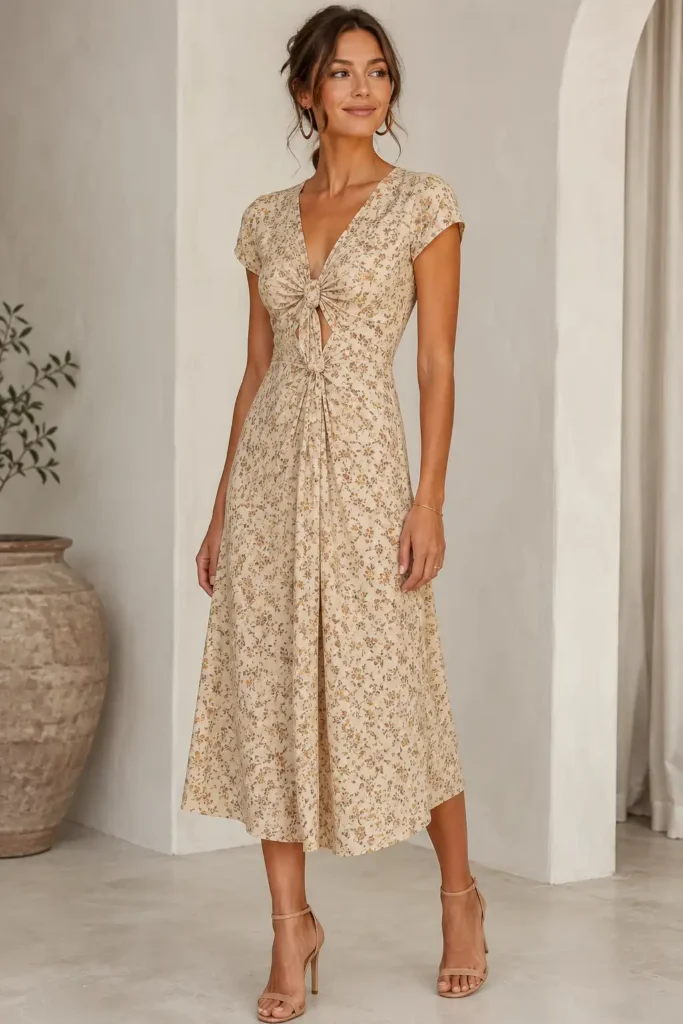
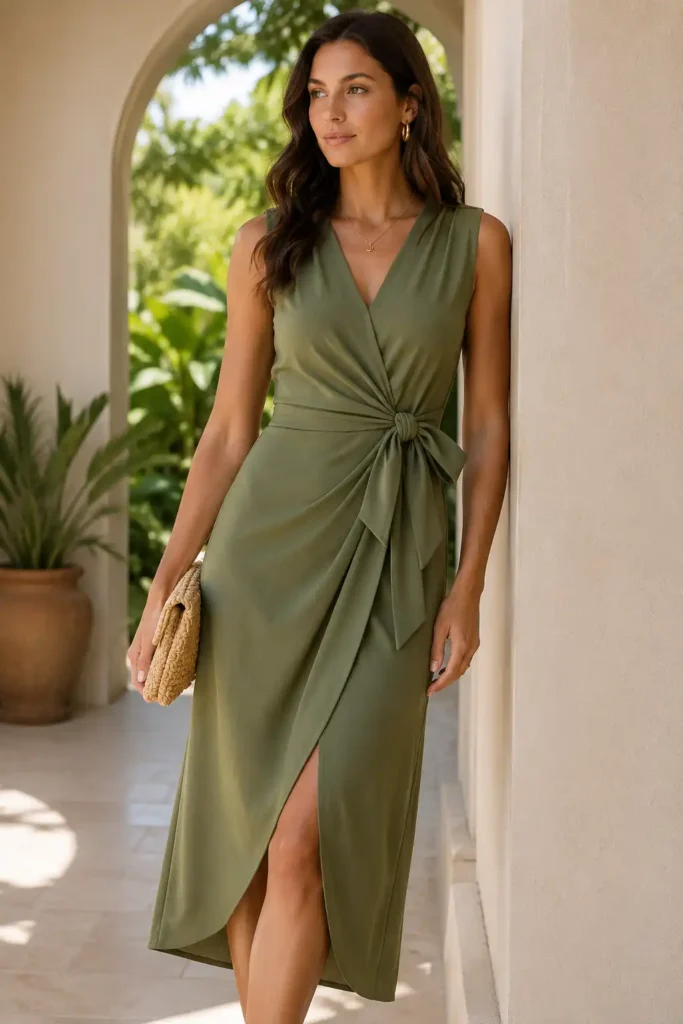
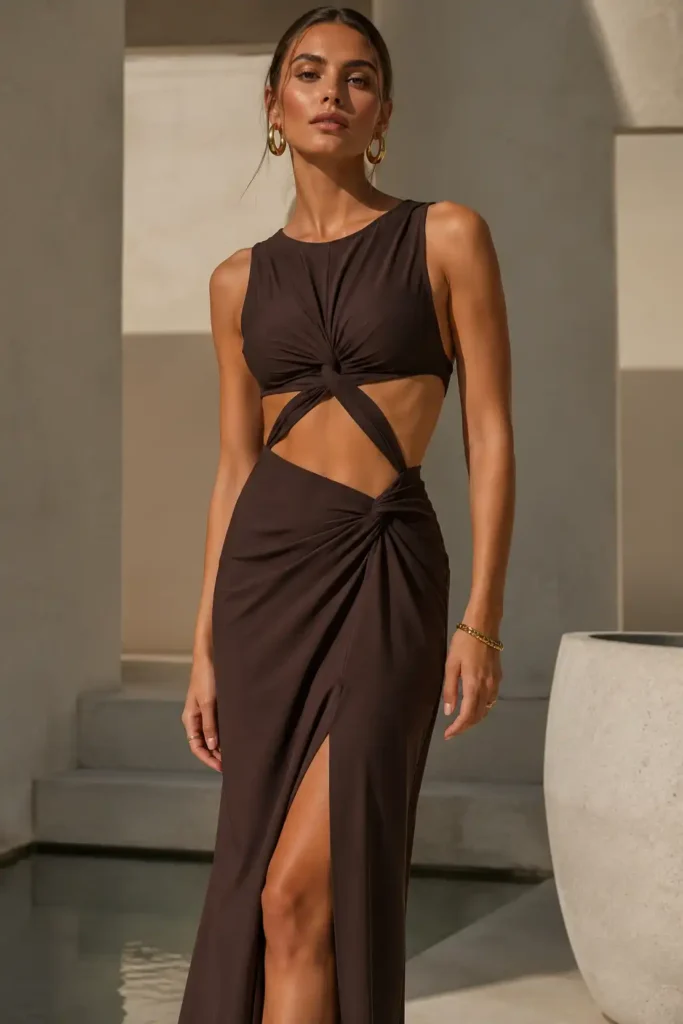
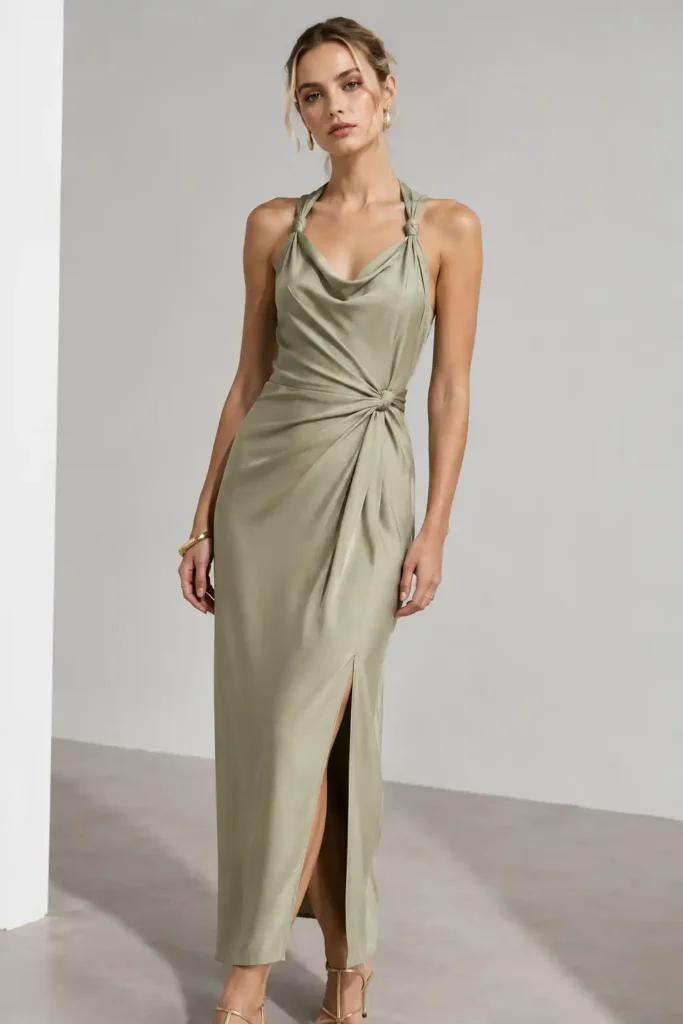
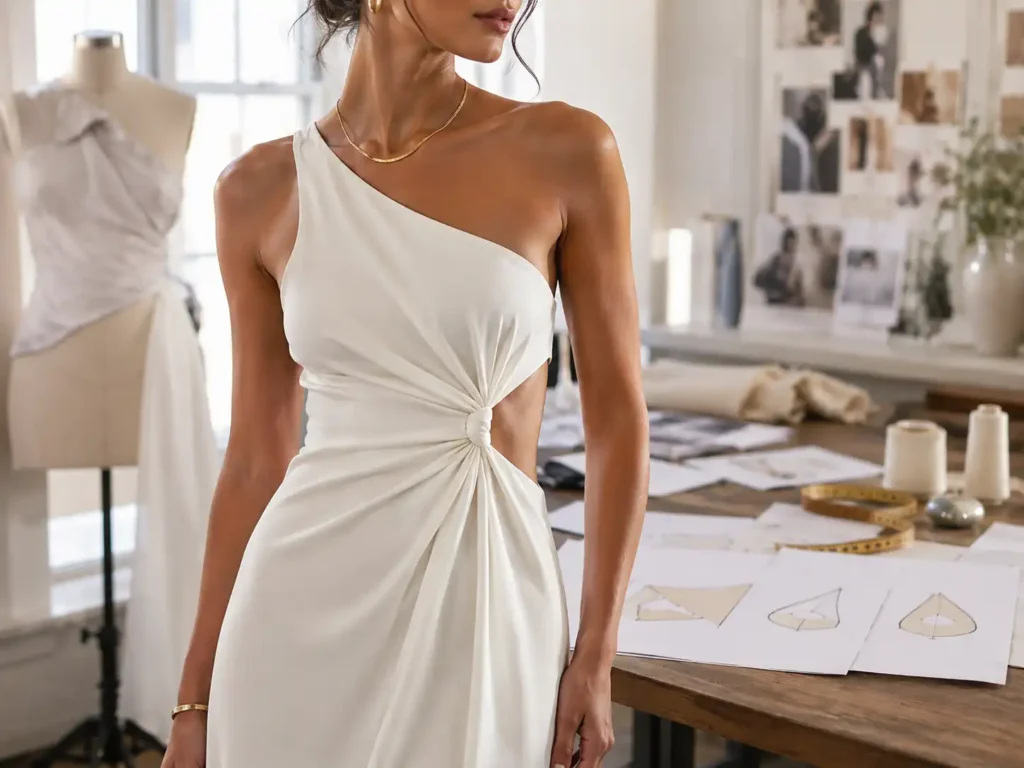
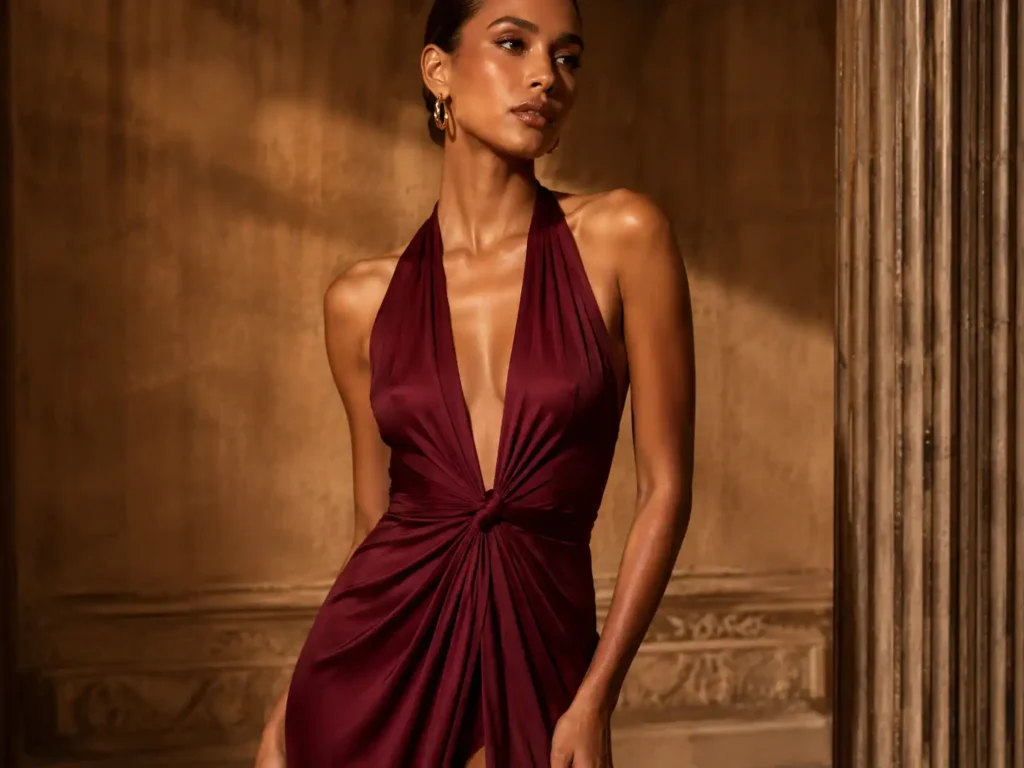
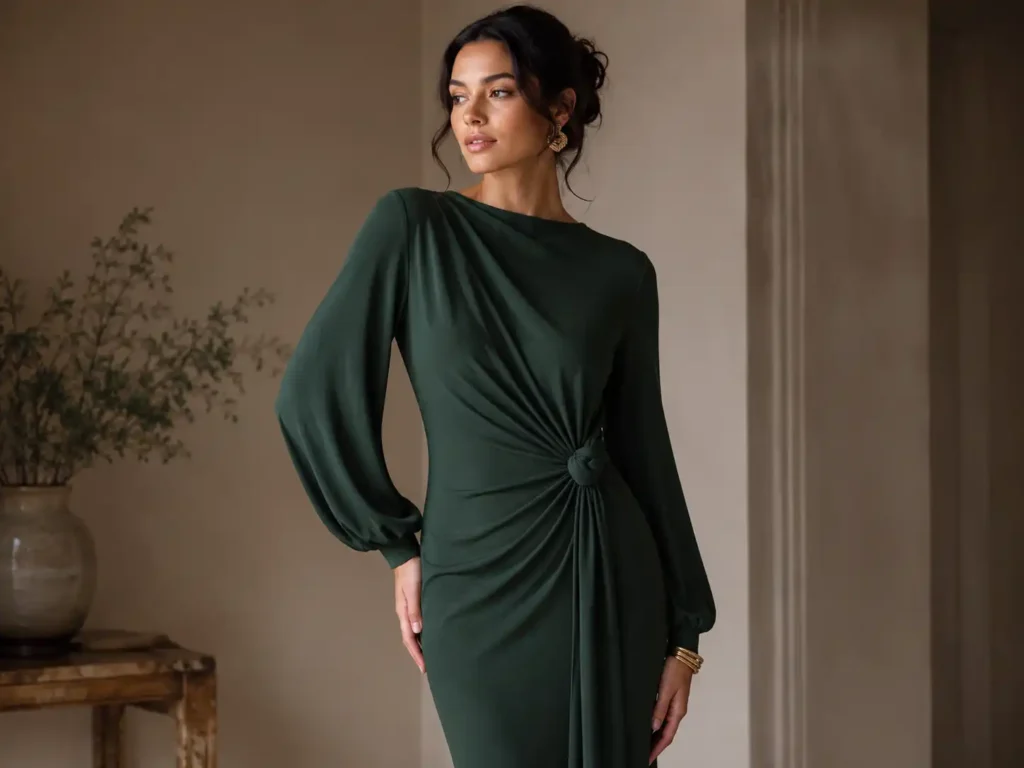
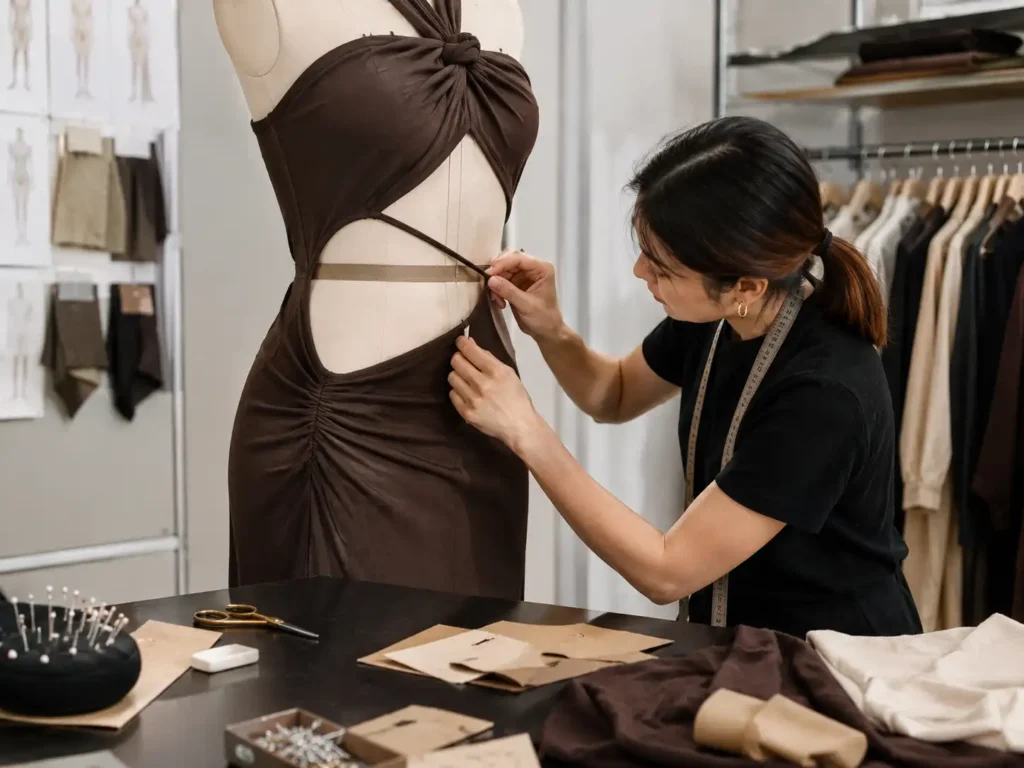
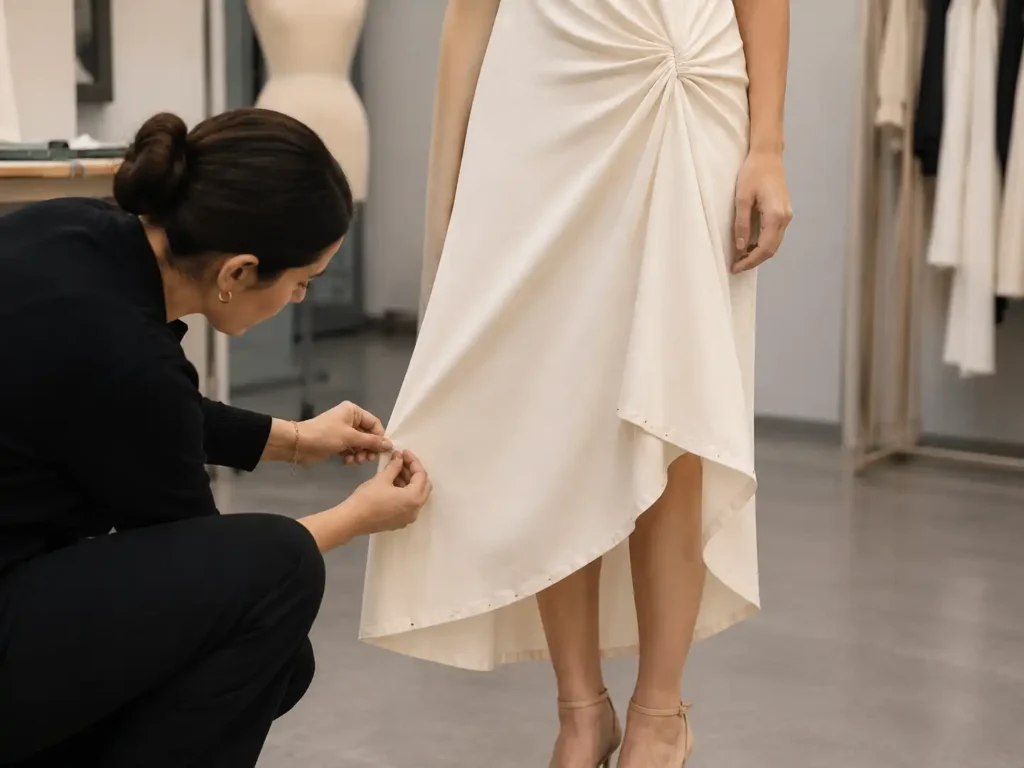
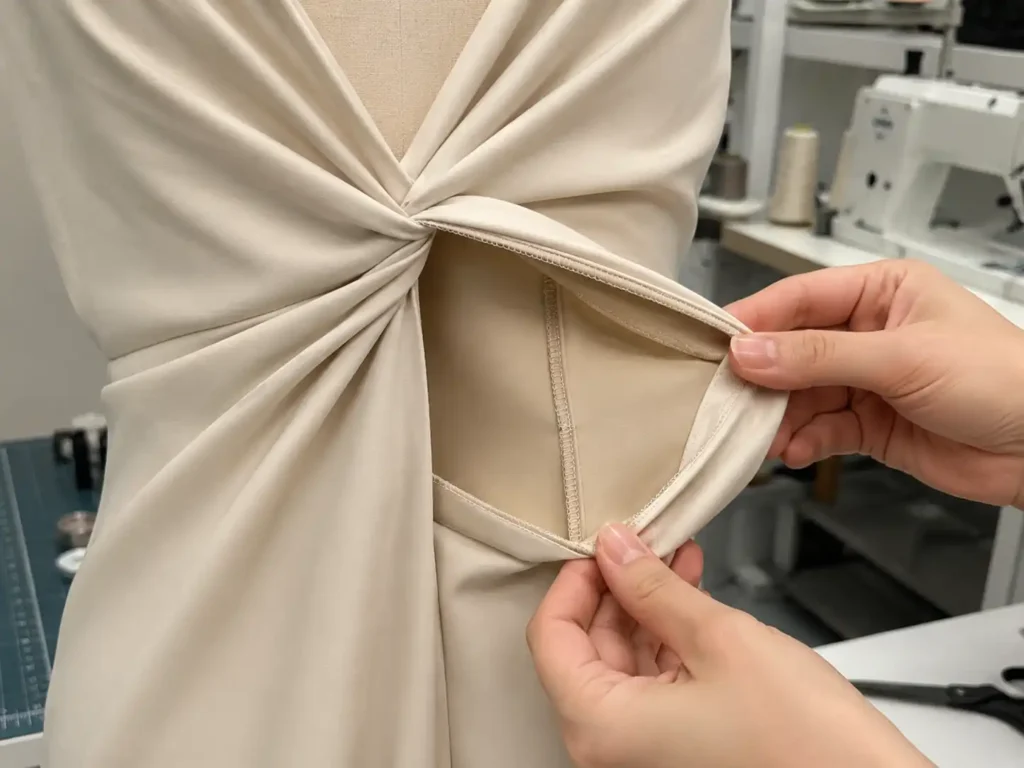
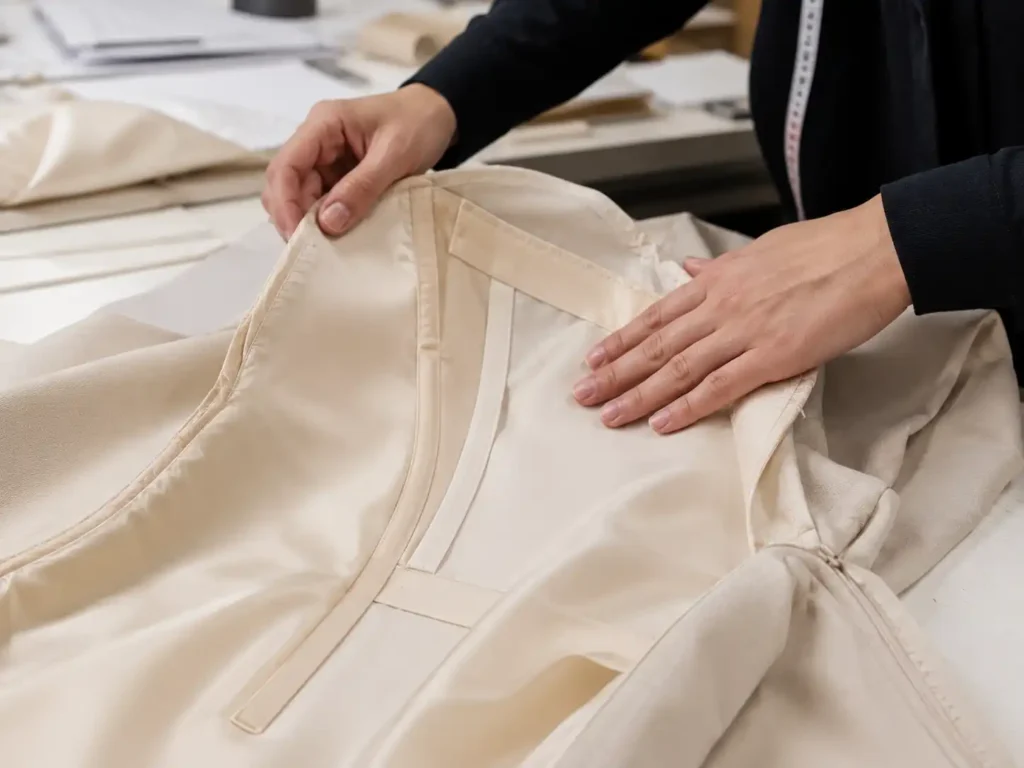
Knot Detail Dress Manufacturer

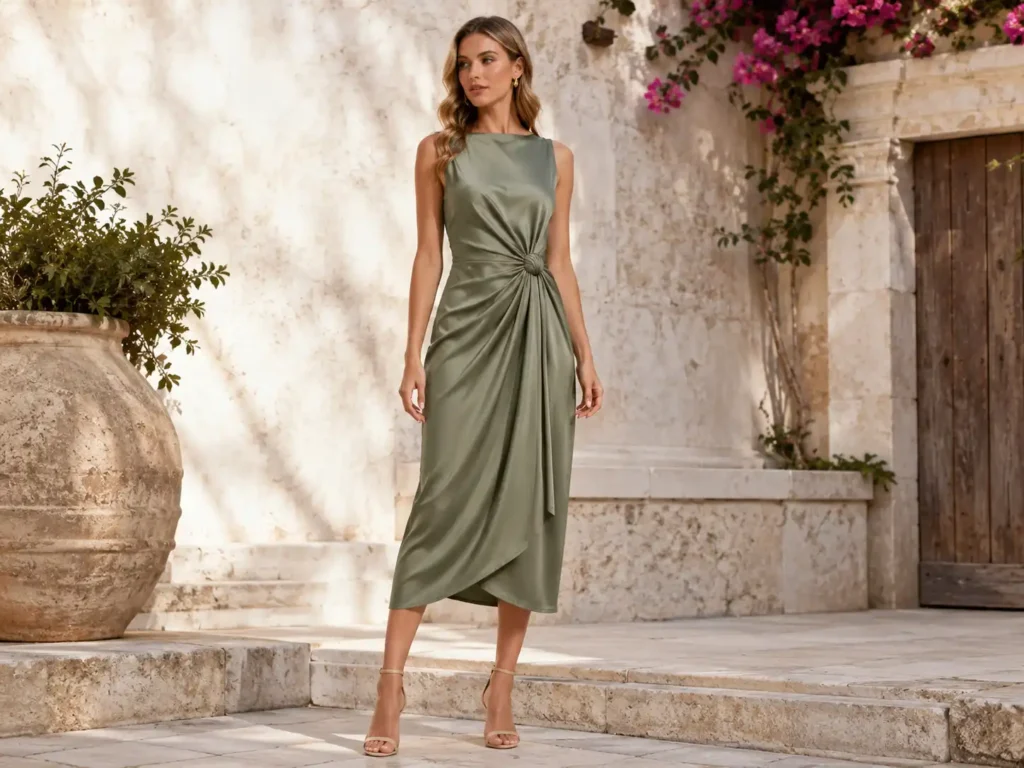
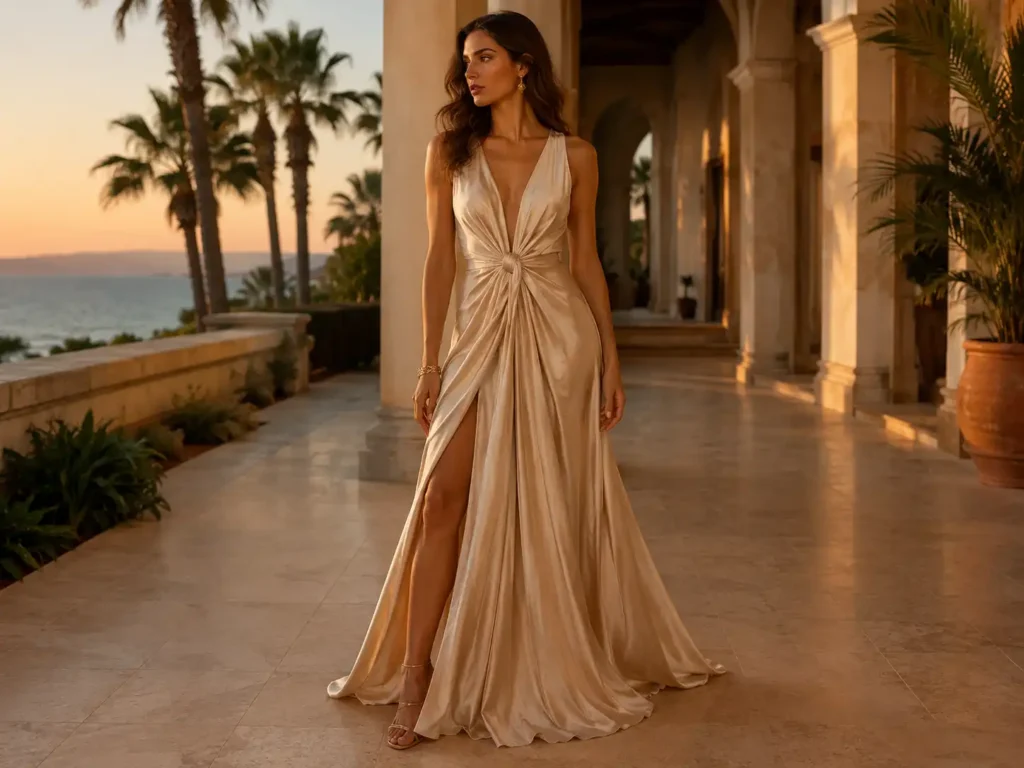
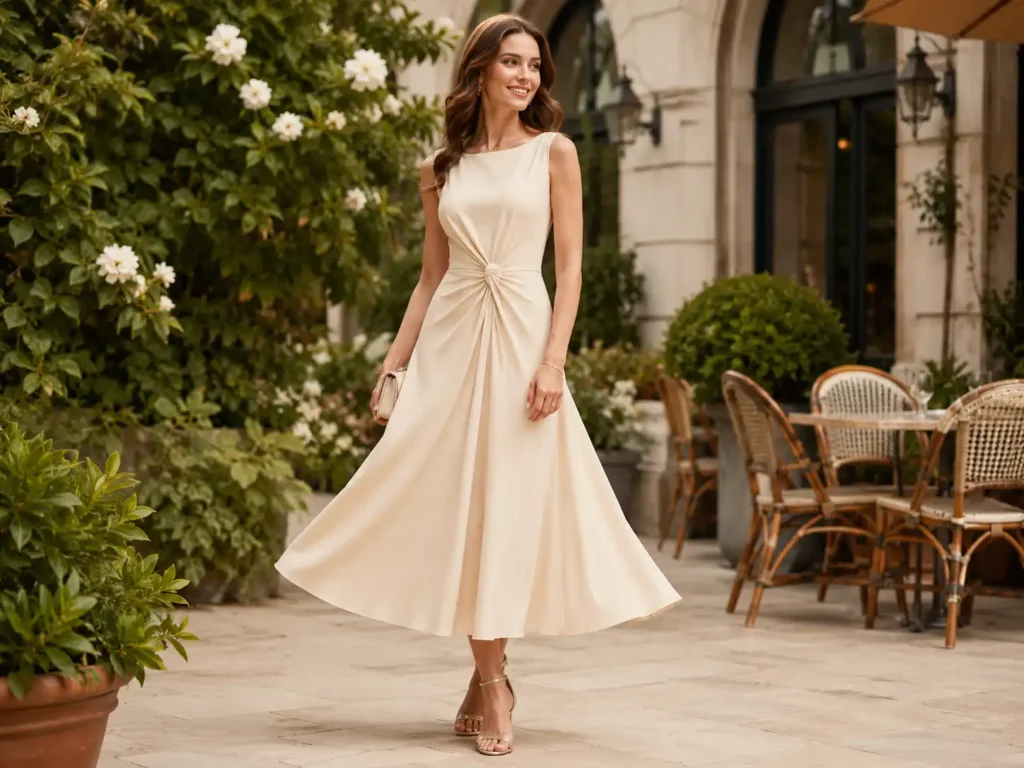
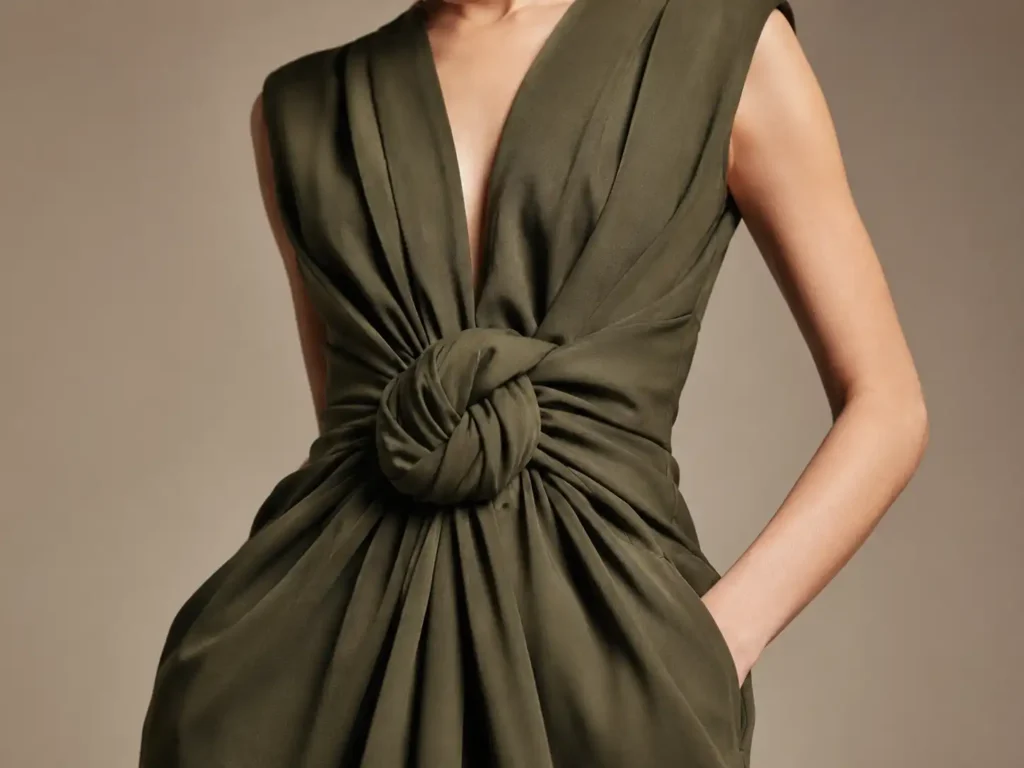
Custom front-knot, side-knot, twist-knot and draped-knot dresses developed for global fashion collections.

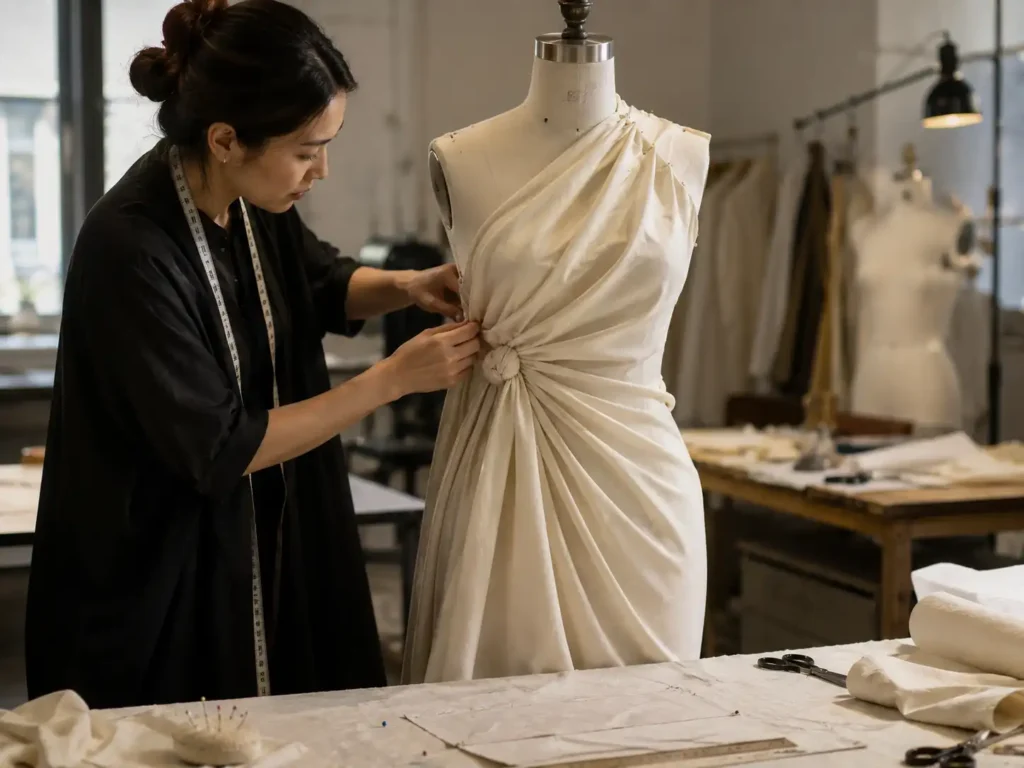
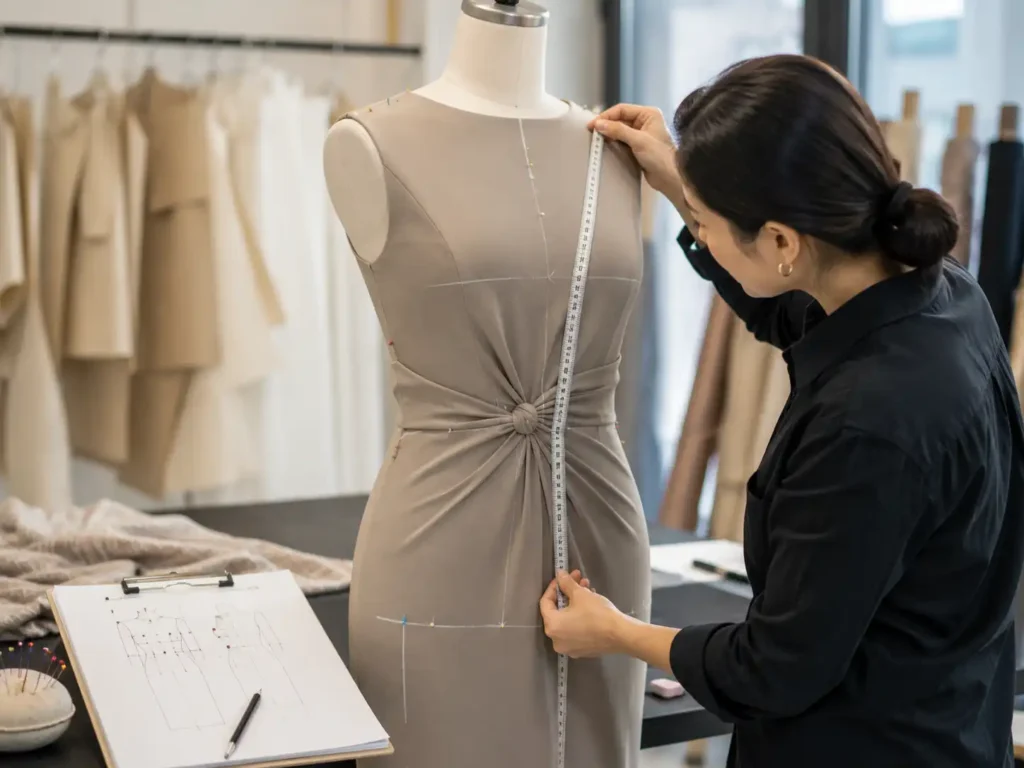
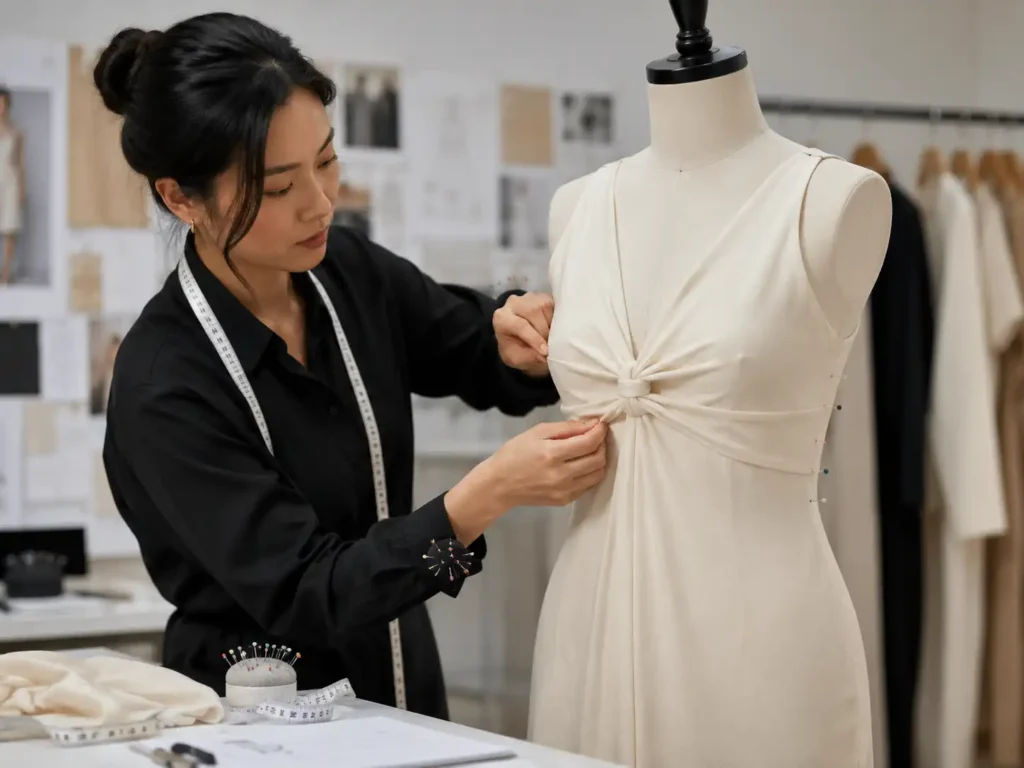
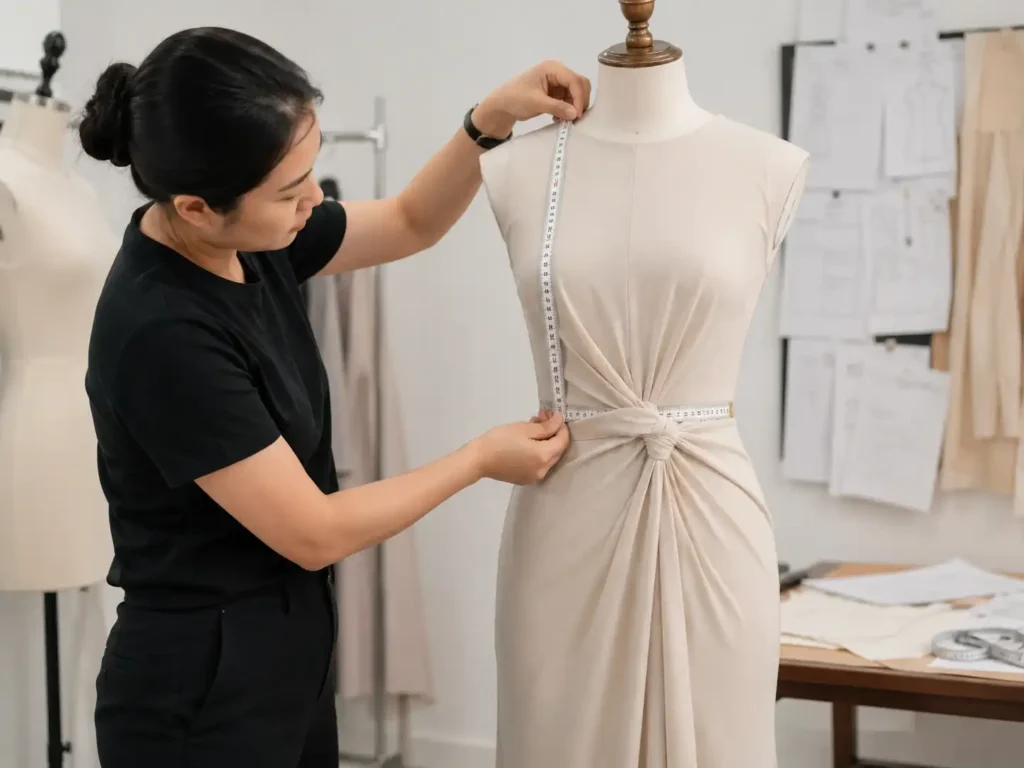
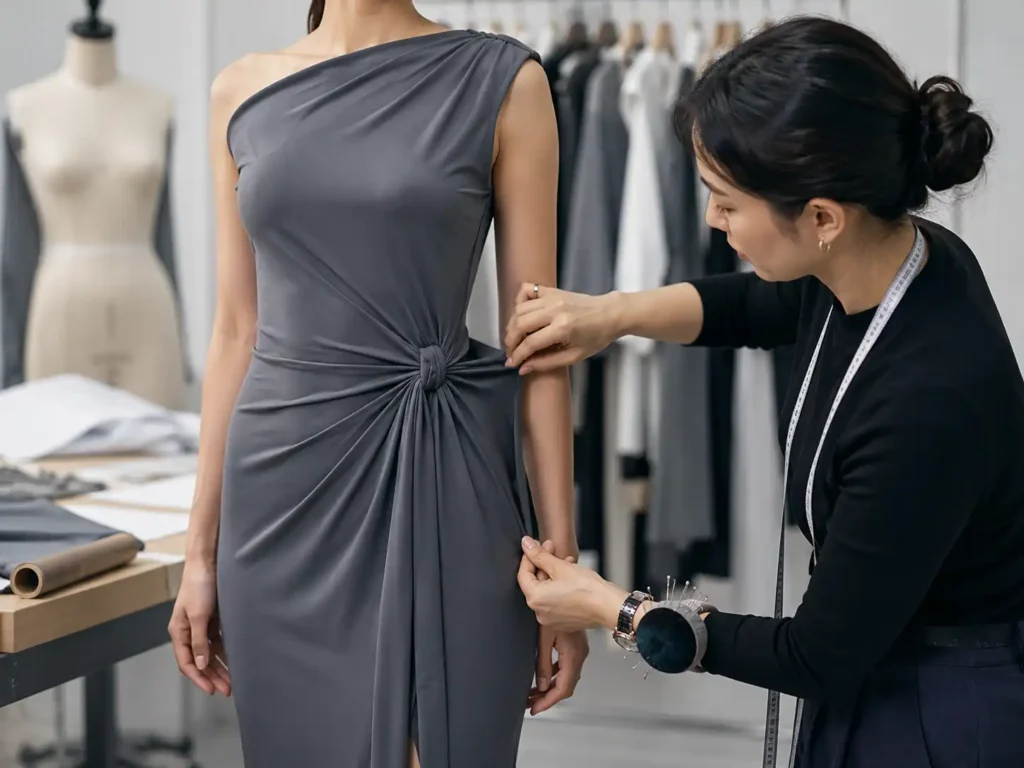
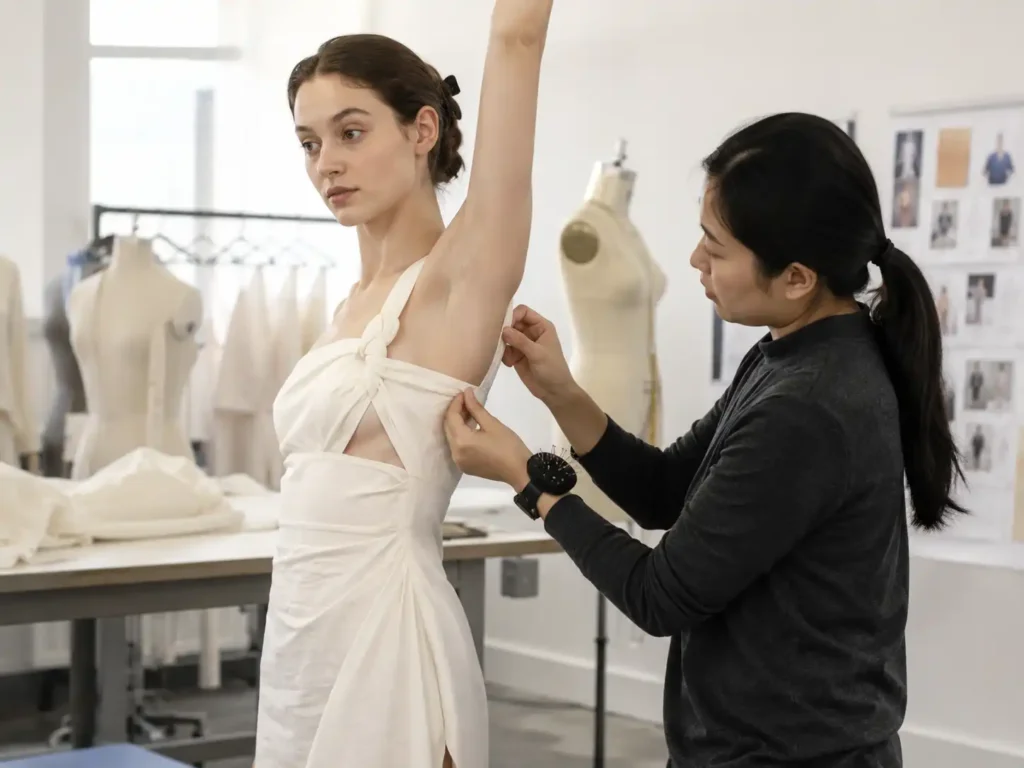
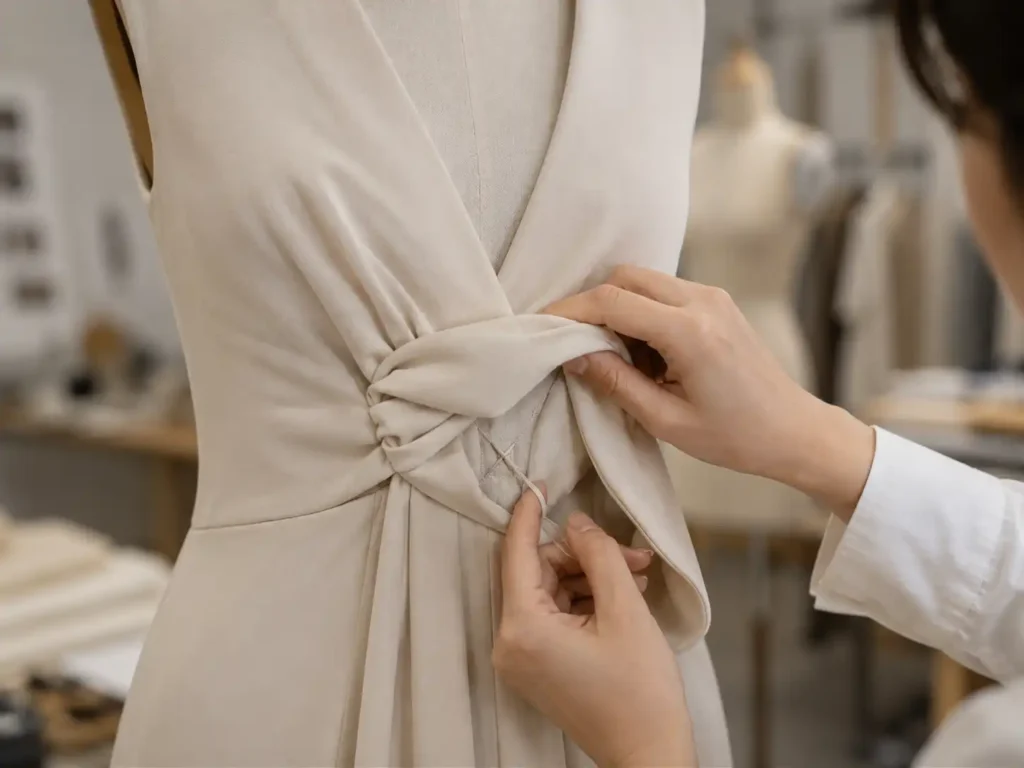
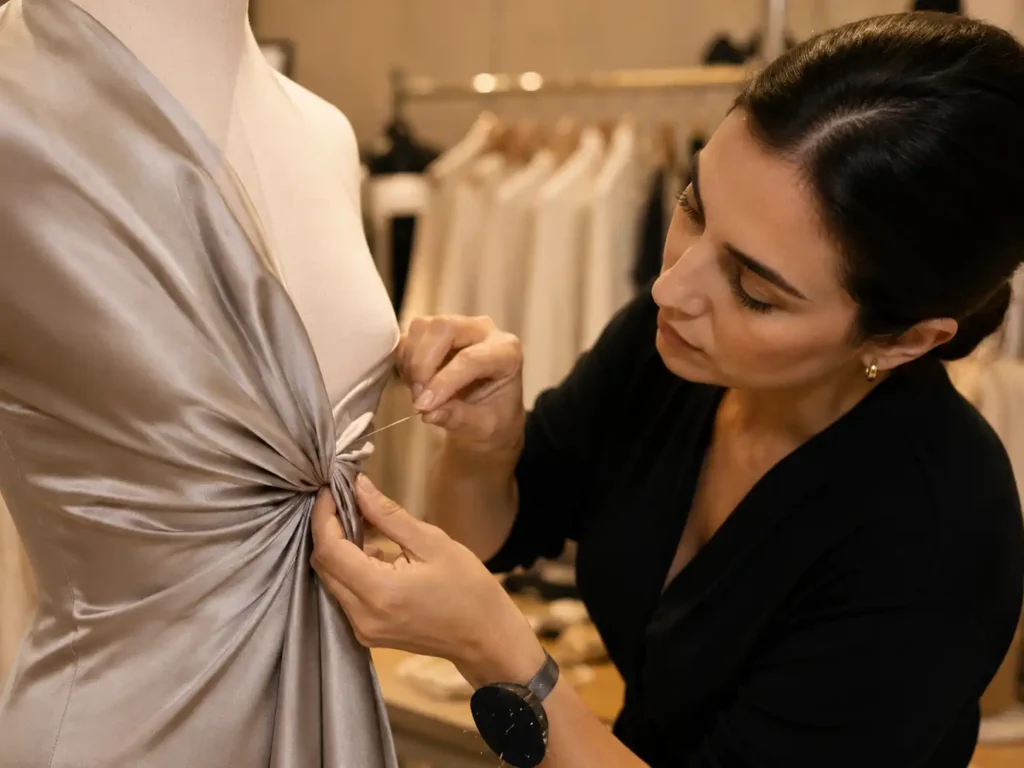
Jinfeng Apparel converts knot-focused dress concepts into production-ready garments through fabric assessment, pattern engineering, fit correction, sample revision, PP approval, controlled bulk sewing and private-label packing. Knot position, fold direction, seam thickness and size grading are documented before production so the approved visual balance can be repeated across colors and sizes.

  • 8 core knot-detail structure families supported
  • 6 critical fit zones reviewed around bust, waist, hip, opening, slit and hem
  • 2 sample rooms, 7+ senior pattern makers and 20+ sample machinists
  • MOQ starts from 200 pcs per style/color
  • 100,000+ pcs regular monthly capacity across the production system

Manufacturing Facts Behind Every Knot Dress Program

Measured capability matters when a design feature must stay consistent across a large size run and several production batches.

Since 2008

Long-term women’s fashion manufacturing experience supports trend-driven dresses where appearance depends on pattern balance, controlled drape and repeatable sewing rather than decorative styling alone.

6 Owned Factories

Factory allocation follows fabric, structure and order rhythm. Stretch bodycon knots, satin drapes and lightweight resort ties can be routed to production teams with matching dress experience.

10+ Production Partners

Long-term satellite partners expand seasonal capacity and specialty options while Jinfeng keeps development files, approval standards, merchandising follow-up and QC requirements under one project system.

2 Sample Rooms

Separate sample capacity supports prototype development, fit correction, revised samples, photo-ready samples, PP samples and Golden sample sealing for multi-style collections.

7+ Pattern Makers

Senior pattern makers review knot-panel length, fold direction, seam position, cut-out shape, waist placement and grading rules before bulk patterns are released.

15+ QC Inspectors

Dedicated inspectors cover fabric, cutting, in-line sewing, measurements, garment appearance, pressing, labels, packing and pre-shipment review.

Built for Established Fashion Dress Programs

Clear project boundaries protect development quality, sample accuracy and realistic production planning.

Best Fit For

Jinfeng Apparel is structured for established fashion brands, premium ecommerce labels, occasionwear programs, sourcing offices, product development teams and private-label collections with clear style direction, sampling needs and bulk plans.

  • Quarterly or seasonal dress collections
  • 10-30 styles developed in parallel
  • Multi-color and multi-size production
  • Repeat orders and multi-batch delivery

Project Requirements

Strong projects normally begin with a tech pack, reference garment, clear image set, line sheet or structured design brief. Quantity, fabric direction, size range, launch calendar and packing requirements allow accurate development and production planning.

  • MOQ from 200 pcs per style/color
  • Sample fee and courier budget
  • Bulk production plan
  • Approval responsibility and timeline

Why Knot Detail Dresses Fail in Production

Most failures begin before final inspection. Risk control starts with structure, fabric, pattern and sewing method decisions.

Knot Position Shift

A knot placed 15-25 mm away from the approved point can visually move the waistline, change bust coverage or distort the side seam. Pattern marks and first-piece approval are required before sewing continues.

Uneven Drape

Fold depth can vary when operators pull panels by eye. Defined pleat allowance, notch positions and an approved operation sample keep left-right balance under control.

Bulky Knot Core

Too many folded layers create a hard lump, visible shadow or uncomfortable pressure. Seam allowance reduction, graded layers and hidden internal anchoring lower bulk without weakening the feature.

Weak Recovery

Stretch jersey can bag around the knot after wear when recovery is poor or the panel is over-stretched during sewing. Fabric stretch tests and pattern adjustment help maintain shape.

Grading Distortion

Scaling every knot component by the same percentage can make larger sizes look oversized and smaller sizes too tight. Position, panel length, opening and fold volume require separate grading rules.

Sample-Bulk Gap

A sample may look balanced because one machinist adjusted it by hand. Bulk consistency depends on written sewing instructions, position marks, operation samples, in-line checks and Golden sample comparison.

One Manufacturing Chain from Design to Delivery

A knot dress succeeds when development, production, quality and packing decisions remain connected from the first review through repeat orders.

OEM Development

Production from approved tech packs, size charts, construction details, BOM files and packing instructions.

ODM Support

Style assessment, fabric direction, pattern development and sample execution from sketches, references or line sheets.

Fabric Sourcing

Satin, stretch satin, jersey, ponte, crepe, mesh, rayon, viscose, linen and other dress fabrics selected by structure.

Pattern Making

Knot-panel geometry, seam placement, drape allowance, cut-out control and size grading converted into production patterns.

Sample Revision

Fit, fabric, knot volume, fold direction, opening coverage and workmanship comments recorded before revised sampling.

Bulk Production

Approved patterns, operation samples, sewing instructions, QC checkpoints and packing standards applied across production.

Private Label

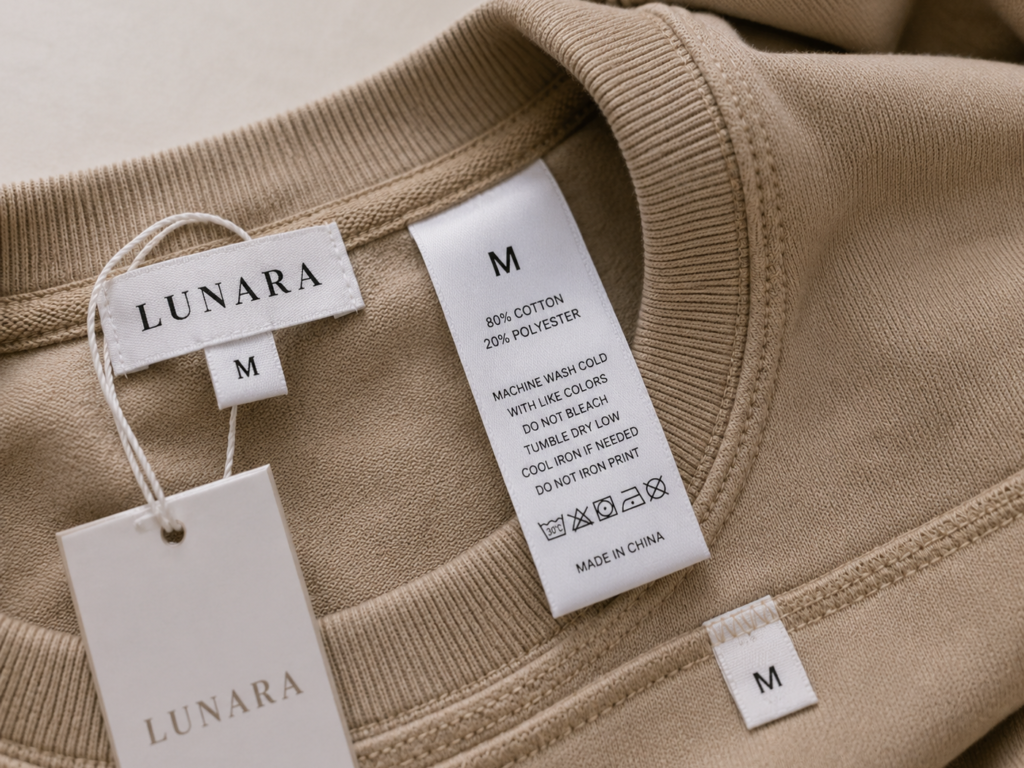
Woven labels, size labels, care labels, hangtags, barcodes, SKU stickers, polybags, cartons and warehouse marks.

Export Delivery

Packing list, commercial invoice, carton details and coordination with air, sea or client-appointed freight partners.

From Knot Concept to Production-Ready Dress

Nine controlled stages turn a visual design feature into a repeatable product standard.

Reference Review

Confirm design source, knot type, dress category, intended market, desired fit and commercial target.

Structure Assessment

Identify real tie, fixed knot, twist-through, gathered loop, faux knot or mixed construction.

Fabric Direction

Compare drape, stretch, recovery, thickness, shine, transparency, shrinkage and color availability.

Pattern Development

Build the dress block, knot panels, openings, seam lines and internal support into a workable pattern.

First Sample

Test appearance, on-body balance, movement, coverage, closure and workmanship.

Fit Revision

Record measurements, comments, updated pattern actions and any effect on fabric or cost.

PP Approval

Lock fabric, color, trims, construction, measurements, labels, packing and production instructions.

Bulk Production

Release approved files, first-piece control, in-line checks and staged quantity follow-up.

QC and Delivery

Check appearance, measurements, knot consistency, labels, barcodes, packing and shipment documents.

Knot Detail Dress Styles We Develop

Product development covers multiple knot placements, dress lengths and market directions rather than one fixed silhouette.

Front Knot Dress

Front knots create a strong focal point but can change bust coverage and center-front balance. Development checks whether the knot sits above, on or below the natural waist, how much fabric feeds into the fold, and whether the neckline remains stable during movement. Jersey, stretch crepe and soft viscose work well when controlled recovery is available.

Side Knot Dress

Side knots shape the waist and hip while pulling visual weight toward one seam. Pattern work must prevent the side seam from twisting forward and stop the hem from lifting unevenly. Side openings, slits and asymmetric skirts require a balanced relationship between knot tension, hip ease and skirt sweep.

Waist Knot Dress

A waist knot may be functional, decorative or built into a wrap panel. The main question is whether adjustment should change garment fit. Fixed waist knots need hidden anchoring; adjustable ties require enough length and friction to stay secure. Waist position is checked against torso length across the full size range.

Twist Front Dress

Twist-front construction may use crossing panels, a slot, a loop or a complete fabric turn. Each method changes bulk, stretch demand and sewing sequence. Bust coverage, under-bust tension, neckline stability and the direction of grain or knit stretch are reviewed before the first pattern is cut.

Shoulder Knot Dress

Shoulder knots are common in resort, sundress and occasion collections. Strap width, tie length and knot thickness affect comfort and neckline height. Fixed decorative knots often improve size consistency, while adjustable knots need testing for slippage, wash behavior and pressure on the shoulder.

Knot Cut-Out Dress

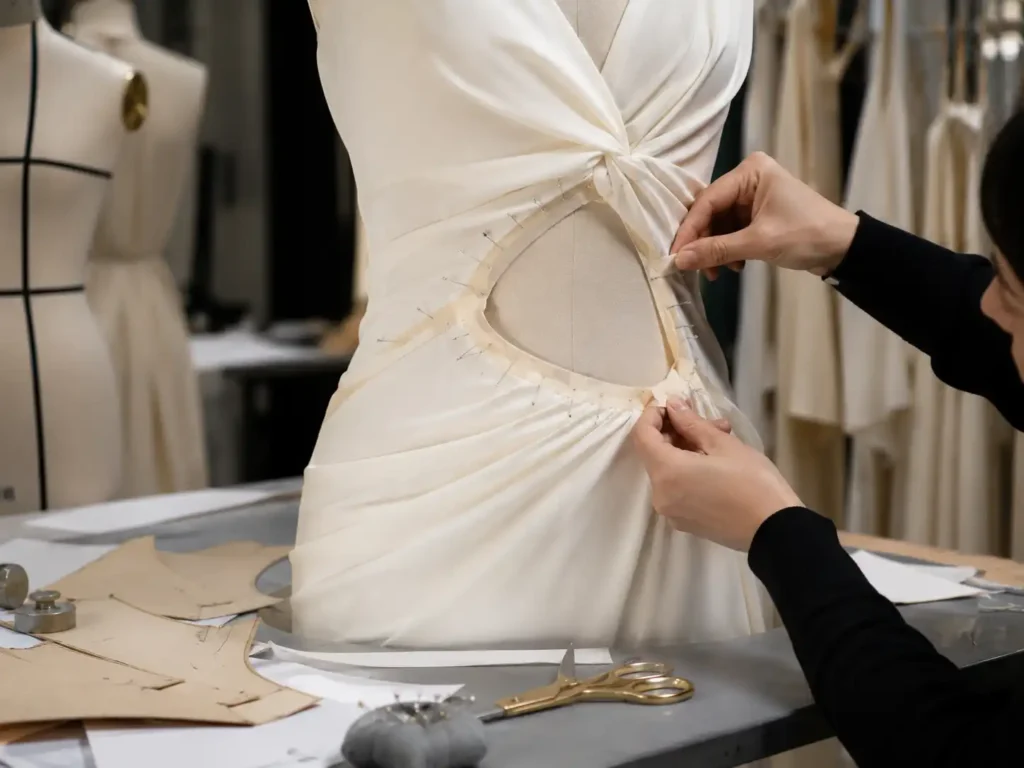
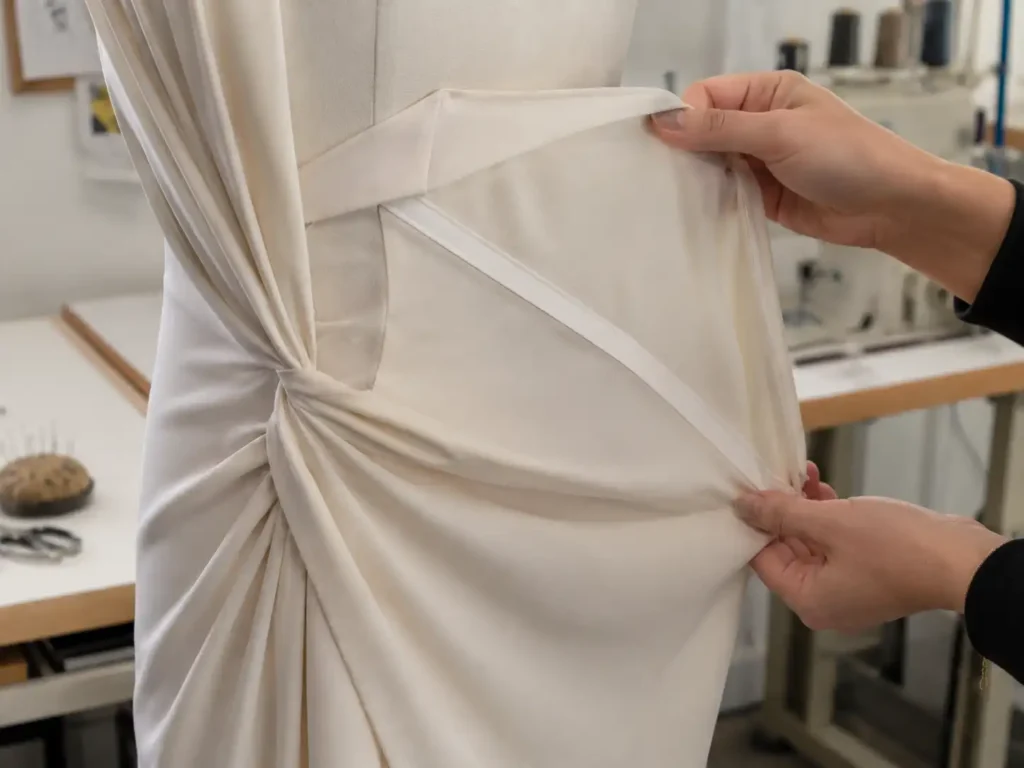
Cut-out knot designs combine visual tension with exposure control. The opening must remain within approved dimensions when standing, sitting and moving. Clear elastic, lining edges, hidden tape or a stable facing may be needed around the cut-out, especially for soft jersey or power mesh.

Knot Strap Dress

Knot straps can be used on camisole, halter and asymmetric styles. Strap length influences armhole depth, bust position and back coverage. Size grading cannot rely only on adding strap length; the neckline, armhole and knot allowance need coordinated adjustment.

Draped Knot Dress

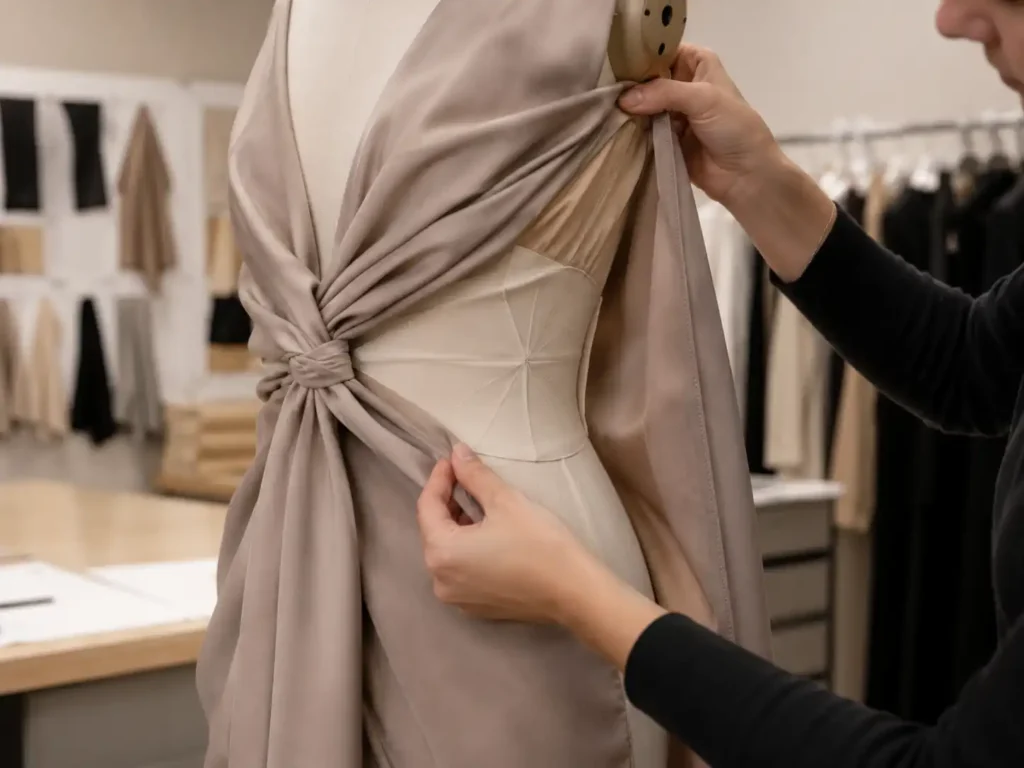
Draped knots rely on fabric flow rather than tight tying. Satin, rayon, viscose jersey and fluid crepe can produce elegant folds when grain direction and panel width are correct. Excess fullness creates bulk; insufficient fullness produces sharp tension lines and loses the intended softness.

How Different Knot Structures Are Engineered

Every knot effect begins with a construction decision. Visual similarity does not mean identical pattern, sewing or QC requirements.

Functional Tie Knot

A true tie allows the wearer to adjust tension or styling. Panel length, width, edge finish and surface friction determine whether the knot stays secure. Functional ties should not become the only structural support for bust coverage unless wear testing confirms stability.
  • Best for resort, wrap and casual styles
  • Needs tie-length grading
  • Requires wash and slippage review

Fixed Decorative Knot

A pre-formed knot gives consistent appearance and faster dressing. Internal stitches hold the shape while visible surfaces remain clean. The anchoring method must avoid puckering, needle marks and hard internal pressure.
  • Suitable for satin and eventwear
  • Consistent across production
  • Requires hidden support planning

Twist-Through Structure

Two panels pass through an opening or around each other to create a controlled twist. Opening size, feed length and sewing order determine the final shape. Too much allowance creates a loose knot; too little causes strain and distortion.
  • Strong center-front effect
  • Pattern accuracy is critical
  • Works in stretch and fluid fabrics

Faux Knot Construction

A faux knot imitates a tied form using folded panels and a cover piece. The approach reduces wearer adjustment and helps repeat the approved proportion. Layer reduction and seam grading keep the center from becoming too thick.
  • Good for high-volume programs
  • Stable visual result
  • Can hide functional seams

Gathered Knot Panel

Gathered panels feed controlled fullness into a knot or loop. Gathering ratio must be written rather than judged by eye. Notches and stitch lines guide distribution so folds remain even across sizes and production lines.
  • Supports ruched bodycon styles
  • Balances waist and hip volume
  • Needs defined gathering ratio

Draped Loop Detail

A soft loop creates the appearance of a knot without tight compression. Loop length, fabric weight and anchoring angle determine whether the detail hangs elegantly or collapses. Pressing must protect the dimensional form.
  • Suitable for fluid midi and maxi dresses
  • Lower seam pressure
  • Packaging needs shape protection

Knot Details Across Dress Silhouettes

Knot construction changes with length, fit and fabric weight. Pattern decisions follow the whole silhouette rather than the decorative feature alone.

Mini Knot Dress

Mini proportions make small placement errors highly visible. Knot height, hem level, slit opening and seat coverage are checked together so the feature does not pull the skirt upward.

Midi Knot Dress

Midi lengths offer space for drape and asymmetry. Waist position, side-seam balance and hem sweep need control so the dress remains level when the knot pulls fabric toward one area.

Maxi Knot Dress

Long skirts add fabric weight. The knot must carry visual volume without dragging the bodice or twisting the hem. Lining length and packing folds require separate planning.

Bodycon Knot Dress

Bodycon styles depend on stretch, recovery and controlled negative ease. Knot volume must shape the body without creating pressure or permanent bagging.

Slip Knot Dress

Slip silhouettes often use satin or lightweight woven fabrics. Bias behavior, neckline stability, bust darts, lining and invisible zipper placement interact with the knot detail.

A-Line Knot Dress

A-line dresses can use the knot to define the waist while preserving skirt movement. Drape allowance should not collapse the clean flare or add unwanted thickness.

Knot Dresses for Commercial Fashion Collections

Product engineering is aligned with launch use, merchandising position, photography needs and repeat-order potential.

Partywear

Photo-driven designs with body contour, cut-outs, mesh, satin shine or bold asymmetry. Development focuses on visual impact, secure coverage, comfort and movement.

Occasionwear

Refined midi and maxi dresses often require fluid drape, lining, smooth zippers and controlled pressing. Knot proportions should look polished from several viewing angles.

Resortwear

Lightweight ties, shoulder knots and printed side-knot dresses need breathable fabrics, travel-friendly packing and stable appearance after folding.

Premium Ecommerce

Photo-ready samples, repeatable fit, clean packaging and SKU accuracy matter. Knot placement must remain stable across imagery, inventory and reorder production.

Graduation Collections

White, pastel and event-ready dresses need transparency control, reliable delivery planning and balanced proportions for group photography and seasonal launches.

Day-to-Evening

Versatile knots can create waist shape without heavy structure. Fabric comfort, wrinkle behavior and movement guide development for all-day wear.

Custom Design Variables for Knot Detail Dresses

Eight design variables determine whether a knot reads as refined, bold, relaxed or structured. Each variable also changes manufacturing risk.

Knot Position

Front, side, waist, shoulder, hip or back placement changes the visual center and the direction of fabric tension. Position is measured from stable reference points rather than judged only by appearance.

Knot Scale

Knot width and volume must suit dress length, body proportion and fabric thickness. Larger sizes may need slightly more panel length without a proportional increase in visible bulk.

Drape Volume

Fold depth is controlled through panel width, gathering allowance and anchoring. A written fold ratio prevents inconsistent hand shaping during production.

Cut-Out Shape

Circular, triangular, teardrop and asymmetric openings react differently to stretch and movement. Opening edges may require clear elastic, facing, tape or lining support.

Neckline

V-neck, halter, one-shoulder, bandeau and scoop necklines create different load paths around a knot. Neckline safety and bust coverage are checked during fit review.

Sleeve Direction

Long sleeve, cap sleeve, sleeveless and one-sleeve designs change shoulder tension and can rotate a front or side knot if the upper pattern is not balanced.

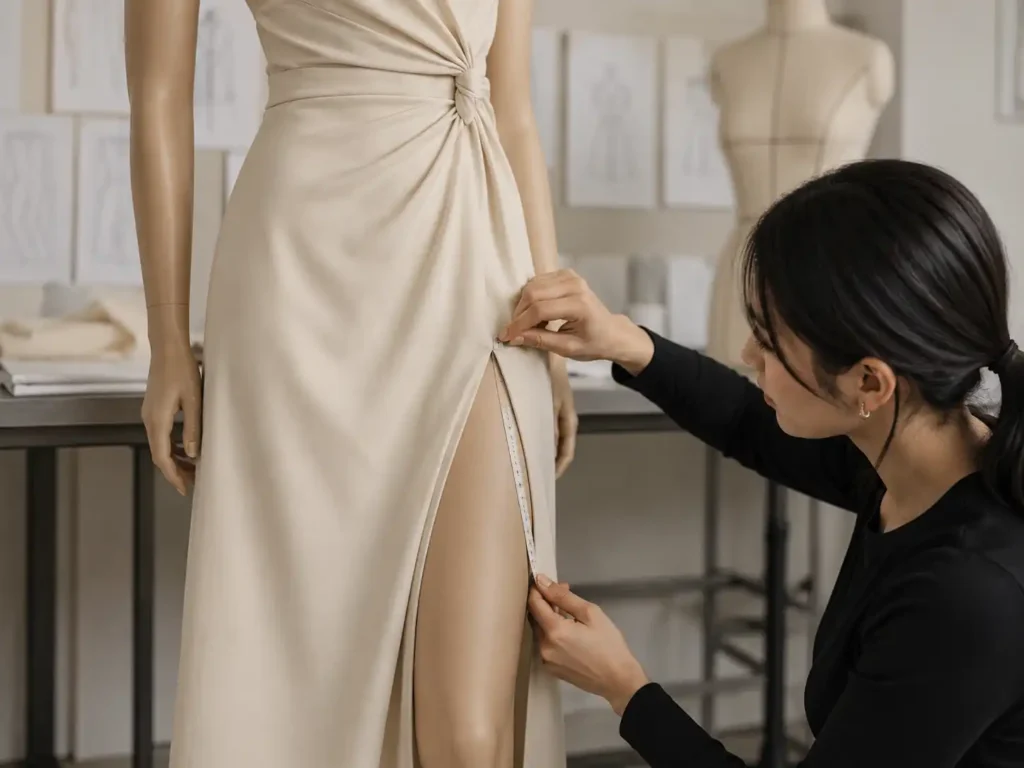
Slit Height

A knot near the hip often feeds into a slit. Slit height, overlap and opening under movement need measurement limits and stable seam reinforcement.

Dress Length

Mini, midi and maxi lengths require different hem corrections when fabric is drawn toward the knot. Final hem balance is checked on the body after knot shaping.

Fabric Selection for Knot Dress Structures

Knot StructureRecommended FabricsUse CarefullyMain Control Points
Front twistViscose jersey, stretch crepe, soft ponteRigid poplinRecovery, bust coverage, center balance
Side knotStretch satin, jersey, fluid crepeHeavy wovenHip tension, side seam, hem level
Waist tieCotton blend, linen blend, crepe, rayonVery slippery satinTie length, friction, edge finish
Fixed faux knotPonte, crepe, satin-backed crepeUltra-thin chiffonInternal anchor, layer bulk, needle marks
Cut-out knotPower mesh, stretch jersey, double knitLoose open meshOpening stability, transparency, elastic support
Shoulder knotPoplin, linen blend, crepe, soft satinHeavy velvetStrap pressure, knot security, neckline height
Draped loopSatin, rayon, viscose, fluid jerseyDry stiff fabricGrain direction, loop fall, pressing
Ruched knotJersey, rib knit, stretch meshLow-recovery knitGathering ratio, recovery, seam waviness


How Fabric Behavior Changes Knot Appearance
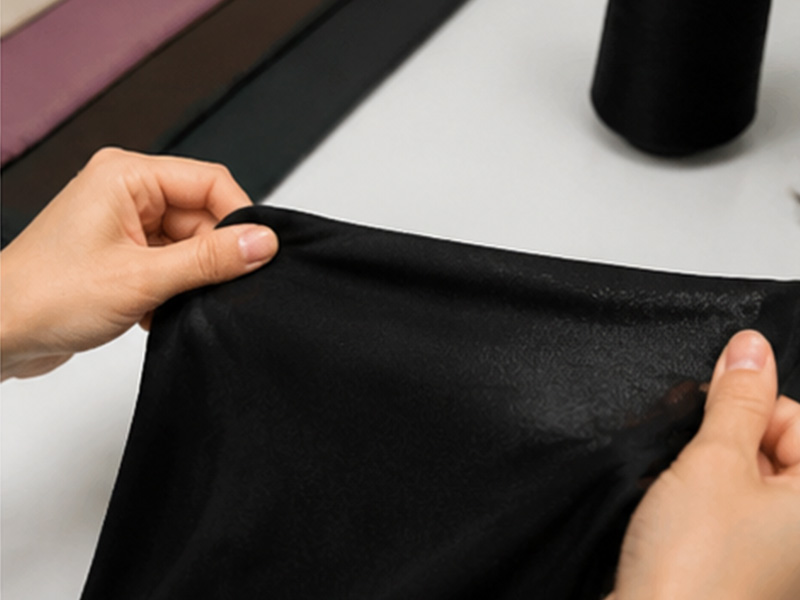
Fabric approval includes more than color and hand feel. Performance around concentrated folds decides whether the final dress remains stable and refined.

Stretch and Recovery

A fabric may stretch enough to form a knot yet fail to recover after wear. Recovery is checked by extending the fabric in the intended direction, releasing it and observing residual growth. Pattern ease and stitch choice are adjusted when recovery is weaker.

Drape and Fluidity

Fluid fabrics create long, soft folds; structured fabrics produce sharper geometry. Drape is assessed with the intended panel width because a small swatch can hide how added volume behaves around the waist or hip.

Thickness and Bulk

Layer count at the knot can reach four to eight layers depending on construction. Seam allowance grading, partial lining and hidden support reduce a hard center while keeping the feature secure.

Surface Friction

Matte crepe and cotton blends hold real ties more securely than smooth satin. Slippery fabrics may need a fixed knot, hidden anchor or longer tie length to avoid loosening during wear.

Transparency

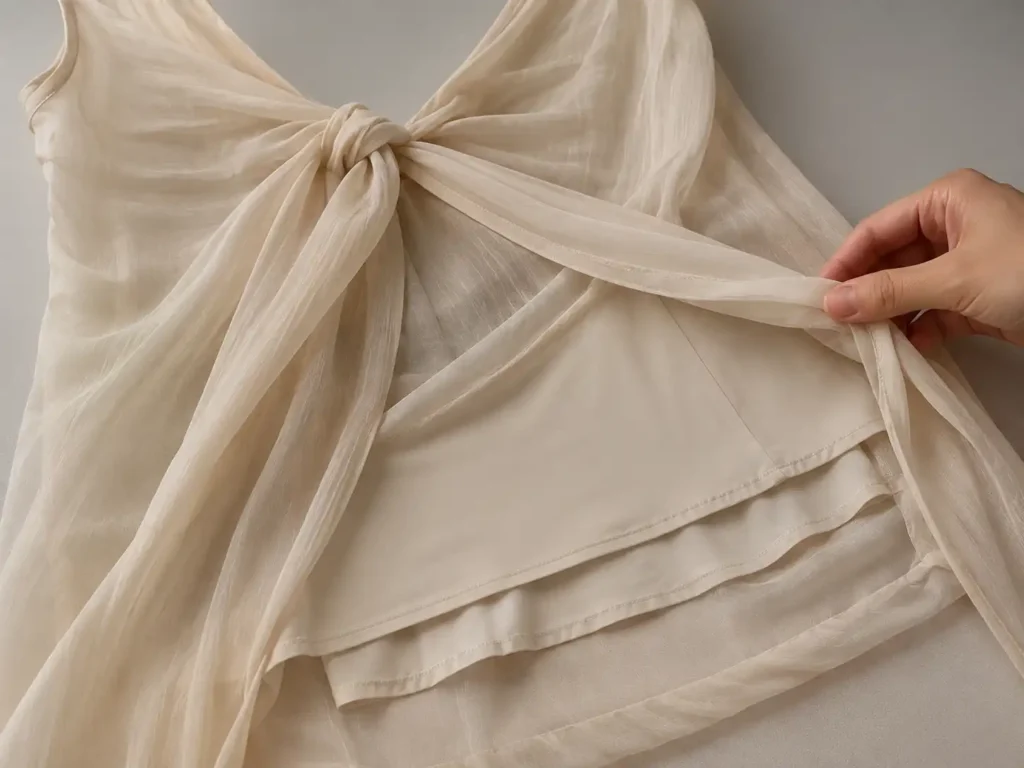
Light colors, mesh and fine jersey may expose seam allowances, anchors or lining edges around the knot. Layer mapping is reviewed before sampling so the internal structure remains visually clean.
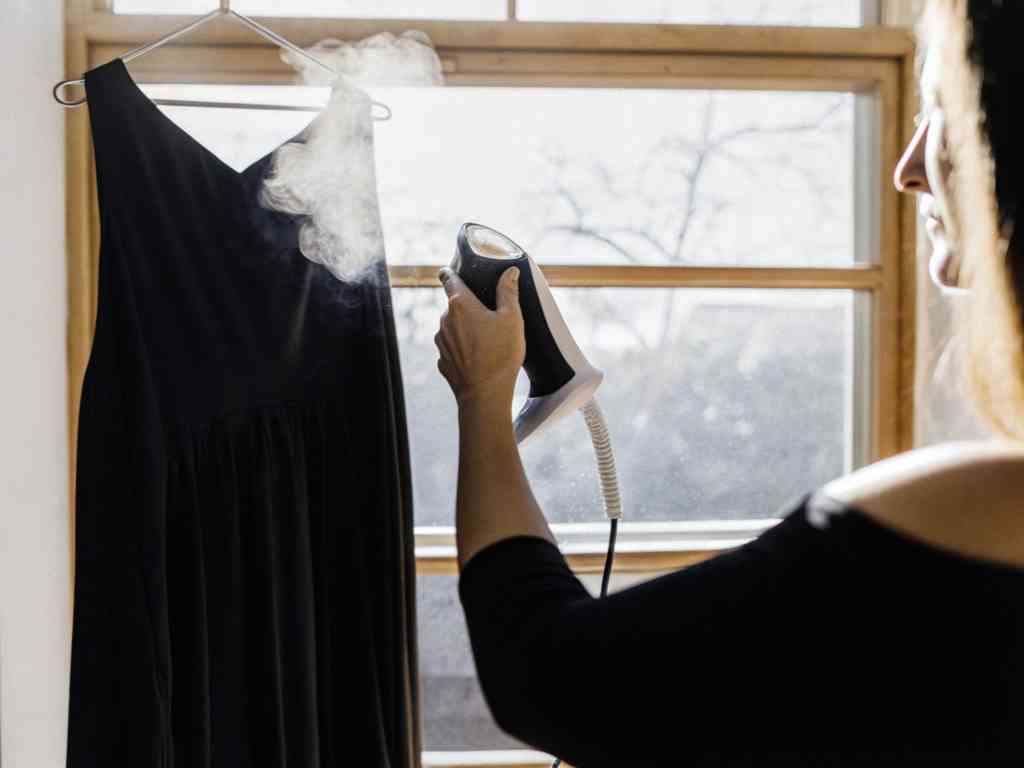
Woman using steamer on black dress in sunlit room

Wrinkle Memory

Satin, viscose and linen blends react differently after folding, steaming and transport. Pressing temperature, packing direction and insert protection are selected according to the approved fabric.

Internal Support for Stable Knot Construction

Small components often decide whether a knot stays secure, feels comfortable and keeps its approved position after wear.

Lining

Full, partial or local lining controls transparency, comfort and seam visibility. Lining must move with the knot rather than pull against it.

Clear Elastic

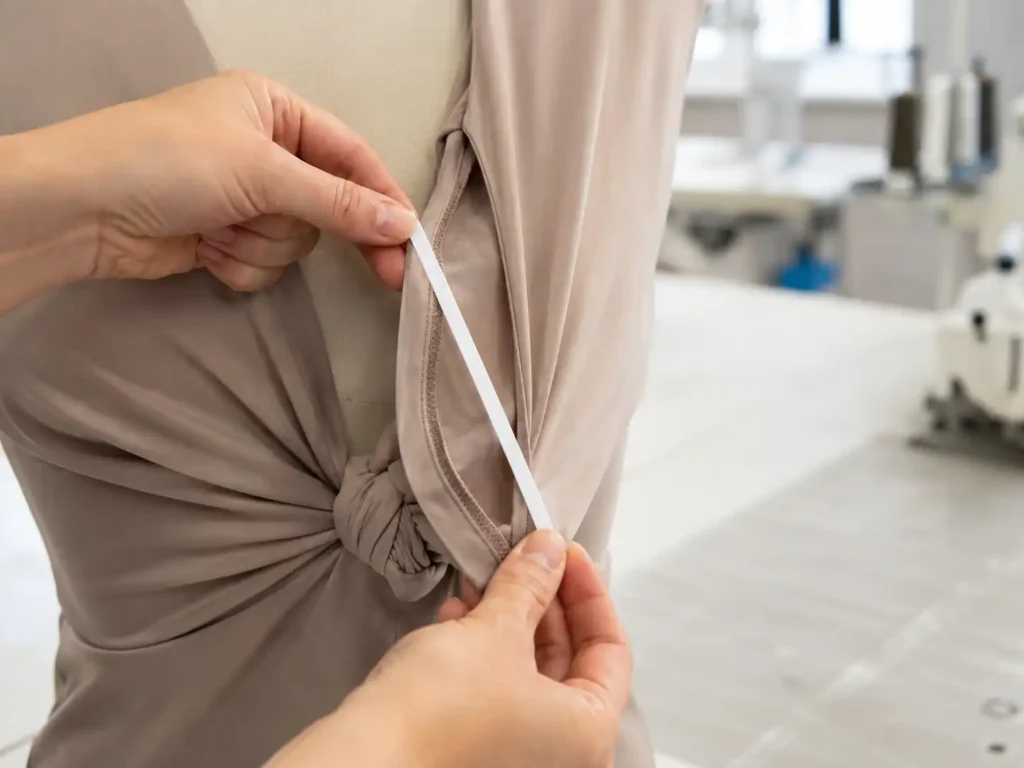
Clear elastic can stabilize cut-outs, necklines and stretch openings while preserving flexibility. Tension must be controlled to avoid rippling.

Stabilizing Tape

Lightweight tape supports openings or seam lines where soft fabric may stretch during sewing and wear.

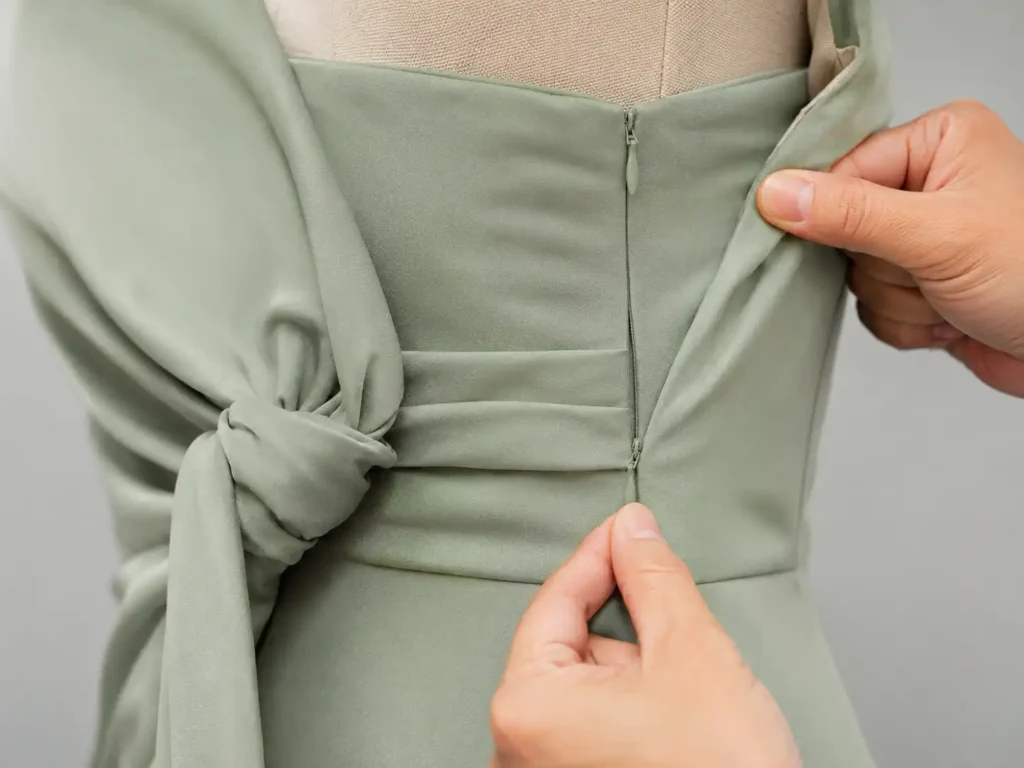
Invisible Zipper

Zipper position is planned away from excessive knot bulk. Seam balance and smooth insertion are checked after the knot is formed.

Snap or Hook

Hidden snaps or hooks can protect neckline coverage, wrap overlap or functional ties without changing the visible design.

Internal Anchor

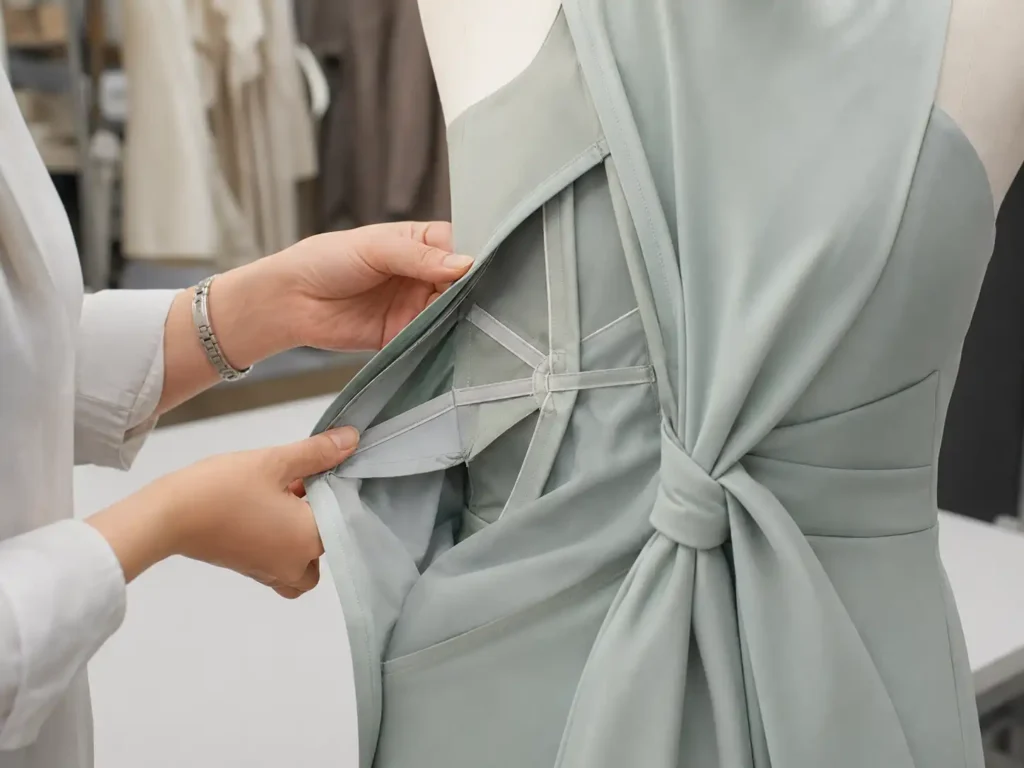
A hidden anchor fixes a decorative knot or loop to a stable seam point. Placement must resist movement without showing through the outer fabric.

What We Review Before the First Sample

A reference image may show the final appearance but rarely explains the internal structure. Early clarification avoids repeated pattern changes later.

Design Inputs

Development can begin from a tech pack, original sample, reference image set, sketch, line sheet or approved base block. Stronger information reduces interpretation gaps and allows faster fabric, pattern and costing decisions.
  • Front, back and detail views
  • Knot position and type
  • Dress length and closure
  • Size chart and target fit
  • Fabric or hand-feel reference
  • Label and packing brief

Manufacturing Questions

Before pattern work begins, the development team confirms whether the knot is functional or fixed, where tension should sit, how much coverage is required and whether the feature must remain adjustable across sizes.
  • Real tie or fixed form?
  • Visible opening or concealed construction?
  • Stretch or woven fabric?
  • Lining and internal support?
  • Target size range?
  • Launch and approval dates?

Pattern Engineering for Balanced Knot Placement
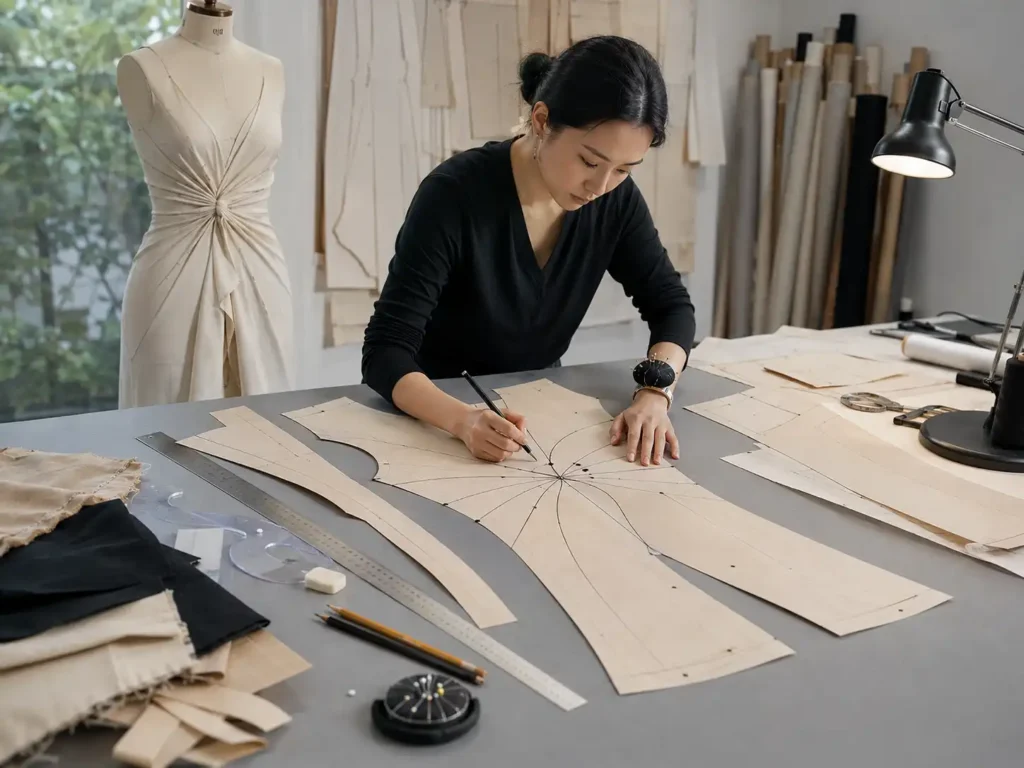
Pattern development turns a free-form visual detail into measurable panels, seam lines, notches, anchor points and grading rules.

Knot Panel Geometry

Panel length, width and taper determine visible knot size and fabric feed. The pattern includes enough allowance to form the approved shape without leaving excess hidden bulk.

Seam Position Planning

Seams should support the knot rather than cut across important folds. Zippers, side seams and lining joins are positioned to avoid pressure points and visible distortion.

Drape Allowance

Extra volume is added only where folds need to form. Grain direction, stretch direction and anchor angle control whether the drape falls downward, diagonally or toward the side.

Waistline Control

Knot placement is measured against shoulder-to-waist and waist-to-hip references. A visually attractive sample can still grade poorly when waist position is not tied to body measurements.

Cut-Out Stabilization

Cut-outs need separate pattern pieces, seam allowance rules and support plans. The approved opening is checked under movement rather than only on a mannequin.

Internal Attachment

Anchor points are built into stable seams or reinforced areas. The goal is a clean outer surface, low internal bulk and repeatable assembly order.

Fit Control Around Every Knot Detail

Six fit zones receive focused review because knot tension can move fabric away from the original dress block.

Bust Coverage

Front twists and cut-out knots can lower or rotate the neckline. Upper bust, full bust, under-bust and center-front positions are checked together with movement and bra compatibility.

Waist Placement

A knot can visually raise or lower the waist. Shoulder-to-waist, side-waist and knot-center measurements are used to hold the intended proportion across sizes.

Hip Tension

Side knots concentrate fabric and tension near the hip. Hip ease, seam angle and stretch direction are reviewed to prevent diagonal drag lines or side-seam rotation.

Arm Movement

Shoulder and upper-front knots can affect armhole depth and strap tension. Fit review includes lifting, reaching and normal movement rather than static posing only.

Cut-Out Exposure

Opening width and height are measured in the worn position. Lining, elastic and anchor placement are adjusted when the opening expands under stretch.

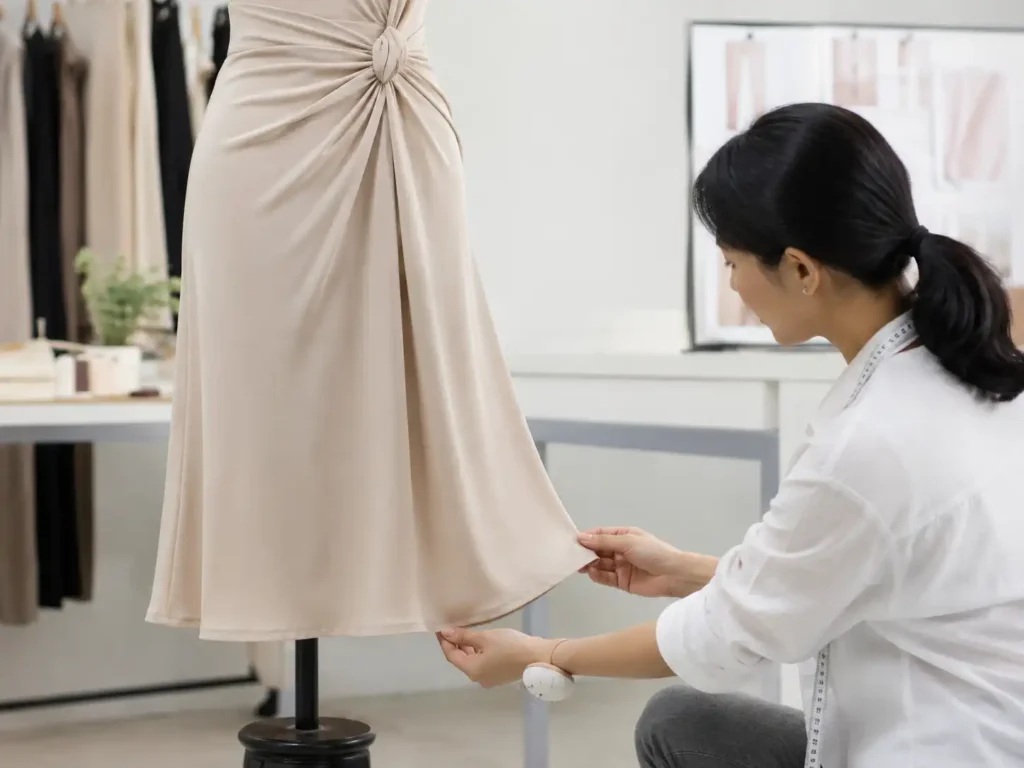
Hem Balance

Fabric drawn into a knot can raise one side of the hem. Final hem correction follows the dressed and formed garment, not a flat pattern measurement alone.

Size Grading Without Distorting the Knot

Knot components are not enlarged by one simple percentage. Position, fold volume, opening and coverage follow separate grading logic. Recommended control data: base size approved first; knot-center position, opening width, fold length and waist-to-knot distance added to the measurement specification; tolerance agreed by style; edge-size samples considered for high-risk cut-out or bodycon designs.

Knot Position Grading

Knot-center location is graded from stable body references rather than increased uniformly. A separate position rule prevents the feature from drifting too high in larger sizes or too low in smaller sizes.

Drape Volume Grading

Visible fullness may increase modestly across the range, while hidden seam bulk should remain controlled. Panel length and fold allowance can use different grade values.

Opening and Coverage

Cut-outs, necklines and wrap overlap need controlled grading so exposure remains consistent. Sample review may include a middle size and one edge size for complex programs.

Sample Development from Prototype to PP Approval

Sampling is a controlled decision process, not a one-step copy exercise. Each stage closes a different production risk.
Planning range: a first sample commonly requires about 7-15 working days after fabric and development details are confirmed. Complex cut-outs, custom colors, special trims or repeated fit rounds can extend the schedule. Multi-style projects are prioritized by launch date, hero SKU, fabric readiness and pattern complexity.

Structure Review

Development begins with risk notes covering knot type, panel direction, fabric behavior, opening stability and likely production method.

Fabric Trial

Available swatches are checked for drape, stretch, recovery, transparency, thickness and surface friction before the main sample is committed.

First Pattern

The base dress and knot panels are drafted together so fit and detail are balanced from the start.

First Sample

Appearance, fit, movement, coverage, knot volume, seam bulk and closure behavior are evaluated.

Fit Review

Comments are separated into pattern, fabric, workmanship, trim, color and packing actions.

Revised Sample

Approved corrections are applied to updated patterns and instructions; any cost or timing effect is recorded.

PP Sample

Final bulk standard confirms fabric, color, trims, measurements, construction, labels and packing.

Golden Sample

The sealed reference supports first-piece approval, in-line comparison, final inspection and repeat-order records.

Workmanship Details Protecting the Final Appearance
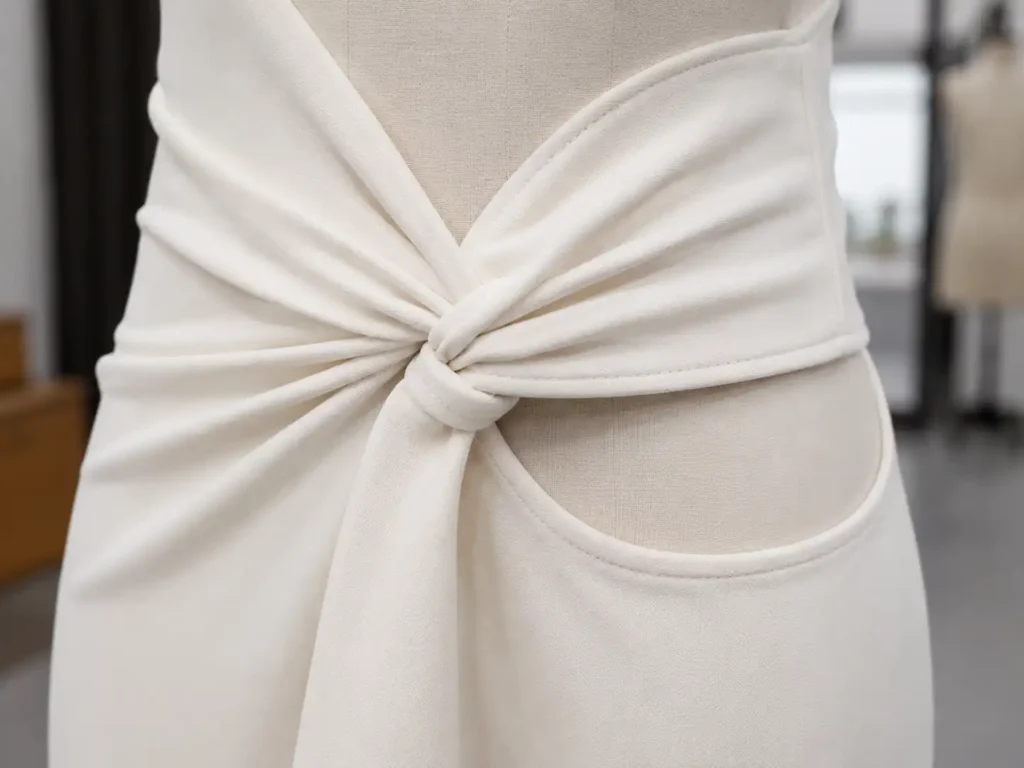
Close-up construction quality determines whether a knot dress looks refined in photography, fitting rooms and repeat production.

Clean Knot Edges

Visible edges need smooth curves, even topstitching where used and no exposed seam allowance. Edge finishing follows fabric thickness and stretch.

Hidden Seam Allowance

Seam allowances are trimmed, graded or turned away from the visible fold so the knot retains shape without showing a ridge.

Flat Internal Finish

Internal anchors, lining joins and reinforcement are arranged to avoid skin irritation and pressure under fitted garments.

Balanced Gathering

Gathering is distributed between marks or controlled by stitch length and measured panel feed. Uneven gathering is corrected before the knot is fixed.

Smooth Zipper Join

Invisible zippers must close without bowing near bulky areas. Zipper seams are checked after the knot and lining are assembled.

Stable Lining

Lining should cover internal construction, support transparency control and remain shorter or freer where movement requires it.

Controlled Slit

Slits connected to side knots need reinforcement, overlap and directional stability. Opening height is checked on the body.

Even Hem

Final hemming follows a hanging and fit review where needed, especially when drape or knot tension changes the skirt balance.

Reinforcement Methods for Secure Knot Details
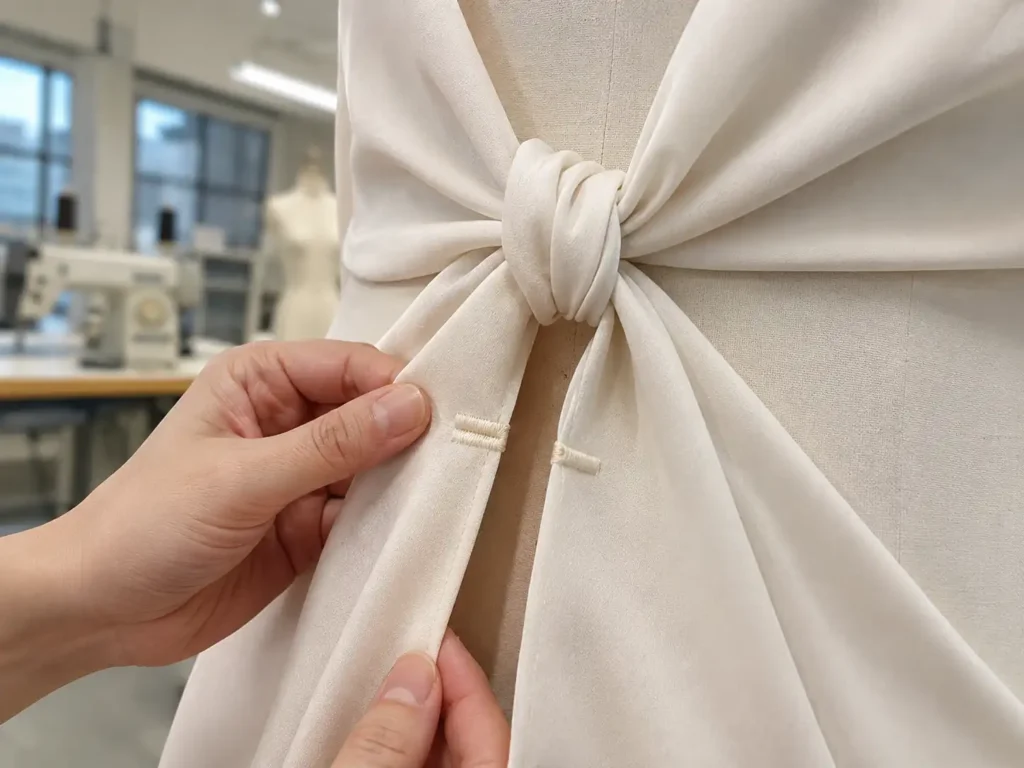
Support methods are selected according to fabric, stress, visibility and wearer comfort rather than using one heavy solution for every style.

Bar Tack

Short reinforced stitches secure high-stress ends, tie bases or slit points. Placement and thread appearance must suit the outer fabric.

Hidden Anchor

A concealed stitch fixes a decorative knot to a stable internal point while preserving a clean outer surface.

Elastic Stabilization

Elastic supports stretch openings and recovery. Applied tension must be documented to prevent rippling.

Seam Tape

Light tape controls growth along bias or stretch-prone seams without adding large bulk.

Layer Support

A local second layer, facing or reinforcement patch spreads load around the knot anchor.

Hand-Finished Fixing

Selective hand finishing may be used for delicate satin, draped loops or visible areas where machine stitches would affect appearance.

Bulk Production Process for Knot Detail Dresses

Production separates material, cutting, knot formation, assembly, inspection and packing into controlled checkpoints.
Production planning: bulk timing is confirmed after PP sample, fabric, trims, labels, packaging and quantity breakdown are approved. A regular dress program may plan around 25-40 working days for production, while custom-dyed fabric, special trims, intricate knot work, many colors or split delivery can change the schedule. Dates are committed by project after material and line review.

Fabric Approval

Confirm supplier, composition, weight, hand feel, stretch, color and approved lot reference.

Shrinkage Check

Assess fabric behavior before final cutting values and size standards are released.

Marker Planning

Control grain, stretch direction, satin shine direction, print direction and knot-panel placement.

Controlled Cutting

Use pattern marks and bundling identification to protect left-right parts and knot-panel orientation.

Knot Subassembly

Form loops, twists, ties or gathered panels under a dedicated operation standard before main assembly where suitable.

Main Sewing

Assemble bodice, skirt, lining, closure and knot detail in the approved sequence.

First-Piece Approval

Review knot position, measurements, seam bulk, drape and workmanship before wider production release.

In-Line Inspection

Inspect operation consistency, measurement trends, fabric defects, seam quality and correction status during sewing.

Finishing and Packing

Complete pressing, thread trimming, final appearance review, labels, barcodes, folding, polybags and cartons.

Standardizing Knot Placement Across Bulk Production

Repeatability comes from measurable references, approved operation samples and inspection timing rather than operator memory.

Approved Pattern

Only approved pattern versions enter production. Knot panels, openings and anchor points carry clear revision control.

Position Marks

Notches, drill marks or approved reference measurements locate knot centers, fold starts and gathering limits.

Operation Sample

A finished knot unit shows the sewing team the intended fold direction, visible volume and internal finish.

First-Piece Approval

The first completed garment is measured and compared with the Golden sample before normal production continues.

In-Line Measurement

Knot-center position, opening size, waist, hip, length and slit points can be checked at defined production stages.

Golden Sample Comparison

Final garments are compared for visual balance, fabric behavior, workmanship, pressing and packing presentation.

Quality Control Points for Knot Detail Dresses

Inspection AreaWhat Is CheckedCommon RiskApproval Standard
FabricColor, defects, stretch, shine directionLot variation, snaggingApproved lot and defect limits
Knot positionDistance from waist, center or side seamFeature driftMatches approved measurement and sample
Fold balanceFold count, direction and volumeUneven drapeVisual balance against Golden sample
Seam thicknessKnot core and hidden layersBulky profileControlled layer height and comfort
MeasurementsBust, waist, hip, length, openingFit variationAgreed tolerance by measurement point
RecoveryStretch area after extensionBaggingReturns close to original dimension
Cut-outWidth, height and coverageExcess exposureApproved dimensions in worn position
Slit and hemHeight, direction and balanceTwisting or uneven hemStable under movement
Labels and SKUSize, care, barcode and style dataMislabellingMatches packing file and order breakdown
PackingKnot protection, folding and carton ratioCrushing or creasingApproved presentation and carton plan

Private Label and Retail-Ready Packing

Brand presentation continues after sewing. Knot shape, fabric surface and SKU accuracy need protection through finishing, folding and shipment.

Woven Labels

Brand labels are positioned and sewn according to approved artwork, fold type, size and placement instruction.

Size and Care Labels

Size, fiber content, care symbols, country information and language requirements follow approved files and market needs.

Hangtags

Hangtags, strings and security attachments are checked for artwork, placement and surface protection.

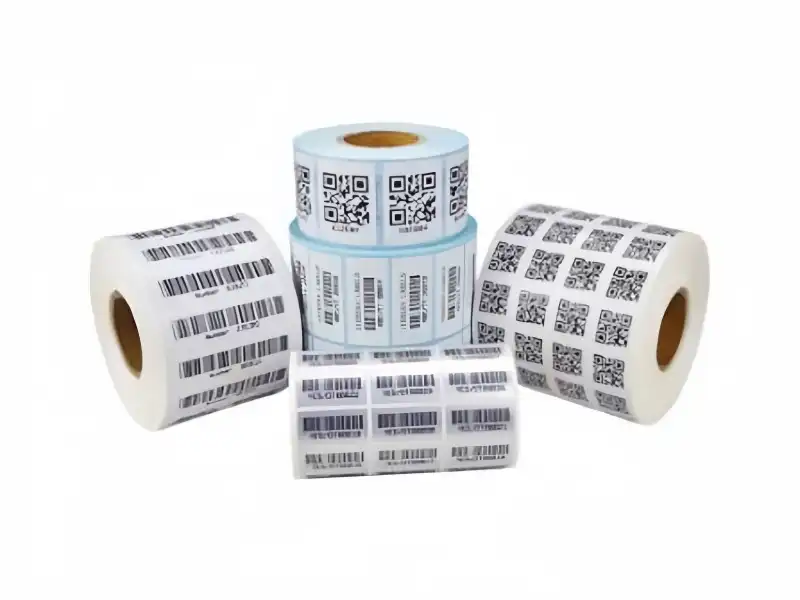
Barcode and SKU

Barcode, style, color and size data must match the packing breakdown. Multi-color programs require controlled label issue and reconciliation.

Polybag Presentation

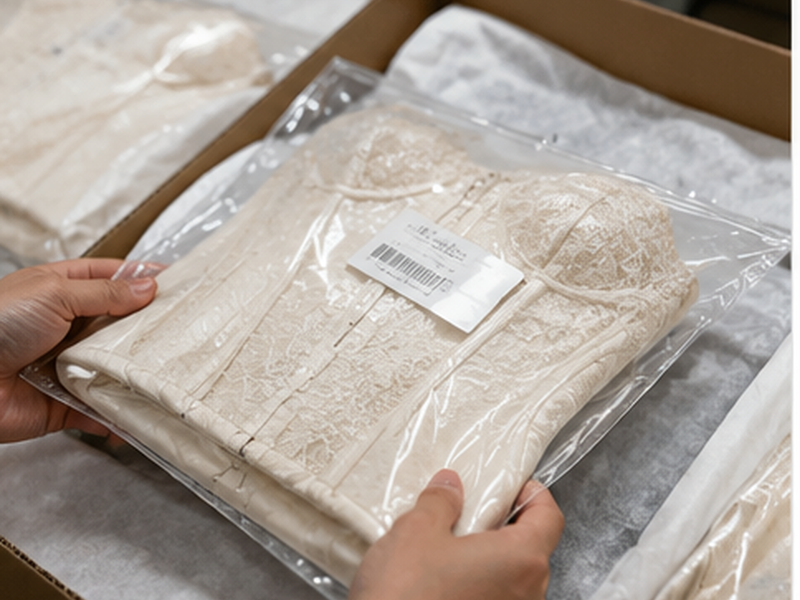
Folding direction protects the knot from compression. Tissue, insert support or adjusted bag dimensions may be used for dimensional details.

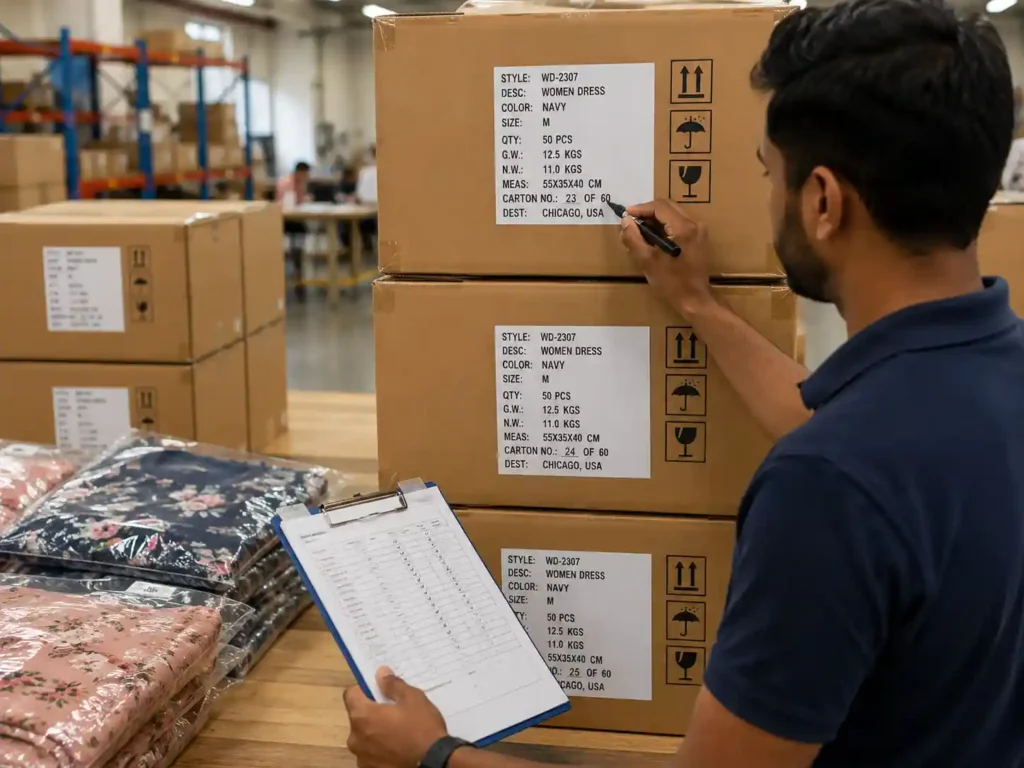
Carton and Warehouse Marks

Carton ratios, marks, gross and net weight, measurements and warehouse labels follow the approved packing guide.

Built for Multi-Style and Long-Term Production

Jinfeng Apparel supports dress programs requiring coordinated development, large quantity planning, controlled quality and repeat-order continuity.

Structured Development Team

Product development, fabric sourcing, pattern making, sample making and merchandising operate as connected functions rather than isolated handoffs.

Dedicated Sample Capacity

Two sample rooms and 20+ sample machinists support first, fit, revised, photo-ready, PP and Golden samples for multi-style programs.

Senior Pattern Support

7+ senior pattern makers handle dress proportion, knot-panel engineering, fit correction and grading.

Multi-Factory Matching

Six owned factories and 10+ long-term production partners allow style allocation by fabric, structure, volume and schedule.

Brand-Level QC

15+ QC inspectors support material, cutting, in-line, measurement, garment, pressing and packing checks.

Repeat-Order Records

Patterns, fabric references, trims, measurements, sewing instructions, QC notes and packing requirements are retained for repeat production.

Knot Detail Dress Program Examples

The following anonymized program profiles use the current operating range of 10-30 styles and 20,000-80,000 pieces per brand order. Figures should be replaced with approved project records before public release when named evidence becomes available.

US Occasionwear Program

An 18-style knot-detail capsule covered stretch satin midi dresses, side-knot bodycon dresses and draped front-knot maxis. Total planned quantity reached 42,000 pieces across 7 colors and sizes XS-XL. Main risk came from satin shine direction, fold bulk and side-seam rotation. Jinfeng grouped styles by fabric and knot structure, created operation samples for three knot families and added knot-center measurements to the production specification. Two sample rounds were used for high-risk styles before PP approval. Bulk planning split satin, stretch and lined constructions across matching lines. QC focused on shine direction, zipper smoothness, fold balance, waist position and packing protection. The collection was prepared for staged delivery, with priority colors packed first for launch photography and initial stock.

UK Ecommerce Dress Program

A 24-style program included jersey twist-front minis, cut-out knot midis and long-sleeve ruched knot dresses. Total volume reached 68,400 pieces across 9 colors and sizes UK 6-18. The brand required photo-ready samples, consistent cut-out coverage and barcode-controlled packing. Development began with two base blocks and three approved jersey qualities. Knot-panel grading was separated from body grading so larger sizes gained necessary length without excessive visible bulk. Edge-size review was used on selected cut-out styles. Production files included opening measurements, fold direction diagrams and first-piece approval checkpoints. Packing used style-color-size reconciliation before carton sealing, reducing the risk of barcode or size mismatch across a wide SKU range.

Australian Partywear Program

A 12-style seasonal order combined power-mesh knot dresses, stretch-crepe side knots and satin draped loops. Total quantity reached 26,400 pieces across 6 colors and sizes AU 6-16. The key challenge involved transparency, lining comfort and dimensional knot protection during sea freight. Jinfeng reviewed mesh stretch and opacity by color, selected local lining coverage for selected areas and adjusted internal anchors to avoid visible stitch marks. Satin loop styles received folding instructions and insert protection to reduce crushing. Production was organized by fabric family, while QC checked opening dimensions, lining exposure, knot security and hem balance. A split packing plan separated launch styles from later replenishment cartons.

Knot Dress Frequently Asked Questions

A knot detail dress uses tied, twisted, looped, gathered or faux-knot construction as a visible design element. The knot may be adjustable or fixed and can appear at the front, side, waist, shoulder, strap, hip or cut-out area.

Yes. Clear front, back and detail images can start an assessment. A size chart, fabric direction, intended knot type, quantity and target fit improve accuracy. Complex designs may require additional structure clarification before pattern work.

A real knot remains adjustable and needs enough tie length, friction and wearer stability. A faux knot is pre-formed and internally fixed, giving more consistent appearance in bulk. Selection depends on design function, fabric and fit.

Viscose jersey, stretch crepe, ponte, satin, stretch satin, rayon and fluid crepe are common choices. Final selection depends on knot type, drape, recovery, thickness, transparency, surface friction and target price.

Approved patterns, notch marks, position measurements, operation samples, first-piece approval and Golden sample comparison keep the feature in the correct location during bulk sewing.

Yes. Knot position, panel length, fold volume, opening and coverage use separate grading rules. Complex cut-out or bodycon styles may require review in more than one size.

MOQ starts from 200 pcs per style/color. Fabric, custom colors, special trims, private-label materials and packaging can have separate supplier minimums.

A first sample commonly plans around 7-15 working days after fabric and development details are confirmed. Complex construction, special materials or several fit rounds can extend the timeline.

Yes. First, fit, revised, photo-ready, PP and Golden samples can be arranged according to project needs. Bulk production begins after the required approvals are complete.

Yes. Options include woven labels, size labels, care labels, hangtags, barcode stickers, SKU labels, polybags, cartons, carton marks and warehouse labels based on approved files.

Develop Your Knot Detail Dress Collection

Knot-detail dresses need more than an attractive reference image. A workable program requires a defined knot structure, suitable fabric, stable fit, measurable grading rules, approved workmanship and a production method capable of repeating the same visual balance across thousands of garments.

Please prepare the following information for a focused project review:

  • Tech pack, line sheet, sketch, original sample or clear reference images
  • Real tie, fixed knot, twist-through, gathered or faux-knot preference
  • Fabric direction, color list and any hand-feel reference
  • Size range, base size and available measurement chart
  • Quantity per style/color and expected order total
  • Launch date, sample priority and delivery window
  • Woven labels, care labels, hangtags, barcodes and packing requirements
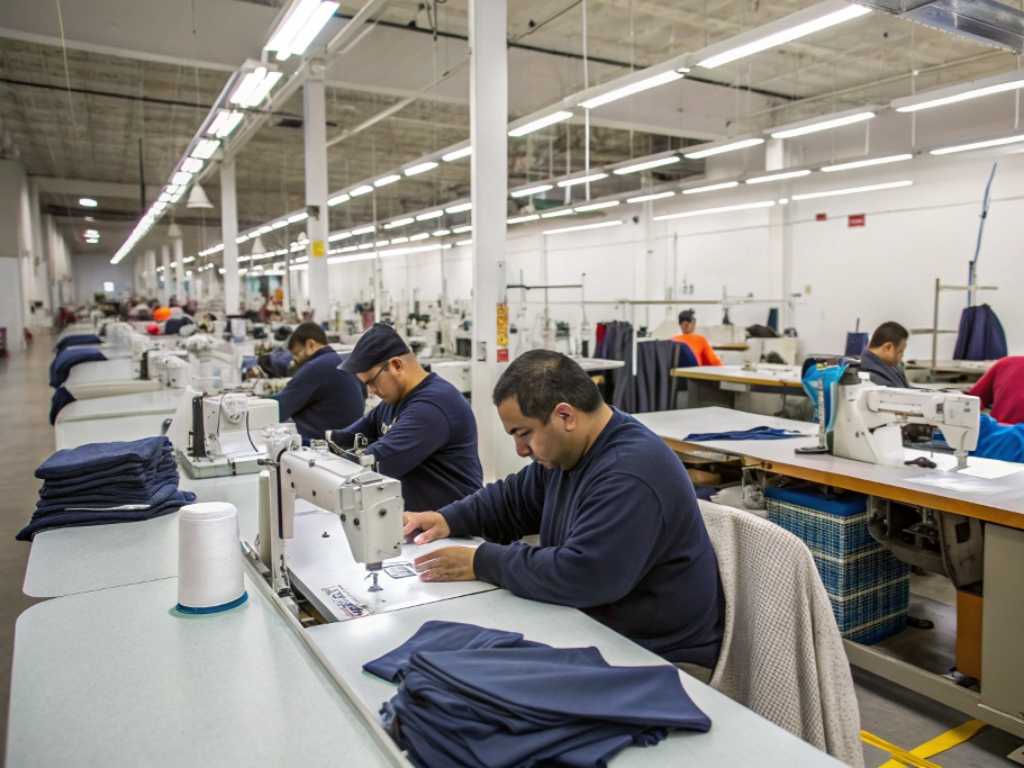
Factory workers sewing dark blue garments at sewing machines in a textile plant.

Tell Us About Your Dress Project

Share your product details, estimated quantity and development requirements. Our team will review your project and provide practical OEM/ODM production feedback.

Premium Women’s Apparel Production for Fashion Brands

From dress sample development to bulk production, JF Apparel supports fashion brands with confidential OEM/ODM manufacturing, reliable quality control and scalable production support.

START YOUR DRESS PROJECT

Ready to Develop Your Next Dress Collection?

Share your design concept, product requirements or sourcing plans with our team. We’ll review your project and provide practical feedback on development, materials, MOQ and production.

7-10 Days

Sample Development

200 PCS

Starting MOQ

Fast Response

Professional Follow-Up