Knit Dress Fit Development for Fashion Brands
Pattern, sample and bulk-fit control for jersey, rib knit, ponte and stretch dress collections.
Jinfeng Apparel develops fit-sensitive knit dresses by connecting fabric behavior with pattern shape, body measurements, sample feedback and production control. Development covers fitted mini and midi dresses, bodycon silhouettes, rib styles, jersey dresses, ponte dresses, ruched constructions and other stretch-driven womenswear where a few centimeters of imbalance can change the entire on-body result.
- 7+ senior womenswear pattern makersworking on fit-sensitive dress development.
- 2 sample roomssupporting first, fit, revised, PP and Golden sample stages.
- 20+ sample machinistssupporting development and construction verification.
- Dedicated knit and stretch production capacityfor jersey, rib knit, ponte and fitted fashion styles.
- 15+ QC inspectorssupporting measurements, workmanship and bulk quality control.
Fit Development Built Around Real Knit Behavior
Pattern Expertise
Sample Development
Sample Machinists
Knit Production
Measurement Control
QC Support
What Knit Dress Fit Development Actually Controls

Cut-and-Sew Knit Fit
Jinfeng Apparel’s strongest knit-dress development work centers on jersey, rib knit, ponte, Roma and related stretch fabrics used for fitted fashion dresses. Pattern development begins with the required silhouette rather than assuming every stretch material should simply be made smaller than the body. A close bodycon style may require controlled negative ease through the waist and hip, while a softer jersey midi may need more movement through the body and hem. Fabric recovery, thickness, compression and drape determine how aggressively the pattern can follow the body. Key fit areas include:

Production-Ready Fit
Fit Development for Established Fashion Teams

Product Development Teams

Technical Design Teams

Sourcing Teams

Merchandising Teams
Knit Dress Styles Need Different Fit Rules
The word “knit dress” covers silhouettes with very different requirements. A firm ponte mini, soft jersey midi and high-recovery rib bodycon cannot use identical ease, length or construction logic. Development begins by defining how each style should sit on the body before pattern correction starts.
| Knit Dress Style | Fit Objective | Main Development Risk | Key Control |
|---|---|---|---|
| Bodycon Dress | Close body contour | Excess compression or looseness | Bust-waist-hip balance |
| Rib Knit Dress | Contoured stretch fit | Growth after wear | Stretch recovery |
| Jersey Dress | Soft fitted silhouette | Twisting or weak recovery | Grain/cutting direction |
| Ponte Dress | Structured stretch fit | Over-compression | Fabric weight and ease |
| Ruched Dress | Shaped fit with gathering | Uneven tension | Ruching placement |
| Knit Mini Dress | Secure short silhouette | Hem riding up | Hip fit and length |
| Knit Midi Dress | Fitted body with movement | Length distortion | Drape and balance |
| Cut-Out Knit Dress | Stable exposed sections | Openings stretching | Pattern placement |
| Backless Knit Dress | Close body anchoring | Back edge gaping | Edge stability |
| Fitted Long-Sleeve Dress | Smooth torso and sleeve | Armhole or sleeve restriction | Stretch distribution |
Bodycon Development
Bodycon fit is not created by making every measurement tighter. Bust, waist and hip reductions must match fabric recovery and the desired compression level. Too much reduction can pull side seams forward, shorten the garment over the hip and create excessive tension around the neckline.
Rib Dress Development
Rib fabrics often stretch easily around the body, but recovery varies significantly by construction and composition. A rib dress can look correct during a fitting and later grow through the hip, seat or neckline after extended wear if recovery is weak.
Jersey Dress Development
Soft jersey allows comfortable movement but may reveal cutting imbalance quickly. Side seams, hem alignment and neckline shape need close attention because a soft fabric can twist or drop differently after sewing and washing.
Ponte Dress Development
Ponte provides more structure and usually greater shape retention than lightweight jersey. Pattern reduction therefore needs to match the fabric’s density and compression. A pattern designed for soft jersey can become uncomfortably tight when transferred directly into heavier ponte.
Stretch and Recovery Shape Every Knit Dress
Fabric selection can change the fit even when the pattern remains identical. Stretch percentage alone does not provide enough information. Recovery, weight, construction, direction of stretch, drape and dimensional stability determine how the dress behaves during fitting, wear, washing and bulk production.
Stretch Direction Changes Pattern Behavior
A knit fabric may stretch mainly across the width, in both directions or with different resistance between length and width. Pattern pieces must be positioned according to the intended stretch direction.
For a fitted dress, strong crosswise stretch usually supports movement around the bust and hip. Excessive lengthwise stretch can create another problem: garment length may increase while hanging or shorten unpredictably around curved body areas.
Cutting direction therefore becomes part of fit development rather than only a marker-efficiency decision.
Recovery Controls Shape Retention
Two fabrics may stretch to a similar width but recover very differently. Weak recovery can allow the waist, hip, seat or neckline to remain enlarged after the garment has been worn.
For fitted commercial styles, recovery is considered before locking the final pattern. A garment intended to maintain a sharp bodycon silhouette needs a fabric capable of returning close to its original dimension after normal stretching.
When recovery changes between sample and bulk fabric, fit can change even when measurements taken flat appear acceptable. Fabric approval therefore stays connected to pattern and garment measurement review.
Weight and Drape Affect Length
Lightweight jersey tends to fall closer to body curves, while heavier knit materials can create more downward pull. Fabric weight also changes how gathers, ruching, hems and fitted skirts behave.
A long knit dress can gain visible length from fabric weight and hanging tension. A mini dress can appear shorter after the fabric stretches around the hip. Pattern length therefore cannot be judged from a flat table measurement alone.
Drape is checked together with:
- Front and back length balance
- Hip tension
- Hem position
- Ruched section placement
- Side seam angle
- Lining interaction where used
Fabric Changes Require Fit Rechecks
Replacing a fabric after sample approval can affect more than hand feel or cost. A new knit may have different weight, recovery, shrinkage, opacity or stretch resistance.
Jinfeng rechecks whether a fabric change requires:
- Pattern adjustment
- New sample review
- Lining adjustment
- Measurement update
- Revised costing
- Updated production lead-time assessment
The fabric system covers jersey, rib knit, ponte and other spandex-containing blends alongside wider premium womenswear materials, with review of stretch, drape, shrinkage, transparency and bulk-production risk.
Fit Is Engineered Across the Whole Body

Bust Fit
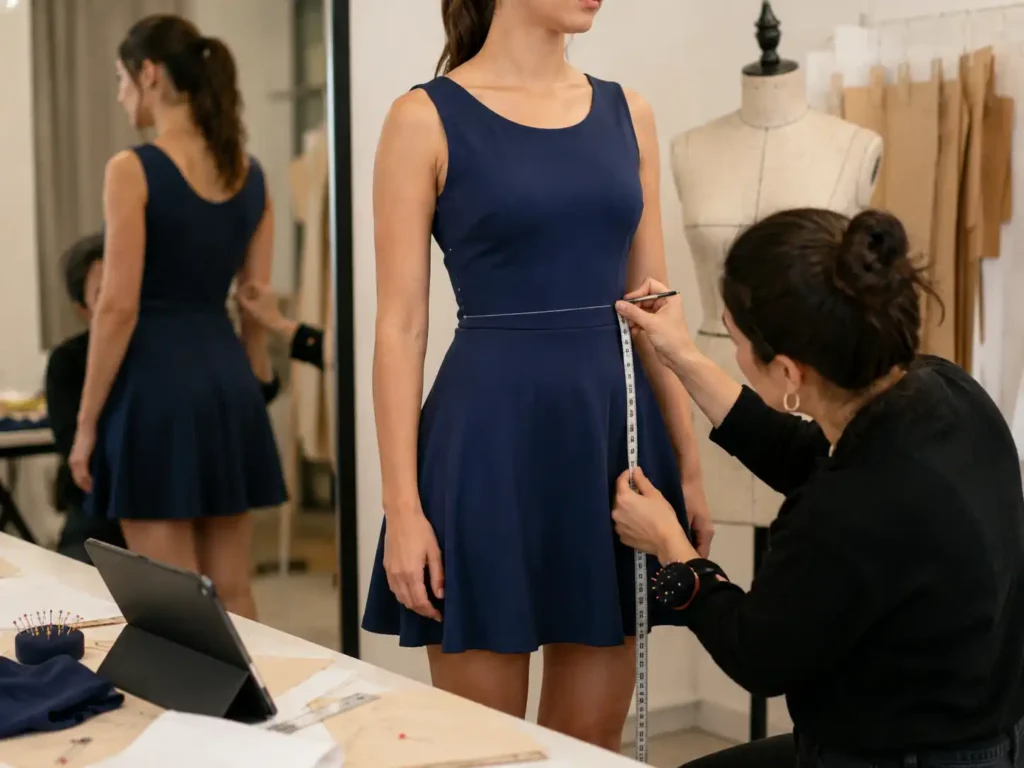
Waist Position

Hip Balance

Neckline Stability

Armhole Control

Side Seam Balance

Dress Length
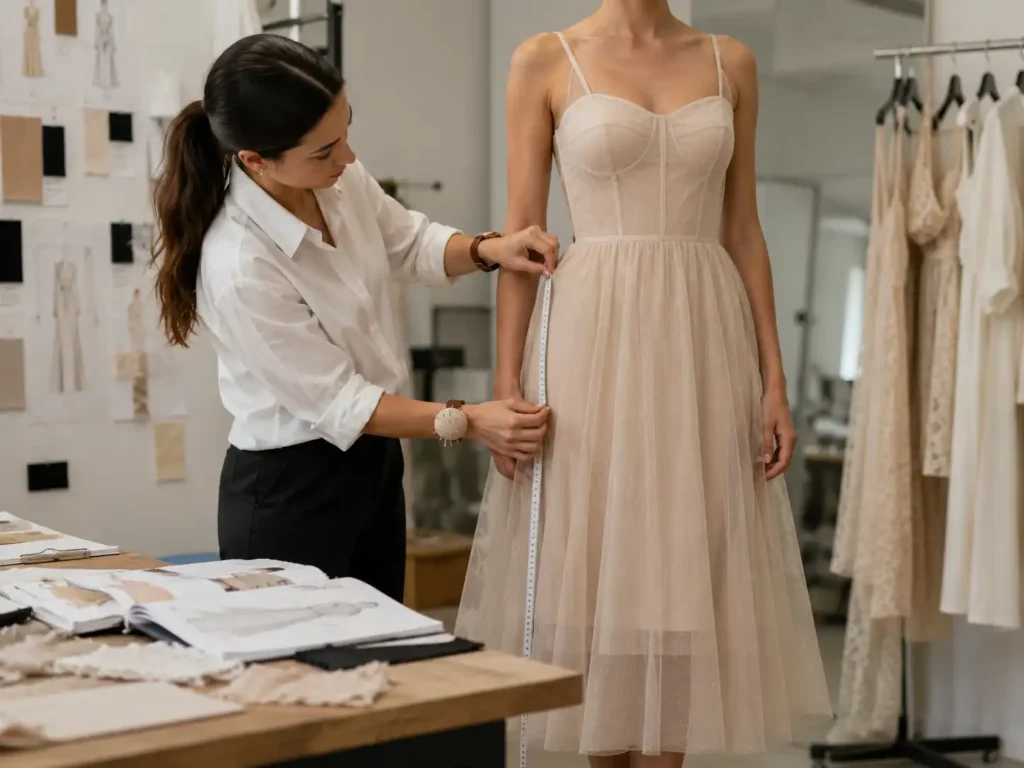
Movement Test
Knit Dress Patterns Start With Fit Intent
Pattern development turns a design into a measurable shape that can be tested, corrected, graded and repeated. For stretch dresses, pattern work begins with fabric behavior and desired fit rather than applying a generic woven block with smaller measurements.
From Brand Input to First Pattern
Development can begin from a tech pack, size chart, original garment, sketch, line sheet or reference image. More complete technical information allows the pattern team to reach the intended fit with fewer assumptions.
Before pattern work starts, the team reviews:
- Intended silhouette
- Target fabric
- Stretch and recovery
- Bust, waist and hip measurements
- Dress length
Pattern Shape Must Match Stretch
A knit pattern is not simply a woven pattern reduced by a fixed percentage. Different body zones may need different amounts of reduction.
A fitted waist may require greater control than the bust. Hip ease must allow movement while protecting the intended silhouette. A neckline often needs greater stability than the main body fabric because even minor edge growth is visually obvious.
Jinfeng’s pattern work covers key points including bust, upper bust, under bust, waist, hip, length, armhole, neckline depth, strap position, slit and lining for fit-sensitive womenswear.
Pattern Corrections Stay Documented
Fit comments are converted into pattern changes rather than handled only through sewing adjustments.
Typical revisions may include:
- Reshaping side seams
- Moving the waistline
- Adding or removing hip ease
- Correcting front/back length
- Reshaping neckline curves
- Adjusting armhole depth
- Rebalancing shoulder or strap positions
- Moving ruching or cut-out positions
- Revising lining shapes
- Updating finished-garment measurements
A revised pattern becomes the base for the next sample. Once the PP sample is approved, the final pattern version becomes part of the bulk-production standard.

Common Knit Fit Problems Need Specific Corrections
Visible fit problems often have more than one possible cause. A gaping neckline may come from pattern shape, edge construction or weak recovery; a twisting seam may come from cutting direction or pattern imbalance. Development starts by identifying the cause before changing the pattern.
| Fit Problem | Common Cause | Development Action |
|---|---|---|
| Neckline gaping | Weak recovery or excess neckline length | Review neckline pattern and edge construction |
| Side seam twisting | Cutting direction or pattern imbalance | Check fabric direction and rebalance pattern |
| Dress riding up | Excess hip tension | Rework hip ease and lower-body pattern |
| Loose after wear | Poor recovery | Reassess fabric and pattern reduction |
| Waist feels too tight | Excess negative ease | Adjust waist shaping |
| Armhole stretches open | Edge growth or excess depth | Correct armhole shape and finishing |
| Front hem lifts | Bust or hip consumes excess length | Rebalance front-body length |
| Back hem lifts | Seat tension or insufficient back length | Correct back pattern balance |
| Ruched section shifts | Uneven gathering tension | Reset gathering position and ratio |
| Size changes after wash | Dimensional instability | Review fabric behavior and garment measurements |
Diagnose Before Revising
Randomly adding or removing centimeters often moves the problem instead of solving it. Fit review compares garment appearance with pattern measurements, fabric behavior and fit comments before the next sample is cut.
Keep Fit and Fabric Connected
A pattern correction can fail when the underlying material is unsuitable. Weak recovery, excessive drape or inconsistent stretch may require a fabric decision before another round of pattern work.
From Technical Files to Production-Ready Fit
Technical Review
Fabric Direction
First Pattern
First Sample
Fit Sample
Revised Sample
Size Grading
PP Approval
Bulk Control
Fit Samples Test More Than Flat Measurements

Front Fit Review
The front view checks neckline position, bust tension, waist level, front-body length and symmetry.
A fitted knit dress should follow the intended silhouette without uncontrolled horizontal strain lines, excessive neckline opening or visible distortion around the waist. If the garment pulls upward through the center front, additional body length or a different bust/hip balance may be required.
Useful fit feedback includes a clear front photograph plus comments on comfort and desired compression.

Side Fit Review
The side view reveals problems that can be difficult to see from the front.
Side seams should remain close to their intended position rather than rotating forward or backward.
Waistline position, bust projection, seat fit and front-to-back hem balance can also be reviewed from the side.
When a side seam rotates consistently, the pattern team checks front/back body balance, fabric direction and tension before changing individual measurements.

Back Fit Review
Back fit checks neckline, shoulder area, waist, seat and back length.
Excess fabric above the waist can indicate a length or shaping issue, while excessive seat tension may pull the back hem upward.
Backless styles require additional attention to edge stability because stretch fabrics can grow away from the body during movement.

Movement Fit Review
A dress that looks correct while standing can still fail during normal wear.
Fit testing can include:
- Walking
- Sitting
- Raising arms
- Turning the torso
- Normal steps and stairs
- Checking hem recovery
- Checking neckline movement
- Checking side-seam stability
Fit Comments Become Controlled Pattern Revisions
Fit correction works best when every comment is tied to a measurable action. Jinfeng records whether a problem comes from pattern shape, measurements, fabric, construction or execution before confirming the next revision.
Comment Classification Comes First
A neckline problem may require a pattern change, but it may also come from binding tension or fabric recovery. A dress that feels too tight may need pattern adjustment, or the selected fabric may have less usable stretch than the approved reference.
Comments are therefore classified into areas such as:
- Fit
- Fabric
- Pattern
- Measurement
- Construction
- Trim
- Color
- Sewing execution
Every Revision Has a File Impact
Changes affecting bulk production are transferred into formal development records.
Depending on the issue, records may include:
- Revised pattern
- Updated size chart
- Updated garment measurement record
- Updated BOM
- New fabric approval
- New trim approval
- Revised sewing instruction
- Updated QC points
- Updated PP sample comments
Revised Samples Confirm the Fix
A pattern change is not considered successful merely because the file has been edited.
The revised garment must show whether the correction solved the original issue without creating a new problem elsewhere.
For example, increasing hip ease may improve comfort but could change side-seam balance or hem position.
Reducing neckline length may improve stability but could create excessive edge tension. Revised samples allow the relationship between changes to be checked before approval moves forward.

Size Grading Must Preserve the Approved Fit
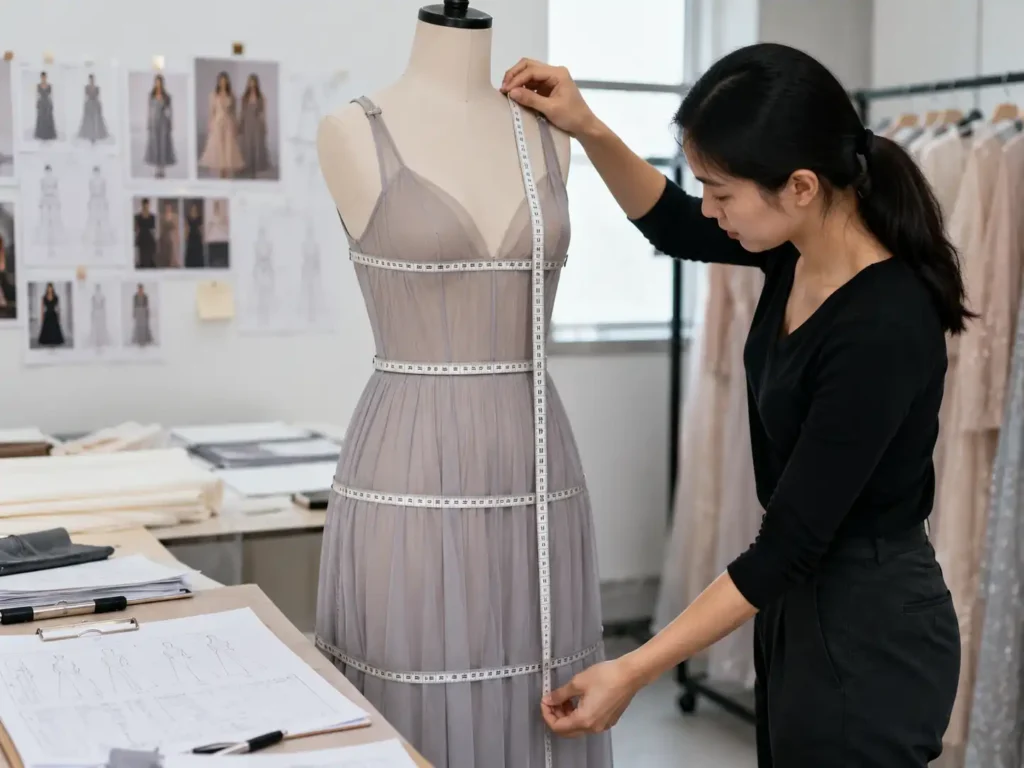
Base Size Approval

Controlled Grade Rules

Size Set Review
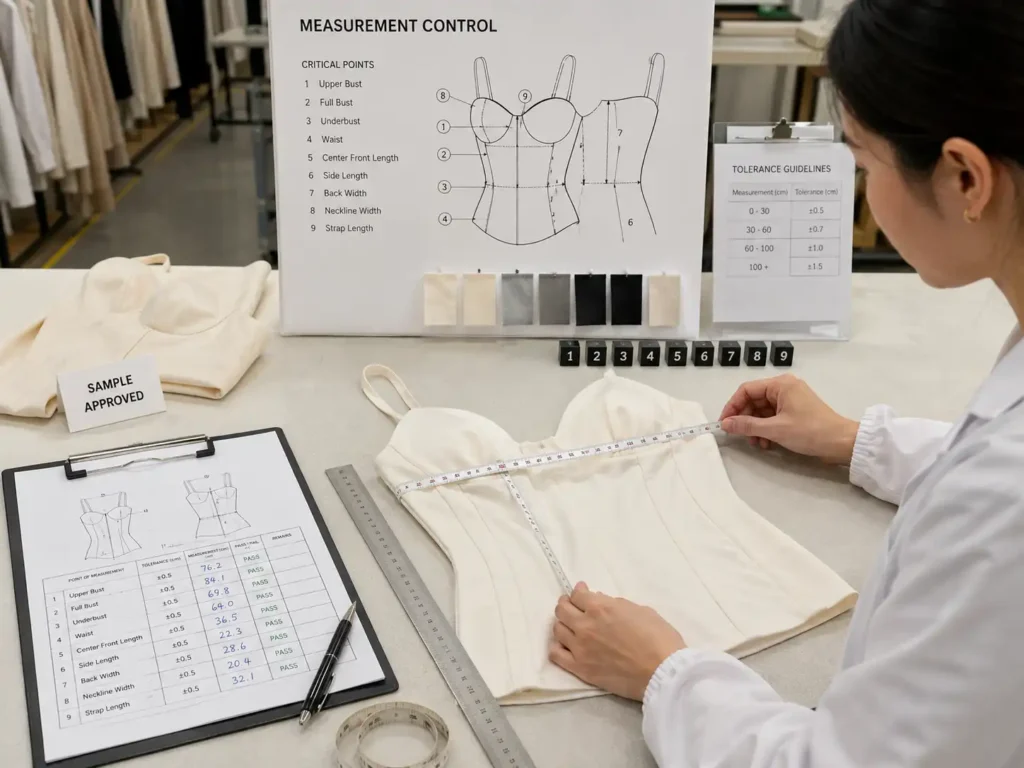
Bulk Measurement Standard
PP and Golden Samples Lock Production Standards
PP Sample
Golden Sample
The Golden sample acts as a physical reference for the approved garment. Visual balance, construction details and overall appearance can be compared against the sealed standard during production.The Golden sample works together with written measurements and production files; it does not replace them.
Production File
Construction Must Hold the Intended Knit Fit

Neckline Construction

Armhole Stability

Side Seam Balance

Hem Control

Ruching and Gathering

Cut-Out and Open Areas
Bulk Production Must Reproduce the Approved Fit
A strong fit sample has limited value if bulk garments vary in stretch, length or body measurements. Production control therefore focuses on keeping material, cutting, sewing and measurement conditions aligned with the approved development standard.

Fabric Review Before Cutting
Bulk fabric is checked against approved requirements before production begins.
For knit and stretch dresses, attention can include:
- Fabric type and composition
- Weight
- Hand feel
- Stretch direction
- Recovery
- Color
- Drape
- Shrinkage risk
- Batch consistency
A material that performs differently from the approved sample can change garment fit even when the pattern remains unchanged.

Measurement Control Through Production
Measurements are checked against the approved size specification rather than judged only by visual appearance.
Fit-sensitive checkpoints can include:
- Bust
- Waist
- Hip
- Dress length
- Front/back balance
- Armhole
- Neckline
- Side seam
- Hem
- Selected design placements

Relaxation and Cutting Direction
Stretch fabrics can hold temporary tension from rolling, handling or storage. Allowing material condition to stabilize before cutting helps reduce unexpected dimensional changes.
Cutting direction also matters. A pattern intended to use crosswise stretch should not be rotated only to improve marker efficiency if rotation changes fit behavior.
Jinfeng’s documented knit-production controls specifically include fabric stretch direction, recovery stability, cutting direction, side-seam behavior and post-wash dimensions.

Post-Wash Dimensional Review
Where the product specification requires wash-related dimensional evaluation, measurements can be reviewed before and after the relevant test or treatment.
Jersey and rib constructions can show changes in length, width or recovery after washing. Post-wash performance therefore matters for styles where retail fit must remain stable after normal care.
Jinfeng’s knit-production fact base identifies stretch direction, recovery, bust-waist-hip measurements, dress length, side seams, neckline deformation, armhole stretching, post-wash dimensions and bulk size stability as core control points.
Production Capacity Behind Fit-Sensitive Knit Programs
6 Owned Factories
Knit Factory Focus
100,000+ Monthly Capacity
15+ QC Inspectors
12+ Merchandisers
Repeat-Order Records
From Fit Problems to a 36,000-Piece Knit Program
An anonymous European premium fashion brand developed a multi-style fitted knit dress program with Jinfeng Apparel. The range covered jersey, rib knit and ponte silhouettes where fit quality depended on both pattern accuracy and controlled fabric recovery.
Project Snapshot

he seasonal program covered 12 knit dress styles and approximately 36,000 pieces across fitted mini, midi, rib and bodycon silhouettes.
Main fabric groups included:
- Jersey
- Rib knit
- Ponte
- Polyester-spandex blends
The project was developed for a commercial multi-size range rather than a single sample-size presentation. Fit direction had to remain recognizable across styles while allowing each fabric group to use its own stretch and recovery logic.
Development followed:
First Sample → Fit Sample → Revised Sample → PP Sample → Golden Sample → Bulk Production
Main Fit Risks

Early development focused on five recurring risks.
Stretch Recovery: Some lighter knit options gave the required softness but recovered more slowly after extension. Material selection had to balance hand feel with shape retention.
Bust-Waist-Hip Proportion: The fitted silhouettes required enough compression to create the intended shape without making the waist, seat or hip uncomfortable.
Side-Seam Twisting: Several close-fitting styles showed seam movement during fitting, requiring review of pattern balance and fabric cutting direction.
Dress Riding Up: Hip tension affected the worn length of selected mini and midi styles. Flat garment length alone could not explain the problem.
Post-Wash Stability: The team needed the approved silhouette to remain within the required dimensional standard after relevant wash evaluation.
Development Actions

Fabric options were compared by stretch, recovery, weight and body feel before the final pattern was locked.
The pattern team revised body shaping based on fit comments rather than reducing the entire garment uniformly.
Side seams and lower-body balance were reviewed together with hip measurements. Fabric direction was controlled during cutting preparation, and approved changes were transferred into revised patterns and updated garment measurements.
Size grading followed base-size approval so the commercial range could preserve the intended fitted silhouette rather than enlarging all points by one fixed increment.
PP approval then locked the production version of the pattern, material, measurements and construction.
Bulk Fit Control

Production control focused on keeping sample learning intact during larger-volume manufacturing.
Key checks included:
- Fabric batch and recovery review
- Fabric relaxation before cutting
- Cutting-direction control
- Bust measurement
- Waist measurement
- Hip measurement
- Dress length
- Side-seam position
- Neckline stability
- Finished-garment measurement
- Post-wash dimensional review where required
Knit Dress Fit Development Frequently Asked Questions

Develop Knit Dresses Ready for Commercial Production
A fitted knit dress needs more than a visually similar sample. Fabric stretch must work with the pattern, fit comments must become measurable revisions, graded sizes must preserve the approved silhouette, and bulk production must reproduce the same fit across commercial quantities.
Jinfeng Apparel supports established fashion brands and mid-to-large apparel programs from technical review through pattern development, fit sampling, revision, size grading, PP approval, bulk production and quality control.
For a project review, prepare the information already available:
- Tech pack, line sheet, sketch or reference garment
- Target knit fabric or required hand feel
- Base-size measurements
- Required size range
- Expected silhouette and compression level
- Current fit problems, if transferring an existing style
- Front, side and back fit photographs when available
- Planned style quantity and production volume
- Private-label or packing requirements
- Target launch or delivery schedule
The first review focuses on whether the selected fabric, pattern direction and development route can support the intended fit before production planning moves forward.