...

Jumpsuit Torso-Fit Correction Solution

Pattern-led correction for torso length, rise, waist placement, crotch balance and movement comfort in commercial jumpsuit programs.

A jumpsuit can look balanced on a hanger and fail the moment it is worn. Shoulder pulling, a rising crotch, a dropped waist seam, back-waist pooling and restricted sitting often come from connected pattern problems rather than one incorrect measurement. Jinfeng Apparel reviews fit symptoms, body proportions, fabric behavior and closure construction before revising the production pattern. Approved corrections are carried through the size chart, grade rule, PP sample, Golden sample and bulk measurement plan.

  • 7+ senior womenswear pattern makers review front length, back length, rise, waist position and crotch balance.
  • 2 sample rooms and 20+ sample machinists support fit samples, revised samples and PP confirmation.
  • 15+ torso-fit checkpoints can be reviewed across bodice length, rise, bust, waist, hip, shoulder, armhole and closure placement.
  • Typical first-sample timing is about 10-15 days for standard jumpsuits and 15-25 days for complex structures, subject to material and trim availability.

Built for Structured Jumpsuit Development Programs

The solution is designed for established fashion teams managing a real product, a defined size range and a planned production run. Clear qualification at the beginning keeps technical discussions focused on fit, fabric, grading and bulk execution rather than one-off alterations or ready-made sourcing.

Best Fit For

  • Fashion brands with an existing jumpsuit concept, tech pack, line sheet or approved reference sample.
  • Technical design teams reviewing shoulder-to-crotch tension, waistline drift or restricted movement.
  • Product development teams rebuilding a style after an unsuccessful fit sample.
  • Sourcing teams transferring a proven silhouette from an unstable supplier.
  • QA teams preparing a fit-critical jumpsuit for multi-size bulk production.
  • Brands planning petite, regular, tall or extended-size grading.

Outside the Service Scope

  • Personal tailoring or single-garment alterations.
  • Ready-stock jumpsuit purchasing or one-piece fulfillment.
  • Projects without a sample budget, production plan or usable design direction.
  • Requests based only on the lowest sewing price without fabric, fit or quality review.
  • Unlicensed copying of protected brand styles or confidential samples.

Recognize the Torso-Fit Failure Before Recutting

Visible wrinkles are symptoms, not automatic correction instructions. A fit review starts by recording where tension appears, how the waistline moves, what happens during sitting and whether the same problem appears at the front, back or both sides.

Shoulder Pulling

Strong vertical tension from shoulder to crotch often signals insufficient overall torso length, insufficient rise or a combination of bodice and trouser imbalance. Neckline distortion and armhole pressure usually appear at the same time.
  • Review shoulder-to-crotch length, front and back rise, shoulder slope and armhole depth.

Crotch Riding Up

A rising crotch may come from a short torso, shallow crotch depth, inadequate crotch extension or insufficient hip ease. Adding length at one random line can create a low waist or a loose back without solving the original pressure.
  • Compare standing and sitting photos; separate vertical tension from diagonal crotch lines.

Dropped Crotch

Excess vertical length can lower the crotch, soften the waist position and make the body look shorter. The source may sit in the bodice, rise, strap length or garment suspension rather than the crotch seam alone.
  • Check natural-waist alignment, total rise and shoulder support.

Waistline Shift

A waist seam that climbs at the front, drops at the back or tilts across the body indicates unequal front and back balance. Bust volume, seat shape, bodice length and hip tension can all move the waistline.
  • Measure front waist level, back waist level and side-seam balance.

Back-Waist Pooling

Pooling above the back waist may indicate excess back length, a swayback requirement, a dropped rear waist or inadequate seat shaping below the waist. Shortening the whole torso can create front-crotch pressure.
  • Pin and measure the excess while preserving front length and hip comfort.

Restricted Movement

A sample may look clean in a static fitting and still fail during sitting, reaching, walking or garment entry. Limited movement often reveals missing rise, hip ease, armhole allowance or closure length.
  • Record movement photos and note the exact point where tension begins.

A Jumpsuit Is One Connected Pattern System

Unlike a separate top and trouser, a jumpsuit links the shoulder, bust, waist, hip and crotch through one continuous vertical structure. Every correction changes another point. Reliable development depends on balanced adjustment, not isolated alteration.

  • Vertical Balance

    Shoulder support and crotch position share the same vertical path. A short front bodice can raise the waist seam and pull the front crotch upward. A short back rise can pull the neckline backward and tighten the seat. Excess strap length can lower the entire garment, creating a false impression of too much rise. Pattern review therefore compares high-shoulder-point-to-waist, shoulder-to-crotch, front rise and back rise before any cut line is moved.

  • Horizontal Balance

    Bust, waist and hip circumference affect vertical behavior. A tight bust can steal length from the front body. A tight hip can drag the bodice downward and twist the side seam. Excess waist ease can allow the garment to slide lower, making the crotch look too long. Circumference and length must be read together.

  • Front and Back Balance

    Many fit failures require different front and back corrections. A fuller bust may need front length without adding back length. A prominent seat may need back rise or crotch extension while the front remains unchanged. A swayback correction removes localized excess above the back waist without shortening the full body.

  • Closure and Entry

    A well-fitted jumpsuit still needs enough opening length for dressing. Invisible zippers, center-front zippers, button plackets, wrap fronts and elastic waists create different entry paths. Closure placement is checked together with torso length, shoulder width and hip circumference so the wearer can enter and remove the garment without seam stress.

Fit Symptom and Root-Cause Diagnostic Matrix

A structured diagnosis prevents unnecessary recutting. The matrix links visible symptoms with likely causes, review points and controlled correction directions. Final decisions require sample measurements, fit photos, fabric data and the intended silhouette.

Visible SymptomLikely CausesReview PointsCorrection Direction
Shoulder-to-crotch pullingShort overall torso, short rise, tight hip, shallow armholeShoulder-to-crotch, front/back rise, hip ease, armhole depthAllocate length to bodice, rise or both; release hip tension where required
Crotch rides upwardShort rise, shallow crotch depth, short crotch extension, tight seatStanding/sitting rise, crotch curve, hip and thigh easeAdjust rise line, crotch curve or seat extension after movement review
Crotch hangs lowExcess torso length, excess rise, long straps, low waist placementNatural waist, total rise, strap length, shoulder supportRemove length from the correct zone while preserving movement ease
Front waist seam liftsShort front bodice, full bust, tight front hip, zipper tensionCenter-front length, bust shaping, waist level, front hipAdd localized front length or reshape bust/hip; rebalance closure
Back waist poolsLong back bodice, swayback, low back waist, short seat extensionCenter-back length, back waist contour, back rise, seat shapeRemove localized back excess or add seat balance below waist
Diagonal front crotch linesInsufficient front crotch extension, tight abdomen or thighFront curve, abdomen ease, thigh width, grain lineExtend or reshape front crotch; add local ease without lowering whole crotch
Diagonal back crotch linesInsufficient back extension, tight seat, short back riseBack curve, seat depth, back rise, side-seam angleAdd back extension or rise and restore side-seam balance
Restricted sittingInsufficient rise, seat ease, thigh ease or back lengthSeated rise, hip, thigh, zipper stress, waist movementCorrect dynamic ease and verify through repeated sit-to-stand testing


Critical Measurements Behind a Stable Torso Fit

A size chart with bust, waist and hip alone cannot define jumpsuit fit. Torso correction requires a connected measurement map, clear measuring methods and the same reference points across sample, PP and bulk inspections.

Bodice Lengths

Center-front and center-back bodice lengths control where the waist seam meets the body. Front length must account for bust projection; back length must follow the intended rear waist contour.
  • Record high shoulder point, waist seam and neckline reference points.

Shoulder to Crotch

The full vertical body path is a key jumpsuit measurement. A single total value is useful, yet front and back distribution still needs separate review.
  • Measure over the body contour rather than a straight suspended line.

Front and Back Rise

Front rise controls abdomen and front-crotch balance. Back rise controls seat depth and rear movement. Equal changes on both sides are rarely automatic.
  • Review standing and seated measurements.

Crotch Depth

Crotch depth describes vertical space from waist level to the seated surface. It helps separate low-crotch appearance from insufficient crotch extension.
  • Use a stable seated position and consistent waist reference.

Bust and Underbust

Bust volume can consume front length and raise the waist seam. Structured or corset jumpsuits may also require underbust, cup position and support-level checks.
  • Compare body measurement, garment measurement and intended ease.

Waist and Hip

Waist controls garment suspension; hip controls seat comfort and side-seam balance. Tight hip measurements can imitate a short-torso problem by dragging the garment downward.
  • Check circumference, ease and fabric stretch together.

Shoulder and Armhole

Shoulder width, slope and armhole depth influence upper-body mobility. A narrow shoulder or shallow armhole can create vertical pulling even when the rise is correct.
  • Test forward reach and raised-arm movement.

Closure Position

Zipper, placket or wrap opening length affects dressing access and seam stress. A short opening can make a correct torso feel restrictive during entry.
  • Confirm opening length after fit corrections are locked.

Torso-Fit Priorities Across Jumpsuit Silhouettes

Different silhouettes need different balance, ease and movement standards. A correction approved for a tailored woven jumpsuit cannot be transferred unchanged to a stretch bodycon, corset or utility style.

Tailored Jumpsuit

Tailored styles depend on shoulder structure, natural-waist placement, clean front rise and controlled seat ease. Crepe, suiting and ponte must hold a refined line without restricting sitting. Lapels, darts, princess seams and concealed zippers are reviewed together with torso length because each construction line can shift the waist or pull the front body.

  • Fit focus: shoulder line, front length, waist seam, back rise, seat ease.

Wide-Leg Jumpsuit

Wide-leg silhouettes need a stable torso above a fluid lower body. Excess skirt-like volume can hide an incorrect crotch during standing, while sitting reveals pressure at the shoulder or back rise. Waist placement and hip release must support a long visual leg line without lowering the crotch.
  • Fit focus: waist height, total rise, hip release, inseam balance.

Bodycon Jumpsuit

Stretch bodycon jumpsuits use controlled negative ease, yet tightness cannot replace sound pattern balance. Jersey, rib, ponte and power mesh need recovery tests so the garment returns to the approved waist and crotch position after movement. Side-seam twisting and front-crotch drag are monitored closely.
  • Fit focus: stretch ratio, recovery, bust-waist-hip balance, crotch curve.

Corset Jumpsuit

Corset structures combine bust support with jumpsuit rise, making vertical balance especially sensitive. Cup position, underbust, boning, waist compression, anti-slip support and crotch length must work as one system. Excessive waist reduction can pull the lower body upward and distort the cup line.
  • Fit focus: cup level, underbust, corset waist, rise and entry opening.

Halter Jumpsuit

Halter styles suspend part of the garment from the neck. A short torso increases neck pressure; a long torso can lower the bust and waist. Back exposure, armhole shape and strap length are checked during movement so the neckline remains stable without pulling the crotch.
  • Fit focus: neck pressure, bust coverage, back length, armhole and rise.

Backless Jumpsuit

Backless styles have fewer support points, so front bust stability, strap routing and waist anchoring become critical. A backless sample may appear loose at the rear while still being short through the front. Front and back corrections are separated to preserve the open-back design.
  • Fit focus: front length, strap tension, side coverage, rear waist and closure.

Utility Jumpsuit

Utility silhouettes require functional movement, pocket placement and durable seam balance. Dropped shoulders, elastic waists, belts and front zippers can mask incorrect torso length until the wearer bends or reaches. Fit approval includes movement range and pocket distortion.
  • Fit focus: action ease, waist casing, zipper length, seat and thigh comfort.

Romper and Playsuit

Short-leg jumpsuits place more visual attention on torso proportion and crotch comfort. A small rise error can change coverage, leg opening balance and sitting safety. Linings, short hems and opening width are checked together with the torso correction.
  • Fit focus: rise, inseam, leg opening, coverage and seated comfort.

Pattern Correction Methods Matched to the Root Cause

Correction work starts after the symptom, body profile, fabric behavior and garment structure are separated. Pattern lines are moved only where the required length, shape or ease is missing.

Overall Torso Adjustment

Used when the full shoulder-to-crotch path is consistently short or long across front and back. Length can be distributed between bodice and trouser sections to preserve waist placement. Equal allocation is not assumed; the sample silhouette determines the split. Control after correction: neckline, waist level, zipper length, front/back rise.

Front-Length Correction

Used when bust projection, abdomen shape or front-body proportion raises the waist seam or pulls the front crotch. Localized front length may be added through darts, princess seams or controlled slash lines while side and back lengths remain stable. Control after correction: bust apex, front waist, side seam and front rise.

Back-Length Correction

Used for back-waist pooling, rear neckline drag or uneven rear waist placement. A long back bodice can be shortened locally; a prominent seat may require added back rise below the waist rather than added bodice length above it. Control after correction: rear waist contour, back rise, seat and zipper line.

Rise and Depth Correction

Used when the crotch position is vertically incorrect. Rise changes move the waist-to-crotch distance, while depth review checks seated vertical space. Length is added or removed with attention to hip level, thigh room and waist placement. Control after correction: standing and seated rise, waist stability, movement ease.

Crotch-Curve Correction

Used for diagonal pull lines, front-crotch strain, rear-crotch drag or excess scooping. Front and back crotch extensions are shaped separately. A curve correction changes horizontal body accommodation and should not be replaced by lowering the whole crotch. Control after correction: grain line, seat shape, front cleanliness and side-seam balance.

Shoulder and Strap Balance

Used when the garment is suspended too high or too low. Shoulder slope, strap length and armhole shape are adjusted before judging torso length again. Support-point corrections can remove false crotch pressure without changing the lower pattern. Control after correction: neckline level, armhole coverage, shoulder comfort and crotch position.

Fabric Behavior Changes the Required Torso Balance

Pattern correction cannot be separated from fabric. Weight, stretch direction, recovery, drape, shrinkage and seam stability influence how much vertical and horizontal ease a jumpsuit needs.

Crepe and Suiting

Woven crepe and suiting support tailored silhouettes but offer limited forgiveness. Accurate rise, seat extension and shoulder balance are essential. Heavier qualities may pull downward, while rigid qualities need enough sitting and reaching ease. Seam pressing and zipper installation must not shorten the body. Review: weight, mechanical give, shrinkage, pressing response and seam bulk.

Ponte and Roma

Ponte and roma provide structure with controlled stretch, making them suitable for office, tailored and fitted jumpsuits. Recovery varies by yarn and weight. Excess negative ease can pull the waist upward and twist side seams; excess ease can create a dropped crotch. Review: two-way or four-way stretch, recovery, GSM and wash stability.

Jersey and Rib

Jersey and rib adapt to the body but may lengthen during wear. Bias growth, seat bagging and vertical stretch can change the approved torso position. Patterns are tested after relaxation and movement rather than fitted only on a fresh sample. Review: stretch percentage, recovery after sitting, shrinkage and seam stabilization.

Stretch Satin

Stretch satin combines limited elasticity with a surface that reveals every tension line. Too little torso length creates zipper rippling, waist drag and crotch strain; too much ease weakens the polished silhouette. Grain direction, seam pressure and lining behavior need close control. Review: stretch direction, shine direction, snagging, lining and zipper flatness.

Viscose and Rayon

Viscose and rayon offer fluid drape but can grow vertically and distort during handling. Fabric relaxation, cutting stability and hanging behavior must be assessed before the final torso length is locked. Waist seams and narrow straps may stretch under garment weight. Review: relaxation time, shrinkage, bias growth, strap reinforcement and hem weight.

Linen Blends

Linen blends suit resort and utility jumpsuits but often have low stretch and visible creasing. Enough action ease is required for sitting and bending. Softened or viscose-blended versions may grow differently from crisp linen qualities, so the exact bulk fabric must be tested. Review: composition, wash shrinkage, crease behavior, seat ease and seam strength.

Fit Sampling Built Around Measurable Decisions

Sampling is used to prove the correction before production. Every round has a defined purpose, documented feedback and a clear release condition. Standard jumpsuits usually require about 10-15 days for a first sample; complex corset, cut-out, lined, special-closure or difficult-fabric styles usually require about 15-25 days, subject to material readiness.

File Review

Tech pack, size chart, reference sample, fitting photos, fabric details and quantity plan are checked together. Missing information is identified before the pattern team starts. Output: review notes and required confirmations.

Pattern Diagnosis

Pattern makers compare the existing shape with fit symptoms and target measurements. Torso, rise, crotch, waist and closure issues are separated into correction actions. Output: correction map and revised measurement plan.

First Fit Sample

The first sample tests silhouette, vertical balance, entry, movement and fabric behavior. Fit-critical points are measured before and after fitting. Output: sample measurement record and fit-photo set.

Fit Comment Translation

Comments such as “pulling,” “too low” or “tight when sitting” are translated into measurable pattern changes. Ambiguous notes are clarified with photos or pinned adjustments. Output: marked comments and pattern-change list.

Revised Sample

The revised sample verifies the selected correction route. New problems created by length redistribution, waist movement or closure changes are checked. Output: revised measurement record and approval comments.

Size-Set Review

Core sizes or an agreed size set are reviewed before full grading release. Proportion changes are checked rather than assumed from the base size. Output: confirmed grade rule and size-specific notes.

PP Sample

The PP sample uses approved production fabric, trims, construction and measurement standards. Fit-critical changes must already be resolved. Output: signed PP reference and final production file set.

Golden Sample

The Golden sample becomes the physical reference for production, QC, repeat orders and dispute review. Critical measurements are linked to the inspection checklist. Output: sealed reference and bulk-control points.

Movement Tests Reveal Hidden Torso and Rise Problems

Static front-view approval is not enough for a jumpsuit. Movement testing checks whether the corrected pattern remains comfortable, stable and visually controlled during use.

Stand and Walk

Front, side and back views are checked after several steps. Waist movement, side-seam twisting, crotch migration and neckline shift are recorded.
  • Pass condition: silhouette returns to the approved position without manual adjustment.

Sit and Rise

Repeated sitting exposes insufficient rise, seat extension and thigh ease. Zipper stress, waist pressure and shoulder pull are checked at full seated depth.
  • Pass condition: no sharp crotch pressure, seam strain or waistline displacement.

Raise Both Arms

Raised-arm movement shows whether the armhole, shoulder, bodice and rise share enough length. The test is especially important for sleeved, halter and utility jumpsuits.
  • Pass condition: crotch remains comfortable and neckline coverage stays controlled.

Forward Reach

Reaching forward tests back width, rear armhole, back bodice length and back rise. A tight upper back can imitate a short overall torso.
  • Pass condition: rear waist and crotch remain balanced without excessive pull lines.

Bend and Turn

Bending and torso rotation reveal seat, crotch-curve and side-seam limitations. Cut-out, backless and fitted styles also need coverage checks.
  • Pass condition: seams remain stable and intended body coverage is maintained.

Dress and Undress

The wearer must enter and remove the garment without overloading the zipper, neckline, waist seam or shoulder straps. Opening length is reviewed after fit corrections.
  • Pass condition: garment entry is controlled without forced seam stretch.

Grading Torso Proportion Across Commercial Size Ranges

A correct base size does not guarantee a stable size range. Jumpsuit grading must preserve body proportion, movement and garment entry while circumference and length change at different rates.

  • Petite Proportion
    Petite development is not limited to shortening the inseam. Shoulder-to-waist, front and back rise, armhole depth, zipper length and crotch position may all need reduced increments. Waist placement is checked on the target petite body rather than copied from a regular block. Shortening too much above the waist can create crotch pressure; shortening only the leg can leave a dropped torso.
  • Regular Core Sizing
    The core size range establishes the main grade logic. Front length, back length, rise, waist, hip, thigh and opening measurements receive separate increments. Size-set review checks whether the waistline remains level and whether movement ease grows sufficiently as circumference increases.
  • Tall Proportion
    Tall sizing usually requires more than added inseam. Torso length, rise, waist-to-hip depth, strap length, sleeve length and closure opening may need coordinated increases. Added length is distributed according to the intended body profile so the waist does not drop and the crotch does not hang low.
  • Extended Sizes
    Extended sizes require reshaped proportions, not uniform enlargement. Bust projection, abdomen, seat depth, thigh room, shoulder support and armhole coverage can change at different rates. The jumpsuit must retain entry access and sitting comfort without becoming oversized at the neckline or waist.
  • Grade-Rule Control
    Approved increments are recorded in the grade rule and linked to fit-critical QC measurements. High-risk sizes can be included in a size set before bulk cutting. Repeat orders use the retained final pattern, size chart, correction notes and Golden sample records.

From Approved Fit to Controlled Bulk Production

Fit corrections remain reliable only when every approved decision is converted into a production record. The control plan below links development outputs with manufacturing checks and release criteria.

StageLocked RecordCritical ChecksRelease Output
Fit approvalFit comments, approved photos, sample measurement recordTorso balance, waist level, rise, crotch curve, movement and entryApproved revised sample
Pattern releaseFinal pattern, seam allowances, notches and construction notesCorrect front/back versions, lining pieces, closure length and balance marksControlled pattern version
GradingGrade rule and size chartTorso increments, front/back rise, waist shift, hip and thigh easeApproved graded nest
Material releaseApproved fabric, lining and trimsStretch, recovery, shrinkage, weight, zipper and reinforcement behaviorBulk material approval
PP samplePP comments and signed measurementsProduction construction, fit-critical measurements, labels and packagingPP approval
Golden sampleSealed garment referenceVisual line, measurement method, seam shape and finishingBulk reference standard
CuttingMarker and bundle recordsPattern version, grain direction, size/color separation and panel identificationApproved cut bundles
SewingSewing instruction and in-line checklistWaist joining, crotch seam, zipper, shoulder/strap and side-seam balanceCorrected in-line output
Final inspectionQC measurement report and packing instructionCritical sizes, movement spot-check, labels, SKU and carton accuracyShipment release record


Bulk Quality Control for Fit-Critical Jumpsuits

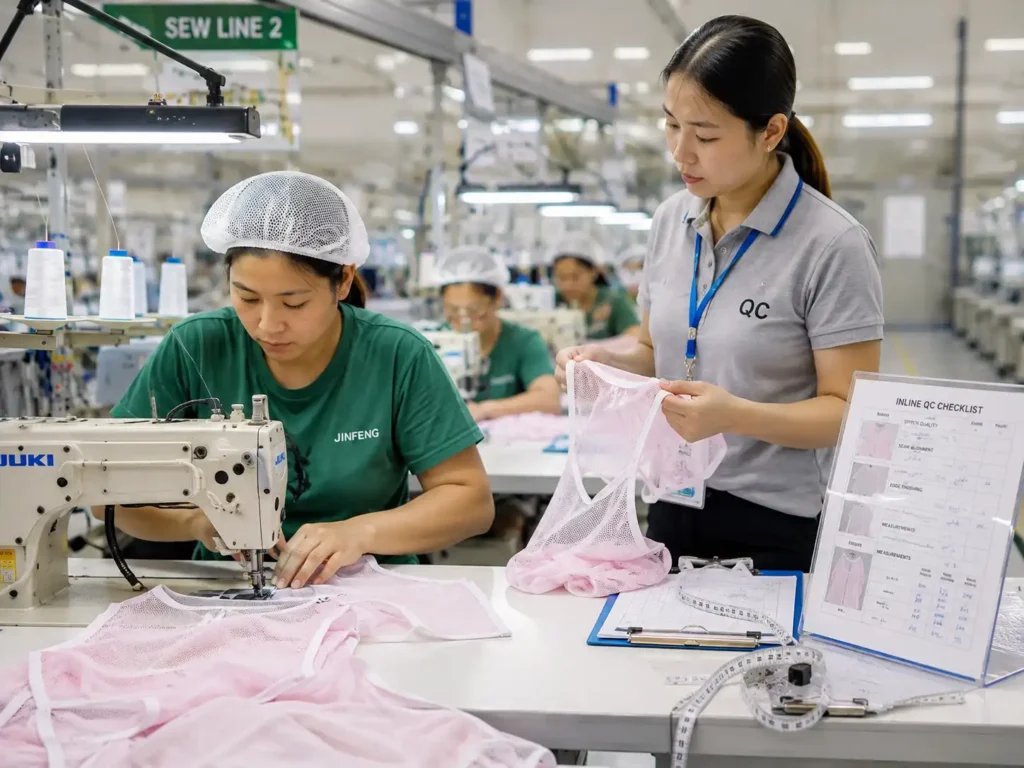
Jinfeng Apparel uses incoming, cutting, sewing, in-line, garment, pressing and packing checks rather than relying on a final visual review. The fit-critical checklist is built from the approved pattern and Golden sample.

  • Incoming Material Control
    Fabric is checked for shade, width, weight, stretch direction, recovery, shrinkage risk, defects and batch consistency. Lining, zippers, elastic, cups, boning and reinforcement materials are matched to the approved sample. A fabric with different recovery can change the waist and crotch position even when garment measurements remain unchanged.
  • Cutting Control
    The production pattern version, grain direction, front and back pieces, lining pieces, size bundles and notches are verified before sewing. Stretch fabrics receive relaxation handling according to material behavior. Incorrect grain or mixed pattern versions can create side-seam twist and unequal rise across the order.
  • Sewing and In-Line Control
    Waist joining, front and back crotch seams, zipper placement, shoulder seams, strap length, armholes and side seams are checked during assembly. In-line measurements identify systematic drift before the problem spreads across the full quantity. Fit-critical operations are compared with the Golden sample and sewing instruction.
  • Finished-Garment Control
    Finished garments are checked for bust, waist, hip, shoulder-to-crotch, front rise, back rise, inseam and overall length according to the approved tolerance plan. Waistline level, side-seam balance, zipper flatness and crotch shape receive visual review. Selected garments may receive movement or fit-form checks according to the project.
  • Packing Control
    Size, color, hangtag, care label, barcode, SKU label, folding method, polybag and carton mark are checked before shipment. Fit corrections lose commercial value when size or SKU packing is mixed, so packing records remain linked to the approved size breakdown.

The quality team includes 15+ QC inspectors, supported by merchandising, production and packing teams. Inspection scope and AQL requirements are confirmed per order and market program.

Rebuild an Existing Jumpsuit for Supplier Transfer

A supplier change often begins with a sales sample, failed fit sample or incomplete tech pack. Jinfeng Apparel can rebuild the production basis while protecting the brand’s design rights and confidential files.

  • Receive and Measure: The original sample is measured at agreed points, photographed and compared with the brand’s size chart. Construction, seam allowances, closure, lining, reinforcement and fabric behavior are recorded. Visible fit problems are separated from manufacturing inconsistencies.
  • Recreate the Production Pattern: A new pattern is developed from authorized materials and brand-owned references. The goal is not blind duplication. Torso length, rise, waist placement, crotch curve, movement and target market requirements are reviewed before the first recreated sample is cut.
  • Establish a New Standard: Revised measurements, fit comments, grade rules, construction notes, BOM, PP sample and Golden sample form a new controlled production package. The transfer can then move into bulk production without depending on the former supplier’s undocumented methods.
  • Protect Brand Information: NDA-based cooperation can cover tech packs, samples, patterns, labels, packaging, pricing and unpublished styles. Client-owned patterns and files are used only for the approved project and are not displayed or reused without authorization.

Production Resources Behind the Fit-Correction Workflow

Fit correction requires experienced pattern work, controlled sampling and a production system able to preserve approved measurements. Jinfeng Apparel combines development and bulk resources around one managed workflow.

Pattern Development

7+ senior womenswear pattern makers support jumpsuit structure review, fit correction, size-chart review and final pattern release. Relevant points include bust, waist, hip, front/back length, shoulder, armhole and crotch length.

Sample Execution

2 sample rooms and 20+ sample machinists support first samples, revised samples, size sets, photo-ready samples and PP samples. Complex jumpsuits are validated before production release.

Quality Team

15+ QC inspectors support incoming, cutting, sewing, in-line, garment and packing checks. Fit-critical measurements are linked to the Golden sample and project checklist.
A person browsing a digital profile dashboard on a laptop in a bright workspace.

Production Network

6 owned womenswear factories and 10+ long-term satellite production partners support product-specific allocation. Production units are matched by fabric, structure, quantity and schedule.

Line Capacity

18+ sewing lines and 6+ flexible production lines support multi-style womenswear programs and fit-sensitive construction. Line planning follows PP approval and material readiness.

Commercial Scale

Regular monthly capacity exceeds 100,000 pieces across the managed womenswear system. MOQ starts from 200 pieces per style and color, subject to fabric, color, trim, construction and packaging requirements. Bulk timing is issued after PP, materials, quantity, size range and packing are confirmed.

Jumpsuit Fit-Correction Programs

The examples below use anonymous brand descriptions and commercially realistic order structures. Brand names, tech packs, samples, pricing and unpublished styles remain confidential unless written authorization is provided.

US Occasionwear Program

An established US occasionwear brand transferred a 12-style jumpsuit program totaling about 24,000 pieces. Key styles included corset wide-leg, halter, one-shoulder and stretch-satin silhouettes. The inherited samples showed front-waist lifting, neck pressure and crotch restriction during sitting. Pattern review separated front bodice shortage from back-rise shortage. The front body received localized length, the back rise and seat extension were revised, and closure lengths were updated. Two fit rounds and a focused size set were completed before PP approval. Bulk control used Golden samples, waist-level checks, shoulder-to-crotch measurements and movement spot-checks.
  • 12 styles / approximately 24,000 pieces
  • Main materials: stretch satin, crepe and lined mesh
  • Core correction: front length, back rise, neck tension and closure opening
  • Bulk focus: waistline level, crotch comfort and multi-size grading

Australian Partywear Program

An Australian partywear brand developed an 18-style bodycon and cut-out jumpsuit collection totaling about 42,000 pieces. Early samples fitted well while standing but pulled at the crotch after sitting and showed side-seam twist after movement. Fabric tests found different recovery among jersey, power mesh and stretch satin. Separate ease rules were created by material group rather than forcing one block across the collection. Front and back crotch curves were revised, hip ease was redistributed, and cut-out reinforcement was added. Size-set review covered core and extended sizes before the production pattern was locked.
  • 18 styles / approximately 42,000 pieces
  • Main materials: jersey, power mesh and stretch satin
  • Core correction: dynamic rise, hip ease, crotch curve and recovery allowance
  • Bulk focus: side-seam balance, stretch recovery and cut-out stability

North American Retail Program

A North American private-label group prepared a 26-style tailored and utility jumpsuit order totaling about 68,000 pieces across several delivery batches. Petite, regular and tall proportions were required. The original grade rule changed inseam length but left torso and rise almost unchanged, producing a dropped crotch in petite sizes and shoulder pull in tall sizes. New proportion rules were created for bodice length, front/back rise, waist placement, zipper opening and sleeve length. High-risk sizes were included in the size set, while each production batch followed the same Golden sample and measurement checklist.
  • 26 styles / approximately 68,000 pieces
  • Main materials: suiting, ponte, linen blends and washed twill
  • Core correction: petite/regular/tall torso distribution and entry opening
  • Bulk focus: size-set stability, batch consistency, SKU and retail packing

Jumpsuit Fit Correction Frequently Asked Questions

Yes. An authorized original sample can be measured, structurally reviewed and converted into a controlled production pattern. Fit photos, size charts, fabric details and known problems help the team separate sample-construction errors from pattern-balance errors.
Common causes include insufficient overall torso length, short front or back rise, tight hip or seat, shallow armholes, short straps or inadequate upper-back width. A fitting must identify the exact tension path before the pattern is lengthened.
No. Torso length describes the connected vertical body path, while crotch depth describes vertical space from the waist level to the seated surface. Crotch extension and curve shape address horizontal body accommodation. Each factor can produce a different wrinkle pattern.
Yes. Front and back rise often require different changes. Bust, abdomen and front-hip shape affect the front; seat depth, swayback and rear-waist contour affect the back. Separate correction protects waistline and side-seam balance.
Revision count depends on pattern quality, fit severity, material behavior, size range and construction complexity. A clear first fitting with measured comments and photos reduces unnecessary rounds. Complex corset, cut-out or mixed-material jumpsuits may require more validation.
A standard first sample usually takes about 10-15 days. Complex corset, cut-out, lined, sequin, lace, mesh or special-closure styles usually take about 15-25 days. Custom fabric, special trims or certification requirements can extend timing.
Yes. Petite and tall programs can adjust torso length, front and back rise, waist placement, armhole, strap, sleeve, zipper opening and leg length. A target body profile and agreed size-set plan are required.
Stretch can reduce required horizontal ease, but vertical stretch and weak recovery can lower the waist or crotch during wear. Fabric direction, stretch percentage, recovery, relaxation and wash behavior are reviewed before the final pattern is locked.
Approved changes are recorded in the final pattern, size chart, grade rule, sewing instruction, PP sample, Golden sample and QC checklist. Cutting, in-line and final inspections compare critical measurements and visible balance against the approved references.
Send a tech pack or reference, current size chart, front/side/back fit photos, movement photos or video, sample measurements, fabric composition, target size range, quantity per style/color and launch window. An original sample can also be reviewed.

Start a Structured Jumpsuit Fit Review

Send the current sample information before a new production pattern is released. Jinfeng Apparel can review torso length, front and back rise, waist placement, crotch balance, bust-to-hip proportion, movement comfort, fabric behavior and size grading. A useful first review does not require a perfect technical diagnosis from the brand team.

Clear photos, measurements and fit comments are enough to begin identifying the likely cause and the next sample step.

For a more accurate project assessment, prepare:

  • Tech pack, line sheet, sketch or authorized reference sample.
  • Current size chart and measuring method.
  • Front, side and back fitting photos at a neutral standing position.
  • Sitting, reaching or raised-arm photos or short fitting video.
  • Fabric composition, weight, stretch direction and preferred handfeel.
  • Target size range, including petite, tall or extended sizes where required.
  • Quantity per style/color, delivery window and private-label packing needs.
  • Known problems from the former sample or supplier.

Tell Us About Your Dress Project

Share your product details, estimated quantity and development requirements. Our team will review your project and provide practical OEM/ODM production feedback.

Premium Women’s Apparel Production for Fashion Brands

From dress sample development to bulk production, JF Apparel supports fashion brands with confidential OEM/ODM manufacturing, reliable quality control and scalable production support.

START YOUR DRESS PROJECT

Ready to Develop Your Next Dress Collection?

Share your design concept, product requirements or sourcing plans with our team. We’ll review your project and provide practical feedback on development, materials, MOQ and production.

7-10 Days

Sample Development

200 PCS

Starting MOQ

Fast Response

Professional Follow-Up