
Jumpsuit Pattern Development
Production-ready jumpsuit pattern development for global fashion brands, from technical review and fit correction through grading and bulk production transfer.
A jumpsuit has to balance an upper-body pattern and trouser pattern as one garment. Small errors in torso length, waist placement, hip ease or crotch length can change the fit across the entire style. Jinfeng Apparel develops jumpsuit patterns around real garment construction, fitting and repeatable production standards.
- 7+ senior womenswear pattern makers
- 2 dedicated sample rooms
- 20+ sample machinists
- Pattern control across waist, hip, crotch length, inseam and movement
- Development from tech packs, reference images, original samples or line sheets
- First, fit, revised, PP and Golden sample support
Pattern Development Built Around Womenswear Fit
7+ Senior Pattern Makers
2 Dedicated Sample Rooms
Two sample rooms connect pattern development with garment validation. First patterns can be converted into first samples, fit samples, revised samples, photo-ready samples, PP samples and Golden samples according to the development stage.
A jumpsuit sample gives information a flat pattern cannot provide alone. The sample room can check whether the waist remains in position, whether the upper body pulls when the wearer sits, whether the crotch has enough depth, whether side seams remain balanced and whether fabric behavior changes the intended silhouette.
20+ Sample Machinists
More than 20 sample machinists support pattern testing and construction development.
Their role is not limited to sewing a presentable prototype. Sample construction can reveal whether a seam is difficult to control, whether an opening is uncomfortable, whether a zipper creates tension, whether lining restricts movement or whether a proposed pattern is difficult to reproduce consistently in bulk. Pattern makers and sample machinists therefore work around the same development target: a jumpsuit that looks correct, feels wearable and can later be reproduced under controlled production conditions.
A Jumpsuit Must Balance in Two Directions
Jumpsuits are sensitive to both horizontal circumference and vertical body length. A style may match bust, waist and hip measurements on paper yet still pull through the torso or crotch because the upper and lower sections have not been balanced as one garment.
Torso Length Controls the Whole Garment
Torso length is one of the first areas to examine when a jumpsuit feels uncomfortable despite apparently correct bust, waist and hip measurements. The distance from the upper body through the waist to the crotch determines where the waist seam settles, how much vertical mobility remains and whether the lower section is being pulled upward by the bodice.
A torso that is too short may produce vertical tension through the center front or back. The wearer may feel the garment pull upward when sitting or reaching, while the waistline can move away from its intended position. Adding width at the hip does not normally solve a vertical-length problem; the pattern has to be reviewed in the correct direction.
A torso that is too long creates a different set of problems. Excess length can collapse around the waist, lower the crotch position or create loose folds through the body. The correct solution depends on the silhouette, fabric drape, waist construction and desired wearing ease.
Jinfeng’s pattern review therefore separates vertical balance from circumference problems before a correction is made.
Rise and Crotch Shape Affect Comfort
The jumpsuit crotch joins the upper body and trouser section, making front rise, back rise, crotch depth and crotch curve closely related to fit. Too little length can create pulling and pressure.
Excess length can produce a low or visually heavy crotch. Incorrect curve shape may create wrinkles even when the total circumference appears sufficient.
Front and back requirements also differ. The pattern cannot be corrected safely by adding the same amount everywhere. Front body shape, back seat shape, hip projection and waist position influence where length and depth are required.
Pattern diagnosis starts by identifying the direction of the drag lines and the movement that creates discomfort. A problem visible only while sitting may need a different correction from a problem visible while standing.
Fit comments are then converted into controlled pattern changes rather than hidden through excessive seam allowance or local stretching during sewing.
Movement Must Be Tested Before Approval
A jumpsuit is worn as one continuous garment, so movement in the upper body can transfer directly into the lower section.
Raising the arms, walking, bending or sitting changes the distance between shoulder, waist and crotch. A pattern that looks clean in one standing photograph may therefore still fail in daily wear.
Fit assessment should include more than a front pose. Side and back views help identify waistline movement, seat tension and side-seam balance. Sitting can expose insufficient vertical ease. Walking can show whether hip and thigh ease are adequate. Arm movement can reveal whether the upper body is pulling the lower section upward.
Fabric also changes the result. A stretch jersey jumpsuit tolerates body movement differently from rigid suiting or woven satin. Pattern ease must therefore be developed together with the intended material rather than treated as a universal number.

Start From the Development File You Already Have

Tech Pack

Reference Images

Original Sample

Sketch or Line Sheet
From First Pattern to Production-Ready Jumpsuit
Pattern development is a controlled sequence rather than a single drafting task. Each stage answers a different question: whether the structure works, whether the garment fits, whether revisions are correctly recorded and whether the approved standard can be repeated across sizes and bulk production.
Structure Review Before Pattern Cutting
Development begins by reviewing what the garment is expected to do on the body. A tailored office jumpsuit, fitted stretch jumpsuit, strapless evening jumpsuit and relaxed wide-leg style require different ease, support and construction logic.
The team first establishes the main structural relationships:
- Upper-body fit and body length
- Natural, high or low waist position
- Hip and seat ease
- Front and back rise
- Crotch length and curve
- Leg shape and inseam
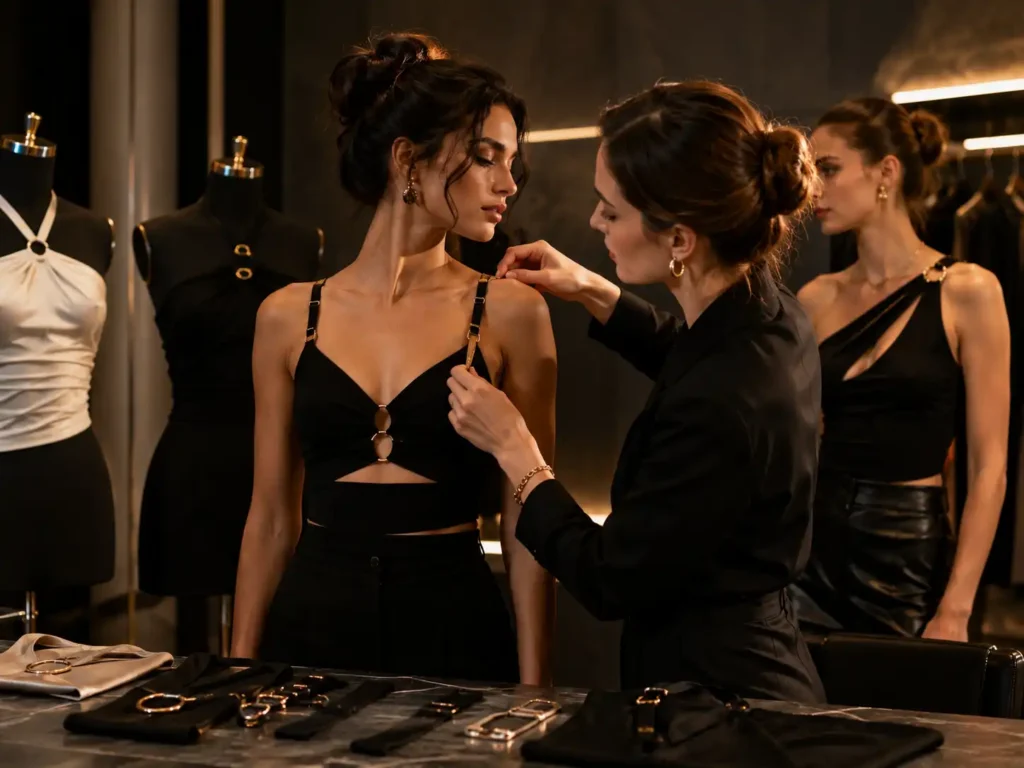
- Neckline, armhole or strap construction
- Zipper, placket or other opening
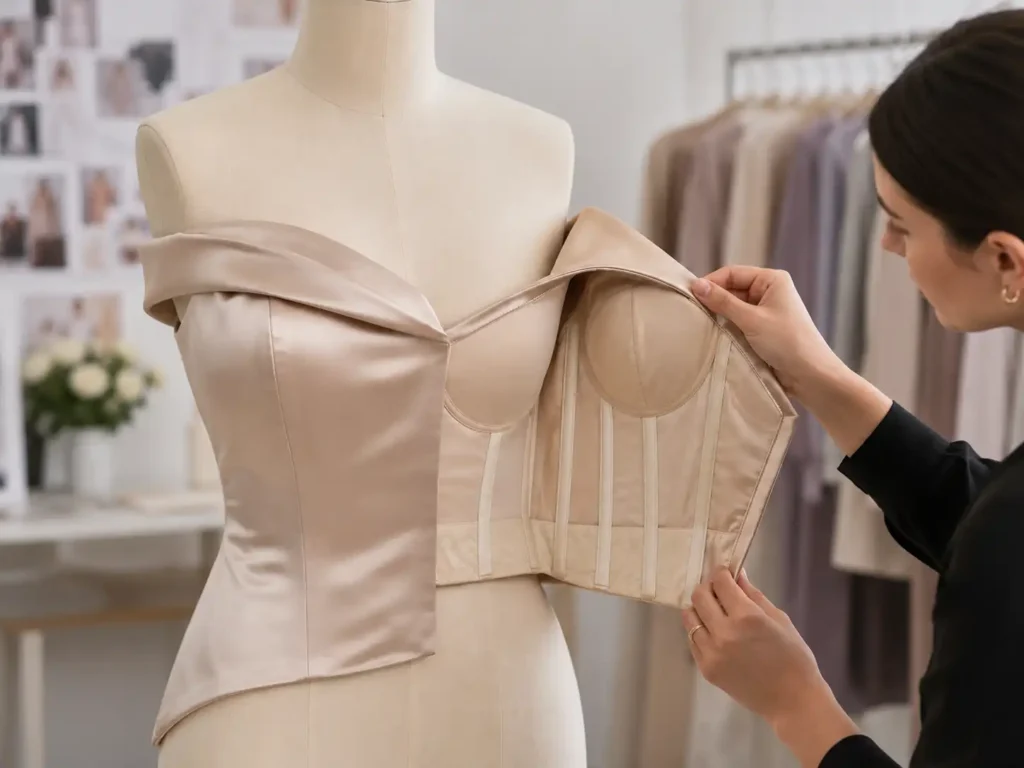
- Lining and internal support where required
- Fabric stretch, recovery and drape
Fabric feasibility is reviewed alongside the pattern. Replacing a stretch fabric with a rigid woven material can change required ease and may invalidate parts of an existing pattern. A heavier fabric can also change drape and crotch appearance even if its nominal measurements are unchanged.
Once the structure and measurement logic are clear, the first pattern can be developed with an identifiable technical target rather than relying on trial-and-error sewing.
First Pattern and First Sample
The first pattern converts design information into actual pattern pieces. The first sample then tests whether the planned construction, proportion and material direction work together.
A first sample is not treated as the final bulk standard. It creates a real garment that allows the development team to evaluate questions such as:
- Does the waist sit at the intended level?
- Is the torso long enough for natural movement?
- Does the crotch remain comfortable while sitting?
- Is hip ease appropriate for the silhouette?
- Does the back rise follow the body cleanly?
- Does the zipper lie flat?
- Does the neckline remain stable?
- Does the leg shape fall as planned?
- Is the fabric producing unexpected stretching or collapse?
Measurements are reviewed together with appearance. A visually attractive sample can still have dimensions outside the intended specification, while a numerically correct sample can reveal proportion problems on the body.
The result of the first sample is therefore a defined revision list rather than an assumption that development is complete.
Fit Review and Pattern Revision
Fit review converts wearing feedback into pattern decisions. Clear comments are most useful when they include front, side and back fitting photographs, measurement differences and marked detail images.
Our pattern team separates problems by cause. A waist positioned too high may come from torso length rather than waist circumference. Crotch pulling may come from rise or curve shape instead of hip width. A side seam moving forward can indicate front/back balance rather than a general size problem.
Each accepted correction should move back into the pattern and measurement record. Examples include:
- Adjusting upper-body length
- Moving waistline position
- Revising front or back rise
- Changing crotch curve
- Adding or reducing hip ease
- Correcting side-seam balance
- Revising inseam or leg shape
- Changing neckline or armhole
- Repositioning a zipper
- Updating lining or internal support
A revised sample or fit sample is then used when the change requires physical verification. Major fabric or structural changes may require further development instead of being treated as a small alteration.
Grading, PP and Final Production Pattern
Once the fit standard is approved, the pattern moves from development into a production system. Base-size approval alone is not sufficient when the garment will be sold across multiple sizes.
Grade rules are established around the approved silhouette. Bust, waist and hip increments need to work with torso and crotch proportions rather than simply enlarging every pattern edge at the same rate.
|
Necklines, armholes, waist placement, overall length and inseam also need appropriate control.
Before bulk production, the final pattern is linked with:
- Approved size chart
- Grade rules
- Approved fabric and color
- Approved trims
- Construction instructions
- Label placement
- PP sample
- Packing requirements
- QC measurements
The PP sample gives production, merchandising and QC teams a physical reference before cutting begins. A Golden sample may also be retained as a continuing reference for bulk inspection and repeat orders.
Torso, Rise and Crotch Control for Jumpsuits
The most expensive jumpsuit fit problems often begin in the vertical relationship between shoulder, waist, hip and crotch. Pattern corrections need to identify whether discomfort comes from length, depth, curve, ease or the interaction of several points.
Control Torso Length Before Adding Width

Torso length should be checked before trying to solve vertical pulling by increasing circumference. When the body section is too short, extra width around the hip may make the garment larger without giving the wearer the vertical movement required between shoulder and crotch.
Fit review can compare the intended waist position with the actual position on the wearer. Pull lines running vertically through the body, upward movement of the waist during sitting or tension through the center front and back are useful diagnostic signs.
Upper-body construction also matters. A sleeveless or strapless jumpsuit may react differently from a style with a relaxed blouse section.
Structured bust construction can restrict how vertical ease is distributed. A fitted waistband can make any torso-length error more obvious because the garment cannot redistribute excess or shortage around a soft elastic waist.
Pattern corrections therefore consider the entire body section rather than changing only one seam.
Separate Front Rise From Back Rise

Front and back rise do not serve identical body shapes. The front pattern has to accommodate abdomen and front crotch form, while the back pattern must follow seat projection and back-body length.
When a jumpsuit pulls toward the back, folds under the seat or creates tension at the front crotch, simply increasing total rise may move the problem rather than solve it. Pattern balance needs to identify where the additional or reduced length belongs.
A useful fit review looks at:
- Waist position from front and back
- Center-front tension
- Center-back tension
- Crotch position
- Side-seam direction
- Seat folds
- Hip circumference
- Back-body length
- Fabric stretch or rigidity
Shape the Crotch Curve for the Fabric

Crotch length alone does not determine fit. Curve shape and depth influence how the garment wraps around the body and how much room exists when the wearer changes position.
A rigid woven jumpsuit normally needs more carefully engineered physical ease than a stretch jersey style. Stretch recovery also matters: a highly elastic fabric with weak recovery may grow during wear, producing a lower crotch after several hours even if the first fitting appears correct.
For woven fabrics, insufficient curve or depth can produce strong drag lines and pressure. Too much depth may create an unnecessarily dropped appearance. Pattern development aims to reach a clean visual line while retaining the wearing comfort appropriate for the style.
Sampling is particularly important after changing fabric because the same paper pattern may behave differently when drape, stretch, weight or surface friction changes.
Sketch or Line Sheet

A jumpsuit should be evaluated during movement before approval because the garment links upper and lower body motion.
Recommended fit checks include:
- Neutral standing position
- Front, side and back views
- Natural walking
- Sitting
- Bending slightly
- Raising the arms
- Stepping forward
- Checking zipper operation while worn
Movement review is not intended to turn a fitted style into a loose garment. The goal is to identify where the wearer needs functional ease without destroying the intended fashion silhouette.
Balance Waist, Hip and Leg Shape Together
Waist and hip adjustments cannot be isolated from torso and crotch fit in a jumpsuit. The correct balance keeps the waist visually positioned, the hip comfortable, the side seam stable and the leg line clean without adding unnecessary volume.
Place the Waist Where the Design Requires
Natural-waist, high-waist and low-waist jumpsuits create different body proportions and different pattern relationships. Moving the waist seam changes the visual leg length but also changes the distance between the upper body and crotch.
A fitted waistband should be checked for both circumference and vertical position. If the waist is correct in width but rises during movement, the problem may sit above or below the waist rather than at the waistband itself.
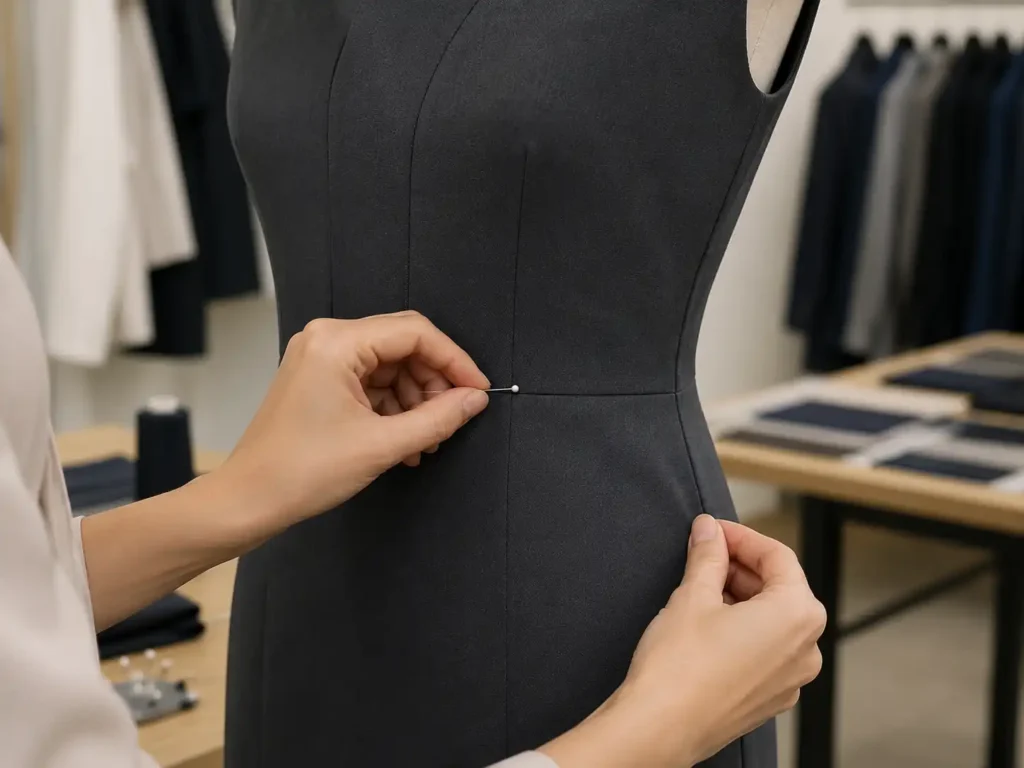
Construction also affects the pattern. A separate waistband, elasticated waist, shaped waist seam, corset-style waist or tie-waist solution handles ease differently. Pattern development therefore establishes the waist architecture before finalizing the body and trouser sections.
Set Hip Ease for Fabric and Silhouette
Hip ease should reflect both design and material behavior. A relaxed woven jumpsuit and a fitted stretch jumpsuit require different pattern logic even if both use the same nominal body measurement.
Too little ease can distort pockets, move side seams, pull the crotch and flatten the intended back shape. Too much ease can weaken a fitted silhouette and create unwanted folds.
Stretch fabrics require additional attention to recovery. A fabric may stretch enough to fit the first time but fail to recover after sitting or repeated wear. Pattern ease should not be decided only from a hand-stretch test; sample behavior gives more reliable information.
Keep Side Seams and Leg Lines Stable
Side-seam balance is a useful visual indicator because a seam that twists forward or backward can signal an imbalance between front and back pattern volume.
Leg shape should also continue naturally from the hip. Wide-leg, straight, tapered and fitted legs need different thigh, knee and hem relationships. Inseam and outseam lengths must remain compatible with the approved rise and waist position.
For styles using heavier suiting, the leg may hold structure strongly. Rayon or viscose can fall closer to the body. Stretch jersey can react to body movement and seam tension. Final pattern decisions therefore combine fit measurements with the way the selected fabric hangs from waist to hem.

Pattern Development Across Commercial Jumpsuit Silhouettes
Different silhouettes create different pattern risks. Development focuses on structure, movement and production repeatability rather than applying one standard block to every jumpsuit concept.

Tailored Jumpsuits

Wide-Leg Jumpsuits

Fitted Stretch Jumpsuits

Strapless Jumpsuits

Halter Jumpsuits

Backless Jumpsuits

Utility Jumpsuits

Occasion Jumpsuits
Fabric Choice Changes Jumpsuit Pattern Behavior
Material selection affects ease, drape, recovery, seam tension and sometimes the pattern itself. Jinfeng’s womenswear fabric system includes suiting, crepe, satin, stretch satin, jersey, ponte, rayon, viscose, linen and other fashion fabrics, with material decisions reviewed during sampling before bulk production.
| Fabric Direction | Pattern Impact | Main Fit Control | Sampling Focus |
|---|---|---|---|
| Suiting | Low stretch requires engineered ease and clean balance | Torso, hip, rise, thigh | Sitting comfort, side seams, pressing |
| Crepe | Drape varies by weight and construction | Waist, hip, leg fall | Grainline, seam behavior, hem balance |
| Satin | Surface highlights tension and construction errors | Waist, hip, crotch, zipper | Drag lines, zipper flatness, pressing |
| Stretch Satin | Stretch changes circumference requirements | Hip, crotch, bust, recovery | Recovery, seam tension, lining compatibility |
| Jersey / Ponte | Stretch contributes mobility but can grow | Negative ease, waist, hip, crotch | Stretch recovery, seam stability, wear test |
| Rayon / Viscose | High drape can lengthen or collapse visually | Waist position, rise, leg shape | Drape, shrinkage, hanging behavior |
| Linen / Linen Blend | Limited stretch and wrinkle behavior affect ease | Torso, hip, sitting ease | Movement, shrinkage, crease appearance |
Construction Details Can Change the Pattern

Zippers and Openings
Waist Seams

Pocket Construction

Lining Systems
Necklines and Straps
Internal Support
Fit Samples Test More Than Standing Appearance
Sampling turns a pattern into measurable evidence. Jinfeng develops first, fit and revised samples so pattern decisions can be checked against garment appearance, movement, measurements, fabric behavior and construction before PP approval.

First Sample — Check Structure
The first sample tests whether the proposed pattern and construction can produce the intended garment.
Main checks include:
- Overall proportion
- Waist position
- Hip shape
- Crotch position
- Front and back rise
- Inseam and leg shape
- Neckline or armhole
- Closure access
- Fabric drape
- Lining compatibility
- Construction feasibility

Fit Sample — Check the Garment on a Body
Fit samples test the relationship between the garment and body rather than only the shape on a hanger.
Recommended review includes front, side and back views along with movement. For jumpsuits, sitting is particularly informative because it increases the vertical distance required through the body and crotch.
Walking reveals hip and thigh mobility, while raised-arm movement can show whether the upper body is pulling the trouser section upward.
Fit review should document both visible problems and wearer comments. “Crotch feels tight when sitting” provides a more useful starting point than “fit is not comfortable.” A marked photograph showing the tension area improves the pattern maker’s ability to diagnose the direction of the correction.

Measurement Review — Check the Numbers
Samples are measured against the agreed specification rather than approved only by appearance.
Jumpsuit measurement review can include:
- Bust
- Waist
- Hip
- Body or torso length
- Front and back rise where specified
- Crotch-related measurements
- Inseam
- Overall length
- Armhole or neckline depth
- Strap length
- Leg opening
- Key construction positions

Revised Sample — Verify the Correction
A revised sample is appropriate when fit, construction or material changes need to be physically checked again.
Pattern revision may involve torso length, waist placement, crotch curve, hip ease, leg shape or upper-body structure.
Changing fabric can also justify a revised sample when the new material has meaningfully different stretch, recovery, weight or drape.
Revision work is controlled through records rather than informal memory. Approved changes are transferred to the latest pattern and measurement file so the PP sample reflects the agreed version.
Turn Fit Comments Into Controlled Pattern Revisions
Clear revision management prevents repeated sample rounds from becoming a collection of disconnected comments. Photos, measurements and written priorities are translated into identifiable pattern, construction or material changes.
Build a Useful Fit Feedback Package
Useful feedback gives the pattern team enough information to identify cause rather than guess from a single sentence.
A strong feedback set may include:
- Front fitting photo
- Side fitting photo
- Back fitting photo
- Seated photo for crotch or torso concerns
- Marked close-up images
- Actual sample measurements
- Target measurements
- Written revision list
- Priority ranking
- Notes on wearer comfort
Diagnose Before Changing the Pattern
Not every sample issue is a pattern problem. Fabric, sewing method, trim selection or incorrect sample measurement can create symptoms that resemble poor pattern fit.
Pattern diagnosis asks where the tension or excess originates. Examples include:
- Waist too high: possible torso-length issue
- Crotch pulling: possible rise, curve or torso issue
- Side seam moving: possible front/back balance issue
- Hip tightness: possible ease or fabric-stretch issue
- Zipper bulging: possible fit, seam or stabilization issue
- Neckline movement: possible upper-body balance or support issue
Only after identifying the likely source should a correction be applied.
Keep Every Revision Traceable
Each significant development round should retain a record of what changed.
Revision records can cover:
- Pattern version
- Measurement changes
- Fabric replacement
- Trim changes
- Construction revisions
- Fit comments
- Sample status
- Approval status
- Remaining open points
Traceability matters even more in multi-style programs where several jumpsuits may be moving through first, fit, revised and PP samples at the same time.
The final approved information then becomes part of the production handover rather than remaining scattered across emails or chat messages.

Grade the Jumpsuit Without Losing Its Balance
Base-size approval is only the beginning of a commercial size range. Grade rules need to maintain the relationship between circumference, vertical body length, crotch, leg shape and upper-body construction across the required size program.
| Pattern Area | Base-Size Check | Grading Risk | Bulk Control |
|---|---|---|---|
| Bust | Shape and wearing ease | Excess or insufficient upper-body growth | Measurement check |
| Waist | Position and circumference | Waist shifts or becomes visually loose | Waist POM |
| Hip | Ease and side-seam balance | Tight seat or excessive volume | Hip POM |
| Torso Length | Vertical movement | Larger sizes become too short through body | Body-length check |
| Rise / Crotch | Comfort and curve | Uneven front/back growth | Pattern and measurement review |
| Inseam | Leg proportion | Size progression changes silhouette | Inseam measurement |
| Neckline / Armhole | Coverage and comfort | Openings grow too aggressively | Opening measurements |
| Overall Length | Intended proportion | Height appearance becomes inconsistent | Length check |
Lock the Pattern Before Bulk Cutting Begins
Bulk production should start from a controlled technical standard. Final pattern, grade rules, PP sample, approved materials and QC measurements need to agree before fabric is cut across thousands of garments.
Finalize the Production Pattern
Fit comments are not considered complete until accepted changes have been transferred into the latest pattern.
The production version should align with:
- Final sample measurements
- Approved fit
- Grade rules
- Fabric behavior
- Construction method
- Zipper and trim positions
- Lining structure
- Label requirements
- Approved seam allowances
Use the PP Sample as a Production Standard
The PP sample is developed after critical materials, measurements and construction have been defined.
PP review normally confirms:
- Final fabric
- Approved color
- Trims
- Measurements
- Sewing method
- Zipper or opening
- Lining
- Label position
- Hangtag direction
- Packing requirements where applicable
Keep a Golden Sample for Comparison
A Golden sample provides a physical reference for merchandising, production and QC when appropriate for the program.
It can help teams compare:
- Overall appearance
- Fit standard
- Fabric hand feel
- Construction
- Trim placement
- Critical measurements
- Label positioning
- Finishing
- Packing presentation
For repeat orders, the retained sample and historical pattern records provide a stronger starting point, while new fabric batches, colors and production conditions still require fresh confirmation.

Move Approved Patterns Into Controlled Bulk Production
Final Pattern File
Size Chart and Grade Rules
Fabric Reference
Trim and Sewing Standards
PP and Golden Samples
QC and Packing Standards
Coordinate Multi-Style Development by Launch Priority
Group Similar Development Work
Styles can be grouped by fabric family, silhouette and pattern complexity. A collection containing structured woven, stretch and draped jumpsuits should not be treated as one technical group because fit and sampling risks differ.
Grouping can include:
- Shared fabric families
- Similar body blocks
- Shared trims
- Comparable construction
- Similar fit risks
Prioritize Hero Styles
Sampling priority can be based on launch date, photography schedule, material readiness, style complexity and the commercial importance of a hero SKU.
The most urgent style is not always the one submitted first.
A complex jumpsuit with a longer development path may need to begin earlier than a simpler style scheduled for the same launch.
Track Every Approval Status
Multi-style development should clearly identify which styles are at first pattern, first sample, fit review, revision, PP or approved status.
Revision trackers help keep pattern versions, fabric choices and fit comments linked to the correct SKU.
A structured approval record becomes especially valuable when product developers, sourcing teams, merchandisers and factory teams are working across different time zones.
Protect Pattern Files and Unreleased Designs
Development Files Stay Project-Specific
Tech packs, patterns, size charts, samples, trims, label artwork, packaging files and unpublished designs are used for the relevant development and production program.
Brand names, unreleased samples and proprietary development information are not used as public marketing material without authorization. Public case material should be anonymized or based on approved content.
Pattern Records Support Repeat Orders
Anonymized Jumpsuit Program: 18 Styles, 46,800 Pieces
A representative seasonal program for a U.S. fashion brand combined fit-sensitive jumpsuits with other womenswear styles. The order covered 18 styles and 46,800 pieces in total, creating a development requirement that had to work across multiple silhouettes, fabrics, colors and production schedules.

Program Brief
The assortment included six jumpsuit styles within a wider 18-style collection. Jumpsuit directions covered structured woven, fitted stretch, wide-leg and occasion silhouettes.
The development team needed more than visually accurate samples.
Each approved style had to move into a commercial size program and later bulk production without allowing sample-room adjustments to disappear during factory handover.
Several styles shared similar design language but used different fabric behavior, making one universal jumpsuit block unsuitable for the full group.
Total seasonal order: 46,800 pieces
Total styles: 18
Jumpsuit styles within program: 6
Development path: First → Fit → Revised → PP → Bulk

Main Pattern Challenges
Fit review identified several different problems rather than one general sizing issue.
A structured woven style showed tension during sitting even though the hip circumference was close to target. Review focused on torso length, front/back rise and crotch curve rather than simply adding width.
A fitted stretch style looked balanced in the first fitting but the fabric recovery needed further review because the body section relaxed after movement.
A wide-leg style required waist and crotch refinement so extra trouser volume fell cleanly instead of pulling the upper section downward.
An occasion style required closer coordination between satin drape, invisible zipper construction, lining and upper-body fit.
Treating every issue as “make the sample bigger” would have changed the intended silhouettes without correcting the actual causes.

Pattern and Sampling Response
The six jumpsuits were separated into three technical groups: structured woven, stretch and draped occasion styles.
Pattern development then focused on the key control points for each group. Torso, waist, hip, rise, crotch, inseam and upper-body construction were reviewed against the relevant fabric rather than copied from one block.
Fit comments were collected using front, side and back views along with movement feedback. Corrections were transferred into revised patterns and sample measurements.
Fabric changes were reviewed before new samples were approved. Pattern revisions were tracked by version so merchandisers and sample-room teams could distinguish current files from superseded development versions.
The PP stage was used to lock final pattern, measurements, fabric, trims and construction before bulk cutting.

Production Transfer
After approval, the pattern and sampling standard moved into production through final patterns, grade rules, measurement files, PP references and QC checkpoints.
The larger 46,800-piece program required style-by-style production control rather than treating the collection as one bulk quantity.
Pattern-related measurements remained part of in-line and finished-garment checks.
The main value of the development work appeared at scale: torso and crotch problems corrected on one sample did not become thousands of repeated defects.
Approved records also created a stronger base for later color extensions and repeat-order discussion.
Brand identity, original tech packs and proprietary design information remain confidential in the case presentation.
Jumpsuit Pattern Development Frequently Asked Questions

Send Your Jumpsuit Project for Pattern Review
- Tech pack, reference images, sketch, line sheet or original sample photos
- Target quantity by style and color
- Preferred fabric or fabric performance
- Intended size range and existing size chart
- Desired fit or reference fitting standard
- Important torso, waist, hip or crotch concerns
- Closure, lining and trim requirements
- Private-label or packing requirements if already defined
- Target launch or required production window
- Any previous sample photos and revision comments


