Jersey Dress Manufacturer
Custom jersey dress development for fashion brands requiring controlled stretch, reliable fit, stable bulk measurements and retail-ready private-label delivery.
Jinfeng Apparel develops and manufactures jersey dresses from fabric direction and stretch evaluation through pattern engineering, fit sampling, PP approval, bulk production, quality inspection and branded packing. Projects are managed for fashion collections rather than generic knit garments, with control focused on recovery, shrinkage, spirality, neckline stability, side-seam balance and size consistency.
- 140-240 GSM jersey directions commonly reviewed for casual, fitted, ruched, midi and maxi dress programs.
- 2 sample rooms, 7+ senior pattern makers and 20+ sample machinists supporting multi-style development.
- 6 owned women’s fashion factories, 10+ long-term production partners and 100,000+ pcs monthly capacity.
- MOQ starts from 200 pcs per style/color, subject to fabric, color, trim, construction and packing requirements.
Manufacturing Capacity Built for Jersey Dress Programs
Since 2008
6 Owned Factories
10+ Partners
2 Sample Rooms
15+ QC Inspectors
MOQ 200
Designed for Established Fashion and Sourcing Teams
Best Project Fit
Production Boundary
Jersey Dress Risks We Control Before Bulk Production
Weak Recovery
Side-Seam Twist
Length Ride-Up
Neckline Growth
Wash Shrinkage
Bulk Size Drift
Send the Right Information for a Faster Review
Style Reference
Quantity Plan
Fabric Direction
Size Range
Branding Files
Launch Timing
Quality Standard
Target Position
Jersey Dress Styles Developed for Fashion Collections

Bodycon Jersey

T-Shirt Dress

Ruched Jersey

Wrap Jersey

Midi Jersey

Maxi Jersey

Cut-Out Jersey

Long-Sleeve Jersey
Jersey, Rib Knit and Ponte Are Not Interchangeable
| Fabric | Typical Feel | Common Weight | Stretch / Recovery | Best Dress Uses | Main Risks | Pattern Direction |
|---|---|---|---|---|---|---|
| Single Jersey | Soft, fluid, light to medium | Often 140-220 GSM | Varies widely by fiber and elastane | T-shirt, ruched, fitted, wrap, casual midi and maxi | Curling edges, spirality, transparency, length shrinkage | Ease and edge finishes must match actual recovery |
| Rib Knit | Textured, elastic, close-fitting | Often 180-320 GSM | High mechanical stretch; recovery depends on blend | Bodycon, tank, fitted midi, contour styles | Growth, rib distortion, seam impression, inconsistent width | Reduce negative ease carefully and control vertical growth |
| Ponte | Compact, smooth, structured | Often 260-420 GSM | Moderate stretch with firmer recovery | Office, structured bodycon, tailored midi, clean A-line | Bulk at seams, shine from pressing, restricted movement if too firm | Use cleaner shaping and allow sufficient movement ease |
Jersey Fabric Options Selected by Product Result

Polyester Jersey

Cotton Jersey

Viscose Jersey
Viscose jersey produces fluid drape and a soft, cool hand suited to wrap, ruched, midi and maxi dresses. It can grow vertically, shrink after washing and become unstable when cut before sufficient relaxation.

Rayon Jersey

Modal Blends

Spandex Blends
Stretch and Recovery Control Behind Reliable Fit
Development therefore separates extension, recovery and growth instead of treating elasticity as one number.
Measure the Direction
Horizontal stretch affects bust, waist and hip fit. Vertical stretch influences bodice length, waist position, hem balance and maxi-dress growth. Some fabrics behave differently along the roll and across the width, while printed or brushed finishes can change the usable direction. Pattern orientation should follow both visual grain and measured performance.
Control Negative Ease
Negative ease is the difference between body measurement and garment measurement in a fitted stretch style. Excessive reduction may create transparency, seam strain, ride-up and restricted movement. Insufficient reduction may leave the waist or hip loose after wear. The correct amount depends on fabric recovery, design intention, lining, size range and fit model.
Review Recovery After Load
Recovery should be checked after extension and after a short resting period. Areas such as waist, seat, elbows and knees may show permanent growth even when the first pull test looks strong. Sample fitting should include movement and time on body, not only a quick static photo.
Protect Bulk Consistency
Bulk fabric lots can vary in width, stretch and hand feel. Approved fabric references, incoming checks, cutting-room instructions and measurement methods help keep one batch from fitting differently from another. A material change requires pattern reassessment, even when composition remains similar.
Custom Colors and Printed Jersey Development
Color and print decisions affect fabric MOQ, lead time, hand feel, shrinkage and repeat-order continuity. Approval should move from digital reference to physical material before bulk cutting.
Stock Color Programs
Stock colors can support faster review when the required shade, weight and stretch are available. Availability should be confirmed by current supplier inventory and dye lot. A stock black from one lot may differ from a later reorder, so approved swatches and bulk shade records remain important.
Custom-Dyed Jersey
Custom dyeing requires Pantone or physical color reference, lab dip approval, fabric quantity and supplier MOQ confirmation. Dark or saturated colors may behave differently in colorfastness and hand feel. Color should be judged under agreed lighting and on the intended fabric, not only on a screen.
Printed Jersey
Digital or other print methods must consider base-fabric composition, stretch, color penetration, print scale and pattern repeat. Highly stretched bodycon garments can open the print and expose the base color. Placement prints need clear location measurements and graded positioning across sizes.
Repeat-Order Color Control
Repeat production uses saved color approvals, supplier references and prior dye-lot notes. Exact continuity still depends on material availability and the current dye batch. When a prior fabric is unavailable, the replacement should be compared for color, weight, stretch, recovery, hand feel and pattern impact.
Pattern Engineering Based on Actual Jersey Performance
A woven dress block cannot be copied directly into jersey. Pattern engineering begins with the approved material because stretch, recovery, drape and thickness determine how the garment sits on the body.
Build Around the Silhouette
A relaxed T-shirt dress needs shoulder balance, sleeve mobility and straight hanging side seams. A bodycon dress requires controlled negative ease and stable bust-waist-hip shaping. A draped or ruched dress needs extra volume in specific zones without losing overall balance. Pattern decisions should follow the intended silhouette, not a generic knit block.
Set the Waist and Length
Vertical stretch can lower the waist or lengthen the skirt after the garment hangs. Waist seams, elastic channels, draped panels and maxi skirts may need support or revised length calculations. Sample review should include resting time on a hanger and on-body movement where the design is sensitive.
Engineer Seam Placement
Seams can stabilize or distort stretch garments. Side seams, center-back seams, waist seams and princess lines must be positioned with body tension in mind. A seam placed at the widest hip area may twist or show pressure if negative ease is too high.
Reassess Every Material Change
A new fabric with similar composition can still have a different width, GSM, stretch ratio, recovery and finish. Pattern files are retained for repeat orders, but they are not reused blindly when material, lining, length or construction changes.
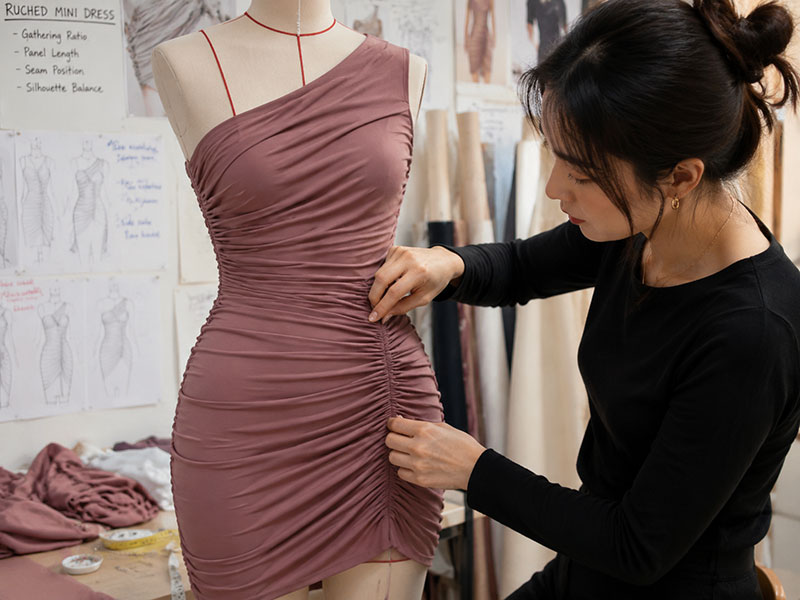
Bust, Waist and Hip Fit for Stretch Dresses
Fitted jersey dresses are judged on the body, not on a flat table. Pattern and measurement work must create the intended contour while preserving comfort, opacity and movement.
- Bust Shape: Bust fit depends on neckline, armhole, fabric recovery, lining and the intended level of support. Excess tension can pull the side seam forward, open the neckline or create diagonal drag lines. Too much ease can leave gaping at the armhole or neckline. Cup area, shoulder strap and under-bust position are reviewed together.
- Waist Definition: Waist measurement alone does not guarantee visual definition. Fabric compression, torso length, waist seam position and ruching direction affect the result. A low waist or dropped waist must remain in the planned position across sizes and during movement.
- Hip and Seat: Hip fit influences ride-up, side-seam alignment, slit opening and back length. Negative ease should be balanced against recovery and opacity. Sitting and walking checks reveal issues that are not visible in a standing fitting.
- Size Range Control: Larger sizes need more than proportional enlargement. Bust shaping, armhole depth, strap width, waist placement and skirt length may need controlled grade rules. Fit approval should identify where the silhouette remains constant and where functional ease must increase.
Neckline and Armhole Stability in Jersey Dresses
Necklines and armholes are exposed edges. Poor handling can turn a clean design into a stretched, rippled or gaping garment before it reaches retail.
Round and Crew Necks
Binding length, seam allowance, stitch balance and fabric recovery determine whether a round neckline lies flat. Too much binding tension puckers the body; too little allows the opening to grow. Shoulder stabilization may be needed when the fabric is soft or the dress is heavy.
Square and Deep Necklines
Corners and deep openings need accurate reinforcement and clean turning. The neckline must stay close to the body without excessive tension. Double layers, elastic support, stay tape or shaped facing may be chosen according to design and material.
Halter and One-Shoulder
Asymmetric or halter styles carry garment weight through limited points. Strap length, neckline stretch and body support should be verified in movement. Fabric that grows vertically can lower the neckline after wear.
Sleeveless Armholes
Armhole shape must allow movement while covering the intended area. Binding and edge elastic need controlled ratios. Excess tension cuts into the body; weak tension creates gaping. Size grading should preserve coverage across the range.
Jersey Sewing Methods Selected by Construction Risk

Overlock Seams

Coverstitch Hems

Single-Needle Work

Binding Finish

Elastic Application

Reinforced Stress Points
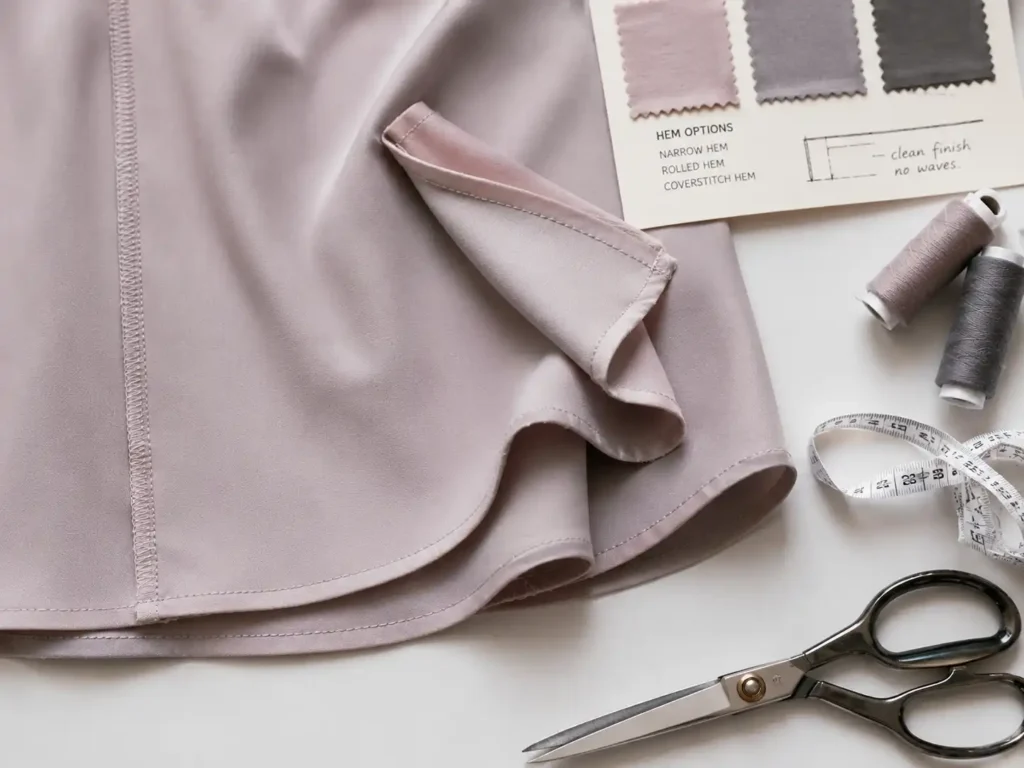
Hem and Edge Finishing Without Waves or Growth
A jersey hem must stretch enough for wear while remaining visually clean. Hem choice is linked to fabric curl, weight, silhouette, seam bulk and design level.
- Coverstitched Hems: A two-needle or selected coverstitch finish is common for T-shirt and casual jersey dresses. Differential feed, presser pressure, needle type and thread balance require adjustment around the actual fabric. The finished hem should lie flat after pressing and recover after gentle extension.
- Narrow and Turned Edges: Light draped jersey may use a narrow turned hem when the fabric and design allow it. Curling edges and uneven feeding can create rope-like hems or skipped areas. Sample confirmation should include the full skirt circumference, not only a short test strip.
- Bound and Clean-Finished Openings: Cut-outs, armholes and necklines may use self binding or contrast binding. Edge length, seam thickness and turning method influence shape. A bound opening should maintain coverage without pulling the garment off balance.
- Hem Balance on Midi and Maxi Styles: Long hems expose cutting and sewing variation. Garments may need resting before final length review because jersey can drop under its own weight. A consistent measurement method and approved hem sweep help control bulk appearance.
Ruching, Draping and Cut-Out Details Made Consistent

Fixed Ruching

Drawstring Ruching

Side Draping

Twist Fronts

Waist Cut-Outs

Asymmetric Openings

Lining and Support Options for Coverage and Shape
Lining should solve a defined problem: opacity, support, comfort, surface smoothness or structure. An unsuitable lining can reduce stretch, pull seams and create visible drag lines.
Double-Layer Jersey
Using the same or compatible jersey in two layers can improve opacity and surface smoothness. The layers should share enough stretch and recovery to move together. Joining method, seam bulk and hem construction need sample review, especially for fitted dresses.
Power Mesh Support
Power mesh may add support in selected body areas, but compression and recovery must match the dress. Excessive tension can distort the outer jersey or create a hard edge. Placement should be approved on the body.
Partial Lining
Bust, skirt, cut-out or light-color zones may use partial lining while other areas remain single layer. Coverage length and edge transition should avoid visible lines. A lining that stops across the widest hip can create an unwanted ridge.
Built-In Support
Some jersey designs use cups, elastic, anti-slip tape or internal panels. Support materials must be compatible with stretch, care method and comfort. Bulk QC checks placement, symmetry and attachment strength.
Size Grading and Measurement Control Across the Range
Stretch does not remove the need for precise measurements. It changes how measurements are interpreted. Key points must be defined, measured after a consistent resting period and compared with approved tolerances.
| Control Point | Why It Matters | Sample Review | Bulk Method | Common Risk | Correction Direction |
|---|---|---|---|---|---|
| Bust | Controls contour, neckline and armhole tension | Fit model plus flat POM | Rest garment, measure without stretching | Gape or excessive compression | Adjust pattern and grade rule |
| Waist | Defines silhouette and torso position | Check standing, sitting and movement | Measure at named waist point | Waist drops or grows after wear | Review vertical stretch and ease |
| Hip | Influences ride-up, opacity and side seam | Check front, side and back balance | Measure at fixed distance from waist | Side seam rotates; skirt climbs | Adjust negative ease and sweep |
| Dress Length | Affects commercial proportion | Check after hanging and fitting | Use high shoulder point or defined origin | Vertical growth or wash shrinkage | Revise length allowance and process |
| Neck Opening | Controls coverage and dressing function | Check wearing entry and recovery | Measure approved edge method | Growth, wave or restricted opening | Change binding, elastic or pattern |
| Hem Sweep | Controls movement and visual balance | Walk and sit test | Measure flat at approved position | Tight hem or uneven circumference | Adjust sweep and cutting control |
Jersey Dress Sampling From Material to Approved Fit
Project Review
Fabric Direction
Pattern Development
First Sample
Internal Review
Fit Review
Revised Sample
PP Sample
Golden Reference
Fit Sample, Revision and PP Approval Responsibilities
Sample names matter because each version answers a different question. Mixing fit approval with bulk approval increases risk.
First Sample
The first sample confirms whether the design direction can be translated into the chosen jersey. It may use an available sample fabric when the final material is still under development, provided the difference is clearly recorded. Evaluation focuses on silhouette, construction, major fit and risk points.
Fit Sample
A fit sample verifies body proportions, movement, coverage and key measurements. Jersey fit should be reviewed after the garment has rested and after basic movement. Photos, measurement comments and clear references help prevent subjective revisions.
Revised Sample
A revised sample implements agreed changes. Pattern notes should state what moved, how much and why. When fabric, lining or elastic changes, the effect on fit should be reviewed rather than assuming the previous correction remains valid.
PP Sample
The PP sample should use approved bulk-equivalent fabric, trims, labels and construction. It becomes the reference for production, measurements and workmanship. Bulk cutting should wait until material, fit, color, label and packing requirements are sufficiently confirmed.
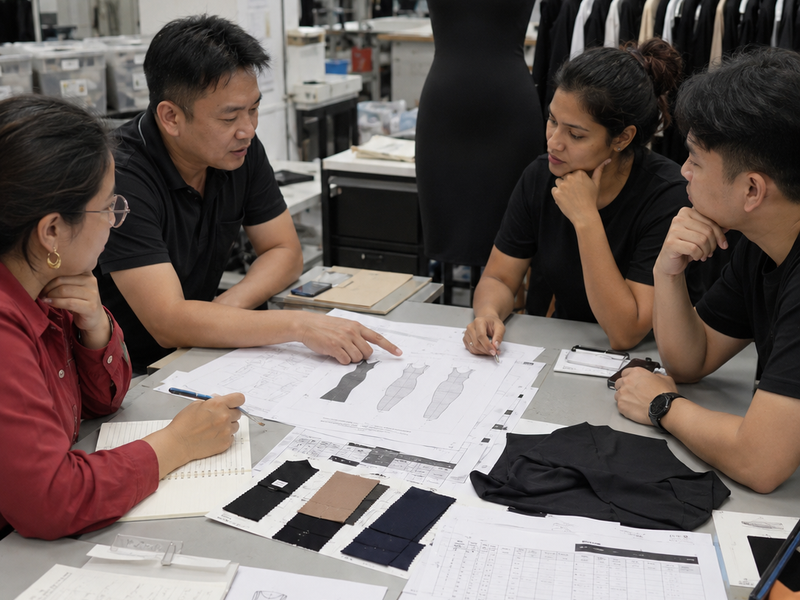
Multi-Style Jersey Collection Development With Clear Priorities
Collections containing 10-30 styles require structured development. Sending every style into sampling at the same priority can delay photography, fabric booking and bulk decisions.
- Group by Fabric Family
Styles sharing one approved jersey can be developed as a family, but each silhouette still needs individual pattern and fit review. Shared fabric improves color and hand-feel continuity while simplifying bulk material planning.
- Rank Hero Styles
Styles needed first for campaign shooting, showroom review or sales testing should enter pattern and sample work before extensions. Priority lists help the sample room allocate pattern makers and machinists around commercial deadlines.
- Track Versions
Each style should carry a style number, sample version, measurement file, fabric reference, trim list, comment history and approval status. Version control reduces the risk of production using an outdated pattern or label file.
- Plan Bulk Release
Approved styles may enter production in waves according to fabric readiness, launch sequence and capacity. Multi-batch delivery can be organized by style group, color group, destination or launch date, with independent packing and carton data.
Production Allocation Based on Knit Experience and Risk
Jersey dresses are not allocated only by free capacity. Fabric type, stitch requirements, style complexity, quantity, timeline and quality standard guide production planning.
Dedicated Knit and Stretch Capacity
Jinfeng Apparel maintains knit and stretch womenswear capacity for jersey dresses, bodycon dresses, ponte dresses, bodysuits, crop tops, stretch jumpsuits and fitted fashion styles. Production focuses on stretch direction, recovery, bust-waist-hip dimensions, neckline shape, side-seam balance, wash dimensions and bulk size consistency.
Owned and Partner Coordination
Six owned women’s fashion factories and more than ten long-term satellite partners provide capacity flexibility. Allocation remains tied to approved specifications, production instructions, QC checkpoints and project management rather than treating every facility as identical.
Capacity With Boundaries
100,000+ pcs monthly capacity, 18+ sewing lines and 6+ flexible production lines support multi-style and repeat programs. Capacity is evaluated against complexity, fabric availability, packing workload and required inspection windows. A confirmed plan should be based on the actual collection rather than a general speed promise.
Controlled Handover
Pattern, PP sample, measurement chart, workmanship standard, label file, packing instruction and QC checklist move together when production is released. Missing references are resolved before the line begins wherever possible.
From Approved Sample to Bulk Jersey Dress Delivery
Material Confirmation
Fabric Inspection
Fabric Relaxation
Marker and Cutting
Panel Inspection
Sewing Control
Inline Checks
Finishing and Packing
Final Review
Jersey Dress Quality Control at Six Production Stages
Fabric QC
Cutting QC
Sewing QC
Measurement QC
Final Garment QC
Packing QC
MOQ, Cost and Lead-Time Factors Explained Clearly
Standard MOQ starts from 200 pcs per style/color. Final pricing and timing depend on the project structure, not only total units.
Per Style and Color
One style in black at 200 pcs forms a standard review unit. One style split into 100 black and 100 white does not normally meet 200 pcs per color. A collection total cannot be used to hide very small quantities across many styles and colors.
Fabric Availability
Stock jersey in an approved color can simplify material planning. Custom dyeing, custom print, certified material, uncommon GSM or a proprietary finish may require higher fabric quantities and longer preparation. Supplier MOQ and current availability must be confirmed for each project.
Construction and Work Content
Double layers, power mesh, complex ruching, cut-outs, built-in support, multiple panels, custom trims and detailed packing add material, sewing, inspection and handling time. Costing should reflect the real work rather than a flat price by dress category.
Timing by Project
Sample and bulk timelines are confirmed after style complexity, fabric status, trim readiness, quantity, approval speed, production schedule and packing needs are reviewed. Launch dates should include time for sample comments, PP approval, production QC, packing and transportation.
Private Label and Retail-Ready Jersey Dress Packing

Main Label

Size Label

Care Label

Hangtag
Barcode Label
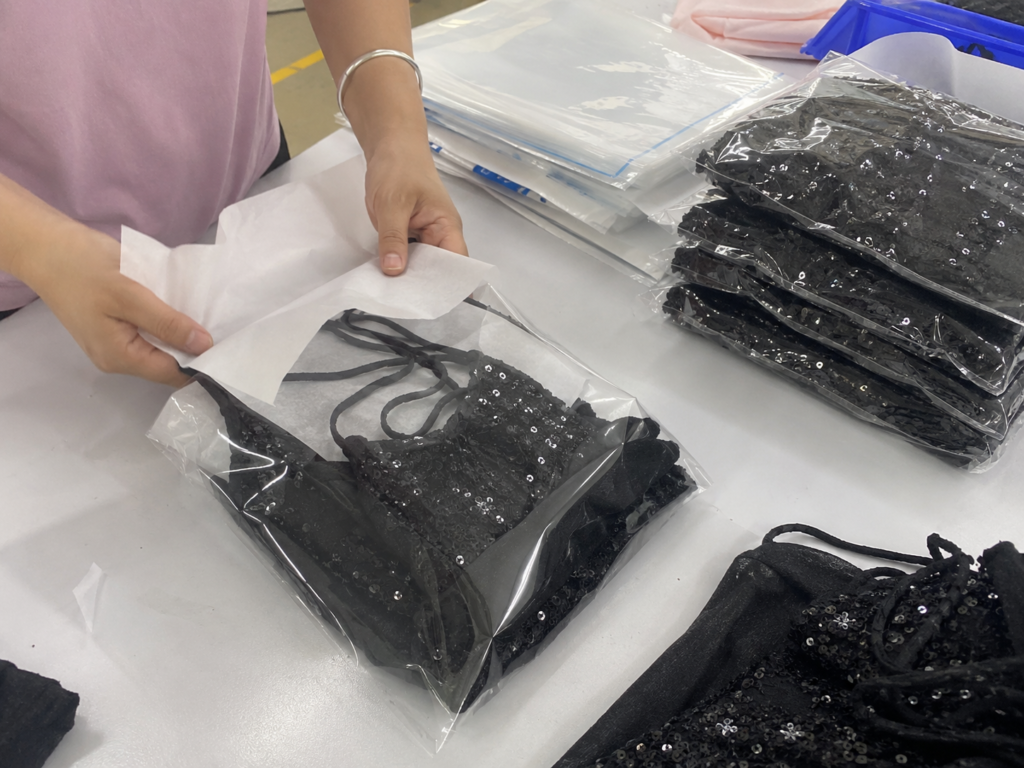
Polybag
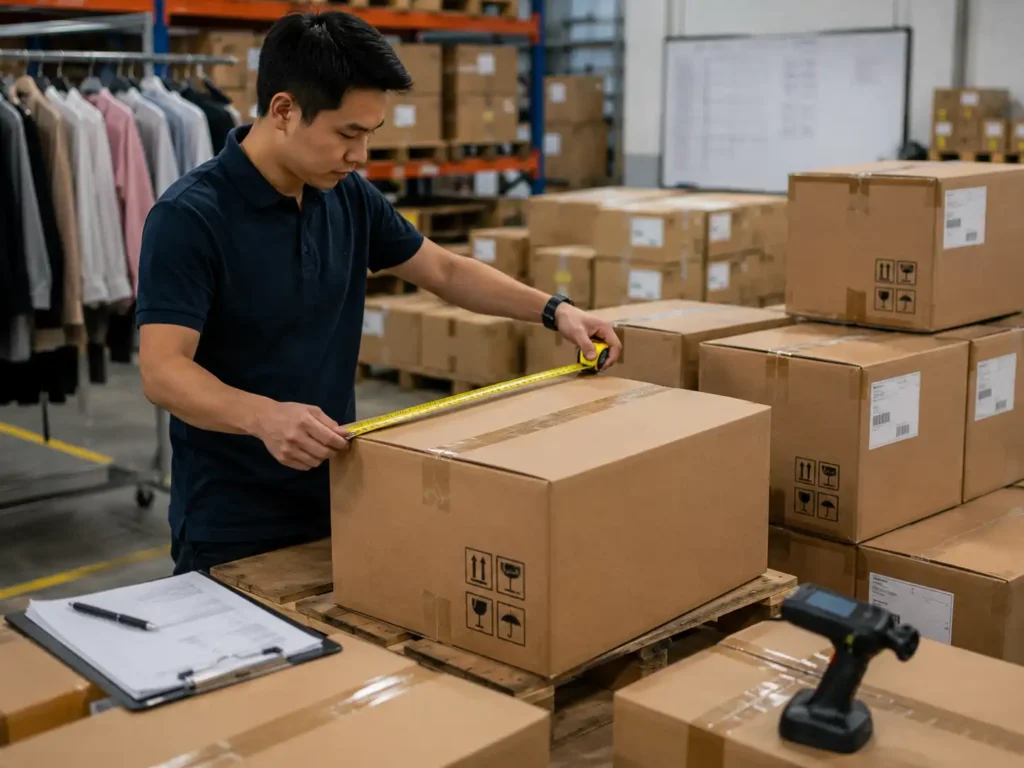
Carton Mark

Packing Record
Jersey Dress Programs Managed From Sample to Reorder

US Ecommerce Jersey Drop

UK Multi-Style Core Program
A UK occasion-led fashion label placed 16 jersey and compact-knit styles totaling 31,200 pcs.
The range included fitted midi dresses, asymmetric necklines, draped fronts and double-layer light colors. Development risk centered on neckline growth, lining drag and inconsistent ruched length. Jinfeng Apparel tested binding ratios, aligned inner and outer layer stretch, standardized gathering references and defined garment resting time before measurement.
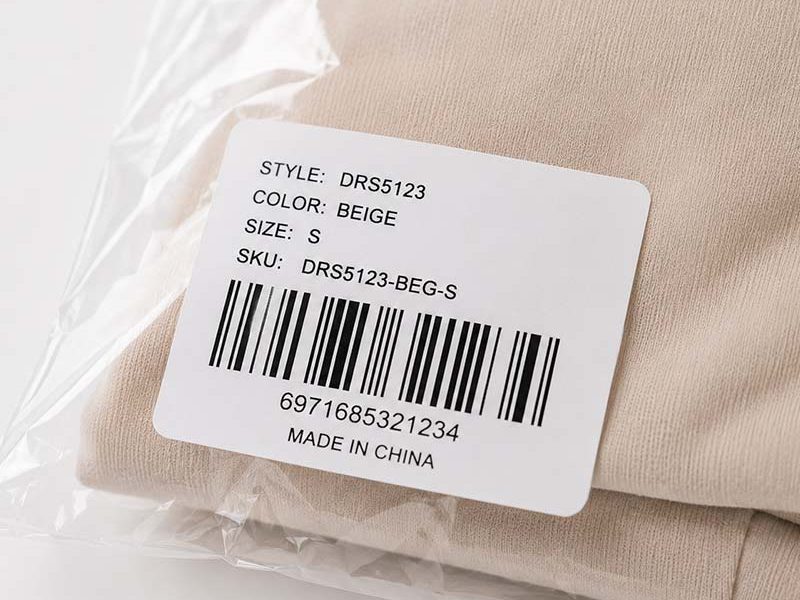
Labels, barcode stickers and carton marks were managed by style, color and size. Final production was divided into two delivery batches to support launch sequencing and warehouse capacity.

Australian Resort Jersey Range
An Australian resort and lifestyle brand developed 20 styles totaling 44,000 pcs, including printed wrap dresses, casual maxis, tank midis and soft long-sleeve shapes.
Print scale, opacity and maxi length growth were the main concerns. Jinfeng Apparel reviewed base-fabric weight, print opening under stretch, overlap coverage and hanger growth. Marker planning controlled print direction, while wash review guided length allowance. The program used private labels, care labels, hangtags and destination-specific carton data. Several silhouettes continued into later color and print updates after sales review.
What Qualified Jersey Dress Manufacturing Should Control
Fabric Knowledge
Pattern Correction
Fit Sampling
Seam Stability
Wash Review
Bulk Measurement
Private Label
Project Records
Commercial Boundary
Jersey Dress Frequently Asked Questions

Start Your Jersey Dress Manufacturing Project
Send Jinfeng Apparel the information available for your collection. A tech pack is ideal, yet a line sheet, reference garment, clear images or an early product brief can also support an initial review. The development team will assess jersey direction, stretch and recovery needs, pattern risk, sample route, MOQ fit, private-label requirements and production feasibility before recommending the next step.
- Style files: tech pack, sketches, reference photos, original sample images or line sheet.
- Commercial plan: quantity per style/color, target market, size range and launch or warehouse date.
- Material direction: composition, GSM, stretch, hand feel, opacity, color and approved swatch when available.
- Branding and packing: main label, care label, hangtag, barcode, SKU list, polybag and carton instructions.
- Quality references: measurement tolerance, testing request, inspection manual or retailer requirements.
- Project files are used for evaluation, sampling, production, QC, packing and delivery coordination under NDA-based cooperation.