Skip to content
Jacquard Dress Manufacturer
Premium custom jacquard dress development for global fashion brands, occasionwear labels, sourcing teams, and multi-style womenswear programs.
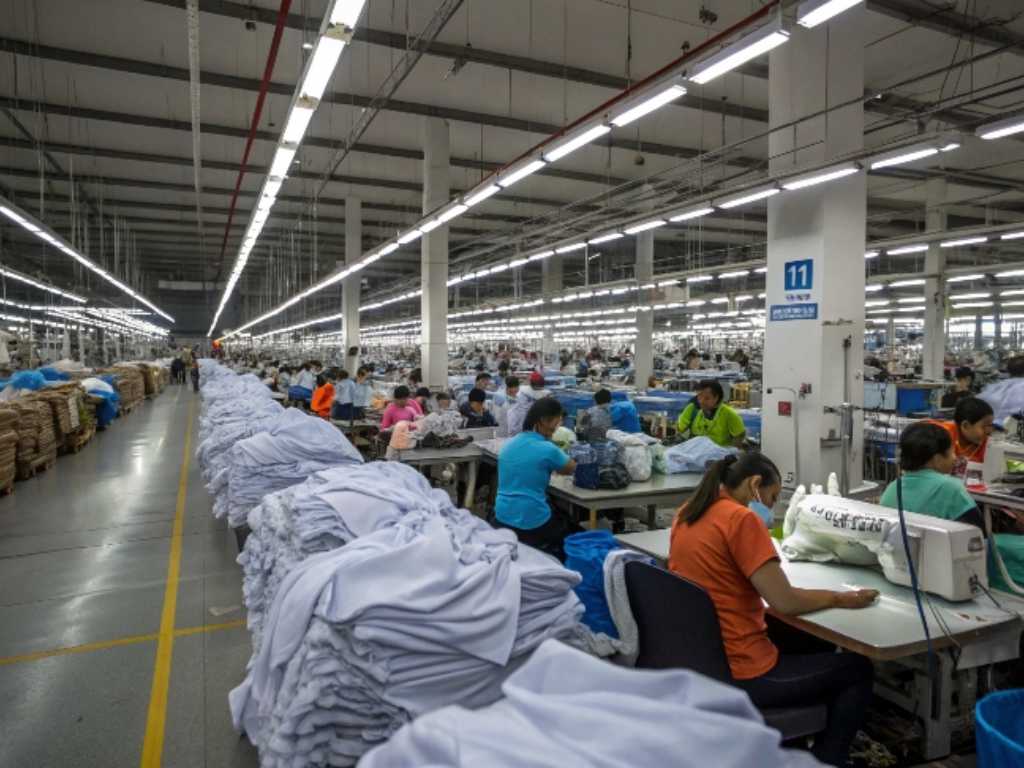
- 6 owned women’s fashion factories and 10+ long-term production partners for structured dress programs.
- 2 sample rooms, 7+ senior pattern makers, and 20+ sample machinists for fabric-led pattern development.
- 15+ QC inspectors covering fabric, cutting, sewing, measurements, finishing, packing, and pre-shipment review.
- MOQ starts from 200 pcs per style/color, subject to jacquard fabric, color, trim, and packaging requirements.
Jinfeng Apparel develops jacquard mini, midi, cocktail, party, corset, A-line, puff-sleeve, and occasion dresses from fabric direction and motif planning through pattern making, sampling, PP approval, bulk production, quality control, private-label packing, and export coordination. Projects are evaluated around fabric repeat, direction, weight, hand feel, seam bulk, lining, fit, motif placement, size range, and launch timing before production standards are locked.
Structured Teams Behind Every Jacquard Dress Program
Since 2008
6 Owned Factories
10+ Production Partners
2 Sample Rooms
7+ Pattern Makers
15+ QC Inspectors
Built for Brands Developing Jacquard Dress Collections
Fashion Brands
Occasionwear Labels
Ecommerce Programs
Sourcing Teams
Product Developers
Brand Groups
Where Jacquard Dress Production Commonly Goes Wrong
Wrong Fabric Body
Motif Misalignment
Excess Fabric Waste
Bulky Seam Areas
Weak Fit Control
Sample-Bulk Drift
Jacquard Dresses Need Product-Specific Manufacturing Decisions
Fabric Drives Shape
Structure Drives Control
Custom Jacquard Dresses Across Key Fashion Categories
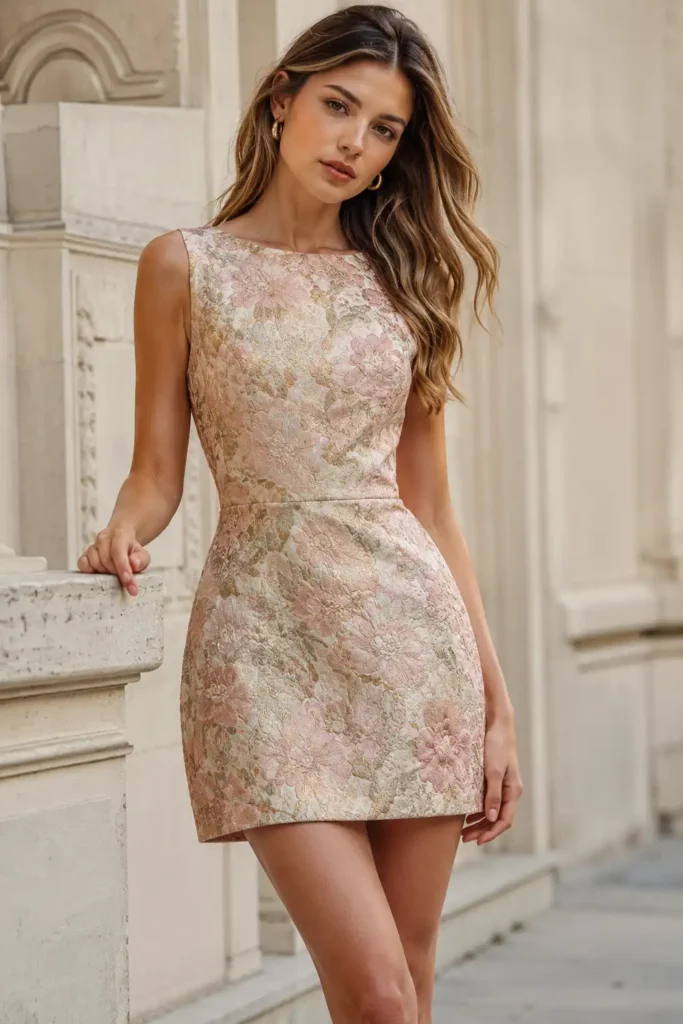
Jacquard Mini Dress
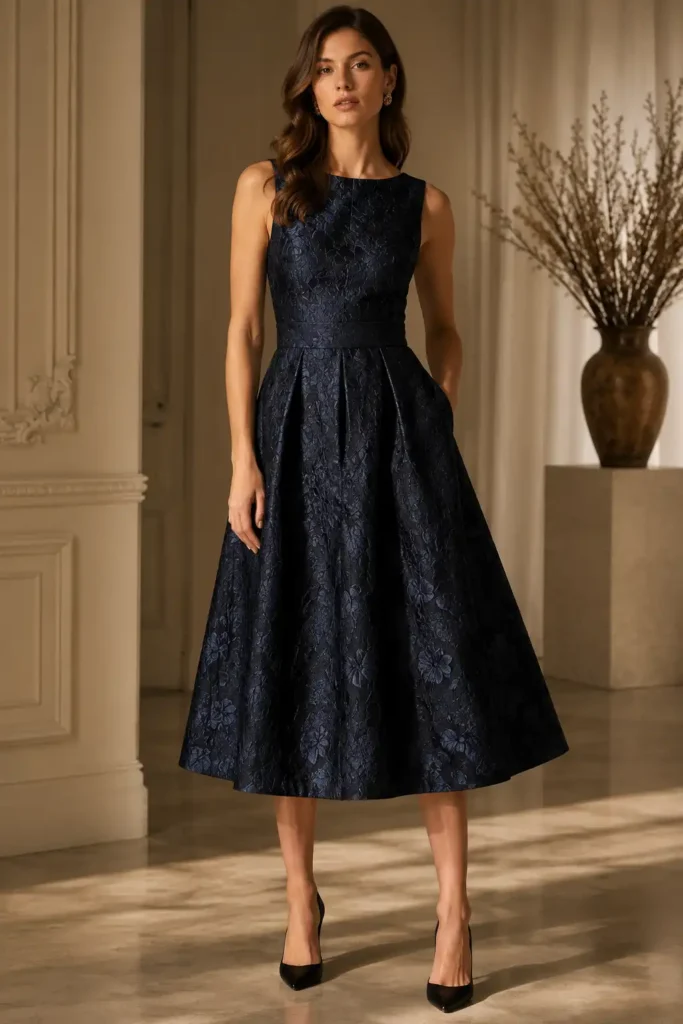
Jacquard Midi Dress
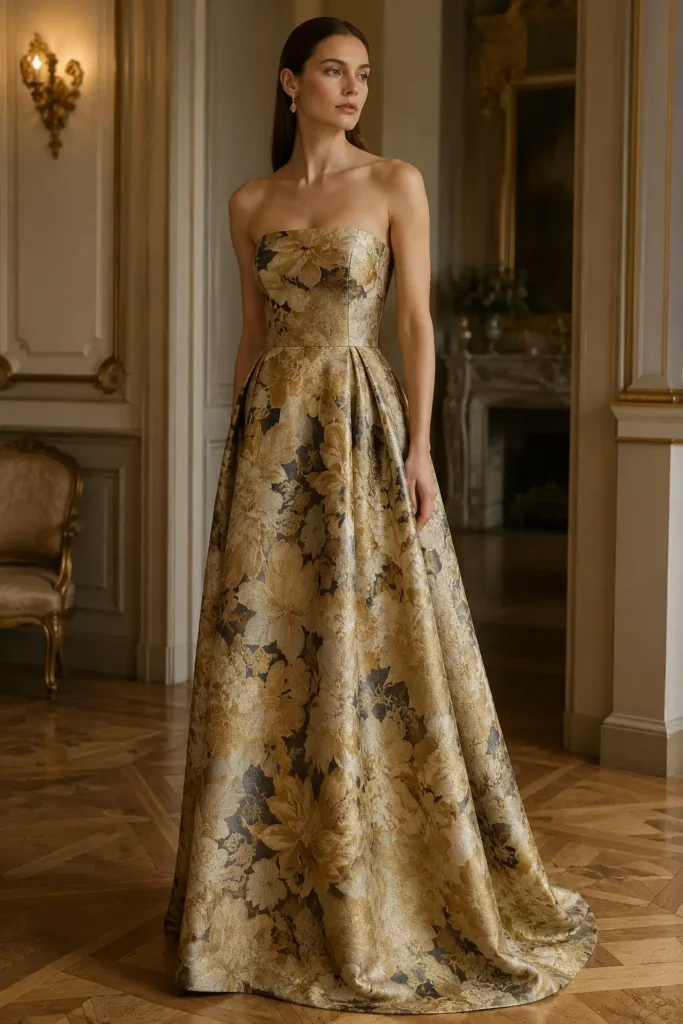
Jacquard Maxi Dress
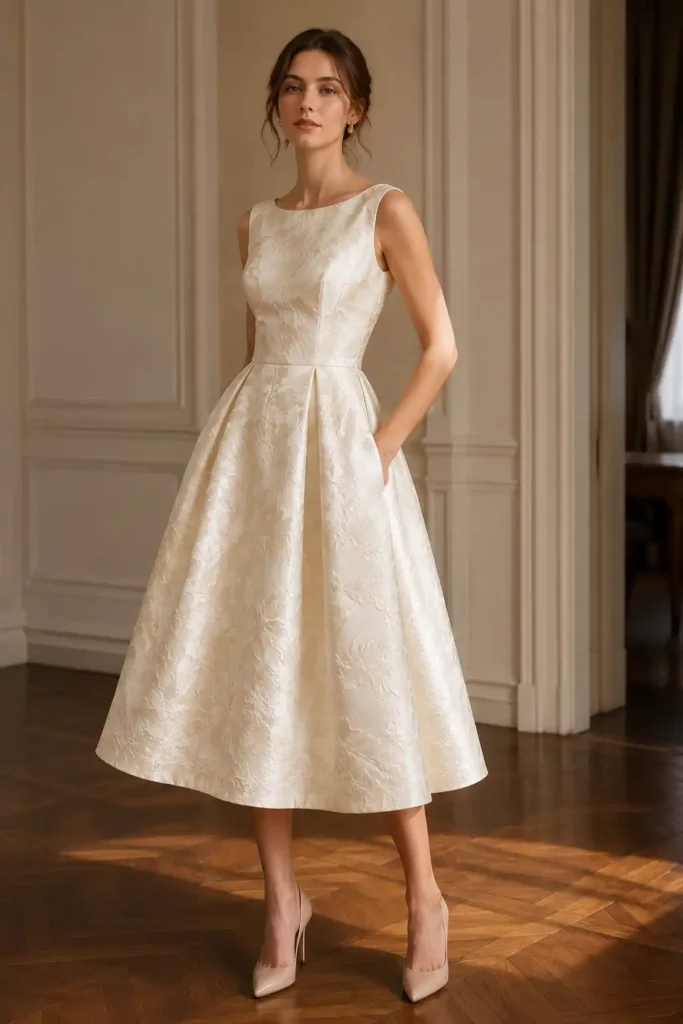
A-Line Jacquard Dress
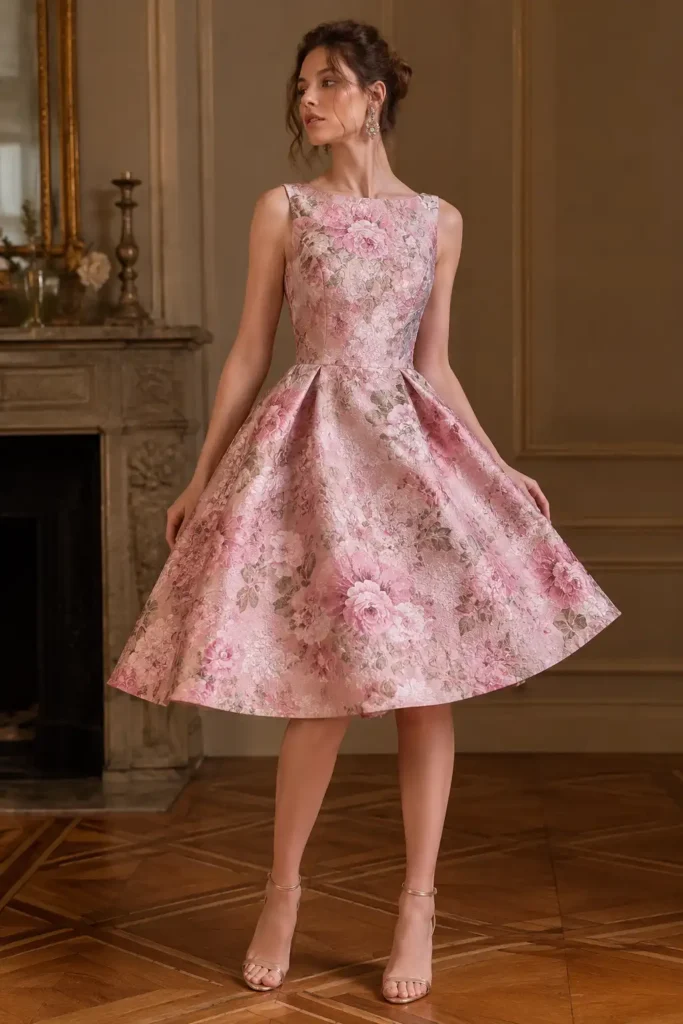
Fit-and-Flare Dress
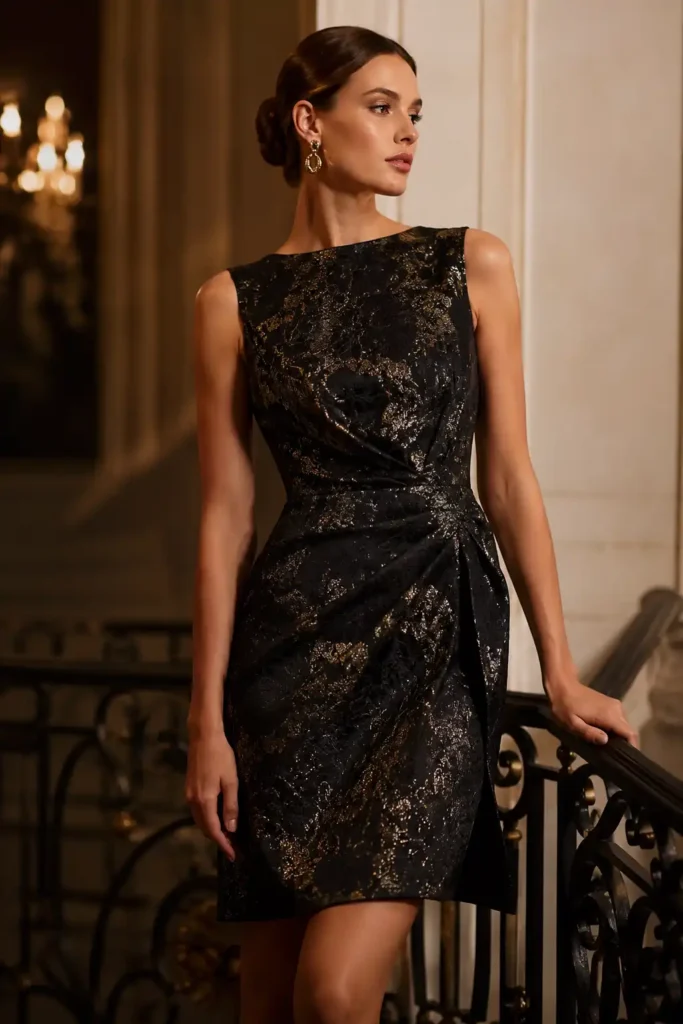
Jacquard Cocktail Dress
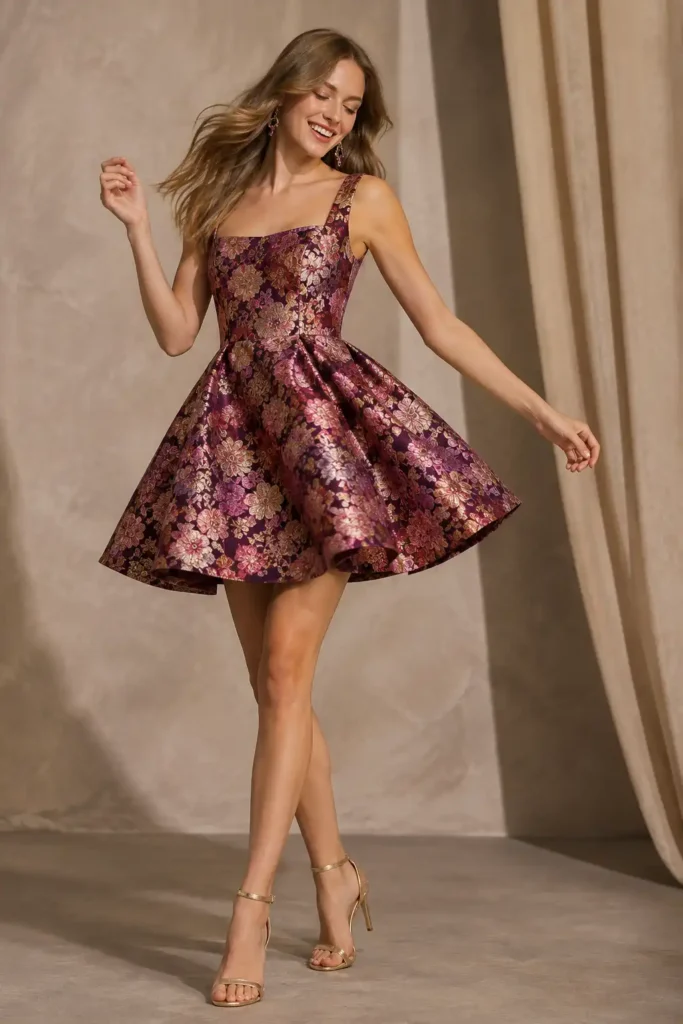
Jacquard Party Dress
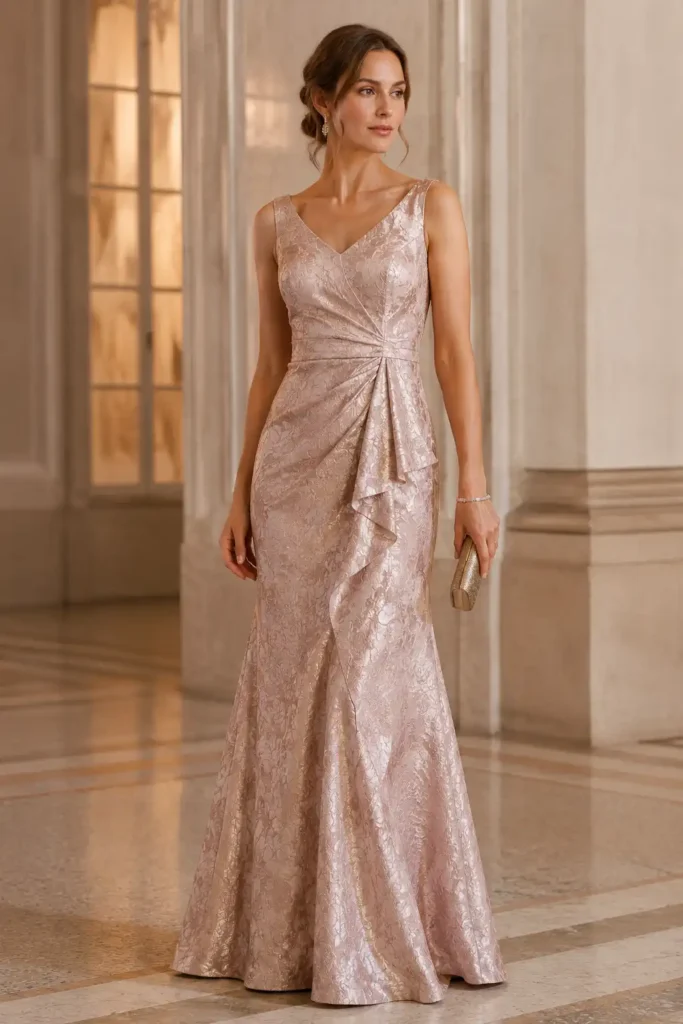
Jacquard Occasion Dress
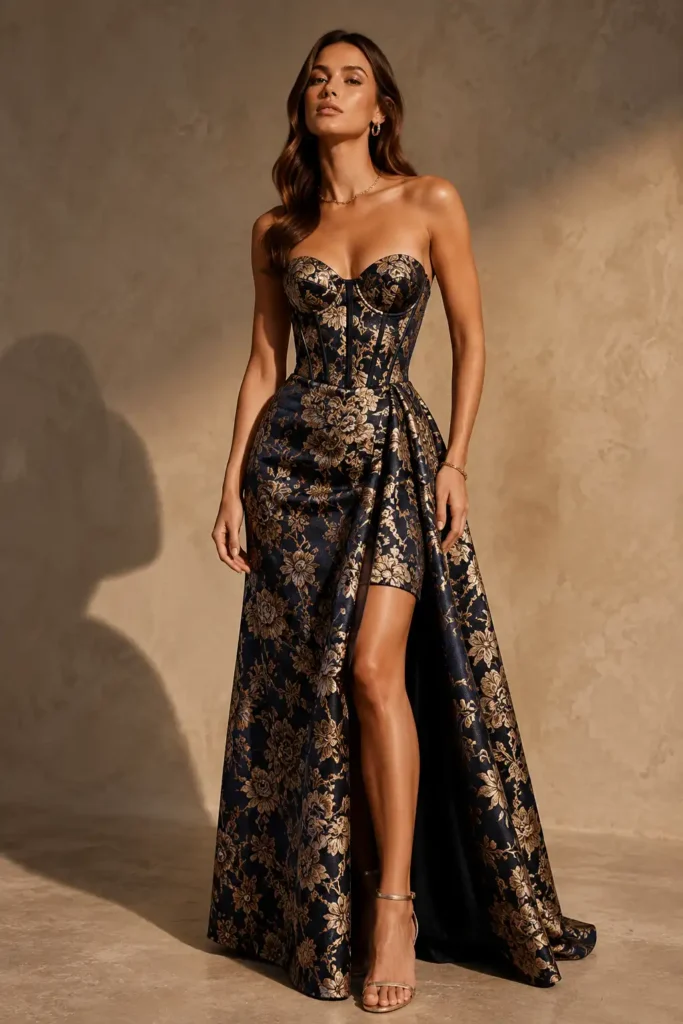
Jacquard Corset Dress
Woven and Knit Jacquard Follow Different Production Logic
Woven Jacquard
Knit Jacquard
Jacquard Fabric Sourcing Starts Before Pattern Development
A reference image alone rarely defines the material accurately. Fabric direction must be translated into measurable requirements before sampling and costing can be reliable.
Inputs Used to Build the Fabric Brief
A usable fabric brief can begin with an original swatch, reference garment, high-resolution image, motif artwork, Pantone direction, target composition, preferred weight, hand-feel standard, shine level, backing requirement, target price, and intended silhouette. The dress structure matters as much as the surface design. A fitted corset mini, full A-line midi, and soft puff-sleeve style require different body, stability, and seam behavior.
Jinfeng Apparel compares the desired visual effect with the garment structure, wearing occasion, size range, lining plan, and bulk quantity. Where an exact fabric is unavailable, alternative swatches are compared by motif scale, color, density, stiffness, drape, texture, and cost rather than by appearance alone.
Key review points:
- Composition and yarn character
- Weight, thickness, density, and hand feel
- Fabric width and usable width
- Motif repeat and one-way direction
- Drape, stiffness, stretch, and recovery
- Backing comfort and lining requirement
- Fraying, snagging, seam slippage, and pressing response
- Stock availability, custom weaving needs, MOQ, and lead-time impact
Stock, Custom Color, and Exclusive Motif Routes
Stock jacquard can shorten material confirmation when the available color, quantity, width, repeat, and batch are suitable.
Inventory still requires verification because showroom swatches do not guarantee bulk availability.
Batch shade, hand feel, width, and surface appearance are checked again before production.
Custom color may involve yarn-dye or piece-dye requirements, lab-dip or physical standard approval, minimum dye lots, and longer material preparation.
Exclusive motif development adds artwork review, repeat engineering, weaving feasibility, strike-off or sample yardage, color approval, and supplier-specific minimums. The garment MOQ and the fabric mill MOQ must be evaluated separately.
No claim is made that every visual reference can be duplicated exactly. A responsible assessment states what can be matched, what requires development, what may change in scale or texture, and how those choices influence sample timing, bulk cost, and delivery planning.
Motif Placement Is Planned Before Bulk Cutting
Pattern repeat, direction, symmetry, and garment seams determine whether jacquard looks intentional or randomly cut. Placement decisions are recorded before production begins.

Critical Placement Zones
Center front is reviewed first because large florals, medallions, vertical motifs, and geometric centers can draw attention toward or away from the garment balance. Bust points, neckline shape, waist seam, and front skirt panels are considered together. A visually strong motif placed too low, too high, or directly across a dart can distort the design.
Center back, princess seams, side seams, and waist joins are reviewed according to visibility and cost. Full matching is not always necessary or possible; the project brief defines which joins must align, which need visual balance, and which can be cut for yield. Sleeves, cuffs, collars, pockets, and shoulder panels are paired where symmetry matters.
Placement controls:
- Face side and fabric direction marked before spreading
- Reference line for center-front motif
- Paired left and right sleeve panels
- Waist-seam alignment notes
- Princess-seam continuation target
- Border or engineered motif position
- Approved placement photo or marked sample
- Separate rules for base size and graded sizes
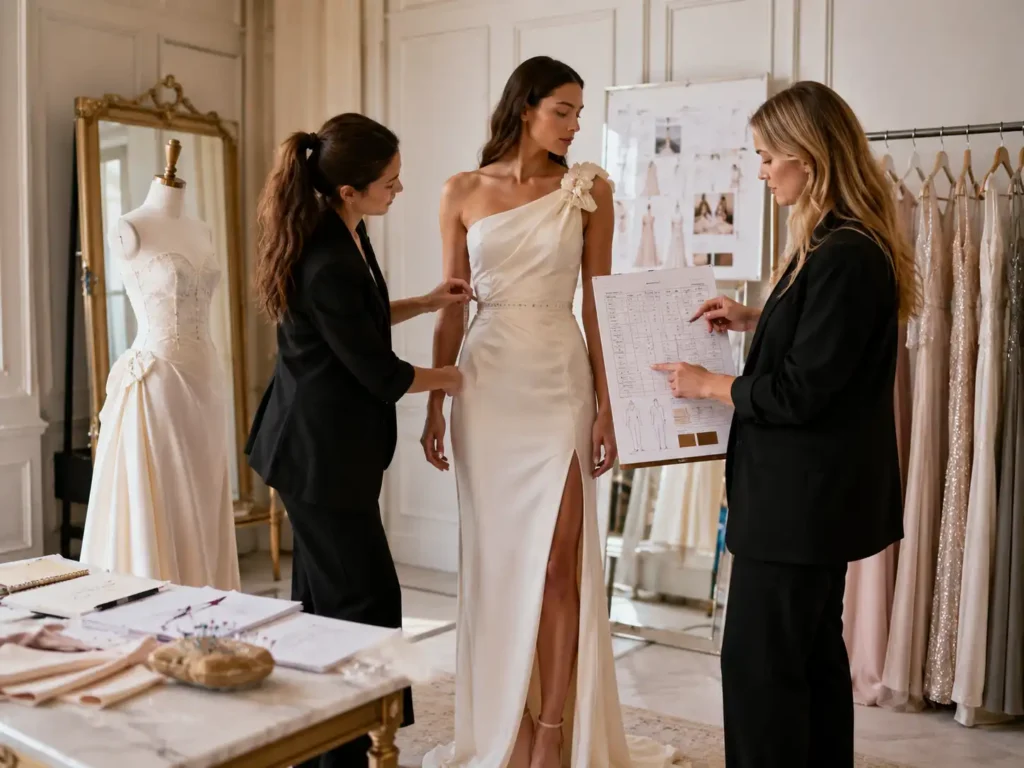
Placement Across Multiple Sizes
A motif cannot remain in exactly the same body position across every size when panel dimensions change.
The objective is visual consistency, not mechanical duplication.
Base-size placement establishes the design priority; graded patterns then preserve center balance, paired elements, neckline relationships, and key seam alignment as far as the repeat permits.
Large repeats require extra attention because one additional repeat can materially change consumption.
Smaller sizes may have more placement flexibility, while larger sizes may need wider pattern spacing or a different marker arrangement. Size grading and marker planning are therefore reviewed together rather than as separate tasks.
Before bulk cutting, the team can prepare placement photos, marked fabric, sample panels, or a cutting reference for high-risk styles.
Approval records are then transferred into cutting and QC instructions so the visual standard does not remain only in the sample room.
Fabric Width and Repeat Change the Real Garment Cost
Two jacquards with a similar price per meter can produce very different dress costs once usable width, motif repeat, direction, matching, defect allowance, and marker efficiency are calculated.

Consumption Is Calculated by the Marker
Reliable consumption uses the approved pattern, size range, color plan, fabric width, usable width, repeat size, one-way direction, motif placement, lining, and order ratio. A wide fabric with a large repeat may still create poor yield when motifs must be centered. A narrower fabric can sometimes perform better when the panel arrangement matches the width.
Full skirts, puff sleeves, long panels, asymmetric shapes, cut-on-bias sections, and dramatic collars increase marker complexity. Matching across waist seams or princess seams may require additional length. Defect allowance also matters because jacquard floats, pulled yarns, weaving bars, holes, stains, and color variation can make sections unusable.
Cost review includes:
- Main-fabric consumption by size ratio
- Lining and interfacing consumption
- Matching and one-way layout allowance
- Defect and cutting allowance
- Sampling and pattern work
- Sewing and seam-bulk handling
- Pressing protection
- QC and packing requirements

Cost Optimization Without Flattening the Design
Cost control does not have to remove the premium visual effect.
A project can review motif scale, matching priority, skirt volume, panel count, lining coverage, interfacing area, sleeve shape, hidden seam construction, trim selection, color count, and size ratio.
The objective is to protect the selling features while reducing waste or unnecessary complexity.
Examples include matching only the visible center-front and waist zones rather than every side seam, selecting a compatible stock color instead of a custom dye lot, reducing an internal panel that adds bulk but no shape, or changing a fully lined sleeve to a clean facing where comfort permits.
Every change must be sampled or technically reviewed before approval.
A revised cost proposal should identify the visual impact, fit impact, production impact, and price impact of each option.
Silent substitutions create inconsistency; documented alternatives create controlled decisions.
Match Jacquard Structure to the Intended Silhouette
Fabric selection becomes clearer when every style is reviewed against body, drape, repeat, internal support, seam construction, and finished appearance rather than against color alone.
| Dress Style | Preferred Jacquard Direction | Use Carefully | Manufacturing Control |
|---|---|---|---|
| Mini Dress | Medium-weight woven jacquard with controlled body | Very rigid fabric or oversized repeat | Hem balance, waist position, center placement, lining length |
| A-Line Dress | Crisp jacquard with stable width | Soft fabric that collapses or heavy fabric that over-expands | Dart shaping, flare, side balance, hem curve |
| Fit-and-Flare | Stable bodice fabric with manageable skirt body | Thick fabric at multi-layer waist joins | Waist seam grading, bodice support, skirt distribution |
| Corset Dress | Firm jacquard with compatible lining and support layers | Loose weave, rough backing, excessive thickness | Cup shape, boning, zipper, anti-slip, seam bulk |
| Puff-Sleeve Dress | Medium body with enough structure for volume | Heavy repeat or scratchy backing | Sleeve symmetry, gathering, cuff, armhole movement |
| Cocktail Dress | Refined floral or metallic jacquard | Surface prone to snagging without protection | Neckline, zipper flatness, lining, pressing |
| Midi Occasion Dress | Balanced structure and drape | Very stiff fabric with long skirt panels | Waist level, slit, lining length, hem balance |
| Maxi Dress | Lighter jacquard with controlled fall | High weight across wide sweep | Panel direction, seam load, hem, packing |
| Strapless Dress | Stable jacquard suitable for internal support | Soft or unstable fabric without structure | Bust fit, anti-slip, boning, zipper, top-edge stability |
Pattern Engineering for Structured Jacquard Dresses
Pattern work translates fabric behavior into wearable shape. Bust, waist, hip, neckline, sleeve, skirt, lining, and closure must be balanced before grading and bulk production.
Bodice, Bust, and Neckline Control
A jacquard bodice may appear stable because the fabric is firm, yet stiffness can hide poor bust shaping. Pattern review covers upper bust, full bust, under-bust, neckline depth, armhole exposure, shoulder angle, dart direction, princess seams, and center-front balance. Corset, strapless, square-neck, deep-V, and one-shoulder styles require separate support plans.
When cups, boning, underwire, anti-slip tape, or interfacing are used, internal layers are developed with the outer pattern. Thick seam intersections around cups and princess seams are graded to avoid ridges. Neckline and top-edge stability are checked in standing, sitting, arm movement, and light walking rather than from a hanger alone
Waist, Hip, and Side-Seam Balance
Structured jacquard can magnify a waist seam that sits too high, a hip curve that pulls, or a side seam that rotates.
Pattern makers review high waist, natural waist, low waist, full hip, waist-to-hip length, ease, dart intake, side shaping, and zipper position against the intended silhouette.
Fit-and-flare and corset dresses need a clean connection between fitted bodice and skirt volume. Bodycon-led jacquards require enough movement and recovery. A-line shapes need controlled flare without side collapse. Pattern changes are recorded before revised samples are made.
Sleeve and Armhole Engineering
Puff sleeves, caps, long sleeves, sculpted shoulders, and off-shoulder shapes depend on fabric body and armhole geometry. Sleeve-head ease, gathering position, bicep room, cuff circumference, elbow movement, and lining are reviewed in the actual jacquard. Heavy sleeves may pull the shoulder line; stiff sleeves may restrict movement.
Paired cutting supports left-right motif balance. Sleeve samples are checked for volume, hang, movement, and seam smoothness. Where gathered bulk meets a thick bodice, seam reduction and internal support are planned to prevent a hard ridge.
Skirt Shape and Hem Balance
Jacquard skirts can be straight, A-line, panelled, pleated, gathered, tulip, fit-and-flare, or full-volume. Each route changes consumption, waist thickness, side balance, and hem behavior. Pattern development reviews front and back length, hip ease, slit, panel direction, flare, lining, and pressing.
Longer skirts are checked for level hems and weight distribution. Shorter styles are checked for safe length and lining coverage. Pleats or gathers are tested for bulk at the waist. Border motifs or engineered repeats are positioned before the final pattern is sealed.
Linings and Trims Built Around Jacquard Structure
Lining Selection
Interfacing Control
Zipper Engineering
Support Materials
Decorative Trims

Technical Review Before Jacquard Dress Sampling
A complete technical review reduces avoidable sample rounds and creates a clearer basis for fabric sourcing, pattern work, pricing, and scheduling.
Files and Product Information
Strong development starts with a front and back sketch, construction details, measurement chart, size range, reference photos, original sample where available, fabric direction, motif preference, color plan, lining, trims, label files, packing requirements, target quantity, target market, and launch date. Missing information can be identified during initial review, but precise costing and timing require defined inputs.
For jacquard, the technical package should add motif scale, repeat direction, desired center placement, matching priority, border use, and whether visual symmetry is essential. A marked image is often more useful than a general statement such as “match the pattern.”
Feasibility and Risk Review
Jinfeng Apparel reviews whether the selected fabric can produce the intended silhouette, whether internal support is needed, where seam bulk may occur, how motifs interact with darts and seams, which trims have separate minimums, whether a custom color or motif changes the material schedule, and which approvals must be completed before bulk production.
The review also identifies measurement gaps, unclear sewing instructions, conflicting reference images, unrealistic material assumptions, and areas where a sample test is required.
A responsible recommendation may suggest an alternate fabric, modified construction, different lining, revised panel shape, or a clearer placement rule before pattern work begins.
Outputs from Initial Review
The project can move forward with a development brief, fabric direction, trim list, pattern notes, sample route, quotation basis, timing framework, MOQ review, testing needs, and file checklist. More complete information produces a more controlled sample and a more reliable bulk plan.
Core inputs:
- Tech pack or reference package
- Quantity by style and color
- Size range and size ratio
- Fabric and motif direction
- Lining and support requirements
- Brand labels and packing files
- Quality or inspection standard
- Required sample type
- Launch, warehouse, or delivery window
Sample Revisions Become Written Production Standards
Pattern Changes
Measurement Changes
Fabric Changes
Trim Changes
Workmanship Changes
Approval Status
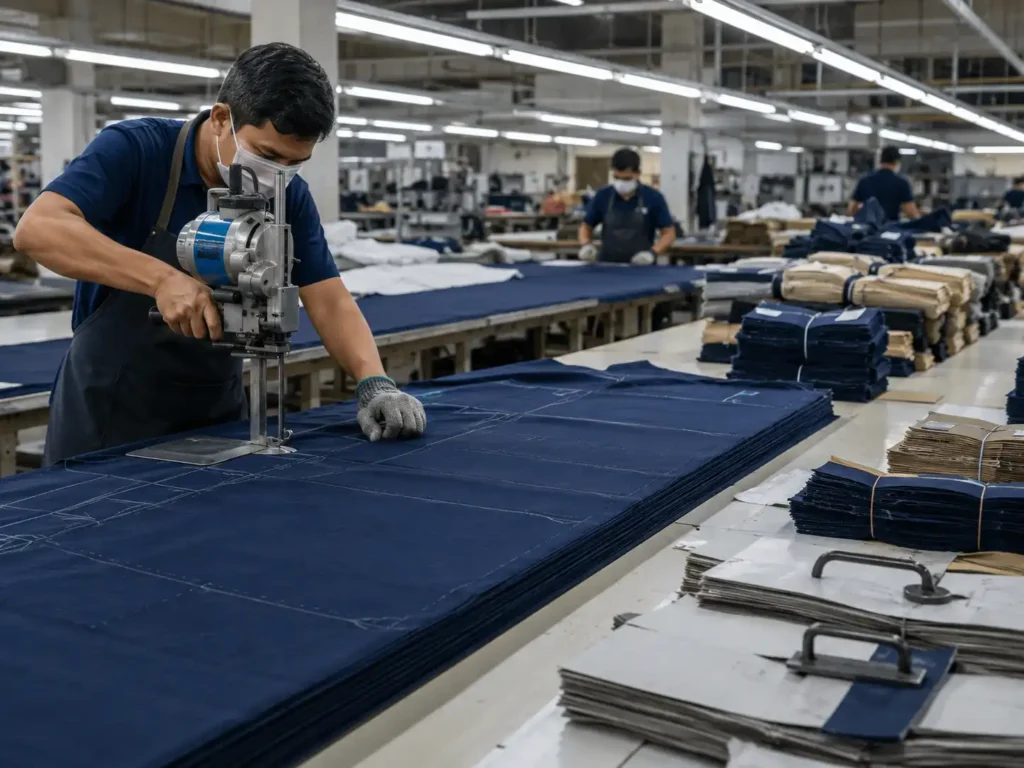
Controlled Cutting for Repeat, Direction, and Symmetry
Cutting turns approved placement and pattern decisions into production reality. Errors at this stage cannot be hidden by later sewing or pressing.
Fabric Inspection Before Spreading
- Incoming jacquard is checked for color, batch, width, usable width, motif repeat, direction, hand feel, surface variation, weaving bars, pulled yarns, holes, stains, snagging, backing issues, and other defects.
- Rolls or dye lots are identified so shade or surface differences are not mixed without review.
- Face side, nap or shine direction, border direction, and one-way motifs are marked.
- Relaxation, shrinkage, or test requirements are considered according to fabric type and project standards.
- High-risk surface defects are mapped or removed before marker placement.
Marker and Panel Preparation
- The marker uses final patterns, approved size ratios, usable width, repeat, one-way direction, matching requirements, and defect allowance.
- Center-front panels, paired sleeves, collars, cuffs, waistbands, and visible overlays can receive special placement instructions.
- Size and color bundles are separated and identified.
- Where motif alignment is essential, reference points are transferred from approved samples or marked placement records.
- Layers are controlled so fabric does not shift, bow, or distort.
- The cutting team verifies pattern version and panel count before bundles move to sewing.
Cutting QC and Traceability
- Cut panels are checked for notches, drill marks, grain or direction, motif position, pair matching, panel quantity, edge quality, defects, and size identification.
- Incorrect panels are replaced before sewing rather than discovered after assembly.
- Bundles keep style, color, size, panel, and quantity information. This traceability supports sewing-line distribution, inline QC, re-cut control, and final reconciliation.
- For complex jacquard, cutting records also help explain consumption and reduce repeat mistakes on reorders.
From Jacquard Concept to Controlled Bulk Production
Sixteen connected stages keep material, pattern, sample, production, inspection, packing, and delivery decisions traceable from the first brief to shipment.
Project Review
Fabric Direction
Swatch Approval
Tech Review
Pattern Making
First Sample
Fit Review
Revision
PP Approval
Material Intake
Cutting
Sewing
Inline QC
Final QC
Packing
Delivery
Bulk Consistency Is Built from Approved References
Approved Product Standard
Material Batch Control

Quality Control from Fabric Intake to Packed Cartons
| QC Stage | Jacquard-Specific Checks | Evidence or Record |
|---|---|---|
| Incoming Fabric | Color, lot, width, repeat, direction, weight, hand feel, surface defects, pulled yarns, snagging, backing | Fabric inspection record, roll or lot identification, approved swatch |
| Cutting | Pattern version, direction, motif placement, pair symmetry, defects, panel count, size bundles | Marker, cutting reference, bundle identification, replacement record |
| Sewing | Stitch quality, seam allowance, bulk, zipper flatness, lining, support, symmetry, motif continuity | Inline checklist, correction notes, approved workmanship sample |
| Measurements | Bust, waist, hip, neckline, armhole, sleeve, length, slit, lining, hem sweep | Final size chart, tolerance sheet, measurement report |
| Finished Garment | Appearance, fit balance, stains, holes, pulled yarns, pressing, closure function, labels | Final inspection record, defect classification, photo evidence |
| Packing | Hangtag, barcode, SKU, size, color, polybag, folding, ratio, carton mark, quantity | Packing checklist, carton record, pre-shipment review |
| Pre-Shipment | AQL or client standard, approved quantity, packing release, documents, shipment readiness | Inspection report, release decision, shipment file |
Testing Can Be Arranged Around Market Requirements
Composition and Chemistry
Color and Appearance
Dimensional Stability
Surface Durability
Seam Performance
Third-Party Support
Multi-Style Jacquard Collections Need Visible Project Control
A 10-30 style collection creates overlapping fabric, pattern, sample, approval, production, QC, packing, and shipment decisions. Grouping and status control keep the launch calendar usable.
Group Styles Before Sampling
Styles can be grouped by jacquard family, color, silhouette, pattern complexity, trim package, lining, support structure, photo-sample need, and launch priority. A common floral jacquard used across a mini, midi, and corset dress may share fabric approval while keeping separate patterns and workmanship standards.
Hero SKUs are often sampled first because photography, merchandising, and bulk decisions depend on them. Lower-risk supporting styles can follow once fabric and construction directions are proven. Grouping prevents every style from waiting for the same unresolved material decision.
Track Each Approval Separately
Every style keeps its own sample version, fabric code, color, size chart, pattern status, trim status, revision notes, PP approval, production order, QC checklist, packing instruction, and shipment plan. Collection-level summaries show the overall position without replacing style-level records.
A useful tracker separates approved, pending, revised, blocked, and ready-for-bulk status. Delays can then be linked to a specific issue such as custom yarn, missing feedback, unapproved zipper color, revised neckline, barcode file, or packing artwork rather than described only as “in progress.”
Plan Production Around the Launch Calendar
The production schedule is built backward from photography, presale, warehouse receipt, retail floor, or launch dates. PP approval, bulk material arrival, cutting, sewing, inline QC, finishing, packing, inspection, and freight windows are placed on one calendar.
Where delivery value is high, split shipment can be evaluated by approved style group, color, or launch priority. Air freight may support an urgent first drop while sea freight supports the main volume, but freight cannot replace unresolved fabric, PP, label, or packing approvals. Earlier file and PP confirmation creates more reliable delivery options.
The following anonymized project profiles show realistic order structures used to illustrate how multi-style jacquard programs can be planned. Brand identities and proprietary files remain confidential.
United States Premium Ecommerce Collection
Project profile: 18 styles, 48,600 garments, 3 color groups, XS-XL size range, floral and metallic jacquard, mini and midi silhouettes.
Development challenge: The collection combined fitted bodices, puff sleeves, A-line skirts, corset details, and large floral repeats. The original visual references did not define center-front placement, lining, or motif matching priorities. Several styles shared fabric families but used different internal structures.
Control plan: Styles were divided into four fabric groups and three pattern-complexity groups. Six hero styles entered first sampling, followed by supporting styles after fabric direction was approved. Center-front motifs, paired sleeves, waist-seam alignment, and metallic-backing comfort were recorded. Fit comments were converted into revised patterns and measurement charts. PP approval locked fabric, lining, zipper, workmanship, labels, and folding instructions.
Project data: 3 development rounds across the hero group, 2 rounds for lower-risk supporting styles, 42-day bulk production window after PP approval and complete material arrival, 2 shipment groups arranged around campaign and warehouse dates.
Result: The program moved from mixed visual references to separate style files, one approved material library, graded measurement standards, and repeatable packing records. The second shipment used the same approval structure without reopening already locked decisions.
United Kingdom Occasionwear Program
Project profile: 12 styles, 27,600 garments, UK 6-18 size range, metallic jacquard cocktail dresses, fitted midi dresses, and structured A-line silhouettes.
Development challenge: Metallic yarn created scratchy backing, seam thickness, pressing sensitivity, and uneven light reflection. Several waist seams combined bodice lining, skirt lining, zipper tape, and internal support. The brand required polished photography and clean movement for event wear.
Control plan: Fabric review covered backing comfort, lining opacity, pressing response, snagging, and repeat direction. Test garments compared two lining weights and two seam-grading methods. Pattern changes adjusted waist level, armhole comfort, and slit position. Pressing temperatures were approved from sample tests. Final QC added surface inspection under angled lighting and zipper-flatness checks.
Project data: 2 main sample rounds plus one PP confirmation, 38-day bulk production window after complete approvals, 8-point jacquard-specific final inspection checklist added to the standard garment review.
Result: The approved construction reduced hard waist ridges and protected the metallic surface. Style-level QC records supported the complete range rather than relying on one general occasionwear standard.
Australian Multi-Season Dress Program
Project profile: 24 styles, 72,000 garments, 4 color stories, sizes 6-18, lightweight jacquard party, wedding guest, and resort-led dresses.
Development challenge: The program combined different launch dates, mixed skirt lengths, statement sleeves, repeated fabrics, and multiple barcode and carton requirements. The main risk was operational confusion across samples, approvals, production, and split delivery rather than one isolated sewing issue.
Control plan: Styles were organized by launch month, fabric family, and construction level. Eight hero styles received priority for photography. A collection tracker separated swatch, pattern, first sample, revision, PP, material, production, QC, packing, and shipment status. Size ratios and packing instructions were confirmed by style and color. Repeat fabrics used one material approval with separate garment standards.
Project data: 24 styles managed in 5 production groups, 3 sample waves, 35-45 day production windows by group after PP and material readiness, 3 planned shipment releases aligned with launch and warehouse intake.
Result: Grouped approvals reduced duplicate fabric discussions and protected the launch sequence. Later styles benefited from confirmed material behavior while still keeping individual fit, motif, and workmanship records.
Private Label Packing Prepared for Retail and Ecommerce
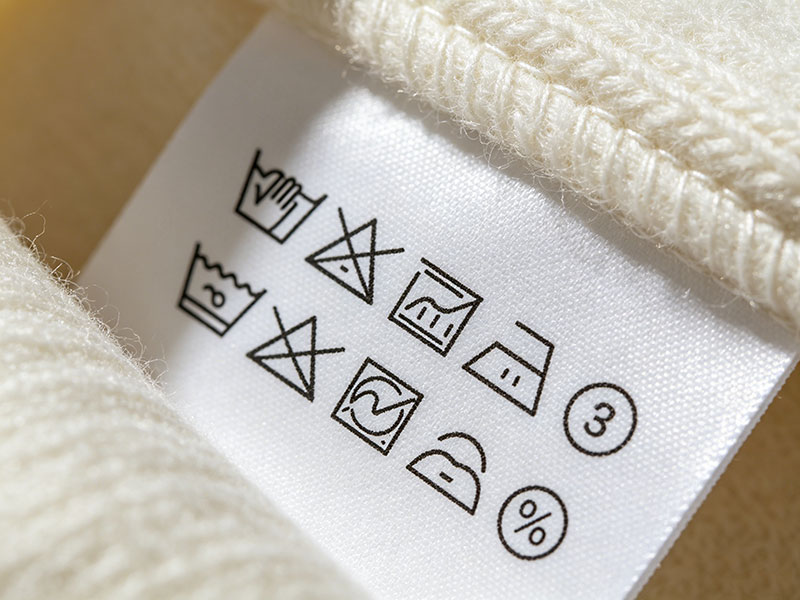
Garment Labels
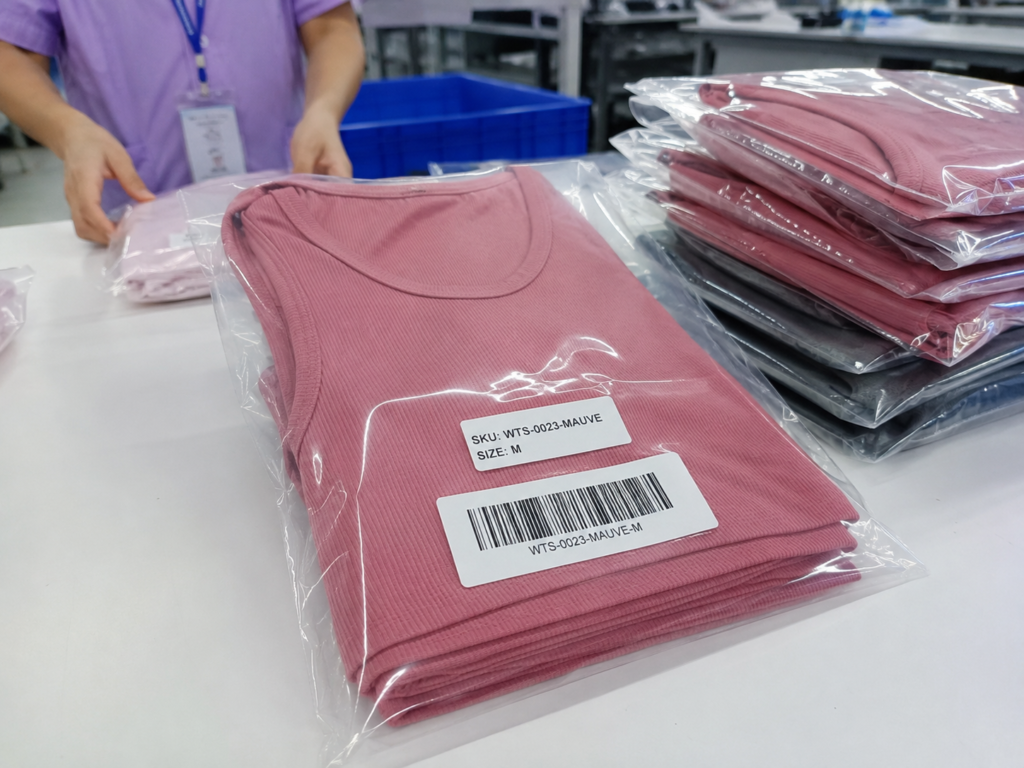
Hangtags and Barcodes

Individual Packing
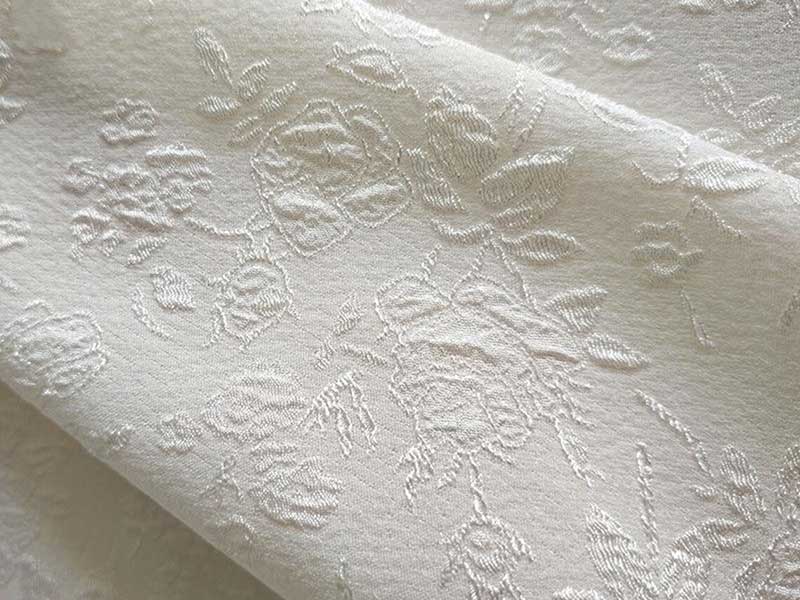
Jacquard Protection
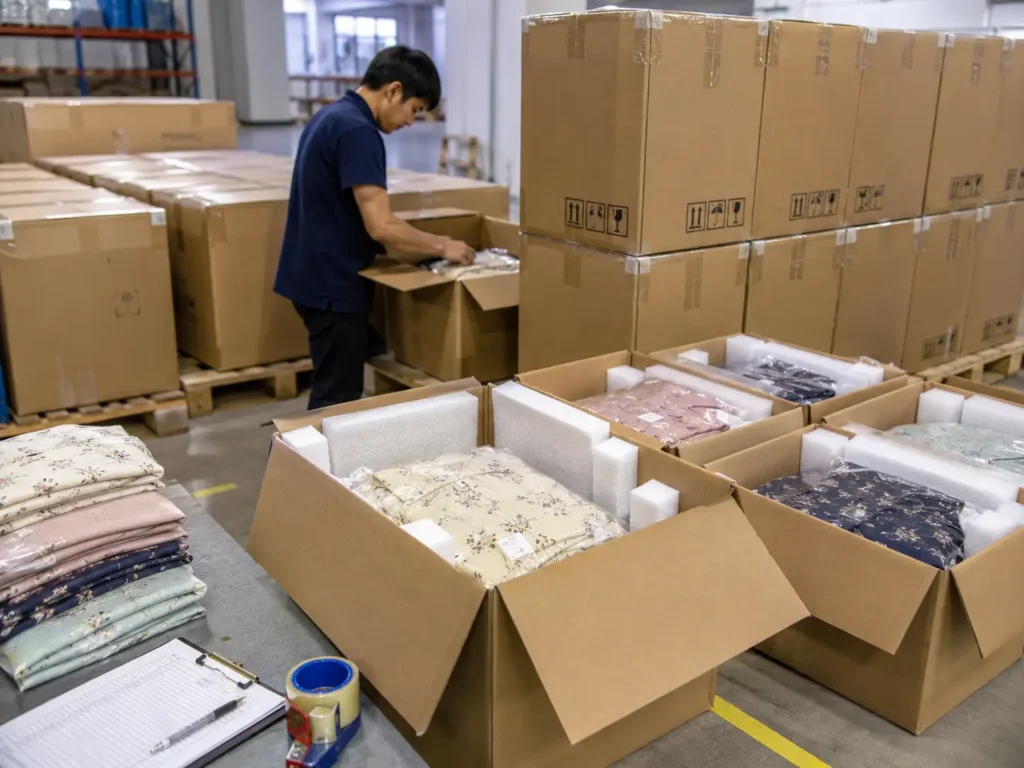
Carton Control
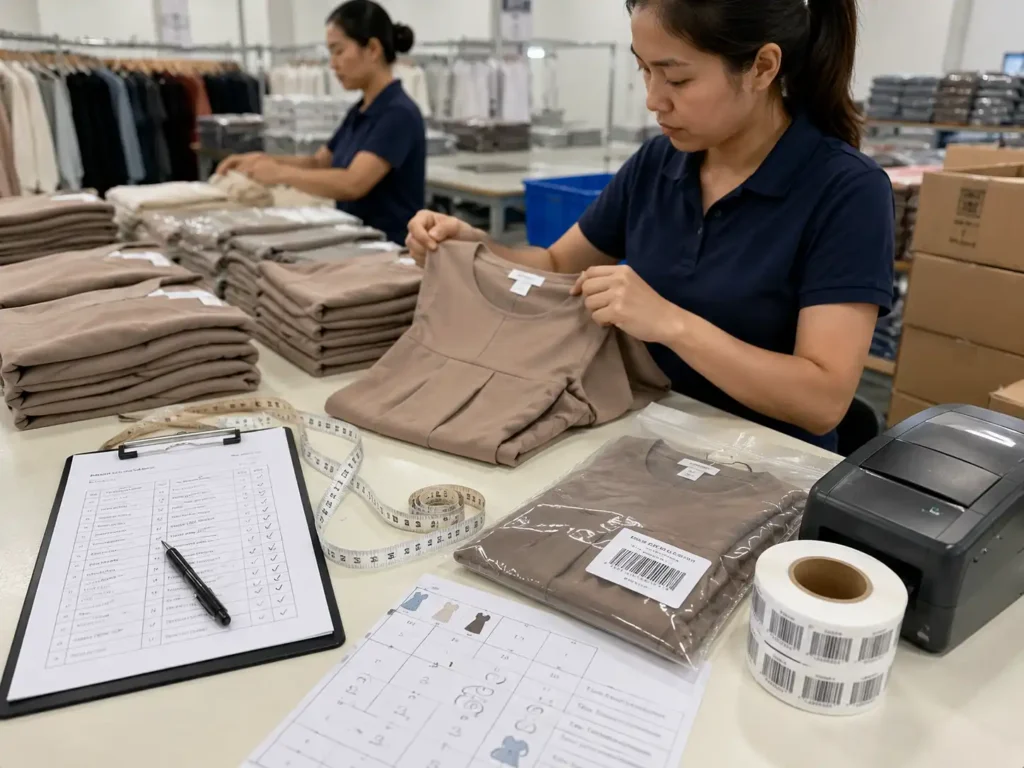
Repeat Packing Records
Unreleased Designs and Repeat-Order Records Stay Protected
NDA Cooperation
Design Confidentiality
Pattern Records
Material Records
Quality Records
Long-Term Development
Jacquard Dress MOQ and Quotation Factors
MOQ Structure
Quotation Basis
Timing Basis
Jacquard Dress Manufacturer Frequently Asked Questions
MOQ starts from 200 pcs per style/color. Custom weaving, custom dyeing, exclusive motifs, metallic yarn, special trims, certified materials, testing, and custom packaging may have separate minimums. Quantity should be provided by style, color, and size ratio for an accurate review.
Yes. A clear image, original swatch, reference garment, motif artwork, Pantone direction, target composition, weight, hand feel, price level, and intended silhouette improve the review. Exact duplication depends on yarn, repeat, weaving feasibility, supplier capability, MOQ, and approval.
Exclusive motif development can be evaluated through artwork, repeat engineering, yarn and color direction, weaving feasibility, sample yardage or strike-off, MOQ, cost, and timing. Fabric-mill requirements are reviewed separately from garment production requirements.
Critical zones are defined before cutting, including center front, waist seams, princess seams, sleeves, collars, cuffs, and borders. Approved placement photos, marked fabric, pattern references, cutting notes, paired panels, and QC checkpoints can be used according to style risk.
Often, yes. Changes in weight, stiffness, stretch, recovery, drape, thickness, transparency, shrinkage, backing, or width can affect ease, lining, seam allowance, support, zipper construction, hem, and consumption. Pattern and costing are reviewed whenever the fabric changes.
Provide a tech pack or reference package, measurements, size range, quantity, color plan, fabric or motif direction, lining, trims, label files, packing requirements, target market, required sample type, and launch date. Missing items can be identified during review.
Timing depends on style complexity, fabric availability, custom weaving or color development, trim readiness, pattern work, sample type, and revision requirements. A project schedule is issued after the inputs are reviewed rather than using one fixed promise for every jacquard style.
Bulk production uses the approved PP sample, Golden sample, final pattern, size chart, BOM, fabric and trim records, motif placement, sewing instructions, QC checklist, label files, and packing instructions. Incoming materials and finished garments are checked against those references.
Yes. Jinfeng Apparel can coordinate with client-appointed inspection companies or laboratories for agreed fabric tests, garment tests, AQL inspections, packing checks, or pre-shipment reviews. Standards, sampling level, cost, timing, and acceptance criteria are confirmed per project.
Yes. Private-label support includes labels, hangtags, barcodes, SKU labels, polybags, carton marks, and warehouse labels. NDA-based cooperation can protect tech packs, original samples, patterns, motif artwork, swatches, unpublished designs, pricing, quantities, and launch plans.

Start Your Jacquard Dress Development
A useful review begins with enough information to evaluate fabric direction, motif placement, pattern complexity, sampling, MOQ, quotation, production timing, quality, packing, and delivery.
Send a tech pack, line sheet, reference image, jacquard swatch or motif artwork, quantity by style/color, size range, color plan, lining and trim requirements, label files, target market, and launch window. Kelly will coordinate the initial review with the relevant development, fabric, pattern, merchandising, production, QC, and packing teams.
Missing decisions can be identified before a formal sample or quotation is issued.
- Reference image, tech pack, line sheet, or original sample details
- Jacquard swatch, motif artwork, preferred composition, weight, and color direction
- Target quantity by style and color, plus size range and size ratio
- Lining, zipper, cups, boning, trims, labels, barcode, and packing requirements
- Quality manual, testing needs, inspection standard, and target market