Skip to content

In real dress manufacturing, most production problems do not start on the sewing line—they start much earlier, inside the tech pack. Among all sections, fabric, lining, and trim details are the most sensitive. A small mistake in composition, weight, or supplier reference can shift the entire garment outcome. A satin dress can turn too stiff. A lining can become transparent under light. A zipper can fail after washing tests. These issues are not design errors; they are specification gaps.
A factory-ready tech pack must clearly define fabric, lining, and trim details with measurable specifications such as composition, weight, structure, and supplier reference. This ensures accurate sampling, stable bulk production, and reduced revision cycles. Clear material breakdown allows factories to source correctly, control cost, and avoid production risk in custom dress manufacturing.
A tech pack is not paperwork. It is a production instruction system. When material data is precise, sampling becomes predictable. When it is vague, every stage becomes trial and correction. Many production delays in dress manufacturing come from missing fabric GSM, unclear lining match, or incomplete trim descriptions. The difference between a smooth production and a delayed one often starts right here, before a single fabric is cut.
What Is Fabric, Lining, and Trim in a Dress Tech Pack?
In dress manufacturing, Fabric, Lining, and Trim are the three core material layers that define how a garment is constructed, performs, and finishes on the production line. Each category carries a different technical responsibility inside a Tech Pack, and together they form the material instruction system for sampling and bulk production.
Fabric refers to the outer textile used for the main body of the dress. It determines silhouette, weight balance, drape behavior, and visual identity. Without precise fabric specification, the same design can result in completely different physical outcomes.
Lining is the internal layer attached to the garment structure. It controls opacity, comfort against skin, and internal stability. In structured dresses such as bodycon, corset, or satin gowns, lining often determines whether the garment holds shape or collapses under movement.
Trim includes all supporting components used for assembly and finishing. These include zippers, buttons, hooks, elastic bands, lace, labels, and tapes. Trims are not decorative only; they directly affect closure strength, fitting precision, and production efficiency.

Why Material Classification Matters Before Sampling Starts
Clear classification of Fabric, Lining, and Trim is the first technical checkpoint before sampling begins. In real production workflows, factories use this structure to evaluate feasibility, cost accuracy, and sourcing availability.
A missing or vague material definition leads to substitution decisions during sampling. For example, “satin dress” without GSM or composition may be interpreted differently across suppliers, resulting in inconsistent hand feel or drape.
Typical production risk patterns:
- Fabric mismatch due to missing weight specification (±20–40 GSM deviation)
- Lining substitution caused by unclear stretch requirement
- Trim failure due to incorrect size or compatibility
A structured classification reduces sampling revision cycles from 3–4 rounds to 1–2 rounds in stable production environments.
How Each Material Category Impacts Final Garment Outcome
Fabric, lining, and trim are not independent items. They interact during cutting, sewing, and finishing stages, influencing final garment stability.
Fabric defines external performance. A lightweight chiffon produces flow and movement, while a heavy satin creates structure and volume. If fabric selection is incorrect, even perfect sewing cannot correct silhouette distortion.
Lining determines internal behavior. In stretch dresses, lining mismatch can reduce elasticity by 10–30%, affecting comfort and fit retention after wear tests.
Trims control construction integrity. A weak zipper or incorrect elastic width can cause functional failure during wear or washing tests, even if fabric quality is high.
Factory Interpretation of Material Sections in Tech Pack
Factories do not treat material sections as design notes. They convert them into sourcing and production instructions.
A standard interpretation flow includes:
- Fabric section → sourcing catalog matching + cutting behavior analysis
- Lining section → internal pattern adjustment + comfort validation
- Trim section → assembly planning + cost calculation per unit
Without measurable data, interpretation becomes subjective. For example, “soft chiffon” may be matched with 30 GSM or 60 GSM depending on supplier availability, leading to inconsistent results across samples.
Factories require measurable fields such as:
| Material Type | Required Data Points |
|---|---|
| Fabric | Composition, GSM, width, stretch, finish |
| Lining | Composition, opacity, elasticity, attachment method |
| Trim | Size, material, color code, placement |
This structure ensures production teams can execute without interpretation gaps.
Real Production Example: Why Small Gaps Create Large Errors
In dress manufacturing, even small omissions in material data can multiply into production issues.
Example scenario:
A satin mini dress is specified only as “polyester satin.”
During sourcing:
- Supplier A provides 90 GSM satin (soft, flowy)
- Supplier B provides 130 GSM satin (structured, stiff)
Both are technically correct under vague specification, but final garments look completely different.
Similarly, missing lining stretch ratio can lead to:
- Tight fit in hip area (no stretch lining used)
- Reduced comfort during movement
- Higher return rate in retail stage
Trim issues often appear later in production:
- Wrong zipper length leads to re-cutting panels
- Incorrect elastic width changes waist measurement
These issues are not design flaws—they are specification gaps in the Tech Pack.
Why This Section Is Critical for Production Stability
Fabric, lining, and trim definition is the foundation of production stability. When these three components are fully specified, factories can:
- Lock sourcing within 48–72 hours
- Reduce sampling iterations by up to 40%
- Improve first-sample approval rate significantly
- Control bulk production variation within ±2–5%
In contrast, incomplete material definition increases production uncertainty, often extending lead time by 7–20 days per sampling cycle.
A Tech Pack without precise material breakdown is not considered production-ready in most professional manufacturing systems.
How Should Fabric Details Be Written in a Tech Pack?
H3 Fabric Specification Structure for Production Use
Fabric details in a Tech Pack must be written in a structured, measurable format that allows sourcing, sampling, and bulk production to follow the same standard without interpretation gaps. In dress manufacturing, fabric is not recorded as a simple name; it is treated as a technical material specification that directly controls drape, fit stability, and production cost accuracy.
A complete fabric entry normally includes five core elements: composition, weight (GSM), width, construction type, and performance properties. When any of these elements are missing, factories are forced to select materials based on assumption, which often leads to sampling variation.
A standard fabric specification format used in production looks like this:
| Field | Required Information | Production Purpose |
|---|---|---|
| Fabric Name | Satin / Chiffon / Jersey / Crepe | Base material identification |
| Composition | e.g. 95% Polyester + 5% Elastane | Durability and feel control |
| GSM | e.g. 80–120 GSM | Weight and drape behavior |
| Width | e.g. 145cm / 150cm | Cutting efficiency |
| Structure | Woven / Knit / Stretch | Sewing and fit behavior |
This structure ensures fabric can be matched directly with supplier inventory without repeated clarification.
What Fabric Data Is Required for Accurate Production Matching
In real production workflows, fabric data must support three key decisions: sourcing, cutting, and garment behavior prediction. Each missing data point increases production uncertainty.
Key required data points include:
- Composition ratio (controls elasticity, durability, shrinkage)
- GSM range (controls drape and structure)
- Fabric width (affects marker efficiency and fabric waste rate)
- Stretch direction (warp / weft / bi-stretch)
- Surface finish (matte, glossy, brushed, sand-washed)
- Color reference (Pantone or physical swatch code when available)
For example, satin used in evening dresses typically requires a controlled GSM range between 90–130 GSM. Below 90 GSM, fabric becomes too fluid and may lose structure in seams. Above 130 GSM, drape becomes heavy and reduces movement in flow dresses.
When fabric data is complete, sourcing accuracy improves significantly, and fabric matching time can be reduced from 5–7 days to 2–3 days in standard supply chains.
How to Define Fabric Performance Instead of Just Naming It
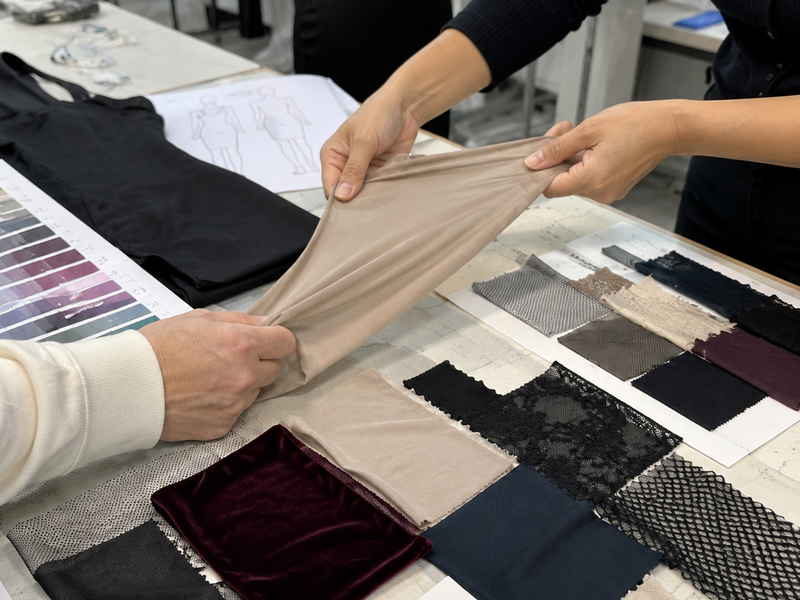
One of the most common issues in Tech Packs is relying only on fabric names without performance data. In production, “chiffon” or “satin” alone does not define how the garment will behave.
Fabric performance must translate into measurable outcomes:
- Drape level (soft / medium / structured)
- Opacity level (sheer / semi-sheer / opaque)
- Stretch capacity (none / low / medium / high)
- Recovery rate (important for bodycon styles)
- Shrinkage tolerance (typically 2–5%)
For example, two chiffon fabrics may look identical but behave differently:
- 30 GSM chiffon → high flow, low structure, suitable for layered dresses
- 60 GSM chiffon → medium flow, better shape retention, suitable for midi dresses
Without performance definition, factories may select a visually similar but functionally different material, which changes final garment behavior significantly.
Common Fabric Writing Mistakes That Lead to Sampling Failure
In production practice, fabric-related sampling errors often come from incomplete or vague specification formats rather than sourcing difficulty.
Typical mistakes include:
- Writing only fabric type without GSM or composition
- No clarification on stretch direction
- Missing opacity requirement for light fabrics
- Ignoring shrinkage behavior after washing
- No reference sample or supplier code
These issues often result in:
- Sample rejection due to unexpected drape
- Re-cutting of pattern pieces
- Fabric replacement during second sampling round
- Increased cost due to re-sourcing
In structured manufacturing systems, missing fabric data can increase sampling cycles by 30–60%, depending on complexity of dress design.
Factory Interpretation Logic for Fabric Selection
Factories do not read fabric names literally; they translate them into sourcing filters and production behavior models.
The interpretation process typically follows:
- Identify fabric category (woven, knit, stretch)
- Match GSM range within supplier database
- Check elasticity requirement against pattern design
- Confirm finishing compatibility with dyeing process
- Validate availability in required color system
For example, when a tech pack specifies “lightweight satin dress fabric,” factories will still require numeric boundaries. Without them, sourcing teams must test multiple variations, which extends development time.
A well-written fabric section removes interpretation steps and allows direct sourcing execution, which is critical for fast sampling cycles in seasonal fashion production.
Why Structured Fabric Writing Improves Production Speed and Cost Control
A structured fabric specification system directly improves production efficiency across three stages:
- Sampling speed increases because sourcing becomes direct matching instead of trial selection
- Cost control improves because correct fabric is locked early, reducing substitution risk
- Bulk production stability increases due to reduced variation between sample and production batches
In measured production environments, clear fabric documentation can reduce sampling iteration time by up to 40% and reduce material-related revision cost by 15–25%.
In dress manufacturing, fabric specification is not a design detail—it is a production control parameter that determines whether a collection moves smoothly from concept to bulk production.
How to Specify Lining Details Correctly in Production Files?
Lining in a dress Tech Pack is not a secondary fabric note. It is a structural engineering component that directly affects fit stability, comfort, opacity, and garment durability. In production files, lining must be written with the same level of precision as outer fabric because it interacts directly with cutting balance and sewing construction.
A complete lining specification ensures that internal garment behavior remains consistent during wear, washing, and movement. When lining is vague or incomplete, factories often replace it with standard stock lining, which may not match stretch behavior or weight requirements, leading to fit distortion or comfort issues.
In structured dress production, lining controls three core functions:
- Internal shape support (prevents garment collapse)
- Skin contact comfort (reduces friction)
- Transparency control (especially for light fabrics)
Without clear specification, lining becomes a hidden variable that changes final garment performance even when outer fabric is correct.
What Information Must Be Included in Lining Specification
A production-ready lining specification must include measurable and functional data. Unlike fabric naming, lining cannot rely on general terms such as “soft lining” or “standard lining.”
Required data fields:
- Lining type (stretch lining / woven lining / mesh lining / cotton-based lining)
- Composition (e.g. 95% polyester + 5% elastane)
- GSM range (typically 40–120 GSM depending on garment type)
- Stretch level (none / low / medium / high)
- Opacity level (transparent / semi-opaque / opaque)
- Attachment method (full lining / partial lining / targeted zones)
| Field | Standard Range | Production Purpose |
|---|---|---|
| Composition | Polyester / Elastane blend | Comfort + durability |
| GSM | 40–120 GSM | Weight balance control |
| Stretch | 0–30% typical range | Fit flexibility |
| Structure | Knit or woven | Sewing compatibility |
| Coverage | Full / partial | Cost + comfort control |
This structure ensures lining is not selected randomly from available stock but matched to garment function.
How Lining Controls Fit, Comfort, and Garment Stability
Lining plays a direct role in how a dress performs after construction. In fitted garments such as bodycon or corset dresses, lining determines whether the garment maintains shape or restricts movement.
Key functional impacts:
- Fit stability: stretch lining can increase comfort range by 15–30% in tight-fit garments
- Transparency control: lightweight fabrics require lining to prevent visible underlayers
- Structural reinforcement: satin and chiffon dresses rely on lining to prevent seam distortion
- Skin comfort: reduces friction in high-contact zones such as underarm and waist
For example, a satin mini dress without stretch lining may look correct in static form but will fail movement testing due to restricted hip expansion. In contrast, a correctly specified stretch lining allows controlled movement without deforming silhouette.
Lining selection also affects long-term garment performance. Incorrect GSM selection can cause sagging after repeated wear, especially in heavier outer fabrics.

Common Lining Specification Errors in Tech Packs
Most production issues related to lining come from missing functional data rather than material availability.
Frequent mistakes include:
- Using only “polyester lining” without GSM or stretch details
- No clarification on whether lining is full-body or partial
- Ignoring opacity requirement for light-colored outer fabrics
- No matching between outer fabric weight and lining strength
- Missing elasticity requirement for fitted designs
These issues often lead to:
- Fit inconsistency between sample and bulk production
- Increased revision cycles (2–3 additional samples)
- Substitution with standard factory lining, reducing quality consistency
- Customer discomfort due to poor breathability or stiffness
In structured manufacturing systems, unclear lining specification can increase sampling failure rate by up to 25–35%, especially in fitted dress categories.
Factory Decision Logic for Lining Selection
Factories treat lining specification as a matching process between garment function and internal material database. When data is complete, selection is fast and standardized. When incomplete, interpretation is required.
Typical decision flow:
- Identify garment category (flowy / structured / fitted)
- Match outer fabric weight and transparency level
- Select lining stretch compatibility
- Check sewing method compatibility (clean finish, overlock, binding)
- Validate wear performance requirements (comfort + movement)
For example:
- A chiffon maxi dress → lightweight lining (40–60 GSM, low stretch)
- A bodycon dress → stretch lining (80–120 GSM, medium–high stretch)
- A structured satin dress → stable woven lining (70–100 GSM, low stretch)
Without this structured logic, factories may default to generic lining, which can compromise design intent.
Why Precise Lining Specification Improves Production Efficiency
Accurate lining documentation directly improves production performance across sampling and bulk stages.
Measured improvements include:
- Sampling cycles reduced by 20–40% due to fewer fit corrections
- Material substitution risk reduced significantly in bulk production
- Faster approval rate for first sample submission
- Improved consistency between sample and final production batch
Lining is often underestimated in Tech Pack preparation, but in real manufacturing systems, it is one of the key variables controlling garment behavior. A precise lining specification ensures the internal structure of the dress performs exactly as intended, without requiring repeated correction cycles.
How Are Trim Details Structured for Factory Execution?
Trims in a dress Tech Pack represent all auxiliary components used to complete garment construction and functionality. In factory execution, trims are not treated as decorative additions but as operational elements that directly affect assembly speed, cost structure, and final product durability.
A structured trim section allows production teams to prepare sourcing, allocate sewing operations, and calculate accessory consumption per unit. Without clear trim definition, factories often rely on default materials, which increases inconsistency across production batches.
In dress manufacturing, trims influence three key areas:
- Functional closure (zippers, hooks, buttons)
- Structural support (elastic, tape, boning channels)
- Branding and compliance (labels, care tags, size tags)
Each trim must be defined with measurable specifications to ensure production repeatability.
What Information Must Be Included in Trim Specification
A factory-ready trim specification requires precise technical and sourcing data. Naming a trim item alone is not sufficient for execution.
Required data fields include:
- Trim type (zipper / button / elastic / lace / label / hook)
- Size specification (length, width, diameter)
- Material composition (metal, nylon, polyester, cotton, alloy)
- Color code (Pantone or physical match reference)
- Placement location (center back, side seam, waistband, neckline)
- Supplier reference code (if available)
| Trim Item | Required Specification | Production Function |
|---|---|---|
| Invisible zipper | 18–60 cm, nylon coil | Closure system |
| Metal hook | Size 0–3, anti-rust alloy | Secure fastening |
| Elastic band | 1–5 cm width, polyester/spandex | Fit adjustment |
| Woven label | 3×5 cm, damask weave | Branding & compliance |
| Lace trim | 1–10 cm width, polyester lace | Decoration + edge finishing |
This structure ensures every trim item can be directly sourced and applied without interpretation.
How Trims Influence Garment Construction Accuracy
Trims directly affect how a garment is assembled on the production line. Even when fabric and pattern are correct, incorrect trim selection can disrupt assembly flow and alter garment fit.
Key functional impacts:
- Zipper length controls closure alignment and tension balance
- Elastic width affects waist or cuff measurement accuracy
- Button spacing influences front panel symmetry
- Lace placement determines edge finishing quality
- Label positioning affects compliance and brand presentation
For example, a 20 cm invisible zipper used instead of a 25 cm required length can cause seam distortion at the waistline. Similarly, using low-grade elastic may lead to 10–20% loss in recovery after wear testing, affecting fit consistency.
Trims are also directly linked to sewing sequence planning. Different zipper types require different machine setups and labor time allocation.

Common Trim Specification Errors in Tech Packs
Trim-related production issues often come from incomplete or non-technical specification writing.
Frequent mistakes include:
- Listing “zipper” without length or type
- Missing placement instructions for trims
- No color matching reference for accessories
- Ignoring strength requirements for elastic materials
- No differentiation between decorative and functional trims
These errors typically result in:
- Re-order delays due to incorrect accessories
- Assembly line interruptions during production
- Increased labor time for rework or adjustment
- Cost increase due to urgent procurement of missing trims
In structured production systems, unclear trim data can increase assembly time by 15–30% and create avoidable interruptions in bulk manufacturing flow.
Factory Execution Logic for Trim Selection and Assembly
Factories follow a standardized decision process when interpreting trim specifications. Each trim item is evaluated for sourcing feasibility and production compatibility.
Typical workflow:
- Identify trim function (closure / support / decoration / labeling)
- Match material availability in supplier database
- Validate size compatibility with pattern design
- Confirm machine and sewing method requirements
- Assign to production line operation sequence
For example:
- Invisible zipper → low-friction nylon coil, specific machine foot required
- Elastic band → width matched to garment tension zone
- Metal button → thickness tested against buttonhole spacing
Without structured trim data, factories must substitute based on inventory availability, which increases deviation between sample and bulk production.
Why Structured Trim Specification Improves Production Stability
A complete trim specification system improves production control across multiple stages.
Measured outcomes in production environments include:
- Reduced sourcing time for trims by 30–50%
- Lower risk of assembly errors during sewing operations
- Improved consistency between sample and bulk production
- Fewer production line interruptions due to missing accessories
Trim specification is often underestimated compared to fabric and lining, but in real garment execution, it plays a critical role in ensuring operational continuity. A precise trim structure allows factories to pre-plan assembly workflow, control accessory cost, and maintain consistent garment quality across all production batches.
What Makes a Factory-Ready Tech Pack for Fabric, Lining, and Trim?
A factory-ready Tech Pack is not defined by design clarity alone, but by whether fabric, lining, and trim information can be executed without additional interpretation during sampling and bulk production. In real dress manufacturing, these three material sections determine whether production runs smoothly or enters repeated clarification cycles.
A Tech Pack becomes “factory-ready” when material specifications are complete, measurable, and directly convertible into sourcing and production actions. Missing or vague material data forces factories to rely on internal assumptions, which increases variation between sample and bulk output.
A complete system ensures:
- Fabric can be sourced without substitution risk
- Lining matches garment structure and wear behavior
- Trims are fully compatible with sewing operations and assembly flow
Required Structure for a Production-Ready Material System
A factory-ready Tech Pack must organize Fabric, Lining, and Trim into a structured and measurable format. Each category should contain technical parameters rather than general naming.
Core structure:
| Material Type | Required Data | Production Function |
|---|---|---|
| Fabric | Composition, GSM, width, stretch, finish | Defines garment structure and drape |
| Lining | Composition, GSM, stretch level, opacity | Controls comfort and internal stability |
| Trim | Type, size, material, placement, color code | Enables assembly and finishing |
When this structure is followed, factories can directly match materials with supplier systems and production requirements without additional clarification cycles.
What Fabric, Lining, and Trim Completeness Looks Like in Practice
A factory-ready Tech Pack must eliminate ambiguity in material definition. Each item should contain enough data to support sourcing and production without interpretation.
Example of complete fabric entry:
- Satin fabric
- 95% polyester + 5% elastane
- 110 GSM
- 150 cm width
- Bi-stretch
- Glossy finish
- Pantone reference provided
Example of complete lining entry:
- Stretch polyester lining
- 85 GSM
- Medium elasticity (20–30%)
- Semi-opaque
- Full body lining for bodice area
Example of complete trim entry:
- Invisible nylon zipper, 25 cm
- Elastic band, 2 cm polyester-spandex
- Woven label, 3×5 cm, center back placement
When all three material groups reach this level of clarity, production teams can execute without additional clarification rounds.
How Factories Validate Material Readiness Before Production
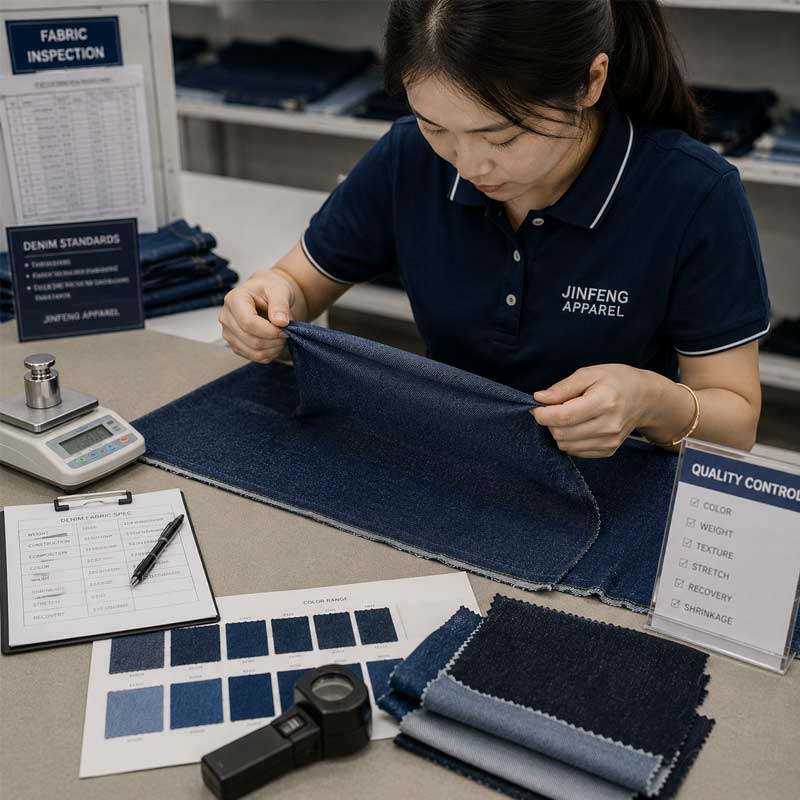
Before moving into sampling or bulk cutting, factories perform a structured validation process to confirm whether the Tech Pack is production-ready.
Validation steps include:
- Fabric feasibility check
- GSM tolerance within ±5–10% range
- Stretch behavior compatibility with pattern design
- Shrinkage and colorfastness review
- Lining compatibility check
- Matching weight ratio with outer fabric
- Confirming opacity requirements
- Ensuring stretch alignment for fitted garments
- Trim execution check
- Size compatibility with garment structure
- Machine suitability (zipper type, buttonhole spacing)
- Placement accuracy on pattern layout
If any of these checks fail, sampling enters revision loops, increasing lead time by 5–15 days per cycle depending on complexity.
Common Weaknesses That Prevent Tech Packs from Being Factory-Ready
Even experienced development teams often overlook key material details that affect production execution.
Frequent weaknesses include:
- Fabric named without GSM or stretch specification
- Lining not matched to outer fabric behavior
- Trims listed without size or placement instructions
- Missing supplier reference or material code
- No performance expectations (wash, stretch, durability)
These gaps lead to:
- Fabric substitution during sourcing
- Incorrect lining selection in production
- Assembly delays caused by trim mismatch
- Increased sampling rounds (often +2–3 cycles)
In structured manufacturing environments, incomplete material specification is one of the leading causes of production delay.
Why Factory-Ready Material Structure Reduces Production Risk
A fully structured Tech Pack reduces uncertainty across sourcing, sampling, and bulk production stages.
Measured production improvements include:
- 30–50% reduction in sampling revision cycles
- Faster material sourcing (up to 40% time savings)
- Lower risk of bulk production inconsistency
- Improved alignment between sample and final shipment
Fabric, lining, and trim accuracy directly determines whether production operates on assumption or execution logic. A factory-ready Tech Pack removes interpretation layers and allows production teams to follow a stable, repeatable process from first sample to bulk delivery.
Why Do Fabric, Lining, and Trim Details Directly Affect Sampling Success?
Sampling in dress manufacturing is often judged by visual accuracy, but in real production systems, success or failure is mainly determined by fabric, lining, and trim accuracy. Even when pattern making and stitching are correct, unclear material specifications can completely shift the final sample outcome.
Fabric controls drape and silhouette behavior, lining controls internal structure and comfort, and trims control functional execution. When any one of these is missing detailed specification, sampling becomes a trial-based process instead of a controlled execution process.
In structured production environments, material-related issues account for a significant portion of first-sample rejections because factories must interpret missing data using internal defaults.
How Material Errors Change Sample Appearance and Fit Performance
Material differences are not minor in sampling; they directly alter garment behavior. A small deviation in GSM or stretch level can change how a dress sits on the body, how seams behave, and how movement is supported.
Key impact areas:
- Fabric weight deviation → changes drape and silhouette balance
- Lining mismatch → affects tightness and internal structure
- Trim inconsistency → affects closure alignment and garment symmetry
For example:
- A 90 GSM satin instead of 120 GSM satin creates a softer, less structured silhouette
- Non-stretch lining in a fitted dress reduces hip and waist flexibility by 10–25%
- Wrong zipper length can shift waist seam alignment by 1–2 cm
These differences are enough to cause sample rejection even if sewing quality is high.
Why Sampling Cycles Increase When Material Data Is Incomplete
Incomplete material specification forces factories into a trial-and-adjust workflow instead of a direct production path.
Typical sampling cycle structure:
| Scenario | Fabric Data Quality | Sampling Rounds |
|---|---|---|
| Complete specification | GSM + composition + stretch defined | 1–2 rounds |
| Partial specification | Fabric name only | 3–4 rounds |
| Missing lining/trims data | No functional detail | 4–5+ rounds |
Common reasons for extra sampling rounds:
- Fabric substitution due to missing GSM range
- Lining mismatch affecting garment tension
- Trim replacement due to unavailable specification
- Recutting required due to construction imbalance
Each additional sampling cycle typically adds 5–10 production days depending on garment complexity.
How Fabric, Lining, and Trim Interactions Affect Sampling Accuracy
Sampling success depends not only on individual material accuracy but also on how materials interact during construction.
Interaction effects include:
- Fabric + lining balance → controls garment structure stability
- Fabric + trim compatibility → affects seam alignment and finishing strength
- Lining + stretch behavior → determines wear comfort and fit retention
Example scenario:
A stretch bodycon dress requires both stretch fabric and stretch lining. If only outer fabric has elasticity, internal tension becomes uneven, leading to seam pulling during fitting. Similarly, using heavy trims on lightweight fabric can distort garment balance.
Factories evaluate these interactions before approving sampling because mismatched combinations often lead to structural failure even if individual materials are correct.
Cost and Time Impact of Material-Related Sampling Failures
Material-related sampling issues directly increase both cost and lead time in production development.
Typical impact ranges:
- Sampling cost increase: +15% to +35% due to re-sourcing and rework
- Lead time extension: +7 to +20 days per additional revision cycle
- Fabric waste increase: 5–12% from repeated cutting adjustments
- Labor rework cost: +10–25% depending on garment complexity
Most of these costs are not related to sewing quality but to incorrect or incomplete material specification at the Tech Pack stage.
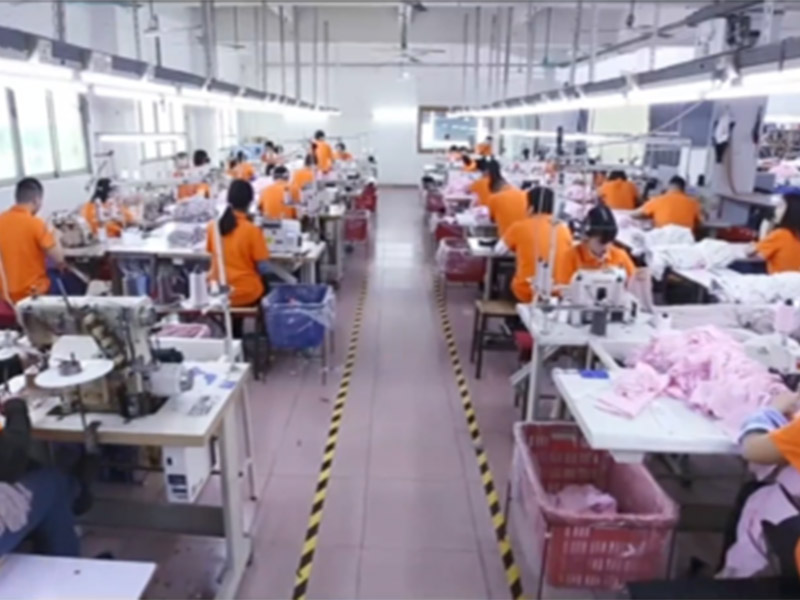
Why Factories Rely Heavily on Material Clarity During First Sample Stage
The first sample stage is the most sensitive point in production because it sets the benchmark for all future bulk production.
Factories rely on material clarity to:
- Lock sourcing decisions without trial substitution
- Set correct cutting parameters based on fabric behavior
- Assign correct sewing techniques for trims and finishes
- Predict final garment performance before bulk investment
If fabric, lining, and trim details are complete, the first sample often reaches production approval faster, reducing development uncertainty significantly.
In structured dress manufacturing systems, sampling success rate can improve by 30–50% when material specification is fully defined at the Tech Pack stage.