Skip to content

Many fashion brands lose time before production even begins, not because the manufacturer is careless, but because the first inquiry is too vague. A message like “Can you make this dress?” may start a conversation, but it rarely gives a factory enough information to quote accurately, assess feasibility, check fabric options, plan sampling, or protect the launch calendar. In custom dress production, a strong inquiry is not a sales form. It is the first technical bridge between a brand idea and a production-ready garment.
A fashion brand should prepare a custom dress production inquiry by sharing the dress category, reference images or tech pack, target fabric, size range, estimated quantity, color plan, target price, sample needs, launch date, quality expectations, private-label packaging details and shipping requirements. The clearer the inquiry, the easier it is for the manufacturer to assess cost, MOQ, sampling time, production risk and delivery feasibility.
The brands that move fastest are not always the largest. They are the brands that know how to communicate. A small DTC label with a clean tech pack, clear fabric direction and realistic timeline can often receive a more useful response than a bigger buyer sending scattered screenshots with no quantity, no fit standard and no delivery plan. Think of your inquiry as the first fitting room for your production project. If the information is loose, everything after it becomes harder to control.
What Should a Dress Inquiry Include?
A strong dress inquiry should tell the manufacturer what the brand wants to make, how many pieces may be produced, which market the product will serve, what fabric direction is expected, when samples are needed and when bulk goods should be delivered. The goal is not to send a perfect file on day one. The goal is to give enough real information for the manufacturer to judge cost, MOQ, sample route, fabric risk and production timing.
Many fashion teams send only one image and ask for a price. The problem is simple: one image cannot show fabric weight, lining, stretch, zipper type, sewing method, size range, quality level, packaging or delivery pressure. A satin mini dress may look simple in a photo, but the final cost can change if it has lining, cups, boning, custom color, special label, tight tolerance or urgent delivery.
A useful inquiry works like a production brief. It does not need to be long, but it should be specific. For example, “We want to develop a satin mini dress” is a start. “We want to develop a lined stretch satin mini dress with adjustable straps, invisible zipper, XS–XL size range, 300 pcs in black for a US ecommerce launch in September” is much stronger. The second version gives the manufacturer enough information to review fabric, pattern, sample cost, MOQ, production route and delivery schedule.
The first inquiry should answer five practical questions: What is the dress? How many pieces may be ordered? What fabric and trims are expected? What market and size range should be followed? What date matters most? When these details are missing, the manufacturer can only reply with broad questions or rough estimates. When these details are clear, the conversation moves closer to a useful quote, a sample plan and a realistic production schedule.
Product Type
The product type should be more specific than “dress.” A manufacturer needs to know whether the style is a mini dress, midi dress, maxi dress, bodycon dress, corset dress, slip dress, halter dress, backless dress, evening dress, resort dress, party dress or wedding guest dress. Each one has a different production logic.
A bodycon dress needs stretch recovery, measurement control and side seam stability. A satin slip dress needs clean drape, smooth seams and careful pressing. A corset dress needs structure, support, cups, boning and stronger pattern control. A chiffon maxi dress needs lining, hem balance and fabric movement. A sequin party dress needs slower sewing, stronger needle control and better packing protection.
The inquiry should also mention the main construction details. Useful details include neckline, sleeve type, strap type, closure, lining, slit, ruching, pleats, cut-outs, cups, boning, elastic, zipper, lace panel, mesh layer or sequin area. These details help the manufacturer judge whether the style is a simple dress, a fitted fashion dress or a complex occasionwear piece.
Dress Category
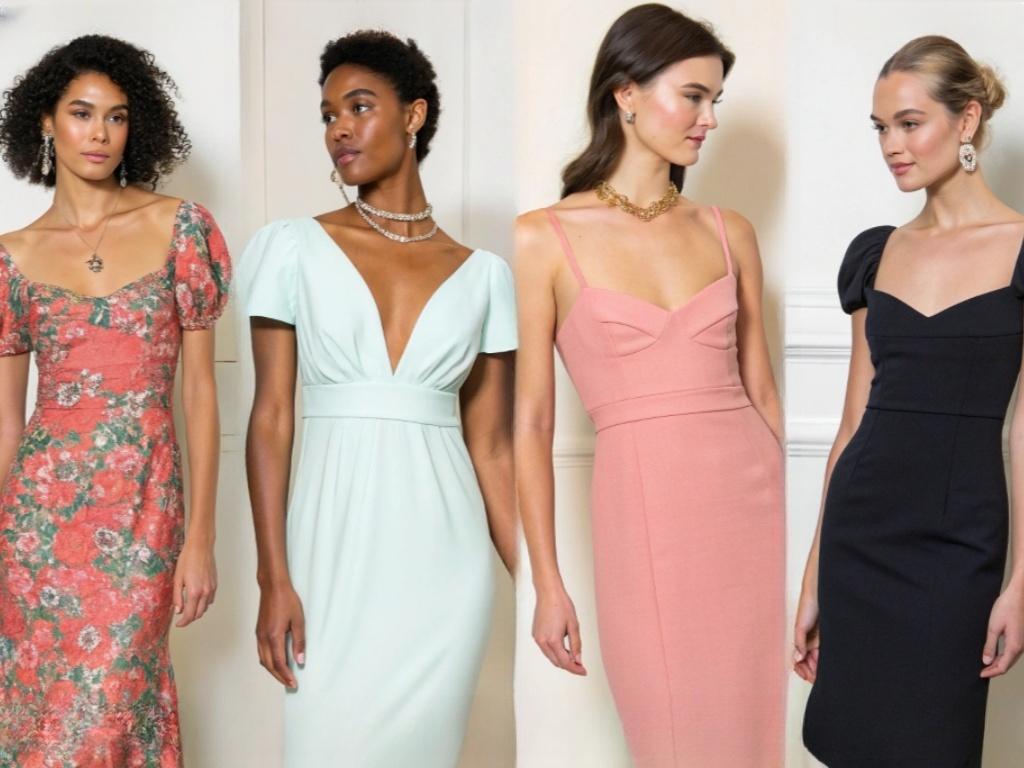
The dress category tells the manufacturer where the product will live in the market. A party dress, resort dress, office dress, wedding guest dress and evening dress may all be called “dresses,” but they are not developed in the same way.
A party dress often needs stronger visual effect, closer body fit and more attention to fabric shine, stretch or decoration. A resort dress usually needs lighter fabric, better movement, print direction and packing recovery. A wedding guest dress needs comfort, polish, lining control and size consistency. An evening dress needs more attention to structure, hem balance, inner support and final pressing.
The category also helps the manufacturer recommend fabric. For example, stretch satin may work for a fitted cocktail dress, while lightweight chiffon may work better for a flowy maxi dress. Ponte or roma fabric may suit a structured office dress, while mesh or lace may need lining and transparency control.
Order Quantity
Quantity should be included early because it affects MOQ, fabric sourcing, unit price, sampling strategy, line planning, packing cost and delivery method. For custom dress production, quantity is usually reviewed by style and color, not by adding several different styles together.
A clear inquiry should say:
- “200 pcs per style/color.”
- “500 pcs in one color.”
- “3 colors, 300 pcs per color.”
- “12 styles, estimated 200–500 pcs per style/color.”
Avoid wording like “small quantity,” “trial order,” or “first order” without numbers. These phrases mean different things to different factories. A “small order” can mean 50 pieces to one brand and 500 pieces to another.
A realistic quantity also helps the manufacturer avoid giving the wrong production route. A 200-piece style may use available fabric and flexible line planning. A 2,000-piece style may need stronger fabric reservation, production allocation and QC scheduling. A 20-style collection may need grouping by fabric type, complexity and launch priority.
Simple quantity table:
| Quantity Information | What It Helps the Manufacturer Review |
|---|---|
| 200 pcs per style/color | MOQ fit, fabric availability, sample-to-bulk path |
| 300–500 pcs per style/color | Better cost review and production planning |
| 1,000+ pcs per style/color | Fabric reservation, line capacity, QC schedule |
| Multiple colors | Color MOQ, lab dips, fabric stock, dyeing risk |
| Multiple styles | Development grouping, sampling order, production calendar |
A precise quantity range makes the inquiry more serious and helps both sides avoid vague pricing.
Target Market
The target market should be included because sizing, fit preference, label rules, packaging needs and delivery planning often depend on where the dress will be sold. A dress made for the US market may follow a different size range from a UK, EU, Australian or Canadian range. Length preference, bust fit, waist position and size grading may also differ.
Useful market details include:
- Selling country or region.
- Size system, such as US, UK, EU, AU or alpha sizing.
- Core size range, such as XS–XL or US 2–14.
- Sales channel, such as ecommerce, boutique retail, department store, marketplace or showroom.
- Warehouse or delivery destination, if already known.
For example:
“The style is for a US ecommerce launch, size range XS–XL, with barcode sticker and individual polybag.”
This gives the manufacturer more than a product idea. It gives production context. It signals size grading needs, label preparation, packing method and shipment planning.
Target market also matters for care labels and fiber content. If the garment will be sold in the United States, United Kingdom, European Union, Australia or Canada, label wording and compliance review should be discussed before bulk production. The manufacturer can support label preparation, but final market wording should be confirmed by the brand or local compliance advisor.
Launch Date
The launch date should be shared as early as possible. Dress production is not only sewing time. It includes file review, fabric sourcing, sample making, fitting, revision, PP sample approval, bulk fabric purchase, cutting, sewing, inspection, packing and shipping.
A brand should not only say “urgent” or “ASAP.” A stronger way is to give two dates:
- Target sample date.
- Target bulk delivery date.
For example:
“We need first samples by May 20 and bulk delivery before August 15 for a September launch.”
This gives the manufacturer a real calendar to work with. If the schedule is tight, the factory can suggest stock fabric, simpler construction, fewer colors, faster sample approval or split shipment. If the launch date is flexible, the manufacturer can choose a safer production route.
Timeline pressure changes production choices. Custom-dyed fabric, custom print, lace, sequin, pleating, boning, special trims and private-label packaging may all add time. A simple stock-fabric dress can move faster than a custom color satin dress with special label, barcode, printed polybag and multiple revisions.
Basic timeline planning table:
| Project Stage | Typical Time Factor |
| File review | Depends on tech pack clarity and missing details |
| Fabric sourcing | Faster with stock fabric, slower with custom color or print |
| First sample | Depends on style complexity and material readiness |
| Sample revision | Depends on fit comments and change scope |
| PP sample | Needed before stable bulk production |
| Bulk production | Depends on quantity, fabric, construction and line schedule |
| Packing | Faster with standard packing, slower with custom labels and barcode |
| Shipping | Depends on air, sea, express or appointed forwarder |
A clear launch date helps the manufacturer protect the real deadline, not just the sewing deadline.
Fabric Direction

Fabric direction should be included even if the exact fabric has not been confirmed. A manufacturer needs to know the expected hand feel, drape, stretch, transparency, weight, shine and price level.
Instead of writing “good fabric,” write something more useful:
- “Medium-weight matte satin with soft drape.”
- “Stretch mesh with lining for bodycon fit.”
- “Light chiffon for flowy resort maxi dress.”
- “Ponte or roma fabric for structured fitted dress.”
- “Lace outer layer with soft lining.”
Fabric affects cost, MOQ, sewing difficulty, sample result and bulk quality. Satin needs snagging and pressing control. Mesh needs transparency and recovery control. Lace needs placement and edge control. Sequin needs slower sewing and better packing. Chiffon needs lining and hem balance. Jersey needs shrinkage and stretch recovery review.
If the brand has a target price, fabric direction becomes even more important. The manufacturer can suggest different material levels to match the intended retail position. For example, two satin fabrics may look similar online, but one may wrinkle easily, snag quickly or feel too thin after lining. The right fabric should support both the visual effect and the selling price.
Price Range
A target price range is useful when shared honestly. It does not force the manufacturer to match a number blindly, but it helps guide fabric selection, construction choices and trim planning.
A fashion team may want a premium satin dress with lining, adjustable straps, custom label and strong QC control. If the target production price is too low, the manufacturer should explain which parts affect cost instead of simply rejecting the project. Cost can sometimes be adjusted through fabric selection, lining range, trim choice, construction simplification, color count or order quantity.
Useful price wording:
- “Our target production cost is around USD X–Y if feasible.”
- “We are open to fabric alternatives if the original direction is too expensive.”
- “Please quote based on 300 pcs and 500 pcs per color.”
Asking for tiered pricing is often more useful than asking for one price. For example:
| Quantity Level | Why It Helps |
| 200 pcs/style/color | Tests minimum viable production route |
| 300 pcs/style/color | Gives better view of cost improvement |
| 500 pcs/style/color | Helps evaluate stronger bulk efficiency |
| 1,000 pcs/style/color | Useful for repeat or core style planning |
A target price should not replace product quality. It should help the manufacturer find a realistic balance between material, construction, quantity and market position.
Packaging Needs
Packaging details should appear in the first inquiry if the order needs private-label or retail-ready delivery. Many brands leave packaging until the end, but labels, hangtags, barcode stickers, polybags and carton marks can affect cost, MOQ and timeline.
Useful packaging details include:
- Main label.
- Size label.
- Care label.
- Hangtag.
- Barcode sticker.
- SKU label.
- Individual polybag.
- Folding method.
- Carton mark.
- Size ratio packing.
- Color ratio packing.
- Warehouse label.
If the brand sells through ecommerce, barcode accuracy and SKU separation are important. If the brand sells through boutiques or retail channels, hangtag position, folding method and carton information may matter more. If goods are going to a warehouse, carton marks, packing list and receiving label requirements should be shared before packing starts.
Inquiry Example
A strong dress inquiry does not need to be complicated. It needs to be clear enough for the manufacturer to respond with useful next steps.
Example:
“We are preparing a custom dress production inquiry for a US womenswear brand. The first style is a lined satin mini dress with cowl neckline, adjustable thin straps, invisible back zipper and slight A-line skirt. We need first sample development first, followed by estimated bulk production of 300 pcs in black and 300 pcs in ivory. Size range XS–XL. Target launch is September, so bulk goods should be ready before August 15. We need private-label woven label, care label, hangtag, barcode sticker, individual polybag and carton marks. Please review fabric options, sample cost, MOQ, estimated bulk price range and production timeline.”
This kind of inquiry gives the manufacturer real information. It explains the product, market, quantity, color, size, timeline and packaging in one message. The manufacturer can then review whether the style fits the production model, which fabric options are suitable, whether MOQ is workable, what sample route is needed and what information should be confirmed next.
Which Files Help a Manufacturer Quote?
The files that help a manufacturer quote are the files that remove guesswork: tech pack, reference photos, original sample photos, size specs, BOM, fabric direction, trim details, color standards, label files, packaging instructions and quantity plan. A quote becomes more accurate when the factory can see the garment structure, material level, measurement standard, order size and delivery requirements before calculating cost.
A factory can often give a rough estimate from a clear photo and quantity range. A factory cannot give a reliable production quote from one screenshot alone. One dress photo does not show whether the fabric is woven or stretch, whether the garment has lining, whether the zipper is invisible or exposed, whether the neckline needs support, whether the straps are adjustable, whether the label is standard or private-label, or whether the order needs barcode packing.
The more complete the file package, the fewer hidden costs appear later. A missing lining note can change the cost. A missing size chart can delay sampling. A missing trim detail can change MOQ. A missing packaging file can delay shipment. A missing target quantity can make the quoted unit price almost meaningless.
A useful production file package does not need to look fancy. It needs to answer the questions a pattern maker, fabric team, sample room, merchandiser, QC team and packing team will ask before production starts. What is the dress shape? How should it fit? Which fabric level is needed? Which trims are used? What size range will be produced? How many pieces are planned? What packaging must be prepared? When should samples and bulk goods be ready?
Tech Pack
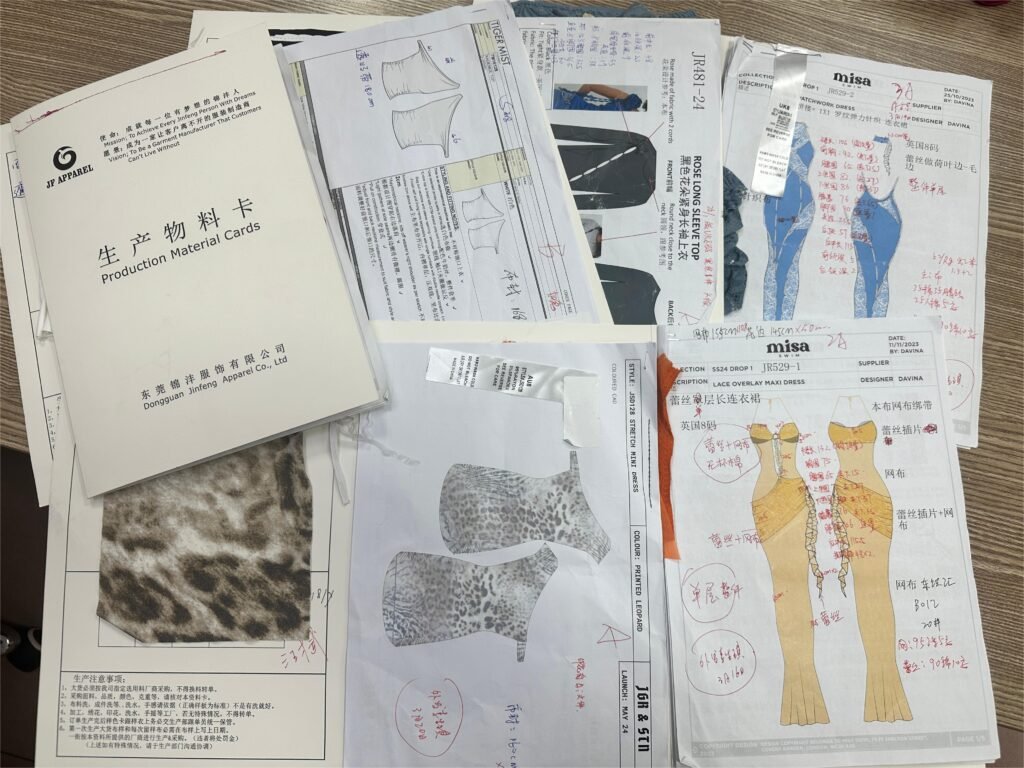
A tech pack is the strongest file for quotation because it gives the manufacturer technical information instead of only visual direction. For a dress project, a useful tech pack should include flat sketches, front and back views, construction notes, fabric information, BOM, size specs, POM measurements, colorways, trim details, label placement, packing notes and quality tolerance.
For simple dresses, a basic tech pack may be enough. For fitted, lined, corset, mesh, lace, sequin or occasionwear styles, a more detailed tech pack is needed. A bodycon dress needs stretch and recovery notes. A corset dress needs cup, boning and panel information. A satin slip dress needs strap, neckline, hem and lining details. A lace dress needs placement and edge finish notes. A maxi dress needs length, hem sweep and lining length.
A tech pack helps the manufacturer quote in four areas: pattern work, material cost, sewing time and QC risk. If a tech pack shows lining, cups, boning, zipper, adjustable straps and custom labels, the quote will be different from a simple unlined dress. If the size spec includes tight tolerance, measurement control also becomes part of the cost.
Useful tech pack content:
| Tech Pack Item | Why It Matters for Quote |
|---|---|
| Flat sketch | Shows garment shape and seam structure |
| Construction notes | Helps estimate sewing time |
| Fabric detail | Guides fabric cost and MOQ |
| BOM | Lists all materials and trims |
| Size spec | Helps pattern and grading review |
| Colorway | Affects fabric sourcing and dyeing |
| Label position | Affects private-label preparation |
| Packing notes | Affects polybag, barcode and carton cost |
| Tolerance | Affects QC workload |
A draft tech pack is still useful. A factory can review missing points and ask focused questions before sampling. A polished visual PDF with no measurements is less useful than a simple spreadsheet with real specs.
Reference Photos
Reference photos help when a brand has not finished a tech pack. They show the desired look, silhouette, neckline, sleeve, length, fit, fabric feel and styling direction. Good reference photos can help the manufacturer understand the intended product faster than long written notes.
One photo is rarely enough. A strong reference package should include front view, back view, side view, close-up of neckline, close-up of closure, fabric texture, lining view if possible and any special detail such as ruching, cut-out, lace panel, slit, strap slider or hem shape. If the brand wants to combine details from several photos, each photo should be marked clearly.
For example:
- Photo A: use neckline direction.
- Photo B: use skirt length.
- Photo C: use back strap structure.
- Photo D: use satin hand feel only.
Reference photos are especially useful for:
| Reference Type | What It Helps Explain |
| Front view | Silhouette, neckline, waistline |
| Back view | Closure, back coverage, strap shape |
| Side view | body fit, slit, drape, volume |
| Detail image | trims, seam, lace, ruching, finish |
| Fabric close-up | texture, shine, transparency |
| Fit photo | how tight or relaxed the garment should be |
A clear photo set helps the factory quote faster. A messy moodboard with no notes often creates more questions.
Original Sample
An original sample gives the manufacturer physical information a photo cannot show. Fabric weight, stretch, lining, seam finish, zipper quality, inner construction, thread tension, garment balance and real measurements can all be checked more accurately from a sample.
A physical sample is useful when a brand wants to improve a previous style, adjust size, change fabric, update color, create a related design or prepare a repeatable production standard. The manufacturer can measure the garment, review construction, inspect inside finishing and compare the sample with new design requirements.
If the original sample fits well, the brand should explain what must stay the same. If the original sample has problems, the brand should explain what needs improvement. For example:
- Keep overall fit, reduce neckline depth by 2 cm.
- Keep length, change fabric to heavier satin.
- Keep silhouette, add lining.
- Keep front design, change back zipper to side zipper.
- Improve bust support.
- Reduce hip tightness.
A sample without comments may lead the factory to preserve details the brand actually dislikes. A sample with clear notes becomes a much stronger development reference.
Physical samples are also useful for price comparison. The factory can see whether the dress is simple, medium or complex. A sample with full lining, boning, cups, special seams and clean inside finishing cannot be priced like an unlined basic dress.
Size Specs
Size specs are necessary for accurate sample and bulk planning. A photo can show shape, but only measurements define fit. For dresses, the most important measurements usually include bust, waist, hip, front length, back length, shoulder width, neckline depth, strap length, armhole, sleeve length, slit height, hem width and lining length.
A brand should provide at least one sample size. For bulk production, a full size range is better. If the brand uses US, UK, EU, AU or alpha sizing, the chosen system should be stated clearly. Size grading affects pattern work, fabric consumption, sample review and QC inspection.
Common dress measurement points:
| Measurement Point | Why It Matters |
| Bust | Controls upper body fit |
| Waist | Controls shape and comfort |
| Hip | Important for bodycon and fitted styles |
| Front length | Controls visual proportion |
| Back length | Helps balance fit |
| Strap length | Affects neckline and bust position |
| Neckline depth | Controls coverage and support |
| Slit height | Affects movement and styling |
| Hem width | Controls skirt volume |
| Lining length | Prevents exposure and bulk issues |
If no size specs are ready, the brand should still share target market, sample size and fit preference. For example: “Sample size S, US market, close body fit but not compression.” A manufacturer can then help build a starting point, but final fit approval still needs brand confirmation.
BOM
A BOM, or bill of materials, lists every material used in the garment. For a dress, BOM can include shell fabric, lining, contrast fabric, lace, mesh, zipper, button, hook-and-eye, elastic, cup, boning, strap slider, label, care label, hangtag, barcode sticker, polybag and carton.
BOM matters because many quote changes come from missing materials. A dress may look like one fabric from the outside, but inside it may require lining, interfacing, cups, boning, elastic or special seam tape. A quote without these materials may look lower at first but become inaccurate after sampling.
A simple BOM can look like:
| BOM Item | Example |
| Shell fabric | Stretch satin, black |
| Lining | Soft knit lining, black |
| Closure | Invisible zipper, 35 cm |
| Strap trim | Adjustable metal slider |
| Support | Removable cups |
| Label | Woven main label |
| Care label | Fiber and wash instruction |
| Packing | Individual polybag + barcode sticker |
If the brand does not know the exact material, the BOM can use direction-based wording. For example, “medium-weight satin,” “soft lining,” “invisible zipper,” “custom woven label.” The manufacturer can then suggest available options and confirm cost.
Fabric Swatches

Fabric swatches help the manufacturer understand hand feel, thickness, stretch, shine, transparency, texture and color better than digital images. A photo of satin may look smooth, but the real fabric may be too thin, too shiny, too stiff, too easy to wrinkle or too weak for the dress structure.
When possible, a brand should send fabric swatches or approved fabric references. If physical swatches are not ready, the inquiry should describe the fabric direction clearly:
- Matte satin, medium weight, soft drape.
- Stretch mesh, soft hand feel, suitable for lining.
- Crepe with slight texture, not too heavy.
- Ponte fabric with good recovery.
- Light chiffon for flowy maxi dress.
- Lace with soft edge, not scratchy.
Fabric affects cost more than many teams expect. A lined satin dress, stretch mesh dress, lace dress and sequin dress may all be similar in length, but the fabric handling, sewing speed and QC risk are very different.
Fabric information should include:
| Fabric Detail | Why It Helps |
| Composition | Affects care label and hand feel |
| Weight | Affects drape and cost |
| Stretch | Affects fit and pattern |
| Width | Affects consumption |
| Transparency | Affects lining need |
| Color | Affects stock or dyeing route |
| Finish | Matte, glossy, textured, brushed |
| Certification need | Affects supplier choice and MOQ |
If certified, recycled, organic or OEKO-TEX-related fabric is needed, the requirement should be mentioned early because availability, MOQ, price and certificate scope need separate confirmation.
Trim Details
Trim details are often small on the garment but large in quotation. Zippers, hooks, buttons, sliders, cups, boning, elastic, lace edge, rhinestone trim, chain trim, label, hangtag, barcode sticker and polybag can all affect cost, lead time and MOQ.
A manufacturer needs to know whether trims are standard, custom, branded, metal, dyed-to-match, imported or supplier-specific. For example, a standard invisible zipper is easier to source than a custom color metal zipper. A regular woven label is easier than a special jacquard label with small MOQ and longer lead time. A plain polybag is easier than a printed polybag with barcode and warning text.
Useful trim information includes:
- Trim type.
- Size or length.
- Color.
- Material.
- Logo requirement.
- Position.
- Quantity per garment.
- Supplier reference, if any.
For dresses, trim planning is especially important for structure. A corset dress may need boning and cups. A halter dress may need special hook or tie structure. A slip dress may need adjustable sliders. A party dress may need rhinestone trim or chain detail. These items should be discussed before quotation, not after sample approval.
Color Standards
Color information affects fabric sourcing, lab dips, production timing and shade control. A brand should not only say “red,” “ivory” or “blue” when color accuracy matters. The inquiry should include Pantone number, color card, fabric swatch, approved color standard or previous bulk reference.
Color is especially important for satin, chiffon, lace, mesh, velvet and multi-fabric styles because different materials may absorb dye differently. A satin shell and lining in the same color name may still look different under light. A lace overlay and inner lining may need planned contrast or close matching.
Useful color information:
| Color File | Best Use |
| Pantone number | Lab dip and dyeing direction |
| Fabric swatch | Most accurate physical reference |
| Color card photo | Early discussion only |
| Previous bulk garment | Good for repeat order matching |
| Approved lab dip | Needed before custom color bulk |
If the order uses stock fabric, color choice depends on available inventory. If the order requires custom dyeing, color approval takes more time. Lab dip rejection can delay the entire schedule, so color standards should be shared early.
Label Files
Label files help the manufacturer quote private-label production more accurately. Labels can include woven main label, size label, care label, brand tag, hangtag, barcode sticker, SKU sticker, QR code, price ticket and warehouse label.
A brand should share label artwork, size, material, color, folding method and position if available. If label files are not ready, the inquiry should at least say whether private-label support is needed. Custom labels often have separate supplier MOQ, lead time and setup cost.
Care labels need extra attention. A care label may include fiber content, wash instruction, size, country of origin, RN number if provided, importer details if provided, style number, color code or batch code. Final market wording should be confirmed by the brand or local compliance advisor.
Label file checklist:
| Label Type | Quote Impact |
| Woven label | MOQ, setup cost, placement |
| Size label | Size range and packing accuracy |
| Care label | Fiber content and compliance wording |
| Hangtag | Printing cost and attachment method |
| Barcode sticker | SKU sorting and warehouse needs |
| QR code | Artwork and scanning test |
| Price ticket | Retail channel requirement |
If labels are missing during quotation, the first price may exclude private-label costs.
Packaging Instructions
Packaging instructions help the manufacturer understand the final delivery standard. A dress order may require simple folded packing, hanger packing, ecommerce packing, retail-ready packing, barcode packing, mixed-size carton packing or customer-appointed warehouse packing.
Packaging should not be left until the end. Late packaging changes can delay shipment even when production is finished. Barcode stickers, carton marks, SKU labels, polybag size, folding method and size ratio packing all need preparation.
Useful packaging details include:
- Individual polybag or hanger.
- Hangtag position.
- Barcode sticker position.
- Size sticker position.
- Folded or hanging packing.
- Carton quantity.
- Size ratio per carton.
- Color ratio per carton.
- Carton mark format.
- Warehouse receiving label.
If the brand sells through ecommerce, each piece may need barcode and SKU accuracy. If the brand ships to boutiques, presentation may matter more. If the brand ships to a retail warehouse, carton marks and packing list may need strict rules.
A clear packing instruction helps the factory quote finishing labor, packing material and carton preparation more accurately.
Missing Files
Missing files do not always stop an inquiry. They should be named clearly. A manufacturer can still help when the brand explains what is ready and what needs support.
For example:
- No tech pack yet, but reference photos and target size range are ready.
- Fabric not confirmed, but stretch satin direction is preferred.
- Size chart not ready, but sample size S and US market fit are needed.
- Packaging artwork not ready, but private-label woven label and barcode sticker are required.
- Target price not fixed, but quote is needed for 300 pcs and 500 pcs per color.
- Clear missing-file notes help the manufacturer respond in a useful way. Hidden missing details create problems later.
File readiness table:
| File Status | What Manufacturer Can Do | Quote Accuracy |
| Photo only | Give rough direction and ask questions | Low |
| Photo + quantity + fabric direction | Give early estimate | Medium |
| Tech pack + quantity | Review construction and base cost | Better |
| Tech pack + BOM + size spec | Quote more accurately | Strong |
| Full file + packaging + timeline | Plan sample and bulk route | Strongest |
A brand does not need perfect files before starting. A brand does need honest files. The manufacturer can guide missing information, but quotation becomes stronger when visual, technical, material, quantity and packing details are shared together.
Quote File Checklist
A practical quote package can be organized into one folder per style. Clear file names reduce mistakes and save time. For example:
- Style 001_Satin Mini Dress_Tech Pack.pdf
- Style 001_Reference Photos.pdf
- Style 001_Size Spec.xlsx
- Style 001_BOM.xlsx
- Style 001_Fabric Direction.jpg
- Style 001_Label and Packing.pdf
- Style 001_Colorways.pdf
The first inquiry can then say:
“Please quote Style 001 based on 300 pcs per color, black and ivory, size range XS–XL, stretch satin direction, private-label woven label, care label, hangtag, barcode sticker and individual polybag. First sample needed by May 20. Bulk delivery target is August 15.”
A file package like this gives the manufacturer enough information to review the dress as a real production project. It also helps the brand receive a more meaningful answer: sample cost, estimated unit price, MOQ, fabric options, missing information, lead time and production risks.
The best quote is not always the fastest number. The best quote is the one built on enough information to survive sampling, bulk production, QC, packing and shipment.
How Do Materials Affect Production?
Materials affect dress production through cost, MOQ, sample accuracy, sewing difficulty, quality risk, lead time, packing method and final wearing effect. Fabric type, stretch, weight, lining, transparency, color, print, trims and finishing should be discussed before sampling because material decisions often decide whether a dress can be produced smoothly at the expected price, quality level and delivery date.
A dress is never only a sketch. Once fabric enters the project, the whole production route changes. The same mini dress can be easy in ponte, delicate in satin, risky in mesh, slower in lace and more expensive in sequin. A soft chiffon maxi dress may need lining, careful cutting and hem balance. A bodycon dress may need strong recovery so the side seams do not twist after wear. A corset dress may need fabric strong enough to support boning, cups and panel tension.
Material choice also changes the quote. A stock black satin may support a faster sample and lower MOQ. A custom-dyed satin may need lab dips, dyeing time and supplier MOQ. A placement print may need artwork setup, strike-off approval and higher fabric loss. A lace dress may need matching, edge control and careful lining. A sequin dress may need slower sewing, stronger needle planning, more QC time and protective packing.
A useful material discussion should answer seven questions before the first sample: What fabric look is needed? How should the fabric feel on body? Does the style need stretch? Is lining required? Is the color stock or custom dyed? Are trims standard or custom? Will packaging need extra protection? When these questions are answered early, the manufacturer can suggest a more accurate sample route and quote.
Fabric Type
Fabric type is one of the first things a manufacturer checks because it changes pattern behavior, sewing method, fabric consumption and inspection focus. Satin, chiffon, mesh, lace, jersey, ponte, crepe, velvet and sequin fabric may all be used for dresses, but they do not behave the same in production.
Satin is often used for slip dresses, cocktail dresses, satin minis and eveningwear. It needs careful cutting, clean seams, shade control and pressing. Thin satin may look shiny but show seam marks and wrinkles easily. Heavier satin may look more premium but increase cost and fabric consumption.
Chiffon works for resort dresses, maxi dresses and soft occasionwear. It gives movement, but it can be slippery during cutting and often needs lining. Mesh works for bodycon, party and cut-out styles, but transparency, stretch recovery and seam strength must be checked. Lace adds texture and value, but placement, edge finish and lining must be planned. Sequin fabric gives strong visual effect, but it usually requires more sewing time, needle control and packing protection.
A fabric name alone is not enough. A useful inquiry should say “medium-weight matte satin,” “soft stretch mesh,” “lined chiffon,” “allover lace with soft lining,” or “high-recovery ponte.” These words help the manufacturer understand how the dress should feel, not only how it should look.
| Fabric Type | Common Dress Use | Production Focus |
|---|---|---|
| Satin | Slip dress, mini dress, cocktail dress | Snagging, shade, seams, pressing |
| Chiffon | Maxi dress, resort dress, bridesmaid dress | Lining, cutting slip, hem balance |
| Mesh | Bodycon dress, party dress, cut-out dress | Transparency, stretch, seam strength |
| Lace | Occasion dress, wedding guest dress | Placement, edge finish, lining |
| Jersey | Fitted dress, casual dress | Shrinkage, stretch recovery |
| Ponte/Roma | Bodycon, office dress, structured knit dress | Recovery, thickness, size stability |
| Sequin | Party dress, evening dress | Needle breakage, falling sequins, packing |
| Velvet | Evening dress, winter dress | Nap direction, pressure marks, shade |
Fabric Weight
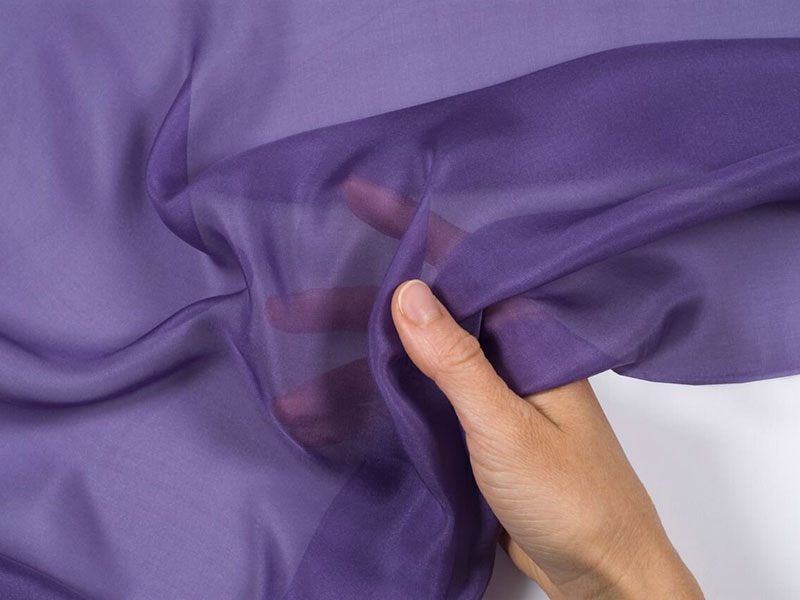
Fabric weight affects drape, structure, comfort, opacity, sewing difficulty and freight cost. A very light fabric can look elegant but may need lining. A heavy fabric can improve structure but may make a summer dress feel too warm or cause seam bulk.
For dresses, fabric weight should match the silhouette. A flowy resort maxi dress usually needs a lighter woven fabric with movement. A structured mini dress may need a firmer woven, ponte or heavier satin. A bodycon dress needs enough weight to smooth the body without stretching out too quickly. A corset-style dress needs fabric that can handle panel tension, boning and inner support.
A common mistake is choosing fabric only by photo appearance. Online images rarely show weight. Two satin fabrics can look similar on screen, but one may be thin and unstable while another may be thicker, smoother and easier to finish. A manufacturer may suggest a different weight to improve fit, reduce defects or match the target price.
As a practical planning guide, fabric can be discussed in three levels:
| Fabric Weight Level | Typical Use | Production Note |
| Light | Chiffon, light mesh, light rayon | Often needs lining or careful handling |
| Medium | Satin, crepe, jersey, woven dress fabric | Common for many dress programs |
| Heavy | Ponte, velvet, thick satin, structured fabric | Better shape, more sewing bulk |
A brand does not need to know the exact GSM at the start. It should describe the intended hand feel: light and flowing, medium and smooth, structured and firm, thick and supportive, or soft with stretch. The fabric team can then match options more accurately.
Stretch Recovery
Stretch recovery is critical for bodycon dresses, fitted mini dresses, mesh styles, jersey dresses, ponte dresses, bodysuits and fitted jumpsuits. Stretch alone is not enough. The fabric must also recover after being pulled. If recovery is weak, the garment may grow after wear, twist at the side seams, sag at the hip or lose shape after washing.
For fitted dresses, the manufacturer needs to understand the stretch direction. Some fabrics stretch only across the width. Some stretch both width and length. Some power mesh fabrics provide support, while soft mesh may feel comfortable but lack control. A bodycon dress in low-recovery fabric may look good on the first fitting but fail after repeated wear.
The pattern also changes when fabric has stretch. A woven dress pattern cannot always be used for stretch fabric without adjustment. Negative ease, seam allowance, lining choice, waist tension and hem behavior all need review. If the fabric is too stretchy, neckline and armhole may grow. If it is not stretchy enough, the dress may feel tight, restrict movement or pull at the seams.
A useful inquiry should mention whether the dress should feel compressive, body-skimming, comfortable, supportive or relaxed. For example: “We need a fitted bodycon dress with firm recovery, not a loose jersey feel.” This helps the manufacturer choose fabric and adjust pattern logic before sampling.
| Stretch Factor | Why It Matters |
| One-way stretch | Good for controlled fit in some fitted styles |
| Two-way stretch | More comfortable but needs pattern review |
| High recovery | Helps bodycon styles keep shape |
| Low recovery | Higher risk of growth and twisting |
| Power mesh | Adds support and shaping |
| Soft mesh | Better comfort, less support |
Lining Need
Lining affects comfort, opacity, garment structure, cost, sewing time and quality inspection. Many dress styles look simple from the outside but require lining to make them wearable. Chiffon, lace, mesh, light satin, tulle, organza and some pale-colored fabrics often need lining to reduce transparency and improve shape.
Lining choice should not be random. A stretch outer fabric may need stretch lining. A chiffon dress may need soft lightweight lining. A structured dress may need firmer lining or partial inner support. A satin slip dress may need smooth lining to prevent cling. A lace dress may need lining color chosen carefully because the lining becomes part of the final appearance.
Lining also affects measurements. If the outer fabric and lining behave differently, the dress may twist, pull or hang unevenly. A tight mesh dress with non-stretch lining can restrict movement. A light chiffon maxi dress with heavy lining can lose softness. A satin mini dress with poor lining can create wrinkles or bulk at the seams.
The inquiry should say whether the dress is fully lined, partially lined, unlined, double-layered or lined only at the bust/skirt. If the brand is not sure, mention the target wearability: no transparency, soft skin feel, enough bust coverage, smooth inner finish, or lightweight movement.
| Garment Area | Lining Question |
| Bust | Does it need coverage, cups or support? |
| Skirt | Is transparency acceptable? |
| Sleeve | Should sleeve stay sheer? |
| Mesh panels | Should the area be lined or transparent? |
| Lace areas | Should lining match skin tone or shell color? |
| Slit area | Does lining restrict movement? |
Color Method
Color method affects MOQ, lead time, shade control and production risk. Stock colors usually move faster. Custom-dyed colors need lab dips, approval, dyeing time and minimum fabric quantity. Printed colors need artwork review, strike-off approval and print method confirmation.
A brand should share color information early. Saying “ivory” or “red” may not be enough for production. Ivory can be warm, cool, yellow, cream or bridal white. Red can be wine, cherry, scarlet, brick or burgundy. If color accuracy matters, use Pantone number, fabric swatch, lab dip, previous bulk reference or approved color card.
Satin, chiffon, lace, mesh and lining can show color differently. The same dye may look slightly different across fabric types. A lace overlay with lining needs planned color matching. A mesh dress may become darker when layered. A satin shell may reflect light more strongly than lining.
Color planning also matters for repeat orders. If a dress becomes a core style, the manufacturer should keep fabric records, color references and supplier details. Repeat color matching is easier when the first order has clear records.
| Color Route | MOQ / Time Impact | Best For |
| Stock color | Faster, easier MOQ | First order, urgent launch |
| Similar stock color | Faster but less exact | Flexible color direction |
| Lab dip custom dye | More time, supplier MOQ | Brand-specific color |
| Custom print | More development time | Resort, fashion print programs |
| Placement print | Higher risk and planning | Border print, engineered designs |
| Repeat color | Needs previous records | Reorder and core styles |
Fabric MOQ
Fabric MOQ is one of the biggest reasons a quotation changes. A garment MOQ may start from a certain level, but fabric suppliers may have their own minimums. Stock fabrics can often support lower and faster production. Custom-dyed, custom-printed, certified, lace, sequin, organic, recycled or specially developed fabrics may require higher MOQ.
For example, a regular stock satin dress may be easier to develop at 200 pcs per style/color. A lace style may need 200–300 pcs or more depending on lace pattern and stock. A sequin fabric may require around 300 pcs or more because of supplier availability, loss and slower production. Custom-dyed fabric may require higher minimum meterage from the dyeing mill. Certified fabric may depend on certificate scope, supplier batch and available stock.
A brand should ask three questions before confirming fabric:
- Is the fabric stock or custom developed?
- Does the fabric supplier have MOQ?
- Does the selected color affect MOQ?
Fabric MOQ should be checked before the collection plan is finalized. A 10-style collection with many colors may look good on a line sheet, but fabric MOQ can make the plan expensive if every color requires custom dyeing.
| Fabric Situation | MOQ Impact |
| Stock fabric, regular color | Easier to support standard MOQ |
| Stock fabric, rare color | Depends on available inventory |
| Custom-dyed fabric | Higher supplier MOQ and lab dip time |
| Custom print | Depends on base fabric and print method |
| Lace | Depends on pattern, width and stock |
| Sequin | Usually higher due to loss and sewing difficulty |
| Certified fabric | Depends on certificate scope and batch |
| Imported fabric | Separate MOQ and lead time |
Trim Selection
Trims affect cost, MOQ, sample time and final garment function. A dress may need invisible zipper, metal zipper, buttons, hooks, strap sliders, elastic, cups, boning, lace trim, rhinestones, chains, woven label, care label, hangtag, barcode sticker, polybag or carton marks.
Standard trims are easier to quote and source. Custom trims may have separate MOQ and longer lead time. A standard black invisible zipper is usually simple. A custom color zipper, special metal slider, branded button, shaped buckle or logo hardware may require supplier confirmation. Labels and packaging materials also have MOQ, especially woven labels, hangtags, printed polybags and special boxes.
Trims also change production risk. A bad zipper can ruin a fitted satin dress. Weak strap sliders can affect wearability. Poor cups can distort the bust. Cheap boning can bend or feel uncomfortable. Rough lace trim can irritate the skin. For fitted or occasionwear styles, trims are not decoration; they are part of the garment structure.
Useful trim information includes color, size, material, finish, position, logo need and quantity per garment. If trim files are not ready, at least mention whether standard trims or private-label trims are needed.
| Trim Type | Production Impact |
| Invisible zipper | Fit, closure quality, seam smoothness |
| Strap slider | Adjustability and wearing comfort |
| Cups | Bust shape and support |
| Boning | Corset structure and stability |
| Elastic | Fit tension and recovery |
| Lace trim | Edge finish and skin feel |
| Rhinestone/chain | Cost, sewing time, QC |
| Woven label | Private-label cost and MOQ |
| Barcode sticker | Packing and warehouse accuracy |
Print Method
Print method affects fabric MOQ, lead time, color control, pattern placement and cutting loss. A printed resort dress, floral maxi dress or placement-print party dress needs more planning than a solid-color dress.
Stock print is the fastest route when available. Digital print is useful for smaller fashion runs and detailed artwork, but cost and color result depend on base fabric and print supplier. Screen print may work better for larger runs but usually needs higher minimums. Placement print needs more control because the artwork must land in the correct area of the garment. Border print and engineered print require careful cutting, more fabric loss and stronger QC.
Artwork files should be clear. A low-resolution image from social media is not enough for production print. A manufacturer usually needs repeat pattern file, print scale, color reference, base fabric direction and placement instruction. If print color must match Pantone, lab dip or strike-off approval should be planned.
Prints can also affect size grading. A placement print may look different across XS and XL if the artwork is not adjusted. A border print may shift if the cutting layout is not controlled.
| Print Type | Best Use | Main Risk |
| Stock print | Fast fashion launch, lower development work | Limited exclusivity |
| Digital print | Detailed artwork, smaller runs | Color variation, cost |
| Screen print | Larger runs | Higher setup and MOQ |
| Placement print | Engineered designs | Alignment and cutting loss |
| Border print | Resort dresses, maxi hems | Layout control |
| Exclusive artwork | Brand-owned print | Longer development |
Construction Match
Fabric must match the construction. A beautiful fabric can fail if used for the wrong dress structure. Soft chiffon cannot support a sharp corset shape without inner structure. Thin satin may not hold a sculpted mini dress cleanly. Low-recovery jersey may not work for a fitted bodycon dress. Heavy velvet may not suit a delicate ruched style if seam bulk becomes too strong.
Construction and material should be reviewed together. A strapless dress needs fabric and inner support strong enough to stay in place. A backless dress needs neckline and side seam control because fewer anchor points hold the garment. A cut-out dress needs stretch, stability and clean edge finishing. A ruched dress needs fabric that gathers well without looking bulky. A pleated dress needs fabric that can hold pleats. A sequin dress needs seam planning to avoid uncomfortable thickness.
A manufacturer may suggest changing fabric, adding lining, adjusting panel shape, reducing decoration, changing zipper position or simplifying construction. These suggestions are not only about cost. They protect sample success and bulk repeatability.
| Dress Detail | Material Requirement |
| Strapless | Supportive fabric, inner structure |
| Corset | Stable outer fabric, boning, lining |
| Ruching | Soft fabric with controlled recovery |
| Cut-out | Edge stability and stretch control |
| Slip dress | Smooth drape, clean seam finish |
| Maxi hem | Fabric movement and balance |
| Pleats | Fabric that holds shape |
| Bodycon | High recovery and size stability |
Quality Risk
Each fabric brings different quality risks. A production team reviews these risks before bulk because quality issues create returns, delays and extra inspection time.
Satin may show snags, wrinkles, shade variation, puckering and pressing marks. Mesh may develop holes, stretched seams, transparency issues or uneven tension. Lace may tear, mismatch or feel rough. Sequin may lose pieces, scratch skin or damage nearby garments during packing. Chiffon may slip during cutting and create uneven hems. Jersey may shrink, twist or grow after wear. Velvet may show pressure marks and nap direction changes.
Quality risk affects cost because it increases handling time. A fabric that needs careful cutting, slower sewing and more inspection will not have the same production cost as an easy woven fabric. A good quote should reflect risk honestly.
A brand can reduce risk by approving fabric before sampling, confirming lining, setting measurement tolerance, checking color under light, testing stretch recovery and reviewing packing method. For sensitive fabrics, an extra fabric test or pre-production review may save more money than rushing into bulk.
| Fabric | Common Risk | Control Point |
| Satin | Snagging, wrinkles, shade | Fabric inspection, pressing control |
| Mesh | Holes, distortion | Needle choice, stretch control |
| Lace | Tearing, mismatch | Placement and edge review |
| Sequin | Falling sequins, scratching | Sewing method, packing protection |
| Chiffon | Slipping, uneven hem | Cutting control, lining |
| Jersey | Growth, twisting | Recovery and shrinkage review |
| Velvet | Pressure marks | Nap direction and packing |
Cost Planning
Material cost should be planned with the whole product in mind. The cheapest fabric may create higher hidden cost through poor fit, high defect rate, extra lining, difficult sewing or weak customer experience. A slightly better fabric can sometimes reduce returns and improve product value.
Cost planning should include fabric, lining, trims, labels, packaging, sewing time, loss rate, QC time and shipping impact. A satin dress with lining, zipper, adjustable straps, woven label, care label, hangtag, barcode sticker and individual polybag has more cost layers than the outside image shows.
A good manufacturer can provide material alternatives. For example, if real silk is too expensive, a high-quality satin may achieve a similar visual direction. If custom-dyed fabric raises MOQ, a close stock color may protect the launch schedule. If sequin fabric is too risky for the first run, partial sequin paneling may lower cost and improve wearability. If full lining makes the dress too heavy, partial lining may solve transparency without changing the whole silhouette.
Cost planning should be done by quantity level. Ask for 200 pcs, 300 pcs, 500 pcs or 1,000 pcs per style/color when relevant. Higher quantity can improve fabric purchasing, cutting efficiency, trim cost and production allocation.
| Cost Factor | What Changes the Price |
| Shell fabric | Fiber, weight, width, stock status |
| Lining | Full, partial, stretch, soft-touch |
| Trims | Standard or custom |
| Construction | Simple, fitted, corset, lined, layered |
| Fabric loss | Print, lace, sequin, placement cutting |
| QC time | Sensitive fabric or tight tolerance |
| Packaging | Standard, barcode, custom label |
| Quantity | Higher volume improves efficiency |
Material Approval

Material approval should happen before bulk production starts. A fabric choice should not be assumed from a small photo or verbal note. The brand should approve fabric quality, color, hand feel, stretch, transparency and lining combination through swatches, sample yardage, lab dip or sample garment.
For solid-color stock fabric, approval may be faster. For custom dyeing, lab dip approval is usually needed. For prints, strike-off approval may be needed. For lace, mesh, sequin and special fabric, a swatch or sample garment review is important because texture, transparency, skin feel and stretch cannot be judged accurately from a screen.
Material approval should be recorded. The record should include fabric name or code, supplier reference, color, composition if available, weight if available, approved swatch photo, approval date and any comments. These records help during bulk production and repeat orders.
If the brand plans future replenishment, material records become even more valuable. Repeat orders move faster when the manufacturer can call back previous fabric references, color records, trim details and packing requirements.
Material approval checklist:
| Approval Item | Confirm Before Bulk |
| Fabric quality | Hand feel, weight, drape |
| Color | Stock color, lab dip or swatch |
| Stretch | Direction and recovery |
| Transparency | Lining need |
| Lining match | Color, stretch, comfort |
| Trim match | Zipper, straps, cups, labels |
| Artwork, scale, strike-off | |
| QC risk | Snagging, shrinkage, colorfastness |
Material decisions are not small production details. They decide whether the dress looks right, fits right, feels right, packs well, ships safely and can be repeated later. A strong material discussion gives the manufacturer enough information to protect the sample, the quote and the final production result.
What Should Brands Confirm Before Sampling?
Before sampling, a fashion brand should confirm sample purpose, dress category, fabric direction, trim details, sample size, key fit points, target price range, revision method, approval timeline and bulk production plan. Sampling becomes more accurate when the manufacturer knows whether the sample is for fit review, photo shooting, sales presentation, pre-production approval or final bulk confirmation.
Sampling is not only “making one dress.” It is the first real test of fabric, pattern, construction, fit, cost and production risk. A dress may look clear in a photo, but the sample shows whether the neckline sits correctly, whether the lining feels right, whether the waist position is flattering, whether the zipper lies flat, whether the fabric supports the shape and whether the style can move into bulk production.
A sample request with missing details often creates avoidable revisions. For example, a brand may request a satin mini dress sample but forget to mention lining, strap adjusters, zipper position, target sample size or fit preference. The sample may arrive looking visually close, yet still fail because the neckline is too low, the fabric is too thin, the waist is not shaped enough or the inner finish does not match the selling price.
A stronger sampling request works like a short development brief. It should answer practical questions before the sample room starts cutting fabric. What is the sample for? Which size should be made first? Which fabric should be used? Which details are fixed? Which details are open for factory advice? What fit points matter most? How many rounds of revision are expected? When does the sample need to arrive? Will bulk production follow if the sample is approved?
Sample Purpose
The sample purpose should be confirmed before any fabric is cut. A first sample, fit sample, revised sample, photo-ready sample, salesman sample, PP sample and golden sample do not carry the same standard.
A first sample helps test the style, fabric direction and construction. It may not be perfect in every detail. A fit sample checks body balance, measurements and wearing comfort. A revised sample confirms corrections after the first fitting. A photo-ready sample needs better finishing, correct color and stronger visual effect because it may be used for model shooting, campaign content or ecommerce preview. A PP sample confirms the final standard before bulk production. A golden sample becomes the reference for production and QC.
A brand should avoid asking for one sample to do every job. A sample made only for early fit review may not be ready for a campaign shoot. A sample made for photo use may still need measurement corrections before bulk. A PP sample should not be approved if fabric, trims or measurements are still undecided.
| Sample Type | Main Purpose | Best Moment to Use |
|---|---|---|
| First sample | Check shape and construction | Early development |
| Fit sample | Review measurements and body balance | After first pattern |
| Revised sample | Confirm correction points | After fit feedback |
| Photo-ready sample | Support shoot or selling material | Before launch content |
| Salesman sample | Show to sales channels or internal teams | Before order confirmation |
| PP sample | Confirm bulk production standard | Before cutting bulk fabric |
| Golden sample | Final approved reference | During bulk QC and repeat order |
A good sample request might say:
“Please develop a fit sample first in size S. The goal is to check neckline, bust fit, waist shape, skirt length and fabric drape. Photo-ready finishing is not required for the first sample.”
That one sentence prevents the sample room from guessing the standard.
Sample Size
The first sample size should be chosen carefully. Most brands use size S, size M, US 4, US 6, UK 8 or UK 10 as a base size, depending on market and fit model. The chosen sample size becomes the starting point for pattern development, fit review, measurement correction and later grading.
A sample size should match the brand’s real fit model or most important selling size. If the brand sells mainly fitted party dresses in XS–L, a size S or M sample may work. If the range includes extended sizing, the brand may need an additional larger size sample after the base size is approved. For bodycon, corset, strapless and fitted styles, one base sample may not reveal all size risks.
The sample request should include:
- Base sample size.
- Target size system.
- Size range for bulk.
- Fit model measurements, if available.
- Measurement tolerance expectation.
- Fit preference, such as close fit, relaxed fit or supportive fit.
| Sample Size Detail | Why It Matters |
|---|---|
| Base size | Sets first pattern direction |
| Fit model body measurements | Helps judge real wearing effect |
| Size range | Guides grading plan |
| Market size system | Avoids US / UK / EU confusion |
| Fit preference | Helps pattern team adjust ease |
| Measurement tolerance | Supports later QC control |
A clear note can be simple:
“Sample size: US 6. Bulk size range: XS–XL. Fit should be close through bust and waist, with enough hip room for sitting.”
That gives the pattern maker a real fit target.
Fabric Standard
Fabric standard should be confirmed before sampling because fabric changes the entire result. A sample made in a substitute fabric may help test shape, but it cannot fully confirm drape, stretch, shine, weight, transparency or comfort.
If the final fabric is ready, use it for sampling. If not, the brand should state whether substitute fabric is acceptable and what must be similar. For example, a satin sample should use fabric close to the target weight and drape. A stretch mesh sample should use similar stretch and recovery. A bodycon sample in the wrong knit may give misleading fit feedback. A chiffon maxi dress in a heavier woven fabric will not show real movement.
A brand should confirm:
- Fabric type.
- Weight or hand feel.
- Stretch direction.
- Transparency level.
- Lining requirement.
- Color standard.
- Fabric approval status.
- Whether substitute fabric is allowed.
| Fabric Point | Sampling Risk If Unclear |
|---|---|
| Fabric weight | Dress may hang differently |
| Stretch recovery | Fit comments may become inaccurate |
| Transparency | Lining may be added too late |
| Color | Photo sample may be unusable |
| Hand feel | Product may miss price position |
| Fabric substitute | Fit and drape may be misleading |
| Lining | Comfort and opacity may fail |
For a first sample, a note may say:
“Use available fabric close to medium-weight matte satin for first fit sample. Final bulk fabric can be confirmed after sample review.”
For a PP sample, the note should be stricter:
“PP sample must use approved bulk fabric, final lining, final zipper, final label placement and confirmed measurements.”
Trim Confirmation

Trims should be confirmed before sampling because small parts often affect fit, function and cost. A dress can change significantly when strap sliders, cups, boning, zipper, hook-and-eye, lace trim, elastic, rhinestone trim or labels are added.
For example, a slip dress with fixed straps will fit differently from one with adjustable straps. A corset dress without proper boning cannot test support. A strapless dress without cups may not show the final bust shape. A fitted satin dress with a poor zipper may create rippling at the back seam. A mesh dress without the final lining may look more transparent than planned.
A sampling request should list trims by type, color, size and position when available.
| Trim | Sampling Reason |
|---|---|
| Zipper | Affects closure, seam smoothness and fit |
| Strap slider | Controls neckline and bust position |
| Cups | Affects bust shape and support |
| Boning | Needed for corset and strapless structure |
| Elastic | Controls tension and comfort |
| Hook-and-eye | Supports zipper top and security |
| Lace trim | Affects edge finish and skin feel |
| Label | Helps check placement and inner finish |
| Hangtag | Usually not essential for first fit sample |
| Barcode sticker | Needed closer to PP or bulk packing stage |
If branded trims are not ready, the brand can allow standard trims for first sample and reserve final trims for revised or PP sample. The sampling brief should make the difference clear.
Fit Points
Fit points should be prioritized before sampling. A dress sample cannot be judged only by overall impression. The production team needs exact areas to check and adjust.
For most dresses, the main fit points are bust, waist, hip, shoulder, neckline, armhole, strap length, sleeve opening, skirt length, slit height, hem width and lining length. For bodycon dresses, hip fit, stretch recovery and side seam balance matter more. For corset dresses, bust support, waist shape and panel alignment matter more. For slip dresses, neckline depth, strap length and fabric drape matter more. For maxi dresses, hem balance and walking comfort matter more.
Fit review should separate three types of comments:
- Measurement issue.
- Construction issue.
- Style preference.
For example, “waist is 2 cm too loose” is a measurement issue. “zipper is not lying flat” is a construction issue. “we prefer a lower neckline” is a style preference. When feedback is separated, the pattern team can adjust more accurately.
| Dress Type | Fit Points to Confirm |
|---|---|
| Bodycon dress | Bust, waist, hip, recovery, side seam |
| Slip dress | Neckline, strap length, drape, hem |
| Corset dress | Cup, boning, waist, bust support |
| Backless dress | Side coverage, strap tension, back drop |
| Maxi dress | Length, hem sweep, lining, movement |
| Mini dress | Skirt length, hip room, sitting comfort |
| Mesh dress | Coverage, lining, stretch, seam strength |
| Lace dress | Lining, edge finish, panel placement |
A strong fit note sounds like:
“Please keep the waist close, add 1.5 cm at hip, raise neckline by 1 cm, reduce strap length by 2 cm and keep skirt length unchanged.”
That type of feedback saves time.
Construction Details
Construction details should be confirmed before sampling because dress structure affects sewing time, sample cost and later bulk stability. A manufacturer needs to know whether the dress is lined, boned, ruched, pleated, layered, padded, cut-out, backless, strapless, sheer, printed, embellished or made with mixed fabrics.
A design may look simple from the outside but be complex inside. A satin mini dress may need lining, cups and an invisible zipper. A lace midi dress may need a soft lining, edge control and seam placement. A mesh bodycon dress may need two layers or partial lining. A strapless dress may need boning, grip tape and inner support. A sequin dress may need seam areas cleared or protected.
Construction details to confirm:
- Lining: full, partial or none.
- Closure: back zipper, side zipper, buttons, ties or hooks.
- Support: cups, boning, elastic, grip tape.
- Layers: single layer, double layer, mesh overlay, lace overlay.
- Seams: princess seam, side seam, panel seam, waist seam.
- Details: ruching, pleating, cut-outs, slit, draped neckline.
- Finishing: clean finish, binding, baby hem, overlock, coverstitch.
A first sample can test construction, but unclear structure often creates extra sample rounds. A simple sketch with construction notes is better than a beautiful photo with no sewing details.
Revision Method
The revision method should be agreed before the sample is sent. Fit comments should be easy for the factory to read, measure and record. Vague comments such as “make it better,” “more premium,” “fit nicer,” or “not right” slow down sample development.
A useful revision package includes:
- Front, back and side photos on body or mannequin.
- Close-up photos of problem areas.
- Measurement comparison against size spec.
- Marked-up images.
- Written change list.
Clear priority: must change, nice to improve, keep unchanged.
Fit model measurements if relevant.
| Feedback Type | Useful Example |
|---|---|
| Measurement change | Reduce waist by 2 cm |
| Shape change | Raise neckline by 1 cm |
| Length change | Shorten skirt by 3 cm |
| Construction change | Move zipper from side to center back |
| Fabric change | Change to heavier satin |
| Trim change | Use adjustable strap slider |
| Keep point | Keep hem width unchanged |
| Priority | Must fix before PP sample |
The strongest revision notes tell the factory what to change and what not to change. Without “keep unchanged” notes, one correction may accidentally alter another part of the garment.
A good revision note:
“Bust fits well, do not change. Waist is loose; reduce 2 cm. Hip is tight when sitting; add 1.5 cm. Raise slit by 2 cm. Keep total dress length. Replace lining with softer stretch lining.”
That note gives the pattern team a clear path.
Sample Timeline
Sample timeline should be realistic and connected to the bulk launch calendar. Sampling includes file review, fabric sourcing, pattern making, cutting, sewing, measurement check, internal review, photo feedback, shipping and brand review. Complex dresses, special fabrics and custom trims need more time.
A brand should confirm three dates:
- When sample files will be complete.
- When first sample is needed.
- When final PP sample must be approved.
If the final bulk delivery date is fixed, sampling must work backward from it. A September launch does not mean bulk production can start in August. Fabric purchase, cutting, sewing, QC, packing and shipping need enough time after PP sample approval.
| Sampling Step | What Can Slow It Down |
|---|---|
| File review | Missing specs, unclear photos |
| Fabric sourcing | Custom color, special fabric, certification need |
| Pattern making | Complex fit, corset, cut-out, jumpsuit |
| Sample sewing | Lace, sequin, mesh, lining, boning |
| Internal check | Measurement or construction correction |
| Shipping | Courier timing and destination |
| Brand review | Slow feedback or unclear comments |
| Revision | Major pattern or fabric changes |
A practical message:
“We need the first fit sample by May 20. Final PP sample should be approved by June 25. Bulk delivery target is August 15.”
That gives the manufacturer a real planning frame.
Sample Cost
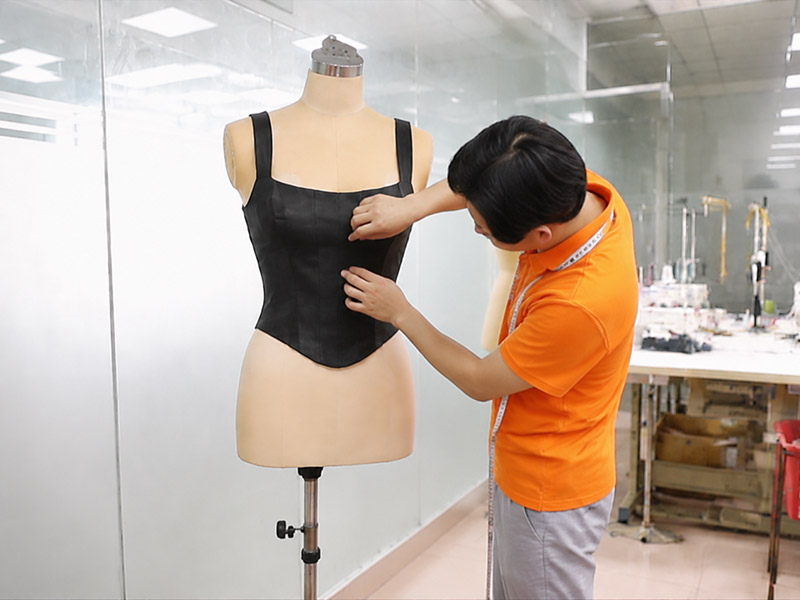
Sample cost should be confirmed before development starts. A sample price is not the same as a bulk unit price because sample making includes pattern work, fabric sourcing, trim preparation, cutting, sewing, measurement check, revision records and sample handling.
Sample cost changes by style complexity. A simple skirt or top costs less than a lined satin dress. A mesh, lace or sequin dress costs more. A corset dress, evening dress or embellished dress costs even more because pattern work, support structure and sewing time increase.
Sample cost may also change when:
- Fabric is special or hard to source.
- Custom trim is needed.
- Multiple sample sizes are requested.
- Photo-ready standard is required.
- Major revision is needed.
- International shipping is included separately.
A practical sample cost table:
| Sample Type | Cost Driver |
|---|---|
| Simple dress sample | Basic pattern and sewing |
| Lined satin dress sample | Fabric, lining, zipper, pressing |
| Mesh or lace dress sample | Layering, lining, delicate sewing |
| Sequin dress sample | Slow sewing, needle risk, trimming |
| Corset dress sample | Cups, boning, panel structure |
| Photo-ready sample | Better finishing and appearance control |
| Revised sample | Depends on change scope |
| PP sample | Final material and production standard |
The brand should ask whether sample fee can be deducted from bulk order after confirmed production. Many manufacturers allow deduction under qualified bulk order conditions, but not when a project stops after sampling or changes completely.
Approval Standard
Approval standard should be set before the first sample is judged. Without a standard, teams may argue based on personal taste instead of production facts.
A sample can be approved for different purposes. A first sample may be approved for next revision even if not perfect. A photo sample may be approved for shooting but not for bulk. A PP sample should only be approved when fabric, trims, fit, construction, measurements, label placement and workmanship are ready for production.
Approval standard should include:
- Approved fabric or fabric direction.
- Approved size measurement.
- Approved tolerance.
- Approved construction.
- Approved fit comments.
- Approved trims.
- Approved label placement.
- Approved packing method, if PP stage.
- Approved photo record.
- Written approval date.
| Approval Level | Meaning |
|---|---|
| Approved for revision | Direction accepted, changes needed |
| Approved for photo | Visual sample accepted for shoot |
| Approved for sales review | Sample can be shown for order planning |
| Approved for PP | Ready for pre-production standard |
| Approved for bulk | Production can follow final sample |
| Approved as golden sample | Final QC reference |
A brand should never approve a PP sample casually. Once bulk starts, every change becomes harder and more expensive.
Bulk Link
Sampling should always connect to bulk production. Before starting the sample, the brand should confirm whether bulk is expected, what MOQ may apply, which quantity range is planned, which colors may be produced and when goods should ship.
If the manufacturer knows bulk production may follow, the sample room can make better decisions. Pattern records can be kept properly. Fabric options can be chosen with MOQ in mind. Trims can be selected from sources suitable for bulk. Construction can be checked for repeatability. QC points can be recorded from the beginning.
A sample made with unavailable fabric, rare trim or unrealistic construction may look beautiful but fail as a bulk product. A good sample should not only impress during review. It should be possible to repeat in quantity.
Bulk-related questions before sampling:
| Question | Why It Matters |
|---|---|
| How many pieces may follow? | Guides MOQ and material sourcing |
| Which colors may be ordered? | Affects fabric and dyeing plan |
| Which size range is planned? | Guides grading and QC |
| Will private-label packing be needed? | Affects label and packaging preparation |
| Is launch date fixed? | Guides sample and bulk calendar |
| Is repeat order possible? | Helps save pattern and material records |
A sample is not the end of development. It is the bridge between idea and production. The better the sampling brief, the easier it becomes to move from first sample to revised sample, PP approval, bulk production and repeat order.
How Should Brands Discuss Bulk Production?
A fashion brand should discuss bulk production only after sample direction, fabric, trims, measurements, color plan, MOQ, packing details and delivery timing are clear. Bulk production should not start from a nice-looking sample alone. It needs a confirmed PP sample, final production files, size and color breakdown, QC standard, packing method and shipping plan.
Bulk production is where small missing details become expensive. A sample can be adjusted by one pattern maker or one sample machinist. Bulk production involves fabric purchasing, fabric inspection, cutting, sewing lines, inline checks, finishing, packing, carton planning, export documents and shipment timing. Once fabric is cut, changes become harder. Once labels are attached, packing mistakes become costly. Once cartons are sealed, barcode or SKU errors can delay warehouse receiving.
A good bulk conversation should feel practical. It should answer what will be made, how many pieces per style/color, which approved sample will be followed, which fabric and trims are final, what measurements and tolerance apply, how packing should be done and when the goods must ship. If the dress has satin, mesh, lace, sequin, corset structure, lining, custom labels or multiple colors, the discussion needs more detail before production starts.
The strongest bulk discussions happen before production pressure begins. A brand may still be choosing between 300 pcs and 500 pcs per color, or deciding whether to launch black first and ivory later. These decisions should be shared early. A manufacturer can then plan fabric reservation, sewing line timing, QC workload, packing material and shipping options with fewer last-minute changes.
PP Approval
Bulk production should start from PP sample approval, not from a first sample, photo sample or general visual approval. A PP sample is the final pre-production sample that shows the production team what to follow: fabric, lining, trims, measurements, construction, label placement, finishing and overall appearance.
A common problem happens when a brand approves a sample for photography and later treats it as the bulk standard. A photo sample may look good on camera, but it may still use substitute fabric, temporary trims or unfinished packing details. Bulk production needs a stricter reference.
Before PP approval, the brand should confirm:
- Approved fabric quality.
- Approved color or lab dip.
- Approved lining.
- Approved zipper, straps, cups, boning or other trims.
- Approved sample size measurements.
- Approved construction.
- Approved care label and label placement.
- Approved packing direction, if already ready.
A PP approval note should be specific. “Sample approved” is too loose. A better note is:
“PP sample approved for bulk production with approved black stretch satin, soft stretch lining, invisible back zipper, adjustable straps, size S measurements dated June 12, revised neckline height and private-label woven label position.”
That note gives production and QC a real reference.
| Approval Item | Why It Matters Before Bulk |
|---|---|
| PP sample | Sets final garment appearance |
| Fabric | Prevents material substitution mistakes |
| Color | Reduces shade disputes |
| Size spec | Guides cutting and QC measurement |
| Trims | Protects fit, function and cost |
| Label placement | Avoids private-label mistakes |
| Packing method | Prevents late warehouse issues |
| Written approval | Gives both sides a clear record |
MOQ
MOQ should be discussed by style and color, not by total mixed quantity. For example, 200 pcs of one style in black is very different from 200 pcs spread across five styles and four colors. Each style/color usually needs its own fabric, cutting, production setup, QC records, packing labels and SKU handling.
A practical bulk inquiry should say:
- “Style 001: black, 300 pcs.”
- “Style 001: black 300 pcs, ivory 300 pcs.”
- “Style 001 to Style 006: each style 200 pcs per color.”
- “12 styles, estimated 200–500 pcs per style/color, final split to confirm after sample approval.”
Avoid unclear phrases such as “small order,” “first order,” or “trial quantity.” A manufacturer cannot plan production from vague wording. A 200-piece first order, a 500-piece first order and a 3,000-piece launch order all require different production planning.
MOQ also changes when materials become more complex. Stock fabric is easier. Custom-dyed fabric, custom print, lace, sequin, special trims, certified fabric or custom packaging may require supplier MOQ beyond garment MOQ. A brand should ask which MOQ comes from garment production and which MOQ comes from fabric, trims or packaging suppliers.
| Quantity Structure | Production Meaning |
|---|---|
| 200 pcs, 1 style, 1 color | Clear MOQ structure |
| 200 pcs total across 4 styles | Usually not a standard production structure |
| 1 style, 2 colors, 200 pcs each | Clear color-based MOQ |
| 1 style, 2 colors, 100 pcs each | Often below standard color MOQ |
| 10 styles, 200 pcs each | Good for collection planning |
| 10 styles, 20 pcs each | Poor fit for structured bulk production |
Quantity Split
Quantity split should be confirmed by style, color and size before bulk starts. A total order number is not enough. A production team needs the exact breakdown to purchase fabric, plan cutting, arrange sewing, prepare labels and pack cartons.
A clear quantity split may look like:
| Style | Color | XS | S | M | L | XL | Total |
|---|---|---|---|---|---|---|---|
| JF-001 Satin Mini | Black | 20 | 60 | 90 | 80 | 50 | 300 |
| JF-001 Satin Mini | Ivory | 15 | 55 | 95 | 85 | 50 | 300 |
| JF-002 Mesh Bodycon | Brown | 25 | 75 | 100 | 70 | 30 | 300 |
Size ratio is more important than many teams expect. If too many pieces are placed into slow-moving sizes, inventory risk increases. If size ratio is too scattered, production and packing become less efficient. For fitted dresses, size ratio also affects fabric consumption and QC measurement workload.
A brand should confirm whether the order uses standard size ratio, sales-data-based ratio, warehouse ratio or retailer-required ratio. For a first launch, a brand may use a balanced ratio. For repeat orders, size split should come from sales performance.
Useful size ratio questions:
- Which size sells most often?
- Does the brand need XS–XL or extended sizes?
- Are petite or tall lengths required?
- Should all colors use the same size ratio?
- Will any size be packed separately by warehouse rule?
- A size split table reduces confusion more than long email notes.
Capacity
Capacity should be discussed by product type, not only by total factory output. A manufacturer may have strong monthly output for regular dresses but need more time for lace, sequin, corset, mesh or formal styles. A simple woven mini dress and a structured evening gown should never be planned as if they need the same production time.
A useful capacity conversation should include:
- Style count.
- Quantity per style/color.
- Fabric type.
- Construction complexity.
- Sample approval date.
- Bulk fabric arrival date.
- Required delivery date.
- Packing method.
- Inspection requirement.
- Shipping method.
If a brand is launching 15 styles, not all styles should move through production in the same way. Simple styles can move faster. Complex styles may need earlier fabric confirmation, stronger inline checks and more finishing time. Satin needs pressing control. Sequin needs slower sewing and packing protection. Mesh needs transparency and seam control. Corset styles need panel and support checks.
Capacity planning should answer one practical question: “Can production finish safely before the launch date without damaging quality?”
| Style Type | Capacity Risk | Planning Tip |
|---|---|---|
| Simple woven dress | Lower risk | Suitable for faster line planning |
| Satin dress | Medium risk | Add time for pressing and shade review |
| Mesh dress | Medium risk | Add checks for transparency and stretch |
| Lace dress | Medium to high risk | Plan placement and lining early |
| Sequin dress | High risk | Allow slower sewing and packing protection |
| Corset dress | High risk | Confirm PP sample and support structure early |
| Multi-style collection | Schedule risk | Group styles by fabric and complexity |
Fabric Readiness
Fabric readiness should be checked before the production calendar is locked. A brand may approve the dress sample, but bulk cannot move smoothly if fabric is not available, not dyed, not tested, not inspected or not reserved in enough quantity.
A production team needs to know:
- Is bulk fabric stock or custom?
- Is color approved?
- Is lab dip approved?
- Is fabric quantity reserved?
- Is extra fabric needed for cutting loss?
- Is lining confirmed?
- Is fabric testing required?
- Is shade lot control needed?
- Is print strike-off approved?
Fabric problems can delay the whole order. For satin, shade variation and snagging must be checked. For chiffon, fabric slipping and transparency matter. For mesh, stretch and holes matter. For lace, placement and edge quality matter. For sequin, falling pieces and rough seam areas matter.
A simple readiness table:
| Fabric Status | Bulk Risk |
|---|---|
| Stock fabric confirmed | Lower timing risk |
| Stock fabric not reserved | Risk of sold-out material |
| Lab dip pending | Bulk cannot safely proceed |
| Custom dye in process | Possible shade and time risk |
| Print strike-off pending | Artwork and color still open |
| Lining not confirmed | Fit and opacity may change |
| Fabric not inspected | Defects may appear after cutting |
A brand should avoid approving production based only on “fabric available” without checking quantity, color, lining and supplier lead time.
Trim Readiness
Trims should be ready before bulk cutting and sewing. Missing trims can stop production even when fabric is ready. A dress may need invisible zipper, strap slider, cups, boning, elastic, hook-and-eye, lace trim, rhinestone trim, label, care label, hangtag, barcode sticker, polybag and carton marks.
Standard trims usually move faster. Custom trims need more time and may have separate MOQ. A custom woven label, special metal slider, branded hardware, printed polybag or special carton label should be confirmed before bulk starts.
Trim readiness checklist:
| Trim Item | Confirm Before Bulk |
|---|---|
| Zipper | Type, length, color, position |
| Strap slider | Size, color, material |
| Cups | Size, shape, removable or fixed |
| Boning | Length, position, stiffness |
| Elastic | Width, recovery, placement |
| Label | Artwork, size, fold, placement |
| Care label | Content and market wording |
| Hangtag | Artwork and string method |
| Barcode sticker | SKU, scan test, position |
| Polybag | Size, warning text, thickness |
| Carton mark | Style, color, size, quantity data |
A trim delay often feels small at first, but it can block sewing, finishing or packing. If final trims are not ready, the brand should ask whether production can start using approved standard trims or whether bulk must wait.
Production Calendar
A production calendar should work backward from the delivery date, not forward from the day the order is placed. A brand should share the real launch schedule, warehouse deadline or campaign date. The manufacturer can then plan fabric, cutting, sewing, QC, packing and shipment with enough buffer.
A practical bulk calendar may include:
- PP sample approval.
- Deposit and production order confirmation.
- Bulk fabric purchase.
- Fabric arrival.
- Fabric inspection.
- Fabric relaxing.
- Cutting.
- Cut-panel check.
- Sewing start.
- Inline inspection.
- Finishing and pressing.
- Garment inspection.
- Packing.
- AQL or final inspection.
- Carton closing.
- Export documents.
- Pickup or shipment.
A simple bulk timeline table:
| Stage | What Needs Confirmation |
|---|---|
| PP approval | Final sample and written approval |
| Production order | Style, color, size, quantity |
| Fabric purchase | Fabric, lining, color, quantity |
| Trim purchase | Zipper, labels, packaging |
| Cutting | Size ratio and marker plan |
| Sewing | Line schedule and construction notes |
| Inline check | Early problem detection |
| Finishing | Pressing, trimming, cleaning |
| Final inspection | Measurement and appearance |
| Packing | Barcode, polybag, carton marks |
| Shipment | Forwarder, documents, pickup date |
“ASAP” is not a calendar. A brand should give dates wherever possible.
QC Steps
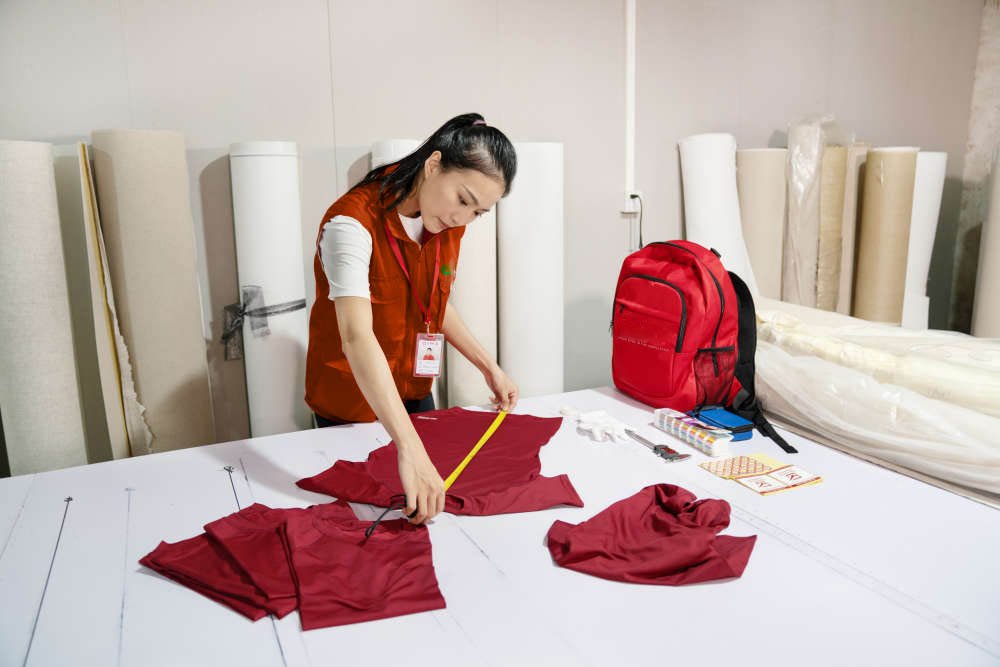
QC should be discussed before bulk production begins. A final inspection alone is not enough for custom dresses. Problems need to be caught while production can still be corrected.
Important QC steps include:
- Incoming fabric inspection.
- Trim inspection.
- Cutting check.
- Cut-panel inspection.
- Inline sewing inspection.
- Measurement check.
- Garment appearance inspection.
- Pressing review.
- Packing inspection.
- AQL inspection.
- Third-party inspection, if required.
For dresses, QC should focus on garment-specific risks. A satin dress needs snagging, shade, seam and pressing checks. A mesh dress needs hole, stretch, transparency and lining checks. A lace dress needs placement and edge checks. A bodycon dress needs bust, waist, hip and recovery checks. A maxi dress needs hem balance. A corset dress needs support, cup, boning and zipper checks.
| QC Area | Dress-Specific Check |
|---|---|
| Fabric | Color, stain, snag, hole, shrinkage risk |
| Cutting | Direction, size bundle, print or lace placement |
| Sewing | Seam, symmetry, zipper, strap, lining |
| Measurement | Bust, waist, hip, length, slit height |
| Appearance | Wrinkles, thread, stains, shape |
| Pressing | Satin shine, velvet pressure, hem finish |
| Packing | Label, barcode, polybag, carton mark |
| AQL | Final sample-based inspection |
A brand should share tolerance standards early. If bust tolerance is +/- 1 cm or +/- 2 cm, the factory needs to know before QC begins.
Packing Details
Packing should be treated as part of bulk production, not as an afterthought. A dress can pass garment inspection and still fail warehouse receiving if barcode stickers, SKU labels, size stickers, carton marks or packing lists are wrong.
Bulk packing details should include:
- Main label.
- Size label.
- Care label.
- Hangtag.
- Barcode sticker.
- SKU label.
- Polybag size.
- Folding method.
- Carton quantity.
- Size ratio per carton.
- Color ratio per carton.
- Carton mark format.
- Warehouse label.
- Special handling for satin, sequin, velvet or formal dresses.
For ecommerce, barcode and SKU accuracy are critical. For retail delivery, hangtag position and carton marks may be more important. For boutique or showroom delivery, hanger packing may be needed. For sequin, satin or velvet, extra protection may be needed to reduce damage, pressure marks or snagging.
Packing table:
| Packing Item | Production Risk If Missing |
|---|---|
| Care label | Garment cannot be finished correctly |
| Barcode sticker | Warehouse receiving delay |
| SKU label | Style/color/size confusion |
| Polybag size | Poor presentation or garment wrinkling |
| Carton mark | Shipment sorting error |
| Size ratio packing | Warehouse count issue |
| Hanger packing | Higher carton space and shipping cost |
| Sequin protection | Fabric damage during transit |
| Satin folding method | Wrinkle and shine marks |
Packing confirmation should happen before finishing starts, not after garments are ready.
Shipping Plan
Shipping should be discussed before the order is packed. A brand should decide whether goods will ship by express, air freight, sea freight, air-and-sea split shipment, EXW, FOB, CIF, DAP, DDP by project, factory-recommended forwarder or brand-appointed forwarder.
A shipping plan depends on four things: delivery deadline, order volume, margin and warehouse requirement. Air freight is faster but more expensive. Sea freight is slower but better for larger volume. Split shipment can work when a brand needs part of the order urgently for launch and the rest later by sea.
A brand should confirm:
- Delivery address.
- Warehouse receiving rule.
- Forwarder contact.
- Shipping term.
- Required ship date.
- Required arrival date.
- Carton mark format.
- Commercial invoice details.
- Packing list format.
- HS code support, if needed.
- Whether certificate of origin is required.
Shipping method table:
| Shipping Method | Best Use | Risk |
|---|---|---|
| Express courier | Samples, urgent small shipment | Higher cost per kg |
| Air freight | Launch deadline or urgent replenishment | Higher freight cost |
| Sea freight | Larger bulk orders | Longer transit time |
| Air + sea split | First batch urgent, rest cost-controlled | More coordination |
| FOB | Brand controls international freight | Needs forwarder coordination |
| EXW | Brand handles pickup and export | More work for brand side |
| DDP by project | Door delivery arrangement | Must confirm country and terms |
| Appointed forwarder | Brand’s own logistics network | Requires early booking details |
Shipping delays often begin before pickup. Missing carton dimensions, late packing list, unclear forwarder details or wrong carton marks can slow the shipment even when garments are ready.
Change Control
Change control is essential once bulk production is confirmed. After PP approval, changes should be limited and written clearly. A change to fabric, color, measurement, trim, label, packing or quantity may affect cost, lead time and quality risk.
A brand should understand where changes are still easy and where they become costly.
| Change Timing | Impact |
|---|---|
| Before fabric purchase | Usually manageable |
| After fabric purchase | May create unused material cost |
| After cutting | Very difficult for size or pattern changes |
| During sewing | Possible only for limited construction details |
| After finishing | Changes may require rework |
| After packing | Label, barcode or carton changes become costly |
| After shipment | Usually no production correction possible |
A written change record should include:
- Style number.
- Change item.
- Old version.
- New version.
- Reason.
- Cost impact, if any.
- Timeline impact, if any.
- Approval person.
- Approval date.
For example:
“Style JF-002: change zipper from side seam to center back before bulk cutting. Pattern update approved on July 3. No fabric change. Timeline impact: +2 days.”
A clean change record keeps production from becoming a series of informal messages.
Bulk Handoff
A strong bulk handoff gives the factory everything needed to start production without guessing. The handoff should be organized by style and should include final tech pack, PP sample approval, BOM, size chart, color breakdown, quantity split, trim list, label files, packing instructions, QC requirements and shipping details.
A practical handoff folder can look like:
- Style 001_PP Sample Approval.pdf
- Style 001_Final Tech Pack.pdf
- Style 001_Size Chart.xlsx
- Style 001_BOM.xlsx
- Style 001_Quantity Breakdown.xlsx
- Style 001_Color Approval.pdf
- Style 001_Label Files.pdf
- Style 001_Packing Instruction.pdf
- Style 001_QC Checklist.pdf
- Style 001_Shipping Requirement.pdf
A clear handoff email may say:
“Please start bulk planning for Style 001 after PP approval. Quantity: black 300 pcs, ivory 300 pcs, size range XS–XL as attached. Use approved stretch satin and soft lining. Use invisible back zipper, adjustable straps, woven label, care label, hangtag, barcode sticker and individual polybag. Packing by style/color/size. Required bulk ready date: August 15. Please confirm production calendar, fabric purchase date, inline inspection date, final inspection date and estimated ship date.”
A bulk handoff like this saves time because every production team can see the same standard. Pattern, fabric, sewing, QC, packing and logistics can work from one set of confirmed files.
Bulk production is not only a larger version of sampling. It is a controlled handoff from approved sample to repeatable garments. The more clearly a brand discusses MOQ, quantity split, fabric readiness, trim readiness, production calendar, QC, packing and shipping, the more stable the final delivery becomes.