High Slit Dress Manufacturer
Custom high slit dresses developed for fashion labels requiring controlled exposure, balanced fit, refined fabric behavior, and reliable sample-to-bulk execution.
- Slit height is measured from a defined point of measurement and locked in the approved PP sample.
- Fit review covers standing, walking, sitting, turning, and stair movement before bulk cutting.
- Two sample rooms, 7+ senior pattern makers, and 20+ sample machinists support complex dress development.
- MOQ starts from 200 pieces per style and color, subject to fabric, trim, construction, and production planning.
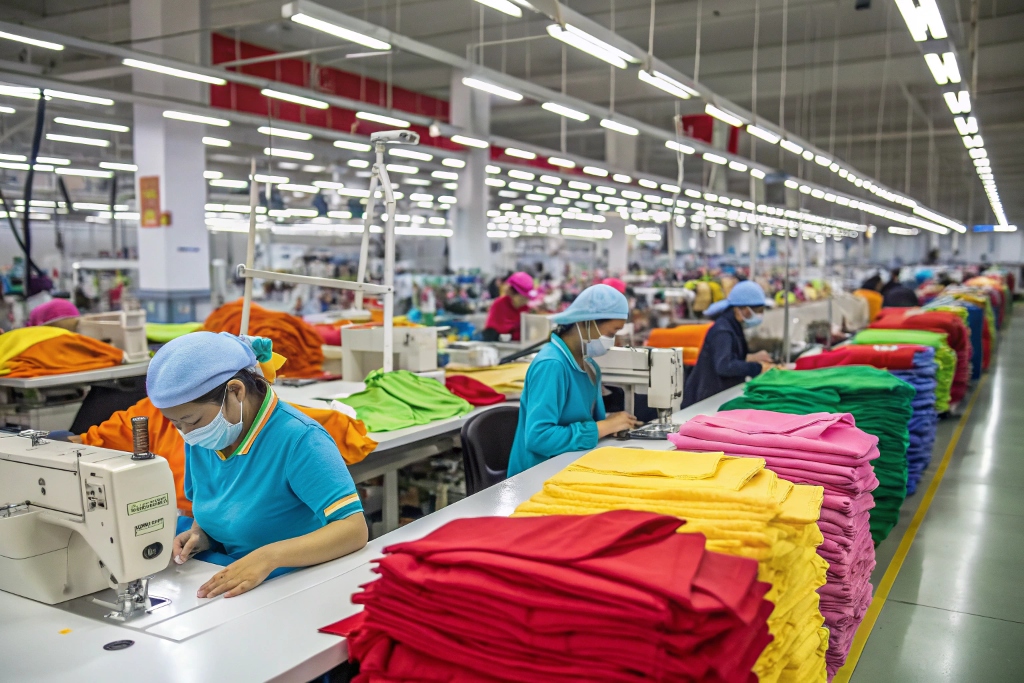
Jinfeng Apparel develops high slit mini, midi, maxi, bodycon, party, cocktail, evening, satin, mesh, lace, and sequin dresses for established fashion labels and multi-style private-label programs. Support covers fabric sourcing, pattern development, sampling, revision, PP approval, bulk production, quality control, branded packing, and export delivery.
Manufacturing Capacity Built Around Dress Development
Since 2008
6 Owned Factories
10+ Production Partners
100,000+ Monthly Capacity
2 Sample Rooms
15+ QC Inspectors
Built for Structured Fashion Production Programs
Best Fit For
- Established fashion labels launching partywear, occasionwear, eveningwear, resortwear, or high-impact ecommerce collections.
- Product development teams managing tech packs, fit comments, sample approvals, and seasonal launch calendars.
- Sourcing teams requiring multi-style production, private labels, barcode packing, inspection records, and export coordination.
- Programs containing 10-30 styles, multiple colors, extended sizes, repeat orders, or phased deliveries.
Production Model
Jinfeng Apparel is organized for custom development followed by approved bulk production. The production model covers style review, fabric selection, pattern development, paid sampling, revision, PP approval, bulk cutting, quality control, branded packing, and shipment coordination. Ready-stock purchasing, one-piece fulfillment, personal made-to-measure gowns, and very small trial quantities are outside the main production model.
High Slit Dress Risks We Control Early
Slit Height Drift
Weak Endpoint
Side Seam Twist
Lining Conflict
Movement Exposure
Bulk Inconsistency
From Style Reference to Packed Production
Project Review
Fabric Direction
Pattern Development
Sample and Revision
PP Approval
Bulk and Delivery
High Slit Dress Styles for Commercial Collections

High Slit Mini Dress

High Slit Midi Dress
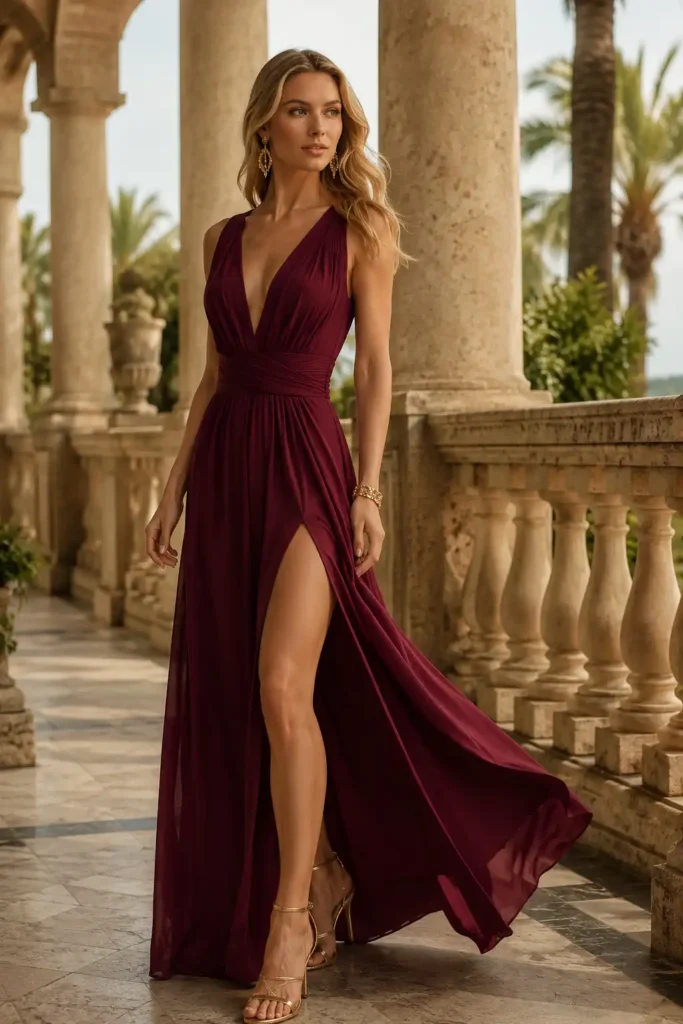
High Slit Maxi Dress
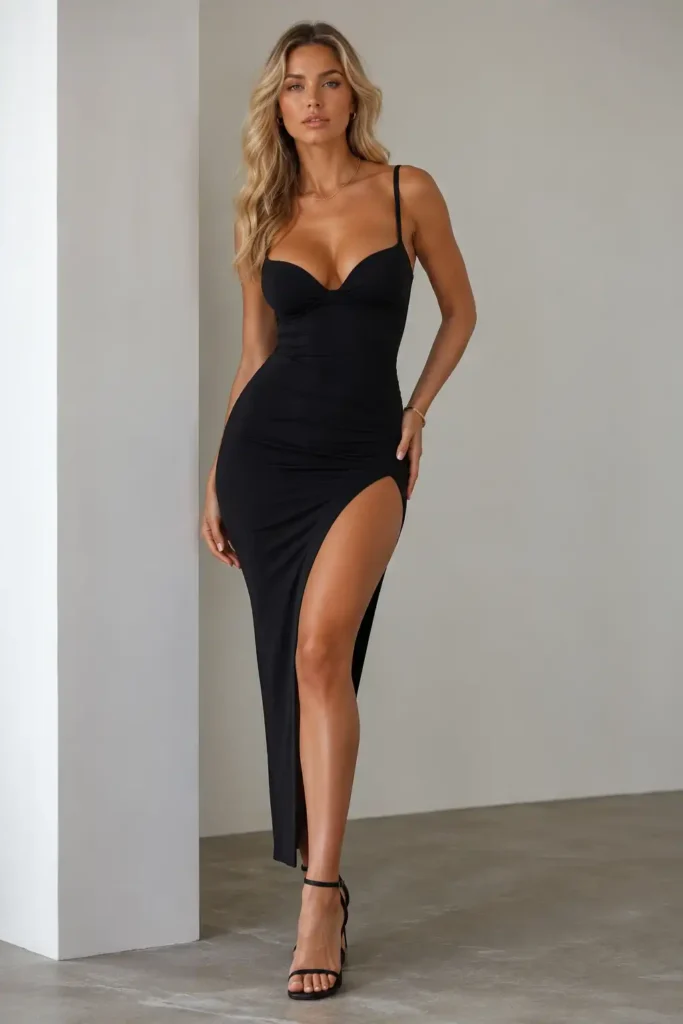
High Slit Bodycon Dress
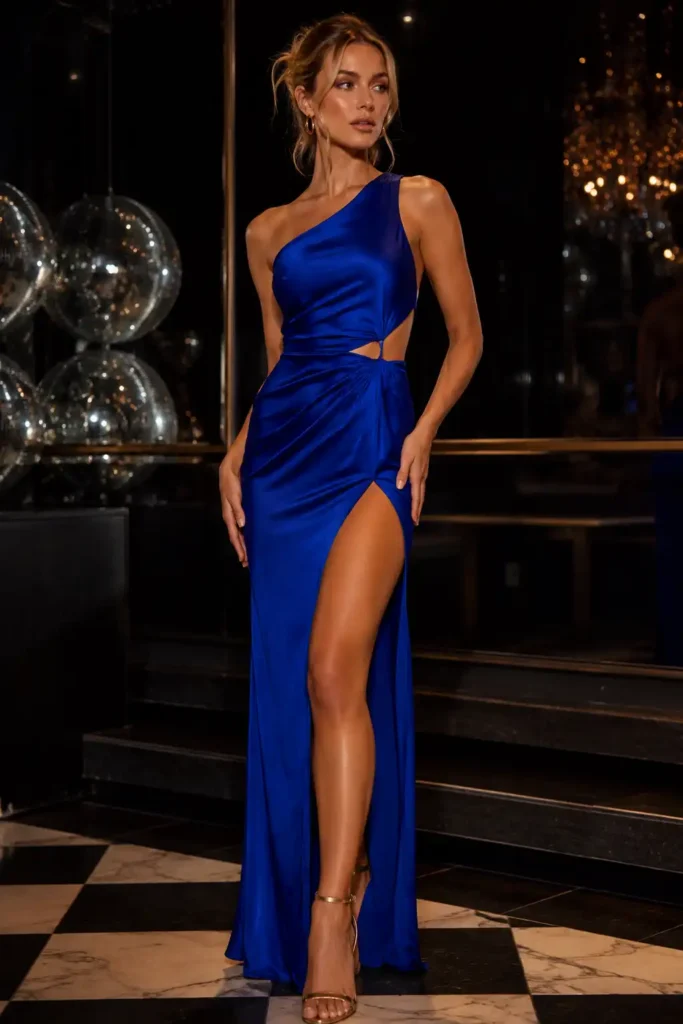
High Slit Party Dress

High Slit Cocktail Dress
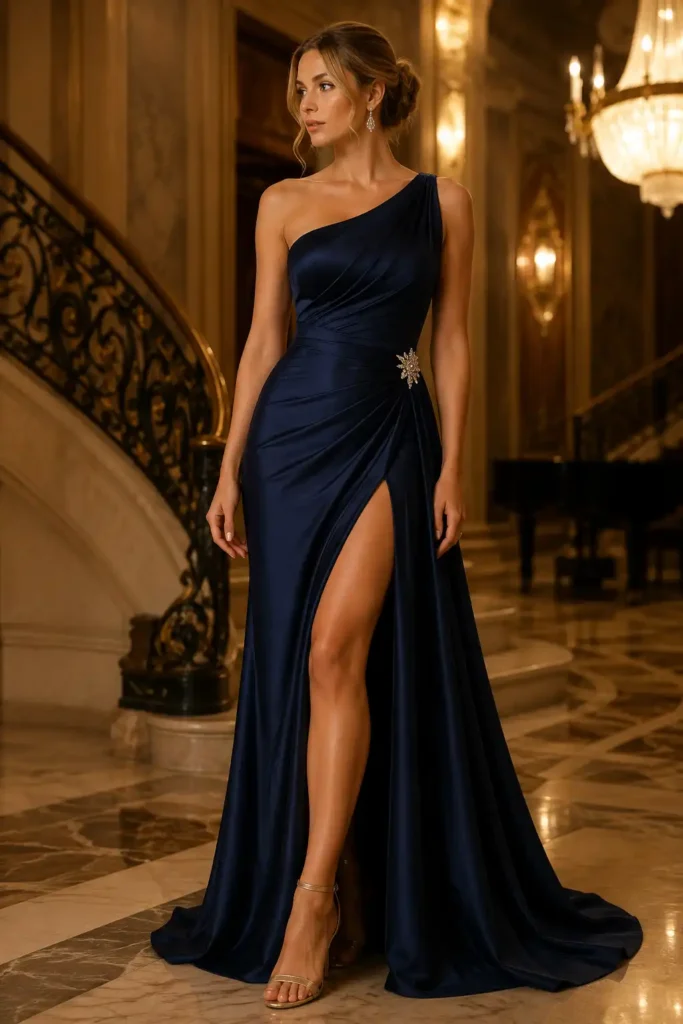
High Slit Evening Dress

High Slit Satin Dress
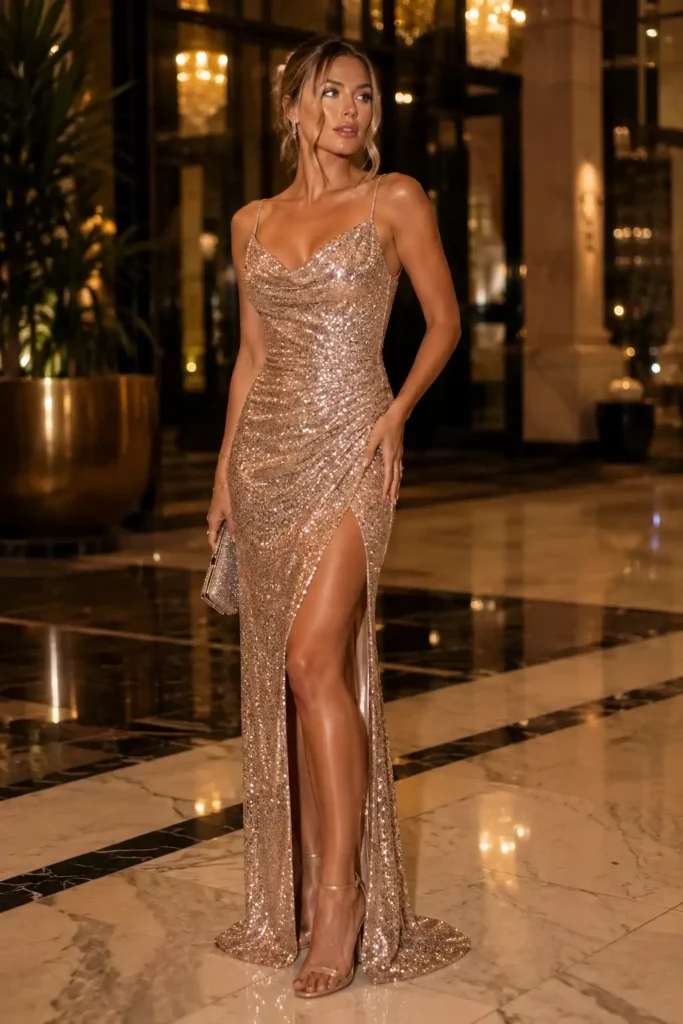
High Slit Sequin Dress
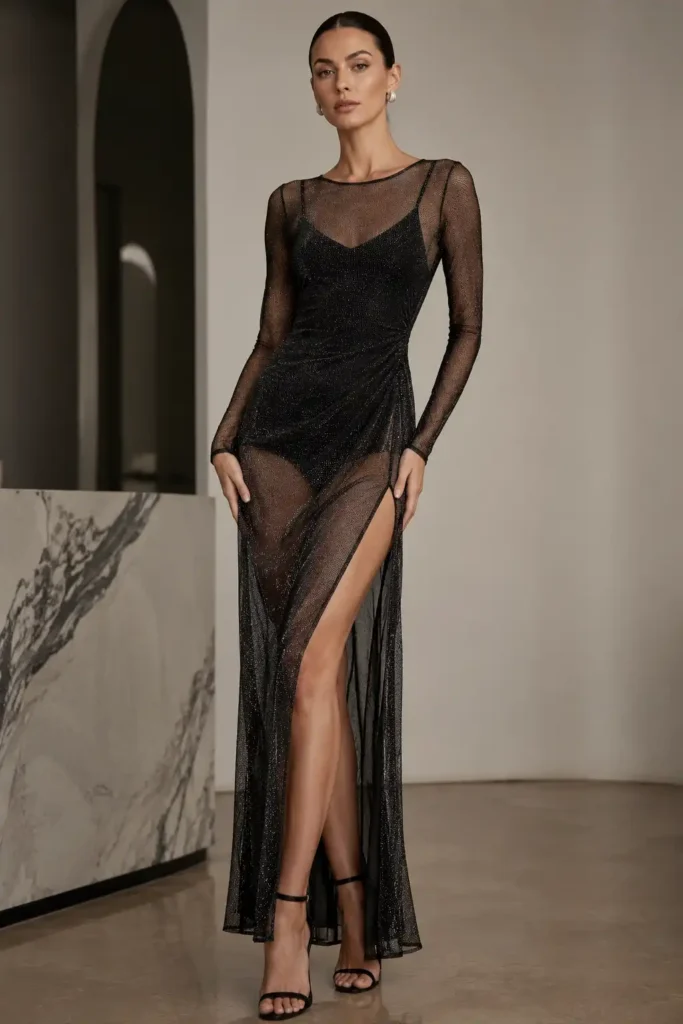
High Slit Mesh Dress
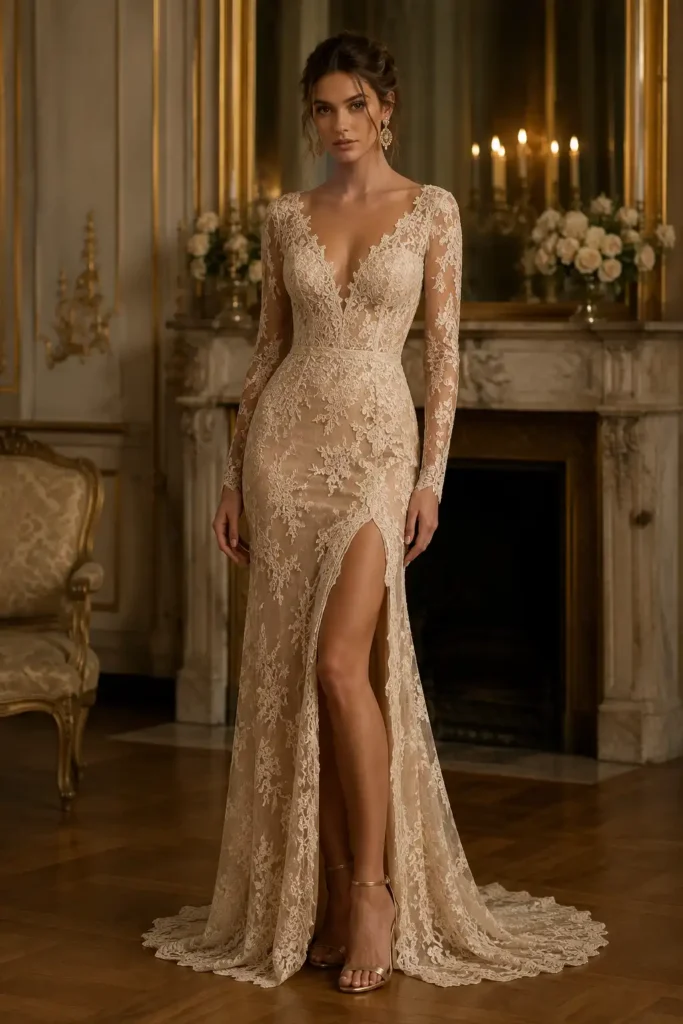
High Slit Lace Dress

High Slit Wrap Dress
Six Slit Constructions and Their Production Logic
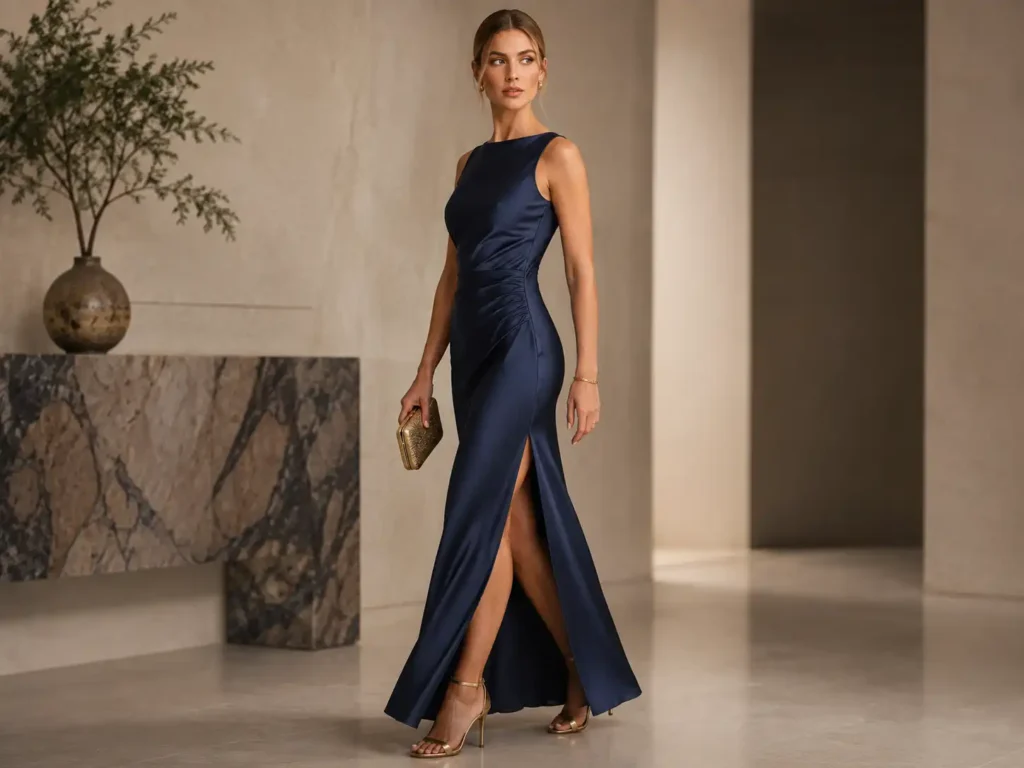
Side Slit

Front Slit

Thigh-High Slit

Double Slit
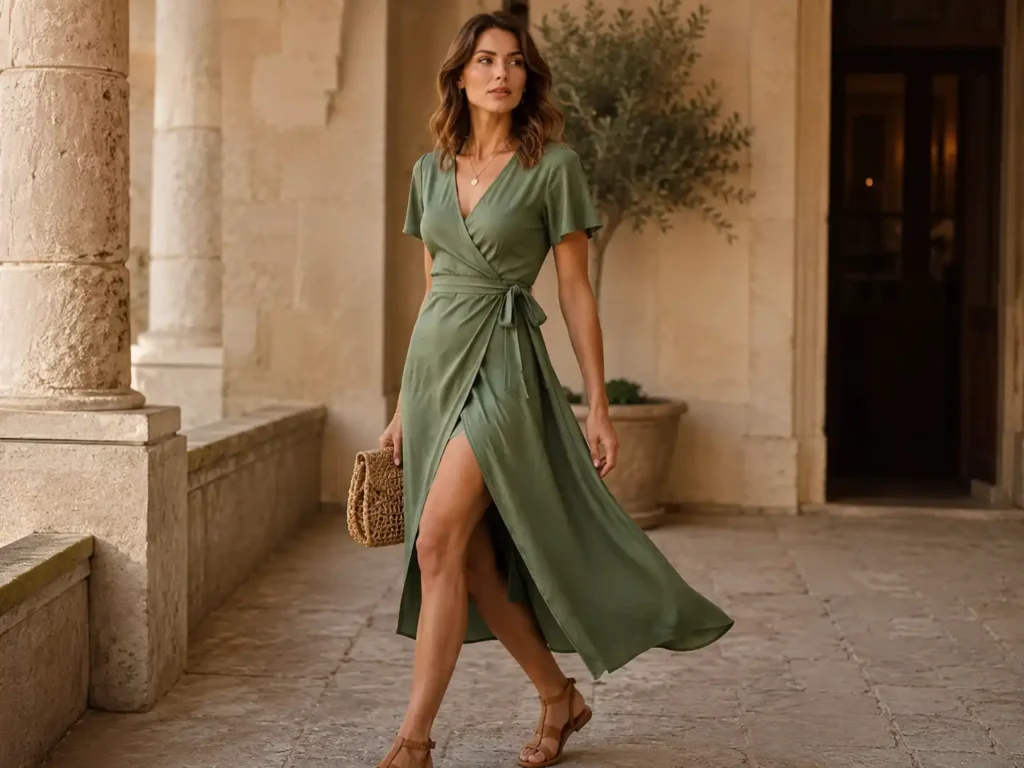
Wrap Slit

Asymmetric Slit

Slit Height Becomes a Controlled Measurement
A photograph can communicate visual direction, but bulk production needs a defined measurement method. Slit height is linked to dress length, waist position, hip level, seam geometry, fabric stretch, and the intended amount of exposure.
Define the Measurement Point
The tech pack should identify where the slit begins and where the measurement starts. Common methods measure from the bottom hem to the top of the slit, from the waist seam to the slit endpoint, or from another fixed construction point. Jinfeng confirms one method and carries the same method through sample comments, PP approval, production instructions, and final inspection. Mixed measurement methods create avoidable disputes.Review Proportion, Not One Number
A 55 cm slit can appear conservative on a floor-length gown and extreme on a shorter skirt. Product review considers total length, model height, waist placement, hip level, skirt width, and footwear. Front, side, and back images are compared with physical measurements. The goal is a repeatable visual proportion rather than a number copied without context.Lock the Base Size
The approved base size establishes slit height, skirt length, waist, hip, and ease. Comments should describe whether the slit needs to move higher, lower, forward, or backward. Important changes are transferred into the pattern, size chart, sewing instruction, and PP record rather than remaining in chat messages.Establish Grading Rules
Slit grading does not always increase at the same rate as total dress length. Some labels keep a nearly fixed exposure level across sizes; others grade the slit with length and body proportion. Jinfeng follows the approved rule and records the finished slit measurement for each required size. Extended-size programs may require separate fit review where hip tension changes opening behavior.Inspect Before and After Pressing
Sewing tension and pressing can change finished measurements. Slit height, full length, side-seam balance, and hem level are checked during production and again after finishing. Smooth satin and stretch jersey require different handling because heat, hanging, and recovery affect final shape differently.
Movement and Coverage Are Verified on the Body

Standing Review

Walking Review

Sitting Review

Turning Review

Stair Review
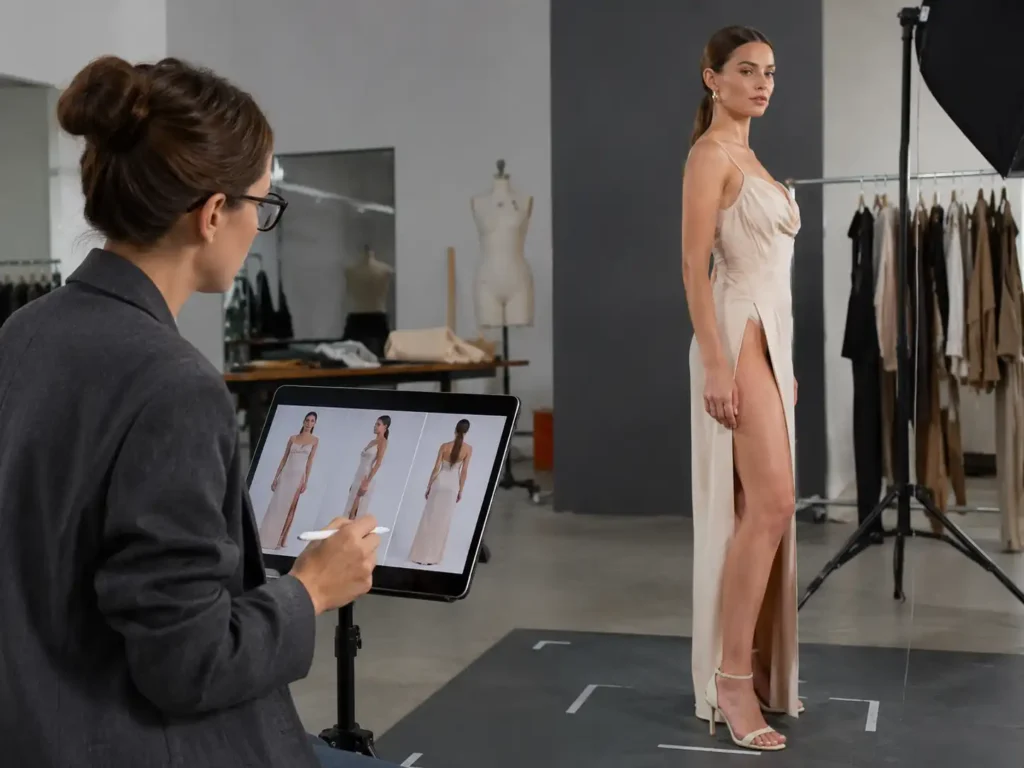
Three-View Recording
Fit and Size Control Across Key Silhouettes
| Dress Direction | Primary Measurements | Slit Risk | Grading Focus | Sample Check |
|---|---|---|---|---|
| Bodycon | Bust, waist, hip, thigh, full length | Tension pulls slit open | Negative ease and hip progression | Standing, walking, sitting |
| Satin Maxi | Waist, hip, full length, sweep, slit height | Seam twist and uneven drape | Length and slit proportion | Hanging, movement, pressing |
| Cocktail Midi | Waistline, hip, skirt length, hem width | Heavy proportion or restricted stride | Balanced length growth | Sitting and side view |
| Evening Gown | Bust support, waist, hip, train, lining | Slit conflicts with structure | Separate length and exposure logic | Full fit and movement review |
| Wrap Dress | Overlap, waist tie, hip, front length | Opening expands during motion | Overlap retention by size | Walk, turn, sit |
| Stretch Mesh | Bust, waist, hip, stretch, lining | Outer layer and lining move differently | Recovery and lining stretch | Recovery after movement |
Fabric Selection for High Slit Dress Performance
| Fabric | Drape | Stretch | Opacity | Main Slit Risk | Lining Direction | Best Applications |
|---|---|---|---|---|---|---|
| Non-Stretch Satin | Fluid to medium | Low | Medium to high | Puckering, snagging, twist | Often recommended | Evening, cocktail, maxi |
| Stretch Satin | Fluid | Medium | Medium to high | Tension and shine distortion | Stretch-compatible lining | Bodycon, party, midi |
| Crepe | Medium, controlled | Low to medium | Usually good | Edge bulk or restricted stride | Depends on weight | Cocktail, formal, occasion |
| Jersey | Fluid | Medium to high | Varies | Slit spreads under hip tension | Stretch lining if lined | Bodycon, casual, party |
| Chiffon | Light, flowing | Low | Transparent | Fraying, distortion, lining conflict | Usually required | Resort, layered evening |
| Mesh | Light to medium | Often high | Transparent | Damage, tension marks, exposure | Full or partial lining | Party, cut-out, layered styles |
| Lace | Motif-dependent | Low to medium | Open structure | Broken motifs and edge instability | Usually required | Occasion, cocktail, formal |
| Sequin Fabric | Medium to heavy | Varies | Usually covered | Scratch, seam bulk, lost sequins | Soft protective lining | Party, evening, statement styles |
| Velvet | Rich, heavy drape | Low to medium | High | Nap direction and pressure marks | Often recommended | Holiday, evening, formal |
| Structured Woven | Controlled | Low | High | Restricted movement | Optional or partial | Corset, tailored, statement dresses |
Production Controls Change with Every Fabric

Satin Control
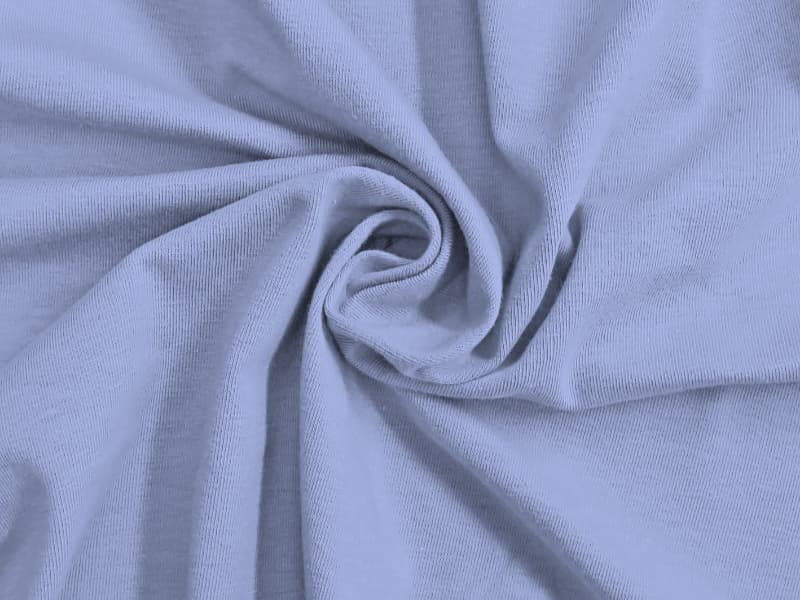
Stretch Jersey Control

Chiffon Control

Mesh Control

Sequin Control

Lace Control
Lining, Opacity, and Skin Comfort Need One Plan
Lining Height
Matching Stretch
Color and Opacity
Friction and Static
Attachment Points
Inner Comfort
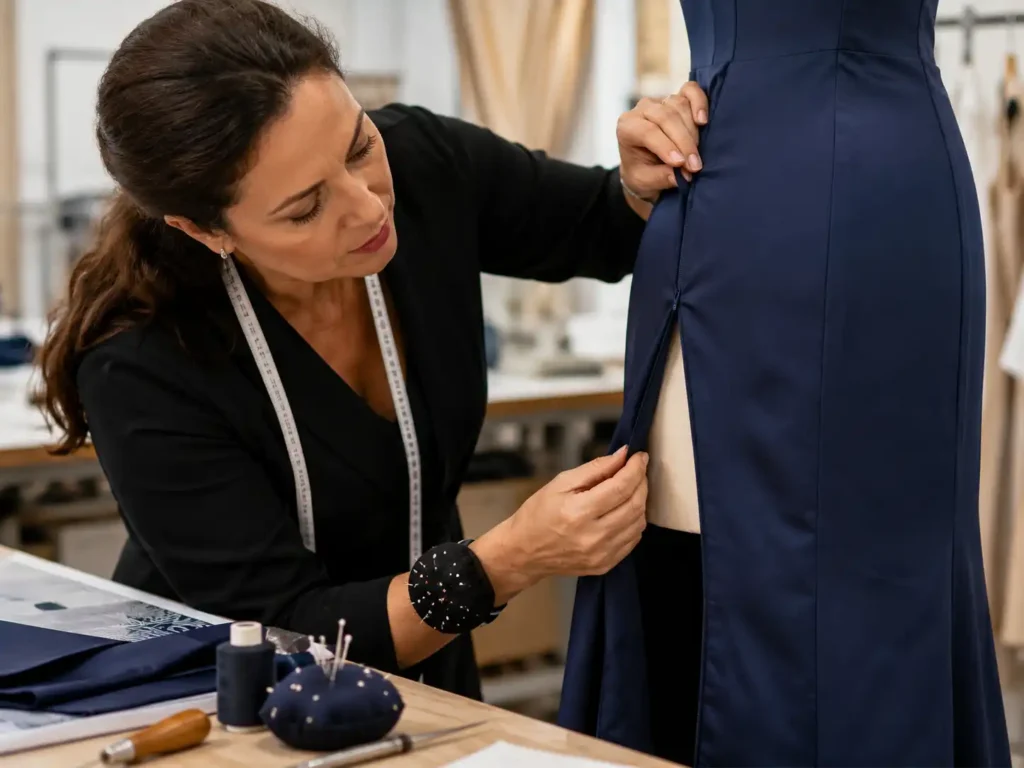
Slit Endpoint and Edge Workmanship Under Tension
The slit endpoint is a concentrated stress area. Strong workmanship protects the seam without creating a hard, visible patch or changing the way the skirt falls.
- Endpoint Position: The endpoint should align with the approved pattern and measurement standard. A small positional shift can change exposure, movement, and visual proportion. Cutting marks and sewing guides must remain clear through bundling and assembly.
- Reinforcement Selection: Reinforcement may use controlled backstitching, bartack, stay tape, shaped facing, seam stabilization, or another approved method. The chosen route depends on fabric weight, stretch, slit type, seam allowance, lining, and stress level. One reinforcement method does not suit every fabric.
- Seam Allowance Control: Uneven seam allowance changes slit width, edge roll, and side-seam direction. Operators follow the approved seam route, while inline QC checks width, symmetry, endpoint security, and the transition from closed seam to open slit.
- Clean Edge Finish: Possible finishes include narrow turn, facing, clean lining finish, binding, rolled edge, or lace-specific treatment. The edge must remain smooth from front and back views. Bulky finishes are avoided on fluid satin and lightweight fabrics where internal structure can show through.
- Lining Connection: Outer and inner slit edges may be fully connected, partially connected, or allowed controlled independence. The final method should prevent lining exposure while preserving movement. Fit and hanging checks confirm whether the connection pulls the skirt.
- Final Pressing: Pressing defines the slit edge and seam line but can also create shine, distortion, or pressure marks. Temperature, pressure, protective cloth, steam, and cooling are adjusted by fabric. Finished garments are checked after pressing rather than measured only before finishing.
Design Details Must Work with the Slit
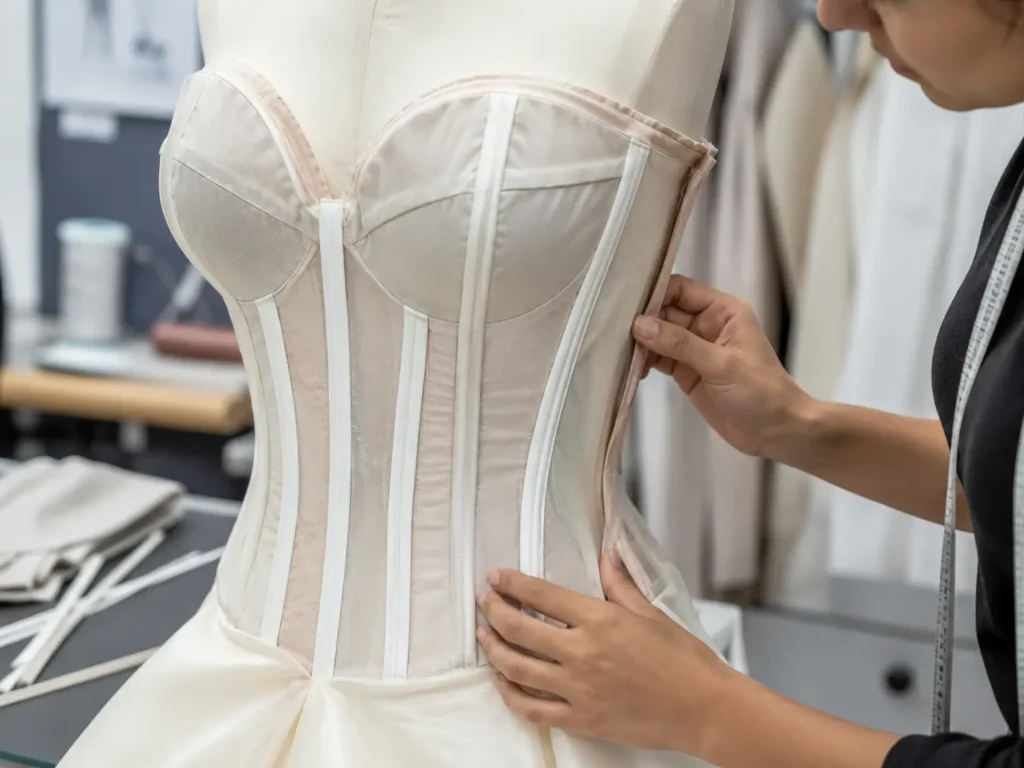
Corset and Boning

Built-In Cups

Ruching
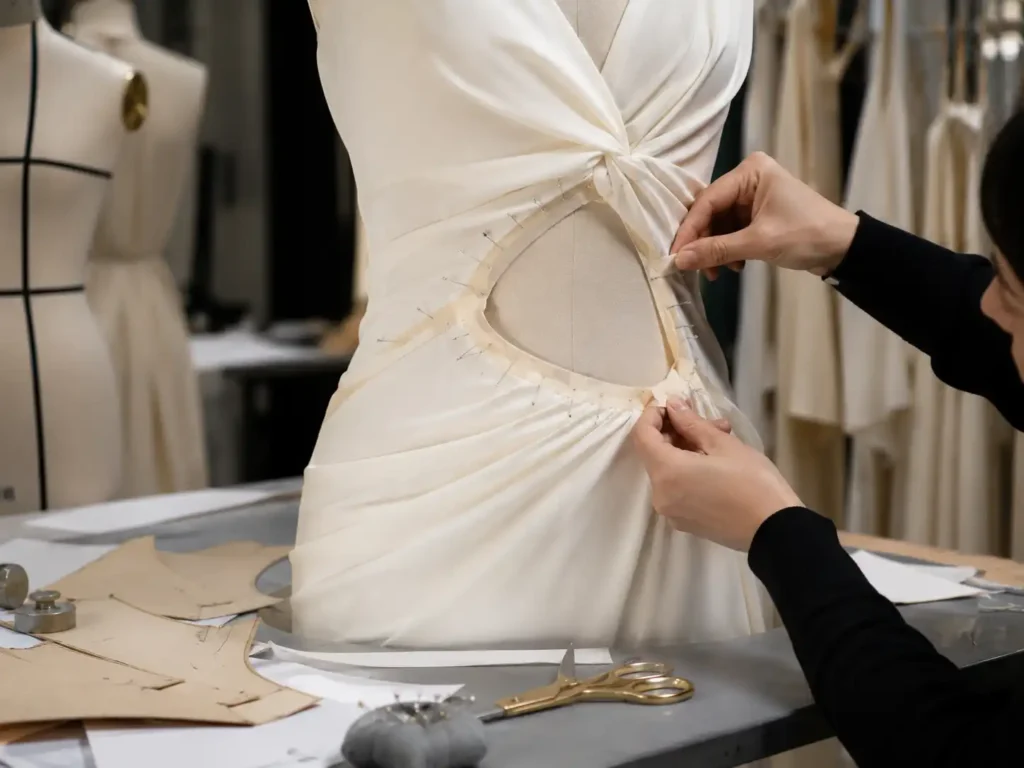
Cut-Out Panels

Strapless Structure

One-Shoulder Balance
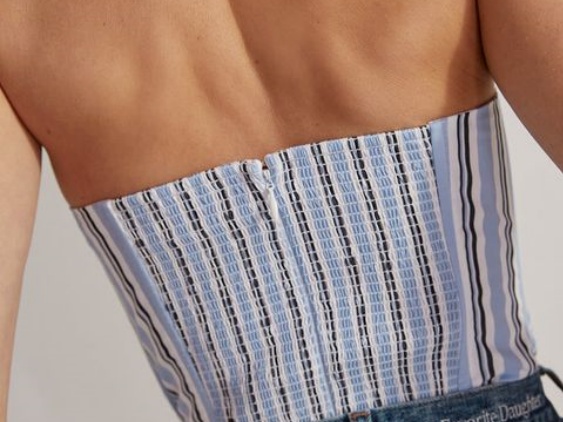
Invisible Zipper

Lace Placement
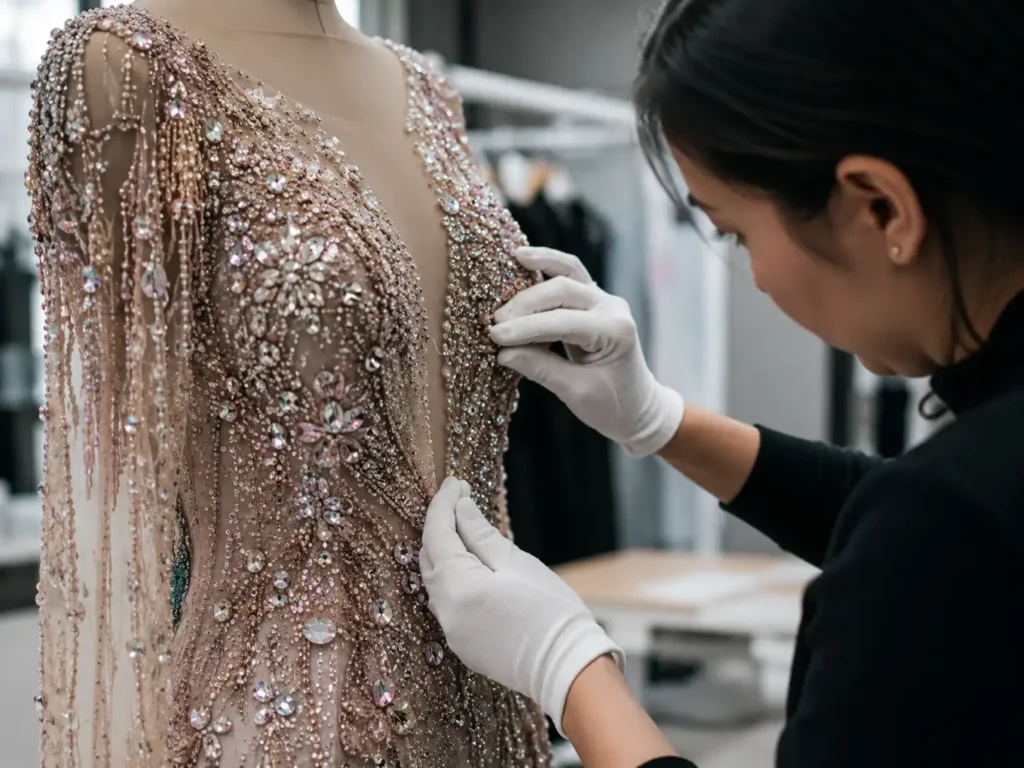
Sequin Layout

Draped Waist

Wrap and Tie Details
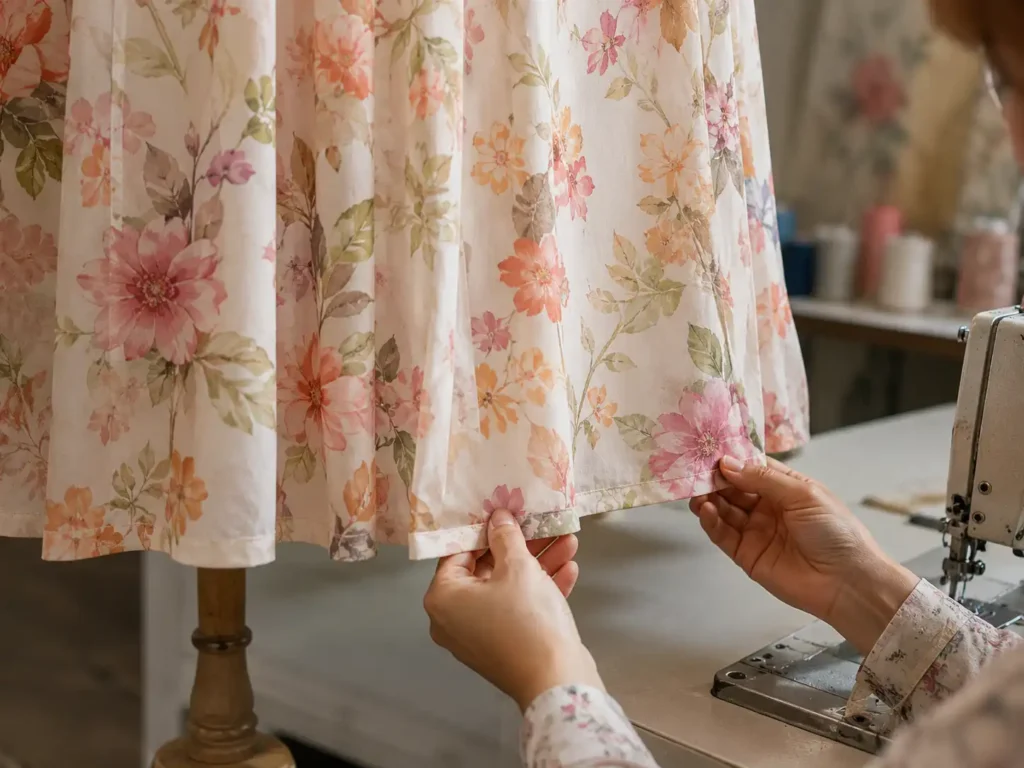
Asymmetric Hem
Information Needed Before High Slit Dress Sampling
Style Reference
Slit Direction
Size Range
Fabric Direction
Lining Requirement
Quantity Plan
Brand Components
Launch Date

Sampling Turns Visual Ideas into Production Standards
Sampling validates structure, fit, fabric response, slit behavior, workmanship, and commercial appearance before bulk production. Each sample stage has a defined purpose.
- Feasibility Review
The product team reviews construction, fabric direction, lining, trims, target quantity, target market, and timing. Risks such as extreme slit height, weak fabric recovery, complex corsetry, or unavailable materials are raised before pattern work begins.
- Pattern Development
Senior pattern makers translate approved inputs into a base-size pattern. Key areas include waist level, bust and hip balance, full length, skirt sweep, slit seam, endpoint, lining, overlap, ease, and grading direction.
- First Sample
The first sample checks overall proportion, fit, construction logic, material behavior, and major design details. Ordinary dresses commonly require about 10-15 days for a first sample after required materials and development information are ready. Simple styles may take about 7-10 days. Complex corset, strapless, lace, mesh, sequin, or evening styles commonly require about 15-25 days, subject to material availability and structure.
- Fit and Movement Review
Fit comments cover bust, waist, hip, length, slit height, opening behavior, lining, comfort, and movement. Front, side, and back images support accurate communication. Important comments are converted into updated patterns, specifications, BOM notes, or sewing instructions.
- Revised Sample
A revised sample verifies approved corrections. Simple styles may need one revision, while complex structures can require additional rounds. Changes involving new fabrics, major construction, or new trims may reset part of the development process.
- Photo-Ready Sample
Campaign or ecommerce photography may need enhanced finishing, precise steaming, selected accessories, or visual fold placement. A photo-ready sample is identified separately when its materials or finishing differ from the final PP standard.
- PP Sample
The PP sample confirms final fabric, color, trims, pattern, measurements, slit height, endpoint, lining, construction, labels, packing, and QC points. Major structural changes should not be introduced after PP approval without a revised plan.
PP and Golden Samples Protect Bulk Consistency
Approved Pattern Version
Fabric and Trim Approval
Measurement Standard
Construction Standard
Visual Standard
Packing Standard
Multi-Style Collections Need Controlled Project Management
Style-Level Tracking
Fabric Grouping
Complexity Grouping
Launch Priority
Version Control
Production Allocation
Weekly Progress
Phased Delivery
Production Is Allocated by Style and Fabric Risk
Owned Factory Network
Long-Term Production Partners
Sewing Line Structure
Sample and Pattern Teams
Merchandising Coordination
Finishing and Packing

Quality Control Follows the Slit from Fabric to Carton
High slit dress inspection needs dedicated checks beyond general garment appearance. Fabric direction, slit position, reinforcement, lining, measurements, movement, pressing, and packing are controlled at different stages.
- Incoming Material Inspection
Fabric is checked for shade, batch, width, hand feel, weight, stretch, recovery, stains, holes, snags, print direction, lace damage, mesh damage, sequin loss, and velvet nap direction. Lining, zipper, thread, cups, boning, labels, and decorative trims are matched against approved specifications. - Cutting Inspection
Cutting QC checks pattern version, grain, stretch direction, luster direction, motif placement, color grouping, lining match, size bundling, panel quantity, and slit marking. Incorrect slit marks are easier to prevent before sewing than repair after assembly. - Inline Sewing Inspection
Inspectors review seam allowance, stitch quality, side-seam direction, slit height, endpoint reinforcement, lining attachment, zipper flatness, hem route, ruching position, lace placement, sequin handling, and symmetry. Findings are corrected before large quantities move to the next operation. - Finished Measurement
Finished garments are measured against the approved chart. Key points include bust, waist, hip, full length, slit height, lining length, hem level, straps, and style-specific dimensions. Inspection sampling follows order requirements and risk level. - Appearance and Movement
Finished garments are checked for drape, slit opening, side-seam twist, lining exposure, puckering, stains, loose threads, surface damage, pressing, and recovery after movement. Selected styles may be reviewed on a dress form or model according to project needs. - Packing Inspection
Packing QC verifies main labels, care labels, size labels, hangtags, barcodes, size stickers, color stickers, folding or hanging method, polybag, carton ratio, carton mark, quantity, gross weight, and packing list consistency. - Final and AQL Inspection
Final inspection can follow agreed AQL requirements or an approved project inspection plan. External inspection is supported when required. The final standard references PP samples, Golden samples, approved measurements, workmanship requirements, and packing instructions.
Finishing and Packing Protect the Slit in Transit

Final Thread and Surface Check

Controlled Pressing
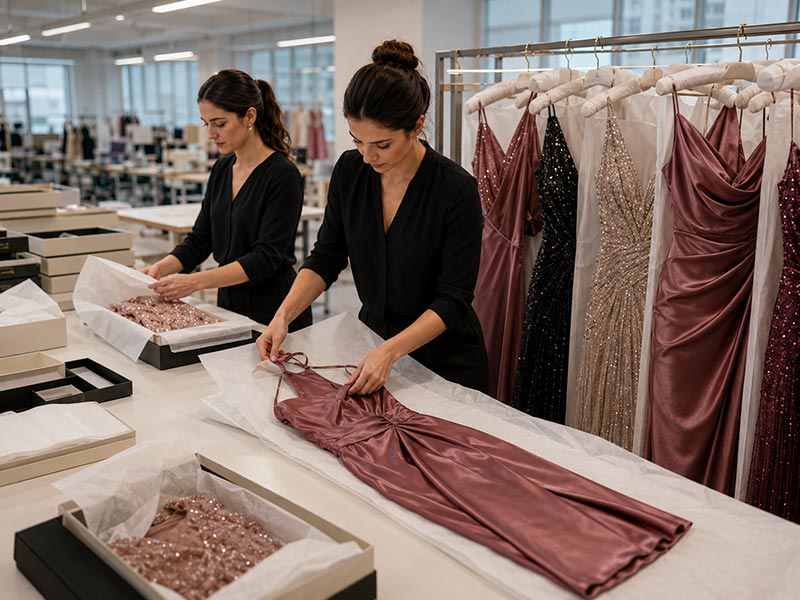
Hanging or Folding
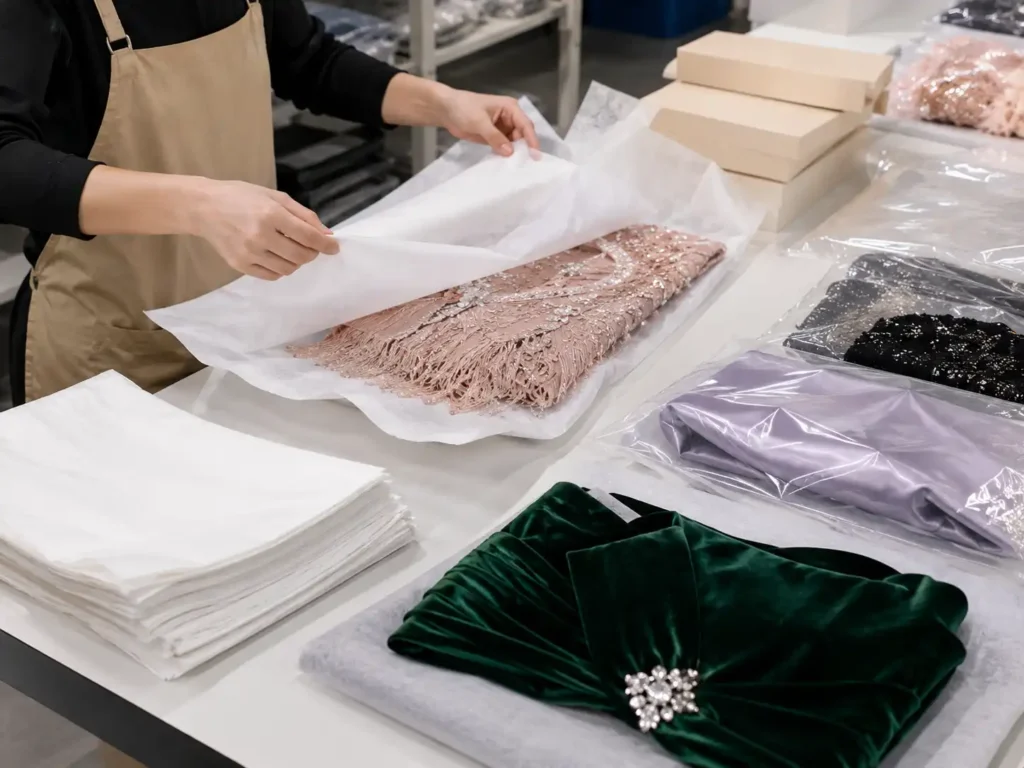
Tissue and Surface Protection
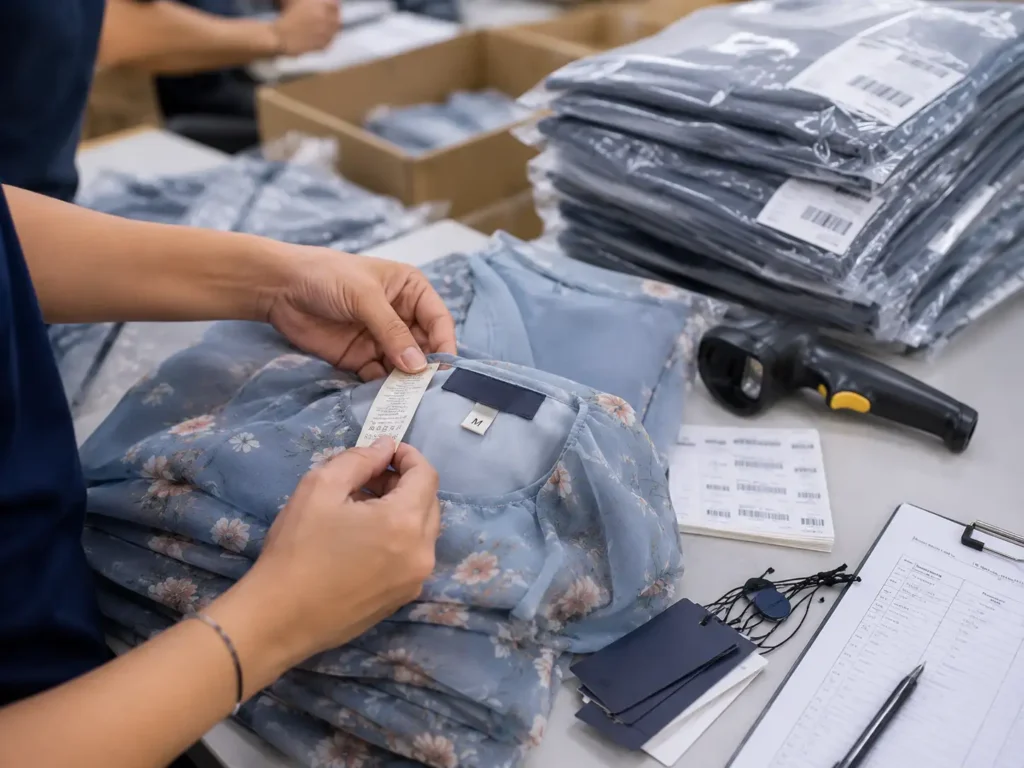
Label and Barcode Accuracy

Carton Planning
Private Labels, Brand Protection, and Repeat-Order Records
Private Label Components
NDA Cooperation
Controlled Visual Use
Repeat-Order Records
Version Updates
Multi-Market Packing
High Slit Dress Programs Managed at Commercial Scale
United States Partywear Program
A US fashion label developed 18 styles across satin, stretch satin, jersey, mesh, and sequin categories. Total order volume reached 42,600 pieces across 6 core colors and 7 sizes. Main risks included slit opening on bodycon fits, satin side-seam twist, mesh lining exposure, and sequin abrasion.
Jinfeng grouped the collection into four fabric families, prioritized 6 campaign styles, and created separate fit notes for rigid and stretch silhouettes. Slit height was recorded by size, movement checks covered standing, walking, sitting, and turning, and sequin styles received localized seam clearing plus soft lining. PP standards included three-view images, measurement charts, close-up workmanship references, and packing instructions. Bulk production followed phased release so priority campaign styles entered finishing first.
United Kingdom Occasionwear Program
A UK occasionwear label developed 12 styles and ordered 26,400 pieces covering satin midi dresses, one-shoulder cocktail dresses, lace styles, and wedding guest maxi dresses. The program used 5 colors and a broad size range. Main development issues involved lining color under pale satin, one-shoulder rotation, lace motif balance, slit proportion on midi lengths, and zipper rippling.
Fabric and lining combinations were reviewed under strong light before PP approval. Pattern revisions adjusted waist position and side-seam balance, while lace placement maps were added for mirrored panels. Photo-ready samples and PP samples were tracked separately because campaign finishing and final production construction were not identical on every style. Finished garment inspection concentrated on slit height, lining visibility, zipper flatness, lace symmetry, hem balance, and pressing.
European Multi-Market Dress Program
A European fashion group developed 24 styles for ecommerce and regional retail channels, with a combined quantity of 68,800 pieces. Product categories included high slit maxi dresses, stretch bodycon dresses, velvet holiday styles, mesh party dresses, and structured corset gowns. Different markets required distinct labels, barcode formats, packing ratios, and delivery windows.
Jinfeng divided production by construction complexity and fabric handling. Stretch styles used dedicated grading and recovery checks; velvet followed nap-direction controls; mesh styles used transparency maps; corset styles received extra PP review for cups, boning, waist support, and slit balance. A shared project tracker recorded material readiness, sample version, approval status, bulk allocation, inspection findings, packing, and shipment sequence. Partial air shipment supported the first launch while the main quantity followed the planned freight route.
MOQ, Quotation Inputs, and Development Timing
MOQ
Quotation Inputs
Sample Timing
Revision Timing
Bulk Calendar
Delivery Planning
High Slit Dress Frequently Asked Questions
Jinfeng can develop mini, midi, maxi, bodycon, party, cocktail, evening, satin, jersey, mesh, lace, sequin, velvet, wrap, corset, and asymmetric high slit dresses. Feasibility depends on fabric, structure, trims, size range, quantity, and required delivery timing.
The measurement method is defined in the tech pack or development file. Common methods measure from the bottom hem to the slit endpoint or from a fixed waist or seam point. The approved method is used for sampling, PP approval, production, and final inspection.
Yes. Grading can keep exposure nearly fixed or adjust slit height with garment length and body proportion. The rule should be approved during development. Extended sizes may need separate review where hip tension changes the opening.
Reinforcement depends on fabric weight, stretch, seam type, lining, slit position, and expected stress. Methods may include controlled backstitching, bartack, stay tape, facing, or another approved route. The aim is strength without visible bulk.
Fit review observes standing, walking, sitting, turning, and stair movement where relevant. Front, side, and back views are recorded. Opening behavior, lining, seam tension, recovery, and exposure are translated into sample comments and production standards.
Yes. Satin production focuses on luster direction, shade, snagging, needle marks, seam puckering, pressing, slit-edge flatness, lining, and protective packing. Stretch satin and non-stretch satin require different fit and sewing controls.
Yes, subject to style review. Sequin styles require seam clearing, inner comfort, surface protection, and controlled packing. Mesh styles require transparency mapping, stretch and recovery review, lining placement, seam stabilization, and damage inspection.
Simple styles may require about 7-10 days, ordinary dresses about 10-15 days, and complex corset, strapless, lace, mesh, sequin, or evening styles about 15-25 days after required information and materials are ready.
Yes. PP approval confirms final fabric, color, trims, pattern, measurements, slit height, lining, construction, labels, packing, and QC standards. Major changes after approval require a revised production plan.
MOQ starts from 200 pieces per style and color. Fabric supplier minimums, custom colors, special lace, sequins, trims, packaging, and complex color-size splits can increase the required quantity.
Yes. Clear front, back, and detail images can begin style analysis. Final development also needs decisions on size, fabric, lining, quantity, slit position, construction, labels, packing, and timing. An original sample or tech pack improves accuracy.
Yes. OEM work can follow tech packs, size charts, samples, and material requirements. ODM support can begin from a style direction or reference. Private-label delivery can include labels, hangtags, barcodes, polybags, cartons, and packing ratios.
NDA-based cooperation is supported. Tech packs, patterns, samples, trims, labels, packaging, quantities, launch information, and unpublished designs are handled as confidential project information. Public use requires authorization.
Yes. Multi-style programs are tracked by style, color, size, fabric, trims, sample version, PP status, production order, QC checklist, packing, and shipment plan. Development and production allocation follow complexity and launch priorities.
Send a tech pack or reference images, quantity per style and color, size range, fabric direction, slit details, labels, packing, delivery destination, and target timing. Kelly will coordinate the initial review and clarify missing inputs.

Start Your High Slit Dress Development
Send Jinfeng Apparel a clear product brief for an initial feasibility, sampling, and production review. A complete brief allows the development team to evaluate slit structure, fabric behavior, lining, fit, size grading, workmanship, MOQ, timing, private labels, packing, and delivery requirements before formal sampling begins.
Please include:
- Tech pack, original sample, sketch, or clear front-and-back references.
- Desired slit type, position, height, and exposure direction.
- Fabric, lining, color, stretch, opacity, and surface preferences.
- Base size, size chart, full size range, and fit notes.
- Estimated quantity per style and color.
- Brand labels, hangtags, barcode, polybag, and carton requirements.
- Required sample date, launch date, destination, and shipping preference.