
Heavy Satin Dress Manufacturer
Structured satin dress development for occasionwear, partywear, prom, eveningwear, wedding guest and premium private-label collections.
Jinfeng Apparel develops heavy satin dresses from fabric direction and pattern engineering through sample revision, PP approval, bulk production, inspection and retail-ready packing.
- MOQ starts from 200 pcs per style/color, subject to fabric, color, trim and construction requirements.
- 7+ senior pattern makers and 20+ sample machinists support structured dress development.
- 15+ QC inspectors cover incoming material, cutting, in-line, garment and packing checks.
- A representative 12-style satin program reached about 20,000 pieces across several colors.
Heavy Satin Development Backed by Real Production Capacity
Since 2008
Six Owned Factories
Ten Plus Partners
Two Sample Rooms
Seven Pattern Makers
Fifteen QC Inspectors
Built for Structured Satin Dress Programs
Best Program Fit
- Defined product direction and target market
- Formal sample development and revision process
- Bulk quantity planning by style/color
- Brand labels, barcodes or packing requirements
- Seasonal launch, repeat order or collection plan
Project Requirements
A useful first review needs enough information to judge fabric, structure, MOQ, sample work and delivery risk. Heavy satin cannot be quoted responsibly from one front-view image alone when the style includes cups, boning, draping, hidden closures, lining or a floor-length hem.
- Style image, tech pack or original sample
- Target quantity and color plan
- Size range and measurement basis
- Preferred satin feel or visual reference
- Label, hangtag and packing needs
- Requested sample and delivery window
Why Heavy Satin Dresses Fail in Production
Surface Snagging
Seam Puckering
Pressing Marks
Zipper Bulging
Shade Variation
Sample-Bulk Difference
Heavy Satin Dress Styles We Develop

Satin Mini Dresses
- Key control: safe length and hem balance
- Suitable fabrics: matte heavy satin or stretch satin
- Main risk: bulk around waist seams

Structured Midi Dresses
- Key control: waistline and midi proportion
- Suitable fabrics: firm polyester satin or crepe-back satin
- Main risk: side-seam waviness

Satin Maxi Dresses
- Key control: front/back length and train position
- Suitable fabrics: fluid heavy satin or structured satin
- Main risk: uneven floor line

Corset Satin Dresses
- Key control: cup and under-bust placement
- Suitable fabrics: structured heavy satin
- Main risk: visible bone channels

Strapless Satin Dresses
- Key control: anti-slip and bodice support
- Suitable fabrics: Duchess-style or firm satin
- Main risk: neckline collapse or slipping

Evening Satin Gowns
- Key control: drape placement and hem finish
- Suitable fabrics: fluid or medium-firm heavy satin
- Main risk: panel shade change

Prom Satin Dresses
- Key control: graded bodice support
- Suitable fabrics: stretch heavy satin or Duchess-style satin
- Main risk: fit inconsistency across sizes

Wedding Guest Dresses
- Key control: photography under directional light
- Suitable fabrics: matte, crepe-back or soft heavy satin
- Main risk: highlight distortion around seams
Choosing the Right Heavy Satin for Each Dress
“Heavy satin” describes a performance direction, not one universal fabric. Fiber, weight, thickness, stretch, recovery, shine and drape should be matched to silhouette and retail position.
| Satin Direction | Structure / Stretch | Surface Character | Best Dress Uses | Main Control Risk |
|---|---|---|---|---|
| Heavy Polyester Satin | Medium-firm; usually low stretch | Clear, bright sheen | Prom, maxi, cocktail, structured midi | Snagging, seam shine, bulky layers |
| Stretch Heavy Satin | Medium structure; 1-way or 2-way stretch | Smooth sheen with body | Bodycon, corset, fitted mini, ruched dress | Seam waviness, weak recovery, zipper tension |
| Duchess-Style Satin | Firm; usually low stretch | Dense, refined sheen | Strapless, A-line, formal gown, sculpted bow | Thick seam junctions, pressing impressions |
| Crepe-Back Satin | Fluid to medium structure | Satin face with crepe reverse | Draped midi, cowl, one-shoulder, bias details | Face-direction errors, edge distortion |
| Acetate-Blend Satin | Fluid; generally low stretch | Premium soft reflection | Eveningwear, refined midi and maxi styles | Heat sensitivity, marking, sourcing lead time |
| Matte Heavy Satin | Firm or softly structured | Controlled low reflection | Minimalist occasionwear, wedding guest, modern formal | Pressing variation, shade perception |
From Satin Sourcing to Approved Bulk Fabric
Fabric approval protects fit, visual consistency and production timing. The process moves from design intent to swatch comparison, sample yardage, color approval and bulk incoming inspection.
Translate the Design Direction
A brand may request “heavy, glossy, sculpted satin” or provide a reference dress with no fabric specification. The first task is to define the required result: firm or fluid, stretch or non-stretch, bright or restrained sheen, sharp pleats or soft drape, body-skimming or corset-supported. Fiber composition, weight range, finish, lining and target cost are then reviewed as one system.
- Structured bodices need resistance to collapse.
- Bias or cowl areas need enough fluidity to fall cleanly.
- Bodycon styles need recovery, not only stretch.
- Pale colors need opacity and lining coordination.
Approve Color and Surface
Color approval should consider more than a small swatch under office light. Satin should be viewed from several angles because reflectance can make two close colors appear different. For custom colors, lab dips or approved color references should be compared with lining, zipper and thread. Deep colors may reveal abrasion and needle marks; pale colors may reveal shadowing, seam allowance and internal construction.
- Record approved color reference.
- Confirm face direction and surface finish.
- Match lining and zipper color.
- Define acceptable lot grouping.
Confirm Sample Yardage
Sample yardage should represent the intended bulk fabric as closely as possible. A garment developed in one satin weight may need pattern, seam or lining changes when production fabric changes. Before PP approval, the project team records the fabric reference, usable width, direction, stretch, hand feel and key construction notes. Any material change after fitting triggers another review of drape, measurements, zipper behavior and pressing response.
Inspect Bulk Fabric Before Cutting
Incoming bulk satin is checked before production release. Inspection covers color lot, surface marks, snags, stains, weaving defects, usable width, weight consistency, face direction and quantity. Rolls are identified so panels within one garment follow a controlled lot and direction. Materials failing agreed appearance or specification requirements are isolated before cutting rather than hidden inside finished garments.
Matching Satin Weight to Dress Silhouette
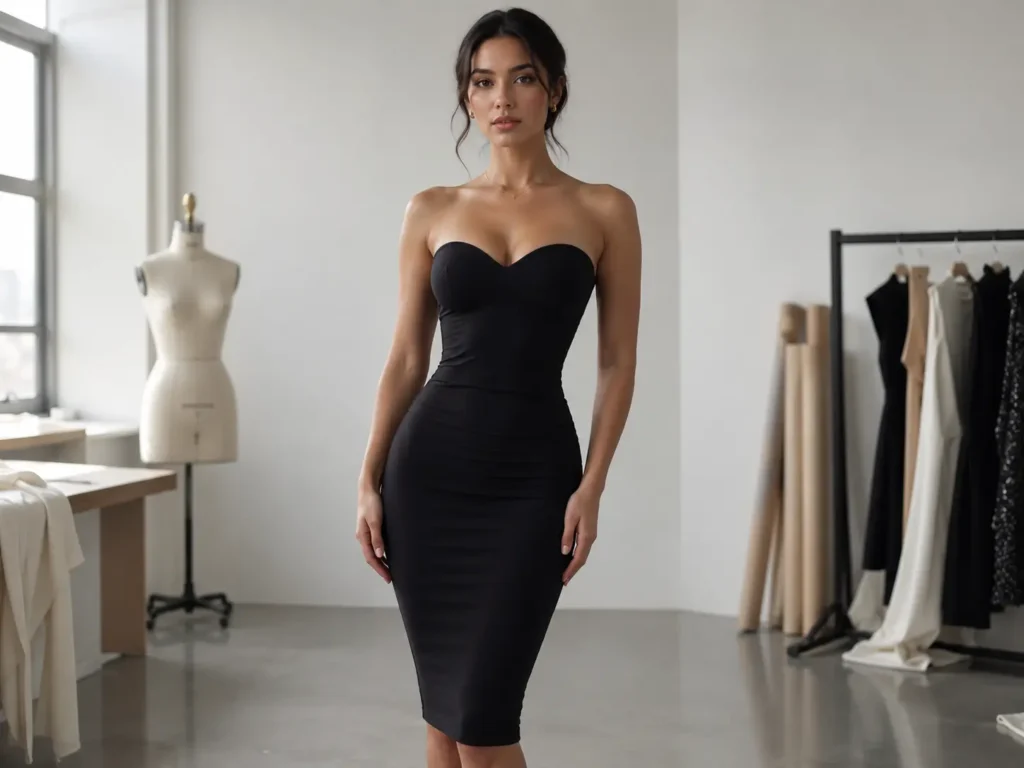
Bodycon
- Fit focus: bust-waist-hip balance
- Construction: shaped seams or stretch lining
- Risk: seam rippling under tension

A-Line
A-line dresses use satin body to create a clean flare. The waist seam, pleat depth and hem circumference should be engineered so the skirt opens without excessive bulk.
- Fit focus: waist placement
- Construction: controlled pleats or panels
- Risk: heavy waist seam

Slip
- Fit focus: neckline, strap and hip ease
- Construction: fine seams and smooth lining
- Risk: diagonal drag lines

Corset
Corset dresses need satin strong enough to sit over cups and boning while remaining smooth. Internal support should shape the body without showing through the outer surface.
- Fit focus: cup, under-bust and waist
- Construction: support layer plus lining
- Risk: internal structure printing

Strapless
- Fit focus: upper bust and back
- Construction: anti-slip, cups, boning
- Risk: top edge rolling

Halter
- Fit focus: neckline and armhole
- Construction: reinforced neck attachment
- Risk: front bodice drag

One-Shoulder
- Fit focus: shoulder angle and side seam
- Construction: internal stay and lining
- Risk: neckline rotation

Mermaid
- Fit focus: hip, thigh and flare point
- Construction: multi-panel shaping
- Risk: restricted movement
Internal Structure Behind a Clean Satin Exterior

Built-In Cups
- Used for: corset, strapless, deep-V
- Check: position across graded sizes
- Risk: cup edge show-through

Boning Support
- Used for: corset and formal bodices
- Check: channel position and end protection
- Risk: visible ridges or pressure points

Anti-Slip Tape
- Used for: strapless and off-shoulder
- Check: grip after fitting
- Risk: reliance on tape instead of fit

Structured Lining
- Used for: pale, fitted and formal dresses
- Check: color and recovery
- Risk: lining twist or hem exposure

Waist Stay
- Used for: gowns and corset styles
- Check: closure strength
- Risk: incorrect waist position

Zipper Stabilization
- Used for: fitted and structured dresses
- Check: worn shape, not only flat form
- Risk: bulging or zipper waves
Sewing Heavy Satin Without Distorting the Surface
Heavy satin sewing requires controlled preparation, machine settings, operator handling and pressing. A polished result comes from many small controls working together.
Cutting Direction and Panel Control
Satin panels must follow the approved face and grain direction because reflected light can change when pieces are reversed. Before bulk cutting, the marker plan, fabric face, nap-like direction and color lot are identified. Long panels, asymmetrical drapes and floor-length skirts require enough table control to avoid shifting. Bundles should remain separated by style, size, color and lot, with the garment face protected from rough surfaces
- Match all visible panels to one approved direction.
- Keep paired pieces together after cutting.
- Check notches without creating visible edge damage.
- Isolate marked or snagged panels before sewing.
Needle, Stitch and Tension Settings
Needle size, point type, stitch density and thread tension should be tested on production fabric with the intended seam layers. A setting that looks acceptable on two layers may pucker when lining, zipper tape or support materials are added. Repeated unpicking is restricted because needle holes can remain visible, especially on darker satin.
- Run seam tests before line start.
- Compare flat appearance and worn appearance.
- Avoid over-tight top and bobbin tension.
- Record approved settings in the sewing instruction.
Seam Construction and Stabilization
Different areas require different seam behavior. A side seam needs smooth movement; a corset seam needs shape and support; a zipper seam needs flatness; a draped waist may need secure placement without excessive thickness. Seam allowance width, clipping, grading, pressing and reinforcement are defined by area. Bulk should be reduced where multiple layers meet, while high-stress points receive controlled reinforcement.
Pressing and Surface Protection
Pressing is treated as a production process, not a final cosmetic step. Temperature, pressure, steam and contact time are tested on the fabric. Protective cloth, shaped forms and controlled seam opening help avoid shine, edge impressions and flattened drape. Finished garments are reviewed under angled light after pressing because local surface change may be invisible from directly above.
Draping, Pleating and Ruching for Heavy Satin

Side Ruching
- Control: fixed start and end points
- Review: equal density across sizes
- Risk: uneven side seam length

Waist Draping
- Control: fold direction and anchoring
- Review: front-view balance
- Risk: thick layered waist

Pleated Bodice
- Control: pleat depth and spacing
- Review: symmetry under light
- Risk: distorted bust shape

Cowl Neck
- Control: bias angle and facing
- Review: standing and moving
- Risk: neckline collapse or gaping

Gathered Skirt
- Control: fullness distribution
- Review: waist seam profile
- Risk: bulky waistline

Sculpted Bow
- Control: bow volume and orientation
- Review: packing recovery
- Risk: crushing during transport
Trims and Linings That Support Heavy Satin

Lining Selection
- Check: color under strong light
- Check: movement against outer fabric
- Risk: lining twist or static cling

Invisible Zippers
- Check: flatness when worn
- Check: top closure alignment
- Risk: bulging or seam rippling

Bra Cups
- Check: coverage and spacing
- Check: grading across size range
- Risk: edge show-through

Boning
- Check: vertical alignment
- Check: pressure during sitting
- Risk: visible channel ridges

Hooks and Closures
- Check: stress resistance
- Check: skin comfort
- Risk: closure exposure

Decorative Details
- Check: pull resistance
- Check: surface protection
- Risk: snagging or imprinting
What We Review Before Heavy Satin Sampling
Reference Image
- Clarifies visual direction
- Reveals hidden construction questions
- Helps compare fabric behavior
Tech Pack
- Confirms design intent
- Defines measurable standards
- Reduces version confusion
Target Quantity
- MOQ begins at 200 pcs/style/color
- Multi-color splits need early review
- Total quantity alone is not enough
Fabric Direction
- Define firm versus fluid
- Define stretch and recovery
- Define sheen and opacity
Color Plan
- Provide color references
- Identify priority launch colors
- Confirm custom-dye needs
Size Range
- Provide base size
- Provide grade rules where available
- Identify fit model measurements
Brand Packing
- Share label artwork
- Share barcode/SKU structure
- Share warehouse requirements
Launch Window
- State sample deadline
- State warehouse delivery window
- Identify split-shipment needs
Heavy Satin Sampling from First Fit to PP Approval

Style Review
- Output: development brief
- Decision: feasible direction
- Risk focus: surface and structure

Fabric Direction
- Output: approved fabric direction
- Decision: sample material
- Risk focus: sample-bulk alignment

Pattern Development
- Output: pattern version 1
- Decision: cutting release
- Risk focus: bust-waist-hip balance

First Sample
- Output: first sample and measurements
- Decision: revise or advance
- Risk focus: fit and feasibility

Fit Review
- Output: fit comments
- Decision: revision scope
- Risk focus: support and movement

Revised Sample
- Output: revised sample
- Decision: appearance approval
- Risk focus: correction accuracy

PP Sample
- Output: PP approval
- Decision: production lock
- Risk focus: final standard transfer

Golden Sample
- Output: sealed reference
- Decision: inspection benchmark
- Risk focus: bulk consistency
Keeping Bulk Production Consistent with the Approved Sample
Approved Fabric
- Fabric reference retained
- Bulk lot checked before cutting
- Face direction recorded
Approved Color
- Lab dip or reference approved
- Lot grouping maintained
- Shade differences isolated
Sealed Pattern
- Old versions controlled
- Grade rules confirmed
- Cutting follows released file
Measurement File
- Base size confirmed
- Size range recorded
- Critical fit points prioritized
Sewing Instructions
- Approved sample references included
- Risk areas highlighted
- Operator checks defined
Golden Sample
- Used at line start
- Used during QC
- Retained for repeat orders
Heavy Satin Dress Bulk Production Workflow

PP Approval
- Output: locked production standard
- Check: no unresolved fit issue

Material Release
- Output: material tracking record
- Check: quantity and lot status
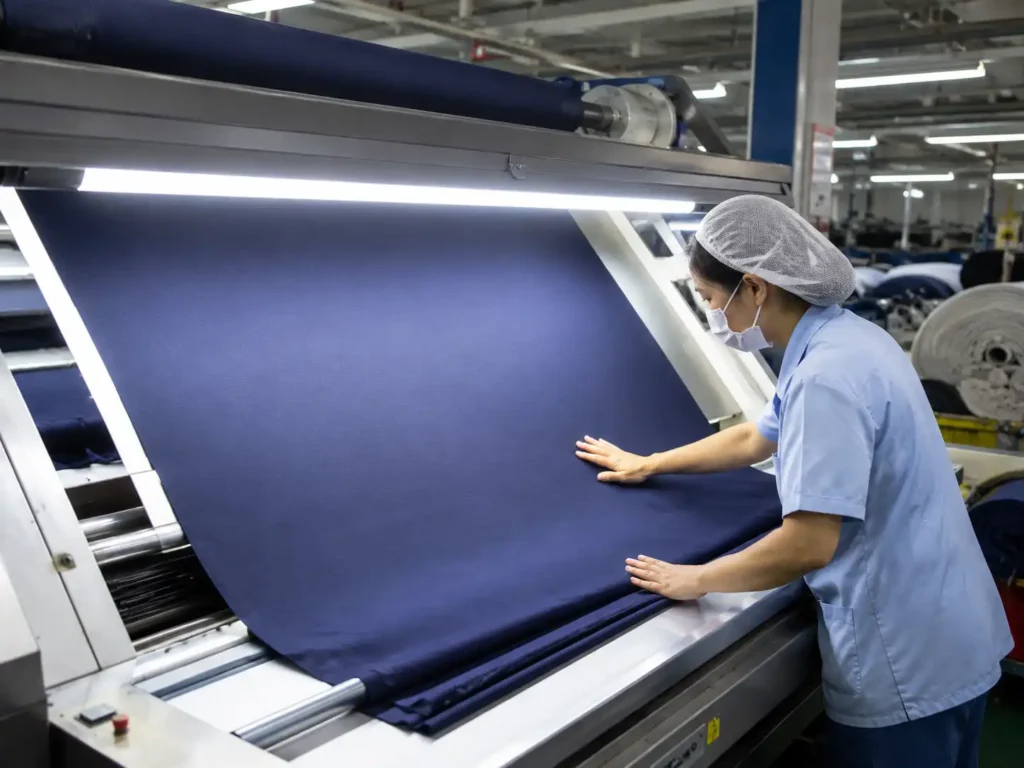
Fabric Inspection
- Output: incoming QC record
- Check: rejected sections isolated
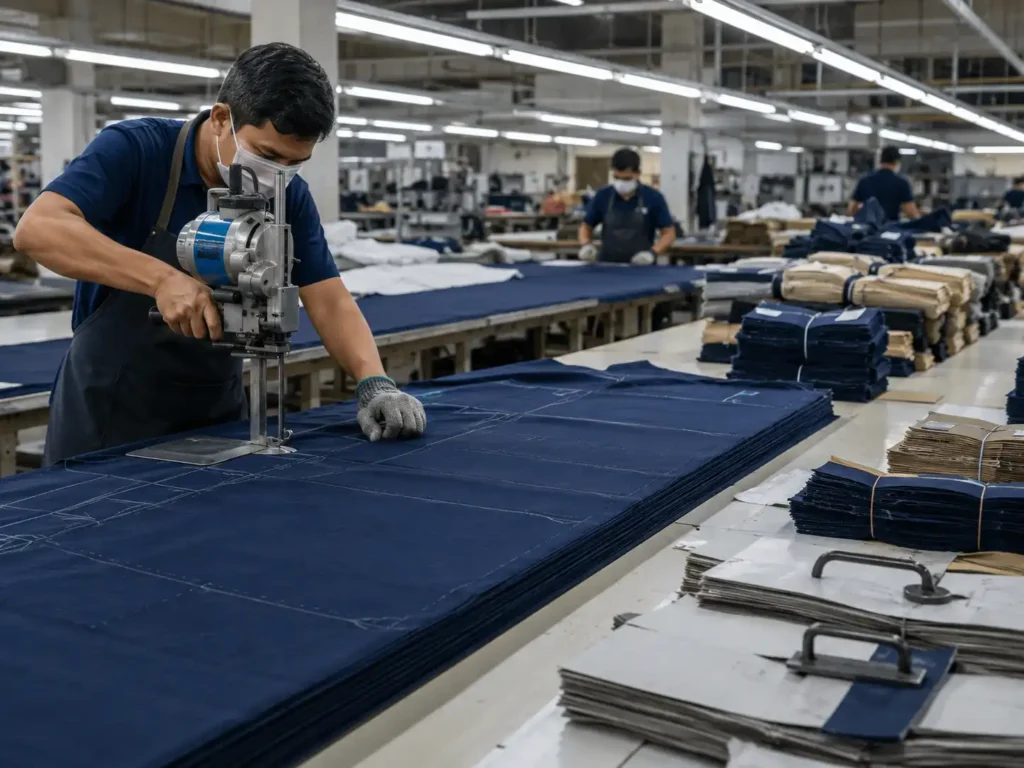
Cutting
- Output: identified bundles
- Check: panel direction consistency

Sewing
- Output: assembled garments
- Check: line-start sample

In-Line Inspection
- Output: corrective action record
- Check: defects before finishing

Pressing
- Output: finished silhouette
- Check: angled-light surface review

Final Inspection
- Output: inspection result
- Check: Golden sample comparison

Packing and Delivery
- Output: retail-ready shipment
- Check: barcode and carton accuracy
Heavy Satin Quality Risks and Inspection Points
A satin-specific inspection plan targets defects likely to affect photography, fit, retail presentation and repeat-order consistency.
| Risk | Where It Appears | Inspection Method | Control Stage |
|---|---|---|---|
| Snagging | Front panels, skirt and sleeve faces | Angled-light visual check | Incoming, in-line, final |
| Shade Difference | Panels, lots and color-matched trims | Lot comparison under controlled light | Incoming and cutting |
| Seam Puckering | Side seams, darts, neckline and zipper seams | Flat review plus worn review | Line start, in-line, final |
| Needle Marks | Reworked seams and dark colors | Close surface inspection | Sewing and final |
| Zipper Bulging | Center back or side seam | Fitting and profile review | Sample, PP and in-line |
| Pressing Shine | Seams, darts, hems and bodice curves | Directional-light review | Pressing and final |
| Lining Exposure | Neckline, slit, hem and armhole | Hanging and movement review | Sample and final |
| Uneven Hem | Maxi, gown and asymmetric lengths | Hanging measurement | Sample, finishing, final |
| Measurement Variation | Bust, waist, hip, length and slit | Garment measurement report | In-line and final |
| Packing Crease | Front panel, bow, pleat and long skirt | Packing trial and unpack review | Pre-pack and packing |
Quality Evidence Across Every Production Stage
Fabric Inspection
- Evidence: lot labels and inspection notes
- Focus: snags, stains, shade and face
- Result: approved cutting release

Cutting Direction Check
- Evidence: bundle tickets and marker notes
- Focus: matched reflection direction
- Result: consistent garment appearance

In-Line Sewing Check
- Evidence: in-line comments
- Focus: repeat defects
- Result: early corrective action

Garment Measurement
- Evidence: measurement report
- Focus: bust, waist, hip, length and slit
- Result: fit consistency

Surface and Pressing Review
- Evidence: inspection photos
- Focus: high-visibility front panels
- Result: clean retail appearance

Packing Verification
- Evidence: packing checklist
- Focus: SKU accuracy and crease control
- Result: warehouse-ready delivery
Private Label Finishing for Retail-Ready Satin Dresses

Main Labels
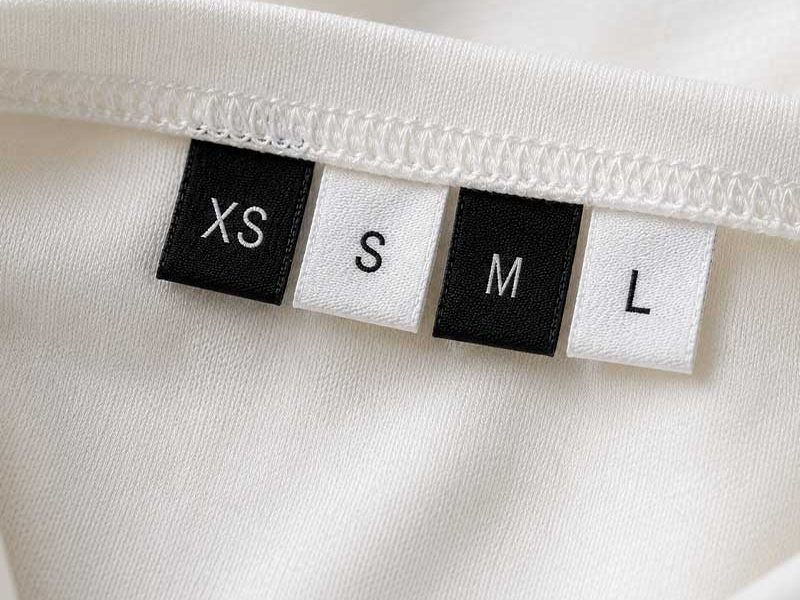
Size Labels

Care Labels

Hangtags
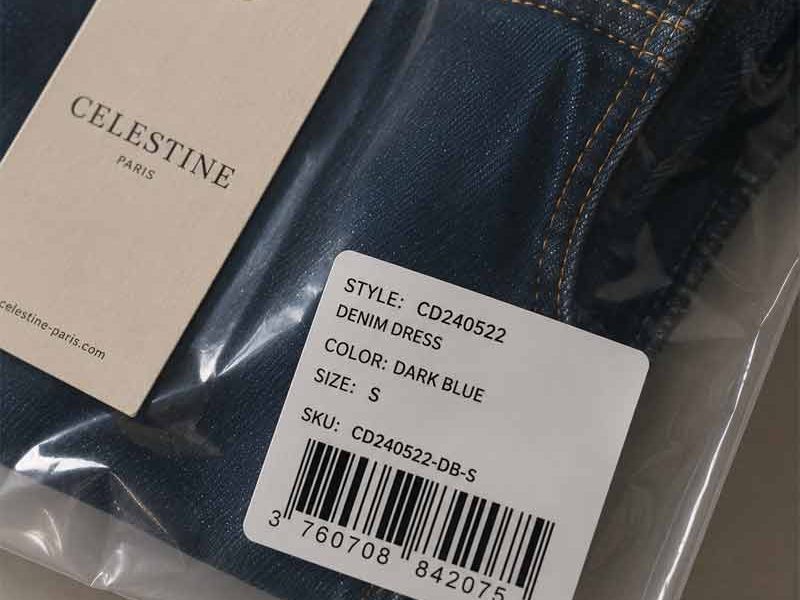
Barcode and SKU

Polybag and Carton
Planning MOQ, Sampling and Production for Heavy Satin
Early scheduling should account for fabric availability, style complexity, revision rounds, color count, size range, packing and inspection. Final dates are confirmed after project review.
MOQ by Style and Color
MOQ starts from 200 pcs per style/color. One style in black at 200 pieces can enter evaluation. One style split into black 100 and ivory 100 does not automatically meet the normal quantity structure because each color has separate material, cutting and production implications. Custom dyeing, special finishes, exclusive trims, complex gown construction and highly fragmented size-color ratios may require a higher quantity.
Sample Planning Reference
For early calendar planning, a standard heavy satin dress commonly requires about 7-12 working days after fabric and technical details are confirmed. Corset, draped, embellished or highly structured styles may require about 12-18 working days. A revision commonly needs about 5-10 working days, depending on pattern changes, replacement materials and feedback speed. Final sample timing is agreed style by style.
Bulk Planning Reference
Bulk production commonly requires about 25-40 working days after PP approval, bulk material arrival and production release. Large multi-style programs, custom-dyed fabric, complex internal structure, special packing or third-party inspection can extend the calendar. Inspection and packing may add about 3-7 working days depending on quantity, SKU count and packing method.
Launch Calendar Management
The working calendar should include fabric approval, trim approval, first sample, feedback, revised sample, PP sample, material arrival, cutting, sewing, in-line QC, finishing, packing, inspection and shipment. For urgent launches, key SKUs can be prioritized and split shipment by air and sea can be evaluated against cost and warehouse needs.
Heavy Satin Dress Programs Delivered for Global Brands

US Occasionwear Program

UK Premium Ecommerce Program

European Private-Label Program
Why Brands Choose Jinfeng for Heavy Satin Dresses
Satin-Specific Review
- Result: better material-to-design fit
- Record: approved fabric reference
- Control: bulk lot inspection
Pattern and Fit
- Result: safer, cleaner fit
- Record: pattern and measurement versions
- Control: fit review and grading
Structured Dress Capability
- Result: support without visible bulk
- Record: BOM and construction notes
- Control: PP sample approval
Sample-to-Bulk Control
- Result: fewer production interpretation gaps
- Record: revision log
- Control: production handover
Dedicated QC Team
- Result: earlier defect detection
- Record: QC comments and reports
- Control: approved inspection plan
Private-Label Delivery
- Result: retail- and warehouse-ready goods
- Record: packing approval
- Control: final packing verification
Heavy Satin Dress Manufacturing Frequently Asked Questions

Start Your Heavy Satin Dress Project
Send a tech pack, line sheet, reference image or original sample photos for an initial manufacturing review. Kelly and the development team will assess style structure, heavy satin direction, lining and support needs, MOQ suitability, sample work, bulk risks, private-label requirements and the requested delivery window.
A useful project brief includes:
- Product type and style count
- Quantity per style/color
- Preferred satin look, weight or swatch
- Color plan and size range
- Tech pack or measurement chart
- Cups, boning, lining, zipper and trim requirements
- Main label, care label, hangtag and barcode files
- Packing, warehouse and shipping destination details
- Sample deadline and target delivery window


