 Skip to content
Halter Top Manufacturer for Fashion Brands
Fit-led development, fabric-specific construction and controlled bulk production for halter tops designed around modern fashion collections.
- Six halter fit checkpoints reviewed during development: neckline depth, neck-strap length, bust coverage, armhole depth, back stability and hem balance.
- MOQ starts from 200 pieces per style and color, subject to fabric availability, custom color work, trims, structure and packing requirements.
- Seven-plus senior pattern makers and two sample rooms support woven, knit, satin, mesh, lace, corset-inspired and lined halter constructions.
- Multi-style programs can combine 10-30 styles, coordinated color plans, client-defined US sizing, private labels and retail-ready packing.
Jinfeng Apparel develops custom halter tops from reference images, tech packs, original samples, sketches or line sheets. Pattern work begins with the relationship between the neckline, neck strap, bust line, underarm coverage and back opening, because a visually strong halter can still fail when pressure, coverage or stability is not balanced. Fabric direction, lining, cups, elastics, closures and packing are reviewed before bulk production so approved styling can be repeated across sizes, colors and future orders.
Manufacturing Capacity for Fashion Brand Programs
Since 2008
6 Owned Factories
10+ Production Partners
2 Sample Rooms
7+ Pattern Makers
15+ QC Inspectors
Built for Established Womenswear and Fashion Teams
Global Fashion Brands
Premium Ecommerce
Partywear Labels
Resortwear Brands
Product Teams
Private Label Programs
Where Halter Top Development Commonly Goes Wrong
Excess Neck Pressure
- Review strap width and pull angle
- Check garment weight and stretch
- Fit on body before grading
Unstable Bust Coverage
- Confirm neckline depth
- Check movement and side coverage
- Align lining or cups with shell
Underarm Gaping
- Review side seam balance
- Control armhole curve
- Test across sizes
Loose Back Structure
- Choose closure by fabric
- Check pull distribution
- Verify symmetry and comfort
Lining Mismatch
- Match stretch direction
- Control edge exposure
- Approve color and hand feel
Bulk Variation
- Lock PP standards
- Measure critical points
- Inspect during sewing
Custom Halter Top Styles for Fashion Collections

Tie-Neck Halter

Fixed-Neck Halter

High-Neck Halter

Plunge Halter Top

Draped Cowl Halter

Backless Halter Top

Corset Halter Top

Asymmetric Halter
Match Halter Structure With the Right Fabric
Fabric selection determines how a halter carries weight, follows the bust, holds the neckline and responds after washing or repeated wear. Recommendations are based on structure, hand feel, stretch, transparency, target price and bulk availability.
| Fabric | Best Use | Fit Behavior | Support Direction | Main Bulk Risk |
|---|---|---|---|---|
| Rib Knit | Fitted crop tops, casual sets | High stretch; visible rib direction | Self-layer or light lining | Neckline growth, poor recovery, shade variation |
| Jersey | Draped, tie-neck and body-fit styles | Soft to firm depending on weight | Optional double layer or shelf support | Curling edges, seam stretch, twisting |
| Ponte | Structured fitted halters | Stable stretch with body | Usually partial support only | Bulk thickness, seam impression, heat marks |
| Stretch Satin | Party, evening and fitted styles | Gloss plus controlled stretch | Stretch lining may be required | Snagging, shine direction, seam puckering |
| Matte Satin | Draped and premium woven styles | Fluid with limited stretch | Soft woven lining | Bias distortion, press marks, color variation |
| Power Mesh | Layered, sheer and body-contour styles | High stretch and recovery | Strategic lining or double layer | Transparency, holes, edge distortion |
| Lace | Romantic, occasion and party styles | Varies by motif and base | Color-matched lining | Motif placement, damage, scratch risk |
| Chiffon / Crepe | Resort, draped and tie styles | Light drape; low stretch | Usually lined | Transparency, fraying, seam slippage |
| Rayon / Viscose | Resort and printed halters | Fluid hand with shrinkage risk | Depends on weight and color | Shrinkage, distortion, print direction |
| Linen Blend | Summer and resort collections | Breathable with limited give | Optional light lining | Wrinkle, shrinkage, neckline stress |
Engineering Fit Beyond a Flat Measurement Chart
Halter fit is controlled through connected measurements and forces. Jinfeng reviews the garment on body, updates the pattern and turns approved fit into measurable standards for grading and bulk inspection.

Neck Pressure and Strap Load
Neck comfort depends on more than strap length. A heavy satin body, structured cups, dense embellishment or double-layer knit can increase downward load. Strap width, angle, fabric stretch, closure position and lower-back anchoring determine how the load is distributed. During fitting, the team checks whether the strap cuts into the skin, shifts toward the side of the neck or needs excessive tightness to hold the bust. A suitable correction may involve widening the strap, changing its angle, reducing front weight, adding back support or adjusting the neckline rather than simply making the tie longer.
- Measure finished strap length and width
- Check pressure after movement and wear time
- Record closure position and elastic tension
- Grade neck and body changes separately

Bust Coverage and Front Stability
Bust coverage is shaped by neckline depth, front width, upper-bust contour, cup position, armhole curve and fabric recovery. Plunge and draped designs often need hidden support, while stretch knit styles may rely on double layers or controlled negative ease. The fit review checks front opening during standing, sitting, bending and arm movement. When cups are used, apex height, cup edge, under-bust position and lining alignment are marked against the approved sample. Measurements are written into the size chart so bulk teams can verify critical points instead of relying on visual judgment alone.
- Confirm neckline depth from HPS or defined reference
- Measure upper-bust and side coverage
- Align cup and lining placement
- Check movement before PP approval
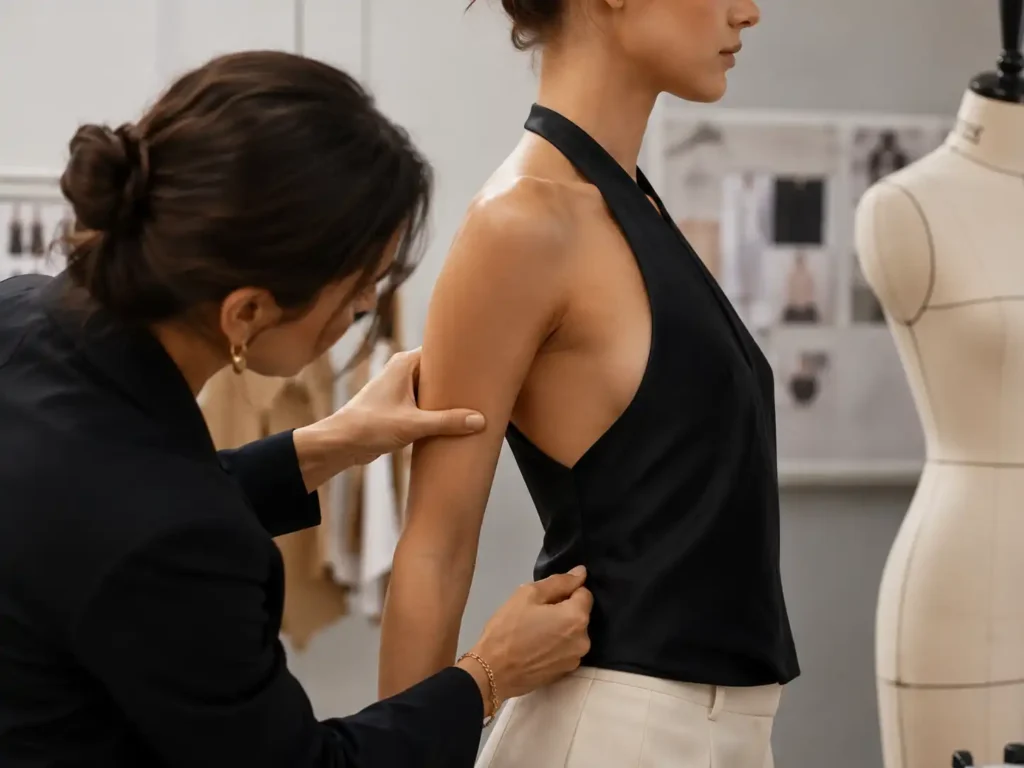
Armhole Shape and Side Coverage
Armhole gaping often comes from an interaction between strap pull, side seam length, fabric stretch and upper-bust shaping. Reducing the armhole opening without reviewing the full pattern can create pulling or wrinkles. Pattern makers evaluate the armhole curve, side-body angle, bust dart or panel line and back width together. For very open styles, the team confirms how much side exposure is intended and whether a lining, facing, elastic edge or hidden tape is needed. Grading rules protect the approved balance across the full size range rather than enlarging every point by the same amount.
- Check armhole depth and curve
- Review gaping from front and side
- Match edge finish to fabric
- Inspect symmetry in bulk

Back Opening and Hem Balance
The back is the lower anchor for many halters. Tie backs allow adjustment but can move; elastic backs improve flexibility but may create gathering; zippers give structure but require precise circumference; smocking changes stretch and visual texture. The lower edge must remain level while the front is held at the approved height. During sampling, back width, closure tension, hem position and side seam verticality are checked together. A balanced pattern prevents the front from climbing, the hem from tilting and the side seam from rotating after the wearer tightens the neck strap.
- Choose closure by support need
- Check hem level after tying
- Measure back width and elastic length
- Seal the approved closure method
Control the Details That Define Halter Fit

Fixed Neck Band
- Confirm finished circumference
- Specify closure and overlap
- Check seam comfort

Adjustable Neck Tie
- Set minimum and maximum tie length
- Reinforce attachment points
- Test knot stability

Slider Adjustment
- Match hardware to strap width
- Test repeated adjustment
- Check skin contact

Hook-and-Eye Neck
- Specify hook count and size
- Stabilize attachment area
- Check easy dressing

Controlled Neckline
- Measure from an agreed point
- Control left-right balance
- Inspect edge rolling

Armhole Finish
- Select finish by stretch
- Set edge tension
- Check gaping and puckering
Support, Comfort and Closures Inside the Garment

Soft Woven Lining
- Match shell and lining color
- Check shrinkage relationship
- Control edge exposure

Stretch Lining
- Compare two-way or four-way stretch
- Set lining reduction
- Test recovery after wear

Fixed Bra Cups
- Approve cup shape and thickness
- Mark cup placement
- Check grading method

Removable Cups
Removable cups provide flexibility for knit or lifestyle styles but require a stable pocket opening and clear packing control. Pocket size, access point and cup orientation must prevent folding or movement during wear and laundering.
- Specify pocket opening
- Match cup to size range
- Verify packing quantity

Elastic Support
Under-bust, neckline, back or edge elastics can add security. Elastic type, width, elongation, recovery and insertion ratio must be specified; using operator judgment alone can create uneven tightness across bulk production.
- Confirm elastic specification
- Record cut length or ratio
- Inspect tension consistency

Boning and Closures
- Select suitable rigidity
- Protect boning ends
- Check closure alignment
Build Halter Tops Into a Complete Collection

Halter Top With Mini Skirt

Halter Top With Maxi Skirt

Halter Top With Trousers

Resort Mix-and-Match
What We Review Before Starting Development
Reference Image
Tech Pack
Original Sample
Fabric Swatch
Line Sheet
Launch Window
From Design Reference to Production-Ready Sample
Requirement Review
Structure Analysis
Fabric Direction
Pattern Development
First Sample
Fit Review
Revised Sample
PP Sample Approval
Turn Fit Feedback Into Controlled Production Standards
Sample comments become useful only when every approved change reaches the pattern, measurement chart, material record, sewing instruction and quality checklist. Jinfeng manages revisions as traceable production inputs.
Diagnose the Real Cause
A visible fit issue may have more than one cause. A neckline that opens can come from excess depth, insufficient upper-bust shaping, weak fabric recovery, incorrect strap angle or loose back support. The development team classifies comments into fit, fabric, measurements, workmanship, color, trims, design accuracy, comfort, labeling, packing or cost alignment. Photos, marked measurements and on-body feedback are compared with the current pattern and material. The correction direction is agreed before a revised sample is made, reducing repeated trial-and-error changes that solve one area while creating another problem.
Update Every Linked File
An approved change is recorded in the documents used by sourcing, pattern, sampling, production and QC. Pattern pieces, graded rules, measurement charts, BOM, fabric approvals, trim cards, cup or boning positions, elastic specifications, stitch instructions and label placements are updated where relevant. Comments should not remain only in email or WhatsApp threads. A structured revision record shows the original issue, selected solution, responsible file, sample version and approval status. When a new fabric has different stretch, weight or drape, the pattern is re-evaluated rather than assuming the previous version remains valid.
Lock the PP Reference
Pre-production approval confirms the version intended for bulk. The PP reference includes the physical sample, approved pattern, size chart, material source, color, lining, cups, elastics, closures, workmanship, labels and packing direction. Critical halter measurements such as finished neck strap, neckline depth, armhole depth, bust width, back width and body length receive defined tolerances. Production teams use the sealed sample and written instruction together; QC compares output against both. Any change after PP approval is documented for cost, timeline and production impact before implementation.
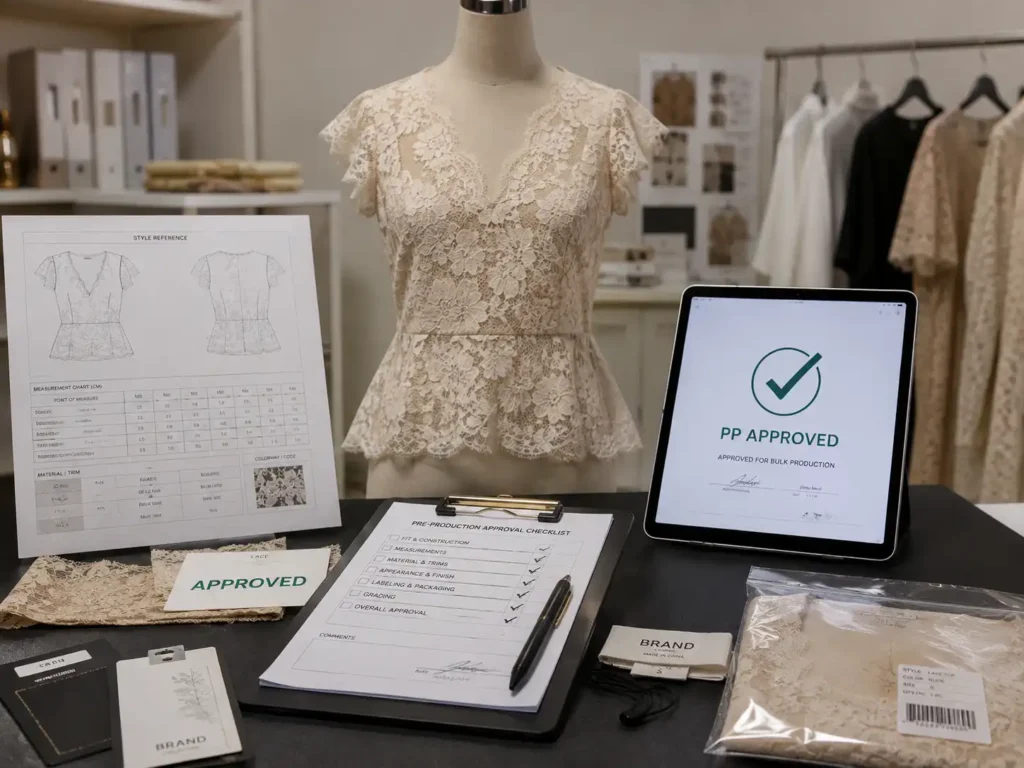
How Approved Halter Tops Move Into Bulk Production
Bulk Material Approval
Incoming Fabric Check
Cutting Preparation
Production First Piece
Sewing Instructions
Controlled Sewing
Inline Inspection
Final Garment Check
Packing and Delivery
Quality Checks Focused on Halter Construction
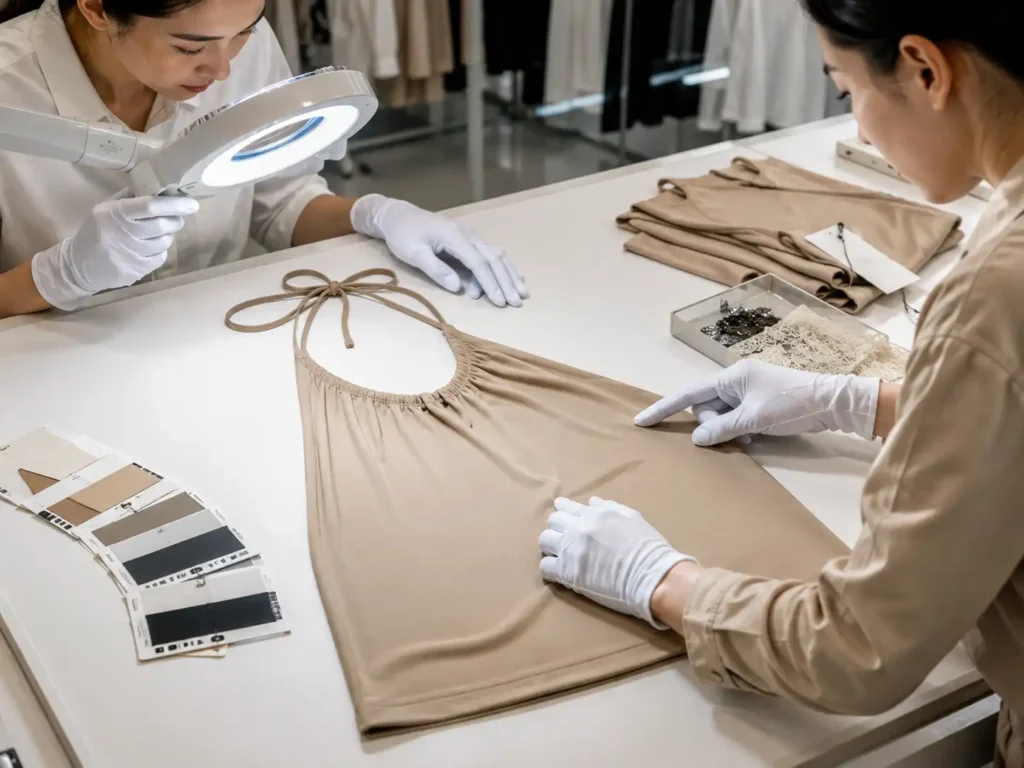
Fabric Surface
- Confirm approved lot
- Check damage before cutting
- Separate affected panels

Neck Strap Length
- Measure defined finished points
- Check reinforcement
- Verify size grading

Neckline Shape
- Control depth tolerance
- Check rolling or stretching
- Compare drape balance

Bust Coverage
- Measure coverage points
- Inspect cup symmetry
- Check movement stability

Armhole Depth
- Measure both sides
- Check edge finish
- Review symmetry

Back Stability
- Test closure function
- Check tension and recovery
- Verify hem balance

Garment Measurements
- Measure by size plan
- Record nonconformance
- Correct before packing
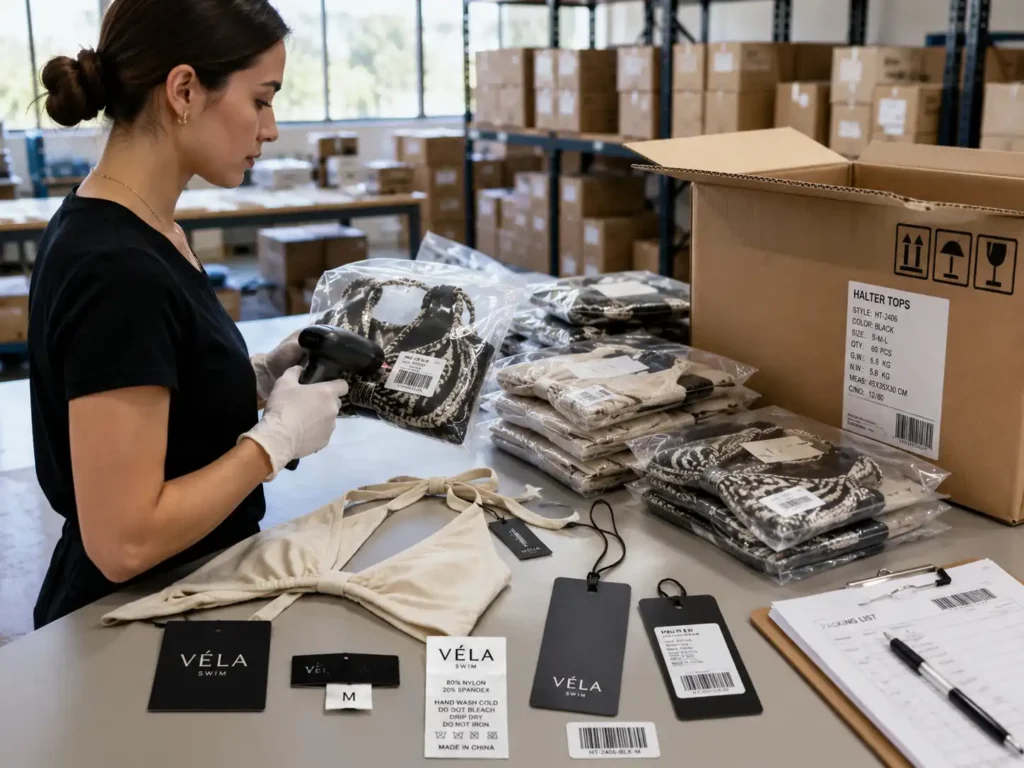
Labels and Packing
- Match style-color-size data
- Scan barcodes when required
- Verify carton breakdown
Coordinate Multiple Styles, Colors and Launch Deadlines
Large fashion programs are managed as connected groups rather than unrelated orders. A 10-30 style assortment may contain different fabrics, risks, approval paths and shipment priorities, requiring clear grouping and milestone control.

Group Styles by Manufacturing Logic
A seasonal halter program may include rib-knit basics, stretch-satin party tops, lined mesh styles, structured corset halters and printed resort pieces. Grouping only by delivery date can create production instability because each fabric and construction requires different suppliers, sample skills and sewing methods. Jinfeng reviews the line sheet and groups styles by shell fabric, lining, support system, closure, workmanship difficulty and factory fit. Shared materials are identified where commercially suitable, while high-risk styles receive separate sample and production checkpoints. The result is a production map that protects style identity while using the factory network efficiently.

Build a Controlled Approval Calendar
The project calendar works backward from campaign photography, wholesale market dates, ecommerce launch, warehouse cut-off and expected transit. Sample milestones can include first sample, fit review, revised sample, sales or photo sample, size-set review and PP approval. Material milestones include swatch confirmation, lab dip, bulk color, print strike-off, trim approval and packing artwork. A delay in one critical style should not automatically stop the full collection; priorities and dependencies are visible so approved groups can move forward while complex items continue development.

Manage Color and Size Complexity
Color count and size range affect material purchasing, cutting efficiency, sewing control, inspection and packing. A brand-defined US range such as XS-XL can be graded after base-size approval; extended sizes require dedicated review because neckline, cup, armhole and strap changes are not always linear. Color planning should consider fabric supplier MOQ, dye-lot consistency and shared lining or trim options. Quantity ratios by style, color and size are confirmed before material booking. Packing files then connect the garment size chart with size labels, barcode lists, polybag stickers and carton breakdowns.

Stage Delivery Around Commercial Priorities
When a launch window is tight, hero styles, priority colors or core sizes can be scheduled for an earlier shipment while the remaining volume follows the main production plan. Air and sea split shipment may support early ecommerce availability without moving the entire order by air. Each split requires separate SKU allocation, packing lists, carton marks and shipping instructions. Jinfeng can also coordinate with a nominated forwarder, providing cargo details, carton measurements, gross and net weight, commercial invoice and pickup preparation according to the brand’s logistics workflow.
MOQ and Quotation for Custom Halter Tops
MOQ starts from 200 pieces per style and color. Final production conditions depend on fabric availability, custom color work, construction, trims, size distribution, packaging and schedule. A clear quantity plan allows faster project evaluation.
| Project Factor | Planning Direction | What Must Be Confirmed | Commercial Impact |
|---|---|---|---|
| Stock Fabric | From 200 pcs/style/color | Existing shade and suitable quality available | More direct sampling and material booking |
| Custom Dye | Supplier-dependent | Color, fabric quantity and lab dip approval | Higher material MOQ or longer lead time |
| Two Colors | 200 pcs per color | Each color treated as a production unit | 100 black + 100 white does not meet standard MOQ |
| Special Lace / Mesh | Project review | Motif, width, shade, stock and damage allowance | Material MOQ and wastage may increase |
| Cups / Boning | Garment MOQ plus trim review | Cup sizes, boning, elastic and closures | Sample cost and assembly time increase |
| Custom Packaging | Separate supplier MOQ may apply | Woven labels, hangtags, printed bags, boxes | Excess packaging or higher first-order cost |
| Multi-Style Program | 200 pcs/style/color baseline | 10-30 styles grouped by material and schedule | Total quantity does not replace style-color MOQ |
Private Label Details Ready for Brand Delivery
Private-label completion connects the garment with ecommerce, retail and warehouse systems. Artwork, material, placement, SKU information and packing instructions are approved before bulk execution.
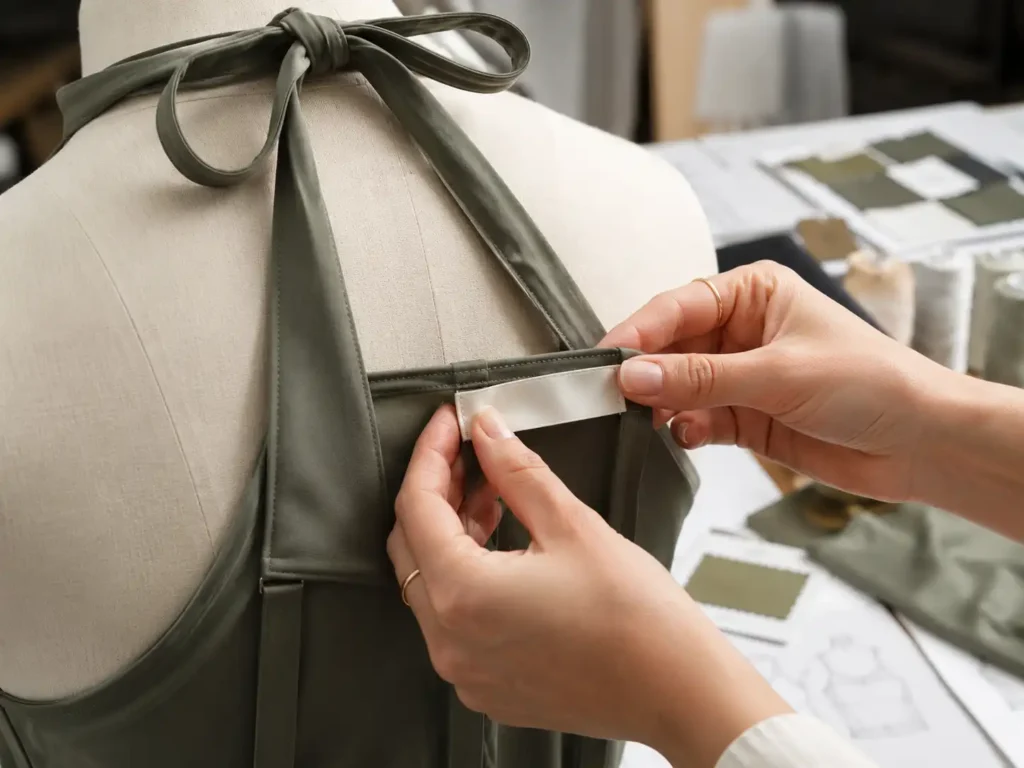
Woven Brand Labels
- Approve artwork and dimensions
- Choose soft edge construction
- Check visible placement

Care Labels
- Provide final label text
- Confirm market and language
- Match garment composition
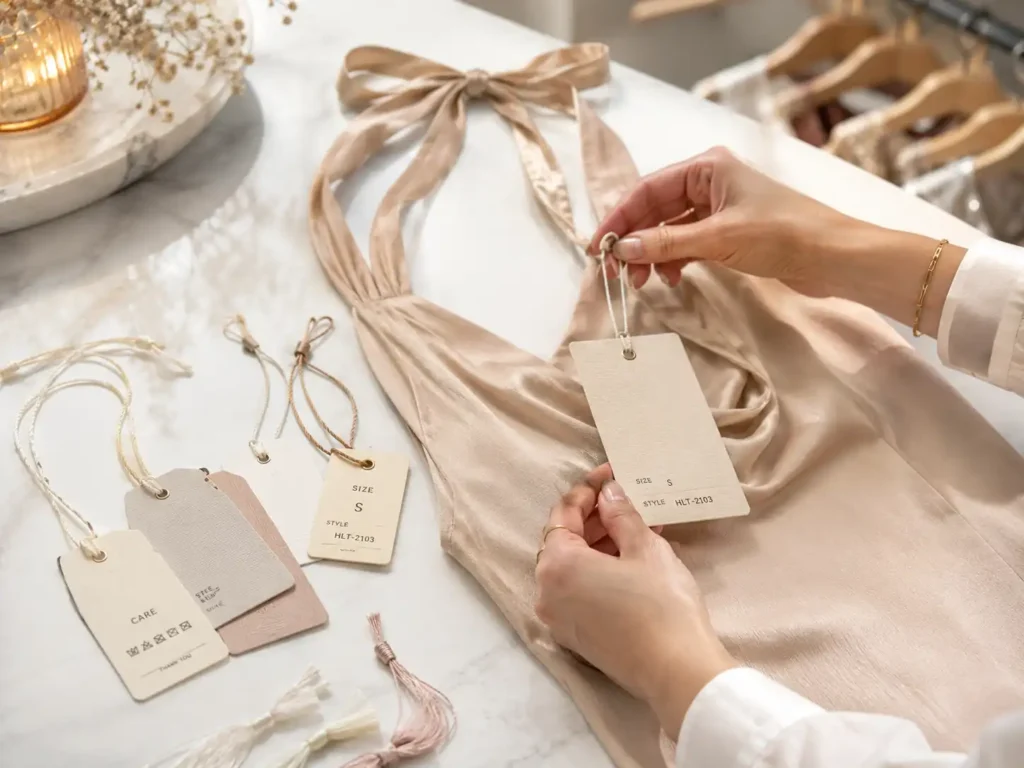
Size Identification
- Align size chart and labels
- Check sticker consistency
- Verify carton ratios
Hangtags and Tickets
- Confirm artwork and stock
- Protect delicate fabric
- Check attachment security
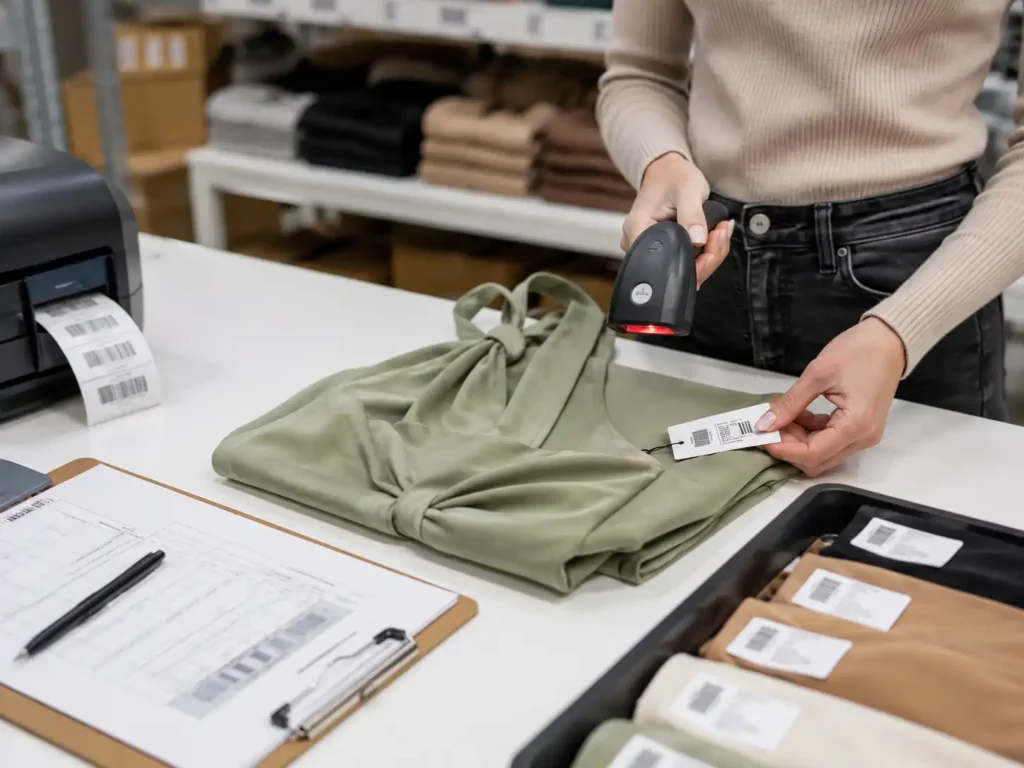
Barcode and SKU
- Receive approved data file
- Match style-color-size
- Verify before carton closing
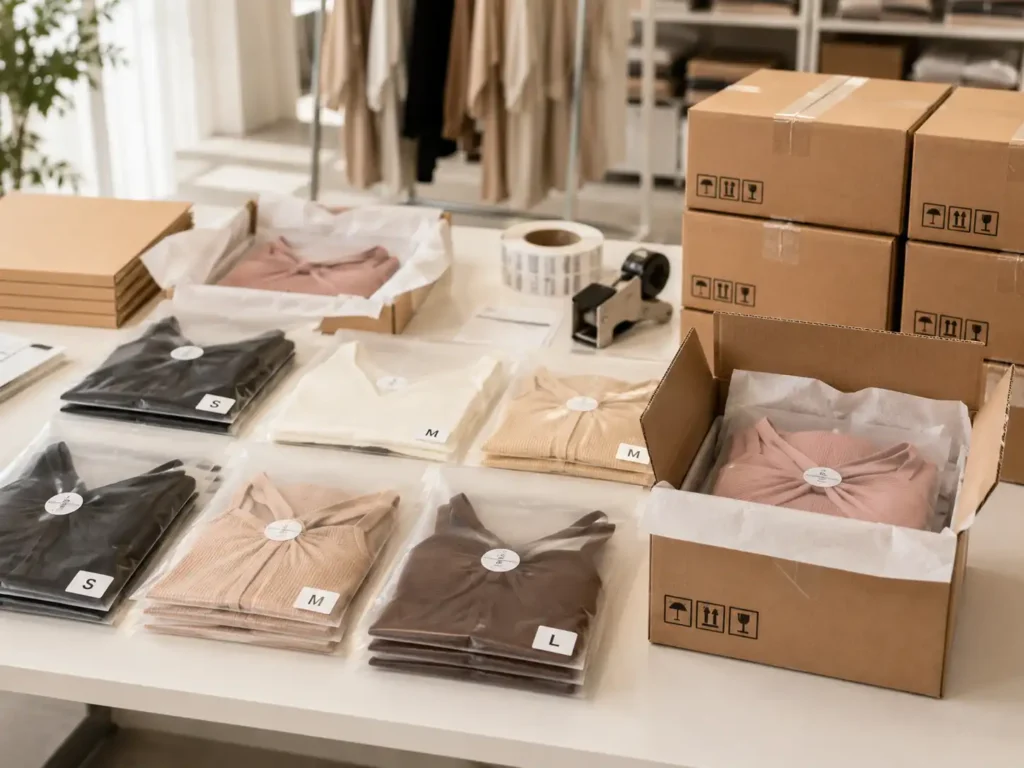
Polybags and Cartons
- Confirm packing guide
- Control fold and pressure
- Match packing list
Why Fashion Brands Develop Halter Tops With Jinfeng
Womenswear Focus
Fit-Led Pattern Work
Fabric-Specific Control
Sample-to-Bulk Discipline
Scalable Factory Network
Repeat-Order Records
Halter Top Manufacturing Frequently Asked Questions
MOQ starts from 200 pieces per style and color. Stock fabric, standard colors and regular trims are more likely to fit the baseline. Custom dye, exclusive print, special lace, custom hardware, complex support or branded packaging may carry separate supplier minimums.
Yes. Front, back and detail images can start a feasibility review. A reference image shows styling but may not define measurements, fabric, lining, support or construction. Jinfeng will identify missing information before pattern and sample work begins.
A standard first sample is generally planned for 7-12 working days after suitable fabric and trims are available. Structured cups, boning, custom dye, lace placement, sequins or complex draping may extend development to approximately 10-18 working days.
Client-defined US, UK, EU or AU size charts can be reviewed. A range such as XS-XL can be graded after the base size is approved. Extended sizing requires dedicated fit and grading review because neckline, bust, armhole and strap changes may not be linear.
Yes. Fixed or removable cups can be reviewed according to neckline, bust coverage, fabric and target fit. Cup shape, size, apex height, spacing, edge softness, pocket construction and grading method should be approved during sampling.
Neck comfort is reviewed through strap width, length, angle, fabric stretch, garment weight, back support and neckline position. Fit evaluation checks pressure during movement and wear, then approved dimensions and construction are recorded for production.
Yes. Satin requires control over shine direction, snagging, bias distortion, seam puckering, color and packing marks. Mesh requires control over stretch direction, transparency, holes, edge stability and lining coverage. Each fabric group follows its own sample and QC points.
Jinfeng can coordinate woven labels, care labels, size labels, hangtags, barcodes, polybags, size stickers, carton marks and retail or warehouse packing instructions. Final artwork, label wording, SKU files and packing guides must be approved before bulk execution.
A standard program is commonly planned around 30-45 days after PP approval and material readiness. Complex multi-style assortments, custom materials, embellishment, extensive size ranges or special packing may require approximately 45-60 days. The confirmed schedule follows the approved project calendar.
Yes. NDA-based cooperation can cover tech packs, original samples, patterns, measurement charts, material and trim plans, private-label files, unpublished designs, quantities, target prices and launch schedules. Proprietary project information is not published without authorization.

Start Your Custom Halter Top Project
Send Kelly a reference image, tech pack, original sample or line sheet for a focused feasibility review. The team will assess neckline structure, strap direction, bust coverage, armhole depth, back support, fabric behavior, lining, cups, closures, MOQ fit and production risk.
For a multi-style program, include quantity by style and color, size range, color plan, private-label requirements, priority launch styles and the target delivery window.
- Style files and preferred fabric or trim direction
- Quantity per style/color, size range and color plan
- Labels, barcodes, packing guide and delivery destination


