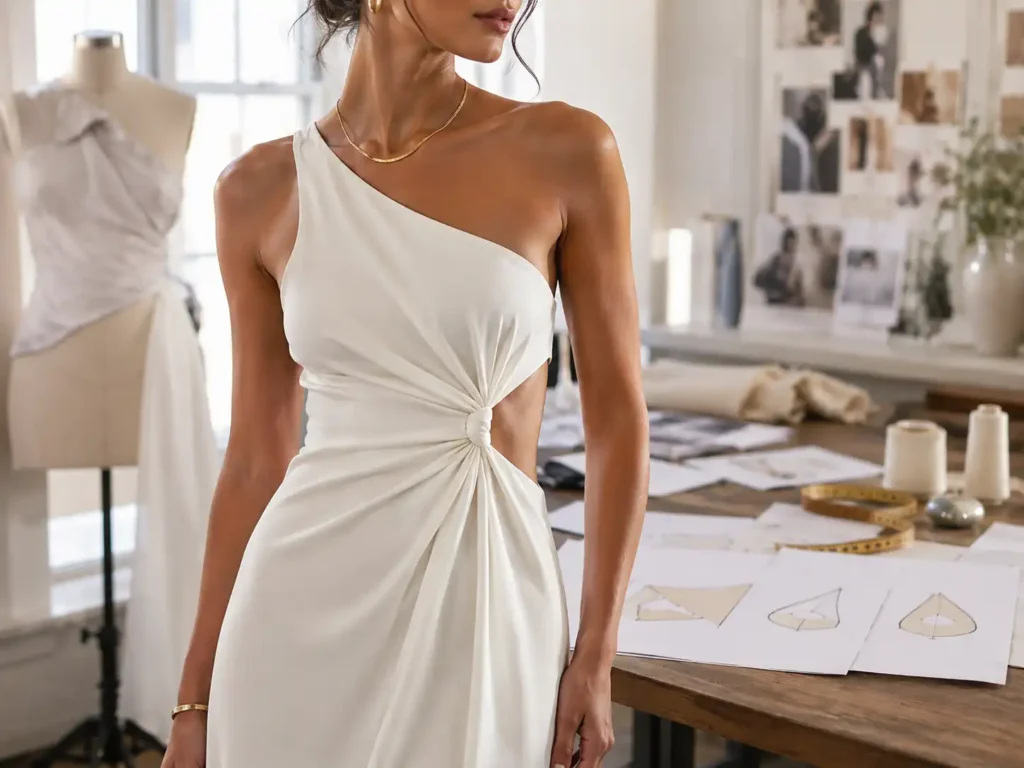
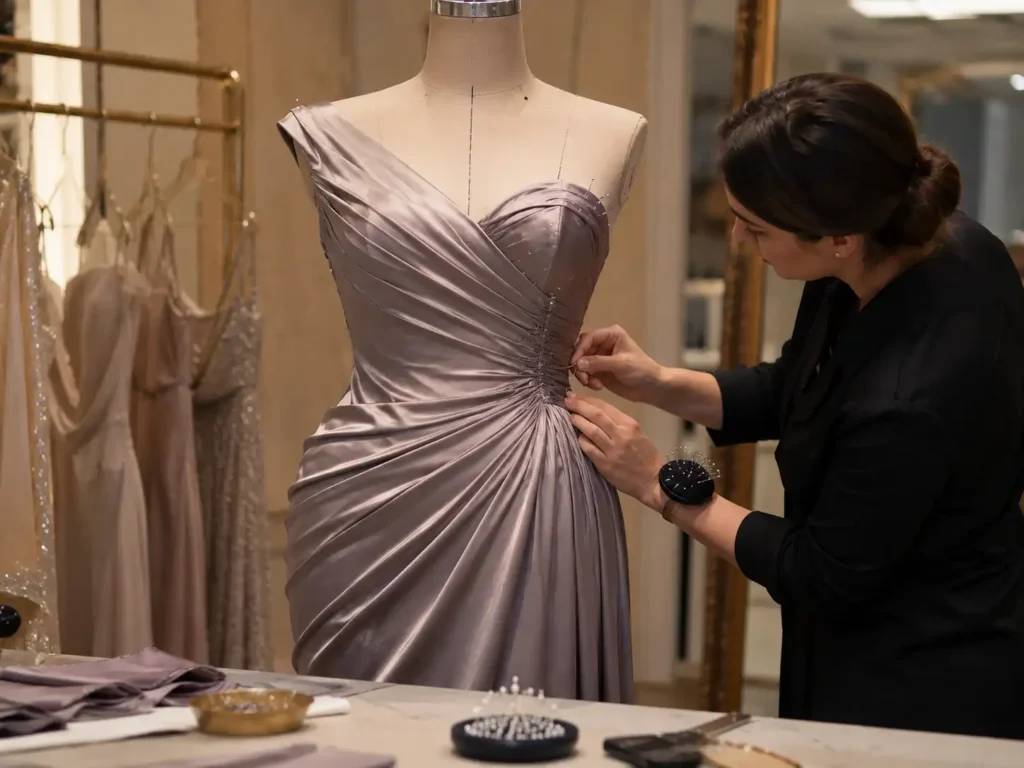
...

Halter Jumpsuit Manufacturer

Custom halter jumpsuit development for global fashion brands requiring secure necklines, balanced one-piece fit, controlled fabrics and repeatable bulk production.

Jinfeng Apparel develops halter jumpsuits from reference images, original samples, line sheets or tech packs. Pattern work connects neckline support, bust coverage, torso length, waist position, hip ease, rise and leg shape before a style enters bulk production.

  • 7 connected fit zones reviewed: neckline, bust, torso, waist, hip, rise and leg balance.
  • 2 sample rooms, 7+ senior pattern makers and 20+ sample machinists support style development.
  • Production planning begins from 200 pcs per style/color and scales into multi-style brand programs.
  • Anonymous collection programs commonly include 10-30 styles and 20,000-80,000 total garments.

Manufacturing Capacity for Halter Jumpsuit Programs

Brand-level production needs more than a sewing quotation. Development, pattern control, merchandising, quality inspection and packing must remain connected from the first sample through each repeat order.

Since 2008

Long-term womenswear manufacturing experience supports product decisions across dresses, jumpsuits, matching sets and private-label collections. The team understands how a visually strong design can lose commercial value when neckline balance, torso proportion or fabric behavior is not settled before production.

6 Owned Factories

Six owned women’s fashion factories form the core production network.
Orders are allocated by garment structure, fabric type, finishing demand, quantity and launch calendar rather than forcing every halter jumpsuit into one production environment.

10+ Production Partners

More than ten long-term satellite partners add flexible capacity for coordinated collection work.

Factory matching remains linked to approved patterns, materials, construction instructions, label requirements and QC checkpoints.

2 Sample Rooms

Two sample rooms support development, revisions, photo samples and PP samples. Complex halter jumpsuits can be separated by fabric group and pattern difficulty so priority styles move first without losing version control.

7+ Pattern Makers

Senior pattern makers review neckline tension, upper-bust shaping, torso length, waist placement, crotch depth, hip ease and leg balance as one connected fit system. Comments are transferred into revised patterns and measurement files.

15+ QC Inspectors

Quality staff follow material, cutting, sewing, garment, pressing and packing checks. Halter-specific inspection includes strap length, attachment strength, neckline symmetry, bust coverage, zipper movement, rise measurement and finished leg balance.

Built for Structured Fashion Production Programs

Jinfeng Apparel works best with established product teams that have a clear style direction, sampling plan, quantity structure and launch calendar. The working model is development-led rather than stock-led.

Best Project Fit

A strong project normally begins with a tech pack, original sample, line sheet or clear reference images. Quantity by style and color, target fabric, size chart, label artwork and desired delivery window help the team assess pattern work, material availability, sampling sequence and production allocation. Multi-style programs are grouped by fabric, construction and launch priority so the most important styles reach approval first.
  • Seasonal collections with 10-30 coordinated styles
  • Private-label programs with defined SKU and packing rules
  • Fashion drops requiring repeatable fit and reorder records
  • Sourcing teams comparing development depth, not only unit price

Working Expectations

Accurate development depends on confirmed inputs. Fabric changes can alter stretch, drape, lining, pattern balance, cost and schedule. Late adjustments after PP approval can affect material purchasing, line planning, label preparation and QC standards. Jinfeng Apparel therefore records approvals and change points before bulk cutting. Clear decisions protect both speed and consistency across large assortments.
  • Sampling fees and material development are assessed by style complexity
  • MOQ starts from 200 pcs per style/color
  • Bulk quotation is refined after fabric, construction and packing are confirmed
  • NDA-based cooperation is available for unreleased designs

Where Halter Jumpsuit Development Commonly Fails

Halter jumpsuits combine an open upper body with a one-piece lower structure. A small pattern error can travel from the neckline into the waist, rise and leg, creating discomfort or unstable retail fit.

Neck Pressure

A narrow halter strap may carry too much garment weight, especially with heavy satin, ponte, hardware or lined bodices. Pressure also rises when the torso pattern is short and the neckline is pulled upward. Development must balance strap width, neck length, upper-bodice weight, closure position and the wearer’s movement.
  • Review strap width and neck length together
  • Test pressure while standing, sitting and raising arms
  • Reinforce attachment points without creating rigid edges

Bust Instability

Deep necklines, open backs and soft fabrics can cause gaping, shifting or limited coverage.

Bust control may require shaped seams, lining, cups, elastic, stabilizing tape, boning or revised neckline geometry. The right solution depends on style intent, fabric recovery and target support level.

  • Check upper bust and under-bust balance
  • Confirm cup position and lining coverage
  • Evaluate motion, not only front-view appearance

One-Piece Pulling

A jumpsuit can look correct on a flat measurement chart yet pull at the neck or crotch during wear.

Torso length, waist placement, front and back rise, hip ease and inseam must work together. A short torso creates upward pull; excess torso length can create folding at the waist or seat.

  • Measure torso and crotch length separately
  • Review front and back rise balance
  • Test seated comfort and walking movement

Custom Halter Jumpsuit Styles for Fashion Collections

A halter neckline can support polished occasionwear, bold partywear, fitted club styles or relaxed resort collections. Each direction requires a different pattern, fabric and production strategy.

Satin Wide Leg

Designed for occasionwear, evening capsules and premium ecommerce. Matte or medium-weight satin can create a long, fluid leg line, but shine direction, surface snagging, pressing marks and waist-to-hip drape need close control. Pattern review focuses on neck tension, bust shaping, natural waist position and enough rise for seated comfort. Bulk QC checks shade consistency, seam puckering, hem balance and anti-crease packing.

Tie-Back Halter

A self-tie neckline gives flexible styling and a strong open-back effect. Strap length, tie width, edge stability and back opening shape must remain consistent across sizes. Soft woven fabrics may need internal reinforcement at the tie base, while heavier fabrics require wider load distribution. Sample review checks whether the wearer can dress independently, secure the knot and maintain stable front coverage through movement.

Cowl Neck Halter

A draped cowl front creates visual softness but can lose shape when fabric weight, grain direction or neckline depth changes. Satin, jersey and velvet each behave differently. Pattern work controls cowl volume, inner facing, bust coverage and halter tension. Bulk cutting must respect grain and surface direction. Finished garments are checked for balanced drape, matching left-right folds and clean inner construction.

Bodycon Halter

Stretch jersey, ponte or stretch satin can build a fitted party or club silhouette. Recovery matters as much as stretch percentage because weak recovery causes neckline movement, waist rippling and seat bagging. Development reviews negative ease, torso length, crotch depth and leg opening. Sewing control includes stretch direction, seam stability, zipper behavior and consistent tension around the neckline and armhole.

Chiffon Overlay

Chiffon can create a light resort or occasion look through floating panels, capes or wide-leg overlays. Transparency, static, seam visibility and edge finishing require planning. A stable inner layer carries the main structure while the outer layer delivers movement. Sample approval covers lining coverage, hem interaction, overlay length and print direction. Bulk packing avoids compression that can set uneven folds.

Tailored Crepe

Crepe works well for structured cocktail, office-to-evening and modern formal jumpsuits. Medium body supports a clean waistband, defined pleats and controlled wide legs without the high shine of satin. Pattern development balances bust shaping, shoulder-free support, waist seam accuracy and trouser mobility. Production checks include seam pressing, zipper flatness, pocket alignment, crease control and consistent leg shape.

Cut-Out Hardware

Metal rings, sliders, buckles or cut-out connectors can create a strong fashion identity, but they introduce weight, skin-contact and reinforcement risks. Hardware position must match the pattern and size grade. Hidden support may be needed around the neckline or waist. Sampling checks comfort, plating appearance, edge protection and wash-care compatibility. Bulk QC verifies placement, attachment strength and surface protection during packing.

Printed Resort

Printed halter jumpsuits suit vacation, cruise and summer collections. Rayon, chiffon, crepe and lightweight woven fabrics can deliver color and movement, while print scale and placement influence the finished silhouette. Development reviews print direction, front balance, waist seam matching, lining needs and travel wrinkle behavior. Bulk cutting and packing require clear shade, print and size identification to avoid mixed lots.

Engineering a Secure and Comfortable Halter Neckline

Halter construction must hold the upper bodice without forcing the neck to carry every load. Fabric weight, neckline depth, bust structure and back opening are reviewed together before pattern approval.

Control Neck Support Without Creating Pressure

Neck comfort begins with load distribution. A narrow tie on a lightweight chiffon style may feel appropriate, while the same width on lined satin or hardware-trimmed construction can concentrate pressure. Pattern makers review finished garment weight, strap width, neck circumference, tie position and the distance from neckline to waist. A short upper body can pull the strap tighter even when the strap measurement looks correct on paper. Fit review therefore includes standing posture, seated posture, arm movement and the way the bodice settles after several minutes of wear.

  • Tie-neck styles: confirm usable tie length, knot size and free-end balance.
  • Fixed-neck styles: confirm closure clearance, button or hook position and skin contact.
  • Heavy bodices: widen load points or add internal support rather than relying on the neck alone.
  • Stretch styles: review recovery so the neckline returns after dressing and movement.

Build Bust Coverage Around the Intended Silhouette

Bust coverage is not a single neckline measurement. Upper-bust width, under-bust shape, neckline depth, armhole position, lining coverage and back openness determine whether the front remains stable.

Soft draped styles may use an inner facing, discreet elastic or shaped lining. Structured styles may use cups, supportive seams, boning or reinforced under-bust areas.

The goal is not to overbuild every garment; support should match the intended visual effect, fabric and market. Sample comments are recorded against the client size chart and approved front, side and back views.

  • Check coverage at rest and during walking, sitting and arm movement.
  • Align cup position with the client measurement standard and neckline shape.
  • Prevent lining from rolling, peeking or shifting above the outer fabric.
  • Review side-bust security where the back opening extends toward the side seam.

Choose Back Closures That Protect Fit and Dressing Ease

Back design controls both visual openness and functional dressing. Self ties create adjustment but depend on repeatable strap length. Neck buttons and loops offer a cleaner finish but need comfortable clearance. Center-back or side zippers help control torso fit, yet zipper length and placement must allow dressing without distorting the neckline. Elastic inserts can support recovery in selected constructions, while stabilizing tape prevents delicate edges from growing. Closure decisions are confirmed in the sample because a visually minimal back can still require hidden engineering.

  • Confirm dressing route before finalizing zipper, button or hook positions.
  • Reinforce closure points without creating bulky or scratchy edges.
  • Grade strap, opening and closure measurements across the size range.
  • Check closure performance after pressing and final finishing.
Neckline Stability

Controlling One-Piece Fit from Bust to Hem

One-piece fit is a linked system. Neck tension, torso length, waist position, rise, hip ease and leg shape must be evaluated together rather than approved as isolated measurements.

Bust Shape

Upper-bust width, neckline depth, bust point and under-bust shaping guide coverage and support. The chosen construction may use darts, princess seams, gathers, drape, cups or internal lining. Fit comments compare the style against the client size chart and visual intent, then identify whether the correction belongs in the outer pattern, inner support or both.

Torso Length

Torso length determines whether the garment hangs from the body or pulls against it. Measurement review considers the path from the halter neckline through bust and waist to crotch level. A short torso can tighten the neck and lift the crotch; an overlong torso can create folds at the waist, lower back or seat. Sample movement is essential.

Waist Position

High, natural and low waistlines create different proportions and require different bodice and rise lengths. The waist seam must remain level during movement and match the intended leg-length effect. When a belt, cut-out or waistband is added, the team checks its stability, width, closure and alignment across the full size range.

Hip Ease

Hip ease is set by fabric stretch, silhouette and wearing occasion. A wide-leg woven jumpsuit needs enough mobility without creating excess seat volume. A fitted stretch style may use controlled negative ease, but weak recovery can produce bagging. Fit review checks side-seam balance, seat shape, pocket behavior and the transition from waist to thigh.

Rise and Crotch

Front rise, back rise and crotch depth govern sitting comfort, stride length and the way the waist holds position. A flat size chart cannot show every movement issue. The sample is reviewed while standing, seated, walking and bending. Corrections may involve torso length, crotch extension, seat angle or waist placement rather than simply adding overall length.

Leg Balance

Wide, straight, tapered and flared legs require different hem, inseam and grain control. Leg panels must hang without twisting, and the finished length must reflect the intended footwear and market. Bulk checks compare inseam, outseam, front-back hem balance, crease line, side seam and finished pair symmetry.

Fabrics Selected for Support, Drape and Movement

Fabric choice changes far more than surface appearance. Weight, stretch, recovery, grain, transparency and shine influence neckline load, bust stability, lining, pattern ease, sewing method, pressing, packing, MOQ and lead time.

Fabric DirectionBest UseMain RiskDevelopment and Bulk Control
Matte SatinOccasion and wide-leg stylesSnagging, shade variation, press marksControl shine direction, seam puckering, pressing and protective packing
Stretch SatinFitted party stylesRecovery loss, seam ripplingConfirm stretch direction, negative ease, lining and zipper behavior
CrepeTailored cocktail stylesToo stiff or too fluidMatch weight to structure; control waistband, pleats and leg fall
ChiffonOverlay and resort stylesTransparency, slipping, edge distortionUse stable inner support; check grain, lining coverage and fine edge finish
JerseyBodycon and draped stylesTwist, weak recovery, neckline growthReview GSM, stretch/recovery, seam stability and body ease
PonteStructured fitted stylesExcess neck weight, thick seamsBalance support with strap width; reduce bulk at closures and waist
MeshCut-out and club stylesTransparency, holes, edge stretchingControl layer count, coverage, elastic recovery and protected seams
Printed WovenResort and vacation programsPrint direction, shade and placementApprove layout, cutting direction, lining, color lot and pack identification

Internal Support, Closures and Functional Trims

Invisible construction often determines whether a halter jumpsuit feels secure, dresses easily and survives repeated wear. Support and trim choices are matched to fabric, fit and styling rather than applied as a standard package.

Bra Cups

Cup shape, thickness, position and edge finish should suit the neckline and target support. Cups can improve coverage in selected styles, but poor placement creates visible outlines or shifts the bust point. Sample approval checks cup height, left-right symmetry, lining attachment and comfort through movement.

Lining Coverage

Lining controls opacity, skin comfort, internal support and clean finishing. Full lining, partial bodice lining or targeted panels may be used according to fabric and style. Coverage lines must remain hidden, and lining stretch must remain compatible with the outer fabric to avoid pulling or bubbling.

Elastic Support

Elastic can stabilize necklines, backs and cut-outs, yet excessive tension creates pressure and distortion. Width, recovery, casing or attachment method are evaluated in the sample. Bulk QC checks length, tension consistency, stitch security and whether the elastic remains concealed after pressing.

Zipper Systems

Invisible, center-back, side and metal zippers solve different dressing and styling needs. Zipper length must allow entry without forcing the halter area. Production checks include color match, flat insertion, smooth operation, top-stop protection and alignment through waist seams.

Hooks and Buttons

Neck buttons, loops, hooks and bars can create a clean closure with minimal visual weight. Size, plating, loop length and skin contact need confirmation. Reinforcement must hold the closure securely without creating bulky ridges. QC checks attachment strength, alignment and comfortable clearance.

Belts and Hardware

Belts, rings, sliders and branded hardware can define the waist or connect cut-out sections. Weight and edge shape affect comfort and pattern balance. The sample verifies position, reinforcement, plating, movement noise and scratch protection. Packing must prevent metal parts from marking delicate fabric.

Design Details Built Around Brand Identity
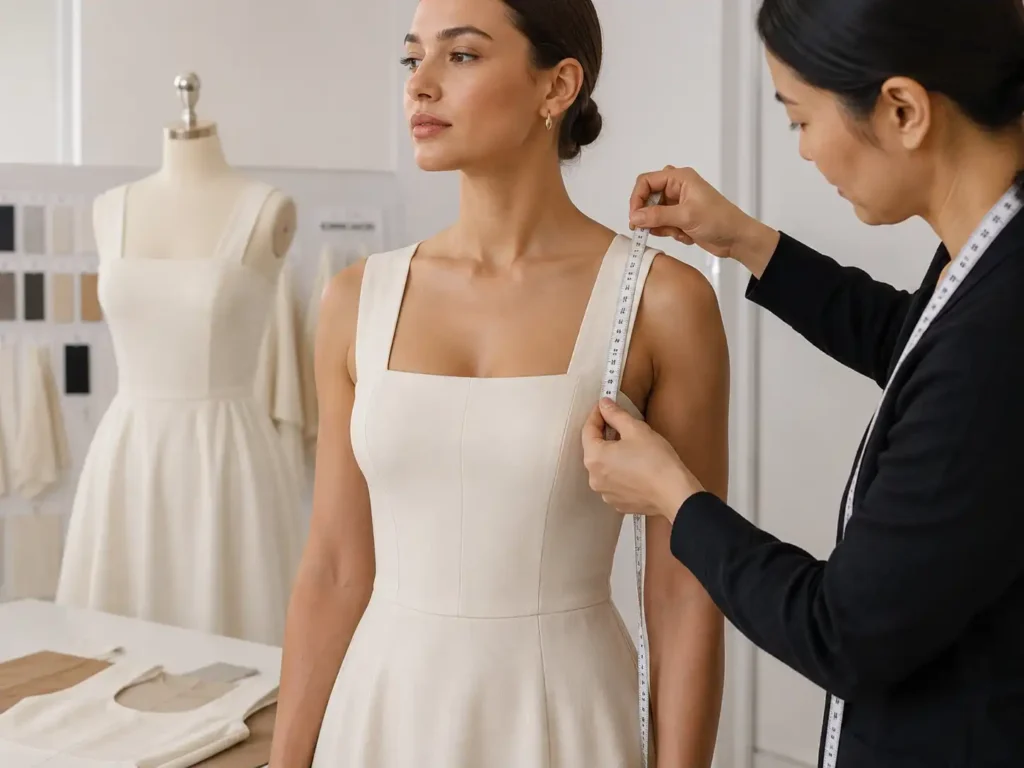
Distinctive halter jumpsuits are created through proportion, construction and material decisions. Each detail is reviewed for visual effect, fit impact, production risk and repeat-order consistency.

Strap Width

Fine ties feel light and minimal; wider straps distribute load and can support heavier bodices. Width changes the neckline angle, neck pressure and visual proportion. Final specifications include finished width, length, attachment position, internal reinforcement and grade rules.

Neckline Depth

High, plunge and cowl necklines create different coverage and support needs. Depth is assessed with bust width, armhole, lining and back opening. The sample confirms appearance from front and side while movement checks reveal gaping or excessive tension.

Open Back

Back exposure may range from a keyhole to a low open back. Stability depends on side seam, waist, strap geometry and closure placement. Edge reinforcement prevents growth, while lining and elastic choices protect comfort and maintain the intended shape.

Waist Structure

A clean waist seam, shaped waistband, corset-style panel or soft elastic waist can define the silhouette. Width and placement affect torso balance, rise and leg proportion. Bulk measurement controls keep the waist level and aligned with zippers, pockets and cut-outs.

Cut-Out Shape

Cut-outs must follow body movement without collapsing or exposing unintended areas. Pattern edges, reinforcement, lining and trim connectors are tested on the sample. Size grading preserves the visual ratio rather than enlarging every opening by the same amount.

Leg Silhouette

Wide, straight, tapered and flared legs change material consumption, movement and hem handling. The leg must hang from a stable hip and rise. Pattern and cutting controls prevent twist, while finished measurements maintain consistent inseam, outseam and opening width.

Drape and Ruching

Draped panels and ruching can soften the torso, create waist shaping or add visual movement. Fabric recovery, gather ratio, direction and anchor points determine consistency. QC checks placement, symmetry, fullness and whether the detail remains stable after pressing.

Branded Trims

Custom rings, zipper pulls, labels, buttons and waist details can create recognizable identity. Artwork, dimensions, color, material, MOQ and testing needs are reviewed before development. Approved trim cards and placement instructions protect consistency in bulk and repeat orders.

From Tech Pack to Approved Production Sample

Development follows a controlled sequence so design intent, material behavior, fit and production feasibility are resolved before bulk cutting. Complex halter jumpsuits are not pushed forward on visual approval alone.

Project Review

The team reviews reference images, tech pack, original sample, line sheet, quantity, fabric direction, size range, label needs and launch date. Early review identifies structural risks, unclear measurements, material constraints and missing information before pattern work begins.

Fabric Direction

Available swatches are compared by weight, stretch, recovery, drape, transparency, color and surface behavior. Trim and lining needs are considered at the same time. Approved fabric direction supports more accurate pattern balance, cost analysis and sample scheduling.

Pattern Development

Pattern makers build or correct the halter neckline, bust, torso, waist, rise, hip and leg as a connected garment. Construction allowances, closures, lining and internal support are included. The first pattern version is recorded for later comparison and revision.

First Sample

The first sample validates silhouette, material direction, neckline support, dressing route, torso balance and construction feasibility. Its role is to expose development issues early. Measurements, photos and fit comments create a clear correction list rather than relying on general feedback.

Revised Sample

Comments are translated into pattern, measurement, trim or construction changes. Revised samples can focus on fit, visual refinement or material replacement. Version records identify what changed and why, preventing approved corrections from being lost when several styles move together.

PP Approval

The PP sample locks fabric, color, measurements, construction, trims, labels and packing before bulk production. Any later change is reviewed for cost, material, timing and QC impact. The final pattern, size chart and approved sample become production references.

Turning Fit Comments into Controlled Pattern Revisions

Useful fit feedback must identify the symptom, probable cause and correction path. Jinfeng Apparel records sample measurements, visual notes and movement comments before producing a revised sample or PP sample.

Sample IssueLikely CauseRevision DirectionEvidence to Record
Neck feels tightStrap too short, narrow load point or short torsoReview strap width/length, bodice weight and torso patternNeck measurement, torso length, standing and seated fit
Front neckline gapsBust shaping or internal support mismatchAdjust upper bust, dart/seam, lining or elastic supportFront/side photos, upper-bust and neckline measurements
Crotch pulls upwardTorso length, front/back rise or crotch depth insufficientCorrect torso, rise and crotch extensionTorso, front rise, back rise, seated movement
Waist sits too highUpper body too short or rise balance incorrectLengthen bodice and recheck waist-crotch relationWaist position, torso and outseam comparison
Seat feels tightHip ease, back rise or fabric recovery insufficientAdjust hip/seat shape or material easeHip, back rise, seat angle, walking and sitting
Back opening collapsesEdge growth, weak stabilization or strap angle issueAdd stabilization and correct back/strap geometryBack width, opening depth, elastic or tape length
Leg twistsGrain, cutting direction or inseam/outseam imbalanceCorrect pattern balance and cutting instructionsInseam, outseam, grain direction and hem alignment
Lining showsCoverage line or lining/outer stretch mismatchRevise lining pattern, attachment and seam turnCoverage position, stretch and finished edge

Size Grading for US Fashion and Ecommerce Markets

Jinfeng Apparel follows the client size chart rather than imposing one universal scale. Halter jumpsuits need independent grade rules for the upper body, torso, rise, openings and leg because proportional change is not uniform.

Grade More Than Bust, Waist and Hip

Core body measurements remain important, yet halter jumpsuits add several linked dimensions: upper-bust width, neckline length, armhole or side opening, torso length, waist position, front rise, back rise, crotch depth, inseam and leg opening.

A simple equal increase across every point can distort coverage or shift the waist.

Grade rules are developed from the client chart and fit objective, whether the program uses XS-XL, extended sizes, petite proportions, tall lengths or a separate curve range.

  • Neck straps and openings are graded for comfort and visual proportion.
  • Torso and rise are reviewed independently from overall garment length.
  • Wide-leg volume is controlled so larger sizes do not become excessively heavy.
  • Cut-outs and back openings preserve coverage and shape across sizes.

Separate Woven and Stretch Fit Logic

Woven satin, crepe and chiffon rely on planned ease, closures and shaped seams. Stretch jersey, ponte and stretch satin use stretch and recovery to create fit, but negative ease must remain compatible with comfort and opacity. The same measurement chart can require different finished garment measurements when fabric behavior changes. Material replacement therefore triggers a review of grade rules, seam construction, lining and movement. A stretch fabric with weak recovery may need more ease than a stronger fabric even when both show a similar laboratory stretch percentage.

  • Record stretch direction and recovery before pattern approval.
  • Check opacity at the intended wearing stretch.
  • Reassess zipper and closure needs when fabric changes.
  • Measure sample garments after pressing and resting.

Control Size Identity Through Production and Packing

Grade accuracy can still fail when cut bundles, labels or packed units are mixed. Bulk control links grade rules to marker files, size bundling, in-line measurements, size labels, barcode stickers and carton breakdowns. Key measurements are checked by size during production rather than waiting for final inspection. The finished pack must match the approved SKU list, size ratio and warehouse requirement. Repeat orders use the recorded pattern, measurement file, fabric reference and approved sample as a baseline, followed by new bulk material approval.

  • Bundle cut panels by size and color.
  • Verify size labels before garment closing and packing.
  • Match barcode and SKU data to the packing list.
  • Keep approved grade and measurement records for repeats.
Mixed-Size Set Planning

Transferring Approved Samples into Bulk Production

Sample approval must become a complete production standard. Patterns, materials, construction, measurements, labels, packing and QC references are handed over together so production teams do not rebuild decisions from memory.

PP Lock

The approved PP sample confirms fabric, color, construction, measurements, trims, labels and packing. Changes after lock are assessed for material availability, cost, line schedule and quality impact before acceptance. A controlled lock protects consistency across multiple factories or production waves.

Material Approval

Bulk fabric and trims are checked against approved references before cutting.Color, weight, hand feel, width, stretch, recovery, defects and shade are reviewed according to material type. Satin, mesh, print, lace and hardware receive product-specific attention.

Pattern Handover

Final pattern files, grade rules, marker requirements and measurement charts are released in the approved version. Pattern identification prevents older sample versions from entering production. Cutting direction, grain, print placement and stretch direction are written into the handover.

Construction Standard

Sewing instructions record seam type, allowance, stitch, lining attachment, reinforcement, closure insertion, strap specification, cut-out finishing and pressing limitations. Critical halter and crotch points are highlighted for in-line review rather than left for final inspection.

Label and Pack

Woven labels, size labels, care labels, hangtags, barcodes, polybags and carton marks are checked against the SKU plan. Placement and pack method are confirmed before large-scale finishing. A clear pack standard protects warehouse receiving and retail preparation.

Production Tracking

Merchandising and production teams track material arrival, cutting, sewing, in-line QC, finishing, packing and inspection. Multi-style orders are grouped by fabric, construction and launch priority. Risks are raised before they affect the full program.

Workmanship Standards for Halter Jumpsuit Construction

Strong workmanship is visible in line, balance and finish, but also in hidden reinforcement, comfortable edges and stable internal construction. Halter jumpsuits require control at several stress and transition points.

Neck Attachments

Strap and neckline attachments carry repeated dressing and wearing stress. Seam allowance, reinforcement, stitch density and internal finish are selected for fabric weight and strap width. The finished point must remain strong without becoming bulky, stiff or visible from the outside.

Clean Neck Edges

Facings, bindings, lining turns or narrow hems must follow the neckline without rippling or rolling. Delicate satin and chiffon require fine handling; stretch styles need controlled recovery. Pressing is matched to the material so edges remain smooth without shine marks or distortion.

Stable Bust Seams

Darts, princess seams, gathers and cups need balanced shaping on both sides. Seam intersections should remain clean and comfortable. Production checks review symmetry, bust point position, lining attachment and whether the outer fabric stays smooth over internal support.

Flat Waist Joins

Waist seams connect upper-body fit with trouser balance. Bulk, uneven seam allowance or misaligned zippers can distort the silhouette. Construction controls keep waist joins level, reduce thickness and align darts, pleats, pockets, cut-outs or belts.

Controlled Crotch Seams

Crotch seams require sufficient strength, smooth shape and accurate allowance. Reinforcement must not reduce stretch or create a hard point. In-line checks compare curve, seam security, front-back balance and movement before large quantities reach finishing.

Balanced Leg Finish

Inseams and side seams must feed evenly to prevent twisting. Wide-leg and draped fabrics need controlled hanging and hem leveling before final finishing. Hem method, stitch, pressing and packed fold are selected to preserve the intended leg line.

Halter Jumpsuit Quality Control from Material to Packing

Quality control follows the product risk map, not a generic final check. Approved fabric, pattern, measurement and PP references guide inspection from incoming material through finished packing.

Strap Strength

Inspect strap dimensions, seam security, reinforcement and closure points. Pulling or weak attachment can affect safety and fit. Checks also confirm comfortable edges and matching left-right construction.

Neckline Symmetry

Compare neckline height, curve, drape and edge finish on both sides. Satin shine, cowl folds and binding width are reviewed under consistent lighting. Uneven neckline shape can change bust coverage and brand photography.

Bust Coverage

Measure and visually review neckline, upper bust, cup position, lining and side coverage. Movement checks identify gaping or shifting. Internal support must remain concealed and aligned.

Torso and Rise

Check torso length, waist position, front rise, back rise and crotch depth against approved measurements. Selected units are reviewed for standing, sitting and walking comfort before final packing.

Waist and Hip

Confirm waist seam level, waistband width, hip measurement, seat balance and pocket behavior. Fitted styles are checked for seam strain; relaxed styles are checked for excess bulk or uneven drape.

Leg Balance

Measure inseam, outseam, hem width and finished length. Hang-check selected garments for twisting, uneven hems and side-seam migration. Wide legs receive added attention before final hemming and pressing.

Closures and Trims

Operate zippers, hooks, buttons, ties, rings and belts. Confirm color, position, strength and skin comfort. Decorative hardware is protected from scratching fabric during packing and shipment.

Pressing and Packing

Review shine marks, seam impressions, wrinkles, folding, labels, barcodes, polybags, size stickers, carton marks and carton breakdown. Satin, chiffon and hardware styles use protective packing suited to surface risk.

MOQ, Quotation and Production Timeline Planning

Commercial planning becomes reliable after style structure, fabric direction, quantity and packing are known. Jinfeng Apparel explains the variables behind MOQ, price and schedule rather than offering a single number detached from the product.

MOQ Structure

MOQ starts from 200 pcs per style/color. Stock fabric and standard trims are usually the most efficient route. Custom dyeing, exclusive printing, special lace, sequin, imported materials, certified material requests, custom hardware or highly fragmented color-size ratios can raise supplier-based minimums.
  • Quote quantities can be reviewed at 200, 300, 500, 1,000 and 2,000+ pcs per style/color.
  • Collection totals do not replace the minimum for each individual style and color.
  • Material and packaging minimums are confirmed before final quotation.

Quotation Inputs

Unit cost is affected by fabric consumption, lining, cups, boning, hardware, seam complexity, print placement, size range, color count, order quantity, labels, packing and inspection requirements. A reference image supports initial review, while a tech pack, size chart, quantity breakdown and packing guide allow a more controlled quotation.
  • Sample cost is assessed by pattern and construction work.
  • Bulk price is refined after fabric and construction approval.
  • Late changes are evaluated for cost and schedule impact.

Timeline Control

A project calendar covers fabric and trim approval, pattern development, first sample, revision, PP approval, bulk material arrival, cutting, sewing, in-line QC, finishing, packing, inspection and shipment. Exact timing depends on complexity, approvals, quantities and logistics. Early PP lock creates the strongest protection for launch dates.
  • Prioritize hero styles when 10-30 samples move together.
  • Allow separate windows for custom color, print or hardware development.
  • Plan warehouse receiving and shipping method before final packing.

Private Label Packing and Export-Ready Delivery

Retail-ready delivery connects the garment to brand identity, SKU accuracy and warehouse handling. Label and packing details are approved alongside the product rather than added at the end.

Woven Labels

Brand labels and size labels are checked for artwork, color, dimensions, fold, edge comfort and placement. Approved references are linked to each style and size so finishing teams apply the correct label set.

Care Labels

Care labels record required fiber, care, origin and brand information supplied for the project. Content, language, size and placement are reviewed before bulk printing and garment closing.

Hangtags

Hangtags, strings, seals and special attachments are matched to approved artwork and position. Paper finish, hole location, string length and assembly are checked to avoid damage to delicate fabric.

Barcode and SKU

Barcode stickers, SKU labels, color codes and size stickers must align with the brand data file. Verification protects ecommerce receiving, store allocation and inventory accuracy across multi-style orders.

Polybags and Cartons

Polybags, warning text, ventilation, folding method, tissue protection, carton marks and carton breakdown are set by garment risk and warehouse rules. Hardware and satin styles may require added protection.

Export Coordination

The team supports packing lists, commercial invoices, carton data, shipment marks and communication with the nominated forwarder. Multi-batch programs can be arranged according to approved production and warehouse plans.

NDA Protection and Traceable Project Records

Unreleased products, patterns, materials and launch plans carry commercial value. Jinfeng Apparel supports NDA-based cooperation and controlled records from development through repeat production.

Protected Development Files

Tech packs, original samples, patterns, measurement charts, line sheets, trim artwork, label files, packing instructions, prices and order information are used only for project evaluation, development, production, QC, packing and delivery.
  • Brand names are not published without authorization.
  • Unreleased samples and original files are not used as open marketing material.
  • Anonymous case summaries avoid identifiable design information.

Version Control

Sample comments, pattern revisions, fabric approvals, trim approvals and PP decisions are recorded by version. The record helps development, merchandising, production and QC teams work from the same approved standard when several styles move at once.
  • Track first sample, revised sample and PP status.
  • Identify final pattern and measurement files.
  • Record approved substitutions and their impact.

Repeat Order Records

Patterns, measurement files, fabric references, trim cards, construction notes, label placement and packing instructions are retained for future repeats. New material lots still require approval, but prior records reduce repeated setup and protect brand consistency.
  • Compare new bulk materials with approved references.
  • Review previous QC findings before production.
  • Update records when a repeat order includes controlled changes.

Anonymous Halter Jumpsuit Collection Case Studies

Brand identities remain protected under NDA. Quantities and timelines below are rounded to present the project scale and operating method without exposing confidential product or commercial details.

US Occasionwear

US Occasionwear Collection: 18 Styles, 36,400 Pieces

A US occasionwear label developed 18 halter jumpsuit styles across matte satin, stretch satin, crepe and mesh. The assortment covered 6 color directions and 7 sizes, with quantities divided by hero styles and supporting styles. Key risks included neck pressure on lined satin bodies, unstable bust coverage on open-back styles, short torso balance in fitted silhouettes and shade variation across satin lots. Six priority styles were scheduled first for campaign and sales review. Initial samples were completed in a 12-working-day development window after fabric and trim direction was confirmed. Two structured revision rounds focused on strap length, neckline coverage, torso length, waist position and rise.

PP approval transferred final patterns, grade rules, trim cards, label placement, packing instructions and QC measurements into bulk production. The 36,400-piece order was split into two controlled production waves over a 52-calendar-day bulk window, followed by final inspection and packing release. Satin units received surface-protection packing, while hardware styles used separate protective wrapping. The label retained approved pattern and measurement records for repeat planning.

  • 18 styles | 36,400 total pieces | 6 colors | 7 sizes
  • 4 fabric groups managed through separate approval references
  • 6 priority styles advanced first for campaign timing
  • 2 revision rounds before PP lock and bulk handover
Australian Resort-Party Collection

Australian Resort-Party Collection: 24 Styles, 58,200 Pieces

An Australian resort and partywear brand planned 24 halter jumpsuit styles in printed rayon, chiffon overlay, crepe, jersey and satin. The program included 9 print or solid color directions and 6 sizes. Product development needed to protect print direction, lining coverage, cowl drape, open-back stability, travel wrinkle behavior and long-leg balance. Styles were grouped into three sample waves according to fabric readiness and launch priority. The first priority samples were completed within a 14-working-day development window after materials were selected. Fit review identified three recurring corrections: added torso length on fitted styles, revised back opening stabilization and rebalanced wide-leg hems.

Bulk production was divided between fabric groups and released in two delivery waves across 60 and 68 calendar days from final PP approval, reflecting different printed material arrival dates. Color-size ratios, barcode files and carton breakdowns were checked before finishing. Chiffon and satin styles used separate pressing and folding methods to reduce creasing, while printed units were controlled by print lot and cutting direction. Repeat-order records retained fabric references, pattern versions, approved label files and pack standards for the following seasonal range.

  • 24 styles | 58,200 total pieces | 9 print/solid directions | 6 sizes
  • 5 fabric groups organized into 3 sample waves
  • Priority samples completed after material direction was confirmed
  • Two delivery waves aligned with print and fabric readiness

Frequently Asked Questions About Halter Jumpsuit Manufacturing

MOQ starts from 200 pcs per style/color. The final minimum depends on fabric availability, custom color or print development, trims, construction, size-color breakdown and packing requirements. Stock fabrics and standard trims are generally the most efficient. Custom-dyed, exclusive printed, special lace, sequin, hardware or certified material programs may follow higher supplier-based minimums.
Yes. A reference image can support initial structure and style review. More accurate development comes from a tech pack, original sample, measurement chart, fabric direction and quantity plan. When information is limited, Jinfeng Apparel identifies assumptions and open decisions before formal pattern work. The team does not treat an image as a complete production specification.
Neck pressure is reviewed through strap width, strap length, finished garment weight, neckline shape, bust support, torso length and closure position. The sample is checked while standing, sitting and moving. Heavy bodices may need wider load distribution or internal support so the neck does not carry the full garment weight.
Torso length is reviewed from the upper-body reference point through the waist toward crotch level, while front rise, back rise and crotch depth are measured separately. The sample is also worn because movement can reveal pulling that flat measurements miss. Corrections may involve the bodice, waist position, rise or crotch extension rather than one overall length change.
Matte satin, stretch satin, crepe, chiffon, rayon, jersey, ponte, mesh and printed woven fabrics can all work when matched to the silhouette. Fabric choice affects neck load, support, ease, lining, sewing, pressing, MOQ and schedule. Jinfeng Apparel reviews weight, stretch, recovery, drape, transparency, shine, color and care requirements before approval.
Yes. Development can include first samples, revised samples, photo samples and PP samples according to project needs. The first sample validates pattern, material and construction direction. Fit comments are converted into recorded pattern and measurement changes. The PP sample then locks the production standard before bulk material cutting.
Yes. Jinfeng Apparel develops and grades according to the client size chart and fit comments. Halter jumpsuits may require separate grade rules for neckline, strap, upper bust, torso, waist, rise, crotch, inseam, leg opening and back coverage. Woven and stretch fabrics are reviewed under different ease and recovery logic.
Bulk consistency is supported by approved fabric references, final patterns, grade rules, measurement charts, construction instructions, trim cards, PP samples, label placement, packing instructions and QC checkpoints. Incoming material, cutting, sewing, garment, pressing and packing stages are checked. Critical halter and one-piece measurements are reviewed during production rather than only at final inspection.
Yes. Private-label support can include woven labels, size labels, care labels, hangtags, strings, barcode stickers, SKU labels, polybags, stickers, thank-you cards, cartons, carton marks and warehouse labels. Artwork, placement, size-color data and pack method are confirmed before bulk finishing.
Yes. Jinfeng Apparel supports NDA-based cooperation for tech packs, original samples, patterns, measurement files, unreleased designs, labels, packaging files, pricing, order information and launch details. Public case content remains anonymous unless written authorization allows brand identification.

Start Your Halter Jumpsuit Development

Send Kelly the information already available for your collection. A tech pack offers the clearest route, while a line sheet, original sample, reference images or early quantity plan can support an initial review. Jinfeng Apparel will assess garment structure, fabric direction, neckline and fit risks, MOQ fit, sampling needs, private-label details and production planning before recommending the next step. Clear information allows the development team to separate style decisions from commercial assumptions and prepare a more useful response.

  • Reference image, tech pack, original sample photos or line sheet
  • Target quantity for each style and color
  • Fabric preference, color or print direction
  • Size chart, size range and intended market
  • Halter strap, neckline, back opening and leg silhouette requirements
  • Woven label, care label, hangtag, barcode and packing needs
  • Campaign, launch, warehouse or delivery target

Tell Us About Your Dress Project

Share your product details, estimated quantity and development requirements. Our team will review your project and provide practical OEM/ODM production feedback.

Premium Women’s Apparel Production for Fashion Brands

From dress sample development to bulk production, JF Apparel supports fashion brands with confidential OEM/ODM manufacturing, reliable quality control and scalable production support.

START YOUR DRESS PROJECT

Ready to Develop Your Next Dress Collection?

Share your design concept, product requirements or sourcing plans with our team. We’ll review your project and provide practical feedback on development, materials, MOQ and production.

7-10 Days

Sample Development

200 PCS

Starting MOQ

Fast Response

Professional Follow-Up