Skip to content

How to Improve Halter Dress Fit: Bust, Neckline, Armhole and Strap Adjustments

Your trusted Women’s Apparel Manufacturer from China

Halter dresses often look deceptively simple. There may be fewer visible shoulder seams, fewer sleeves, and less fabric around the upper body, yet those missing areas are exactly what make the fit more demanding. Once conventional shoulder support disappears, the neckline, bust, armhole, side body, underbust, back, and neck strap have to share the work. A small imbalance can quickly become visible as side-bust gaping, a dropping neckline, underarm exposure, neck pressure, or a back that shifts when the wearer moves.
Improving halter dress fit means correcting the entire upper-body balance rather than tightening one obvious area. Bust volume, upper-bodice length, armhole shape, neckline contour, strap length, back tension, fabric stretch, and internal support should be reviewed together. A successful adjustment keeps the neckline close, provides deliberate bust coverage, reduces unnecessary neck load, and remains stable when the wearer walks, sits, turns, or raises her arms.
The most misleading samples are often the ones that look perfect for the first thirty seconds. A model stands straight, the front photograph looks clean, and everyone assumes the fit is approved. Then she turns sideways and a pocket opens beside the bust. She raises an arm and the neckline moves downward. Someone shortens the halter strap, the gap disappears, and five minutes later the neck feels uncomfortable. The better question is not “Where can we make the dress tighter?” It is “Which part of the structure is losing balance?”
What Does a Well-Fitted Halter Dress Look Like?
A well-fitted halter dress keeps the bust supported, the neckline close to the upper chest, the armholes controlled, the back stable, and the neck comfortable without relying on excessive strap tension. The side bust should be exposed only where the design intends it, and the garment should return to its correct position after ordinary walking, sitting, turning, reaching, and arm movement.
Bust and Upper-Bodice Balance
The bust is the center of halter fit because most of the surrounding areas react to its shape. A pattern can match the wearer’s full-bust circumference and still fit poorly if the upper bust is too wide, the bust point is misplaced, the underbust is too loose, or the front length does not provide enough room over the bust. These differences explain why a dress can feel tight across the chest while simultaneously gaping beside the armhole.
The fabric should follow the bust without flattening it, cutting across it, or leaving an empty pocket above it. Horizontal tension lines often suggest insufficient circumference or projection, while loose vertical folds may indicate excessive width or length. Those visual clues are useful, but they should be read together with measurements and side-view photographs because soft satin, jersey, mesh, and bias-influenced fabrics can create wrinkles that do not always indicate the same fitting cause.
Coverage is also part of fit rather than an afterthought. A date-night halter, party mini, wedding-guest midi, and resort maxi may intentionally expose different amounts of side body, but the exposure needs to remain consistent with the design. Jinfeng Apparel’s documented pattern development system treats bust, upper bust, underbust, strap length, armhole, neckline depth, and lining as separate fit-control points rather than reducing halter fit to one circumference measurement.
Armhole and Side Coverage
The armhole is one of the first places where poor halter balance becomes visible because there is little conventional shoulder structure to hide excess fabric. If the armhole curve is too deep, too long, or too wide through the upper side body, the edge can stand away and expose more of the side bust than intended. If it is too high or too tight, it can cut into the wearer, distort the bust, and create diagonal pulling toward the neckline.
Taking in the side seam is not automatically the correct solution. When insufficient bust projection pushes fabric outward, reducing the side seam may remove the very volume the bust needs. The result can look cleaner near the underarm while becoming more compressed across the chest. In other cases, only the upper part of the armhole needs reshaping, while the full-bust circumference should remain almost unchanged.
A useful fitting check is to mark the side seam and observe it before and after movement. If it rotates noticeably toward the front or back, the problem is probably part of a larger front-to-back balance issue. If the side seam remains stable while the armhole edge alone stands away from the body, a more localized armhole, neckline, or upper-side adjustment becomes more likely.
Back Stability and Movement
The back is easy to overlook because most visible halter problems appear at the front. In reality, a loose or poorly positioned back can allow the entire front bodice to drop. A back that is too tight can pull the side seam rearward and distort both the bust and armhole. Open-back and low-back halters are especially sensitive because removing back coverage also removes some of the structure that would normally help stabilize the front.
Think of the upper dress as a connected tension system rather than separate pieces. The neck connection, bust, underbust, side body, and back should share the load. When the dress only feels secure after the wearer pulls the neck tie extremely tight, something else is usually failing to support its share of the garment. Shortening the strap may hide the symptom without correcting the underlying imbalance.
Movement is the final proof. The wearer should be able to turn, sit, stand, reach, and raise her arms without repeatedly repositioning the neckline or pulling the front upward. Jinfeng Apparel’s halter-specific technical records similarly identify neck pressure, bust coverage, underarm exposure, back stability, strap length, symmetry, and stretch stability as fit-sensitive checkpoints.
Fit Area | What to Check | Good Fit Signal | Warning Sign |
Bust | Full bust, upper bust, bust point | Smooth contour and secure coverage | Compression, empty volume, drag lines |
Neckline | Depth, edge length, left-right balance | Close contact without pulling | Gaping, rolling, dropping |
Armhole | Depth, curve, side coverage | Clean edge with free movement | Side-bust exposure or cutting |
Halter Strap | Length, width, attachment angle | Secure without neck strain | Digging or excessive looseness |
Back | Width, height, tie or elastic tension | Stable during movement | Back rises, drops, or opens |
Side Seam | Position while moving | Remains balanced | Rotates toward front or back |
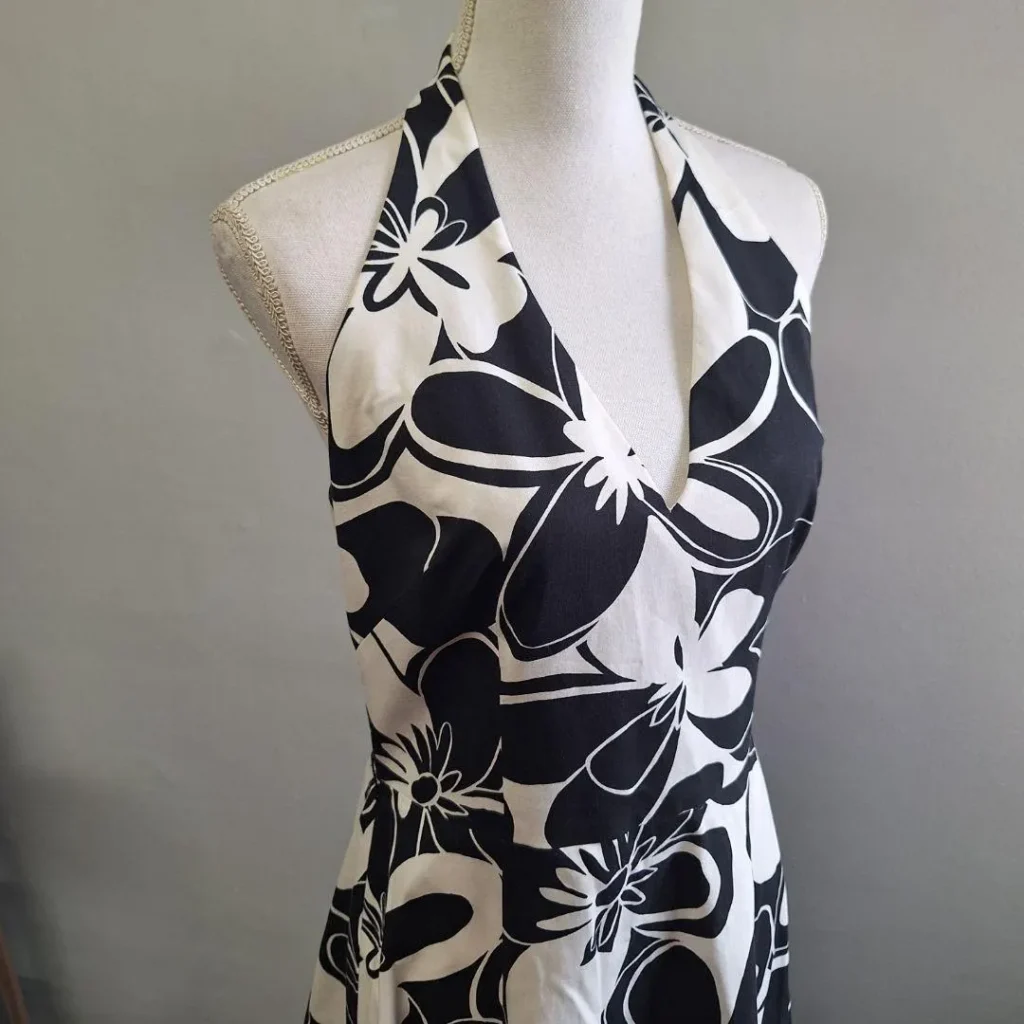
What Causes Halter Dress Gaping?
Halter dress gaping is usually a symptom of incorrect three-dimensional balance rather than a single loose seam. Common causes include insufficient or excessive bust volume, too much length above the bust, a deep or poorly shaped armhole, inadequate neckline contour, weak back tension, or fabric growth during sewing and wear. The correct repair begins by locating the source of the excess fabric before removing it.
Bust Volume and Torso Length
Full-bust circumference alone cannot describe how the upper body occupies a pattern. Two people with similar bust measurements may have very different upper-bust widths, rib-cage dimensions, bust projection, bust-point height, and torso length. Those differences become particularly visible in a halter because the neckline and armholes are directly connected to the bust area and have fewer surrounding seams to absorb excess or shortage.
When a pattern does not provide enough projection, the bust may push the garment forward. The chest feels tight, yet a loose pocket appears near the armhole because the pattern is trying to distribute insufficient volume across the wrong areas. Sizing up the entire dress can make the back, neckline, and waist too loose while leaving the actual bust-shape problem unresolved.
Vertical length creates another common source of gaping. If the pattern contains too much distance between the bust area and neckline, the excess has nowhere to sit smoothly and may fold or stand away from the body. Shortening the halter strap lifts the fabric but also increases neck tension. In many cases, removing excess upper-bodice length while preserving the correct bust projection produces a more natural correction.
Neckline Contour and Armhole Shape
A halter neckline travels over a curved, three-dimensional body surface. A line that looks smooth on a flat pattern can become too long once it runs diagonally from the bust toward the neck. If the edge does not contain enough contour, it may float away from the upper chest even when the total bust and waist measurements are correct. This is particularly visible in clean satin or minimally seamed halter designs.
Armhole geometry produces similar symptoms. A dramatic low armhole removes material that would otherwise help stabilize the side bust. When the remaining edge is not shaped closely enough to the body, it can flare outward. Raising the entire armhole is not always desirable because doing so can change the intended level of skin exposure, reduce mobility, or alter the fashion silhouette.
During fitting, gently pin the excess and watch the direction in which the fabric naturally wants to disappear. Excess that points toward the bust may need to be transferred into a dart, princess seam, neckline seam, or controlled gather. Broad looseness through the entire upper side body may justify a side-seam adjustment. The location and direction of the excess are usually more informative than the size of the visible gap.
Fabric Growth and Support Loss
A correctly drafted neckline can still gape when the fabric changes dimension during manufacturing. Bias-influenced woven edges, fluid satin, soft jersey, stretch mesh, and other flexible fabrics can lengthen while being cut, handled, sewn, steamed, hung, or worn. A small amount of growth that would be almost invisible at a skirt seam can become obvious along a neckline that needs to remain close to the body.
Stretch fabrics require particular attention to recovery. A material may extend comfortably during the first fitting but fail to return completely after repeated movement. The neckline, underbust, or back can gradually become looser over several hours. For commercial development, testing should therefore include recovery after stretching and realistic movement rather than assessing the sample only when it has just been dressed on the model.
Stay tape, facing, lining, elastic, interfacing, or controlled binding may help maintain the approved shape, but reinforcement should not be used to force a badly balanced pattern into position. Fabric behavior and pattern shape need to support each other. The goal is a neckline that remains stable while still looking appropriate for the softness, drape, and visual character of the chosen material.
How Do You Fix Bust and Armhole Fit?
Bust and armhole fit should be corrected by separating projection, circumference, armhole depth, side coverage, and upper-bodice length instead of reducing every loose-looking area at once. Identify where tension and excess originate, change the pattern at that location, make a revised sample, and check the entire bodice again. The best correction improves side contact without removing essential bust room or restricting movement.
Side-Bust Gaping
Side-bust gaping often appears as a curved or triangular opening between the bust and armhole. The first task is to determine whether the extra fabric truly belongs to the side seam. Pin the gap gently while the wearer stands naturally, without pulling the dress upward or forcing the bust into another position. The direction of the fold usually gives useful information about where the pattern wants to lose or redistribute volume.
If the pinned excess points toward the bust point, a dart, princess seam, neckline seam, or gather may be a better place to absorb it than the side seam. If the upper armhole itself is too long, reshaping that section may create cleaner contact without changing the full-bust circumference. When the whole upper side body is genuinely loose, reducing the side seam may be justified, but bust comfort should be checked again immediately afterward.
Overcorrection is common because the visual improvement can be immediate. A tighter armhole may look cleaner in photographs but push the bust forward, create new neckline pulling, or become uncomfortable when the wearer reaches. Every side-bust correction should therefore be checked from the front and side and then tested during realistic movement before being transferred permanently into the production pattern.
Full-Bust and Cup Adjustments
A fuller bust generally needs more three-dimensional space rather than a uniformly larger garment. Additional projection may be required through the front while the neckline, upper chest, back, and waist remain relatively close to the original size. This is the fundamental reason simply choosing a larger size often fails: it increases dimensions in areas that do not actually need extra room.
Darted patterns can add or remove bust capacity while preserving the waistline, and princess seams offer even more control across the upper bust, bust point, underbust, and waist. Gathered halters can hide some of the shaping inside the gathering, but the amount and location of that fullness still need to correspond with the wearer’s body rather than being distributed randomly.
Styles with visible or internal cups need another level of accuracy. Cup height, width, spacing, projection, and position all influence the finished contour. A nominally correct cup size can still look wrong if the cup sits too high, too low, too far apart, or too close together. The cup must also connect properly with the surrounding underbust, side body, neckline, and back structure to create a stable rather than isolated shape.
Darts, Princess Seams, and Balance
Darts and princess seams both convert flat fabric into body volume, but they manage that volume differently. A dart concentrates shaping into a controlled wedge, which works well when the design needs a clean exterior with limited seam lines. A princess seam distributes shaping over a longer curve, allowing more detailed adjustment through the upper bust, fullest bust point, underbust, and waist.
Neither construction method is automatically better for a halter. Satin can reveal pressing marks and seam irregularities, so an unnecessarily complex princess line may reduce visual cleanliness. Structured occasionwear can benefit from those same seams because they create more control. Ruched or gathered halters may incorporate fitting volume into decorative details instead of adding traditional darts that would conflict with the desired appearance.
Every bust correction should be followed by another balance check because changing bust shape can alter the armhole, neckline angle, front length, and side seam. Jinfeng Apparel’s sample revision records document fit changes by affected area, dimensional adjustment, pattern revision status, and whether another sample is required before the correction moves forward.
Fit Symptom | Likely Cause | First Area to Check | Practical Correction |
Tight bust, loose armhole | Insufficient bust projection | Bust point and upper bust | Add projection without widening upper chest |
Side-bust gap | Excess contour or poor shaping | Armhole-to-bust transition | Transfer excess into dart or seam |
Armhole cuts into body | Tight curve or insufficient bust room | Armhole and bust volume | Reshape curve or increase bust space |
Loose fabric above bust | Excess vertical length | Bust-to-neck length | Shorten upper bodice |
Neckline drops with movement | Weak back or underbust support | Back and underbust | Improve support before tightening strap |
Side seam rotates | Front-back imbalance | Front length, bust, back width | Rebalance pattern |

How Should the Neckline and Straps Fit?
The neckline should stay close to the upper chest without rolling, collapsing, or being pulled upward, while the halter strap should keep the garment positioned without carrying most of the garment’s weight. Strap length, width, angle, back tension, bust structure, and fabric weight all influence comfort. When tightening the neck is the only way to stop gaping, the underlying support system usually needs more work.
Strap Tension and Neck Comfort
A good halter strap feels secure rather than heavily loaded. The wearer should be able to move her shoulders and turn her head without feeling that the dress is hanging from the back of the neck. If shortening the strap immediately improves the front but creates pressure within several minutes, the bodice is depending on the strap to compensate for insufficient support elsewhere.
Strap width matters because pressure is concentrated over the area that contacts the neck. A thin cord can feel uncomfortable at a load that a broader halter panel distributes much more comfortably. Attachment angle matters as well. A strap connected closer to the center front can pull differently from one that rises from the outer bust or side body, even when the measured strap length is identical.
Garment weight should influence this decision. A light chiffon resort halter and a fully lined party dress with embellishment may share a similar visual neckline but create very different forces. Jinfeng Apparel’s halter development notes distinguish straps that are too short, which increase neck pressure, from straps that are too long, which allow the chest area to drop.
Neckline Stabilization
Neckline stability needs to be considered before the first sample is sewn because some edges are naturally more prone to growth. Diagonal woven edges, bias-influenced satin, soft mesh, and elastic knits can change length during normal handling. If the sewing process allows the edge to stretch before final assembly, the finished dress may gape even though the paper pattern itself was drafted correctly.
Stable fabrics may use stay tape, facing, lining, or lightweight interfacing depending on the finish. Stretch styles may rely on binding, elastic, or carefully controlled negative ease. The correct amount of tension should be tested using the actual production fabric because different jerseys and meshes can have similar stretch percentages but significantly different recovery and resistance.
The shell and lining must also cooperate. A lining that is too short can pull the outer fabric inward and create tension, while an oversized lining may roll toward the exterior or form bulk beneath the neckline. Stabilization is successful when the finished edge follows the body naturally and maintains its approved dimensions without looking rigid, rippled, or visibly reinforced.
Back Tension and Adjustability
Tie necks, sliders, multiple fastening positions, elastic backs, and adjustable straps can improve comfort across body variations, but they should fine-tune a sound pattern rather than compensate for incorrect bust or armhole geometry. A wearer may naturally prefer a slightly different strap setting, yet she should not need to pull the strap far outside its intended adjustment range just to keep the neckline in place.
The back plays a similar role. An elasticized or tied back can adapt to different rib-cage dimensions, but excessive flexibility may allow the front to drop. A fixed back offers greater control but requires more accurate sizing. Designers need to choose between flexibility and structure based on the fabric, intended body coverage, neckline depth, and overall styling rather than assuming one construction method suits every halter.
Adjustability should also be graded intentionally. Bust projection, torso length, and upper-body width do not increase at identical rates across sizes. Jinfeng Apparel’s documented pattern capabilities include adjustable-strap development together with US, UK, EU, AU, alpha, extended, and plus-size pattern work according to project requirements.
Which Fabrics and Support Structures Work Best?
No single fabric automatically produces the best halter fit. Stable wovens provide precise shape, satin creates fluid visual appeal, and knits or mesh conform more easily to the body, yet each changes neckline stability, bust support, and armhole behavior. Material selection should consider weight, drape, stretch direction, recovery, transparency, friction, lining compatibility, and the amount of internal structure required by the intended silhouette.
Stable Wovens and Satin
Stable woven fabrics offer clear dimensional control because they do not stretch significantly around fit errors. That is both an advantage and a limitation. A well-balanced woven halter can hold a crisp neckline and clean side profile, but inaccurate bust projection, armhole shape, or back width becomes immediately visible because the material has little ability to adapt to the wearer.
Satin varies widely in weight, construction, drape, and stretch. Firmer satin can support structured occasionwear, while a lightweight satin produces a softer and more fluid silhouette. The smooth surface makes even small seam problems easy to see, so puckering, feeding differences, pressing marks, and neckline distortion require careful manufacturing control. Bias-influenced sections can also lengthen during handling or hanging.
For structured satin halters, lining or selective reinforcement can improve neckline shape and internal comfort. The objective should not be to add as much structure as possible. A sophisticated evening dress, soft cocktail halter, and relaxed resort style need different amounts of control. The best construction gives the design enough stability to preserve fit while allowing the fabric to retain the drape and hand feel that made it attractive in the first place.
Stretch Knits and Mesh
Jersey, rib, ponte, stretch satin, and stretch mesh can make close-fitting halters more comfortable because the fabric supplies some of the three-dimensional conformity that would otherwise need to come from seams and darts. That does not make stretch garments easier to fit. Instead, the pattern maker needs to understand how much the fabric stretches, in which direction, and how strongly it recovers after the force is removed.
Recovery is particularly important around the neckline, underbust, and back. Two materials may stretch to similar lengths when tested, yet one can return nearly to its starting dimension while the other stays noticeably longer. The second fabric may look correct during the first fitting and progressively loosen after walking, sitting, or several hours of wear.
Stretch direction should also be controlled during cutting. The body may need greater horizontal stretch across the bust and hip while the neckline requires more dimensional stability. Mesh introduces transparency as another fit variable because the location of lining, cups, elastic, seams, and support panels becomes visible. Jinfeng Apparel’s technical material knowledge treats halter, mesh, backless, and similar constructions as fit-sensitive details requiring pattern control, fabric matching, sample review, bulk consistency, and detail-specific QC.
Cups, Boning, and Lining
Built-in cups, boning, underbust elastic, stable lining, and support panels can improve halter fit when each component solves a defined problem. Cups help with shape and coverage, but they need to match the intended bust position and neckline. Boning can stabilize structured bodices and distribute force, yet the wrong position or stiffness can create visible ridges, pressure points, or a silhouette that feels unnecessarily rigid.
Softer halters may benefit more from a stable underbust, light cup, supportive lining, or broader neck construction than from corset-style boning. A low-back design may require stronger internal support at the front because there is less structure at the back, while a higher-backed halter can distribute tension through more of the torso.
Lining is especially useful for chiffon, satin, lace, and mesh because it can improve coverage, comfort, seam stability, and interior finishing. The lining pattern should be developed with the shell rather than treated as a generic duplicate. If shell and lining stretch or hang differently, they can pull against each other and create a fitting problem that did not exist when either layer was evaluated alone.
Material Type | Typical Fit Advantage | Main Fit Risk | Common Support Direction |
Stable woven | Precise silhouette and controlled edges | Little tolerance for pattern error | Darts, seams, lining |
Firm satin | Clean occasionwear shape | Seam visibility and edge growth | Stable lining, controlled neckline |
Lightweight satin/chiffon | Soft drape | Low support and transparency | Layered bodice or lining |
Stretch jersey/rib | Comfortable body conformity | Recovery loss | Elastic control, supportive lining |
Stretch mesh | Close fit with visual lightness | Transparency and edge distortion | Binding, lining, support panels |
Structured stretch fabric | Shape with mobility | Excess compression | Controlled negative ease and support |
Actual stretch, recovery, fabric weight, and performance should be tested on the intended production material rather than treated as universal values. A fabric substitution that looks visually similar may require a new fitting because even modest differences in elasticity, drape, surface friction, or recovery can change how the bust, neckline, armhole, and back share tension.
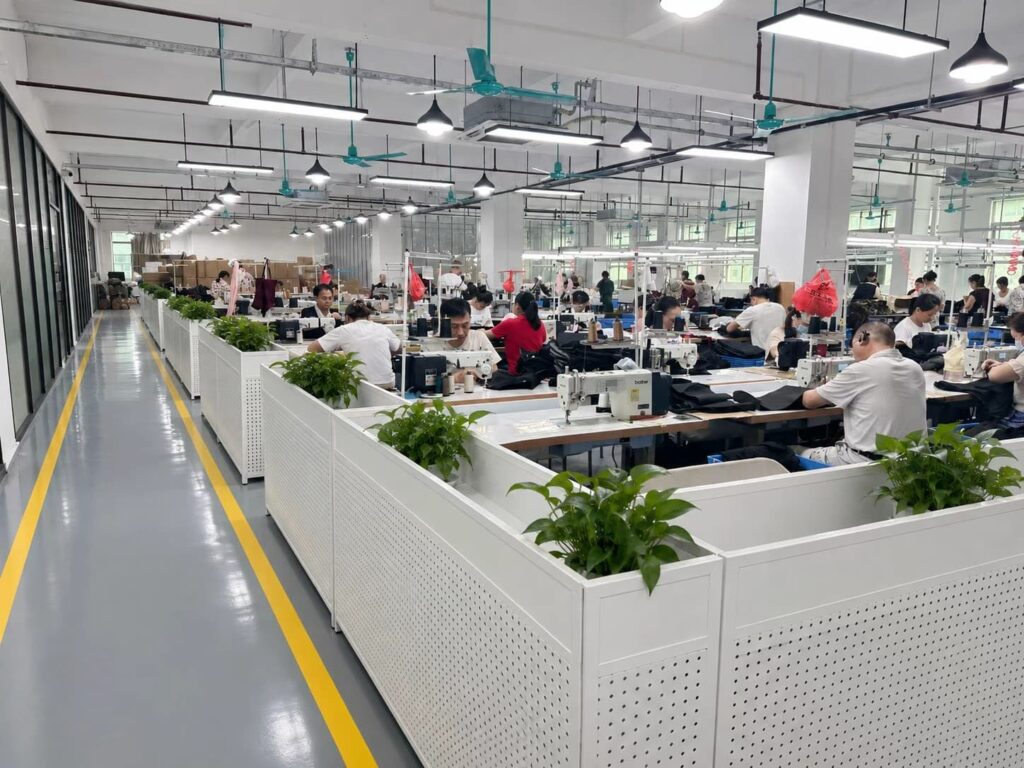
How Do You Validate Fit Before Production?
Halter fit should be approved through measured samples, front-side-back observation, realistic movement testing, size grading, and documented pre-production confirmation. A strong front photograph is not enough. The bust, neckline, armhole, strap, back, and internal support need to remain stable during wear and scale correctly across the intended size range before approved measurements and construction details are transferred into production and QC documents.
Fit-Sample Review
The first rule of sample fitting is to position the garment correctly before judging individual areas. If the waist, underbust, or back has dropped below its intended location, the neckline and armhole may appear wrong even when their own measurements are relatively accurate. Establish the intended vertical position first and then evaluate the bust, neckline, side body, and strap relationships.
Front, side, and back photographs each answer different questions. The front shows symmetry, neckline level, and general bust placement. The side reveals projection, armhole exposure, side-seam balance, and whether the bust is pulling the bodice forward. The back shows whether the upper edge, tie, elastic, or closure is allowing the front to move out of position.
Pinning can help diagnose the source of an issue, but the successful pinning action needs to become a measured pattern correction. Leaving the improvement as an informal sewing-room adjustment weakens repeatability. Jinfeng Apparel’s documented fit-review process uses mannequin or fit photographs, front, back and side views, target body proportion, strap position, bust coverage, and movement comfort before revising the pattern or sample.
Movement and Wear Testing
A halter should be tested in situations that resemble how customers will actually wear it. Ask the fit model to walk, turn, reach forward, raise both arms, sit, stand, and lean slightly. These movements can reveal a neckline that opens, a back that drops, an armhole that shifts, or a halter strap that becomes noticeably tighter as the bust moves.
The objective is not to subject a party dress to athletic performance testing. It is to reproduce normal activity long enough to see whether the garment requires constant adjustment. A neckline that moves slightly but returns to position may be acceptable, while one that stays lower after every arm movement indicates a stability problem that static photographs will miss.
Comfort feedback should be gathered after several minutes rather than immediately after dressing. Neck pressure, underarm rubbing, boning discomfort, or excessive bust compression can develop gradually. The company’s internal fit process specifically incorporates walking and, where appropriate, sitting when assessing the on-body effect, which reflects the practical difference between a sample that photographs well and one that remains wearable.
Size Grading and PP Approval
Halter grading needs more judgment than adding the same increment everywhere. Bust circumference, upper-bust width, front length, armhole depth, back width, neckline depth, and strap dimensions do not necessarily increase at identical rates. Poor grade rules can make larger sizes progressively more exposed at the armhole or less secure around the neckline even when the overall circumference chart appears mathematically correct.
Once the base size is approved, critical points should receive deliberate grade rules. Strategically reviewing a smaller and larger size can reveal whether the original design intent is being maintained. Extended sizing may also require changes in internal support, strap width, cup dimensions, or side coverage instead of relying only on proportional enlargement.
The pre-production sample should represent the final approved fabric, lining, trims, and support components whenever possible. A fit approved in one jersey may change when production uses a material with different recovery. Approved revisions should then be reflected in the final pattern, size chart, BOM, sewing instructions, and QC checkpoints. Jinfeng Apparel’s documented workflow converts bulk-relevant fit changes into updated patterns, measurement records, material approvals, construction instructions, and QC requirements before PP and Golden Sample confirmation.
Development Stage | Practical Fit Checks | Required Result |
First Fit Sample | Front, side, back, measurements | Main fit problems identified |
Revised Sample | Corrected bust, neckline, armhole, strap and back | Pattern correction confirmed |
Movement Review | Reach, turn, arms up, sit, stand | Stability and comfort confirmed |
Size Review | Base plus strategic smaller/larger sizes | Grade rules verified |
PP Sample | Final fabric, lining, trims and support | Production construction approved |
Bulk QC | Critical measurements and visual balance | Sample-to-bulk consistency |
Repeat Order | Approved pattern and technical records | Consistent reproduction |
Conclusion
Improving halter dress fit is rarely about tightening one strap or taking in one seam. The silhouette is a connected system in which bust projection, upper-bodice length, neckline contour, armhole shape, side coverage, back stability, material behavior, and internal support all influence each other. Correcting the visible symptom without understanding that relationship can simply move the problem from the armhole to the neckline, from the neckline to the neck, or from the front of the garment to the back.
For fashion brands developing halter styles commercially, fit becomes more valuable when it can be repeated rather than merely achieved once. The approved silhouette needs to survive grading, material variation, sewing, finishing, QC, wear, and repeat production. Jinfeng Apparel’s documented pattern and structure resources include halter dress development supported by 7+ senior pattern makers, 2 sample rooms, and 20+ sample machinists, with fit control covering bust, armhole, neckline, strap, lining, and other critical points.
The best halter dresses often feel effortless because the engineering disappears once the garment is worn. The customer sees a clean neckline, attractive shoulder line, secure bust, and deliberate open-back or side-bust detail without thinking about the pattern work underneath. When the dress remains comfortable through a dinner, event, holiday, or night out without constant pulling and adjustment, the fitting process has done what it was supposed to do.
Share This Article :

Jerry Lee
Categories

Latest blogs

Table of Contents
Here, developing your OEM/ODM private label clothing collection is no longer a challenge—it’s an excellent opportunity to bring your creative vision to life.