Skip to content
GRS Fabric Dress Manufacturer
Custom dress development with project-verified GRS-certified recycled fabric options for global fashion brands and established apparel programs.
- GRS fabric sourcing reviewed by material, supplier, color, lot, certified scope, and order documentation.
- Dress collections developed across recycled satin, chiffon, mesh, jersey, woven fabric, and lining directions.
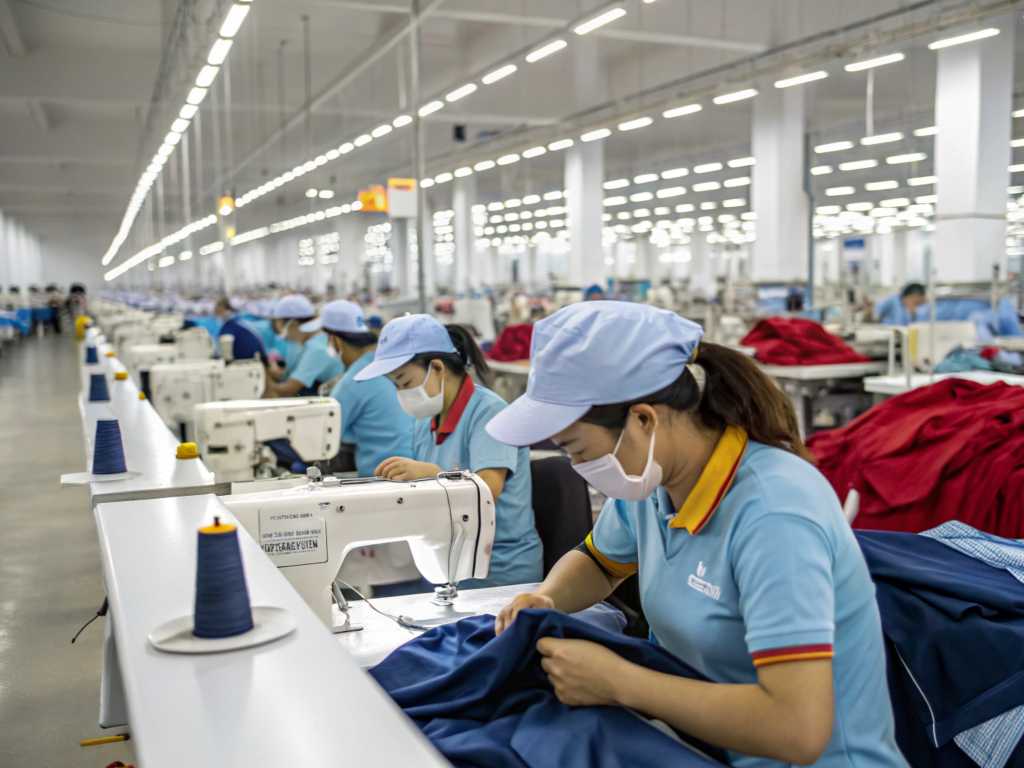
- 6 owned women’s fashion factories, 10+ long-term production partners, 2 sample rooms, and 15+ QC inspectors.
- Standard garment MOQ starts from 200 pcs per style/color; certified fabrics may carry separate supplier minimums.
Jinfeng Apparel supports development from tech pack review and fabric direction through pattern making, sampling, PP approval, bulk production, inspection, private-label packing, and export coordination. Final GRS claim eligibility depends on the sel
Manufacturing Scale for GRS Dress Programs
Since 2008
6 Owned Factories
10+ Production Partners
2 Sample Rooms
7+ Pattern Makers
15+ QC Inspectors
Built for Established Fashion Programs
Global Fashion Brands
Sourcing Teams
Sustainability Teams
Product Developers
Fashion Retailers
Premium Ecommerce Brands
Clear Project Fit and Certification Boundaries
Strong Program Fit
Jinfeng Apparel is well suited to brands planning custom dress collections with a tech pack, sample, sketch, reference image, line sheet, or clear style direction. Strong-fit programs normally include a production quantity by style and color, required fabric composition, size range, label plan, packaging standard, and launch target.
- Custom development followed by sampling and PP approval
- Standard MOQ from 200 pcs per style/color
- Multi-size production within an approved size ratio
- Multi-style programs commonly structured around 10-30 styles
- Certified, recycled, custom-dyed, printed, lace, sequin, and special fabrics reviewed by supplier terms
- Long-term collection development, repeat orders, and phased delivery support
Certification Boundary
- No blanket claim covering every fabric or factory
- No unverified use of a GRS logo or product claim
- No promise that every material color carries the same certified availability
- No assumption that standard garment MOQ applies to every certified fabric
- No bulk release before material, PP sample, labels, packaging, and documentation are approved
What GRS Fabric Support Covers
Support We Provide
- Recycled polyester, recycled nylon, and suitable blended directions reviewed by program
- Fabric options evaluated for composition, weight, width, stretch, recovery, drape, transparency, shine, and handfeel
- Supplier certificates collected and reviewed against material and processing needs
- Swatches, lab dips, shade bands, print strike-offs, or physical color references arranged where applicable
- Approved fabric references linked with style, color, BOM, sample comments, and production records
- Third-party testing and inspection coordination available according to market and brand requirements
Items Confirmed Per Order
Certified-fabric sourcing carries variables that cannot be fixed by a general promise.
Availability can change by supplier, composition, color, fabric lot, processing location, and documentation route.
A written review before sample approval prevents late-stage cost, MOQ, timing, and claim problems.
- Certified legal entity and production-site address
- Scope Certificate validity and covered products or processes
- Fabric composition, recycled content, finish, color, and lot
- Stock availability or custom-dye requirement
- Supplier MOQ, dye-lot minimum, print minimum, and wastage allowance
- Transaction Certificate route, issuing party, fee, and document schedule
- Final garment claim, label wording, logo approval, and market responsibility
- Reorder continuity when a fabric source or color lot changes

Why GRS Dress Programs Lose Control
Broken Certification Chain
Wrong Material Performance
Hidden Material Minimums
Sample-to-Bulk Variation
GRS Terms Sourcing Teams Must Separate
Clear terminology prevents unsupported claims and purchasing errors. Recycled content, certified material, certified organization, and certified transaction describe different levels of evidence.
| Term | Meaning in a Dress Program | Required Verification | Common Risk |
|---|---|---|---|
| Recycled Fabric | Fabric containing recycled input according to supplier information or testing | Composition evidence, supplier statement, test method, purchase records | Recycled wording used without certified chain of custody |
| GRS-Certified Fabric | Fabric produced and traded within an applicable certified scope | Valid Scope Certificate, material category, site, process, supplier identity | Certificate belongs to another company, site, product, or expired period |
| Scope Certificate | Document showing the certified organization, sites, products, and processes covered | Legal name, address, validity, product category, process scope | Certificate image accepted without checking covered activity |
| Transaction Certificate | Order-level evidence for certified goods moving through the supply chain | Seller, receiver, material, quantity, shipment, certificate references | Requested after shipment when route or issuing responsibility was never agreed |
| Certified Garment Claim | Claim supported by an eligible chain and order documentation | Fabric, processing, garment site, direct supplier, transaction records, claim approval | Fabric certificate treated as automatic garment certification |
| Brand Sustainability Claim | Public wording used on product, packaging, ecommerce, or reports | Legal and standards review, supporting documents, approved artwork | Broad environmental language exceeds available evidence |
Eight Documents to Check Before Approval
Legal Company Name
Certified Site Address
Certificate Validity
Product Scope
Processing Scope
Material Identity
Transaction Route
Claim Approval
GRS Recycled Fabrics for Fashion Dresses

Recycled Satin

Recycled Chiffon
Recycled Mesh

Recycled Jersey
Recycled Lining

Recycled Woven Fabric
Fabric Application and Control Matrix
A material specification becomes useful only when linked to silhouette, construction, fit, and inspection. The matrix below helps define development priorities before swatches and quotations are requested.
| Fabric Direction | Suitable Dress Types | Development Focus | Bulk Risk | Main Inspection Points |
|---|---|---|---|---|
| Recycled Satin | Slip, cocktail, bridesmaid, evening, occasion | Drape, shine direction, bias behavior, lining, pressing | Shade difference, snags, seam puckering, needle marks | Face defects, lot shade, seam smoothness, hem balance, pressing |
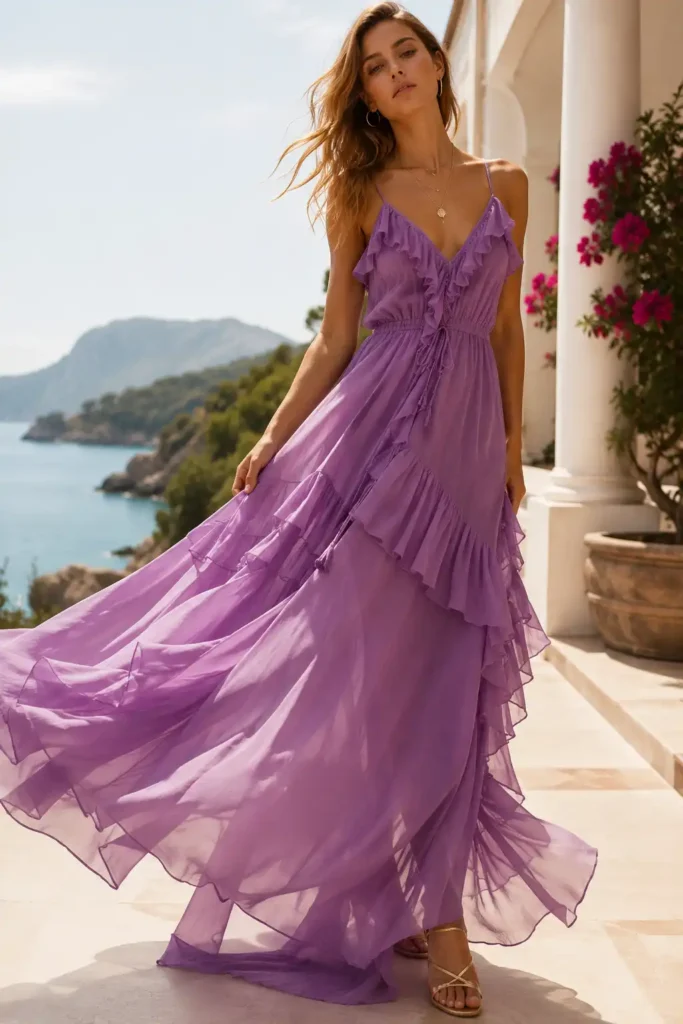
| Recycled Chiffon | Maxi, resort, ruffle, sleeve, layered dress | Transparency, layer count, movement, rolled hem | Shrinkage, seam slippage, fraying, print variation | Opacity, layer alignment, seam security, hem, color fastness |
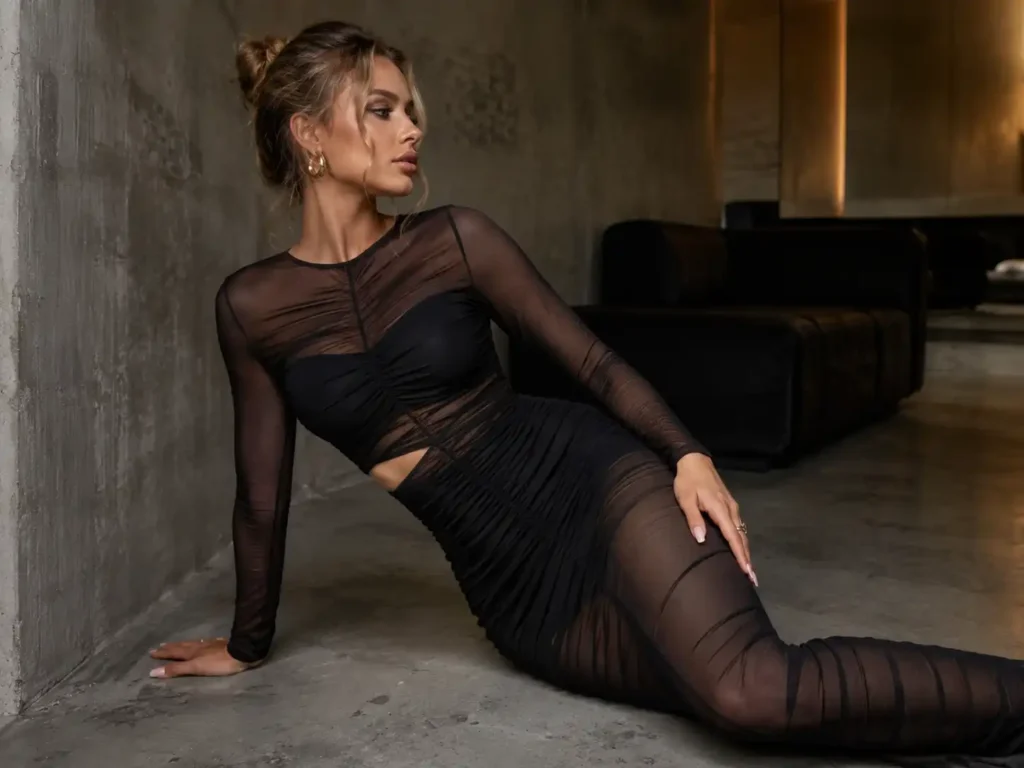
| Recycled Mesh | Bodycon, party, overlay, sleeve, cut-out | Stretch, recovery, softness, lining, edge finish | Holes, pulls, deformation, weak recovery | Stretch direction, recovery, snagging, lining, seam stability |
| Recycled Jersey | Bodycon, casual, midi, travel dress | Weight, opacity, stretch, recovery, spirality | Pilling, twisting, measurement drift, bagging | GSM, shrinkage, side seam, recovery, finished measurements |
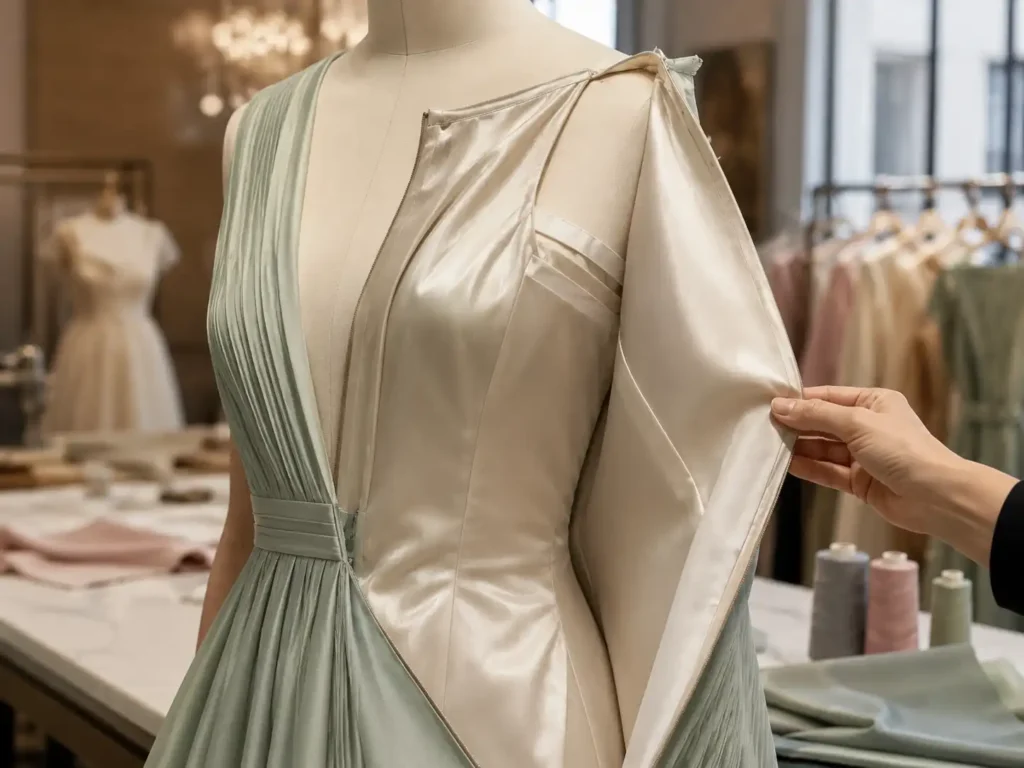
| Recycled Lining | Satin, chiffon, mesh, lace, formal dress | Softness, opacity, static, shell compatibility | Lining exposure, pulling, color mismatch | Length, color, seam allowance, attachment, movement |
| Recycled Woven | Shirt, mini, A-line, structured midi, printed dress | Weight, crease recovery, print, seam strength | Shrinkage, seam slippage, print mismatch | Width, shrinkage, print registration, seam strength, pressing |
Custom GRS Fabric Dress Categories

Satin Occasion Dresses
Chiffon Resort Dresses
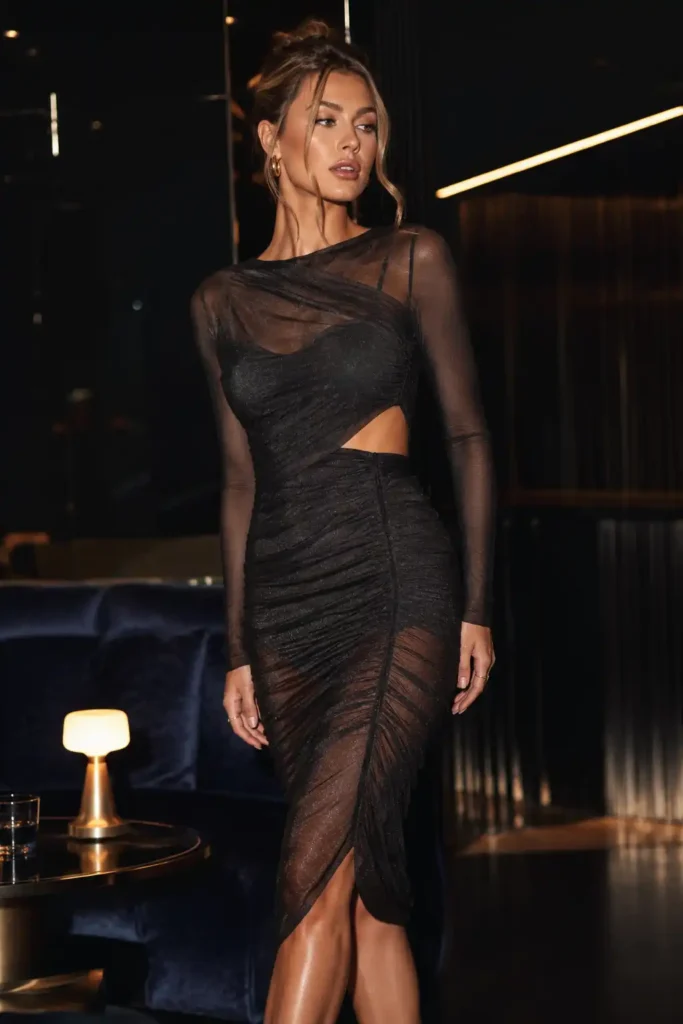
Mesh Party Dresses
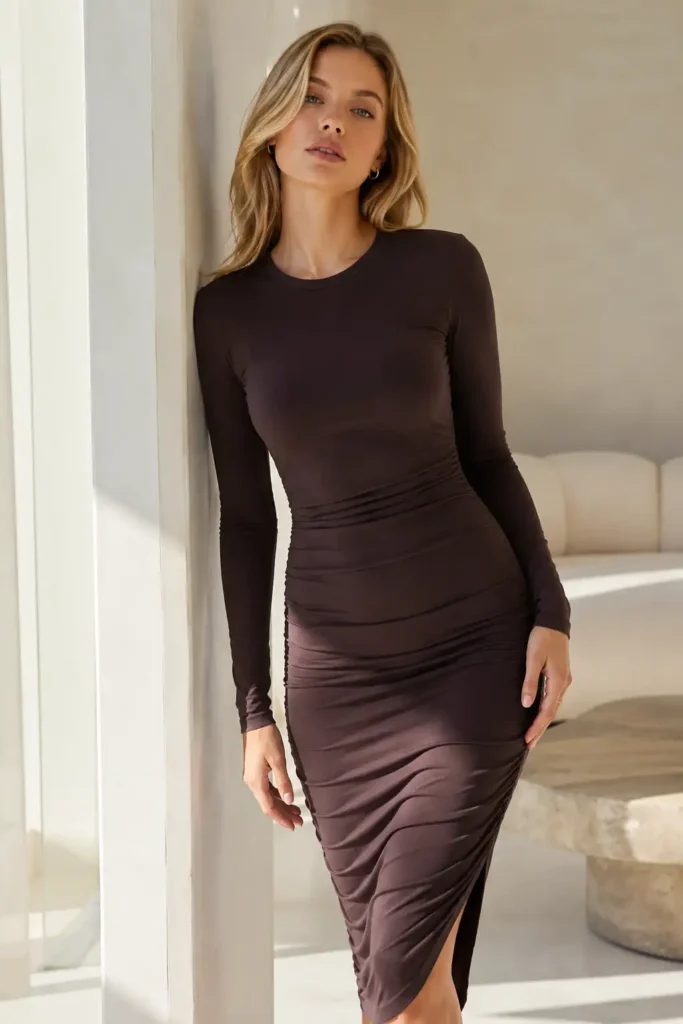
Jersey Bodycon Dresses

Recycled Mini Dresses
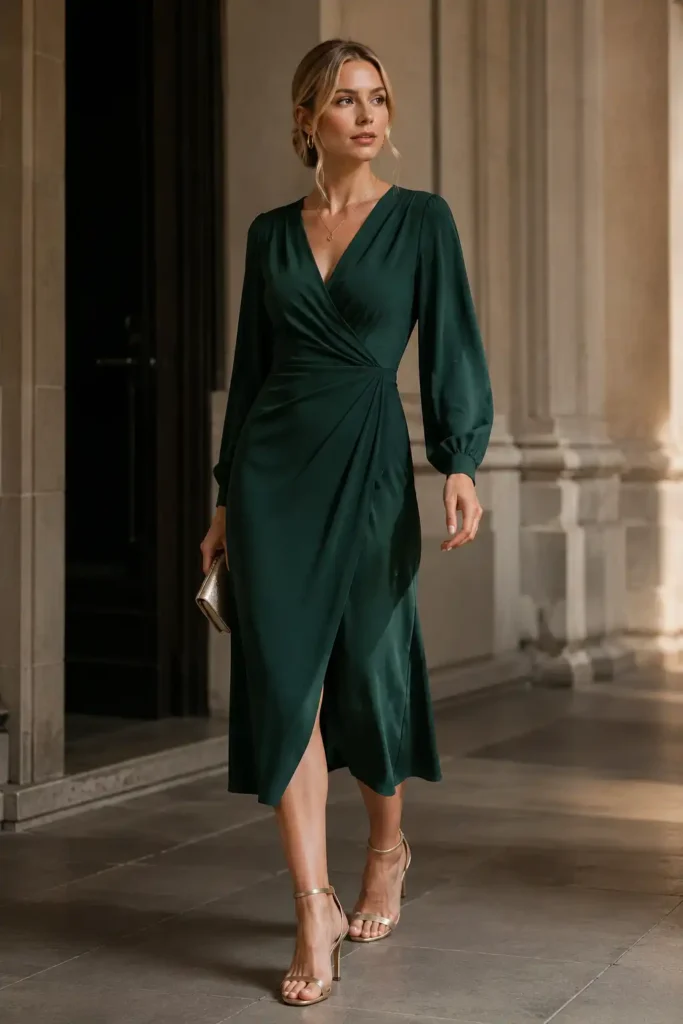
Recycled Midi Dresses

Recycled Maxi Dresses

Private-Label Collections
Design Engineering for Recycled Fabric Dresses
Recycled input does not remove the need for fashion engineering. Fabric behavior must be converted into a silhouette that fits, moves, photographs, and repeats consistently in bulk.
Drape, Weight, and Silhouette
Fabric selection begins with the visual and mechanical result required by the style. A slip dress needs fluid drape and clean surface reflection; an A-line mini needs enough body to hold shape; a ruched mesh dress needs stretch and recovery; a tiered chiffon maxi needs low weight with stable seam behavior.
Drape control: Two fabrics with the same composition can fall differently because yarn, weave, knit structure, finishing, and weight differ. Jinfeng Apparel compares swatches on a dress form, checks fold behavior, and evaluates whether the fabric supports bias cutting, gathers, ruffles, pleats, panels, or fitted shaping.
Consumption impact: Fabric width, print direction, nap or shine direction, panel length, matching requirements, and shrinkage allowance affect consumption. Satin with one-way shine and printed fabric with placement rules can require more material than a plain two-way layout.
Pattern response: Heavy fabric may pull a neckline or stretch a bias seam. Lightweight fabric may collapse a structured cup or expose seam allowances. Pattern values, internal support, seam choice, and lining are adjusted after fabric direction is confirmed.
Bulk repeatability: Approved handfeel and appearance are translated into measurable checks such as GSM, width, stretch, shrinkage, lot shade, surface defects, and pressing response. A visual approval without measurable references is not enough for a large program.
Transparency, Lining, and Coverage
Opacity is a commercial and fit issue, especially for white, pale, chiffon, mesh, and lightweight satin dresses. Coverage must be planned at bust, waist, hip, slit, side seam, and back rather than solved by adding any available lining after sampling.
Lining selection: Shell and lining should work together in weight, stretch, color, static, and recovery. A non-stretch lining under stretch mesh can restrict movement.
A heavy lining under chiffon can remove the intended floating effect. A bright lining under pale satin can alter the visible shade.
Coverage mapping: Jinfeng Apparel reviews neckline depth, armhole, side-body exposure, back height, cup coverage, slit height, skirt length, and light transmission. Internal modesty panels, double layers, partial lining, full lining, or skin-tone lining may be compared during sampling.
Movement checks: Lining must not twist, pull the outer layer, climb while walking, show below a slit, or become longer after hanging.
Maxi and bias-cut styles may need resting and re-leveling before final hemming.
Production control: Shell and lining are identified separately in the BOM, material receipt, cutting plan, bundle record, and inspection checklist.
Color and lot records help prevent mixing across production waves.
Stretch, Recovery, and Body Fit
Stretch percentage describes extension; recovery describes how well the fabric returns. Close-fit dresses can look correct at first fitting but lose waist, hip, neckline, or hem shape when recovery is weak.
Direction mapping: Crosswise, lengthwise, and diagonal stretch are measured and marked before pattern development. Mesh and jersey may behave differently across directions, so marker placement must follow the approved grain and stretch plan.
Negative ease: Bodycon patterns use controlled reduction from body measurements. Reduction depends on fabric recovery, weight, opacity, lining, style length, seam placement, and target compression. One reduction value cannot be copied across every recycled knit.
Support zones: Bust, underbust, waist, hip, neckline, armhole, and strapless upper edge receive different stress. Elastic, clear tape, lining, cups, boning, or stabilizing seams may be used where the design requires support.
Size grading: Grading must protect proportions, not only add equal width. Neckline depth, cut-out placement, strap length, slit height, and ruched distribution are checked across the size range. Bulk measurement tolerances are linked to points of measure and fabric behavior.
Seams, Edges, and Pressing
A clean fashion result depends on construction chosen for the material. Needle size, thread, stitch density, seam type, edge finish, zipper, hem, pressing temperature, and handling methods all influence appearance.
Fine fabrics: Chiffon and lightweight satin can pucker, fray, slip, or show needle damage. Tests may compare narrow overlock, French seam, binding, baby hem, rolled hem, and stabilizing methods before the sewing specification is locked.
Stretch fabrics: Jersey and mesh seams must extend without breaking while controlling waviness. Stitch type, differential feed, seam allowance, elastic application, and recovery are reviewed through stretch tests and fittings.
Visible surfaces: Satin exposes seam tension, pressing marks, shine damage, needle holes, and handling stains. Clean work areas, controlled pressing, protective layers, and packing discipline matter as much as sewing accuracy.
Finishing standard: PP approval records the accepted seam, hem, zipper, lining, pressing, and appearance.
Bulk inspection compares production against the approved reference rather than relying on a general workmanship description.
Fit and Measurement Control Across Sizes
Material changes can alter fit even when a pattern remains unchanged. Jinfeng Apparel connects stretch, shrinkage, drape, and structure with points of measure, fitting comments, grading, and bulk tolerance.

Bust, Waist, and Hip Balance
The bust, waist, and hip relationship defines the silhouette for bodycon, slip, corset, A-line, and fitted midi dresses. Jinfeng Apparel reviews upper bust, full bust, underbust, waist level, low waist, high hip, full hip, and ease rather than relying only on three circumference measurements.
Bust control: Neckline stability, cup shape, dart position, princess seams, underbust placement, and side-seam balance affect support and coverage. Strapless and deep-V styles may require cups, boning, elastic, clear tape, or higher side panels.
Waist control: High-waist, natural-waist, and low-waist styles create different torso proportions. Waistline placement is checked against front length, back length, bust point, hip curve, and target market fit.
Hip control: Close-fit dresses need enough movement and recovery without side-seam pulling or horizontal drag lines. Woven styles use wearing ease; stretch styles use controlled negative ease based on verified fabric data.
Bulk control: Measurement points, tolerance, fabric conditioning, and measuring method are documented. A style can pass circumference checks while failing balance, so side seam, hem level, and visual symmetry are also inspected.

Neckline, Armhole, and Strap Security
Fashion dresses often fail through exposure or instability rather than basic circumference. Neckline depth, neckline width, armhole shape, side-body height, strap length, back height, and fastening position must work together.
Neckline review: Deep-V, cowl, halter, square, sweetheart, and strapless necklines are evaluated for coverage, support, gaping, and movement. Lining, facing, interfacing, clear tape, cups, or boning may be adjusted during sampling.
Armhole review: A large armhole can expose the bra or side body; a tight armhole can cut into the wearer and pull the bust. Front and back armhole shapes are reviewed independently.
Strap control: Fixed straps, adjustable straps, halter ties, and one-shoulder construction carry different loads. Strap length, attachment angle, adjuster position, hardware strength, and seam reinforcement are checked.
Grading control: A neckline or cut-out should not become disproportionately deeper as sizes increase. Grade rules are reviewed around exposure points and support zones, then confirmed through size-set measurements or selected-size fitting according to program needs.
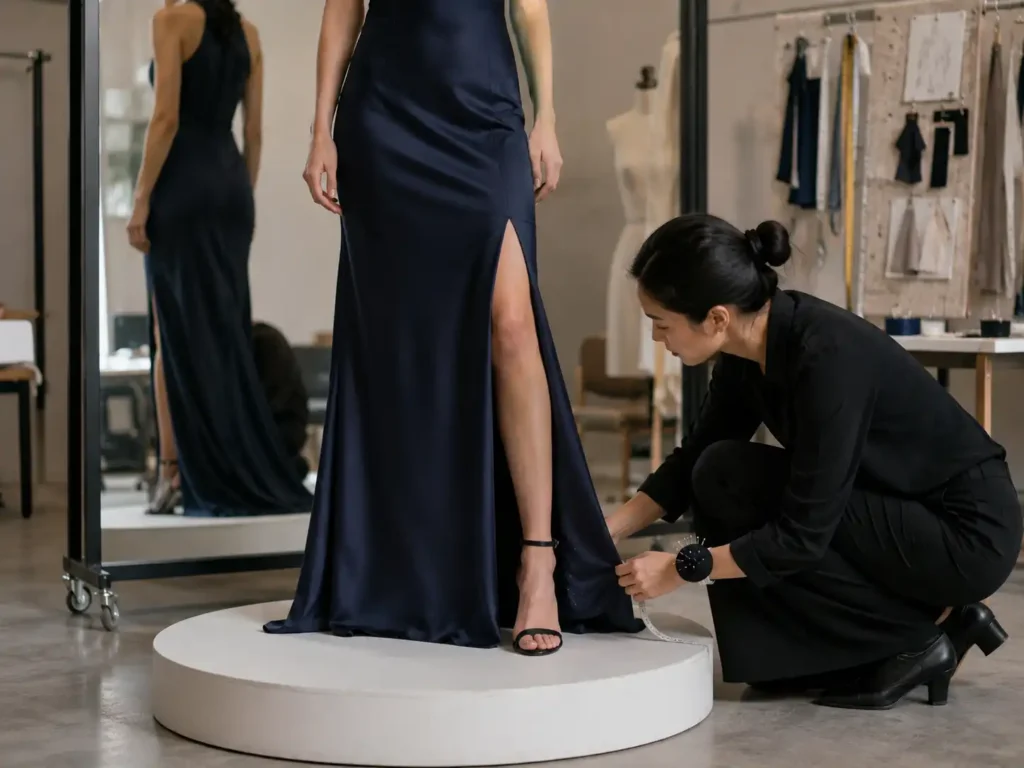
Length, Slit, and Hem Balance
Mini, midi, maxi, and floor-length dresses require different length controls.
Front length, back length, side seam, lining length, slit height, high-low shape, and hem sweep influence comfort, safety, and visual proportion.
Mini dresses: Length must protect movement while matching the intended fashion proportion.
Seat shape, stretch recovery, lining, and hem construction affect finished coverage.
Midi dresses: Waist placement and hem position strongly influence proportion. Slit height must support walking without changing the intended coverage across sizes.
Maxi dresses: Fabric weight, bias stretch, hanging time, footwear assumptions, and packing can change the hem. Long garments may require resting before final leveling and careful measurement after pressing.
Bulk inspection: Length checks are completed on a flat surface using the approved points of measure. Twisted side seams, uneven hems, lining exposure, and fabric growth are inspected alongside numeric results.

Size Grading and Ratio Planning
Multiple sizes can be produced within the confirmed quantity for each style and color. A clear size chart and size ratio are needed before cutting, label ordering, packing, and carton planning.
Grade rules: Bust, waist, hip, shoulder, armhole, strap, neckline, length, slit, and design detail placement may use different increments. Equal grading across every point can distort a fashion silhouette.
Fabric interaction: Stretch materials may need different grade logic from non-stretch woven materials. Plus-size extension, petite, or tall programs require separate review rather than a simple proportional scale-up.
Ratio planning: XS-XL or XXS-XXL ratios should reflect sales data and channel needs. Over-fragmented ratios can complicate cutting, bundling, measurement inspection, label control, packing, and replenishment.
Documentation: Approved grade rules, size chart, points of measure, tolerances, size labels, pack ratio, and carton breakdown are aligned before production release. Repeat orders still require fabric and color rechecking because a new lot can alter finished measurements.
Files Needed Before Development Starts
Tech Pack
Reference Images
Original Sample
Size Chart
Fabric Standard
Quantity Plan
Claim Requirements
Launch and Delivery Plan
GRS Fabric Sourcing and Approval Workflow
Requirement Review
Fabric Direction
Supplier Screening
Certificate Review
Swatch Approval
Sample Validation
Bulk Lot Approval
Record Handover
Sampling and PP Approval Before Bulk

Development Sample

Revised and Photo Samples

PP and Golden Standard
Traceability Records for Every Style
Style Identity
Material Supplier
Color and Lot
Approved Swatch
BOM and Trims
Cutting Quantity
Sample Approval
Packing and Shipment
From Tech Pack to Bulk Delivery
Project Review
Fabric Confirmation
Pattern Development
Sample and Revision
Material Inspection
Cutting and Sewing
Final QC and Packing
Documents and Delivery
Quality Control for GRS Fabric Dresses
Incoming Material QC
Cutting QC
Sewing QC
In-Line Inspection
Finished Garment QC
Pressing Review
Packing QC

Testing and Compliance Support by Market
Fiber Composition
Color Performance
Dimensional Stability
Chemical Requirements
Physical Performance
Third-Party Coordination
MOQ, Cost, and Schedule Planning
Garment MOQ Structure
Certified Material Variables
Quotation and Timing Factors
Private Label and Retail-Ready Delivery

Main Brand Labels
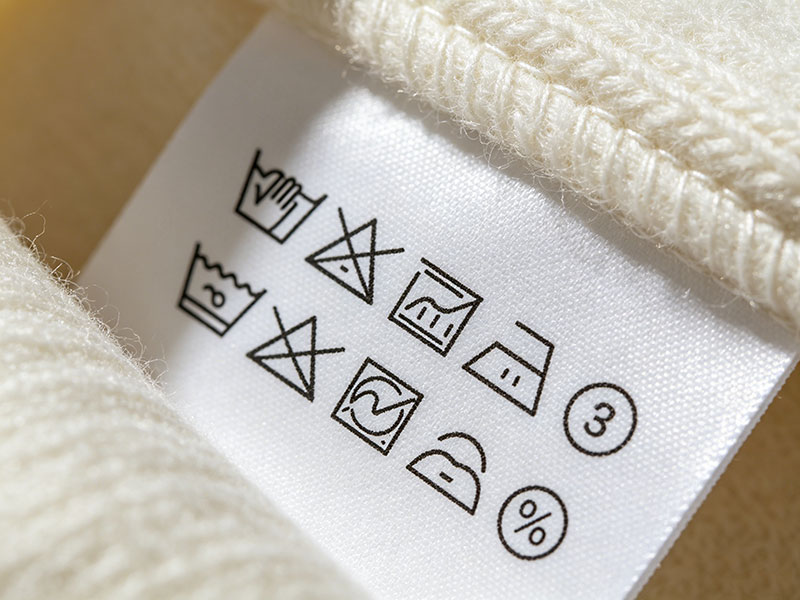
Care and Fiber Labels
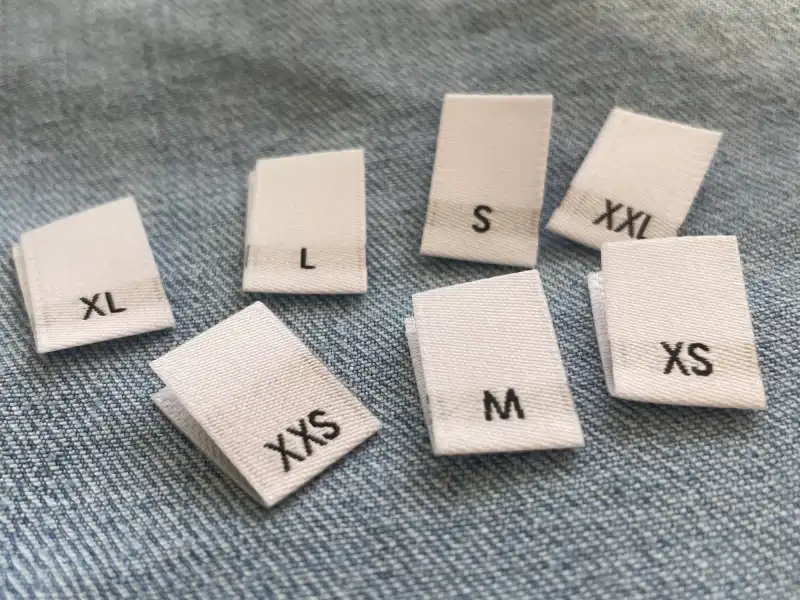
Size Labels
Hangtags and Claims
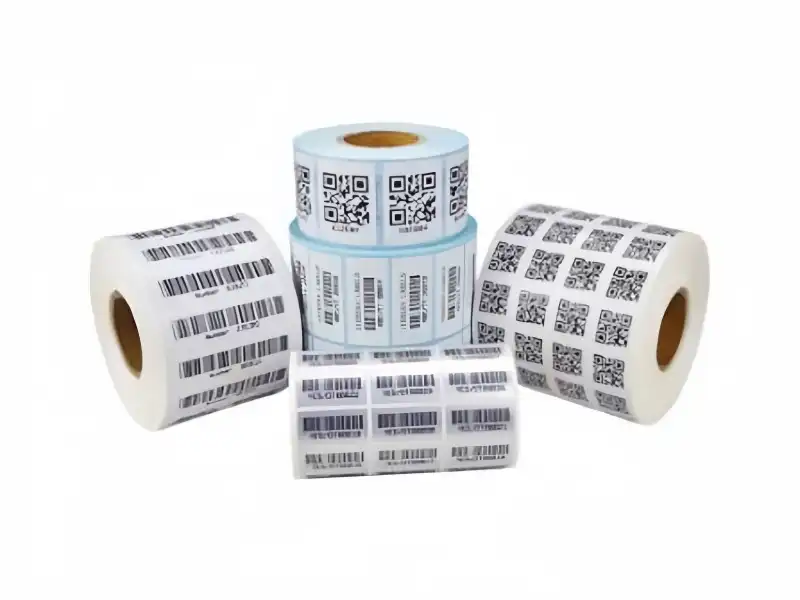
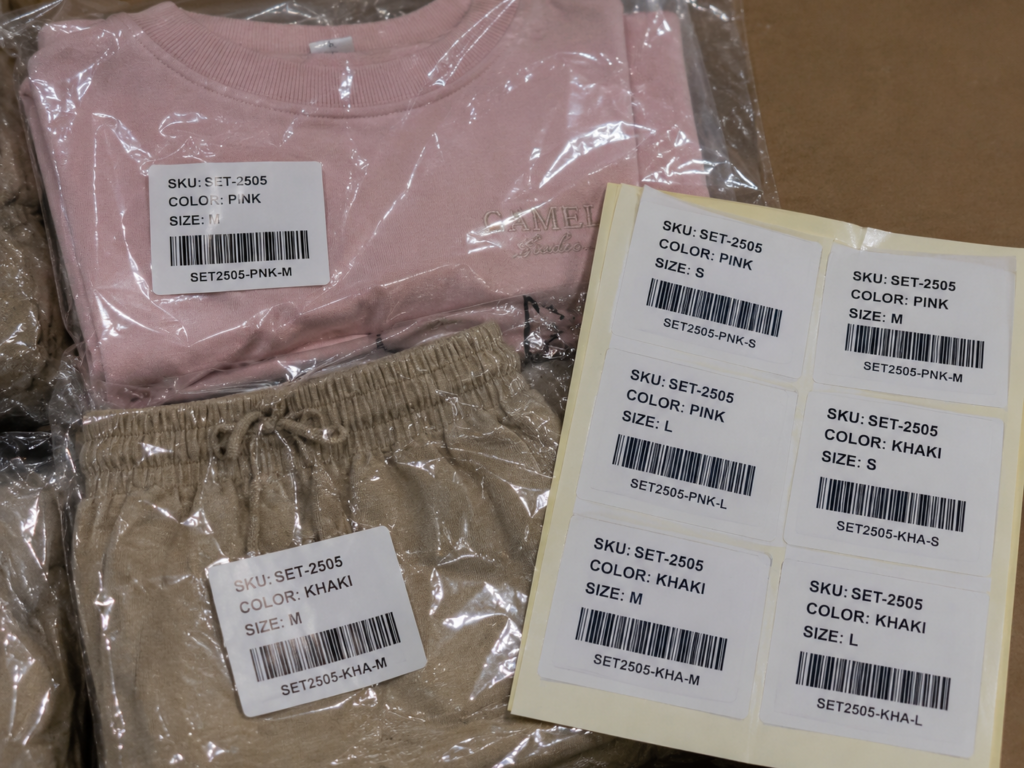
Barcode and SKU

Polybags and Protection
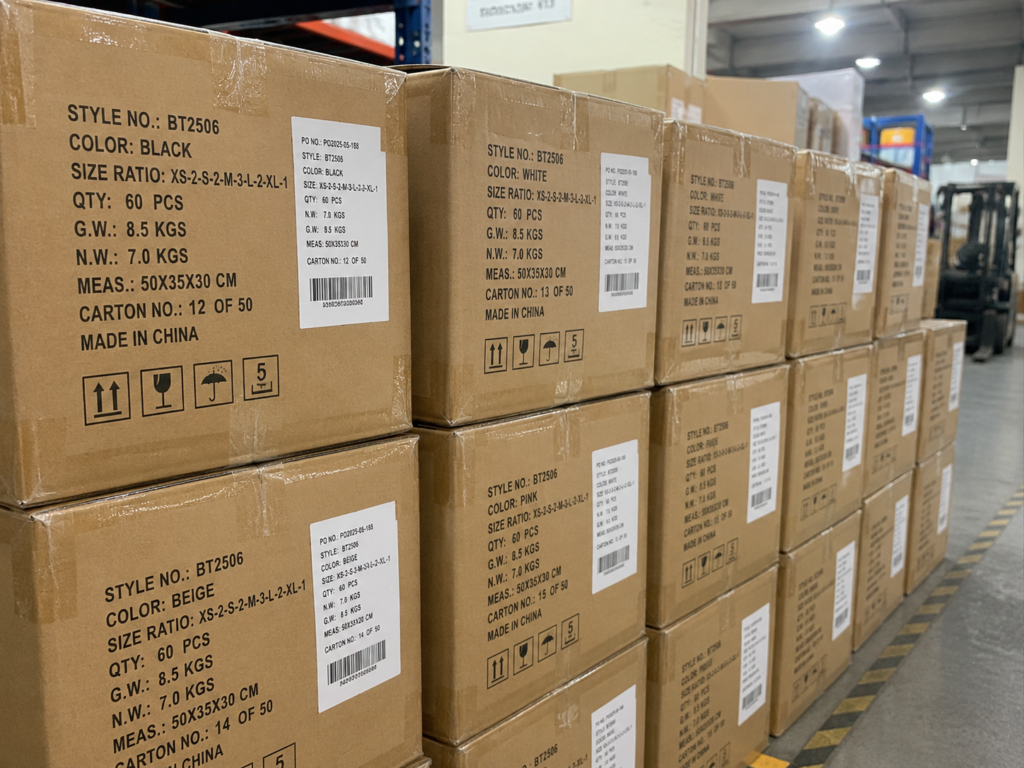
Cartons and Assortment

Export Documents
Long-Term Reorders Without Losing Control
Pattern and Fit Records
Material and Trim Records
QC and Packing History
Representative GRS Dress Program Cases
US Occasionwear Collection
Market: United States
Program: 18 styles across recycled satin slip dresses, one-shoulder midi dresses, lined mesh party dresses, and structured occasion minis
Order scale: 42,600 garments across 5 colors and XS-XL
Development: 3 sample rounds for priority styles; separate PP approval by fabric group
Main challenge: The collection used smooth satin, stretch mesh, and lining from different material sources. Shine direction, shade under studio lighting, lining compatibility, and transaction-document responsibility had to be aligned without slowing the launch sequence.
Manufacturing response: Styles were grouped into satin, mesh, and structured categories. Fabric records connected supplier, certificate reference, color, lot, and approved swatch.
Satin cutting followed one-way shine rules; mesh patterns were adjusted from measured stretch and recovery; lining lengths were locked by style.
Hero styles moved first through photo sample and PP approval, while later styles followed the same approved fabric and workmanship standards.
QC focus: Shade, snags, seam puckering, neckline stability, mesh recovery, lining exposure, measurements, barcode, and color-size packing.
Delivery structure: Two shipment waves based on campaign priority and warehouse intake.
European Resort Collection
Market: European Union
Program: 24 styles across recycled chiffon maxi dresses, printed woven minis, layered midis, halter dresses, and lined resort silhouettes
Order scale: 58,400 garments across 6 solid and printed color stories, XS-XXL
Development: 4 sample rounds across print, fit, lining, and PP stages
Main challenge: Lightweight fabrics created transparency, seam-slippage, rolled-hem, shrinkage, and print-placement risks.
Several styles shared fabric bases but used different layer counts and lining structures, making consumption and opacity control essential.
Manufacturing response: Print and solid groups were separated. Strike-offs, physical color standards, shrinkage tests, layer plans, lining colors, and hem methods were approved before bulk booking.
Fabric consumption was calculated by width, print direction, ruffle volume, layer count, and size ratio. Long dresses were rested before final hem balancing, and packing methods were selected to reduce crushing.
QC focus: Print registration, shade, opacity, seam slippage, rolled hems, lining, dress length, stains, care labels, and assortment.
Delivery structure: Three delivery waves aligned with ecommerce launch, retail allocation, and replenishment reserve.
Australian Partywear Program
Market: Australia
Program: 12 styles across recycled stretch mesh, recycled jersey, satin panels, ruched mini dresses, cut-out midis, and bodycon party dresses
Order scale: 26,800 garments across 4 colors and XXS-XL
Development: 3 sample rounds with fit review in selected sizes and PP confirmation by stretch group
Main challenge: Stretch and recovery differed between mesh, jersey, lining, and elastic. A design could pass base-size fitting but lose neckline, waist, or hip stability after wear. Pale colors also required careful opacity and lining review.
Manufacturing response: Crosswise and lengthwise stretch were measured for each material. Pattern reduction, lining, elastic, clear tape, neckline support, and ruched distribution were adjusted by fabric group. Grade rules protected cut-out position, neckline depth, and hem length across sizes. Bulk fabric was compared with the approved stretch and shade references before cutting.
QC focus: Recovery, twisting, neckline gaping, cut-out placement, bust-waist-hip measurements, lining opacity, seam extension, color-SKU labels, and packing accuracy.
Delivery structure: One main sea shipment with an earlier priority air allocation for campaign and launch stock.
Frequently Asked Questions About GRS Dresses
Jinfeng Apparel supports custom dress development with GRS-certified fabric options sourced and verified by project. Certification status must be confirmed for the applicable legal entity, production site, material, processing chain, and order. Jinfeng Apparel should not be described as a GRS-certified garment manufacturer unless the relevant Scope Certificate has been verified for the proposed production route.
Yes. Jinfeng Apparel can review recycled satin, chiffon, mesh, jersey, lining, woven, and other suitable directions through fabric partners. Availability depends on composition, weight, width, finish, color, supplier scope, stock, dye lot, MOQ, and document route. Physical swatches and certificate files are reviewed before approval.
Not automatically. Fabric certification is one part of the chain. Final garment claim eligibility depends on certified entities, covered processes, production location, direct supplier, material records, and transaction documentation. The required route should be defined before bulk material is booked.
Transaction Certificate availability depends on the certified supply route, direct supplier, covered products and processes, order records, certification body requirements, and agreed responsibility. The issuing party, fee, supporting documents, and timing must be confirmed before order placement.
Standard garment MOQ starts from 200 pcs per style/color. Certified, recycled, custom-dyed, custom-printed, lace, sequin, and specially developed materials may require higher minimums according to the supplier, color, lot, finish, and documentation route. MOQ is not calculated by combining unrelated styles.
Yes. Sizes can be distributed within the confirmed style-color quantity according to an approved size ratio. Jinfeng Apparel supports multi-size production based on the brand’s size chart, grade rules, measurement tolerances, size labels, packing ratio, and carton requirements.
Custom colors can be reviewed through Pantone, physical standard, lab dip, or print strike-off. Custom dyeing normally carries supplier minimums and requires shade approval, bulk-lot confirmation, lining and trim matching, and schedule planning. Stock certified colors may offer a more efficient starting point where suitable.
Programs may use first samples, fit samples, revised samples, photo samples, salesman samples, PP samples, and golden references. The required route depends on style complexity, fabric readiness, fit risk, launch plan, and brand approval process. Bulk should not begin before PP standards are confirmed.
Yes. Fiber composition, colorfastness, shrinkage, pilling, seam performance, restricted substances, finished-garment inspection, AQL review, and brand-appointed inspection can be coordinated according to the agreed protocol. Laboratory, test items, sample quantity, fee, and timing are confirmed per project.
Send a tech pack or reference, target fabric and recycled-content requirement, certification documents needed, quantity by style/color, size range, color plan, trims, labels, packaging, target delivery, and destination. A structured brief allows material MOQ, sample route, construction risk, cost, and schedule to be reviewed together.

Start Your GRS Dress Development Program
Send Jinfeng Apparel a structured brief for an initial review of fabric direction, certification requirements, silhouette, construction, MOQ, sample route, production risk, private-label needs, and delivery planning.
Kelly will coordinate the first assessment with the development, fabric, pattern, merchandising, and quality teams.
For a faster and more accurate response, include:
- Tech pack, reference images, original sample, or line sheet
- Target dress categories and 10-30 style collection structure where applicable
- Required fiber composition and recycled-content direction
- GRS documents, transaction route, retailer manual, or claim requirements
- Quantity by style, color, and size; standard garment MOQ starts from 200 pcs per style/color
- Size chart, grade rules, fit comments, and target market
- Color standards, prints, lining, trims, labels, barcode, and packaging
- Photo, launch, PP approval, inspection, warehouse, and delivery milestones
- Preferred shipment method and destination