GOTS Fabric Sourcing Support
Certified fabric sourcing coordination for fashion brands developing organic cotton dresses, skirts, jumpsuits, matching sets, tops, and private-label womenswear.
Jinfeng Apparel connects material requirements with garment execution. We help sourcing, development, and sustainability teams define the fabric specification, screen certified mill options, review available documentation, coordinate swatches and colors, validate the fabric in samples, and control approved material references through bulk production. Certification scope, facility coverage, color availability, supplier MOQ, batch documentation, and the Transaction Certificate route are confirmed by project before quotation or production planning.
- 6 fabric directions: organic cotton woven, jersey, rib, poplin, lining, and project-specific blends.
- 3 document checkpoints: supplier identity and Scope Certificate, covered product and process scope, and the Transaction Certificate route for the applicable shipment.
- 2 sample rooms: supported by 7+ senior pattern makers and 20+ sample machinists for garment-level material validation.
- Commercial planning: Jinfeng garment MOQ starts at 200 pcs per style/color; certified fabric mill MOQ, color MOQ, and document cost are reviewed separately.
Manufacturing Support Behind Every Fabric Decision
Structured Production Network
Pattern and Sample Capacity
Bulk and Project Control
What GOTS Fabric Sourcing Support Covers
Source the Right Material
Review Available Evidence
Execute in Garments
Is Jinfeng the Right Sourcing Partner?
Best Fit For
- Dresses, skirts, jumpsuits, matching sets, tops, and coordinated womenswear collections.
- Projects requiring supplier screening, swatches, color development, sample validation, QC, labels, and delivery.
- Seasonal programs with 10-30 styles and coordinated bulk production across multiple colors and sizes.
Not Designed For
- The regular garment MOQ starts at 200 pcs per style/color.
- Certified fabric mills may require a separate fabric or color MOQ above the garment MOQ.
- A total quantity spread across many styles or colors does not automatically meet the production or fabric mill requirement.
Where GOTS Fabric Sourcing Projects Commonly Fail

Certificate and Fabric Do Not Match
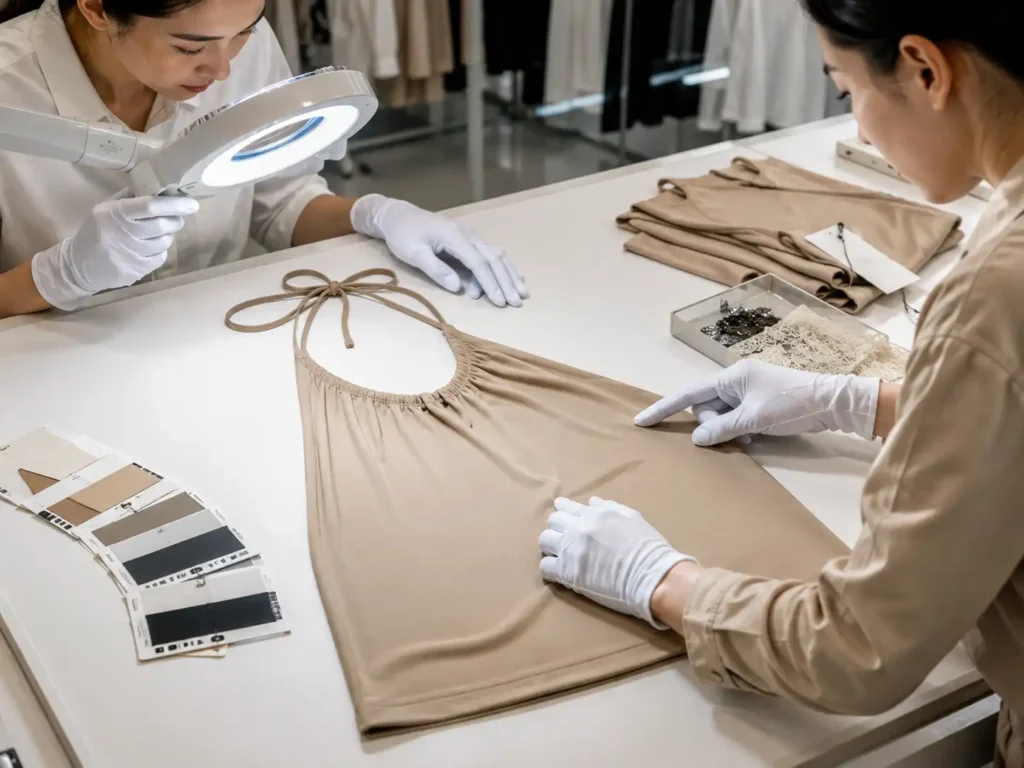
The Fabric Fails in Sampling

Commercial Limits Appear Too Late
From Fabric Brief to Production-Ready Material
Project Requirement Review
Fabric Specification Development
Certified Mill Screening
Swatch and Color Review
Garment Sample Validation
Bulk Material Control

How We Review GOTS Supplier Documentation
Document review follows the material and transaction route. A certificate logo on a website or PDF is not enough to approve a fabric. The review connects the legal supplier, certified scope, product, process, facility route, validity period, and shipment evidence.
| Review Point | What Must Be Confirmed | Risk Controlled |
|---|---|---|
| Legal entity | Supplier name, address, invoicing entity, and relationship to the certified operation. | Prevents use of an unrelated company certificate. |
| Certificate status | Certificate number, approved certification body, issue date, validity, and database record where available. | Detects expired, altered, or unverified documents. |
| Product scope | Whether the relevant fabric or product category is listed within the certified scope. | Avoids assuming every product sold by a certified entity is certified. |
| Field of operation | Spinning, knitting, weaving, wet processing, manufacturing, trading, or other applicable activities. | Confirms the required process is covered. |
| Facility route | Covered facilities, approved subcontracting route, and production location where information is available. | Reduces gaps between the certificate and the actual processing route. |
| Shipment evidence | Transaction Certificate requirement, issuing route, product details, shipment details, timing, and cost. | Connects a specific delivery to its certification evidence. |
GOTS Fabric Directions for Womenswear
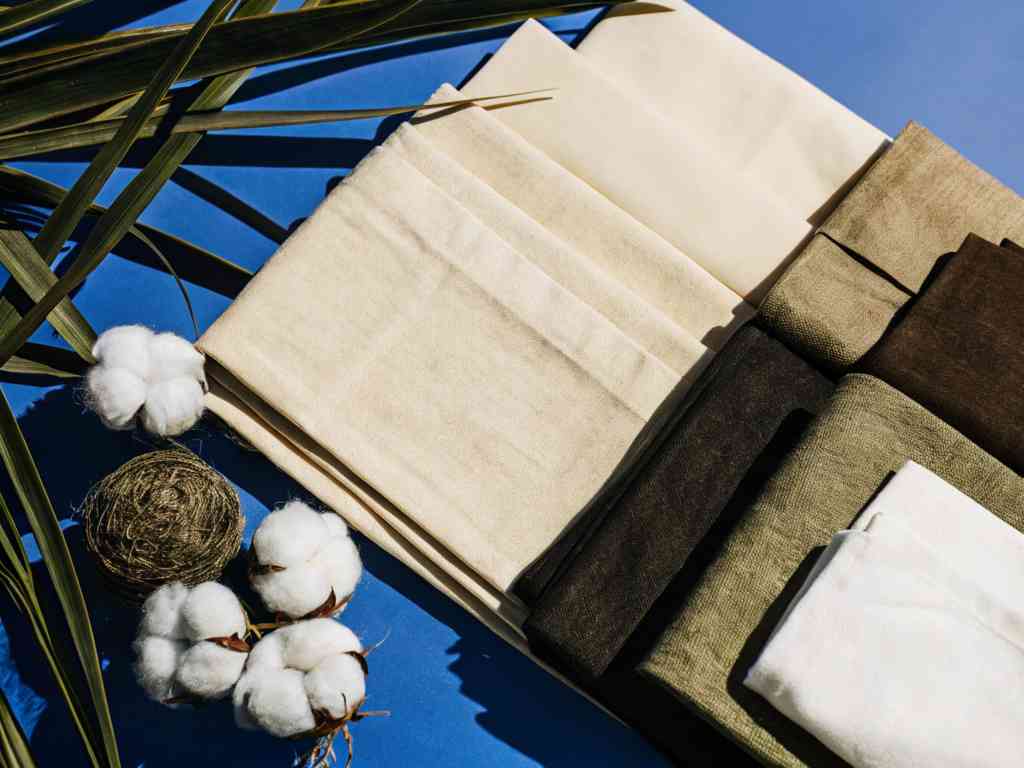
Organic Cotton Woven
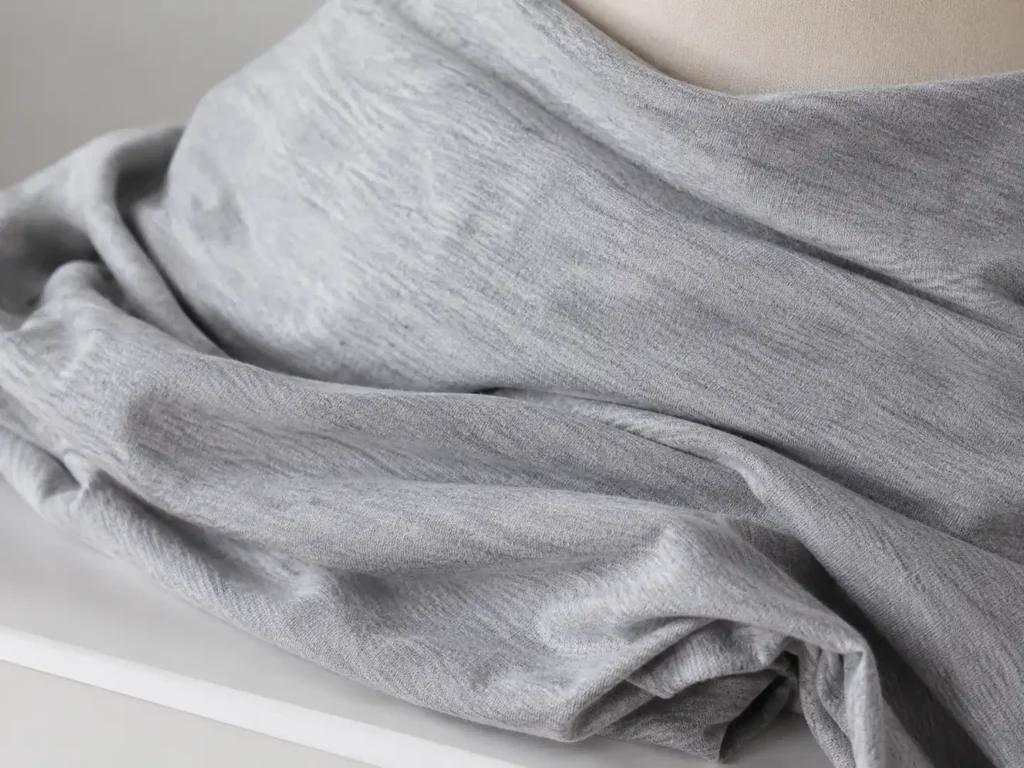
Organic Cotton Jersey
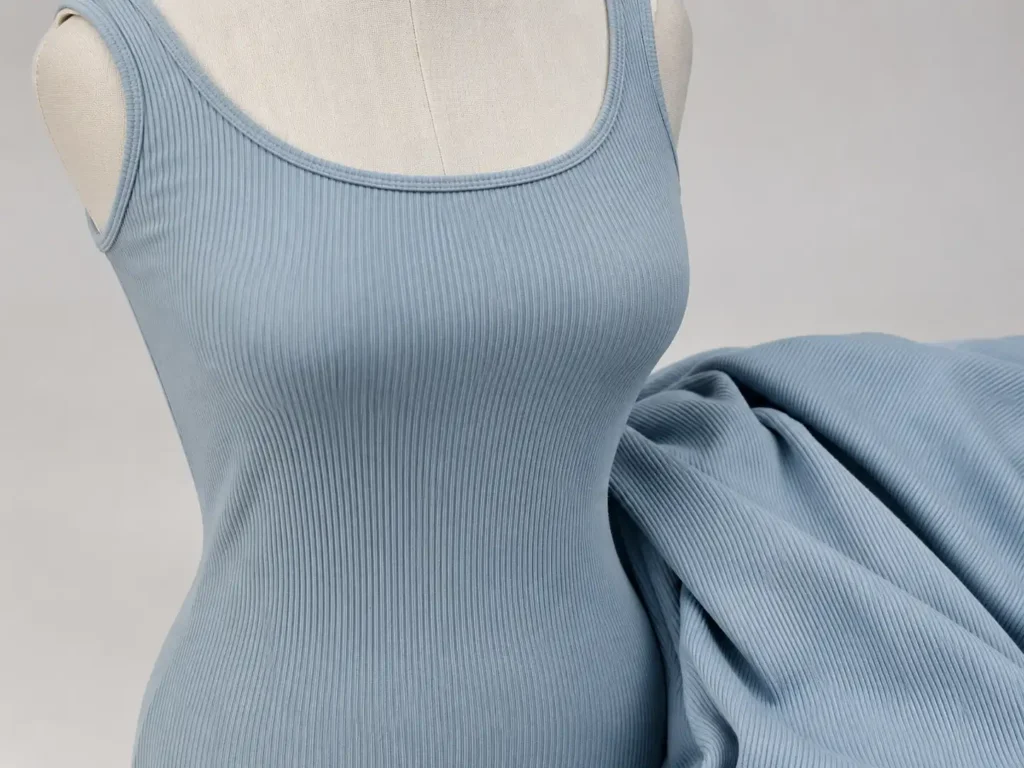
Organic Cotton Rib
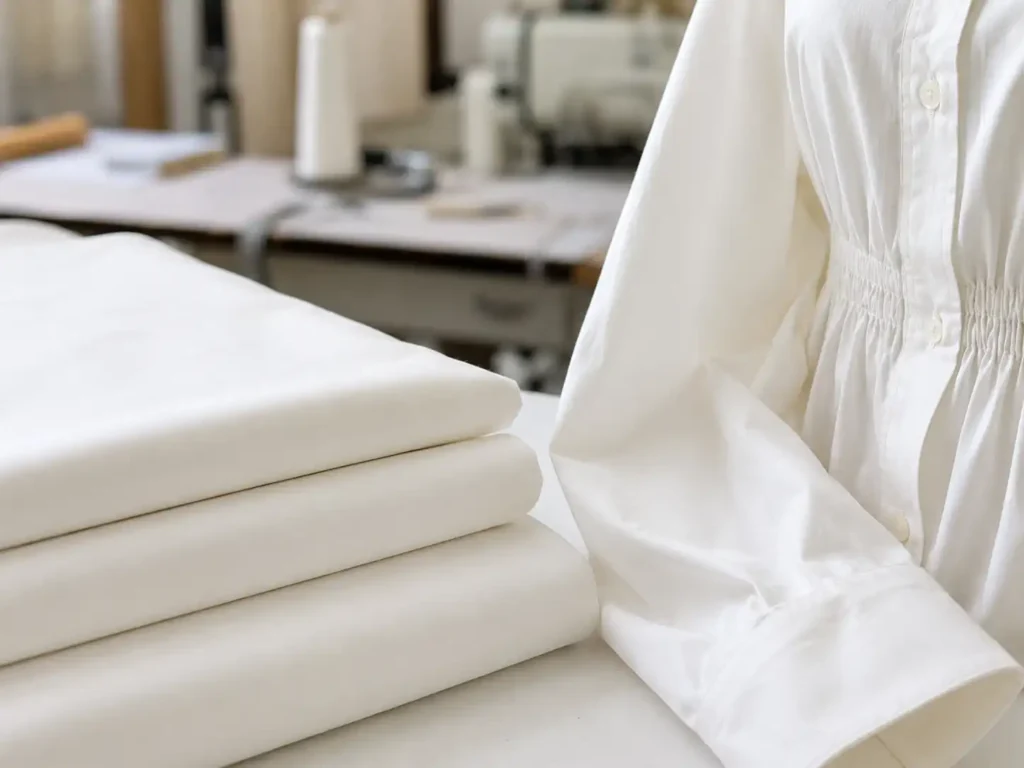
Organic Cotton Poplin

Organic Cotton Lining
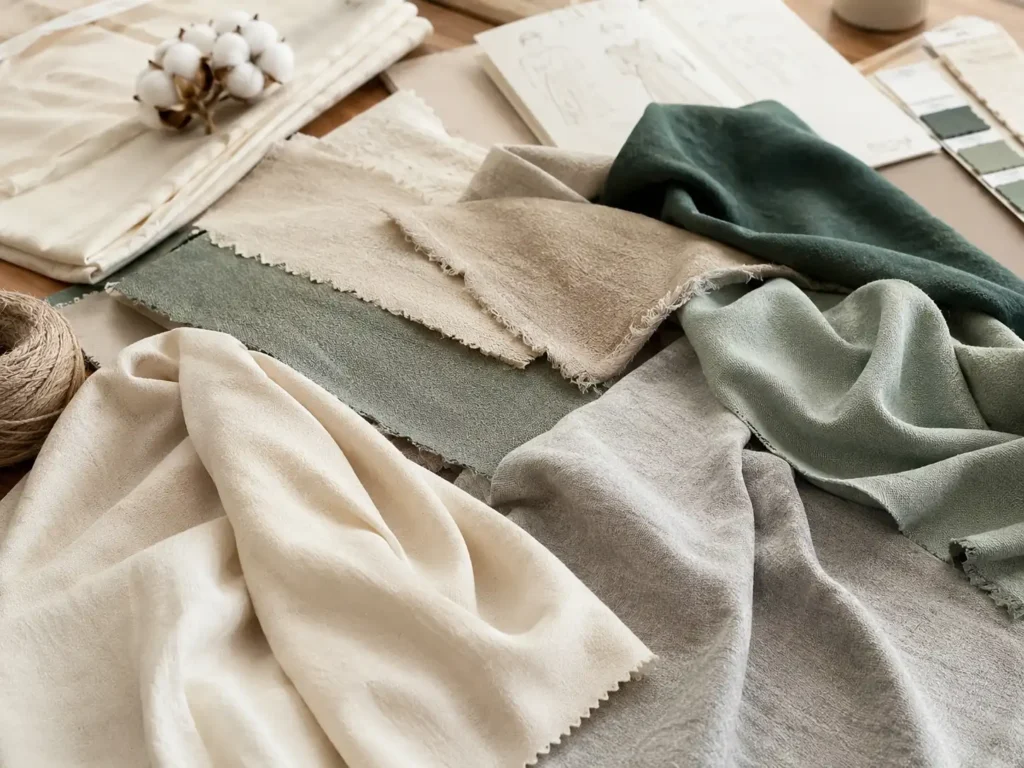
Organic Cotton Blends
Match GOTS Fabrics to Womenswear Categories
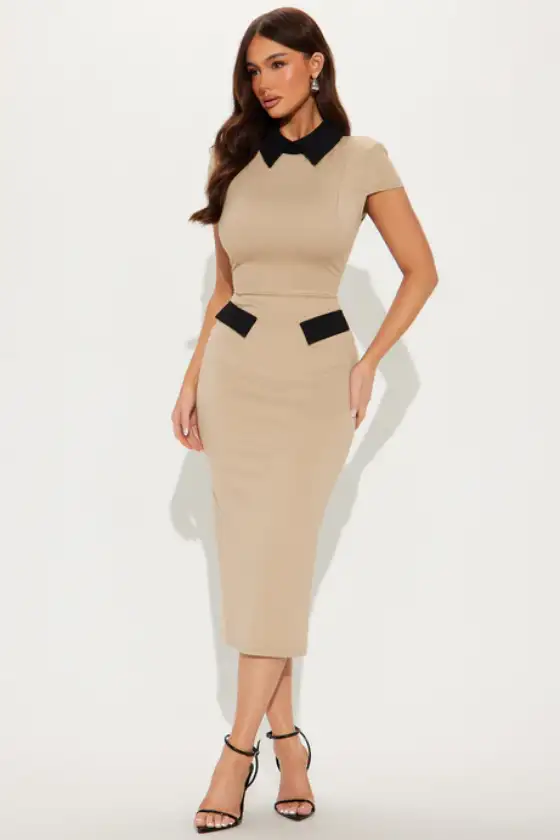
Casual Dresses
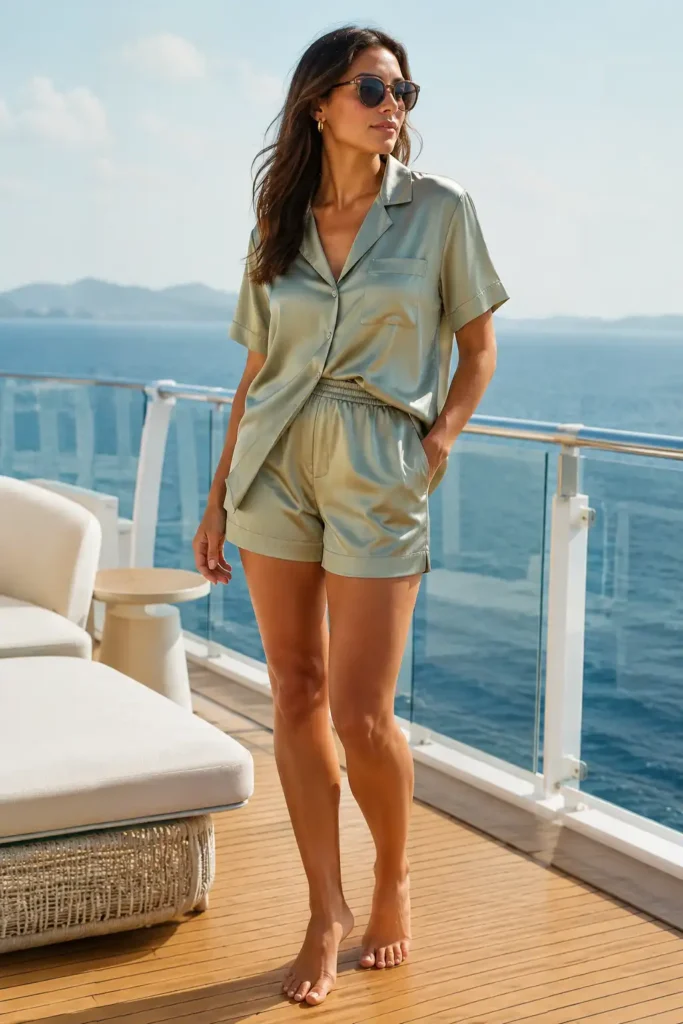
Shirt Dresses

Rib Knit Dresses
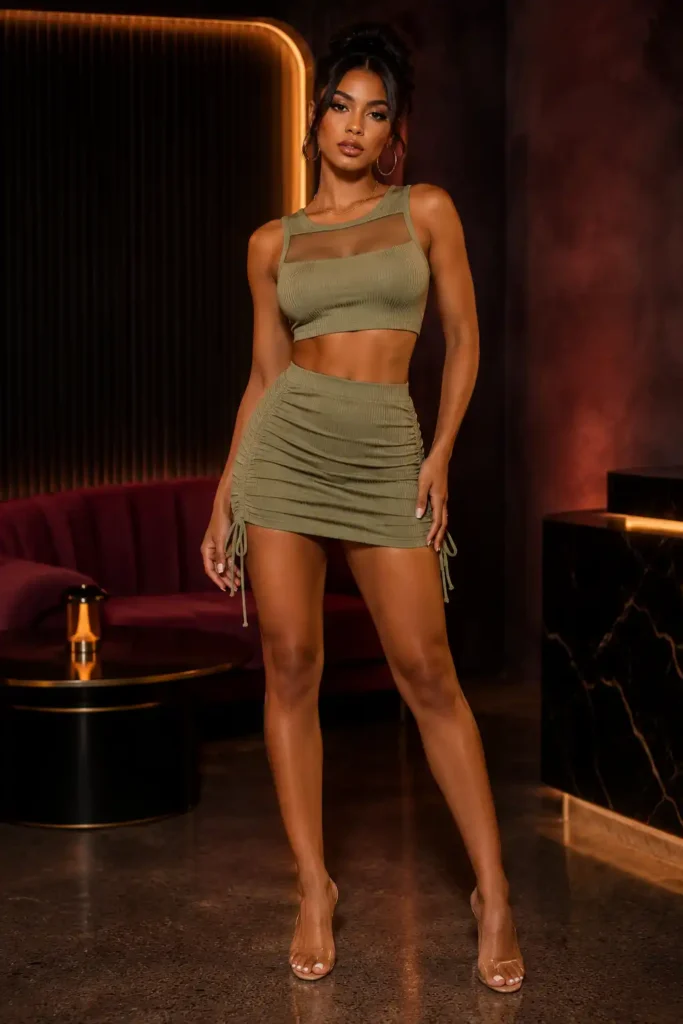
Skirts
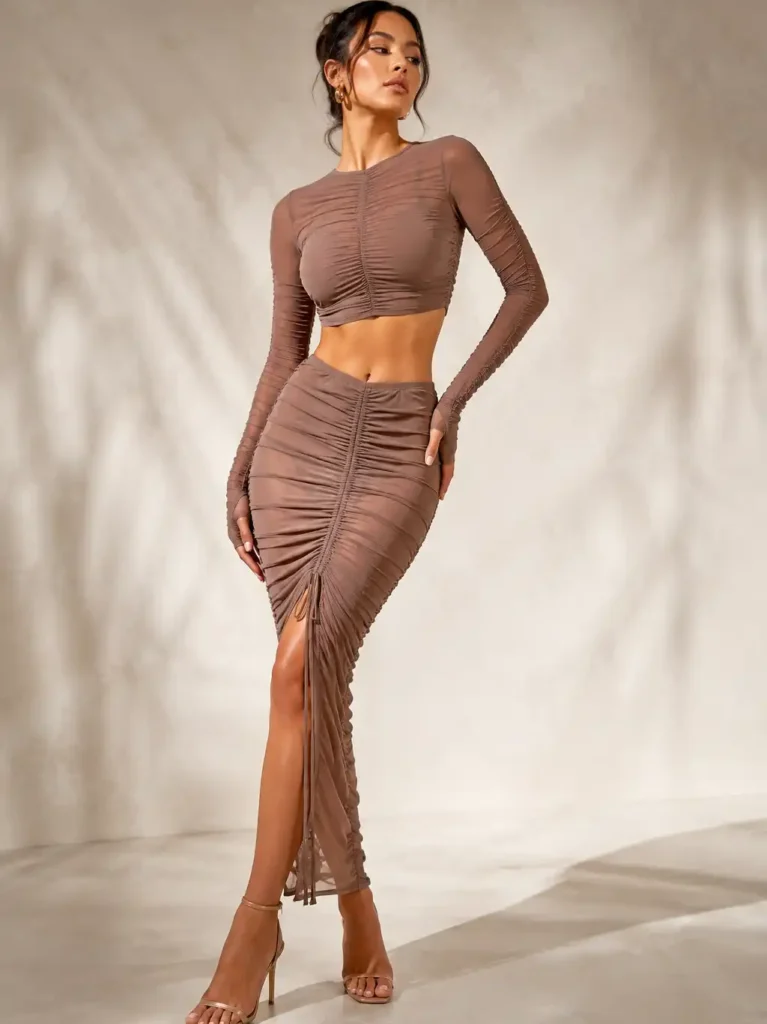
Matching Sets
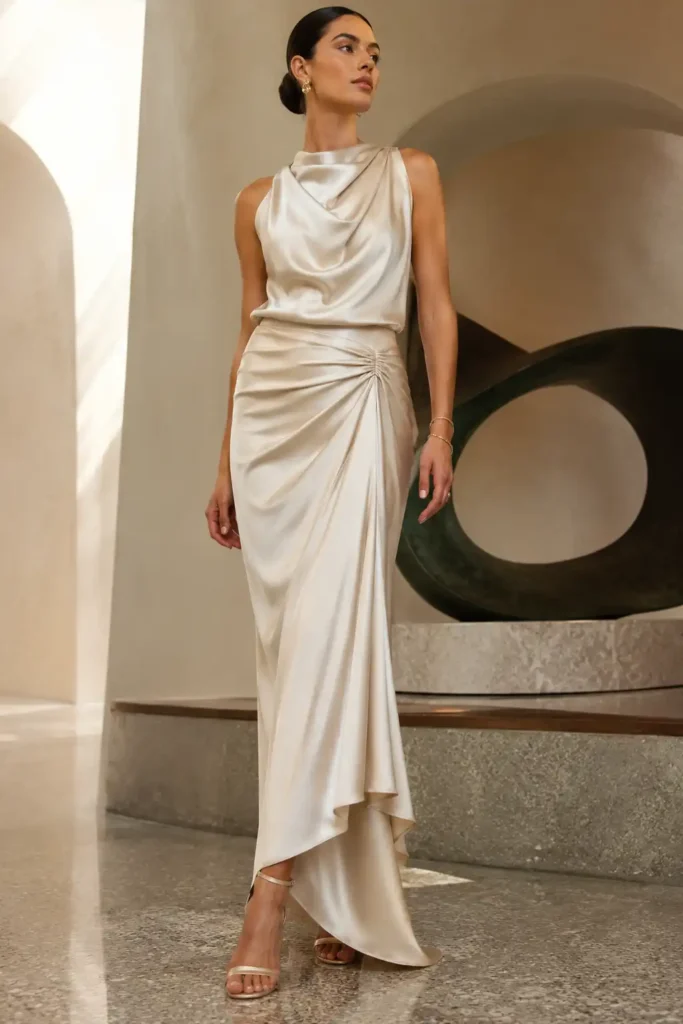
Fashion Tops

Jumpsuits

Private-Label Collections
Validate Fabric Before Bulk Production
A swatch approval confirms interest, not production readiness. Jinfeng validates shortlisted materials through specification review, color and performance checks, and complete garment sampling so the approved reference can become a measurable bulk standard.
Swatch and Specification Review
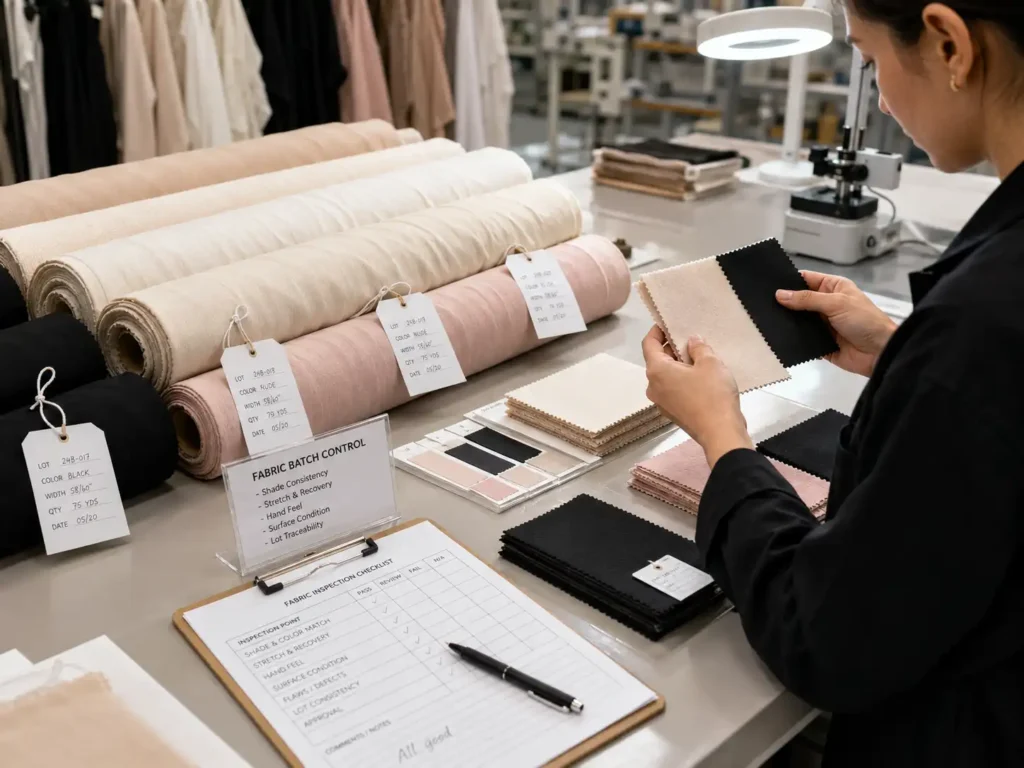
Each shortlisted option is recorded by supplier, article number, construction, composition, weight, width, color, surface, hand feel, drape, stretch, recovery, transparency, lining requirement, estimated shrinkage, MOQ, lead time, certificate information, and replenishment conditions. Physical swatches are compared with the garment reference under consistent lighting and handling. Photos and videos support communication, but final decisions should not rely only on a screen because shine, density, softness, opacity, and surface texture can change substantially in person.
The development team also tests whether the proposed material supports the pattern concept. A crisp poplin may improve a shirt dress but create excessive volume in a gathered maxi. A soft jersey may deliver comfort but lose neckline stability. A rib may create a premium fitted surface but grow vertically during wear. A lining may feel soft alone but restrict the shell fabric after sewing. Potential conflicts are documented before pattern cutting.
Color, Shrinkage, and Performance Review
Stock colors are checked against the brand’s physical standard, Pantone direction, collection palette, shell-and-lining combination, and available batch quantity.
Custom colors require a lab dip or other agreed color approval route, with timing and dye-lot MOQ confirmed before sample approval. Natural fibers can display shade, crease, and surface variation; those characteristics should be separated from unacceptable color inconsistency.
Performance review may include internal evaluation and project-specific third-party testing coordination. Relevant checks can cover dimensional change, colorfastness, pilling, spirality, stretch and recovery, seam behavior, opacity, abrasion, and care response. Test scope depends on fabric, product, market, brand standard, and intended claim. Testing cost and lead time are reviewed before being added to the project schedule.
Garment Sample Validation
The selected material moves through pattern development and the appropriate sample sequence. First samples reveal silhouette and construction response. Fit samples test bust, waist, hip, shoulder, armhole, neckline, strap, torso, crotch, slit, and length. Revised samples convert comments into updated patterns, measurement charts, fabric records, sewing instructions, and QC checkpoints. Photo samples focus on visual readiness when required. PP samples confirm the approved production standard, and the Golden sample becomes the physical reference for bulk production and final inspection.
Sample timing is quoted after style complexity, fabric availability, color development, trim requirements, and review rounds are known. Stock-material styles generally move faster than custom-dyed or specially developed certified fabric projects. Jinfeng does not promise one universal sample time because a stable schedule depends on complete inputs and timely approvals.

Plan MOQ, Cost, and Lead Time
Commercial planning separates the garment production requirement from the fabric mill requirement. Certified materials may add supplier MOQ, color MOQ, documentation, testing, sample yardage, and longer replenishment cycles. A complete quantity plan is required before a reliable quotation can be prepared.
| Planning Variable | Commercial Effect | Required Decision |
|---|---|---|
| Garment MOQ | Jinfeng regular production starts at 200 pcs per style/color. | Provide quantity by style, color, and size ratio. |
| Fabric mill MOQ | The mill minimum may exceed the garment MOQ and may be based on kilograms, meters, construction, or article. | Confirm fabric consumption and allocate the minimum across eligible styles where permitted. |
| Stock color | Can reduce development time, but stock quantity, shade batch, certificate scope, and replenishment must still be checked. | Reserve or approve the actual available batch. |
| Custom dye | Adds lab dip approval, dye-lot MOQ, color risk, and production time. | Approve physical color and schedule before sample lock. |
| Custom construction | Special knitting, weaving, finishing, or composition may require development and a higher minimum. | Decide whether the material value justifies the commercial threshold. |
| Certification documents | Supplier and certification body procedures may add administration, timing, or cost. | State Scope Certificate and TC requirements in the RFQ. |
| Testing | Third-party or brand-specific tests can affect cost and critical path. | Confirm test standard, laboratory, sample quantity, and pass criteria. |
| Multi-color program | Each color may carry a separate dye or fabric minimum. | Consolidate colors or increase quantity where needed. |
| Launch schedule | Fabric sourcing, sample approval, PP approval, bulk production, QC, and freight must fit one calendar. | Set approval deadlines and delivery buffer before order placement. |
Turn Certified Fabric Into Production-Ready Garments
Certified material evidence does not remove the engineering work required to produce a stable garment. Pattern, construction, sample approval, production instructions, and QC standards must be rebuilt around the actual selected fabric.
Align Fabric Behavior With the Pattern
Pattern development considers fabric width, shrinkage, stretch, recovery, drape, thickness, opacity, seam stability, pressing response, and the relationship between shell, lining, interfacing, elastic, zipper, and other trims. A change from conventional cotton to an organic cotton option can alter ease, garment length, waist placement, neckline hold, sleeve balance, hem movement, and consumption. Jinfeng updates the pattern and measurement chart to the chosen article instead of treating the fabric as an interchangeable material.
Fitted dresses and rib garments require fabric-specific reduction and recovery control. Woven shirt dresses require collar, placket, sleeve, and seam-puckering control. Gathered dresses require weight and volume review. Jumpsuits require complete vertical balance. Structured bodices may need compatible lining, cup, boning, or reinforcement. Each product is assessed on its own construction logic.
Build an Approval Standard Through Samples
The sample route is selected according to project risk. A first sample confirms the basic interpretation. Fit review identifies measurement and balance changes. Revised samples document corrected patterns and sewing methods. Photo-ready samples support campaign timing where required. The PP sample confirms approved fabric, color, trims, construction, measurements, labels, and packing. The Golden sample is sealed as the bulk reference.
Comments are converted into controlled files rather than left in scattered messages. Pattern versions, measurement charts, BOM, fabric reference, color standard, trim details, sewing instructions, label artwork, packing instructions, and QC checkpoints are updated before production. A reliable record protects bulk consistency and gives repeat orders a defined starting point.
Transfer the Sample Standard to Production
Before cutting, the production team receives the approved PP and Golden sample standard, fabric and color references, measurement chart, grade rules, BOM, stitch and seam requirements, zipper and trim positions, lining method, label placement, packing method, and inspection criteria. Incoming material review, fabric relaxing where required, cutting control, sewing instruction, inline inspection, garment measurement, pressing, final inspection, and packing QC are connected to the same approved reference.
Production timing is issued after PP approval, material readiness, order quantity, color and size plan, packaging, QC requirement, and delivery method are confirmed. Complex styles, custom colors, special trims, testing, or multi-batch delivery require a project-specific schedule rather than a fixed universal lead time.

Control Fabric Consistency Through Bulk Production
Incoming Fabric Review
Batch and Shade Control
Relaxing and Shrinkage
Cutting Direction Control
Inline Garment Control
Packing and Record Retention
Support Responsible GOTS Product Claims
Jinfeng Support
Supplier and Certifier Role
Brand Approval
Download the GOTS Fabric Sourcing Checklist
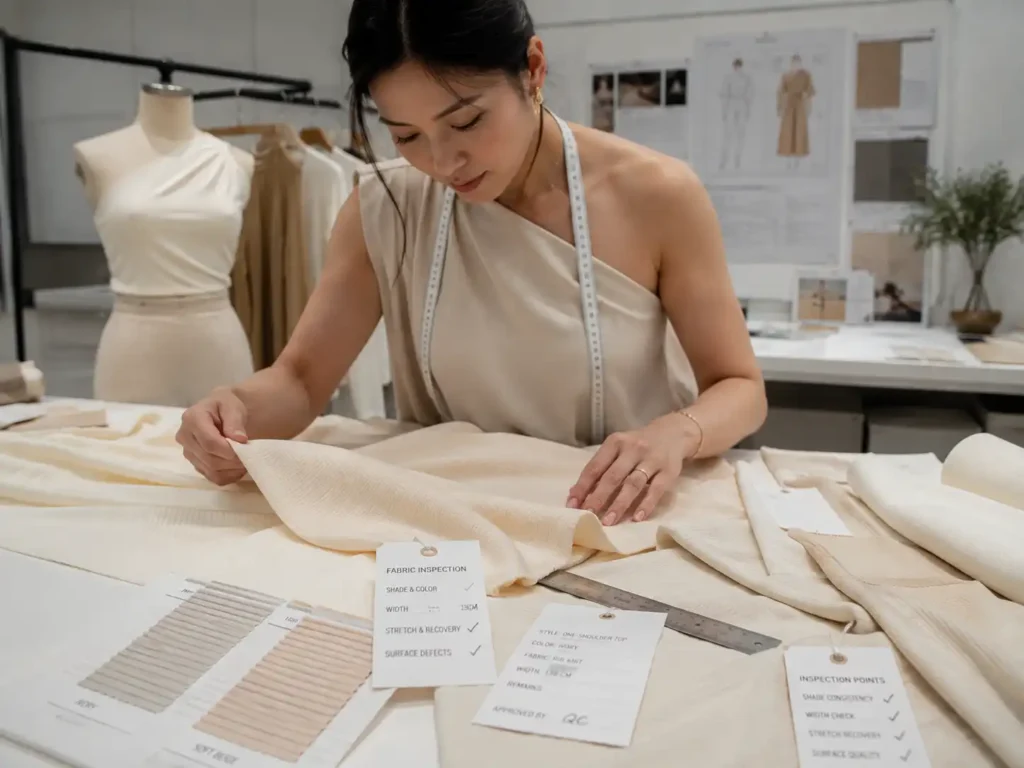
Fabric Sourcing Brief
Certificate Review Checklist
Sample Approval Checklist
GOTS Fabric Sourcing Frequently Asked Questions

Send Your Fabric and Collection Brief
Share the information required to evaluate fabric availability, certification route, garment development, MOQ, cost, sample sequence, bulk schedule, QC, labels, and delivery.
A complete submission allows the sourcing and technical teams to return a useful project assessment instead of a generic fabric list or unsupported price estimate.
- Company, target market, product category, and planned launch window.
- Reference images, tech packs, line sheet, original sample photos, or current fabric references.
- Quantity per style/color, number of styles, color plan, size range, and delivery split.
- Preferred composition, fabric construction, weight, hand feel, drape, stretch, opacity, and lining direction.
- Required Scope Certificate, Transaction Certificate, testing, labelling, and final-product claim route.
- Private-label artwork, barcode or SKU files, packing instructions, warehouse requirements, and freight plan.