
Glitter Fabric Dress Manufacturer
Custom sparkle-led dresses developed for global fashion brands from fabric direction and fit engineering to controlled bulk production.
Jinfeng Apparel manufactures custom glitter fabric dresses, sequin dresses, shimmer dresses, and embellished partywear for established fashion labels, sourcing teams, and large apparel programs.
- 200 pcs/style/color starting MOQ, subject to glitter base, color development, decoration, structure, and production schedule.
- 2 sample rooms, 7+ senior pattern makers, and 20+ sample machinistssupport complex fitted, corset, mesh, and occasionwear development.
- Six surface-risk checkpointscover fabric lot, shedding, stretch response, seam bulk, skin-contact protection, and packing pressure.
- 6 owned women’s fashion factories, 10+ long-term production partners, and 100,000+ pcs regular monthly capacitysupport multi-style collection planning.
Manufacturing Capacity for Complex Glitter Dress Programs
Since 2008
Six Owned Factories
Ten Plus Partners
Two Sample Rooms
Pattern and Sample Team
Fifteen Plus QC
Built for Fashion Brands Developing Sparkle-Led Collections
Partywear Brands
Occasionwear Labels
Ecommerce Fashion Brands
Fashion Retailers
Product Development Teams
Sourcing Offices
Why Glitter Dress Concepts Fail During Production
A strong design can lose commercial value when sparkle materials, garment structure, and manufacturing controls are not evaluated together. Early technical review reduces avoidable revisions, appearance inconsistency, discomfort, and packing damage.
Surface Shedding and Decoration Loss
Glitter-coated bases may release particles during cutting, sewing, handling, or rubbing. Sequin fabrics can lose discs where threads are cut, seams are pressed, or edge areas are not reinforced. Incoming material inspection should assess surface stability before patterns are cut. Sewing lines require controlled handling, clean work areas, and inspection around necklines, armholes, zippers, slits, and hems. Loose surface material is not treated as a final-inspection-only problem; risk begins at material selection and continues through packing.
Stretch Cracking and Visual Gaps
A sparkle coating may look dense while relaxed but separate when stretched across the bust, waist, hip, or seat. Fitted styles require testing on the actual stretch direction, not only on a flat swatch. Pattern ease, lining stretch, seam position, and size grading affect how much the surface opens. A bodycon sample should be reviewed under movement and fitting pressure so exposed base fabric, coating cracks, and uneven reflection are discovered before bulk production.
Skin Contact and Scratch Points
Sequins, glitter coatings, rhinestones, rough mesh, and trimmed edges can irritate the underarm, neckline, waist, slit, or inner thigh. Comfort control may require soft lining, protected seam allowance, cleared decoration zones, binding, facing, or altered construction. A visually strong dress with repeated scratch complaints creates returns and damages brand trust, so skin-contact zones are checked during sample fitting and finished garment inspection.
Heavy Seams and Distorted Fit
All-over sequin or dense glitter fabrics add thickness at side seams, darts, waist seams, zippers, and hems. Excess bulk can cause zipper waves, raised seams, uneven ruching, or poor drape. Construction planning may require removing decoration from seam allowance, changing seam type, adjusting pattern balance, or selecting a lighter lining. Fit and workmanship must be reviewed together.
Directional Shine and Shade Variation
Glitter, metallic yarn, velvet bases, and directional sequins reflect light differently by cutting direction and fabric lot. Mixed directions can produce visible shade blocks even when the color code is identical. Cutting markers, bundle identification, lot separation, and approved fabric references are used to maintain a consistent visual field across front, back, sleeves, and panels.
Packing Pressure and Surface Marks
Heavy folding, tight polybags, direct surface contact, and carton compression can flatten sequins, transfer loose glitter, create pressure lines, or snag adjacent garments. Packing trials determine fold direction, protective tissue, individual garment protection, polybag size, and carton loading. Packing becomes part of product engineering, not a final administrative step.
From Glitter Fabric Direction to Finished Dress Production
Finished Garment Manufacturing
- OEM development from tech packs, size charts, BOMs, and approved construction files.
- ODM support from references, sketches, line sheets, target positioning, and sales occasion.
- Private-label execution covering labels, hangtags, barcodes, polybags, carton marks, and warehouse instructions.
Project-Based Fabric Sourcing
Fabric sourcing may include glitter mesh, glitter tulle, stretch glitter knit, sequin mesh, sequin velvet, shimmer jersey, metallic woven fabric, rhinestone mesh, and layered combinations. Availability depends on base construction, color, sparkle density, stretch, weight, supplier MOQ, testing, and production schedule.
- Swatches are reviewed against silhouette, stretch, transparency, drape, and comfort needs.
- Custom color or surface development is evaluated with material lead time and MOQ before commitment.
- Approved fabric references are retained for PP sample, bulk comparison, and repeat-order review.
Custom Glitter Dress Styles for Fashion Collections

Glitter Mini Dress

Glitter Bodycon Dress

Glitter Corset Dress
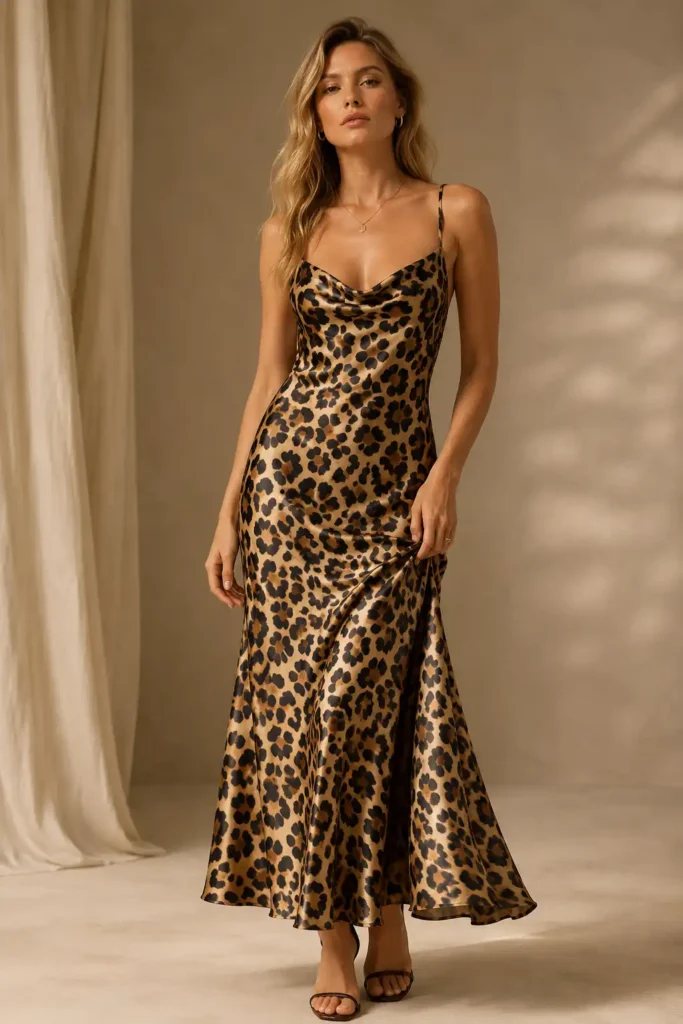
Glitter Slip Dress

Glitter Cocktail Dress

Glitter Party Dress

Glitter Birthday Dress

Glitter Club Dress

Glitter Prom Dress
Glitter Dresses Built Around Real Selling Occasions

Holiday Collection

New Year Drop

Birthday Collection

Party and Clubwear

Prom and Homecoming

Graduation Season

Festival Collection

Wedding Guest Edit
Glitter Fabric Options for Different Dress Structures
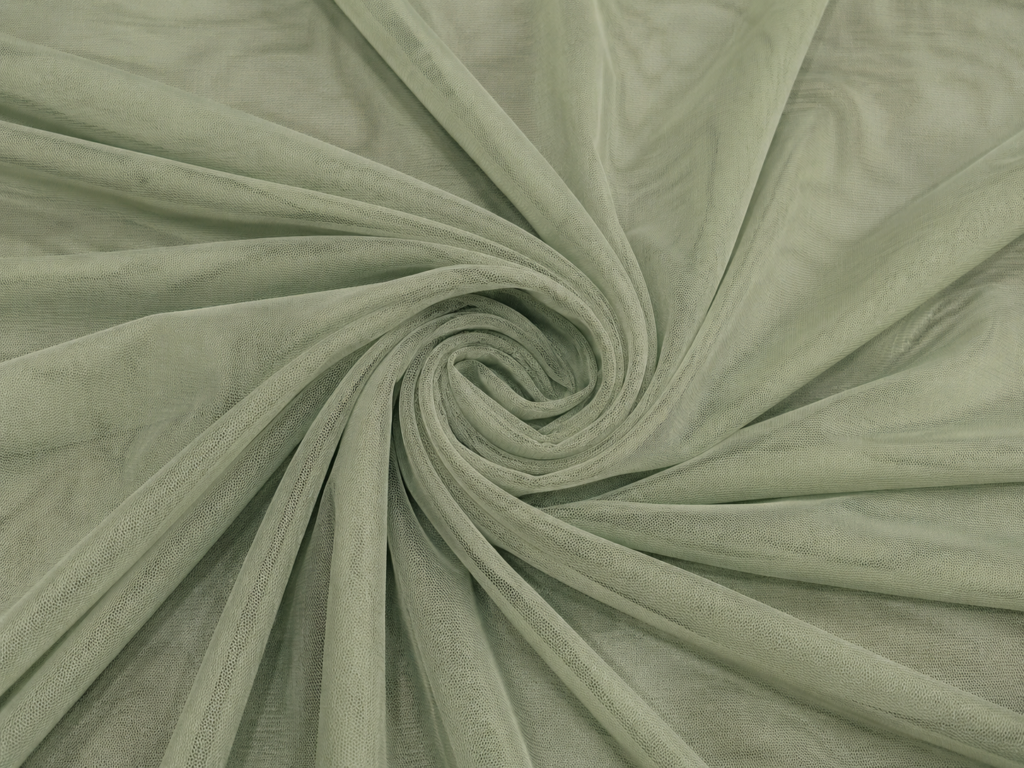
Glitter Mesh

Glitter Tulle
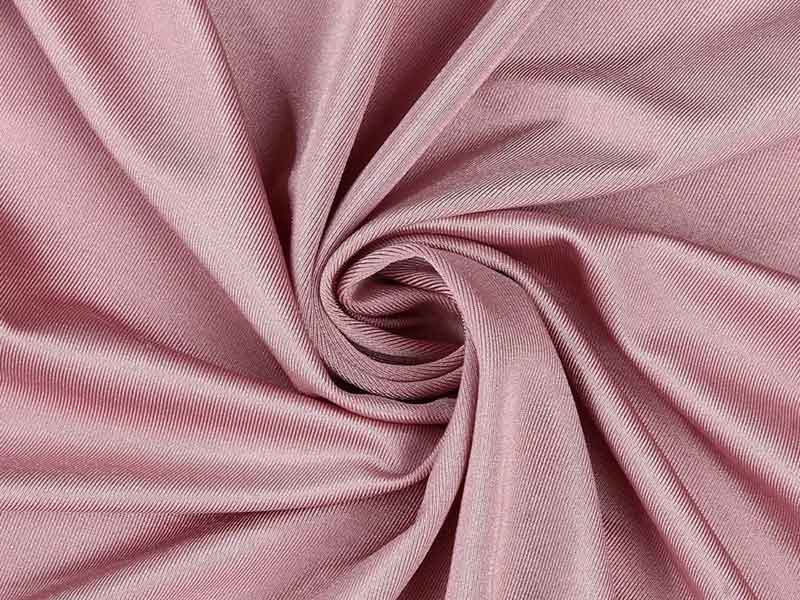
Stretch Glitter Knit

Glitter Velvet
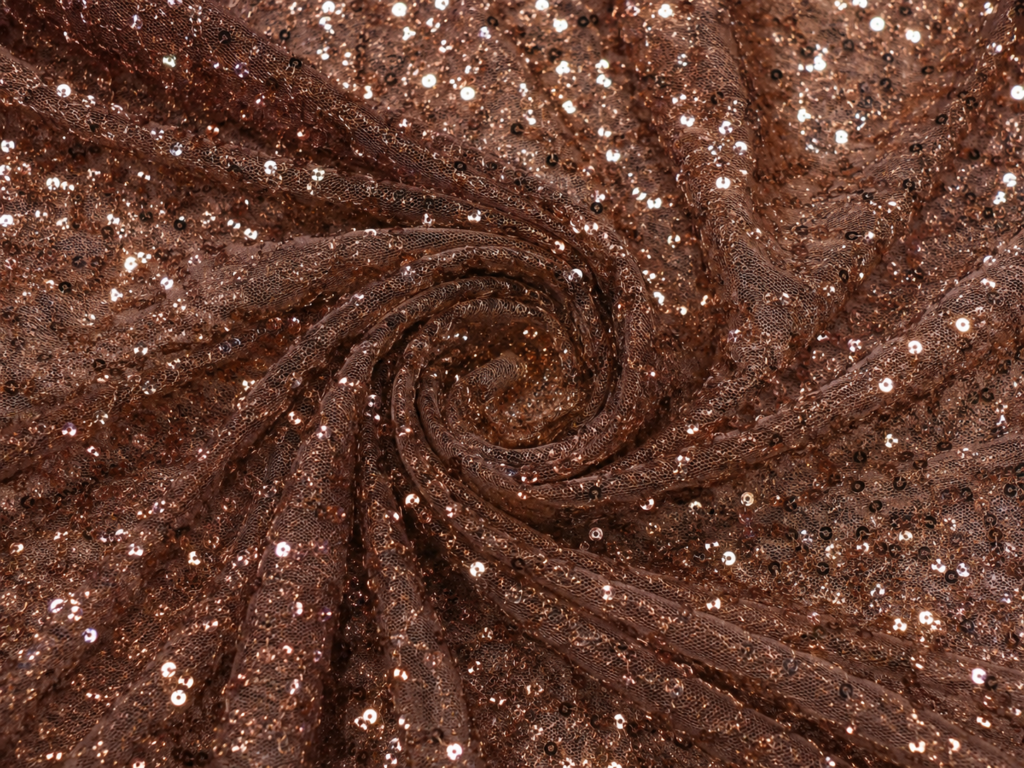
Sequin Mesh

Sequin Velvet

Shimmer Jersey

Metallic Woven
Choosing the Right Sparkle Effect for Your Dress
Different sparkle constructions create different weight, stretch, comfort, price, and production risks. Selection should follow garment structure and selling position rather than visual preference alone.
| Material Direction | Surface Effect | Typical Stretch | Best Applications | Main Production Risks | Key Controls |
|---|---|---|---|---|---|
| Glitter-coated fabric | Fine, continuous sparkle | Depends on base | Mini, bodycon, party, overlay | Shedding, coating cracks, transfer | Rub review, stretch test, clean handling, protective packing |
| Sequin fabric | Strong, directional reflection | Usually low to moderate | Party, prom, evening, skirt sets | Sequin loss, needle breakage, thick seams | Seam clearance, reinforcement, soft lining, piece inspection |
| Shimmer knit | Soft, fluid light reflection | Moderate to high | Ruched, slip, bodycon, midi | Recovery loss, snagging, surface marks | Recovery test, stretch lining, low-pressure finishing |
| Metallic woven | Sharp, structured shine | Low unless blended | Cocktail, structured mini, sculpted bodice | Creasing, needle marks, fraying | Cutting control, interfacing test, pressing limits |
| Glitter tulle | Airy sparkle over transparency | Low to moderate | Prom, evening, sleeves, layered skirts | Glitter transfer, scratch, snagging | Layer planning, edge protection, lining selection |
| Rhinestone mesh | Point-light crystal reflection | Depends on base | Corset, statement mini, panel detail | Stone loss, weight, abrasion | Attachment check, local reinforcement, surface protection |
Fabric-to-Silhouette Planning Matrix
The same glitter material can perform well on one silhouette and fail on another. Fit pressure, structural support, seam location, movement, lining, and garment length determine whether a fabric is commercially suitable.
| Dress Structure | Recommended Material Direction | Fit or Structure Focus | Lining Direction | Primary QC Focus |
|---|---|---|---|---|
| Bodycon mini | Stretch glitter knit or stretch shimmer jersey | Bust-waist-hip recovery, riding-up control | Stretch tricot or soft jersey | Surface opening, measurement, seam recovery |
| Corset dress | Stable glitter woven, sequin mesh overlay, rhinestone panel | Cup shape, boning, waist support, center-back zip | Stable soft lining with cup support | Seam bulk, neckline stability, attachment strength |
| Slip dress | Light shimmer knit or soft metallic satin direction | Drape, bias behavior, neckline, strap length | Lightweight anti-static lining | Side seam twist, neckline stretch, hem balance |
| Prom gown | Glitter tulle, sequin mesh, layered shimmer fabric | Bodice support, skirt volume, weight distribution | Full lining with layered skirt support | Hem level, glitter transfer, packing protection |
| Evening maxi | Sequin velvet, shimmer jersey, metallic woven | Long-line balance, slit, drape, hanger support | Full lining matched to weight | Directional shade, zipper, long-dress finishing |
| Mesh overlay dress | Glitter mesh or rhinestone mesh | Transparency, panel placement, seam slippage | Skin-tone or matching-color lining | Snags, coverage, decoration placement |
| Cocktail dress | Metallic woven, fine glitter fabric, tonal sequins | Waist shape, clean seams, controlled volume | Full or partial lining | Pressing marks, seam bulk, zipper flatness |

Controlling Glitter Appearance Under Different Lighting Conditions
Sparkle materials can change dramatically between fabric-room lighting, daylight, studio lighting, phone video, and direct flash. Visual approval should include more than one viewing condition.
- Particle Size, Density, and Base Color
Fine glitter gives a more continuous surface, while larger particles create stronger points of reflection. Dense coverage can hide the base color but may increase stiffness, shedding, and seam bulk. A darker base intensifies contrast; a tonal base creates a smoother appearance. Swatches are reviewed flat, draped, stretched, and layered over the proposed lining color.
- Daylight and Studio Review
Daylight reveals color, coating gaps, shade difference, and uneven density. Studio lighting shows how the dress reads in campaign photography. A fabric that looks balanced in soft light can appear patchy under stronger directional lamps. Sample photos should include front, back, side, movement, and close-up views.
- Flash and Video Performance
Direct flash can make glitter, sequins, metallic yarn, and rhinestones appear brighter or reveal exposed base material between particles. Phone video shows movement reflection and whether different panels respond inconsistently. Photo-ready samples are checked under expected campaign conditions before final approval.
- Stretch and Directional Control
Fitted garments can open the sparkle surface over the bust, hip, or seat. Directional materials may also create darker and lighter panels depending on cutting orientation. Stretch review and panel-direction markers are included in sample and cutting instructions so bulk garments reproduce the approved effect.
Custom Colors, Sparkle Density and Decorative Combinations
Solid Glitter Color
Gradient Effect
Holographic Effect
Tonal Sequins
Contrast Sequins
Rhinestone Detail
Feather Combination
Layered Sparkle

Lining and Comfort Control for Glitter Dresses
A strong outer surface needs an equally considered inner construction. Lining affects opacity, stretch, drape, skin comfort, fit, zipper behavior, garment weight, and return risk.
- Lining Selection by Structure
Stretch bodycon dresses need a lining able to recover with the shell. Corset dresses require stable lining around cups, boning, and waist support. Glitter tulle and mesh overlays may use skin-tone, tonal, or contrast lining depending on the intended visual effect. Long gowns need enough lining weight to support drape without pulling the outer layer.
- Skin-Contact Protection
Underarms, necklines, side seams, waist seams, slits, and inner thighs are checked for sharp sequins, rough glitter, exposed mesh edges, or bulky seam allowance. Solutions can include decoration-free seam zones, binding, facing, soft lining, covered elastic, local reinforcement, or adjusted seam placement.
- Transparency and Coverage
Coverage is reviewed under daylight and flash, especially for white, silver, nude, pastel, and mesh-based styles. Bust, hip, seat, slit, cut-out, and underarm zones receive separate evaluation. Lining length and color are approved on the body, not only on a hanger.
- Movement and Heat Comfort
Dense sequin surfaces and full linings can increase weight and heat. Fit samples are checked while walking, sitting, raising the arms, and moving through the intended wearing range. The goal is a balanced product able to deliver visual impact without unnecessary stiffness or discomfort.
Design Details That Change Glitter Dress Production
Small design choices can change fabric consumption, pattern work, sample rounds, sewing method, labor time, QC points, and packaging. Early design engineering keeps the commercial concept while reducing avoidable risk.
- Necklines, Straps, and Armholes: Deep V, cowl, strapless, halter, one-shoulder, and narrow-strap designs require different support and edge construction. Glitter or sequin surfaces around skin-contact zones may need facing, binding, cleared decoration, or softer underlayers. Strap position and armhole depth are checked during fit review to reduce exposure and rubbing.
- Corset Cups and Boning: Corset dresses require controlled cup shape, underbust position, boning length, waist tension, center-front balance, and back closure. Sparkle materials can increase thickness around curved seams. Panel shapes, seam allowance, lining, and outer-surface alignment are developed together.
- Ruching and Draping: Ruching increases fabric consumption and changes sparkle density. A glitter surface can appear darker where folds overlap and lighter where stretched. Drawcords, elastic channels, fixed gathers, and draped panels are tested for symmetry, recovery, comfort, and repeatability.
- Cut-Outs and Slits: Cut-outs and high slits must remain stable during movement. Edge support, lining, seam placement, stretch, and reinforcement are checked so openings do not distort. Glitter or sequin edges require extra protection to prevent scratching or decoration loss.
- Zippers and Closures: Invisible zippers can wave or bulge when seam allowance is thick. Hook-and-eye, corset lace-up, metal zipper, or concealed closures may be considered according to structure. Zipper installation is reviewed for flatness, function, top alignment, and skin comfort.
- Hems and Long Skirts: Mini hems need secure coverage and smooth finishing. Maxi and floor-length styles require level hems, weight balance, walking clearance, and surface protection. Sequin or glitter hems may use cleared decoration, binding, facing, or carefully controlled narrow finishing.


Pattern and Fit Control for Sparkle-Led Dresses
The approved visual concept must also fit the intended market. Pattern work addresses body proportion, stretch pressure, garment balance, support, movement, and size grading before bulk production.
- Core Measurement Control
Bust, upper bust, underbust, waist, high waist, low waist, hip, front length, back length, strap length, armhole depth, neckline depth, slit height, and total length are selected according to the silhouette. Corset and bodycon styles require more controlled measurement mapping than loose occasion dresses. - Stretch and Negative Ease
Stretch fabrics may use negative ease, but the value depends on stretch percentage, recovery, coating response, lining, seam type, and size range. Excessive reduction can expose the base fabric, crack glitter coating, stress seams, and create inconsistent fit across sizes. - Balance and Symmetry
One-shoulder, asymmetric hem, cut-out, and draped styles need visual balance as well as numerical measurement. Side seam position, neckline angle, strap tension, ruching location, and slit alignment are checked on the body and against the pattern. - Size Grading
Grading is not a simple enlargement of every point. Cup position, strap width, neckline depth, cut-out proportion, slit height, and corset support must remain commercially appropriate across the selected size range. Critical sizes can be sampled or measured before the full bulk set is released. - Fit Review Records
Sample comments are recorded by pattern version, measurement change, construction change, material change, and approval status. The latest approved pattern, measurement file, PP sample, and Golden sample become the production reference so obsolete revisions do not enter bulk.
Why Tech Packs Matter Before Glitter Dress Sampling
Complete development files reduce assumptions, repeated clarification, material errors, and sample revisions. Reference images are useful for visual direction, while technical files define construction, measurements, materials, labels, and packing.
- Essential Style Information
Provide front and back drawings, close-up references, intended silhouette, garment length, neckline, straps, sleeves, cut-outs, slit, closure, lining, cups, boning, and decorative placement. Where only a reference image is available, Jinfeng Apparel can begin with an initial structure review and identify missing decisions. - Measurement and Grading Files
A size chart should identify points of measurement, base size, grading rules, and tolerance expectations. Important glitter-dress measurements include bust, underbust, waist, hip, strap length, armhole, neckline depth, slit height, and garment length. - Fabric and Trim Direction
State preferred base fabric, stretch, weight, opacity, color, glitter or sequin effect, lining, zipper, cups, boning, labels, hangtags, and decorative trims. Physical swatches or approved references improve accuracy for reflective materials. - Commercial Requirements
Quantity per style and color, size range, target market, launch date, private-label packing, inspection standard, and delivery location influence sourcing, MOQ, cost, sample priority, production allocation, and freight planning. Final pricing is confirmed after material, construction, packaging, and quantity details are aligned.
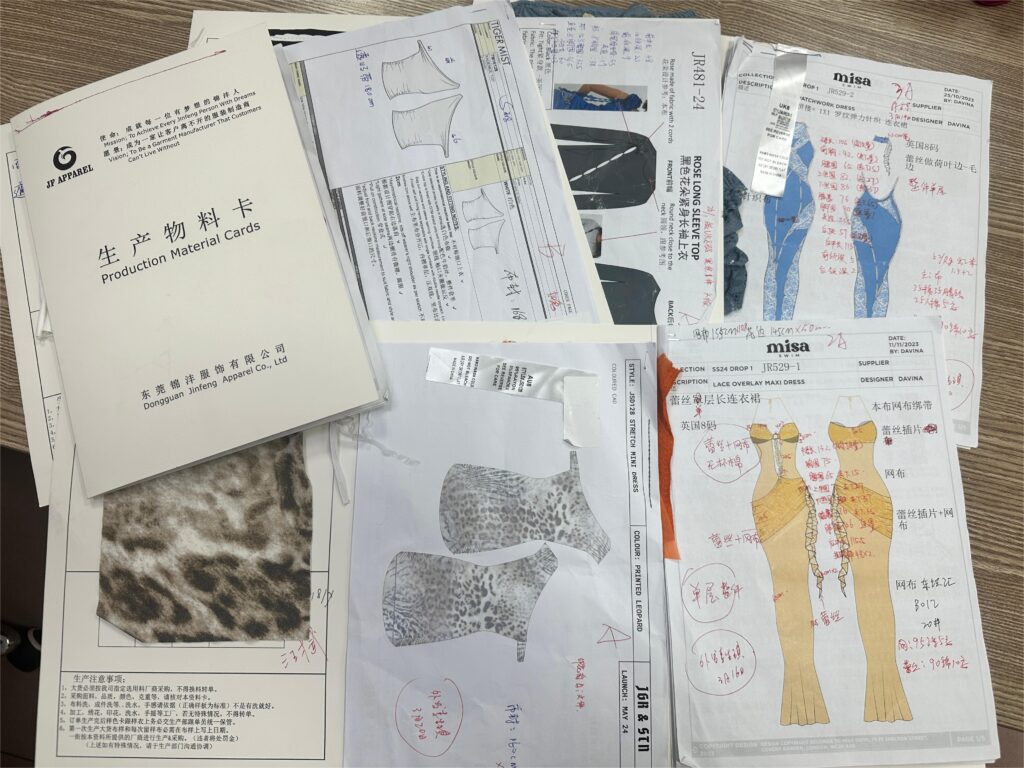
From Reference Image to Approved Glitter Dress Sample
Project Review
Fabric Direction
Pattern Development
First Sample
Revised Sample
PP and Golden Sample

What We Validate Before Approving Complex Samples
Complex sparkle garments are evaluated as wearable products and repeatable manufacturing standards. Approval depends on fit, appearance, construction, comfort, and bulk feasibility working together.
- Surface and Material Validation: Checks include glitter shedding, sequin attachment, rhinestone security, stretch cracking, exposed base fabric, shade direction, surface snagging, and reaction to handling. The fabric is viewed flat, stretched, draped, and under different lighting conditions.
- Fit and Coverage Validation: Bust support, neckline, underarm coverage, waist, hip, riding-up risk, slit security, strap stability, and movement are reviewed. White, nude, silver, mesh, and pale colors receive additional transparency and flash-photo checks.
- Construction Validation: Seam thickness, cleared decoration zones, zipper flatness, lining attachment, boning, cups, ruching, cut-out stability, hem finishing, and reinforcement are assessed. Construction must be clean enough for bulk operators and repeatable across the size range.
- Finishing and Packing Validation: Pressing limits, surface protection, fold method, tissue, polybag size, carton pressure, hanger needs, and long-dress packing are tested before bulk packing instructions are issued. A product can pass sewing inspection yet fail during transport if protection is not planned.
Cutting Controls That Protect Glitter Fabric Surfaces
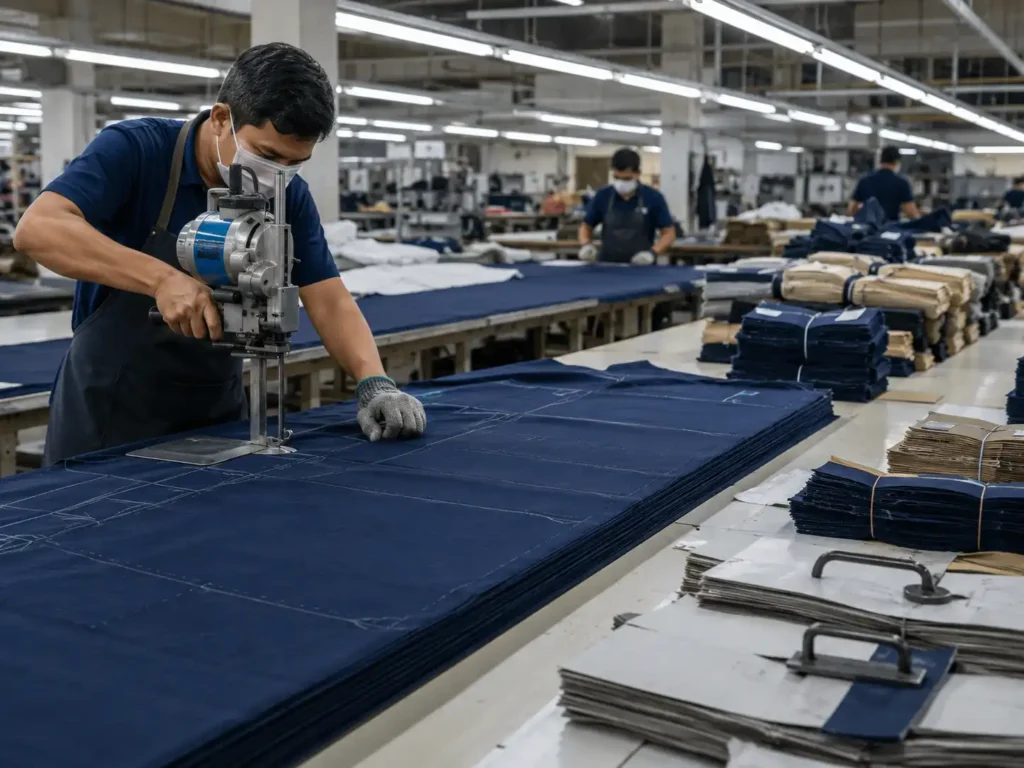
Cutting establishes visual direction, panel accuracy, lot control, surface condition, and size bundling. Errors introduced at cutting cannot be fully corrected during sewing.
- Fabric Inspection and Lot Separation
Incoming rolls are reviewed for color, width, weight, surface density, glitter stability, sequin loss, holes, snags, stains, and lot difference. Rolls with visible shade or direction variation are identified before spreading. Approved references guide acceptance. - Direction and Stretch Marking
Nap, sparkle direction, sequin orientation, metallic reflection, grain, and stretch direction are marked on the cutting plan. Front and back panels, sleeves, overlays, and skirt pieces are aligned so the finished garment reads as one consistent surface. - Clean Spreading and Surface Protection
Work surfaces are kept clean to reduce glitter transfer, snagging, and abrasion. Face-to-face spreading or protective layers may be used according to fabric. Excess compression is avoided on raised decoration or velvet piles. - Accurate Bundling and Identification
Cut parts are grouped by style, color, size, fabric lot, and panel direction. Bundle tickets and controlled handover reduce mixing between similar sparkle fabrics. Defect-marked areas are removed or assigned according to approved tolerance. - Allowance for Surface Loss
Glitter, sequins, and raised decoration can increase cutting loss due to directional layout, defect avoidance, pattern matching, seam clearing, or fragile edges. Consumption is reviewed from the approved sample and marker rather than estimated from regular fabric alone.

Sewing Methods for Clean and Stable Glitter Dresses
Sewing standards are selected by material structure, stretch, decoration, seam bulk, lining, and garment load. Operators need clear samples and instructions for every critical area.
- Needle, Thread, and Stitch Planning
Needle size, point type, thread, stitch density, and machine tension are tested on the actual fabric and layer combination. Glitter coatings, mesh, metallic yarn, velvet, and sequins respond differently. Test seams are checked for damage, skipped stitches, puckering, cracking, and appearance. - Decoration-Free Seam Allowance
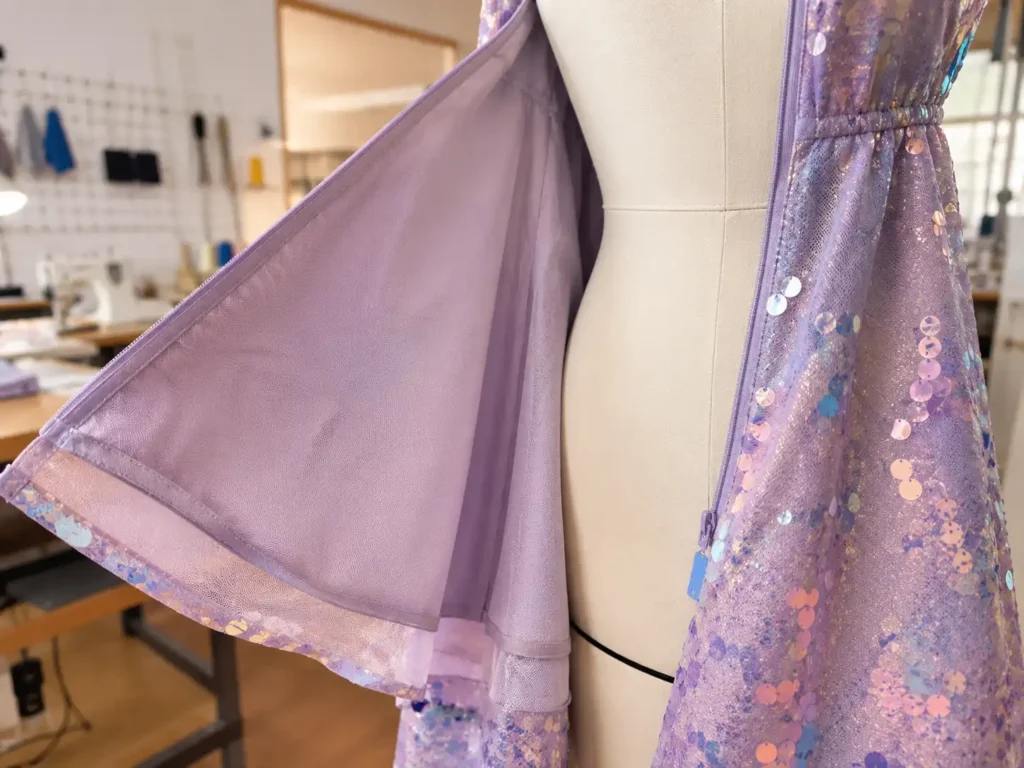
All-over sequin fabrics may require removal or clearance of sequins from stitch lines. Cleared allowance reduces needle breakage, bulky seams, broken discs, and uneven zipper insertion. Loose threads or decorations are secured so the outer surface remains complete after joining. - Lining and Inner Support
Lining is attached to support opacity, comfort, fit, and structure without restricting movement. Corset cups, boning, facings, elastic, and support tapes are installed according to the approved sample. Inner layers are checked for twisting, exposure, and pressure against the outer sparkle surface. - Zippers, Slits, and Openings
Invisible zippers require controlled seam thickness and stable fabric support. Slits, cut-outs, necklines, and armholes may need reinforcement, facing, binding, or cleared decoration. Opening edges are checked for symmetry, stretch, and skin comfort. - In-Line Repair and Cleaning
Loose sequins, exposed threads, minor decoration gaps, or surface contamination are addressed during sewing rather than delayed until final inspection. Controlled in-line repair prevents defects from moving through finishing and packing.
Workmanship Details That Protect the Finished Appearance

Clean Neckline

Smooth Armhole

Protected Seams

Stable Zipper
Secure Decoration

Balanced Ruching
Clean Lining

Protected Hem

Finishing Glitter Dresses Without Damaging Surface Effects
Finishing methods are approved by material rather than copied from ordinary garments. Heat, steam, pressure, contact time, and surface support can change coating, pile, sequins, crystals, and metallic reflection.
- Temperature and Pressure Limits
Test pieces establish safe heat and pressure. Direct contact with glitter coating, raised sequins, rhinestones, and velvet piles may cause sticking, flattening, discoloration, or pressure marks. Protective cloth, reverse-side handling, low-pressure steaming, or hanging recovery may be used.
- Shape Recovery and Final Appearance
Garments are allowed to recover after sewing and controlled finishing. Necklines, side seams, hems, drape, ruching, cups, and zippers are rechecked because heat and handling can reveal distortion not visible during sewing.
- Surface Cleaning
Loose threads, lint, transferred glitter, chalk, and handling marks are removed with methods suitable for the approved surface. Aggressive brushing or adhesive contact is avoided where it could pull decoration or damage pile.
- Final Protection
Finished garments move directly into protected inspection and packing areas. Clean surfaces, correct hangers or folding boards, tissue, and suitable polybags reduce damage between final QC and carton sealing.
Keeping Approved Glitter Effects Consistent in Bulk Production
Bulk consistency depends on locking the approved material, pattern, construction, measurements, labels, and packing standards before production starts.
- Approved Material and Lot Control: Fabric source, article, color, base, sparkle density, width, weight, stretch, and lining are confirmed against the PP sample. Incoming lots are separated and compared before cutting. Any meaningful change is reviewed rather than silently substituted.
- Pattern and Version Control: Only the latest approved pattern, size chart, grading file, BOM, sewing instructions, and comment record are released. Obsolete versions are removed from active use. Style codes and revision dates help prevent sample comments from being lost.
- PP and Golden Sample Reference: The PP sample confirms the production standard, while the Golden sample remains available for line setup, in-line inspection, final comparison, packing, and future repeat orders. Critical visual details are supported with close-up photographs and written notes.
- In-Line Comparison: Early bulk pieces are compared for fabric direction, fit, surface opening, seam bulk, zipper, lining, decoration, measurement, and finishing. Corrective action is taken before the full quantity advances.
- Change Control: Fabric substitutions, trim changes, measurement changes, label updates, packing revisions, or delivery splits are documented and approved. Change control protects consistency across factories, batches, colors, and repeat orders.

Production Planning for Multi-Style Glitter Dress Collections
Style Grouping
Fabric Grouping
Sample Priority
Production Allocation
Order Follow-Up
Multi-Batch Delivery
What Determines Glitter Dress Cost and MOQ
Fabric Base
Sparkle Construction
Lining and Structure
Sewing and Handwork
Testing and QC
Packing and Delivery
Private Label Packing That Protects Glitter Dress Surfaces

Labels and Care Information
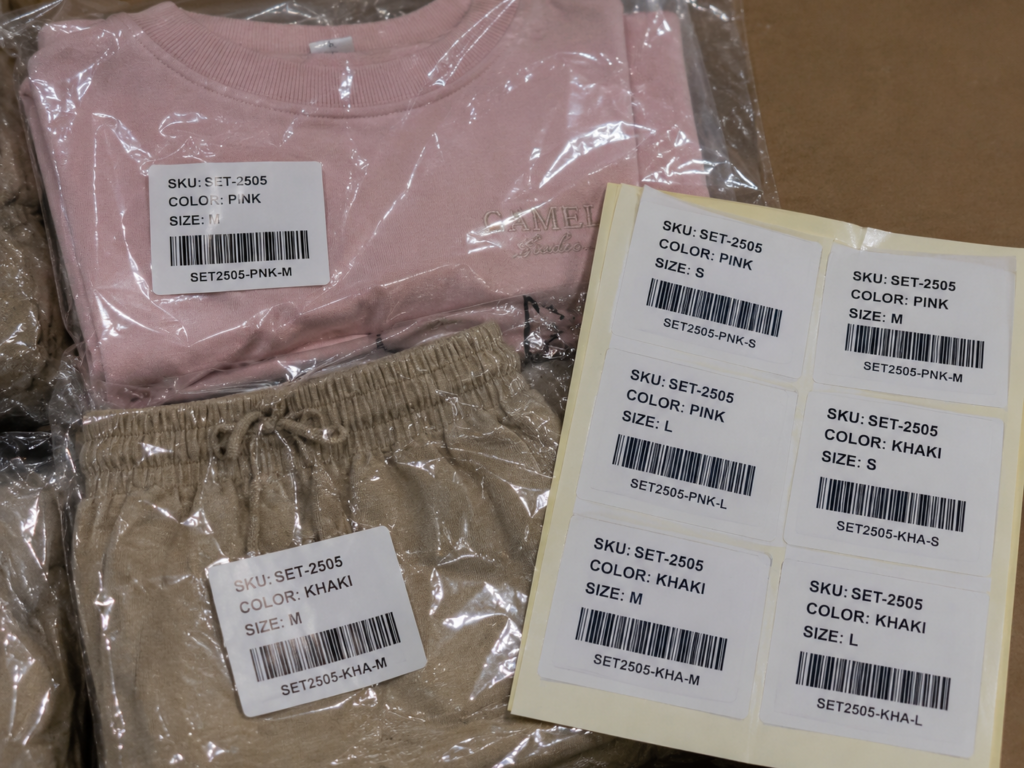
Hangtags and Barcodes

Surface Protection
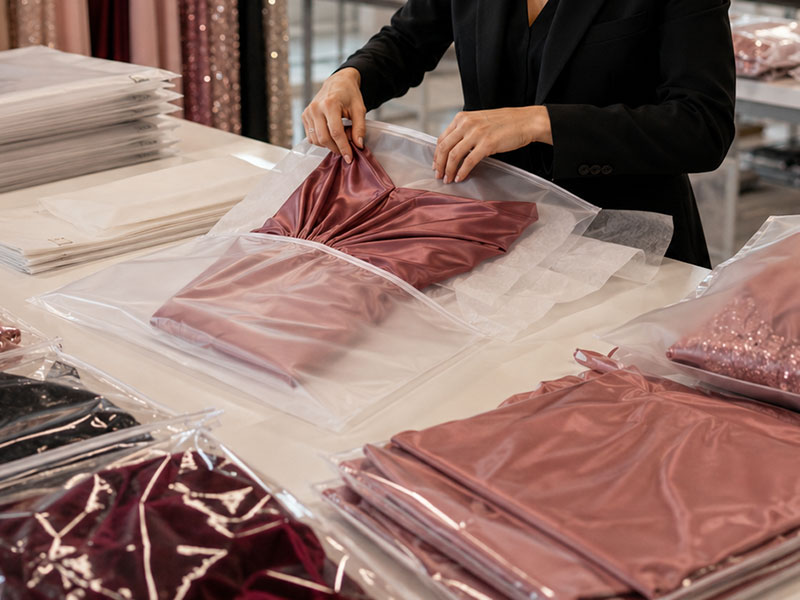
Folding and Polybags
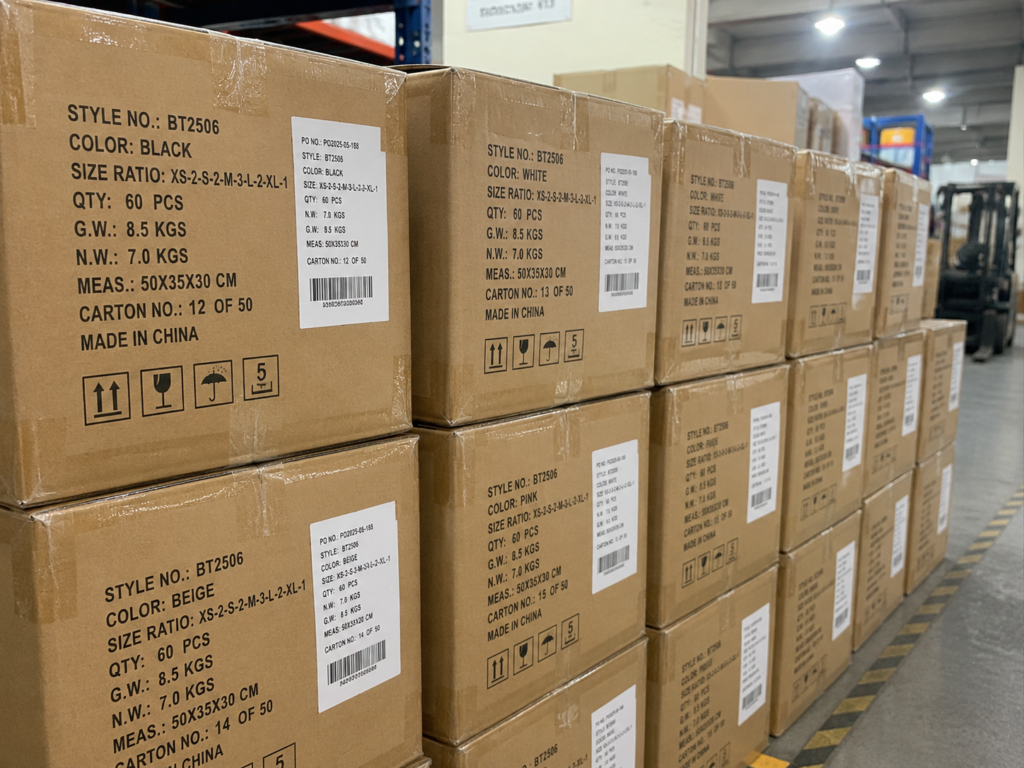
Carton Planning

Shipment Documentation
Glitter and Embellished Dress Programs We Have Supported

US Holiday Partywear Program
Market: United States
Client Type: Established partywear fashion label
Program: 18 styles, approximately 32,000 pieces
Products: Sequin mini dresses, glitter bodycon dresses, corset party dresses, and skirt sets
Materials: Sequin mesh, stretch glitter knit, soft lining, selected rhinestone details
Sample Path: First sample, revised fit sample, photo-ready sample, PP sample, Golden sample
The main risks were sequin loss, scratch points around armholes and necklines, surface opening on fitted sizes, thick seam allowance, zipper waves, and a fixed holiday launch window. Jinfeng Apparel grouped the range by material and structure, cleared decorations from key seam zones, added soft stretch lining to fitted styles, reviewed flash-photo appearance, and set in-line checks for loose sequins, measurements, zippers, and packing protection. Production and delivery were split by launch priority so hero styles and core colors entered the first shipment.

European Occasionwear Collection
Market: Europe
Client Type: Premium ecommerce occasionwear brand
Program: 22 styles, approximately 46,000 pieces
Products: Glitter cocktail dresses, shimmer midi dresses, wedding guest styles, and metallic evening dresses
Materials: Fine glitter mesh, shimmer jersey, metallic woven fabric, tonal sequin overlays
Sample Path: Fabric review, first sample, fit correction, revised sample, PP sample
The collection contained several fabric groups with different stretch, drape, directional shine, and pressing limits. Jinfeng Apparel created fabric-group instructions, separated directional cutting rules, revised bust-waist-hip balance for fitted sizes, and standardized lining shades across color families. Bulk control focused on lot comparison, panel direction, zipper flatness, surface marks, garment measurements, barcode accuracy, and carton pressure. Style, color, and size records supported phased warehouse delivery.
North American Private Label Program
Market: United States and Canada
Client Type: Large private-label apparel program
Program: 26 styles, approximately 68,000 pieces
Products: Glitter party dresses, sequin skirts, matching sets, evening minis, and selected corset styles
Materials: Stretch glitter knit, sequin velvet, rhinestone mesh, tonal lining, custom labels
Sample Path: Priority sample groups, photo-ready samples, size-set review, PP sample, Golden sample
The program required multi-style scheduling, style-color-size control, private-label packing, barcode lists, mixed-size cartons, client inspection, and multi-batch shipment. Jinfeng Apparel organized the order by style group, fabric group, production unit, QC window, and delivery phase. Merchandising records tracked material, pattern revision, labels, packing, and approval status. QC teams used Golden samples and product-specific checklists for surface stability, scratch protection, fit, decoration, measurements, finishing, and packing. Repeat-order records retained pattern, fabric, trim, measurement, and packaging references.
Glitter Dress Manufacturing Frequently Asked Questions
Glitter fabric normally uses fine reflective particles or a sparkle coating applied to a knit, mesh, tulle, velvet, or woven base. Sequin fabric uses individual discs attached by embroidery or stitching. Glitter materials usually create a finer continuous shine, while sequins create stronger points of reflection and more surface texture. Weight, seam bulk, skin comfort, stretch, and packing requirements differ, so material choice should follow the garment structure.
A stretch glitter knit or shimmer jersey is often more suitable for bodycon silhouettes because the base can follow the body and recover after movement. Selection depends on stretch percentage, recovery, coating response, opacity, weight, and lining. The material should be tested while stretched across bust, waist, and hip positions to confirm the sparkle surface does not crack or open excessively.
Yes. Fabric sourcing can cover glitter mesh, glitter tulle, stretch glitter knit, sequin mesh, sequin velvet, shimmer jersey, metallic woven fabric, and rhinestone mesh according to project requirements. Availability, color, custom development, supplier MOQ, testing, and timing are reviewed before confirmation. Jinfeng Apparel manufactures finished garments rather than operating only as a raw-fabric mill.
Control begins with material selection and rub review. During production, clean cutting surfaces, careful handling, suitable seam methods, limited aggressive brushing, controlled finishing, and protective packing reduce unnecessary particle loss. No glitter-coated material should be described as absolutely shed-free without testing. The acceptable standard is agreed according to material construction and brand requirements.
Skin-contact areas are mapped during sampling. Sequins may be cleared from seam allowance, covered by soft lining, protected with binding or facing, or repositioned away from underarms, necklines, waists, slits, and inner thighs. Fit samples are worn and moved in so scratch risks can be identified before PP approval.
Many do, but lining type depends on transparency, stretch, weight, skin comfort, structure, and intended look. Glitter mesh and tulle usually need full or strategic lining. Stretch bodycon styles need a lining able to recover with the shell. Corset and evening dresses may need stable lining, cups, boning, or support layers. Some opaque shimmer fabrics may use partial lining.
MOQ starts from 200 pcs per style/color. Final MOQ depends on fabric availability, custom color, special glitter or sequin construction, trims, decoration, garment complexity, packaging, and production schedule. Material suppliers may require a higher quantity for custom-dyed bases, exclusive sequin layouts, special rhinestone development, or uncommon colors.
Sample timing is confirmed after the style, fabric, trims, size chart, construction, and sample type are reviewed. A style using available material and clear technical files can move more quickly than a custom-colored corset dress, heavily embellished gown, or design requiring several fit revisions. The schedule normally includes material confirmation, pattern work, sample sewing, internal inspection, photo or video review, client comments, and courier time.
Consistency is managed through approved material references, pattern and revision control, measurement files, BOM confirmation, sewing instructions, PP approval, Golden sample sealing, incoming material QC, early bulk comparison, in-line inspection, finished garment inspection, and packing QC. Material or construction changes are documented and approved rather than substituted without review.
Yes. Services can include woven labels, printed labels, size labels, care labels, hangtags, barcode stickers, SKU labels, individual polybags, protective tissue, mixed-size cartons, warehouse labels, carton marks, packing lists, and client-forwarder coordination. Packing methods are adapted to protect glitter, sequins, rhinestones, velvet piles, corset cups, and long hems.

Start Your Glitter Dress Development Project
Send your development files to Kelly for an initial review of product structure, fabric direction, sample requirements, MOQ fit, production risk, private-label packing, and bulk planning.
A clear brief allows the team to compare glitter, sequin, shimmer, metallic, or embellished options against the intended silhouette and launch position.
Please include as many of the following items as available:
- Tech pack, line sheet, sketch, reference image, or original sample photos
- Product type and intended selling occasion
- Quantity per style and color
- Target fabric, sparkle effect, color, and lining direction
- Size range and measurement chart
- Cups, boning, zipper, rhinestones, feathers, or other trims
- Label, hangtag, barcode, and packaging requirements
- Target market, launch date, and delivery location
- Inspection, testing, or warehouse receiving guide


