 Skip to content
Festival Clubwear Collections
Trend-led festival and clubwear development for established fashion brands that need strong visual direction, disciplined sampling, controlled fit, and repeatable bulk execution across multiple styles.
Since 2008, Jinfeng Apparel has focused on custom women’s fashion development and manufacturing in Guangdong, China.
- Festival and clubwear programs can combine dresses, matching sets, fashion tops, skirts, bodysuits and jumpsuits within one coordinated collection.
- 2 sample rooms, 7+ senior pattern makers and 20+ sample machinists support multi-style development, fit correction and revised sampling.
- 6 owned women’s fashion factories, 10+ long-term production partners and 6+ flexible production lines support collection-based production planning.
- 15+ QC inspectors support incoming material checks, cutting review, sewing inspection, measurement control, garment inspection and packing QC.
- Complex corset, mesh, sequin and similarly demanding first samples are typically planned around a 15–25 day reference window, subject to construction and material readiness.
Manufacturing Scale Built for Multi-Style Fashion Collections
6 Owned Factories
10+ Production Partners
100,000+ Monthly Capacity
2 Sample Rooms
7+ Pattern Makers
15+ QC Inspectors
Built for Brands Managing Fast-Moving Fashion Calendars
Global Fashion Brands
Trend-Driven DTC Brands
Premium Ecommerce Brands
Clubwear and Partywear Labels
Merchandising Teams
Product and Sourcing Teams
Trend Speed Requires Fast Decisions, Not Blind Production
A festival trend can move from social media to campaign planning in weeks, but rushing an unverified style into production can create a much larger commercial problem. Jinfeng uses the early development stage to decide what can move quickly, what needs structural correction, and where material availability or complex workmanship will control the schedule.

Start with Commercial Relevance
A reference image is first interpreted as a garment, not copied as a picture. The development team reviews silhouette, intended fit, likely fabric behavior, coverage, closure, lining, trim load and the visual feature that makes the style commercially relevant. A dramatic cut-out may need hidden stabilization. A mesh bodycon may require a different stretch direction from the visual reference. A rhinestone strap may look light in a photo but introduce weight at the neckline. These decisions belong before pattern work, not after a sample fails.
For festival and clubwear development, the team also distinguishes between a hero style and a commercial volume style. Hero pieces can carry more construction and embellishment because they support campaign imagery or social reach. Volume pieces usually need a cleaner cost structure, repeatable fit and more efficient sewing. Keeping both roles in one collection helps preserve visual identity without making every SKU equally difficult to manufacture.

Review Feasibility Before Sampling
The next step is a focused feasibility review covering fabric direction, trim availability, pattern risk, expected sample complexity, MOQ interaction and target price. Complex first samples such as corset, mesh, sequin and similarly demanding styles typically use a 15–25 day reference window, depending on material readiness and construction.
Ordinary dresses are commonly planned around 10–15 days, while simpler first samples may be shorter. These are reference ranges, not automatic promises; custom-dyed fabric, custom printing, special trims or certified materials can extend development time.
A faster collection is therefore created by making decisions earlier: choose materials that can be secured, prioritize hero styles, lock critical fit points, and prevent repeated changes after trims or patterns have already been developed.
Build a Collection Around Commercial Roles, Not Random Styles
Festival clubwear performs better as a coordinated assortment when each SKU has a clear commercial role. Jinfeng can help organize a line sheet around visual impact, repeatable volume, outfit-building value and launch timing while keeping fabric, construction and production logic manageable.
| Collection Role | Typical Product Direction | Development Priority | Manufacturing Focus |
|---|---|---|---|
| Hero Styles | Rhinestone mini, corset dress, statement sequin piece | Campaign and launch imagery | Construction feasibility, fit, trim security, photo-ready finishing |
| Commercial Core | Mesh bodycon, ruched mini, stretch jersey dress | Volume and repeat potential | Fit consistency, stretch recovery, sewing efficiency, size stability |
| Outfit Builders | Crop top + skirt, bodysuit + skirt, matching set | Multi-item styling and higher basket value | Color matching, size pairing, coordinated packing |
| Statement Layers | Mesh overlay, sheer top, embellished skirt | Styling depth and social content | Transparency, edge finishing, snag risk, lining strategy |
| Price-Tier Balancers | Cleaner jersey, stretch satin, localized embellishment | Protect assortment margin | Fabric substitution, construction simplification, trim control |
| Reorder Candidates | Strong-selling fitted silhouettes and repeatable sets | Fast replenishment planning | Pattern records, fabric references, trim records, packing consistency |
Core Festival Clubwear Styles We Develop for Brands

Mesh Bodycon Dresses

Sequin Mini Dresses

Corset Festival Dresses
Corset-inspired dresses depend on bust shape, cup position, boning direction, waist placement and neckline stability.
A visually strong sample can still fail if the bust lifts incorrectly, the cup shape does not match the intended fit or the boning creates pressure at the body.
Jinfeng reviews outer fabric, lining, bra cup, boning stiffness, closure and pattern balance together. Fit comments are transferred into the final pattern and PP standard before bulk production begins.

Cut-Out Club Dresses

Rhinestone Statement Dresses

Matching Festival Sets
Matching sets can extend a collection beyond dresses and support coordinated styling.
Crop top + mini skirt, corset top + skirt and mesh top + matching bottom combinations require color consistency, proportional balance and accurate size pairing. The top and bottom must also be packed and labeled so warehouse teams can identify the correct set.
QC covers color batch, top length, waist placement, size matching, garment count and SKU packaging.

Bodysuits and Statement Tops
Bodysuits and statement tops work well as layering products or outfit-building pieces. Stretch, torso length, bust coverage, strap position and bottom closure affect comfort more than the flat sketch suggests. For mesh, lace or power-mesh directions, skin feel and recovery also matter.
Development can coordinate these tops with skirts or trousers from the same collection so fabric, color and trim language stay consistent across the capsule.

Fashion Jumpsuits
Jumpsuits add a non-dress silhouette to a clubwear collection but introduce their own fit risks: torso length, waist position, crotch depth, bust-to-hip proportion and movement. A fitted jumpsuit that looks correct while standing may become uncomfortable when sitting if the rise or stretch balance is wrong.
Pattern review, fit sampling and measurement control are therefore essential before bulk grading. Private-label and packing requirements can then follow the same collection system as dresses and sets.
Extend One Strong Style Into a Coherent Capsule

One Mesh Story

One Corset Story
A corset mini can extend into a corset midi, structured top, mesh-panel corset dress, satin corset dress and matching skirt set.
The key is to preserve the bust and waist language while adapting cup shape, boning, closure and lining to each garment. A top cannot simply use the dress pattern cut shorter; the proportion and support change. Controlled extension protects both design consistency and technical fit.

One Sequin Story
A full-sequin hero dress can be supported by a localized-sequin mini, embellished top, sequin skirt and a cleaner coordinating bodycon.
The range keeps the campaign sparkle but introduces products with different cost and weight levels. Localized embellishment can reduce the sewing and comfort challenges of an all-over sequin garment while maintaining a clear visual connection.

One Color Story

One Outfit Story
A dress-led capsule can be expanded with tops, skirts, bodysuits and matching sets so campaign styling does not depend on one product type.
Outfit-building pieces also give merchandising teams more ways to create coordinated product drops. Fabric and trim choices should be reviewed together so the extension feels designed as one collection instead of assembled from unrelated garments.

One Reorder Story
aThe most repeatable styles should be documented for future replenishment. Final patterns, measurement files, fabric references, trim details, packing requirements and QC notes help preserve the approved standard. New colors, replacement fabrics or changed trims still require confirmation because material batches and behavior can change, but recorded standards make the repeat-order discussion more controlled.
Fabrics Selected for Visual Impact and Production Stability

Stretch Mesh and Power Mesh

Sequin Fabrics

Stretch Satin
Jersey and Ponte
Lace and Decorative Mesh
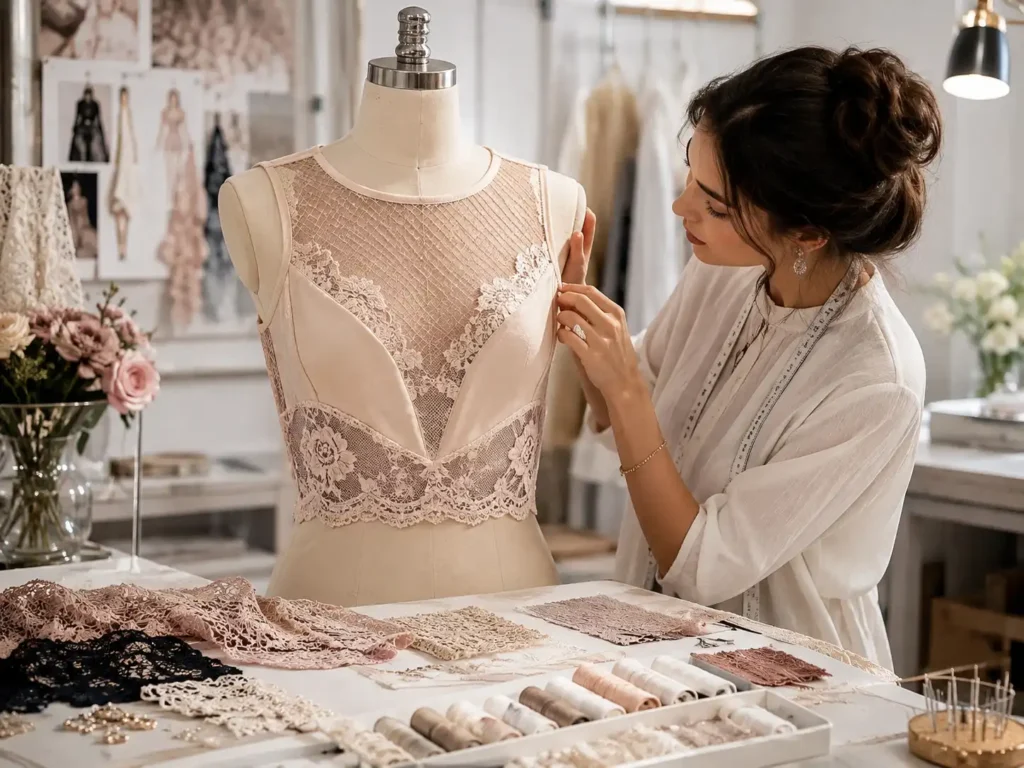
Lace brings motif and texture to lingerie-inspired clubwear, corset panels and statement details. Motif placement, fabric width, fraying, snagging, lining color and skin contact all affect the final garment.
Lace used as a main fabric requires different handling from lace trim used at an edge or neckline. For sheer constructions, the lining and lace should be approved together so coverage and color are intentional instead of corrected late in sampling.
Printed and Statement Wovens
Trims and Embellishments Engineered Beyond Surface Decoration

Rhinestone Chains

Metal Chains

Zippers and Closures

Bra Cups and Boning

Adjustable Straps

Lining and Coverage
Fit Control for Bodycon, Corset, Cut-Out and Sheer Styles
Festival and clubwear silhouettes are visually unforgiving. Small pattern errors become obvious when a garment is tight, sheer, strapless or intentionally exposes the body. Jinfeng treats fit as a production standard built through measurement, fitting feedback, pattern correction and PP approval rather than a subjective final check.
Bust and Neckline Stability
Corset dresses, strapless minis, deep necklines and thin-strap styles all place different demands on the bust area. Sample review looks at cup position, neckline depth, gaping, tension, underarm exposure, strap angle and whether the garment stays in place during movement. Support may come from pattern shape, lining, bra cups, boning, elastic or anti-slip structures depending on the design. Each support method changes comfort and construction, so the right solution must be tested in the actual style rather than added generically.
Measurement alone cannot capture every bust issue. Front, side and movement photos help the pattern maker understand whether the problem is volume, angle, neckline tension or strap balance. Comments are then transferred into pattern changes and updated measurement requirements.
Waist, Hip and Cut-Out Proportion
Bodycon and cut-out styles need a controlled relationship between bust, waist and hip. If hip tension is too high, side seams can twist and cut-outs can spread. If the waist is too loose, the silhouette loses shape and structural panels may move. Cut-outs also need stable attachment points so the exposed area stays intentional while walking or sitting.
Jinfeng reviews waistline position, hip ease, side-seam balance, cut-out edge tension, lining or facing and the stretch direction of the fabric.
For graded sizes, the cut-out cannot simply grow by the same amount as every surrounding measurement; visual proportion and wearing security have to remain consistent across the size range.
Mini Length and Movement Safety
A mini dress can appear correct on a mannequin but become too short during walking, sitting or raising the arms.
Development therefore reviews front and back length, hip coverage, lining length, hem shape and how the garment moves on the body. Stretch fabrics may ride upward; fitted linings can also pull differently from the shell.
The final standard should define the intended length and coverage without removing the visual attitude of the style. Bulk measurement and garment checks focus on the areas where small deviations create a large wearing difference.

From Moodboard or Reference to Production-Ready Development
A brand does not need to arrive with a perfect technical package before the first development discussion. Jinfeng can begin from a line sheet, sketch, moodboard, reference image, original sample or tech pack, then convert the concept into a more complete product-development brief before pattern work begins.
Decode the Visual Reference
The development team separates visual features from construction requirements. A reference may show a low neckline, twisted mesh panel, corset seam, cut-out or asymmetric hem, but the image may not reveal fabric weight, lining, closure, internal support or actual fit. These missing variables are identified first so the style is not treated as a simple photo-copy exercise.
The review also considers whether the inspiration should be interpreted rather than replicated. Brand IP, original design direction and confidentiality need to be respected. Jinfeng can work under NDA and use supplied materials for project evaluation, sampling and production without publishing unreleased designs.
Complete the Development Inputs
Before a more accurate sample or quotation can be prepared, the project should clarify fabric direction, size range, target quantity, color plan, lining, closure, trim direction, fit preference, private-label requirements and launch date. A moodboard can start a discussion, but it does not replace the specifications needed for production.
Where the design direction is still open, the team can propose fabric or construction alternatives. A heavy trim may be localized rather than applied all over; a double layer of mesh may replace a separate lining in a controlled area; a cut-out may need a hidden elastic or facing to remain stable. These decisions are evaluated against appearance, comfort, cost and production repeatability.
Build the First Production Logic
Pattern development begins only after the main structure is clear enough to test.
The first sample is used to verify silhouette, proportion, material behavior, lining, trim placement, closure and construction feasibility. It is not automatically the final bulk standard.
Fit comments and measurements are recorded, revised patterns are produced where required, and the style moves toward PP approval only after critical risks are resolved.

Multi-Style Sampling Managed by Priority and Risk
A collection of 10–30 styles can become difficult to control if every sample is treated as equally urgent. Jinfeng groups styles by commercial priority, fabric readiness, construction complexity and launch deadline so the sample room can focus effort where it has the greatest effect on the collection calendar.
Group Styles Before Sampling
The collection is first organized into workable groups: mesh styles, sequin styles, corset or structured styles, jersey bodycon styles, matching sets and other shared material or trim families. Grouping reduces repeated sourcing and makes it easier to identify which styles depend on the same fabric, lining, zipper, cup, boning or embellishment. It also allows comments on one fabric family to inform related styles without assuming the patterns are identical.
Hero SKUs can be prioritized for photo-ready sampling when campaign deadlines come first. Commercial core styles can follow in the same development wave once material direction is confirmed. More complex pieces may start earlier because their pattern and trim validation requires additional time.
Use Sample Stages for Different Decisions
A first sample validates the concept and construction. A fit sample focuses more heavily on body balance and measurements. Revised samples confirm corrections. Photo-ready or salesman samples may be prepared for campaign or commercial review when required. The PP sample becomes the production reference after final fabric, trims, measurements, construction and finishing are aligned.
Reference timing varies by complexity. Simple first samples may fall around 7–10 days, ordinary dresses around 10–15 days, and complex corset, mesh, sequin or similarly demanding styles around 15–25 days. Revised and PP samples are commonly assessed around 7–15 days, subject to the changes required and final material readiness. Custom materials can extend these windows.
Record Every Revision
Sample comments should not remain only in email threads. Pattern changes, measurement changes, fabric substitutions, trim adjustments, sewing method, client comments and approval status need to be captured in the project record.
When the style is approved, the final information can move into the updated pattern, size chart, BOM, sewing instruction and QC checklist.
This record is particularly important in multi-style work because one collection may have dozens of simultaneous decisions. Traceability protects both the launch calendar and the eventual repeat order.

Lock the Approved Standard Before Bulk Production Starts
Bulk consistency improves when the approved sample is translated into a complete production package. Jinfeng uses PP confirmation and production handover to reduce the gap between what was approved in development and what is made across multiple lines or factories.
| Control File or Standard | What Must Be Locked | Why It Matters in Festival Clubwear |
|---|---|---|
| Final Pattern | Approved panel shapes, balance and construction lines | Protects fit, cut-out shape, neckline and silhouette |
| Size Chart and Grade Rule | Key measurements, tolerances and grading logic | Controls bust, waist, hip, length and strap consistency |
| Fabric Reference | Approved quality, color, stretch, weight and surface | Prevents changes in transparency, recovery, shine or hand feel |
| Trim Card / BOM | Zippers, cups, boning, rhinestones, chains, labels | Protects visual consistency, comfort and bulk availability |
| Sewing Standard | Seam method, stitch details, reinforcement, edge finish | Controls stretch seams, sheer edges and structured areas |
| PP Sample | Final approved appearance and construction | Gives production and QC a physical comparison standard |
| Label and Packing Instruction | Placement, SKU labels, polybag, carton marks | Prevents retail and warehouse errors after sewing is complete |
| QC Checklist | Fit, measurement, material, appearance and packing points | Keeps inspection focused on the actual risk of each style |
Multi-Style Bulk Production Organized Around the Collection Calendar
Large festival programs often combine several construction types in one order. Jinfeng plans bulk production by style group, material readiness, factory fit and launch priority so a collection is not managed as one undifferentiated block of garments.
Allocate by Product and Fabric Logic
Mesh, sequin, corset, stretch-jersey and matching-set styles do not create the same production demands. Factory and line allocation can therefore be reviewed by fabric group, sewing complexity, trim group, color group and required finishing. A line suited to stretch bodycon work may not be the best location for a highly embellished structured dress. Allocation follows confirmed capability and schedule rather than a generic “one line makes everything” approach.
Jinfeng operates 18+ sewing lines and 6+ flexible production lines within its confirmed manufacturing system. Flexible lines are particularly useful when a collection contains multiple SKUs, color groups or smaller style runs inside a larger brand order. Scheduling still depends on confirmed PP samples, material arrival and production planning.
Protect Launch Priorities
The production calendar should recognize which styles must arrive first.
Campaign hero styles, opening-drop products, retailer commitments and high-volume commercial pieces may have different priorities. Jinfeng’s merchandising and production teams can coordinate these priorities with material readiness, QC windows, packing and shipping preparation.
The goal is not to promise every style at the same speed.
The goal is to make the order sequence visible so the brand can decide where early delivery matters most and where later waves are commercially acceptable.
Keep Sample Standards Connected to the Line
Production teams need the same approved information used during sampling: final pattern, size chart, BOM, fabric reference, trim card, sewing instruction, PP sample, label placement, packing instruction and QC checklist. Inline checks compare garments against these standards while there is still time to correct the process.
A collection becomes repeatable when these production records remain organized for future orders. New colors, new materials or changed trim batches still require confirmation, but archived standards reduce the risk of rebuilding the style from memory.

Quality Control Focused on High-Risk Festival Construction
Fabric Inspection
Cutting Control
Sewing and Construction
Measurement and Fit
Comfort and Wearing Safety
Packing Inspection
Rhinestones, chains and sequins need protection from abrasion and compression. Labels, barcodes, SKU details, polybags and carton marks are checked against the packing instruction. The final inspection therefore covers not only the garment but also the condition in which the product will reach the receiving warehouse.
Private Label and Packing Prepared for Retail Operations
Brand Labels
Hangtags and Tickets
Barcode and SKU Labels
Polybag Packing
Carton Marks
Warehouse Requirements

Backward Planning From Launch for Sampling, Production and Delivery
Festival calendars are seasonal and event-driven, so missing a launch window can reduce the commercial value of an otherwise successful product. Jinfeng plans timelines from the required delivery point backward through sample approval, material readiness, bulk production, QC and shipment preparation.
- Sample and Photo Deadlines
The first question is not “How fast can the factory sew?” but “When must the approved product be ready for photography, campaign use, showroom review or sales confirmation?” Complex first samples may use a 15–25 day reference range, while ordinary dress samples are commonly around 10–15 days. The actual timing depends on materials, structure and the speed of feedback. - PP and Material Lock
Bulk production should not start while critical fabric, trim, fit or packing decisions remain open. Final material approval, PP sample, size information and production documents are aligned before a reliable bulk schedule is issued. Custom-dyed fabrics, special trims, printed materials or certified resources may add supplier lead time. - Bulk and QC Window
Bulk timing is set after PP approval, quantity, color groups, size ratio, material availability, packaging and QC requirements are confirmed. Jinfeng does not use one fixed number for every collection because a 20,000-piece stretch program and a 60,000-piece multi-fabric embellished program do not have the same production path. - Shipment Strategy
Express, air, sea, split shipment and client-nominated forwarder options can be evaluated by project. The brand should provide destination country, warehouse information, delivery window, carton-mark requirements and nominated forwarder details where applicable. If timing becomes tight, shipment planning should be discussed early rather than treated as a final-day logistics decision.
Anonymous Festival Clubwear Collection Case
A representative brand program shows how a festival collection can be managed when multiple visual directions, fit risks and production requirements have to move together. Client identity and unreleased design information remain confidential under Jinfeng’s NDA-based cooperation approach.
18 Styles, 42,600 Pieces
The program contained 18 styles with a total order quantity of 42,600 pieces, fitting the structure commonly seen in established-brand collection orders where one project contains 10–30 styles and total volume can reach 20,000–80,000 pieces. The assortment combined mesh bodycon dresses, corset minis, sequin statement styles, cut-out dresses, matching sets and supporting fashion tops.
The collection was not handled as 18 isolated orders. Styles were grouped by fabric family and construction risk so sampling and production decisions could be coordinated. Mesh styles shared transparency and recovery review. Structured corset pieces shared cup, boning and bust-fit checks. Sequin styles required separate attention to edge protection, skin contact and packing.
Hero Styles Were Prioritized First
The brand needed selected styles ready earlier for campaign and merchandising review. Hero SKUs were therefore prioritized by launch importance, material readiness and technical difficulty. More complex constructions entered pattern and trim review early, while commercially cleaner styles followed once the core fabric directions were confirmed.
During sampling, the most important corrections centered on bust stability, waist placement, hip tension, cut-out proportion, mesh coverage and embellishment comfort. Comments were recorded against each style rather than merged into one general collection note. Revised patterns and measurement files were then prepared for the styles requiring correction.
Bulk Standards Were Locked Before Allocation
Before bulk production, approved styles were transferred through final pattern, measurement information, BOM, fabric reference, trim requirements, sewing standard, label placement, packing instruction and QC checkpoints. Production allocation considered fabric group, construction complexity and delivery priority.
Mesh and bodycon styles were inspected for stretch recovery, seam deformation and measurement. Sequin and rhinestone garments received additional checks for surface loss, skin irritation, attachment security and packing protection. Matching sets were checked for color, size pairing and SKU packing.
The value of the program was not one isolated sample result. The operational result was a collection structure that could move from development into bulk with clearer priorities, traceable approvals and records that could support future replenishment or related style extensions.

Festival Clubwear Collections Frequently Asked Questions

Send Your Festival Clubwear Collection for Development Review
Jinfeng Apparel works with established fashion brands, sourcing teams and product-development programs that need more than isolated garment production. Send the information already available—whether it is a line sheet, tech pack, moodboard, reference image or approved sample—and the team can review the collection structure, material direction, sampling risks, production fit and information still needed before quotation or development begins.
For a more useful project review, include:
- Style list or line sheet
- Reference images, sketches or tech packs
- Target quantity by style and color
- Preferred fabrics or visual material direction
- Size range and size chart where available
- Color plan and print direction
- Corset, mesh, sequin, rhinestone or other special construction notes
- Private-label, barcode and packing requirements
- Target photo date, launch date or delivery window
- Destination country and warehouse instructions where available


