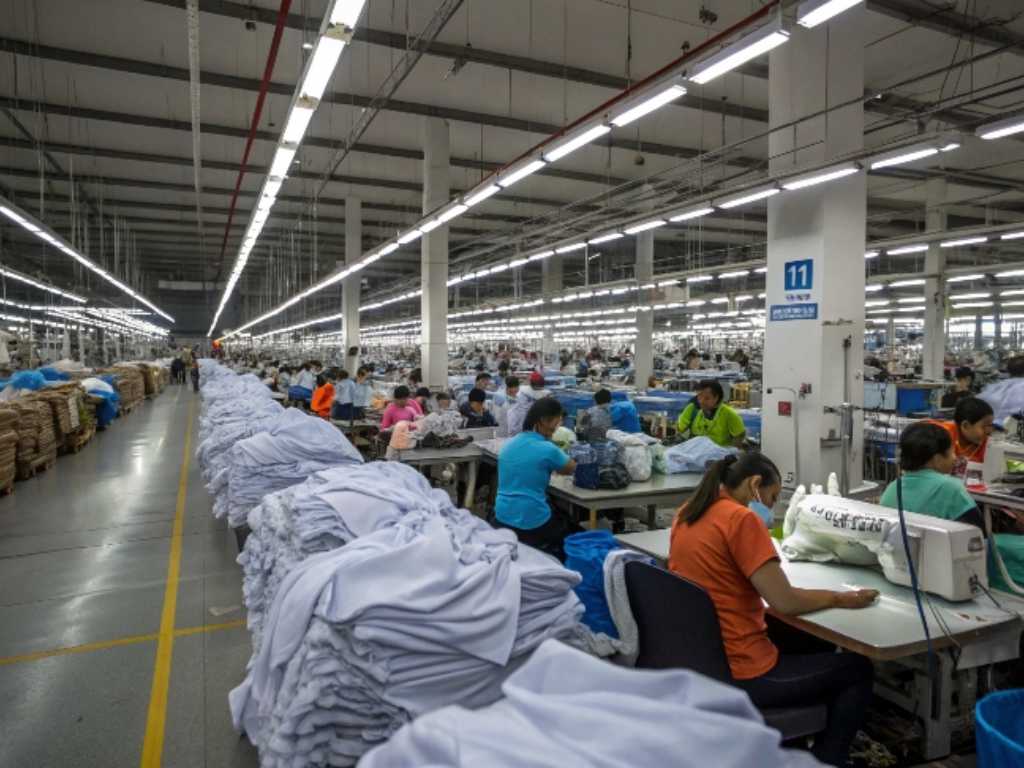
Feather Trim Dress Manufacturer
Custom feather trim dress development for established partywear, occasionwear, eveningwear, prom, reception and premium ecommerce fashion brands.
Jinfeng Apparel develops feather-trimmed dresses from reference images, original samples, sketches, line sheets or technical packs. Product development covers fabric direction, pattern engineering, fit review, feather placement, trim attachment, sample revision, PP approval, bulk production, quality control and private-label packing.
- 6 primary placement zones reviewed: cuffs, sleeves, neckline, shoulders, slits and hems.
- 3 bulk-control references locked before production: approved trim standard, PP sample and golden sample.
- MOQ starts from 200 pcs per style/color, subject to fabric and feather-trim sourcing requirements.
- Seasonal programs commonly contain 10-30 styles, with development and production arranged by launch priority.
Manufacturing Facts Behind Complex Feather Dress Programs
Since 2008
Six Owned Factories
Ten Plus Partners
Two Sample Rooms
Seven Plus Pattern Makers
Dedicated Quality Team
Built for Established Fashion Development Teams
Strong Project Fit
- Clear style or collection direction
- Sample budget and approval process
- MOQ-compatible quantity plan
- Bulk production forecast
- Named development or sourcing contact
- Long-term repeat-order potential
Production Model
The production model is built around custom development, sample approval, bulk manufacturing and branded delivery. Ready-stock resale, single-piece fulfillment and micro-order production are outside the operating focus. A structured order allows fabric and trim booking, pattern control, size grading, PP approval, line instructions, QC planning and retail-ready packing to be managed correctly.
- MOQ from 200 pcs per style/color
- Custom fabric and trims reviewed separately
- PP sample required before bulk
- Private-label files confirmed before packing
- Delivery plan linked to material arrival
- Repeat-order records retained
Why Feather Trim Dress Projects Lose Their Value
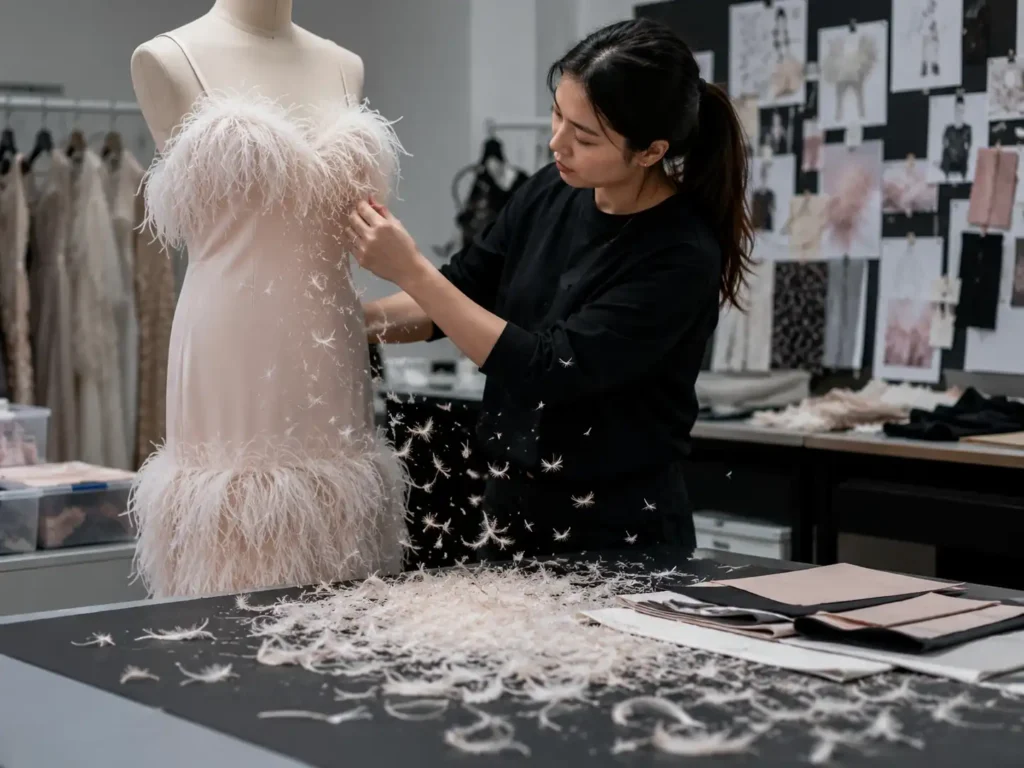
Excessive Shedding
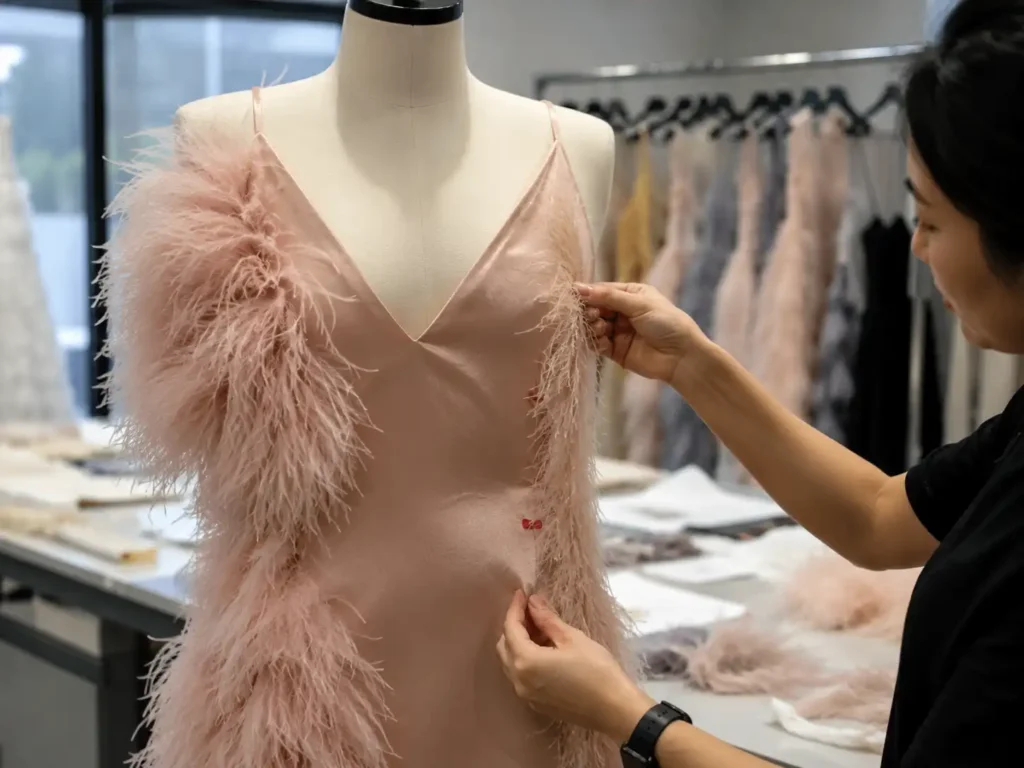
Uneven Density
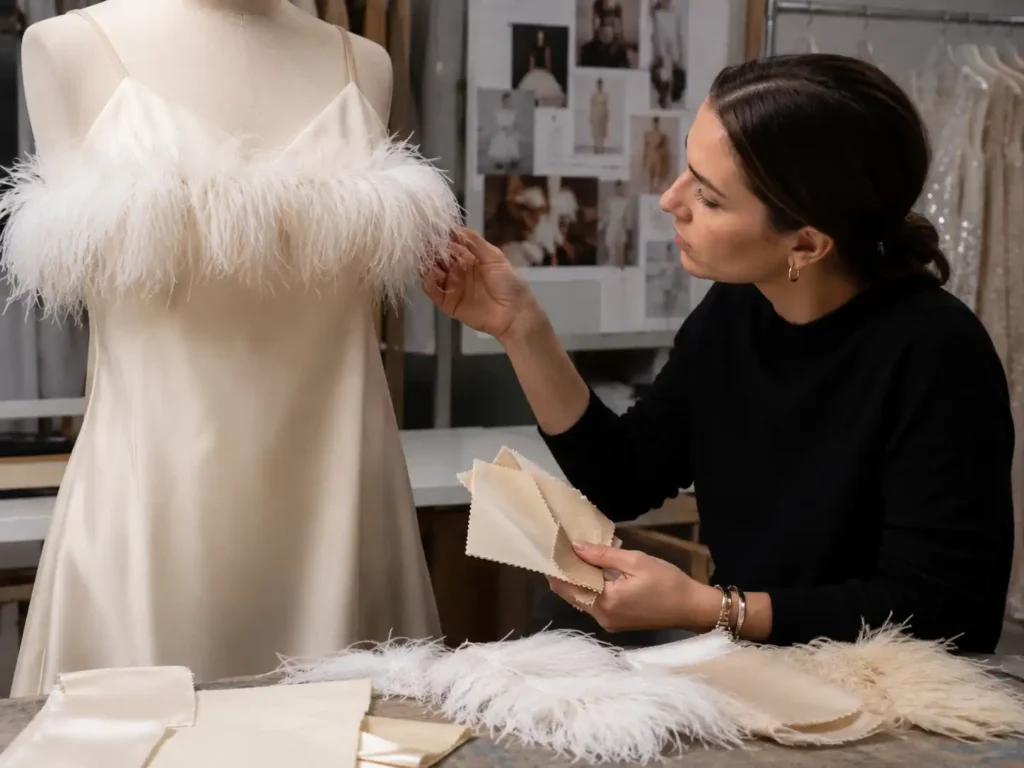
Color Mismatch
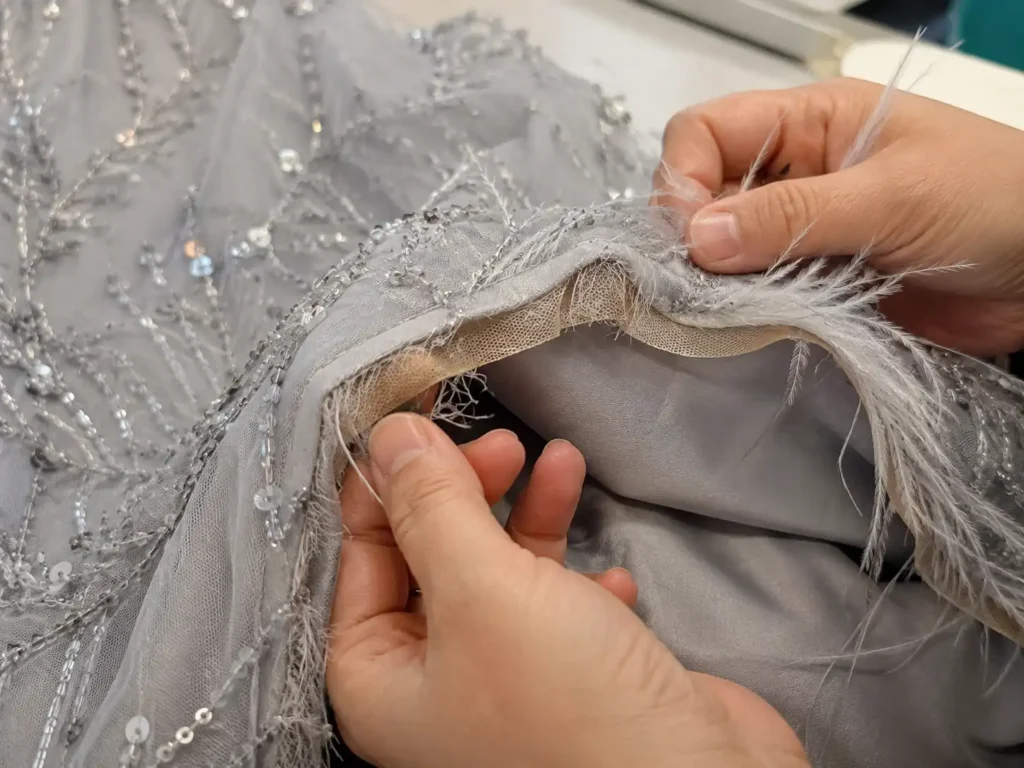
Weak Attachment
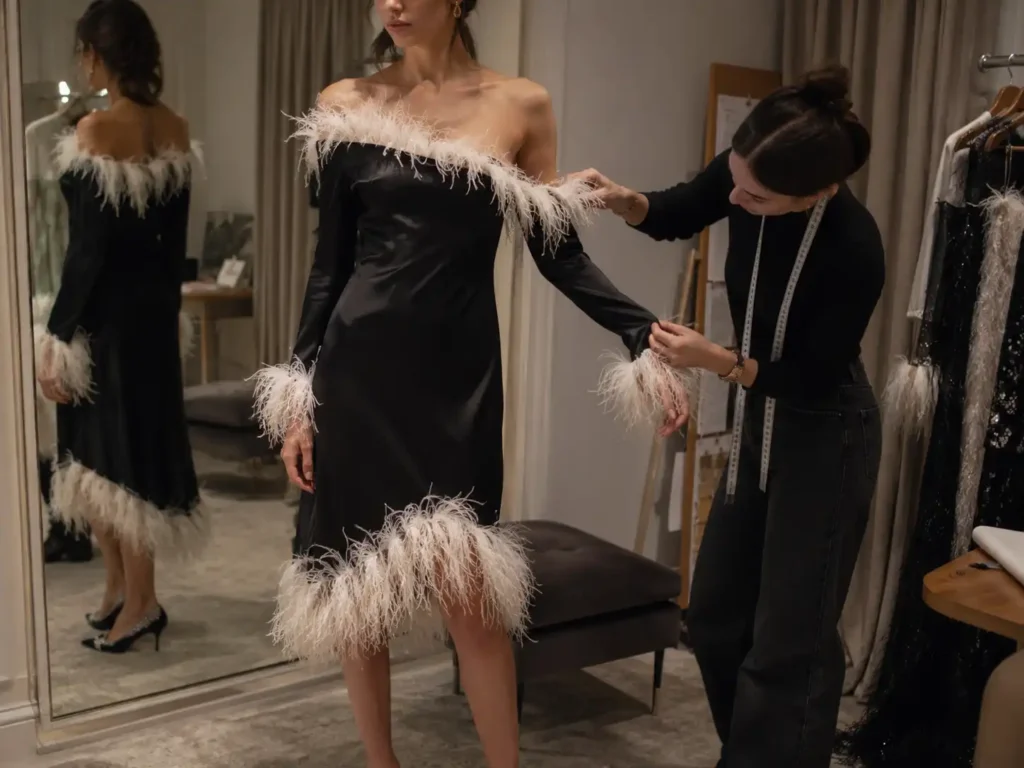
Distorted Fit
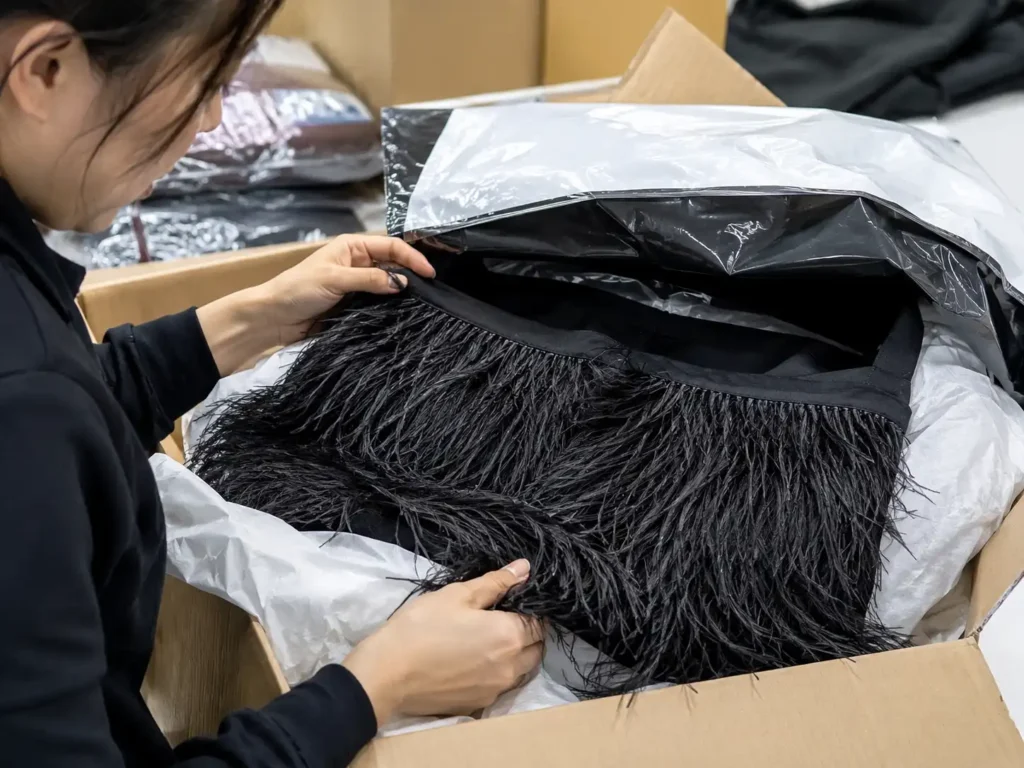
Crushed Delivery
Custom Feather Trim Dresses We Develop
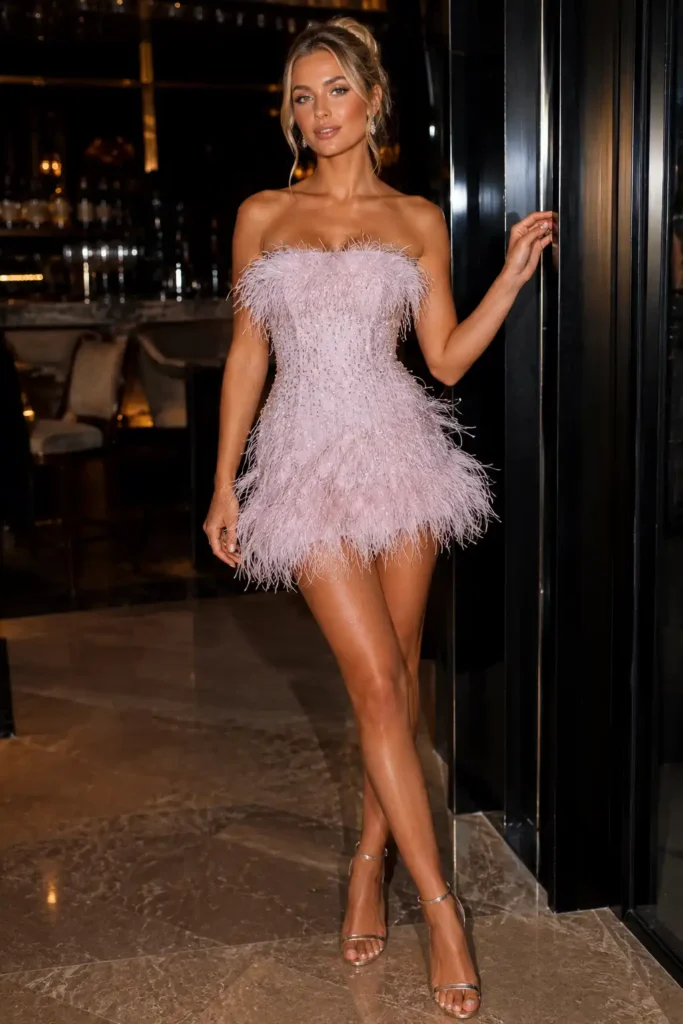
Feather Mini Dress
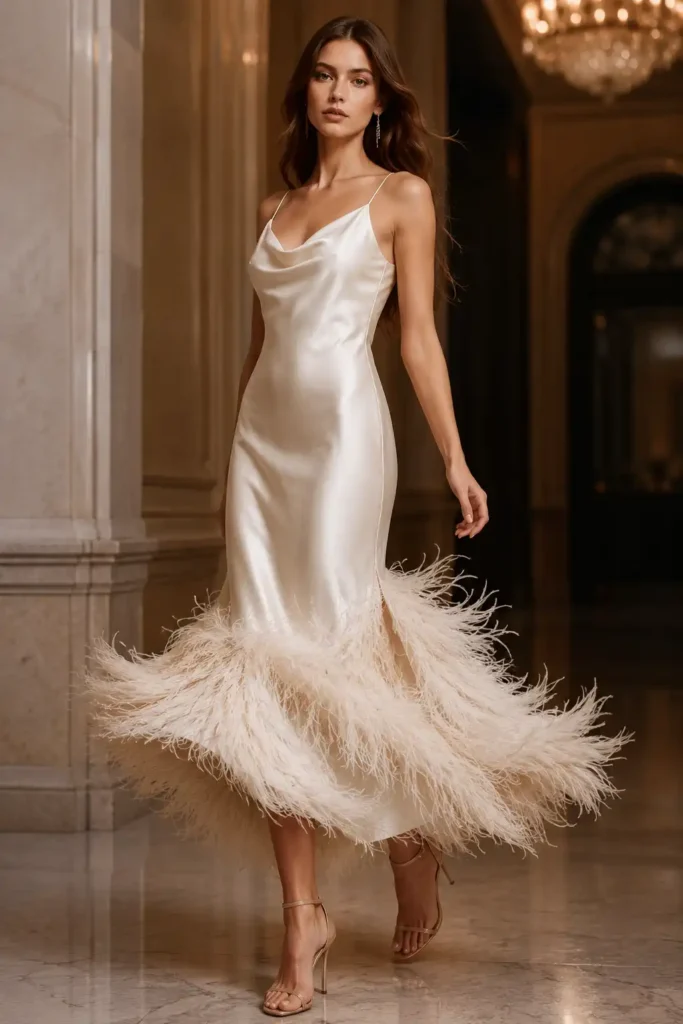
Feather Hem Dress
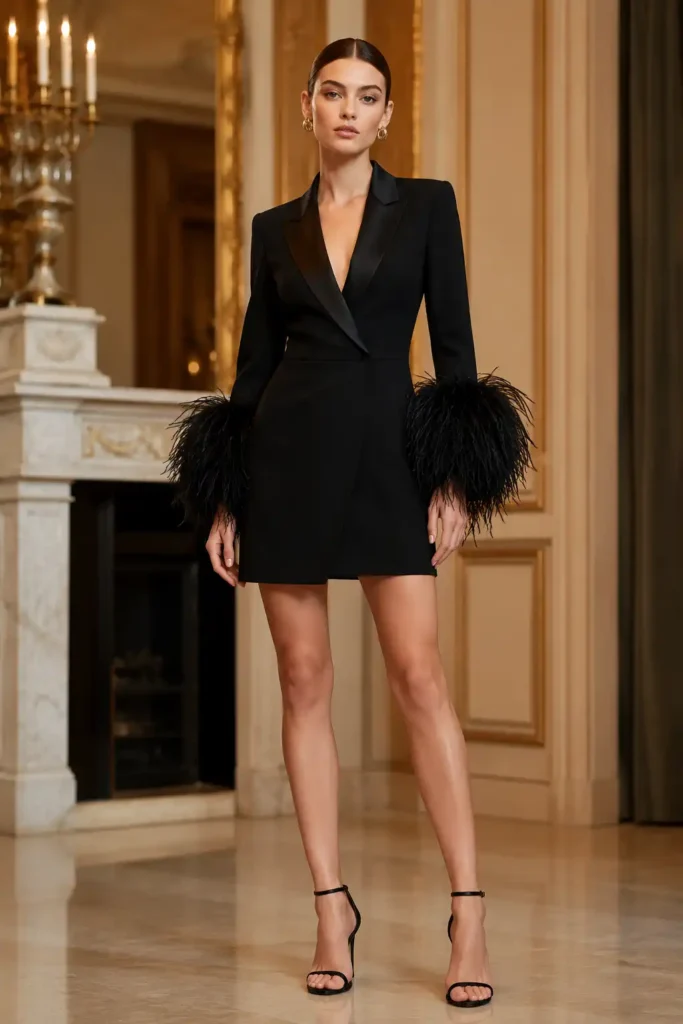
Feather Cuff Dress
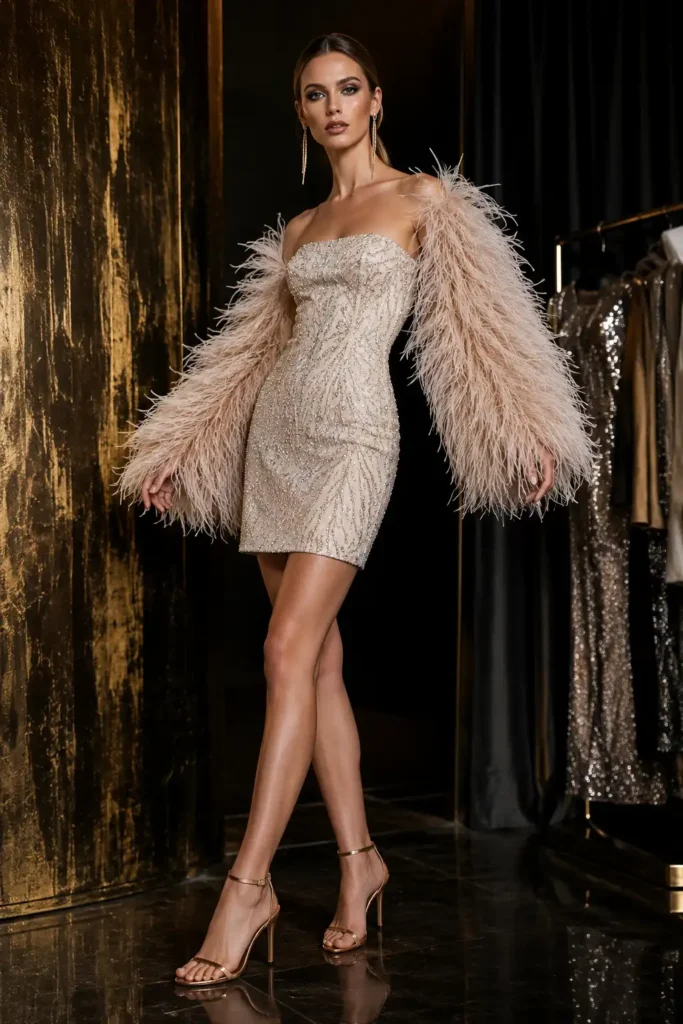
Feather Sleeve Dress
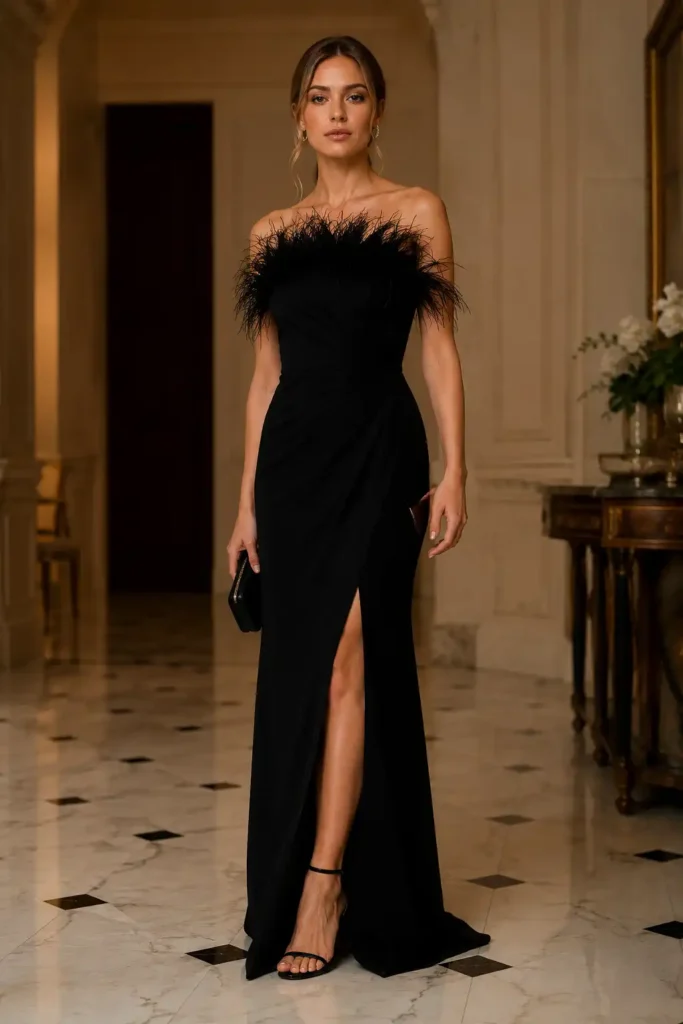
Feather Neckline Dress
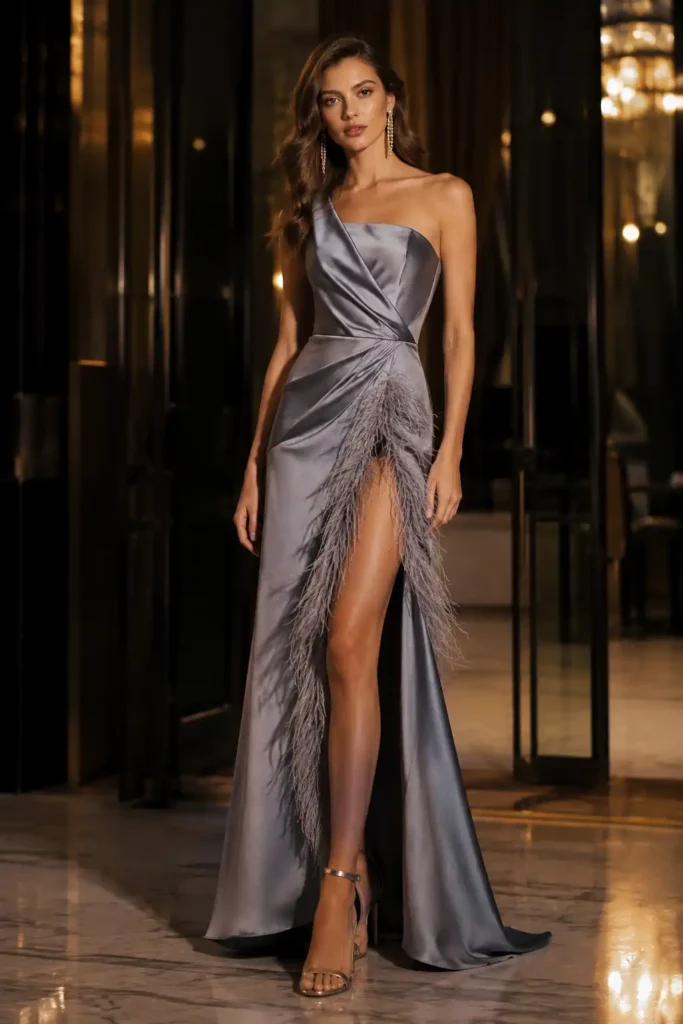
Feather Slit Dress
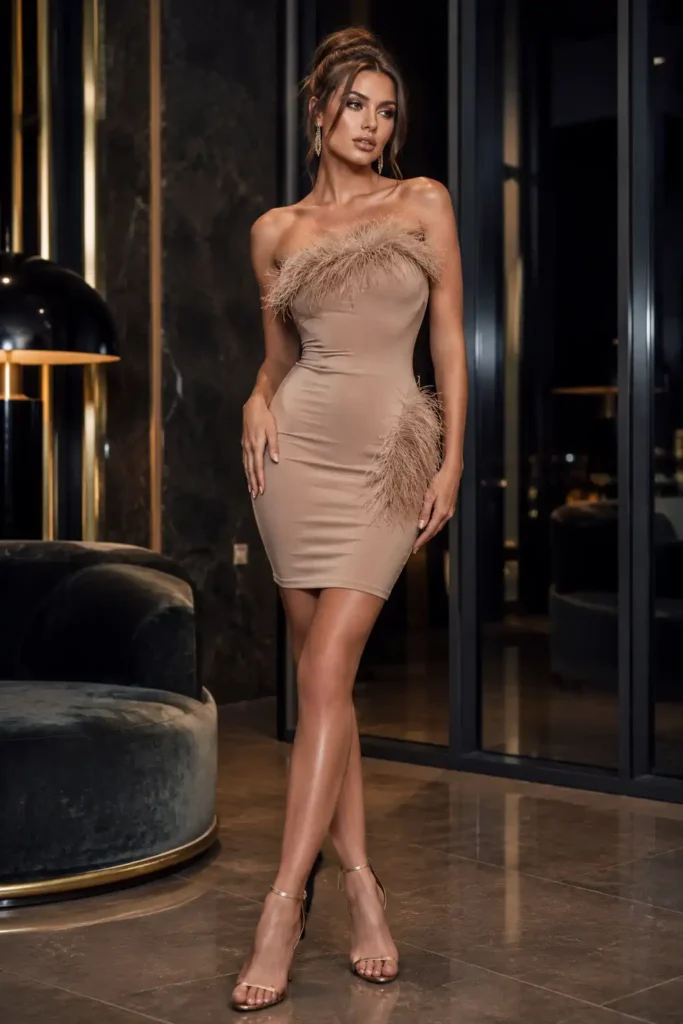
Feather Bodycon Dress
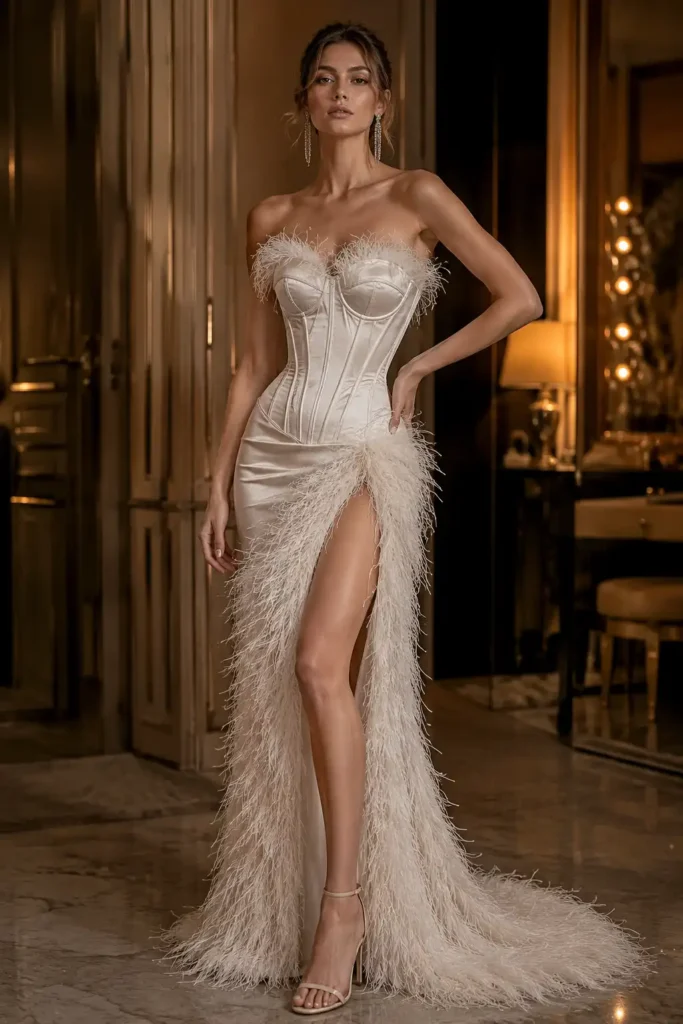
Feather Corset Dress

Feather Cocktail Dress
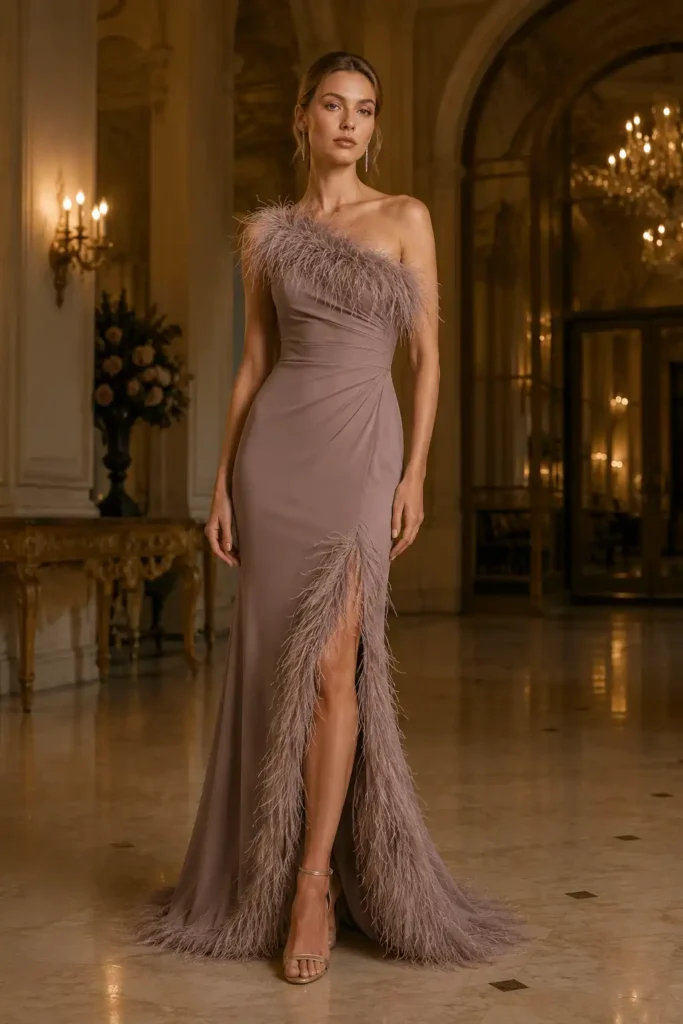
Feather Evening Dress
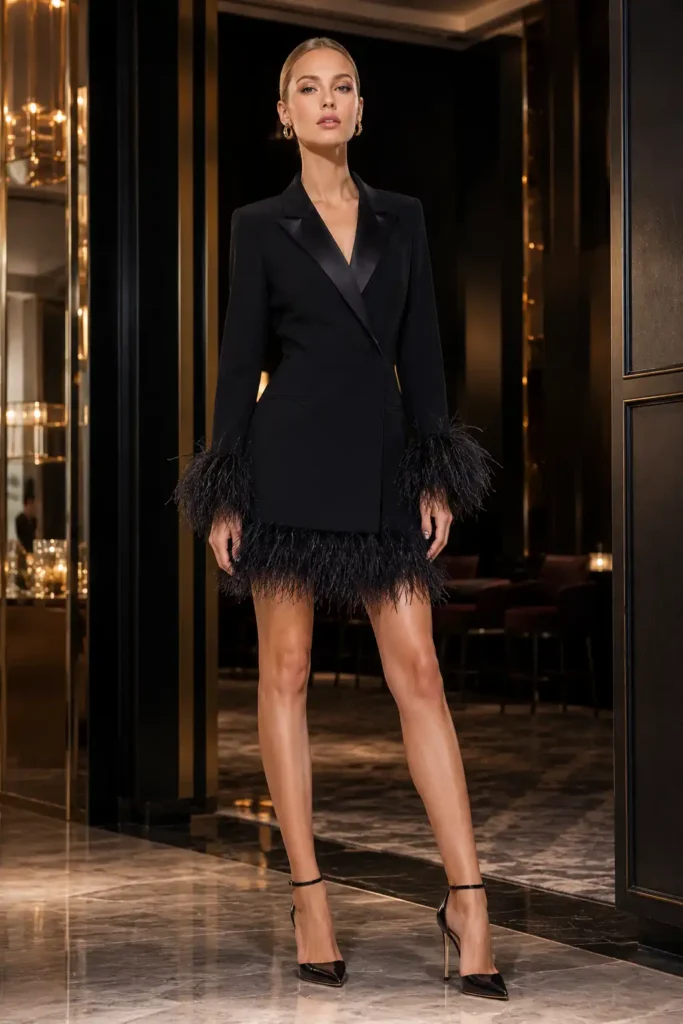
Feather Blazer Dress
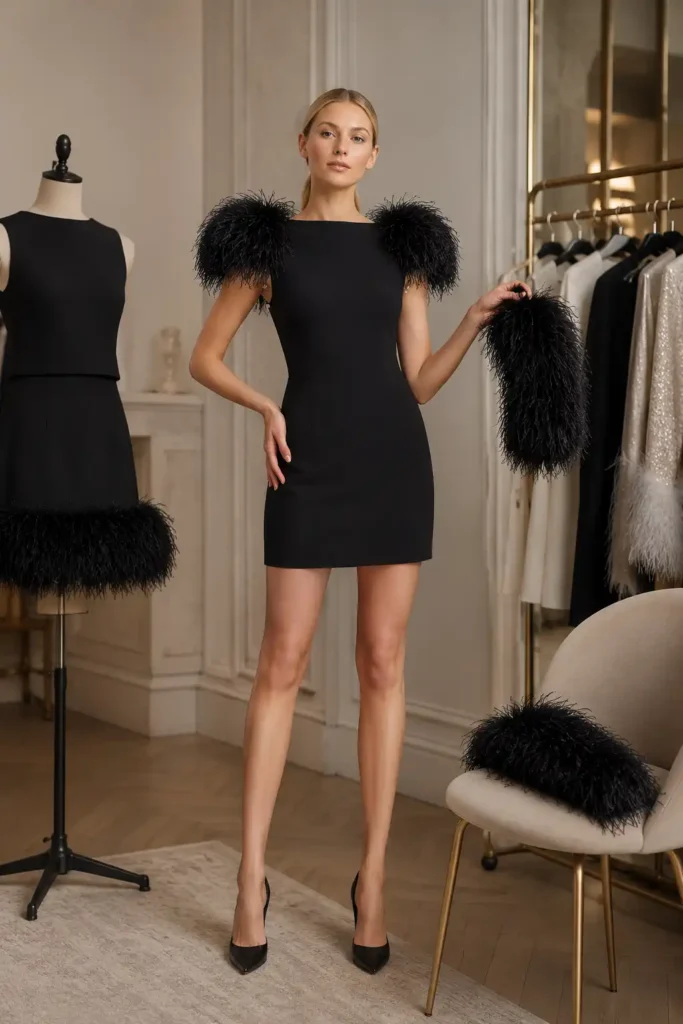
Detachable Feather Dress
Collections Designed Around Real Selling Moments
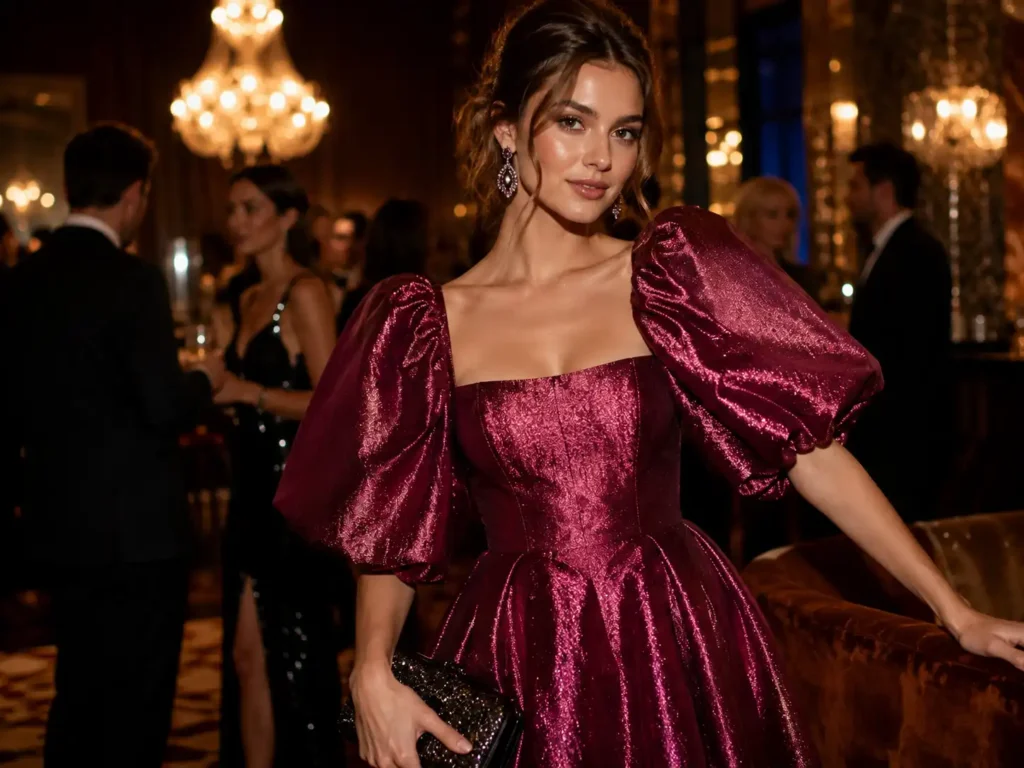
Holiday Party Drop

Birthday Collection

Prom and Homecoming

Cocktail and Eveningwear

Wedding Reception

Premium Going-Out
Compare Feather Trim Specifications Before Sampling
Specifications turn subjective words such as “full,” “soft” and “luxurious” into reviewable production standards. The approved trim should be assessed together with the intended fabric and placement.
| Specification | What Must Be Confirmed | Effect on the Dress | Bulk Control Reference |
|---|---|---|---|
| Material direction | Natural, synthetic or mixed decorative trim | Appearance, movement, labeling and sourcing route | Supplier specification and approved card |
| Visible length | Measured from base tape to feather edge | Volume, proportion and finished garment length | Measurement range on approved sample |
| Density | Fullness per running length | Luxury level, cost, weight and packing volume | Physical density standard and comparison photo |
| Base tape | Width, color, softness and flexibility | Seam appearance, comfort and curve handling | Tape measurement and attachment sample |
| Trim weight | Weight per running length | Sleeve drag, neckline stability and hem balance | Sample weight and garment fit review |
| Color | Stock shade, custom dye or matched shade | Coordination with main fabric and lining | Approved swatch and dye-lot record |
| Direction | Feather orientation and overlap | Left-right symmetry and movement | Placement diagram and golden sample |
| Shedding behavior | Loose-fiber level under agreed handling | Finishing workload and wearer experience | Handling check and inspection notes |
| MOQ | Supplier minimum by color and trim type | Final garment MOQ and color planning | Material quotation and reservation |
| Lead time | Stock, dyed or newly developed trim | Sample date and production schedule | Confirmed material delivery plan |
Matching Feather Trims with Fashion Dress Fabrics

Satin

Crepe

Mesh

Sequin Fabric

Velvet

Structured Wovens
Fit Engineering Behind Feather Trim Dresses
Feather decoration only looks premium when the underlying dress fits correctly. Pattern and structure are reviewed before trim volume is used to hide fit problems.
Bust Support and Neckline Security
Strapless, corset, halter, deep-V and one-shoulder feather dresses require clear support logic. Bra cups, boning, under-bust seams, anti-slip tape, strap angle and lining must work as one structure. Feather along the neckline adds weight and can change the way the upper edge sits. Fit review checks coverage, stability during movement, cup position and whether the trim touches the face or underarm. A decorative neckline is approved only after the base structure remains secure without relying on the feather to disguise gaps.
Review measurements:
- High bust and full bust
- Under-bust position
- Neckline drop
- Strap length and angle
- Back height
- Upper-edge stretch
- Cup and boning placement
Waist and Hip Proportion
Bodycon and fitted mini dresses depend on accurate waist placement and hip shaping.
A feather hem or waist detail can exaggerate proportion, so the base silhouette needs to be balanced first. Stretch percentage, fabric recovery, lining stretch and zipper behavior are reviewed through fitting. Grade rules are checked so larger sizes keep the intended waist-to-hip relationship rather than simply increasing every measurement equally.
Side seams should remain vertical after trim is attached.
Review measurements:
- Natural waist position
- High hip and full hip
- Waist-to-hip length
- Side-seam balance
- Fabric stretch and recovery
- Zipper length and tension
- Finished garment ease
Sleeve and Arm Movement
Feather cuffs and sleeve panels can restrict movement or pull the armhole out of shape. Sleeve cap, bicep, elbow, cuff opening and lining are checked with the actual trim weight.
Long sleeves require bending and lifting tests. One-shoulder and off-shoulder dresses also need arm-movement review because trim near the shoulder may catch the body or shift the neckline. The pattern may require additional support or a modified sleeve opening rather than simply sewing trim onto an existing sample.
Review measurements:
- Armhole depth
- Bicep width
- Sleeve length before trim
- Cuff opening
- Shoulder balance
- Range of movement
- Lining allowance
Hem, Slit and Walking Balance
Long feather hems and decorated slits need movement testing. The visible edge should look even while standing, walking and turning.
A slit must provide enough stride without opening beyond the intended point. Dense feather placement can add drag, making the skirt twist or pull backward. Hem sweep, panel shape, lining length and trim weight are adjusted during sampling. Floor-length styles also need footwear assumptions because the feather edge can change the perceived gown length.
Review measurements:
- Fabric hem length
- Visible feather-edge length
- Slit height and opening
- Hem sweep
- Front-back balance
- Lining length
- Walking clearance
Defining Color, Length and Density Standards
| Control Item | Sample Approval | Bulk Production Control | Final Inspection Focus |
|---|---|---|---|
| Color | Trim swatch reviewed beside shell and lining under two light sources | Dye lot recorded and separated where needed | Visible shade match across paired areas |
| Visible length | Measured from tape to average feather edge | Incoming trim checked against approved range | Cuffs, shoulders and hems compared side by side |
| Density | Fullness approved on an attachment sample | Physical density reference kept for production | Sparse zones, gaps and over-dense joins checked |
| Direction | Orientation marked on pattern or sewing instruction | Operators follow placement diagram and golden sample | Left-right direction and continuous hem flow checked |
| Base tape | Width, color and softness approved | Incoming tape compared with approved trim | Tape exposure, edge comfort and bulk checked |
| Join position | Join location approved on sample | Position marked in sewing instruction | Visible overlaps and abrupt density changes checked |
| Placement distance | Distance from seam, edge or opening approved | Guides or marks used where suitable | Position measured at critical points |
| Pair symmetry | Sleeve or shoulder pair reviewed together | Pairing retained through sewing and finishing | Matched fullness, length and orientation checked |
Detachable Feather Trim for Flexible Product Design
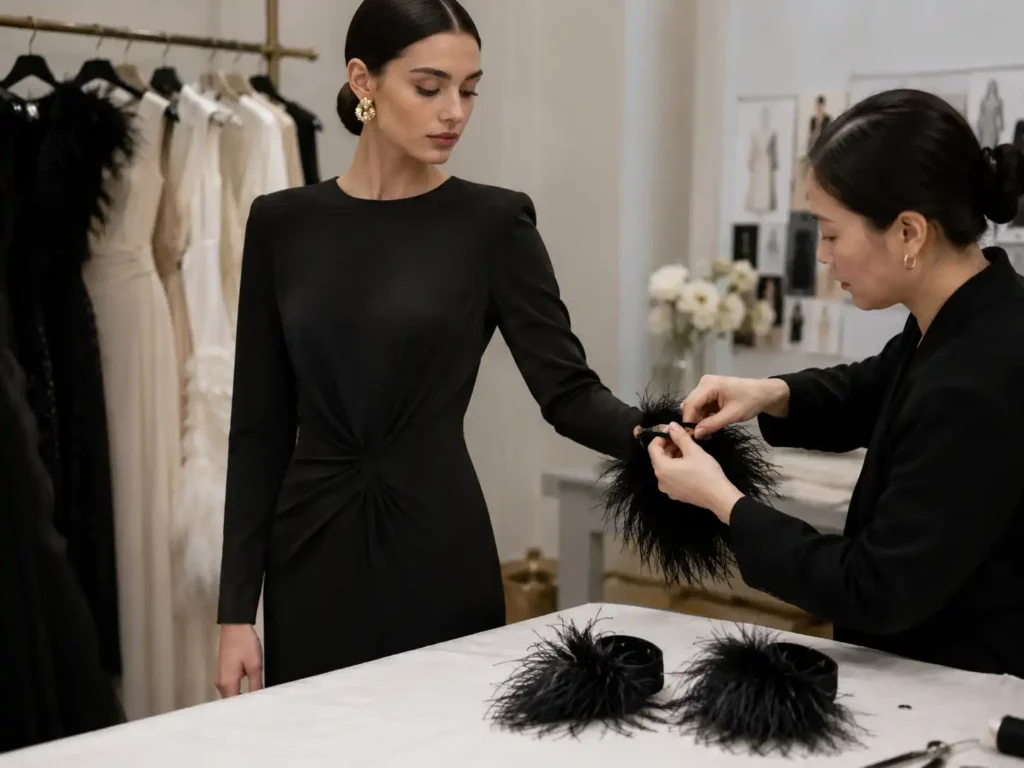
Detachable Cuffs

Detachable Hem Panels
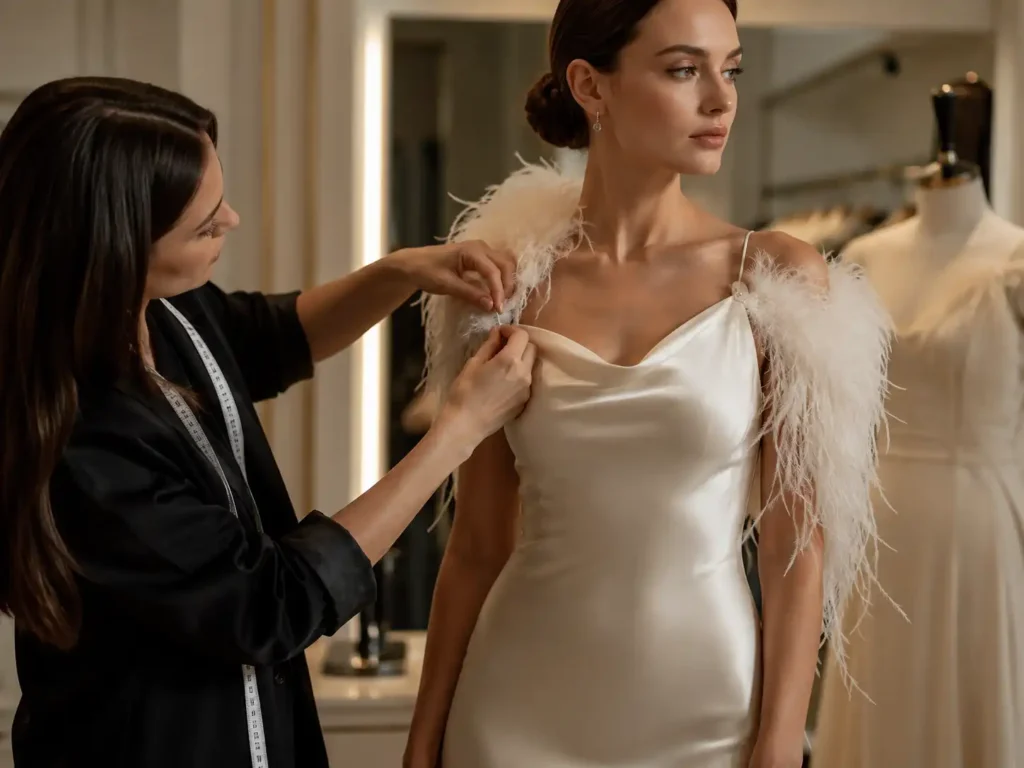
Detachable Shoulders
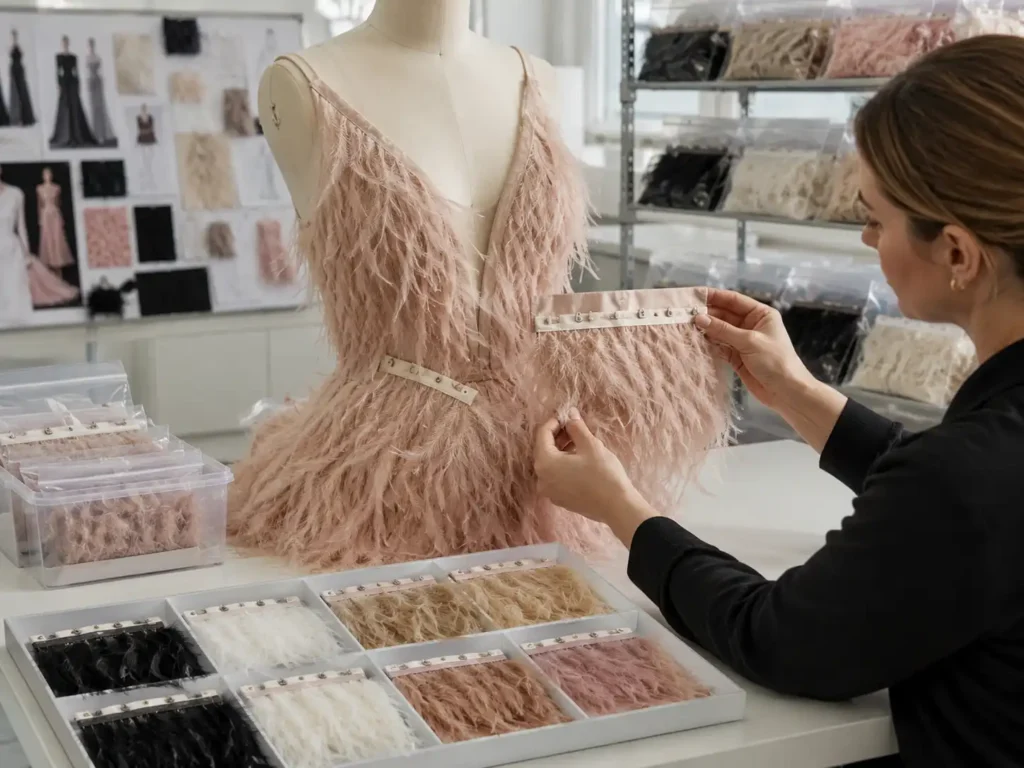
Replaceable Trim Sections
From Design Reference to Production-Ready Construction
Reference Image Review
Technical Pack Review
Original Sample Review
Material Feasibility
Pattern Risk Review
Development Plan
The development plan identifies sample type, material actions, measurement priorities, approval points, estimated timing and information still required. A formal quotation follows when style, quantity, materials, packing and delivery conditions are sufficiently clear.
Sample Development for Feather Trim Dresses

First Sample

Fit Sample

Revised Sample

Photo-Ready Sample
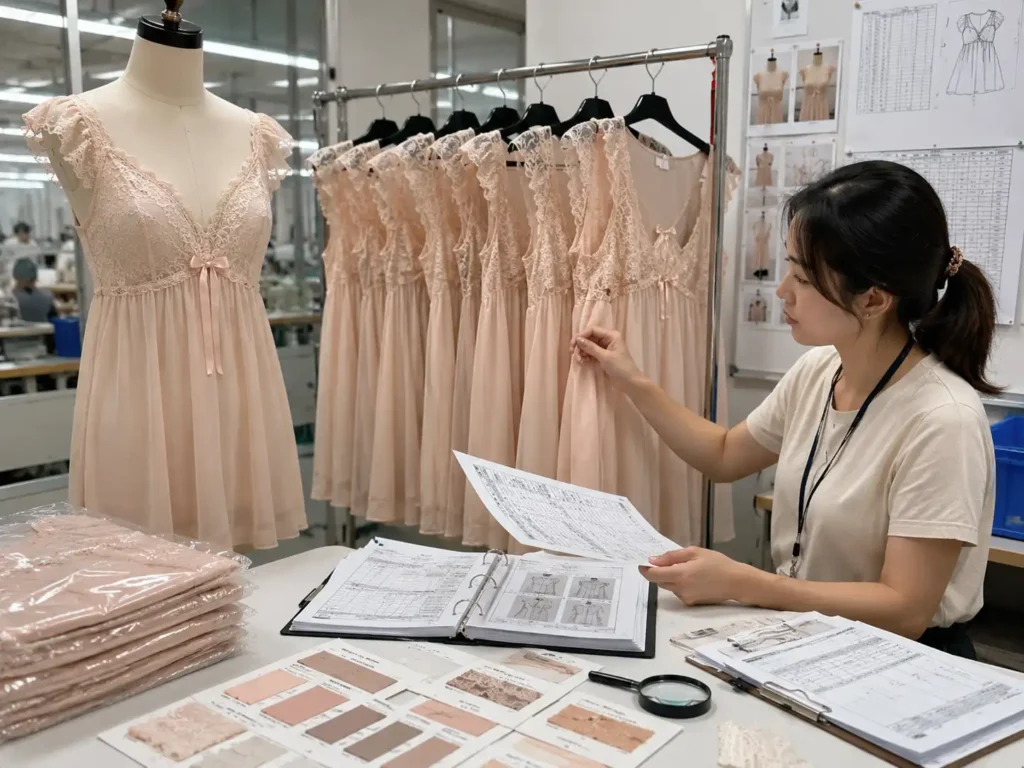
Salesman Sample

PP Sample
Controlling Sample-to-Bulk Feather Consistency
Approved Trim Standard
Approved Fabric Standard
PP and Golden Samples
Sewing Instruction
First-Piece Approval
Inline and Final Checks
What Determines Feather Trim Dress Cost
Feather Type
Length and Density
Placement Quantity
Main Fabric
Internal Structure
Decoration Mix
Size and Color Plan
Packing Method
MOQ and Quotation for Feather Trim Dress Orders
Per Style and Color
Material MOQ
Quote Information
Lead-Time Conditions
Bulk Production Process for Feather Trim Dresses
Material Booking
Incoming Inspection
Cutting Preparation
Trim Preparation
First-Piece Approval
Bulk Sewing
Finishing and QC
Garments move through loose-thread removal, controlled pressing, feather direction recovery, measurement checks, workmanship inspection and label verification.
Packing and Delivery
Packing follows the approved fold, tissue, bag, hanger, SKU and carton method. Bulk production planning for feather-trim collections is commonly arranged in 30-45 day windows after PP approval and complete material arrival, then adjusted for style count, order volume, split shipments and inspection needs.
Quality Control for Feather Trim Dresses
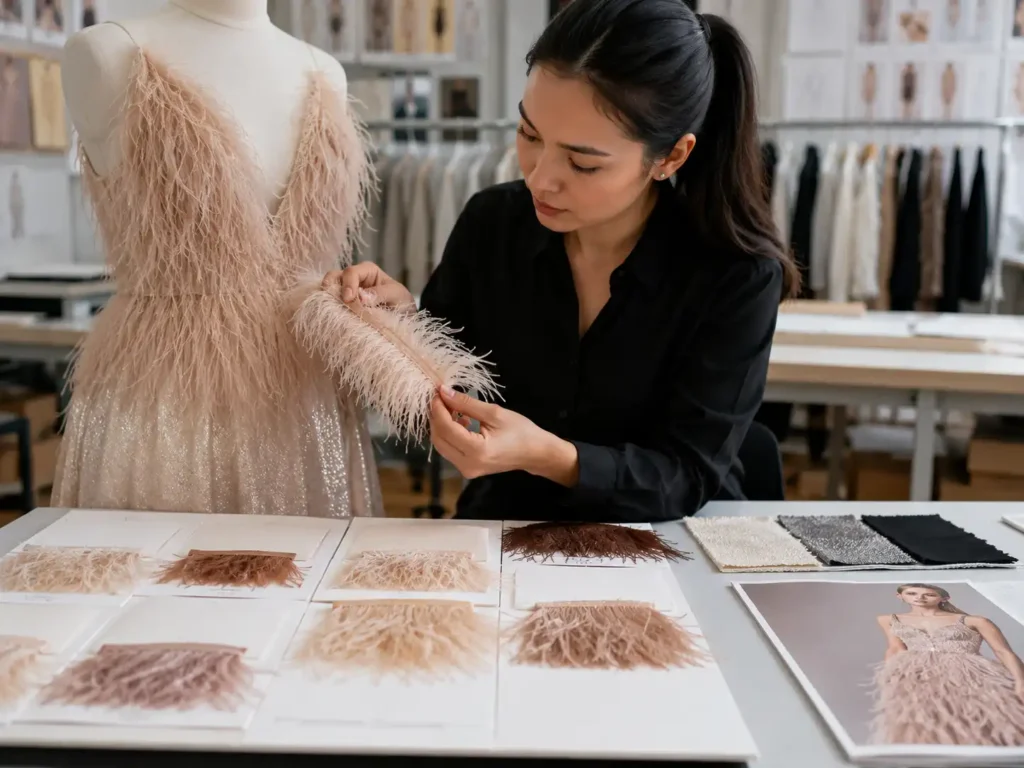
Material Identity
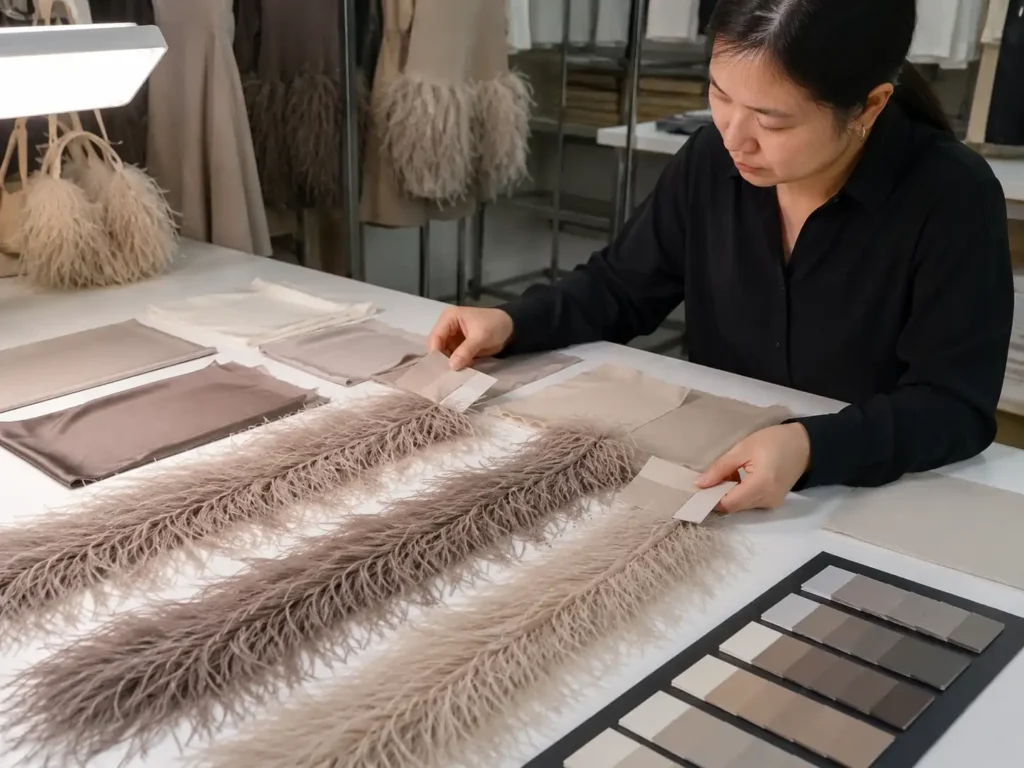
Color and Batch
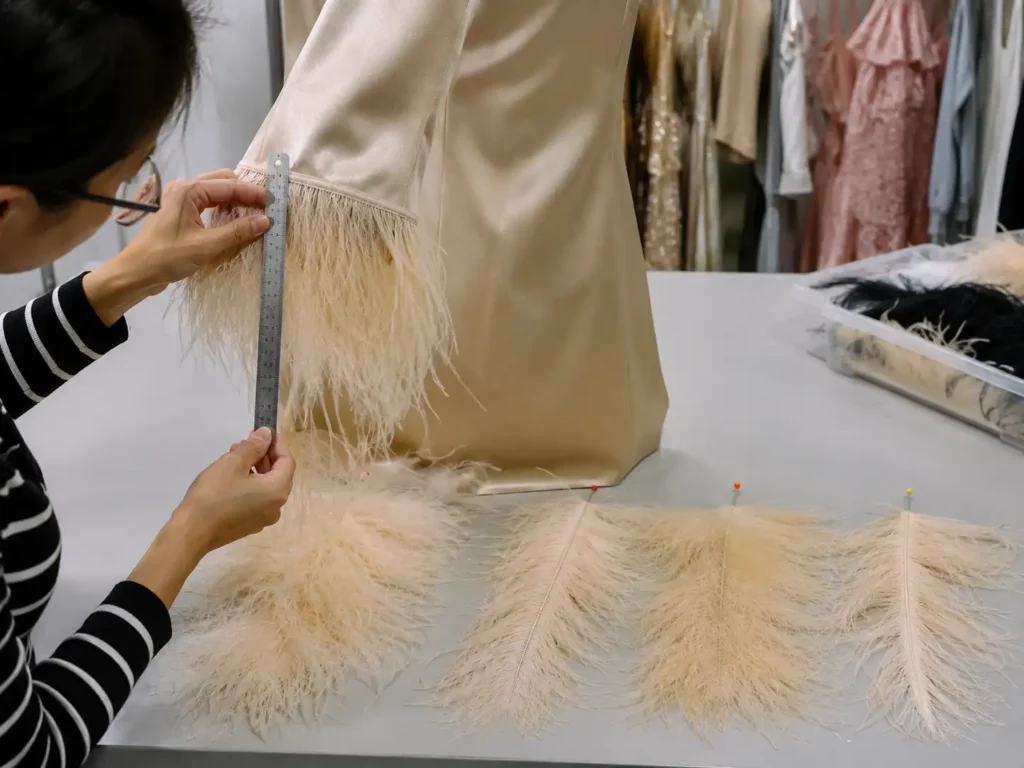
Length and Density
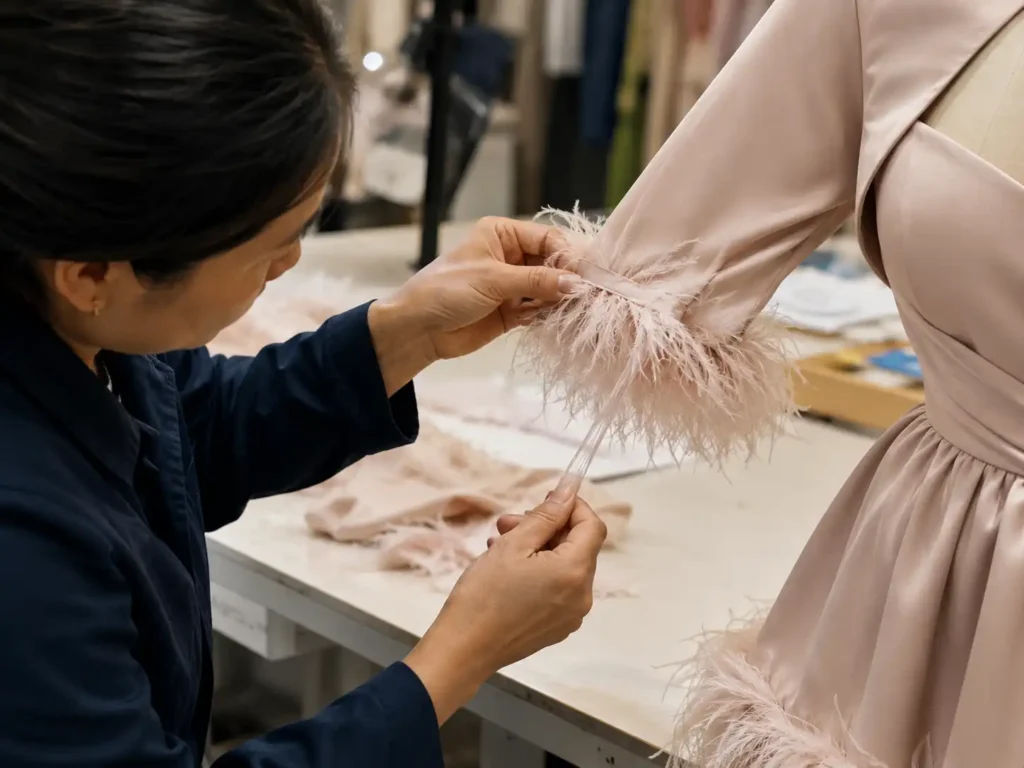
Attachment Strength
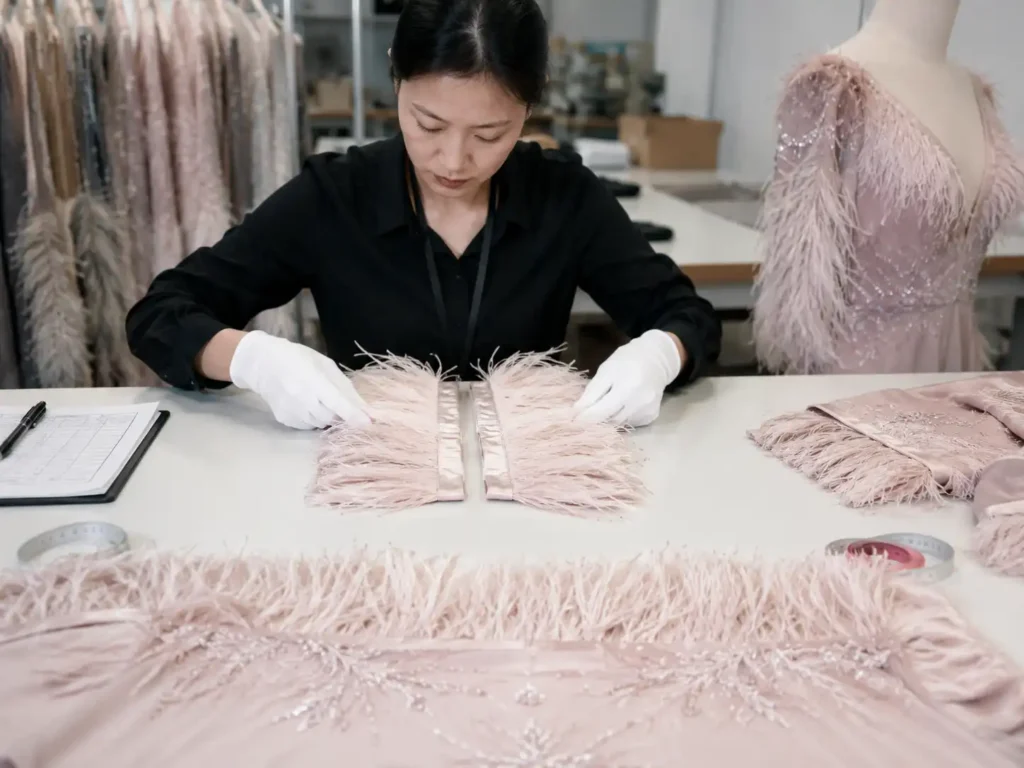
Placement Symmetry
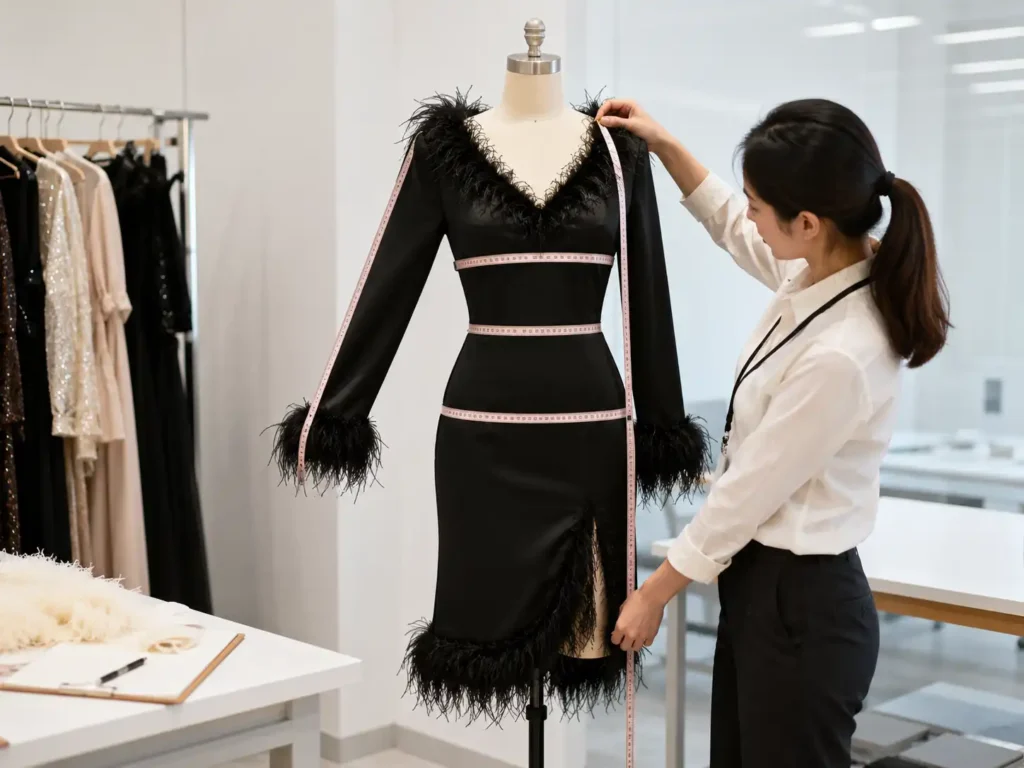
Garment Measurement
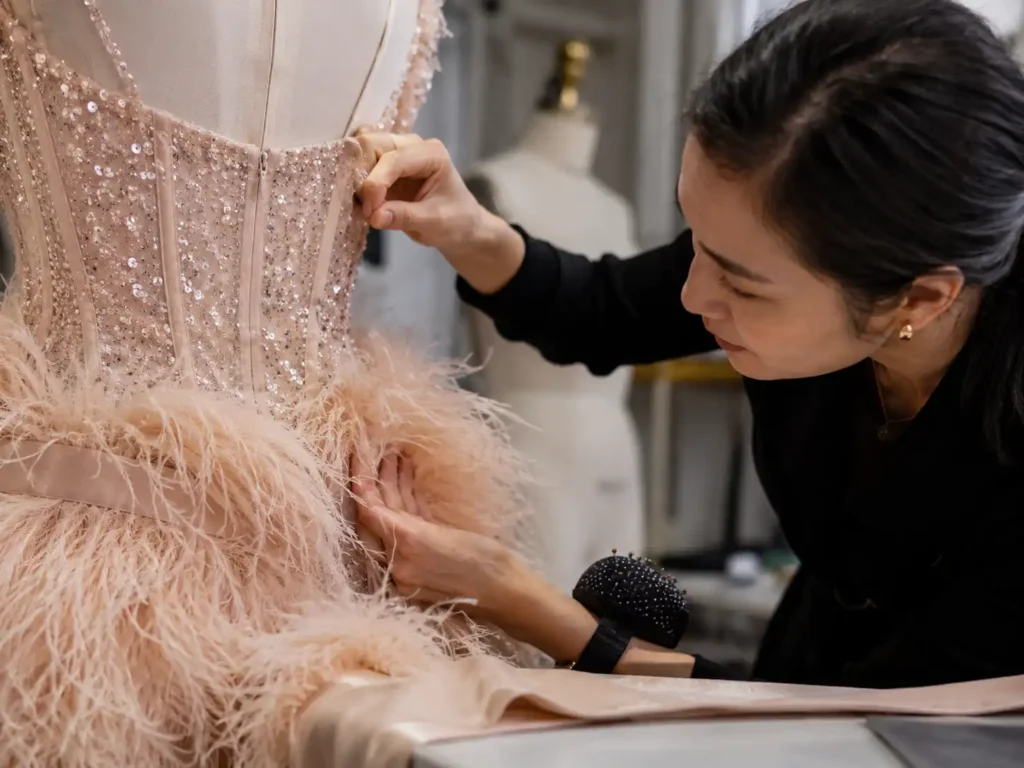
Workmanship and Appearance
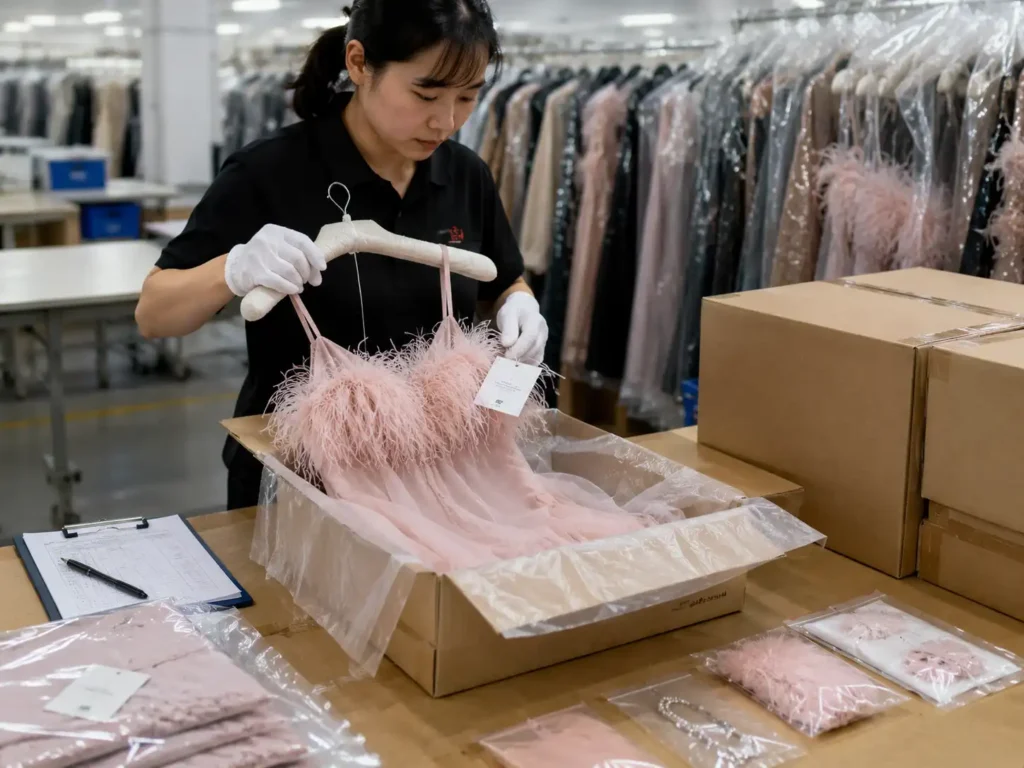
Packing Inspection
Private Label and Retail-Ready Feather Dresses

Woven Labels
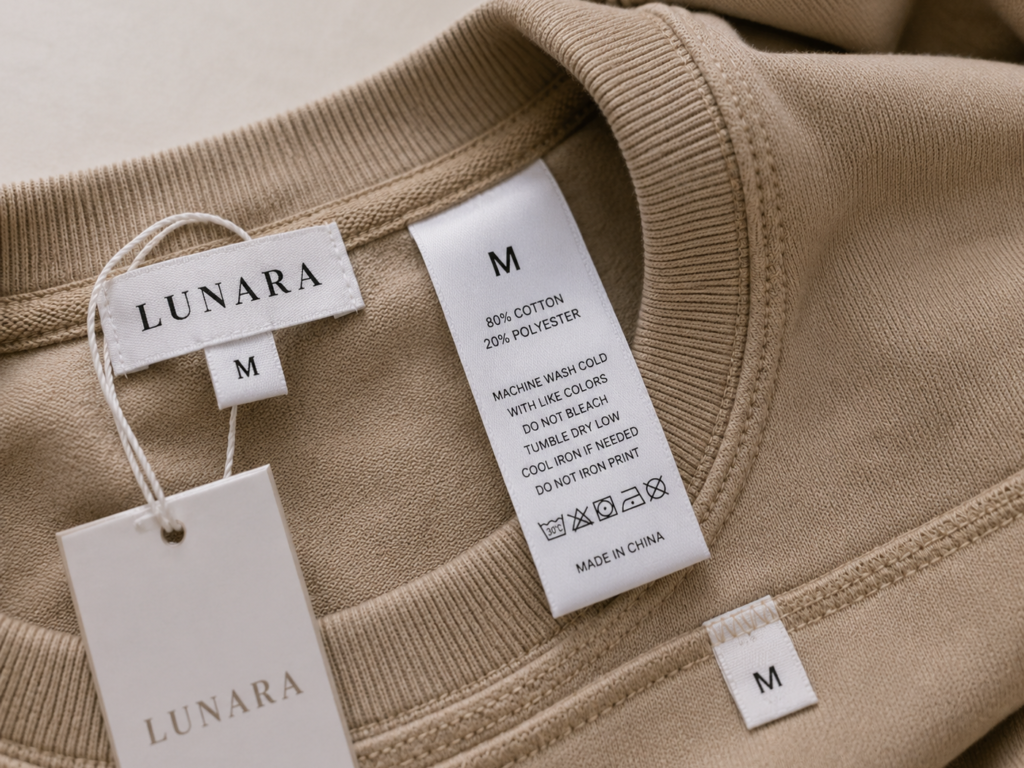
Size and Care Labels
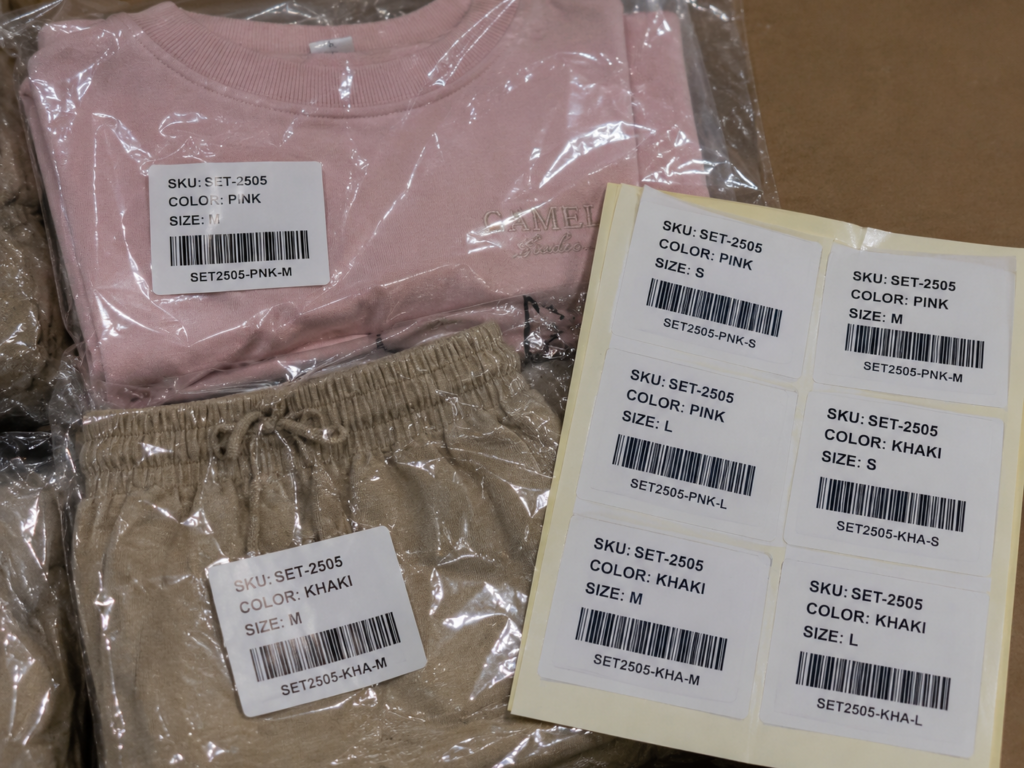
Hangtags and Barcodes

Polybags and Inserts
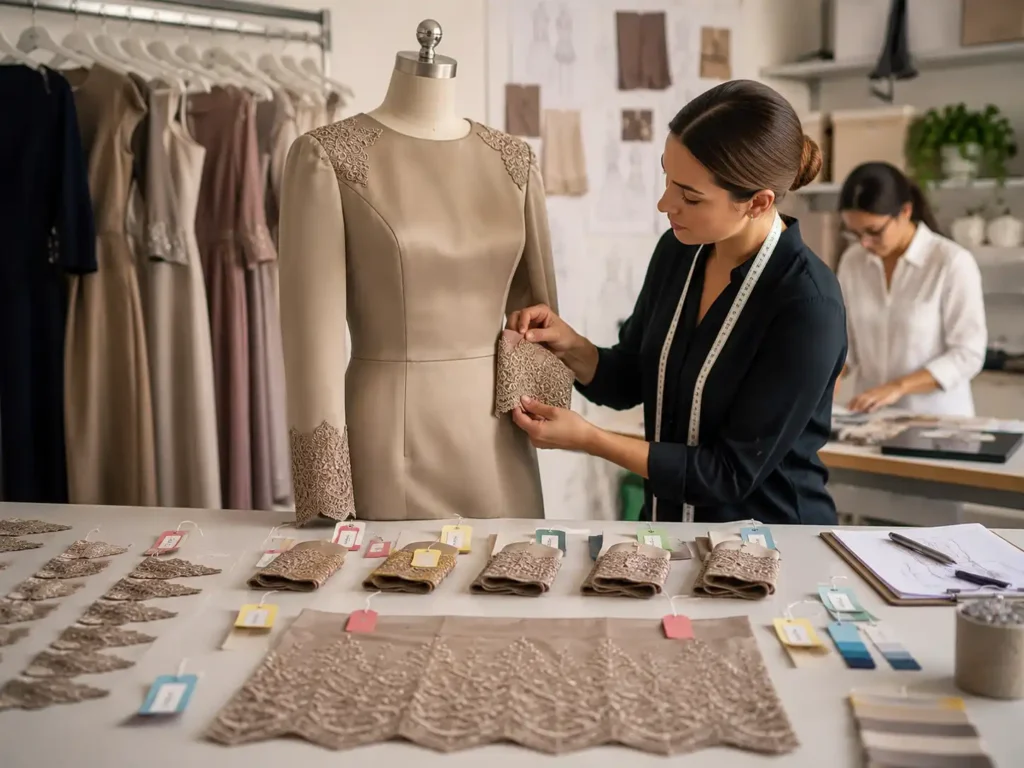
Detachable Components

Cartons and Marks
Managing Multi-Style Feather Dress Collections
Style Grouping
Material Consolidation
Sample Priority
Approval Tracking
Production Windows
Repeat-Order Records
Feather Trim Dress Development Case Studies
United States Holiday Partywear Program
An established U.S. partywear brand developed 14 styles across feather cuffs, feather hems, corset minis and one-shoulder cocktail dresses. The total order contained 28,400 pieces across six colors and sizes XS-XXL. Main materials included stretch satin, mesh, sequins and structured crepe. Three sample rounds were used for the highest-risk styles: first sample, revised fit sample and PP sample. The main challenge was maintaining a consistent feather look across four placement methods. A single verbal density description was not enough, so each placement received an approved physical trim reference. Sleeve pairs were allocated from comparable trim sections, joining points were moved away from front-facing areas and hem length was recorded to both the fabric edge and feather edge. Sequin styles received tissue separation during packing to reduce catching. Production was divided into two windows. Hero campaign styles and core black sizes were completed first, while secondary colors followed in the second window. The packing plan separated air and sea quantities by SKU. Bulk review focused on trim density, sleeve symmetry, neckline stability, bodycon measurements and barcode accuracy. The program closed with a controlled split shipment and complete style-color-size carton records. Data snapshot:
- Market: United States
- Style count: 14
- Order quantity: 28,400 pcs
- Color count: 6
- Size range: XS-XXL
- Sample rounds: 2-3 by style
- QC focus: density, symmetry, fit and barcode
- Delivery: priority air batch plus sea balance
United Kingdom Occasionwear Collection
A U.K. occasionwear label placed a 19-style collection totaling 46,800 pieces. The assortment combined crepe midi dresses, satin maxis, velvet cocktail dresses and tailored minis with feather cuffs or selective hems. Five color groups were used, including black, ivory, wine, emerald and navy. Several styles shared a coordinated trim direction, but each fabric required a separate shade review because satin, velvet and feather reflected light differently. The first development issue was color perception. Physical trim and fabric swatches were reviewed under natural and indoor light, while lining shades were adjusted to avoid visible contrast at slits and necklines. The second issue was sleeve balance on tailored styles. Cuff weight pulled the first sample downward, so sleeve pattern and cuff support were revised before PP approval. Long dresses also received hem-sweep and packing trials. Bulk was arranged by fabric family. Crepe and tailored styles entered one production group, while satin and velvet styles followed separate handling and pressing instructions. Final inspection emphasized cuff symmetry, smooth zippers, lining coverage, shade consistency and carton protection. Private-label elements included woven labels, size labels, care labels, hangtags, barcode stickers and warehouse carton marks. Data snapshot:
- Market: United Kingdom
- Style count: 19
- Order quantity: 46,800 pcs
- Color groups: 5
- Main fabrics: crepe, satin, velvet and mesh
- Sample rounds: 2-3 by complexity
- QC focus: shade, sleeve balance, lining and pressing
- Delivery: grouped sea shipments by production window
Australia Eventwear and Party Collection
- Market: Australia
- Style count: 27
- Order quantity: 74,200 pcs
- Fabric families: 3
- Trim standards: 4
- Size range: AU 4-18 by style
- QC focus: corset support, stretch, placement and packing
- Delivery: three planned production and shipment windows
How to Evaluate a Feather Trim Dress Manufacturer
Real Trim Samples
Clear Material Identity
Pattern Capability
Sample Structure
Physical Bulk Standards
Process Quality Control
Protective Packing
Project Documentation
Feather Trim Dress Frequently Asked Questions
MOQ starts from 200 pcs per style/color. Final MOQ may increase when custom-dyed feather trim, special fabric, exclusive lace, branded hardware or custom packaging has a higher supplier minimum. Send quantity by style, color and size so the order structure can be reviewed accurately.
Yes. Reference images, sketches, line sheets and original samples can start an evaluation. A technical pack and size chart produce a more accurate first sample. Hidden construction, fabric, lining, feather type, measurements and closure details still need confirmation before development.
Natural feather resources can be reviewed by project, subject to verified source, material identity, color, MOQ, lead time, documentation and destination requirements. Synthetic feather-look alternatives can also be compared. No material is confirmed until the exact supplier and approved sample are available.
Yes, selected cuffs, hems, shoulders or decorative panels can be developed as detachable components. Connection choice depends on weight, fabric, wearing movement and visual requirements. The base garment must remain finished after removal, and all detachable pieces need pair and packing control.
Control begins with material selection, trim preparation, safe stitch placement, reinforcement, handling, finishing and packing. Natural or feather-look materials can have normal loose fibers, so the inspection method and acceptable behavior should be agreed through the approved sample rather than promising zero shedding.
Color matching can be reviewed with trim swatches, fabric swatches, Pantone references, lab dips and physical color standards. Satin, velvet, crepe, lining and feather surfaces may look different under changing light, so physical approval is more reliable than screen images alone.
Complex feather-trim first samples are commonly planned around 10-15 working days after usable fabric, trim and development information are ready. Revised or PP samples may require 7-12 working days when materials remain available. Custom dyeing or major design changes require a new schedule.
Bulk control uses approved fabric and trim references, PP sample, golden sample, measurement chart, BOM, sewing instruction, placement standard, first-piece approval, inline inspection and final inspection. Material substitutions or unrecorded construction changes are not accepted without review.
Yes. Main labels, size labels, care labels, hangtags, barcode stickers, polybags, inserts, carton marks and warehouse labels can be managed from approved artwork. Label content and market claims must reflect the actual garment materials and brand requirements.
Provide a technical pack or clear reference images, quantity by style/color, size range, fabric direction, feather direction, label and packing needs, destination, target delivery date and any testing requirements. More complete files produce a more reliable quotation and schedule.

Start Your Feather Trim Dress Project
Send Jinfeng Apparel the information needed to assess structure, material direction, MOQ, sample development, bulk feasibility and delivery planning. A useful first submission includes a technical pack or reference image, quantity by style and color, size range, shell fabric preference, feather look or material direction, trim placement, label requirements, packing guide, target market and expected launch date.
Original samples, fabric swatches, trim cards, BOM files, barcode lists and warehouse manuals can be uploaded when available. Kelly and the development team will review the product category, pattern risk, fabric and trim sourcing, sample route, MOQ fit, cost factors, PP requirements, production schedule and packing risks before confirming the next step. Complex feather styles are not accepted through blind promises. Clear project information allows a more accurate development plan and reduces repeated explanations during sampling.
Please include:
- Company and brand name
- Reference image or technical pack
- Quantity per style/color
- Size range and size chart
- Main fabric preference
- Feather trim direction
- Color plan
- Private-label requirements
- Packing and barcode files
- Launch date and destination