
Fashion Apparel Manufacturer for Commercial Womenswear Collections
From collection brief to retail-ready delivery, Jinfeng Apparel develops coordinated womenswear programs for established fashion brands.
- 10-30 styles can be organized within one collection schedule, including dresses, tops, skirts, matching sets and jumpsuits.
- Typical brand programs can reach 20,000-80,000 total pieces, with quantities controlled by style, color, size and delivery window.
- MOQ starts from 200 pieces per style and color, subject to fabric, trims, construction, packaging and production planning.
- 6 owned womenswear factories, 10+ long-term production partners, 2 sample rooms and 15+ QC inspectors support multi-style execution.
Commercial Collection Capability at a Glance
Since 2008
6 Owned Factories
10+ Production Partners
100,000+ Monthly Capacity
2 Sample Rooms
15+ QC Inspectors
Built for Established Womenswear Programs
Fashion Brand Teams
Sourcing and Development
Commercial Order Planning
What Makes a Collection Commercially Ready
A marketable range must work as a product system, not only as a group of attractive samples. Fit, cost, supply, timing and repeatability all matter.
Product Logic Before Pattern Work
Commercial planning starts with the role of every style. Hero products create visual impact, core products carry volume, add-on products raise basket value and continuation styles protect reliable sales. A collection becomes difficult to manufacture when every garment uses unrelated materials, closures, trims and size rules without a clear sales reason.
Jinfeng Apparel reviews product category, intended occasion, target price tier, launch timing, quantity, color count and expected repeat potential before pattern work begins. A satin mini dress, mesh corset dress, crepe jumpsuit and knit matching set may belong to one visual story, yet each needs a separate development route and suitable production allocation.
Strong commercial planning also identifies which styles can share fabric families, linings, labels, zippers, packaging or color standards. Shared components can improve purchasing control and visual consistency without making the collection look repetitive.
Manufacturing Readiness Across Every Style
A production-ready garment has an approved pattern, size chart, construction method, fabric and trim standard, sample version, measurement method, labeling requirement and packing instruction. Missing decisions create cost changes, approval delays and inconsistent operator interpretation during bulk production.
Design details are reviewed for repeatability. Neckline depth, strap position, cup shape, boning, ruching ratio, slit height, lining length, zipper method, lace placement and print direction must be stated clearly enough for pattern, sample, production and QC teams to follow the same standard.
A commercially ready collection therefore combines creative direction with controlled files.
Jinfeng Apparel helps convert references, original samples, sketches and tech packs into records that can guide quotation, sampling, production and future repeats.
Margin, Timing and Reorder Potential
Commercial value depends on the relationship between product appearance, landed cost, selling price and expected volume. Premium visual effects should be protected where consumers notice them most, while hidden complexity can often be simplified when it adds cost without improving fit, function or brand identity.
Launch timing is treated as a chain of approvals. Fabric, fit, PP sample, labels, barcodes, packing and shipment planning all need decision dates.
A fast sewing period cannot recover time lost to late color approval, repeated fit comments or unavailable custom trims.
Repeat potential is considered during initial development. Pattern versions, size charts, fabric references, trim records, sewing instructions, QC notes and packing files are retained so successful products can return in new colors, fabrics or seasonal extensions with fewer unknowns.
Collection Architecture That Supports Sales
Product Mix
Silhouette Range
Material Families
Color Story
Price Ladder
Launch Role
Womenswear Categories for Commercial Collections
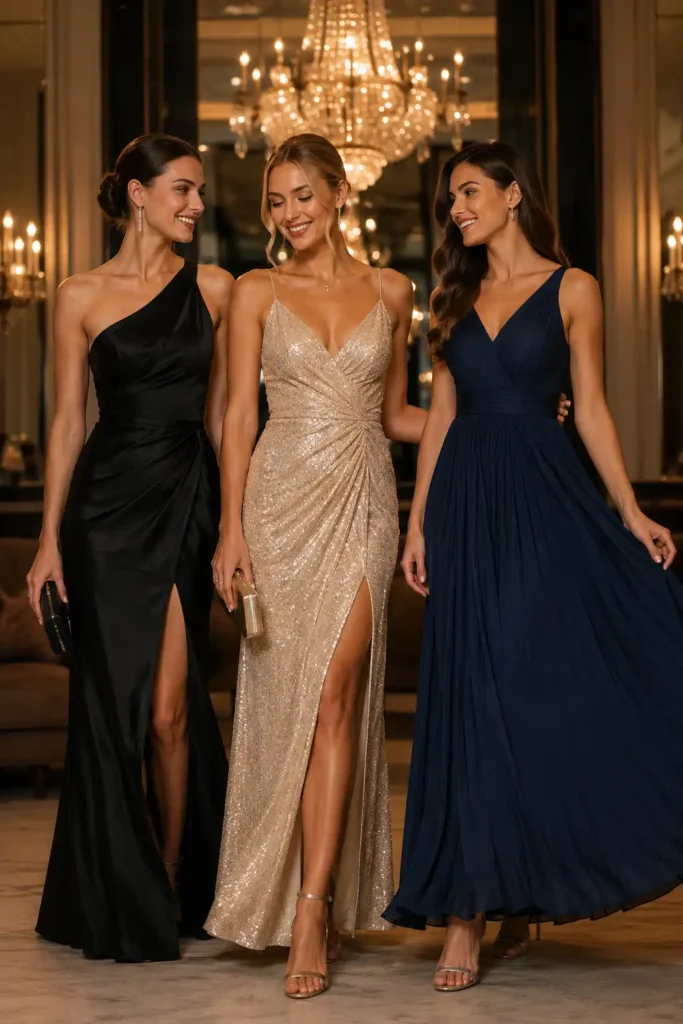
Dress Collections

Fashion Tops

Skirts and Bottoms

Matching Sets

Jumpsuits and Rompers

Occasionwear Programs

Resort Capsules
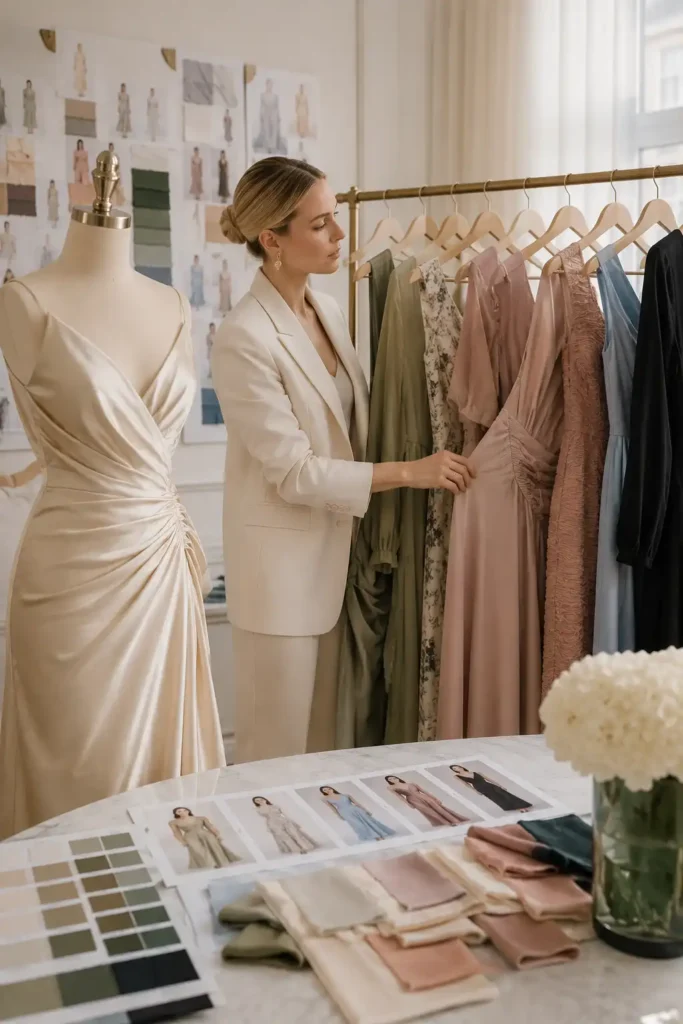
Private-Label Drops
Information Needed Before Development Starts
Line Sheet
Design Files
Quantity Plan
Material Direction
Fit Direction
Delivery Requirements
Fabric and Trim Planning Across Styles
Collection-level material planning controls appearance, cost, MOQ, sample timing and bulk consistency across multiple garments.
Build Fabric Families Instead of Isolated Purchases
Jinfeng Apparel works with chiffon, satin, stretch satin, lace, mesh, power mesh, jersey, rib knit, ponte, crepe, velvet, sequin fabric, organza, tulle, rayon, viscose, linen, denim, suiting, cotton blends, polyester blends and spandex blends. Material selection begins with the intended silhouette, support level, movement, opacity, retail position and target cost.
Several styles can share one fabric family while using different constructions. A stretch satin may appear in a bodycon dress, corset top and skirt, yet each garment requires separate stretch mapping, lining and seam control. A crepe may support dresses, trousers and matching sets, but weight and recovery need to match the pattern and drape expectation.
Fabric grouping also improves commercial planning. Shared colors can reduce fragmentation, simplify shade control and create a stronger visual story. Grouping is never forced when one style needs different stretch, thickness, transparency or support.
Evaluate Material Risk Before Bulk Commitment
Hand feel and color alone are not enough. Review points can include composition, usable width, weight, stretch, recovery, shrinkage, colorfastness, wrinkle behavior, transparency, snagging, surface marks, shine direction, pile direction, print alignment, dye-lot variation and lining compatibility.
Satin can show seam puckering, pressing marks and panel direction. Mesh can stretch, curl and reveal seam allowances. Lace may need motif placement and edge planning. Sequins can damage seams or create rough internal edges. Rayon and viscose can shrink or drop after hanging. Velvet requires pile direction and careful pressing. Each risk changes sample method, cutting control, workmanship and final inspection.
Material approval should include swatches or physical references, not only digital color. Custom dyeing, printing, special lace, certified fabric or custom trim may increase MOQ and extend lead time, so supply conditions are confirmed before a launch schedule is locked.
Coordinate Trims, Support and Branding Components
Trims influence structure and wearing safety. Jinfeng Apparel manages invisible zippers, metal zippers, buttons, snaps, hooks, strap sliders, elastic, bra cups, boning, underwire, tapes, lace trims, rhinestone trims, bead chains and sequins alongside shell fabric and lining.
Support components are tested as a system. Cups, boning, power mesh, fusible layers, elastic and closures must work together without showing through the outer fabric or restricting movement. Decorative trims need secure attachment, controlled placement and a defined replacement standard for bulk production.
Brand components include woven labels, size labels, care labels, hangtags, barcode stickers, polybags and cartons. Artwork, placement, wording, size identification and SKU mapping are approved early enough to avoid finished garments waiting for missing packaging.

Pattern Fit and Size Development
Commercial production requires more than one attractive sample size. Fit logic must remain stable across silhouettes, fabrics and the approved size range.
Establish a Reliable Base Fit
Pattern development begins from a tech pack, original sample, approved block, sketch or reference image. Jinfeng Apparel reviews bust, upper bust, underbust, waist, hip, shoulder, armhole, neckline, strap position, torso length, dress length, rise, inseam, slit height, lining length and hem sweep according to product category.
The team includes 7+ senior pattern makers, 2 sample rooms and 20+ sample machinists. Fit comments are translated into measurable pattern actions rather than vague requests. Front, side and back views, flat measurements, movement, sitting, walking and closure function can all reveal different problems.
A base sample is not approved when a neckline gaps, straps slip, side seams rotate, zippers wave, cups sit too high, lining rides up or the hem loses balance. Visual similarity to a reference image does not replace fit, coverage and comfort.
Grade Proportion Across the Size Range
A common fashion range may cover XS-XL, while extended programs can reach 2XL or 3XL according to the brand size chart, fit strategy and approved grading rules. Every project follows the required market system rather than a universal factory chart.
Grading is not equal enlargement. Bust, waist, hip, shoulder, armhole, neckline, strap length, torso length, skirt length, slit position, cup shape and hem width can need different increments. Fitted corset, bodycon, strapless, mesh and jumpsuit products often need extra size-set review because support and coverage do not scale mechanically.
Stretch and recovery change finished fit. A ponte pattern cannot automatically move to stretch satin or mesh. Woven occasionwear needs controlled ease and lining behavior. Petite, tall or extended-size groups may require separate vertical proportions or additional fit samples.
Transfer Fit Decisions Into Bulk Control
Approved patterns, size charts, measurement methods, tolerances, sample comments and pattern version numbers form the bulk reference. Critical fitted measurements can require tighter control than long hems or flowing sweeps, and every tolerance should follow the approved specification.
Bulk measurements are checked at defined stages rather than only after packing. Out-of-tolerance findings are reviewed for pattern, cutting, sewing, pressing or fabric-relaxation causes. Corrective action is more reliable when the cause is identified before finished quantity accumulates.
Fit records also support repeat orders. When fabric weight, stretch, lining or construction changes, the retained pattern is reviewed rather than reused blindly. A successful silhouette can then extend into new colors or related styles without losing the original proportion.

Design Details Engineered for Production
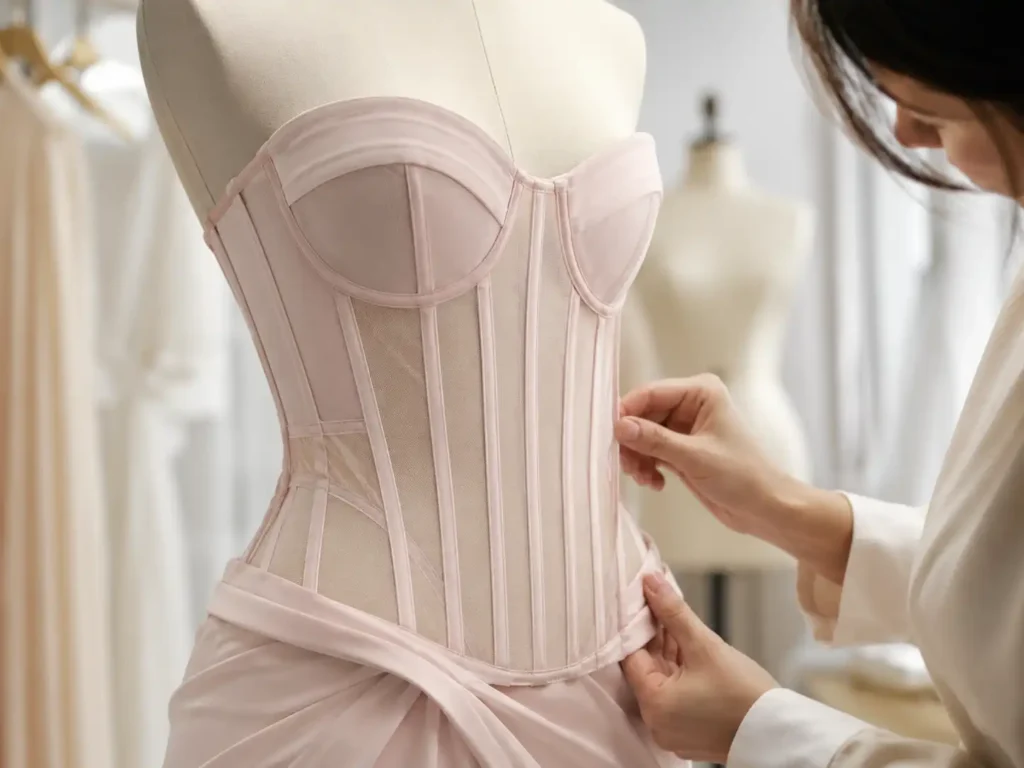
Corset Structure

Necklines and Straps
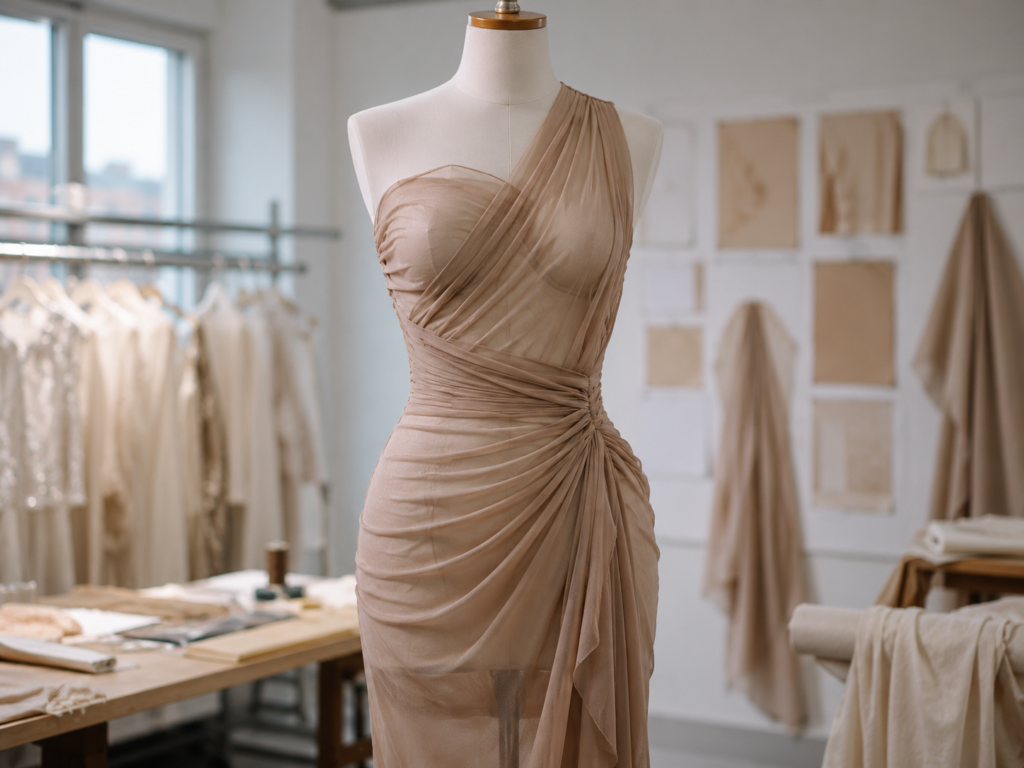
Ruching and Draping

Slits and Cut-Outs

Lace and Sequins

Closures and Openings
Sampling Stages for Multi-Style Collections
Each sample stage answers a different production question. Timelines vary by material, fit difficulty, embellishment and approval speed.
| Sample Stage | Main Purpose | Typical Review Points | Indicative Timing |
|---|---|---|---|
| First Sample | Confirm design translation | Silhouette, structure, material direction, proportion | 7-25 working days |
| Fit Sample | Correct body fit and movement | Bust, waist, hip, length, coverage, comfort | 7-25 working days |
| Revised Sample | Verify pattern corrections | Updated measurements, construction and comments | 7-15 working days |
| Photo Sample | Support campaign imagery | Visual finish, color, styling details, pressing | Project dependent |
| Salesman Sample | Support internal or wholesale selling | Range presentation, color and product mix | Project dependent |
| PP Sample | Lock bulk production standard | Bulk fabric, trims, workmanship, labels, packing | 7-15 working days |
| Golden Sample | Create final QC reference | Approved appearance, measurement and finishing | After final approval |
Costing and MOQ Built Around the Collection
Style-Level Costing
MOQ Planning
Cost Optimization
Collection Schedule From Brief to Shipment
A visible calendar separates development, approval, production and logistics so every team knows what controls the launch date.
| Project Stage | Indicative Planning Range | Main Variables | Required Decision |
| Requirement Review | 2-5 working days | File completeness, style count, quotation questions | Confirm project scope |
| Fabric and Trim Approval | 5-20 working days | Stock, lab dips, custom color, print, supplier MOQ | Approve material direction |
| Sample Development | 7-25 working days per round | Pattern difficulty, fit, corsetry, embellishment | Return consolidated comments |
| Bulk Material Preparation | 7-25 working days | Dyeing, printing, knitting, weaving, trim production | Approve bulk standards |
| Cutting and Line Preparation | 3-8 working days | Inspection, relaxation, markers, size ratios | Release approved files |
| Sewing and Finishing | 15-35 working days | Quantity, complexity, allocation, manual operations | Track production milestones |
| QC and Packing | 3-8 working days | Inspection level, rework, labels, SKU packing | Approve shipment release |
| International Transport | Route dependent | Express, air, LCL, FCL, customs, destination | Confirm logistics plan |
Capacity Allocated by Product and Timing
6 Owned Factories
10+ Long-Term Partners
18+ Sewing Lines
12+ Merchandisers
Multi-Batch Planning
Peak-Season Control
From PP Approval to Controlled Bulk Production
Bulk production begins only after product, material, measurement, workmanship, labeling and packing standards are stable enough to repeat.
Lock the Standard Before Cutting
The PP sample links the approved design to bulk materials and final production requirements. Approval should cover shell fabric, lining, trims, color, pattern, grading, measurements, construction, finishing, labels, barcodes and packing. Verbal approval without updated files creates avoidable interpretation risk.
Bulk quantities are confirmed by style, color, size and destination. Fabric rolls are checked for width, shade, defects, stretch, recovery, shrinkage, surface and lot variation before irreversible cutting begins. Directional satin, velvet, prints, lace and sequins require additional cutting rules.
Approved patterns, markers, size ratios and bundle identification keep pieces aligned through cutting and sewing. Changes after cutting can affect consumption, delivery and cost, so late design revisions are separated from normal production corrections.
Translate Sample Quality Into Instructions
The production file records operations that cannot rely on memory: seam allowance, stitch type, reinforcement, zipper location, strap construction, cup or boning placement, ruching ratio, lining attachment, slit finishing, label position, pressing limits and packing sequence.
High-risk operations are identified before volume grows. A satin seam may need feed control and careful pressing. Mesh edges may need stabilization. Lace placement may require reference points. Sequin areas may need cleared seam paths. Matching sets require component pairing from production through packing.
A good operator still needs a clear standard. Written checkpoints and an approved sample reduce differences between lines, shifts, batches and repeat orders.
Control Problems While Quantity Is Small
Inline inspection checks early output for measurements, seam quality, symmetry, attachment, appearance and construction. Repeated defects trigger containment, cause review, repair instructions and reinspection before more units move forward.
Progress updates should connect quantity with quality status. A report saying sewing is 70 percent complete is incomplete when a neckline, zipper or measurement issue remains unresolved. Jinfeng Apparel tracks production progress together with QC feedback and corrective action.
Finishing and pressing receive product-specific guidance. Heat, pressure and handling can damage shine, pile, mesh, lace, prints or embellishment. Final appearance is protected before labels and packing close the garment.

Workmanship Standards Behind Clean Womenswear

Cutting Direction

Seam Quality

Layer Alignment
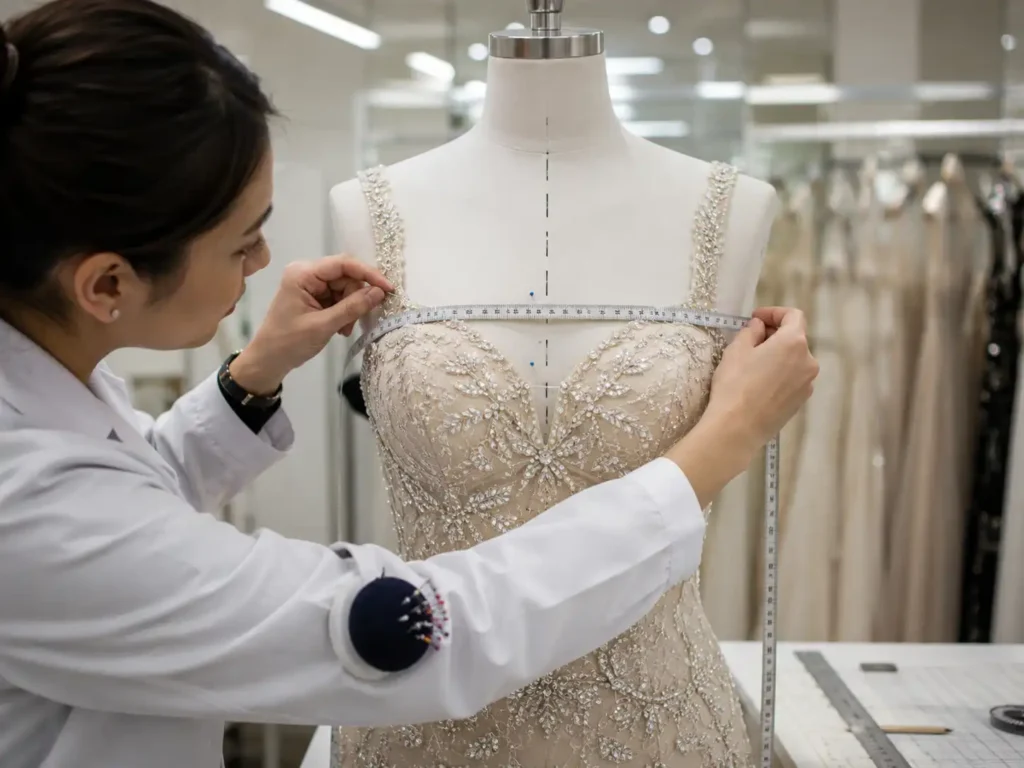
Symmetry Control

Pressing and Shape

Finishing Details
Quality Control Across the Full Collection
Quality control follows the product from incoming materials to packed cartons, with checkpoints selected according to fabric and construction risk.
Fabric Inspection
Cutting Inspection
Inline Sewing Check
Measurement Control
Final Garment Check
Packing Inspection
Private-Label and Retail-Ready Finishing
Woven Labels
Care and Size
Hangtags
Barcode and SKU
Polybag Packing
Carton Control
Compliance and Supplier Review Support
Factory Review Support
Material Documentation
Third-Party Inspection
Delivery Planning for Fixed Launch Windows
Air Freight
Sea Freight
Split Shipment
Repeat Orders and Seasonal Continuity
Retained product records help proven styles return faster while preserving fit, appearance, packaging and quality expectations.
Keep the Files Behind Every Approved Style
Jinfeng Apparel retains patterns, size charts, BOM records, fabric references, color records, trim details, sewing instructions, QC notes, golden samples, label artwork and packing requirements for approved programs. Organized records reduce the chance of rebuilding a successful garment from incomplete memory.
Repeat readiness also includes lessons from bulk production and after-shipment feedback. A style that required reinforcement, a revised zipper method, adjusted grading or a tighter measurement checkpoint should return with the improved standard already recorded.
Confidential designs, unpublished styles and brand files remain protected through NDA-based cooperation and controlled internal use.
Extend Bestsellers Without Losing the Original Fit
Repeat paths can include the same style, new colors, new fabrics, adjusted size ratios, partial replenishment, updated packaging or a related silhouette. Every change is reviewed for its effect on pattern, measurements, material behavior, MOQ, cost and timing.
A fabric substitution may change stretch, recovery, weight, drape, transparency, shrinkage or seam behavior, so an old pattern is not reused automatically. New dye lots also need color approval and shade control. A fast repeat still requires stable material and production conditions.
The long-term path can move from launch to repeat, replenishment, style extension, seasonal program and annual development planning. Consistent records make growth more controlled as collection size and order volume increase.

Anonymized US Commercial Collection Program
A representative multi-style order shows how product development, allocation, QC and delivery can be organized within one commercial schedule.
Program Scope and Development Plan

An established US womenswear brand submitted a 22-style seasonal line containing 11 dresses, 4 tops, 3 skirts, 2 matching sets and 2 jumpsuits. Planned bulk volume reached 61,800 pieces across seven colors and an XS-XL size range. Materials were grouped into stretch satin, mesh and power mesh, ponte, crepe and selected lace or sequin details.
Styles were divided into two development waves. Campaign dresses, fitted sets and high-risk corset products entered sampling first, while lower-risk tops and skirts followed after material direction was stable. Twelve styles reached approval after two sample rounds; six fitted or embellished styles required a third fit or construction review; four continuation products used retained brand blocks with updated material testing.
Quantity, color and size plans were costed by style. Shared lining, zipper and label standards reduced unnecessary fragmentation, while statement trims remained style-specific where visual value justified the added control.
Bulk Execution and Quality Priorities

After PP approval, styles were allocated by fabric behavior and construction rather than evenly by quantity. Fitted satin and corset products followed tighter measurement and pressing checkpoints. Mesh and lace products used layer alignment, coverage and edge-control checks. Matching sets received paired color-lot, size and SKU verification from production through packing.
Bulk sewing and finishing ran within a 31-working-day production window after materials and approved files were complete. QC and private-label packing required another 6 working days. Inline findings were recorded by style so one correction did not create unintended changes across unrelated products.
The launch plan used split shipment. A 2,400-piece campaign quantity moved by air for photography, early ecommerce release and selected retail doors. The remaining 59,400 pieces moved by sea after final inspection, barcode verification and carton-ratio checks.
Commercial Outcome and Repeat Preparation

The brand received one coordinated collection rather than separate factory outputs with conflicting standards. Product files, approved patterns, measurement charts, material references, trim records, QC notes and packing instructions were archived by style.
Early sales data led to a repeat forecast for five dress styles and two matching sets.
Reorder planning focused on core colors, revised size ratios and a new satin color developed from the original standard.
The retained records shortened review time while fabric availability and new dye lots still received fresh approval.
Brand identity and commercial details remain confidential. Order data are presented without the brand name, original artwork, private pricing, unpublished designs or warehouse identifiers.
Frequently Asked Questions

Start Your Commercial Womenswear Collection
Send a line sheet, tech packs, original samples, sketches or reference images together with the planned quantity by style and color. Include the target market, size range, fabric direction, color plan, target cost, launch date, label artwork, barcode requirements, packing guide and delivery destination. Jinfeng Apparel will review product structure, material availability, pattern and fit risk, sample route, MOQ, costing, production allocation, QC needs and the critical path before recommending the next step. Complete information leads to a more useful feasibility review and a more accurate quotation. Confidential and unpublished designs can be handled under NDA-based cooperation throughout development and production.
- Line sheet and style references
- Quantity by style and color
- Size range and grading direction
- Fabric, lining and trim preferences
- Private-label and barcode files
- Launch date and delivery destination


