Skip to content

A dress can look convincing at sample stage and still go wrong before the first production piece reaches the sewing line. The fabric may feel slightly lighter, a champagne shade may turn warmer under store lighting, or two dye lots may look acceptable separately but noticeably different when finished garments hang side by side. These problems often begin with one misunderstanding: treating a fabric swatch, a lab dip and bulk fabric approval as if they were three names for the same approval. In reality, each one controls a different risk at a different point in product development.
A fabric swatch confirms whether the material itself is suitable; a lab dip confirms the target color on that material before bulk dyeing; and bulk fabric approval confirms that the actual production fabric matches the agreed standard closely enough to proceed. Approving one does not automatically approve the next because material choice, color development, and production consistency create different risks.
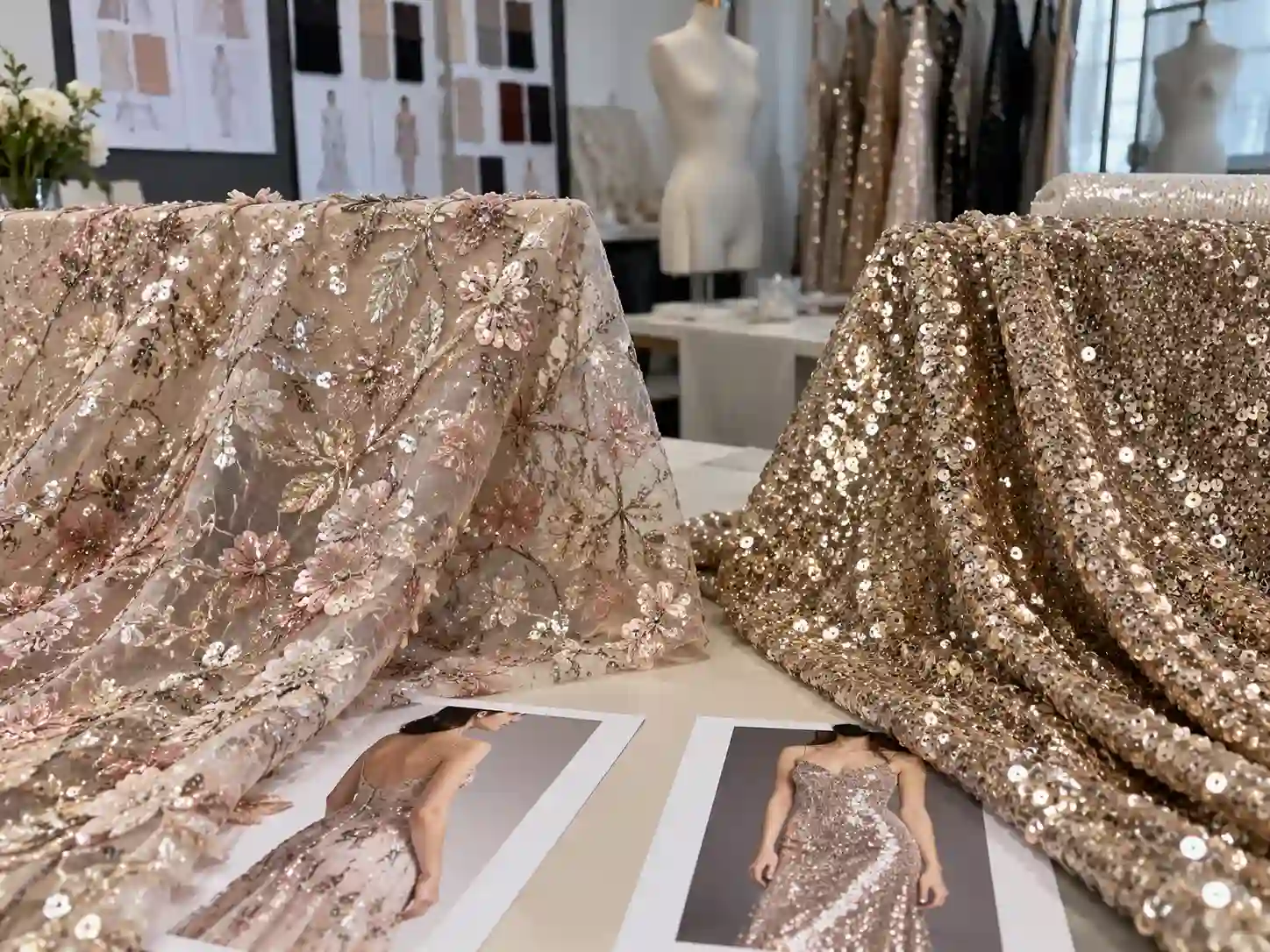
That difference matters most in fashion womenswear, where satin shine, mesh transparency, jersey stretch, lace texture, lining color and surface finishing can change the way a color or garment is perceived. In a disciplined manufacturing workflow, approval is not a casual message saying “looks good.” It is a chain of physical references, dated decisions and production checks that tells the factory exactly what has been accepted and what it is allowed to do next. For brands managing frequent launches, repeat colors or multiple suppliers, that chain is also what makes a later dispute solvable rather than subjective.
Imagine approving a soft blush satin swatch in the morning, a lab dip photographed under warm office light in the afternoon, and then receiving bulk fabric from two dye lots a week later. Each piece can look reasonable on its own while the finished dresses still fail to look consistent together. The practical question, therefore, is not simply “Did we approve the color?” It is: which physical material did we approve, at which stage, against which reference, and what decision did that approval authorize? The rest of this guide answers that question from the perspective of real apparel development and bulk production.
What Is a Fabric Swatch?
A fabric swatch is a physical piece of material used to confirm whether a fabric is suitable for a garment before sampling or bulk production. It helps teams evaluate composition, weight, stretch, recovery, hand feel, drape, transparency, texture and general color direction. A swatch normally confirms the material choice, not the final custom-dyed bulk shade.

What a Swatch Really Tells You
A useful swatch should answer a more practical question than “Do we like this fabric?” It should tell the product team whether the material can create the intended silhouette, fit, comfort and perceived quality once it becomes a finished garment. Three fabrics may all be sold as polyester satin, yet one can be light and fluid enough for a bias-cut slip dress, another may have enough body for a structured midi dress, and a third can be too stiff or overly glossy for either style. Fiber content alone does not explain those differences because yarn, construction, finishing and weight all influence garment behavior.
For fast-moving fashion collections, the swatch also acts as the first physical anchor for later decisions. If the sample room, sourcing team and production team are each talking about a different “similar” fabric, fit comments quickly become unreliable. A garment fitted in a soft stretch jersey cannot be reproduced faithfully in a firmer bulk jersey simply because the composition label is the same. That is why experienced teams code or attach the approved swatch to the style record, rather than relying on a generic fabric name that could refer to several qualities from several mills.
Which Properties Matter Most?
Different garments place different demands on fabric, so there is no useful universal rule such as “200 GSM is good” or “more stretch is better.” The right specification depends on silhouette, construction, target season, lining, intended fit and price level. A lightweight chiffon can be ideal for a layered maxi dress but frustrating for an unlined fitted style. A heavier ponte can provide excellent structure for a bodycon dress yet feel too warm or rigid for a summer launch. The goal is not to maximize one property; it is to balance the properties that make the design work.
Stretch and recovery deserve special attention because they directly affect pattern measurements and finished fit. Two knits with similar fiber content can have noticeably different extension and snap-back. If the sample is approved in a fabric with strong recovery but production uses a softer fabric that bags after wear, the waist and hip can lose shape even when cutting measurements are technically correct. Similar logic applies to drape, opacity and shrinkage. A material that looks close on a hanger can behave very differently after sewing, pressing or washing, so the swatch review should always be linked to the intended garment rather than treated as a stand-alone textile exercise.
| Fabric / Use | Common Working Range* | Key Approval Points | Main Risk if Wrong |
| Lightweight chiffon | about 60-100 GSM | drape, transparency, surface, lining need | excessive sheerness, weak body |
| Fashion satin | about 90-180 GSM | shine, drape, snagging, opacity | cheap appearance, seam distortion |
| Stretch jersey | about 160-240 GSM | stretch, recovery, opacity, torque | bagging, twisting, unstable fit |
| Ponte / Roma | about 240-350 GSM | structure, recovery, thickness | stiffness or weak support |
| Soft mesh | about 60-140 GSM | stretch, recovery, softness | sagging, irritation, distortion |
| Fashion lace | varies widely | motif scale, stability, transparency | poor placement, weak seams |
*Illustrative commercial ranges only. Construction, fiber content, finishing and brand requirements can place suitable fabrics outside these ranges.
How to Approve a Swatch Properly
A strong swatch approval states exactly what has been accepted. “Fabric approved” is often too vague because the reviewer may be approving hand feel while color remains provisional, or approving construction while waiting for a custom-dyed shade. A clearer record identifies the supplier reference, composition, approximate weight, usable width, stretch characteristics, color status and approval date. For repeat programs, keeping a physical reference or a traceable archived sample makes it possible to compare later production against something tangible rather than against memory or a photograph.
This becomes especially important when several alternatives are reviewed at the same time. One fabric may have the best drape, another may have the shortest lead time, and a third may offer better opacity or cost. If the team simply writes “option A approved” without attaching the coded swatch, confusion is almost guaranteed once sampling, costing and purchasing begin to move in parallel. In Jinfeng Apparel’s documented workflow, fabric records can include composition, weight, width, stretch, hand feel, drape, transparency, color, dye lot, lead time, shrinkage risk and the approved swatch reference. That level of traceability is useful precisely because fashion projects change quickly.
Is a Swatch a Color Approval?
A swatch can contribute to color approval, but it should not automatically be treated as final custom-color approval. If a brand selects an existing stock fabric in an existing shade and intends to purchase that exact commercial quality, the swatch may function as a working color reference. Once custom dyeing is required, however, the material selection and color-development decisions should be separated. The swatch confirms the substrate; the lab dip confirms how the target shade looks on that substrate before bulk dyeing.
The distinction matters because the same color standard can appear different on satin, crepe, jersey, lace or mesh. Reflective surfaces can look brighter or deeper depending on viewing angle, textured surfaces scatter light differently, and transparent fabrics interact with the lining or background beneath them. Approving a beautiful beige satin swatch therefore does not mean that any later custom beige developed on the same satin will be acceptable. Material suitability and color accuracy are connected decisions, but they are not the same decision, and a clear approval record prevents one from being mistaken for the other.
What Is a Lab Dip?
A lab dip is a small sample of the selected textile dyed to represent a target solid color before bulk dyeing. It lets the brand, mill and manufacturer agree on shade direction under defined viewing conditions. Lab dip approval gives the mill a color target for production, but it does not automatically approve the actual bulk fabric produced later.
How Lab Dips Are Developed
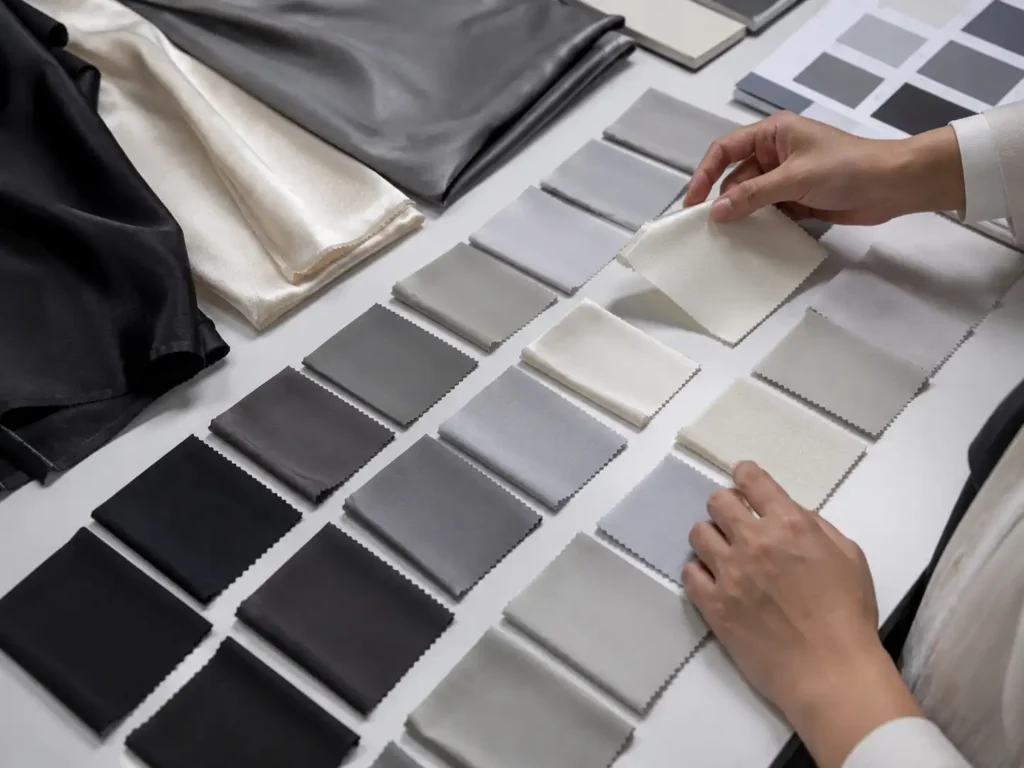
Lab dipping starts after the substrate and target color have been defined. The dyeing mill develops a laboratory-scale recipe and applies it to the same or an equivalent fabric quality intended for production. Several options may be submitted in the first round, with small changes in depth or undertone so the customer can choose the closest direction. Comments such as “slightly darker,” “less yellow,” “cleaner red,” or “more muted” are useful because they tell the dye technician how the next round should move rather than simply labeling a sample as wrong.
The discipline of the process matters more than the number of rounds. Every submission should be identifiable by fabric quality, color code, submission number and date. Otherwise, the team can approve the right color on the wrong substrate, compare a revised version with an outdated reference, or lose track of which option the mill is supposed to reproduce. Lab dips are mainly associated with solid-dyed fabrics. Printed textiles usually require a strike-off because print scale, registration, ground color and multiple print colors create additional approval questions that a solid-color lab dip cannot answer.
Which Color Standard Should Be Used?
The strongest color approval starts with a stable reference. Depending on the brand, that reference may be a Pantone textile standard, a physical master swatch, an approved garment or another controlled brand-specific color sample. A screenshot or website image can communicate creative direction, but it is a weak production standard because display calibration, photography, retouching, white balance, compression and ambient light can all change perceived color. A physical or instrument-readable standard gives the mill and customer a much clearer basis for discussion.
Viewing conditions matter just as much as the target. A fabric can look neutral under one light source and warmer, greener or duller under another. This is especially relevant for champagne, ivory, nude, blush, burgundy and navy, where a small undertone shift is easy to notice in a finished fashion collection. A practical lab-dip review therefore considers the target standard, the actual textile substrate, the agreed light source, surface finish and any components that need to coordinate. When a color issue is reviewed in Jinfeng’s documented process, the check can include the Pantone number, physical standard, lab dip, swatch, lighting condition, batch, dye lot, surface shine, lining and print color rather than relying on a single photograph.
How to Review a Lab Dip
The lab dip should first be compared with the correct standard under the agreed viewing condition. The reviewer should look beyond a simple lighter-or-darker judgment. A shade can have acceptable depth but still be too yellow, too blue, too red or too grey, and those comments are more actionable for the dye house. Reflective fabrics need additional discipline. Satin should be viewed with consistent orientation because rotating the swatch changes reflected light and can make the same piece appear different in brightness or depth.
Multi-component garments also need a system-level review. A main fabric may be approved in warm ivory while the lining, zipper tape and sewing thread remain cool ivory. Each component can look acceptable separately, yet the finished garment feels poorly coordinated. The risk is even greater with mesh, lace and chiffon because the background underneath changes apparent color. Experienced apparel teams therefore look at color not only as an isolated textile value but also as part of the final garment combination, particularly when the style includes layering, transparency, reflective surfaces or several color-matched trims.
Does Lab Dip Approval Cover Bulk Fabric?
No. Lab dip approval proves that an acceptable color direction has been achieved at development scale; bulk approval checks whether the industrial production result is acceptable. Bulk dyeing introduces variables such as machine loading, process timing, raw-material variation, finishing conditions and multiple dye lots. Even when the mill follows the approved recipe, the production shade can move enough to require a separate decision before cutting.
It is equally important not to confuse visual shade approval with full fabric performance approval. A color can look excellent while the fabric still fails a customer’s expectations for shrinkage, rubbing fastness, washing fastness, dimensional stability or another performance characteristic. Those checks may be managed within the same development calendar, but “lab dip approved” should not be read as “all fabric properties and all future production are approved.” The cleanest mental model is that the lab dip establishes the color target for the next stage, while the production fabric must later demonstrate that it reproduced the target within the customer’s accepted range.
What Is Bulk Fabric Approval?
Bulk fabric approval is the review of actual production fabric before it is released into unrestricted garment cutting. It confirms whether real bulk material reproduces the agreed fabric and color standards closely enough for production. The review can include shade, dye-lot variation, roll consistency, finish, surface appearance, lining compatibility, trim coordination and other style-critical characteristics before cutting begins.
What Bulk Approval Should Check
Bulk approval is where an attractive development sample meets industrial reality. The team is no longer reviewing a laboratory specimen; it is reviewing production yardage that may soon become hundreds or thousands of garments. Color is usually the most visible concern, but the review may also consider fabric identity, usable width, weight, finish, obvious defects and any style-critical property that could have changed between sampling and production. The purpose is not to repeat every textile test, but to make sure the real material entering the cutting room is the material the product team thinks it approved.
The check becomes especially important when the order has been dyed across several lots. Two dye lots can each look acceptable against the standard yet differ enough from one another to create visible shade variation when garments are displayed together. For a coordinated set, a matching skirt and top, or a collection built around one signature color, that difference can be commercially obvious. Jinfeng Apparel’s documented bulk-color controls include fabric batch records, lab dip or color-swatch approval, fabric inspection, dye-lot separation, lining-color matching and bulk-color approval, which reflects the practical reality that consistency must be managed across the whole production batch rather than judged from one convenient cutting.
How Bulk Differs From a Lab Dip
The lab dip asks whether the proposed color is right; bulk approval asks whether production successfully delivered it. The wording sounds similar, but the financial exposure is very different. If a lab dip is rejected, another development round may be needed. If several thousand meters of bulk fabric are rejected, the consequences can include re-dyeing, replacement fabric, lost production capacity, missed launch windows or expensive freight changes. As the project moves closer to finished goods, the cost of a late decision rises sharply, which is why evidence should become stronger rather than weaker.
A sensible workflow therefore moves from a relatively inexpensive material decision to a more expensive production decision: swatch, lab dip, bulk fabric, then cutting. This sequence also explains why “the lab dip looked right” is not a sufficient response when the bulk fabric is visibly wrong. The production material must be assessed as production material. The accepted hierarchy of standards should be agreed early, because some brand programs use the approved lab dip as a working reference while others retain a master physical or digital color standard above it. What matters is that everyone knows which reference controls the final decision before the fabric has already been cut.
What Is a Shade Band?

A shade band is a set of samples that represents the meaningful color variation found in actual bulk production. Its purpose is not to present the best-looking piece from the entire order. It is to show the range that exists so the factory and customer can decide what is acceptable, what needs segregation and what should be rejected or held. When the quantity is large or several dye lots are involved, the shade band becomes a practical bridge between color approval and production planning.
The reason is simple: garment panels can expose small roll differences that are easy to miss when fabric is inspected individually. If the front body is cut from a lighter roll and the back body from a darker roll, the finished garment may show visible panel mismatch even though both rolls looked close to the standard. Shade grouping allows rolls with similar appearance to be used together and prevents careless mixing across incompatible groups. This is especially relevant for solid colors, reflective fabrics and styles with large uninterrupted panels where even modest variation becomes easy to notice once the garment is assembled.
When Should Bulk Be Released?
For color-sensitive programs, bulk fabric should be reviewed before unrestricted cutting begins. Once large quantities have been cut, the commercial options become much narrower. Fabric can sometimes be re-dyed, replaced or segregated while still in rolls; after it has been converted into thousands of garment panels, those corrective actions become far more difficult and expensive. A useful release decision is therefore operational, not decorative: it tells the cutting room whether the material is approved, approved with controls, or on hold.
“Approved with control” is particularly important because it is not the same as unconditional approval. One dye lot may need to remain separate, a particular roll may be reserved for one production batch, or a shade group may require controlled spreading. Those instructions must follow the fabric into cutting rather than disappear in an email thread. When bulk approval is treated as a production-release gate, responsibility becomes clearer and the factory has a concrete rule for what can be used. When it is treated as just another sample comment, the same material can be approved in the office and mishandled on the cutting floor.
How Do the Three Approvals Differ?
The three approvals control different risks. A fabric swatch verifies the material, a lab dip verifies the developed color, and bulk fabric approval verifies the actual production result. They usually happen in that order because each stage reduces uncertainty before the next, more expensive production step begins. Clear approval wording prevents one decision from being mistaken for another.
Which Approval Checks What?
The easiest way to separate the stages is to connect each one to the decision it authorizes. The swatch is primarily a material-selection reference. The lab dip is a color-development reference. Bulk approval is a production-conformity decision. Although all three may involve looking at fabric, the reviewer is asking a different question each time. Confusion usually appears when comments are written too loosely. “Fabric OK” might refer to hand feel, shade, construction or all three, and weeks later nobody can prove what was actually accepted.
Precise wording costs almost nothing and can prevent expensive responsibility disputes. “Fabric quality approved,” “lab dip approved,” and “bulk shade approved” are much clearer than a generic “approved.” The same discipline helps when approval is conditional. A material may be approved for sampling but not bulk, or a bulk lot may be approved only if shade groups remain separate. Strong apparel teams do not add complexity for its own sake; they make the scope of the decision visible so the next department knows exactly what is safe to do and what still requires confirmation.
| Approval | Main Question | Typical Reference | What It Authorizes | What It Does Not Automatically Approve |
| Fabric Swatch | Is this the right material? | physical fabric swatch | fabric selection / sampling | final custom bulk color |
| Lab Dip | Is this the right developed shade? | dyed sample on selected substrate | bulk dyeing direction | actual bulk production lot |
| Bulk Fabric Approval | Is real production acceptable? | bulk swatch / shade band / actual roll | release for controlled cutting | finished garment quality |
What Is the Correct Sequence?
For a custom solid-dyed fashion style, the sequence normally begins with the garment requirement, then fabric sourcing, fabric-quality approval, color-standard confirmation, lab-dip development, lab-dip approval, bulk dyeing, bulk inspection, bulk-shade approval and finally release for cutting. After that, garment production is controlled against the approved pattern, PP or golden sample, BOM, workmanship requirements and quality standards. The sequence can look slow when written out, but in practice several activities are often managed in parallel as long as the decision gates remain clear.
Not every textile follows the identical route. Stock fabric in a stock color may not need custom lab dipping. Printed fabrics may require a strike-off. Yarn-dyed qualities can involve yarn approvals or handlooms. Garment-dyed or heavily washed products move part of the color decision to a later stage. The principle is more important than the terminology: each new process introduces a new uncertainty, and the approval system should control that uncertainty before the next expensive or irreversible action begins. This is how a fast development calendar can remain fast without becoming careless.
Can an Approval Be Skipped?
Sometimes a stage is genuinely unnecessary, but it should be removed because the manufacturing route makes it unnecessary, not because the calendar is uncomfortable. If a brand selects an available stock fabric in an available stock shade from a confirmed lot, custom lab-dip development may add little value. The swatch and actual bulk-lot confirmation still matter. By contrast, skipping lab dips for a tightly controlled custom brand color transfers the color risk directly into bulk dyeing, where the financial exposure is much higher.
The best question is not “Can we save a few days?” but “Which uncertainty are we accepting by removing this gate?” In fast fashion, teams are often under pressure to compress sampling and approval. The fastest workflow is not necessarily the one with the fewest checks. A re-dye, replacement fabric or finished-garment rejection can consume far more time than a disciplined pre-production approval. Speed comes from clear ownership, quick comments, representative samples and reliable records, not from skipping the decisions that protect the launch calendar.
What Does Each Approval Protect?
Seen commercially, the three approvals form a cost-control ladder. The swatch protects the product from being developed in the wrong material. The lab dip protects the order from being dyed in the wrong color direction. Bulk approval protects the cutting room from converting unacceptable production fabric into garment panels. The later the same mistake is discovered, the more expensive it becomes because more labor, capacity and material have already been committed.
This upstream-control mindset is particularly valuable for brands that run multiple colorways, repeat bestsellers or seasonal collections. A small inconsistency that seems manageable on one sample can multiply across several thousand units, different warehouses and different launch markets. Clear gates also improve communication between design, merchandising, sourcing, mills and factories because each team can see which standard is currently valid. Rather than slowing decisions down, a well-designed approval chain usually reduces repeated discussion because the project has a physical reference and a documented status at each point.
How Do You Control Bulk Color?
Bulk color is controlled through an agreed standard, consistent viewing conditions, traceable dye lots, fabric inspection, shade segregation and clear release decisions before cutting. Visual judgment remains essential for fashion fabrics, but it should be supported by documented references and, when required by the customer, instrumental measurement. The goal is controlled variation, not an unrealistic promise of zero textile variation.
How Lighting Changes Color

Color cannot be evaluated independently of light. A fabric that looks neutral in daylight may appear warmer, greener or duller under another source. This is why professional color programs often define viewing conditions rather than treating a smartphone image as the final authority. The issue becomes more complicated when different materials must coordinate. A satin shell, polyester lining, nylon zipper tape and sewing thread can appear well matched under one light source yet visibly different under another because their spectral responses are not identical.
For customer-facing fashion products, the practical question is not whether the shade matches in one random room. It is whether the combination remains visually acceptable under the conditions relevant to photography, retail display and normal wear. Screens are useful for fast communication, but camera exposure, white balance, compression and display calibration can easily shift the appearance of a shade. Sensitive colors therefore benefit from physical comparison or controlled instrumental assessment. The point is not to make color approval overly scientific; it is to prevent two people from arguing about different visual conditions while assuming they are judging the same thing.
How Fabric Surface Changes Shade
Sometimes the dye is not the main reason a color looks different; the surface is. Satin is the classic example. Rotate the same piece and it can appear lighter or darker because the direction of reflected light changes. Velvet and pile fabrics show similar directional behavior, while sequins, metallic finishes and glossy coatings create their own visual effects. A technically close shade can therefore look inconsistent in a garment if nap or shine direction is not controlled during spreading and cutting.
Mesh and lace behave differently because the background beneath them affects perceived color. A red mesh over a nude lining does not read the same as the same mesh over a red lining, and a white lace can appear warmer or cooler depending on the substrate. This is why component color should be reviewed as a system for layered fashion styles. Jinfeng Apparel’s documented color review recognizes batch, dye lot, satin shine, lining color and print color as relevant variables when investigating dissatisfaction. In occasionwear, partywear and layered dresses, those interactions can matter more to the finished look than a small isolated difference in the face fabric.
How Dye Lots Should Be Managed
A dye lot is a production batch dyed under one controlled run, and large orders may require several lots. Small variation can occur even when the mill follows the same approved recipe, especially when raw material, loading, process conditions or finishing vary. The practical response is traceability. Rolls should remain identifiable by lot, and meaningful shade differences should be assessed before materials are mixed during spreading and cutting. Where necessary, similar rolls can be grouped for the same production batch while incompatible groups remain separate.
The same discipline becomes even more valuable for repeat orders. Months later, the original raw fabric or production conditions may no longer be identical, so a repeated color should be checked against archived references rather than assumed to match because the same color name appears on the purchase order. Jinfeng’s documented archive can retain the color name, Pantone reference when supplied, lab dip, approved swatch, bulk color, lining, zipper and thread colors, dye lot and approval photographs. Records do not eliminate natural batch variation, but they make the variation visible early enough to manage.
What to Do With Off-Shade Bulk
An off-shade decision should begin with evidence rather than an emotional argument over whether the color is “close.” First confirm that everyone is using the same approved reference and viewing method. Then determine whether the problem affects one roll, one dye lot or the whole production quantity. A structured check may include several roll cuttings, surface direction, lining and trim compatibility, dye-lot identification and any customer-defined instrumental limits. Only after the scope is understood should the team decide whether to approve, segregate, re-dye, replace or hold the material.
No universal color tolerance should be invented after production. Some customers define numerical limits using instrumental color-difference methods; others rely heavily on controlled visual approval, and many use both. Different substrates, shades and brand expectations can require different tolerances, so one generic Delta E number should not be presented as an industry-wide pass/fail rule. The more useful approach is to define the acceptance method before bulk dyeing. In Jinfeng’s documented workflow, corrective actions can include rechecking the lab dip, finding a closer stock fabric, re-dyeing subject to MOQ and lead time, adjusting lining or print color, and confirming bulk color before production proceeds.
What Should You Approve Before Cutting?
Before cutting, the production team should have a confirmed fabric reference, color approval status, actual bulk-fabric decision and all style-critical records needed to prevent substitutions, shade mixing or sample-to-bulk drift. The exact checklist varies by customer, but cutting should start only when the factory knows which fabric, dye lot, sample version and production standard it is expected to reproduce.
Which Records Should Be Ready?
A strong pre-cutting file does not need to be bureaucratic, but it must be clear enough that sourcing, cutting, production and QC are all working from the same approved information. The fabric description should identify the actual quality rather than use loose phrases such as “same as sample.” Color records should identify the controlling standard, the approved development reference and any conditions attached to bulk approval. If one shade group must remain separate, that instruction belongs in the production record, not only in a private message between two merchandisers.
The more complex the garment, the more important the relationship between these records becomes. A satin corset dress may require consistent fabric direction, approved lining, matching zipper color, controlled boning placement, a confirmed PP sample and clear pressing instructions. Approving the fabric alone does not control the finished product. The purpose of the pre-cutting review is to make sure that all decisions needed to reproduce the approved garment are connected before the first layer is spread. That is a much cheaper point to discover a mismatch than after sewing, finishing and packing.
| Pre-Cutting Record | Practical Detail to Confirm | Risk Controlled |
| Fabric reference | supplier code, composition, weight, width | wrong material |
| Approved swatch | physical or traceable reference | unauthorized substitution |
| Color standard | Pantone / physical master / customer standard | ambiguous shade target |
| Lab dip status | version, date, approval comments | wrong dye direction |
| Bulk color status | approved lot / shade group | cutting off-shade fabric |
| Dye-lot record | lot IDs and segregation instruction | mixed shades |
| Lining / trim colors | lining, zipper, thread, lace | component mismatch |
| PP / golden sample | approved garment version | sample-to-bulk drift |
| Cutting instruction | grain, nap, direction, placement | visual or fit defects |
| Approval record | responsible party and date | later disputes |
What Are CFA and Strike-Off Approvals?
CFA commonly means Cutting for Approval, although procedures vary between suppliers. A CFA is typically cut from the actual roll being considered for use, allowing the customer to see material from real stock rather than relying only on an earlier development swatch. That distinction can be useful when shade, hand feel or finish may have changed between sampling and purchasing. The exact meaning should always be confirmed with the supplier because textile companies do not all use the term in precisely the same way.
A strike-off serves a different purpose and is most commonly associated with printed fabric. It allows the team to review print color, ground color, motif scale, repeat, registration, placement and clarity before bulk printing. A lab dip therefore cannot simply replace a strike-off. A solid-dyed satin dress may need a lab dip; a custom floral satin dress may need a print strike-off; and a more complex program can require several approvals if both ground color and print execution are controlled. The sample type should always match the production risk that the team is trying to approve.
How PP Samples Link to Fabric Approval
Fabric approval and PP-sample approval protect different parts of the same production chain. Fabric approval establishes which material is acceptable. The PP or golden sample shows how the approved pattern, material, lining, trims and construction should come together as a finished garment. The connection becomes critical when fabric changes. A replacement jersey with different stretch can alter bust and hip fit, while a stiffer satin can change drape, neckline behavior, seam appearance or zipper performance even when the pattern has not changed.
For that reason, a material change after fit approval should trigger an assessment of whether the pattern, lining, workmanship or PP sample needs to be revisited. Jinfeng Apparel’s documented process specifically calls for reassessment when the same pattern is used with a different fabric, including stretch, weight, drape, transparency, shrinkage, lining requirements and potential pattern changes. The practical rule is simple: if the new fabric changes the way the garment behaves, the old sample may no longer be a reliable production standard. Fabric and garment approvals are linked, but neither one replaces the other.
Which Records Matter for Reorders?

Repeat orders often reveal weaknesses that were invisible during the first production run. Teams may remember the style name and color name but no longer know which fabric lot was used, which lab-dip version was approved, which lining matched best, or what late-stage adjustment was made before cutting. A useful repeat-order archive therefore keeps the approved pattern, size chart, BOM, fabric reference, color records, trim specifications, construction notes, PP or golden sample, QC comments and packaging requirements together rather than storing them across disconnected email threads.
That archive does not promise microscopic identity between production runs; textile manufacturing naturally contains variation. Its value is that the second order starts from evidence instead of memory. Jinfeng’s documented repeat-order system retains fabric, color, trim, pattern, QC and golden-sample records so later production can be compared with the approved history. For a successful bestseller, this can reduce repeated decision-making, make new colorways easier to evaluate and help the factory identify whether a difference comes from the fabric, the dye lot, the pattern, the trim or another changed input before bulk production is already underway.
Final Perspective
Fabric swatches, lab dips and bulk fabric approvals are not paperwork added around production; they are three practical decisions that prevent different types of failure. The swatch protects material selection, the lab dip protects color development, and bulk approval protects the factory from cutting production fabric that does not represent the agreed standard. When those approvals are connected to fit samples, dye-lot control, cutting instructions and retained records, the result is a much more predictable path from design idea to finished womenswear. For brands evaluating a manufacturing partner, the useful question is not whether the factory says it can “match the sample.” It is whether the factory can show how it records the fabric, controls color, separates production lots, handles deviations and carries the approved standard into cutting, sewing and repeat orders. That evidence is what turns a good first sample into repeatable production rather than a one-time success.