
Stretch Satin vs Non-Stretch Satin: Which Is Better for Dresses?

Your trusted Women’s Apparel Manufacturer from China

Two satin fabrics can look almost identical on a hanger and behave like completely different materials once they become dresses. One may skim over the hips and stay comfortable after hours of wear; another may hold a cleaner silhouette but demand much more exact pattern shaping. A fabric that feels beautifully fluid as a small swatch can become unstable beside a zipper, while a stretch satin that initially seems forgiving can expose every tension line when it is used for the wrong silhouette. The real decision is therefore not whether stretch sounds better, but whether the fabric can deliver the intended shape, movement, surface quality, and production consistency.
Stretch satin is usually the better choice for close-fitting dresses that need controlled movement and recovery, while non-stretch satin often works better for fluid, bias-cut, structured, or traditionally tailored silhouettes. The right choice depends on more than elasticity: fabric weight, grain direction, drape, lining, seam construction, zipper stability, stretch recovery, opacity, and the intended garment ease must work together before a style is approved for production.
Imagine two black satin midi dresses photographed from the same angle. In a product image they can appear almost identical, yet the difference becomes obvious as soon as the models walk, sit, turn, and stand again. One skirt begins climbing at the thigh; the other develops diagonal drag lines from the hip. A zipper that looked perfectly flat on the table starts rippling on the body. Those problems rarely begin at the sewing machine. They usually begin earlier, when someone approves “satin” as a visual choice without defining what the fabric is expected to do in the finished garment.
What Is the Difference Between Stretch Satin and Non-Stretch Satin?
Stretch satin gains measurable extension and recovery from elastane, spandex, or a stretch-oriented construction, while non-stretch satin depends mainly on pattern ease, shaping, grain, and bias behavior. The practical difference appears in fit, drape, movement, opacity under tension, zipper stability, and seam control. Neither is automatically superior; each must be selected for the silhouette and construction of the dress.
What Makes Satin Stretch?
Satin describes a weave structure and surface effect rather than one specific fiber. Polyester, acetate, nylon blends, silk-like synthetics, and polyester-spandex blends can all be made with a recognizable satin face. That is why two fabrics labeled “satin” can have similar shine yet behave very differently once cut. Stretch satin commonly incorporates elastane or spandex, allowing the fabric to extend under body movement and then return toward its original dimension. In the supplied Jinfeng Apparel fabric reference, conventional satin is commonly handled around 80-220 gsm, while stretch satin is commonly handled around 120-250 gsm, with polyester-spandex, nylon-spandex, and polyester-elastane constructions among the typical stretch options.
For development work, the most useful question is not simply how far the fabric can be pulled, but how it behaves after the pull is released. A fabric that extends easily and recovers cleanly can support a close fit around the bust, waist, and hips. A fabric that stretches but remains longer afterward may create seat bagging, loose necklines, distorted waistlines, or inconsistent measurements after wear. Stretch direction also matters. Many satin constructions have much more usable extension across the width than along the length, so pattern orientation needs to match the movement expected from the garment.
A simple workshop calculation uses a fixed reference length. If a 10 cm section extends comfortably to 12 cm, the measured extension is 20%; if it reaches 13 cm, the measured extension is 30%. Those figures are meaningful only when the test direction and recovery are also recorded. The same 30% peak extension can produce two very different dresses if one fabric returns almost completely and the other retains several millimeters of growth. In fitted womenswear, recovery is often the difference between a dress that continues looking sharp after several hours and one that gradually loses definition around the seat or waist.
Does Non-Stretch Satin Have Any Give?
Non-stretch satin is not the same thing as a rigid sheet of fabric. A woven satin may have very little useful extension along the straight grain while becoming noticeably more responsive on the bias. Bias generally refers to the diagonal direction, roughly 45 degrees between the lengthwise and crosswise grain. When the fabric is cut in that direction, warp and weft yarns can shift relative to one another, allowing the cloth to contour around curves with much more fluidity than a straight-grain panel cut from the same roll.
This behavior explains why classic satin slip dresses can follow the bust, waist, and hip even when the fabric contains no elastane. The movement comes from yarn displacement and pattern geometry rather than elastic recovery. That distinction becomes important during development because a bias-cut piece can grow in length, settle after hanging, and react differently on each seam. A stretch fabric is expected to extend under tension and recover; a bias-cut woven fabric gains mobility because its woven structure changes angle. They may feel similar on the body, but they create different pattern, sewing, and finishing problems.
A practical example is a bias-cut midi slip compared with a stretch satin midi. Both may look slim and body-skimming in photographs, but the bias version typically hangs with softer diagonal movement, while the stretch version follows body dimensions more directly. The bias dress may need more attention to hanging time and hem leveling; the stretch dress may need more attention to recovery, side-seam stability, and surface shine under tension. Choosing between them is therefore a silhouette decision, not just a comfort decision.
Is Stretch Percentage the Only Difference?
Stretch percentage is only one part of fabric performance. Two satins can both show 25% crosswise extension and still produce very different dresses if their weight, density, recovery, surface finish, opacity, or drape are different. A heavier stretch satin may feel firm and supportive, while a lighter satin with similar stretch can cling much more closely to underwear lines and body contours. A high-gloss finish can also exaggerate tension because stretched areas reflect light differently from relaxed areas, especially in pale colors such as ivory, champagne, blush, or light silver.
For serious product development, the useful specifications include fiber content, GSM, usable width, stretch direction, measured extension, recovery, opacity, drape, sheen, snagging risk, shrinkage, wrinkle behavior, and shade consistency. The supplied fabric system treats these as separate considerations instead of assuming that one figure predicts the others. That approach is especially important for satin because small physical differences often become visually obvious. A slightly different sheen direction or tension level can make panels from the same color lot appear like different shades under directional light.
Property | Stretch Satin | Non-Stretch Satin |
Main source of movement | Elastane or stretch construction | Ease, shaping, grain and bias |
Common working weight range | 120-250 gsm | 80-220 gsm |
Body conformity | Usually higher | More pattern-dependent |
Recovery | Critical | Not an elastic-performance focus |
Typical fitted use | Bodycon, fitted mini, fitted cocktail | Requires pattern ease or bias |
Main zipper concern | Stretching and bubbling | Puckering and strain |
Fit sensitivity | Stretch direction and recovery | Ease and grain direction |
Surface concern | Shine change under tension | Grain-related shade change |
Which Satin Gives Better Fit, Drape, and Comfort?
Stretch satin generally gives more freedom in close-fitting silhouettes because the fabric itself can accommodate movement, while non-stretch satin can produce cleaner fluid drape through pattern shaping and bias cutting. Comfort does not come from elasticity alone. Fabric weight, recovery, lining, garment ease, seam placement, and pressure around the bust, waist, hips, and thighs all influence how the dress feels in motion.

How Does Stretch Affect Body Fit?
Stretch satin can make a fitted garment easier to wear, but it does not correct a poor pattern. A dress that is too small may still close because the fabric stretches, yet the surface can show horizontal pull lines, excessive shine across the hip, rising hems, or side seams that curve forward or backward. These are signs that the fabric is compensating for a fit problem rather than supporting a well-balanced silhouette. The more reflective the satin, the easier it is to see those tension differences in photography and retail lighting.
For fitted styles, the most useful assessment is dynamic. The sample should be checked while the wearer stands, walks, sits, turns, and then stands again. After movement, the fabric should recover sufficiently for the garment to return to its intended shape. If the seat remains enlarged, the waist loses definition, or the neckline grows after a short fitting session, the issue is not simply size; it is the interaction between pattern ease and textile recovery. Jinfeng Apparel’s documented stretch-satin control points specifically include stretch direction, bust-waist-hip dimensions, seam recovery, zipper flatness, shade, sheen, and side-seam behavior.
Negative ease also needs restraint. If a fabric can extend by 30%, that does not mean every horizontal pattern measurement should be reduced by 30%. Opacity, seam load, comfort, recovery, and visual tension all place practical limits on how much of that stretch should be used. A well-developed bodycon dress normally uses only the amount of fabric extension required to create the intended closeness while keeping the surface smooth, the hem stable, and the wearer comfortable enough to sit and walk naturally.
How Does Non-Stretch Satin Create Drape?
Non-stretch satin creates shape through weight, grain, and pattern geometry rather than elasticity. A straight-grain skirt may fall in stable vertical folds, while a bias-cut panel can wrap around curves with a much softer, more liquid effect. Fabric weight changes that behavior dramatically. A lightweight satin can collapse into narrow folds and follow the body closely, whereas a heavier satin may project away from the body and support a cleaner, more architectural silhouette. For this reason, “non-stretch satin” is not a complete fabric specification by itself.
The designer should define what the dress needs to do before approving fabric. A slip dress may need the skirt to skim the hip and move freely at the hem. A structured cocktail dress may need a crisp waist seam and controlled flare. An evening gown may need the skirt to hang smoothly without gripping the thigh. Those requirements determine whether the dress should rely on straight grain, bias grain, darts, princess seams, pleats, panels, or extra ease. The most attractive drape is not necessarily the softest drape; it is the one that supports the intended silhouette without creating instability later in production.
Longer non-stretch satin garments also reveal grain mistakes quickly. When a large skirt panel is rotated relative to another panel, the satin can reflect light from a different direction and appear noticeably lighter or darker. This may be mistaken for dye-lot variation even when both pieces were cut from the same roll. For satin, grain therefore influences both drape and perceived color, which is one reason marker planning must consider visual direction as well as fabric consumption.
Which Satin Moves Better When Worn?
For a bodycon mini or fitted midi dress, stretch satin often provides more immediate mobility because the textile extends as the wearer sits, takes a longer step, or moves through the hip. For a loose slip dress or fluid evening gown, non-stretch satin may feel just as comfortable because movement is built into the pattern instead of coming from the fabric. The useful question is not which material stretches farther, but whether the complete garment allows the movements expected in its real wearing situation.
Lining can completely change the answer. A stretch outer fabric paired with a rigid lining may feel surprisingly restrictive because the lining becomes the true limit. Conversely, a lining that is too elastic or unstable can twist, bunch, or fail to support the outer layer. For close-fitting satin dresses, lining should be reviewed together with the shell so that stretch direction, recovery, and hand feel do not conflict. A fabric selected for comfort can lose that advantage if the inner construction does not move with it.
Cling is another factor. Higher elasticity can make satin follow the abdomen, hip, and underwear lines closely, and the reflective face can emphasize those contours under photography or directional light. Comfort trials should therefore include appearance as well as physical movement. Walking, sitting, arm movement, hem behavior, neckline stability, and post-wear recovery all matter. The most comfortable satin dress is usually the one in which fabric, pattern, lining, and construction share the movement load rather than forcing one layer to do all the work.
Which Satin Works Best for Different Dress Styles?
Stretch satin is usually strongest in fitted and body-following styles such as bodycon dresses, fitted minis, and close cocktail silhouettes. Non-stretch satin remains especially useful for bias-cut slips, flowing evening dresses, and structured designs where shape is created through pattern work. Corset, bridesmaid, and occasion dresses can use either type depending on the internal support, lining, and desired movement.
Which Satin Is Better for Bodycon Dresses?
Stretch satin is generally the more practical starting point for bodycon dresses because the garment must follow the bust, waist, and hips while allowing the wearer to sit and walk. The supplied fabric reference specifically associates stretch satin with bodycon satin dresses, fitted mini dresses, corset dresses, party dresses, and fitted cocktail styles. The strongest option is not the fabric with the maximum possible stretch, however. A bodycon dress needs controlled elasticity and reliable recovery so that the silhouette remains defined after movement.
A very soft stretch satin may initially feel comfortable but lose shape at the seat or waist after several hours. A firmer satin may hold a cleaner waistline but create excessive pressure at the hip if the pattern uses too much negative ease. During fitting, several points should be reviewed together: side-seam verticality, hem position, hip tension, bust coverage, zipper flatness, and surface reflection. If the hip area becomes noticeably shinier than the waist, the fabric may be working too hard even when the garment technically fits the measurement chart.
The best bodycon result often comes from moderate stretch, good recovery, enough fabric weight for visual coverage, and realistic garment ease. The goal is a dress that looks intentionally close rather than mechanically stretched. This distinction becomes especially important for ecommerce and social-media photography, where studio lighting can expose stress lines that may be less obvious during a quick fitting. A few millimeters of pattern adjustment can sometimes improve the finished appearance more than choosing a fabric with another ten percentage points of stretch.
Which Satin Is Better for Slip Dresses?
Classic slip dresses often perform beautifully in non-stretch satin because bias cutting can create body contour without producing the compressed look associated with some stretch fabrics. The fabric appears to skim over the bust and hip, and the diagonal grain creates the soft movement that many people associate with a traditional satin slip. The trade-off is stability. Bias-cut panels can lengthen after cutting, side seams may react differently, and necklines can relax if they are not supported correctly.
Stretch satin can still be used for a slip-inspired dress, particularly when the commercial target is a closer going-out silhouette. The visual language changes, though. A stretch version generally sits nearer the body and defines the waist and hip more directly, while a non-stretch bias version tends to look softer and more fluid. Neither approach is inherently more premium; the correct choice depends on the brand’s fit language and how the dress is expected to move in product imagery and real wear.
A practical development comparison is to hang larger fabric samples rather than relying only on small swatches. Even a 20-30 cm hanging piece can reveal how folds form, whether the fabric collapses softly, how the shine changes on curves, and whether the weight feels suitable for the intended length. For slip dresses, this simple observation can prevent a common mistake: approving a satin because it feels luxurious folded in the hand, only to discover that it becomes too stiff or too clingy once used across a full garment panel.
Which Satin Is Better for Corset Dresses?
Corset dresses need a different decision process because the visible satin shell may be working over boning, cups, interfacing, stay tape, lining, or other internal support. If the outer satin stretches much more than the internal structure, the shell can ripple around boning channels or shift beside seams. If the shell is very stable while the inner structure is shaped aggressively, the outer layer may show strain or seam impressions. The satin therefore needs to be compatible with the foundation rather than considered as a stand-alone decorative layer.
Stretch satin can be useful where a structured bodice transitions into a fitted skirt, but the developer should pay close attention to waist seams, princess seams, zipper areas, and the points where boning ends. Local tension can create shine differences that are easy to see on a smooth satin surface. A stable non-stretch satin may give a cleaner corset shell, particularly when the design needs crisp edges and controlled panel shapes, but it will usually demand more accurate shaping and fitting around the bust and waist.
Testing the shell and foundation together is essential. A bodice can look smooth while the wearer stands and become uncomfortable as soon as she sits because the rigid layers and flexible layers respond differently. For party and occasionwear, the sample should be worn long enough to reveal pressure points, rolling edges, zipper movement, and changes in the shell surface. The right satin is the one that cooperates with the structural system without creating visible conflict between the outer appearance and the inner support.
Which Satin Is Better for Cocktail and Evening Dresses?
Cocktail dresses cover a broad range of silhouettes, so either satin can work well. A fitted cocktail dress may benefit from moderate stretch around the bust and hip, while an A-line or sculpted cocktail style may look cleaner in stable non-stretch satin. Evening dresses often use longer panels and larger uninterrupted areas of fabric, which makes grain direction, drape, wrinkles, and surface consistency even more important. The longer the skirt, the more easily small differences in weight or panel orientation become visible.
Bridesmaid and occasion dresses add another challenge: consistency across sizes. A satin that looks excellent on a small sample size may become more transparent, more tension-sensitive, or less stable on a larger size if the pattern and fabric were not reviewed across the full size range. Likewise, one color may require a lining that is unnecessary in a darker shade. This is why fabric approval should consider the entire color and size plan rather than only the first sample.
|
Dress Style |
Strong Starting Choice |
Useful Fabric Behavior |
Main Risk to Check |
|
Bodycon dress |
Stretch satin |
Controlled extension and recovery |
Bagging and hem rise |
|
Fitted mini |
Stretch satin |
Hip mobility |
Side-seam twisting |
|
Slip dress |
Non-stretch bias satin |
Fluid diagonal movement |
Bias growth |
|
Fitted cocktail dress |
Either |
Shape plus mobility |
Zipper distortion |
|
Corset dress |
Structure-dependent |
Shell/foundation compatibility |
Layer mismatch |
|
Evening gown |
Often non-stretch satin |
Drape or structural body |
Grain and shade issues |
|
Bridesmaid dress |
Either |
Fit consistency across sizes |
Opacity and recovery variation |
How Do Stretch, Grain, and Bias Cut Change the Pattern?
Stretch and bias change a pattern in different ways. Stretch satin gains mobility through extension and recovery, while bias-cut non-stretch satin gains movement through diagonal yarn shift. Ease, grain lines, seam placement, closures, and lining therefore need different treatment. Replacing one satin with another without reviewing the pattern can change fit, garment length, drape, and zipper behavior even when the color and weight appear similar.

Do You Need to Bias Cut Stretch Satin?
Not automatically. If the purpose of bias cutting is to gain enough movement for a non-stretch satin to contour the body, a stretch satin may already provide much of that mobility. Adding bias behavior on top of elasticity can make a panel less stable than the design requires, particularly in long skirts or narrow dresses where gravity acts on the fabric for many hours. A stretch satin can certainly be cut on the bias, but there should be a clear visual or structural reason rather than an assumption that bias is always better for satin.
Bias can also be used to manipulate shine. Satin reflects light directionally, so rotating a panel can deliberately create tonal contrast even when every piece comes from the same roll. The same effect becomes a defect when it is unintentional. A front bodice cut in one direction and a side panel cut in another may look like two different shades under retail lighting. For that reason, marker efficiency cannot be the only consideration when planning satin cutting. Grain direction is part of the visual specification.
For stretch satin, the developer should also consider whether the fabric’s strongest stretch direction still aligns with the body movement required by the style after the pattern is rotated. A bias orientation can change both drape and the way elastic extension is presented to the garment. If the design does not benefit from that change, straight-grain placement is often more predictable for sizing and bulk consistency.
How Does Bias Cut Affect Non-Stretch Satin?
Bias cutting allows a woven satin to shift diagonally, increasing fluidity and making the fabric more responsive to curved body shapes. This is why a non-stretch textile can still produce a close, elegant slip silhouette. The trade-off is stability. Bias panels can lengthen as they hang, and a skirt that measures correctly immediately after sewing may change after several hours or overnight. The effect becomes more noticeable on longer garments because the weight of the lower skirt continuously pulls on the upper sections.
Seams also behave differently on the bias. The two sides of a dress can have mirrored grain orientations, and those orientations may feed differently through the sewing machine. If one panel is handled with slightly more tension, the garment can develop a twisted side seam or uneven hem. Necklines and armholes can also relax because the edge is not running along a stable grain direction. These are not signs that bias cutting is wrong; they are normal consequences that need to be included in the development process.
Bias-cut garments are therefore better judged after the fabric has had time to relax rather than immediately after assembly. Hem level, side-seam balance, neckline position, and total garment length can be reviewed again once the dress has settled. This extra step is especially valuable for long satin slips and evening dresses where a small amount of growth can become clearly visible at the hem.
How Should Ease Change with Stretch Satin?
Ease should be determined from the intended silhouette and the actual fabric behavior, not from fiber content alone. A label stating 5% elastane does not tell the developer how far the finished fabric will extend under comfortable force or how completely it will recover. Yarn type, weave density, heat-setting, and finishing can all change the final result. One polyester-spandex satin may feel firm and supportive while another with similar fiber percentages feels soft and highly elastic.
A useful starting point is to test a fixed reference length. If a 10 cm swatch extends comfortably to 12.5 cm, the measured extension is 25%. The next question is what happens after release. If it returns to approximately 10 cm, recovery is strong under that test condition; if it remains at 10.3 or 10.5 cm, the fabric has retained some growth. That retained growth is particularly relevant around the seat, elbows on long sleeves, tight waistlines, and other areas that remain under repeated tension.
Pattern ease can then be refined during fitting. A true bodycon style may use negative ease, while a fitted satin cocktail dress may use less reduction because the design needs a cleaner surface and more formal appearance. Bust, waist, and hip do not necessarily need the same percentage of reduction. More negative ease also increases the chance of shine distortion, opacity loss, hem rise, and seam stress. The correct amount is the point where the silhouette looks intentional without making the fabric visibly struggle.
Can You Use the Same Pattern for Both Satins?
Usually, the pattern should be reviewed whenever the stretch behavior changes significantly. A pattern developed for non-stretch satin may contain more ease, darts, or shaping than a stretch version needs. The opposite substitution can create more serious problems: a close pattern developed around elastic fabric may become restrictive or impossible to wear when it is cut in stable non-stretch satin. Even if the dress can be zipped, the wearer may have insufficient movement for sitting, walking, or raising the arms comfortably.
Closures need the same review. A stretch dress may technically pull over the body, but removing a zipper can affect neckline stability and dressing comfort. Conversely, a rigid zipper inserted into a highly elastic panel creates a local mismatch because the satin can move while the zipper tape cannot. Lining can create a similar conflict. If the outer shell stretches 20% but the lining barely moves, the lining becomes the true limit of the garment; if both layers stretch at different rates, they can recover differently and ripple against one another.
When a brand changes satin after the first sample, the safest approach is to treat the change as a material-and-fit revision rather than a color substitution. Recheck the bust, waist, hip, neckline, grain, zipper, lining, seam position, and overall length before moving to the next approval stage. That extra review is far less expensive than discovering after bulk cutting that the new fabric has changed the entire fit balance.
How Do Stretch and Non-Stretch Satin Behave in Production?
Stretch satin requires tighter control over relaxation, cutting, feeding, seam recovery, measurements, and zipper installation. Non-stretch satin is usually more dimensionally stable, but puckering, snagging, grain errors, pressing marks, and shade differences remain highly visible. Satin’s smooth reflective face makes relatively small production defects more obvious than they would be on textured, brushed, or matte fabrics.
How Does Stretch Affect Cutting and Sewing?
Stretch fabric can be distorted before the first seam is sewn. If it is pulled during spreading, the fabric may relax after cutting and leave panels smaller than expected. If tension varies across the cutting lay, pieces taken from different positions can behave differently. This is why fabric relaxation and low-tension spreading are important for many stretch constructions. The goal is to cut the material in a state that is as close as possible to the state in which the final garment will later be measured.
Sewing introduces another source of tension. Stretch satin can lengthen under the presser foot if the operator pulls it forward or if feeding is uneven. When the seam leaves the machine, the fabric attempts to recover but the stitches restrict that recovery, creating waviness. Side seams can twist if the front and back are fed at different rates, while fitted garments can appear to measure differently depending on whether they are checked fully relaxed or pulled flat on the table.
The surface makes these problems more visible. Needle marks, feed marks, seam impressions, and small tension differences can catch light strongly on satin. Jinfeng Apparel’s working control points for stretch satin include elasticity, recovery, bust-waist-hip measurements, zipper behavior, shade, shine, and side seams. The practical lesson is that stretch satin is not difficult because it is “delicate” in an abstract sense; it is demanding because dimensional control and surface appearance must be managed at the same time.
Why Do Satin Seams Pucker?
Satin is unforgiving because a smooth reflective surface gives the eye very little texture to distract from a wavy seam. Puckering can come from excessive thread tension, an unsuitable needle, uneven feeding, incompatibility between thread and fabric, fabric stretching during sewing, or insufficient stabilization. Lightweight satin may react strongly to needle penetration, while dense satin can retain visible needle holes if a seam is unpicked. The correct fix therefore depends on the cause rather than simply pressing the seam harder afterward.
Stretch satin adds another variable because the shell may be under tension while the seam line itself remains comparatively stable. If the panel elongates even slightly during stitching, the fabric contracts after release and creates a ripple beside the stitches. Non-stretch satin can show a similar visual defect for different reasons, including thread tension, differential feeding, or seam shrinkage. The finished appearance may look almost identical, which is why diagnosing the process matters more than describing the defect.
Pressing needs restraint as well. Excessive heat, moisture, or pressure can create shine marks, seam impressions, or surface changes on some satin constructions. A seam that has been technically sewn correctly can still look poor if pressing leaves a visible track beside it. Sample approval is the right stage to establish the combination of needle, thread, stitch, stabilization, and pressing method rather than expecting the production line to solve each problem independently.
How Can Zippers Distort Stretch Satin?
A zipper joins relatively stable tape to a flexible textile, which makes it one of the most common stress points in a stretch satin dress. If the satin is elongated while the zipper is sewn in, the fabric later contracts while the zipper remains the same length, producing a visible wave or bulge. The problem can become more obvious on close-fitting styles because body tension pulls the surrounding fabric while the zipper line resists movement.
Stabilization can help, but too much reinforcement may create a stiff strip that feels inconsistent with the rest of the garment. The correct approach depends on fabric weight, stretch direction, zipper length, seam location, and lining. A center-back zipper in a bodycon dress may experience different stress from a side zipper in a fitted cocktail dress. The surrounding pattern also matters; a perfectly inserted zipper can still ripple if the garment is too tight across the hip or waist.
Non-stretch satin can develop zipper distortion for different reasons, including seam puckering, inaccurate seam lengths, excessive tightness, or poorly controlled pressing. The supplied satin QC reference specifically identifies zipper bulging, pressing marks, snagging, color difference, and sheen direction as inspection concerns. For brands, zipper flatness should therefore be treated as part of fit and construction approval, not as a minor finishing detail that can always be repaired after bulk sewing.
Which Bulk Defects Are Most Common?
Bulk satin problems frequently appear when fabric has been approved visually but not behaviorally. A small swatch can match the target color while the production fabric differs in stretch, recovery, GSM, hand feel, or surface response. Likewise, one successful sample does not prove that every roll will behave exactly the same. For stretch satin, roll-to-roll elasticity and recovery can influence finished measurements; for non-stretch satin, shade, grain, and drape consistency may be the larger concerns.
Common bulk checks include stretch variation, recovery, shade under consistent lighting, grain and sheen direction, snagging, seam puckering, zipper flatness, side-seam twisting, bust-waist-hip measurements, pressing marks, packing wrinkles, lining restriction, and visible tension lines. Shade and sheen need to be reviewed together because a panel cut in a different direction can appear to be a different color even when the dye is correct. This is particularly noticeable on large uninterrupted panels such as evening skirts.
Packing should not be treated as an afterthought. A perfectly pressed satin dress can arrive with strong fold lines if it is packed too tightly or held under compression for too long. Some creases relax easily; others remain visually persistent depending on fiber, finishing, heat exposure, and transit conditions. The production objective is therefore broader than reproducing the sample’s measurements. It is to reproduce its fit, drape, surface appearance, and recovery through finishing, packing, transport, and final inspection.
How Should Brands Choose and Approve Satin Before Bulk Production?
Brands should approve satin as part of a complete garment system, not as an isolated swatch. Composition, GSM, stretch direction, extension, recovery, drape, opacity, shade, sheen, lining compatibility, sewing behavior, and bulk consistency should be checked before cutting. The approved fabric must then be verified through fitting and pre-production sampling so the intended silhouette can be repeated across sizes, colors, and production lots.

Which Fabric Specifications Should You Check?
Start with specifications that explain how the dress will behave rather than collecting numbers for their own sake. Fiber content is useful, but it should sit beside GSM, usable width, stretch direction, measured extension, recovery, opacity, drape, shade reference, and surface characteristics. For satin, sheen direction deserves special attention because it changes how color is perceived. Opacity should be checked in the actual garment color instead of assumed from weight alone, particularly with ivory, champagne, blush, and other pale tones.
A well-maintained fabric record also helps later when a successful style is repeated. If the reference includes only a supplier code and color name, it can be difficult to explain why a new lot feels different. Recording weight, stretch behavior, hand feel, and other practical properties gives the development and production teams more ways to compare future deliveries. Jinfeng Apparel’s documented fabric-development system evaluates composition, GSM, hand feel, drape, stretch, transparency, wrinkle risk, snagging, shrinkage, lining suitability, and bulk-production stability rather than relying on one specification.
Specification | What to Record | Why It Matters |
Composition | Fiber percentages | Helps explain stretch and care behavior |
GSM | Measured fabric weight | Influences body, opacity and drape |
Usable width | Actual cutting width | Affects marker efficiency |
Stretch direction | Width, length or both | Determines pattern orientation |
Extension | % at an agreed test condition | Supports fit decisions |
Recovery | Length after relaxation | Predicts bagging and growth |
Opacity | Review in target color | Determines lining need |
Drape | Compare with approved reference | Controls silhouette |
Shade | Approved color reference | Supports lot consistency |
Sheen direction | Grain orientation | Prevents panel mismatch |
Shrinkage | Project-specific result | Protects final measurements |
Lining compatibility | Stretch, weight and hand | Prevents shell restriction |
How Should You Test Stretch and Recovery?
Stretch testing is useful only when the method is reasonably consistent. If one person extends a swatch gently and another pulls to maximum force, their percentages will not describe the same behavior. A simple development test can start with a fixed 10 cm reference length and a consistent hand force appropriate to the intended garment. If the fabric extends to 11 cm, the measured extension is 10%; 12 cm represents 20%; 12.5 cm represents 25%; and 13 cm represents 30%.
The next observation is more important: what happens after release? If the sample returns very close to 10 cm, recovery is strong under that test condition. If it remains at 10.4 or 10.5 cm, the fabric has retained some growth. That residual change can become visible at the seat, waist, neckline, or other high-tension areas after repeated wear. Peak stretch is therefore not the same as useful stretch, and a fabric that can be forced to 40% extension may look poor long before it reaches that limit.
Where project requirements justify more formal verification, fabric testing can include composition, weight, shrinkage, colorfastness, strength, and stretch-recovery checks, with third-party testing arranged according to the client’s market and quality requirements. The practical purpose of testing is not to create a laboratory-style document for its own sake. It is to reduce uncertainty before a fabric choice is multiplied across hundreds or thousands of garment panels.
How Should You Approve the Sample Fit?
The sample should be evaluated as a worn garment rather than a flat measurement object. Start by checking the bust, waist, hip, neckline, zipper, side seams, and hem while the wearer is standing, then repeat the observation after walking and sitting. For stretch satin, look for changes after movement: whether the seat recovers, whether the waist stays defined, whether the hem climbs, whether the neckline grows, and whether the zipper remains flat. Surface shine should also remain reasonably even rather than becoming noticeably brighter in overstretched areas.
For non-stretch satin, the fitting focus shifts toward ease and drape. The wearer should be able to sit without strong horizontal pulling across the hip. Bias skirts should be checked for growth and hem balance after hanging. Side seams should remain reasonably stable, and the neckline should stay at the intended position. The actual lining belongs in this assessment because an unlined shell can create false confidence when the final lining later restricts movement or changes how the satin falls.
Front, side, and back photographs are surprisingly useful because satin communicates tension through light. A drag line that seems subtle during a live fitting may become very obvious in a photograph. For commercial styles sold online, this matters because product imagery is often the first place customers judge fit and fabric quality. A successful sample is therefore not simply a garment that matches the measurement chart; it is one that preserves the intended silhouette during the movements and viewing conditions that matter to the final product.
How Should You Check Bulk Fabric Consistency?
Bulk fabric should be compared with the material used for the approved sample whenever possible. The purpose is to confirm that the fabric entering cutting still behaves like the fabric that produced the approved fit and appearance. A practical incoming review may include GSM, usable width, hand feel, stretch, recovery, shade, sheen direction, opacity, and visible surface defects. For larger orders, representative checks across several rolls provide much more useful information than inspecting only the first roll delivered.
Stretch satin deserves particular attention because modest differences in recovery can influence body fit and final measurements. Non-stretch satin needs equally careful shade and grain control because the reflective surface can amplify directional differences. If a program includes several colors, each shade should be reviewed for opacity and lining because the same fabric construction can behave very differently visually in black and ivory. Likewise, a fabric that is stable in a short mini dress may show more growth or crease sensitivity when used in a long gown.
The most reliable approval sequence is straightforward: confirm the fabric specification, develop the sample, verify fit and construction, compare bulk fabric against the approved reference, approve the required pre-production garment, and then release bulk cutting. At Jinfeng Apparel, satin development is handled as part of a broader womenswear process that includes fabric review, pattern development, sampling, bulk production, and quality control. That integrated approach is useful because satin problems rarely belong to only one department; fabric, pattern, sewing, finishing, and packing all influence the final result.
Stretch satin and non-stretch satin are not competitors where one should permanently replace the other. They are different tools for different garment behaviors. Stretch satin makes the most sense when a dress needs body conformity, movement, and controlled recovery. Non-stretch satin becomes especially valuable when the design depends on fluid drape, bias behavior, stable woven shaping, or structured pattern work. The strongest fabric decision is the one that produces the intended silhouette, survives real movement, works with the lining and closure system, and can be repeated consistently in bulk rather than simply looking attractive as a small swatch.
Share This Article :

Jerry Lee
Categories

Latest blogs
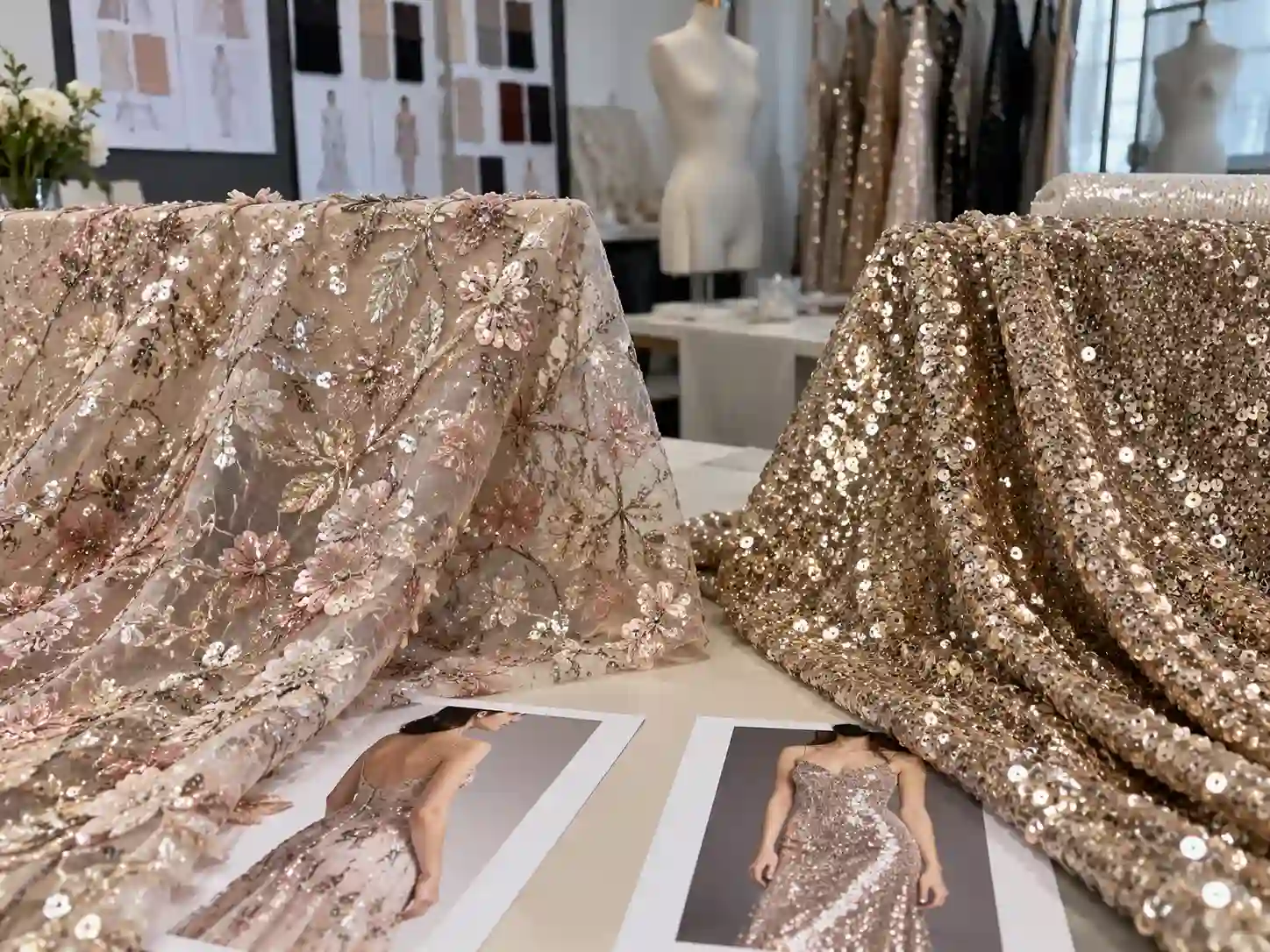
Table of Contents
Here, developing your OEM/ODM private label clothing collection is no longer a challenge—it’s an excellent opportunity to bring your creative vision to life.

