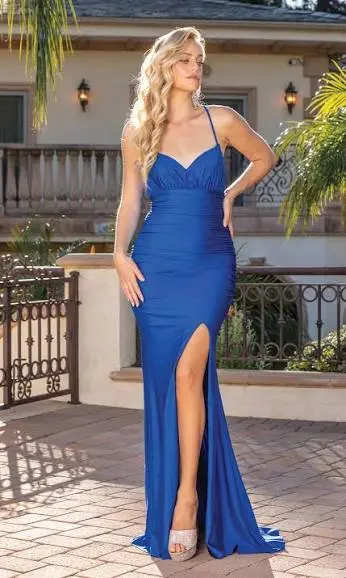
Empire-Waist Dresses Manufacturer for Fashion Brands
Custom development for elevated waistlines, controlled bust fit, balanced skirt release, and production-ready mini, midi, and maxi dress collections.
Jinfeng Apparel develops custom Empire-waist dresses for established fashion brands, private-label programs, ecommerce collections, occasionwear labels, resortwear lines, and retail fashion teams. Every project begins with the relationship between the bust, under-bust seam, bodice length, skirt volume, fabric drape, and final garment length rather than treating the raised waistline as a decorative seam.
- 7+ senior womenswear pattern makers support bust, under-bust, high-waist, neckline, armhole, strap, length, and balance development.
- 2 sample rooms and 20+ sample machinists support structured sample development and revision.
- MOQ starts from 200 pcs per style/color, depending on fabric, trims, color development, construction, packaging, and production schedule.
- OEM, ODM, private-label, multi-style collection, bulk-production, and repeat-order programs are supported.
Production Capacity Behind Your Dress Program
Since 2008
18+ Sewing Lines
6+ Flexible Lines
15+ QC Inspectors
12+ Merchandisers
100,000+ Regular Monthly Capacity
Made for Established Fashion Programs
Global Fashion Brands
Premium Ecommerce Brands
Occasionwear Labels
Empire-waist silhouettes translate naturally into wedding-guest, cocktail, evening, graduation, holiday, and event collections.
Occasion programs may combine satin, chiffon, lace, mesh, crepe, lining, specialty trims, and more structured bodice details, making sample approval and production control more involved than a basic summer dress.
Resortwear Brands
Fashion Retailers
Sourcing and Product Teams
How an Empire-Waist Dress Is Built
A successful Empire-waist silhouette depends on the relationship between the fitted upper body and the skirt release directly below the bust. Moving the seam only a few visual proportions can change how the entire dress reads on body.

Under-Bust Architecture
The defining seam normally sits below the bust and above the natural waist, but its exact position cannot be treated as one fixed horizontal line for every style or size. Bust volume, cup coverage, neckline depth, shoulder or strap construction, front bodice length, fabric stretch, and intended skirt volume all influence the visual location of the Empire line.
Pattern development therefore starts by reading the upper body as a connected structure. The pattern maker reviews upper bust, full bust, under bust, front length, back length, neckline, armhole, strap position, and intended high-waist level. A deep-V satin midi, square-neck chiffon maxi, adjustable-strap slip silhouette, and puff-sleeve rayon dress may all carry an Empire waist while requiring very different bodice engineering.
An under-bust seam that rises too high can visually compress the chest or pull against the bust. A seam sitting too low begins to resemble a conventional high waist and changes skirt proportions. Side-seam tilt is another warning sign: front bodice volume may be insufficient even when the flat garment measurements appear close to the specification.

Skirt Release and Vertical Balance
The skirt should begin with intentional volume rather than uncontrolled fullness. Gather ratio, pleating, panel width, bias direction, tier construction, flare, fabric weight, and lining all change the way material falls from the raised seam.
For a lightweight chiffon maxi, excessive gathering at center front can make the upper abdomen look bulky while insufficient side volume creates an uneven fall.
Rayon and viscose may drape beautifully but add downward weight, making bodice stability and finished length especially important. Satin shows seam tension and gathering marks more clearly, so the join between bodice and skirt needs clean handling.
Jersey may stretch vertically and pull the raised waistline downward if fabric recovery and weight are not considered.
Front and back length must also remain balanced after the skirt is attached. Long styles are checked for side-seam direction and hem balance because small differences at the bodice can become much more visible across a maxi-length garment.
Empire-Waist Dress Styles We Develop

Empire Waist Mini Dress
A mini version places greater visual emphasis on the relationship between the bodice and leg line. The raised seam cannot sit so high that the bodice appears shortened, while excessive skirt volume can make the overall silhouette look juvenile.Square necks, sweetheart lines, soft cups, short puff sleeves, adjustable straps, subtle gathering, and A-line skirt shapes can all be developed according to the brand direction.

Empire Waist Midi Dress

Empire Waist Maxi Dress

Empire Waist Slip Dress
A slip-inspired Empire silhouette needs restraint. Thin straps, a low neckline, soft bust shaping, light lining, and minimal seam bulk can create an elegant result, but weak upper-body control may lead to gaping or unstable coverage.
Satin, crepe, rayon, and selected soft woven fabrics can be evaluated according to intended drape, sheen, opacity, and the amount of support required.

Empire Waist Chiffon Dress

Empire Waist Satin Dress

Empire Waist Resort Dress

Empire Waist Occasion Dress
Built Across Multiple Fashion Occasions

Resort and Vacation

Wedding Guest
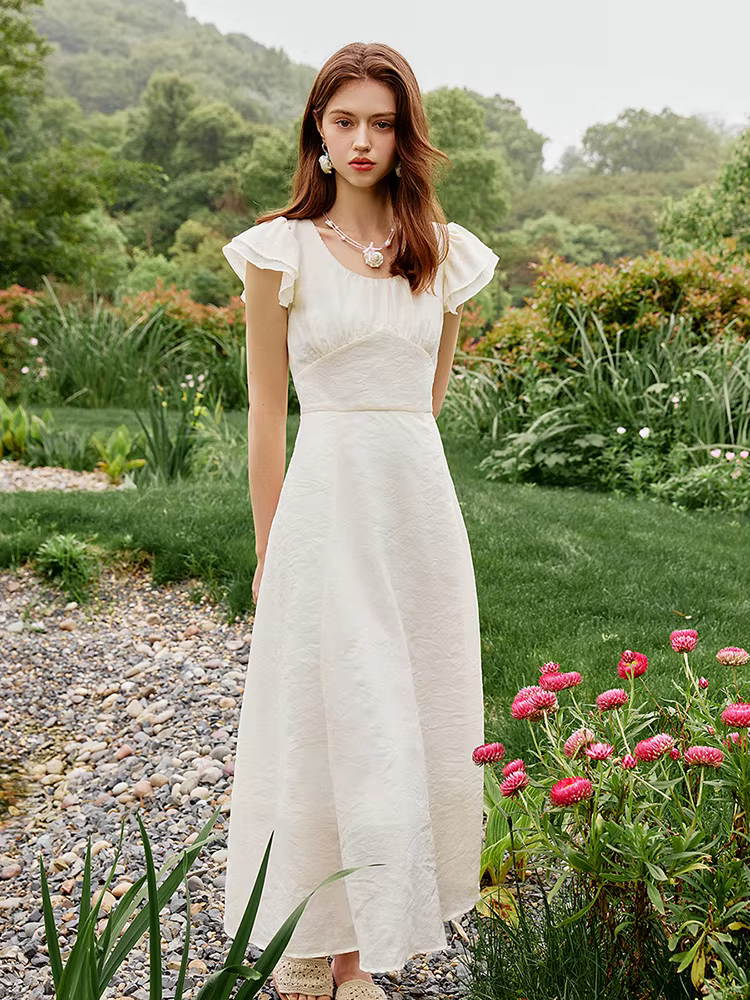
Summer Collections

Occasion and Evening

Seasonal Drops
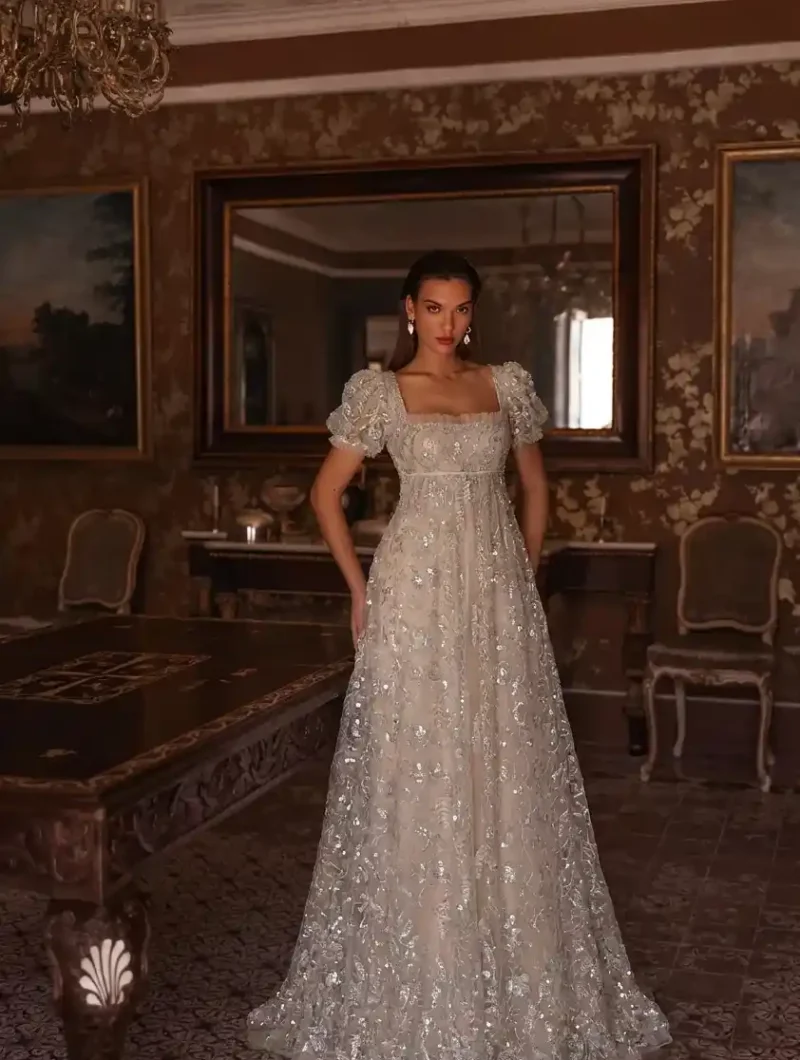
Multi-Style Collections
Empire-Waist Fit Engineering
The raised waistline makes upper-body proportion unusually important. Jinfeng’s pattern-development process therefore treats bust shape, under-bust level, bodice length, side balance, and grading as connected decisions rather than isolated measurements.
Control the Under-Bust Position
Empire fit begins with deciding where the raised seam belongs on the intended body proportion. The target position is reviewed against full bust, under bust, neckline, front bodice length, back bodice length, strap or shoulder construction, and skirt release.
A flat pattern can appear correct while the seam moves upward during fitting because the front body lacks enough bust volume. The opposite can also happen: too much front length may push the seam downward or create folds below the bust. Side-seam direction provides another useful diagnostic sign. A side seam pulling toward the front often indicates that the front pattern needs more volume or length rather than simply needing a larger overall size.
For gathered styles, the seam also carries skirt weight. Long viscose or rayon skirts may pull downward more than lightweight chiffon. Stretch fabrics can behave differently again. Pattern approval therefore considers both static measurements and the actual weight and recovery of the selected fabric.
Balance Bust Shape and Bodice Coverage
Empire construction concentrates attention around the bust. Small issues in neckline depth, cup coverage, dart placement, princess seams, gathering, straps, armholes, or lining become highly visible because the waist seam sits close to the chest.
Development may use darts, shaped panels, princess construction, gathering, elasticized sections, lining, built-in cups, adjustable straps, or different neckline treatments depending on the design. Not every style needs internal structure; a lightweight resort maxi may intentionally remain soft.
A satin occasion dress may require more precise shaping because reflective fabric shows pulling and uneven tension.
Fit review examines front, side, and back views together. A visually attractive front cannot compensate for armhole exposure, a lifted side seam, insufficient back coverage, or a neckline that changes position while moving.
Grade for Size, Not Just Scale
Size grading cannot be handled by enlarging every point at the same rate. Empire-waist styles require special attention to bust growth, under-bust placement, armhole coverage, neckline depth, strap length, bodice length, skirt release, and finished length across sizes.
Jinfeng develops according to the brand’s size chart and grade rules rather than imposing a universal size standard. Extended-size development can also be reviewed when the project includes a clear size specification, market direction, fitting feedback, and approved tolerances. Larger sizes may require changes to bust support, armhole coverage, waist position, strap width, back height, fabric support, lining comfort, and skirt proportion instead of simple proportional enlargement.
Approved patterns, size charts, grade rules, PP samples, Golden samples, and QC measurement records provide the references used to control repeatability in bulk production.

Measurements That Shape an Empire Silhouette
The table below shows the measurement areas that deserve particular attention during development. Final specifications and tolerances always follow the approved brand size chart, fit direction, fabric behavior, and sample standard.
| Measurement Area | What It Controls | Typical Development Risk | Bulk Check |
|---|---|---|---|
| Upper Bust | Upper bodice stability | Gaping or excessive compression | Size-chart measurement |
| Full Bust | Bust volume and shaping | Pulling, flattening, seam distortion | Garment measurement + fit reference |
| Under Bust | Empire seam relationship | Seam sitting too high or low | Approved pattern position |
| Front Bodice Length | Front vertical balance | Waist seam rising on body | Center/front balance |
| Back Bodice Length | Back vertical balance | Waist seam tilting | Back length + side seam |
| Strap Length | Neckline and bust position | Dropping neckline or over-lifting | Approved strap specification |
| Armhole | Coverage and movement | Underarm exposure or restriction | Shape + measurement |
| Neckline Depth | Coverage and visual proportion | Excess exposure or weak support | Pattern + approved sample |
| Skirt Release | Volume below raised seam | Bulky abdomen or insufficient flow | Gather/pleat distribution |
| Finished Length | Mini, midi, or maxi proportion | Uneven or incorrect hem position | Finished-garment measurement |
Fabrics Selected for Drape and Control
Fabric choice changes how an Empire waist looks, hangs, stretches, gathers, and feels. Development should therefore start from the intended silhouette rather than selecting fabric only by composition or price.

Chiffon, Crepe, Rayon and Viscose
Soft woven fabrics create some of the strongest Empire-waist silhouettes because they release cleanly below the bust and move naturally through the skirt.
Chiffon works well for layered or romantic styles but brings transparency, cutting, fraying, gathering, and lining considerations. Fine gathering below the bust can remain lightweight if seam construction avoids excessive bulk.
Crepe can offer more body and opacity while maintaining a fluid fall. Different crepe constructions behave differently, so weight, stretch, surface texture, and recovery still need to be reviewed.
Rayon and viscose are strong choices for resort and vacation dresses because of their fluid hand and movement. They may carry greater shrinkage or dimensional-stability risk than some polyester woven fabrics, making fabric testing, approved shrinkage handling, cutting control, and finished length important before bulk production.

Satin and Occasion Fabrics
Satin changes the character of an Empire silhouette from relaxed to polished. It also makes construction more visible.
The Empire seam can show puckering if sewing tension, gathering, interfacing, or seam allowance is not handled correctly. Reflective surfaces make wrinkles, press marks, zipper rippling, and pulling around the bust easier to see. Shine direction must remain consistent across panels because reversing fabric direction can create apparent shade differences even when material comes from the same dye lot.
Lining selection should support the outer fabric without making the bodice or raised seam too thick. For low or shaped necklines, lining can also influence coverage and stability.
Stretch satin can accommodate more fitted bodices, although recovery and seam behavior need review. Non-stretch satin generally requires more precise pattern shaping because the material provides less forgiveness around the bust.

Jersey and Soft Stretch Fabrics
Stretch materials create a softer, more forgiving Empire silhouette, especially for travel, casual, comfort-led, or maternity-friendly fashion directions.
Stretch, recovery, GSM, vertical growth, opacity, and skirt weight need to be considered together.
A heavy knit skirt can pull the under-bust seam downward.
A fabric with weak recovery may grow during wear, changing neckline position and total length. Very soft jersey can also reveal seam thickness or lining transitions around the raised waist.
Fabric direction should therefore consider more than stretch percentage.
Recovery, weight, hand feel, opacity, drape, and wash behavior all affect whether the approved silhouette survives production and wear.
Match Fabric to the Intended Silhouette
No fabric is universally “best” for an Empire-waist dress. The right material depends on the desired structure, skirt volume, occasion, lining plan, and visual effect.
| Fabric | Drape | Best-Suited Direction | Lining Need | Main Production Focus |
| Chiffon | High / fluid | Maxi, wedding guest, resort, occasion | Often required | Transparency, seam finish, gathering |
| Rayon / Viscose | High / soft | Resort, vacation, printed midi/maxi | Project dependent | Shrinkage, cutting, length stability |
| Crepe | Medium to high | Midi, occasion, day-to-evening | Project dependent | Grain, drape, seam appearance |
| Satin | Fluid with surface shine | Occasion, evening, slip-inspired | Often recommended | Puckering, shine direction, zipper flatness |
| Jersey | Soft / stretch | Casual, travel, comfort silhouettes | Usually optional | Recovery, vertical growth, seam stretch |
| Cotton Blend | Medium | Summer, puff-sleeve, casual styles | Project dependent | Shrinkage, stiffness, gathering volume |
Design Details Beyond the Raised Waist

Sweetheart Neckline

Square Neckline

Adjustable Straps

Puff Sleeves

Ruched Bodice

Tiered Skirt

Side Slit
A slit can lighten a long silhouette and create more movement.
Height, reinforcement, lining relationship, seam stability, and symmetry need approval in the sample. Slit position can also change the way a maxi skirt hangs during walking and photography.

Open or Tie Back
Back details can provide visual interest without disturbing the Empire front.
Tie length, opening depth, strap loading, elastic, coverage, bra compatibility, and back-waist stability are reviewed according to the intended wearing occasion and material.
Trims and Internal Support That Matter
Invisible Zippers
Linings
Bra Cups
Elastic and Smocking
Strap Sliders and Hooks
Adjustment hardware must match strap width, garment weight, finish, color, and intended quality level.
Poorly selected hardware can twist, slip, scratch, discolor, or visually cheapen an otherwise polished dress.
Lace and Decorative Trims
From Design Reference to First Sample
Sampling turns a visual idea into a measurable production standard. Empire-waist projects move through structure review, material selection, pattern development, sewing, fitting, and documented revision before bulk production.
Review Before Pattern Cutting
Development can start from a tech pack, original sample, reference image, sketch, or line sheet.
The first review identifies neckline, under-bust position, bodice construction, skirt volume, closure, lining, sleeve or strap structure, finished length, fabric direction, trim requirements, size standard, target quantity, and intended wearing occasion.
Incomplete information does not automatically stop development, but missing decisions must be resolved before an accurate production standard can be created. A reference photograph, for example, may communicate silhouette well but cannot always reveal fabric composition, internal lining, zipper construction, back details, exact measurements, or seam placement.
Pattern, Fabric and Sample Construction
The pattern maker translates the approved direction into a first pattern while fabric and trim teams prepare suitable materials. The sample machinist then builds the garment according to the pattern and construction notes.
For Empire-waist dresses, early checks focus on upper bust, full bust, under bust, front and back bodice length, raised-waist position, neckline, armhole, straps, side seams, skirt release, lining, closure, and overall garment length.
Ordinary dress first samples generally require around 10–15 days as a project reference. Simpler styles may be around 7–10 days, while more complex lace, mesh, sequin, corset, strapless, or evening constructions may require around 15–25 days. Custom fabrics and special trims can extend development time.
Build a Production-Ready Standard
The purpose of sampling is not simply to produce one attractive garment. Approved revisions must become repeatable information.
Final development records can include:
- Approved pattern version
- Size chart and grade rules
- Fabric and color approval
- Trim record
- BOM
- Sewing instructions
- Construction details
- QC checklist
- Packing instructions
- PP sample
- Golden sample
A style should enter bulk production only after the relevant fit, materials, construction, branding, packing, quantity, and quality requirements have been confirmed.

Correcting an Empire-Waist Sample
A useful sample review does more than mark “too big” or “too small.” The real task is to identify the cause, update the production information, and prevent the same issue from returning in later samples or bulk production.
Diagnose the Fit Problem
Typical Empire-waist sample comments may include:
- Under-bust seam sitting too high
- Under-bust seam sitting too low
- Bust compressed or flattened
- Neckline gaping
- Armhole exposure
- Side seam pulling forward
- Excess fullness at center front
- Insufficient skirt release
- Back bodice rising
- Straps too long or short
- Hem appearing uneven
Separate Fabric Problems from Pattern Problems
Not every unsatisfactory silhouette requires pattern correction.
A sample may drape differently because the selected bulk fabric has more weight, less recovery, greater stiffness, more shrinkage, or different surface friction than the development fabric.
Lining can also change the final result.
Material review therefore considers weight, hand feel, stretch, recovery, drape, transparency, shrinkage, color, surface shine, and construction behavior before deciding whether the problem belongs to fabric, pattern, sewing, or a combination of factors.
Record Every Bulk-Relevant Revision
Approved changes should move into updated production files rather than remaining in chat messages or marked photographs alone.
Jinfeng records relevant revisions through updated patterns, size charts, BOMs, fabric records, trim records, sewing instructions, QC checklists, and packing requirements.
Major pattern changes, fabric replacement, structural changes, or complex workmanship adjustments may require a revised sample before proceeding to PP approval.

Moving an Approved Style Into Bulk
Bulk production begins from approved standards rather than from memory. Pattern, material, construction, measurement, label, packing, and quality requirements need to remain synchronized as quantities increase.
Lock the Production Standard
Before cutting begins, the project should have the relevant approvals in place:
- PP sample
- Final pattern
- Size chart and grade rules
- Fabric source and color
- Trim specifications
- BOM
- Sewing instructions
- Label artwork
- Packing method
- Quantity and size ratio
- QC requirements
- Shipment plan
Golden-sample management provides another physical reference for production, inspection, repeat orders, and discrepancy review.
Control Cutting and Sewing
Empire-waist products need careful handling where bodice and skirt meet. Cutting accuracy affects bust shape, seam position, side balance, gathering, panel symmetry, and finished length.
During sewing, important checkpoints can include:
- Dart or shaped-panel accuracy
- Under-bust seam alignment
- Gather distribution
- Left-right symmetry
- Strap attachment
- Armhole shape
- Zipper flatness
- Lining attachment
- Side-seam direction
- Slit reinforcement
- Hem preparation
Manage Multi-Style Production
A collection containing 10, 20, or more styles needs clear style-level separation.
Jinfeng manages multi-style orders by style, color, size, fabric, trim, sample version, BOM, production order, QC checklist, packing instructions, and shipment plan.
Production timing is confirmed after PP approval, material readiness, quantity, construction, color, size range, packing requirements, and quality standards are known rather than using one fixed lead time for every dress.

Empire-Waist Dress Quality Control
Quality inspection becomes more useful when checkpoints are linked to the construction being produced. Empire-waist dresses need specific attention around the raised seam, upper-bodice fit, skirt distribution, fabric behavior, and overall vertical balance.
Fit and Measurement Control
Important measurement and visual checkpoints include:
- Full bust
- Under bust
- Raised-waist position
- Front bodice length
- Back bodice length
- Strap length
- Neckline depth
- Armhole
- Finished length
- Slit height where applicable
- Left-right symmetry
- Side-seam direction
Measurement results are compared with the approved size chart, pattern, grade rules, PP sample, and Golden sample. Large production quantities cannot rely on visual inspection alone because small dimension differences may create noticeable changes in a raised-waist silhouette.
Workmanship and Fabric Control
Construction inspection focuses on the areas most likely to influence appearance or durability:
- Seam smoothness
- Under-bust join
- Gather distribution
- Dart or panel symmetry
- Zipper installation
- Lining position
- Strap security
- Trim attachment
- Hem quality
- Thread and seam cleanliness
Fabric-specific issues also remain important. Satin may require checks for puckering, snagging, shine direction, and pressing. Chiffon needs attention to transparency and delicate seam handling. Stretch fabrics require recovery and dimension control. Printed fabrics may require direction or placement review.
Inspection Through the Production Flow
Jinfeng’s quality process can include:
Incoming Material QC → Cutting QC → Sewing QC → In-Line Inspection → Finished Garment Inspection → Pressing Review → Packing QC → AQL or Client Inspection Support
More than 15 QC inspectors support the production system, while approved patterns, measurement standards, Golden samples, and QC checklists provide style-specific references.

MOQ and Cost Planning for Collections
200 Pieces Per Style/Color
Fabric Consumption
Gathering and Skirt Volume
Bodice Construction
Color and Size Planning
Packaging and Delivery
Private Label and Retail-Ready Finishing
A production-ready garment still needs to arrive under the correct brand identity, SKU structure, size, color, and packing specification. Jinfeng integrates brand finishing into the manufacturing workflow rather than treating it as an afterthought.
Brand-Level Garment Identification

Private-label support can include:
- Woven labels
- Satin labels
- Printed labels
- Heat-transfer labels
- Size labels
- Care labels
- Hangtags
- Hang strings
- Barcode stickers
- SKU labels
Ecommerce and Retail Packing

Finished garments can be individually folded and packed according to project requirements. Packing programs may include polybags, size stickers, color labels,
SKU labels, barcode labels, warning text, carton marks, mixed-size cartons, packing lists, and warehouse receiving instructions.
Final packing checks verify that the physical garment matches the correct size, color, barcode, tag, SKU, and carton record.
Keeping packing information connected to the correct style is particularly important for multi-color and multi-size dress programs where visually similar garments may have different SKU identities.
An 18-Style Empire Collection Program
A multi-style program demonstrates more about manufacturing depth than a single successful sample. It tests fit development, fabric handling, SKU management, revision control, production allocation, QC, packing, and delivery at the same time.
Anonymous US Fashion Brand Program

An established US fashion brand developed an 18-style Empire-waist and soft-waist dress collection totaling approximately 36,000 pieces.
The range included mini, midi, and maxi silhouettes across chiffon, rayon, crepe, and satin directions, with several colorways and a multi-size distribution.
The collection combined different commercial requirements rather than repeating one base dress.
Some styles used lightweight printed rayon for resortwear; others used lined chiffon for wedding-guest and occasion positioning. Satin midi styles required cleaner bodice shaping and zipper handling, while long maxi silhouettes needed more attention to hem balance, skirt weight, transparency, and packing.
Development priorities included under-bust positioning, front-to-back bodice balance, neckline coverage, gather control, lining selection, finished length, and maintaining related visual proportions across different fabrics.
Managing 18 Styles Without Mixing Standards

The program was managed style by style rather than as one combined production order.
Pattern versions, fabrics, colors, trims, sample comments, BOMs, measurements, production specifications, QC checkpoints, brand labels, barcodes, polybags, and carton information were separated for each SKU group.
Several sample revisions focused on under-bust positioning and skirt release.Softer rayon styles needed enough fullness to move without creating excess volume immediately below the bust. Satin versions required cleaner seam presentation and more stable upper-body shaping. Chiffon styles required lining and transparency review.
Following PP approval, production was allocated according to fabric, construction, and delivery sequence. QC focused on raised-waist position, bust balance, gathering, side seams, finished length, fabric appearance, labels, and packing accuracy. The project was prepared for phased delivery so priority SKUs could move according to the brand’s launch calendar.
Frequently Asked Questions

Start Your Empire-Waist Dress Project
A useful project review starts with enough information to evaluate silhouette, fabric, construction, quantity, fit, branding, and timing together. Send your existing tech pack, reference garment, sketch, line sheet, or product images and our team can review the under-bust structure, bodice requirements, material direction, skirt construction, sampling needs, MOQ considerations, and production feasibility before moving into formal development.
For a more accurate first review, include:
- Reference image, sketch, sample, or tech pack
- Target quantity per style and color
- Planned size range and size chart
- Preferred fabric or hand-feel direction
- Color or print plan
- Desired mini, midi, or maxi length
- Neckline, sleeve, strap, and back details
- Lining or support requirements
- Brand-label and packaging requirements
- Target market
- Planned launch or delivery window
- Any current sample or fit problem requiring correction