Skip to content
Embroidered Dress Production
Custom embroidered dresses developed around fabric behavior, motif placement, fit, sample approval and repeatable bulk production for established fashion brands.
- 2 sample rooms, 7+ senior pattern makers and 20+ sample machinists support complex dress development and revision work.
- 15+ QC inspectors cover material, cutting, sewing, garment and packing checkpoints before shipment.
- MOQ starts from 200 pcs per style/color; special embroidery materials, custom colors, trims and packaging are evaluated by project.
- Embroidery is reviewed together with base fabric, lining, garment structure and size grading rather than treated as a stand-alone decoration.
Production Scale Behind Complex Womenswear Programs
Large embroidered dress programs need more than an attractive sample. Jinfeng Apparel combines multi-factory capacity with dedicated development, follow-up and quality teams so complex products can move from approved sample standards into organized bulk production without losing garment fit or finishing discipline.
Since 2008
6 Owned Factories
100,000+ Monthly Capacity
Built for Established Fashion Production Teams
Fashion Brand Teams
Sourcing Offices
Multi-Style Programs
Embroidery Must Work With the Dress
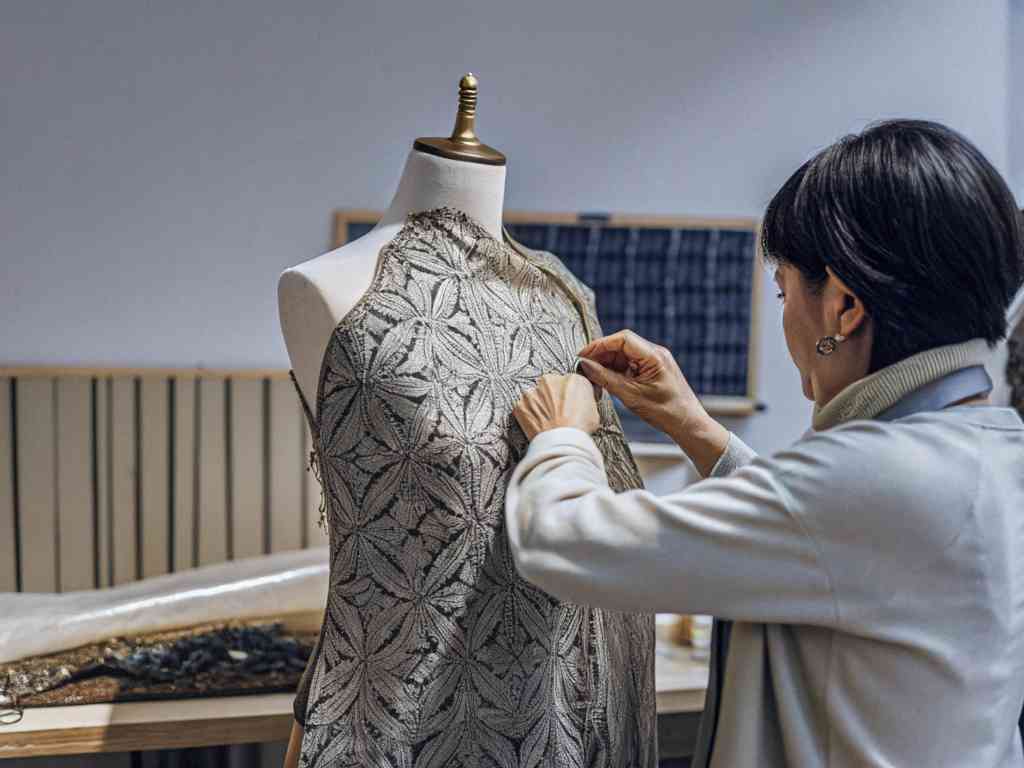
A successful embroidered dress is engineered as one garment system. Motif density changes hand feel, backing changes local thickness, placement affects movement, and fabric tension can alter drape or fit. Development decisions therefore start with the dress silhouette and end with a production-ready standard.
Fabric Reaction Comes First
A motif that looks clean on a firm woven swatch can behave very differently on satin, chiffon, stretch jersey, mesh or linen. Needle penetration, stitch density and backing add local tension to the base material. On fluid or lightweight fabrics, excessive density can create puckering, stiffness, drag lines or an uneven fall. Stretch fabrics introduce another problem: a stable embroidery area can restrict recovery and distort the silhouette when the garment is worn. Jinfeng evaluates the base fabric together with embroidery area, lining strategy, panel position and garment use before bulk planning. Lightweight embroidery may be suitable where a heavier treatment would not be. Some styles also benefit from moving the motif away from high-stretch or high-tension zones. Sample review is used to decide whether the proposed embroidery should be kept, reduced, repositioned or supported differently. The goal is not to maximize decoration. The goal is to preserve the intended surface effect while keeping the dress wearable, balanced and repeatable in production.
Garment Structure Cannot Be Ignored
Embroidery can change how a bodice, waist panel, sleeve or skirt panel behaves after sewing. A dense chest motif may reduce softness around the bust. A heavily embroidered waist can become firmer than adjacent panels. Embroidery near a neckline can affect edge stability, while motifs crossing seam lines create alignment and bulk-control issues. For fitted dresses, pattern shape and ease must still work after the decorated panel is introduced. For occasion styles, lining coverage and skin comfort become part of the same decision. Jinfeng reviews embroidered areas together with neckline depth, bust coverage, waist position, hip ease, zipper placement, lining, hem balance and movement. Pattern corrections are recorded before PP approval when embroidery changes the behavior of the garment. Complex areas are not pushed into bulk simply because the artwork looks attractive on a flat sample. A production decision is made only after the embroidery and the dress construction work together on the body and through the intended size range.
Bulk Repeatability Needs Measurable Standards
One approved sample is not enough for a multi-thousand-piece order. Bulk production requires a clear reference for motif scale, thread color, stitch density, backing, placement, panel orientation and garment measurements. Jinfeng uses the approved garment, final pattern, size chart, fabric reference, trim information, sewing instructions and QC checklist as connected production records. Embroidery placement must remain visually balanced across sizes rather than being copied blindly from one sample. Garment construction must also remain stable around decorated areas so seams, zippers, lining and hems do not shift from the approved look. Inline checks are more valuable than finding the same error after every garment is finished. Production teams therefore work from locked references and checkpoints, while any approved change is transferred into the relevant pattern, material, workmanship or QC record. Repeatability is created by documentation and process control, not by asking production to “follow the sample” from memory.
Embroidered Dress Styles We Can Develop

Embroidered Mini Dress

Embroidered Midi Dress

Embroidered Maxi Dress

Embroidered Party Dress

Embroidered Occasion Dress

Embroidered Mesh Dress

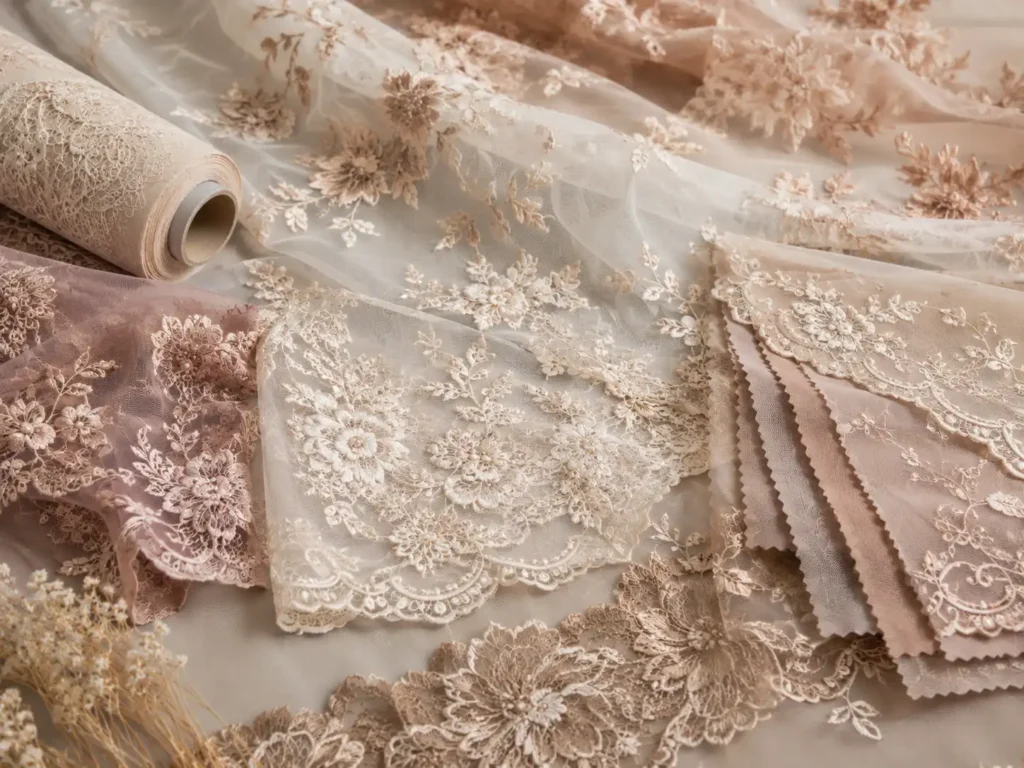
Embroidered Lace Dress

Embroidered Resort Dress
From Artwork to Production Embroidery Specification
Artwork alone does not define a production standard. A usable embroidery specification connects motif scale, thread appearance, stitch behavior, backing, placement and garment measurements so the approved visual can be repeated across sizes and bulk quantities.

Artwork and Motif Scale
Development begins by checking motif shape, visual priority and the intended garment position. Large motifs can dominate a small bodice, while very fine details may lose clarity after conversion into stitches. Placement is reviewed against seam lines, darts, neckline edges, zippers, straps, waist joins and hem zones. For multi-size orders, the same artwork may need placement rules rather than one fixed coordinate. A centered chest motif, for example, must remain visually balanced as bust width changes. Border motifs need enough allowance for cutting, sewing and finishing. Jinfeng records the approved visual relationship between motif and garment so bulk production can follow a measurable reference rather than a screenshot or verbal note.
Thread, Stitch and Surface
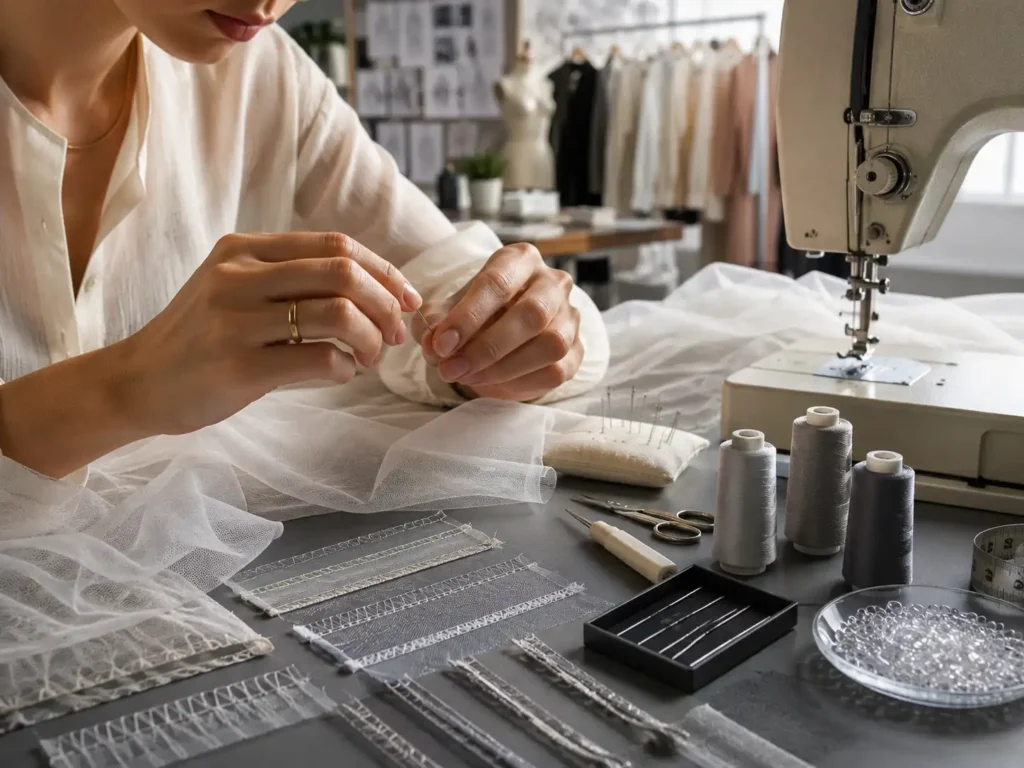
Thread color and stitch density influence both appearance and fabric behavior. Higher density can create stronger coverage but also more stiffness and tension. Fine lightweight fabrics may require a lighter approach, while denim or structured woven fabrics can accept a more stable embroidered surface. Satin requires special care because needle marks, snagging and surface shine make local distortion easier to notice. Stretch materials require enough flexibility to avoid restricting recovery. Sample review compares color, coverage, surface smoothness, puckering and hand feel under normal viewing and on-body conditions. The approved result becomes the reference for later production checks, especially when multiple colors or motif variants are used across a collection.

Backing and Local Stability
Backing or stabilizing support is not an invisible afterthought. It changes local thickness, softness, breathability and skin comfort. A backing suitable for a jacket-weight fabric may feel too rigid inside a party dress or lightweight resort style. Decorated areas close to the skin need clean finishing and controlled edges. Lined occasionwear may hide backing inside the garment, while sheer mesh requires a solution that does not ruin the transparency concept. Jinfeng reviews backing together with lining, seam allowance, internal construction and final comfort. Any change that affects garment thickness or drape is checked again at sample stage before being locked for bulk.

Placement Across Sizes
Scaling a dress from XS to XL changes body width, waist position, neckline span and panel dimensions. A motif placed perfectly on one sample can move too close to a seam, become visually narrow or sit too high on another size if production uses only a fixed absolute position. Placement rules therefore need to follow garment landmarks such as center front, neckline edge, waist seam, princess seam or hem line. Jinfeng connects embroidery placement with the final graded pattern and measurement chart before production. Bulk QC can then check both garment measurement and motif position instead of treating them as unrelated inspection items.
Fabric Compatibility Changes the Embroidery Result
Base fabric determines how much embroidery a dress can carry without losing drape, stretch or surface quality. The table below summarizes development directions already used in Jinfeng’s womenswear fabric system; every final combination still requires sample confirmation.
| Base Fabric | Recommended Direction | Primary Production Risk | What to Confirm in Sample |
|---|---|---|---|
| Satin | Localized embroidery; larger areas require testing. | Puckering, needle marks, snagging, shine-direction distortion and local stiffness. | Surface smoothness, motif density, zipper/lining interaction, pressing marks and drape. |
| Chiffon | Lightweight embroidery only; heavy full-area work is not preferred. | Puckering, transparency change, panel distortion, snagging and uneven hem fall. | Weight, backing, lining, panel balance, transparency and hanging behavior. |
| Mesh | Localized embroidery or embroidered mesh; heavy work requires testing. | Reduced stretch, holes, neckline deformation, edge curling and transparency inconsistency. | Stretch recovery, motif position, lining coverage, seam stability and comfort. |
| Lace | Use embroidered lace or carefully planned local embellishment; avoid unnecessary heavy over-embroidery. | Motif mismatch, fraying, holes, thick seam areas and lining exposure. | Motif direction, seam alignment, edge finishing, lining color and surface damage. |
| Jersey / Stretch Knit | Localized embroidery with stretch control. | Restricted recovery, distortion, side-seam movement and size instability. | Stretch direction, recovery, bust-waist-hip fit and wash-related dimensional stability. |
| Rayon / Viscose | Light embroidery for resort, midi and softer daywear. | Shrinkage, drape change, wrinkling and batch hand-feel variation. | Pre-shrink behavior, motif weight, garment drape, hem balance and wash result. |
| Linen / Linen Blend | Localized embroidery suits resort and natural-fashion directions. | Shrinkage, wrinkling, seam twisting and stiffness around dense motifs. | Wash stability, lining need, motif weight, seam balance and pressing. |
| Denim / Structured Woven | Strong candidate for embroidery and clearer motif definition. | Thickness at seam intersections, wash/color variation and local bulk. | Stitch density, seam allowance, wash effect, hardware interaction and placement. |
Embroidery Placement Shapes the Silhouette
Motif position changes visual proportion and can also change how a panel moves. Placement is therefore reviewed against body landmarks, seam construction and size grading rather than being treated as a flat artwork decision.

Bodice and Neckline Placement
Embroidery around the neckline or upper bodice draws immediate attention to bust coverage, symmetry and edge stability. Dense motifs close to the neckline can stiffen the edge or make a soft draped front behave differently. On fitted dresses, embroidered areas may also influence how the fabric settles over the bust. Development checks neckline depth, cup or lining coverage, seam lines, zipper position and whether the motif remains balanced from the front and side. Symmetry needs a clear center reference, while asymmetric motifs need controlled offset rules. Sample fitting confirms whether the decorated area supports the intended visual or creates pulling, gaping or unwanted thickness.

Waist and Hip Placement
The waist and upper hip are high-motion areas on fitted dresses. Heavy embroidery can reduce stretch, create pressure or make the waist panel feel noticeably firmer than the skirt or bodice. Motifs crossing side seams also become harder to align consistently in bulk. Jinfeng evaluates motif location against waist seam, darts, side seams, hip ease and closure position. For stretch silhouettes, local recovery is checked during fitting. For woven occasion dresses, seam bulk and lining are reviewed so the embroidery does not create a visible ridge. The pattern can be corrected before PP if the decorated area changes the intended fit.

Sleeve and Shoulder Placement
Sleeves and shoulders move continuously during wear, so decoration must leave enough flexibility for arm movement and seam stability. A motif placed too close to an armhole seam can become distorted after sleeve setting. Dense embroidery can also make a lightweight sleeve hang unevenly. Development checks motif orientation, shoulder balance, sleeve cap, seam allowance and skin contact. Sheer sleeves require extra attention because backing or thread tails may remain visible. Final placement should look intentional in the worn position, not only when the sleeve is laid flat on a table.

Hem and Border Placement
Hem embroidery works well for midi, maxi, resort and occasion dresses, but border depth affects cutting yield, final length and visual balance. A border positioned too close to the hem can be damaged during finishing or create problems if length adjustments are needed. Long dresses also need enough hanging time to confirm hem balance before final finishing. Jinfeng reviews motif depth, cutting allowance, lining length, slit position and final hem method. Bulk standards include a clear distance from reference lines so border placement remains consistent across sizes and production batches.
Pattern and Fit Control Around Embroidered Areas
Fit-sensitive dresses cannot be graded by decoration alone. Final pattern decisions are made from garment measurements, fabric behavior and embroidery placement together, with critical revisions completed before PP approval.
Bust and Neckline Balance
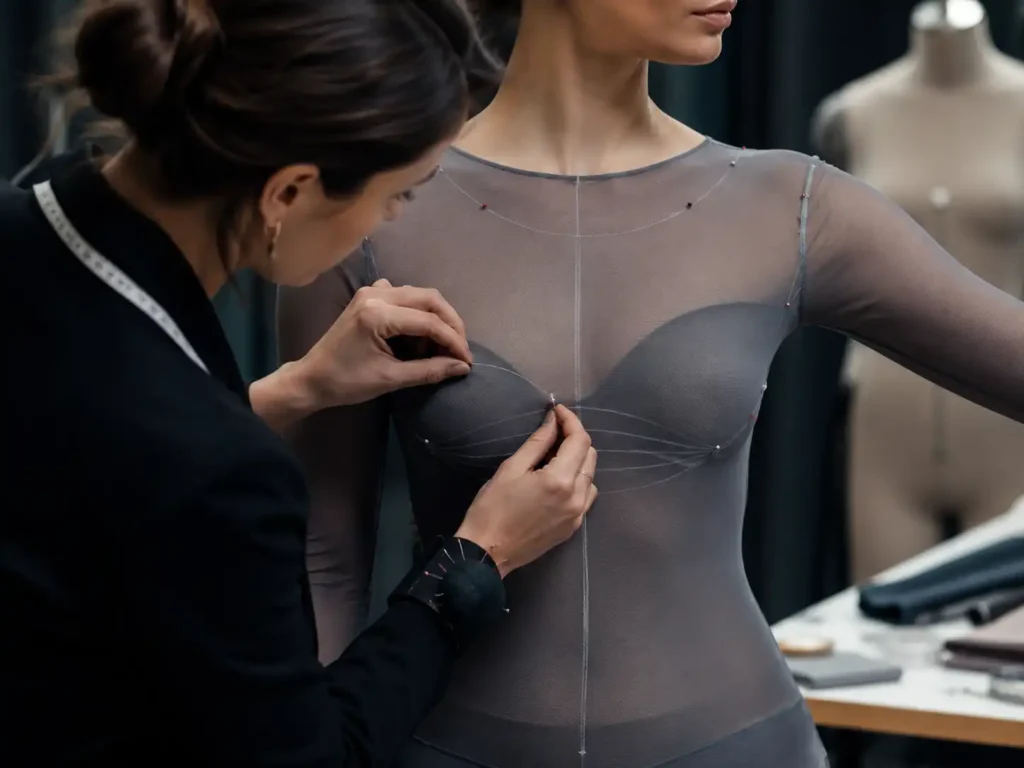
The upper body is often the first area where embroidery-related stiffness becomes visible. A bodice that fits well in plain fabric may sit differently after a dense motif is added. Jinfeng reviews bust width, upper-bust coverage, neckline shape, dart or princess-seam position, strap angle and lining support during sample fitting. If the embroidered panel pulls away from the body or creates pressure, the answer may involve motif reduction, a pattern adjustment, a different base fabric or a change in internal construction. Fit decisions are recorded rather than corrected informally during sewing.

Waist and Hip Proportion
Bodycon, corset-inspired and fitted occasion dresses need controlled bust-waist-hip relationships. Local embroidery can reduce stretch or add thickness at the waist and hip, affecting both comfort and visual line. Pattern review considers waist placement, hip ease, side-seam balance, zipper position and stretch recovery where relevant. Size grading must preserve the intended silhouette while keeping motifs clear of seam allowances and closures. Measurement QC later checks the finished garment against the same approved size chart used to release production.

Length, Slit and Hem Balance
Midi and maxi dresses add another layer of risk because motif position often relates to skirt length, slit height or border placement. If the graded pattern changes length, embroidery cannot be allowed to drift into the hem turn-up or sit at an inconsistent visual height. Long garments are also sensitive to fabric relaxation and hanging behavior. Jinfeng reviews skirt length, slit safety, lining length and hem balance before final production standards are issued, especially for fluid woven fabrics and embroidered border designs.
Construction Details Under the Embroidery

Lining Strategy
Backing Control

Seam Placement

Skin Comfort
Sampling Turns the Design Into a Production Standard

Project Review
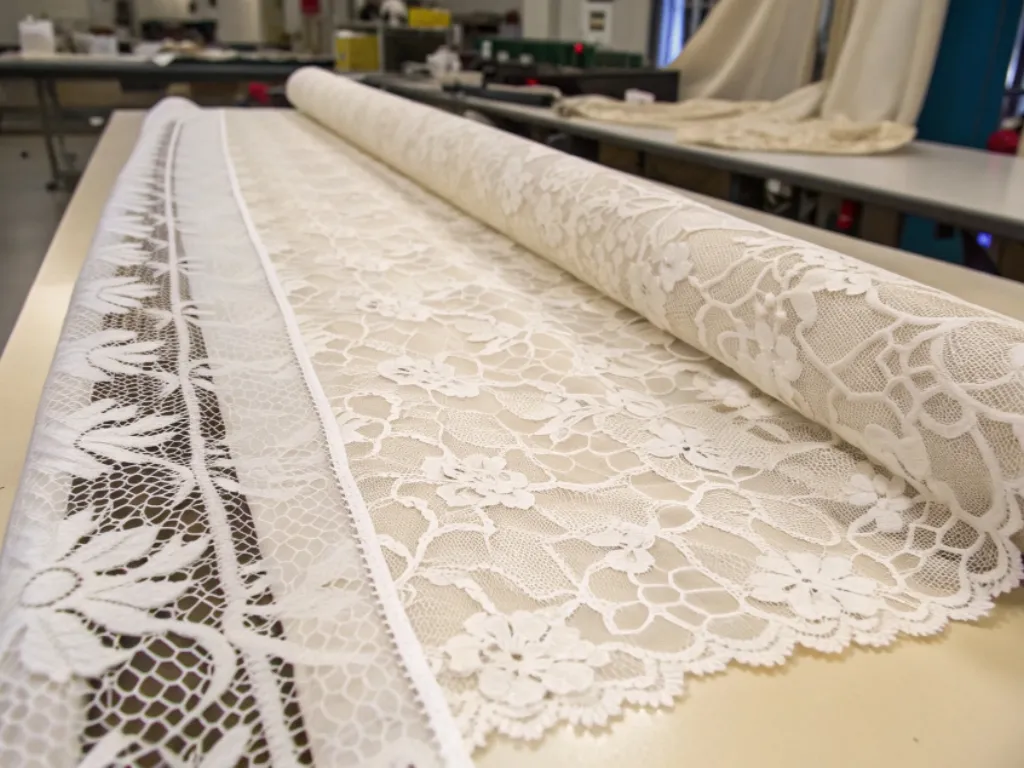
Fabric and Motif Check

Pattern Development

First Sample
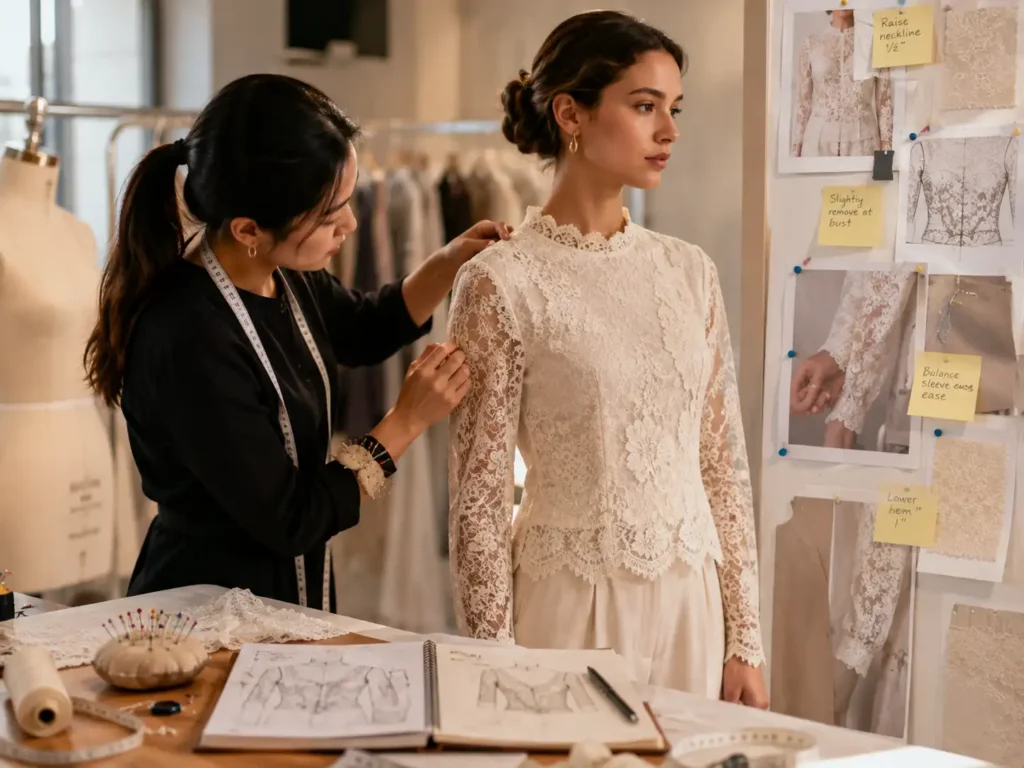
Revision and Fit
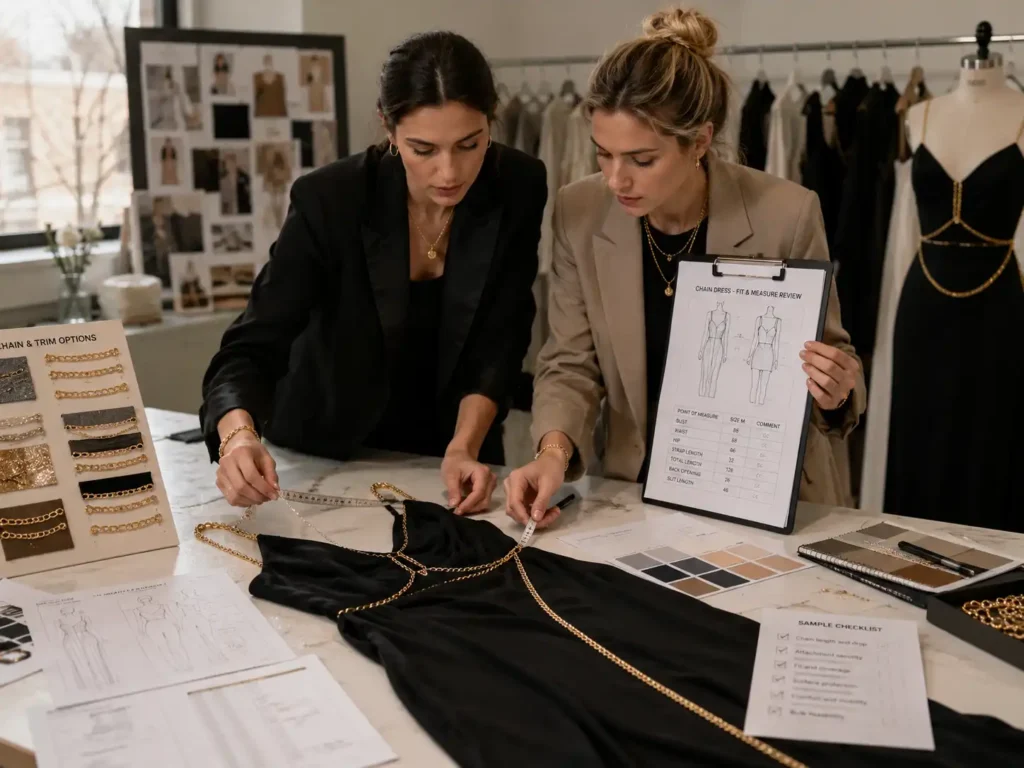
PP and Golden Sample

What We Approve Before Embroidery Goes to Bulk
The approval stage is where visual preference becomes a measurable production decision. Jinfeng reviews embroidery appearance together with the complete garment so later production teams know exactly what is acceptable.
Surface and Motif Approval
Approval covers motif scale, thread appearance, color relationship, stitch coverage, surface flatness and visible defects. A clean artwork file does not guarantee a clean stitched surface, especially on satin, chiffon, mesh or stretch fabric. The garment sample is viewed from normal retail distance and close range to catch both visual balance and technical problems. Puckering, uneven fill, loose threads, unintended shine changes or rough backing are corrected before bulk. Where several motif colors or placements are used, each approved variation needs its own clear reference.
Placement and Symmetry Approval
Placement is checked against center front, neckline, waist, seams, sleeves, slits or hem references. Symmetric designs need measurable alignment; asymmetric designs still need a defined offset so production does not vary garment by garment. Multi-size programs also need a grading rule. One fixed coordinate from a size-S sample is rarely enough for a full size range. The approved position is connected to the final pattern so cutting and embroidery preparation work from the same geometry.
Fit and Construction Approval
Embroidery approval is incomplete if the dress does not fit after decoration. The final sample must still meet neckline, bust, waist, hip, length and movement requirements. Lining cannot twist or show in unintended areas. Zippers should remain flat, seams should not become bulky, and hems should retain their balance. Any bulk-relevant correction is transferred into pattern, size chart, material records, sewing instructions or QC points before PP is sealed. Production starts from a controlled standard rather than a collection of disconnected comments.
PP Lock Connects the Sample to Bulk
Pattern and Fit Lock
Embroidery and Material Lock
Workmanship and Packing Lock
Bulk Production Is Managed by Product Risk
Embroidered dresses are allocated and controlled according to fabric, structure, workmanship and schedule. Production planning begins only after key materials and PP standards are clear, reducing the risk of changing critical details after cutting or sewing has started.

Factory Allocation
Jinfeng operates six owned women’s fashion factories and works with more than 10 long-term satellite production partners. Allocation is based on what the style needs: woven dress experience, stretch control, occasionwear construction, complex mesh or lace handling, finishing requirements and available production windows. Embroidered projects are not described as unlimited-capacity work. Material behavior, decoration complexity and QC workload determine how styles are grouped. Multi-style orders may be separated by fabric and construction so one difficult process does not disrupt every SKU. A common QC standard and project follow-up structure are used across the program.

Material and Cutting Readiness
Production cannot run smoothly if base fabric, lining, embroidery materials, zippers, labels or packing items arrive at different times without control. Material readiness is checked before cutting plans are finalized. Fabric direction, front/back side, stretch direction, motif position and panel quantity become especially important when embroidered fabrics or pre-decorated panels are involved. Cutting errors are expensive because replacement material may require another embroidery cycle or introduce batch differences. Bundles are organized by size and style so decorated panels do not become mixed during sewing.

Sewing and Inline Control
The approved PP garment is translated into sewing instructions covering stitch type, seam allowance, thread color, zipper position, lining method and key detail points. Inline inspection catches neckline distortion, seam bulk, motif misalignment, lining exposure, zipper issues or fabric damage before errors spread across the lot. Corrective action during production is more efficient than sorting thousands of finished garments later. Critical areas are rechecked after correction before the line continues at normal volume. For multi-style programs, priority and progress are managed by material readiness and launch sequence rather than only by order quantity.
QC Checks Both Embroidery and the Finished Dress
Inspection follows the product from material to packing. Embroidery quality is checked as part of garment quality, because a perfect motif on a poorly fitted or badly finished dress still creates a failed production result.
| QC Stage | Key Checks for Embroidered Dresses | Typical Risk Prevented |
|---|---|---|
| Incoming Material | Fabric color/hand feel, width, defects, stretch or shrinkage risk; embroidery materials and approved references where applicable. | Batch mismatch, unsuitable fabric, material defects entering production. |
| Cutting / Panel Control | Pattern, fabric direction, decorated panel orientation, motif reference, size bundles, panel count, holes or damage. | Wrong placement, reversed panels, mixed sizes, unrecoverable cutting errors. |
| Embroidery / Decorated Surface | Motif scale, thread color, stitch appearance, density, puckering, loose/broken threads, backing and surface cleanliness. | Visible inconsistency, distortion, rough finish and bulk mismatch. |
| Inline Sewing | Seam allowance, neckline, armhole, waist, zipper, lining, symmetry, motif-to-seam relationship and fabric damage. | Errors spreading through the line, bulk seam distortion, alignment failure. |
| Finished Garment | Measurements, on-body proportion, hem balance, slit, lining exposure, zipper function, stains, thread ends, pressing and overall appearance. | Fit inconsistency, poor presentation, missed workmanship defects. |
| Packing | Label, hangtag, barcode, size sticker, polybag, folding method, surface protection, carton mark and size ratio. | Warehouse errors, abrasion, crushed decoration, incorrect SKU packing. |
What Drives Embroidered Dress Cost
Base Fabric
Embroidery Area
Stitch Density
Garment Structure
Colors and Sizes
Private Label Packing
MOQ and Quantity Planning for Embroidered Styles
Per Style and Color
Project-Specific Minimums
Private Label Packing for Embroidered Dresses
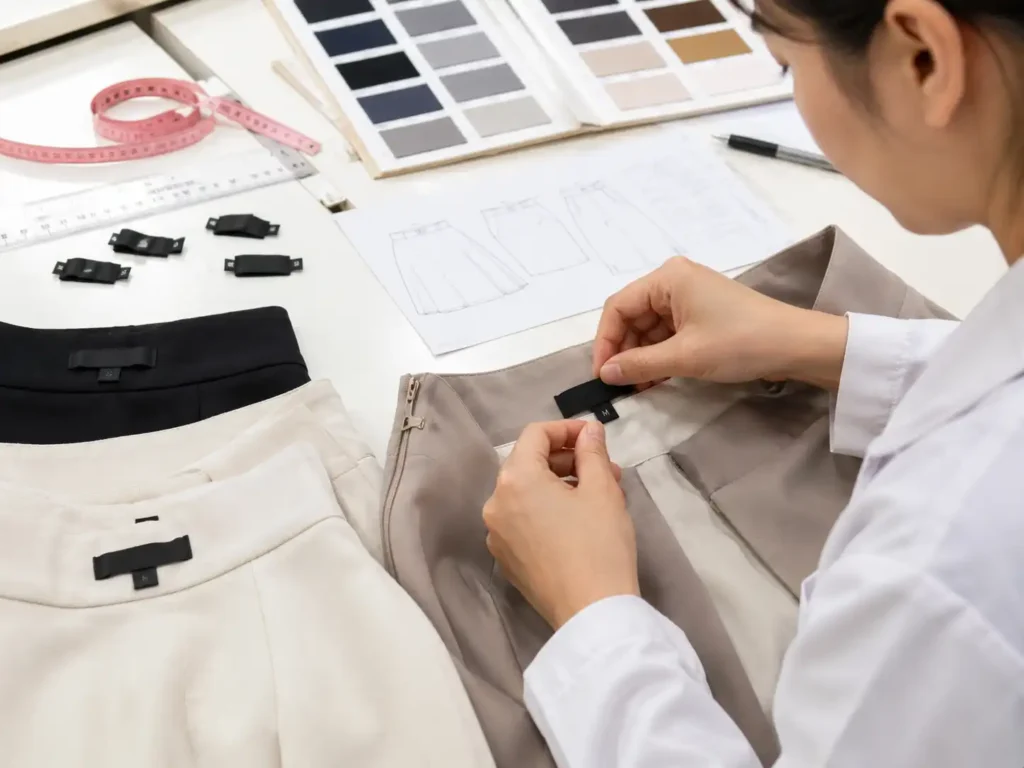
Brand Labels

Hangtags and Barcodes
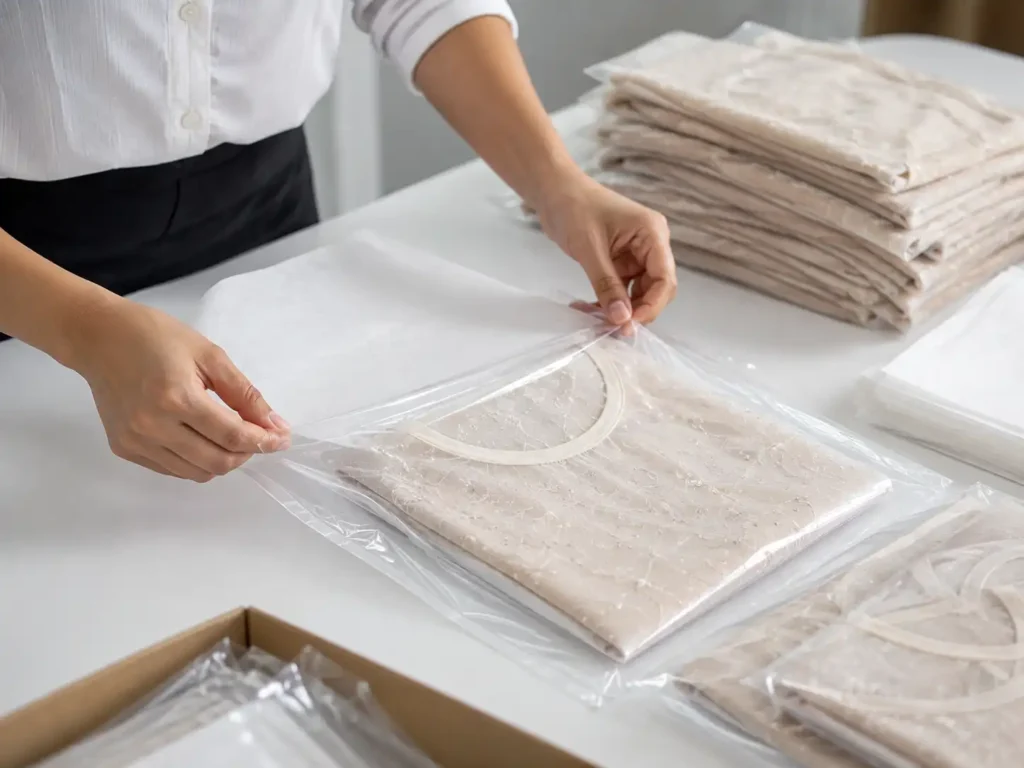
Protective Folding

Carton and Warehouse Marks
Testing, Compliance and Design Confidentiality
Testing Support
Compliance by Project
NDA and File Protection
A Multi-Style Embroidered Occasionwear Production Case
The following representative program uses Jinfeng’s current brand-order structure – typically 10-30 styles and approximately 20,000-80,000 pieces per brand order – to show how an embroidered occasionwear collection can be organized without turning every style into the same production formula.
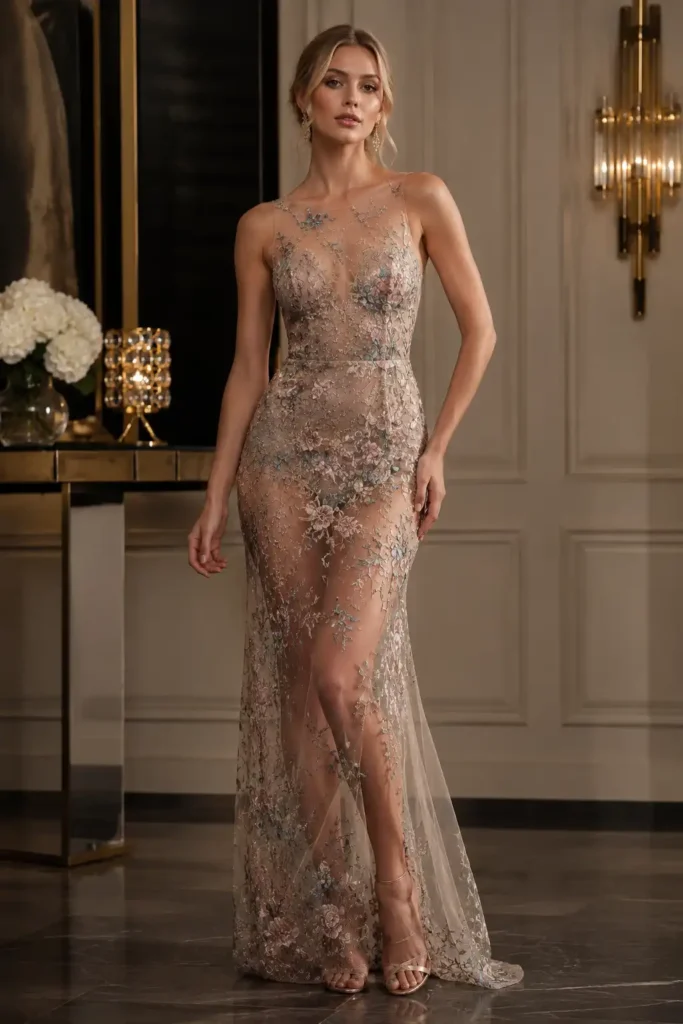
Program Structure: 18 Styles / About 42,000 Pieces
The collection was structured around 18 styles with an aggregate quantity of about 42,000 pieces, distributed across embroidered lace midi dresses, embroidered mesh party styles, satin mini dresses with localized motifs and resort-led dresses using lighter embroidery.
Size planning covered XS-XL with quantity ratios set by style rather than evenly splitting every SKU. The program used a mix of one-color and two-color styles, so fabric and embroidery references were organized by style/color combination before bulk planning.
Development priority was given to photo and launch-critical styles first, while fabric groups with similar behavior were reviewed together.
The quantity level was large enough to require disciplined handover between sample, material, production and packing teams but still varied enough that one construction rule could not be applied across the full collection.

Main Risks: Placement, Puckering and Mixed Fabric Behavior
The most important risk was not embroidery appearance alone. Satin styles needed local motif density controlled to reduce puckering, needle marking and surface distortion.
Mesh styles required transparency and stretch to remain acceptable after localized embroidery and lining. Embroidered lace styles needed motif direction, seam alignment, edge finishing and lining color managed as part of the garment. Resort pieces used lighter motifs so the fabric could retain natural movement.
Placement also had to remain visually balanced from XS through XL. A motif that sat correctly on the smallest sample could not simply be copied at one fixed coordinate for every size. Pattern references, neckline and waist landmarks were used to define placement rules, and sample comments were converted into final pattern, size and production records before PP approval.
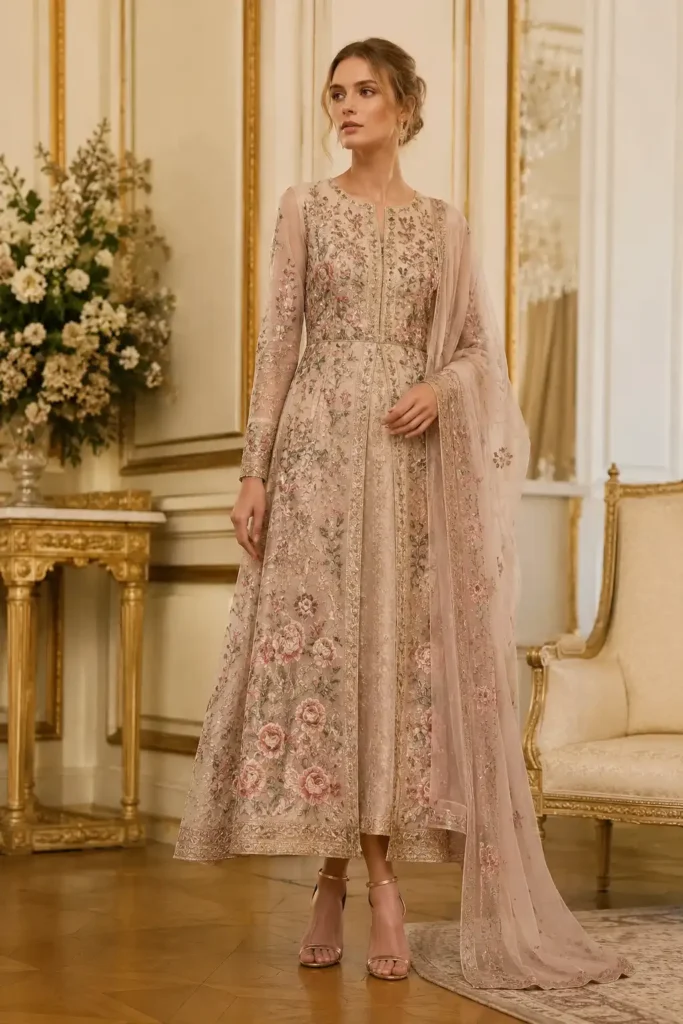
Bulk Control: Locked Standards and Stage Inspection
After approval, the collection moved into grouped production according to fabric, structure and finishing requirements. PP references locked garment measurements, fabric, motif position, lining, zipper, labels and packing. Cutting control focused on panel direction, size bundles and decorated-surface protection. Inline checks concentrated on neckline shape, seam bulk, motif-to-seam alignment, lining exposure, zipper flatness and visible fabric damage. Finished garments were measured and reviewed for surface appearance, hem balance, loose threads, stains and pressing quality before packing. Delicate embroidered areas were considered during folding so raised surfaces were not pressed directly against hard trims. The program structure illustrates how Jinfeng approaches complex womenswear: decoration is managed inside a full garment-development and bulk-control system rather than treated as an isolated subcontracted step.
Send the Right Files for a Faster Review
Style Information
Embroidery Artwork
Fabric Direction
Quantity and Size
Brand and Packing
Launch and Delivery
Frequently Asked Questions About Embroidered Dress Production
Yes. Jinfeng supports custom womenswear development where embroidery is integrated with fabric selection, pattern, fit, lining, garment construction, sampling, bulk production and QC. Suitable approaches include localized embroidery, embroidered lace, embroidered mesh and other project-specific treatments that can be validated through sampling. Final feasibility depends on the base fabric, motif density, placement, structure and quantity.
Suitability depends on motif weight and garment construction. Denim and structured woven fabrics generally tolerate embroidery more easily. Linen can support localized embroidery. Satin, chiffon, mesh, jersey and other soft or stretch materials require more careful density, backing and placement control. Heavy embroidery is not recommended automatically on lightweight or highly elastic fabrics; sample testing is used to confirm the result.
Yes. Development can begin from a tech pack, sketch, reference image, original sample or line sheet. More complete information improves the accuracy of pattern, material and cost evaluation. For embroidered styles, artwork, motif size, intended placement, fabric preference, color plan, quantity and size range are particularly useful.
Puckering is managed by reviewing base fabric stability, motif density, backing, thread behavior, placement and garment construction together. Lightweight satin, chiffon and mesh need particular care. The sample is checked for drag lines, local stiffness, surface distortion and drape before PP approval. A motif may be reduced, repositioned or supported differently when the original approach creates unacceptable tension.
It can. A fixed coordinate copied from one sample size may look wrong after grading. Placement should remain visually balanced against garment landmarks such as center front, neckline, waist seam, side seam or hem. Jinfeng connects placement references with final graded patterns so XS-XL production can follow consistent visual rules rather than one unadjusted sample measurement.
A standard dress first sample is commonly around 10-15 days. Complex corset, lace, mesh, sequin or similarly demanding styles are commonly around 15-25 days, subject to actual structure, fabric, embroidery development, trims and material availability. Revised samples and PP samples are commonly around 7-15 days, with final timing confirmed for each project.
MOQ starts from 200 pcs per style/color. A total quantity split across several colors does not automatically satisfy the minimum for each color. Embroidered lace, custom-dyed fabric, custom thread colors, special trims or branded packaging can also carry supplier minimums. Final MOQ is confirmed after reviewing the complete material and production plan.
Yes. Jinfeng’s fabric system includes embroidered lace and embroidered mesh directions. Lace projects focus on motif direction, seam alignment, edge finishing, holes, fraying and lining color. Mesh projects focus on transparency, stretch, holes, neckline stability, edge behavior and lining coverage. Heavy additional embroidery still requires testing because the base fabric already has its own structure.
PP approval is converted into final pattern, size chart, fabric reference, embroidery specification, placement rules, sewing instructions, QC checkpoints and packing requirements. Cutting, sewing and finished-garment inspections then reference the same standards. Inline correction is used to stop repeated errors before they spread across the order.
Yes, by project. Private-label support can include woven labels, size labels, care labels, hangtags, barcode stickers, polybags, carton marks and warehouse labels. Testing and audit documentation can be coordinated according to the project. Certified fabric claims are confirmed by supplier, batch, color, MOQ and certificate scope. NDA-based cooperation is available for unpublished designs and project files.

Start Your Embroidered Dress Production Review
Send the product information already available to your development or sourcing team. Jinfeng Apparel can review the dress structure, base fabric, embroidery direction, placement, fit-sensitive areas, sample path, MOQ fit and bulk-production risks before a formal order is planned.
Clear project files help separate visual ideas that are ready for sampling from details that still need engineering. For multi-style collections, a line sheet also helps group fabrics, colors, priorities and launch timing so sample and production planning starts in the right sequence.
After the review, the next step can be fabric confirmation, embroidery sample evaluation, garment sampling or a structured bulk quotation depending on project maturity.
- Tech pack, reference image, sketch or original sample photos
- Embroidery artwork, motif size, thread color and preferred placement
- Fabric preference, swatch or hand-feel target
- Quantity by style/color, size range and size ratio
- Private label, packaging, testing and warehouse requirements
- Target launch window, destination and delivery priorities