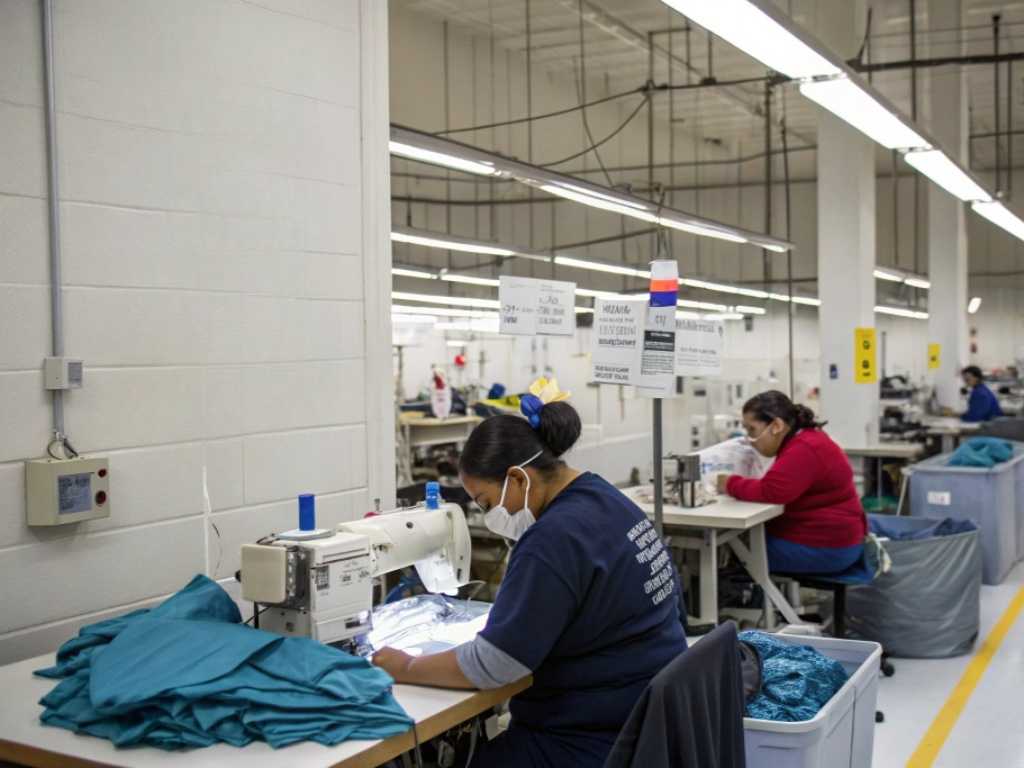
Embellished Dress Manufacturer
Custom sequin, beaded, rhinestone, crystal, pearl, embroidered and applique dresses developed for global fashion programs.
Jinfeng Apparel develops embellished dresses from reference images, original samples, sketches, line sheets or technical packs. Pattern, fit, base fabric, decorative components, placement artwork, internal support and packing protection are reviewed before bulk production. Programs are managed for partywear, occasionwear, eveningwear, prom, graduation, birthday, wedding guest and premium ecommerce collections.
- Complex embellished first samples: commonly 15-25 days after fabric, trim and development requirements are confirmed.
- MOQ starts from 200 pieces per style and color; special embroidery, custom-dyed materials and exclusive components may carry separate supplier minimums.
- Development resources: 2 sample rooms, 7+ senior pattern makers and 20+ sample machinists.
- Production control: 6 owned women’s fashion factories, 10+ long-term production partners, 12+ merchandisers and 15+ QC inspectors.
- Collection programs commonly contain 10-30 styles with multi-color, multi-size and multi-batch delivery planning.
Manufacturing Scale for Complex Embellished Programs
Since 2008
6 Owned Factories
10+ Long-Term Partners
2 Sample Rooms
7+ Pattern Makers
15+ QC Inspectors
Built for Fashion Teams Managing Visual Impact
Occasionwear Brands
Partywear Labels
Premium Ecommerce
Product Development Teams
Sourcing Teams
Private Label Programs
A Clear Fit for Planned Bulk Production
Best Fit
- Reference images, sketches, original samples, line sheets or technical packs are available for review.
- A quantity plan can be provided by style, color and size.
- The collection has a clear launch window, selling season or retail delivery requirement.
- Material quality, decorative effect, fit and bulk consistency are evaluated together with cost.
- Private-label, barcode, SKU, packing or warehouse requirements are defined before production.
Production Boundary
- The manufacturing model is built around sampling, PP approval and bulk production rather than ready-stock sourcing.
- Single-item fulfillment and unplanned micro quantities are outside the core production structure.
- Final quotations require fabric, decoration, construction, quantity, size and packing confirmation.
- Complex styles cannot enter bulk production before the PP standard is locked.
- Material certificates and factory audit records are confirmed according to the actual material, supplier, factory and order scope.

Why Embellished Dresses Fail After Sample Approval
A beautiful first sample can still become an unstable bulk order. Most failures appear where decoration, fabric, pattern, grading and production sequence meet.
- Placement Drift: Motifs may move away from the center front, bust point, waistline or neckline when bulk markers are built without fixed reference points. Symmetrical artwork can become visually uneven even when garment measurements remain within tolerance.
- Decoration Loss: Loose beads, missing sequins, lifted applique edges and detached stones usually come from unsuitable attachment methods, incorrect heat conditions, weak backing, poor seam handling or insufficient inspection after sewing and pressing.
- Size Grading Errors: One decoration map cannot simply be scaled across every size. A motif placed correctly on the base size may enter the armhole, side seam, zipper, cup edge or slit after grading. Each critical size requires placement review.
- Weight Distortion: Heavy beadwork or crystal chains can pull straps, lower necklines, stretch mesh and distort hems. Support, reinforcement and weight distribution must be decided during sample development rather than corrected after production.
- Skin Irritation: Sequin edges, bead knots, crystal settings and dense seam allowances can scratch the neckline, underarm, waist or thigh. Lining coverage, binding, seam clearance and component orientation affect wearability.
- Packing Damage: Stones can scratch adjacent panels, fringe can tangle, structured cups can crush and sequin surfaces can crease under carton pressure. Packing method must follow the decoration type and garment structure.
One Manufacturing Chain from Artwork to Delivery
OEM and ODM
Fabric and Trims
Pattern and Sampling
Bulk Production
Quality Control
Private Label Delivery

What Embellished Dress Manufacturing Actually Includes
An embellished dress is not defined only by sparkle. Surface decoration may be built into the fabric, applied to individual cut panels, positioned after assembly or combined with internal structure. Manufacturing decisions change according to placement freedom, weight, stretch, wash method, volume and target price.
- Pre-Embellished Fabric: Sequins, beads or embroidery are already applied across the base fabric before garment cutting. The method supports repeated surface effects and efficient bulk sewing, but motif direction, usable width, cutting loss and seam placement must be planned carefully.
- Placement Embellishment: Decoration is located on defined areas such as the neckline, bust, waist, hip, slit, shoulder or hem. Placement can strengthen a signature design, yet requires accurate artwork dimensions, alignment points and grading rules.
- Panel-Level Decoration: Cut panels may be embroidered, beaded or stone-set before garment assembly. The process allows better access and flatter handling, but later sewing must protect decorated surfaces and avoid damaging the component line.
- Garment-Level Application: Selected components such as fringe, tassels, chains, bows or three-dimensional applique may be attached after core assembly. Attachment strength, movement, symmetry and repair access become major controls.
- Mixed Embellishment: Sequins, crystals, embroidery, fringe and fabric manipulation may appear in one style. A mixed design needs a sequence plan so pressing, sewing and later decoration do not damage earlier work.
Custom Embellished Dress Collections for Multiple Markets
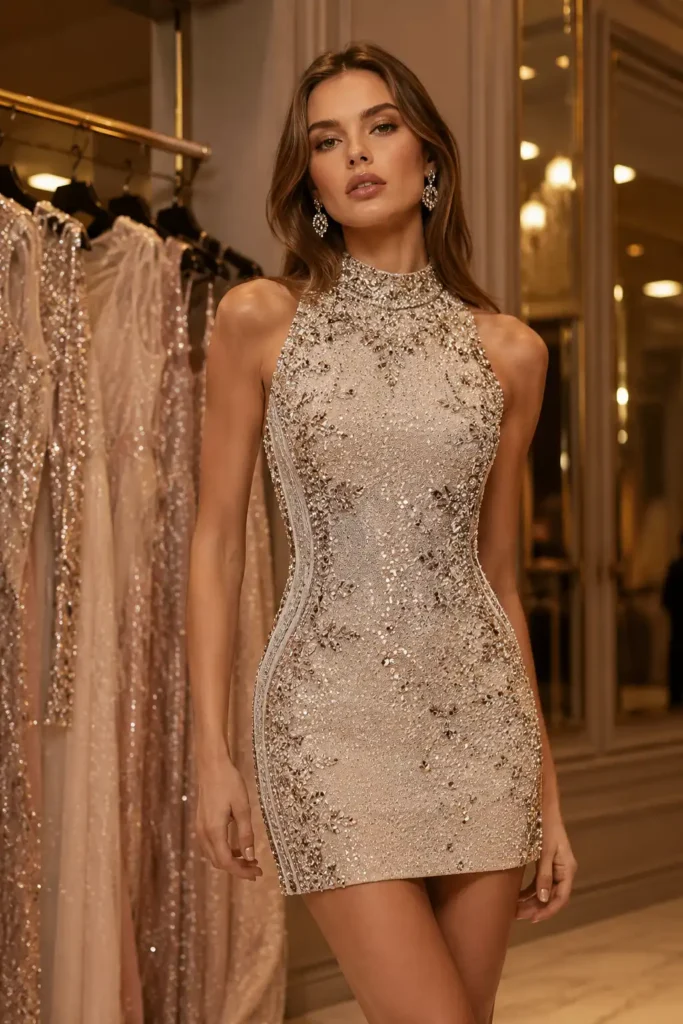
Embellished Mini Dresses
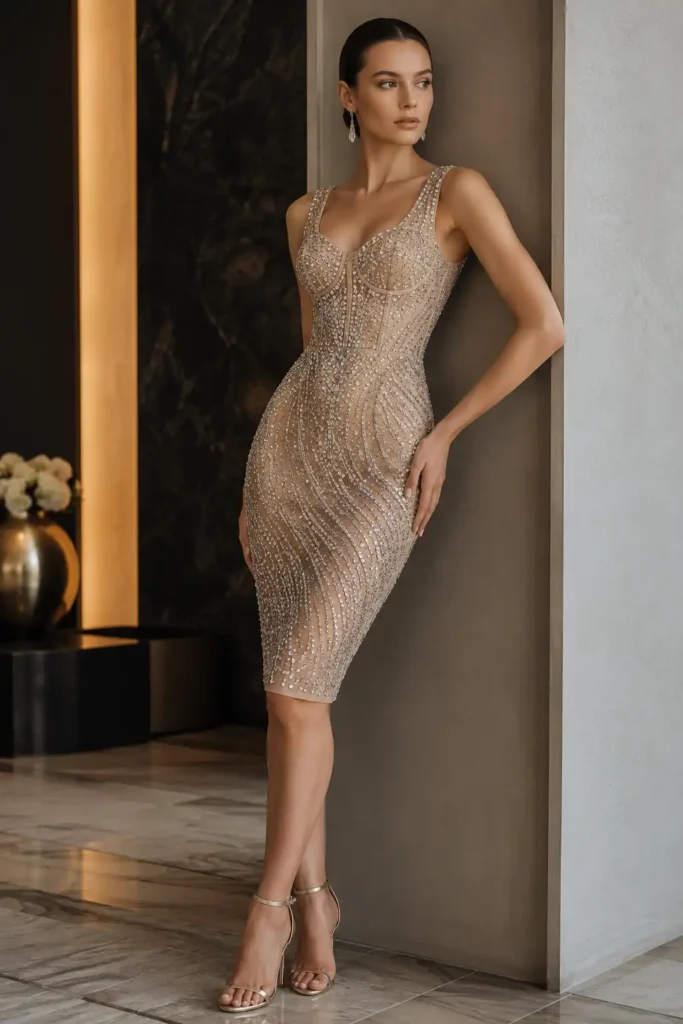
Embellished Bodycon Dresses
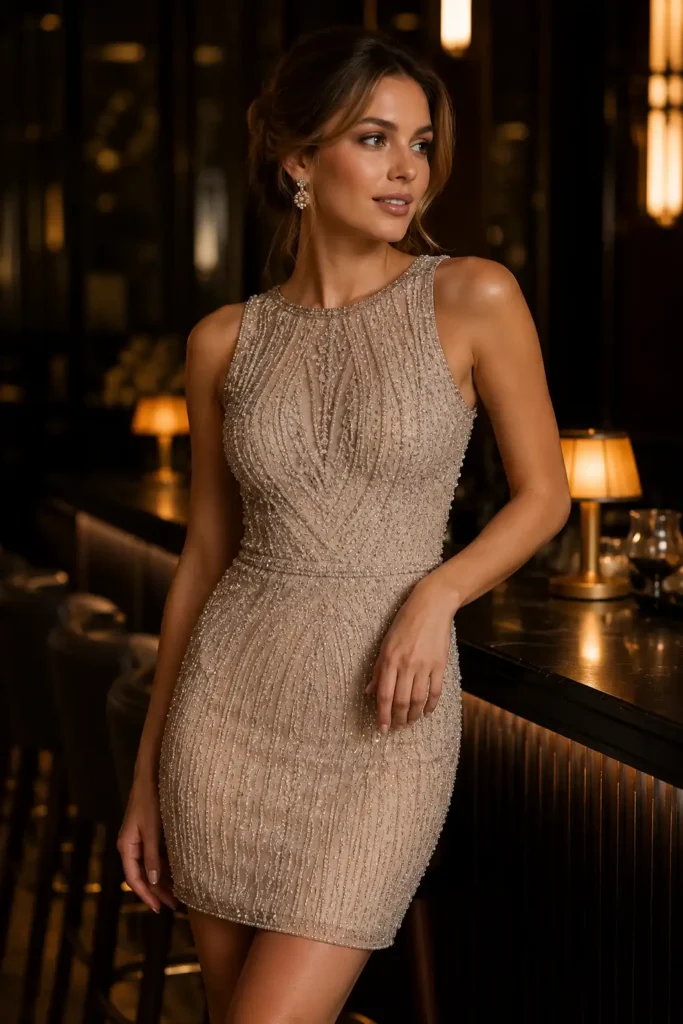
Beaded Cocktail Dresses
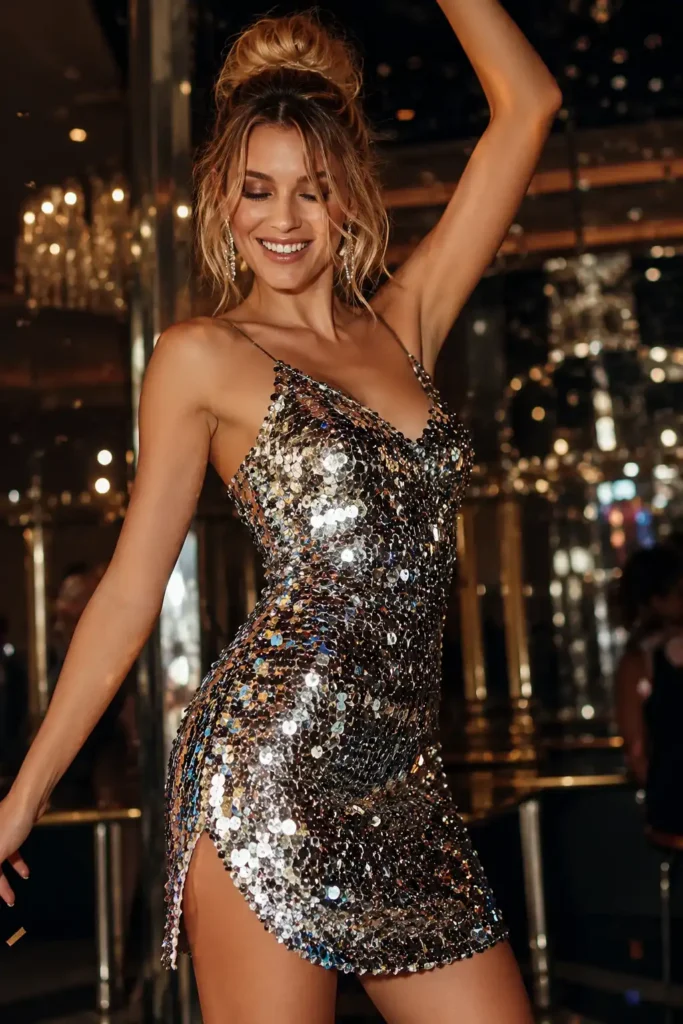
Sequin Party Dresses
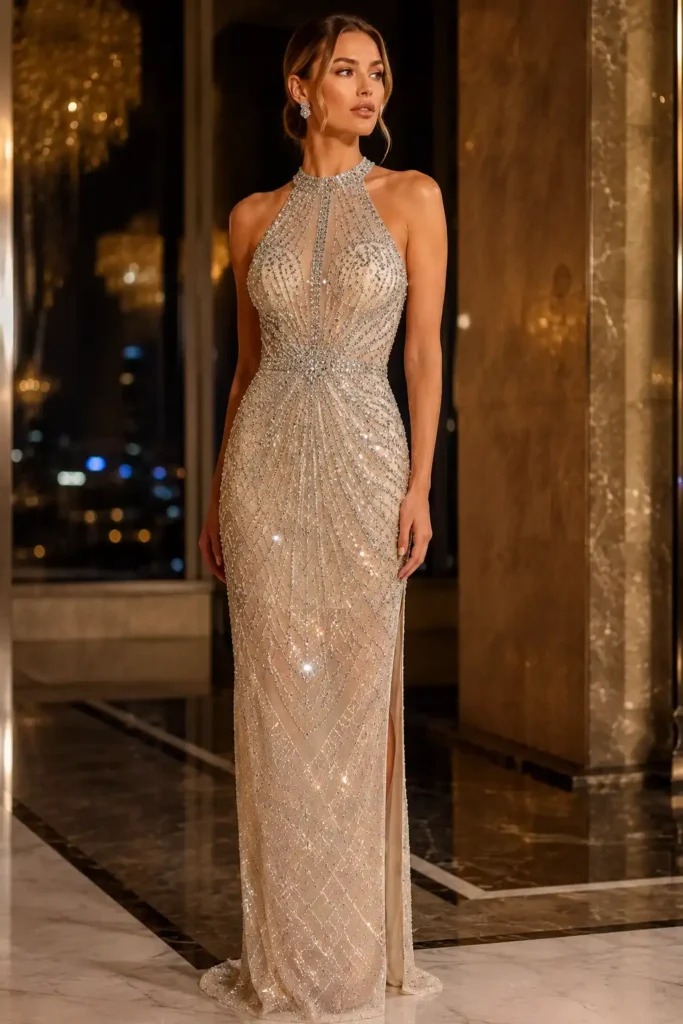
Rhinestone Dresses
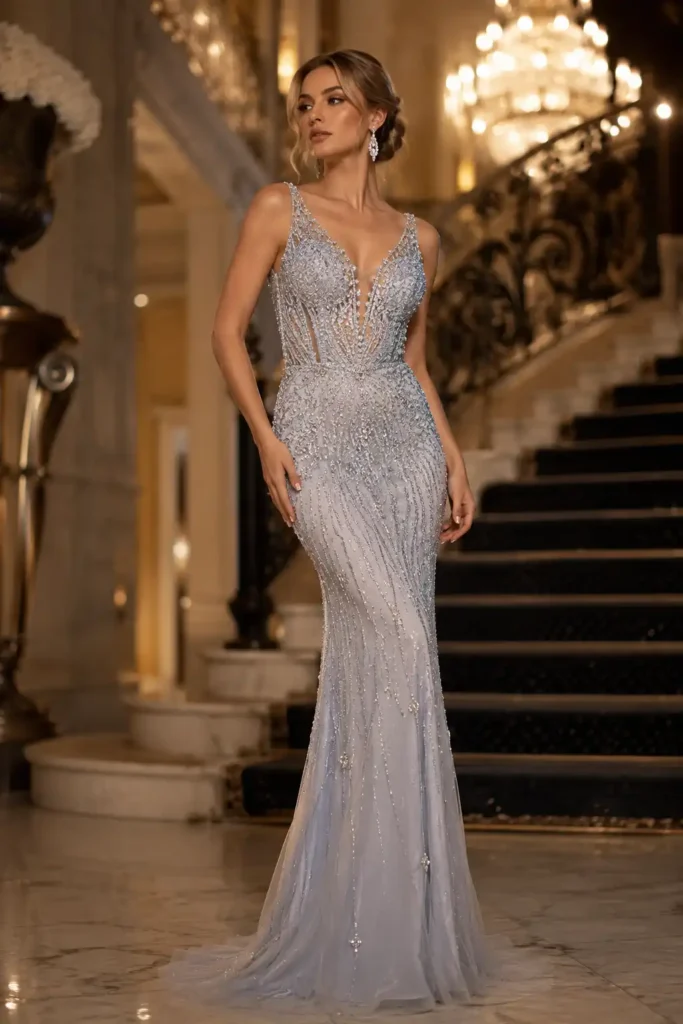
Crystal Evening Dresses
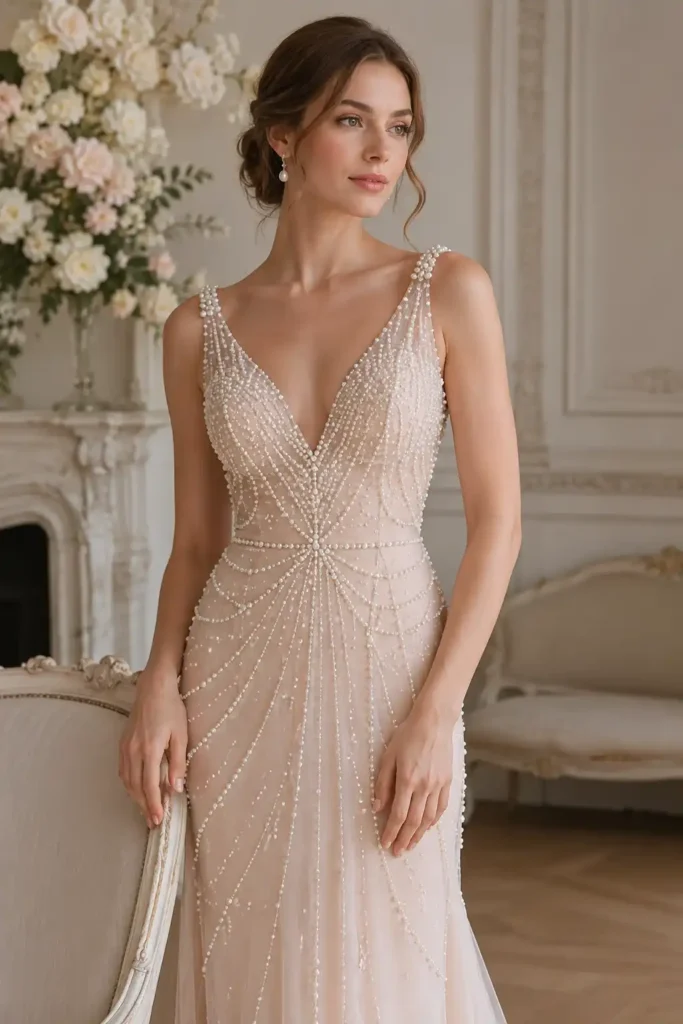
Pearl Detail Dresses
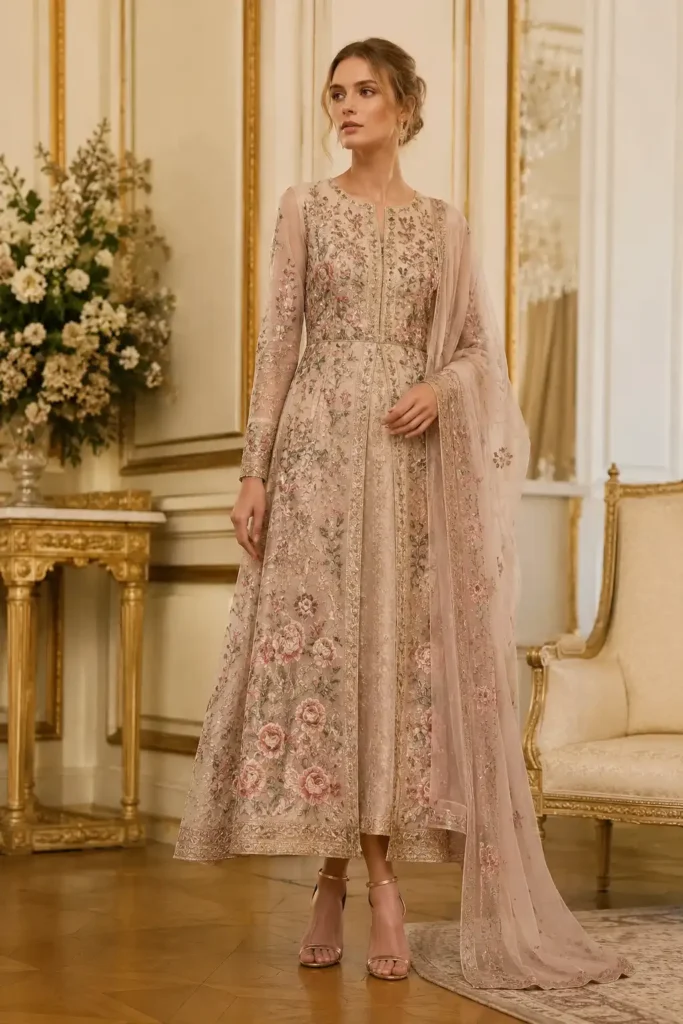
Embroidered Dresses
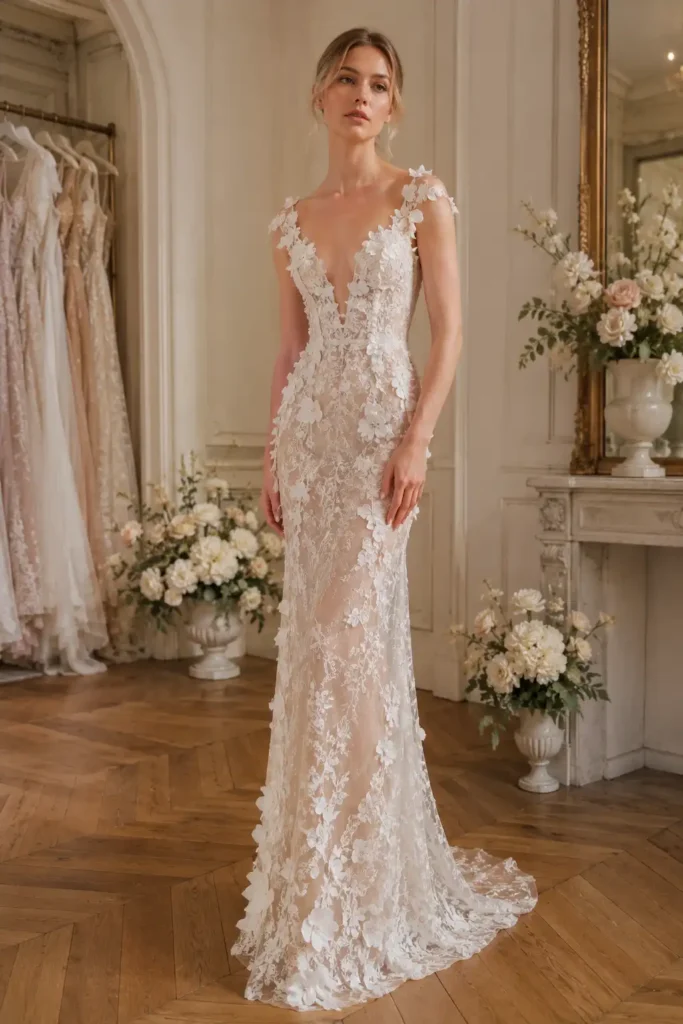
Applique Dresses
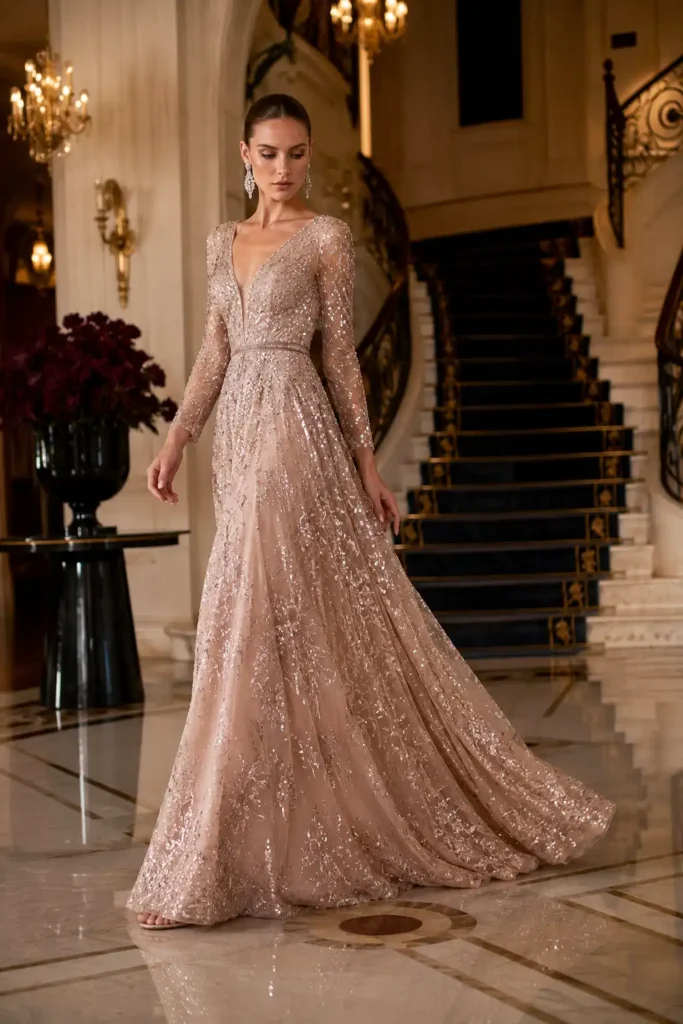
Embellished Maxi Dresses

Corset Embellished Dresses
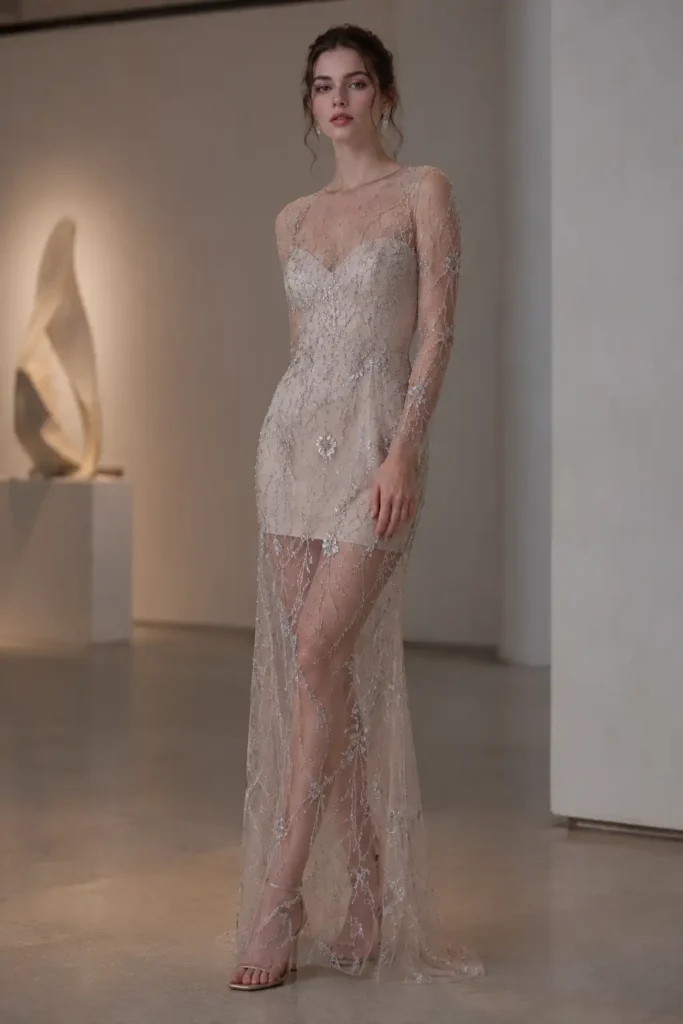
Mesh Embellished Dresses
Embellishment Techniques Selected by Design and Volume
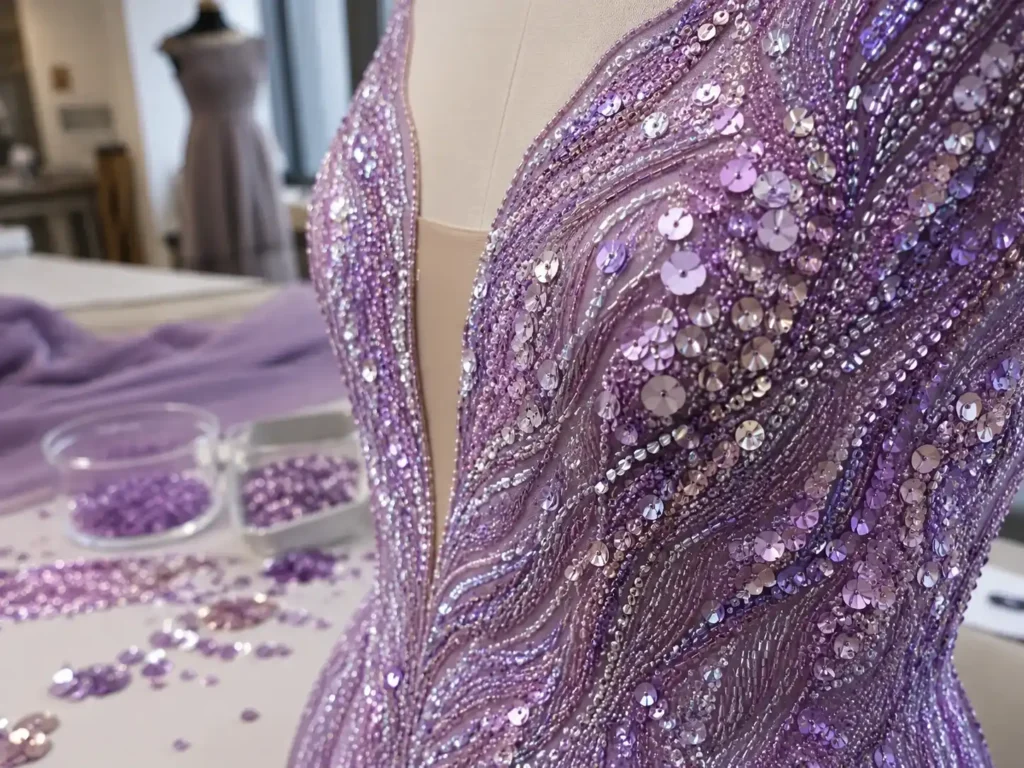
Sequins
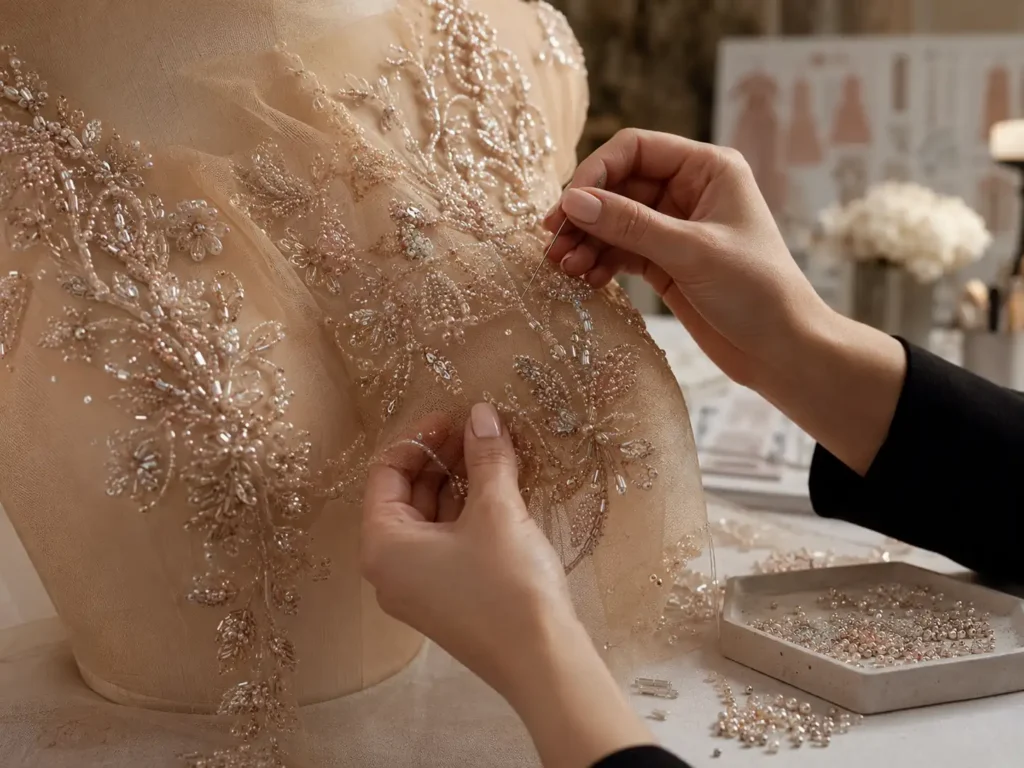
Hand Beading
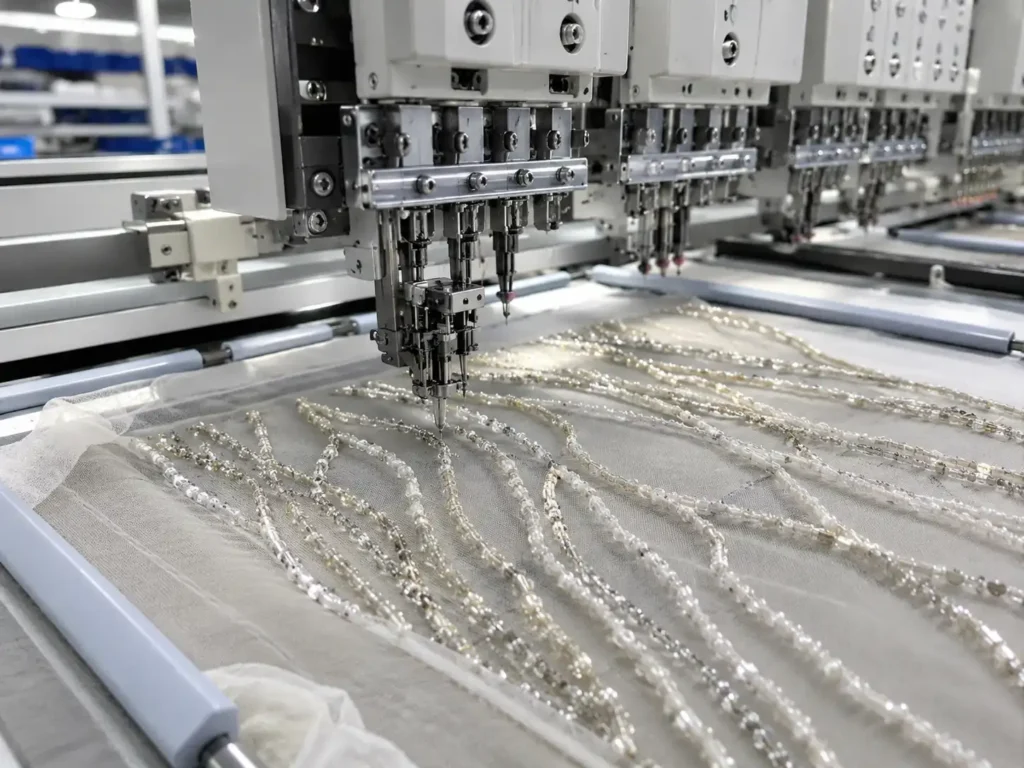
Machine Beading
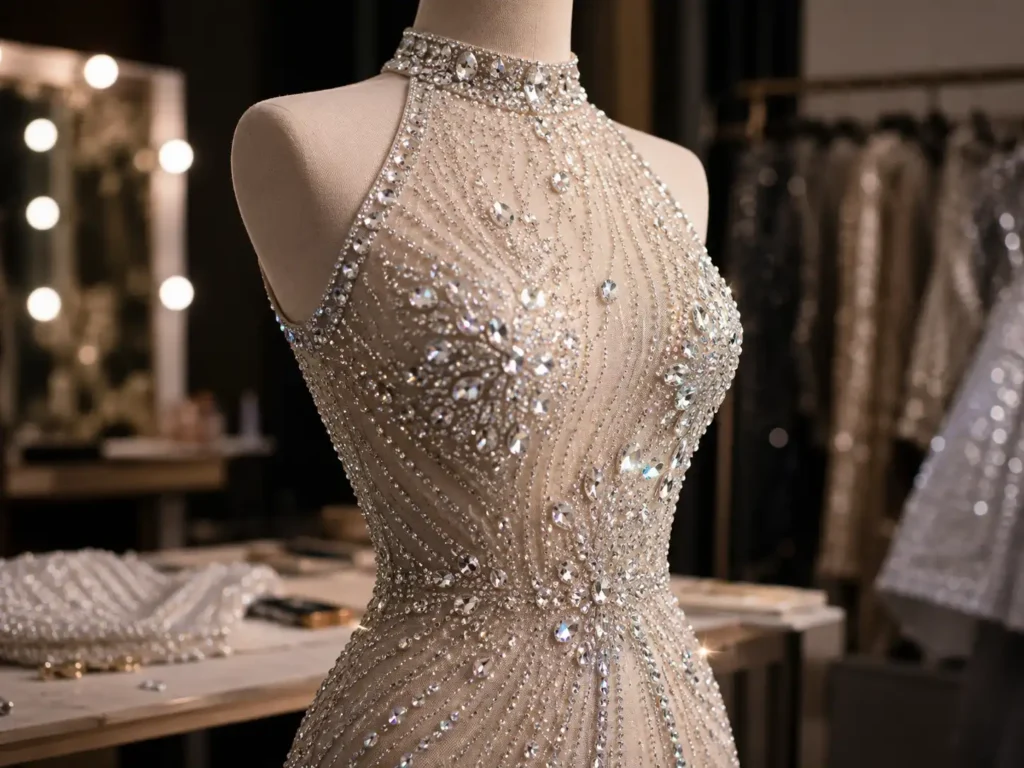
Rhinestones
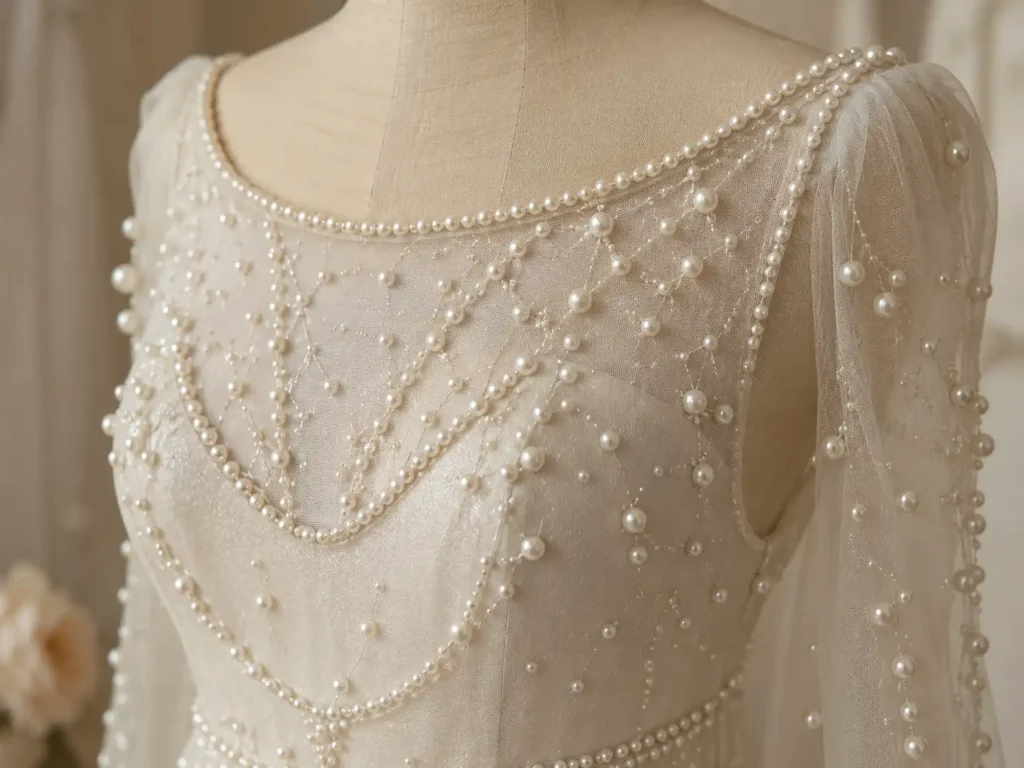
Pearls
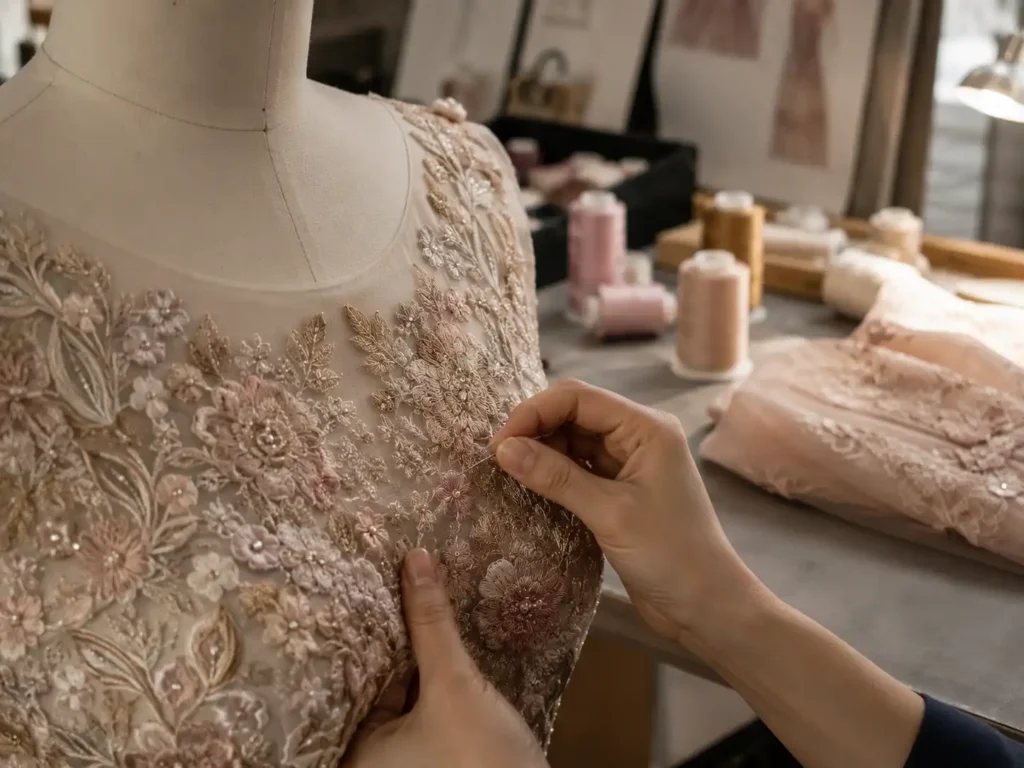
Embroidery
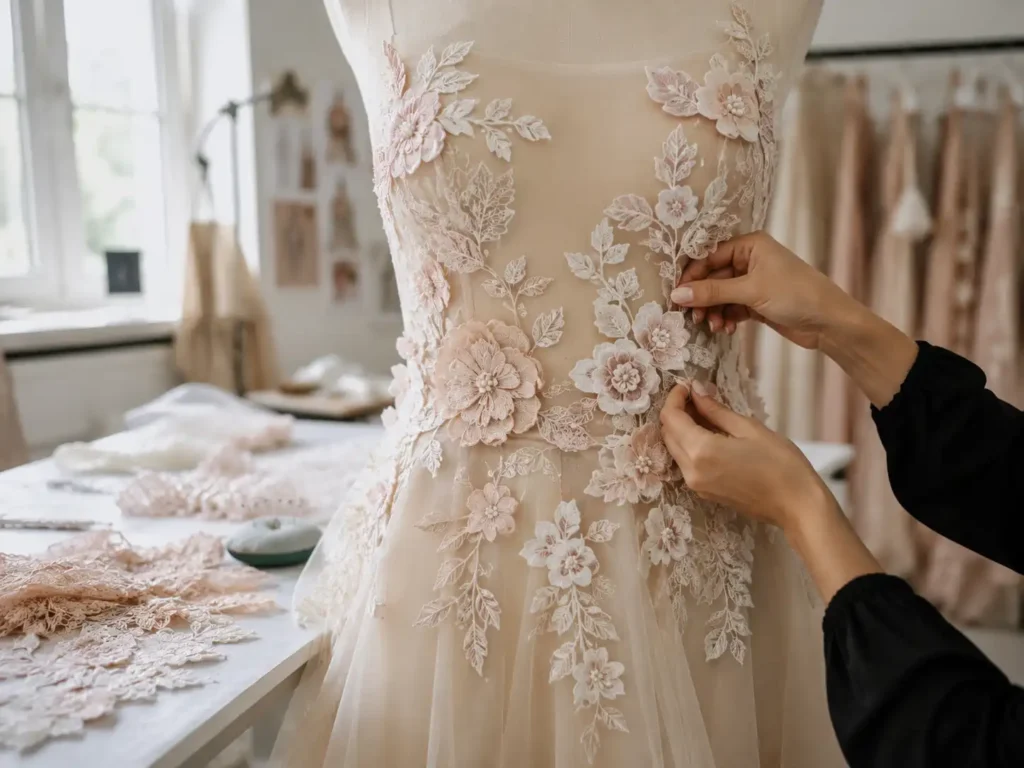
Applique
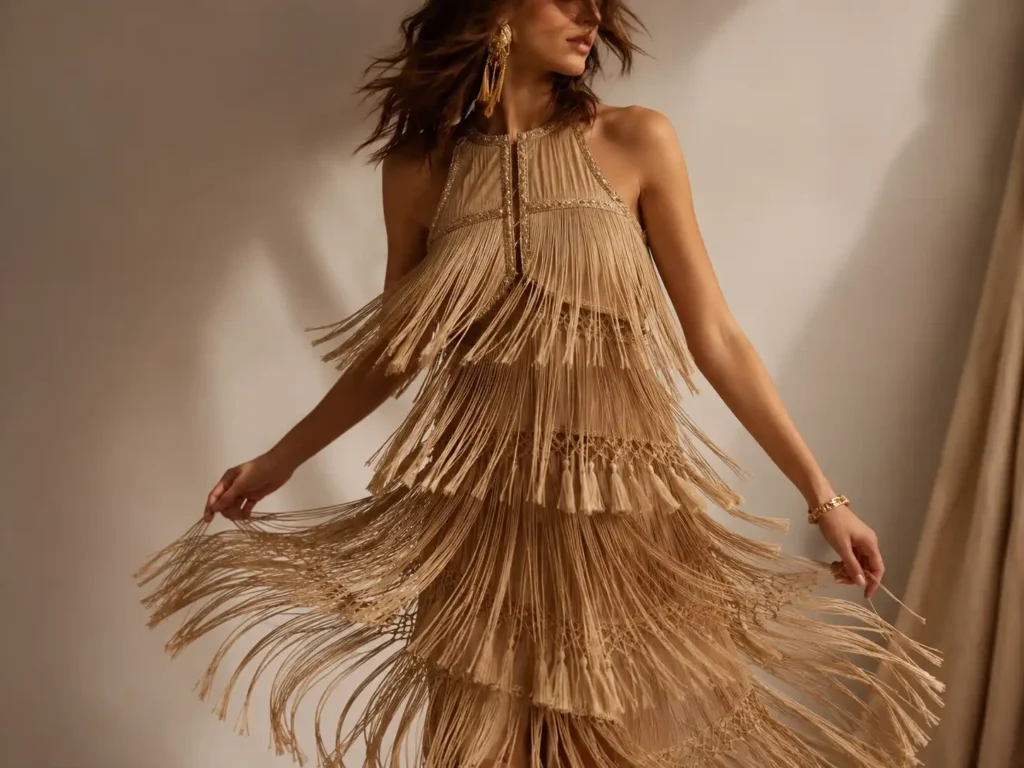
Fringe and Tassels
Embellished Dresses Developed Around Selling Occasions
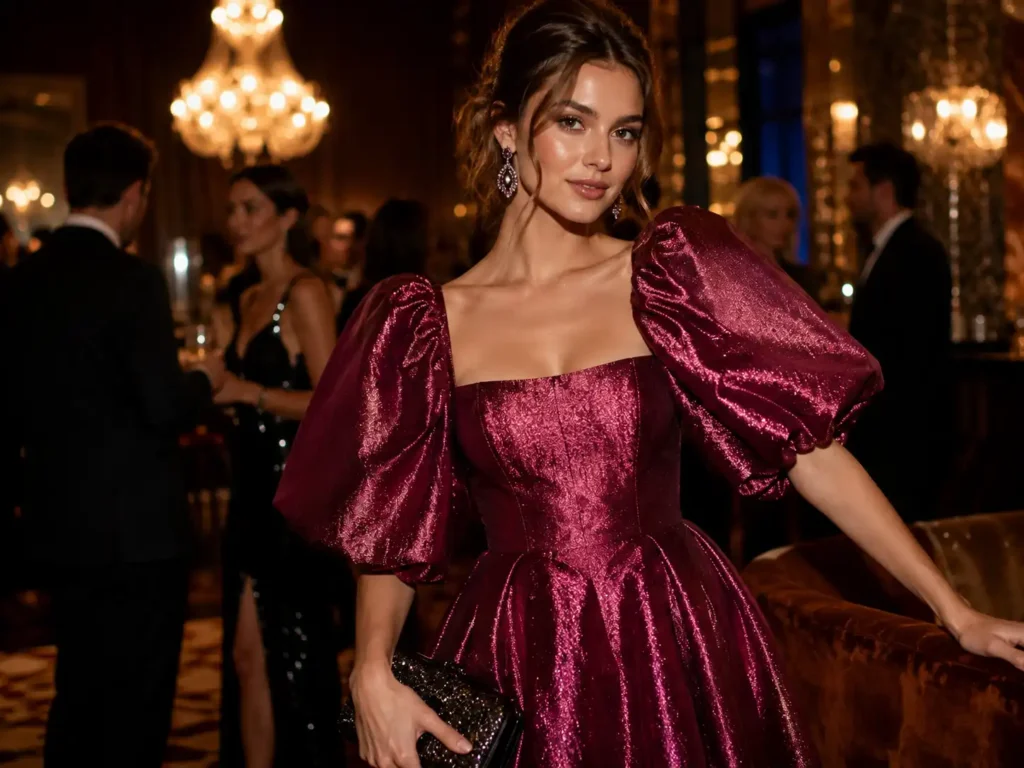
Party and Club

Birthday Collections

Holiday and New Year
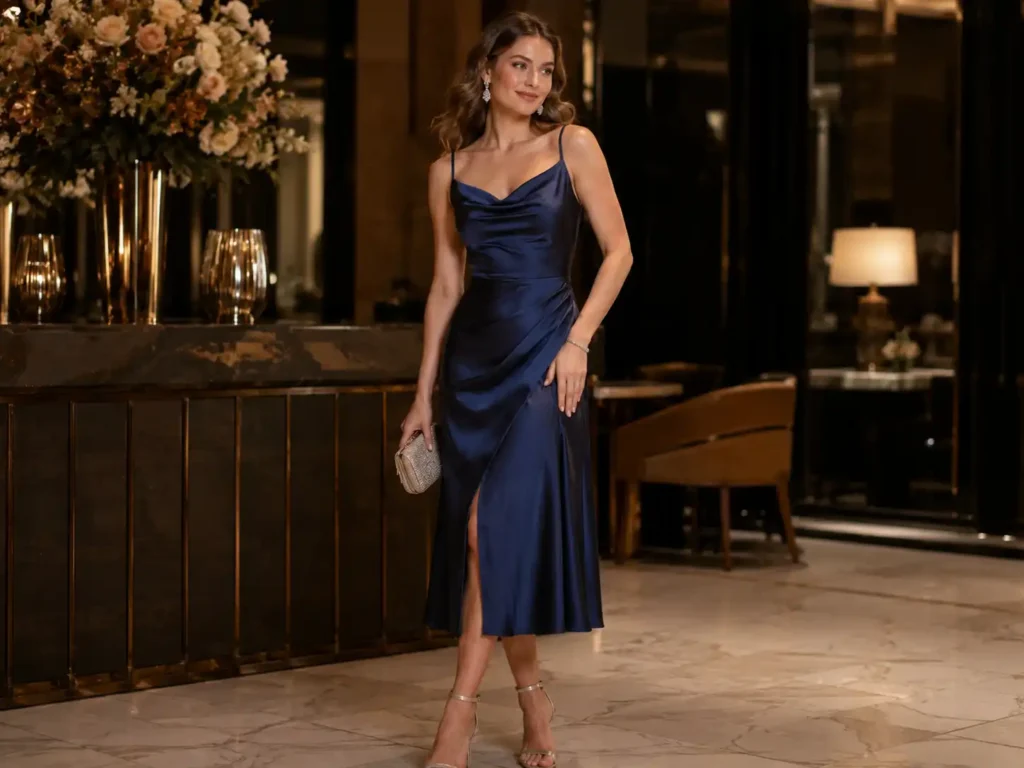
Cocktail and Evening

Prom and Graduation
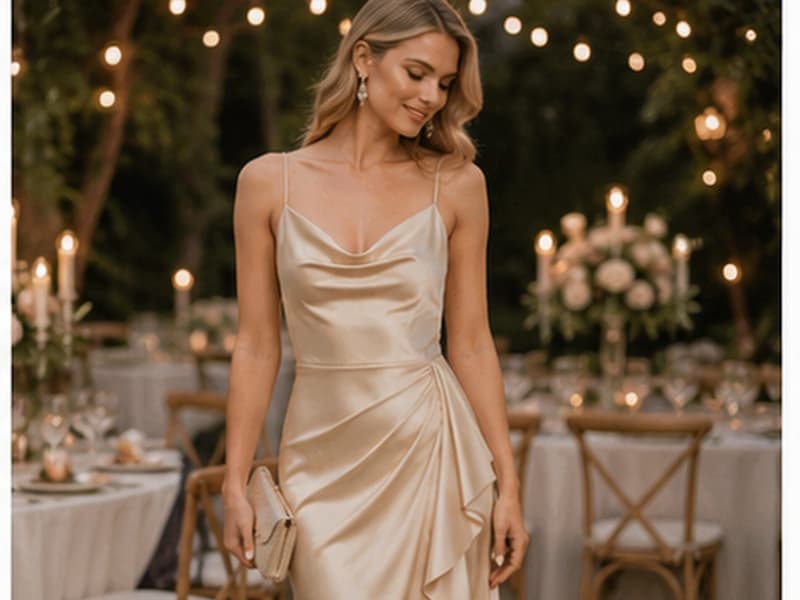
Wedding Guest and Eventwear
Match Base Fabrics with the Right Embellishment
Base fabric controls support, stretch, drape, transparency, cutting stability and decoration security. A strong visual concept can fail when the substrate cannot carry the selected component or process.
| Base Fabric | Suitable Direction | Main Risk | Control Focus |
|---|---|---|---|
| Mesh / Power Mesh | Beads, stones, embroidery, applique | Holes, stretching, transparency | Reinforcement, stretch direction, lining coverage |
| Satin / Stretch Satin | Crystals, pearls, applique, local embroidery | Snags, shine marks, seam impressions | Surface protection, press control, backing |
| Sequin Fabric | Full-surface party and evening styles | Missing pieces, sharp edges, bulky seams | Cutting direction, seam clearing, repair |
| Tulle / Organza | Applique, pearls, beads, embroidery | Tearing, layer shift, uneven volume | Layer control, stabilizer, edge handling |
| Velvet | Crystals, embroidery, applique | Pile marks, shading, pressure damage | Nap direction, low-pressure handling, packing |
| Jersey / Ponte | Hotfix stones, sequins, local motifs | Reduced stretch, distortion, recovery loss | Stretch testing, placement limits, support |
| Lace | Beads, sequins, pearls, floral applique | Motif mismatch, holes, visible backing | Motif placement, symmetry, lining choice |
| Crepe / Woven | Embroidery, fringe, stones, applique | Puckering, seam drag, local weight | Stabilizer, balanced density, seam support |
Decorative Components Specified Before Bulk Booking
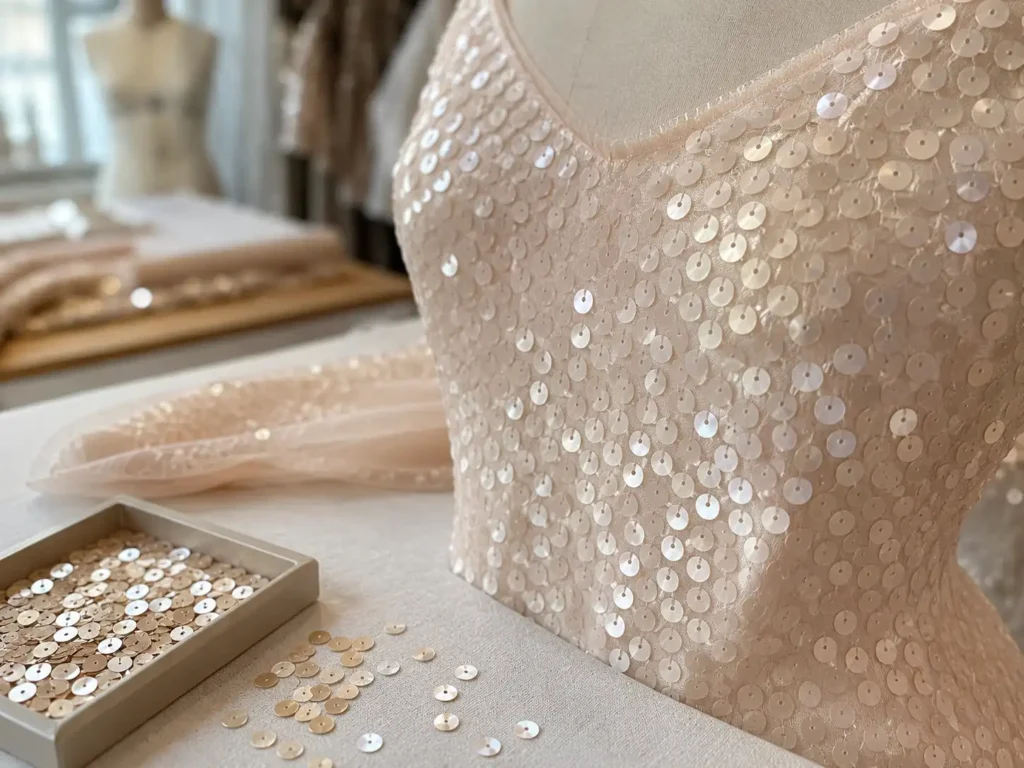
Flat Sequins
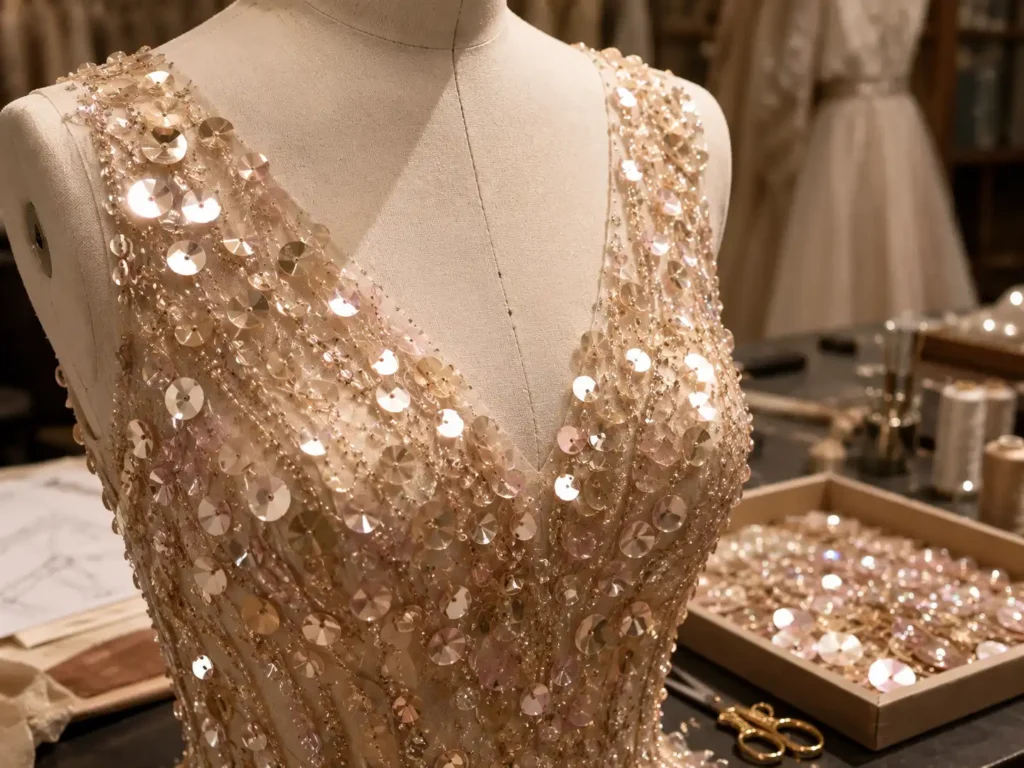
Cup Sequins
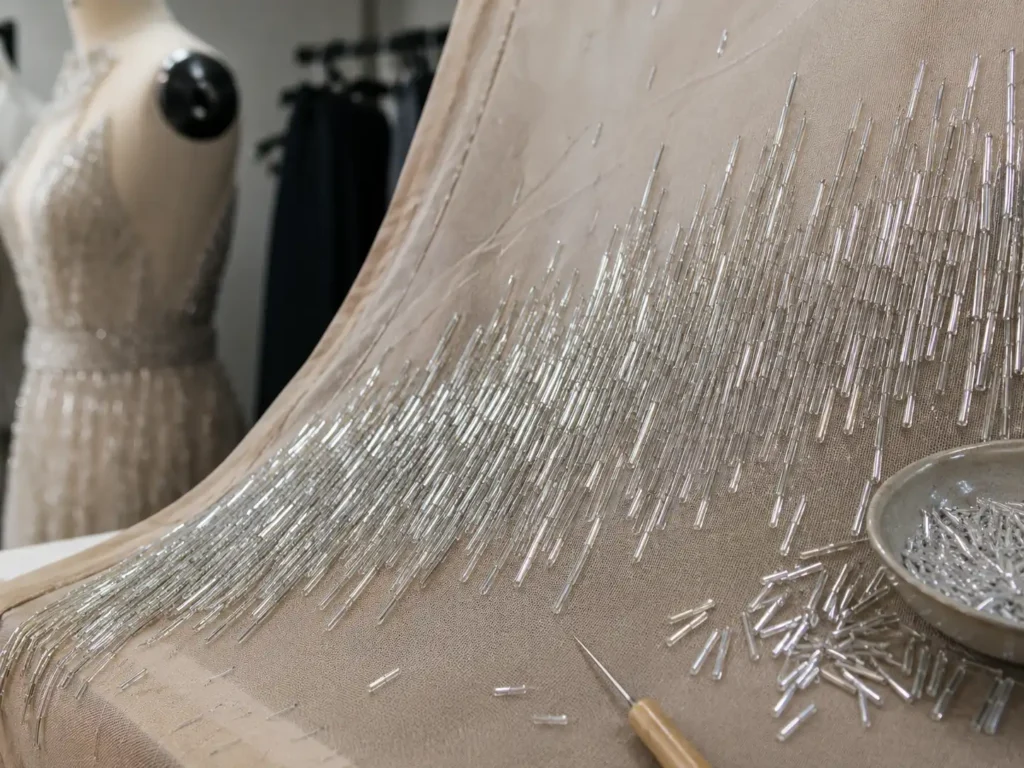
Bugle Beads
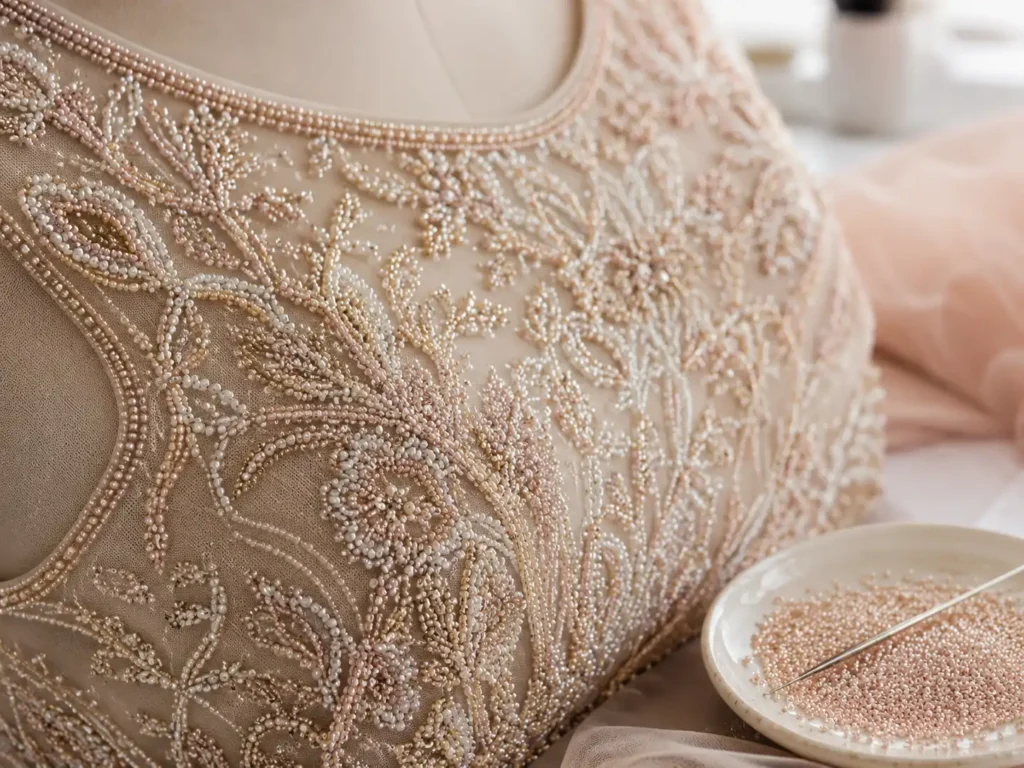
Seed Beads
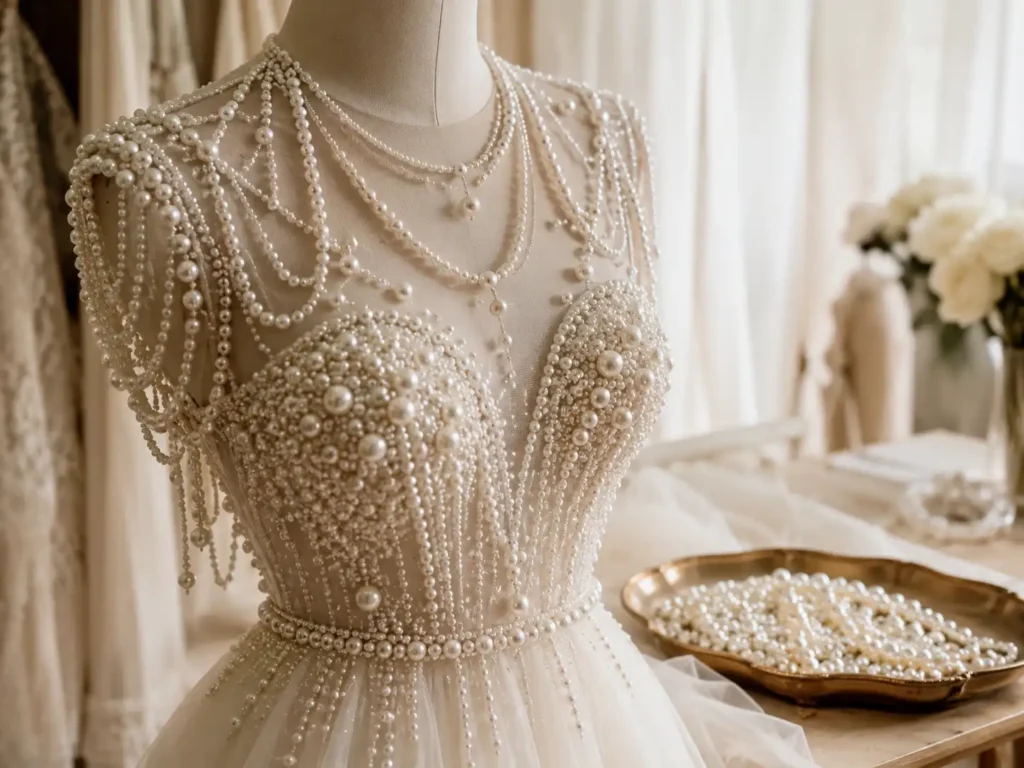
Pearls
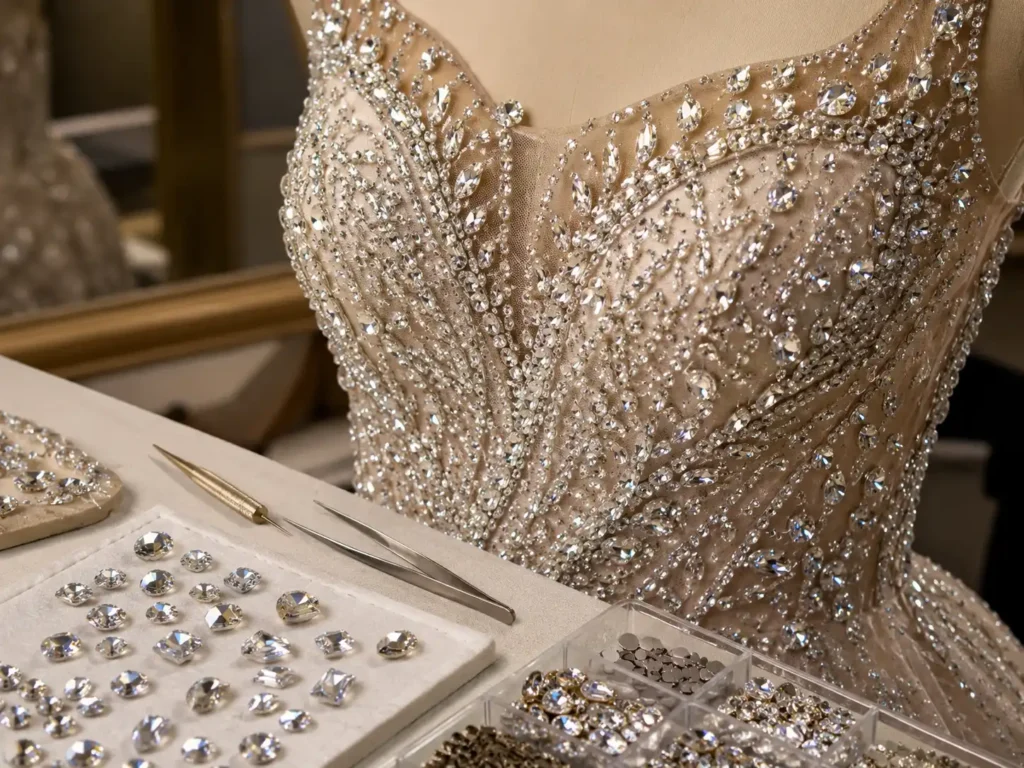
Rhinestones
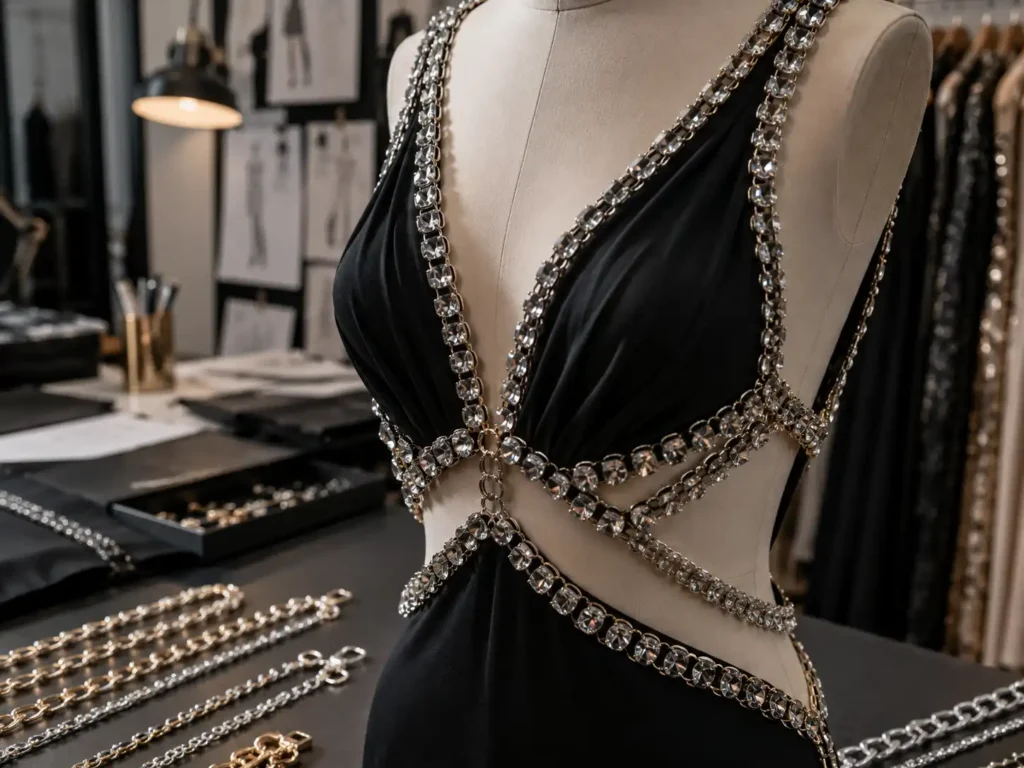
Crystal Chains
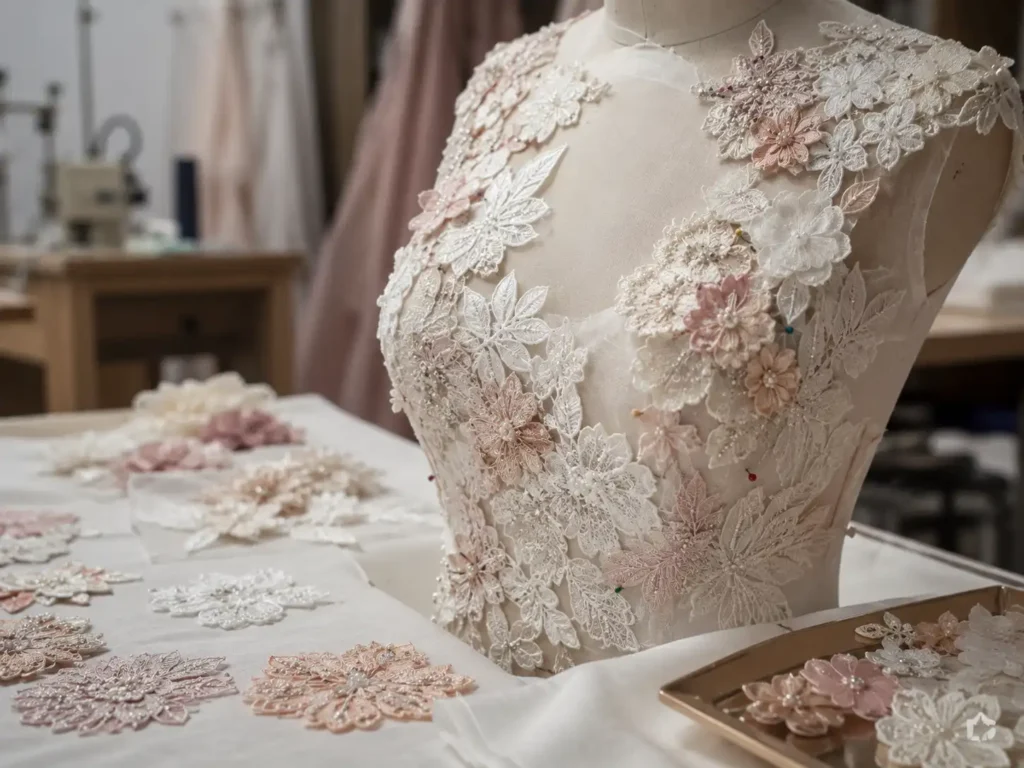
Decorative Applique
Lace, floral, metallic, sequin and three-dimensional pieces require placement templates, secure edges and balanced layering.

Turn Embellishment Artwork into Production Instructions
Decoration artwork becomes useful only after scale, placement, symmetry, stitch method and grading rules are defined. A production-ready map connects the visual concept with the pattern and garment measurements.
- 1. Establish Garment Reference Points
Center front, center back, bust point, waistline, neckline, armhole, side seam, zipper, slit and hem are marked as fixed references. Motif positions are measured from stable pattern points rather than estimated from a photo. - 2. Confirm Artwork Scale
Motif width, height, spacing and border distance are confirmed on the base size. Large motifs may require balance checks on narrow panels, cups, curved seams and asymmetrical designs. - 3. Protect Sewing Zones
Decoration near seam allowances, darts, zippers, boning channels and fold lines is removed, reduced or repositioned. Clear zones help sewing, pressing and repair while reducing bulky or sharp contact areas. - 4. Build Size-Grading Rules
Critical motifs are not enlarged blindly. A neckline border may extend in length while keeping the same width; a bust motif may shift with the bust point; a waist motif may change spacing rather than component size. - 5. Create a Placement Sample
For complex designs, a partial panel or complete placement sample verifies material, spacing, attachment, color and weight before the full garment sample is completed. - 6. Lock the Approved Map
The approved sample, artwork dimensions, pattern version, component list, placement notes and inspection points become part of the PP and Golden sample records. Later changes require a documented review of cost and timing.
Internal Construction Supports Weight, Shape and Comfort

Lining Coverage
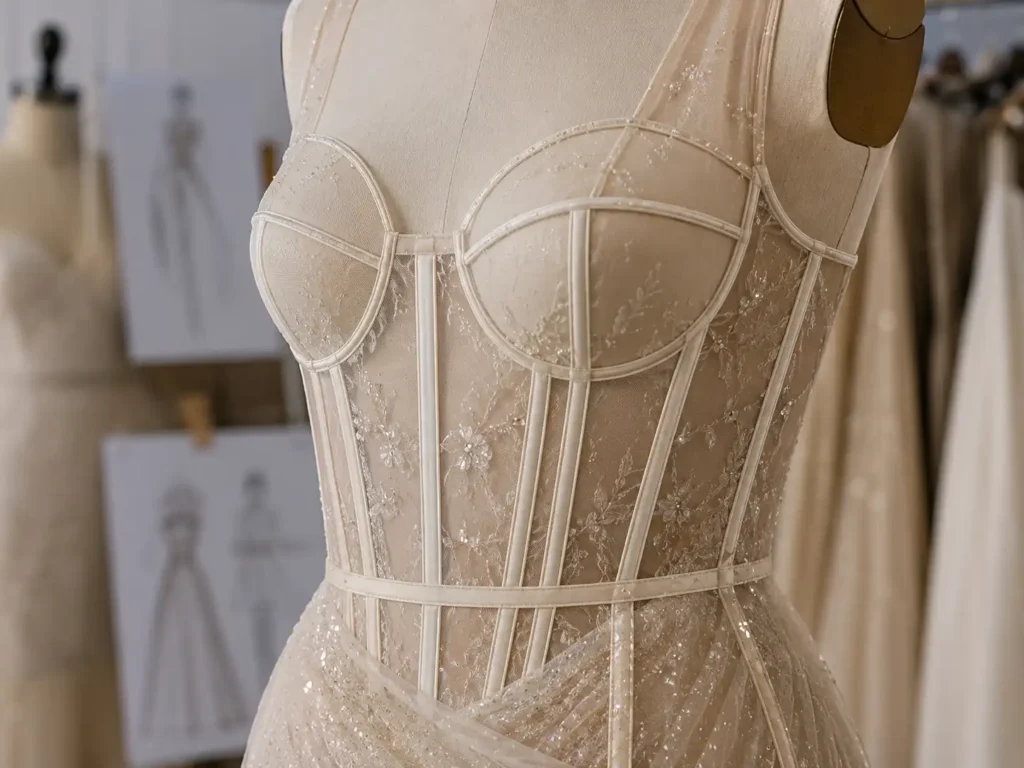
Bra Cups

Boning Support
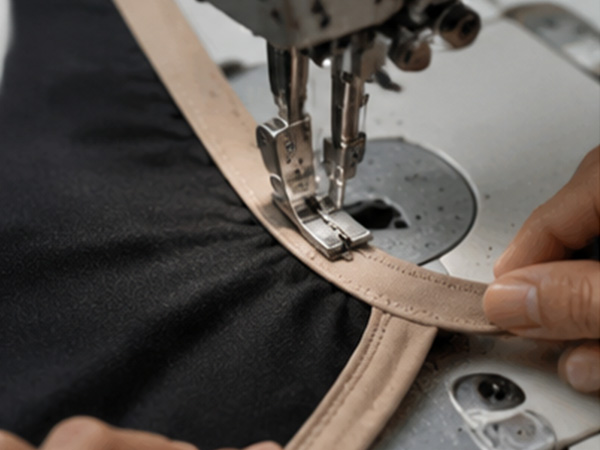
Reinforcement Patches
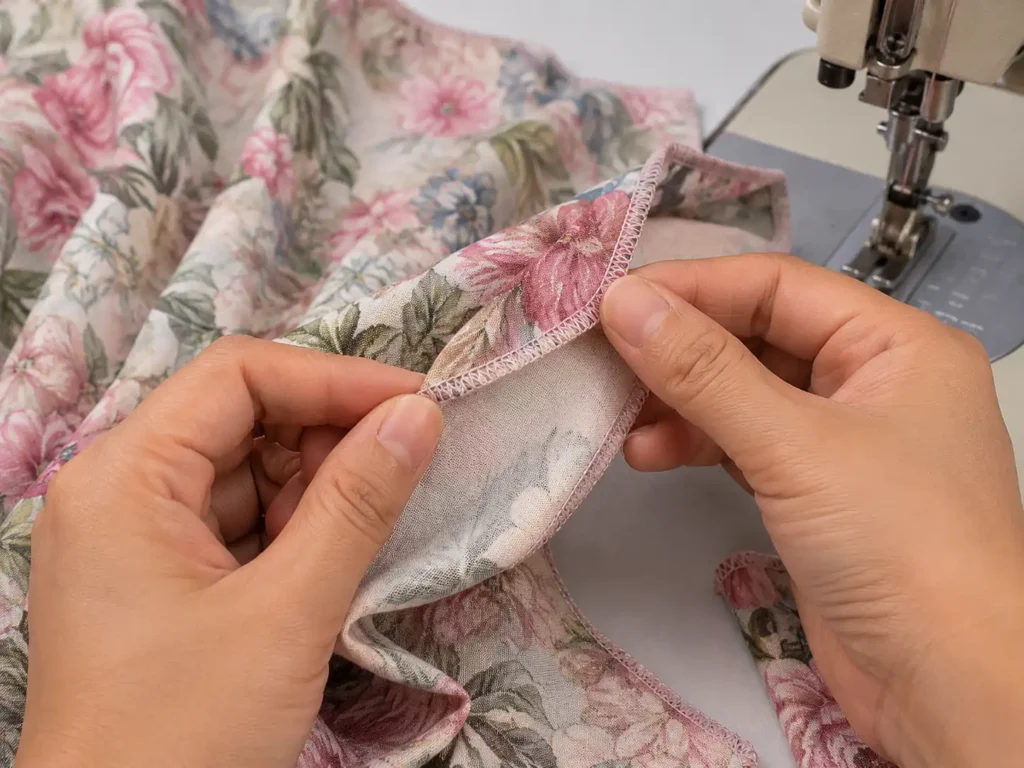
Edge Protection
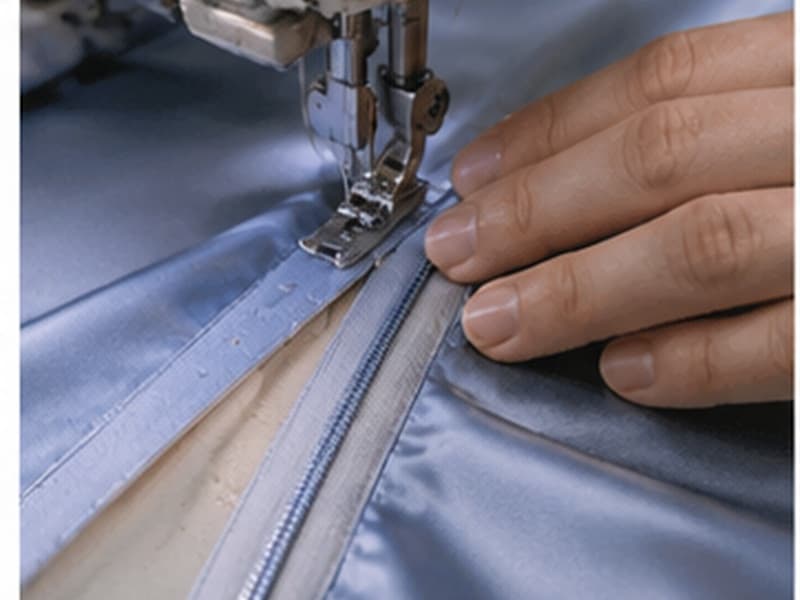
Zipper Clearance
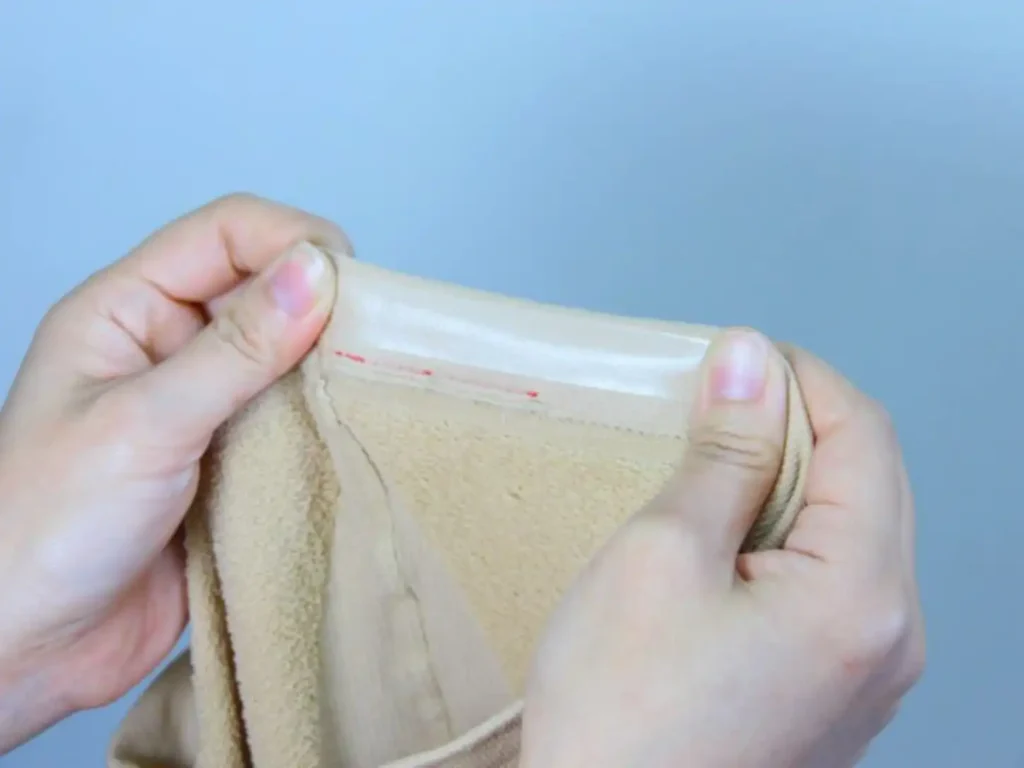
Anti-Slip Support

Hem Weight Balance
Review Feasibility Before Committing to Sampling
Design Review
Material Review
Risk Review
Cost Review
Timeline Review
Development Plan
The project enters a first sample, placement sample, material trial or revised technical review according to the main risk.

Sample Development Builds the Bulk Production Standard
Embellished styles need staged verification. The sample process checks appearance, fit, materials, decoration security, comfort, construction and packing before a production order is released.
- First Sample
The first sample tests the initial pattern, proportion, fabric direction, lining, decoration method and core construction. Ordinary dresses commonly require about 10-15 days; corset, strapless, lace, mesh, sequin and evening styles commonly require about 15-25 days after material requirements are confirmed. Custom fabrics or special components can extend the schedule. - Fit Sample
A fit sample focuses on bust, waist, hip, neckline, strap, armhole, length, slit and movement. Decoration may be simplified if the main purpose is to approve structure before expensive handwork begins. - Placement Sample
A panel or partial garment verifies artwork scale, bead or stone spacing, color, weight, attachment and seam clearance. The stage can prevent costly remaking of a complete decorated sample. - Revised Sample
Revisions normally require about 7-15 days, with timing adjusted according to pattern change, new fabric, replacement components or additional decoration. Changes are entered into revised patterns, size charts, BOM, sewing instructions and sample comments. - Photo-Ready Sample
Campaign samples need approved color, surface quality, fit, decoration and finishing suitable for photography. Photo samples do not automatically replace PP approval because production materials and construction still need final locking. - PP Sample
The PP sample uses final or approved bulk-equivalent materials, measurements, construction, labels and packing direction. It is commonly scheduled around 7-15 days once final materials are ready. Bulk production starts only after approval and record locking. - Golden Sample
The sealed Golden sample acts as the visual and construction reference for production, QC and repeat orders. Pattern version, measurements, BOM, decoration map, labels and packing records remain linked to the sample.
From Technical Pack to Private-Label Delivery
Project Launch
Requirement Review
Fabric Direction
Pattern Development
First Sample
Revision
PP Approval
Bulk Production
QC and Delivery
Workmanship Details that Separate Samples from Stable Bulk
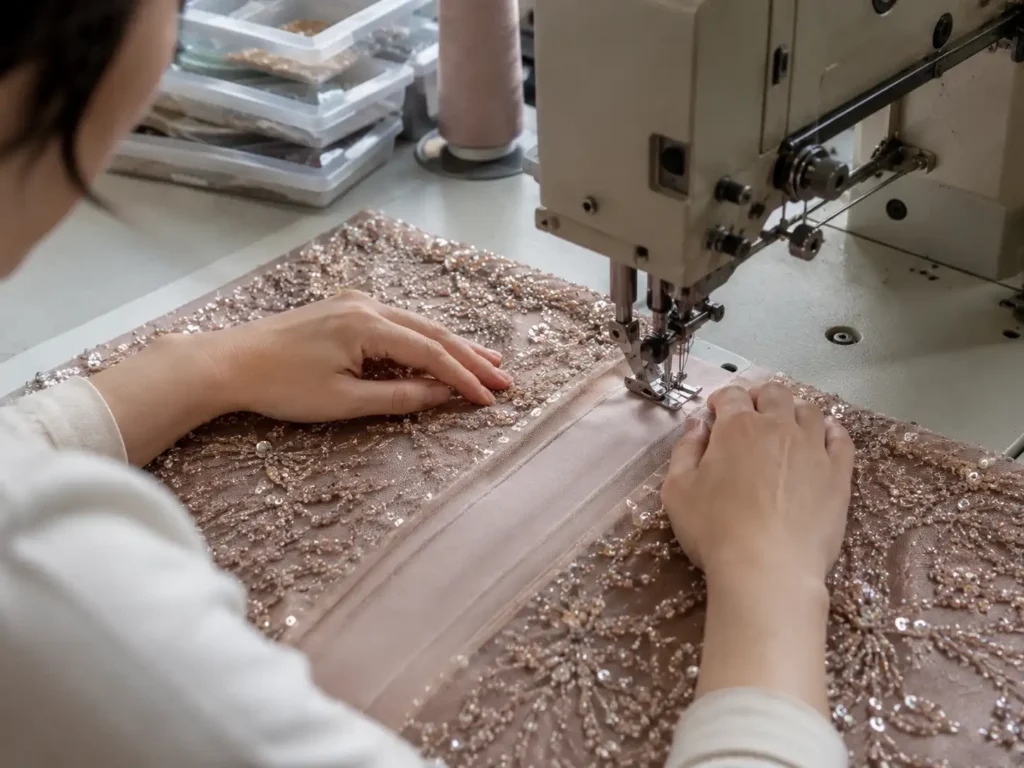
Clear Seam Allowances
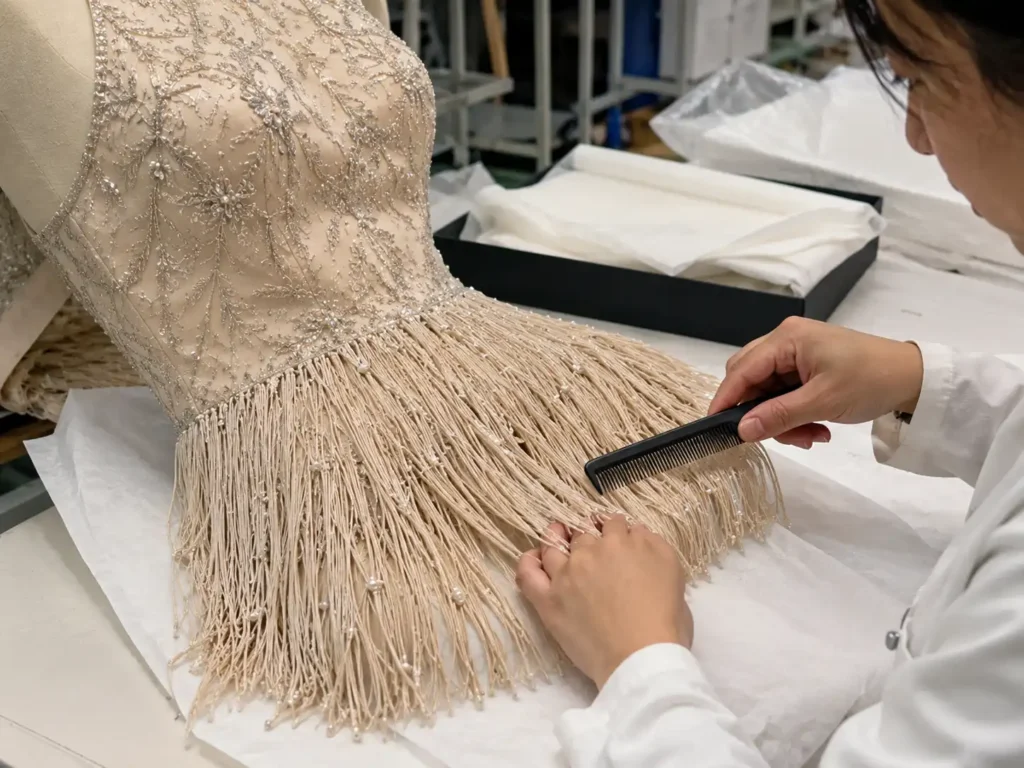
Replace Missing Pieces
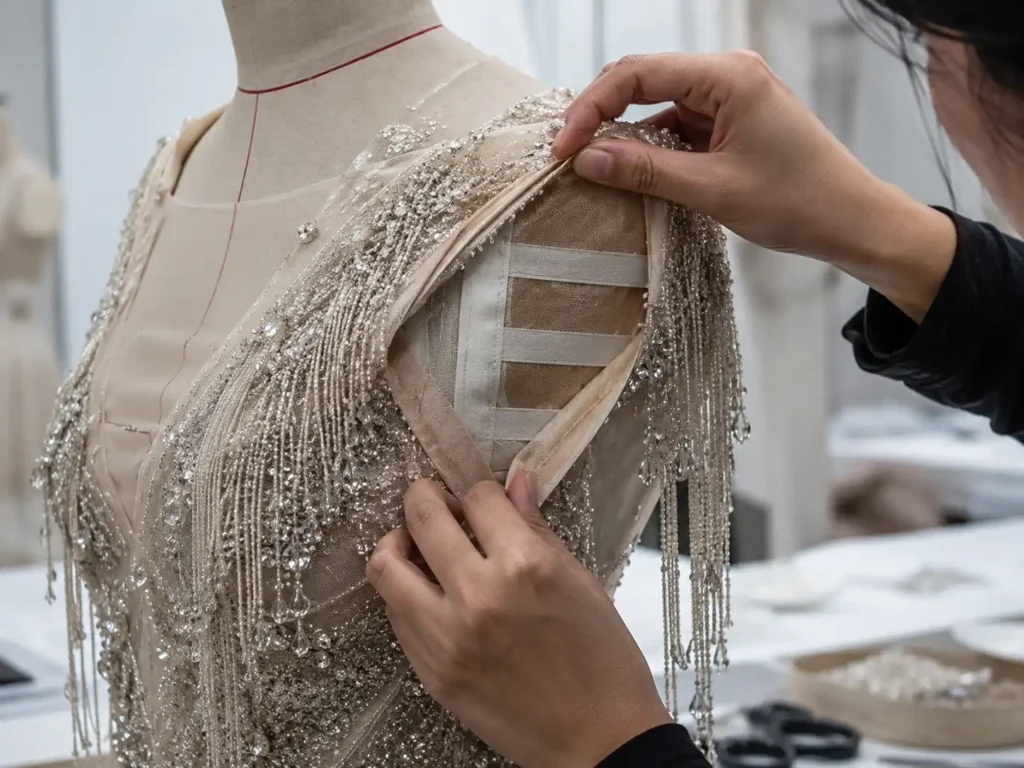
Reinforce Heavy Areas
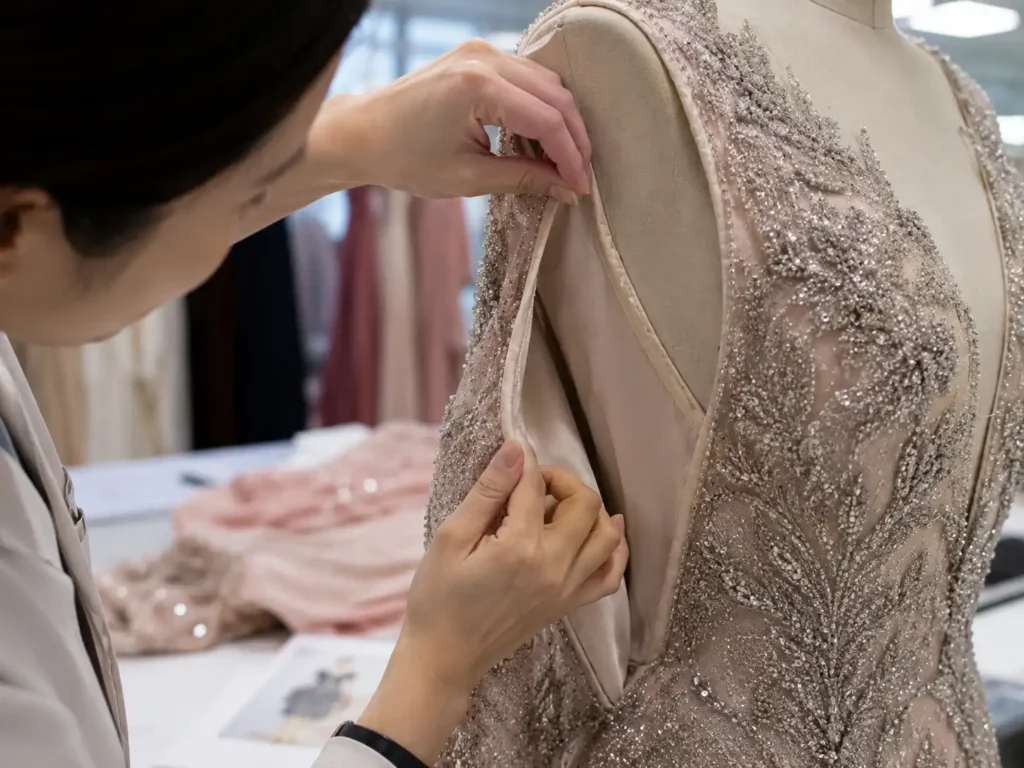
Protect Skin Contact
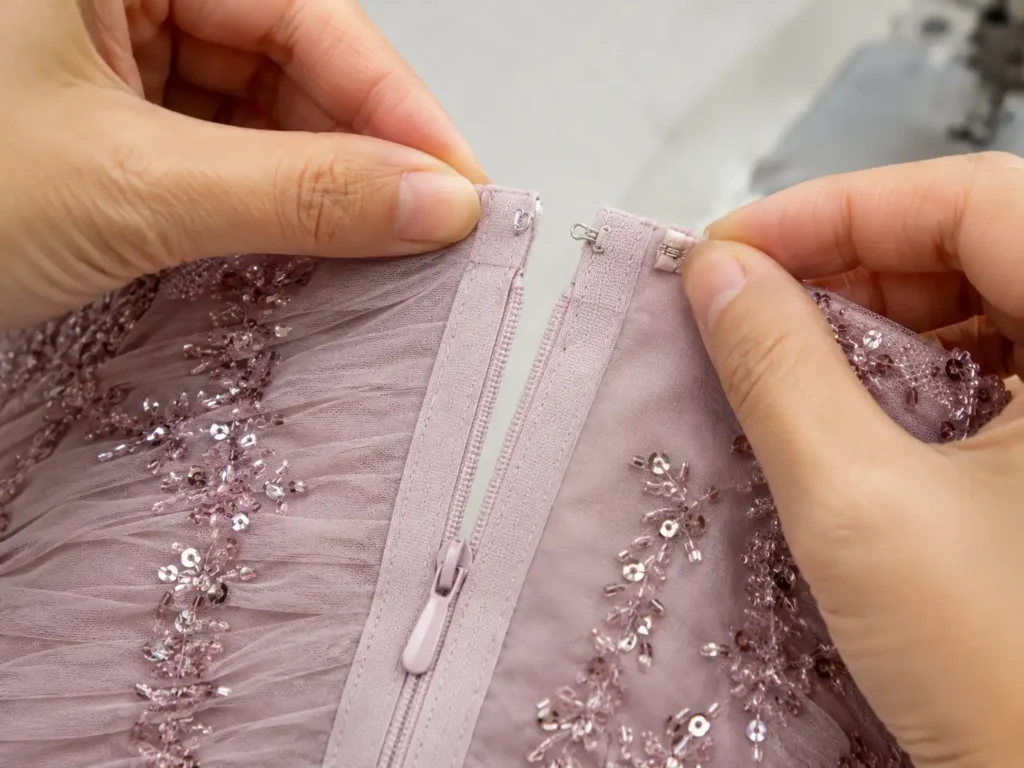
Control Zipper Areas
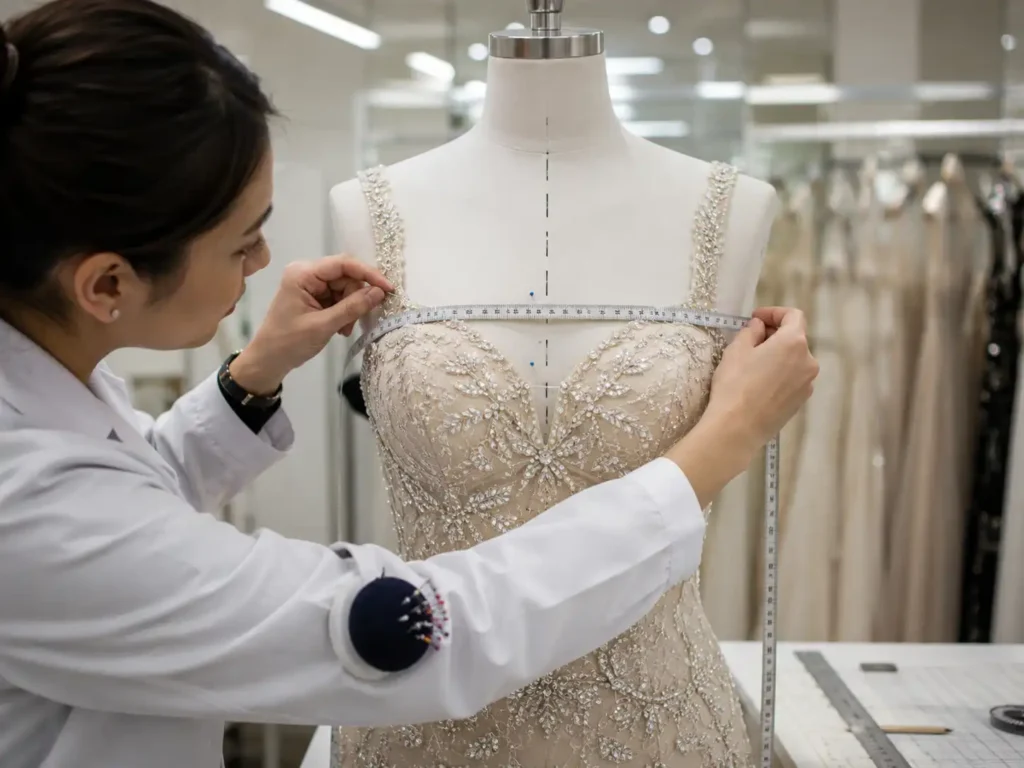
Maintain Symmetry
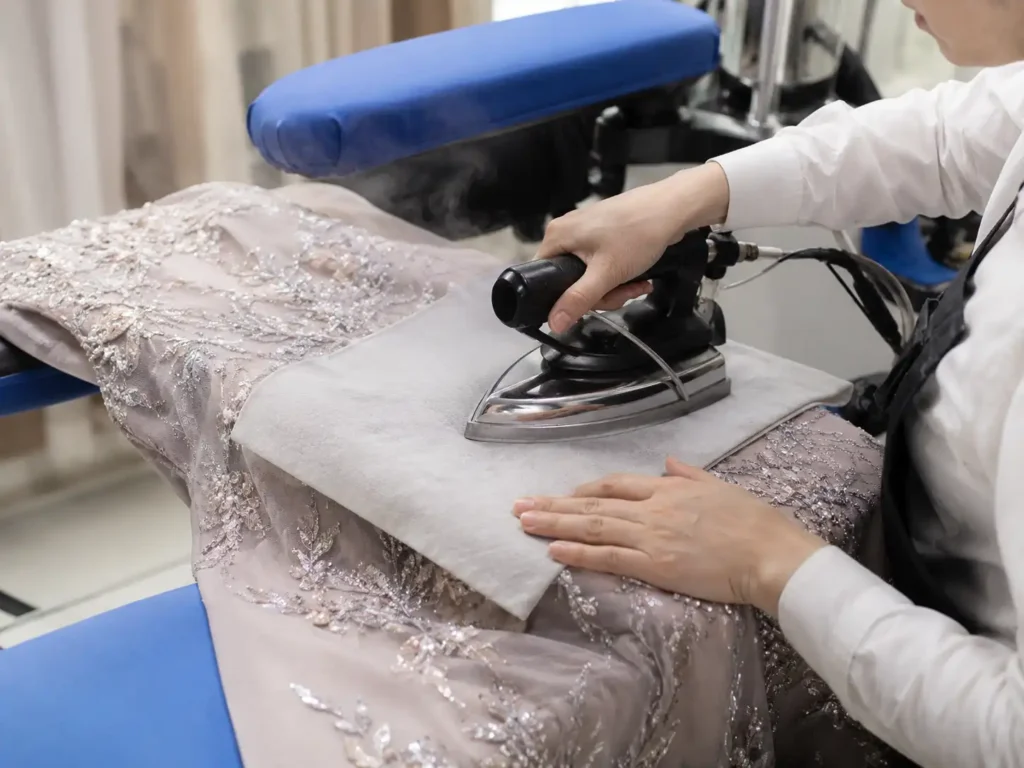
Press Without Damage
Finish Fringe Cleanly
Choose the Production Method by Design and Order Plan
No single embellishment method suits every style. The right choice balances design freedom, repeatability, labor, fabric behavior, order quantity and target retail position.
| Method | Best Use | Design Freedom | Bulk Repeatability | Cost Level | Main Risk |
|---|---|---|---|---|---|
| Pre-Embellished Fabric | All-over party and evening styles | Medium | High | Medium | Motif direction and cutting loss |
| Machine Embroidery | Repeatable borders and motifs | High | High | Medium | Puckering and stabilizer marks |
| Hand Beading | Premium statement placement | Very high | Medium | High | Labor variation and timing |
| Hotfix Rhinestones | Localized sparkle and repeat rows | Medium | High | Medium | Adhesion and heat damage |
| Sew-On Stones | Heavy or premium components | High | Medium | High | Weight and reverse-side comfort |
| Applique Placement | Floral, lace and 3D effects | High | High | Medium | Edge lifting and symmetry |
| Fringe Application | Movement and dance styles | Medium | Medium | Medium-high | Tangling and seam load |

Bulk Consistency Across Colors, Sizes and Production Batches
Bulk confidence comes from locked references, controlled materials, clear allocation and repeated checks. A visually complex program must remain recognizable across every style, color and size.
- Material Batch Control: Fabric dye lots, sequin colors, bead finishes, pearl coatings and stone shades are checked before mixing. Approved swatches and physical component samples remain with the project record.
- Placement Templates: Center lines, edge distances, motif dimensions and symmetry points are translated into working templates or measurement instructions. Operators do not rely on visual guessing.
- Size-Specific Review: Decoration around the bust, waist, neckline, cup, slit and side seam is reviewed after grading. Critical sizes can receive first-piece approval before wider production continues.
- First-Piece Approval: Initial bulk pieces are compared with the PP and Golden sample for material, fit, decoration, sewing, labels and packing. Deviations are corrected before volume increases.
- In-Line Inspection: Missing pieces, loose attachment, distorted panels, wrong direction, seam bulk and measurement drift are detected during production rather than delayed until final inspection.
- Repair and Recheck: Decoration repairs are rechecked for color, position, security and reverse-side comfort. Repair should restore the approved appearance rather than create a visible patch.
- Repeat-Order Records: Pattern, measurement, BOM, fabric, decoration, label, packing and QC notes are retained. New colorways or replacement materials still receive approval because surface behavior and color can change.
Quality Control Designed for Embellished Dress Risks

Incoming Fabric

Decoration Materials
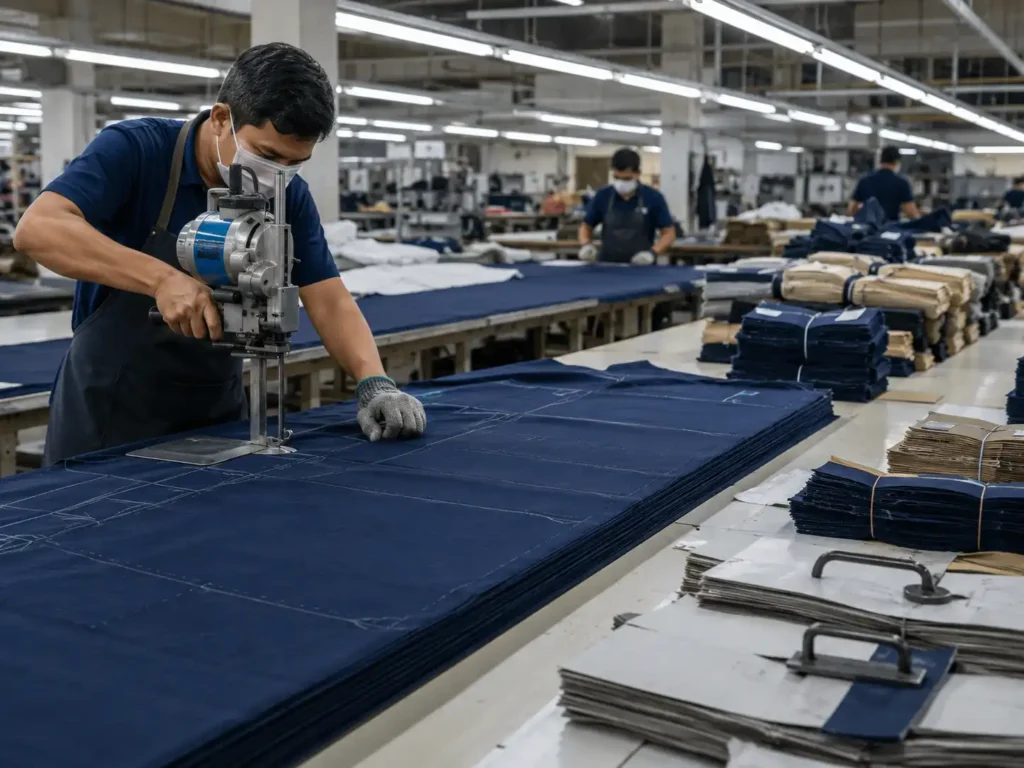
Cutting Inspection
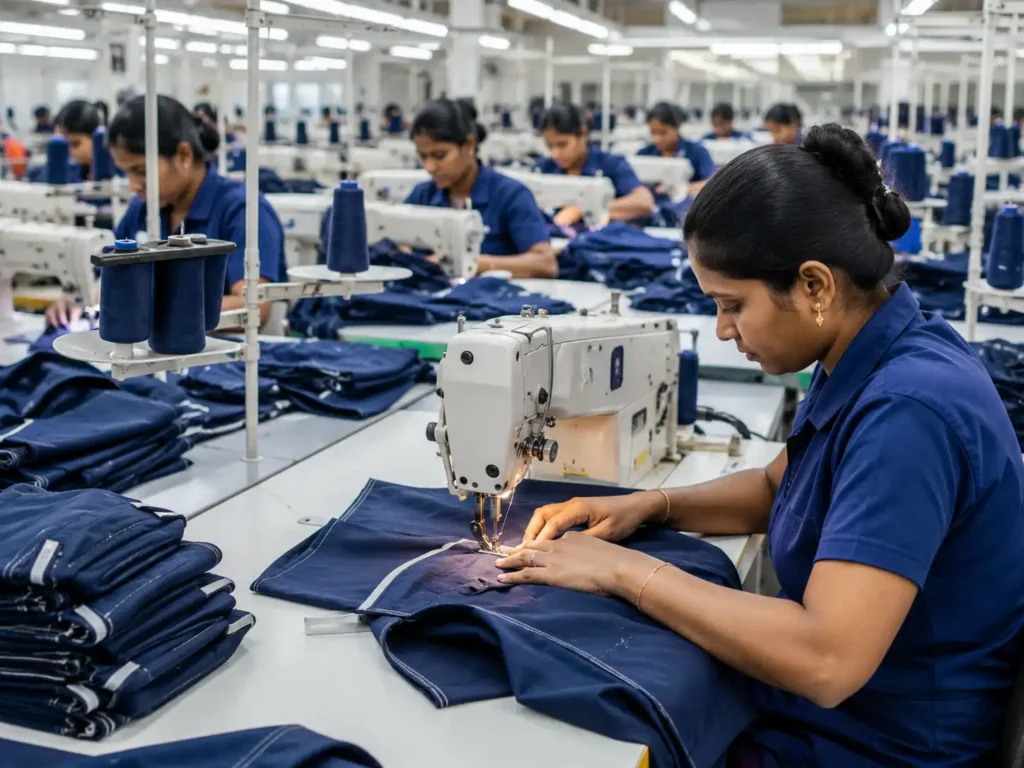
Sewing In-Line
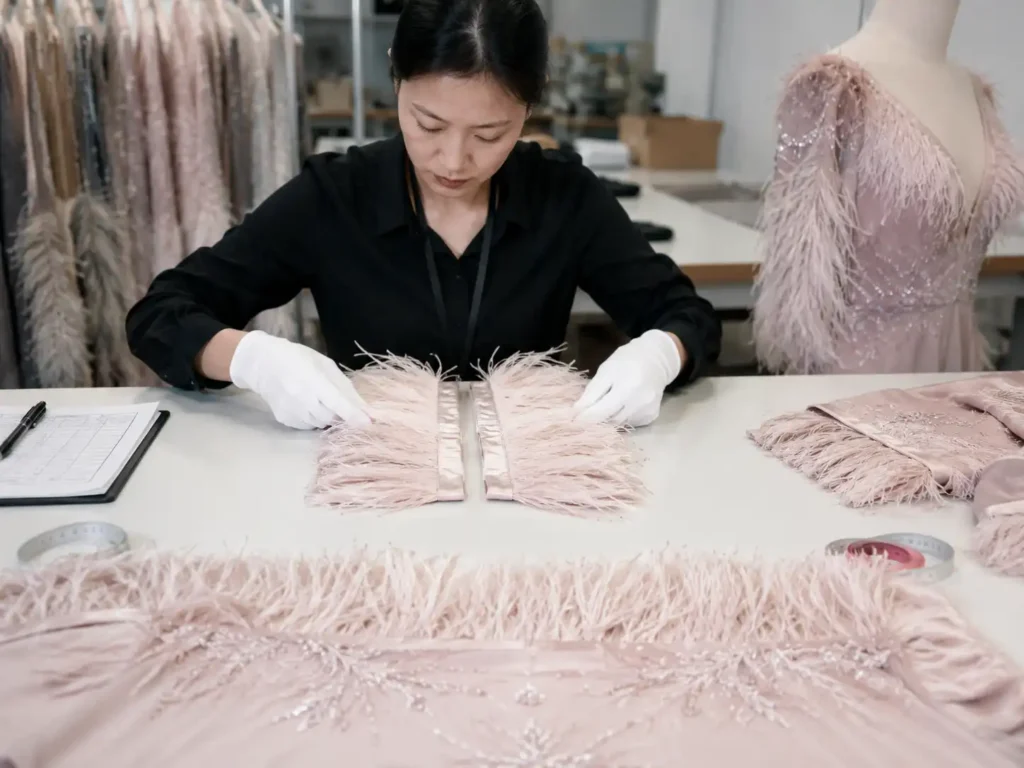
Placement Inspection
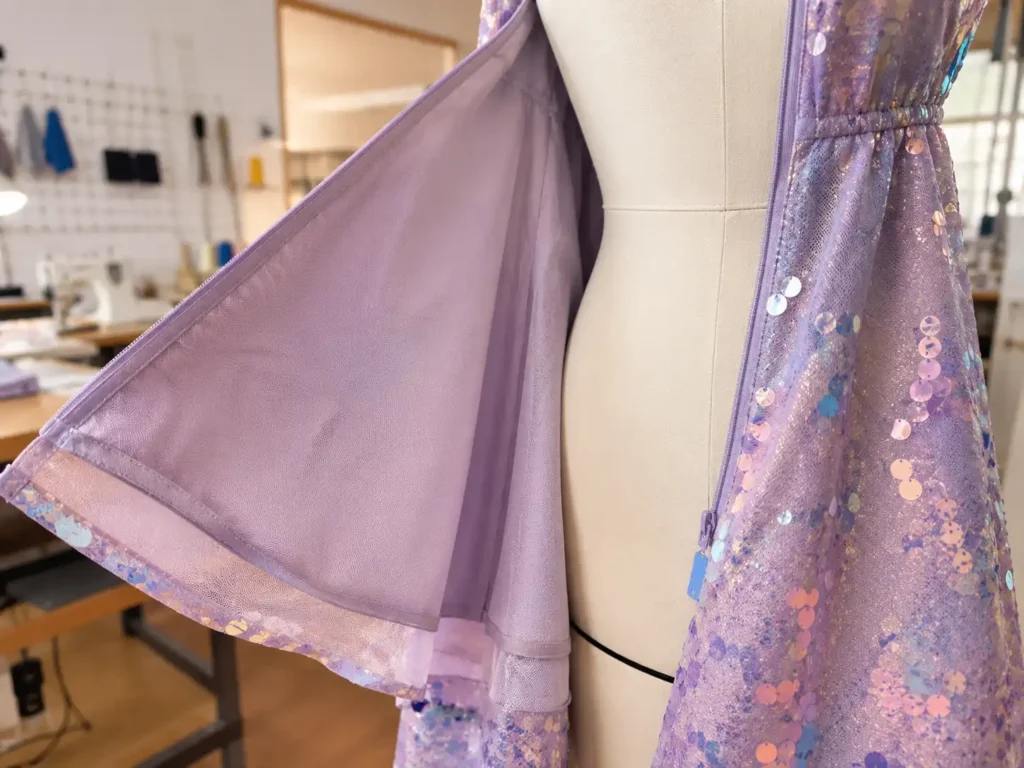
Security Inspection
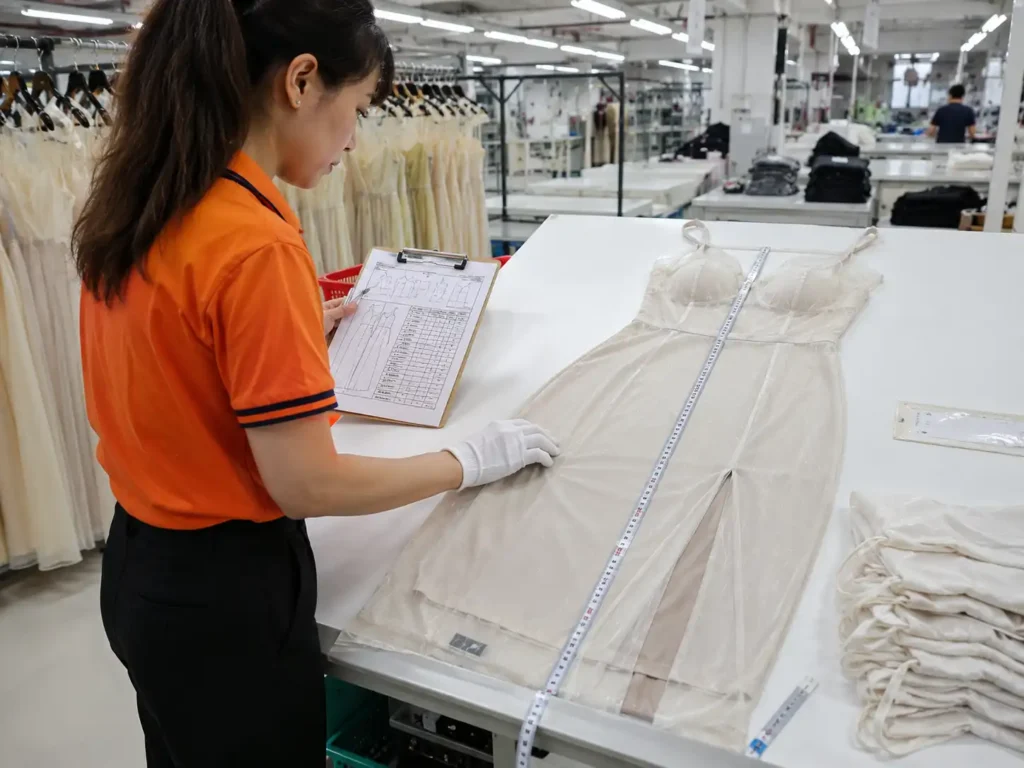
Measurement Inspection

Finishing Inspection
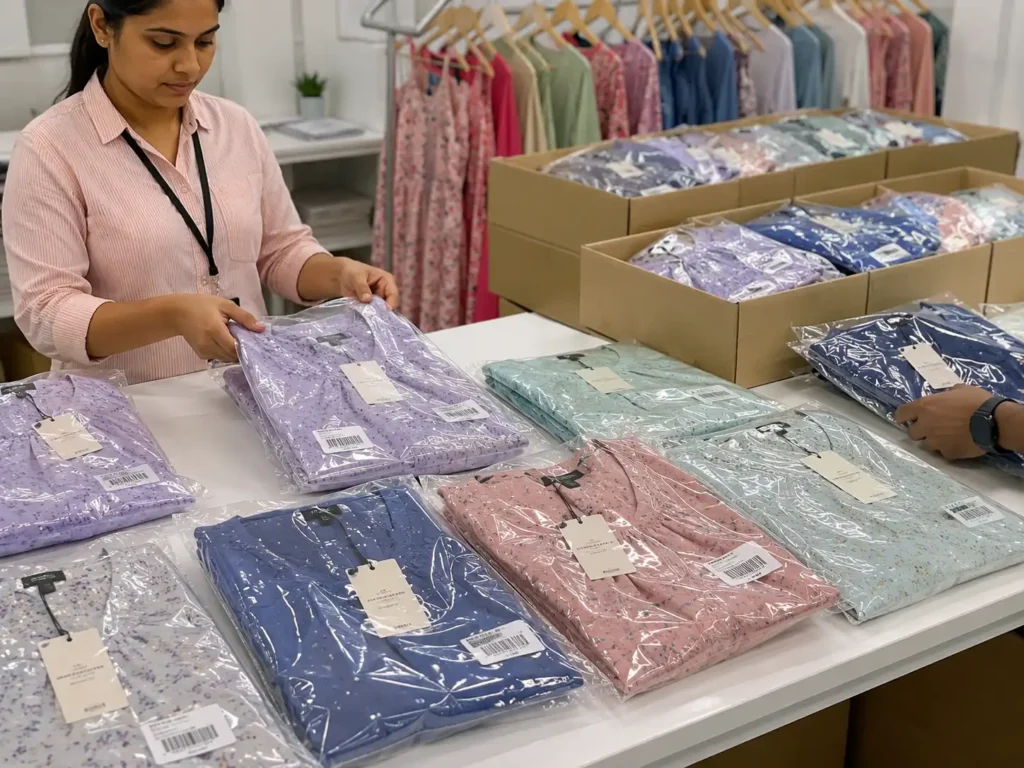
Packing Inspection
Durability and Wearability Beyond Studio Photography
Decoration Security
Skin Comfort
Weight Balance
Stretch Recovery
Zipper Function
Movement Review
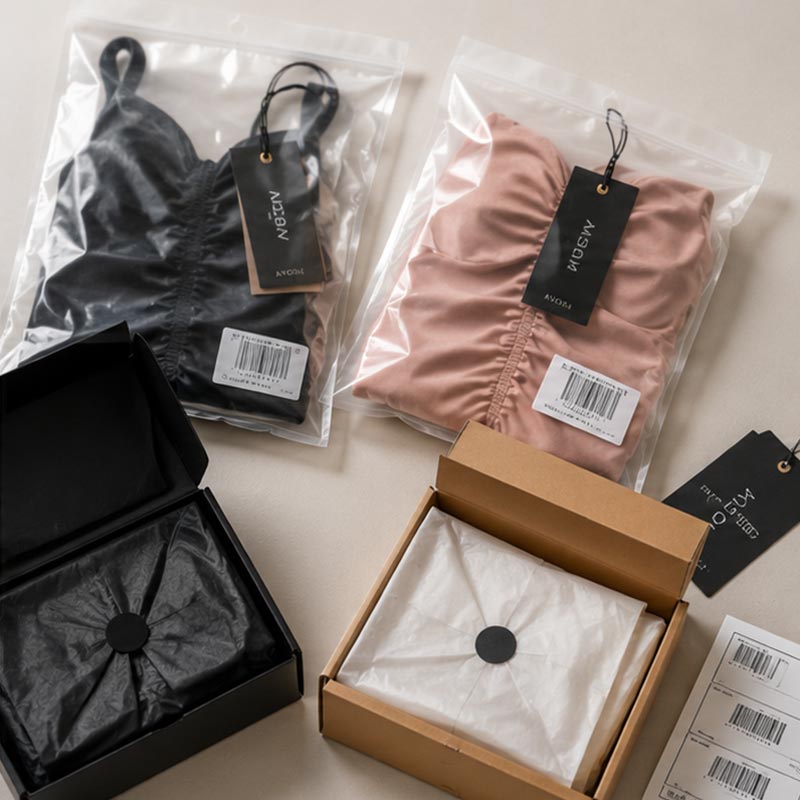
Protect Embellished Dresses through Packing and Transport
Packing is part of manufacturing quality. The approved garment can arrive damaged when raised surfaces, chains, fringe, cups and structured panels are folded without protection.
- Surface Separation
Tissue, soft interleaving or localized protective layers prevent stones, sequins and metal components from scratching adjacent panels. Protection is placed where components contact fabric after folding. - Controlled Folding
Fold lines avoid concentrated stones, corset cups, boning ends and dense beadwork. Some styles may be folded inside-out or arranged with decorative areas facing protected zones, subject to garment structure. - Fringe and Tassel Alignment
Fringe is straightened, grouped and separated before bagging to reduce knots and uneven bending. Long tassels may require dedicated positioning within the polybag. - Cup and Bodice Support
Structured cups and boned bodices are not compressed under heavy carton pressure. Inserts or shape support can be evaluated according to retail presentation and shipping cost. - Individual Identification
Size, color, style, SKU and barcode information are checked before bagging. Decorative garments often look similar when packed, making clear identification important for warehouse accuracy. - Carton Pressure Planning
Carton quantity, dimensions and stacking pressure are balanced against garment volume and raised decoration. Overpacking can create stone marks, crushed applique and distorted corset shapes. - Unpacking Recovery Check
Selected packed garments can be reopened to review folding marks, stone pressure, fringe condition, shape recovery and barcode accuracy before shipment release.
Private Label and Retail-Ready Delivery Control

Woven Labels
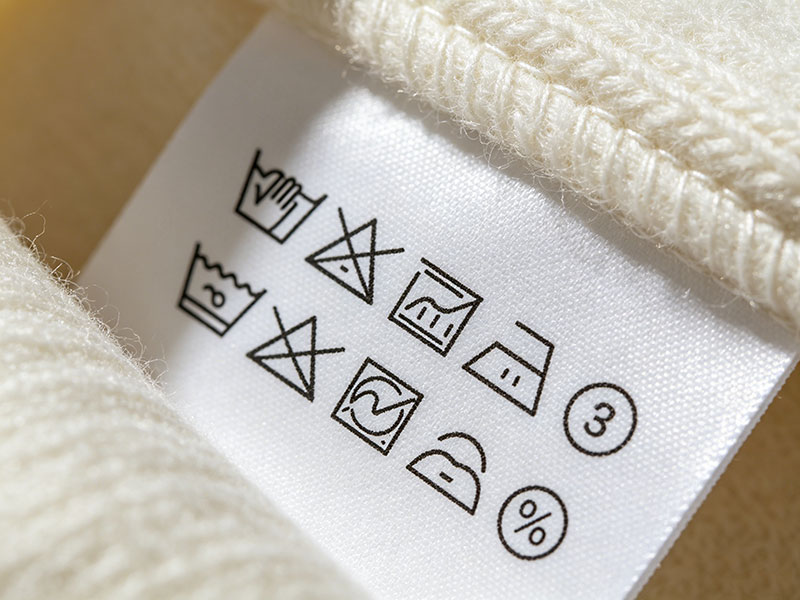
Care Labels

Hangtags
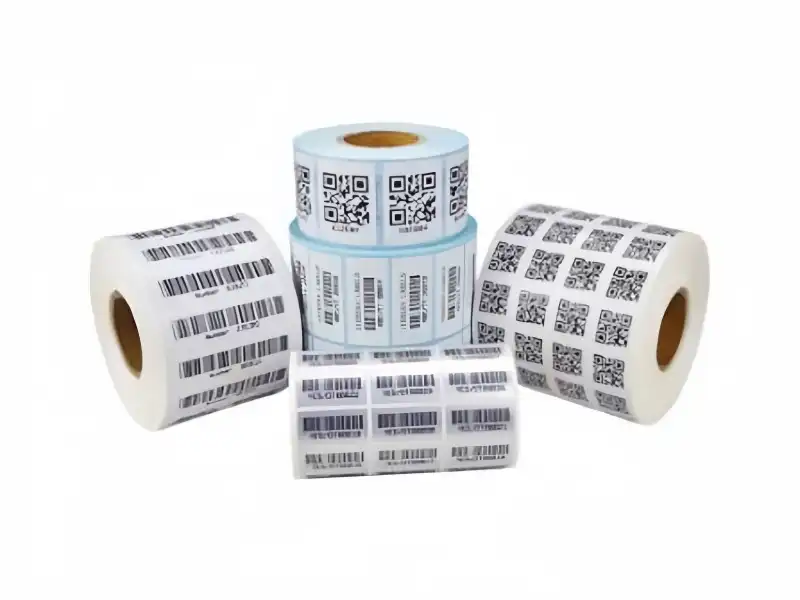
Barcode and SKU

Polybags

Carton Marks
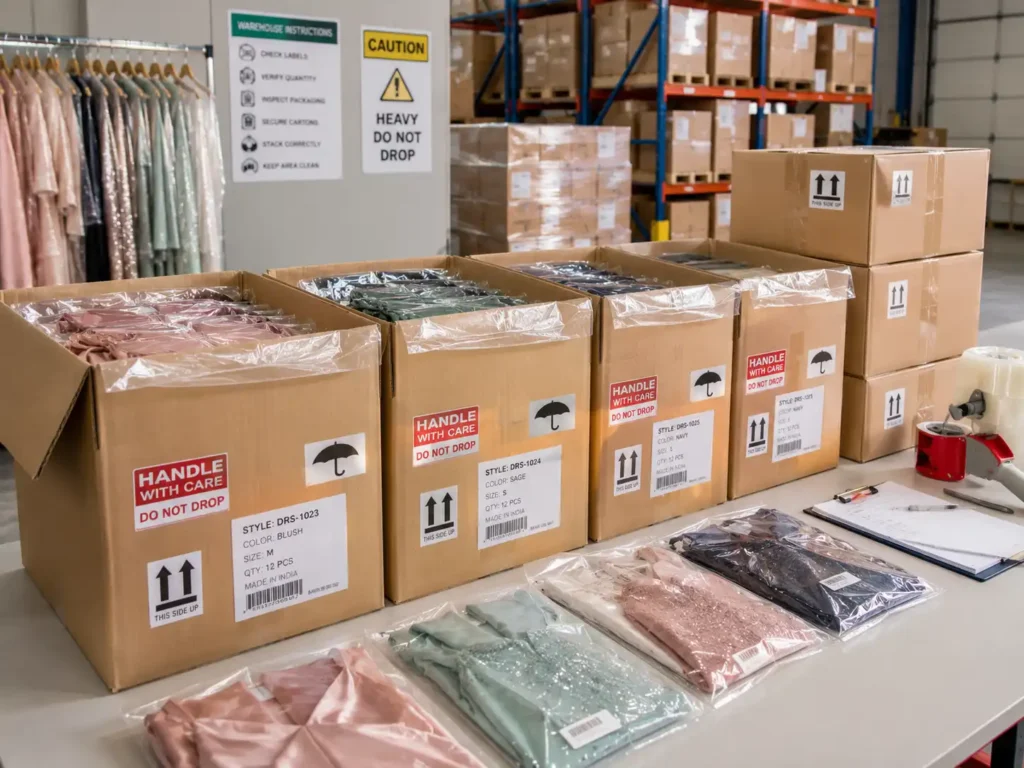
Warehouse Rules
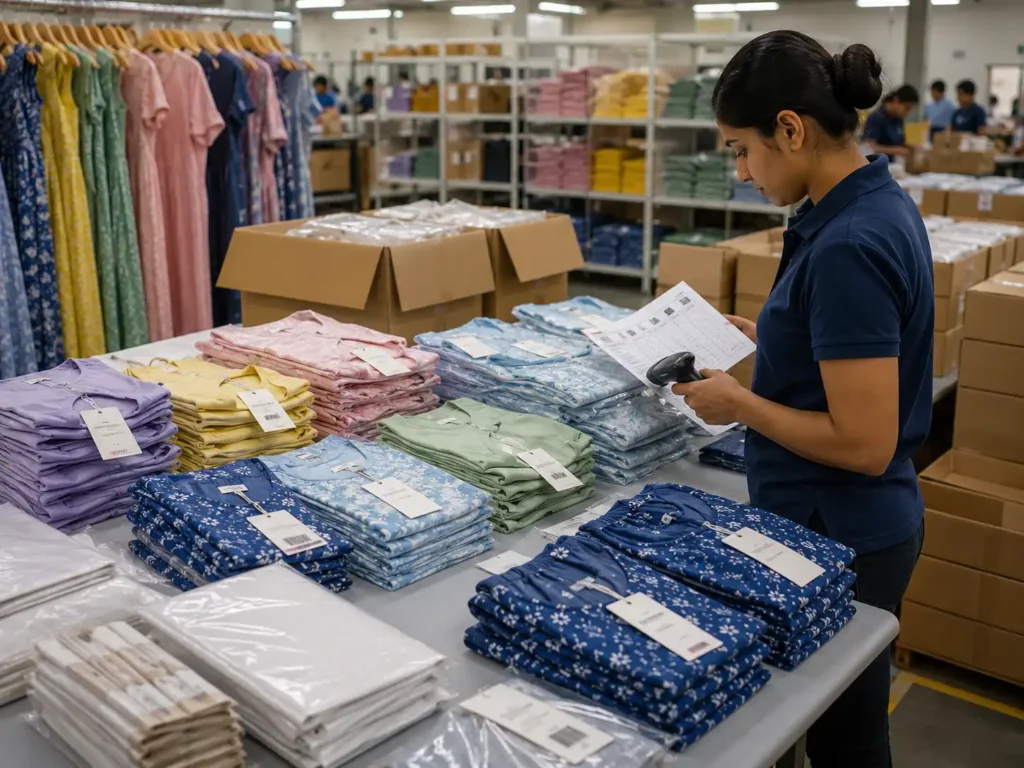
NDA Protection
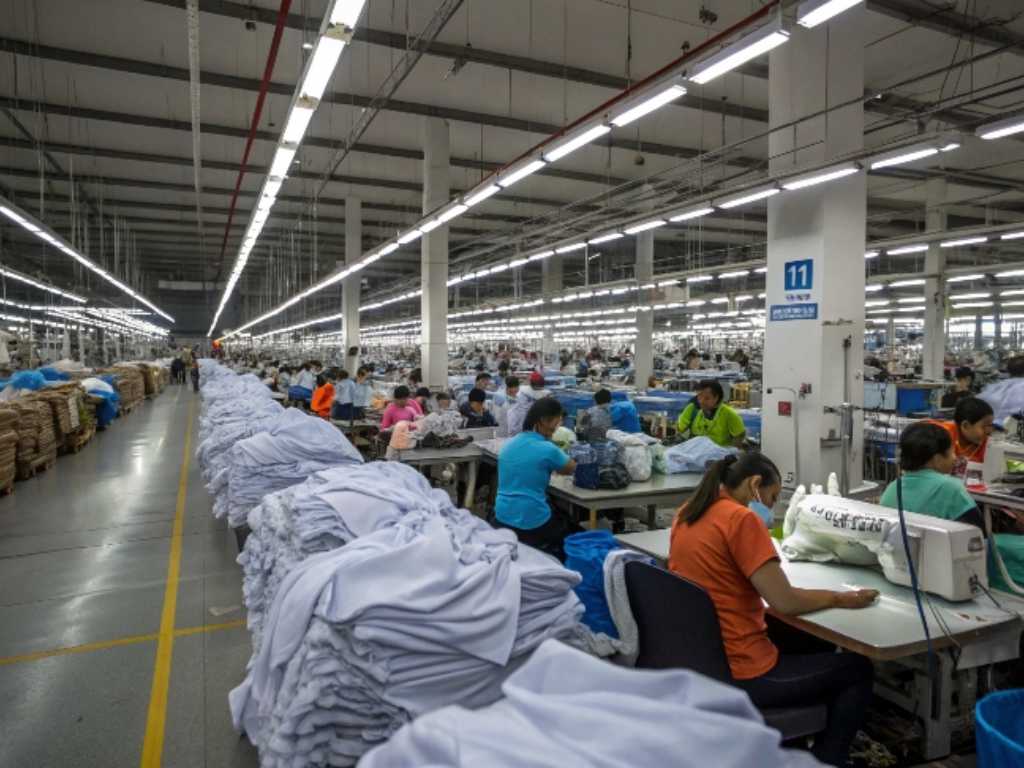
Why Jinfeng Apparel Fits Complex Dress Programs
Complex embellished programs depend on coordinated development rather than isolated workmanship. Jinfeng Apparel combines product development, pattern, sampling, merchandising, production, QC, packing and logistics roles within one project structure.
- Product Development Depth: Dresses are reviewed by silhouette, occasion, fabric, fit, construction and decorative risk. Reference images are not copied blindly; production feasibility and bulk repeatability are evaluated before sampling.
- Pattern and Sample Resources: Two sample rooms, 7+ senior pattern makers and 20+ sample machinists support first, fit, revised, photo-ready, PP and Golden samples. Pattern and measurement records are updated when comments affect the production standard.
- Factory Allocation: Six owned women’s fashion factories and more than 10 long-term production partners support different woven, knit, stretch, occasionwear and complex-fabric needs. Styles are allocated according to capability, not convenience.
- Project Follow-Up: A 12+ merchandiser team follows fabric, trims, sample comments, PP status, production progress, QC feedback, packing and shipment preparation. Large multi-style projects can use style trackers and priority schedules.
- Quality Management: More than 15 QC inspectors support incoming, cutting, in-line, measurement, final garment, packing and AQL-related inspection. Inspection plans are adapted to the product rather than copied from a basic garment checklist.
- Finishing and Packing: A 30+ finishing and packing team supports pressing, appearance checks, labels, barcode, SKU packing, protective folding, carton marks and shipment preparation.
- Design Protection: NDA-based cooperation protects technical packs, samples, patterns, trims, labels, packaging and unpublished designs. Anonymous process images and cases are used unless release permission is provided.
- Repeat-Order Support: Pattern, fabric, color, trim, measurement, sewing, packing, QC and Golden sample records support repeat orders, color extensions and seasonal collection planning. New materials or altered structures are re-evaluated rather than assumed identical.
Embellished Dress Programs Managed at Collection Scale
US Partywear Collection - 18 Styles, 32,400 Pieces
A United States partywear program combined sequin minis, rhinestone-strap bodycon dresses, beaded mesh midis and fringe cocktail styles across 18 styles. Total order quantity reached 32,400 pieces with 2-4 colors per style and a broad size range. Main risks included stone-chain weight, sequin scratching, zipper obstruction and decoration movement across sizes. Development began by separating the collection into four process groups: full-surface sequin, stretch bodycon, rhinestone chain and fringe application. Hero styles entered photo-ready sampling first. Placement maps were revised around bust points, side seams and zipper paths. Stretch styles received measurement and recovery checks after decoration application. Protective tissue and controlled folding were added for chain and stone areas. Bulk control used first-piece approval by process group, in-line checks for missing components and size-specific placement checks. Priority colors shipped in the first delivery window, while the remaining colors followed the approved bulk schedule. The final system reduced cross-style confusion and kept one QC language across different production units.
UK Occasionwear Program - 24 Styles, 46,800 Pieces
Australian Ecommerce Program - 27 Styles, 68,200 Pieces
Frequently Asked Questions About Embellished Dress Manufacturing
Jinfeng Apparel develops sequin, beaded, rhinestone, crystal, pearl, embroidered, applique, fringe and mixed-embellishment dresses for partywear, occasionwear, cocktail, evening, prom, graduation, birthday, wedding guest and premium ecommerce collections.
Yes. A reference image can support initial structure, fabric and risk review. Accurate sampling and quotation still require size information, quantity, color, material direction, target effect and private-label requirements.
Yes. Technical packs can be reviewed for measurements, construction, fabric, trims, decoration, labels and packing. Missing or conflicting information is clarified before development starts.
Custom placement can be evaluated from artwork, sketches or reference images. Scale, component type, density, attachment method, grading and supplier minimums are confirmed before bulk booking.
Attachment method, thread, backing, seam clearance, repair, in-line inspection and final checking are selected according to component and fabric. No decorative garment should be promoted as completely loss-proof; the goal is controlled and verified security.
Critical motifs are reviewed against bust, waist, neckline, side seam, zipper, slit and center lines. Placement may shift, extend or change spacing by size instead of being enlarged as one image.
Mesh, power mesh, satin, stretch satin, lace, sequin fabric, tulle, organza, velvet, jersey, ponte and crepe can support different decorative directions. Suitability depends on weight, stretch, stability, transparency and the selected attachment method.
Many styles require lining for comfort, coverage, support and protection from knots or sharp edges. Lining type and coverage depend on silhouette, base fabric and decoration placement.
MOQ starts from 200 pieces per style and color. Special fabrics, exclusive embroidery, custom stones, labels and printed packaging may have separate supplier minimums.
Simple first samples commonly require about 7-10 days, ordinary dresses about 10-15 days, and corset, strapless, lace, mesh, sequin or evening styles about 15-25 days. Custom materials can extend the schedule.
Comments are classified by fit, fabric, construction, decoration, color, labels or packing. Revised patterns, measurement charts, BOM, artwork and sewing instructions are updated when the change affects bulk production.
Bulk production begins after the PP standard, final materials, measurements, construction, labels and packing requirements are approved. Material booking and factory allocation then follow the confirmed schedule.
Yes. Woven labels, size labels, care labels, hangtags, barcode stickers, SKU labels, polybags, carton marks and warehouse instructions can be coordinated by project.
Third-party inspection can be coordinated according to the order, inspection standard, booking date and factory schedule. Required inspection criteria should be confirmed before production completion.
Yes. Pattern, measurement, fabric, color, trim, label, packing, QC and Golden sample records are retained. New colorways or replacement materials still require confirmation because behavior and appearance may change.

Start Your Embellished Dress Development Program
Send Jinfeng Apparel the available development files for a focused review. Useful materials include reference images, technical packs, original samples, size charts, embellishment artwork, target quantity by style and color, fabric direction, color plan, size range, target price, launch date, private-label files, packaging requirements and shipping destination.
The project team will review silhouette, base fabric, decoration method, pattern risk, sample route, MOQ fit, cost factors, timing and bulk production controls before confirming the next step.
- Product type and style count
- Reference images or technical packs
- Quantity per style and color
- Target size range and measurement chart
- Fabric and embellishment direction
- Private-label and packing requirements
- Target launch or delivery window
- Shipping destination and preferred terms