 Skip to content
Elastic Support for Fitted Dresses
Elastic support engineered around fitted silhouettes, stretch behavior, upper-bust stability, comfort, fit approval and repeatable bulk production for established fashion programs.
- 7+ senior pattern makersdevelop bodycon, strapless, halter, corset-inspired and other fit-sensitive dress structures.
- 2 sample rooms and 20+ sample machinistssupport first samples, fit revisions and PP approval before production.
- Standard elastic development is typically 3–10 days; special width, color or specification normally requires 7–15 days, subject to supplier confirmation.
- Complex fitted, strapless, corset, mesh or support-led samples commonly require about 15–25 daysdepending on fabric, trims and construction.
- Timelines are confirmed after technical review and material availability.
Fit Problems Elastic Support Must Solve First
Slipping and Upper-Bust Instability
Key control points:
- Upper-bust circumference must match the intended support level.
- Elastic placement needs a stable seam or edge construction.
- Anti-slip tape, lining, cups or boning may be required by structure.
- Movement fitting should check sitting, walking, arm movement and normal breathing.
Excess Pressure and Edge Rolling
Key control points:
- Match elastic strength to fabric stretch and garment circumference.
- Check skin-facing softness and edge pressure during fitting.
- Avoid using tension to compensate for incorrect bust, waist or hip shaping.
- Recheck comfort after movement rather than approving only a standing fit.
Weak Recovery After Wear
Fitted styles depend on recovery as much as stretch. Jersey, rib knit, ponte, power mesh and stretch satin can extend differently and may return at different rates after wear.
When shell fabric, lining and elastic recover unevenly, neckline edges can wave, hips can loosen, hems can ride upward and side seams can rotate.
Key control points:
- Review stretch direction before pattern cutting.
- Compare recovery between shell, lining and support materials.
- Relax stretch fabrics before cutting when required.
- Carry approved material behavior into PP and bulk QC instead of relying on appearance alone.
Built for Fit-Sensitive Fashion Programs
Established Fashion Collections
Product Development Teams
Product development and sourcing teams usually need more than a trim quotation. They need clear decisions on where elastic belongs, whether extra support is necessary, how a chosen fabric behaves, how revisions affect cost and timing, and what has to be locked before PP approval.
Jinfeng Apparel supports reference images, tech packs, line sheets and original samples with pattern, fabric, trim and sampling review, creating a traceable path from design direction to production-ready specifications.
Fit-Focused Sales Channels
Premium ecommerce, occasionwear, partywear and fit-focused collections face visible commercial risk when fitted garments slip, gape, twist, ride up or feel restrictive.
Size consistency also matters because a strong sample in one base size does not guarantee a balanced XS–XL run. Jinfeng Apparel connects fit samples, grading rules, measurement control, trim records and bulk QC so support performance can be reproduced across colors, sizes and repeat orders rather than judged from one approved sample.
Where Elastic Support Works Inside Fitted Dresses

Upper-Bust Edge Control

Back Support Balance

Waist Support Control

Ruched Tension Control

Neckline Edge Stability
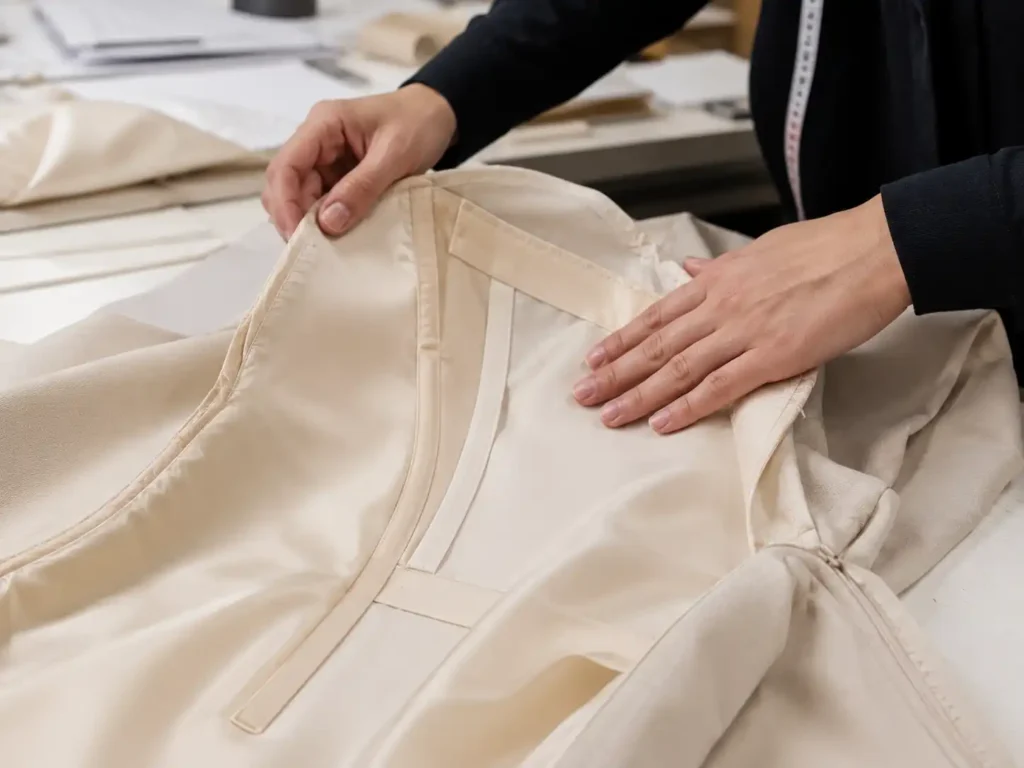
Neckline edges on fitted mesh, knit, off-shoulder or low-cut dresses can distort when fabric recovery is weaker than seam tension. Elastic support may stabilize the edge, but the chosen method must preserve a clean neckline instead of creating waves or visible bulk. Shell stretch, lining behavior, seam allowance and edge finishing should be assessed together. The fitting stage should confirm coverage, comfort and recovery after movement before the neckline construction is released for production.
Internal Support Layer
Engineering Elastic for Stable, Comfortable Fitted Dresses
Elastic support becomes reliable only when specification, placement and garment behavior are considered together. Width, extension, recovery, hand feel, color and attachment method can all change fit. Jinfeng Apparel treats elastic selection as a development decision that must survive fitting, washing risk review and bulk repetition.
Elastic Specification Starts With the Support Function
Elastic specification begins with the job the component must perform. A narrow edge elastic used to stabilize a neckline has a different purpose from a wider band used at a waist, an elastic section built into a back panel, or elastic used to control ruching. The specification should therefore start with support function, garment circumference, fabric stretch and expected movement rather than a standard width carried from another style.
Jinfeng Apparel reviews width, extension feel, recovery, surface softness, color, texture and compatibility with the seam or casing. Standard elastic development is commonly about 3–10 days, while special widths, colors or specifications can require about 7–15 days depending on the supplier and material request. Special development is confirmed before sample timing is committed.
Tension is then evaluated on the garment, not from an isolated strip. A technically strong elastic can still perform poorly if its working length is too short, if the shell fabric stretches far more than the band, or if the seam construction restricts recovery. Support should remain stable after normal movement without creating visible gathering, edge tunneling or excessive pressure. Approved length and construction need to be recorded by style and size so production teams do not recreate tension from memory.
Recovery Must Match the Fabric System
Recovery determines whether a fitted dress returns to its intended shape after the wearer moves, sits or stretches the garment.
Poor recovery can leave a neckline loose, a waist expanded or a bodycon silhouette less defined after wear. Excessive recovery force can create a different problem: the garment may pull upward, compress the body more than intended or distort adjacent seams.
The correct balance depends on the shell fabric, lining, pattern ease and support zone.
Jersey, rib knit, ponte, stretch satin and power mesh do not behave the same way. A soft jersey can stretch easily but may need stronger recovery control; ponte generally provides more structure; rib knit can grow along the body; power mesh can provide internal support with a firmer compression feel. Elastic should be selected after the fabric direction and recovery profile are understood.
Washing risk also matters. Jinfeng Apparel checks elastic width, stretch, recovery, attachment strength, left-right consistency and wash-related stability as part of trim control. A band that shrinks more than the surrounding fabric can create puckering. A band that loses recovery can reduce support. Material approval therefore needs to consider the finished garment after handling and care, not only the first fitting session.
Comfort Is Part of Support Performance
Comfort is a measurable development result even when it cannot be reduced to a single number. Skin-facing pressure, edge softness, rolling, rubbing and movement restriction all reveal whether the support system is correctly balanced. Strapless and fitted occasion dresses often require firm upper-body control, yet the same structure must allow normal breathing and movement for several hours of wear. Stronger tension is not automatically better engineering.
The fitting team should review where the band contacts the body, whether the edge marks skin quickly, whether pressure changes when the wearer sits, and whether the garment returns to position after movement. When discomfort appears, the correction may involve elastic length, width, placement, seam construction, lining or pattern circumference. Increasing or reducing one component without checking the rest can transfer the problem to another area.
Jinfeng Apparel keeps support decisions linked to the approved sample standard. Elastic specifications, trim placement, pattern versions and related construction notes can be retained for repeat orders. If a later reorder changes fabric weight, stretch, lining or support components, the old elastic setting should be re-evaluated instead of copied automatically. Reliable repeat production comes from recorded relationships between materials and fit, not from repeating a single measurement alone.

Support Logic Changes With Every Fitted Silhouette

Bodycon Dresses
- Review negative ease against actual fabric behavior.
- Check side-seam balance and hem riding after movement.
- Match lining stretch when a lining is used.
- Measure bust, waist and hip against the approved size chart.
- Recheck recovery after wear and care-risk review.

Strapless Dresses
- Control upper bust before increasing elastic tension.
- Review cup position and breast compression during fitting.
- Check boning ends, channels and skin comfort.
- Evaluate anti-slip tape or elastic only where the edge construction can support it.
- Test walking, arm movement, sitting and breathing.

Halter Dresses
- Confirm halter length and adjustment range.
- Balance neckline depth with bust coverage.
- Check back height and side-body security.
- Match any elastic edge to fabric stretch and seam recovery.
- Review neck comfort after extended fitting, not only the first minutes.

Ruched Dresses
- Mark gathering start and end points on the pattern.
- Define finished gathered length, not only raw elastic length.
- Check left-right symmetry on the body.
- Control side seam position after ruching is applied.
- Record sewing method, tension target and approved appearance for production.

Corset-Inspired Dresses
- Confirm cup shape and position before PP approval.
- Set boning lines around the intended bust and waist structure.
- Protect boning ends and check skin-facing seams.
- Use elastic only where controlled stretch supports the design.
- Review closure pressure and waist shaping through movement.
Fitted Mesh and Satin
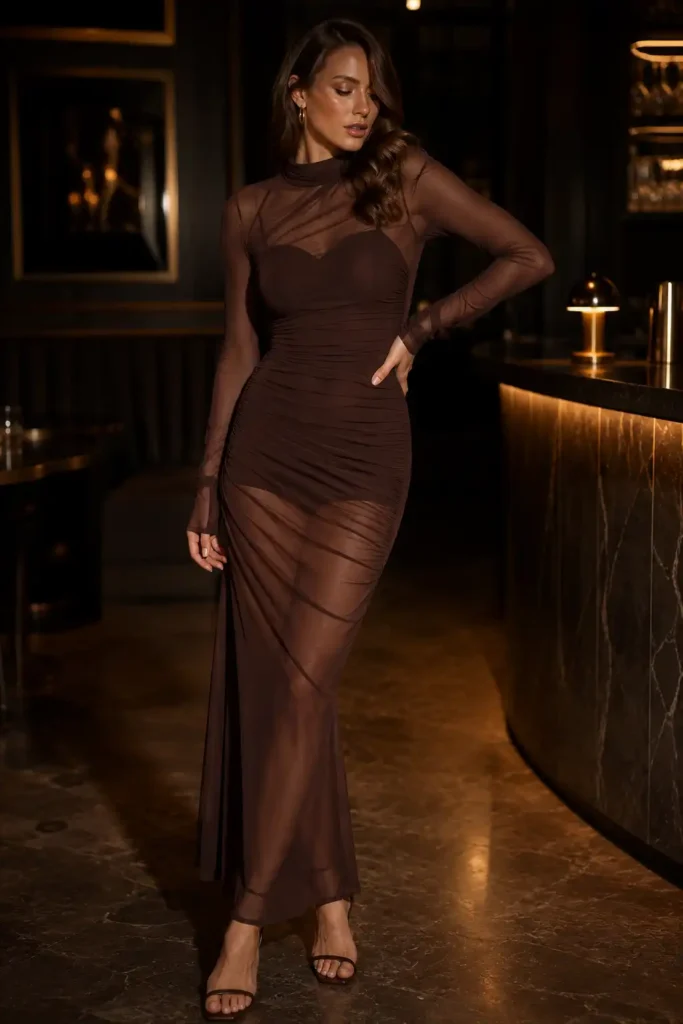
- Compare regular mesh, stretch mesh and power mesh by role.
- Match lining stretch and transparency to the intended coverage.
- Check edge recovery around neckline and cut-out areas.
- Control satin grain, tension and surface marking.
- Reassess elastic when the fabric weight or stretch direction changes.
Match Elastic Support to Stretch Fabric Behavior
Fabric mechanics set the limits for every support decision. Stretch percentage alone is not enough; recovery, weight, structure, direction, surface sensitivity and lining compatibility affect how a fitted dress holds shape. Jinfeng Apparel develops support around the approved material package rather than treating elastic as an independent fix.

Jersey and Rib Knit Need Recovery Control
Jersey and rib knit are common choices for bodycon and fitted casual-to-party silhouettes because they follow the body and allow movement. The risk is growth: a fabric can stretch easily during fitting yet fail to return fully after several hours of wear. Poor recovery may appear as a loose neckline, softened waist definition, longer hem, rotated side seam or a skirt that rides and then stays displaced. Rib structures can also elongate differently along the body depending on rib direction and weight.
Elastic should be introduced only after the base fabric is assessed. If the shell already provides adequate recovery, extra edge tension may create unwanted gathering or pressure. If recovery is weak, stronger elastic around one edge cannot correct overall fabric growth through the torso. Pattern ease, side-seam shape and lining choice may need revision.
Jinfeng Apparel controls knit development through fabric stretch and recovery review, weight and shrinkage awareness, fabric relaxing where required, cutting direction, side-seam stability and garment measurements. Sample approval should include movement and recovery checks. For repeat orders, any change in jersey supplier, weight, composition or finish needs comparison with the approved fabric record because a visually similar knit can produce a different fit materially.

Ponte and Roma Balance Structure and Comfort
Ponte and Roma knits are useful when a fitted dress needs more structure than soft jersey.
Their density can support a cleaner silhouette and reduce transparency, but thickness and elasticity still have to match season, design and comfort. Fabric that is too firm may restrict movement or create excessive compression around bust and hip. Fabric that is too soft or too elastic can lose the sharper body line expected from a structured knit dress.
Support construction should respect the fabric’s own resistance. A firm ponte neckline may need only controlled edge finishing, while a lower-density version may benefit from stabilization. Waist or back elastic should be tested with the garment circumference because the fabric already contributes significant recovery. Layering a strong elastic over a structured knit can make the waist feel unnecessarily tight and may cause the dress to migrate upward during movement.
Jinfeng Apparel evaluates thickness, weight, stretch, recovery, structure, intended season, side-seam flatness and wash-related size risk for ponte and Roma styles. Fit samples should confirm hip comfort, waist definition and hem behavior. Size grading also needs review because the pressure difference between sizes can become more noticeable in structured stretch fabrics than in softer knits overall.

Stretch Satin and Power Mesh Need Different Support
Stretch satin and power mesh represent two very different support environments. Stretch satin has a visible surface, moderate drape and enough elasticity for fitted cocktail, party and bodycon styles. Pressure lines, seam tension and puckering are easy to see because the sheen reflects construction irregularities.
Elastic placed under satin should therefore stay flat, avoid excess bulk and work with the grain and stretch direction rather than pulling the shell into ripples.
Power mesh is often more suitable as an internal support material. It can add controlled compression, lining support and recovery in bodycon, corset-inspired or shaping-led constructions. Strong power mesh can also feel restrictive, so stretch direction, seam tension, skin comfort and size grading require fitting.
A support layer that feels balanced in a base size may become too firm in a larger size if grade rules do not account for material behavior.
Jinfeng Apparel works with stretch satin, mesh, power mesh, jersey, rib knit, ponte and spandex blends within its womenswear material system. Fabric changes during sampling trigger a new review of drape, stretch, lining, pattern and support because a new material can change the entire balance of the fitted garment during bulk production and later repeat-order production runs.
Correct the Pattern Before Increasing Elastic Tension
Support starts with geometry. Upper-bust circumference, neckline shape, bust projection, waist placement, hip ease and side-seam balance determine how a fitted dress sits before elastic contributes any grip. Jinfeng Apparel corrects pattern relationships first, then uses support components only where the structure actually needs them.

Upper-Bust Security Starts With the Pattern
Upper-bust and neckline problems are often misdiagnosed as an elastic problem.
A strapless neckline that gaps at center front, stands away at the side or slips down can come from an oversized upper-bust circumference, incorrect cup position, insufficient back shaping or a neckline curve that does not follow the body.
Shortening an elastic band can temporarily increase grip, but it can also pull the edge into the skin while leaving the underlying pattern imbalance unresolved.
Jinfeng Apparel develops fitted and strapless patterns around upper bust, full bust, under bust, neckline depth, back height and side-body coverage.
Fit photos from front, side and back help the pattern team see whether movement comes from the edge, the bust shape or the entire garment circumference. Cups, boning, lining and anti-slip components are assessed only after the base fit has a stable relationship with the body.
A strong PP standard should show a smooth neckline with secure coverage, even tension and no obvious distortion. Elastic length is then recorded as part of the approved construction rather than used as the primary tool to force the neckline inward. The same review also checks whether seam allowance, lining attachment and closure placement are pulling the edge away from the intended neckline path. Those details often explain instability that looks like weak elastic at first glance.

Bodycon Fit Depends on Controlled Negative Ease
Bodycon fit depends on controlled negative ease and balanced shaping through bust, waist and hip. Too much negative ease can cause side seams to rotate, fabric to whiten or become overly sheer, hems to ride upward and elasticized edges to dig into the body. Too little negative ease can produce loose areas that no narrow elastic band can correct. The pattern needs to reflect the actual stretch and recovery of the approved fabric.
Jinfeng Apparel reviews bust, waist, hip, dress length, side seams and hem behavior during fitted-dress development.
Fabric relaxing, stretch direction and cutting orientation are also important because a knit can change dimension before or after sewing. When a fit sample shows hip restriction or waist looseness, correction should be made at the pattern and size-chart level before stronger support is introduced.
Movement fitting is essential. Sitting can increase hip and waist demand; walking can reveal hem migration; arm movement can expose neckline instability. Pattern revisions should convert those observations into measurable changes so the next sample tests a clear correction instead of adding tension without diagnosis. Sample comments should identify the exact location and symptom: front waist pressure, back waist looseness, hip drag lines, side-seam rotation or hem rise. Specific feedback gives the pattern maker a defined correction target and keeps later PP approval measurable.

Support Must Survive Size Grading
Support must also survive grading. A base-size sample may be balanced because elastic length, fabric stretch and body circumference happen to align at one size. Simple proportional scaling can change pressure in smaller and larger sizes, especially around upper bust, waist and hip. Elastic working length, neckline circumference and internal support may need size-specific review rather than one percentage copied across the range.
Jinfeng Apparel uses grade-rule review, pattern version control, size-chart confirmation and garment measurement to carry fit into production. Sensitive points include bust, waist, hip, strap length, armhole, neckline, dress length and slit height. Fitted knits and strapless styles deserve additional attention because a small grading error becomes visible through pressure, gaping or movement.
Approved elastic placement belongs inside the final production record together with pattern version, trim specification and QC points. If a reorder changes fabric weight, elasticity, lining or support components, the previous grade and elastic relationship should be checked again. Repeatability comes from preserving the full fit system rather than copying a trim length in isolation. For multi-size production, measurement tolerances should be agreed around the most fit-sensitive points. Elastic-supported edges need consistency in both garment dimension and trim application, because variation in either side of the system changes pressure and wearing comfort.
Build Bust and Neckline Support as a System

Elastic and Anti-Slip Control

Cups and Structured Lining

Boning With Elastic Support
Choose Support by the Garment Failure Mode
Support choice should follow the failure mode, fabric and silhouette. Several fitted styles need a combined structure rather than one stronger elastic. The matrix below gives development directions for sample planning; final components still require review against the approved pattern, fabric and wearing requirements.
| Garment Issue | Development Direction | Key Validation |
|---|---|---|
| Strapless dress slips downward | Correct upper-bust pattern first; assess elastic, anti-slip, cups, boning and back structure | Arm movement, sitting, breathing, neckline pressure |
| Neckline gaps away from body | Review neckline curve, upper bust and lining before increasing edge tension | Edge flatness, bust coverage, recovery after movement |
| Bodycon dress loses shape | Review fabric recovery, negative ease and side-seam balance | Bust-waist-hip fit, hem riding, recovery after wear |
| Waist elastic rolls or digs | Review waist circumference, band width, recovery and attachment | Sitting comfort, edge pressure, garment migration |
| Ruched sections look uneven | Define gathering marks, finished length and elastic application | Left-right symmetry, side seams, bulk repeatability |
| Fitted mesh needs internal support | Assess power mesh, lining and edge stabilization | Transparency, compression feel, skin comfort, grading |
| Stretch satin shows rippling | Reduce unnecessary tension and review grain, seam and support bulk | Surface flatness, seam marking, neckline condition |
| Support feels right only in one size | Review grade rules, circumference and elastic working length | Cross-size pressure, measurements, movement fit |
Development Workflow From Design to PP Approval
Support development should move through controlled decisions rather than one late-stage trim adjustment. Jinfeng Apparel links design review, fabric behavior, pattern development, support selection, fitting and PP approval so every revision has a clear reason and every production standard can be traced back to an approved sample.
| Development Stage | Technical Review | Approved Output |
|---|---|---|
| Design Input | Reference image, tech pack, original sample, silhouette, support concern, size range | Development brief |
| Fabric Direction | Stretch, recovery, weight, drape, transparency, lining compatibility | Approved fabric direction |
| Pattern Development | Upper bust, bust, waist, hip, neckline, back, side seam, dress length | First pattern |
| Support Selection | Elastic, anti-slip, cups, boning, lining, power mesh where required | Support and trim direction |
| First Sample | Construction feasibility, proportion, fabric behavior, initial fit | First fitting evidence |
| Fit / Revision | Movement, pressure, slipping, gaping, recovery, measurements | Revised pattern and support setting |
| PP Approval | Final pattern, fabric, trims, measurements, workmanship and appearance | Locked PP standard |
| Bulk Handover | Pattern, size chart, trim record, sewing instructions and QC points | Production-ready package |
Fit Samples Must Prove Stability in Motion
A fit sample is where support moves from specification to wearing performance. Jinfeng Apparel evaluates the garment on body through front, side and back views, key measurements and movement. Approval is based on stability, proportion and comfort, not only whether the elastic can hold tension.

Static Fit Establishes the Base Geometry
Static fitting establishes the first set of facts: neckline position, bust coverage, waistline, hip fit, side seams, hem level and visible pressure.
For a strapless or low-neck dress, upper-bust fit and cup relationship are checked before any decision to shorten elastic. For a bodycon dress, bust, waist and hip measurements are compared with the approved size chart while the side seams are observed for rotation or drag.
Photographs from front, side and back are more useful than a single mirror image because they reveal whether the garment is balanced around the body. Close-up images of neckline, armhole, waist and support edges help the pattern team distinguish pattern problems from trim problems. Measurement notes should identify exact differences instead of comments such as “too tight” or “too loose.”
Jinfeng Apparel converts fit comments into pattern, size-chart, trim or construction revisions. The goal is a sample that can become a production standard. When fit feedback changes upper-bust circumference, neckline depth, waist or hip, related elastic length and support placement are rechecked rather than left unchanged. The fitting team also checks whether seam bulk, zipper placement or lining attachment is influencing pressure around the support zone. Those construction details can change the way an otherwise correct elastic specification feels on body.

Movement Reveals Real Support Performance
Movement fitting tests whether the garment remains stable after the wearer stops standing still. Arm lifting can reveal neckline movement and side-body exposure.
Sitting changes waist and hip demand. Walking can show hem riding, skirt migration and side-seam twist. Turning the torso can expose back tension or asymmetric support. A fitted dress intended for parties or occasion wear should also allow normal breathing and a realistic range of movement without repeated adjustment.
Elastic support should recover after each movement cycle. A neckline that stretches open and returns slowly can feel unstable even when the initial fit looks correct.
An overly aggressive band may hold position but create red marks, digging or visible compression. Both outcomes indicate a need to review tension, width, placement, fabric recovery or pattern circumference.
Jinfeng Apparel uses fit feedback to decide whether the next step is a revised sample, additional structure or PP preparation. Complex corset, strapless, mesh, lace, sequin and support-led samples typically require more development attention than ordinary dresses. Revised-sample planning should focus on the correction being tested. Pattern, elastic, lining or support changes are documented separately so the team can see which adjustment improved stability and which variable should remain locked for PP approval.

Approval Records Turn Fit Into a Standard
Approval needs a clear record. The accepted sample should define more than the final appearance: pattern version, measurements, fabric, lining, elastic specification, support placement, cup or boning positions, seam construction and relevant QC checks all need to point to the same standard. Without a linked record, a good fitting can be lost when the style moves from the sample room to production.
Jinfeng Apparel keeps sample revisions traceable through pattern changes, measurement changes, fabric replacement, trim adjustment, sewing method, comments and approval status. PP approval should occur only after the main structure, material package and fit have been confirmed. A fabric substitution after fitting can change stretch, drape and pressure, so support settings may need another review.
Fit approval also prepares the style for grading. Base-size stability is not enough for a multi-size range. The development record identifies the sensitive points that need attention during grade review and bulk measurement. A support system becomes commercially useful only when the approved behavior can be repeated across sizes and production lots. Before production release, photos, measurements and construction notes should agree. Any unresolved comment around slipping, gaping, pressure, rolling or recovery remains a development issue, because small fit uncertainties tend to become larger once multiple sizes and production quantities are involved.
Lock Elastic and Support Trims Before Bulk
Elastic Specification Lock

Cups, Boning and Anti-Slip
Repeat-Order Trim Records
Grade Support With the Full Size Range
A support system approved in one base size can feel very different across the size range. Fitted dresses concentrate pressure around bust, waist, hip and neckline, so grade rules, elastic working length and fabric extension must be reviewed together before bulk cutting.

Grade Pattern Circumference and Elastic Together
Size grading begins with the approved base pattern, but fitted garments cannot be enlarged or reduced as a simple visual scale. Bust, waist and hip increments have to preserve silhouette and movement, while neckline, armhole and upper-bust changes must maintain coverage and support. A strapless edge that is secure in a base size can become too tight in a smaller size or too loose in a larger size if elastic working length and pattern circumference do not progress together.
Jinfeng Apparel reviews grade rules around bust, waist, hip, dress length, strap, armhole, neckline and slit where relevant. For elastic-supported areas, the team considers the finished garment measurement and the support behavior rather than copying one elastic percentage across the range. Fabric stretch and recovery remain part of the decision because different materials can change perceived pressure at identical garment measurements.
Grading review should identify the most sensitive support points before bulk. Those points become part of sample or measurement checking so size differences remain deliberate and traceable. The goal is consistent wearing behavior across the range, not identical tension measured from a strip of elastic. Measurement photos and sample notes should identify the size and exact location of any pressure or looseness, making later pattern correction easier to verify.
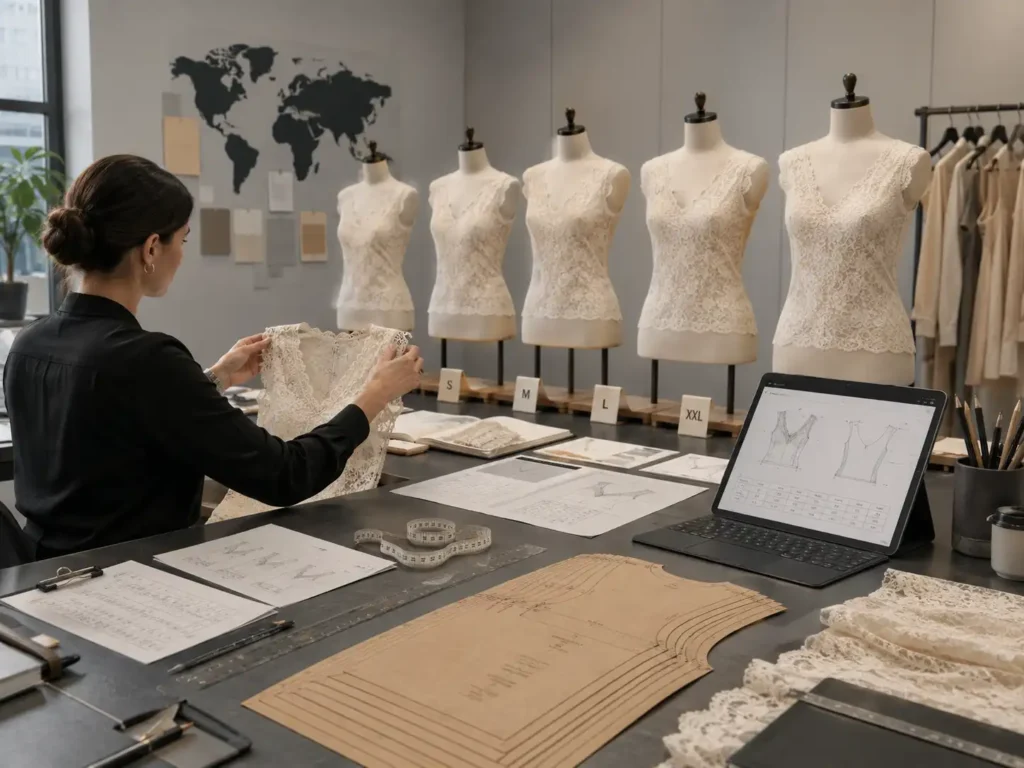
Control Negative Ease Across Every Size
Bodycon and structured stretch dresses need special attention because negative ease changes how each size interacts with the fabric. A slightly incorrect hip increment can create side-seam rotation, hem rise or excessive stretch in one size while another size appears loose. When a lining is added, shell and lining need compatible grade and stretch behavior so the inner layer does not restrict the outer garment or create local pressure.
Jinfeng Apparel uses size-chart confirmation, pattern version control, fabric relaxing where required, cutting QC, in-line measurement and finished-garment measurement to control size stability. The approved PP and Golden sample provide reference points for fit-sensitive construction. Elastic placement and finished support measurements should be included wherever variation would affect neckline security, waist comfort or recovery.
Large size ranges also require realistic tolerance management. Stretch garments and woven fitted garments do not behave identically, so tolerance should reflect the approved specification, material behavior and the brand’s quality standard. Measurements outside the agreed range need correction rather than being accepted because the fabric can stretch. Waist, bust and hip are especially sensitive because small measurement differences can change the amount of fabric extension and therefore alter both comfort and visual fit during wear consistently.
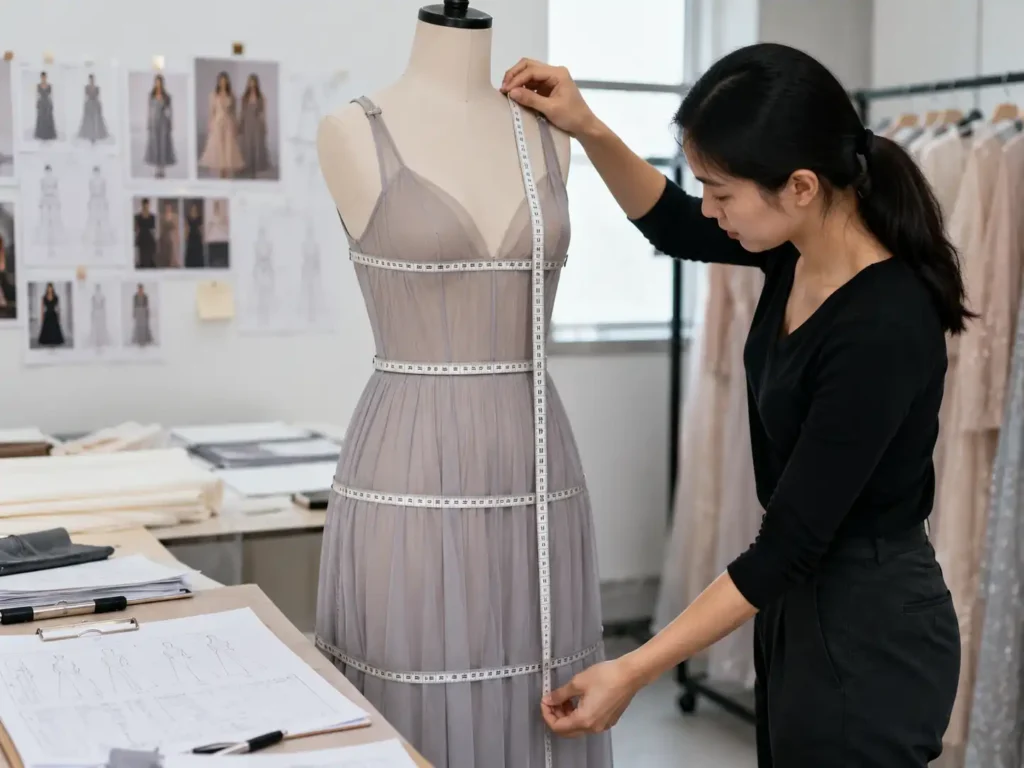
Verify Support Beyond the Base Size
Support grading should be verified through selective fitting whenever the silhouette or size range creates risk. A base size alone may not reveal pressure at a larger bust, insufficient upper-bust grip in another size or a waist band that rolls under different body proportions. Plus-size or extended-size development often requires proportion and support changes rather than simple enlargement, especially around bust support, waist position, armhole coverage and strap width.
The review can combine measured samples, fitting photos and garment behavior notes. Comments should record whether the issue comes from pattern circumference, elastic working length, fabric recovery, cup position, lining or another construction element. Clear diagnosis avoids repeatedly changing several variables at once.
Once the grade is approved, production controls need the same reference. Size labels, bundle separation and garment measurements help keep the technical size system intact through cutting, sewing and packing. For repeat orders, grade files and support records can be reused as a starting point, but any fabric or trim change requires another compatibility check before the old standard is released. Final release should connect the grade rule, elastic specification and measurement checklist so each production size has a controlled target rather than an assumed relationship in bulk.
Elastic Workmanship Determines the Finished Fit
Good elastic can still fail through poor attachment. Stitch balance, seam construction, feed control, edge finishing and placement accuracy determine whether support stays flat and consistent. Fitted garments expose small workmanship differences quickly because tension is visible around the body and often repeated along curved edges.
Control Elastic Feed and Attachment Length
Elastic attachment must control two materials that may feed differently through the sewing process.
If the operator stretches one section more than another, finished pressure and gathering can vary even when the raw elastic specification is correct. Curved necklines, upper-bust edges, waist sections and ruched seams are especially sensitive because placement errors become visible on the body.
Reference marks, finished lengths and sewing instructions are more reliable than asking operators to “stretch evenly.”
Jinfeng Apparel records sewing method, seam allowance, stitch density, neckline or armhole finish, lining attachment and support placement in its construction records. For elastic-led areas, the approved sample should show where the elastic starts and ends, how it is joined, how much of the edge is controlled and how the seam should lie after recovery. Left-right symmetry is checked on designs with mirrored support zones.
Inline inspection should identify uneven tension before many pieces are completed. A small variation can cause neckline waves, side differences or uncomfortable pressure. Early correction protects both appearance and fit while reducing rework at the finishing stage. The production team also checks whether elastic joints are positioned away from highly visible or high-pressure areas where extra bulk could affect appearance, comfort or durability.
Keep Supported Edges Flat and Comfortable
Edge flatness is one of the clearest signs of controlled workmanship.
A supported neckline or waist should lie smoothly in the intended shape without tunneling, rippling or excessive gathering unless gathering is part of the design. Problems can come from elastic tension, stitch tension, seam allowance, differential feeding, lining mismatch or a shell fabric that reacts badly to the selected construction.
Thin stretch satin and lightweight mesh are particularly unforgiving because small distortions remain visible.
The sewing method should be tested on the actual production material package.
A technique that works on ponte may be too bulky for stretch satin; a method suitable for soft jersey may not stabilize power mesh correctly. Sample development gives the team time to compare edge finish, recovery and comfort before the method is locked.
Jinfeng Apparel also checks skin-facing details. Elastic ends, seam joins, boning channels, cup edges and lining attachments should not create hard points. A technically secure edge still fails commercially if it scratches, rolls or leaves obvious pressure marks during normal wear. Pressing and finishing must also avoid heat or handling conditions that distort the elastic-supported edge. Final appearance is assessed after the garment has relaxed, not while the seam is still stretched from sewing.
Standardize Workmanship Across Bulk Production
Bulk consistency depends on controlling variation between operators, sizes and production lots. The approved sample cannot carry every instruction by appearance alone, so elastic specification, placement marks, construction sequence and finished measurements should be transferred into the production package. Support-sensitive areas then receive focused inline and final checks instead of being treated like ordinary seams.
For ruched styles, the team can compare gathering length, symmetry and side-seam position. For strapless styles, neckline flatness, upper-bust measurement and support placement are reviewed. For bodycon knits, side-seam stability, garment measurements and recovery remain important. Different silhouettes therefore need different workmanship checkpoints even when elastic appears in all of them.
Repeat orders require the same discipline. Jinfeng Apparel can retain elastic, pattern, fabric and construction records, but a changed material lot, fabric weight or elastic supplier may alter sewing behavior. A short technical recheck before bulk helps confirm whether the old method still produces the approved result. Consistency comes from controlled inputs and measurable outputs, not from assuming the production line will recreate a sample by sight. Production notes should also specify which dimensions are checked relaxed and which are evaluated during fitting, preventing confusion between garment measurement and elastic extension behavior in use.
Transfer Approved Support Standards Into Bulk Production
Final Pattern and Grade
Handover controls:
- Final pattern version and revision notes.
- Approved size chart and grade rules.
- Sensitive support-zone measurements.
- Lining and internal structure patterns where used.
- Placement references for cups, boning, elastic or anti-slip components.
Support Trim Handover
Handover controls:
- Material and specification reference.
- Color and supplier confirmation where required.
- Placement marks and attachment method.
- Approved development sample or trim reference.
- Known comfort, recovery or wash-related risks.
Production and QC Standard
Handover controls:
- Sewing method, seam allowance and stitch guidance.
- Finished elastic-supported edge or section measurements.
- Inline checkpoints for tension, flatness and symmetry.
- Final garment measurements and appearance checks.
- Packing method when pressure or folding could distort the garment.
Bulk QC for Elastic-Supported Fitted Dresses
Bulk QC for elastic-supported dresses must verify more than finished appearance. Material behavior, trim specification, sewing consistency, measurements and recovery all influence fit. Jinfeng Apparel uses process checks from incoming materials through inline sewing, garment measurement and final review so support performance stays linked to the approved sample.
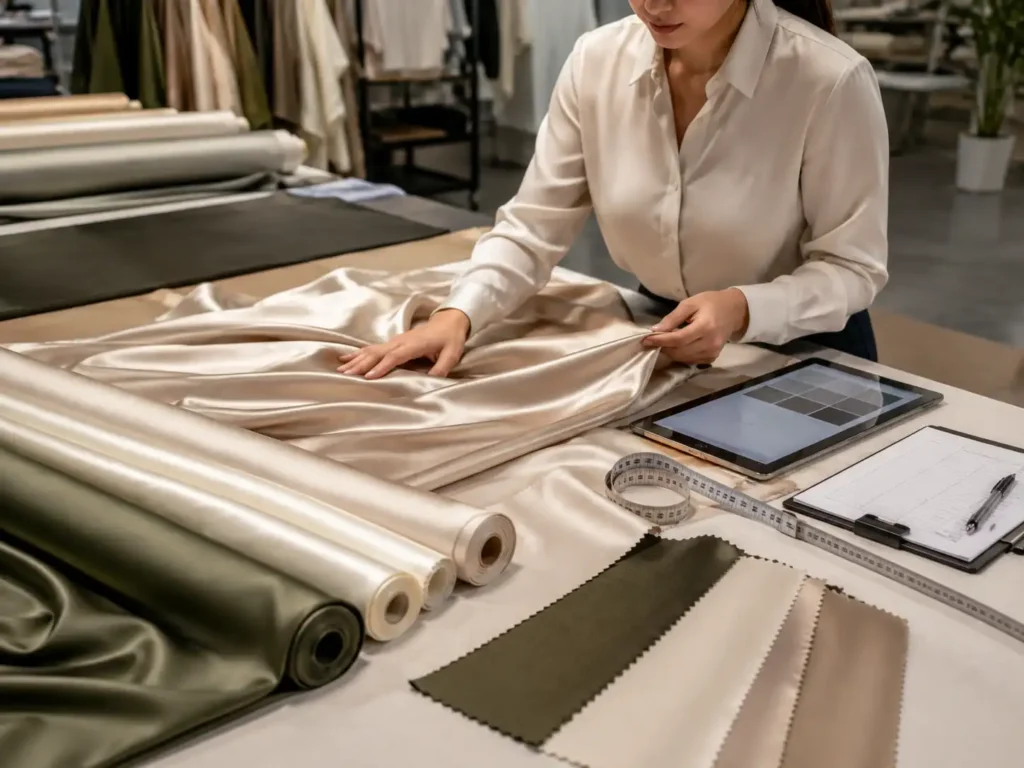
Start QC With Fabric and Support Trims
Incoming control begins with the materials that create fit. Stretch knits are reviewed for weight, stretch, recovery, shrinkage risk, twisting and batch consistency according to project requirements. Elastic is checked against the approved width, stretch feel, recovery, color and specification, while cups, boning, anti-slip tape and lining are compared with their approved references. A substitution cannot be treated as equivalent simply because the color and appearance are close.
Material variation can change the fitted silhouette before sewing begins. A jersey with weaker recovery may loosen at the waist and hip. A firmer elastic may increase edge pressure. A different power mesh can change internal compression. Jinfeng Apparel therefore links incoming review to the sample standard and trim record rather than approving components in isolation.
For fit-sensitive programs, material issues are easier to correct before cutting than after garments are completed. Fabric batch records, approved swatches and support-trim references help the production and QC teams identify deviations early. When material behavior changes materially, pattern or sample review may be required before bulk continues. Elastic lots can also be spot-compared for left-right consistency and visible defects before issue to the line. Support components with skin contact are reviewed for rough edges, hard joints or surface conditions that could create discomfort once the dress is under tension.

Inspect Support During Sewing and Measurement
Inline QC focuses on how the support system is being built. Inspectors review seam quality, elastic placement, edge flatness, left-right symmetry, neckline shape, side seams, lining position and relevant support components while production is still running. Ruched styles need gathering consistency; strapless styles need controlled upper-bust construction; bodycon styles need side-seam and measurement stability. Early inspection prevents a repeated sewing variation from spreading through a large quantity.
Measurement QC connects construction to fit. Bust, waist, hip, dress length, strap, neckline, armhole and slit can be checked according to the style and approved size chart. Elastic-supported sections may also need finished relaxed measurements or position checks so garment dimension and support application stay consistent. Tolerance is defined by the brand standard, product type, material behavior and executable production range.
If a measurement or support edge is outside the approved range, correction should address the cause. Trimming or stretching the elastic after completion is not a reliable substitute for correcting sewing, pattern or material variation at source. Process feedback should be documented quickly enough for production teams to adjust the same day. Reinspection after correction verifies whether the change solved the original problem without introducing a new wrinkle, pressure point or dimension shift elsewhere in the fitted garment.

Confirm Fit-Sensitive Details Before Shipment
Final review confirms whether the finished dress still reflects the approved wearing and visual standard after sewing, pressing and packing preparation. Inspectors can check neckline stability, edge smoothness, symmetry, garment measurements, support component position, lining coverage, zipper behavior and overall fitted shape. Knit and stretch styles also need attention to recovery, side-seam twisting and wash-related risk where required by the project.
Jinfeng Apparel supports internal AQL inspection or coordination with client-appointed third-party inspection according to project requirements. Final inspection does not replace process control; it verifies a production system that has already been checked through materials, cutting, sewing and measurements. Large orders benefit from the layered approach because a support-related defect can be visually small yet affect comfort and return risk across many pieces.
Packing also matters for fitted dresses. Folding, compression or heat from pressing can leave marks on stretch satin or distort structured areas. The final release should therefore confirm garment condition after finishing, not only immediately after the last sewing operation. Shipment release should reference the final approved style, color and size breakdown, especially when several fitted silhouettes share similar fabrics or trims. Clear identification prevents a support component or construction standard from being mixed between styles during finishing and packing.
42,000-Piece Fitted Dress Program With Support Control
A fitted-dress case should prove how support decisions survive a multi-style production program, not only show finished photos. The following anonymous program uses a realistic order structure for established fashion accounts: 16 fitted styles, approximately 42,000 pieces, multiple stretch materials and several support constructions managed under one development and QC framework.

Program Structure and Technical Risk
An anonymous US premium partywear and fitted-dress program covered 16 styles and approximately 42,000 pieces across jersey bodycon dresses, ponte midi dresses, ruched stretch-mesh minis and selected strapless stretch-satin styles. The product line shared a close-to-body visual direction, but the support requirements were not interchangeable. Soft jersey needed recovery and hip-fit control; ponte needed structured comfort; stretch mesh required neckline and lining stability; strapless satin needed upper-bust security with a cleaner internal construction.
Development began by grouping styles according to fabric behavior and support risk rather than treating all 16 styles as one sewing category. The pattern team reviewed bust, waist, hip, neckline, side seam and dress length for the fitted silhouettes. Strapless styles received additional review around upper bust, cup position, back structure and support components. Ruched styles required controlled gathering length and symmetry.
Elastic was used only where the approved design needed edge or local support. Other areas relied on pattern, fabric recovery, lining or structured components. The approach prevented a single “stronger elastic” solution from being copied across several materials with different stretch and surface behavior. The grouped development plan also made fitting feedback easier to compare, because similar symptoms could be traced back to material behavior, pattern balance or support construction instead of being treated as isolated sample defects.

Sampling and Support Approval
Sampling moved through first sample, fit review, revised samples where required and PP approval. The development team compared front, side and back fit, measured critical points and documented comments around neckline movement, waist pressure, hip restriction, side-seam rotation and hem rise. For strapless pieces, arm movement, sitting and normal breathing were included in the review because static standing did not provide enough evidence of upper-body security.
Elastic and support trims were approved by role and placement. Standard elastic specifications could be developed within normal supplier timing, while special requirements were scheduled separately. Stretch mesh and jersey lining were compared for recovery and coverage. Where a fabric change altered stretch or weight, the pattern and support relationship was rechecked before the next sample rather than carried forward unchanged.
PP release connected the final pattern, size chart, fabric, elastic or support trims, construction notes and QC points. The sampling record created a common reference for production teams handling several fitted styles at the same time and reduced the risk of support settings being mixed between similar-looking designs. Sample timing was confirmed by style complexity and material readiness rather than forced into one development window. Styles with more internal support received additional fitting and revision attention before PP approval, keeping production release tied to resolved fit instead of calendar pressure.

Bulk Control and Repeat-Order Readiness
Bulk control focused on the failure modes most likely to create returns in fitted dresses. Incoming fabric review covered stretch, recovery, shrinkage and visible consistency according to the relevant material. Inline QC checked elastic placement, ruching symmetry, side seams, neckline condition, lining position and construction details. Measurement QC tracked bust, waist, hip, dress length and other fit-sensitive points against the approved size charts. Strapless styles received additional review around upper-bust measurement and support placement.
The 42,000-piece program was managed as a multi-style project rather than one large undifferentiated order. Style-level records separated patterns, support trims, fabric references and QC requirements, while common materials were still coordinated for purchasing and production planning. The structure helped keep technical differences visible even when several dresses shared similar colors or stretch fabrics.
For later replenishment or color extensions, approved pattern, fabric, elastic and construction records provide a faster starting point. Reorders still require confirmation of material availability and behavior, because a different dye lot, fabric source or support trim can change the fitted result even when the visual design remains unchanged. Production scheduling and final release were confirmed after PP approval, material readiness, quantity, size-color breakdown and QC requirements were locked. Bulk lead time was not treated as one fixed number because the 16 styles carried different construction and material demands.
What Brands Should Check Before Approving a Supplier
Pattern and Fit Engineering
Stretch Fabric Knowledge
Support Trim Knowledge
Fit Sample Discipline
Size Grading Control
Bulk QC System
Elastic Support Frequently Asked Questions

Send Your Fitted Dress for Technical Review
Fitted-dress support is easiest to evaluate before sampling begins. Send a reference image, tech pack, line sheet or original sample photos together with the intended fabric direction and size range. Jinfeng Apparel can review whether the structure should rely on pattern fit, fabric recovery, elastic, anti-slip support, cups, boning, lining or a combination, then define the sample route before bulk planning.
For a useful technical review, please include:
- Fitted-dress type and key design images.
- Quantity per style and color; standard MOQ is 200 pcs per style/color.
- Target size range and available size chart.
- Fabric direction, composition or approved fabric reference.
- Areas causing slipping, gaping, pressure, rolling or poor recovery.
- Preferred support details if already defined in the tech pack.
- Private-label or packing requirements that affect construction planning.
- Target delivery window and any fixed launch milestone.
Clear development information allows pattern, fabric, trim, sample and production teams to evaluate the same garment standard from the start.

