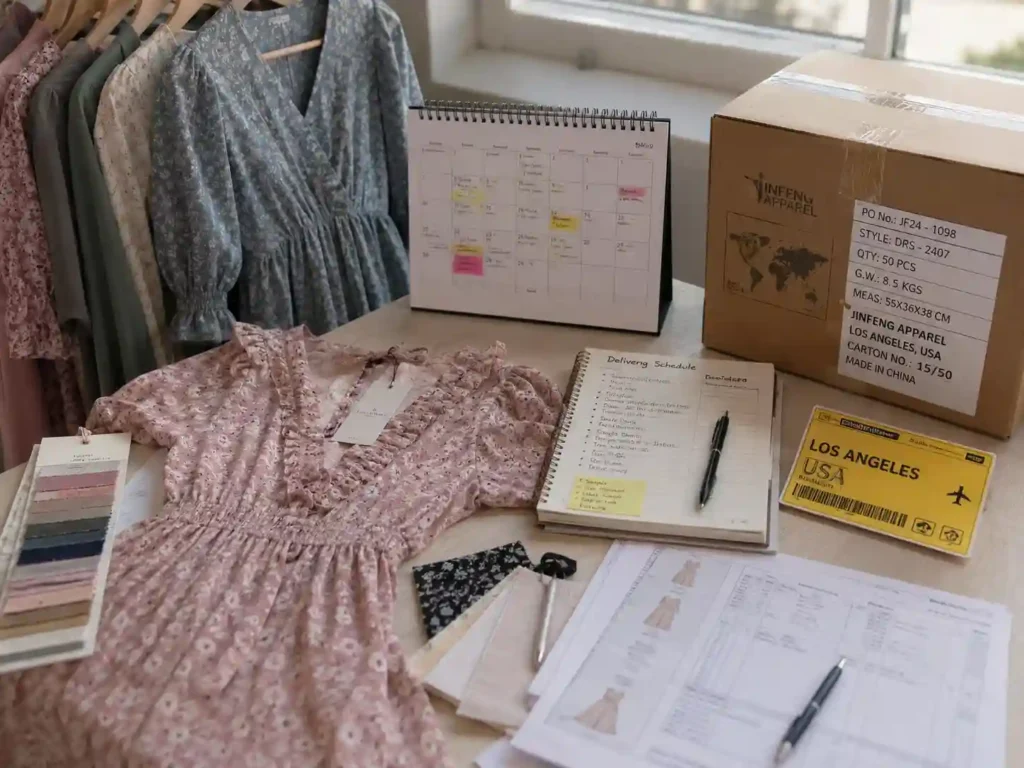
Skip to content
Ecommerce-Ready Dress Manufacturer
Custom dress development, photo-ready sampling, private-label packing and scalable production for online fashion brands preparing launch-ready womenswear collections.
Jinfeng Apparel helps fashion teams turn dress ideas, reference images, tech packs, samples and line sheets into ecommerce-ready garments for online launches, campaign shoots, warehouse intake and repeat orders. Our Guangdong-based women’s fashion manufacturing system supports dress sampling, fit control, PP approval, bulk production, QC, private-label packing, SKU records, carton marks and export delivery.
- Photo-ready sample support— model shoots, PDP visuals, campaign launches and pre-launch review.
- 2 sample rooms and 7+ senior pattern makers— fit, neckline, waist, hip, length, lining and movement control before bulk.
- Private-label packing support— woven labels, care labels, hangtags, SKU labels, barcodes, polybags and carton marks.
- 15+ QC inspectors— fabric, cutting, sewing, measurement, pressing, final garment and packing checks.
- Anonymous ecommerce case range: 16–24 styles / 26,000–48,000 pcs— online dress programs across US, UK and Australian fashion markets.
Ecommerce Dress Manufacturing at a Glance
Since 2008
- 16+ years in women’s fashion manufacturing.
- Dress, skirt, jumpsuit, matching set and private-label womenswear support.
- Development records help repeat orders and new color extensions.
6 Owned Factories
Jinfeng operates 6 owned women’s fashion factories built around different womenswear structures, fabric groups and production rhythms.
Ecommerce dress programs can be allocated by fabric type, construction difficulty, fit risk, quantity plan and launch timing.
- Factory matching by product structure.
- Stronger control for complex dress styles.
- Suitable for multi-style ecommerce programs.
100,000+ Monthly Capacity
- Supports multi-style and multi-batch production.
- Capacity reviewed by style, color and delivery plan.
- Suitable for planned ecommerce launches after PP approval.
2 Sample Rooms
- First sample, fit sample and revised sample support.
- Photo-ready sample and PP sample preparation.
- Sample notes guide bulk and QC standards.
7+ Pattern Makers
Senior pattern staff support dress structure review, size adjustment, neckline balance, waist shaping, skirt length and movement control.
Ecommerce dress programs need pattern logic before online size charts, product photos and repeat-order records become reliable.
- Bust, waist, hip and length review.
- Neckline, strap, sleeve and slit correction.
- Pattern records support future replenishment.
MOQ From 200 pcs
- MOQ reviewed by style and color.
- Fabric and trim requirements affect final planning.
- Built for organized ecommerce brands, not ready-stock resale.
What Makes a Dress Ecommerce-Ready
Ecommerce-ready dress manufacturing means a garment is prepared for online selling, not merely sewn into finished clothing. Online fashion teams need dresses suitable for photography, size charts, SKU operations, private-label packing, warehouse receiving and repeatable bulk production.
Ready for Photography
A dress prepared for ecommerce must look stable on camera. Fabric shine, drape, neckline depth, waist placement, hem balance, sleeve shape, strap length and pressing quality all influence model shoots and product visuals.
Jinfeng reviews photo sample requirements before bulk work, especially for satin, mesh, lace, chiffon, sequin and bodycon styles where camera performance depends on fabric behavior and fit balance.
- Fabric shine, drape and visual balance reviewed.
- Neckline, strap, sleeve and hem checked before sample dispatch.
- Pressing and surface condition prepared for photos.
Ready for Fit Review
Online dress sales depend on measurement clarity.
Jinfeng checks bust, waist, hip, shoulder, sleeve opening, strap length, front length, back length, slit height, lining coverage and stretch recovery according to style structure.
Fit review helps online brands reduce avoidable sizing confusion before moving into PP sample approval and production.
- Bust, waist and hip control.
- Length, slit and lining review.
- Stretch recovery checked for fitted styles.
Ready for Private Label
Ecommerce-ready garments need brand presentation before leaving the factory. Jinfeng supports woven labels, printed labels, size labels, care labels, hangtags, hang strings, barcode stickers, SKU labels, polybags, carton marks and warehouse labels.
Packing requirements can be reviewed during sampling, preventing label or barcode problems during final delivery.
- Woven labels, care labels and size labels.
- Hangtags, barcode stickers and SKU labels.
- Polybags, carton marks and packing lists.
Ready for Repeat Orders
A winning dress SKU often needs reorder speed and version control. Jinfeng keeps pattern records, fabric references, trim details, measurements, packaging requirements and production notes for repeat programs.
Record keeping helps brands extend best-selling dresses into new colors, new lengths, updated fabrics or seasonal capsule collections.
- Pattern and fabric records retained.
- Trim, label and packing details saved.
- Repeat orders reviewed before production restart.
Built for Online Fashion Teams
DTC Fashion Brands
- Owned ecommerce launches and campaign programs.
- Product photo and fit review before bulk.
- SKU, barcode and polybag support for warehouse intake.
Premium Ecommerce Brands
- Premium fabric and surface finish review.
- Fit and garment presentation control.
- Packing condition checked before shipment.
Fast Fashion Teams
- 10–30 style development rounds.
- Multi-color and multi-size planning.
- Launch schedule and batch shipment support.
Sourcing Managers
- MOQ and cost factor review.
- Fabric and trim feasibility discussion.
- Delivery and packing structure planning.
Product Developers
- Reference image and tech pack review.
- Pattern and construction risk feedback.
- Sample comments converted into revision actions.
Private Label Programs
Private label dress programs need garments, labels, packaging and shipment information aligned before final packing. Jinfeng supports woven labels, care labels, size labels, hangtags, barcode stickers, SKU labels, polybags, carton marks and packing lists. Brand teams can prepare warehouse intake and online SKU operations while production remains under one coordinated garment manufacturing workflow.
- Label, hangtag and barcode application.
- SKU labels and polybag support.
- Carton marks and packing list coordination.
Common Risks in Online Dress Launches
Photo Sample Failure
- Fabric drape and shine reviewed.
- Neckline, hem and sleeve shape checked.
- Pressing and surface condition reviewed before dispatch.
Fit-Related Returns
- Bust, waist and hip tolerance review.
- Strap, neckline and sleeve opening checks.
- Stretch recovery and lining coverage review.
Fabric Mismatch
- Fabric weight and drape checked before sampling.
- Transparency and lining reviewed early.
- Bulk availability reviewed before launch planning.
Bulk Inconsistency
- PP sample standard before bulk.
- Fabric batch and trim records checked.
- Inline QC and final inspection used before packing.
Packing Errors
- SKU and barcode matching.
- Size sticker and polybag review.
- Carton marks and packing list support.
Slow Reorder Response
- Pattern, fabric and trim records retained.
- Color and packing requirements saved.
- Reorder review supports new versions and colorways.
Ecommerce-Ready Dress Standards
Ecommerce-ready production needs clear control points across design, sample, fit, private label, packing and delivery. Jinfeng converts dress concepts into controlled manufacturing references before production begins.
| Standard | Jinfeng Control Focus | Value for Online Fashion Brands |
|---|---|---|
| Photo Sample | Fabric direction, silhouette, pressing, neckline, hem balance, lining coverage | Supports model shoots, PDP visuals, campaign content and pre-launch review |
| Fit Stability | Bust, waist, hip, strap length, sleeve opening, dress length, slit height, stretch recovery | Supports size chart accuracy and reduces avoidable fit-related return pressure |
| Fabric Direction | Drape, shine, weight, transparency, wrinkle behavior, color consistency, bulk availability | Helps match brand positioning, photo effect, cost target and production feasibility |
| Private Label | Woven label, size label, care label, hangtag, hang string, polybag and barcode sticker | Supports branded product delivery before garments reach warehouse or retail partners |
| SKU Packing | SKU label, barcode placement, size sorting, carton marks, packing ratio, packing list | Helps warehouse receiving, inventory identification and ecommerce fulfillment operations |
| Bulk Consistency | PP sample, pattern record, trim card, measurement tolerance, inline QC and final inspection | Supports repeatable production, fewer corrections and stronger reorder control |
Dress Categories for Ecommerce Launches

Mini Dress
- Hem balance and lining length.
- Waist, hip and movement review.
- SKU and color-size packing.

Bodycon Dress
Bodycon dresses need controlled stretch, recovery and proportion. Jinfeng reviews bust tension, waist compression, hip shaping, side seams, lining coverage, sleeve opening and fabric return. Suitable fabrics include jersey, ponte, rib knit, power mesh and stretch woven blends.
- Stretch recovery and fabric return.
- Bust, waist and hip balance.
- Size tolerance and grading logic.

Satin Dress
Satin dresses need careful control of shine, snag risk, bias movement, seam puckering, pressing marks and packaging creases. Jinfeng reviews fabric weight, cutting direction, strap structure, neckline depth, lining method and final pressing.
- Shine and surface protection.
- Seam and pressing control.
- Fold method for ecommerce delivery.

Mesh Dress
Mesh dresses rely on layering, stretch, transparency and seam control. Jinfeng checks mesh density, lining coverage, print direction, seam reinforcement, neckline stability and body fit. Mesh works well for club dresses, party dresses, resort overlays and fashion-forward ecommerce visuals.
- Transparency and lining coverage.
- Stretch and seam reinforcement.
- Panel accuracy and body fit.

Lace Dress
- Lace motif and edge review.
- Lining tone and coverage.
- Zipper and seam cleanliness.

Sequin Dress
- Sequin density and shedding review.
- Lining comfort and seam bulk.
- Protective packing method.

Corset Dress
- Boning and cup position.
- Waistline and top-edge stability.
- PP sample approval before bulk.

Slip Dress
- Strap length and neckline balance.
- Bias movement and seam smoothness.
- Hem and pressing control.

Cocktail Dress
- Neckline and waist shaping.
- Zipper, lining and hem review.
- Visual polish for PDP images.

Wedding Guest Dress
- Color and fabric consistency.
- Lining and seam quality.
- Occasion-ready final finish.

Vacation Dress
- Wrinkle behavior and print direction.
- Lining coverage and strap comfort.
- Folded packing condition.

Resort Dress
- Print placement and drape.
- Waist ease and shoulder fit.
- Travel-aware packing.

Graduation Dress
- White and pastel fabric review.
- Opacity and stain-control packing.
- Photo-ready fit and neckline checks.

Club Dress
- Stretch recovery and body fit.
- Strap and neckline stability.
- Secure seams under movement.

Maxi Dress
- Hem balance and length control.
- Print direction and lining review.
- Fold method for long garments.
Dress SKU Planning by Structure
Online dress collections need more than style names. Strong product planning connects length, silhouette, occasion, fabric and construction, allowing fashion teams to prepare balanced SKU ranges for campaign timing, photography, inventory planning and repeat orders.
| Planning Dimension | Ecommerce Dress Options | Development Notes |
|---|---|---|
| Length | Mini, short, midi, maxi, floor-length | Length affects photo proportion, size grading, packing folds and fabric consumption |
| Silhouette | Bodycon, A-line, corset, slip, wrap, halter, strapless, off-shoulder | Silhouette determines pattern risk, body support, fabric behavior and fit correction needs |
| Occasion | Party, resort, wedding guest, graduation, cocktail, club, vacation | Occasion guides fabric, color, construction, packing quality and launch timing |
| Fabric | Satin, chiffon, mesh, lace, jersey, ponte, rayon, linen blend, sequin | Fabric direction affects cost, drape, transparency, wrinkle behavior and bulk consistency |
| Construction | Lining, zipper, ruching, boning, slit, pleats, straps, cutouts, ruffles | Construction details determine sample time, sewing method, measurement points and QC focus |
| Packing | Polybag, barcode, SKU label, hanger pack, folded pack, carton marks | Packing impacts warehouse intake, product condition and brand presentation after delivery |
Fabric Direction Before Sampling
Strong ecommerce dress manufacturing begins with fabric direction. Online photos, fit performance, wearing comfort, packing condition and return pressure are all influenced by fabric choice before the first sample is cut.

Satin for Premium Shine
Satin supports slip dresses, cocktail dresses, wedding guest styles, evening pieces and date-night silhouettes. Jinfeng checks satin weight, gloss level, color stability, snag risk, seam puckering, cutting direction and pressing sensitivity.
For ecommerce programs, satin must look premium on camera while remaining controlled during packing and shipment.
- Satin weight and shine review.
- Seam, cutting and pressing control.
- Surface protection during packing.

Mesh for Visual Layering
Mesh works well for bodycon overlays, printed dresses, club styles, resort layering and statement pieces. Jinfeng reviews transparency, stretch, print clarity, lining coverage, seam strength and neckline stability.
Mesh garments require careful balance between visual impact, comfort, coverage and warehouse-ready packing.
- Transparency and coverage review.
- Stretch and seam strength check.
- Lining and panel placement control.

Lace for Occasionwear
Lace supports wedding guest dresses, cocktail capsules, eventwear and romantic ecommerce collections. Jinfeng reviews motif size, edge finishing, lining tone, seam placement, zipper compatibility and handfeel.
Lace quality and placement can strongly influence perceived product value in online photos.
- Motif and edge placement.
- Lining color and comfort.
- Zipper and seam finish.

Jersey for Body Fit
Jersey and ponte fabrics support bodycon dresses, casual dresses, ribbed styles and comfortable ecommerce essentials. Jinfeng checks stretch direction, recovery, fabric weight, opacity, seam behavior and measurement tolerance.
Stable recovery helps dress shape remain consistent across size runs and repeat orders.
- Stretch direction and recovery.
- Opacity and fabric weight.
- Measurement tolerance across sizes.

Chiffon for Movement
Chiffon and lightweight woven fabrics support resort, vacation, maxi and occasion silhouettes. Jinfeng reviews transparency, drape, hem flow, lining needs, print direction and wrinkle behavior.
Lightweight garments require cutting and sewing discipline to avoid twisting, uneven hems and packing wrinkles.
- Transparency and lining review.
- Hem flow and print direction.
- Wrinkle behavior during packing.

Sequin for Event Impact
Sequin fabrics create strong product visuals for holiday drops, club dresses, partywear and evening collections. Jinfeng checks sequin density, backing comfort, seam bulk, zipper movement, shedding risk and packing pressure.
Sequin styles require sampling discipline because pressing and alteration options are limited after construction.
- Sequin density and backing comfort.
- Seam bulk and zipper movement.
- Protective packing to reduce friction.

Fit Control for Online Dress Sales
Fit control matters more for online dress sales than many brands expect. Shoppers judge size from photos, size charts and reviews, while fashion teams must manage return pressure across multiple colors, sizes and repeat drops. Jinfeng treats fit as a manufacturing control system, not a final-stage correction.
- Upper Body Balance: Dress fit often begins at the upper body. Jinfeng reviews bust, upper bust, under bust, shoulder width, neckline depth, strap length, armhole shape, sleeve opening and back coverage. For corset, strapless, halter, off-shoulder and deep V dresses, upper-body balance affects both comfort and product photo appearance. Key checks: Bust and upper-bust review, Strap length and neckline stability, Back coverage and armhole comfort.
- Waist and Hip Control: Waistline and hip allowance influence silhouette, movement and size perception. Jinfeng checks natural waist, high waist, low waist, hip width, side seam balance, ruching position and stretch recovery. Bodycon, slip, jersey, ponte and cutout dresses need close review because small measurement changes can affect online fit feedback. Key checks: Waistline and side seam balance, Hip ease and movement comfort, Ruching and stretch recovery review.
- Length and Movement: Mini, midi and maxi dresses require different measurement focus. Jinfeng reviews front length, back length, side length, slit height, hemline balance, lining length and movement allowance. Online dress photos can look uneven when hem control is weak, especially on chiffon, satin, bias-cut and lightweight woven styles. Key checks: Mini, midi and maxi length control, Slit height and lining length review, Hem balance after pressing.
- Size Range Review: Size range planning should be reviewed before bulk cutting. Jinfeng supports size chart review, grading discussion, measurement tolerance and sample correction according to dress structure. A satin slip dress, corset mini dress and stretch bodycon dress should not follow identical fit logic, because fabric and construction behave differently. Key checks: Size chart and grading review, Measurement tolerance by style, Different fit logic for stretch and woven dresses.
- Fit Feedback Records: After sample feedback, Jinfeng turns approved corrections into production references. Pattern notes, measurements, fabric records, trim references and PP sample comments are kept for bulk production and repeat orders. Record keeping helps best-selling dresses move into new colors, adjusted lengths or updated fabrics with stronger control. Key checks: Pattern notes and measurement updates, PP sample comments recorded, Repeat-order references retained.
Photo-Ready Sample Development
Photo-ready dress samples need stronger control than ordinary salesman samples. Online fashion teams often need garments for model shoots, campaign visuals, social content, lookbooks, PDP images and pre-launch approval before bulk production begins.
Reference Review
Jinfeng reviews reference photos, sketches, tech packs, original samples or line sheets before sample work begins. The team checks fabric direction, construction difficulty, neckline, waist shape, closure method, lining, trim needs and photo-facing details.
Early review helps avoid samples looking close on hanger but failing on body.
- Reference image and line sheet review.
- Fabric and construction risk check.
- Photo-facing details identified early.
First Sample
The first sample verifies shape, fabric behavior and construction route. Jinfeng focuses on proportion, sewing sequence, key measurements, fabric drape, zipper behavior, neckline balance and overall silhouette.
Complex styles such as corset dresses, mesh overlays, lace dresses and sequin pieces may need more technical review before photo use.
- Shape and proportion review.
- Fabric drape and zipper behavior.
- Neckline and silhouette balance.
Fit Revision
Fit revision turns feedback into a wearable, shootable garment. Jinfeng adjusts bust, waist, hip, strap length, sleeve opening, hemline, lining coverage, slit height and pressing method according to comments.
Revision work is especially important when reference images do not include technical drawings or full measurements.
- Bust, waist and hip corrections.
- Strap, sleeve and lining updates.
- Slit, hem and pressing review.
Photo Sample
Photo samples are prepared with more attention to visual finish. Pressing, hem balance, thread trimming, neckline shape, zipper smoothness, label placement and packing condition are reviewed before dispatch.
For online fashion launches, one strong photo sample can support campaign planning and reduce approval confusion.
- Clean visual finish.
- Strong garment shape for model shoots.
- Pre-dispatch pressing and trim check.
PP Sample
The PP sample becomes the production reference after approval. Jinfeng uses PP approval to align pattern, measurements, fabric, trims, stitching, lining, pressing and packing method.
Bulk production should not begin from vague image approval; PP sample standards help production teams and QC inspectors follow the same garment reference.
- Approved production reference.
- Measurements and fabric confirmed.
- Packing method and label placement reviewed.

From Reference Image to Bulk Dresses
Jinfeng supports OEM, ODM and private-label dress development through a controlled workflow. The process is built for fashion teams needing sample approval, scalable production and branded delivery rather than simple image copying.
Step 1 | Project File Review
Jinfeng reviews tech packs, line sheets, reference images, original samples, size charts, fabric preferences, color plans, target quantities and packing requirements. The review helps define cost factors, fabric direction, construction risks and sample priorities before pattern work begins.
- Tech pack, reference image and line sheet review.
- Size, color and quantity planning.
- Initial cost and risk direction.
Step 2 | Fabric and Trim Direction
The team checks fabric weight, drape, stretch, transparency, color availability, trim sourcing and production suitability.
Satin, mesh, lace, chiffon, jersey, ponte, sequins and custom prints require different development decisions before cutting.
- Fabric and trim feasibility.
- Color and sourcing review.
- Production risk by material group.
Step 3 | Pattern and Sample Development
Pattern makers translate design direction into garment structure. Sample machinists prepare the first sample based on approved direction, checking seam route, lining, closures, darts, ruching, boning, straps, sleeves, neckline and hem control.
- Pattern and sample preparation.
- Seam, lining and closure review.
- Style structure converted into garment form.
Step 4 | Fit Revision and Approval
Jinfeng adjusts pattern and sample details according to client comments. Fit revision may include bust, waist, hip, length, strap, sleeve, slit, lining, zipper and pressing changes. Approved corrections move into PP sample preparation.
- Fit comments converted into changes.
- Pattern and measurement files updated.
- PP sample path prepared.
Step 5 | Bulk Production Planning
Production planning covers fabric booking, trim confirmation, cutting schedule, sewing line arrangement, inspection checkpoints, packing files, carton requirements and delivery coordination. Multi-style dress programs can be planned by launch schedule, color priority or shipment batch.
- Fabric, trims and cutting plan.
- Sewing, QC and packing schedule.
- Shipment planning by launch priority.
Step 6 | QC, Packing and Delivery
Bulk orders go through material check, cutting review, sewing inspection, measurement check, pressing review, final inspection and packing verification. Export documents, packing lists, carton marks and shipment coordination are prepared according to delivery destination and client logistics requirements.
- Material, sewing and measurement QC.
- Label, barcode and carton review.
- Export coordination and shipment files.
Private Label Packing for Ecommerce Orders
Ecommerce-ready dress orders need packing accuracy before goods leave the factory. Jinfeng supports private-label garment delivery for online fashion brands, marketplace-ready programs, boutique chains, distribution teams and warehouse-based fulfillment operations.
Brand Labels
Jinfeng supports woven labels, printed labels, size labels and care labels according to brand artwork and garment requirements. Label placement should be confirmed during sample review, especially for backless, strapless, mesh, lace and lined dresses where label position affects comfort and appearance.
- Woven labels, printed labels and care labels.
- Label placement reviewed before bulk.
- Size labels matched with garment and packing records.
Hangtags and Brand Cards
Hangtags, hang strings, thank-you cards, product cards and promotional inserts can be prepared according to client files. These details support brand presentation when dresses reach warehouses, retail partners, online boutique packing stations or direct fulfillment teams.
- Hangtag artwork and placement.
- Hang string and attachment method.
- Inserts and cards reviewed by packing file.
SKU and Barcode Labels
SKU labels and barcode stickers help warehouse teams identify color, size, style and carton grouping. Jinfeng reviews label placement, file naming, size sorting and packing ratio to reduce scanning or receiving problems before shipment.
- SKU and barcode file matching.
- Sticker placement review.
- Size and color sorting before packing.
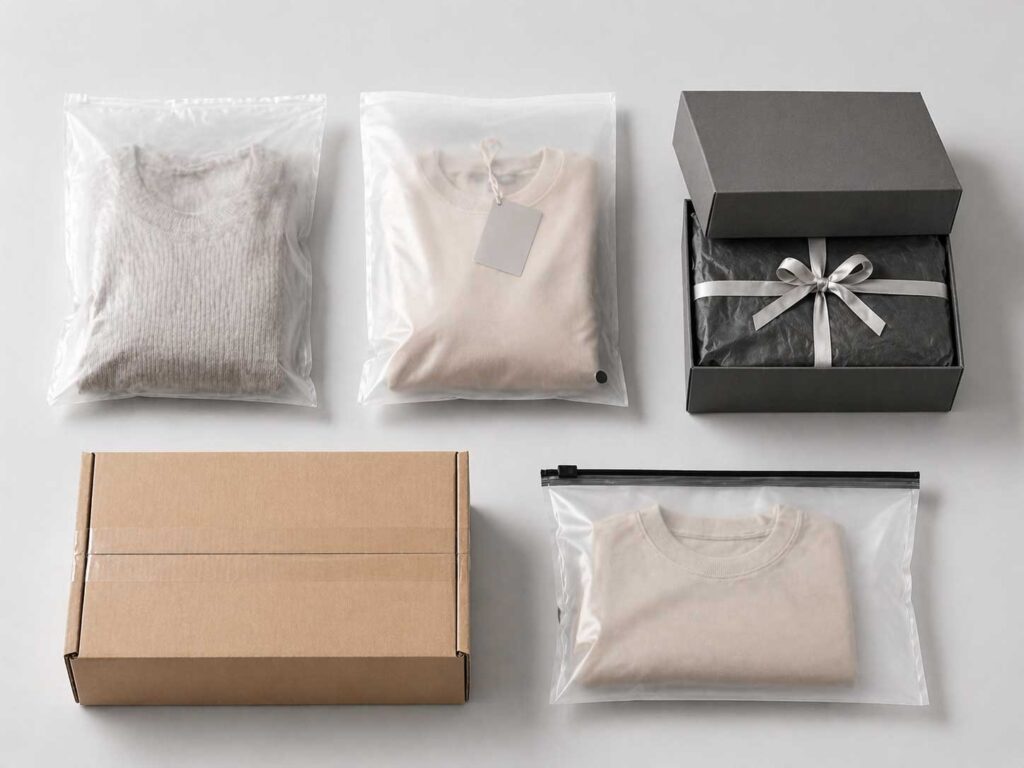
Polybag and Carton Packing
Folded polybag packing, hanger packing, size stickers, carton marks and packing lists can be arranged by order structure. Packing method should match garment fabric, pressing needs, warehouse requirements and shipment method.
Satin, chiffon and sequin styles may need extra packing review to reduce crease or pressure damage.
- Polybag size and fold method.
- Carton marks and packing lists.
- Pressure-sensitive garment review.
Warehouse Requirements
Many ecommerce programs require carton marks, warehouse labels, SKU grouping, size ratio control and shipment documents.
Jinfeng coordinates packing files, commercial invoices, packing lists and carton information with client teams or nominated forwarders before delivery.
- Warehouse label coordination when supplied.
- Style-color-size breakdown.
- Shipment documents and carton records.
From Approved Sample to Repeatable Bulk
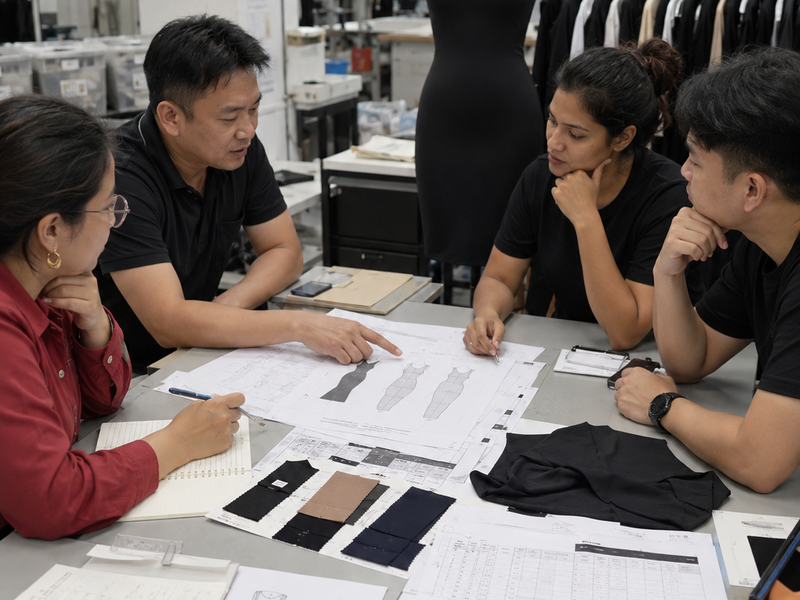
A strong sample does not guarantee a strong production run unless every approved detail becomes a controllable production reference. Jinfeng manages bulk consistency through sample approval, records, production instructions, inspection points and packing verification.
Pattern Records
Approved patterns are preserved for bulk production and future repeat orders. Pattern records help maintain neckline, waist, hip, length, armhole, sleeve, slit, lining and hem balance across size runs.For online dress programs, pattern discipline helps reduce fit variation between campaign sample and delivered goods.
- Neckline, waist, hip and length references.
- Size runs supported by approved pattern records.
- Future color or length updates can be reviewed faster.
Fabric Batch Review
Fabric lot, color, handfeel, stretch, transparency and surface defects are reviewed before cutting.
Satin, mesh, lace, chiffon, jersey and sequin fabrics behave differently in production, so Jinfeng checks fabric suitability against the approved sample and order requirements.
- Fabric lot and color review.
- Stretch, transparency and surface check.
- Fabric suitability matched to approved sample.
Trim and Construction Cards
Zippers, lining, elastic, boning, buttons, straps, labels and decorative trims are confirmed before production.
Trim cards and construction notes help sewing teams follow the approved garment standard, especially for corset dresses, lined lace dresses, mesh overlays and sequin styles.
- Zippers, lining and support parts confirmed.
- Trim details documented before sewing.
- Construction notes guide complex styles.
Inline Production Checks
Inline checks help identify problems before a full order is completed. Jinfeng reviews sewing tension, seam position, zipper function, measurement, lining coverage, strap attachment, neckline stability, hem balance and pressing condition during production.
- Sewing and seam checks during production.
- Measurement and lining review.
- Early correction before defects multiply.
Final Packing Review
Before shipment, garments are checked for final appearance, measurements, labels, size ratio, barcode labels, polybags, carton marks and packing list accuracy. Ecommerce-ready production depends on both garment quality and packing accuracy because warehouse receiving problems can delay launch timing.
- Final garment and measurement review.
- Labels, barcodes and polybags checked.
- Carton marks and packing lists verified.
QC Checks Before Ecommerce Delivery
Fabric QC
- Color and fabric lot review.
- Surface, stretch and transparency check.
- Fabric risk recorded before cutting.
Cutting QC
- Grainline and direction review.
- Print, lace and panel alignment.
- Size separation and bundle control.
Sewing QC
- Stitch tension and seam strength.
- Zipper, strap and lining checks.
- Construction review for complex styles.
Measurement QC
- Bust, waist, hip and length.
- Strap, sleeve, slit and lining.
- Tolerance matched by fabric and construction.
Pressing Review
- Satin shine and wrinkle control.
- Hem shape and seam flattening.
- Fold method before packing.
Packing QC
- Label, SKU and barcode accuracy.
- Polybag and carton mark review.
- Size ratio and packing list check.
Support for Online Launch Calendars
Ecommerce fashion programs work around campaign shoots, product uploads, launch dates, sale periods and replenishment windows. Jinfeng supports dress development with schedule planning based on style complexity, fabric sourcing, sample approval, bulk production, QC, packing and export delivery.
Step 1 | Development Schedule Review
Before sampling begins, Jinfeng reviews target launch date, photo shoot timing, sample needs, quantity plan, fabric direction and packing requirements. A satin slip dress with standard fabric and trims follows a different timing structure from a sequin corset dress, printed resort collection or multi-style lace capsule.
- Launch date and photo sample timing.
- Quantity, fabric and packing review.
- Sample route based on style complexity.
Step 2 | Sample and Revision Planning
Sample timing depends on pattern difficulty, fabric availability and revision depth. Standard dress samples can often move faster when tech packs, size charts and fabric choices are complete. More complex styles need additional review for fit, construction, lining, trims and photo-sample finish.
- First sample and fit sample planning.
- Revision path based on feedback.
- Photo sample requirements reviewed early.
Step 3 | PP Approval Gate
Bulk production should begin after PP sample approval. Jinfeng uses PP approval to confirm measurements, fabric, trims, sewing method, lining, pressing and packing references.
For ecommerce programs, PP approval protects launch inventory from inconsistent interpretation across production lines.
- Measurements and workmanship approved.
- Fabric, trims and packing confirmed.
- Bulk production reference locked.
Step 4 | Bulk and Delivery Coordination
Bulk production is scheduled according to order quantity, style count, color count, packing requirements and shipment plan. Export delivery can be arranged by express for samples, air freight for urgent launches, sea freight for larger programs or client-nominated forwarders according to destination and cost planning.
- Bulk production and QC schedule.
- Packing and carton records.
- Shipment route by urgency and volume.

Why Online Brands Choose Jinfeng
Dress-Focused Development
- Dress-led womenswear category focus.
- Custom sample and production route.
- Product range suited to online fashion programs.
Pattern and Fit Support
With 2 sample rooms, 7+ senior pattern makers and 20+ sample machinists, Jinfeng can review garment structure before bulk production. Fit support covers bust, waist, hip, shoulder, strap, sleeve, neckline, lining, length, slit and fabric behavior according to style type.
- Pattern and sample support before bulk.
- Fit review by garment type.
- PP sample standards used for production.
Private Label Packing
- Brand labels and hangtags.
- SKU labels and barcodes.
- Polybags, carton marks and packing records.
Scalable Production System
- Owned factory and partner capacity.
- Multi-style and multi-batch production planning.
- 100,000+ pcs monthly capacity.
QC for Online Sales
- Fabric, sewing and measurement QC.
- Pressing and final garment inspection.
- Barcode, polybag and carton checks.
Repeat Order Records
- Pattern and fabric records.
- Trim, label and packing details.
- Faster review for reorder and new color planning.
Design Details for Ecommerce Dresses
Neckline Engineering
- Neckline depth and tension.
- Lining and support relationship.
- Camera-facing symmetry.
Strap and Sleeve Control
- Strap length and strength.
- Sleeve opening and movement.
- Elastic and seam finish.
Lining and Coverage
- Opacity and coverage control.
- Lining color and length.
- Inner seam comfort.
Closures and Support
- Zipper and hook review.
- Boning and corset support.
- Seam reinforcement.
Hem and Slit Details
- Hem level and sweep.
- Slit height and reinforcement.
- Lining and edge finish.

Craftsmanship Details Behind Dress Quality
Clean Stitching
- Stitch density and seam tension.
- Thread color and inside finish.
- Thread trimming before packing.
Zipper Installation
Zipper quality influences comfort, fit and return comments. Jinfeng checks zipper length, tape color, smoothness, seam position, top stop protection and inside finishing. Bodycon, corset, cocktail and fitted mini dresses require stable zipper placement because body tension can expose weak installation.
- Zipper length and tape color.
- Smoothness and top stop protection.
- Inside finish and seam placement.
Lining Work
- Lining fabric and length.
- Seam connection and movement.
- Coverage and comfort review.
Ruching and Pleating
- Gather density and symmetry.
- Thread tension and elastic placement.
- Balance across size range.
Edge Finishing
- Rolled hems and bound edges.
- Neckline, slit and strap ends.
- Lace and mesh edge stability.
Pressing and Final Shape
- Seam flattening and hem shape.
- Fabric-safe pressing.
- Fold method for shipment.
Ecommerce Dress Project Examples

United States Premium Online Dress Brand
A US online fashion brand planned a 24-style spring and date-night dress launch with satin slip dresses, mesh bodycon styles, corset minis and cocktail pieces. The planned first production round reached about 48,000 pcs across multiple colors and size ranges. Previous production feedback showed unstable satin pressing, inconsistent bust fit and barcode packing confusion.
- 24 styles / 48,000 pcs / 4 dress groups — project data: satin slips, mesh bodycon styles, corset minis and cocktail pieces; technical difficulty: satin pressing, mesh coverage, corset support and cocktail finishing required different standards; solution: Jinfeng separated sampling, QC and packing review by dress group.
- 5 photo-facing fit points — project data: neckline depth, strap length, bust fit, waist balance and hem shape were reviewed; technical difficulty: model-shot samples had to look polished while still preparing bulk standards; solution: photo-ready sample comments were separated from PP sample approval.
- 6 private-label packing items — project data: size labels, care labels, hangtags, SKU stickers, barcodes and polybags were required; technical difficulty: color and size variation created warehouse intake risk; solution: barcode, SKU and carton records were checked before shipment.
- 2 delivery priorities — project data: campaign inventory and remaining replenishment stock needed different timing; technical difficulty: launch items could not wait for full bulk completion; solution: Jinfeng planned shipment by launch priority and style group.

United Kingdom Occasionwear Collection
A UK occasionwear label prepared 18 styles for wedding guest, cocktail and event dressing. Total planned quantity was around 32,000 pcs, covering lace midi dresses, satin cocktail dresses, mesh overlay styles and structured mini dresses. Main concerns included lace placement, lining tone, zipper stability, mesh transparency and garment length across sizes.
- 18 styles / 32,000 pcs / 4 fabric families — project data: lace, satin, mesh and structured woven styles; technical difficulty: lace placement, lining tone, zipper stability and mesh transparency could change final appearance; solution: Jinfeng reviewed material direction and lining standards before sampling.
- 5 construction controls — project data: zipper seam, neckline balance, hem length, lining coverage and sleeve or strap stability were checked; technical difficulty: occasionwear details are highly visible in product photos; solution: sample revisions converted these points into PP sample notes.
- 6 QC checkpoints — project data: fabric inspection, cutting direction, lace panel placement, sewing review, measurement checks and packing verification were required; technical difficulty: several style types needed different inspection focus; solution: QC was grouped by fabric and construction risk.
- Future color refresh plan — project data: selected lace and satin silhouettes were considered for later color updates; technical difficulty: new colorways could change shade, lining tone and fabric behavior; solution: Jinfeng retained pattern, fabric and packing records for future review.

Australia Resort and Vacation Dress Program
An Australian resortwear brand developed a 16-style vacation dress program with printed maxi dresses, halter dresses, lightweight woven minis, chiffon overlays and matching sets. Planned order quantity reached about 26,000 pcs. The brand needed better print direction, smoother hem balance, lighter packing and more consistent resort fit across sizes.
- 16 styles / 26,000 pcs / 5 resort groups — project data: printed maxi dresses, halter dresses, woven minis, chiffon overlays and matching sets; technical difficulty: print direction, hem flow and lightweight fabric behavior varied by group; solution: Jinfeng grouped sampling and packing notes by product structure.
- 4 fabric controls — project data: fabric weight, print placement, drape and lining needs were reviewed; technical difficulty: soft fabrics can twist during cutting and wrinkle during shipment; solution: Jinfeng checked fabric direction and fold method before bulk production.
- 5 fit and movement points — project data: strap comfort, waist ease, slit height, hem flow and neckline stability needed review; technical difficulty: resort dresses require comfort and strong photo effect; solution: sample revisions adjusted balance before PP approval.
- Repeat planning for selected styles — project data: best-performing resort dresses were prepared for new colors and adjusted lengths; technical difficulty: new colors and lengths could affect drape and packing; solution: pattern, fabric and packing records were retained for reorder review.
Frequently Asked Questions
Ecommerce-ready dress manufacturing means the garment is prepared for online launch, not only sewn as a finished dress. Jinfeng reviews photo sample appearance, fit, size range, private-label packing, SKU labels, barcode files, carton marks, QC checkpoints and export delivery needs before shipment.
No. Jinfeng focuses on custom dress development and private-label womenswear production. The company supports OEM, ODM and custom manufacturing based on client files, reference images, original samples, tech packs, line sheets, fabric direction and production plans.
MOQ starts from 200 pcs per style/color. Final planning depends on fabric availability, color development, trim sourcing, construction complexity, packing requirements and production schedule. Multi-style programs are reviewed by style, color, size range and launch priority.
Yes. Jinfeng can review reference images and provide development direction for fabric, pattern, structure, fit, construction and sample preparation. Clearer files such as tech packs, size charts, original samples and line sheets help improve quotation accuracy and sample efficiency.
Yes. Jinfeng prepares samples for fit review, model shoots, campaign launches and PP approval. Photo-ready samples need attention to silhouette, fabric behavior, neckline, strap length, hem balance, pressing condition, lining coverage and overall visual finish.
Yes. Jinfeng supports woven labels, printed labels, size labels, care labels, hangtags, hang strings, barcode stickers, SKU labels, polybags, carton marks, packing lists and warehouse label files when provided before packing preparation.
Jinfeng reviews bust, waist, hip, shoulder, strap length, sleeve opening, garment length, slit height, lining length and stretch recovery according to style structure. Fit corrections are moved into pattern records, PP samples and production notes before bulk work.
Yes. Jinfeng supports repeat orders by keeping pattern records, fabric references, trim details, measurement files, color notes and packing requirements. Bestseller dresses can return in new colors, updated lengths, fabric alternatives or related capsule styles.
Please send reference images, tech packs, target quantity, size range, fabric preference, color plan, label artwork, packing requirements, delivery destination and target launch date. Original samples and line sheets are also helpful for faster evaluation.
Yes. Jinfeng supports multi-style programs through 6 owned women’s fashion factories, 10+ satellite production partners, 2 sample rooms, 7+ senior pattern makers and 20+ sample machinists. Larger collection planning can be reviewed by launch schedule, style group and delivery batch.

Start Your Ecommerce Dress Program
Kelly and the project team can evaluate style structure, fabric direction, sampling needs, MOQ planning, private-label packing, QC focus and export delivery based on your launch plan.
Please include:
- Reference images, sketches, line sheets or tech packs.
- Target quantity by style and color.
- Size range and measurement file, if available.
- Fabric preference or target handfeel.
- Color plan and print files, if relevant.
- Label, hangtag, barcode, SKU and packing requirements.
- Target launch date and delivery destination.
- Original sample photos, if available.