
Drop-Waist Dress Development
Develop balanced drop-waist silhouettes from design reference to approved pattern, refined fit and repeatable bulk production.
Jinfeng Apparel supports fashion brands developing drop-waist dresses where proportion, fabric behavior and construction must work together before a style moves into production.
- 2 sample rooms support structured development and revision work.
- 7+ senior pattern makers handle torso, waist-to-hip shaping and production pattern correction.
- 20+ sample machinists support first samples, fit samples, revised samples and PP samples.
- Development reviews focus on drop position, upper-hip fit, skirt attachment, front/back balance and fabric behavior.
- Approved styles can move into a production network built around 18+ sewing lines and 6+ flexible lines.
- 15+ QC inspectors support fabric, sewing, measurement, finished garment and packing control.
Built for Fashion Product Development Teams
Development Infrastructure
Scalable Production Network
Project Control
What Makes a Drop-Waist Silhouette Production-Ready?
A dropped waist changes more than one seam position. The bodice extends into the upper-hip zone, so body geometry, visual proportion and skirt construction begin interacting in ways that a standard waist dress does not require.
Drop Position Changes Garment Geometry
A conventional fitted bodice is normally shaped around the bust, natural waist and the transition immediately below it. Extending that block toward the upper hip introduces a new circumference relationship. A drop seam placed several centimeters below the natural waist cannot simply copy the waist measurement or continue vertically without considering hip expansion.
Pattern development therefore reviews bust-to-waist shaping, waist-to-upper-hip transition, side-seam direction, dart or panel distribution, front and back length and the final location of the dropped seam. A fitted drop-waist mini may require close control through the upper hip, while a relaxed poplin style can tolerate more ease before the skirt begins.
Visual balance matters as much as circumference. Moving the seam too high can make the design look like a conventional waist dress; moving it too low can compress the skirt visually and create pulling across the hip. Development needs to preserve the intended silhouette while keeping the garment wearable and gradeable.
Skirt Attachment Controls the Final Shape
The dropped seam becomes a structural junction between the extended bodice and skirt. Gathered, pleated, flared and bubble-inspired skirts load the seam differently.
A dense gathered skirt adds bulk around the hip. Pleats require accurate placement and depth. A softer skirt can hang cleanly but may expose uneven seam shaping more clearly.
Development reviews the skirt circumference against the bodice seam, gathering ratio, pleat distribution, seam allowance, lining behavior and fabric weight.
Front and back volume also need visual balance; equal numerical distribution does not always create an equal appearance once the garment is worn.
The strongest commercial result comes from treating the bodice and skirt as one system. Pattern, fabric and construction are adjusted together until the dropped seam sits cleanly, the skirt begins at the intended point and the silhouette remains recognizable from front, side and back views.
Bulk Repeatability Must Begin Early
A beautiful one-off sample is not enough.
The approved structure must be converted into a final pattern, measurement reference, grading logic and production instruction that sewing teams can repeat.
Seam position, gathering or pleat placement, zipper length, lining length, pressing requirements and measurement checkpoints should be defined before bulk cutting.
Fit corrections made directly on one sample without updating the production pattern create avoidable variation later.
Jinfeng Apparel uses sample feedback and pattern correction as part of the development record so approved decisions can move forward into PP confirmation and bulk production instead of remaining only on the sample-room garment.
Drop-Waist Silhouettes Brands Can Develop
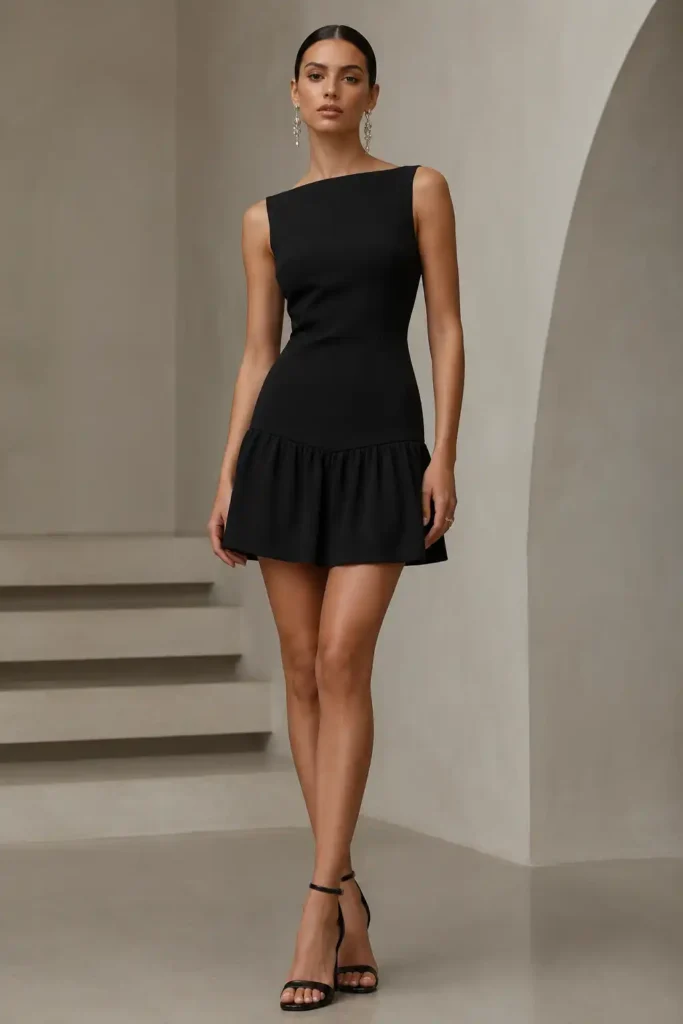
Fitted Drop-Waist Mini
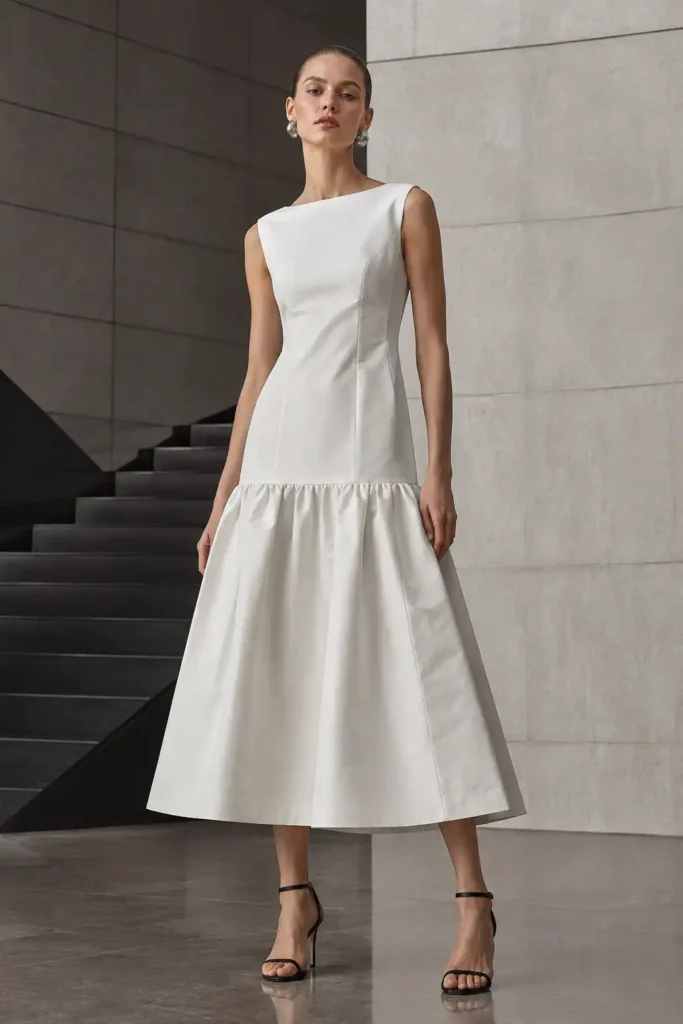
Structured Woven Dress
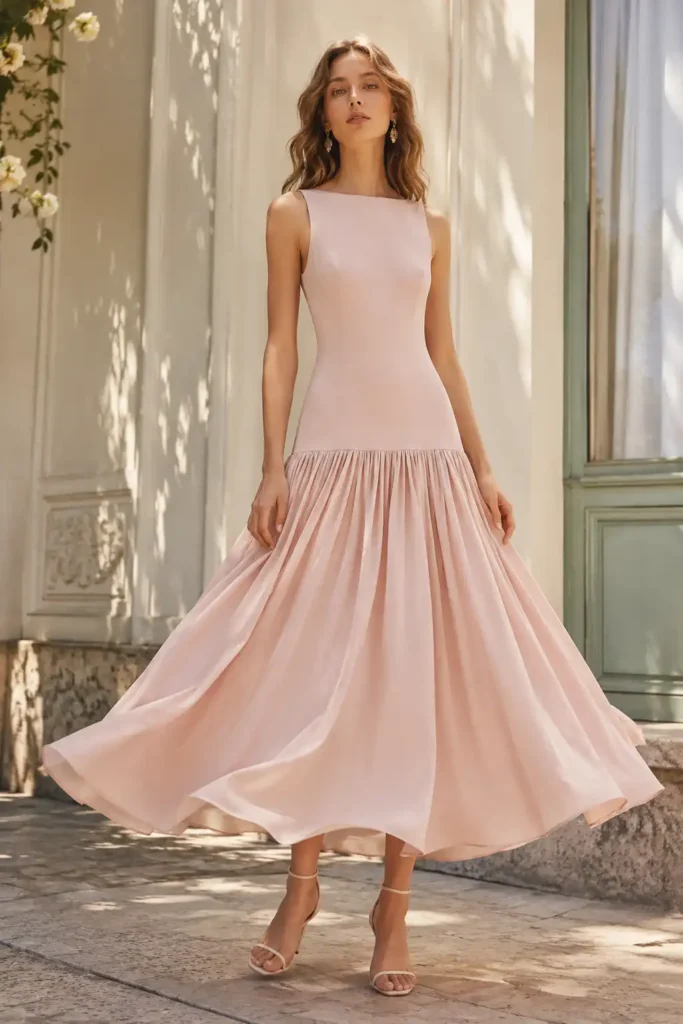
Gathered-Skirt Drop Waist
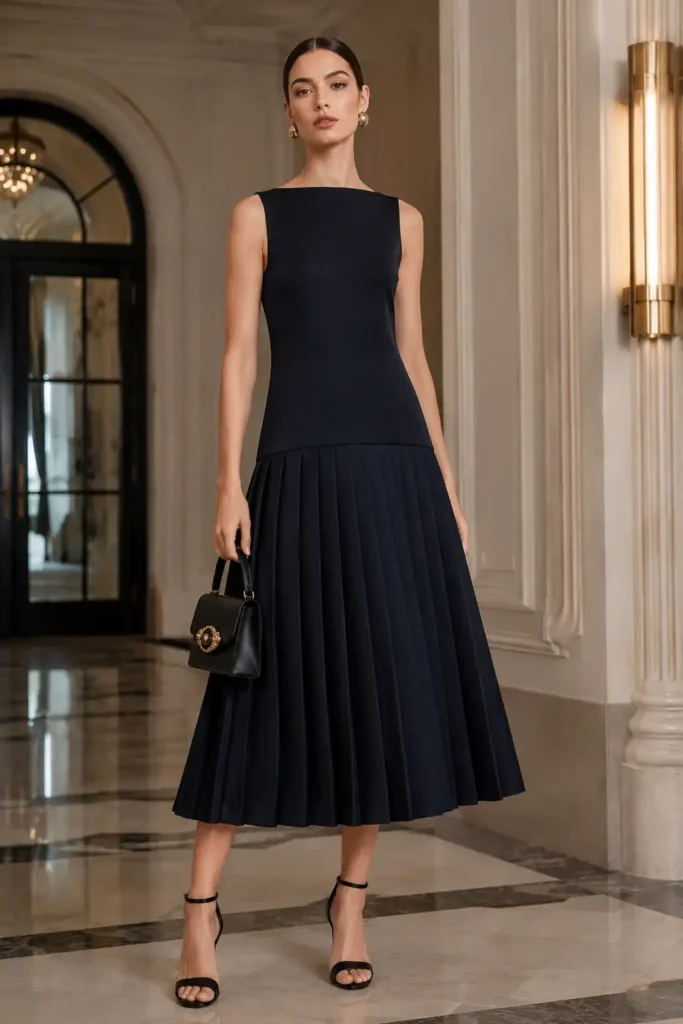
Pleated Drop-Waist Dress
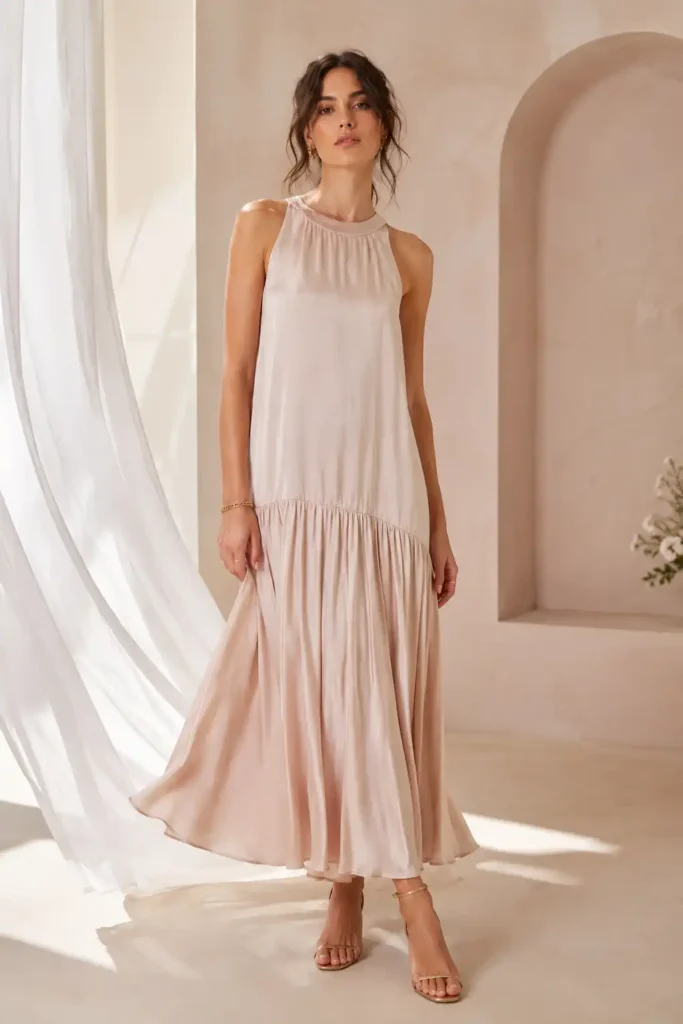
Soft-Drape Drop Waist
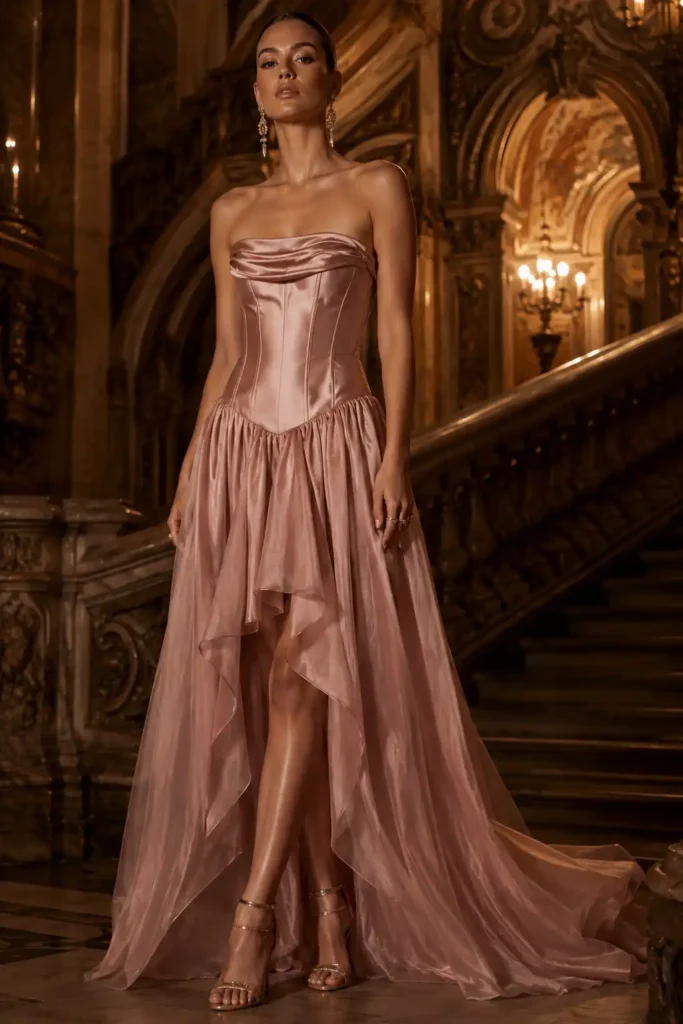
Occasion Drop-Waist Dress
Engineering the Drop-Waist Pattern
Pattern engineering is the foundation of the development process. A reference image can communicate proportion and styling, but production requires a pattern that defines shape, fit, seam position, construction and repeatability across the intended size range.
From Visual Reference to Pattern Logic
Development begins by separating visual inspiration from measurable construction. A reference image may show an elongated bodice and low seam, yet it rarely reveals the exact bust shaping, waist suppression, hip ease, back length, zipper allowance or internal structure used to create the appearance.
Jinfeng Apparel reviews the available input—tech pack, sketch, original garment, measurements or reference images—and converts the design into pattern decisions. Important questions include where the natural waist sits relative to the proposed drop seam, whether the seam is straight, curved or V-shaped, how closely the upper section should follow the body and how the skirt volume attaches below.
Fabric direction is reviewed at the same time. A pattern intended for rigid poplin may require different ease and seam shaping from one intended for a soft viscose or satin. Lining can also change the behavior of a fitted upper section.
The objective is not simply to reproduce a drawing. The pattern needs enough definition to support sample fitting, revision, grading and later bulk reproduction.
Shaping the Torso Into the Upper Hip
The most important geometric transition occurs between the natural waist and upper hip. Body circumference normally increases as the pattern moves downward, and the amount varies by size and body profile. Ignoring the transition can create diagonal drag lines, seam riding, side-seam distortion or a dropped seam that lifts at the front or back.
Pattern makers can redistribute shaping through darts, princess seams, panels or side seams according to the design. A body-skimming version may need carefully controlled ease, while a more relaxed design can use straighter shaping but still requires enough room to prevent the garment from catching at the hip.
Front and back patterns are reviewed independently because body volume is not distributed equally. Bust projection, seat shape and torso length can alter the visual level of the dropped seam once the garment is worn.
Fit feedback from front, side and back views is then translated into pattern correction rather than treated as an isolated sample-room alteration.
Building a Pattern for Repeat Production
Once fit and proportion are approved, the pattern must become a production tool.
Seam lines, notches, grain direction, zipper position, lining pieces, interfacing or support pieces, pocket locations where applicable and skirt attachment points should be clear enough for cutting and sewing teams to reproduce.
Production readiness also requires alignment between the final pattern, size chart, grade rule, construction notes and PP sample.
If a seam is moved during fitting but the pattern or measurement reference is not updated, later inconsistencies become difficult to diagnose.
Jinfeng Apparel maintains pattern and revision records through the development process so fit decisions can be carried into production and future repeat orders.
Brand-specific patterns are used for the corresponding project rather than treated as generic patterns for unrelated programs.
Controlling Drop Position and Garment Proportion
A drop-waist dress succeeds when the lowered seam looks intentional on the body rather than merely displaced. Fit review focuses on where the seam appears when worn, how the torso relates to the skirt and whether movement changes the intended balance.
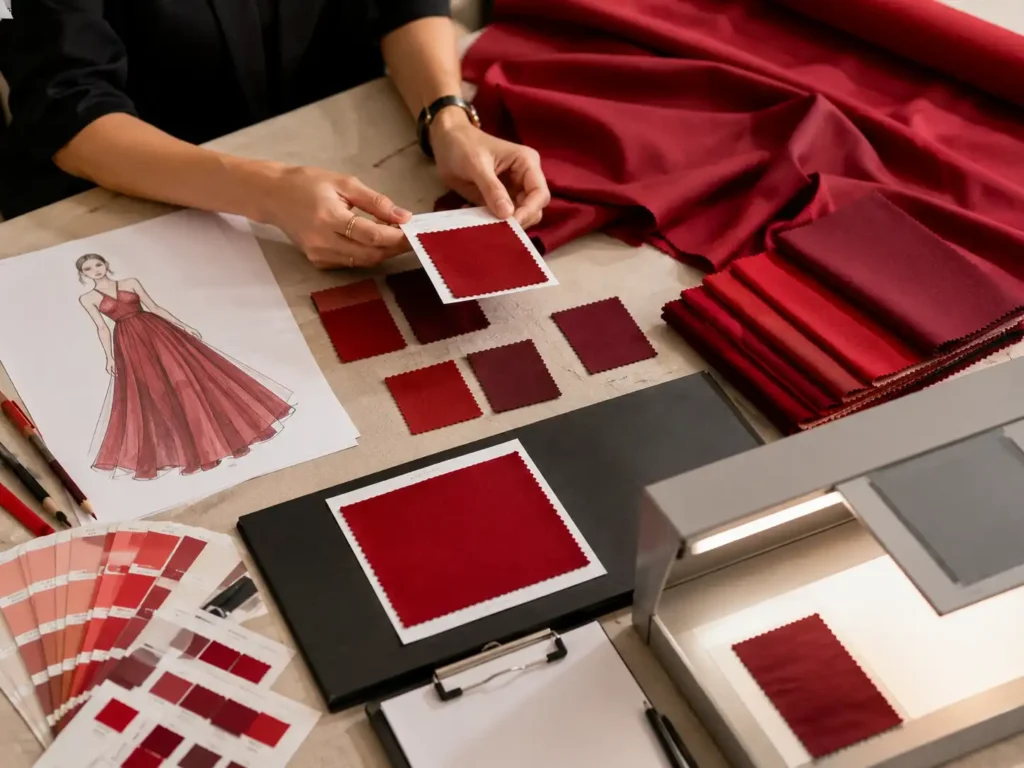
Establishing the Drop Depth
There is no single universal drop-waist measurement suitable for every design. The visual result depends on body proportions, garment length, skirt shape and the desired fashion direction.
A subtle dropped waist may sit only modestly below the natural waist and work with a softer everyday silhouette. A longer bodice extending toward the upper hip produces a stronger elongated proportion and requires more careful shaping. V-shaped or curved dropped seams add another variable because the center-front depth may differ from the side seam.
During fitting, Jinfeng Apparel reviews the seam against recognizable body landmarks rather than relying only on a flat measurement. Front, side and back views help identify whether the line is level where intended, whether the side seam remains balanced and whether the skirt starts at a visually suitable point.
Changes are recorded into the pattern so the corrected drop position remains linked to later sample and production stages.
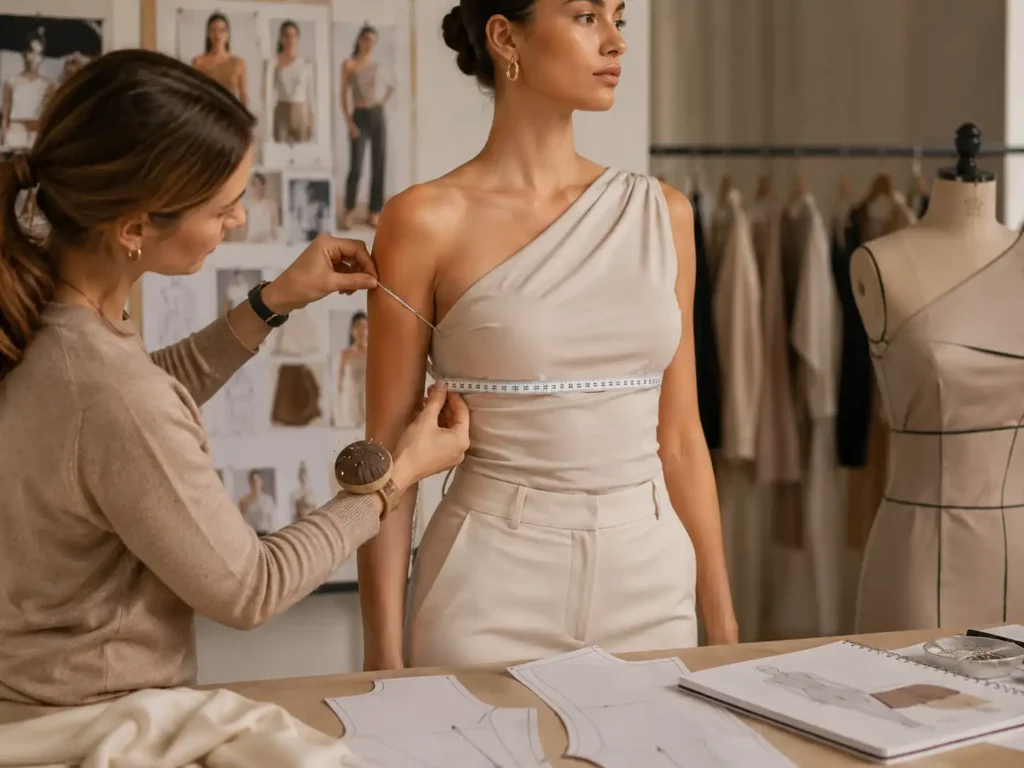
Balancing Bust, Waist and Upper Hip
The elongated upper section connects three major fit zones. Tightness at any one of them can change how the garment hangs.
Insufficient bust room may pull the upper bodice upward. Excessive waist suppression can create horizontal tension. Too little upper-hip ease may cause the dropped seam to ride up during movement. Too much ease can make a fitted design appear loose or collapse the intended torso line.
Fit review therefore looks at drag lines, side-seam direction, center-front and center-back balance, zipper behavior and how the fabric recovers after movement. Stretch fabrics introduce additional variables because recovery and negative ease can change the position of the seam.
Pattern correction follows the specific source of the problem instead of simply increasing or decreasing the entire garment.

Matching Torso Length to Skirt Volume
A longer bodice visually shortens the skirt, even when overall dress length remains unchanged.
A very full skirt can also make the seam appear higher because volume expands immediately below it.
Design development therefore evaluates torso length and skirt proportion together.
For mini dresses, a few centimeters can noticeably change the relationship between the dropped seam and hem.
Midi and maxi versions provide more vertical space but still need controlled volume so the body does not appear visually divided in an unintended position.
Fit approval should assess the garment as a complete silhouette rather than signing off individual measurements in isolation.
Matching Fabric to the Drop-Waist Silhouette
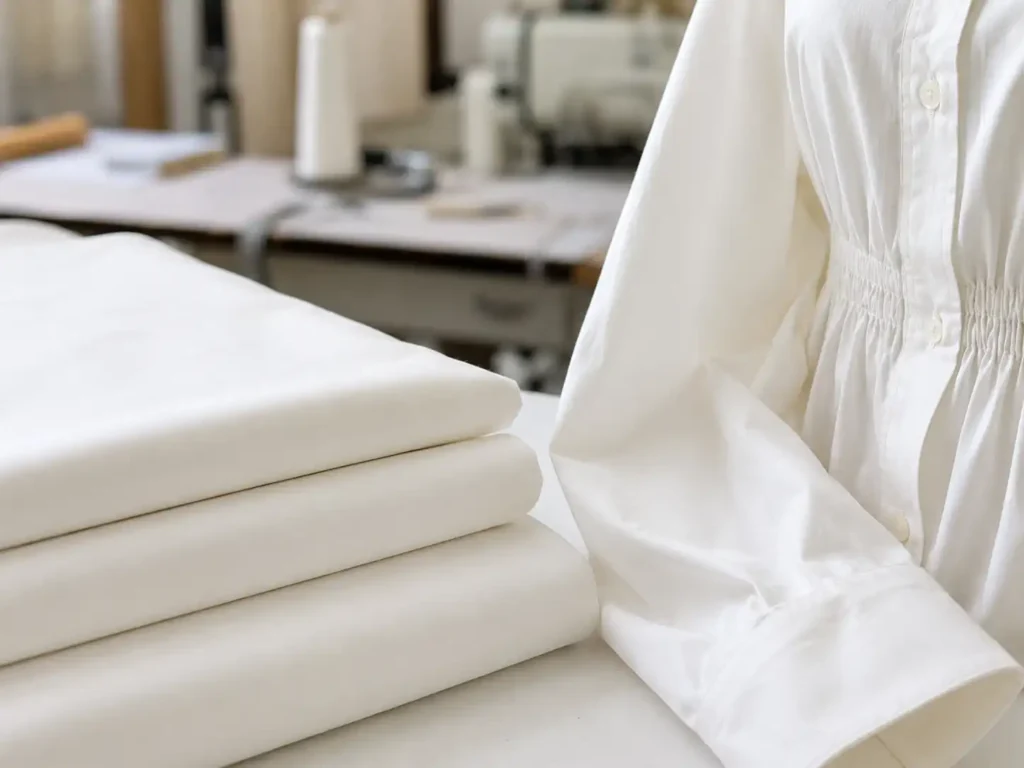
Cotton Poplin
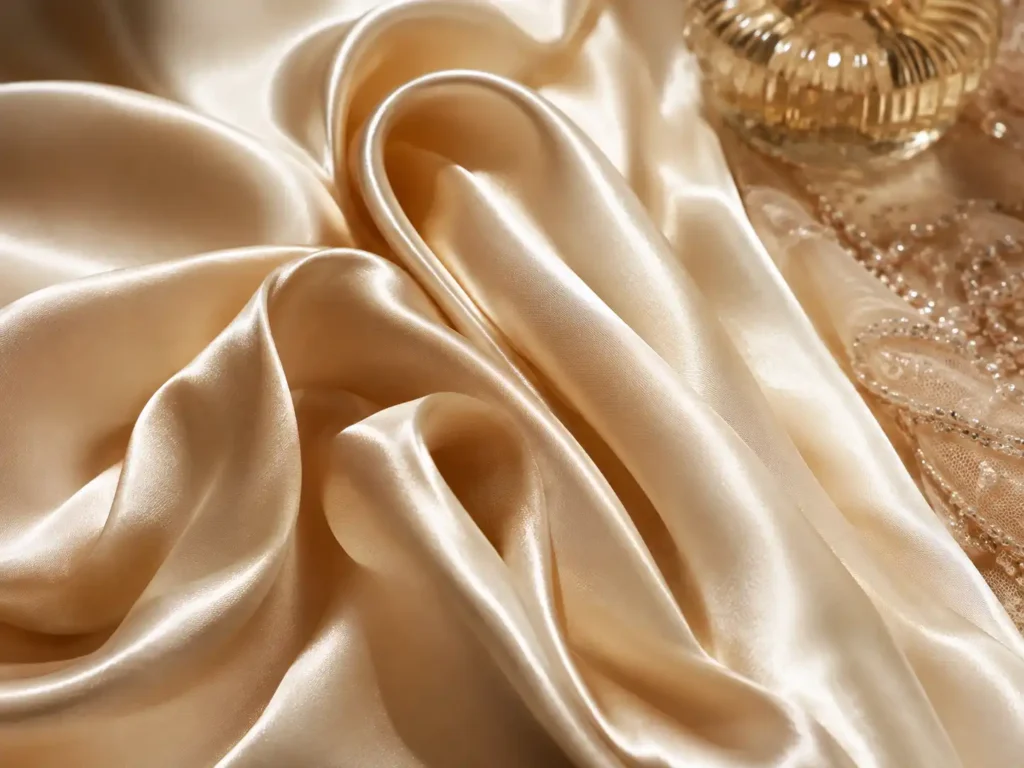
Satin
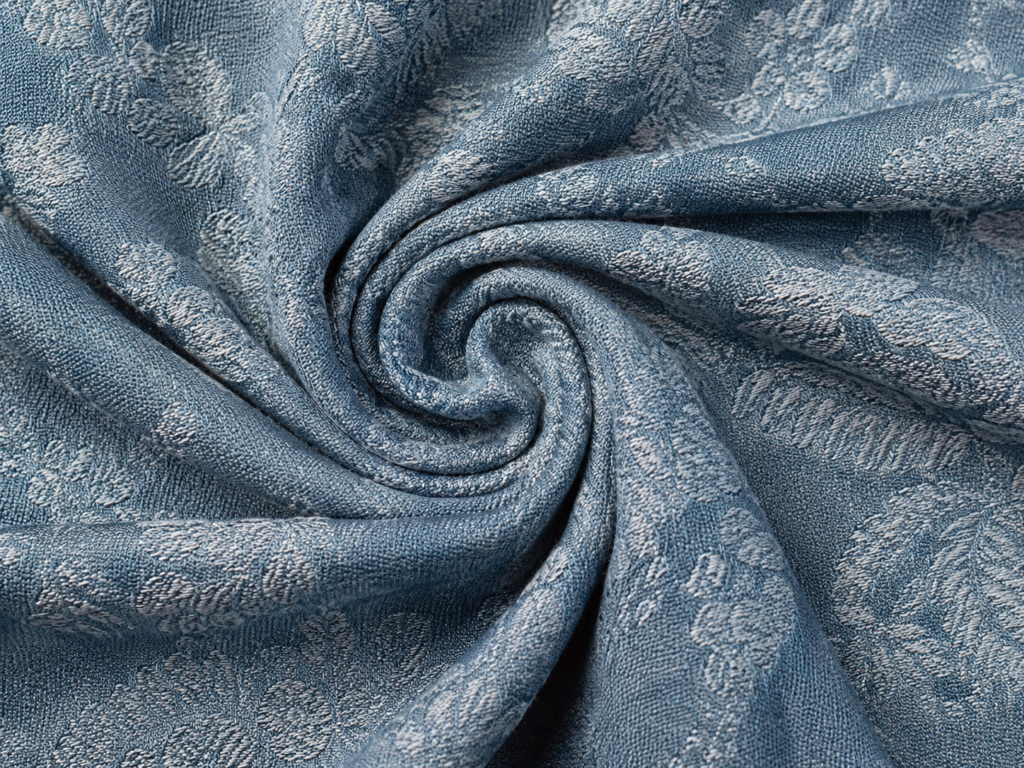
Structured Wovens

Viscose and Rayon

Chiffon and Soft Crepe
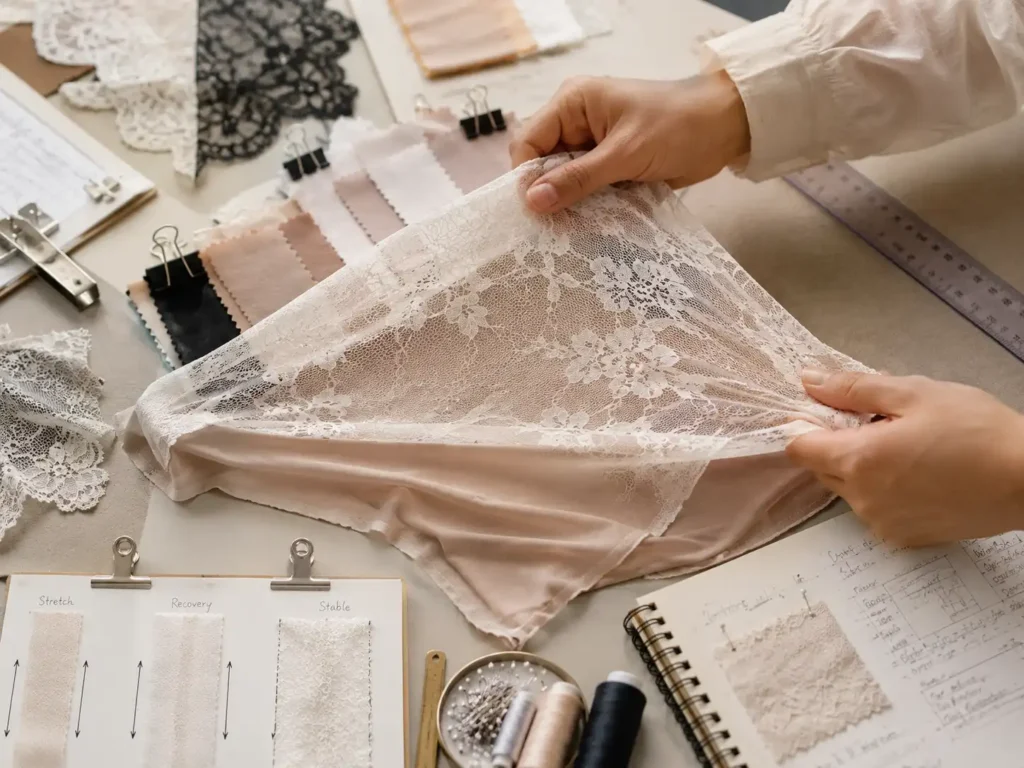
Stretch Fabrics
Construction Details That Hold the Shape
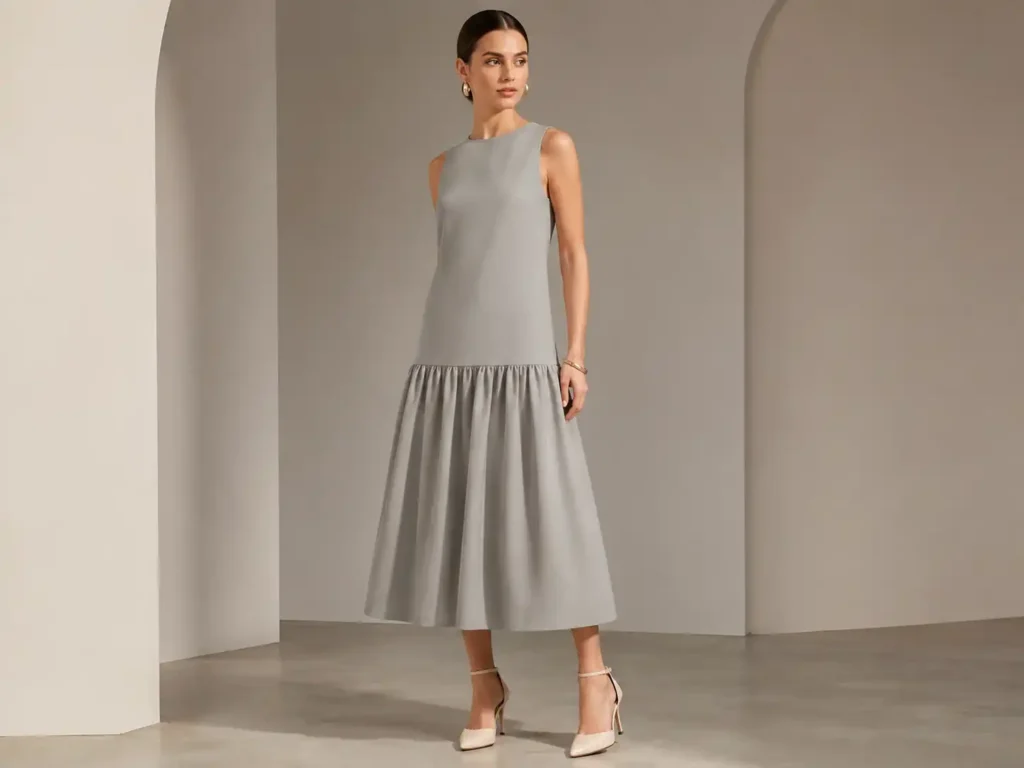
Drop Seam Control
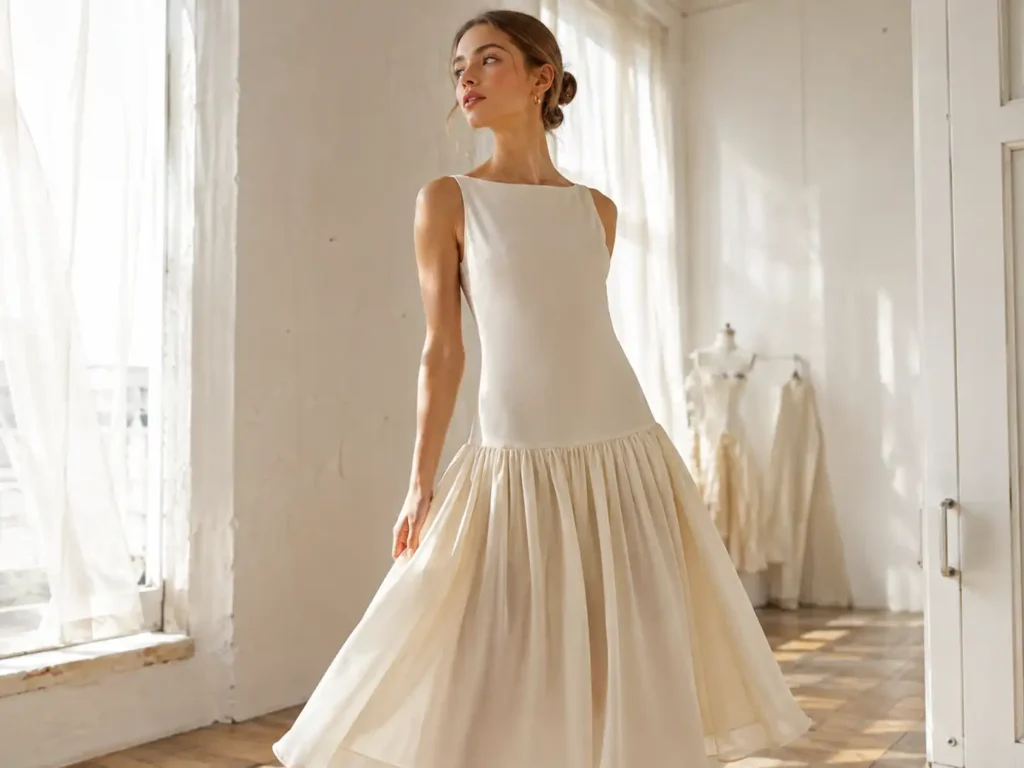
Gather Distribution

Pleat Accuracy
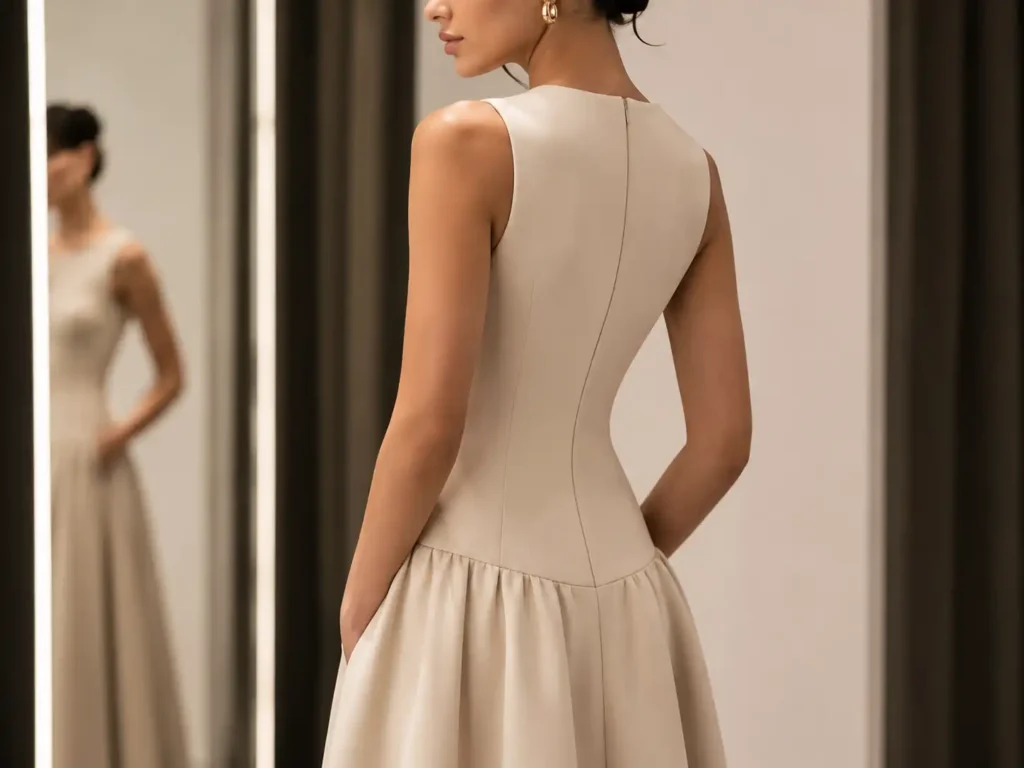
Zipper Flatness
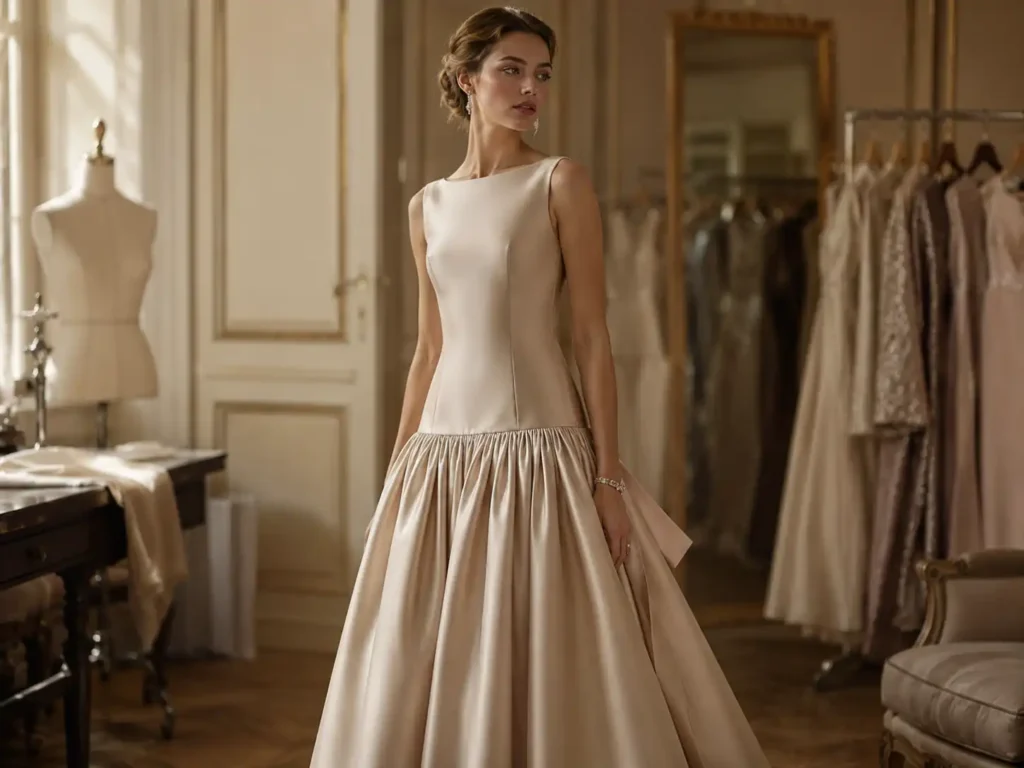
Lining and Support

Pressing and Hem Balance
From Reference Image to Development Plan
Design Input
Structure Review
Fabric Direction
Pattern Development
Sample Evaluation
Revision and Approval
How We Develop the First Sample
A first sample turns a concept into a garment that can be measured, worn, photographed and corrected. Its role is to expose development decisions early, not to create the illusion that every design should be perfect on the first attempt.
What the First Sample Must Prove
For drop-waist styles, the first sample verifies much more than overall appearance. Review points include the location and shape of the dropped seam, torso length, bust and waist shaping, upper-hip ease, skirt volume, neckline, armhole or strap position where relevant, zipper behavior, lining, fabric drape and total garment length.
Construction feasibility is reviewed at the same time. A reference image may suggest extremely dense gathering on a fabric too thick for a clean hip seam, or a soft fabric may fail to hold a structured silhouette. Sampling makes these conflicts visible before the design becomes locked into production assumptions.
The sample also creates a physical basis for cost and production review. Construction choices can affect sewing time, trims, lining requirements and material usage, so major structural changes should be resolved before final quotation and bulk planning are treated as fixed.
Turning Comments Into Correctable Information
Strong sample feedback identifies the exact location and direction of a problem. Front, side and back fit photographs are especially valuable for a dropped waist because the seam can look correct from the front while lifting over the seat or falling unevenly at the side.
Useful comments might identify a seam that needs to sit lower at center front, additional upper-hip ease, less fullness at side seams, a straighter back line or a revised skirt length. Measurements can be added where the brand has a defined target.
Jinfeng Apparel records development changes so the pattern maker and sample room are working from the same revision information. When material or construction changes are introduced, their effect on pattern and fit is reviewed rather than assuming the original pattern remains valid.
Preparing the Next Development Stage
A first sample can lead to a Fit Sample or Revised Sample depending on the project. Major pattern corrections, material changes or construction revisions should be tested before production approval.
The development record should clearly distinguish what has been accepted from what remains open. Fabric, trim, pattern, measurements and workmanship comments can then move through subsequent sampling without repeatedly reopening already approved decisions.

Fit Sample, Revision and PP Approval
Fit-sensitive fashion requires staged approval. Jinfeng Apparel can support First, Fit, Revised, Photo-Ready, Salesman, PP and Golden sample requirements according to the project, with the most relevant stages selected for the collection and launch plan.
Fit Sample — Proving the Garment on Body
The Fit Sample focuses on whether the pattern works when worn. A drop-waist dress is reviewed across the bust, waist, upper hip and lowered seam, followed by skirt behavior and overall length.
Front photographs reveal center alignment and skirt distribution. Side views show bust balance, side-seam direction and whether the dropped seam tilts. Back views help identify excess fabric, tightness over the seat or a seam rising at center back.
Comments should connect visual symptoms to measurable or pattern-level changes. A request to “make the waist lower” needs clarification about center front, center back and side seam. A request for “more volume” should identify whether fullness belongs around the entire skirt or only selected panels.
Revised Sample — Testing the Correction
Revised samples confirm whether approved pattern changes solved the original problem without creating a new one.
Adjusting upper-hip ease can affect zipper behavior. Moving the drop seam can change skirt length. Reducing gathering can change material consumption and the visual relationship between bodice and skirt. Changing fabric weight can require another pattern or lining review.
Revision records help keep these dependencies visible. The objective is not an endless sample cycle; each round should close defined issues and reduce uncertainty before production.
PP Sample — Locking the Production Reference
The PP Sample is the final production confirmation before bulk manufacturing. Key items include style structure, pattern, measurements, grade rules, fabric, trims, construction, label placement and packing requirements.
For a drop-waist dress, the PP reference should clearly represent the approved seam position, torso proportion, skirt attachment and workmanship standard. Production teams then work from the same approved basis rather than interpreting earlier prototypes independently.
Where a Golden Sample is required, it can provide an additional highest-level reference for bulk inspection and repeat-order comparison.

Size Grading Without Losing the Silhouette
A drop-waist dress cannot be graded successfully by enlarging every measurement at the same rate. Body growth, torso length, hip position and skirt volume need coordinated grade rules so the design keeps its intended proportion across the approved size range.
| Control Area | Grading Question | Visual Standard to Protect |
|---|---|---|
| Bust | How should circumference increase by size? | Upper bodice remains smooth without excess compression or looseness |
| Natural Waist | How much shaping is retained? | Elongated torso keeps the intended fitted or relaxed character |
| Upper Hip | How does ease increase below the waist? | Dropped section sits cleanly instead of riding upward |
| Drop Depth | Does vertical position change by size? | Seam continues to read as the same design proportion |
| Front Length | How does bust projection affect length? | Front drop line does not lift unexpectedly |
| Back Length | How does back/seat shape affect balance? | Back seam remains consistent with approved silhouette |
| Skirt Volume | Should fullness increase proportionally? | Larger sizes do not become disproportionately bulky |
| Overall Length | How does size growth affect hem position? | Mini, midi or maxi intent remains commercially consistent |
Turning an Approved Sample Into Bulk Production
Sample approval only creates value when the approved garment can be transferred into repeatable production. Jinfeng Apparel connects PP confirmation with materials, cutting, sewing, inspection, finishing and packing through defined production records.
Locking the Bulk Standard
Before bulk cutting, the project should have a clear final pattern, size chart, grade rules, approved fabric and color, trims, construction requirements, labels, packing specifications and PP reference.
For drop-waist styles, production-critical information includes the position and shape of the dropped seam, skirt attachment points, gather or pleat requirements, zipper method, lining length and garment measurements. Changes after fabric is cut can create expensive rework, so unresolved fit or pattern questions should remain in development rather than being pushed onto the sewing line.
Material batches are also reviewed because changes in fabric weight, stretch, recovery, drape or shrinkage can alter the way an approved pattern behaves.
Allocating Production by Product Need
Jinfeng Apparel works through 6 owned women’s fashion factories plus 10+ long-term satellite production partners, supported by 18+ sewing lines and 6+ flexible production lines. Regular monthly capacity exceeds 100,000 pieces.
Capacity alone does not determine allocation. Fabric type, construction difficulty, style family, quantity and schedule are considered when assigning work. A structured taffeta drop-waist occasion dress and a soft rayon casual version may require different sewing experience and handling even though both share the same silhouette category.
Multi-style programs can also be grouped so related fabrics and construction methods are managed together where appropriate.
Carrying Approval Through Production
The production flow follows PP approval into material preparation, fabric review, cutting, cut-panel checks, sewing, inline inspection, pressing, finishing, garment inspection, packing and shipment preparation.
QC and merchandising records help connect the physical garment with the approved requirements. A dropped seam should not gradually move because sewing convenience changed on the line; gathering should not become denser because operators interpret the specification differently.
The goal is controlled repeatability from the approved PP reference through the full production quantity.

Drop-Waist Dress Quality Control Points
Quality control for drop-waist dresses should focus on the areas most capable of changing the silhouette. Jinfeng Apparel’s QC coverage includes fabric, cutting, sewing, measurement, final garment and packing inspection rather than relying only on a final visual check.
| Control Point | Typical Bulk Risk | Production Control |
|---|---|---|
| Drop Seam Position | Seam sits higher, lower or unevenly across garments | Compare placement and shape against approved pattern and PP reference |
| Front/Back Balance | Seam lifts at front or back | Check garment measurements, side-seam balance and assembly alignment |
| Upper-Hip Fit | Pulling, drag lines or excessive looseness | Measurement inspection plus fit-reference comparison |
| Gathering | Uneven fullness or excessive side bulk | Use marked distribution points and visual checks during sewing |
| Pleats | Incorrect width, depth or placement | Verify pattern markings, folding sequence and pressing |
| Zipper | Puckering, bubbling or uneven closure | Inspect seam preparation, insertion and final flatness |
| Lining | Pulling, twisting or exposure | Check shell/lining length relationship and attachment |
| Hem Balance | Uneven front, side or back length | Final measurement and hanging appearance review |
| Fabric Appearance | Shade difference, snagging, holes or stains | Material inspection before cutting plus garment inspection |
| Packing | Wrong size, color, labels or carton allocation | Packing and pre-shipment verification against order requirements |
Managing Multi-Style Drop-Waist Collections

Group Styles by Construction

Group Materials Intelligently

Prioritize Fit-Sensitive Samples
Not every SKU carries equal development risk. A simple relaxed drop-waist dress may require fewer structural corrections than a fitted upper-hip style with corset seams, lining and a full skirt. Sampling priority should therefore follow pattern complexity and launch importance rather than style number alone.

Coordinate Production and Packing
Larger programs may require factory allocation, multiple sewing lines, separate color lots, several size ratios and SKU-specific packing. Jinfeng’s production, merchandising, QC and packing teams work from project records so style numbers, labels, barcodes and carton requirements remain connected to the correct garments.
MOQ, Cost and Project Fit
MOQ by Style and Color
What Drives Cost
Information Needed for Review
Protecting Unreleased Designs and Patterns
Tech Pack Protection
Pattern and Sample Privacy
Brand and Packaging Files
A Drop-Waist Collection Development Case
Representative anonymized project profile based on Jinfeng Apparel’s current brand-order scale. Brand identity and proprietary design details are excluded.

Project Scope — 18 Styles, 46,800 Pieces
A U.S.-market fashion collection was structured around 18 dress styles with a combined order plan of approximately 46,800 pieces. The assortment included several lowered-waist silhouettes alongside related fitted and occasion dress constructions, using multiple fabric directions and color plans.
The development challenge was not simply handling the total volume. Each style carried a different combination of torso fit, skirt volume, fabric behavior and construction complexity. Treating all 18 styles as one technical group would have created unnecessary risk.
Styles were therefore reviewed by pattern complexity and material family. Fit-sensitive designs received earlier sample attention, while related constructions could share development references where appropriate. Order planning remained style- and color-specific rather than treating 46,800 pieces as one undifferentiated quantity.

Development Focus — Fit Before Volume
The lowered-waist styles required concentrated review around bodice length, upper-hip ease, dropped-seam position and the visual balance between torso and skirt.
For key styles, the development route followed First Sample → Fit Sample → Revised Sample → PP Sample, with fit comments transferred into pattern changes rather than corrected only at the sewing-machine level. Fabric behavior was reviewed alongside the pattern because structured and fluid materials produced different results around the dropped seam.
Front, side and back fit views helped separate true pattern problems from styling preferences. Revised samples then confirmed whether changes to the hip, seam position or skirt volume had achieved the intended silhouette before PP approval.

Bulk Handoff — One Approved Standard
Before bulk production, the project records brought together final patterns, measurements, approved fabrics and colors, trims, construction details, labels and packing requirements.
Production allocation considered style construction and fabric handling rather than sending every SKU to the same line by default. QC attention for lowered-waist designs concentrated on drop-seam placement, upper-hip measurements, gathering or pleat consistency, zipper flatness, lining and hem balance.
No unsupported defect-rate or delivery-performance percentage is attached to the project. The measurable production objective was simpler and more important: carry the approved fit and construction decisions from development into a repeatable bulk-production standard across a multi-style order.
Drop-Waist Dress Development Frequently Asked Questions

Start Your Drop-Waist Dress Project
Developing a strong drop-waist dress starts with clear product information, not a generic quotation request. Send Jinfeng Apparel the materials already available for your project, and our team can review the silhouette, fabric direction, pattern complexity, sampling requirements, production quantity and private-label needs before the next development step is defined.
For projects involving several styles, a line sheet or collection overview helps identify which silhouettes need earlier pattern and fit attention and which styles can be grouped by fabric or construction. Quantity should be listed per style and color so material sourcing and production planning can be evaluated accurately. If key information is still being finalized, send the current reference files and identify the open decisions instead of waiting for a completely finished package.
Please include where available:
- Reference images, sketches or tech packs
- Quantity per style and color
- Preferred fabric or material direction
- Target size range and size chart
- Color plan
- Label and packaging requirements
- Required sample stages
- Target launch or delivery window
- Any NDA or confidentiality requirement


