 Skip to content
Dress Symmetry & Balance Solutions
Pattern, fit and production control for dresses that need to hang, align and move as intended.
Jinfeng Apparel helps fashion brands identify and correct dress symmetry and balance problems before they become bulk-production defects. Pattern shape, fabric behavior, fit feedback, construction and sewing control are reviewed together rather than treating every uneven detail as a simple stitching problem.
- 7+ senior pattern makerssupporting pattern review and fit correction
- 2 sample rooms + 20+ sample machinistsfor first, revised and PP samples
- Regular dress first samples typically 10–15 days; complex corset, lace, mesh or sequin styles typically 15–25 days, subject to material readiness and construction
- 15+ QC inspectorssupporting production measurement and garment checks
Symmetry Is Not the Same as Dress Balance
Designed Asymmetry
Unintended Imbalance
Unintended imbalance appears when the finished garment moves away from the approved design: one strap becomes longer, one side of the neckline drops, the center front drifts, a side seam rotates forward, the waistline tilts or one side of the hem hangs lower without being part of the design. Such problems can originate in the pattern, cutting direction, fabric stretch, lining, sewing feed, pressing or grading.
Diagnosis therefore starts with the whole construction rather than immediately shortening one side or resewing a visible symptom.
Eight Signs a Dress Is Out of Balance
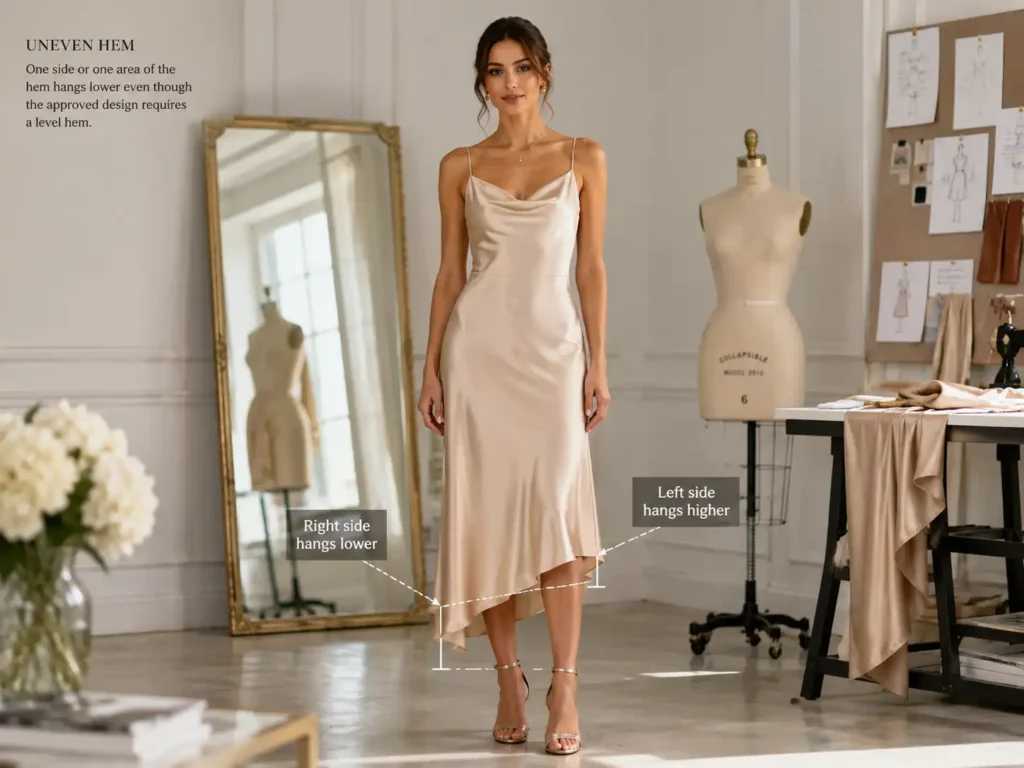
Uneven Hem
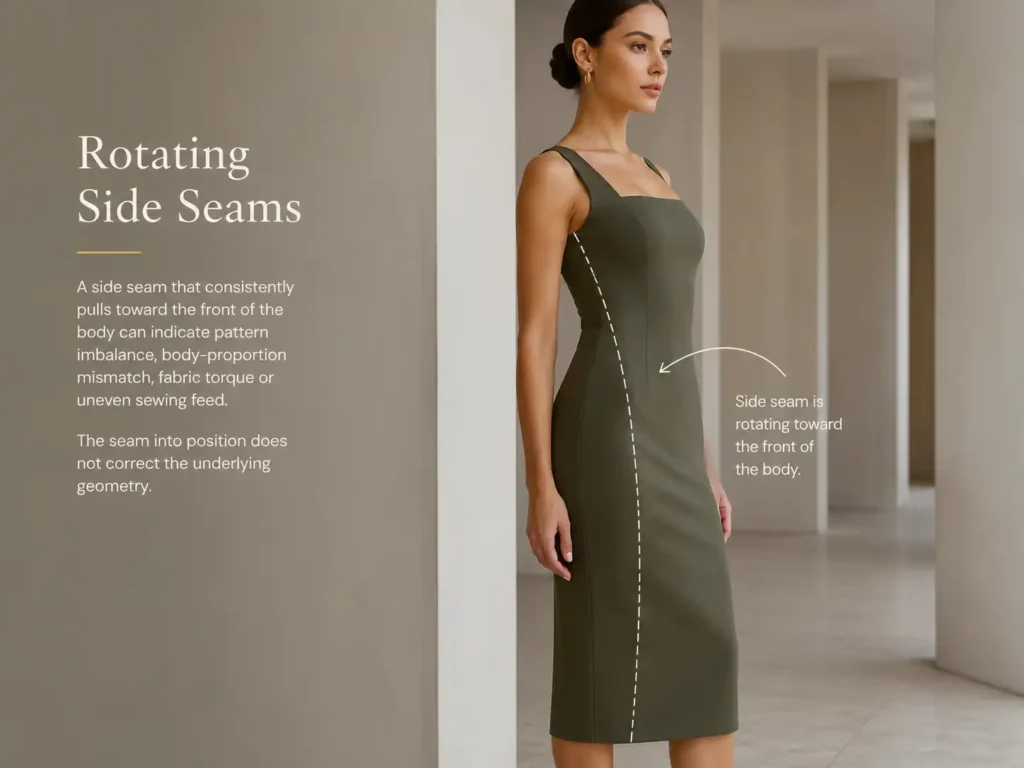
Rotating Side Seams
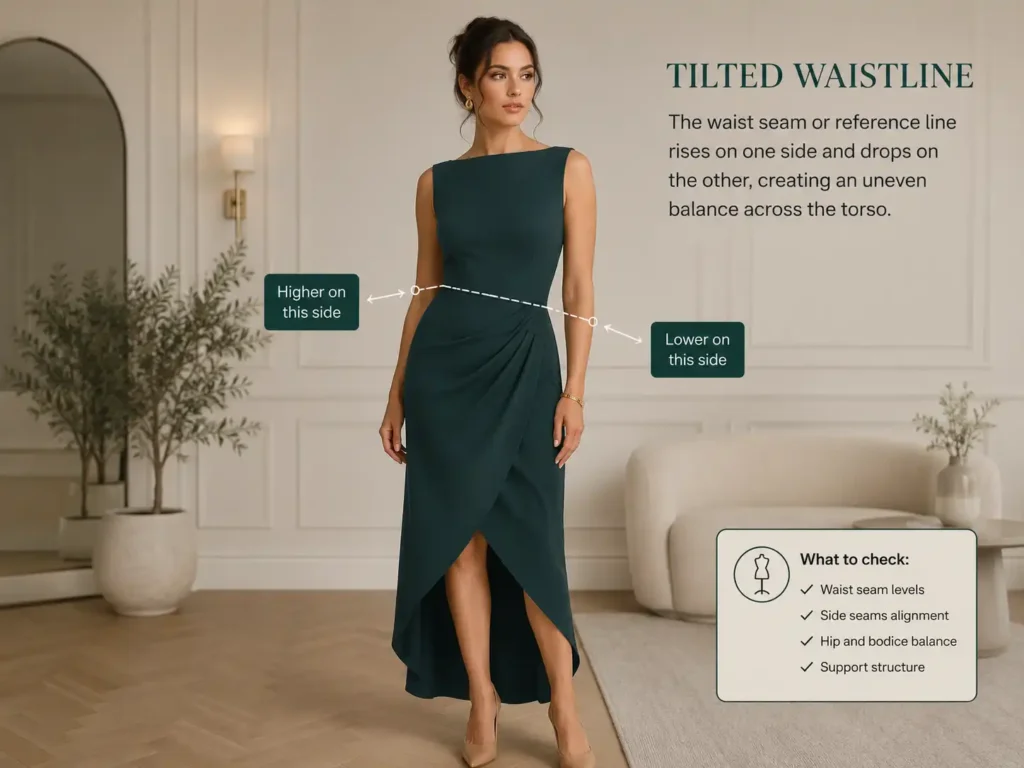
Tilted Waistline
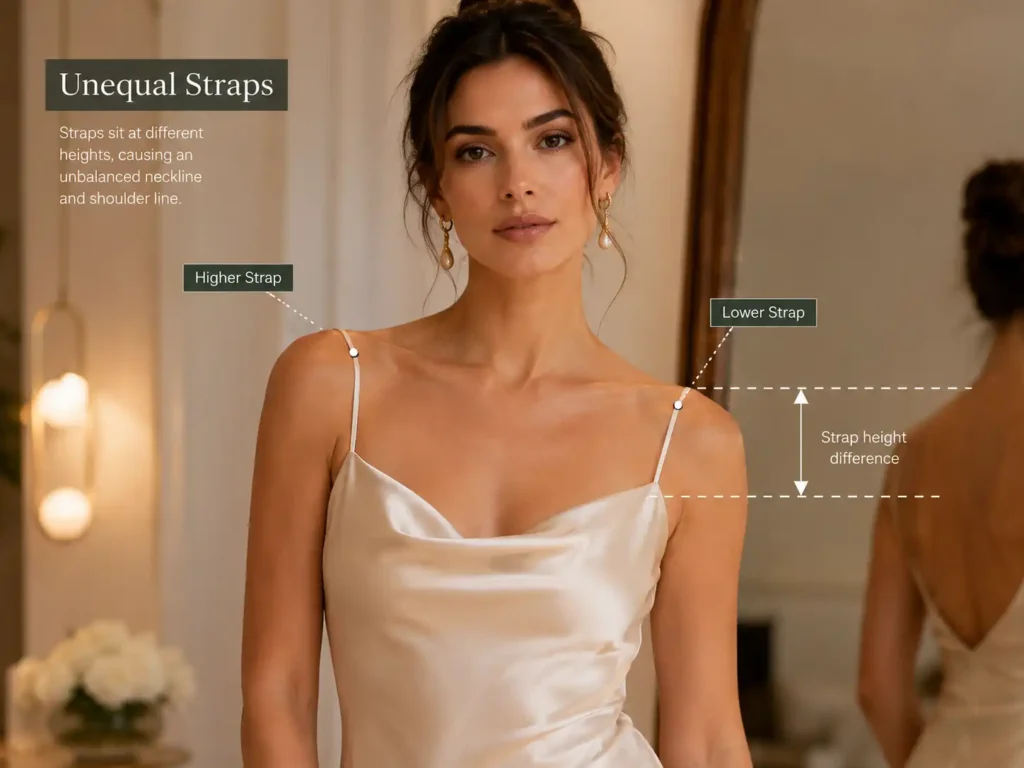
Unequal Straps
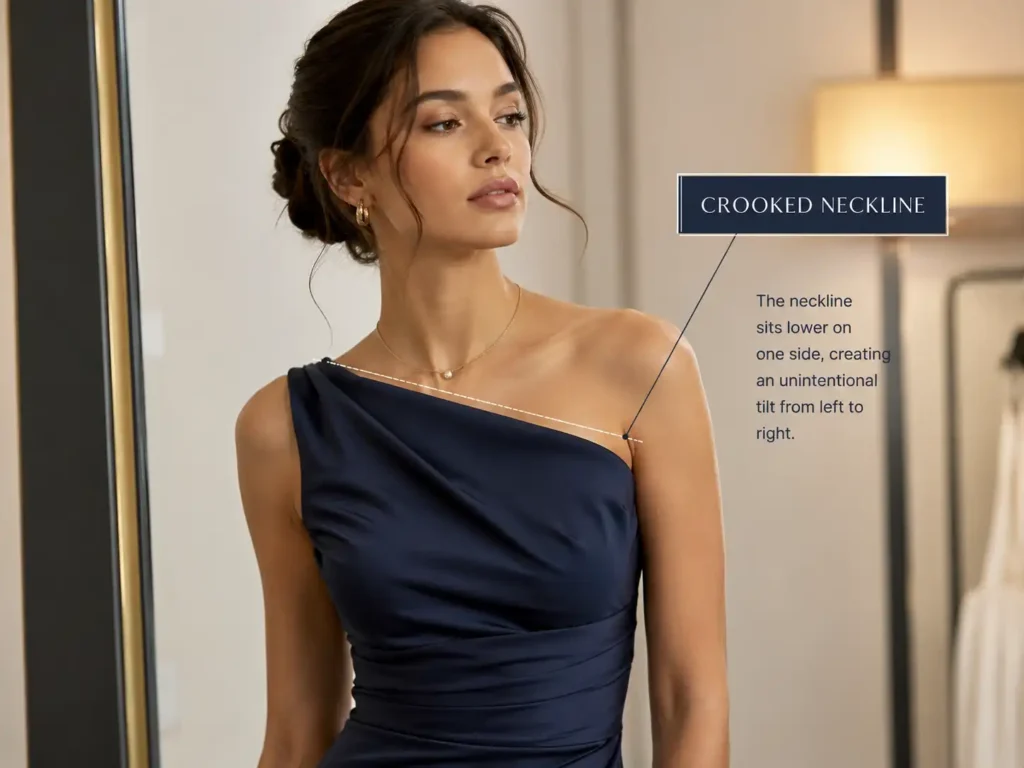
Crooked Neckline

Twisting Skirt
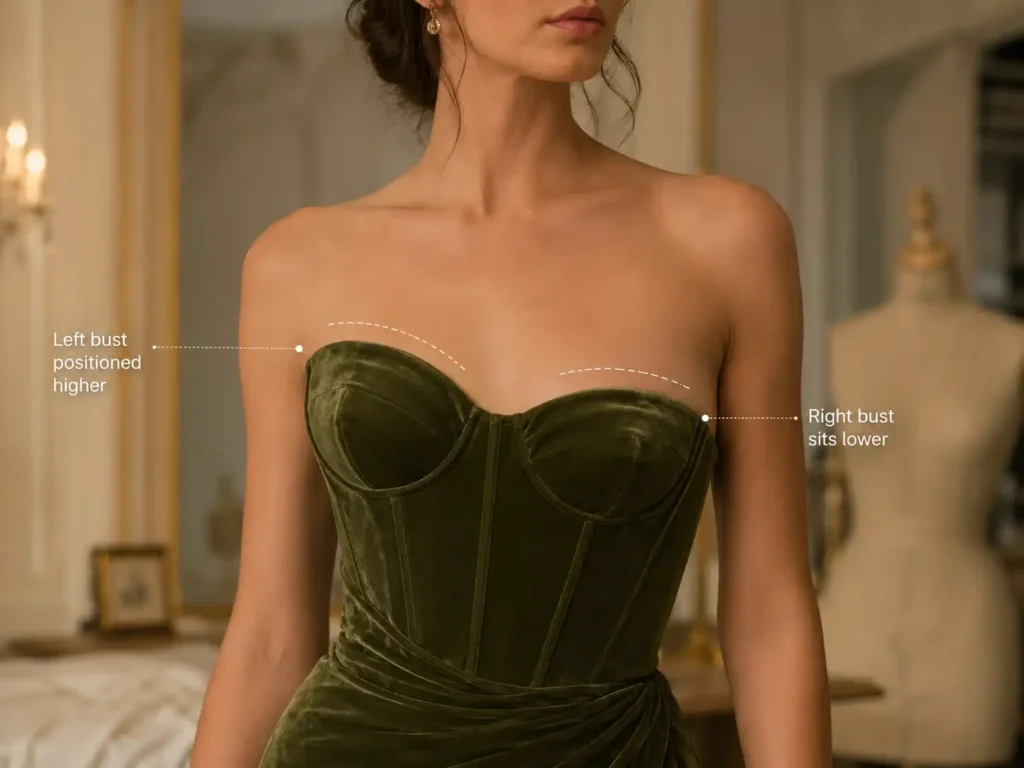
Uneven Bust Position
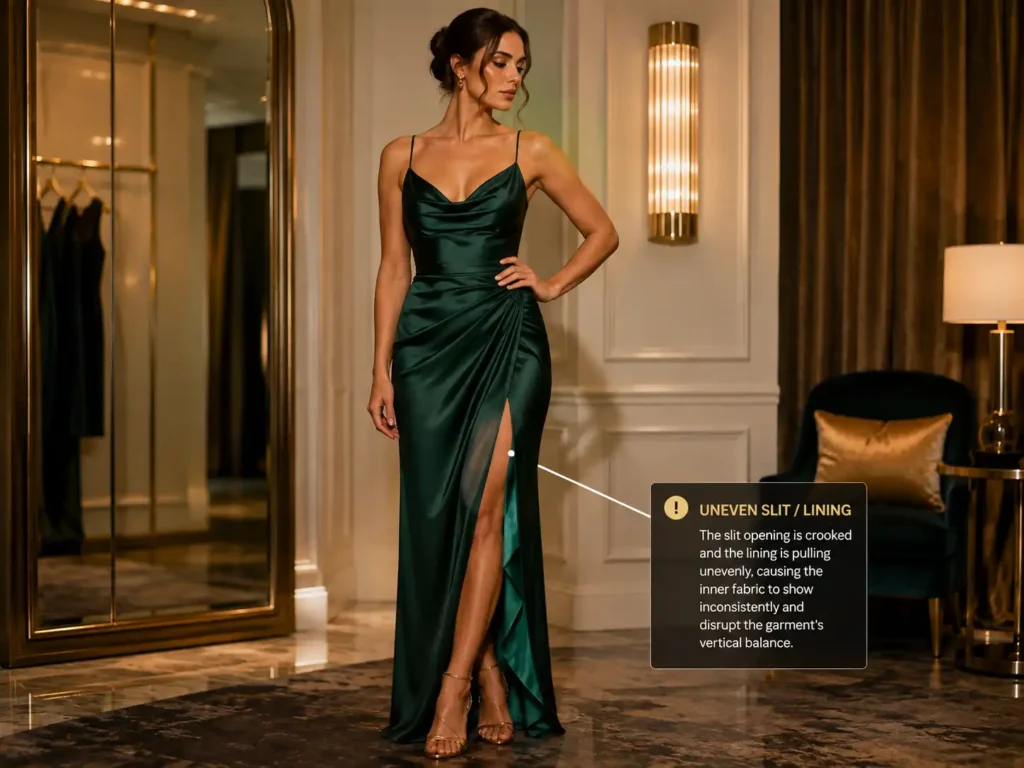
Uneven Slit or Lining
Built for Technical Dress Development Teams
Product Development Teams
Technical Design Teams
Sourcing Teams
Quality Teams
Where Dress Balance Problems Usually Start
Pattern Balance
Grainline Direction
Fabric Behavior
Body Proportion
Sewing Control
Grading Changes
Control Points From Neckline to Hem
Dress balance becomes easier to control when the garment is divided into connected technical zones. A problem at the hem may begin at the shoulder, while an apparently uneven side seam may originate from bust shaping or fabric torque. Jinfeng reviews the relationship between zones before changing isolated measurements.
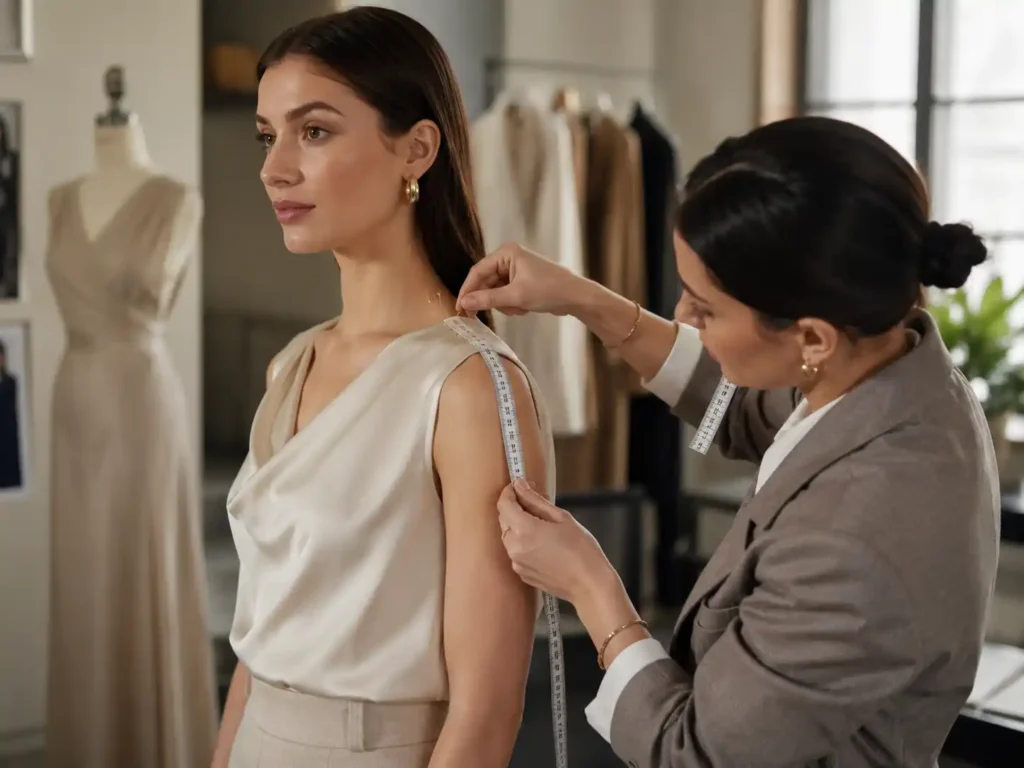
Shoulder, Strap and Neckline Alignment
Upper-body balance establishes the starting point for almost every fitted dress. Shoulder slope affects neckline position, armhole shape, strap angle and the way the bodice hangs. On camisole, slip, halter and asymmetric dresses, a few visible millimeters of placement difference can change the entire front view even when the overall garment measurements remain close to specification.
Review normally begins with the center front and center back position, shoulder or strap attachment points, neckline depth and left-right visual relationship. Strap length is then checked together with bust height and neckline tension rather than in isolation.
For stretch or bias fabrics, recovery becomes part of the assessment because two straps cut to the same measurement can grow differently if orientation or sewing tension differs. Facings and linings are also checked for tension that may pull one side inward.
The goal is not mathematical mirror symmetry for every design. The goal is controlled alignment consistent with the approved sketch, sample and intended asymmetry.

Bust, Waist and Hip Balance
The torso is the most common area where visual and dimensional balance interact. Bust darts, princess seams, corset cups, boning, waist seams and hip shaping distribute fabric around a three-dimensional body. A change in one area can move another reference point.
If a waistline rises at the front, for example, shortening the front hem would only hide the symptom. Bust projection, bodice length and fabric ease should first be reviewed. If one side seam rotates forward, hip distribution, panel shape and sewing feed may need investigation before the seam itself is altered.
Fitted dresses are reviewed against the intended bust-waist-hip relationship, not only the flat size chart. Bodycon styles additionally require fabric stretch and recovery to be considered. Corset styles require cup position, boning placement, waist shaping and support components to remain coordinated.
Pattern changes are documented so a corrected fit does not depend on manual adjustments made only to one sample.
Side Seams, Panels and Slits
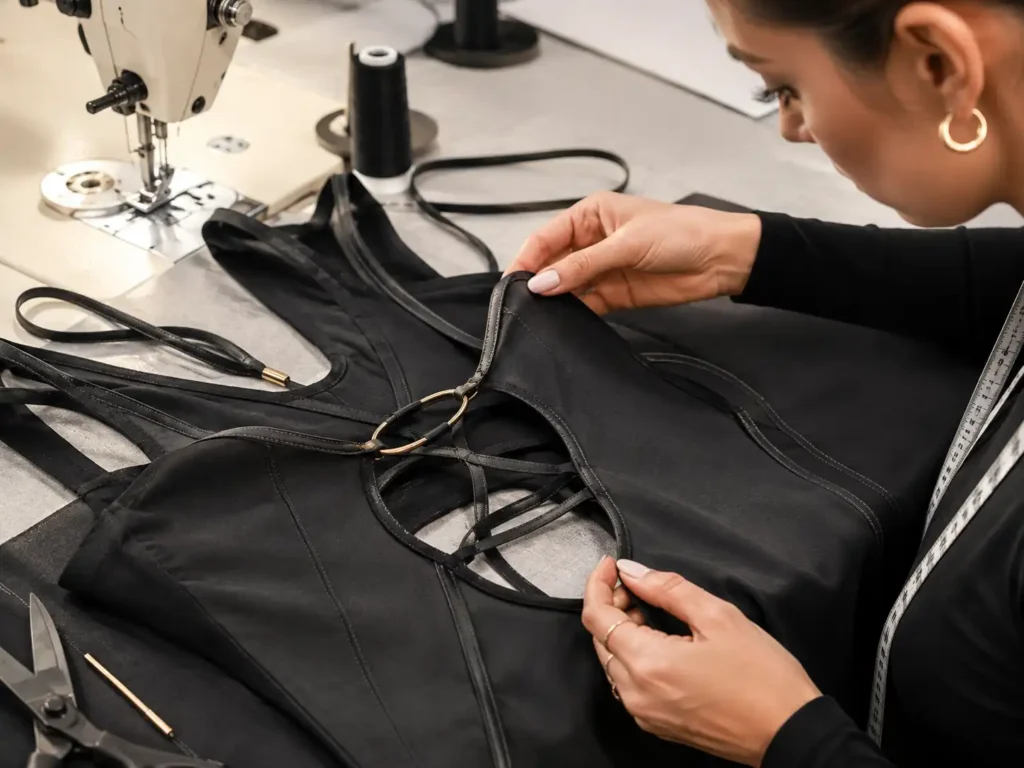
Side seams are useful diagnostic references because they reveal how the garment is distributing volume around the body. A seam that consistently rotates can indicate imbalance between front and back pattern widths, incorrect dart distribution, fabric torque or unequal stretch.
Panel dresses require additional attention. Princess seams, curved seams, ruched panels and cut-out structures can visually exaggerate even small positional differences. Matching left-right seam points and checking seam lengths before assembly helps prevent one side from accumulating excess length.
Slits should also be evaluated relative to seam direction and body position. A slit that rotates toward the front may not be a slit-construction problem at all; the skirt itself may be rotating.
During sample review, Jinfeng can compare seam position in front, side and back fitting views, then connect observations with measurement records and pattern corrections before a revised sample is approved.
Lining and Hem Balance
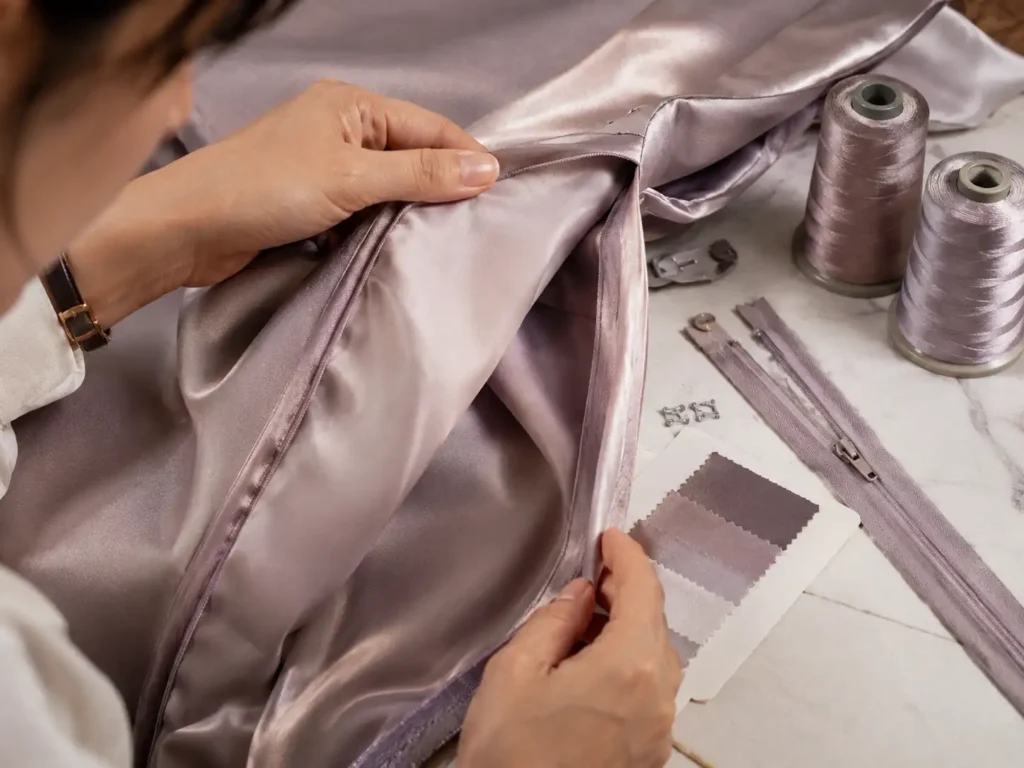
The lower garment can lose balance even after the outer shell pattern is correct. Lining that is too short, too tight, cut on a different grain behavior or attached with uneven tension can pull the shell inward or upward. Structured hems and heavy embellishments can also redistribute weight.
Fluid maxi, bias-cut and satin dresses deserve additional hanging observation because fabric may continue to relax after cutting and sewing. Hem decisions made too early can create an apparently level sample that changes after the fabric settles.
Hem review considers center front, center back, side reference points, panel grain, lining freedom and intended floor or body clearance. High-low and asymmetric hems are evaluated against the design reference rather than forced into a level line.
Bulk standards should record the approved reference and measurement method so production inspectors understand which differences are intentional and which are defects.
Fabric Can Change a Correct Dress Pattern
Pattern balance and fabric behavior cannot be separated. Weight, grain, stretch, recovery, drape, shrinkage and lining interaction can change how an approved shape hangs. Fabric substitutions therefore require technical review instead of being treated as a simple material swap.
Satin and Bias-Cut Styles
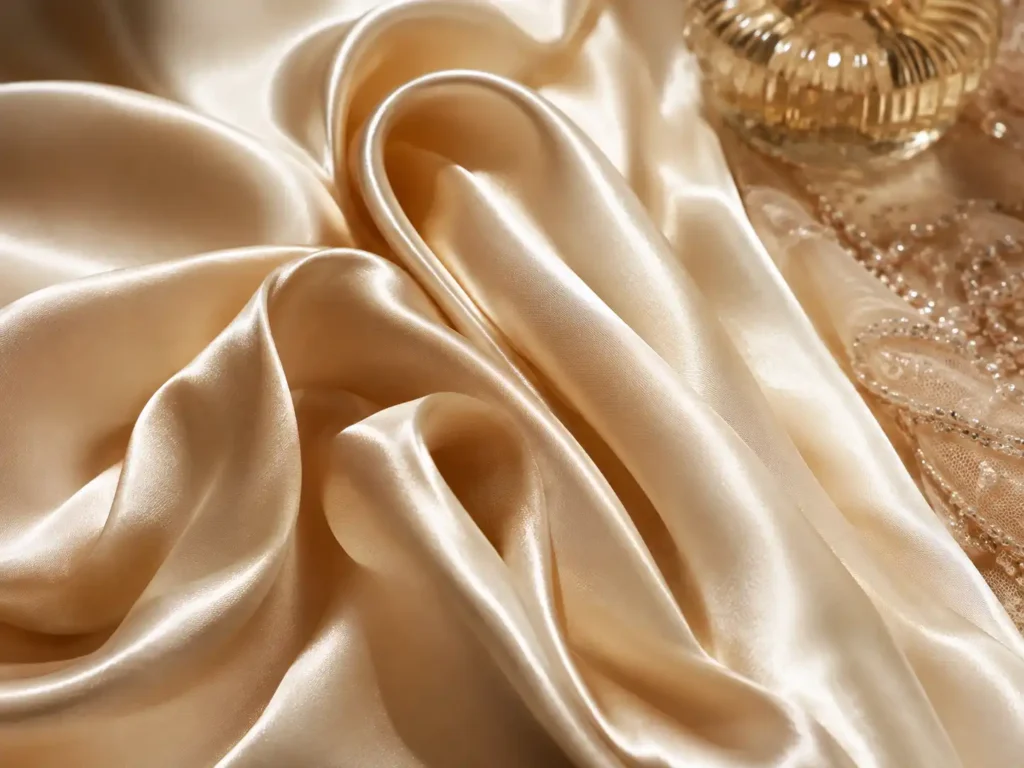
Satin exposes alignment problems because its smooth surface and reflected light make twisting, seam distortion and uneven pressing easy to see. Bias-cut satin introduces another variable: diagonal grain can grow and redistribute length after cutting and sewing.
A slip dress that appears balanced immediately after assembly may develop a lower section on one side if panels relax differently. Strap attachment, side seams and hem references should therefore be reviewed after the garment has settled under controlled conditions appropriate to the material.
Shine direction also matters. Panels cut in inconsistent directions can create visual imbalance even when measurements are correct because reflected light makes one side appear darker or brighter.
Lining needs compatible movement. A restrictive lining can stop the shell from hanging freely, while excessive lining length can create bulk around the hem. Pattern, grain, lining and pressing should therefore be reviewed as one system.
Jersey, Rib and Stretch Fabrics
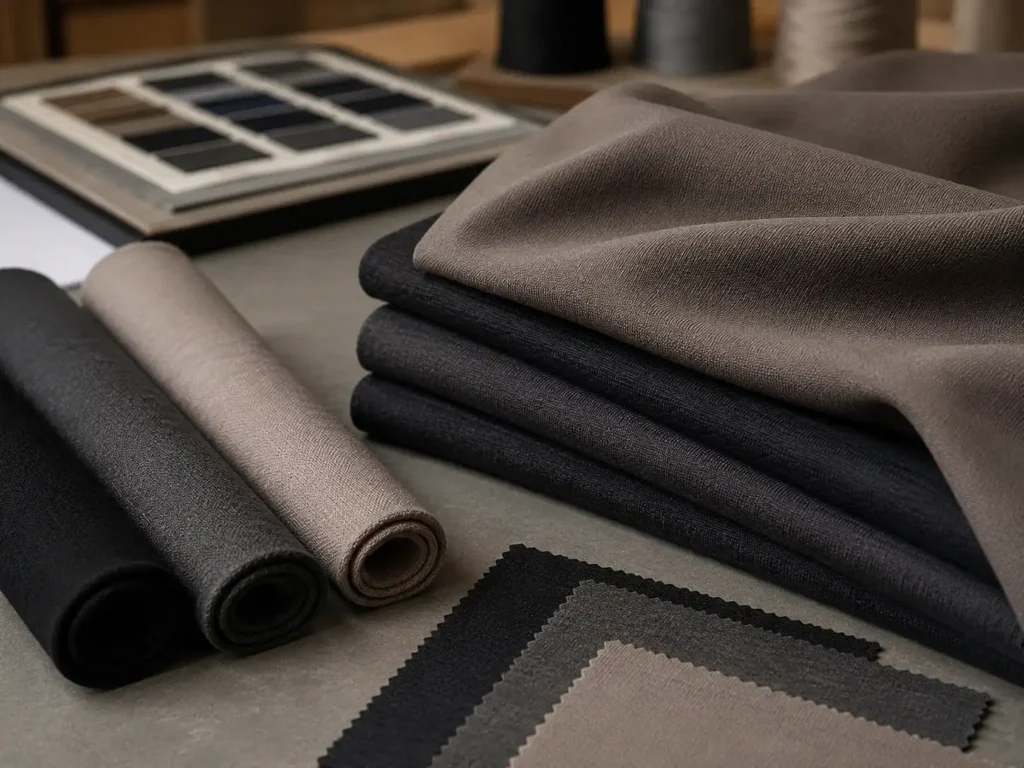
Stretch fabrics introduce growth and recovery into balance control. A bodycon dress can rotate even when the flat pattern looks symmetrical because fabric torque, stretch direction or uneven feeding changes how the panels respond on the body.
Jersey selection should include stretch percentage, recovery, weight and shrinkage review. Side-seam balance, neckline stability and hem behavior are particularly important. Jinfeng’s internal fabric guidance specifically treats twisting, side-seam balance, neckline stability and wash-related dimensional change as control points for jersey garments.
Rib fabrics require similar attention because vertical structures can visually reveal twisting. High stretch can also allow a sample to appear acceptable on one fit model while becoming unstable across the graded size range.
Pattern ease, seam method and measurement tolerance should be confirmed using the actual or production-equivalent fabric before PP approval.

Mesh, Lace and Layered Construction
Mesh and lace often create balance issues through layering rather than basic pattern shape. Stretch mesh can pull differently depending on orientation, while lace placement can create visual left-right imbalance even when the garment dimensions are technically correct.
For lined mesh dresses, shell and lining stretch need compatible behavior. A stable lining beneath a highly elastic mesh can restrict movement or distort the neckline. Conversely, a loose lining can shift beneath transparent areas and make the garment appear uneven.
Lace dresses add motif placement and seam matching. Designers may intentionally use asymmetric motifs, but unintended mismatch at neckline, waist or bodice seams can make the garment look poorly balanced.
Sample approval should therefore cover visual placement, dimensional fit and movement together.
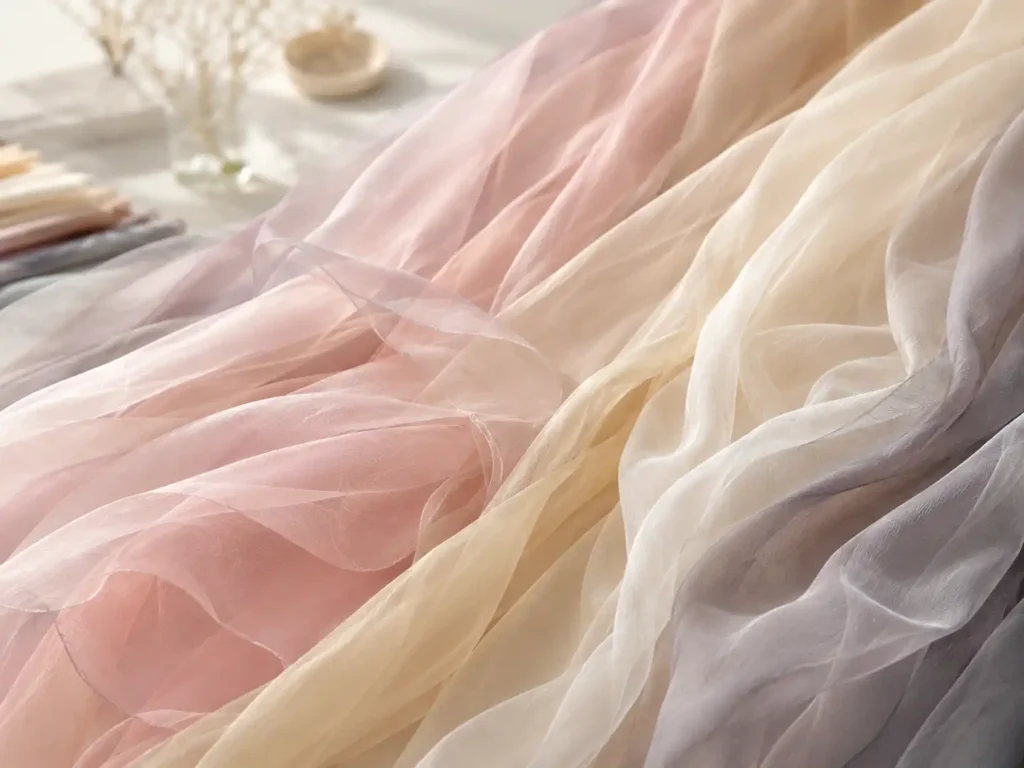
Chiffon and Lightweight Draped Fabrics
Chiffon and other lightweight woven fabrics react strongly to grain direction, cutting distortion and lining weight. Panels can shift during cutting, stretch along diagonal sections or hang differently when one side carries more seam, trim or gathering weight.
Maxi dresses amplify the effect because small differences at the waist or hip can become much larger at the hem. Gathering also requires controlled distribution; unequal gather density can pull the skirt toward one side.
Lining should support opacity without becoming heavy enough to change the shell’s fall. Seam finishes, pressing and hanging behavior are reviewed before final hem decisions.
A fabric change during sampling may therefore require renewed pattern, lining, cost and timing evaluation rather than automatically using the previously approved pattern.
Pattern Correction Before Bulk Production
Sample feedback only creates value when it becomes a controlled production change. Jinfeng converts fit observations, measurements and marked photos into pattern revisions, updated technical records and a new approval point before bulk production. The workflow is designed to prevent unresolved balance problems from entering cutting and sewing.
Diagnose Before Altering
A fit comment such as “the right side hangs lower” is not yet a production instruction. The first task is to determine whether the difference originates from body posture, strap position, bodice length, panel grain, lining tension, sewing distortion or the hem itself.
Useful evidence includes front, side and back fitting photos; flat garment measurements; worn measurements where relevant; marked problem locations; movement views; and the approved design reference. Pattern makers compare these inputs before choosing an action.
A correction should address the root cause at the earliest controllable point. If shoulder balance is moving the neckline and hem, changing only the hem would preserve the real error. If fabric growth is causing a bias skirt to drop, cutting and handling controls may be more important than changing the original length.
The objective is a repeatable correction, not a cosmetic repair to one development sample.
Convert Fit Comments Into Pattern Actions
Approved observations are translated into specific actions such as adjusting shoulder slope, changing strap attachment, redistributing bust shaping, correcting bodice length, repositioning a waist seam, altering front-back skirt balance or modifying panel geometry.
Measurement changes are updated where required. Pattern notes should show which lines changed and how those changes affect adjoining pieces.
Altering a neckline may require facing or lining updates; changing a waist curve can affect skirt joining lengths; moving a slit can affect lining and seam construction.
Jinfeng maintains revision information so development does not rely on remembered conversations.
Revision records can track sample version, client comment, revision location, measurement change, pattern impact, fabric or trim impact, construction impact, cost or lead-time impact and the next sample action.
Validate With the Correct Sample Stage
A first sample establishes direction; it should not automatically become the final production standard. When balance issues require material pattern changes, a revised sample provides the opportunity to check whether the original symptom has been corrected without damaging another area.
Regular dress first samples are generally referenced at about 10–15 days, while complex corset, strapless, lace, mesh, sequin and evening styles commonly require about 15–25 days, depending on materials and structure. Revised samples are commonly referenced at 7–15 days, with complex changes confirmed individually. These ranges remain project dependent.
Fit, fabric, construction and measurement are reviewed together before proceeding to PP approval.
Lock the Production-Ready Standard
Once the corrected pattern and garment are approved, production needs a defined reference rather than a collection of informal comments. Final pattern files, size charts, grade rules, construction notes and relevant QC measurements become part of the production handover.
The PP sample verifies final pattern, fabric, trims, measurements and construction before bulk production. A Golden sample can then serve as an important physical reference for production, inspection and repeat orders.
Major changes after PP approval require renewed evaluation because changing fabric, color, measurement, trims or construction can reintroduce the same balance risks previously removed.
Better Fit Feedback Produces Better Corrections
Cross-border development works best when fit comments show what the garment is doing rather than only describing how it feels. A consistent feedback format helps pattern makers separate visual balance, measurement and movement problems.

Front View
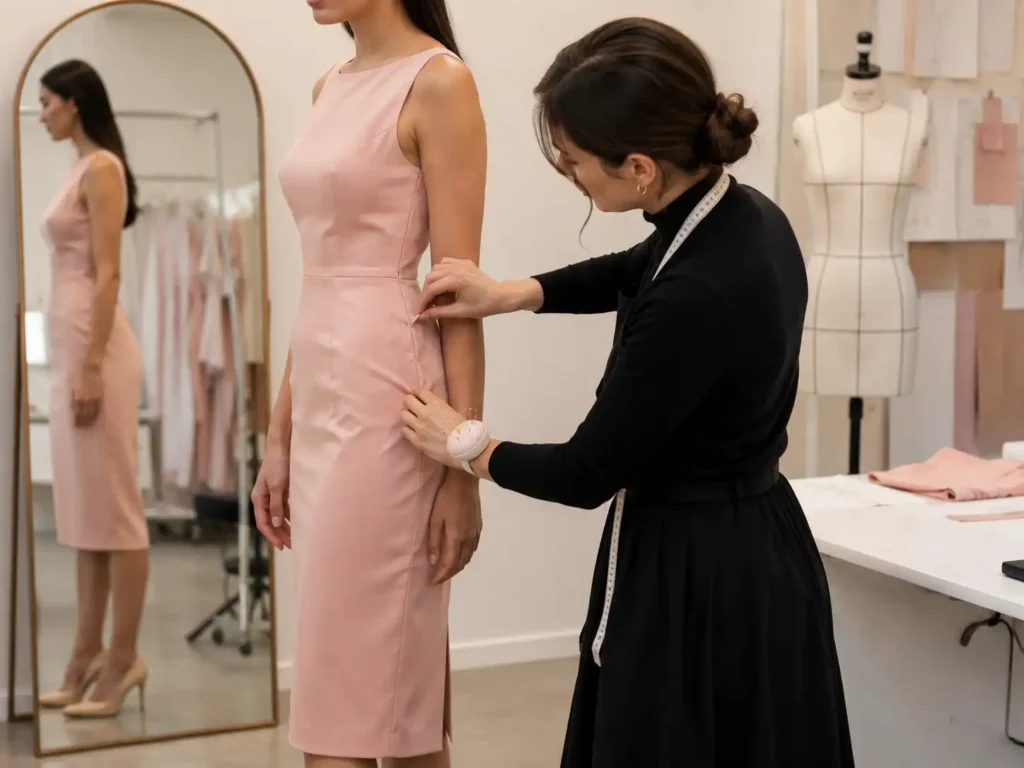
Side View

Back View
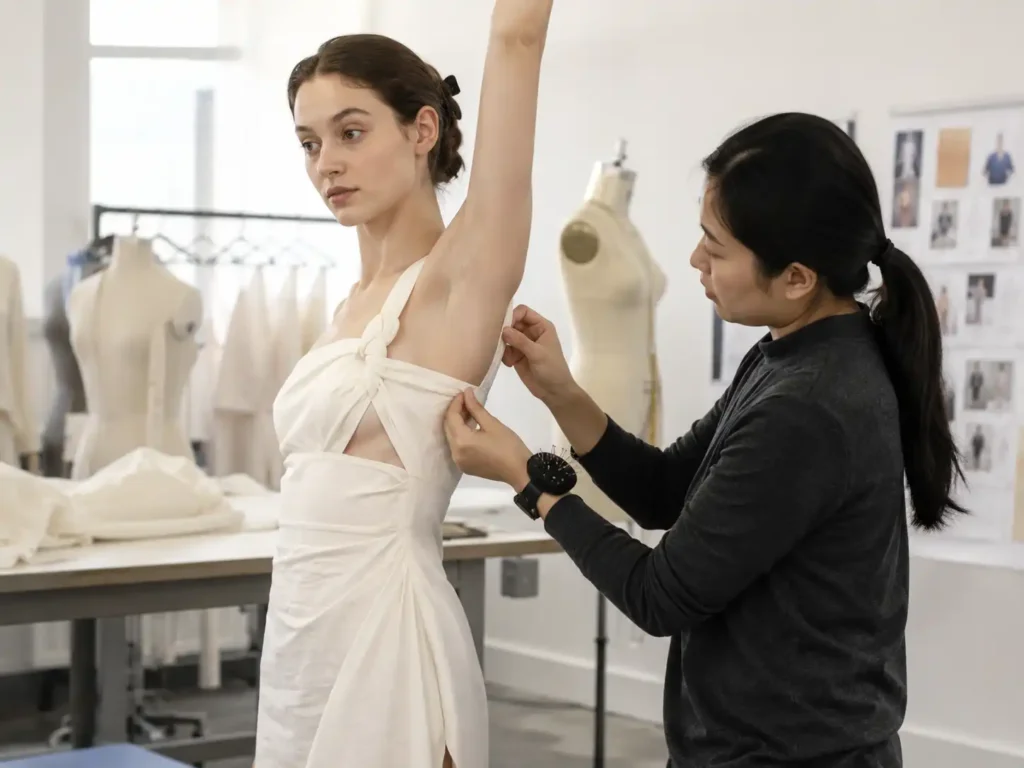
Movement and Detail
Measurement Review for Dress Balance Control
Visual fitting and measurement should support each other. Not every balance issue appears as a specification failure, but controlled measurements help determine whether a visible shift comes from dimensions, pattern distribution, fabric behavior or assembly.
| Review Area | What We Check | Typical Balance Signal | Production Record |
|---|---|---|---|
| Strap / Shoulder | Length, attachment position, slope | Uneven neckline or armhole | Pattern + measurement |
| Neckline | Depth, width, left-right position | Crooked or shifted opening | Pattern + sewing reference |
| Bust | Width, cup/dart position, projection | Uneven bust level or pulling | Size chart + pattern |
| Waist | Width, seam position, level | Tilted waistline | Measurement + fit comment |
| Hip | Width, ease, panel position | Side-seam rotation | Pattern + measurement |
| Side Seam | Direction and joining length | Seam moving front/back | Pattern + inline check |
| Slit | Position and height | Rotating or uneven slit | Pattern + construction note |
| Dress Length | CF, CB and side references | Uneven hem | Measurement method |
| Hem Width | Panel and finished relationship | Skirt twisting / flare mismatch | Pattern + QC point |
| Lining | Length, freedom, attachment | Shell pulled upward or sideways | Construction + final check |
Revision Records Keep Every Change Traceable
Multiple sample rounds can become difficult to control when changes remain scattered across emails, marked photos and chat messages. A structured revision record creates one technical trail from the original fit problem to the approved PP standard.
Record the Problem
Record the Change
Record the Approval
PP Approval Locks the Production Standard
Final Pattern
Final Measurements
Final Fabric
Final Construction
Final Appearance
Final QC Standard
Transfer Balance Corrections Into Bulk Production
A technically strong sample has limited value if the production line receives incomplete information. Jinfeng connects approved sample development with production through final pattern files, specifications, material references, construction instructions and quality checkpoints.
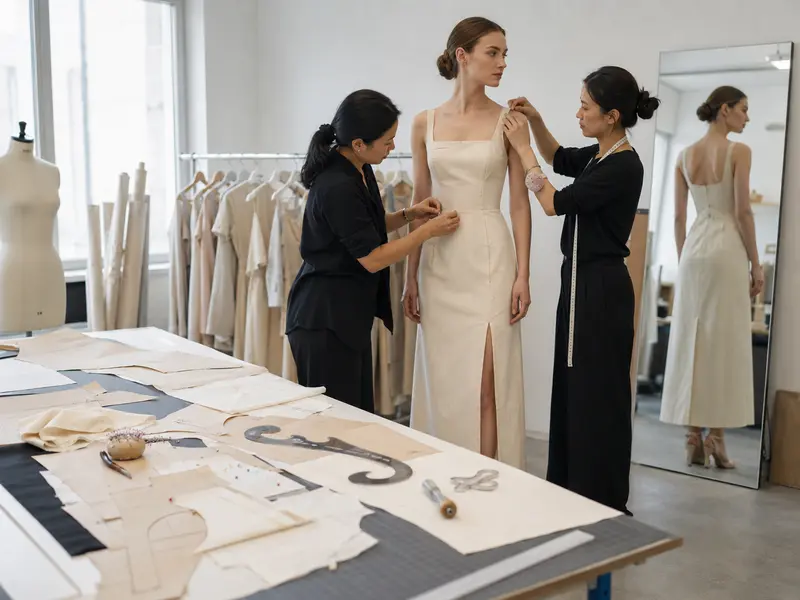
Pattern and Measurement Handover
The production team needs the final approved pattern rather than the first or intermediate pattern.
Version control is especially important when several fit rounds have adjusted shoulder, waist, hip, strap or hem relationships.
Size charts and grade rules are reviewed alongside the pattern. If a correction was developed on the base size, the graded range must preserve the intended proportion rather than simply enlarging every dimension.
Critical measurements connected to balance can be highlighted for production and QC. A bodycon dress may prioritize bust, waist, hip and length; a slip dress may add strap length and neckline depth; a jumpsuit may require torso and crotch control.
Fit comments that explain visual intent are retained where they help production interpret measurements correctly.
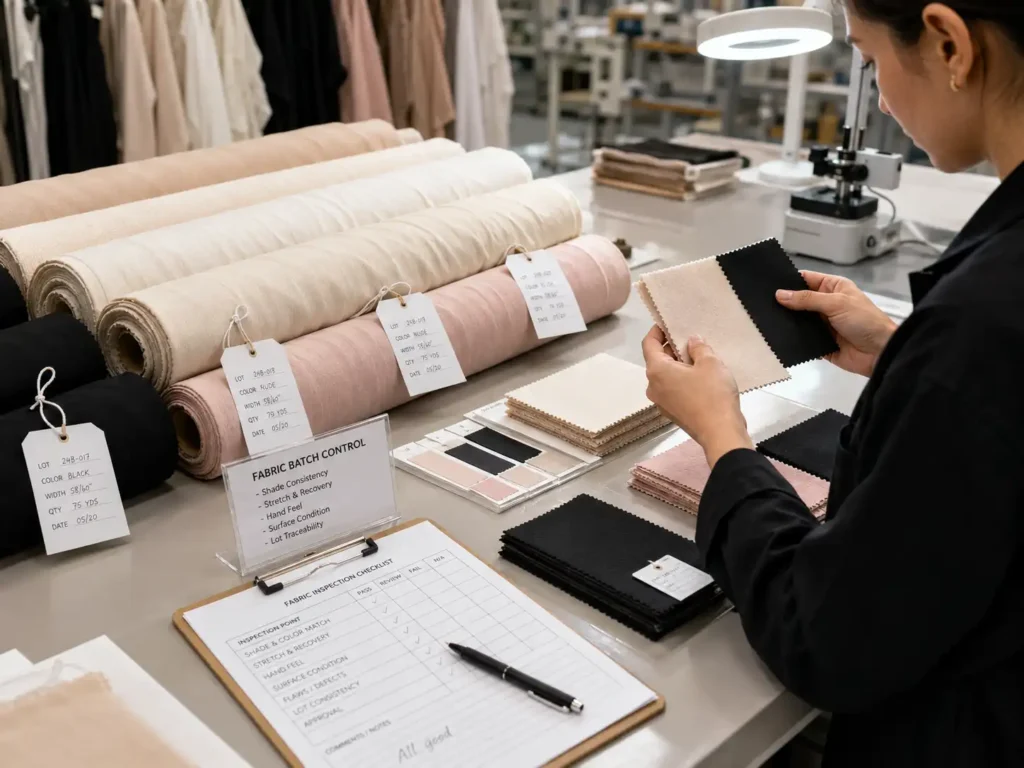
Fabric and Trim Handover
Approved fabric references help prevent a correct pattern from being produced in a material with different stretch or drape. Fabric name, composition, weight, color, stretch, hand feel and other relevant attributes are controlled according to the project.
Trims can affect balance as well. Bra cups, boning, elastic, anti-slip tape, zippers, sliders and lining need correct specifications and placement. An incorrect cup size or boning length can change upper-body symmetry even when the shell pattern remains unchanged.
Approved trim information is connected with the BOM and production instructions. Substitute materials should not be introduced without assessing fit and construction effects.
Material availability and supplier lead times are confirmed by project rather than assumed.
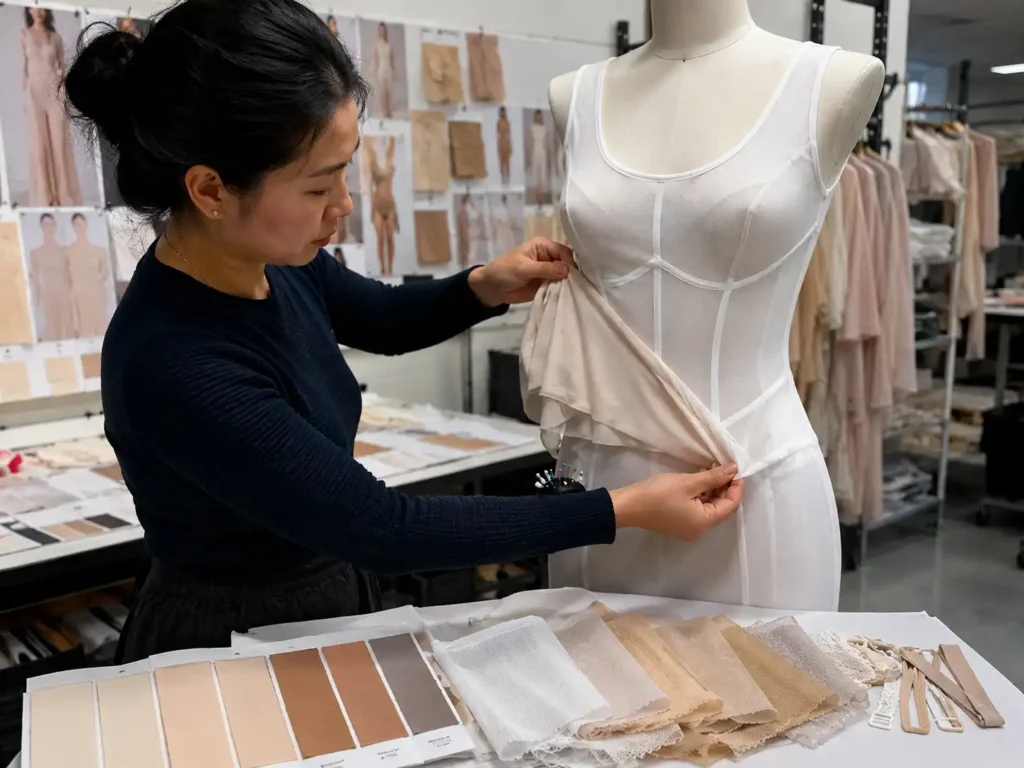
Construction Handover
Production instructions should show how the approved shape is assembled. Seam joining, gathering amount, lining attachment, strap placement, zipper installation and pressing can all change balance if execution varies.
Complex designs may need additional visual references showing drape direction, ruching distribution, lace placement or asymmetric construction. These references help operators and inline inspectors understand what must match and what is intentionally different.
Sample-room knowledge should therefore become written or visual production information rather than remaining with the person who made the sample.
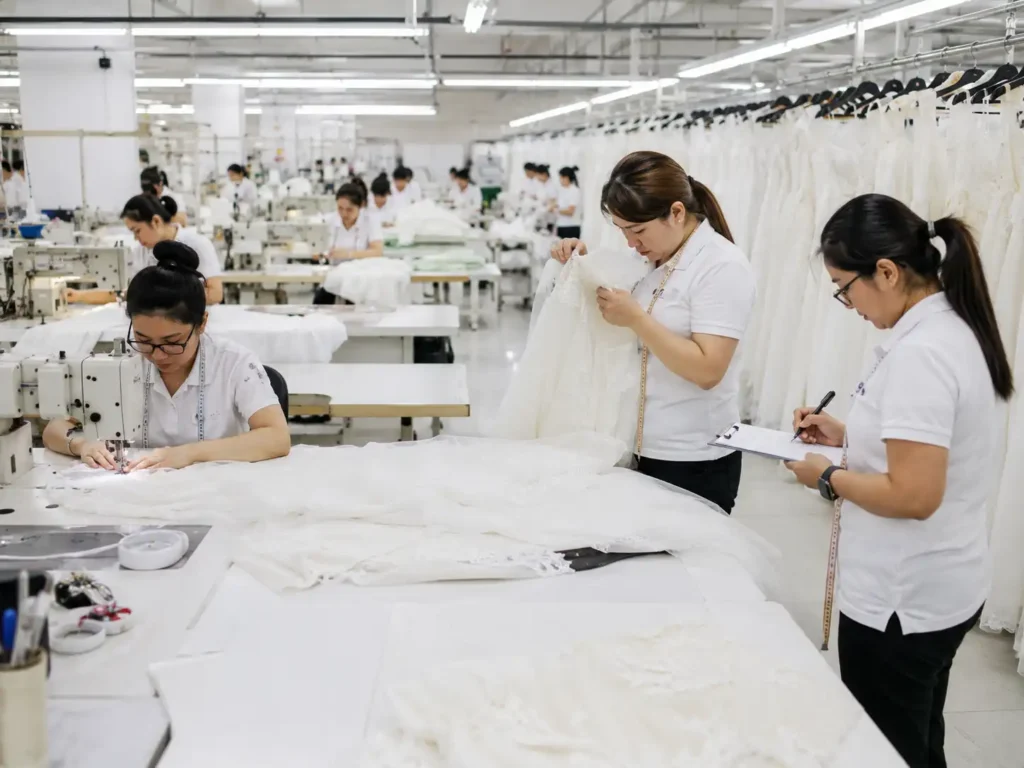
QC Handover
The production handover includes checkpoints that connect directly to the approved garment. A general final inspection cannot replace targeted checks on areas that previously required correction.
If side-seam rotation was a development issue, seam direction becomes an inspection focus. If strap placement caused neckline imbalance, attachment position and strap measurement receive additional attention. If bias growth affected the hem, length reference and hanging condition should be defined.
Jinfeng’s documented sample-to-bulk process transfers final pattern, size chart, fabric and trim references, sewing instructions, label requirements, packing requirements and QC checkpoints into production.
Bulk QC Focused on Symmetry and Balance
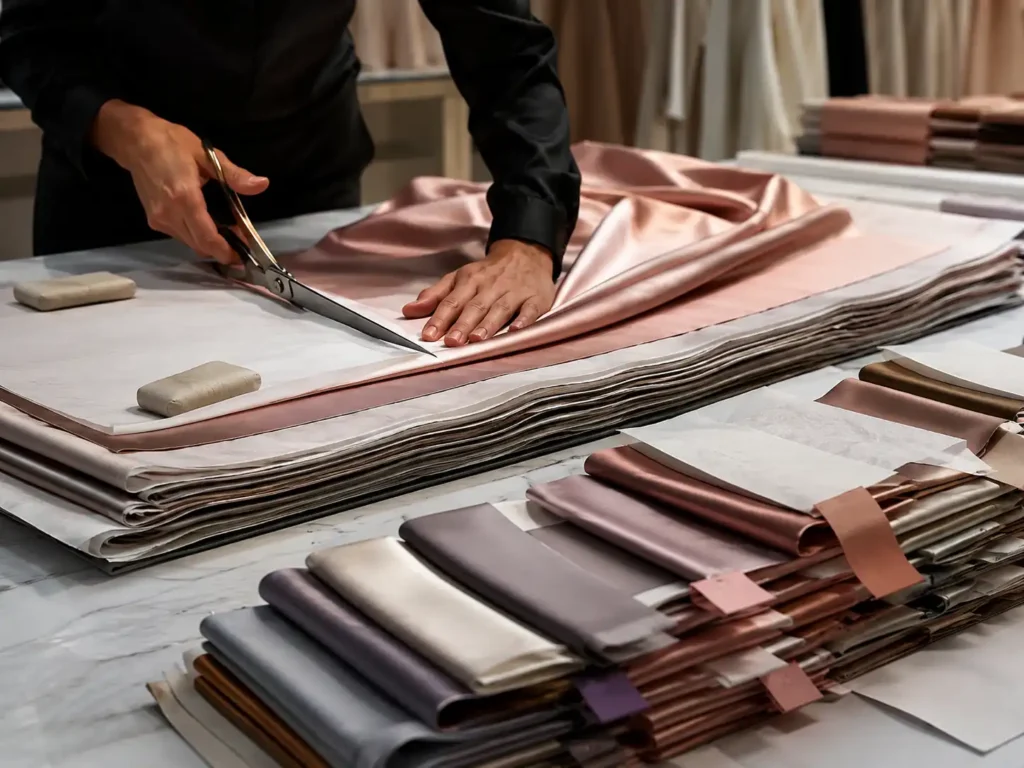
Cutting Alignment

Seam Direction

Upper-Body Alignment

Measurement Control

Finished Garment Balance

Pressing and Packing Condition
Balance Risks Change Across Dress Categories
Different silhouettes fail in different ways. Applying the same QC checklist to every dress misses product-specific risks, so development and production checks should follow the structure, fabric and intended fit of each style.
| Dress Type | Common Balance Risk | Main Development Focus | Bulk Control Focus |
|---|---|---|---|
| Satin Slip Dress | Bias growth, rotating seam | Grain, strap, lining, hem | Length and seam direction |
| Bodycon Dress | Side seam rotation | Stretch, recovery, hip balance | Measurement and seam position |
| Corset Dress | Uneven cup or waist | Cup, boning, bodice balance | Support placement |
| Strapless Dress | Neckline drop or tilt | Bust support, anti-slip, waist | Top-edge stability |
| Mesh Dress | Shell/lining pull | Stretch direction, coverage | Neckline and lining |
| Lace Dress | Visual left-right mismatch | Motif placement, seam matching | Placement and damage |
| Sequin Dress | Uneven weight | Panel direction, lining | Decoration and seam balance |
| Chiffon Maxi | Uneven hem | Grain, drape, lining | Length and hem condition |
| Ruched Dress | Unequal gathering | Pattern volume, distribution | Ruching consistency |
| Jumpsuit | Torso rotation | Waist, crotch, hip balance | Torso and inseam measurement |
Complex Dresses Need Different Balance Controls
The more structure, stretch, layering or surface decoration a style contains, the less useful a one-size-fits-all fit process becomes. Each construction type requires its own sequence of pattern, sample and QC decisions.

Corset and Bustier Dresses
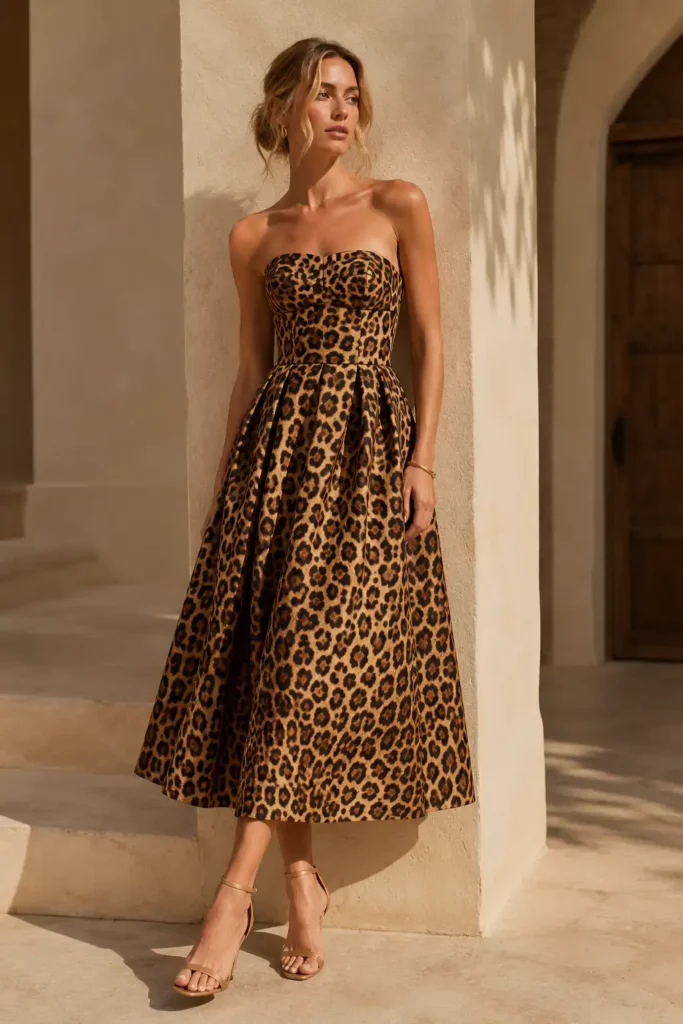
Strapless Dresses
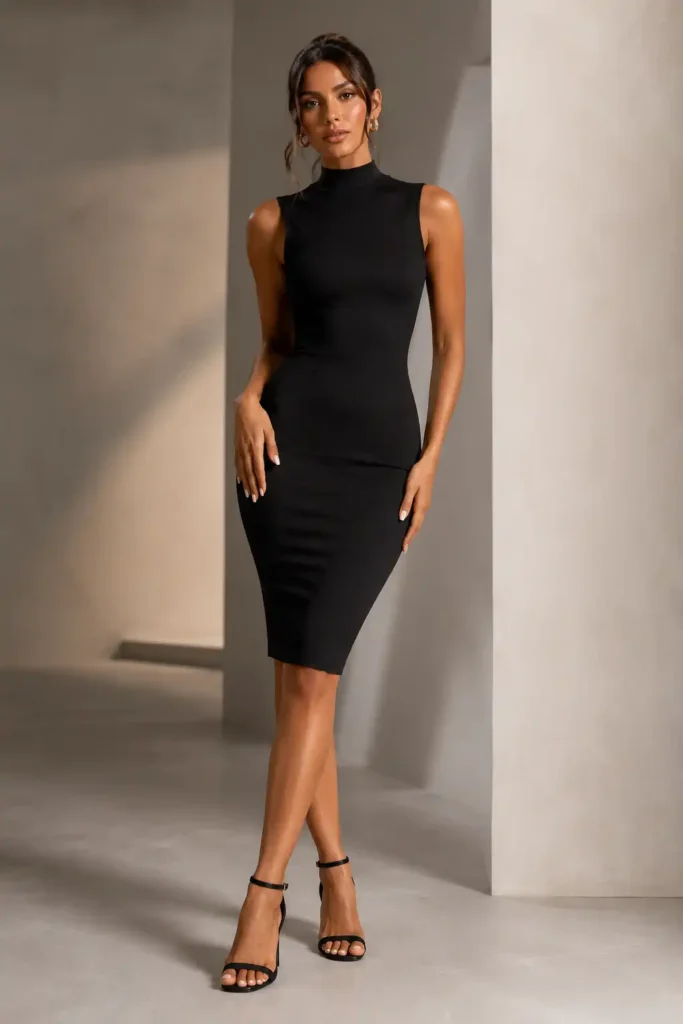
Bodycon Dresses

Bias and Slip Dresses

Maxi and Occasion Dresses

Jumpsuits
What Strong Balance-Control Suppliers Should Prove
Pattern Capability
Fit Sample Process
Measurement Review
Revision Traceability
Production Transfer
Bulk QC
Manufacturing Capacity Behind Technical Corrections
Fit correction must eventually operate at production scale. Jinfeng combines sample-room development with owned and long-term production resources, allowing approved pattern and QC standards to move into multi-style dress programs and repeat orders.
6 Owned Factories
10+ Production Partners
18+ Sewing Lines
6+ Flexible Lines
15+ QC Inspectors
12+ Merchandisers
Frequently Asked Questions About Dress Symmetry and Balance
Dress balance describes how the garment hangs and aligns according to the intended design. Review may include shoulder position, center front and back, waistline, side seams, skirt fall, lining and hem relationship. Balance does not require every design to be visually symmetrical.
Yes. An existing sample can be reviewed together with the tech pack, measurements, fit photographs and written comments. The objective is to identify likely pattern, material or construction causes before deciding whether the pattern needs correction or a revised sample.
Yes. One-shoulder, diagonal neckline, high-low hem and asymmetric drape styles can remain balanced when the approved design lines hang correctly. Technical review separates intentional asymmetry from unwanted twisting, tilting or length differences.
Send the tech pack or reference, size chart, front-side-back fitting photos, marked detail photos, measurement differences and a prioritized revision list. Fabric information is also important because stretch, drape and grain can affect balance.
Often, yes. Changes in weight, stretch, recovery, shrinkage, drape or lining behavior can alter the fit of an approved pattern. Jinfeng re-evaluates whether pattern, lining, sample, costing or timing changes are required when material changes affect construction.
Approved corrections move into the final pattern, size chart, relevant grade rules and construction records. A PP sample verifies the final production direction before bulk manufacturing, and a Golden sample can provide a physical reference for production and QC.
The base-size correction is reviewed together with grading because larger and smaller sizes may require proportional changes in waist placement, strap length, neckline depth and overall length. The approved grade rule and size specification guide production and measurement QC.
Yes. Relevant checkpoints can include strap placement, neckline alignment, side-seam direction, waist level, slit position, lining and hem balance. Inspection points are selected according to the style instead of applying an identical checklist to every dress.
The standard starting MOQ is 200 pcs per style/color, subject to fabric availability, color development, trims, construction complexity and production scheduling. Special materials, colors, trims or packaging may have separate supplier requirements.
Yes. Jinfeng supports NDA-based cooperation and protects tech packs, samples, patterns, trims, private-label details and unreleased designs throughout development and production.

Send Your Dress for Symmetry and Balance Review
A strong correction starts with enough evidence to understand what the garment is doing and where the problem may originate. Send your current sample information before requesting a final production solution.
Jinfeng can review the garment from pattern, fit, fabric and construction perspectives, identify the areas that need deeper assessment and define whether the next step should be pattern correction, revised sampling, PP development or production preparation.
For a faster technical review, include:
- Tech pack, sketch, reference image or existing sample details
- Front, side and back fitting photographs
- Marked photographs of the uneven or twisting area
- Current size chart and measurement differences
- Fabric composition, weight, stretch or fabric reference
- Existing pattern information where available
- Current sample version and previous revision notes
- Target size range and planned quantity by style/color
- Key launch or delivery window
- NDA requirement where applicable


