 Skip to content
Dress Manufacturer for Vendor Onboarding Teams
A structured womenswear manufacturing partner for supplier qualification, technical validation, factory review, and controlled first-order execution.
- Since 2008, Jinfeng Apparel has focused on custom dresses and premium fashion womenswear for established global and regional brands.
- 6 owned womenswear factories and 10+ long-term production partners support assigned-factory planning by product, fabric, construction, quantity, and delivery schedule.
- 2 sample rooms, 7+ senior pattern makers, and 20+ sample machinists support fit evaluation, revision control, PP approval, and production conversion.
- 12+ merchandisers and 15+ QC inspectors coordinate onboarding files, sample status, bulk milestones, inspections, packing, and shipment release.
Vendor-Ready Manufacturing at a Glance
Since 2008
6 Owned Factories
10+ Production Partners
2 Sample Rooms
12+ Merchandisers
15+ QC Inspectors
Built for Cross-Functional Vendor Approval
Vendor Onboarding
Global Sourcing
Product Development
Quality Assurance
Compliance Review
Operations and Finance
Where New Vendor Approvals Commonly Break Down
Incomplete File Sets
Entity Mismatches
Unclear Factory Scope
Weak Category Fit
Sample-Bulk Disconnect
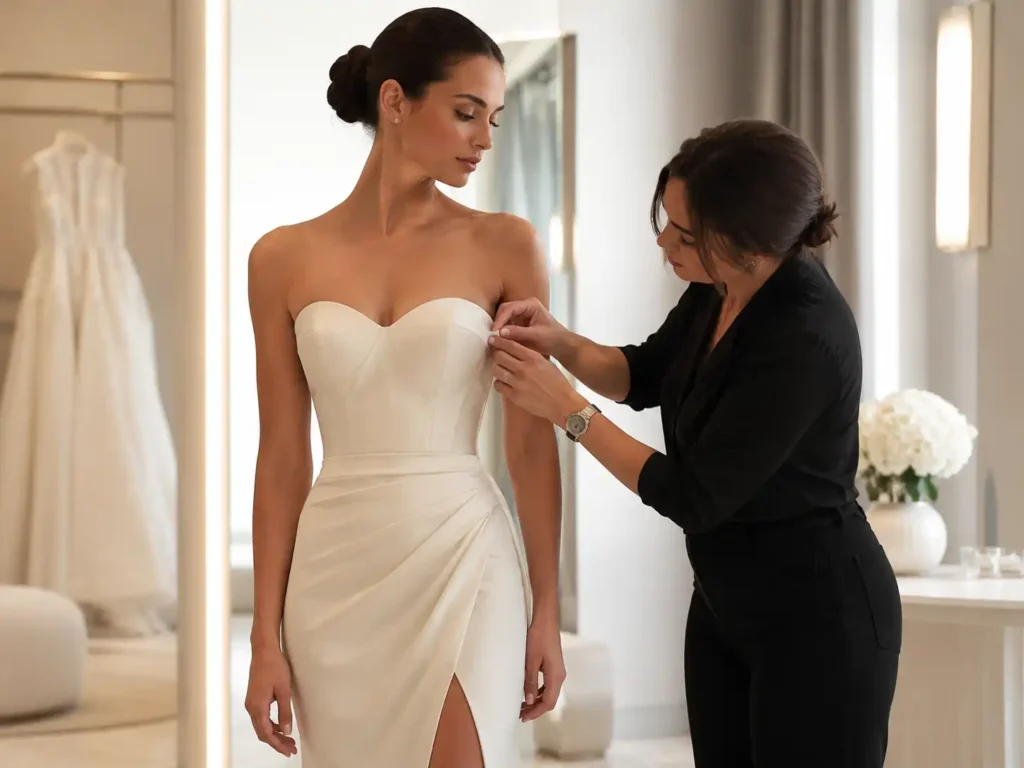
What an Onboarding-Ready Dress Manufacturer Must Prove
Verifiable Identity
Assigned Factory
Dress Category Fit
Development Control
Material Discipline
Measurable Quality
Compliance Cooperation
First-Order Governance
From Initial RFI to First Purchase Order
A controlled onboarding path reduces duplicated requests and prevents approval from becoming detached from production. Jinfeng Apparel works through four connected stages, with clear inputs, outputs, owners, and release conditions.
Qualification Entry
The process starts with the brand’s vendor questionnaire, product category, target market, expected order structure, compliance requirements, quality standard, and desired onboarding date. Jinfeng returns an initial company profile, unified contact information, manufacturing scope, target product fit, and a list of files that can be prepared immediately or require assigned-factory confirmation.
A preliminary review also checks whether the proposed quantity matches the production model. Standard MOQ starts from 200 pieces per style and color, while custom dyeing, printing, certified materials, special lace, sequin fabrics, trims, and private-label packaging may carry separate supplier minimums.
Factory and Category Review
The next stage identifies the production route. Woven dresses, knit bodycon styles, structured corset dresses, mesh overlays, lace occasionwear, and sequin products are not routed by capacity alone. Material behavior, pattern complexity, support construction, workmanship, finishing, inspection, and delivery sequence influence the factory recommendation.
The proposed factory profile should explain ownership or partnership, category strengths, relevant process scope, sampling relationship, quality responsibility, available compliance files, and any external operation such as printing, embroidery, washing, pleating, or special embellishment.
Technical and Commercial Setup
After category approval, product development becomes the strongest proof of fit. The working package may include tech packs, reference garments, construction sketches, BOMs, size charts, color standards, label files, packing instructions, target quantities, and launch dates. Jinfeng reviews missing information before pattern work begins.
A typical planning range is 7-15 working days for a standard first sample after material direction and development terms are confirmed. Structured corset, heavy embellishment, complex lace placement, multi-layer mesh, or fitted jumpsuit samples may require 12-20 working days. Revision timing depends on whether feedback affects measurements, pattern, fabric, trims, or construction.
First PO Release
The first order enters production only after the final pattern, approved fabric and trims, size chart, grading logic, PP sample, workmanship standard, labeling, packing method, and inspection plan are locked. Standard bulk programs are commonly planned within 45-75 days after PP approval and material readiness. Multi-style programs of 20,000-80,000 pieces may require 60-90 days, split production, or phased delivery according to fabric booking and line allocation.
Progress updates cover material receipt, cutting, sewing, inline findings, finishing, final inspection, packing, carton data, and shipment readiness. Any schedule is confirmed against the assigned program rather than promised as a universal lead time.
Transparent Company and Assigned-Factory Information
Large brands approve a production route, not a marketing description. Jinfeng Apparel separates confirmed company facts from project-specific factory information, allowing onboarding teams to understand who manages the program, where production is planned, and which evidence applies.
Company Identity and Contact Control
Jinfeng Apparel is the unified external name used for the English website, project communication, company introduction, and brand-facing materials. Kelly acts as the primary business contact for new inquiries, document collection, tech-pack receipt, initial project screening, and coordination with development, merchandising, quality, packing, and logistics teams.
Public contact details remain consistent: info@jinfengapparel.com and Phone/WhatsApp +86 18929465598. Formal contract, banking, tax, insurance, and registration information is shared according to the onboarding stage and receiving entity. Any difference between public brand name and formal documentation is explained before account creation or payment setup.
Factory Assignment by Product Risk
Jinfeng operates 6 owned womenswear factories and works with more than 10 long-term satellite production partners in the Guangdong apparel supply region. The factory network is not described as a single interchangeable capacity pool. Each location has a more suitable product, fabric, construction, order size, and schedule profile.
A satin slip dress may need precise bias control, clean seams, zipper flatness, and pressing discipline. A mesh bodycon style needs stretch direction, lining placement, transparency control, and neckline stability. A corset dress needs cup position, boning, support, anti-slip elements, and balanced fit. Factory assignment follows those requirements before available line space is considered.
Process Scope and Audit Boundaries
The proposed production map identifies where sampling, pattern correction, cutting, sewing, finishing, packing, and inspection are performed. External processes such as printing, embroidery, pleating, washing, heat application, or special embellishment are declared when relevant. Compliance evidence is matched to the legal entity, address, audited activity, validity period, and assigned work scope.
Onboarding teams can request an assigned-factory capability summary, available audit files, production-flow description, category matrix, and project-specific quality plan. Sensitive documents are exchanged under the required confidentiality controls.
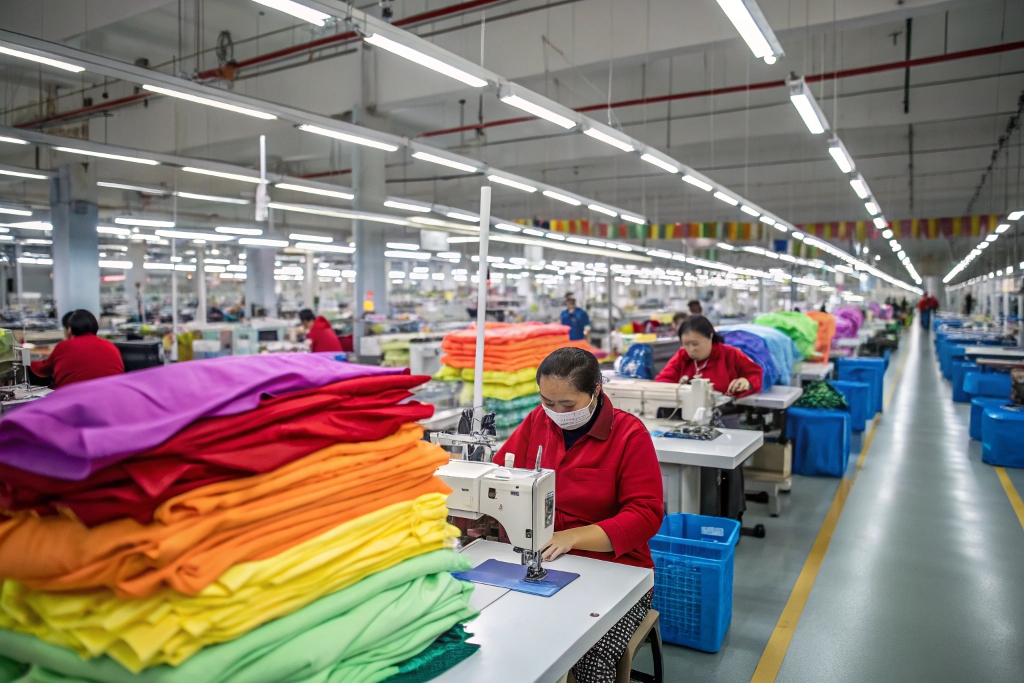
Vendor Qualification Documents We Can Coordinate
Document readiness is managed by category and release level. Public marketing files, project-review files, confidential corporate files, assigned-factory evidence, and order-specific records should not be mixed into one uncontrolled folder.
| Document Group | Typical Contents | How Jinfeng Coordinates | Verification Boundary |
|---|---|---|---|
| Company Identity | Company profile, unified contact, manufacturing overview, location, business scope | Initial pack prepared through Kelly and the onboarding coordinator | Formal registration and payment files are released through the approved process |
| Factory Capability | Owned and partner factory list, assigned site, product fit, process scope, team structure | Factory recommendation follows product, material, construction, quantity, and schedule review | Only the assigned facility and declared process route should be assessed |
| Product Development | Tech-pack review, pattern flow, sample types, revision record, PP and Golden sample controls | Development records are organized by style code and sample version | Client-owned files remain confidential and are not used as public proof |
| Quality System | Incoming checks, cutting review, inline control, measurements, final inspection, packing QC, AQL support | Quality plan is linked to product risks and order requirements | Tolerances, AQL level, defect classes, and inspection format require project confirmation |
| Compliance and Audit | Available social, quality, environmental, material, or factory-audit information | Files are reviewed by entity, address, scope, issuing body, and validity | No certificate is represented as universal across all factories or materials |
| Material Evidence | Fabric specification, composition, weight, color approval, trim card, supplier information, test support | Material records are confirmed before PP and bulk booking | Certified or tested material claims depend on supplier, batch, certificate scope, and target market |
| Commercial Setup | MOQ basis, quotation assumptions, payment documents, vendor forms, order contacts | Commercial files are completed after project fit and entity review | Pricing remains dependent on final fabric, trims, construction, quantity, packing, and terms |
| Packing and Logistics | Label files, barcode data, packing ratio, carton mark, packing list, commercial invoice, cargo details | Packing documents are checked against PO and warehouse instructions | Final shipping documents depend on actual packed quantities and nominated logistics route |
Dress Capability by Construction and Production Risk
Dress qualification must connect category names with fabric behavior, fit sensitivity, workmanship, sample validation, and bulk inspection. The matrix below provides a faster technical filter before a style package is assigned to a factory.
| Dress Program | Common Fabric Direction | Pattern and Design Control | Workmanship and Bulk Risk | Key Approval and QC Evidence |
|---|---|---|---|---|
| Bodycon Dresses | Jersey, rib knit, ponte, stretch mesh, stretch satin | Bust-waist-hip balance, negative ease, side-seam position, hem stability, lining tension | Recovery variation, seam waving, twisting, transparency, inconsistent stretch by batch | Stretch direction record, fit sample, recovery check, key measurements, side-seam and hem inspection |
| Corset Dresses | Satin, suiting, mesh, lace, velvet, structured woven | Upper bust, under bust, cup position, boning line, waist shaping, neckline security, anti-slip placement | Boning discomfort, cup mismatch, zipper tension, lining pull, asymmetry, support failure | Fit sample on required size, cup and boning map, PP sample, seam allowance and support checkpoints |
| Satin Dresses | Satin, stretch satin, matte satin, crepe-back satin | Grain or bias direction, drape, neckline, zipper placement, seam balance, lining length | Snagging, shine variation, puckering, wrinkling, water marks, pressing damage, dye-lot difference | Approved swatch, color standard, cutting direction, seam appearance, pressing standard, bulk shade review |
| Mesh Dresses | Regular mesh, stretch mesh, power mesh, printed mesh, double-layer mesh | Transparency, stretch direction, lining coverage, neckline stability, print placement, cut-out support | Holes, deformation, uneven transparency, edge curling, print shift, lining-length variation | Transparency approval, lining standard, hole inspection, stretch and recovery check, print-position control |
| Lace Dresses | Polyester, nylon, cotton, or stretch lace with lining | Motif placement, joining line, edge finish, bust coverage, lining color, seam visibility | Broken lace, poor matching, fraying, motif variation, lining exposure, color inconsistency | Lace-map approval, placement photo, edge method, damage inspection, lining and shade confirmation |
| Sequin Dresses | Sequin mesh, embroidered sequin, bonded or scattered sequin fabrics | Sequin direction, seam clearing, skin-contact protection, zipper path, lining, weight distribution | Sequin loss, scratching, seam bulk, needle damage, uneven shine, heavy-garment distortion | Embellishment sample, rub and attachment review, seam protection, lining, final surface inspection |
| Occasion and Evening Dresses | Satin, chiffon, lace, tulle, organza, velvet, sequin combinations | Silhouette, bust support, waist position, skirt volume, lining, slit height, train or hem balance | Multi-layer mismatch, uneven hem, bulky seams, support failure, color difference across components | Full construction sample, fit and movement review, layer map, PP standard, hanging and hem inspection |
| Resort and Vacation Dresses | Chiffon, rayon, viscose, linen blends, printed woven, light knit | Ease, movement, print position, neckline security, travel-friendly finish, lining by coverage need | Shrinkage, print distortion, color migration, wrinkling, seam slippage, inconsistent garment length | Shrinkage review, print approval, garment wash or care consideration, measurement and packing checks |
| Jumpsuits and Matching Sets | Crepe, satin, jersey, suiting, woven blends | Crotch length, torso length, waistline, rise, hip ease, top-bottom proportion, paired sizing | Movement restriction, twisted leg, mismatched dye lot, inconsistent set sizing, zipper stress | Fit sample, key body measurements, paired color record, size-ratio plan, set packing and label check |
Sample Validation Before Supplier Approval

First Sample

Fit Sample

Revised Sample

Photo Sample
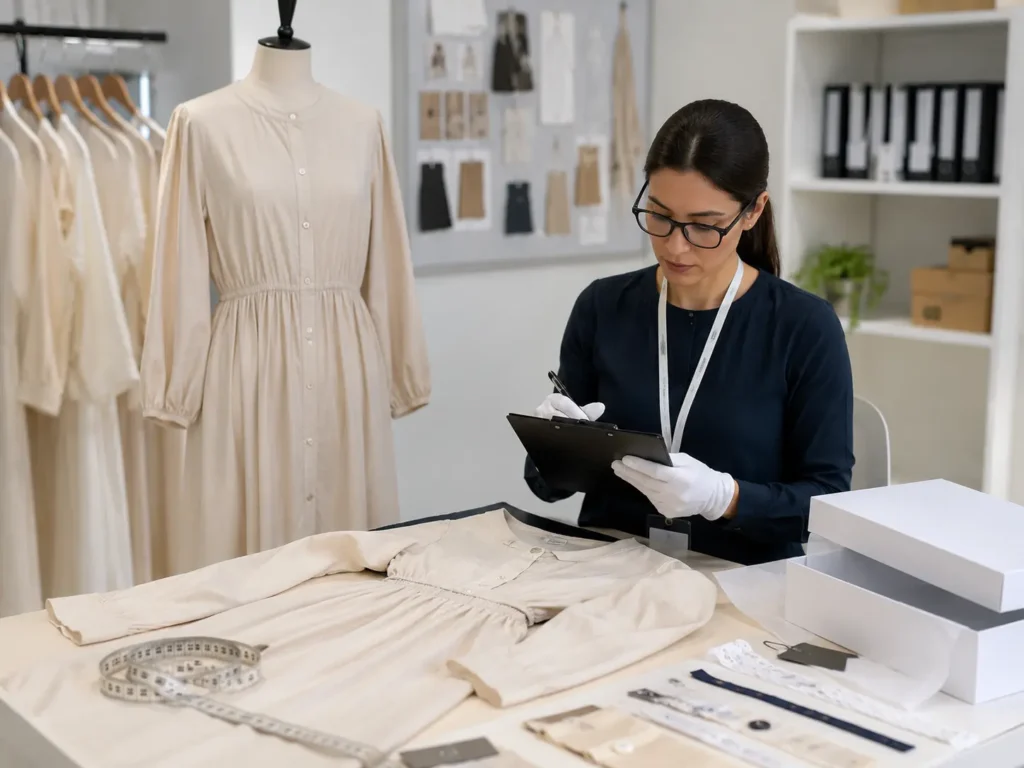
PP Sample
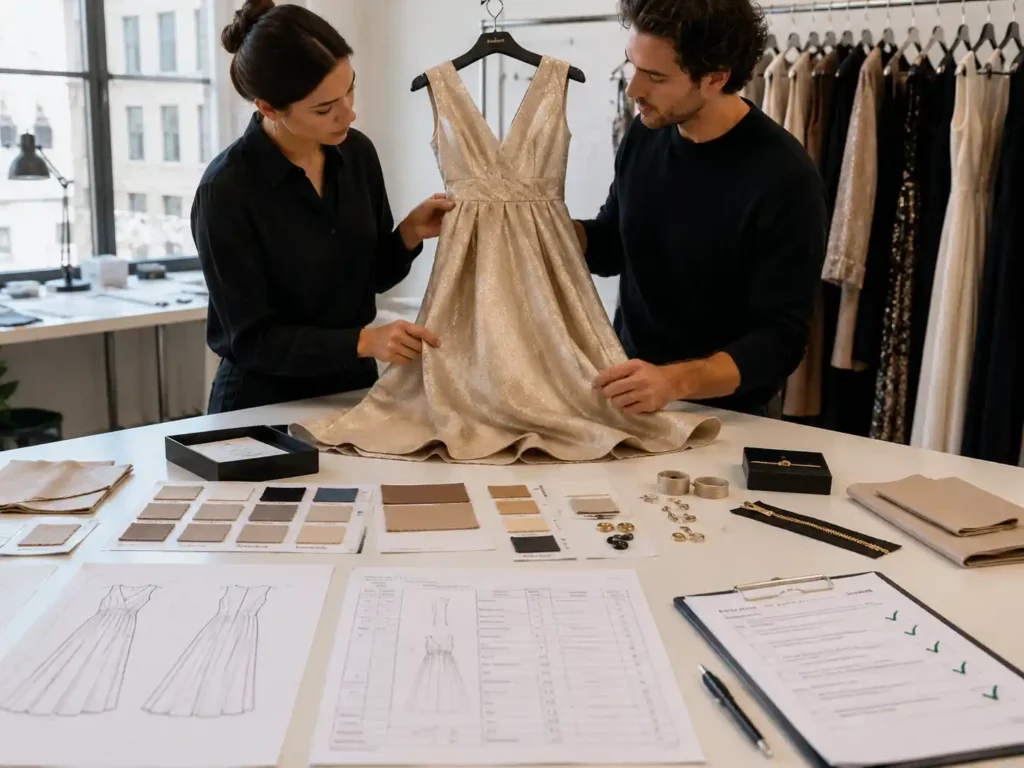
Golden Sample
Controlled Tech Packs, Patterns, BOMs and Revisions
Product information must remain synchronized from onboarding through bulk production. A clear file trail reduces dependence on memory and protects the first order from version confusion.
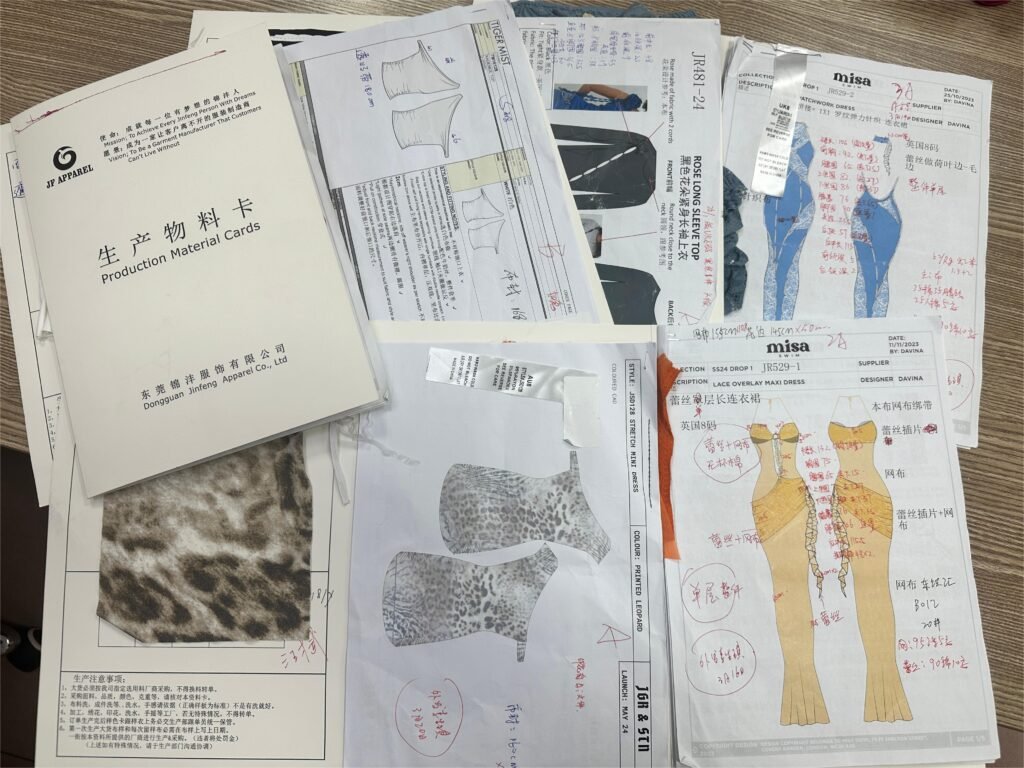
Tech-Pack and BOM Review
Jinfeng reviews product drawings, points of measurement, size charts, construction notes, fabric, lining, zippers, buttons, cups, boning, elastic, lace, embellishment, labels, hangtags, polybags, testing requirements, and packing instructions. Missing or contradictory details are flagged before pattern development or final quotation.
A BOM-based quotation is more reliable because fabric consumption, trim specification, sewing complexity, finishing, QC, packing, wastage, testing, and logistics assumptions can be separated. Early estimates remain provisional until material, construction, quantity, size-color ratio, and delivery terms are confirmed.
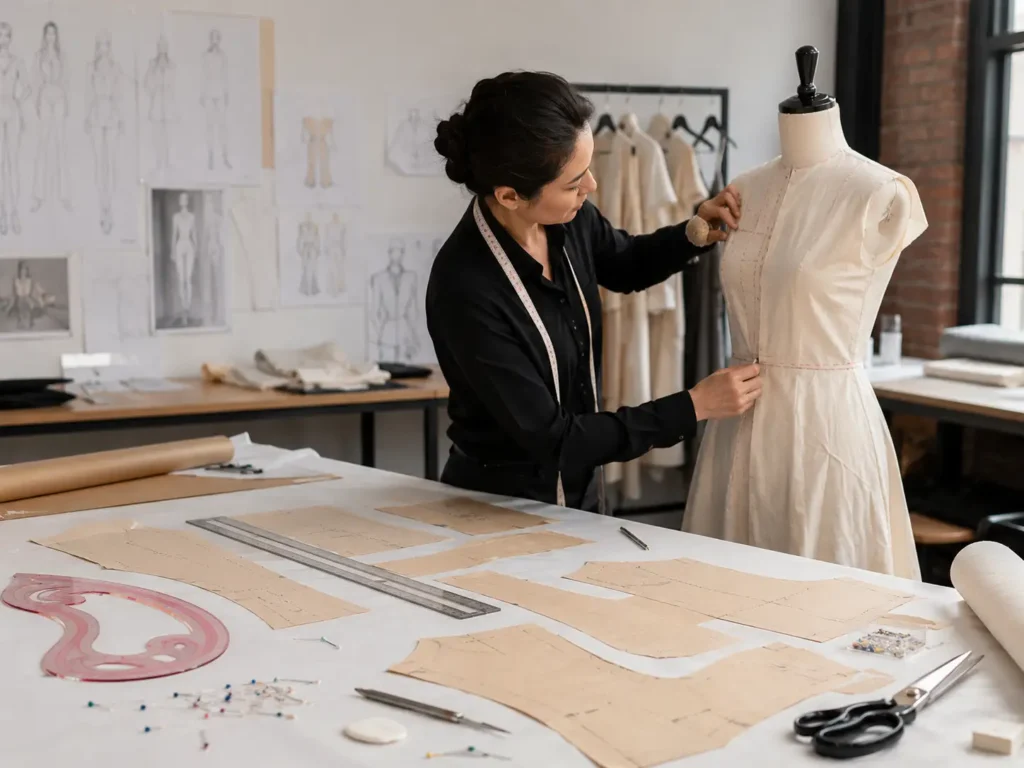
Pattern Version and Fit Control
Patterns are linked to style code, sample version, base size, key measurements, ease, grading direction, and client comments. Fit feedback may come from a reference garment, mannequin review, live fitting, annotated photographs, measurement comparison, or technical notes.
Revisions affecting bust, waist, hip, length, neckline, armhole, strap, slit, lining, cup, boning, or jumpsuit torso and crotch are updated in the pattern and size file before a revised sample or PP sample is made. Changes should never remain only in email or messaging history.

Material and Trim Records
Fabric approval records may include material name, composition, weight, hand feel, drape, stretch, recovery, transparency, shrinkage concern, shade, Pantone or physical color standard, MOQ, price effect, and lead-time effect. Trim records cover type, material, color, size, quality level, comfort, durability, supplier minimum, and bulk availability.
A material change can alter fit, lining, stitching, seam behavior, garment weight, appearance, and production time. Jinfeng rechecks whether a pattern or sample update is required rather than treating fabric replacement as a simple purchasing change.
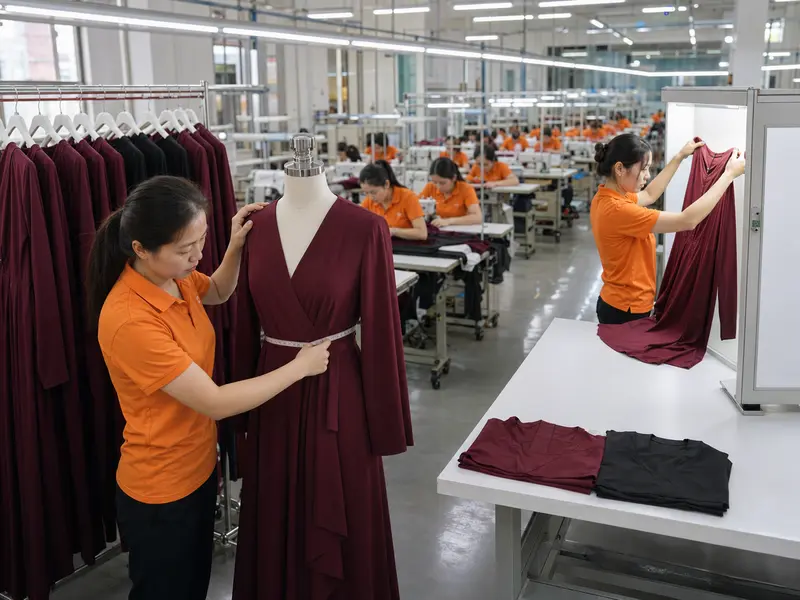
Approval Log and Production Handoff
The final handoff includes approved pattern, size chart, grading rule, BOM, fabric record, trim card, PP or Golden sample, sewing instructions, quality checkpoints, labels, packing method, and order notes.
Production and QC teams work from the same controlled reference set.
Any approved exception is recorded with owner, date, affected styles, quantity, and action. The goal is a traceable chain from client comment to file update, sample confirmation, line instruction, and inspection point.
Quality Evidence From Fabric Receipt to Packing

Material Receipt

Cutting Control

Sewing Instructions

Inline Inspection

Measurement Verification

Final Garment Review

Packing Inspection

Shipment Release
Compliance and Factory Audit Support by Project
Compliance work is handled with scope discipline. An audit report or material certificate has value only when the entity, facility, process, issuing body, validity period, and product connection are clear.

Quality and Social Responsibility Review
Jinfeng can coordinate available quality-management information, supplier questionnaires, code-of-conduct acknowledgements, social-compliance records, corrective-action requests, and factory-visit preparation according to the assigned facility. References to ISO 9001-related management, SMETA/Sedex, BSCI, SLCP, or similar frameworks are made only where supporting evidence is available and relevant.
A brand may apply its own approval sequence, including desktop review, third-party audit, virtual assessment, factory visit, corrective-action closure, or re-audit. Jinfeng supports document collection and local coordination without promising a pass result before the brand or auditor completes the assessment.

Material Certification and Testing
OEKO-TEX, GOTS, GRS, RCS, OCS, or other material claims depend on the fabric supplier, certificate scope, article, color, batch, transaction evidence, and MOQ.
Certified material is not described as automatically available for every dress or color.
Product testing requirements also vary by target market, fiber content, trims, construction, label claim, and end use.
Testing may involve composition, colorfastness, shrinkage, pilling, seam strength, dimensional stability, restricted substances, or brand-specific protocols. Laboratory scope and cost are confirmed before booking.

Subcontracted Process Visibility
Printing, embroidery, pleating, washing, bonding, heat transfer, hand embellishment, or special finishing may involve specialist facilities. When such a process is part of the program, the production map should identify where it occurs, who controls materials and quality, and whether the brand requires separate disclosure or assessment.
The production route is agreed before evidence is presented. Audit coverage should not be assumed to include a subcontracted activity unless the report and scope confirm it.
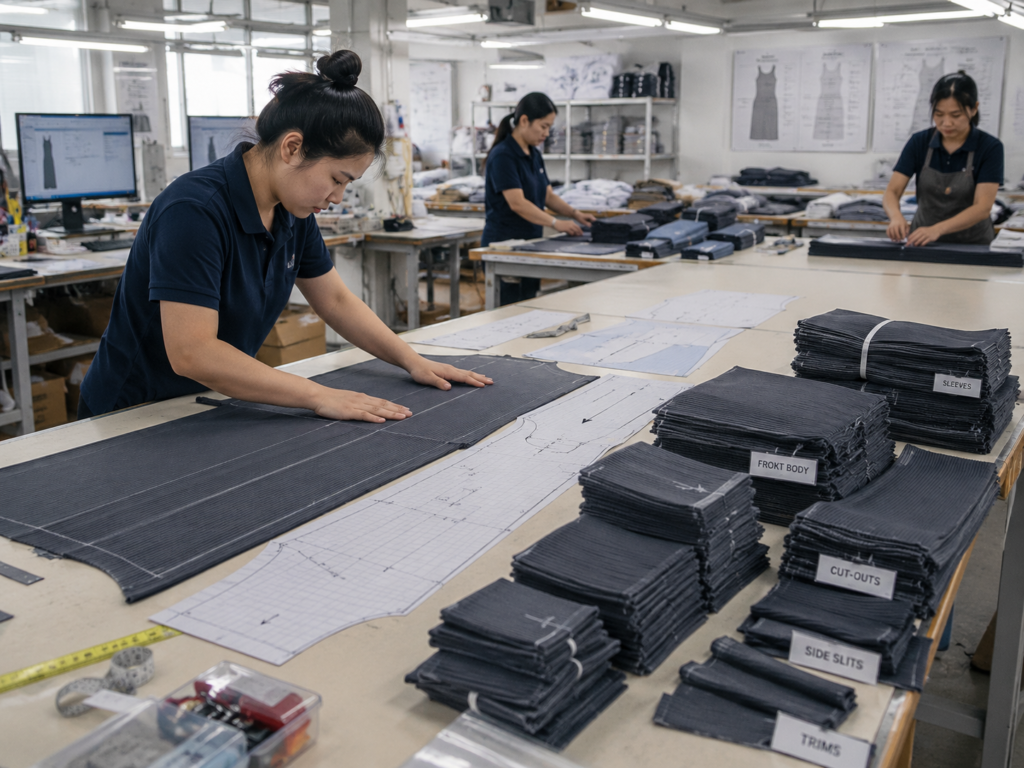
Audit Preparation and Corrective Action
Before an announced assessment, the assigned team reviews requested files, facility identity, process map, available records, contact ownership, and open gaps. Any unavailable or expired document is reported rather than replaced by a broad claim.
When findings require corrective action, responsibility, due date, evidence, and closure status are tracked. The aim is transparent cooperation and measurable improvement, not polished wording without operational follow-through.
Capacity Mapping for the Assigned Dress Program
Factory Structure
Sewing Capacity
Sample Resources
Material Booking
Merchandising Control
Quality and Finishing Load
One Coordinated Team From Onboarding to Delivery
Kelly and Intake
Product Development
Pattern and Sampling
Merchandising
Quality Management
Packing and Logistics
Private Label, Barcode and Packing Control
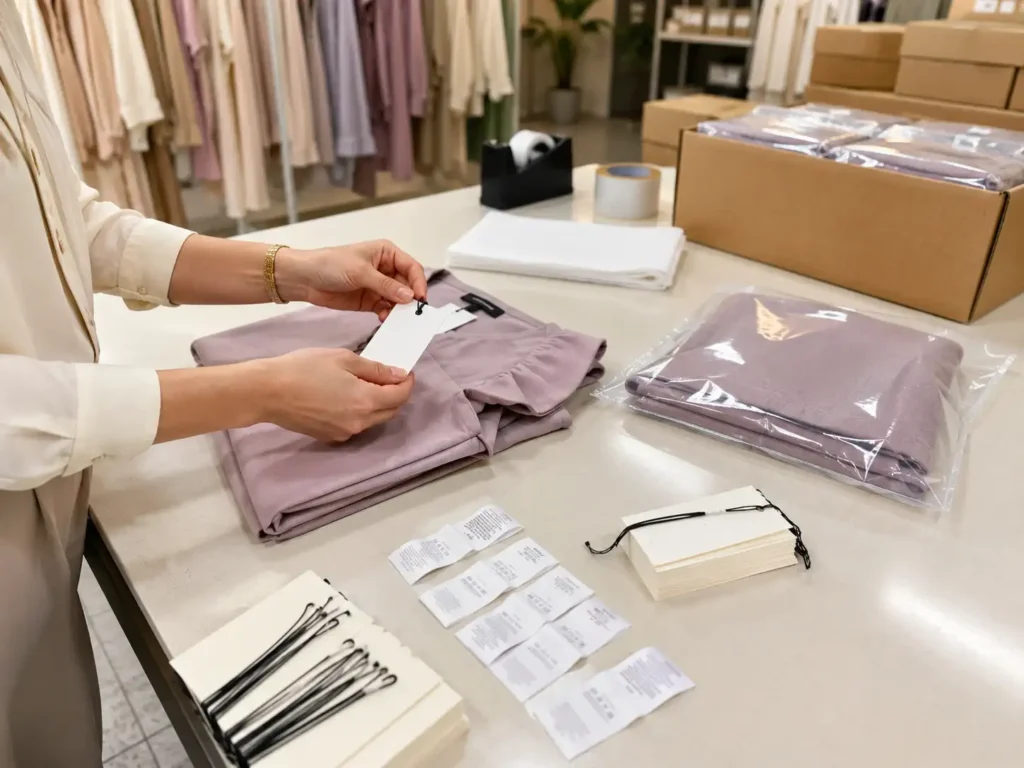
Brand Labels

Hangtags and Attachments

Barcode and SKU Data
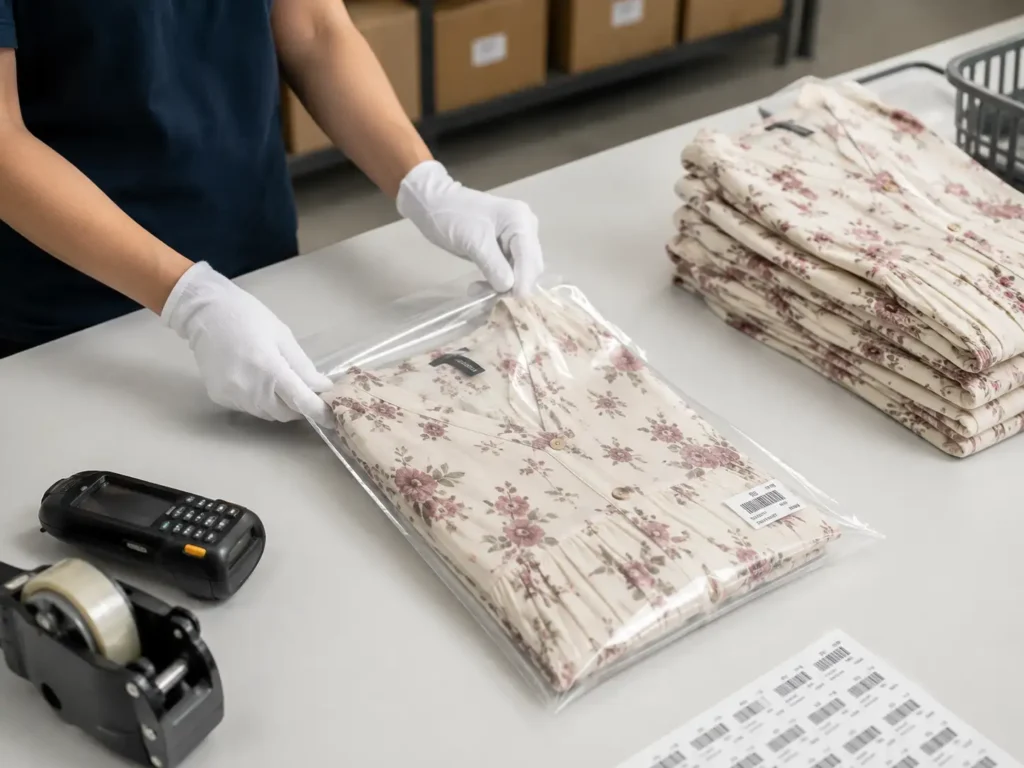
Polybag and Folding
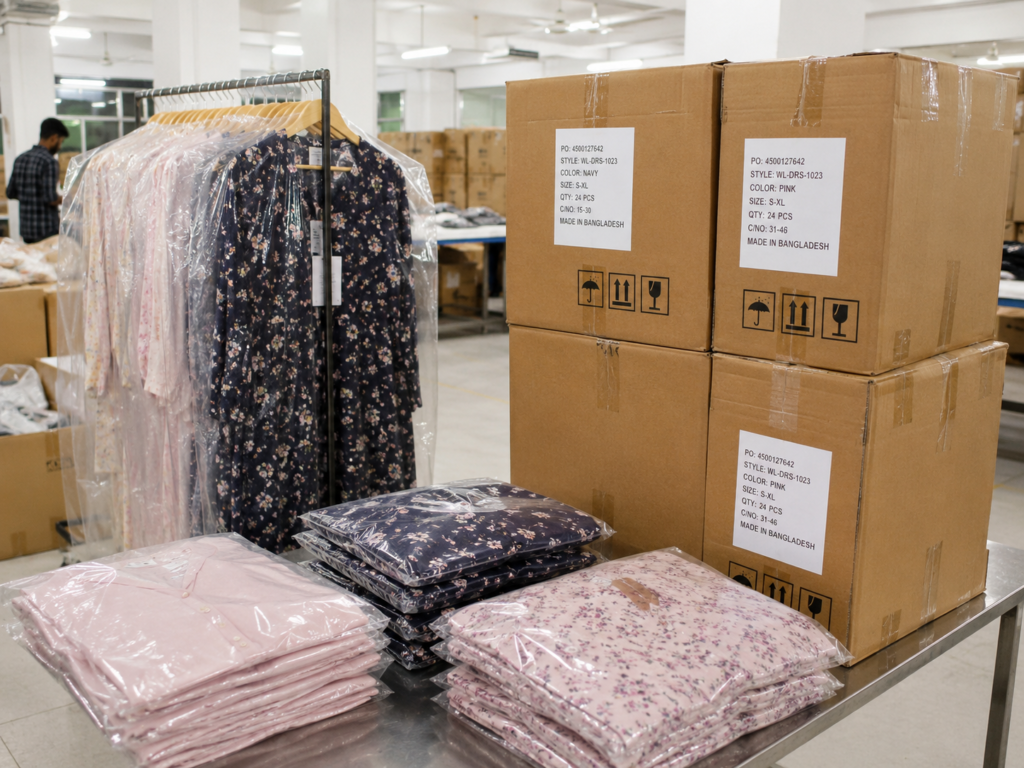
Carton Marks and Ratios

Export Documents
NDA-Based Protection for Unreleased Collections
Design and Development Files
Production and Brand Assets
Labels, hangtags, packaging artwork, barcodes, SKU data, carton marks, order quantities, target prices, production route, and launch timing are shared only with personnel and suppliers required to execute the approved program.
Cases and Visual Evidence
Vendor Onboarding Cases From Review to First Order

US Occasionwear Program
A US occasionwear brand prepared a seasonal program of 18 styles covering satin mini dresses, corset midi dresses, mesh-overlay bodycon styles, and sequin party dresses.
Planned volume reached 42,600 pieces across 7 color groups and a US 0-16 size range.
The onboarding team required an assigned-factory profile, category matrix, sample workflow, QC process, packing controls, NDA, and document index before technical approval.
Styles were grouped into satin, structured, stretch, and embellished workstreams. Hero styles entered fit review first, while material availability and trim lead times were confirmed for the remaining styles.
Two sample rounds were used for the fitted and corset products. PP approval locked cup position, boning, lining, zipper, measurements, label placement, and packing.
Bulk production was scheduled across controlled lines with inline checks at neckline, bust support, waist seam, zipper, lining, and embellishment.
Final delivery was divided into two shipment windows to protect the launch date without mixing priority and later colorways.
Key result:
- 18 styles
- 42,600 pieces
- 7 color groups
- US 0-16
- 2 planned delivery windows
- Factory, sample, QC, packing, and shipment files connected under one onboarding record

Premium Ecommerce Collection
A premium ecommerce brand developed 12 styles and 24,800 pieces, including stretch-satin slips, double-layer mesh dresses, ponte bodycon dresses, and resort maxis.
The brand’s main concern was sample-bulk consistency after problems with a previous supplier.
Qualification focused on pattern-version control, fabric records, transparency standards, stretch and recovery, key measurements, Golden samples, and barcode accuracy.
Jinfeng grouped styles by fabric family so material behavior could be reviewed before individual fit comments were finalized.
The mesh program used approved lining-color and coverage references. Stretch products recorded fabric direction and recovery concerns. Satin styles used shade, snagging, seam appearance, and pressing checkpoints. SKU, barcode, size sticker, and polybag data were cross-checked before printing.
Bulk approval followed final patterns, PP samples, fabric and trim records, measurement tolerances, and packing instructions. Production was released in stages according to material readiness, reducing the risk of holding the entire collection for one delayed trim.
Key result:
- 12 styles
- 24,800 pieces
- XS-3XL size range
- 4 fabric-control groups
- Golden samples for key styles
- Staged release by material readiness

Multi-Channel Regional Brand
A regional multi-channel brand planned 27 styles and 76,200 pieces for retail, ecommerce, and franchise distribution. The assortment included occasion dresses, printed resort dresses, matching sets, skirts, and jumpsuits. The project required multi-style capacity planning, two warehouse destinations, and detailed carton-level data.
Onboarding began with a product matrix, factory allocation plan, available audit documents, quality workflow, private-label manual, and shipment-document checklist. Sampling priority was set by launch date, campaign styles, fabric readiness, and construction difficulty rather than developing all 27 styles in one uncontrolled queue.
Jumpsuits received torso and crotch-length review. Printed resort styles used print-position and shrinkage checks. Occasion products used lining, bust support, skirt balance, and final-hanging inspection. Separate packing instructions were created for ecommerce and retail ratios, with barcode, carton mark, and warehouse label requirements controlled by destination.
Production and packing were split into coordinated batches. Carton data, gross and net weight, dimensions, style-color-size breakdown, and destination were reconciled before release to the nominated forwarders.
Key result:
- 27 styles
- 76,200 pieces
- 2 warehouse destinations
- 3 development priority groups
- Split production and packing
- Destination-specific label and carton control
Download the Dress Vendor Qualification Checklist
Qualification Checklist
- Score each supplier by evidence, not claims
- Mark files by current, expired, unavailable, or project-specific
- Separate company approval from factory and category approval
- Record open corrective actions and owners
- Reconfirm the assigned factory before every first order
Jinfeng Information Pack
The Jinfeng information pack can include company overview, confirmed production structure, product matrix, team structure, sample process, quality workflow, packing capability, contact details, and a project-specific document index.
Sensitive legal, financial, audit, or brand-owned files are released through the agreed qualification route.
A tailored pack is more useful than a large generic folder. Vendor onboarding teams can send their checklist first, allowing Jinfeng to map available information, assigned-factory evidence, missing items, and owners against the brand’s format.
Frequently Asked Questions for Vendor Onboarding Teams
Initial information can include company overview, public contact details, manufacturing scope, factory structure, core dress categories, sample resources, quality workflow, MOQ basis, NDA support, and a project document index. Formal legal, banking, tax, insurance, audit, and assigned-factory files are shared according to the qualification stage and receiving entity.
Factory selection follows product category, woven or knit construction, fabric behavior, pattern difficulty, support structure, workmanship, quantity, quality requirement, delivery timing, and packing workload. Jinfeng distinguishes 6 owned factories from 10+ long-term production partners and does not present partner facilities as owned operations.
Factory visits, virtual reviews, third-party audits, or brand-specific assessments can be coordinated according to project needs, facility availability, confidentiality, and the requested audit scope. A pass result cannot be guaranteed in advance; requested evidence and any corrective actions are handled through the agreed review process.
MOQ starts from 200 pieces per style and color. Quantity is not calculated across unrelated styles or colors. Custom-dyed, custom-printed, certified, lace, sequin, specially developed fabrics, custom trims, and printed packaging may require higher supplier minimums.
A standard first sample is commonly planned within 7-15 working days after requirements, material direction, and development terms are confirmed. Structured corset, complex lace, sequin, multi-layer mesh, or fitted jumpsuit samples may require 12-20 working days. Revision timing depends on the scope of pattern, material, trim, or construction changes.
Jinfeng distinguishes first sample, fit sample, revised sample, photo sample, salesman sample, PP sample, and Golden sample. The PP sample confirms final production conditions. A photo sample should not replace PP approval when substitute materials or presentation-focused changes were used.
Quality control can include material inspection, cutting review, inline checks, measurement verification, final garment inspection, packing inspection, AQL-based final inspection, and coordination with nominated third-party inspection providers. Final protocol, tolerance, defect classification, and reporting format are agreed by project.
Available quality, social, environmental, factory-audit, or material documents are reviewed by legal entity, facility address, issuing body, scope, validity, material supplier, article, color, and batch. No certificate is represented as covering every factory, product, fabric, or order without verification.
Jinfeng supports NDA-based cooperation and protects tech packs, samples, patterns, measurements, materials, trims, private-label files, packaging, quantities, prices, and launch information. Public cases use anonymized or authorized evidence rather than revealing protected brand information.
Brand-specific questionnaires, code-of-conduct forms, document templates, packing manuals, inspection forms, and account-setup requirements can be reviewed. Completion depends on the requested information, responsible legal entity, assigned factory, document availability, and confidentiality level.
The first order uses stage gates for product and factory fit, sample and material approval, PP and production release, inspection, packing, and shipment. Bulk does not start from an unapproved early sample or informal message. Final patterns, materials, measurements, workmanship, labels, packing, and inspection requirements must be locked.
Standard programs are commonly planned within 45-75 days after PP approval and material readiness. Multi-style collections, custom materials, complex workmanship, heavy embellishment, peak-season demand, or orders of 20,000-80,000 pieces may require 60-90 days, split production, or phased delivery. A firm schedule follows project review.
Yes. Jinfeng can coordinate cargo details, carton data, packing list, commercial invoice, carton marks, gross and net weight, dimensions, pickup timing, shipment photographs, and nominated forwarder contact. Warehouse labels, ASN-related data, or special portal requirements must be reviewed against the brand’s process.

Send Your Vendor Onboarding Requirements
A useful qualification request includes enough information to connect company review with product and first-order execution.
Send your vendor questionnaire, required document list, target dress categories, estimated styles, quantity per style and color, size range, target market, fabric direction, audit expectations, sample requirements, private-label manual, inspection protocol, packing rules, and desired delivery window. Jinfeng Apparel will review:
- Company and assigned-factory information required by your approval process
- Product fit across satin, mesh, lace, bodycon, corset, occasion, resort, jumpsuit, set, and related womenswear categories
- Sample types, fit risks, revision plan, PP approval, and Golden sample requirements
- Fabric, trim, label, barcode, polybag, carton, and warehouse specifications
- QC checkpoints, AQL or brand-specific inspection, third-party inspection, and shipment release
- Capacity, material booking, production routing, phased delivery, and nominated forwarder coordination


