
Dress Manufacturer for US Premium Ecommerce Brands
Production-ready dress collections built for strong product imagery, reliable fit, scalable volume and retail-ready US ecommerce delivery.
Jinfeng Apparel develops and manufactures premium dresses for established US online fashion brands, covering product review, fabric direction, pattern development, photo-ready sampling, PP approval, bulk production, quality control, private-label packing and export coordination.
- Collection programs commonly cover 10-30 styles and 20,000-80,000 total garments across planned drops.
- Regular dress first samples normally require 10-15 days; complex corset, lace, mesh, strapless or sequin styles normally require 15-25 days.
- Six owned women’s fashion factories and more than 10 long-term production partners support multi-style allocation and repeat-order planning.
- SKU, barcode, color-size labeling, individual packing and carton identification are confirmed before shipment.
Manufacturing Resources Behind Premium Ecommerce Dress Programs
Development Capacity
Production Network
Control and Packing
Built for Established US Fashion Operations
Strong Project Fit
Jinfeng is structured for premium ecommerce labels, established DTC fashion companies, occasionwear specialists, online dress retailers, sourcing teams and product development departments managing seasonal collections or recurring drops. A suitable brief normally includes a tech pack, original sample, line sheet, reference image set, size chart, fabric direction, quantity plan or launch calendar. Projects may involve OEM execution, ODM support or complete private-label delivery.
- Clear style and market direction
- Professional sample budget
- Bulk production plan
- Long-term or repeat-order potential
Outside Our Model
The manufacturing model is not designed for ready-stock purchasing, single-piece fulfillment, no-MOQ supply, personal tailoring or orders divided into many styles with only a few units per style. Jinfeng also avoids competing solely through the lowest unit price when fabric quality, fit, workmanship and delivery stability are ignored. A project works best when commercial targets and product standards are discussed together before sample development.
- No ready-stock wholesale
- No dropshipping fulfillment
- No one-off personal garments
- No price-only development decisions
Where Premium Ecommerce Dress Programs Lose Margin
Weak Photo Samples
Fit-Driven Returns
Sample-Bulk Gaps
Missed Launch Windows
SKU Packing Errors
Collection Overload
Dress Categories Developed for US Online Fashion Retail

Party and Holiday

Cocktail and Occasion

Satin and Slip

Bodycon and Corset
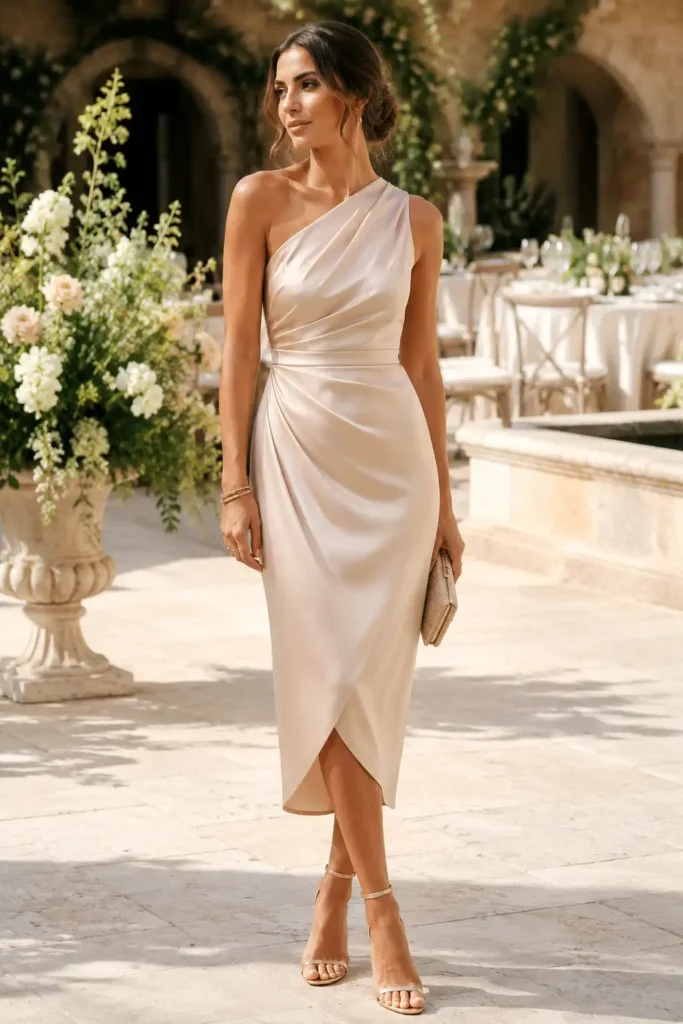
Wedding Guest

Resort and Seasonal
What Premium Ecommerce Dress Manufacturing Must Deliver
Camera-Ready Appearance
Return-Aware Fit
Retail-Ready Operations
Photo-Ready Samples Designed for Ecommerce Conversion
Online selling places unusual pressure on a sample. Studio lighting, close-up photography and movement video reveal material and construction weaknesses that may remain hidden during a quick factory inspection.

Fabric Behavior Under Studio Lighting
Surface response: Satin can appear elegant or excessively reflective depending on weave, weight, color and lighting direction. Sequins may create bright hotspots, mesh may reveal more skin than expected, and pale linings can become visible through darker lace. Material selection is reviewed through swatches, sample panels or a complete sample when visual risk is high.
Drape and silhouette: A fabric with the correct color can still fail when its body does not support the intended outline. Slip dresses need controlled fall without clinging unpredictably. Corset dresses need a shell fabric that works with internal support. Full skirts need enough body to photograph well without becoming heavy or bulky.
Pressing and recovery: A photo sample receives close attention to seam flattening, hem balance and crease removal. Fabrics prone to marking or heat damage require a controlled finishing route. Packing for the studio is also considered because a perfectly pressed garment can arrive with permanent fold lines if packed incorrectly.

Fit From Every Camera Angle
Front view: Neckline symmetry, cup position, waist placement, center-front balance and hem level are checked against the approved design.
Small alignment problems become obvious in product grids where several colors appear side by side.
Side and back views: Back gaping, zipper waves, side-seam rotation, low armholes and uneven straps often appear only when the model turns.
Fit comments must therefore cover movement and multiple angles, not only a standing front image.
Movement video: Walking, sitting, raising the arms and turning can expose slit height, skirt ride-up, neckline movement and lining visibility.
Styles intended for social media video or campaign reels benefit from movement review before the photo sample is released.

Photo Sample and PP Sample Serve Different Jobs
Photo sample purpose: A photo-ready sample is prepared for visual presentation, campaign use, showroom review or line-sheet photography.
Approved fabric and trims should be used whenever possible, but a photo sample may be made before every bulk component is fully locked.
PP sample purpose: The pre-production sample confirms final fabric, color, trims, measurements, construction, labels, packing and QC requirements.
Bulk cutting should follow the approved PP standard rather than relying only on campaign imagery.
Version control: Any difference between the photo sample and PP sample must be documented.
Updated patterns, measurement charts, BOM details, sewing instructions and packing requirements prevent an attractive campaign sample from becoming an inaccurate bulk reference.
Fabric and Trim Control Behind Premium Dress Quality
Material choices are evaluated through visual effect, comfort, production stability, MOQ, lead time and repeat-order availability. A fabric name alone never defines the final result.

Satin, Crepe and Chiffon Control
Satin: Review covers composition, weight, shine direction, snag sensitivity, color variation, seam slippage, bias growth and pressing response. Lining color and zipper tape are matched to avoid visible contrast. Cutting direction is controlled because reversed panels can reflect light differently under photography.
Crepe: Crepe may provide better opacity and structure than satin, but stretch, texture and recovery vary widely. The pattern is adjusted according to body and mechanical stretch rather than a generic fabric category.
Chiffon: Chiffon requires layer control, accurate grain handling and hem balancing. Transparent areas, print direction and static behavior are reviewed before sample approval. Long or asymmetric hems may need hanging time before final leveling.

Mesh, Lace and Sequin Risk Control
Mesh: Key points include stretch direction, recovery, transparency, hole size, edge stability and compatibility with lining. Bodycon mesh styles require careful tension control so the shell and lining move together without twisting or puckering.
Lace: Pattern placement, scallop use, motif matching, seam position, transparency and backing color affect perceived value. Lace from different lots can vary in color and hand feel, so bulk approval and batch records are important for repeat production.
Sequin: Inspection focuses on sequin attachment, missing areas, skin contact, garment weight, seam thickness, zipper obstruction and packing protection. Soft lining or facing may be needed at armholes, necklines and side seams to reduce abrasion.
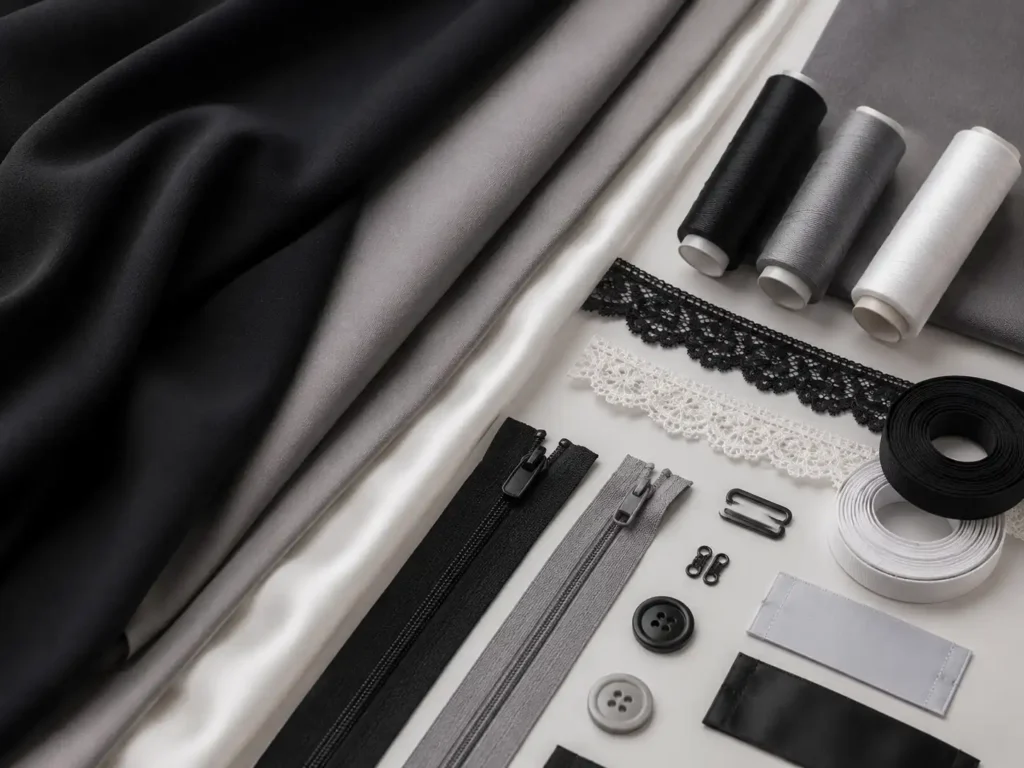
Structural Trims and Closures
Bust support: Cups, under-bust seams, boning, fusible support, elastic and lining work together. Cup position and boning length are checked during fitting because a small change can affect neckline security and torso comfort.
Zippers and hooks: Invisible zippers, exposed zippers, hooks and eyes are selected by garment weight, seam location and opening length. Operation is checked after pressing and after the garment is worn, not only while lying flat.
Brand trims: Main labels, size labels, care labels, hangtags, barcode stickers and packaging materials are confirmed for size, color, placement and durability. Supplier MOQ and lead time are considered before bulk scheduling.
Fit, Grading and Measurement Control for Online Retail
Fit stability starts with an approved base size and continues through grading, fabric behavior, production tolerance and final measurement checks. Online shoppers experience the result without an in-store fitting room.
Base Size and Fit Architecture
Size-chart review: Jinfeng can work with alpha sizes such as XS-XL, US numeric sizing or an approved extended range. The brand’s size chart remains the primary reference. Base-size development reviews bust, waist, hip, shoulder, strap, armhole, neckline depth, waist position, skirt length and slit height together.
Fabric-specific ease: A woven corset dress, stretch jersey bodycon dress and bias satin slip dress cannot share the same ease logic. Pattern dimensions are adjusted according to stretch, recovery, drape, lining and intended support.
Wear test: Fitting includes standing, sitting, walking and arm movement when the style requires it. Neckline security, strap pressure, skirt ride-up, slit opening and lining movement are recorded as product issues rather than left to subjective comments.
Grading Across the Size Range
Grade rules: Size increments are defined by garment category and target market. Plus or extended sizes are not created by enlarging every area equally. Cup proportion, shoulder width, armhole shape, waist placement, hip ease and garment length may need separate adjustments.
Visual consistency: A successful grade maintains the design line across sizes. Ruching, cutouts, pleats, straps, corset panels and print placement must remain visually balanced rather than shifting unpredictably as the garment grows.
Size set review: Programs with complex structures may require additional size-set checks before bulk production. The exact requirement depends on fabric, size range and fit risk rather than a fixed rule for every style.
Measurement Tolerance and Bulk Control
Reference tolerances: Internal reference tolerances may include bust ±1 cm, waist ±1 cm, hip ±1.5 cm, shoulder ±0.8 cm, strap length ±0.5 cm, regular dress length ±1 cm and long dress length ±1.5 cm. Client-approved tolerances always take priority.
Sensitive structures: Stretch fabrics, lace, mesh, chiffon, sequins, long hems and complex corset structures may require adjusted tolerances or additional control points. A single universal tolerance can be misleading.
Production measurement: Measurement control uses the approved size chart, pattern version, grade rules, first-piece review, in-line checking and final garment measurement. Results are compared with the PP or Golden Sample before packing.

Construction Details Protecting Premium Brand Perception

Corset Support

Lining and Coverage

Invisible Zippers

Clean Seam Finishing
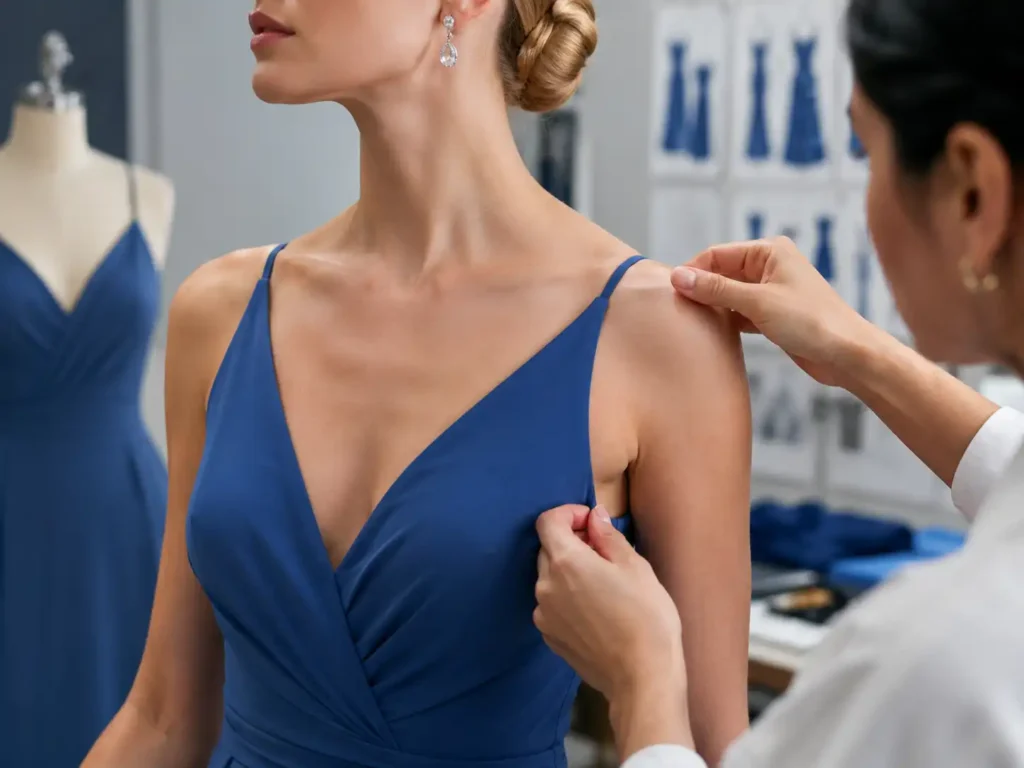
Straps and Closures

Hems, Slits and Pressing
Structured Sampling Before Bulk Production Begins
Project Review
Fabric Direction
Pattern Development
First Sample
Revision and Photo
PP and Golden
Managing Multi-Style Collections Without Losing Control
A 10-style order and a 30-style seasonal program require different project discipline. Collection management separates shared resources from style-specific decisions so one delay does not spread silently across every SKU.

Style-Level Status and Version Control
Separate records: Each style is tracked by reference number, color, size range, quantity, fabric, trims, sample version, pattern version, BOM, construction notes, labels, packing and shipment status. Similar-looking styles are not merged into one record when their technical requirements differ.
Approval gates: First sample, revision, photo sample and PP approval are recorded separately. Styles that have not reached the same approval stage are not treated as equally production-ready.
Change impact: Late changes to fabric, color, neckline, sizing, trims, packaging or construction are reviewed for cost, sample and lead-time impact before the production file is updated.

Fabric Grouping and Production Allocation
Material grouping: Styles sharing satin, mesh, lace, chiffon, lining or common trims may be grouped for sourcing efficiency, while preserving separate quality standards. Grouping should reduce waste and delays without forcing unsuitable substitutions.
Complexity grading: A simple slip dress, boned corset dress and heavily sequined style do not move through production at the same speed. Work is allocated according to construction and workmanship requirements.
Launch priority: Hero styles, campaign products and time-sensitive SKUs can receive earlier sample or production priority when agreed in advance. Lower-priority styles remain visible in the same project schedule rather than disappearing behind urgent items.

Color, Size and SKU Breakdown
Order structure: Color and size quantities are confirmed at style level. Labels, barcode data and packing instructions must follow the final breakdown rather than an early forecast.
Extended sizes: Extended-size products may need separate fit review, material consumption calculations and packing rules. Quantity planning must account for the commercial role of each size rather than splitting units evenly without data.
Warehouse accuracy: Final carton breakdowns connect garment identity, size, color, barcode and destination requirements. SKU control remains part of manufacturing until shipment documents are complete.

Repeat-Order Records
Technical archive: Patterns, measurement charts, BOM records, fabric references, color details, trims, sewing instructions, QC checkpoints, label files and packing requirements are retained for repeat-order preparation.
Reconfirmation: Archived information shortens communication, but repeat production still requires material availability, color and capacity reconfirmation. A previous approval does not guarantee an identical dye lot or trim supply months later.
Improvement loop: Fit comments, production findings and inspection observations can be added to repeat-order files so replenishment begins from the latest approved standard rather than the earliest sample.
Scalable Production Matched to Each Dress Program
Factory Allocation
Production Standard
Repeat and Replenishment
QC Built Around Fit, Appearance and Packing Accuracy
Incoming Materials
Cutting Control
First-Piece Review
In-Line Inspection
Final Garment Check
Packing Verification
Delivery Planning Around US Ecommerce Launch Calendars
Launch Milestones
Air, Sea or Split

MOQ and Cost Planning for Established Dress Programs
Accurate pricing follows confirmed material, construction, quantity, size, packaging and timing information. The aim is to protect product value while keeping cost drivers visible before sampling and bulk commitment.
| Planning Item | Working Standard | Commercial Impact |
|---|---|---|
| Base MOQ | Starts from 200 pcs per style/color | Final requirement depends on fabric availability, color, trims, construction and production schedule. |
| Typical program scale | 10-30 styles; 20,000-80,000 garments total | Large collections are managed at style, color and size level rather than treated as one combined quantity. |
| Custom dyeing | Confirmed against mill or dye-house minimums | May increase material MOQ, color approval steps and lead time. |
| Custom printing | Defined by print method, artwork and fabric | Screen, digital or placement printing can create different minimums, setup costs and inspection points. |
| Special trims | Confirmed with the trim supplier | Custom hardware, lace, cups, boning, embellishment and packaging may have separate minimums. |
| Sample timing | 7-10 days simple; 10-15 days regular; 15-25 days complex | Material availability, custom development and comment speed affect the final sample schedule. |
| Sample fee | Quoted by style complexity and sample standard | Can be credited by project when the approved style enters qualifying bulk production. |
| Bulk quotation inputs | Tech pack, quantity, color, size, fabric, trims, packing and required date | Incomplete briefs receive a preliminary range rather than a reliable final unit price. |
How Jinfeng Differs From a Generic Clothing Factory
Dress-Specific Development
Production-Ready Control
Ecommerce Operational Fit
Dress Collection Programs Managed for US Ecommerce Launches
Anonymous project records show how product, timing and operational requirements are connected. Brand names and unpublished designs remain protected under confidentiality rules.

US Holiday and Occasion Collection
Program profile: An established US online occasionwear brand planned an 18-style holiday drop totaling 42,600 garments across satin, sequins, stretch mesh and structured crepe.
The range covered mini dresses, corset midis, one-shoulder party dresses and two coordinated sets in XS-XL.
Key challenges:
- Four material families created different cutting, sewing, pressing and packing requirements.
- Sequin styles needed skin-comfort protection at armholes, side seams and necklines.
- Corset styles required stable cup position, boning length and zipper operation across the size range.
- Campaign samples were needed before every bulk packing component was finalized.
- The launch plan required hero SKUs to remain separable from the main sea-freight volume.
Manufacturing response: Jinfeng grouped styles by material and construction, while maintaining separate pattern, BOM, size, label and packing files.
Complex samples followed a 15-25 day reference window, with photo-ready versions documented separately from PP standards.
Bulk material approvals included satin shine direction, mesh stretch and sequin surface checks.
Final packing linked each garment to its style, color, size, SKU and barcode before carton sealing.
Program outcome: The program moved through two planned shipment groups: selected launch-sensitive SKUs prepared for expedited transport and the remaining volume prepared for regular bulk freight.
Approved patterns, material records, labels and packing files were archived for replenishment review after the selling period.

US Resort and Wedding Guest Collection
Program profile: A premium ecommerce dress label developed a 24-style spring and summer program totaling 58,400 garments. The collection combined printed viscose, chiffon, satin, lace and lightweight crepe across maxi dresses, draped midis, halter dresses and wedding guest silhouettes in seven commercial color stories.
Key challenges:
- Viscose shrinkage and chiffon hem balance could affect final length and photography.
- Directional prints and lace motifs required placement control across multiple sizes.
- Several styles shared colors but used different shell and lining materials, creating shade-matching risk.
- Extended sizes needed separate attention to bust, armhole, waist placement and skirt proportion.
- Warehouse packing required color-size identification without opening individual polybags.
Manufacturing response: Fabric behavior was reviewed before pattern lock, with construction and allowance decisions adjusted for shrinkage, drape and transparency. Print placement, lace alignment and lining color were added to production files. Size grading preserved neckline, waist and hem proportions rather than enlarging every feature equally. Final QC combined measurement, appearance, zipper, lining and packing verification, followed by style-level carton records for warehouse receiving.
Program outcome: The full collection was prepared as a coordinated program rather than 24 unrelated orders. Shared materials reduced sourcing complexity, while style-specific standards protected fit and visual identity. Technical files and approved references remained available for follow-up colors and repeat production planning.

European Premium Occasionwear Collection
Program profile:
A European occasionwear brand developed a 20-style premium collection totaling 36,800 garments.
The range included satin evening dresses, velvet midi dresses, embroidered mesh styles and structured crepe silhouettes in EU sizes 34–46.
Key challenges:
- Different fabrics required separate construction and pressing standards.
- Satin draping needed control to maintain smooth folds and balanced shape.
- Velvet and embroidery required careful handling during production.
- Multiple sizes required consistent placement and fit control.
Manufacturing response:
Jinfeng grouped styles by fabric behavior and construction method.
Pattern adjustments, sewing standards and inspection points were established for each material category.
Satin styles focused on drape balance, velvet styles used controlled pressing procedures, and embroidered designs followed approved placement references.
Program outcome:
The collection was completed through planned production stages with consistent quality across multiple fabric groups.
Approved technical files, material records and workmanship standards supported future seasonal repeats.
Frequently Asked Questions About Dress Manufacturing

Start Your US Ecommerce Dress Collection
Send enough project information for a useful manufacturing review rather than a generic price reply. Kelly and the development team will examine product structure, fabric direction, size requirements, sample route, production suitability, packing needs and launch timing before recommending the next step.
A complete brief helps identify technical risks, confirm material availability, estimate sample timing and prepare a reliable quotation. Confidential design files can be shared under NDA-based cooperation. The review suits established fashion companies planning a focused range, a 10-30 style seasonal collection, repeat production or a supplier transition.
Initial feedback will clarify missing information and indicate whether the project should move into material sourcing, pattern development, sample quotation or commercial planning.
- Tech pack, line sheet, reference images or original sample details
- Target quantity, colors, size range and measurement chart
- Fabric, lining, trim and construction requirements
- Private-label, barcode and packing files
- Required sample, launch or warehouse date


