Dress Manufacturer for US Partywear Brands

Custom partywear development built around fit, visual impact, production consistency, private-label execution, and US launch calendars.

Jinfeng Apparel helps established US partywear, occasionwear, clubwear, and going-out labels move from design references or tech packs to production-ready garments. Development covers fabric direction, pattern correction, structured sampling, PP approval, multi-style bulk production, quality control, private-label packing, and export coordination.

  • 10-30 styles per program: Multi-style collections can be organized by fabric, construction risk, launch priority, and production route.
  • 20,000-80,000 garments: Current brand programs commonly fall within this order range across coordinated styles, colors, and size ratios.
  • 7-25 day sample windows: Simple styles may move faster, while corset, lace, mesh, sequin, and multi-layer constructions require longer validation.
  • 200 pcs per style/color: Standard MOQ starts from 200 pieces for each approved style and color, subject to fabric and trim requirements.

Built for Established US Partywear Brands

Partywear programs need more than dress sewing. Product teams require a manufacturer that can read the commercial role of each style, protect fit and visual impact, coordinate multiple SKUs, and carry approved standards into bulk production and retail packing.

Partywear and Going-Out Labels

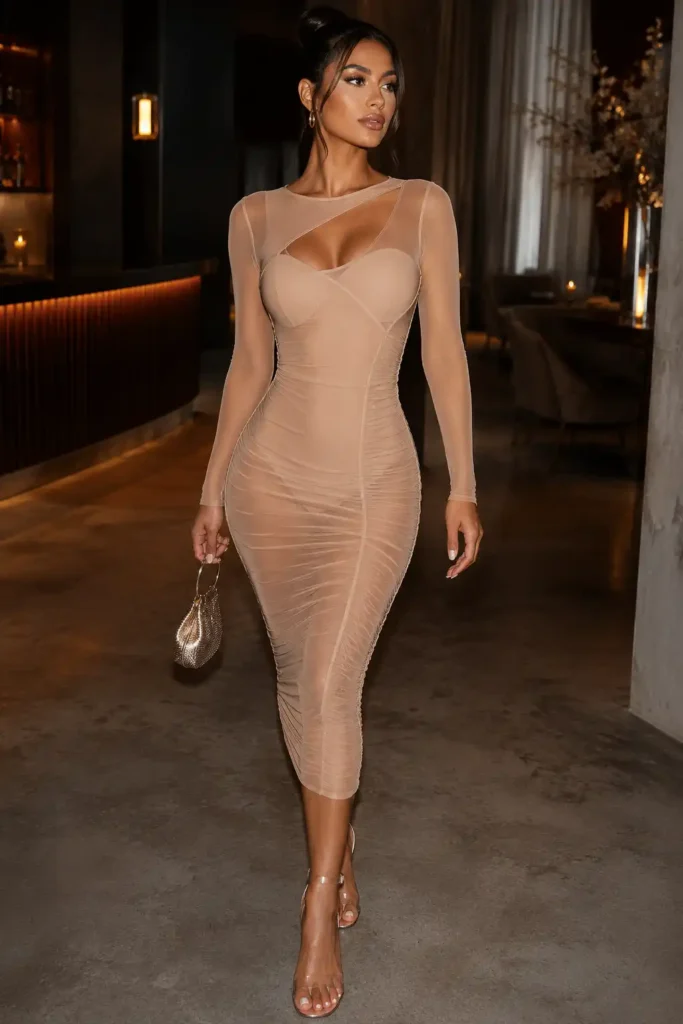
Brands selling birthday, date-night, club, holiday, festival, and social-event looks need frequent newness without losing a recognizable fit profile. Jinfeng Apparel supports fitted minis, ruched midis, cut-out dresses, corset shapes, satin slips, mesh styles, sequined statements, jumpsuits, and coordinated sets. Product review begins with the intended wearing occasion, price architecture, target size range, fabric behavior, and launch window. The aim is not to fill a line sheet with isolated styles; it is to create a range that looks coherent online, performs on body, and can be repeated after approval.

Occasionwear and Specialty Retailers

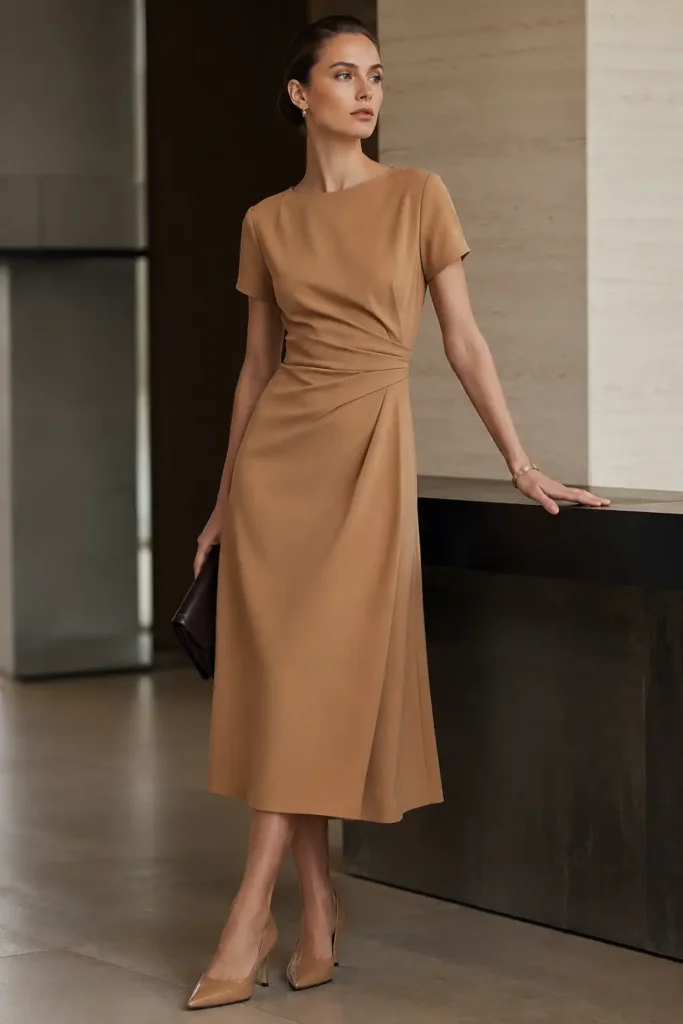
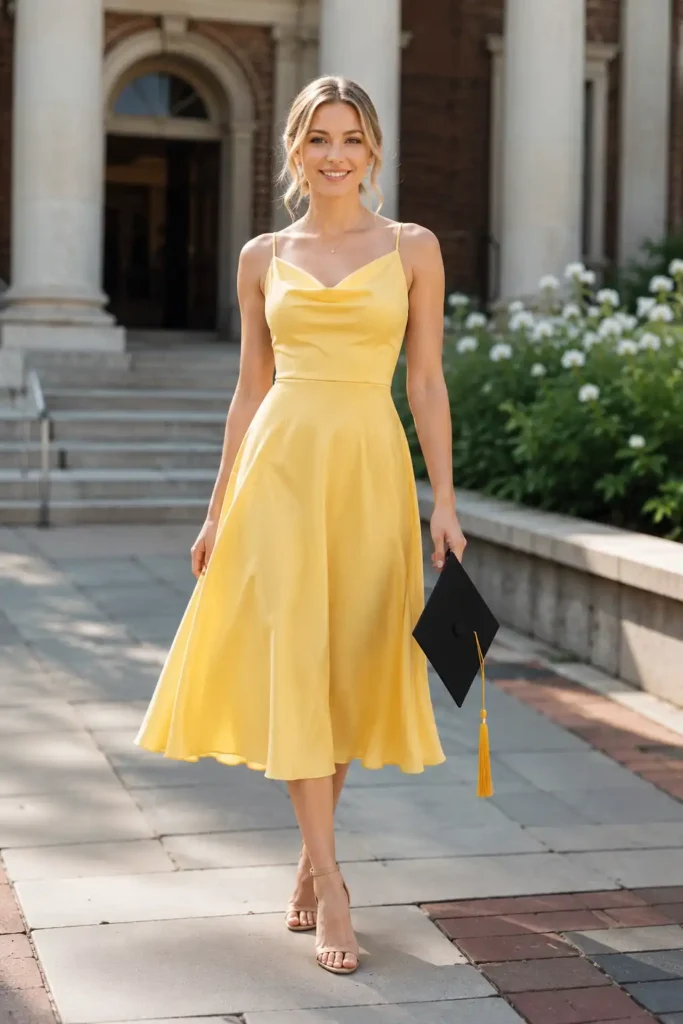
Prom, homecoming, graduation, cocktail, wedding-guest, and event-dress programs carry stronger calendar pressure and higher fit expectations. White and pale shades need coverage control. Short lengths need sitting and movement checks. Strapless and corset silhouettes need support without excessive stiffness. Sequins, lace, rhinestones, and layered mesh require comfort and durability review. Jinfeng Apparel organizes development around sales dates, photo-sample needs, approval milestones, bulk allocation, packing rules, and warehouse delivery requirements so product decisions remain connected to the retail calendar.

Sourcing and Product Teams

Sourcing managers, product developers, merchandisers, and quality teams need one project record that connects tech packs, fabric approvals, sample comments, measurement files, PP decisions, production status, inspection findings, labels, barcodes, and packing instructions. Jinfeng Apparel assigns responsibilities across development, merchandising, production, QC, finishing, and logistics. Clear records reduce version confusion when 10 to 30 styles move at different speeds, especially when several fabrics, color families, fit blocks, or delivery waves are involved.

A Manufacturing System for Brand-Level Programs

Production scale only matters when it is supported by development control, documented approvals, skilled coordination, and clear quality ownership. Jinfeng Apparel combines owned factories, long-term production partners, sample rooms, pattern resources, merchandising, QC, and finishing teams.

Since 2008

Long-term focus on custom womenswear has built working knowledge across dress fit, fabric behavior, sample correction, multi-style production, private labels, and export coordination for North American and other international markets.

Six Owned Factories

Owned production resources support different womenswear structures and help keep responsibility close to the development and quality teams. Production allocation is based on construction, fabric type, workload, and required delivery sequence.

Ten-Plus Partners

Long-term satellite production partners expand category and capacity options for coordinated programs. Partner use is matched to product requirements and managed through approved samples, technical files, merchandising follow-up, and QC checkpoints.

100,000+ Monthly Capacity

Regular monthly capacity supports larger collections, repeat orders, and staggered deliveries. Capacity planning considers style complexity and labor content rather than treating every dress as an identical production unit.

Dedicated Sample Resources

Two sample rooms, seven-plus senior pattern makers, and twenty-plus sample machinists support first samples, fit samples, revisions, photo-ready samples, salesman samples, PP samples, and Golden samples.

Structured Execution Team

Twelve-plus merchandisers, fifteen-plus QC inspectors, and thirty-plus finishing and packing workers connect approved product standards with production tracking, measurement control, appearance review, labeling, packing, and shipment preparation.

Where Partywear Production Usually Breaks Down

Party dresses concentrate risk in small areas: neckline depth, stretch recovery, cup position, transparent panels, short hemlines, surface decoration, zipper behavior, and final pressing. Each risk can affect returns, reviews, campaign images, and launch timing.

Trend Speed Pressure

A fast calendar encourages premature commitments, yet a rushed style can lose time later through repeated fabric changes, unstable trims, or fit corrections. Jinfeng Apparel separates rapid project review from formal sample approval. Structural feasibility, fabric availability, trim lead time, MOQ, and construction risk are checked before a schedule is confirmed. Priority styles for campaign shoots or pre-sale can be identified early, while higher-risk designs receive enough time for support, lining, and movement testing.

Fit and Return Risk

A bodycon or corset dress may look correct on a hanger and still fail when worn. Common causes include poor bust-to-waist proportion, insufficient hip ease, incorrect stretch direction, unstable necklines, short back length, and zipper tension. Sample comments are translated into pattern and measurement changes rather than handled as visual notes only. Key points are then carried into measurement specifications and inline checks so bulk fit does not depend on operator judgement.

Complex Fabric Risk

Satin can show shade variation, seam puckering, press marks, and snags. Mesh can change transparency after stretching. Lace can shift at seams or lose placement symmetry. Sequin surfaces can scratch skin, damage needles, or shed during packing. Material review therefore considers garment structure, lining, seam type, finishing, cutting direction, abrasion points, and packing method. Fabric beauty is judged together with production stability.

Sample-to-Bulk Gap

An approved sample is often made by an experienced sample machinist, while bulk production involves many operators and repeated handling. The gap appears when construction notes are incomplete, seam allowances are unclear, trims change, or the factory does not retain a physical reference. Jinfeng Apparel uses PP approval, Golden sample reference, measurement files, workmanship notes, and QC checkpoints to transfer the approved standard into repeatable production.

Multi-SKU Confusion

Partywear orders may combine 10 to 30 styles, several colors, wide size ranges, multiple labels, barcode lists, and different packing instructions. A single spreadsheet cannot control every revision unless files are versioned and linked to the correct style. Jinfeng Apparel tracks sample status, fabric and trim approvals, quantities, size ratios, label artwork, barcodes, packing requirements, and shipment groups by SKU to reduce mix-ups.

Seasonal Delivery Risk

Holiday, prom, homecoming, graduation, festival, and party launches have limited selling windows. A delay affects photography, pre-sale, influencer seeding, warehouse receiving, and full-price selling weeks. Timeline planning therefore begins from the required launch or warehouse date and works backward through sample approval, material readiness, PP confirmation, production, QC, packing, and freight selection. Split shipment can be assessed when commercial priorities differ across styles.

Partywear Categories We Develop and Manufacture
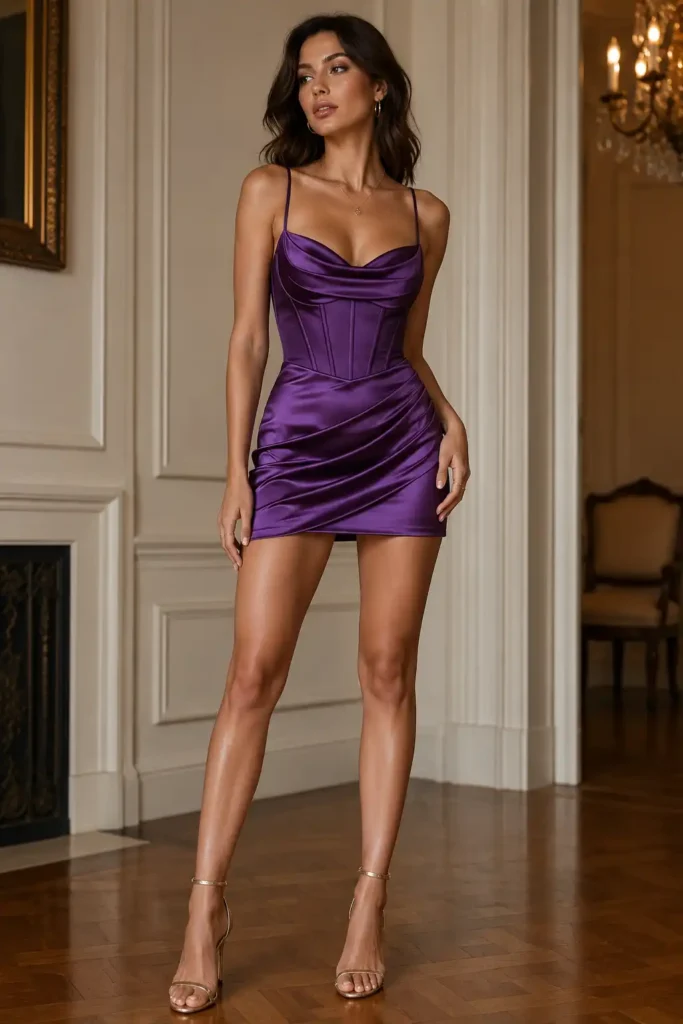
A strong partywear range combines entry-price volume styles, visually distinctive hero pieces, reliable fit blocks, and occasion-led products. Each category below requires a different relationship between fabric, structure, sample approval, sewing control, finishing, and packing.

Satin Mini Dresses

Satin minis depend on controlled drape, clean necklines, balanced front and back length, smooth invisible zippers, and careful pressing. Bias-cut or cowl-neck versions need enough movement without opening at the neckline. Fitted versions need lining and seam control so the surface remains clean. Bulk checks focus on shade by dye lot, snagging, seam puckering, zipper waves, hem balance, lining exposure, and fold marks created during packing.

Mesh Bodycon Dresses

Mesh bodycon styles need transparency planned before the first pattern is cut. Power mesh, soft stretch mesh, flocked mesh, and printed mesh behave differently under tension. Double layers can improve coverage but also change compression and seam bulk. Development verifies stretch direction, bust-waist-hip balance, lining boundaries, edge recovery, ruching placement, and seam strength. Bulk QC checks holes, skipped stitches, asymmetric gathers, stretched edges, and measurement recovery after handling.

Sequin Cocktail Dresses

Sequined dresses require surface planning as well as sewing control. Placement sequins, all-over sequin fabric, embroidered sequin mesh, and loose decorative sequins create different risks. Seam areas may need controlled sequin removal, reinforcement, or protective lining. Sample review checks skin contact, armhole comfort, zipper movement, hem weight, and visual continuity. Production checks attachment, missing areas, loose threads, broken needles, surface scratches, and protective packing between garments.

Corset Party Dresses

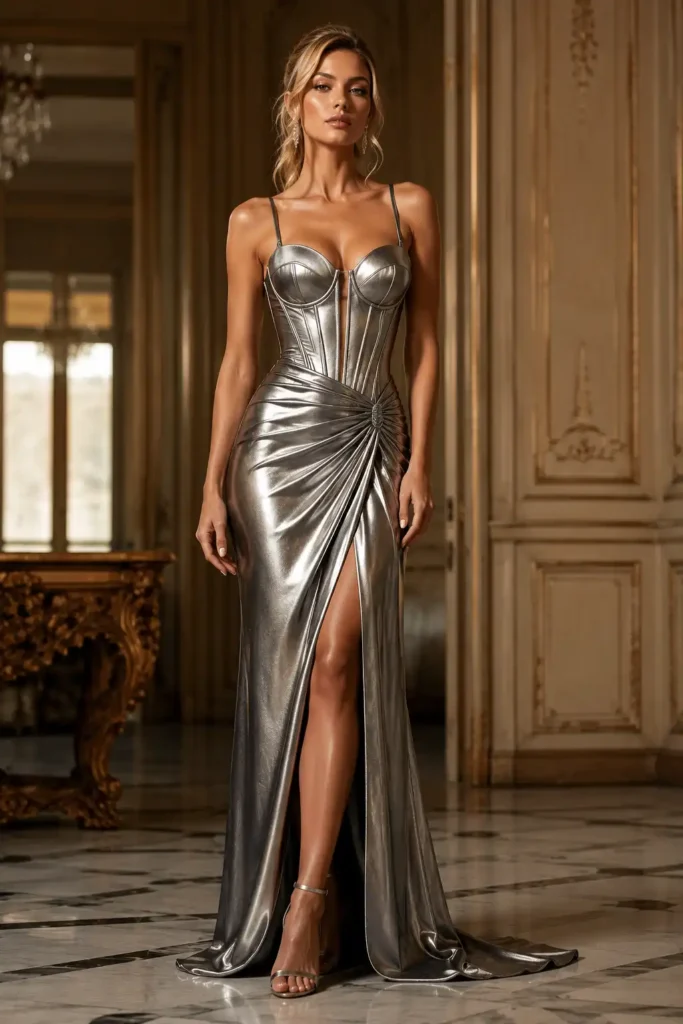
Corset styles combine fashion shape with support engineering. Cup volume, cup spacing, under-bust position, boning direction, waist suppression, neckline security, and closure strength must work together. Excessively rigid boning causes discomfort; weak structure collapses during wear. Sampling should include seated, standing, and movement checks. Production control focuses on symmetrical cups, accurate boning channels, smooth lining, secure hook or zipper installation, and consistent waist and bust measurements.

Ruched Midi Dresses

Ruching can create shape, concealment, and strong visual texture, but uncontrolled gathering changes finished measurements and appearance. Development defines the ruched panel length, drawcord or elastic method, stitch tension, gathering ratio, direction, and fixed points. Fit review checks whether ruching distorts side seams, creates excessive bulk, or shortens the garment unevenly. Bulk production uses reference marks and appearance samples to keep density, symmetry, and final length consistent.

Cut-Out Going-Out Dresses

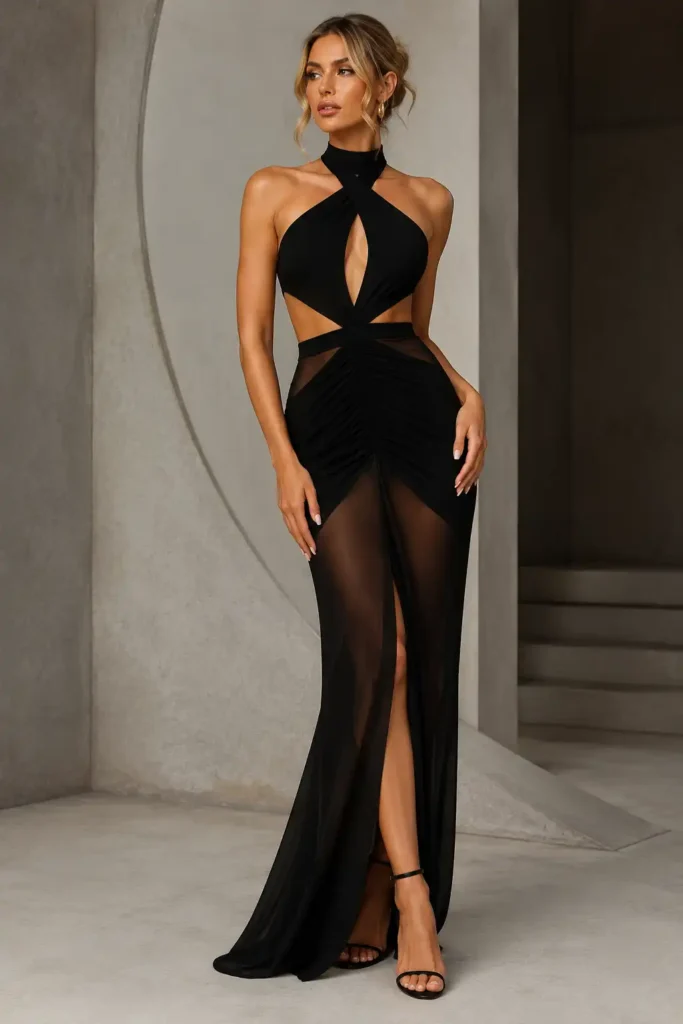
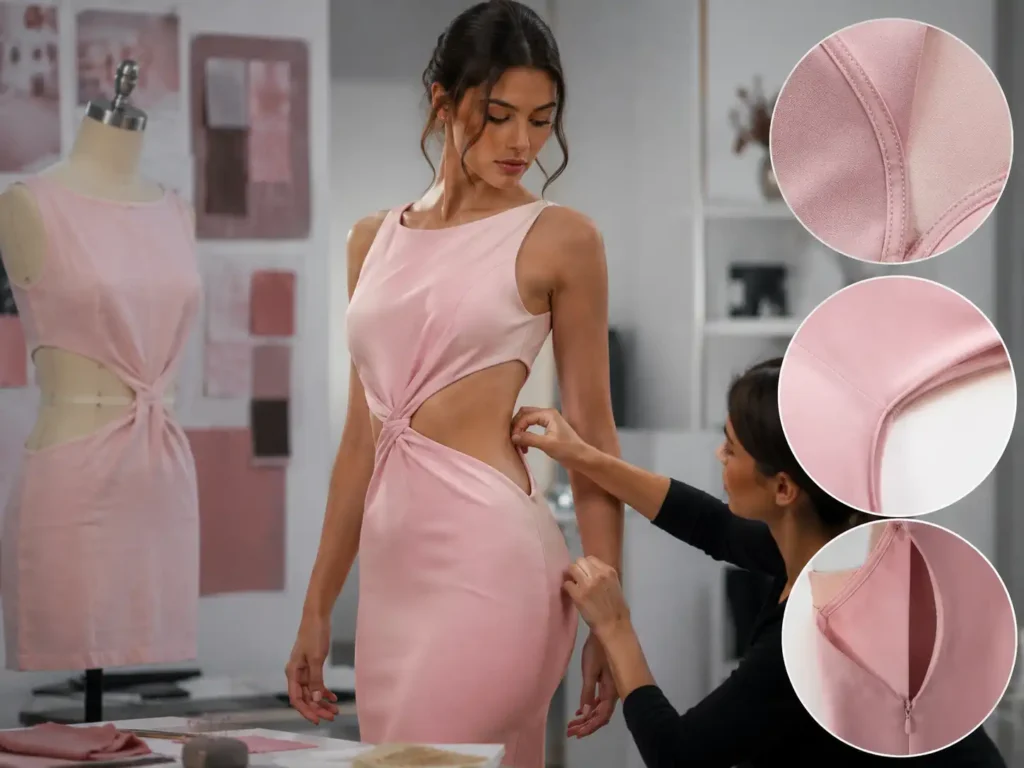
Cut-outs need stable edges and careful placement because small shifts can expose more than intended. Pattern review considers body movement, seam support, elastic recovery, neckline interaction, bra coverage, and size grading. Samples are tested standing, seated, and moving. Edge treatments may use self-binding, lining turn, elastic support, or clean finish depending on fabric. Bulk checks focus on opening dimensions, left-right symmetry, edge waviness, seam torque, and reinforcement at stress points.

Prom and Homecoming Dresses

Prom and homecoming programs often combine photo impact with wider size coverage and a fixed seasonal window. Styles may include corset bodices, layered tulle, satin skirts, lace panels, sequins, high slits, or detachable details. Development needs clear priority between campaign samples, sales samples, PP samples, and bulk deadlines. QC covers support, length, lining, decoration, zipper strength, color consistency, pressing, and protective packing for long or embellished garments.

Jumpsuits and Matching Sets

Party jumpsuits and coordinated sets extend the range beyond dresses while using related fabrics and color stories. Jumpsuits add crotch length, torso balance, rise, waist placement, and movement requirements. Matching sets need accurate color and fabric coordination between separate pieces. Sampling checks seated comfort, arm and leg movement, waist stability, closures, and styling combinations. Bulk packing must keep paired items, sizes, barcodes, and set quantities correctly matched.

Build a Commercial Partywear Assortment

Collection planning should balance visual newness with repeatable fit, cost structure, fabric availability, size coverage, and launch timing. Jinfeng Apparel can organize development around product roles rather than treating every design as an unrelated sample request.

Balance Core, Fashion, and Hero Styles

A partywear collection performs more reliably when not every SKU carries the same technical and commercial risk. Core fitted minis, ruched midis, satin slips, and clean jumpsuits can provide recognizable shapes and repeat potential. Fashion styles introduce new necklines, asymmetry, cut-outs, or surface effects without rebuilding every fit block. Hero styles use corsetry, sequins, lace placement, layered mesh, or dramatic draping to create campaign impact. During line review, Jinfeng Apparel can group styles by fit block, fabric family, construction complexity, and expected volume. Shared components may reduce development work, while critical differences remain clearly documented. The result is a collection with visual range and a more controllable path from sample to bulk.

Use Fabrics to Create Price Architecture

Fabric choice controls appearance, margin, construction, and packing. Stretch jersey or ponte may support fitted volume styles with consistent recovery. Soft mesh can create layering and transparency at a moderate material weight, although double-layer construction changes labor and consumption. Satin and crepe provide polished occasion value but require shade, surface, and pressing control. Lace, velvet, rhinestone mesh, and sequins create stronger perceived value while increasing waste, labor, and inspection time. Jinfeng Apparel can compare fabric alternatives by hand feel, weight, stretch, drape, width, MOQ, dye-lot risk, lining need, and construction effect. A lower fabric price is not automatically a lower garment cost if it needs extra layers, reinforcement, or corrective finishing.

Plan Launches and Reorders Together

Launch planning should identify campaign samples, preorder dates, bulk arrival, and reorder triggers before every style reaches the same stage. High-confidence core shapes may move toward PP approval earlier, while complex hero styles continue refinement. Color choices can be consolidated where a material supplier has dye or minimum requirements. Size ratios can be based on historical sales rather than divided evenly. Repeat potential should influence record keeping: final patterns, approved measurements, fabric references, trim specifications, color approvals, workmanship notes, labels, packing, and QC points are retained for future production. When a strong seller emerges, existing records shorten the decision path, although fabric batches, colors, and substitute trims still require confirmation.

Fabrics Selected for Appearance, Fit, and Production

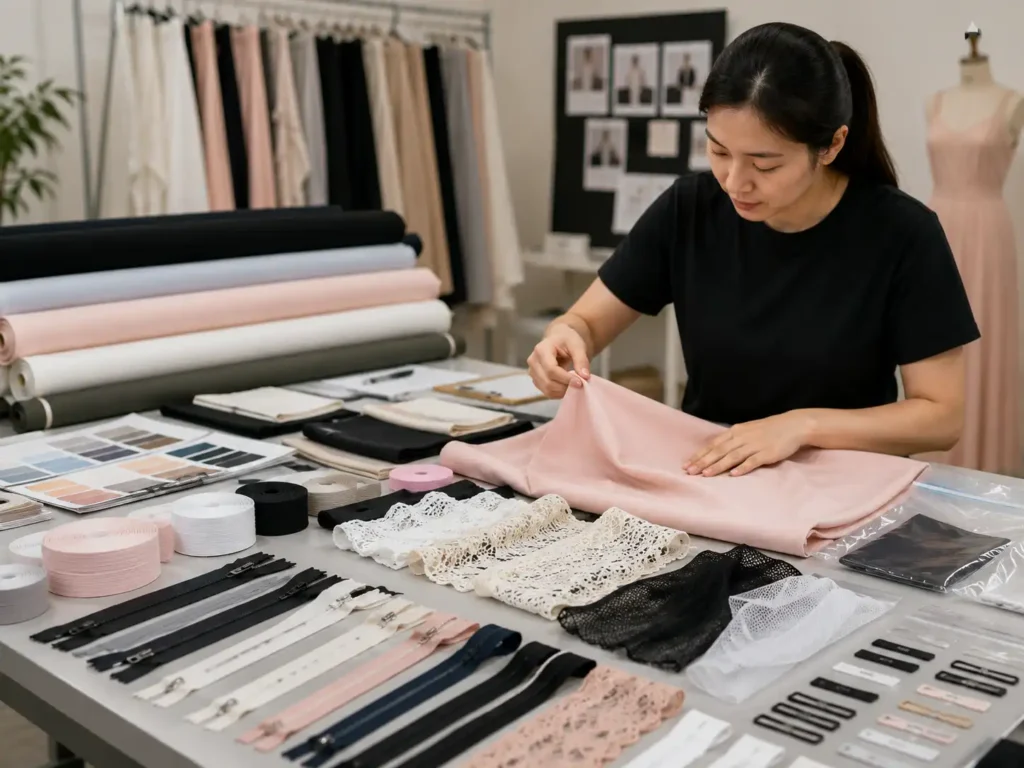
Partywear fabric selection is an engineering decision as much as a visual choice. Surface shine, weight, stretch, recovery, transparency, abrasion, seam behavior, pressing response, dye-lot consistency, lining, and packing all influence the finished garment. Jinfeng Apparel compares swatches and alternatives against the approved silhouette, target price, size range, and production scale before bulk material is released.

FabricBest UseKey Performance PointMain Production RiskControl Direction
Stretch satinFitted minis, corset dressesDrape plus controlled stretchSnagging, shade, seam wavesDye-lot approval, cutting direction, seam and press trials
Non-stretch satinSlip, cowl, bias and occasion dressesClean shine and fluid fallPuckering, press marks, limited easePattern ease, needle/thread choice, careful pressing and folding
Power meshBodycon panels, support layersCompression and recoveryTransparency change, edge curlingStretch-direction test, layer plan, recovery check
Soft mesh/tulleLayering, sleeves, skirtsLight volume and transparencyHoles, seam damage, uneven gatheringFine handling, reinforcement, lining and density standards
LaceCocktail, occasion and corset stylesTexture and perceived valuePlacement shift, edge damage, mismatchMotif planning, cutting map, seam placement and trim control
Sequin fabricStatement minis and evening looksHigh visual impactSequin loss, scratching, needle breaksSeam preparation, comfort lining, surface inspection and protective packing
Ponte/jerseyFitted core styles and jumpsuitsStretch comfort and repeatable fitGrowth, twisting, recovery lossRelaxation, stretch testing, grain control and measurement recovery
Velvet/crepeSeasonal cocktail and premium stylesRich surface or structured drapeNap direction, shine marks, seam bulkDirectional cutting, pressing protection and seam trials

Fit Control for High-Impact Party Dresses

Partywear fit is judged at the neckline, bust, waist, hip, hem, and movement points at the same time. Pattern decisions must account for fabric stretch, support materials, lining, closures, size grading, and the intended amount of body exposure.
Bust, Neckline, and Support Engineering

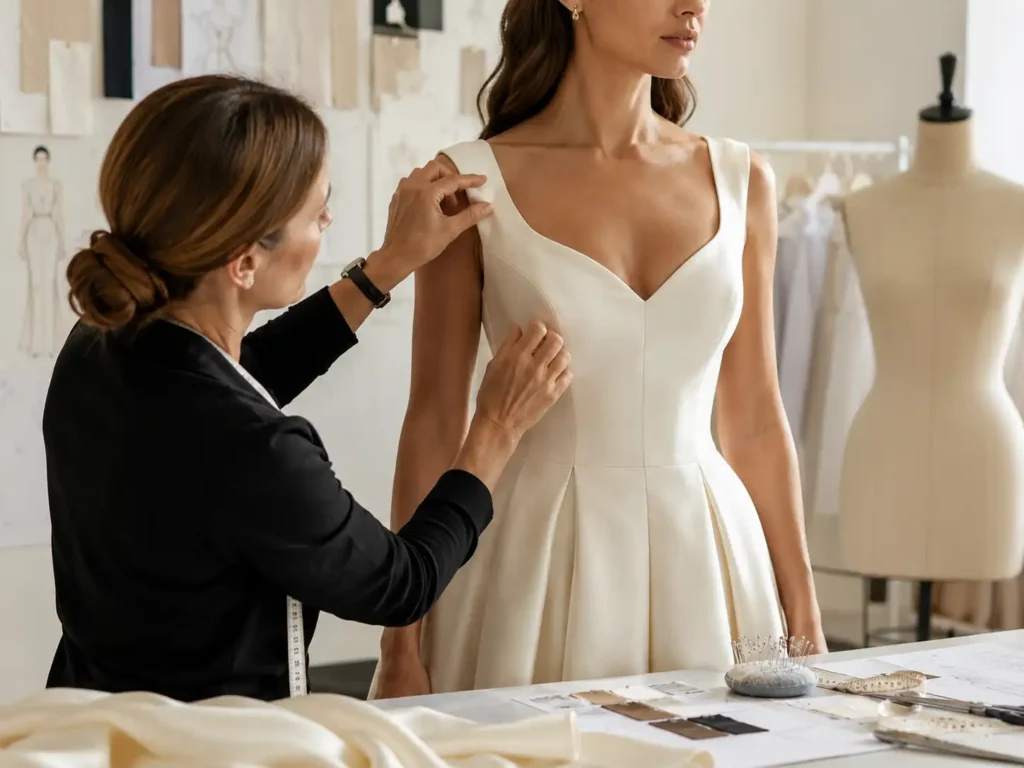
Upper-body control starts with the relationship between upper bust, full bust, under-bust, shoulder, neckline, armhole, cup, and strap positions. A strapless dress needs enough internal support and grip without creating discomfort or visible distortion. A deep V needs a stable center front, controlled neckline stretch, and suitable coverage. Corset designs require cup shape, cup spacing, boning direction, waist suppression, and closure strength to work as one structure. During fitting, the team reviews standing posture, arm movement, seated position, breathing comfort, underarm exposure, gaping, and whether the intended bra solution remains possible. Comments such as “neckline opens” or “cup feels high” are converted into pattern changes, measurement updates, or support adjustments. Approved points then enter the specification and sample record for PP and bulk control.

Waist, Hip, Stretch, and Recovery

Bodycon fit depends on the complete stretch system, not only the fabric percentage. Stretch direction, recovery, lining, seam construction, ruching, elastic, zipper length, and pattern reduction all influence the final garment. Too much negative ease can create seam stress, zipper waves, rolling hems, or excessive transparency. Too little control produces sagging and poor waist definition. Fit review checks bust-waist-hip proportion, side-seam position, waistline level, back shaping, seat comfort, walking, sitting, and recovery after repeated movement. Measurements are taken after the garment relaxes so temporary stretching does not hide instability. Size grading should preserve the visual balance of cut-outs, ruching, waist position, and garment length rather than applying equal numerical changes to every point.

Length, Slits, and Movement Safety

Short dresses require separate front and back length review because hip volume can lift the back hem. High slits need secure endpoints, balanced opening, and reinforcement against tearing. Lining length must protect coverage without showing below the shell or restricting movement. Fit samples are reviewed standing, sitting, walking, stepping, and turning. For dance-oriented or event styles, movement should not cause the neckline, cut-out, slit, or hem to shift beyond the approved position. The final measurement file can include center-front length, center-back length, side length, slit height, lining length, and critical opening dimensions. Bulk inspection checks measurements and visual balance together, since a technically correct number can still produce an uneven hem if fabric relaxation or sewing tension changes the shape.

Construction Details That Protect the Final Look
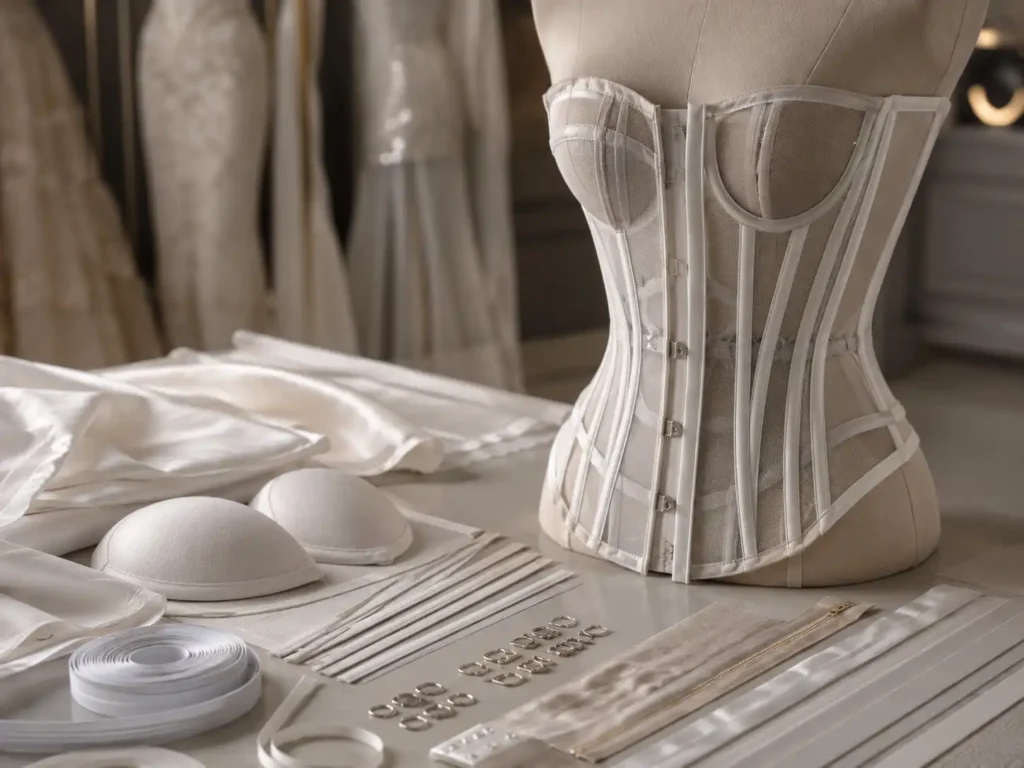
Partywear design details create value only when the internal construction supports them. Seam position, support layers, lining, closures, elastic, reinforcement, finishing, and pressing must preserve the approved shape through movement, packing, and repeated production.

Corset Support

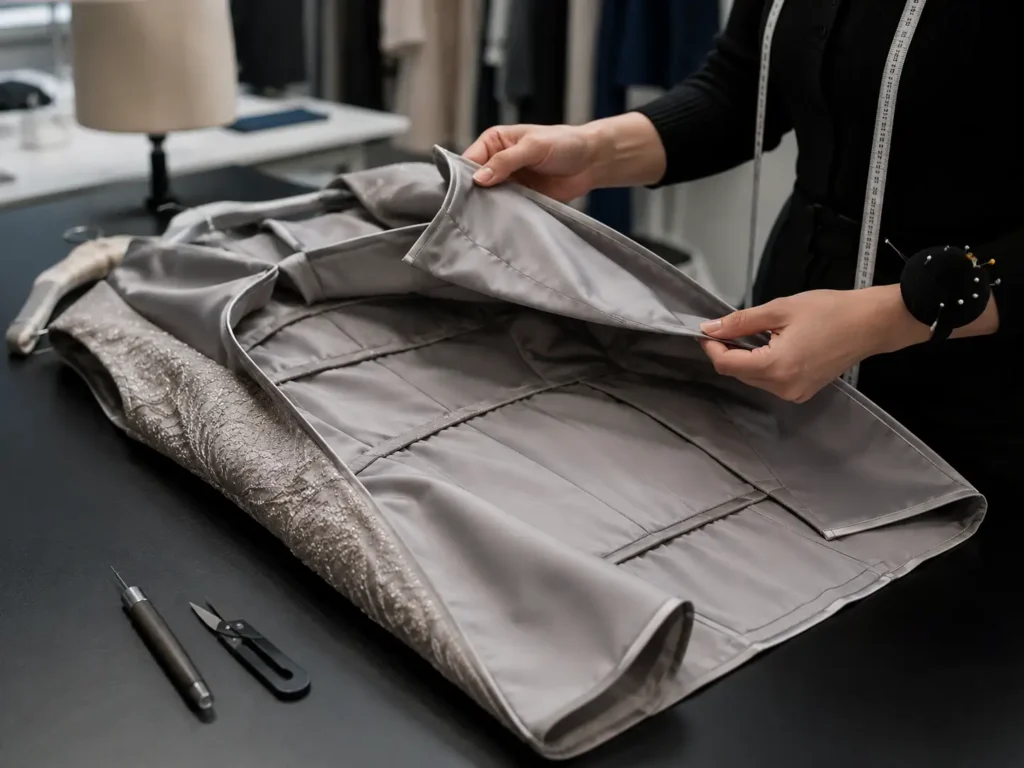
Cup shape, boning channel position, under-bust seam, waist reinforcement, anti-slip support, lining, and closure strength are developed as a connected structure. Samples check support, comfort, symmetry, and seated movement. Bulk control verifies boning length and placement, cup alignment, channel stitching, waist measurement, closure installation, and smooth inner finishing.

Ruching and Draping

Ruching requires defined start and end points, gathering ratio, stitch or elastic method, panel length, and direction. Draping needs stable anchor points and enough fabric to form the intended folds. Reference photos and physical samples help production maintain density and symmetry. QC checks twisting, side-seam movement, uneven length, and loose gathering threads.

Cut-Out Stability

Cut-out openings are controlled through pattern shape, edge treatment, elastic or tape support, seam allowance, grain direction, and reinforcement at stress points. Sample fitting checks opening size across the size range and during movement. Production uses marked dimensions and symmetry points, while QC reviews edge waviness, stretching, exposure, and seam security.

Zipper Installation

Invisible zippers can bulge when seam tension, fabric stretch, stabilizer, zipper length, or pressing is incorrect. Color must match the shell or approved design direction. Samples establish zipper endpoint, waist alignment, seam smoothness, and opening function. Bulk checks include operation, top alignment, side-seam continuity, color, puckering, and nearby fabric damage.

Lining Coverage

Lining controls transparency, comfort, surface smoothness, and garment durability. Its weight, stretch, color, and seam method must suit the shell. Boundaries around mesh panels, slits, necklines, and mini hems are confirmed during sampling. QC checks exposure, twisting, ride-up, static cling, color mismatch, and whether the lining restricts the shell fabric.

Sequin Protection

Sequined areas need seam preparation, protective backing or lining, safe edge finishing, and careful pressing. Decoration near underarms or side seams is reviewed for skin contact. Loose sequins and broken threads are corrected before packing. Tissue, protective bags, or controlled folding can reduce abrasion between garments and prevent surface transfer during transport.

From Design Reference to Retail-Ready Partywear

A defined process keeps design, material, fit, production, QC, and delivery decisions connected. Each stage produces an approval or record used by the next team, reducing reliance on memory and scattered messages.

Project Review

Review design files, quantities, colors, size range, target price, launch date, labels, packing, and testing or inspection requirements. Identify missing information and major risks before formal development.

Fabric Direction

Compare suitable fabrics by appearance, hand feel, weight, stretch, recovery, transparency, width, color availability, MOQ, lead time, lining need, and production stability.

Pattern Development

Translate approved design details and size standards into a pattern while considering body balance, fabric behavior, support, seam construction, closures, and grading requirements.

First Sample

Build the initial garment to evaluate interpretation, construction, material direction, fit, proportion, and visible design details. Record all deviations and open decisions.

Fit and Revision

Convert fit and appearance comments into pattern, measurement, construction, trim, or fabric changes. Maintain version records so approved corrections are not lost.

Photo or Sales Sample

Prepare appearance-led samples for campaign, line review, wholesale meetings, or internal sign-off when required, while keeping final production standards separately controlled.

PP and Golden Sample

Confirm final materials, measurements, workmanship, labels, and packing. Retain a physical Golden sample and updated technical records for production and QC.

Bulk Production and QC

Allocate styles by construction and schedule, track materials and production, conduct inline and final checks, and address issues before they expand across the order.

Packing and Delivery

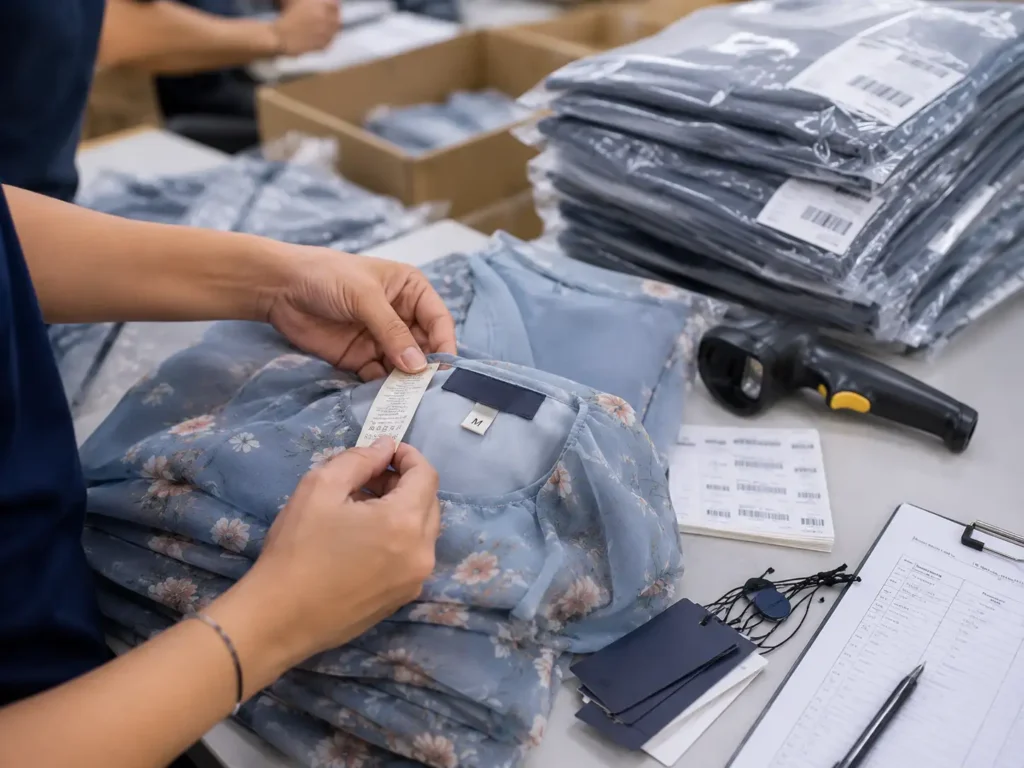
Verify labels, barcodes, SKU grouping, folding, protection, polybags, carton marks, quantities, shipping documents, and the selected freight arrangement.

Multi-Style Production With Controlled Project Management

Large partywear programs are managed as coordinated projects rather than a single production line. Style grouping, material readiness, approval status, construction complexity, quality risk, and delivery priority determine how work is allocated and tracked.

Group Styles by Manufacturing Logic

A 20-style order may include stretch mesh bodycon dresses, non-stretch satin slips, corset minis, sequined statement pieces, jumpsuits, and matching sets. Placing every style under one production plan creates unnecessary risk because operator skills, sewing methods, handling, pressing, and inspection differ. Jinfeng Apparel groups products by fabric family, pattern block, support structure, decoration, workmanship, and schedule. Shared fabrics and trims can be consolidated where appropriate, while high-risk styles receive separate preparation and QC instructions. Material arrival and approval status are reviewed before cutting so one delayed specialty trim does not block unrelated styles. The production plan can also reflect campaign priority, retail allocation, and split-delivery needs.

Allocate Production Around Approved Standards

Production allocation uses six owned factories and more than ten long-term satellite production partners according to product requirements, workload, and timing. Allocation does not replace technical control. Each style follows the approved PP and Golden sample, pattern, measurement file, BOM, workmanship notes, material approvals, label files, and packing instructions. Pre-production review highlights critical operations such as corset construction, mesh handling, sequin preparation, lace placement, stretch seam control, invisible zippers, ruching density, lining boundaries, and short-length balance. Inline findings are recorded and corrected early. When a style requires specialist handling, the plan reflects the necessary skill and inspection intensity rather than treating capacity as a simple piece count.

Track Milestones Across 10-30 Styles

Multi-style programs require a status view that separates design approval, material approval, sample version, PP status, production stage, QC result, packing readiness, and shipment group. Jinfeng Apparel merchandisers coordinate fabric and trim follow-up, sample comments, revision records, production updates, inspection feedback, label and barcode files, and delivery planning. A delayed decision is escalated according to its commercial effect: campaign sample, material booking, cutting start, packing print, or warehouse arrival. Brands receive clearer decisions when each open issue identifies the style, required action, responsible party, and deadline. Records also support repeat orders by preserving the final approved state instead of reconstructing it from old messages.

Partywear Quality Control by Risk Point

Quality control begins before cutting and continues through sewing, finishing, measurement, appearance, labeling, packing, and shipment preparation. Inspection intensity follows the product risk: a simple ponte dress and a sequined corset mini should not use an identical checklist.

Product/MaterialPrimary RiskSample StandardInline ControlFinal Control
Satin dressShade, snags, puckering, press marksDrape, color and zipper approvalSurface handling, seam tension, shade separationAngled-light surface check, pressing and fold protection
Mesh dressTransparency, holes, recovery, lining shiftOn-body coverage and stretch directionSeam tension, edge recovery, hole controlCoverage, symmetry, surface and measurement recovery
Sequin dressLoss, scratching, broken needles, surface damageComfort and attachment approvalSeam preparation and missing-area controlSurface inspection, loose threads and protective packing
Bodycon dressFit, growth, twisting, zipper wavesBust-waist-hip and movement fitMeasurement, grain and seam balanceRecovery, side seam, zipper and finished measurements
Corset dressCup position, support, asymmetry, discomfortCup, boning, waist and closure approvalBoning channels, cup alignment, reinforcementShape, support, measurements, comfort and inner finishing
Mini/slit dressCoverage, uneven length, weak slit endpointStanding, sitting and movement testLength marks, lining and reinforcementFront/back balance, slit height, coverage and hem finish

US Market Labeling, Testing, and Size Support

US programs need approved size standards, clear label data, test planning, inspection access, accurate barcodes, and warehouse-ready packing. Jinfeng Apparel executes confirmed requirements and keeps brand-provided compliance information connected to the correct style and SKU.

Size and Grading

US brands do not share one universal size system. Development should begin from the brand measurement chart, fit model, approved sample, or established block. Grading rules are reviewed for bust, waist, hip, length, neckline, armhole, strap, cut-out, slit, and support points so visual proportions remain controlled across sizes. Measurement tolerances and critical points enter the QC file.

Label Preparation

Jinfeng Apparel can produce and apply main labels, size labels, care labels, and other approved components using brand-confirmed information. Typical data may include fiber content, care instructions, size, country of origin, and RN or importer information supplied by the brand. Artwork, wording, material, position, stitch method, and final sample are approved before bulk label use.

Testing Coordination

Testing can be planned according to material, product, market, and brand requirements. Common review areas include fiber composition, shrinkage, color fastness, pH, formaldehyde, restricted substances, pilling, stretch recovery, seam strength, and decoration security. Test scope, laboratory, sample selection, cost, and timing should be confirmed before production milestones are fixed.

Inspection Access

Brand teams or appointed third parties can inspect according to the agreed production and shipment plan. Jinfeng Apparel can provide production status, packing readiness, style and quantity information, approved references, and available records needed for inspection. Findings are reviewed by style and severity, followed by correction, recheck, or disposition according to the agreed quality standard.

MOQ and Cost Planning for Partywear Programs

Partywear pricing is built from material, pattern and sample work, cutting, sewing time, construction complexity, decoration, finishing, QC, packing, quantity, waste, timing, and logistics. A reliable quotation needs the correct order structure, not only a reference image.

MOQ Starts From 200 Pieces

Standard MOQ starts from 200 pieces per style and color. One style in two colors normally requires 200 pieces in each approved color, subject to fabric and trim conditions. Total program volume cannot automatically be redistributed into very small color lots because fabric suppliers, dyeing, printing, lace, sequins, labels, and production setup may carry separate requirements. Custom-dyed fabrics, placement prints, special lace, exclusive sequins, molded trims, custom hardware, complex packaging, or highly fragmented size and color plans can raise the workable minimum. Early quantity planning helps the team compare stock fabric, custom color, material consolidation, and production routes before sample and bulk commitments are fixed.

Main Partywear Cost Drivers

Fabric weight, usable width, consumption, waste, lining, double layers, stretch requirements, custom color, and certification affect material cost. Construction drivers include corset cups, boning, underwire, anti-slip support, ruching, draping, cut-outs, high slits, multiple panels, French seams, clean finishes, and complex closures. Surface decoration adds sequin preparation, lace placement, rhinestones, beading, hand correction, and longer inspection. Wide size ranges may change grading, consumption, support components, and packing. Private labels, hangtags, barcodes, protective packing, testing, inspection, urgent timing, and split shipments also influence the final quotation.

Cost Control Without Weakening the Look

Cost optimization should preserve the visual reason a style was selected. Options may include a stable fabric with similar drape, adjusted lining coverage, simplified internal construction, a more available zipper or trim, controlled sequin placement, shared components across styles, improved cutting layout, color consolidation, better size ratios, or phased shipment planning. A change is reviewed for hand feel, appearance, fit, support, transparency, comfort, care, bulk consistency, and MOQ before approval. Removing an internal layer or replacing a trim without fit review may reduce the unit price and create higher return or correction cost later.

Information Needed for an Effective Quote

  • Style image, tech pack, sketch, or original sample reference
  • Quantity for each style and color
  • Fabric preference, hand feel, weight, stretch, or target appearance
  • Color plan and any Pantone or physical standards
  • Size range and expected size ratio
  • Label, hangtag, barcode, polybag, and carton requirements
  • Testing, inspection, warehouse, and delivery requirements
  • Target launch date and preferred shipment arrangement

Private-Label Packaging for Retail and Ecommerce

Private-label delivery should protect the garment, preserve visual presentation, identify every SKU correctly, and match warehouse handling. Partywear requires extra attention because satin, sequins, pale colors, corset shapes, and long hems can be damaged by ordinary folding and friction.

Main Brand Labels

Woven, printed, heat-transfer, or other approved main labels are matched to garment construction and skin comfort. Artwork, color, size, position, stitch method, and orientation are sampled before bulk use. Sensitive fabrics may require lighter or softer label solutions.

Size and Care Labels

Size and care labels use brand-approved wording and layout. Content, symbol set, fiber data, origin information, RN or importer data, fold, material, print clarity, position, and attachment method are confirmed. Bulk checks prevent wrong-label and wrong-size combinations.

Hangtags

Hangtags can include brand artwork, product information, pricing space, campaign messaging, or special finishes. Paper, thickness, print, cord, safety pin, seal, position, and attachment method are approved. Packing teams verify the correct tag version for each style and market.

Barcode and SKU Labels

Barcode files should identify style, color, size, and market correctly. Print quality, human-readable data, placement, scan access, and SKU matching are checked before packing. For multi-style orders, barcode control is linked to the packing list and carton allocation.

Garment Protection

Satin may need tissue and controlled folding to reduce creases and snags. Sequins may need separation to prevent abrasion. Pale garments need clean handling and protective bags. Corset shapes may require support against crushing. Long hems and trains need folding plans that avoid sharp pressure marks.

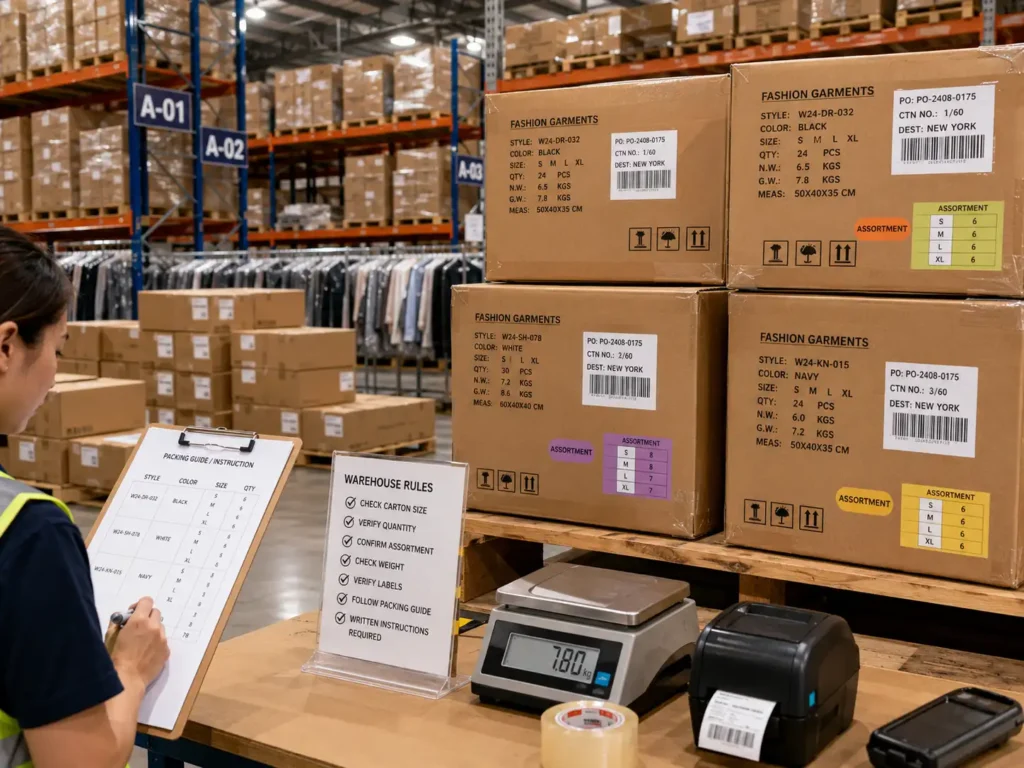
Carton and Warehouse Rules

Carton size, quantity, weight, assortment, carton marks, purchase-order data, destination, and warehouse instructions are confirmed before final packing. Multi-SKU cartons require clear allocation. Photos, packing lists, carton data, and other shipping information can be prepared according to the agreed plan.

Production Timing for US Launch Calendars

Launch timing is managed backward from campaign, preorder, warehouse, or retail dates. Sample development, material booking, PP approval, production, inspection, packing, and freight decisions are connected so late changes are evaluated against their commercial impact.

Set Development Milestones

The timeline begins with the required dates for line review, campaign photography, sales samples, PP approval, and bulk arrival. Styles are prioritized according to commercial role and technical risk. A simple fitted style may reach approval faster than a corset, sequin, or layered mesh style, even when both start on the same date. Fabric swatches, lab dips, trim samples, pattern work, fit comments, revised samples, and photo-ready needs are tracked separately. When a decision affects material booking or production start, the deadline is stated clearly. Complex sample timing commonly falls within 15-25 days, while custom materials or trims may extend development according to supplier lead time.

Confirm Bulk Readiness Before Scheduling

Bulk timing is confirmed after PP approval and material readiness because quantity alone does not determine production duration. The schedule considers style count, construction complexity, material arrival, color count, size range, decoration, labels, packaging, QC, third-party inspection, and planned shipment grouping. A production slot should not be treated as final while fabric, special trims, or critical fit decisions remain open. Jinfeng Apparel tracks cutting, sewing, finishing, inspection, and packing milestones and communicates decisions that may move the agreed delivery plan. Priority styles or partial quantities can be reviewed for separate handling when commercial value justifies the added cost and coordination.

Choose Freight Around Selling Dates

Express courier is normally used for samples and urgent small consignments. Air freight can shorten transit for high-priority launch quantities but requires accurate carton count, weight, volume, destination, customs information, and receiving dates. Sea freight is suited to larger planned shipments with enough calendar allowance. FOB delivery to an appointed forwarder, CIF, DAP, DDP by project, and sea-air split planning can be assessed according to destination and available routes. Commercial invoice, packing list, carton marks, product information, and forwarder coordination are prepared according to the selected arrangement. A split shipment should be evaluated against margin, stock priority, and warehouse needs rather than used automatically.

NDA and Unreleased Design Protection

Unreleased partywear collections contain valuable design, pricing, launch, label, and sales information. Jinfeng Apparel supports NDA-based cooperation and limits project files to the development, production, QC, packing, and delivery work required for the approved program.

Protected Project Information

Protected information can include brand identity, tech packs, sketches, reference images, original samples, patterns, measurement charts, BOM files, fabric and trim plans, color standards, label artwork, hangtags, packaging artwork, barcodes, SKU data, quantities, target prices, launch dates, and unpublished designs. NDA review may take place before detailed files are shared. The agreement scope can reflect development, sampling, bulk production, repeat orders, and long-term collection work.

Controlled Internal Use

Project information is used only by the teams involved in review, pattern development, sample making, sourcing, merchandising, production, QC, finishing, packing, logistics, and approved repeat-order support. Files should be identified by the relevant style and version so outdated information does not re-enter production. Sensitive data is not used for unrelated orders. Brand files, measurements, artwork, and commercial terms remain connected to the corresponding project purpose.

Anonymous Case Presentation

Brand names, original tech packs, unpublished samples, exclusive materials, order numbers, prices, and launch information are not presented publicly without authorization. Manufacturing cases can be described anonymously by market, product type, style count, fabric family, development challenge, order scale, QC focus, and delivery structure. Images should use authorized products, in-house developments, or properly anonymized production evidence. This approach allows manufacturing capability to be demonstrated while protecting commercial identity.

Partywear Programs Delivered for US Brands

The following anonymous cases reflect realistic multi-style program structures handled for established fashion operations. Names and proprietary design information are withheld. Data focuses on style mix, order scale, development issues, production controls, and delivery execution.

US Satin Occasionwear Program

Program snapshot: 14 styles, 5 fabric and lining combinations, 6 color directions, approximately 26,400 garments, and a mixed mini-to-midi assortment. The range included cowl-neck slips, ruched satin minis, asymmetric midis, fitted corset dresses, and clean occasion styles. The primary risk was visual inconsistency across shine direction, dye lots, seam tension, zipper installation, and pressing. Development began with fabric swatches, stretch and drape review, and neckline trials. Several styles shared fabric families, but different lining and support needs were retained by silhouette. Fit comments were translated into pattern and measurement changes, especially at bust coverage, waist position, back length, and side-seam balance. Before bulk, PP and Golden samples confirmed color, fabric direction, zipper, lining, hem, label, and folding. Bulk material was grouped by dye lot, cutting direction was controlled, and finished garments were inspected under angled light for snags, puckering, press marks, and shade. Packing used tissue and controlled folds to reduce hard creases. The program shipped in two groups based on campaign and warehouse priority.

US Graduation and Homecoming Program

Program snapshot: 11 styles, approximately 22,800 garments, including white graduation minis, corset A-line dresses, satin fitted styles, mesh-panel looks, and homecoming party dresses. The main commercial deadline was the graduation and homecoming selling window, supported by separate photo-sample and bulk milestones. White styles required opacity testing on body, shell-to-lining color matching, clean handling, and garment protection. Corset styles required cup placement, boning direction, waist measurement, anti-slip support, and closure review. Mini lengths were tested standing, seated, walking, and turning, with separate center-front, center-back, lining, and slit measurements. Development priorities were divided into campaign styles, core sales styles, and technically complex styles. Approved records included final patterns, measurements, materials, workmanship, labels, barcodes, and packing. Bulk QC focused on coverage, neckline security, corset symmetry, zipper smoothness, hem balance, white-garment cleanliness, barcode accuracy, and carton allocation. Selected styles moved by air while the balance followed the planned ocean route.

US Multi-Style Private-Label Program

Program snapshot: 23 styles, approximately 57,600 garments, covering satin, mesh, stretch jersey, lace, crepe, sequins, two jumpsuits, and three coordinated sets. The program used multiple fit blocks and included 118 active style-color-size SKUs. The main risk was version and packing control across sample revisions, fabric approvals, size ratios, labels, hangtags, barcodes, polybags, and warehouse carton rules. Styles were grouped by fabric and construction, then scheduled according to PP approval and material readiness. Core bodycon styles used measurement and recovery checks; mesh styles used transparency and lining standards; lace styles used placement references; sequined styles used comfort and surface-protection checks. Merchandising records tracked each sample version and open decision. Production files linked the approved PP and Golden sample with measurements, BOM, workmanship, label, barcode, and packing requirements. Final packing was verified against SKU and carton lists, with photos and carton data prepared for shipment confirmation. The order moved in three delivery groups aligned with launch priority and warehouse receiving capacity.

Repeat Orders Without Losing Product Standards

Repeat production should begin from retained approvals, not from memory. Jinfeng Apparel keeps the final product and packing records needed to restart proven styles while confirming any material, color, quantity, or timing changes before release.

Final Pattern

Approved pattern files provide the starting point for repeat production. Any new fabric, size extension, construction update, or fit correction is recorded as a new version rather than overwriting the previous standard.

Measurements and Grading

Final measurements, tolerances, and grading rules preserve bust, waist, hip, length, neckline, cut-out, slit, strap, and support points. New sizes or major fabric changes require review before bulk.

BOM and Workmanship

Fabric, lining, trims, thread, support materials, seam methods, closures, decoration, pressing, and critical workmanship notes are retained. Supplier or component changes are submitted for approval.

Fabric and Color References

Fabric descriptions, swatches, approved colors, lab dips, dye-lot information, stretch direction, and lining relationships support future sourcing. New batches still require confirmation because shade and hand feel can change.

Labels and Packing

Main labels, care labels, size labels, hangtags, barcode files, polybags, folding, protection, carton assortment, and carton marks are retained by order. Updated artwork or warehouse rules are checked before repeat packing.

QC and Order History

Previous inspection points, corrections, measurements, packing records, and shipment feedback help define repeat-order attention. A repeat is faster when approved records remain valid, but it is never treated as exempt from material and quality checks.

Frequently Asked Questions for US Partywear Brands

Yes. Jinfeng Apparel supports custom party dresses, occasionwear, clubwear, jumpsuits, matching sets, and related womenswear with approved main labels, size labels, care labels, hangtags, barcodes, polybags, carton marks, and packing instructions.

Standard MOQ starts from 200 pieces per style and color. Material, custom color, printing, lace, sequins, special trims, packaging, and highly fragmented quantity plans can increase the workable minimum.

Common options include stretch and non-stretch satin, mesh, power mesh, lace, sequin fabric, jersey, ponte, crepe, velvet, chiffon, and lining materials. Selection is reviewed against fit, appearance, MOQ, lead time, risk, and target price.

Yes. Reference images, sketches, original samples, line sheets, and tech packs can be reviewed. Missing construction, measurement, fabric, trim, support, label, and packing information must be confirmed before accurate sampling and quotation.

Sampling reviews bust-waist-hip proportion, cup and boning position, stretch direction, recovery, support, neckline security, waist placement, zipper behavior, movement, and size grading. Approved measurements and critical points are carried into PP and bulk QC.

Mesh is checked for transparency under stretch, layer count, lining coverage, holes, seam tension, and recovery. Sequins are checked for attachment, skin contact, seam preparation, missing areas, loose threads, needle risk, and protective packing.

Available sample types include first sample, fit sample, revised sample, photo-ready sample, salesman sample, PP sample, and Golden sample. The required sequence depends on design complexity, launch needs, and approval standards.

Yes. Jinfeng Apparel can execute approved label artwork, size and care information, country-of-origin text, brand-provided RN or importer data, hangtags, barcode labels, SKU identification, polybags, carton marks, and warehouse packing rules.

Yes. Brand-appointed or third-party inspection can be coordinated according to production status and shipment timing. Approved references, quantities, packing status, and available quality records can be prepared for the inspection plan.

NDA-based cooperation is supported. Tech packs, patterns, samples, material plans, measurements, labels, packaging, quantities, prices, and launch information are used only for the approved project and are not published without authorization.

Start Your US Partywear Development Program

Jinfeng Apparel supports established US partywear and occasionwear teams that need coordinated product development, fit control, complex fabric handling, structured sampling, multi-style bulk production, quality control, private-label packing, and export delivery.

A useful project review begins with enough information to understand the garment, quantity structure, material direction, approval path, and required dates. Kelly will organize the initial review and connect the project with development, merchandising, production, QC, packing, and logistics resources. Tech packs are welcome, but a line sheet, reference images, original sample photos, size chart, or preliminary quantity plan can also provide a clear starting point. Sensitive files can be reviewed under NDA before detailed development begins.

  • Style information: tech pack, line sheet, sketch, reference image, or original sample photos.
  • Order structure: quantity for every style and color, size range, and expected size ratio.
  • Material direction: fabric preference, hand feel, weight, stretch, color standard, lining, and trims.
  • Branding and packing: labels, hangtags, barcodes, polybags, carton marks, and warehouse guide.
  • Timing and quality: sample priorities, launch date, inspection requirements, destination, and delivery window.


Tell Us About Your Dress Project

Share your product details, estimated quantity and development requirements. Our team will review your project and provide practical OEM/ODM production feedback.

Premium Women’s Apparel Production for Fashion Brands

From dress sample development to bulk production, JF Apparel supports fashion brands with confidential OEM/ODM manufacturing, reliable quality control and scalable production support.

START YOUR DRESS PROJECT

Ready to Develop Your Next Dress Collection?

Share your design concept, product requirements or sourcing plans with our team. We’ll review your project and provide practical feedback on development, materials, MOQ and production.

7-10 Days

Sample Development

200 PCS

Starting MOQ

Fast Response

Professional Follow-Up