
Dress Manufacturer for US Marketplace Fashion Brands
Custom dress development, multi-SKU production and private-label delivery built around established US marketplace fashion programs.
- Since 2008, Jinfeng Apparel has supported custom womenswear development from pattern and fabric direction to bulk production, QC and export coordination.
- 6 owned women’s fashion factories and more than 10 long-term satellite production partners support multi-style, multi-fabric and multi-batch programs.
- 100,000+ pieces of monthly capacity, 2 sample rooms, 7+ senior pattern makers and 15+ QC inspectors provide a measurable operating base for larger collections.
- Regular production starts from 200 pieces per style and color, with quantity planning reviewed against fabric, trims, color development, construction and launch timing.
Jinfeng Apparel turns dress concepts, tech packs, original samples and line sheets into retail-ready garments with controlled fit, approved materials, traceable production files, accurate private-label packing and repeat-order records. The team supports party, occasion, bodycon, satin, mesh, lace, sequin, resort and broader private-label womenswear collections for established US fashion operations.
Manufacturing Capacity Behind Marketplace Dress Programs
Since 2008
6 Owned Factories
10+ Partner Factories
100,000+ Monthly
2 Sample Rooms
15+ QC Inspectors
Built for Established Marketplace Fashion Operations
Marketplace Fashion Brands
Premium Ecommerce Labels
Sourcing Teams
Product Development Teams
Merchandising Teams
Private-Label Programs
Where Marketplace Dress Programs Commonly Lose Control
Fit-Related Returns
Sample-Bulk Gaps
SKU Packing Errors
Fabric Performance Issues
Launch-Date Delays
Unstable Reorders

A Manufacturing System Built Around Sellable Dress SKUs
A marketplace-ready dress is not finished when sewing ends. Product appearance, fit, labeling, SKU identity, packaging and repeatability must remain connected to one approved specification from development through shipment.
Product Development Starts With Commercial Use
A dress can match a reference image and still perform poorly once photographed, worn, packed or reordered. Jinfeng Apparel reviews silhouette, support, coverage, fabric behavior, movement, lining, closures and finishing before a first sample is cut. A satin slip dress may require bias stability, lining balance and strap control; a bodycon style needs stretch recovery and precise bust-waist-hip proportions; a mesh or lace design needs transparency mapping, seam placement and clean internal finishing. The goal is a garment that can be measured, produced, photographed, packed and repeated—not only a one-off sample that looks acceptable on a hanger.
Production Files Keep Approvals Traceable
Each approved style should move into bulk with a controlled set of records: final pattern, graded size rules, measurement chart, bill of materials, fabric and color approval, trim card, construction notes, label positions, packaging instructions, QC checklist and approved sample reference. When one detail changes, the related pattern, cost, sample or packing requirement may also need revision. Jinfeng Apparel uses project tracking and version records so the production team works from the latest approved information rather than mixed comments spread across messages and attachments.
SKU Identity Continues Beyond the Garment
For a marketplace program, style, color and size information must agree across the garment label, polybag sticker, barcode, inner-pack ratio, carton mark and packing list. Jinfeng Apparel separates product quality from data accuracy while checking both. A correct garment in the wrong bag remains a fulfillment problem. Approved artwork, SKU mapping, barcode files, folding method, polybag warnings, insert placement, carton quantity and warehouse labels should therefore be confirmed before packing begins, with scan checks and document cross-checks built into the final stage.
Dress Categories Built for Marketplace Assortments

Bodycon Dresses

Party Dresses

Satin Dresses

Mesh and Lace

Resort and Maxi

Jumpsuits and Sets
Fabric Decisions That Protect Bulk Performance
Fabric selection affects pattern shape, fit, visual quality, production speed, cost and return risk. Jinfeng Apparel reviews more than composition by checking weight, width, stretch, recovery, drape, transparency, shrinkage, color behavior, surface sensitivity and supply continuity.
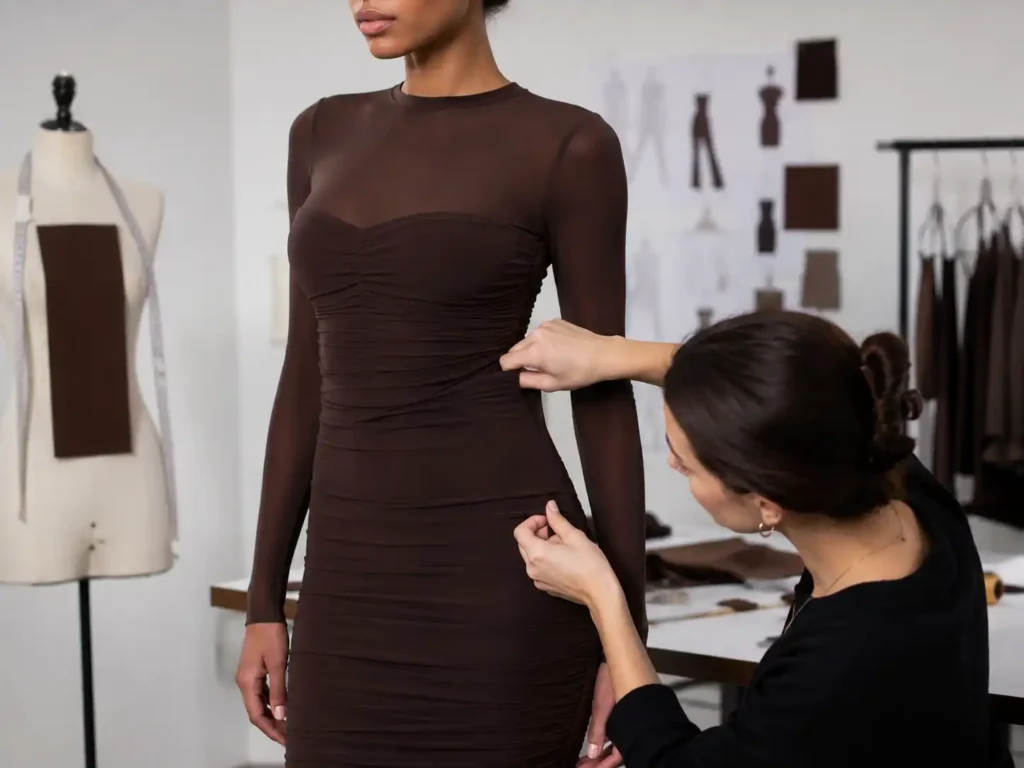
Stretch Fabrics Need Recovery, Not Only Elasticity
A fabric can stretch enough for a fitting but fail after wear, pressing or repeated handling. Jersey, ponte and other stretch constructions are reviewed in warp and weft directions, with recovery compared after extension. Pattern ease must match the fabric rather than a generic bodycon block. Lining, thread, zipper and seam type also need compatible stretch. During bulk production, fabric relaxation, cutting direction, panel pairing and seam tension influence twisting, rippling and size stability. Measurements at bust, waist and hip are checked against the approved chart, while finished garments are allowed to rest before final evaluation when fabric behavior requires it.

Woven Fabrics Need Direction and Balance Control
Chiffon, crepe, rayon, satin and lightweight woven materials can shift during cutting, grow on the bias or hang unevenly after sewing. Grain direction, print placement, seam support, lining construction and hem timing are reviewed during sampling. Long hems may need hanging time before final leveling. For printed dresses, repeat direction and panel placement are confirmed to avoid upside-down motifs or mismatched focal areas. Bulk cutting is organized by fabric batch and shade group where needed, while in-line checks watch for seam puckering, zipper distortion, uneven drape and exposed lining.
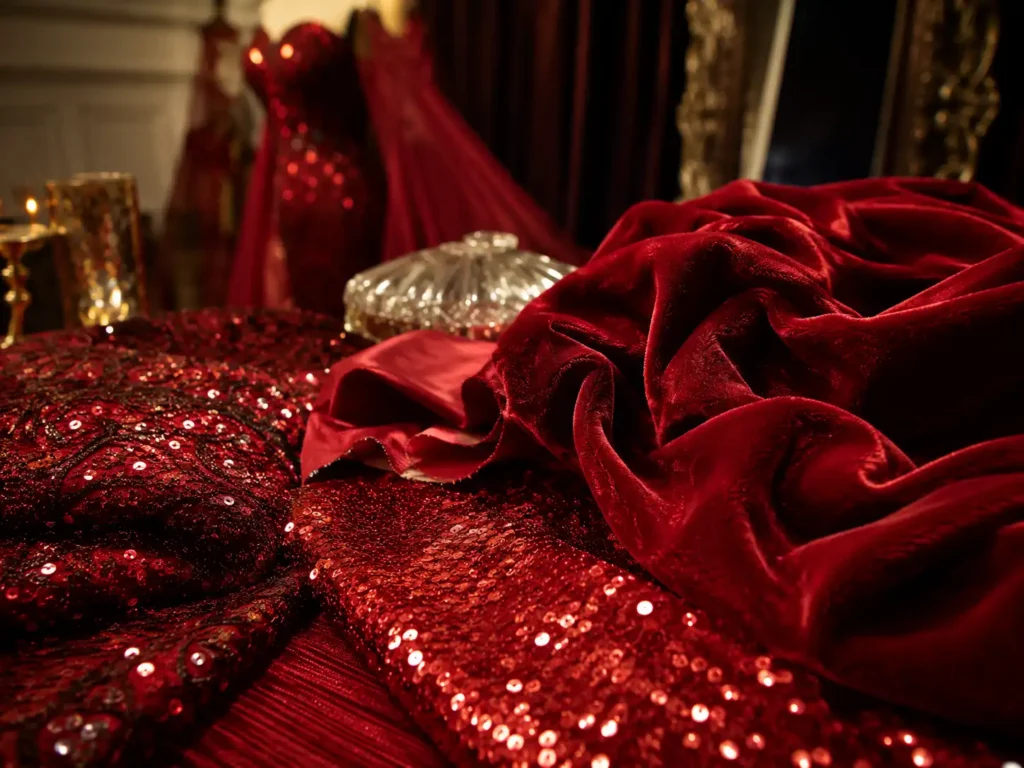
Satin, Velvet and Sequins Need Surface Protection
Sensitive surfaces can be damaged before a garment reaches inspection. Satin may snag or show press marks; velvet requires pile-direction control; sequin fabric can lose pieces, scratch skin or create excessive seam thickness. Jinfeng Apparel reviews cutting layout, needle choice, seam allowance, reinforcement, lining barriers, pressing method and packing protection. Embellished areas are kept away from direct friction where possible, and finished garments are checked for sharp edges, missing decoration, surface pressure marks and unstable attachments. Packaging is selected according to the risk of crushing, rubbing and snagging.

Color Approval Must Match the Actual Material
Color cannot be controlled by screen images alone. Pantone references, physical swatches, lab dips, approved fabric cuttings and lighting conditions can all play a role. Satin shine, mesh transparency and velvet pile alter perceived color, so the final approval should be tied to the actual fabric and visible surface. Bulk rolls are checked by dye lot or batch, and lining, zipper, thread and trims are matched against the approved combination. When material availability changes, replacement options are compared for color, weight, stretch, hand feel, cost, lead time and pattern impact before approval.
Fit Control for US Dress Size Ranges
Jinfeng Apparel works from the brand’s approved size chart and fit standard rather than forcing every collection into one generic US block. Fit comments, grading and bulk measurements stay connected to the same reference points.
| Measurement Area | Common Risk | Development Control | Bulk Verification |
|---|---|---|---|
| Bust and Cup | Gapping, compression or poor coverage | Cup shape, dart, neckline and under-bust review on fit sample | Measure approved points and compare cup, neckline and support placement |
| Waist | Tight fit, loose fit or shifted waistline | Pattern shaping, seam position and stretch allowance | Check circumference, seam alignment and elastic recovery |
| Hip | Drag lines, restriction or excess fabric | Ease and panel balance reviewed by fabric type | Measure hip level and inspect side-seam direction |
| Straps | Slipping, pressure or uneven length | Strap position, width, adjuster and wearing test | Check pair length, attachment and symmetry |
| Armhole | Gapping, cutting-in or lining exposure | Curve correction and movement review | Compare shape, binding and left-right balance |
| Dress Length | Listing mismatch or uneven hem | Measurement point and hem method agreed by style | Measure size by size after pressing and hanging where needed |
| Slit / Cut-Out | Excess exposure or restricted movement | Placement reviewed on body and pattern | Check height, opening, reinforcement and symmetry |
| Lining | Visible lining, pulling or poor comfort | Length, stretch and attachment matched to shell | Inspect hem relationship, twisting and attachment points |
From Tech Pack to Production-Approved Sample
Sampling converts design direction into an executable production standard. Each stage must answer a different question, and comments should be consolidated before the next sample begins.
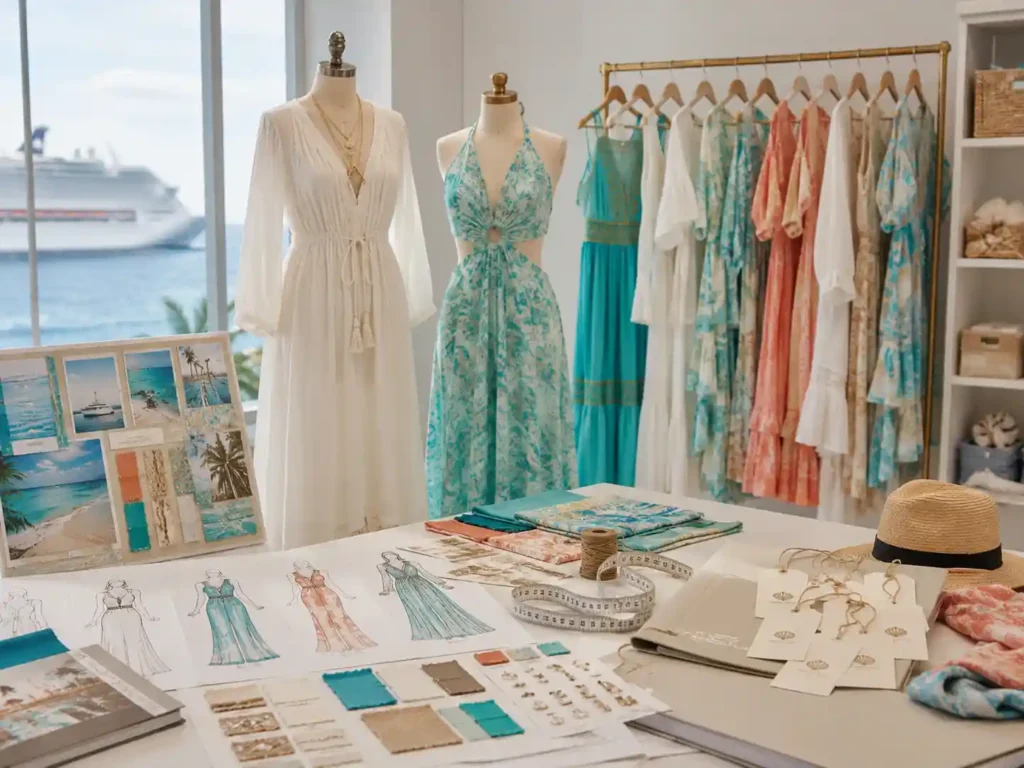
Project and Style Review
The process can start from a tech pack, original garment, sketch, line sheet or reference image. Jinfeng Apparel reviews silhouette, construction, fabric direction, trim requirements, size range, color plan, order quantity, target date and private-label needs. Missing information is identified before pattern work begins. A preliminary cost range may be discussed, but final costing depends on confirmed materials, construction, quantities and packing.

Fabric, Trim and Pattern Direction
Suitable fabrics and trims are compared for appearance, behavior, MOQ, cost and lead time. Pattern development then translates the approved direction into measurable shape. Structural concerns such as cups, boning, cut-outs, low backs, slits, ruching, stretch or lining are addressed before the first sample. Material substitutions are not treated as neutral changes because weight, stretch and drape can alter both fit and pattern.

First Sample and Consolidated Review
A normal planning reference for a first development sample is about 7-15 working days after complete information and workable material direction are confirmed. Complex embellishment, custom-dyed fabric or special trims can extend the range. The first sample is reviewed for structure, fabric response, base fit, measurements, workmanship and feasibility. Comments should identify exact measurement changes, construction revisions, fabric concerns and visual priorities rather than relying on general statements such as “make it better.”

Revised Sample and PP Approval
Revised samples commonly require about 5-10 working days after consolidated comments and materials are ready. A PP sample is developed only after the main design, fit, fabric, trims, color and construction are stable. The PP sample confirms the final production combination, including labels and packing details when required. A normal planning reference for PP preparation is about 7-12 working days once bulk materials and final artwork are available. The approved PP or Golden Sample then becomes the highest-priority reference for bulk production and inspection.
Samples Built for Different Commercial Decisions
Fit Sample
Photo-Ready Sample
PP and Golden Sample
Plan MOQ Across Styles, Colors and Sizes
Quantity planning should begin at style-color level, then divide into sizes and delivery batches. A total order number alone does not show whether fabric, trims, production and packing can be arranged efficiently.
| Program Structure | Production Review | Main Cost or Risk Driver |
|---|---|---|
| 1 style x 1 color x 200 pcs | Regular starting structure for review | Fabric availability, construction and size ratio |
| 1 style x 2 colors x 200 pcs each | Clearer multi-color production structure | Color approvals, separate fabric lots and SKU packing |
| 1 style x 2 colors x 100 pcs each | Below the regular per-color starting point | Color-level material and production inefficiency |
| 12 styles x 2 colors x 6 sizes | 144 style-color-size combinations | SKU mapping, labels, packing and line scheduling |
| Custom-dyed or printed fabric | MOQ reviewed with fabric supplier | Dyeing or printing minimums, lab dips and lead time |
| Special lace, sequin or custom trims | Project-specific MOQ may increase | Supplier minimums, matching lots and replacement risk |
| 20-30 style collection | Requires phased development and production planning | Approval sequence, factory matching and shipment priority |
Production Planning for Multi-SKU Dress Orders
A large assortment cannot be managed as one undivided order. Style groups, material groups, approval status, line allocation and shipment priority need separate control while remaining connected to one program calendar.
Factory Matching by Product Structure
Jinfeng Apparel uses 6 owned women’s fashion factories and more than 10 long-term satellite production partners to match styles with suitable production resources. Stretch bodycon dresses, woven occasionwear, lined satin styles, mesh and lace constructions, embellished pieces, jumpsuits and matching sets do not share identical methods. Factory selection considers fabric behavior, construction difficulty, workmanship, required capacity and delivery sequence. The goal is controlled specialization rather than scattering styles without consistent project files.
Line and Material Planning
Before line loading, the team checks PP approval, bulk fabric status, trim readiness, label artwork, size ratios and packing instructions. Styles sharing a fabric, lining, zipper, thread or trim may be grouped to reduce changeover and mismatch risk. A common planning reference for standard multi-style bulk production is about 30-45 days after PP approval and material readiness. Custom dyeing, printing, heavy embellishment, handwork, peak-season loading or staggered approvals can extend the schedule. Dates are confirmed through a project calendar rather than treated as a universal promise.
Production File Transfer
The approved development information moves into bulk through a production package containing the latest pattern, grade rules, measurement chart, BOM, construction notes, fabric and trim approvals, label locations, folding method, barcode files, carton instructions and QC checklist. Project coordinators track changes so the cutting, sewing, finishing, inspection and packing teams work from the same version. When a client changes a fabric, length, neckline, cup, strap, slit or packing format, the affected files are reviewed before production continues.
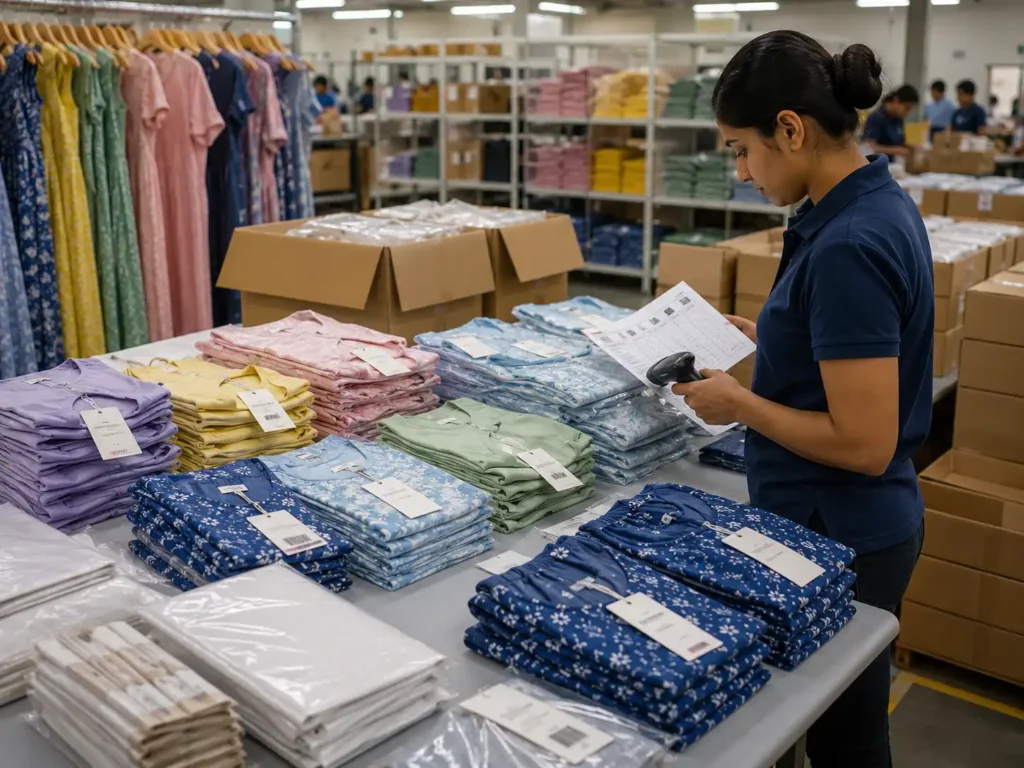
Private-Label Packing for Marketplace Dress Programs
Private-label execution should be approved with the garment, not added after bulk production. Label materials, artwork, placement, barcode data, folding and carton structure all influence presentation, receiving accuracy and reorder consistency.

Woven Main Labels
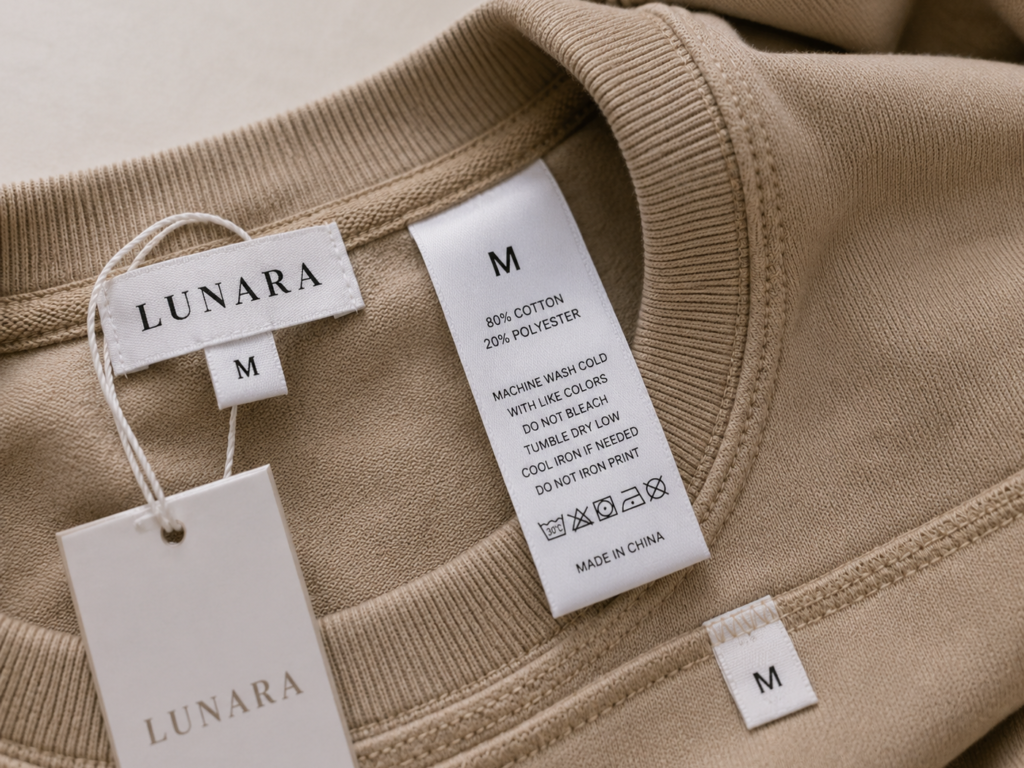
Main labels are reviewed for material, size, fold, edge comfort, brand color and attachment position. Placement must suit the neckline or internal construction without creating visible pulling or discomfort. A label approval sample helps prevent bulk differences in texture, shade and finish.
Size and Care Labels
Size labels must match the garment and SKU, while care labels should reflect the approved fiber content and care information supplied for the project. Label sequence, language, dimensions, attachment and readability are checked before bulk use.

Hangtags
Hangtags may include brand artwork, style information, pricing space, sustainability claims, care notes or promotional content. Paper stock, print finish, hole position, string or fastener and attachment point are confirmed to avoid garment damage or inconsistent presentation.
Barcode Stickers
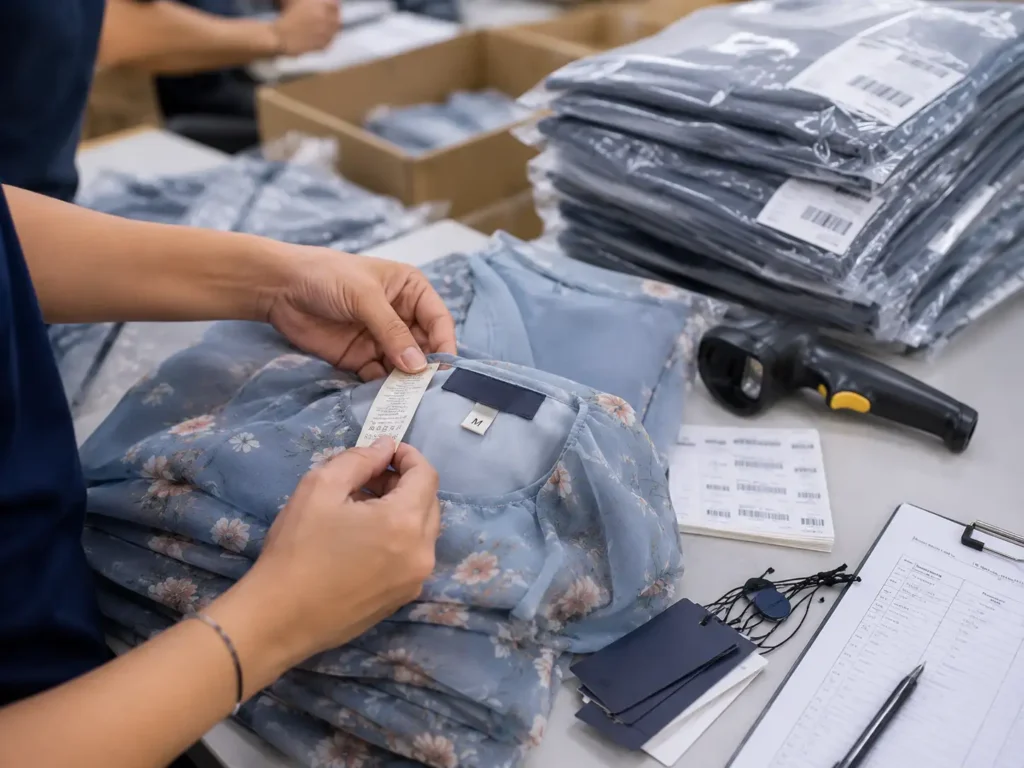
Barcode artwork and SKU mapping are supplied or approved by the brand. Jinfeng Apparel checks print clarity, placement and scanability before mass application. The barcode on the polybag or hangtag must match the style, color and size inside.
Polybags and Inserts
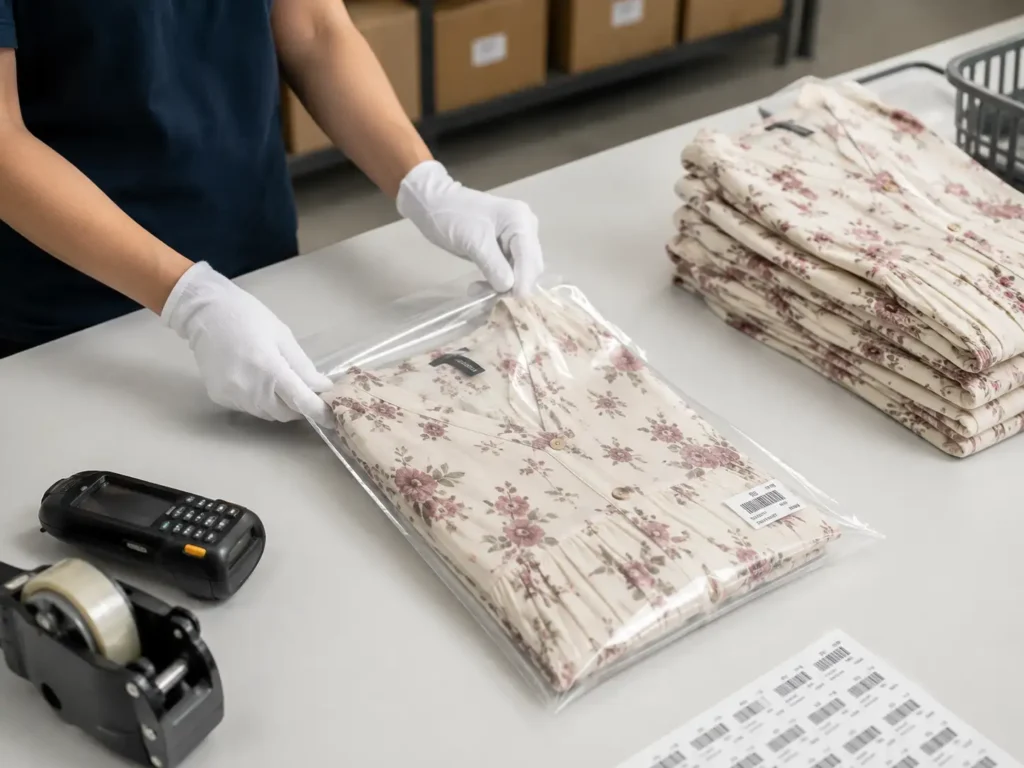
Polybags are selected by garment size, folding method and protection needs. Warning text, ventilation holes, resealable strips, logo printing, stickers, thank-you cards and inserts can be integrated according to approved specifications. Sensitive satin or embellished garments may need additional protection.
Cartons and Marks
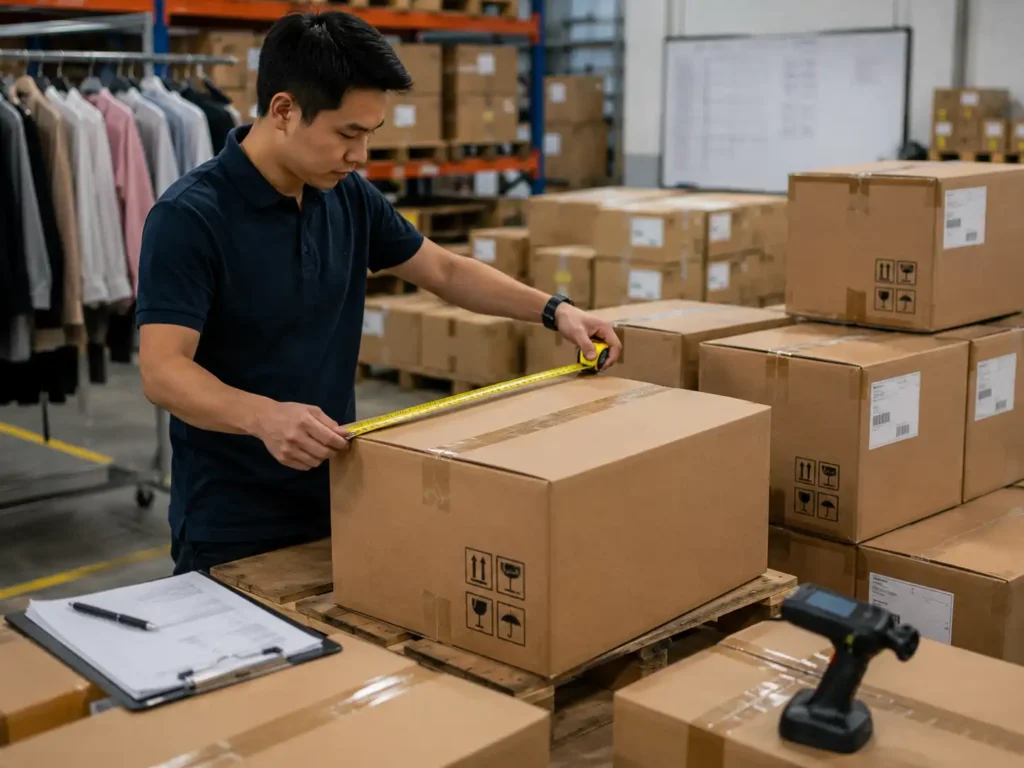
Carton dimensions, quantity, style-color-size breakdown, gross weight, net weight, carton number and shipping marks are coordinated with the packing list and warehouse requirements. Mixed cartons are used only when clearly approved and mapped.
Keep Every Color, Size and SKU Identifiable
SKU control links digital product data with the physical garment. Accurate labels, packing and documents reduce receiving problems, incorrect inventory and rework after goods reach the warehouse.
Create One Approved SKU Map
The program should begin with a master map listing style number, product name, color name, color code, size, barcode, pack method and carton rule. Every later file should follow the same naming logic. When marketplace-facing names differ from factory color or style codes, both references should be recorded to avoid confusion. Revised barcode files require version control before printing and application.
Verify Garment-to-Bag Matching
During packing, garment style, color, size label and visible features are checked against the polybag sticker and barcode. Scan checks confirm code readability, while visual checks confirm the correct item is inside. Matching is especially important for similar black dresses, near-identical colorways, repeated silhouettes or size labels positioned inside opaque packaging.
Control Inner Packs and Cartons
Inner-pack quantities and carton ratios are confirmed by style, color and size. Carton marks should agree with the actual contents and the approved packing list. When a collection uses solid-size cartons, mixed-size cartons or mixed styles, the method must be clear enough for warehouse receiving teams to identify inventory without opening every carton. Carton numbering and shipment-batch references help trace discrepancies.
Cross-Check Shipping Documents
The final packing list should reflect carton count, quantity, style, color, size, net weight, gross weight and dimensions. Commercial invoice descriptions and quantities must align with the shipped goods. Warehouse labels, routing labels or client-provided receiving labels are placed according to the approved format. Final document responsibility remains shared with the importer, broker or nominated forwarder, so review should be completed before cargo handover.
Quality Control Across the Full Production Cycle
Incoming Fabric QC
Trim Inspection
Cutting QC
Sewing QC
Measurement Review
Finished Inspection
Packing QC
Final Inspection
Compliance Support Based on Market Requirements
Compliance work should begin with the destination market, sales channel, garment composition, labeling claims and brand quality manual. Jinfeng Apparel coordinates documents and testing by project instead of treating certificates as generic marketing claims.
Quality Management and Factory Review
Jinfeng Apparel can support project discussions around ISO 9001-related quality management principles and provide factory information needed for client review. Where a program requires social-compliance documents or an audit process related to SMETA, Sedex or BSCI, the applicable production site and current documentation must be checked before confirmation. Factory scope, validity dates and order allocation matter because one certificate should not be assumed to cover every partner or every order.
Certified Material Resources
OEKO-TEX, GOTS, GRS and other certified material resources may be sourced according to project needs, but availability depends on the supplier, fabric construction, color, batch, MOQ, price and certificate scope. Fiber composition and sustainability claims should be supported by valid documents connected to the material actually used. When a certified fabric is replaced, the replacement requires a new document and performance review rather than relying on the previous approval.
Testing and Label Information
Jinfeng Apparel can coordinate testing through SGS, Intertek, Bureau Veritas, ITS or another nominated laboratory when required. Test items may include fiber composition, colorfastness, dimensional stability, restricted substances or other market-specific concerns. Care-label and fiber information should be based on confirmed material records and the importer’s legal requirements. The brand or importer remains responsible for final market compliance, while Jinfeng Apparel supports sample preparation, document collection, corrective action and production alignment.

Delivery Planning Around Launch and Replenishment
Shipment planning starts before packing because route, warehouse, carton, documentation and launch priority affect production sequence. Jinfeng Apparel works with nominated forwarders or compares available freight options when a brand needs support.
Choose the Route by Commercial Priority
Samples are commonly sent by express courier, with a reference transit range of about 3-7 business days depending on destination and service. Air freight may be considered for launch-critical inventory, selected SKUs or first delivery batches, often with a reference transit range of about 5-12 days before local handling. Regular bulk orders commonly move by sea, with US port-to-port transit often planned around 18-35 days depending on origin, destination and sailing. Customs clearance and final warehouse delivery require additional time, so final dates must come from the selected forwarder.
Use Split Shipment When Priority Differs
A multi-style program can be divided by launch priority, color group, bestseller forecast, warehouse destination or material readiness. Air-and-sea split shipment may release urgent photo, launch or top-SKU quantities while the balance follows by sea. The approach is reviewed against cost, carton structure, inventory needs and inspection status. Split delivery is most effective when quantities and SKU maps are agreed early; late changes can create repacking and document risk.
Prepare Documents and Warehouse Data
Jinfeng Apparel can support commercial invoice, packing list, carton measurements, gross and net weight, carton marks, shipment photos, booking coordination, HS code support, label information and customs-declaration data. EXW, FOB, CIF, DAP or DDP may be reviewed according to the project, but responsibility boundaries differ. DDP availability depends on destination, product, value, route capability, compliance information and warehouse requirements. Final import decisions should be confirmed with the importer, broker and forwarder.

Repeat Bestsellers Without Rebuilding Every Detail
Pattern Records
Size Chart Records
Fabric Records
Trim and BOM Records
Golden Sample Records
Packing and QC Records
Frequently Asked Questions for Marketplace Dress Brands

Send Us Your Marketplace Dress Program
A useful project review starts with enough information to evaluate construction, material, quantity, timing and private-label execution together. Send a tech pack, original sample, line sheet, sketch or reference image, together with the planned quantity per style and color. Include the size range, approved or target size chart, fabric preference, color plan, label and packaging files, barcode requirements, quality manual, target launch date, destination and preferred shipment method.
Jinfeng Apparel will review the style structure, material direction, pattern and sampling needs, regular MOQ fit, production sequence, QC checkpoints, packing complexity and delivery considerations before proposing the next step. When information is incomplete, the first reply may provide a feasibility range and a list of missing decisions rather than an artificial fixed quotation. Kelly coordinates the initial review and connects the project with the relevant development, production and quality teams.
- Tech pack, reference images, line sheet or original sample details
- Quantity by style and color, plus planned size ratio
- Fabric, lining, trims, color standards and special construction
- Main label, care label, hangtag, barcode, polybag and carton files
- Target sample date, launch date, bulk delivery date and destination
- Inspection standard, testing list and warehouse receiving requirements


