 Skip to content
Dress Manufacturer for US Fashion Brands
Develop trend-led dresses with controlled fit, materials, bulk consistency and retail-ready delivery for established US fashion programs.
- 10-30 styles per collection: Multi-style development can be organized by launch priority, fabric group, pattern complexity and approval status.
- 20,000-80,000 pieces per brand order: Production planning supports commercial volume across multiple colors, sizes and delivery batches.
- 6 owned factories plus 10+ long-term partners: Each style is allocated by fabric type, construction, workmanship and schedule rather than sent to one generic production line.
- 2 sample rooms, 7+ pattern makers and 20+ sample machinists: Dress concepts, tech packs and original samples move through structured development before bulk release.
Jinfeng Apparel supports OEM, ODM and private-label dress programs from fabric direction, pattern development and sample revision to PP approval, bulk production, quality control, branded packing and export coordination. Send a line sheet, tech pack or reference sample for an initial review of construction, material risk, quantity structure and schedule feasibility.
Manufacturing Facts for Commercial US Dress Programs
Since 2008
6 Owned Factories
10+ Production Partners
100,000+ Monthly Capacity
2 Sample Rooms
MOQ 200 Per Style/Color
Built Around Established US Fashion Operating Models
Fashion Brand Groups
Occasionwear Labels
Premium Ecommerce
Multi-Channel Retailers
Sourcing Offices
Product Development Teams
Where US Dress Programs Lose Time and Margin
Sample-Bulk Drift
- Lock material source before cutting
- Record approved construction method
- Compare bulk to Golden Sample
Unstable Fit
- Update final pattern version
- Confirm grade rules
- Measure critical points in-line
Material Mismatch
- Approve swatch or bulk color
- Check fabric direction
- Separate dye lots when needed
Launch Delays
- Prioritize hero SKUs
- Confirm materials early
- Reserve freight decision points
Packing Errors
- Verify label artwork
- Match SKU and barcode
- Check carton assortment
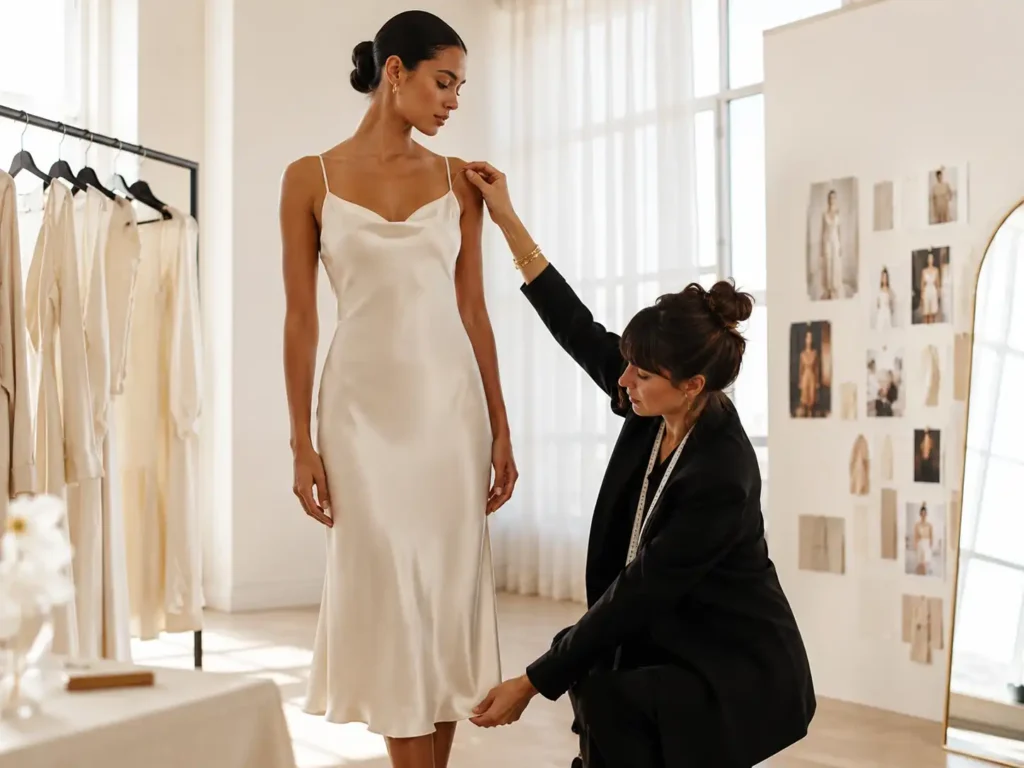
How to Qualify a Dress Manufacturing Partner
A capable supplier should be evaluated through product development, fit, material control, production repeatability and brand delivery. Unit price alone cannot reveal whether a collection will arrive saleable and on schedule.
Evaluation Area | What to Verify | Jinfeng Apparel Evidence |
Dress specialization | Relevant experience with fitted, structured, sheer, embellished and occasion-led dresses. | Dedicated product knowledge covering bodycon, corset, satin, mesh, lace, sequin, resort and occasion styles. |
Pattern development | Ability to correct bust, waist, hip, length, neckline, straps, armholes, slits and lining. | 7+ senior pattern makers supported by 2 sample rooms and 20+ sample machinists. |
Material control | Fabric hand feel, weight, stretch, transparency, shrinkage, color and bulk availability. | Fabric sourcing and substitution review linked to sampling, cost, QC and production risk. |
Sample-to-bulk transfer | Clear PP sample, Golden Sample, BOM, measurements, workmanship and packing standards. | Seven sample types are separated by purpose; PP and Golden Sample control bulk release. |
Production capacity | Ability to allocate multi-style orders by construction and delivery priority. | 6 owned factories, 10+ long-term partners and 100,000+ pieces of combined monthly capacity. |
Quality system | Inspection before, during and after sewing, followed by packing and shipment review. | Incoming, cutting, in-line, garment, measurement, pressing, packing and AQL support. |
Retail readiness | Accurate labels, barcodes, polybags, carton marks, assortment and export documents. | Private-label packing, SKU control, shipment documents and appointed-forwarder coordination. |
Brand protection | NDA readiness and control of unreleased designs, patterns, labels and order information. | NDA-based cooperation with restricted use of tech packs, samples, artwork and launch data. |
Dress Categories Developed for US Fashion Collections

Party Dresses
- Best for monthly drops and event capsules
- Key checks: fit, exposure and finish

Occasion Dresses
- Best for seasonal event calendars
- Key checks: support, drape and hem
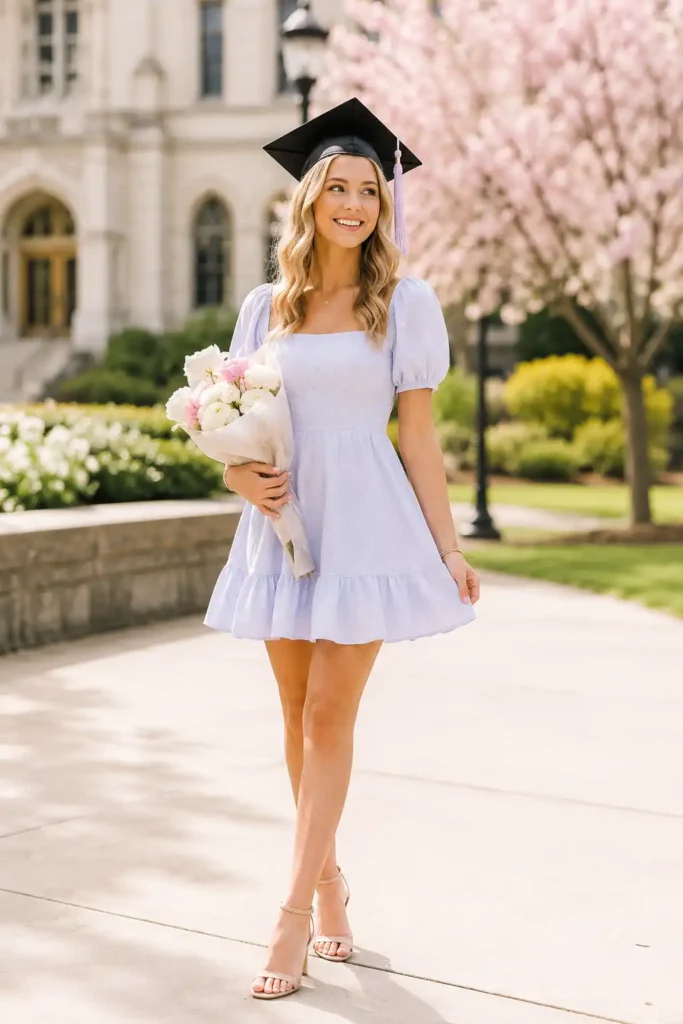
Graduation Styles
- Best for spring and summer launches
- Key checks: transparency and clean packing

Bodycon Dresses
- Best for ecommerce and going-out ranges
- Key checks: recovery and measurement

Corset Dresses
- Best for occasion and statement ranges
- Key checks: support and structural repeatability

Satin Dresses
- Best for slip, draped and event styles
- Key checks: shade, snags and pressing

Mesh Lace Sequin
- Best for visual statement collections
- Key checks: placement, coverage and protection

Resort Dresses
- Best for summer and destination capsules
- Key checks: drape, shrinkage and print direction
Fabric Decisions That Protect Fit and Brand Appearance
Fabric selection sets the pattern behavior, construction method, cost, sample result and bulk risk. Appearance should be evaluated together with weight, width, stretch, transparency, shrinkage, color and supply conditions.

Satin and Stretch Satin Control
Satin must be selected by more than color and shine. Weight and yarn structure affect drape, opacity, seam stability and whether the garment highlights body lines. Non-stretch satin supports slip, draped and structured shapes differently from stretch satin used in fitted styles. Cutting direction is controlled so panels reflect light consistently. Bulk lots are reviewed for shade, surface marks and snag risk, while sewing trials assess needle marks, seam puckering and zipper waves. Lining is chosen by opacity, static behavior and hand feel. Pressing temperature and contact surfaces are managed to avoid glazing or water marks. Packing methods should reduce hard folds on prominent front panels, especially for long dresses and bias-cut shapes.
- Approval points: weight, color, face direction, stretch, opacity, lining and final hand feel.
- Production risks: shade variation, snags, puckering, zipper waves, pressing marks and fold lines.
- Cost controls: evaluate a stable alternative satin, simplify hidden construction or consolidate colors without weakening the intended appearance.
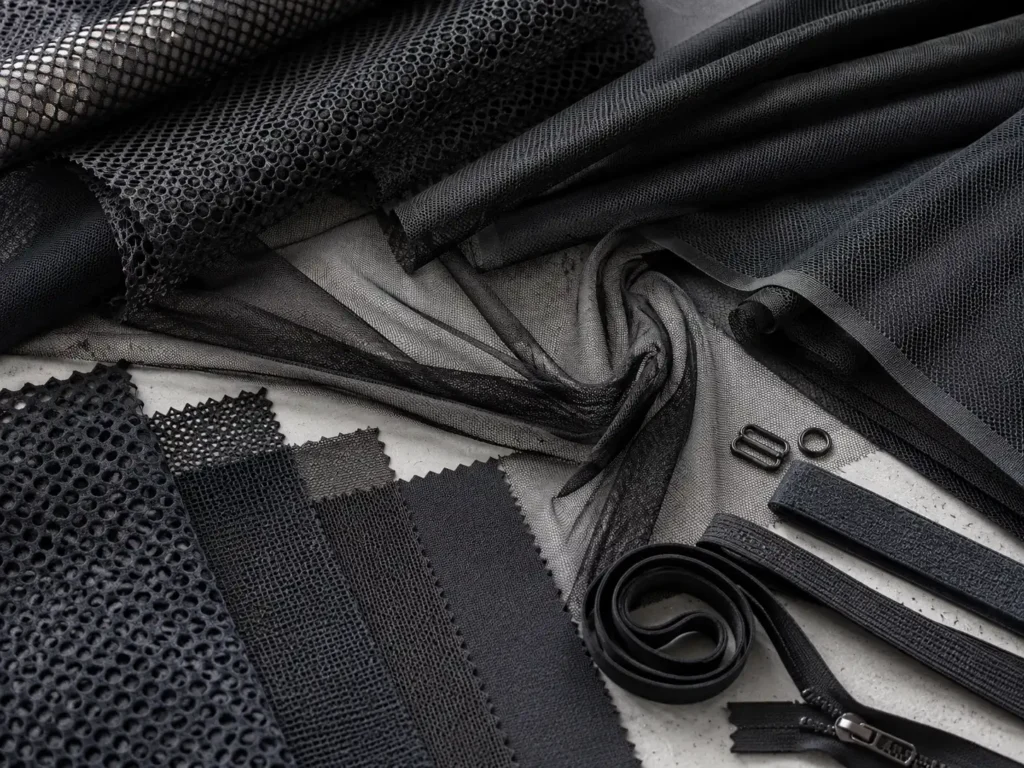
Mesh and Power Mesh Engineering
Mesh selection begins with transparency, hole size, stretch direction and recovery. Regular mesh may suit overlays or resort layering, while power mesh can support fitted panels and controlled shaping. Printed mesh requires placement planning, and double-layer mesh changes both opacity and stretch. Pattern pieces are oriented to the approved grain and stretch direction; otherwise necklines, armholes and side seams can distort. Lining length, color and coverage are developed around the intended styling and movement, not only a static mannequin view. Hole inspection is required during material and garment review because damage can spread during handling. Neckline binding, seam allowance and attachment points are tested before bulk to control rippling and exposure.
- Approval points: transparency under light, stretch direction, recovery, lining coverage and printed placement.
- Production risks: holes, distortion, uneven opacity, neckline growth and misaligned print.
- QC focus: fabric defects, cut direction, seam smoothness, lining position and finished-garment recovery.

Lace and Embroidered Material Placement
Lace is evaluated by motif scale, edge shape, base stability, hand feel and potential skin contact.
A placement-sensitive design may require mirrored motifs, neckline alignment, waist positioning or controlled scalloped edges.
These decisions affect consumption and cannot be priced accurately from a low-resolution reference image.
Embroidered lace can vary in density and stiffness across a roll, so the sample must establish where rigid areas can or cannot sit on the body.
Seam type, lining, binding and hand-finishing requirements are documented before production.
For repeat orders, the original lace may no longer be available; a replacement is reviewed for motif, color, weight and visual depth before any pattern or cost assumption is reused.

Chiffon Organza and Tulle Layering
Light woven and net fabrics create movement, volume and soft visual effects, yet they demand control over transparency, static, layer count and hem balance. Chiffon may shift during cutting and can produce uneven hems if the garment is not allowed to settle before final leveling. Organza provides structure but can feel sharp at seams and edges. Tulle volume depends on stiffness, layer count and cut shape, with each layer increasing material and labor. Lining must support modesty, comfort and the intended silhouette without restricting movement. For tiered or full-skirt designs, the consumption plan considers fabric width, grain, gathering ratio and seam distribution. Final hanging, leveling and pressing are part of the garment standard rather than afterthoughts.
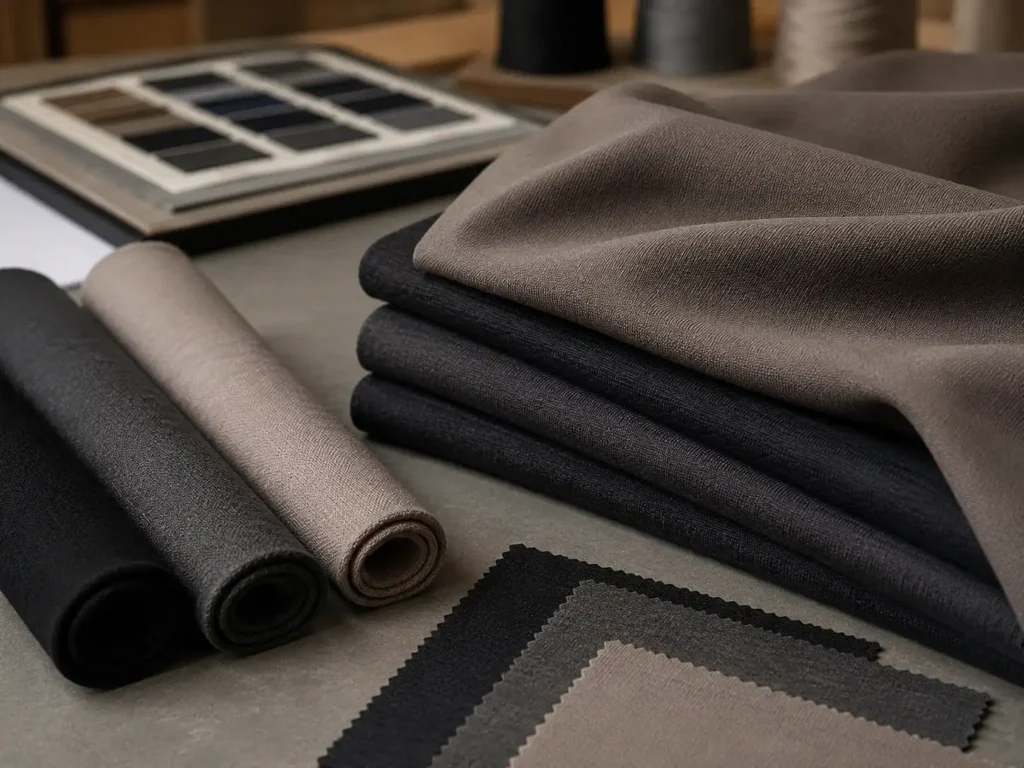
Jersey Rib and Ponte Performance
Stretch fabrics are reviewed for extension, recovery, weight, shrinkage and twisting. Jersey may look smooth in a fresh sample but grow at the neckline, ride up at the hem or twist along the side seam after wear. Rib fabric can emphasize body shape but requires controlled recovery and stable seam tension. Ponte or Roma supports more structured bodycon and office-to-evening silhouettes, though excessive thickness may reduce comfort and lighter qualities may lose shape. Fabric relaxation before cutting, pattern ease, seam method and measurement tolerance are linked. Where wash performance matters, shrinkage and dimensional stability should be confirmed before size grading and care-label instructions are finalized.

Sequins Velvet Crepe and Special Surfaces
Special surfaces require their own cutting, sewing, finishing and packing logic. Sequin direction, density and backing affect consumption, seam clearance and skin comfort. Loose or cut sequins near seam lines may need controlled removal and reinforcement. Velvet has a visible pile direction and can show shade differences when panels are reversed. Crepe offers drape and wrinkle resistance but varies widely in weight, texture and stretch. Surface-sensitive garments are separated from abrasive handling and reviewed under directional light. Packing materials and fold placement are chosen to reduce crushing, transfer or permanent marks. A sample using substitute material cannot automatically become the bulk standard; final material approval remains essential.
Fit Development for US Size and Body Requirements
US sizing is not one universal block. Each brand should define its fit model, base size, target body, grade rules and intended ease before a pattern can become production-ready.
Define the Brand Block and Base Size
Development can begin from a client size chart, approved garment, existing block or target fit reference. The pattern team reviews bust, upper bust, under bust, waist, high or low waist position, hip, front and back length, shoulder, armhole, neckline depth, strap length, slit height, lining length and hem sweep. Alpha sizes from XS-XL can be developed, along with extended sizes, plus sizes, petite or tall adjustments when brand standards are supplied. The goal is not to impose a generic US chart. The goal is to preserve the label’s intended silhouette and wearing experience across a controlled size range.
Convert Fit Comments Into Pattern Changes
Fit feedback should identify the symptom, body location and intended correction. Comments such as “too loose” or “too short” are clarified through measurements, front-side-back photos and wearing observations. A high armhole may need pattern balance rather than simply adding width. A strapless dress that slips may require cup, boning, back height, grip tape and torso-length review rather than a smaller bust measurement. Revised patterns, size charts and sample records are version-controlled so earlier dimensions do not reappear in bulk. Once the fit is accepted, grade rules are checked for logical progression rather than automatic enlargement at every point.
Control Category-Specific Fit Risks
Bodycon dresses depend on stretch recovery and negative ease; corset dresses depend on cup position, under-bust line, boning and back support; slip dresses depend on bias behavior, bust coverage and strap length; maxi dresses depend on waist placement, total length and hem balance; jumpsuits depend on torso length, crotch depth and movement. Sheer garments also need lining length and coverage review in standing, walking and seated positions. Category-specific checkpoints are written into the sample and QC file so a general measurement inspection does not miss the feature most likely to cause exposure, discomfort or return.
Grade and Measure Across the Production Range
After the base pattern is approved, grade rules are reviewed against the brand’s size strategy. XS-XL, extended sizes, plus sizes, petite or tall versions may require different pattern logic rather than one broad proportional scale. Critical measurement points are identified for in-line and final inspection. Stretch styles may be measured relaxed and, when agreed, checked for recovery. Size labels, bundle identification, packing stickers and carton breakdowns must match the garment size. A 200-piece style/color order can be divided across several sizes, but the ratio should support efficient cutting, measurement and packing instead of fragmenting the run into unmanageable quantities.
From Design Input to Approved Production Sample
Sampling is a controlled conversion from design information into measurable, repeatable production standards. Each sample type has a defined purpose and approval boundary.
Project Review and Development Inputs
Development can start from a tech pack, line sheet, original sample, sketch or reference image. More complete inputs produce a clearer material, cost and timeline assessment. The initial review identifies silhouette, pattern complexity, fabric behavior, trims, support structure, lining, finishing, size range, label requirements, target quantity and launch window. A style image alone can support feasibility discussion, but it cannot produce a final bulk quote without fabric, construction, quantity and packing details. For multi-style programs, the review also groups shared fabrics and trims, highlights hero SKUs and identifies designs that need early technical validation.
First Fit and Revised Samples
The first sample verifies structure, fabric direction, base pattern and construction feasibility. It is not automatically the bulk standard. The fit sample focuses on bust, waist, hip, neckline, armhole, straps, slit, length, lining and movement. Feedback is classified into fit, material, construction, trim, color, finish or packing issues. A revised sample then applies the approved corrections. For complex corset, mesh, lace, sequin, cut-out or jumpsuit styles, more than one validation step may be required because support, transparency, placement and movement interact. Each approved change updates the pattern, size chart, BOM or workmanship instruction rather than remaining only in an email thread.
Photo and Sales Samples
Photo-ready samples are prepared for ecommerce photography, campaign content, lookbooks or social launches. Their surface, pressing, color and fit should photograph cleanly, yet a photo sample may use a substitute material or presentation adjustment and therefore should not be assumed to equal the final PP standard. Salesman samples can support internal selling, wholesale appointments or showroom review and may be produced in several pieces. When photo or sales samples are needed before final bulk materials are ready, any substitution is recorded so later approvals do not confuse visual samples with production specifications.
PP Sample and Golden Sample Lock
The PP sample confirms final pattern, dimensions, fabric, color, trims, construction, lining, labels, care information, decoration, packing method and agreed tolerances. Bulk production should not begin from an unfinished first sample or unresolved fit comments. After PP approval, a Golden Sample can be sealed as the highest reference for production meetings, in-line checking, final inspection, packing review, third-party inspection and future reorders. Any change after PP approval is reviewed for cost, material availability, pattern impact and schedule effect before being accepted into the controlled file.
How Sampling Time Is Scheduled
A dated sample schedule is issued after style complexity and material readiness are reviewed. Stock fabrics and conventional trims usually move earlier than custom color, embroidery, lace placement, sequins, corset structures or special hardware. Trim lead times can affect the sample calendar: regular or invisible zipper development may require roughly 3-10 days, while special metal zipper work can require 15-25 days before final sample completion. For a 10-30 style program, sampling is commonly split into priority waves so campaign and core styles do not wait for every technical style to reach the same material stage.

Design Details Engineered for Wear and Production

Neckline Control
- Check bust coverage
- Stabilize stretch direction
- Confirm binding method
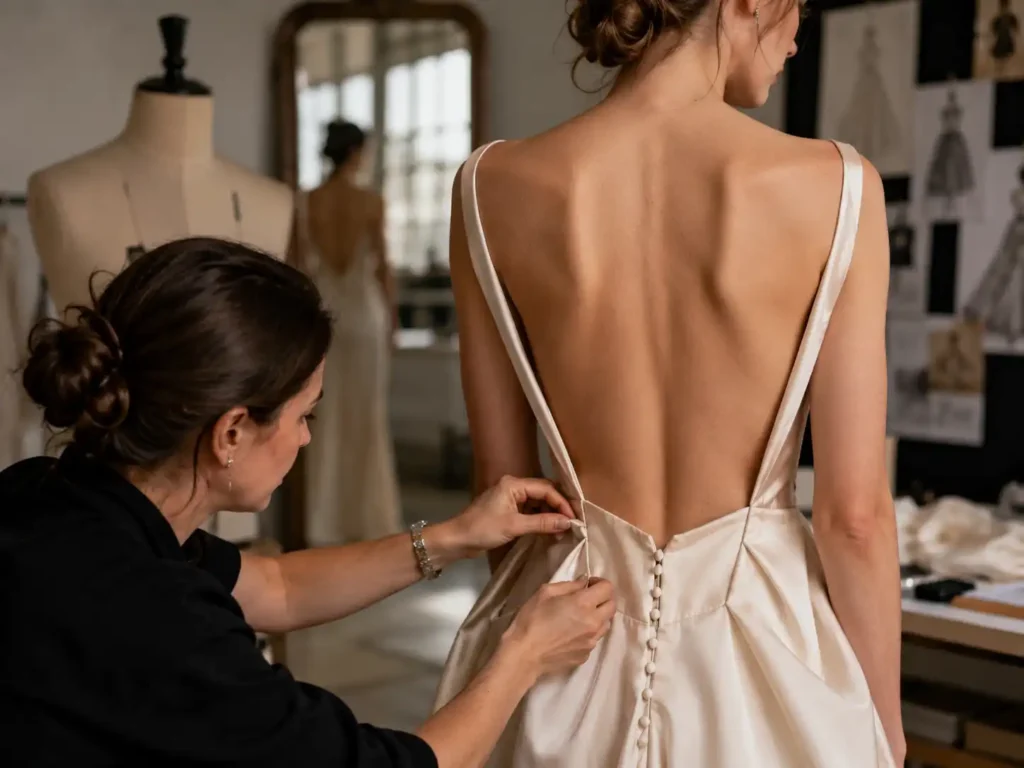
Backless Structure
- Balance front and back support
- Confirm closure access
- Review bra compatibility

Cut-Out Placement
- Set location measurements
- Test movement and sitting
- Control edge stability
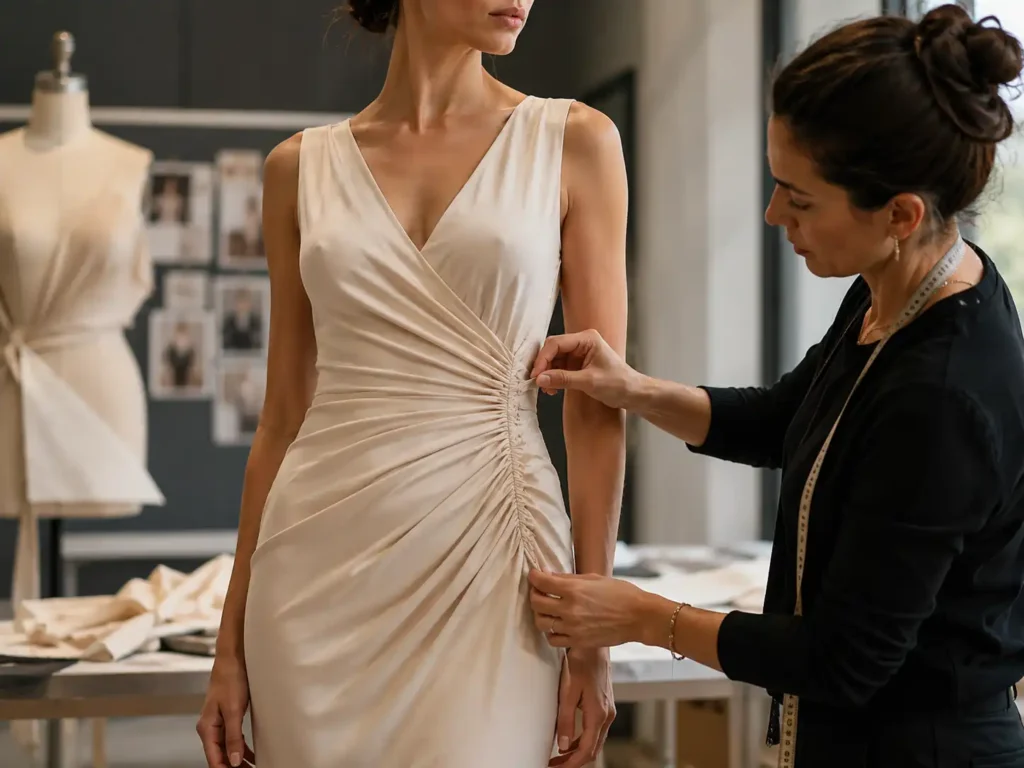
Ruching and Draping
- Define gathering ratio
- Mark start and end points
- Compare left and right balance

Slits and Openings
- Approve seated exposure
- Reinforce stress point
- Measure finished slit height

Straps and Adjusters
- Confirm adjustment range
- Test attachment strength
- Match hardware color
Workmanship Standards for Complex Dress Construction
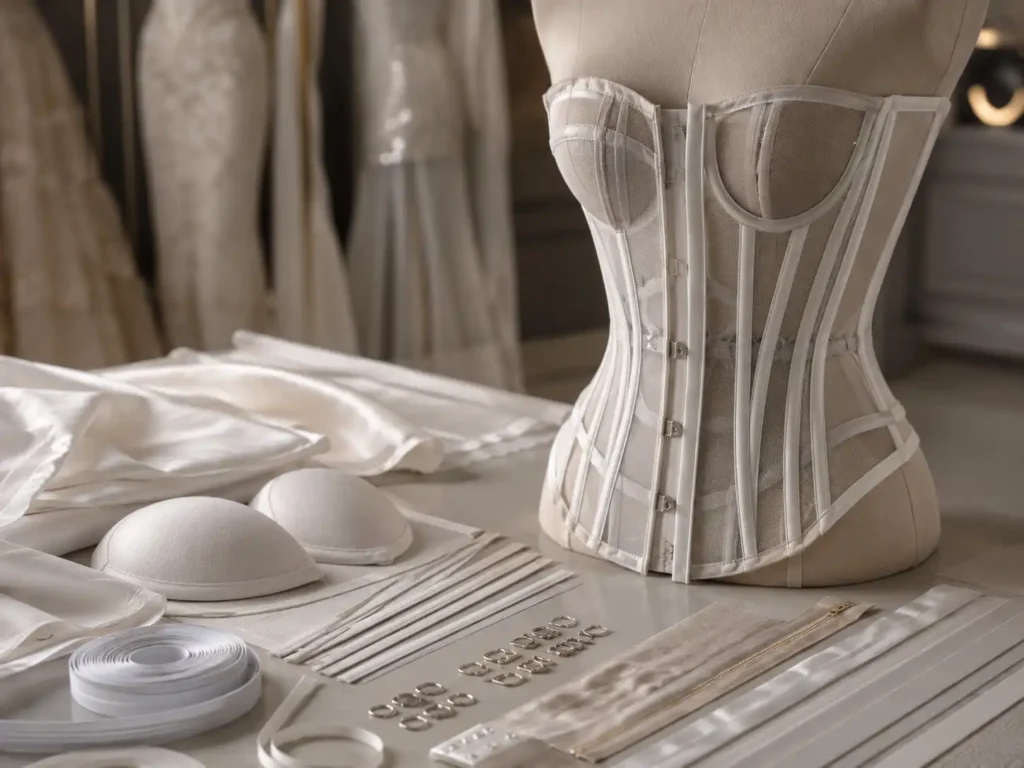
Corset Support
- Record boning specification
- Check cup symmetry
- Inspect pressure points
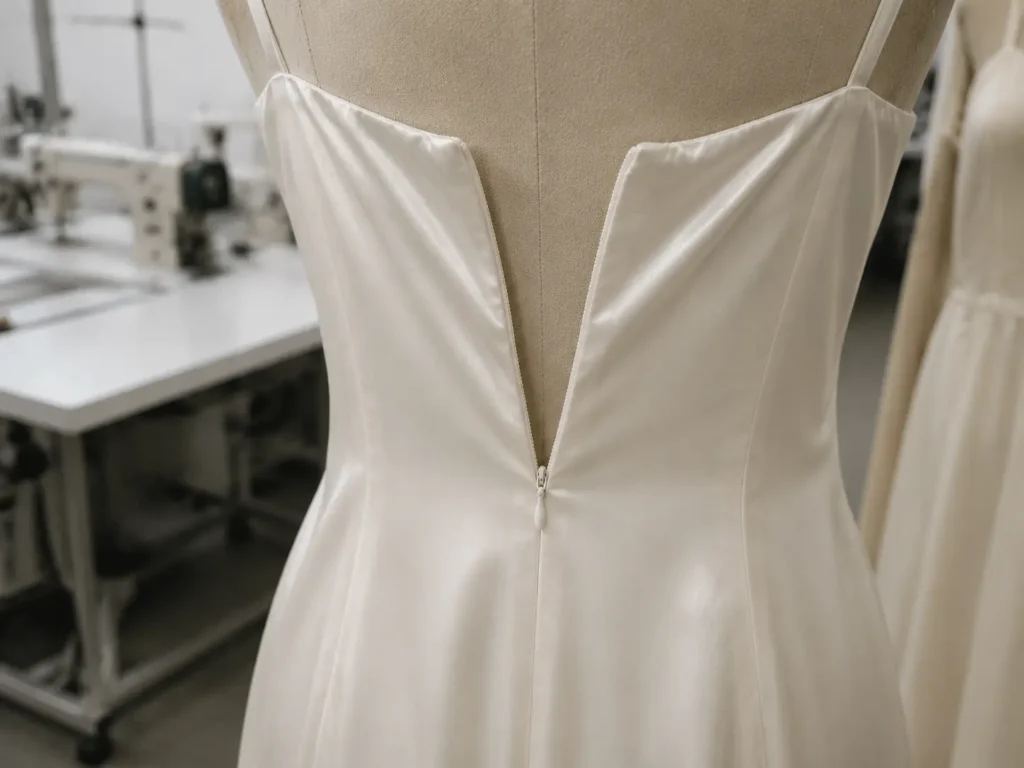
Invisible Zippers
- Match zipper weight
- Control back seam shape
- Test smooth opening
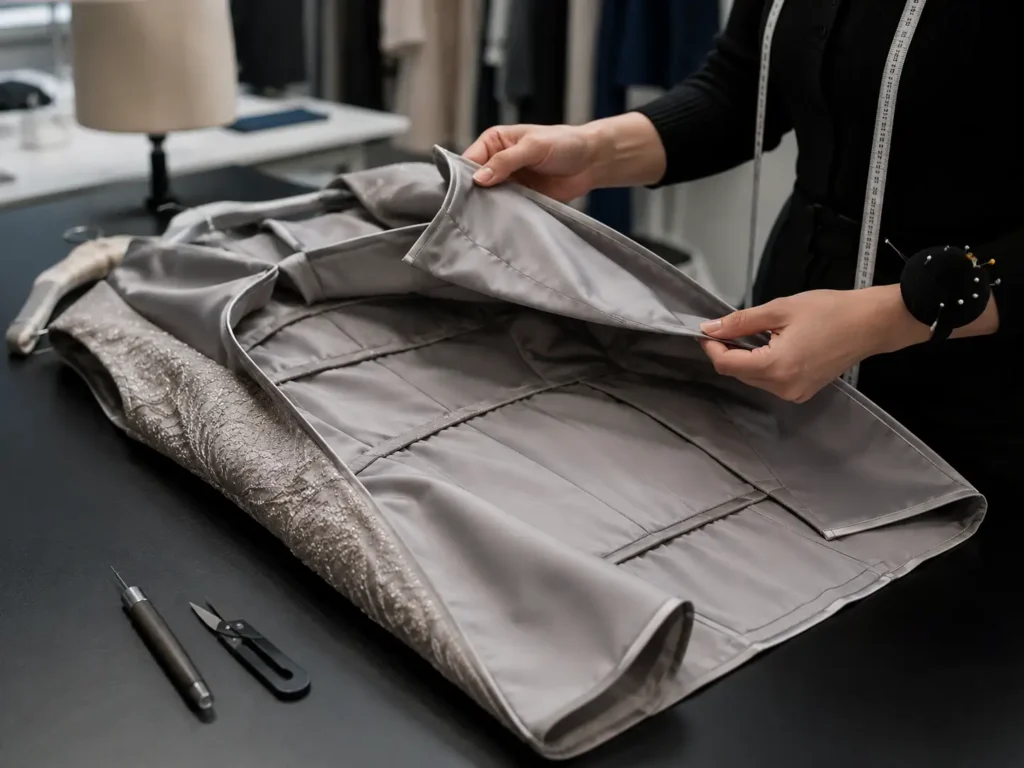
Lining Attachment
- Match shrinkage behavior
- Secure key attachment points
- Check hem separation
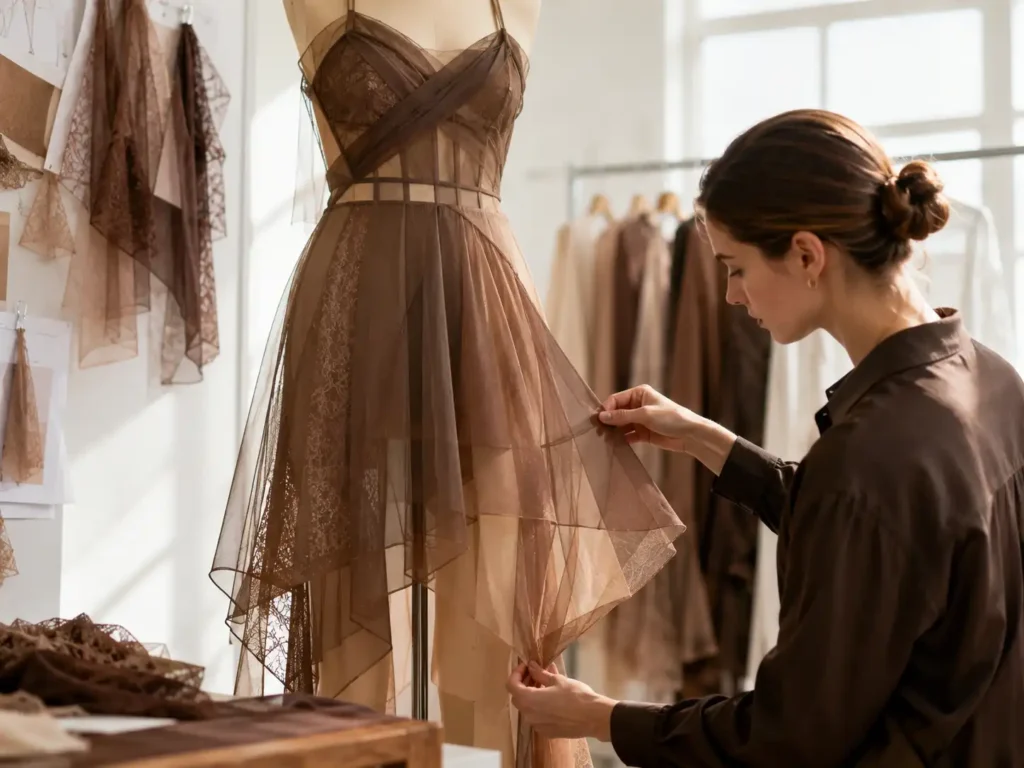
Sheer Seams
- Test seam on actual fabric
- Protect delicate edges
- Inspect under directional light
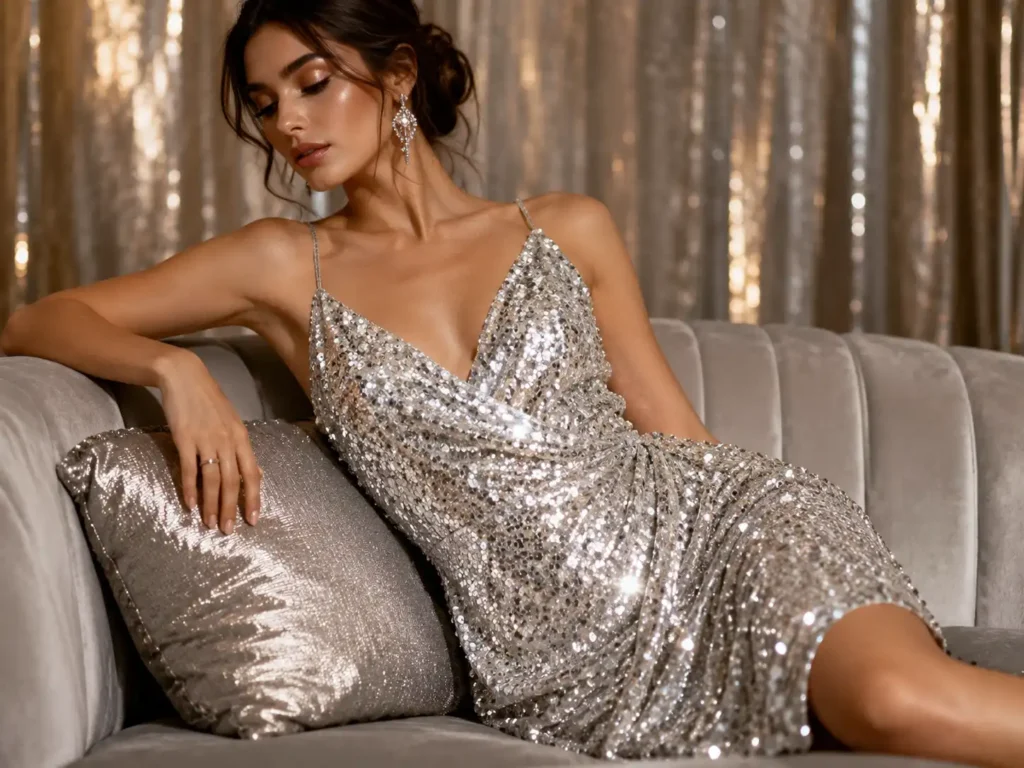
Sequin Handling
- Control motif direction
- Clear seam allowance safely
- Protect surface in packing

Pressing and Finish
- Set fabric-specific temperature
- Use protective contact surface
- Inspect before bagging
Production Capacity Matched to Dress Construction
Owned Factory Base
Specialized Partners
Style Allocation
Multi-Style Planning
Project Team Control
Capacity Boundaries
Quality Control From Fabric to Packed Cartons
Quality is controlled at the point where risk is created. Material, cutting, sewing, measurement, finishing and packing checks work together to keep bulk production close to the approved standard.
| QC Stage | Main Checks | Dress-Specific Risk Controlled |
|---|---|---|
| Incoming material | Color, width, weight, stretch, defects, surface, shade and approved reference. | Satin shade, mesh holes, lace damage, sequin loss, knit recovery or lining mismatch. |
| Cutting | Grain, direction, dye-lot separation, ply accuracy, notches, size and component count. | Reversed satin/velvet direction, print misplacement, stretched mesh or mixed sizes. |
| Sewing start | Pilot workmanship, seam method, zipper, cup, boning, lining, support and reinforcement. | Bulk method differs from sample; support or closure cannot be repeated. |
| In-line inspection | Repeated defects, seam tension, balance, measurements, attachments and corrections. | Zipper waves, twisted necklines, uneven ruching, slit inconsistency or exposed lining. |
| Garment measurement | Critical points against approved size chart and tolerance across selected sizes. | Bust-waist-hip drift, wrong length, strap variation and illogical grading. |
| Appearance and finish | Stains, holes, snags, threads, symmetry, embellishment, pressing and surface marks. | Photo-visible defects, damaged special surfaces and poor retail presentation. |
| Packing QC | Labels, care information, size, color, barcode, folding, polybag and quantity. | SKU mismatch, wrong labels, warehouse rejection or inaccurate inventory. |
| Carton and shipment | Assortment, carton mark, gross/net weight, carton size, packing list and release status. | Wrong delivery split, missing cartons or document mismatch. |
| AQL/client inspection | Agreed sampling level or client protocol, report review and corrective action. | Final release without a documented inspection basis. |
Private Labels and Packing for US Sales Channels
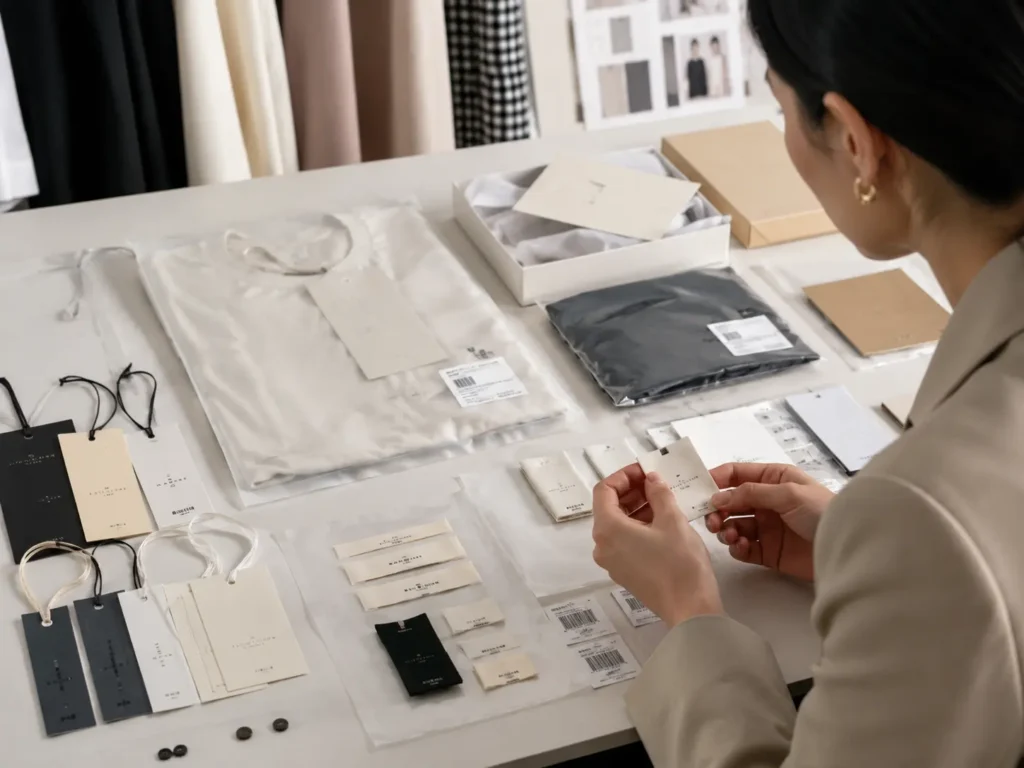
Main Brand Labels

Care and Origin
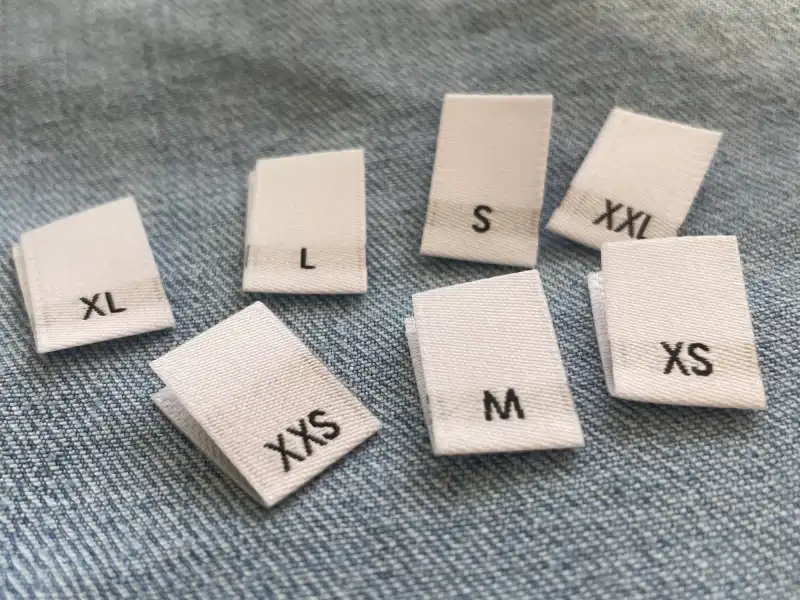
Size Identification
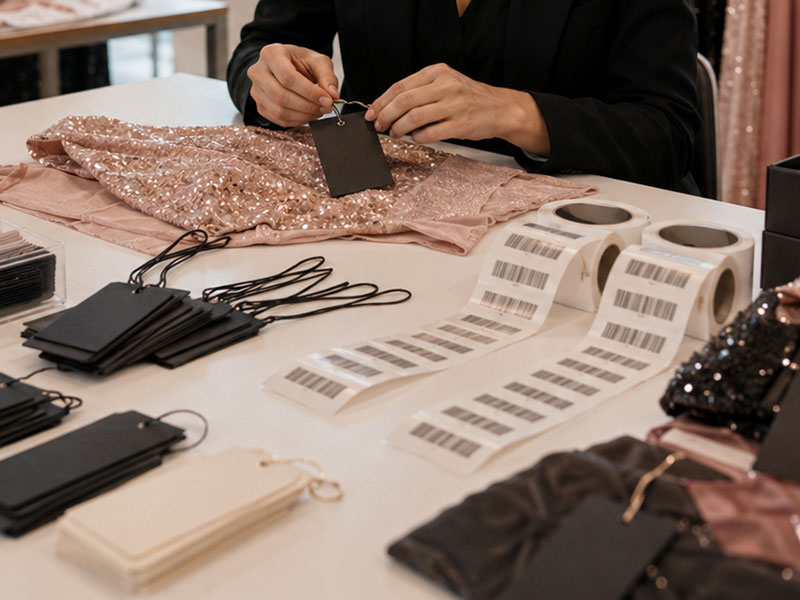
Hangtags and Barcodes
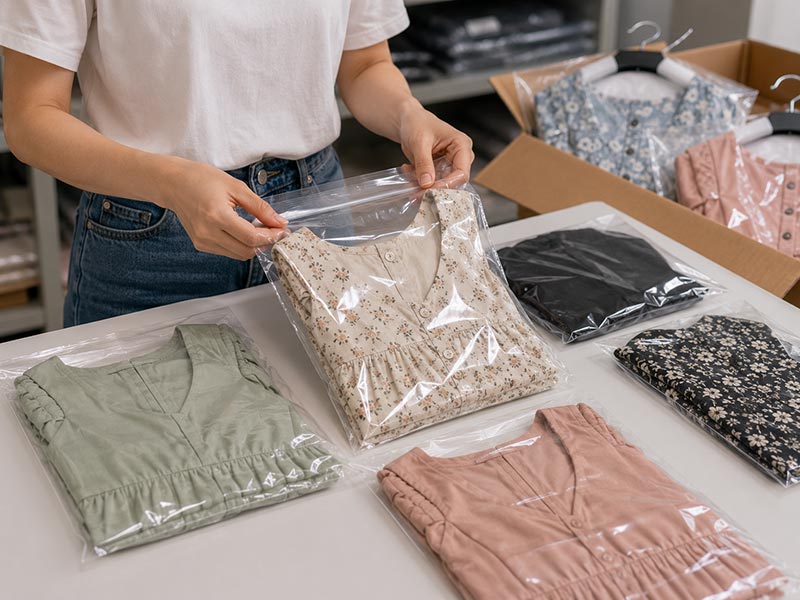
Polybags and Folding
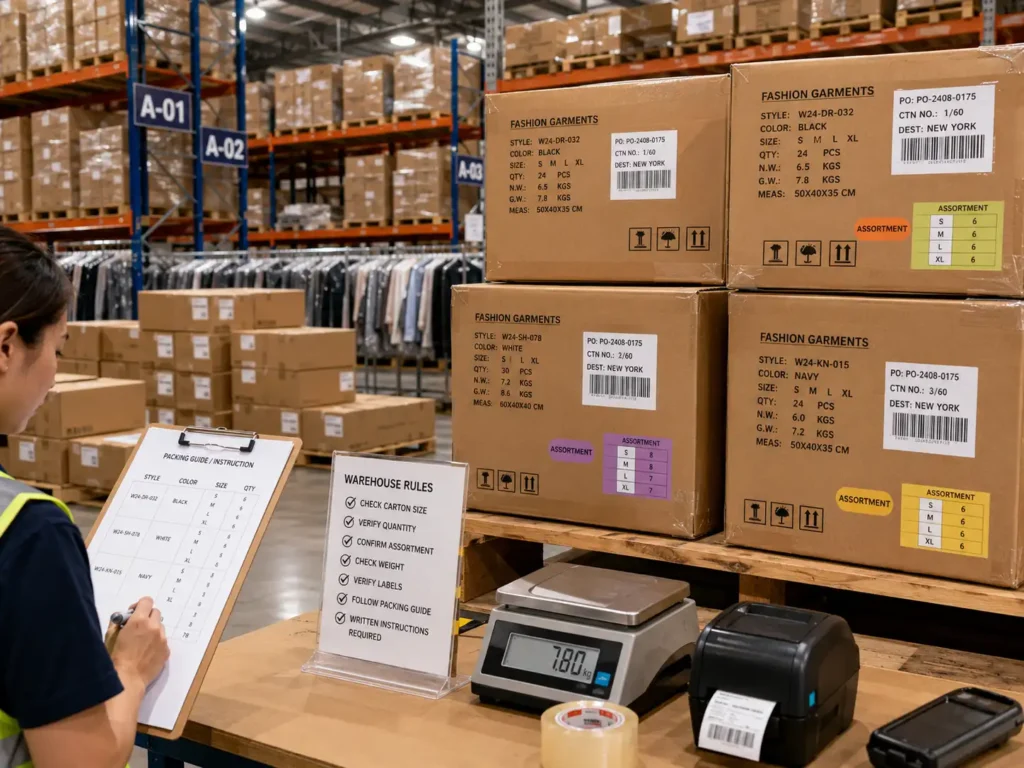
Carton Assortment
MOQ and Costing for Commercial Dress Orders
MOQ by Style/Color
- Share quantity by style
- List quantity by color
- Add size ratio
Material Minimums
- Confirm stock color
- Check supplier minimum
- Review replacement options
BOM-Based Costing
- Submit fabric direction
- Provide trim list
- Define packing standard
Cost Without Visual Loss
- Preserve brand appearance
- Test replacements in sample
- Requote after approval
Quantity and Efficiency
- Compare 200/500/1000 levels
- Review color consolidation
- Plan repeat potential
Quote Lock Conditions
- Approve PP sample
- Lock quantity plan
- Confirm delivery terms
Export Delivery Planned Around US Launch Needs
Sample Shipping
- Confirm courier account
- Share delivery contact
- Review declared details
Bulk Freight
- Confirm destination and terms
- Share forwarder details
- Approve pickup window
Split Delivery
Launch-sensitive programs can evaluate sending 10-30% of urgent SKUs or quantities by air while the balance moves by sea. Invoices, packing lists, carton marks and style-color-size breakdowns are separated for each shipment.
- Prioritize launch SKUs
- Split cartons and files
- Confirm warehouse receiving
Representative US Dress Programs and Production Outcomes
The following anonymized program structures reflect current brand-order ranges of 10-30 styles and 20,000-80,000 pieces. Commercial identities and unreleased designs remain protected.
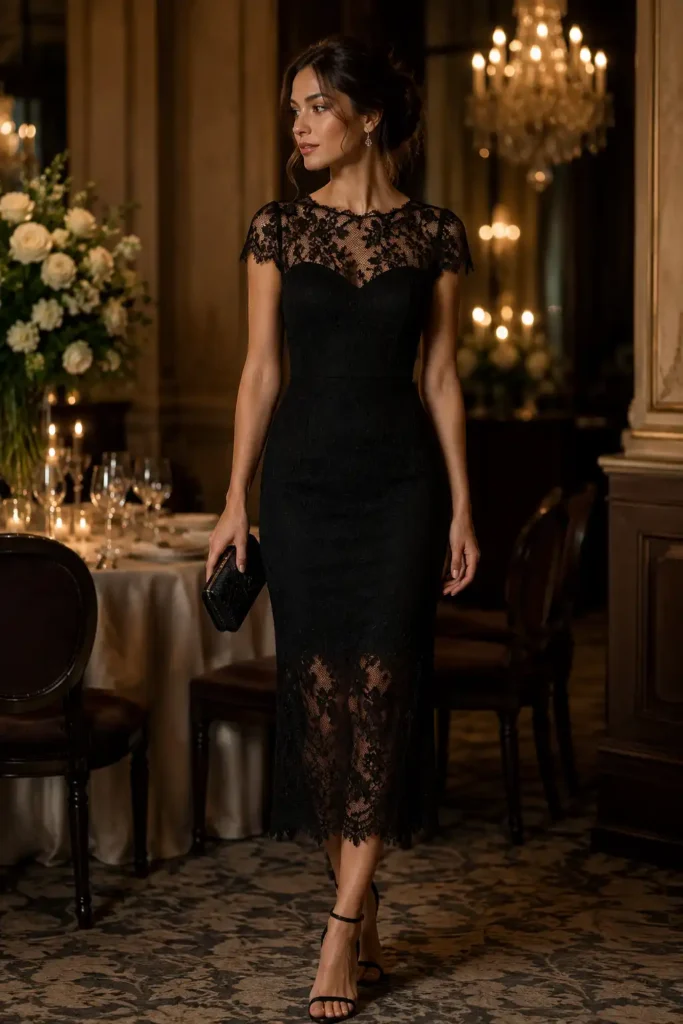
US Occasionwear Collection: 18 Styles, 42,600 Pieces
A US occasionwear label planned 18 dresses across satin, stretch satin, mesh and lace groups for a spring event calendar. The line included corset minis, draped midis, wedding-guest styles and two mesh-overlay hero pieces. Total volume reached 42,600 pieces across XS-XL, with five color families and a mixture of solid and assorted cartons. The main risks were satin shade direction, cup and boning placement, mesh transparency, lace motif consistency and photo-sample deadlines.
- Development plan: styles were divided into three priority waves. Six campaign styles moved first, seven core commercial styles followed, and five placement-sensitive designs entered after material confirmation.
- Fit control: bust coverage, under-bust line, waist position, strap length, slit height and lining coverage were revised before PP approval. XS-XL grade rules were reviewed against the brand block.
- Production plan: satin lots were shade-grouped, corset components received controlled placement instructions, and mesh/lining combinations were compared against approved transparency references.
- Delivery plan: 18% of campaign and early-launch quantities were separated for air freight while the remaining order moved by sea with independent packing lists and carton marks.
- Outcome: the approved pattern, BOM, material, QC and packing records were retained for the next occasionwear cycle and color extensions.

Premium Ecommerce Drop: 26 Styles, 74,400 Pieces
A premium ecommerce fashion program covered 26 styles across bodycon, ruched jersey, satin slip, backless and matching-set directions. Total volume was 74,400 pieces in sizes XS-2XL, divided into three online drops. The commercial priority was stable fit and SKU accuracy because the range depended on product photography, paid media and fast inventory reporting. Stretch recovery, neckline stability, side-seam balance and garment length created more return risk than surface workmanship alone.
- Material grouping: jersey and rib qualities were reviewed for weight, stretch, recovery, shrinkage and twisting; satin styles were controlled separately for direction, shade and pressing.
- Sample management: hero products received photo samples before final PP approval. Any photo-sample substitutions were recorded so they could not migrate into the bulk specification.
- Size control: the base fit and grade rules were reviewed for XS-2XL. Critical bust, waist, hip, length, strap and neckline points were included in in-line measurement checks.
- Packing control: style-color-size barcodes, size stickers, polybags and carton assortments were reconciled against the ecommerce SKU matrix before packing release.
- Outcome: the retained pattern and packing files supported a later replenishment plan without restarting the development workflow.
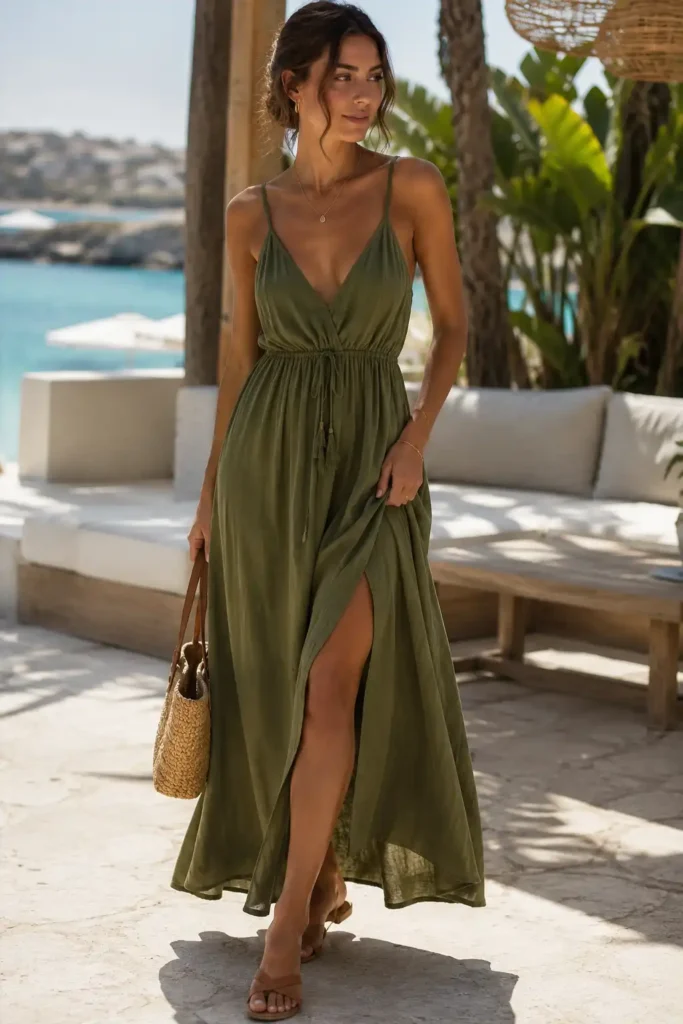
Multi-Channel Resort Program: 12 Styles, 24,800 Pieces
A US multi-channel resort collection included 12 maxi, midi and matching-set styles in printed woven, chiffon, rayon blend and soft knit directions. Total volume was 24,800 pieces across two core color stories and a floral print group. The challenge was balancing light summer hand feel with opacity, shrinkage stability, print direction, maxi hem balance and warehouse-ready packing for both ecommerce and regional retail distribution.
- Fabric review: printed direction, fabric width, drape, transparency and shrinkage risk were considered before pattern and consumption were finalized.
- Design control: adjustable straps, elastic waists, tiered gathering, lining length and maxi hems were sampled for movement and proportion.
- Bulk control: fabric batches and print groups were tracked separately, while final hanging and hem leveling protected the intended maxi silhouette.
- Channel packing: ecommerce units and retail assortments used separate barcode, polybag and carton instructions within one production program.
- Outcome: the range established a repeatable seasonal framework for new prints, color extensions and best-selling silhouette reorders.
Frequently Asked Questions From US Fashion Brands
Standard MOQ starts from 200 pieces per style and color. One style split across several colors does not normally combine into one 200-piece minimum. Fabric dyeing, custom prints, special lace, sequins, hardware, labels or packaging can have separate supplier minimums. A line sheet with quantity by style, color and size gives the clearest basis for evaluation.
Yes. Reference images, sketches, original samples, tech packs and line sheets can all support initial development. A reference image alone is used for structure and feasibility review; a reliable sample and bulk quote also requires material direction, quantity, size range, trims, packing and target market information. Any protected files can be reviewed under NDA.
Sampling time is confirmed after style complexity and material readiness are reviewed. Stock fabrics and conventional trims can move earlier, while custom colors, embroidery, lace placement, sequins, corset construction and special hardware require more preparation. Regular zipper development may take about 3-10 days, while special metal zipper work can require 15-25 days. Multi-style collections are scheduled in priority waves with dated approval points.
The first sample tests structure and direction; the fit sample tests the body and measurements; revised samples apply corrections; photo and salesman samples support visual or sales needs. The PP sample confirms final production details. A Golden Sample can then serve as the highest reference for production, QC, packing, inspection and future reorders.
Yes. Development can follow US size specifications, alpha sizes such as XS-XL, extended sizes, plus sizes, and petite or tall adjustments when the brand provides its target measurements and fit direction. Jinfeng does not apply one generic US chart to every label. Base size, fit model, ease, grade rules and category-specific risks are reviewed before bulk grading.
Satin is controlled for direction, shade, snags, seam puckering, zipper waves, pressing and fold marks. Mesh is controlled for transparency, stretch direction, recovery, holes, neckline stability and lining coverage. Lace is controlled for motif placement, edge handling, damage and backing stability. Final material and construction choices are validated through sampling before bulk release.
Yes, subject to quantity, material, complexity and calendar review. Styles are grouped by fabric, pattern base, trim package, launch priority and production allocation. Sampling can move in two or more waves, while each style maintains its own pattern, BOM, approval and packing record. Standard MOQ remains calculated per style and color unless a project-specific structure is formally agreed.
Bulk timing is issued after PP approval, material readiness, quantity, size ratio, color count, packing and inspection requirements are known. The schedule covers cutting, sewing, in-line QC, finishing, packing and freight handover. Late changes to fabric, pattern, labels or delivery terms are assessed for schedule impact. No blanket lead time is promised for every dress category.
Jinfeng can coordinate sample courier, air freight, sea freight, FOB, EXW, CIF, DAP, client-appointed forwarders and other agreed routes. DDP is reviewed by destination and forwarder capability. Warehouse rules, carton marks, packing lists, commercial invoices, carton dimensions, weights and style-color-size breakdowns should be supplied early. Split air-and-sea delivery can be evaluated for launch-sensitive orders.
Yes. NDA-based cooperation can protect tech packs, patterns, samples, labels, packaging files, quantities and launch information. Approved patterns, size charts, BOMs, material references, trims, workmanship, QC and packing records can be retained for repeat production. Reorder price and timing are reviewed again when material cost, color, packaging, quantity or logistics conditions change.

Send Your Dress Program for Technical Review
Share the information already available, whether it is a complete tech pack, a line sheet, an original sample, a reference image or an early collection brief. Kelly and the Jinfeng Apparel team will review product category, construction, material direction, size range, quantity by style and color, private-label requirements, target delivery and potential production risks.
The first response will identify missing information, clarify the standard MOQ of 200 pieces per style/color, and outline whether the next step should be fabric review, sample quotation, formal development or bulk-production assessment. Sensitive design files can be handled under NDA before detailed review.
- Product files: tech pack, reference image, sketch, original sample photos or line sheet.
- Quantity plan: pieces per style, per color and the proposed size ratio.
- Material direction: fabric, lining, trims, cups, boning, decoration or target hand feel.
- Fit direction: US size chart, base size, extended sizing, fit model notes or existing block.
- Brand delivery: labels, hangtags, barcodes, polybags, carton marks and warehouse rules.
- Timing: photo-sample date, launch date, warehouse receiving window and freight preference.


