Dress Manufacturer for UK Online Womenswear Brands

Custom dress development and production for established ecommerce labels requiring reliable fit, multi-style capacity, private-label execution and controlled UK delivery.

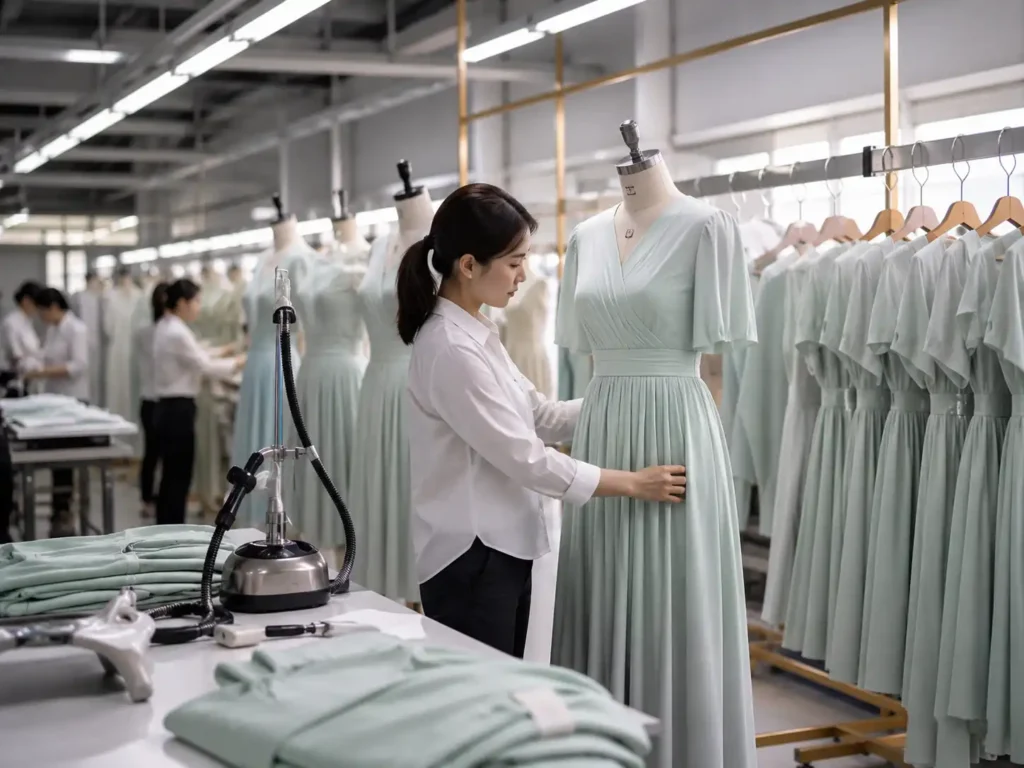
Jinfeng Apparel supports UK-facing womenswear programmes from design reference and fabric direction through pattern development, sample revision, PP approval, bulk production, quality control, retail packing and export coordination. The manufacturing system is organised for trend-led dress collections rather than isolated sewing orders, with product-specific controls for satin, mesh, lace, sequin, jersey, corsetry and multi-layer occasionwear.

  • 10-30 styles per programme: multi-style planning is structured by fabric group, complexity, launch priority and factory allocation.
  • 20,000-80,000 pieces per brand order: volume is distributed across approved styles, colours, sizes and production windows.
  • 6 owned factories plus 10+ long-term production partners: capacity is matched to woven dresses, stretch styles, occasionwear and private-label requirements.
  • 2 sample rooms, 7+ senior pattern makers and 20+ sample machinists: development resources support parallel style review, fit correction and PP preparation.

Manufacturing Scale for Multi-Style UK Dress Programmes

Established online labels need more than sewing capacity. Product development, pattern control, production allocation, QC and packing teams must work from one approved specification across every style, colour and size.

Since 2008

Jinfeng Apparel has focused on custom women’s fashion manufacturing since 2008. Long-term experience covers dress development, fabric sourcing, pattern correction, sample review, bulk production and export coordination for fashion-led markets. The operating model is built around repeatable garment standards rather than one-time execution.

Six Owned Factories

Six owned women’s fashion factories form the core production base. Different product structures can be routed to teams familiar with woven dresses, stretch bodycon styles, occasionwear construction, jumpsuits, matching sets and private-label finishing. Factory assignment follows product suitability, available capacity and required quality controls.

Ten Plus Partners

More than ten long-term satellite production partners provide additional capacity for selected fabrics, construction types and delivery windows. They are not treated as unplanned subcontractors. Production allocation, approved specifications, QC requirements and packing standards remain under Jinfeng Apparel’s project management.

100,000+ Monthly Capacity

Regular monthly capacity exceeds 100,000 garments across suitable production lines. Capacity planning depends on style complexity, fabric readiness, colour count, size range, finishing work and delivery priority. Complex corset, sequin or lace programmes are scheduled differently from simpler jersey or woven styles.

Two Sample Rooms

Two sample rooms support collection development before bulk allocation. Pattern, sample sewing, fit correction, trim placement and construction notes are reviewed before PP approval. Parallel sample planning is valuable for UK brands developing hero styles, campaign samples and commercial volume styles within one launch calendar.

Dedicated QC Team

A team of 15+ QC inspectors supports incoming material checks, cutting review, in-line inspection, measurement control, garment appearance checks, packing verification and pre-shipment review. Quality requirements can be aligned with a brand manual, defect list, tolerance chart or third-party inspection plan.

Built for Established UK Online Womenswear Operations

Different online fashion models place different pressure on samples, SKU depth, launch timing, returns, packaging and replenishment. Manufacturing support is aligned with the commercial rhythm behind each collection.

Premium Ecommerce Brands

Premium online labels depend on fabric hand feel, clean fit, photographed drape and consistent finishing. Development should preserve the visual effect promised on product imagery while reducing avoidable returns caused by inaccurate length, transparency, poor stretch recovery or unstable sizing. Jinfeng Apparel connects sample approval with repeatable bulk standards.

Occasionwear Labels

Occasionwear programmes often combine satin, lace, mesh, chiffon, crepe, lining, boning and decorative trims. Each style needs separate controls for coverage, support, placement, comfort and pressing. Launch timing also follows weddings, graduation, holiday party and formal-event calendars, making PP lock and production planning commercially important.

Multi-Channel Retailers

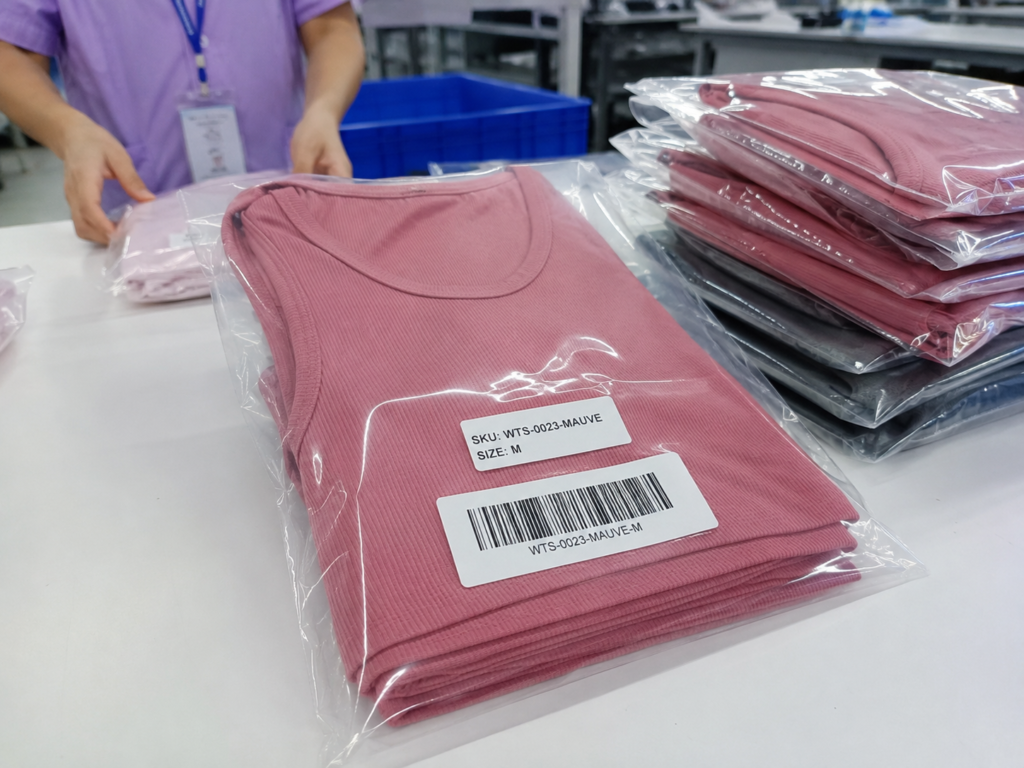
Brands selling through direct ecommerce, marketplaces, concessions and retail partners require more disciplined SKU handling. Size labels, barcodes, colour stickers, carton marks, packing ratios and warehouse documentation must remain aligned. Jinfeng Apparel can prepare packing instructions around channel, destination and delivery-batch requirements.

DTC Fashion Brands

Direct-to-consumer teams often operate frequent drops, campaign shoots and data-led replenishment. Sample priority should follow hero SKU status, fabric readiness and launch date rather than treating every style equally. Approved pattern, fabric, trim and packing records also support faster repeat-order review when a style performs strongly.

Private Label Programmes

Private-label collections require more than adding a neck label. Woven labels, size labels, care labels, hangtags, barcode stickers, polybags, folding methods and carton information must be controlled as part of the garment specification. Brand artwork and unpublished product information remain protected through NDA-based cooperation.

Buying and Sourcing Teams

Professional sourcing teams evaluate factory structure, sample capability, MOQ, quality systems, compliance support, production visibility and delivery documentation. Jinfeng Apparel provides a structured project route from technical review to approved production, with clear boundaries around material certification, factory audits and third-party inspection.

A Manufacturing Fit for Structured Brand Programmes

The strongest working relationship begins when product direction, commercial volume and approval responsibilities are clear. Jinfeng Apparel is organised for brands managing seasonal ranges, ongoing drops and repeat-order potential.

Strong Programme Fit

A suitable programme normally includes a defined dress direction, reference images or technical files, planned quantities by style and colour, a target size range, launch timing and private-label requirements. Multi-style projects benefit from early grouping by fabric, complexity and priority. Clear input allows accurate sampling, cost review, factory allocation and delivery planning.
  • Tech pack, original sample, sketch or reference image
  • Quantity plan by style and colour
  • Approved or proposed size chart
  • Fabric direction and quality level
  • Launch date and delivery destination
  • Label, barcode and packing requirements

Long-Term Manufacturing Value

The manufacturing model creates the most value when approved patterns, measurements, fabric references, trim specifications, sewing notes, QC points and packing instructions can be retained for future production. Seasonal extensions, new colourways, repeat orders and multi-batch deliveries become easier to organise when project records remain complete and version-controlled.
  • Quarterly or seasonal dress collections
  • Multi-style, multi-colour production
  • Photo samples and PP sample control
  • Repeat orders and bestseller replenishment
  • Supplier consolidation or capacity diversification
  • UK warehouse and channel-specific packing

Where Online Dress Programmes Commonly Lose Margin

A dress can look correct on a hanger and still fail online. Fit, fabric response, sample timing, bulk consistency and warehouse execution all affect sell-through, returns and launch performance.

Fit Misses the Body

Incorrect bust-waist-hip proportion, unstable necklines, short lining, excessive slit height or unbalanced front and back lengths can make product imagery difficult and increase return risk. Pattern review must consider silhouette, fabric stretch, target size chart and movement, not only flat measurements.

Fabric Misses the Concept

A replacement fabric may match colour while losing drape, opacity, stretch, sheen or recovery. Satin can wrinkle or snag; mesh can become too transparent; lace can look uneven after placement; jersey can relax after sewing. Fabric approval needs measurable and visual comparison before the pattern is locked.

Samples Miss Launches

Multi-style sampling becomes slow when every style is treated as equally urgent. Campaign pieces, hero SKUs and commercially important styles should move first. Fabric availability, complex trims and fit risk also affect sequence. A visible sample tracker reduces late photography, delayed PP approval and rushed production.

Bulk Drifts From Approval

Bulk variation often appears in measurements, ruching density, zipper shape, lining exposure, lace placement, sequin loss, pressing and colour handling. PP samples, Golden samples, final patterns, grade rules and QC checkpoints create a controlled bridge between development and production.

SKU Packing Breaks

Wrong size labels, mixed colour stickers, incomplete barcodes, incorrect folding or inaccurate carton ratios can stop warehouse receiving even when garments are acceptable. Packing data needs the same document control as fabric and fit, especially for multi-channel and multi-batch UK deliveries.

Updates Stay Unclear

Cross-border projects become risky when material arrival, cutting, sewing, in-line QC, finishing and packing progress are not visible. Key programmes can be updated at agreed milestones with issue notes and supporting photos, allowing brand teams to make launch and logistics decisions earlier.

How Jinfeng Converts Concepts Into Production Standards

Each risk is managed through a defined control point. The goal is not to promise perfection, but to identify variables early, approve the correct standard and keep production aligned.

Structure Review

Before sampling, the team reviews neckline, bust support, waist position, hip ease, slit, lining, strap function, closure and movement. Construction feasibility is considered alongside appearance. Complex structures such as corsetry, cut-outs and jumpsuits receive additional pattern and comfort review.

Fabric Direction

Fabric options are compared by composition, weight, width, stretch, recovery, hand feel, drape, transparency, colour, shrinkage risk, MOQ and lead time. A substitution is only useful when it preserves the intended silhouette and does not create a new fit or sewing problem.

Controlled Sampling

First samples test structure and fabric direction. Fit and revised samples convert feedback into pattern updates. Photo samples support campaign needs, while PP samples and Golden samples define the bulk standard. Each sample serves a different decision and should not be treated as interchangeable.

Factory Allocation

Styles are grouped by fabric, construction, process difficulty, launch priority and capacity. A satin slip programme, stretch bodycon range and lined lace occasion collection may require different production teams. Allocation is planned after sample approval and material readiness are understood.

Bulk Quality Control

Quality control begins with material inspection and continues through cutting, sewing, measurement, appearance, pressing, packing and pre-shipment checks. Brand tolerances, defect classifications and AQL requirements can be converted into programme-specific inspection points.

Supplier Qualification Checklist for UK Online Brands

A credible dress manufacturer should be evaluated against development, production and delivery evidence. The checklist below can be used during an RFQ, sample review or supplier audit.

Qualification AreaEvidence to RequestWhy It MattersJinfeng Approach
Dress category experienceComparable satin, mesh, lace, sequin, bodycon and occasionwear workDifferent categories need different pattern, sewing and QC controlsProduct-specific development and inspection points
Pattern and sample capabilitySample route, revision records, fit measurement processA strong bulk order depends on a controlled sample standard2 sample rooms, 7+ senior pattern makers, 20+ sample machinists
Factory structureOwned factory information, allocation logic and available capacityMulti-style programmes need planned production routing6 owned factories plus 10+ long-term production partners
Material controlFabric specifications, swatches, shrinkage and colour recordsDrape, stretch, opacity and shade affect fit and online presentationFabric records include composition, weight, width, stretch and approval references
PP and Golden sampleApproval method and bulk reference sampleBulk production should not begin from an unresolved samplePP approval, final pattern and Golden sample used as control references
Quality systemIncoming, cutting, in-line, measurement, final and packing checksEnd-only inspection cannot prevent process drift15+ QC inspectors and stage-based inspection
Private-label executionLabel, barcode, SKU packing and carton mark controlsWarehouse errors can delay stock availabilityArtwork and packing instructions are integrated into production files
Compliance supportAudit records, fabric certificates and test coordinationRequirements vary by factory, fabric, market and brand standardSedex/BSCI-related review support and third-party test coordination by project
NDA and design protectionConfidentiality process and image-use policyUnreleased collections and commercial data require protectionTech packs, samples, labels and order details are used only for approved projects
Delivery controlCarton data, packing list, shipping documents and milestone updatesUK receiving teams need accurate quantity and document alignmentMulti-batch and destination-specific coordination can be planned

Dress Categories Engineered for Online Sell-Through

The product range focuses on dresses with strong visual impact and clear commercial use. Each category is developed around its fabric behaviour, fit risks, construction requirements and bulk inspection priorities.

Party Dresses

Party dresses need immediate visual impact without sacrificing movement or comfort. Common directions include mini lengths, cut-outs, ruching, crystals, chain details, stretch satin, mesh and jersey. Development focuses on bust coverage, waist position, hem safety, zipper flatness and embellishment comfort. Bulk checks cover measurements, symmetry, trim security, lining and pressing.

Occasion Dresses

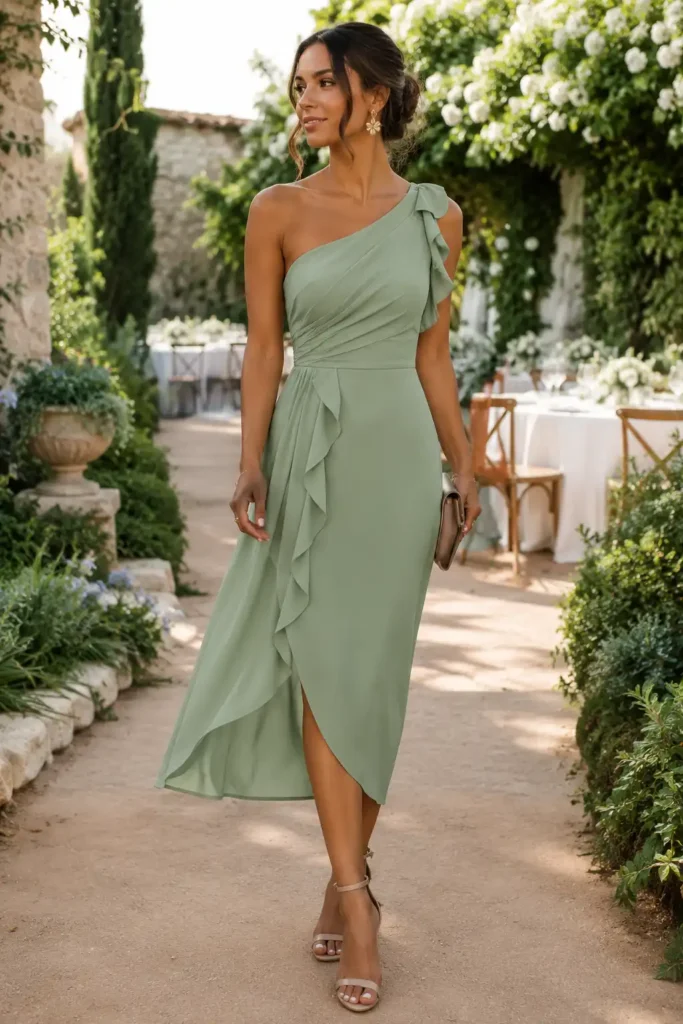
Occasion programmes often include midi and maxi silhouettes, draped satin, lace, chiffon, crepe and structured one-shoulder designs. The commercial standard depends on refined proportion, controlled lining, balanced hems and clean closures. Photo samples can prioritise appearance, while PP samples must define measurable construction and finishing requirements.

Bodycon Dresses

Bodycon performance depends on stretch, recovery and pattern reduction rather than simply making the garment tight. Bust, waist, hip, side seam, armhole and hem must remain stable across sizes. Jersey, ponte, power mesh and stretch satin require fabric-specific ease. Bulk QC includes recovery, seam balance, measurement and wash-related dimensional risk.

Satin Slip Dresses

Satin dresses need controlled grain direction, drape, seam tension, zipper handling and pressing. Bias-cut and slip constructions can grow or twist if cutting and hanging behaviour are ignored. Shade consistency, snagging, lining colour and packing creases matter for ecommerce presentation. Bulk approval should define sheen direction and acceptable surface condition.

Mesh and Lace

Mesh and lace create visual lightness but expose errors quickly. Transparency, lining coverage, stretch direction, lace placement, motif balance and edge finishing must be reviewed during sampling. For body-skimming styles, recovery and neckline stability are critical. Bulk inspection looks for holes, deformation, uneven placement, exposed lining and colour mismatch.

Sequin Dresses

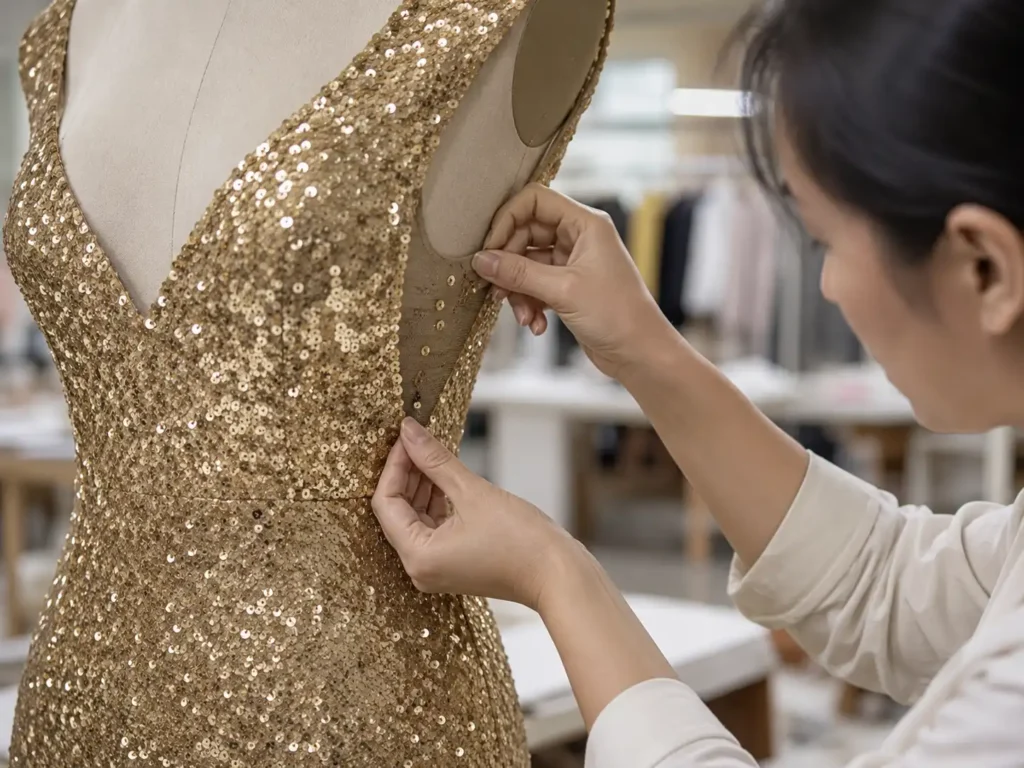
Sequin garments require protective construction. Needle breakage, sequin loss, skin scratch, seam bulk and pressing limitations must be considered before costing. Placement, backing and lining affect comfort and appearance. Bulk handling should reduce friction, protect embellished surfaces and verify decoration security before packing.

Resort Dresses

Resort collections commonly use chiffon, rayon, viscose, linen blends, printed fabrics and lightweight satin. Key controls include transparency, shrinkage, print direction, maxi hem balance and travel-related packing creases. Style groups can share fabrics and trims to improve colour planning, production efficiency and seasonal assortment consistency.

Wedding Guest Dresses

Wedding guest collections combine polished appearance with broad occasion use. Lace midi dresses, satin cocktail styles, draped maxis and one-shoulder silhouettes need balanced proportions, refined lining and photo-ready finishing. Colour, fabric sheen and hem length should remain consistent across sizes because online purchase decisions rely heavily on imagery.

Collection Planning Around the UK Fashion Calendar
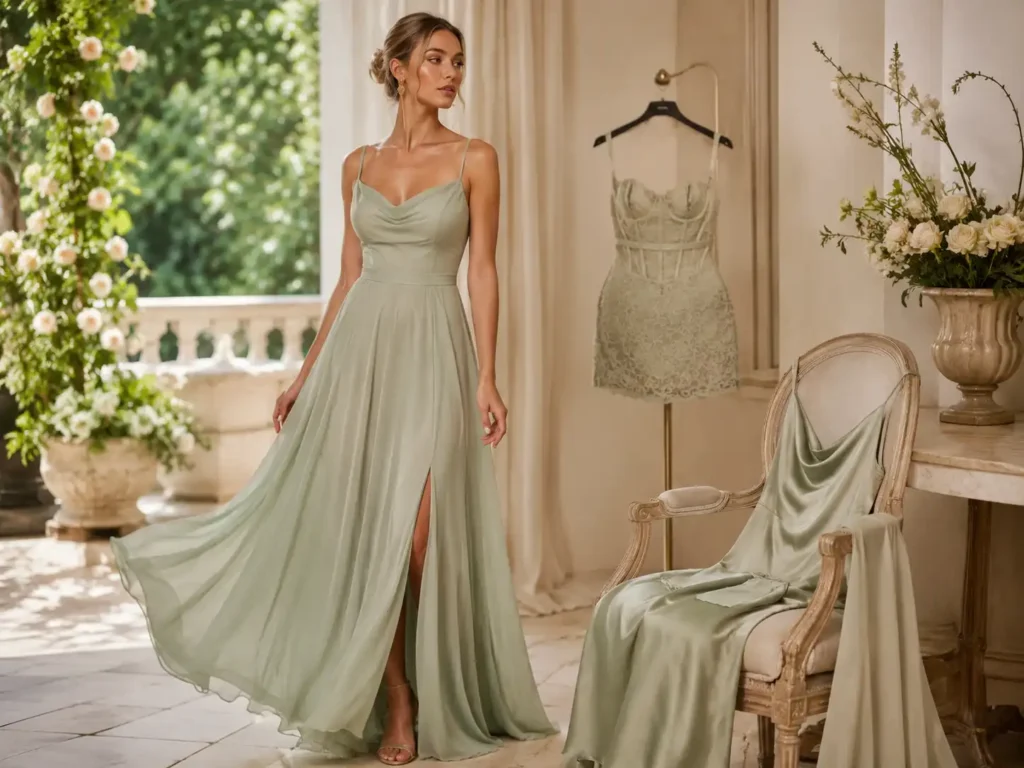
Sampling and production should work backwards from photography, merchandising, launch and warehouse dates. Earlier approval creates more room for fabric sourcing, corrective sampling, QC and economical freight.

Spring Occasion Launch

Spring occasion ranges often combine lace, crepe, matte satin and lighter colourways. Development should begin with lining colour, transparency, motif placement and size coverage. Hero styles need photo samples first, while commercial styles can follow once shared fabrics and trims are confirmed. Delivery planning should protect the opening wedding and event window.

Graduation Season

Graduation ranges depend on reliable mini and midi lengths, photographic fit and light-colour coverage. Sample timing must leave room for campus campaign shoots and online content. Bodycon, satin, halter and one-shoulder styles require fit review across movement, sitting and hem safety before bulk production is released.

Wedding Guest Edit

Wedding guest demand builds around spring and summer event dates. Lace placement, satin drape, midi proportion and elegant colour execution matter more than trend novelty alone. Product planning can combine statement styles with repeatable silhouettes, allowing selected colours or proven shapes to be replenished without rebuilding the whole range.

Summer Resort Drop

Resort launches benefit from early print, colour and fabric grouping. Chiffon, rayon and viscose require shrinkage and transparency review, while maxi styles need hem balance and suitable folding. Multi-batch delivery can release priority holiday styles first, followed by lower-priority extensions when warehouse timing supports the split.

Autumn Going-Out

Autumn partywear moves toward deeper colours, velvet, mesh, jersey, satin and embellished surfaces. Fit and recovery remain important as fabric weight changes. Production planning should consider colour batch consistency, lining warmth, trim availability and campaign timing before holiday demand increases.

Holiday Party Programme

Holiday party collections often carry the highest concentration of sequins, corsetry, shine and complex finishing. More sample and production time should be reserved for decoration, comfort, pressing and protective packing. Launch dates should be connected to PP approval, material arrival, QC windows and freight method rather than relying on a compressed final schedule.

Fabric Engineering for High-Impact Online Dresses

Fabric choice controls drape, fit, transparency, comfort, colour and packing performance. Jinfeng Apparel reviews material behaviour together with pattern structure so the approved visual result can be reproduced in bulk.

Satin and Stretch Satin Control

Satin is selected by more than colour and shine. Composition, yarn structure, weight, width, surface sensitivity and stretch determine whether a style can hold its intended shape. A lightweight satin may create elegant drape for a bias slip but can expose seam tension and lining edges. A heavier satin may support a corset bodice but feel too rigid for gathered or fluid designs.

  • Drape and grain: Bias-cut styles require grain control, hang-time review and hem balancing. Straight-grain satin needs consistent sheen direction across panels.
  • Shade and surface: Colour is reviewed by batch, with attention to visible shade variation, snagging, pressure marks and water or pressing marks.
  • Lining: Lining colour and weight should support opacity without flattening movement. Dark lining beneath pale satin can alter the surface appearance.
  • Sewing: Needle selection, stitch tension, seam allowance and zipper insertion affect puckering and zipper bulging.
  • Packing: Folding points and carton pressure are planned to reduce sharp creases. Final steaming instructions can be aligned with the brand’s warehouse process.

For ecommerce presentation, acceptable sheen, surface condition and pressing standards should be confirmed on the PP sample and captured in QC notes. Satin should never be promoted as wrinkle-proof or snag-proof; control depends on material quality, construction and handling.

Mesh and Power Mesh Performance

Mesh is judged by transparency, stretch direction, recovery, hole stability and edge behaviour.

Fashion mesh used for sleeves, panels or overlays behaves differently from power mesh used for shaping and support.

A visually similar substitute can change neckline stability, bust coverage, side-seam tension and the level of see-through under studio lighting.

  • Transparency mapping: Coverage zones are reviewed at bust, waist, hip, side seam and skirt areas. Lining length and colour are confirmed separately.
  • Stretch direction: Pattern orientation follows the required horizontal or vertical stretch. Incorrect direction can distort fit and seam balance.
  • Recovery: Power mesh should return after extension. Weak recovery can cause neckline collapse, loose waist areas or size inconsistency.
  • Seam protection: Delicate mesh needs suitable seam type, reinforcement and handling to reduce holes and laddering.
  • Print and colour: Printed or dyed mesh requires colour and placement review, especially where panels meet.

Photo samples should be checked under bright lighting and on-body movement. Bulk inspection should include holes, deformation, uneven transparency, loose edges, lining exposure and measurement stability.
Lace Placement and Lining Balance

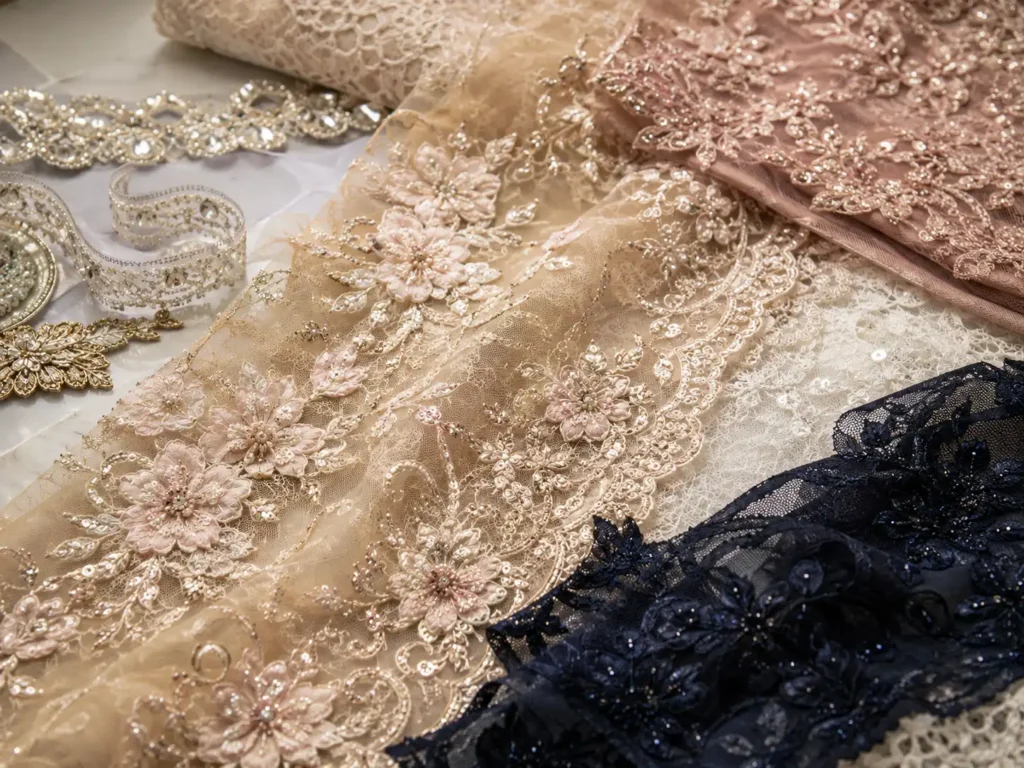
Lace quality is highly visible online because motif scale, placement and symmetry appear clearly in product photography. The development team reviews whether the lace should be used as an all-over shell, engineered placement, panel insert, trim or appliqué. Each route creates different cutting, joining and cost implications.

  • Motif placement: Centred motifs, mirrored panels and neckline or waist placement may require extra consumption and controlled cutting.
  • Joining: Visible seams should respect pattern flow. Scalloped edges may need hand placement or careful trimming.
  • Lining colour: Tone-on-tone lining gives a refined result; contrast lining creates a stronger graphic effect but exposes placement errors.
  • Comfort: Coarse lace, beading or rigid edges may need soft backing or seam coverage in skin-contact areas.
  • Bulk control: QC checks motif direction, panel symmetry, holes, edge finishing, lining exposure and colour consistency.

Lace sourcing should also consider supplier MOQ, repeat availability and motif continuity for future colour extensions or replenishment.
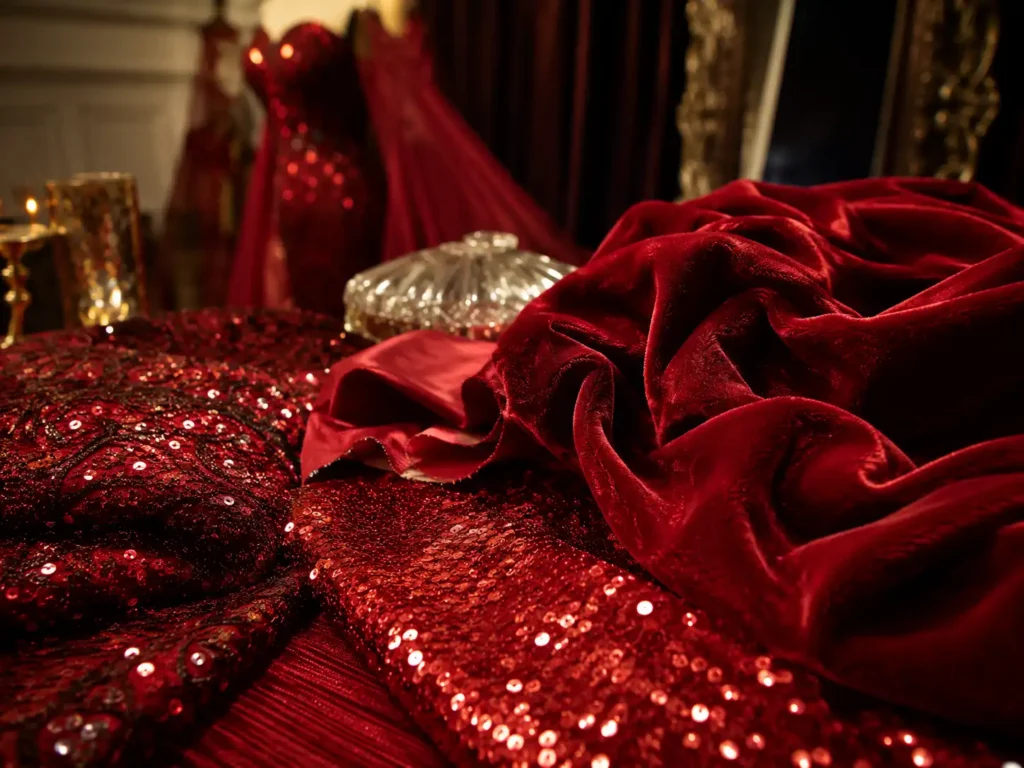
Sequin and Velvet Handling

Sequin and velvet create strong seasonal impact but require specialised production discipline. Sequin density, backing, orientation and skin contact affect cutting, needle performance, seam bulk and comfort. Velvet adds nap direction, pressure marks and colour-depth variation to the control plan.

  • Cutting direction: Sequin layout and velvet nap must remain consistent across panels to avoid visible shade or reflection differences.
  • Seam preparation: Sequins may need clearing from seam allowances. Edges and internal seams are protected to reduce scratching.
  • Decoration security: Loose sequins, broken threads and missing areas are checked before finishing and again before packing.
  • Pressing limits: Heat, pressure and steam are controlled because embellishment and velvet surfaces can flatten or mark.
  • Protective packing: Garments may require tissue, individual protection and reduced compression to protect surfaces.

Costing must include material loss, slower handling, finishing and QC time. Removing these controls to force a lower quotation often creates visible bulk defects.
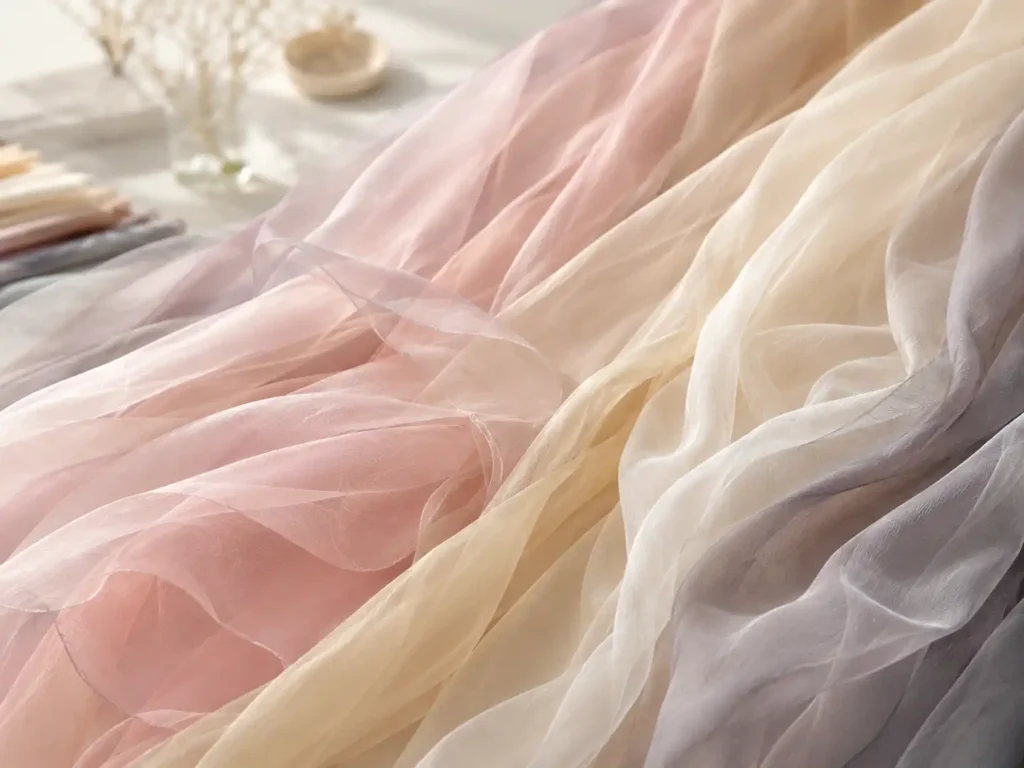
Chiffon, Organza and Tulle Structure

Lightweight transparent fabrics create movement but have low tolerance for cutting and seam errors. Chiffon can shift during cutting, organza can mark or fray, and tulle can stretch or tear at stress points. Layer count, seam choice, lining and hem method should be agreed during development.

  • Opacity: Layering and lining length are checked in daylight and studio lighting.
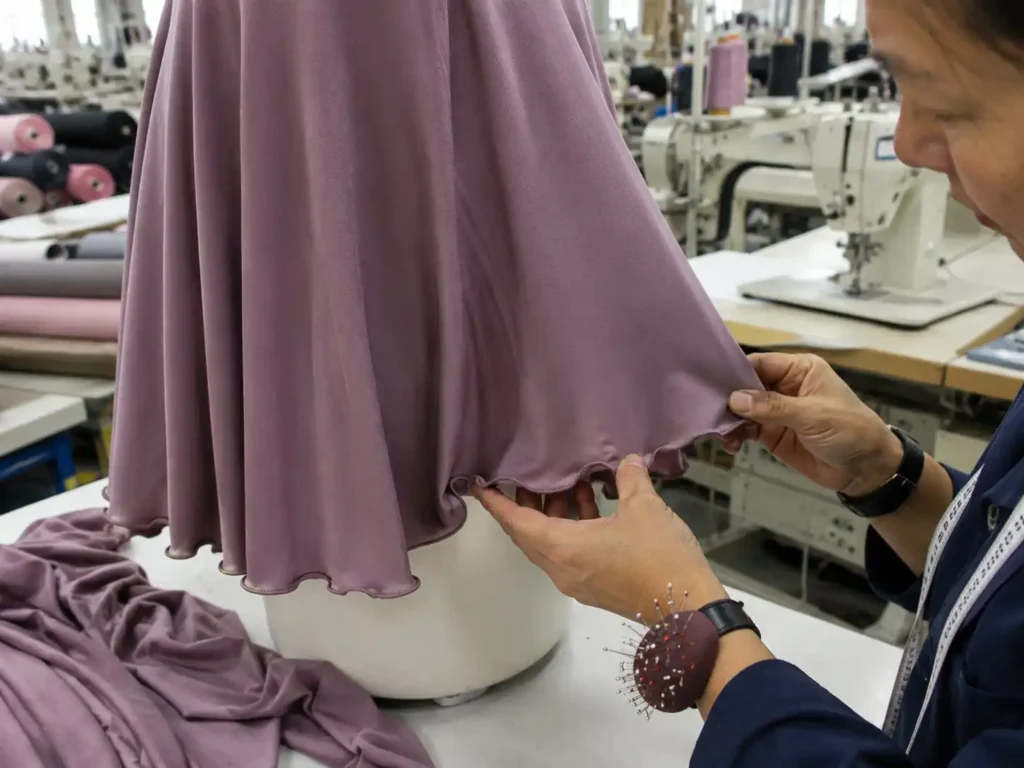
  • Hem control: Curved or full hems may require hang time before levelling. Uneven maxi hems are highly visible online.
  • Gathering: Ruching and gathered panels need balanced density so production does not vary from the approved sample.
  • Strength: Stress areas at zippers, armholes and waist seams may need reinforcement.
  • Packing: Light fabrics crease under compression, so fold lines and carton loading are reviewed.

For printed chiffon, print direction, repeat alignment and colour placement are integrated into the cutting plan. Rayon and viscose combinations also require shrinkage review before pattern lock.

Jersey, Ponte and Crepe Stability

Stretch and semi-structured fabrics are central to bodycon, day-to-night and polished ecommerce styles. Jersey gives softness and movement; ponte offers body and recovery; crepe provides texture and drape with different stretch levels. Pattern ease must be calibrated to the exact fabric rather than copied from another style.

  • Stretch percentage: Horizontal and vertical stretch are measured and compared with recovery after extension.
  • Pattern ease: Bust, waist, hip and armhole dimensions are adjusted to fabric behaviour and intended compression.
  • Seam stability: Needle, thread, stitch type and seam tension are selected to reduce waviness, breakage and twisting.
  • Wash risk: Dimensional change, relaxation and colour performance are reviewed when required by the programme.
  • Bulk measurement: Tolerances focus on body points, side-seam balance, length and recovery after handling.

A fabric substitution may require a revised sample even when colour and composition look similar. Weight, stretch and recovery can change the fit enough to invalidate an earlier pattern.

UK Fit and Size Development Without Generic Sizing

Jinfeng Apparel works from a brand-approved size chart, fit block or target measurement standard. UK sizing varies by label, product category and consumer profile, so a single universal chart is not imposed.

Base Size and Brand Fit Standard

Development begins by identifying the brand’s base size and intended fit. A fitted party dress, relaxed resort maxi and structured wedding guest midi cannot share the same ease logic. The team compares body points, garment measurements, fabric stretch and the visual reference before drafting or correcting the pattern.

  • Input: Approved size chart, existing fit block, original sample, model measurements or reference garment.
  • Key points: Bust, upper bust, underbust, waist, high waist, low waist, hip, shoulder, armhole, strap length, neckline drop, skirt length and slit height.
  • Fabric link: Stretch, recovery, drape, lining and construction determine how flat measurements translate on body.
  • Approval: Fit comments are recorded with measurement notes and photos before pattern updates.

Where no established block exists, Jinfeng Apparel can develop from an agreed base specification, but the brand must approve the target measurements and fit direction before grading.
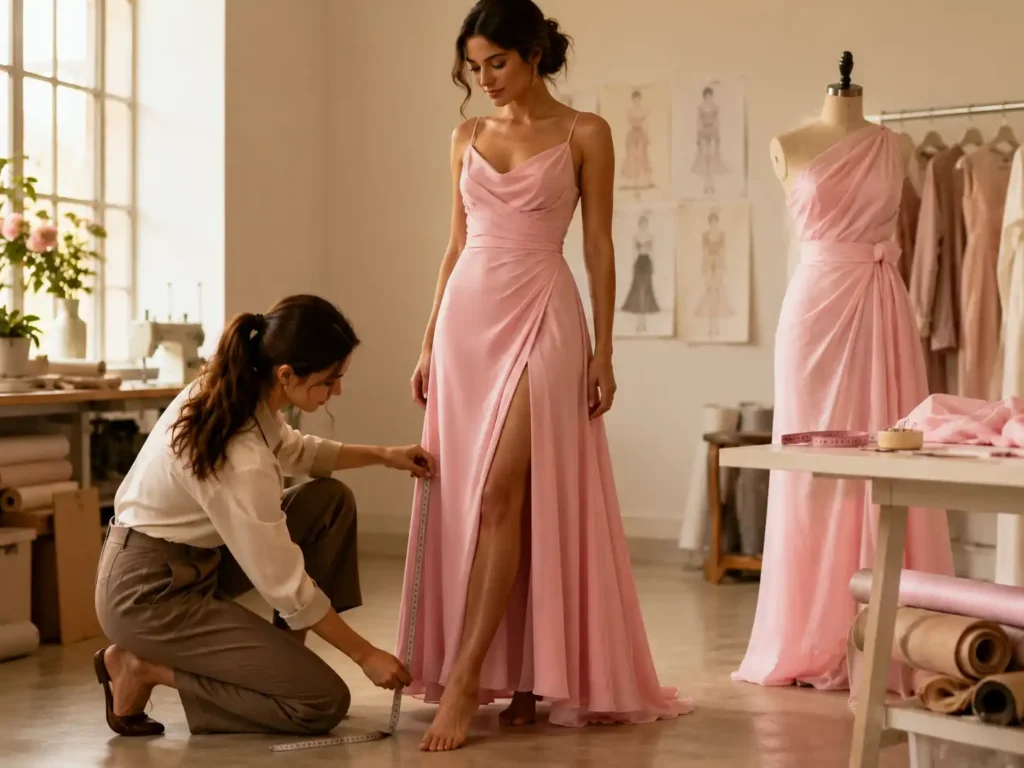
Dress Length and Proportion Control

Online return risk often begins with proportion. Mini lengths need movement safety; midi lengths must land at the intended calf position; maxi lengths require front-back balance, footwear assumptions and hem sweep control. Torso length, waist position and skirt proportion influence how every length appears.

  • Mini: Front and back lengths are reviewed separately, with lining coverage, hip fit and sitting or walking movement.
  • Midi: Waist-to-hem proportion is checked against silhouette, slit height and target styling.
  • Maxi: Garment hang, panel balance, train or sweep and lining length are reviewed after the fabric settles.
  • Asymmetric styles: High-low hems and draped sections require clear measurement reference points for bulk inspection.

Length tolerances should be connected to construction. A bias satin maxi, tiered chiffon dress and stretch jersey mini need different measurement and levelling methods.

Grading Across the Size Range

Grading is not simple proportional enlargement.

Bust, waist, hip, strap, neckline, armhole, slit and length increments need category-specific rules.

Stretch garments may use smaller increments in some areas, while structured woven styles need additional ease and support changes.

  • Rule control: Grade rules are documented after base-size approval.
  • High-risk areas: Cup position, boning length, neckline depth, strap placement, low waist and slit height are reviewed across sizes.
  • Colour and fabric variants: A different stretch level or weight may require pattern review even when the style code is unchanged.
  • Bulk checks: Measurement inspection includes selected sizes and critical body points rather than only the base size.

Brands with an existing grading standard can provide the rule set. Where Jinfeng Apparel supports grading, the size chart and graded pattern must still be approved before production.

Sample Timeline Planning

Timing depends on fabric availability, style complexity, trim development and the quality of input files. A standard planning range can be used for calendar preparation, subject to confirmation after style review.

  • Initial review: 1-2 working days for structure, fabric, MOQ and development-risk feedback when files are complete.
  • First sample: Usually 7-14 working days for standard dresses; complex corset, lace, sequin or engineered styles commonly need 12-20 working days.
  • Revised sample: Usually 5-10 working days after consolidated fit comments and confirmed material direction.
  • Photo sample or PP sample: Usually 5-10 working days after pattern, fabric, colour, trims and finishing standards are locked.
  • Multi-style programmes: Key styles are prioritised by launch date, hero SKU status, material readiness and complexity rather than moving all styles on one schedule.

Ranges are confirmed after reviewing the actual files. Repeated design changes, new fabric sourcing, custom dyeing, print development or special trims will extend development time.

Design Details Controlled From Sample to Bulk
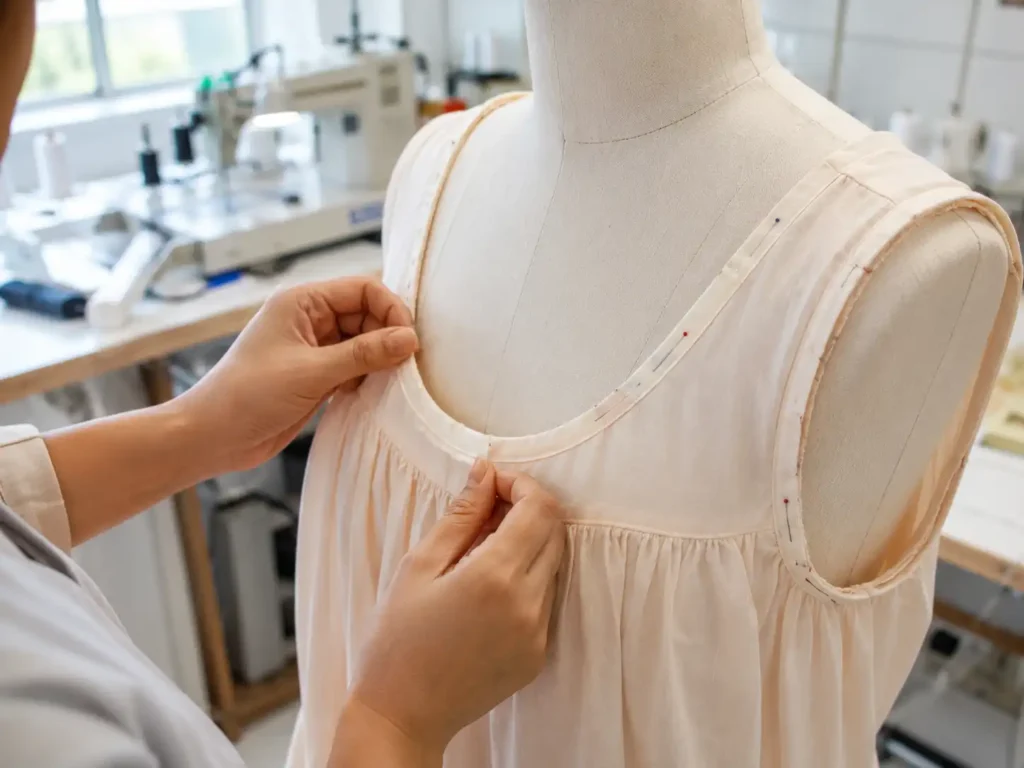
Small construction decisions determine whether a dress feels refined, remains secure and photographs well. Each detail is translated into pattern notes, trim specifications, sewing instructions and inspection points.

Necklines and Straps

Neckline depth, shape, facing, seam stability and coverage are reviewed with strap angle and length. Adjustable straps require correct slider direction and secure attachment. Halter, deep-V and asymmetric styles need movement checks to prevent gaping, twisting or excessive tension. Bulk QC compares symmetry, neckline measurements and strap placement.

Cups and Boning

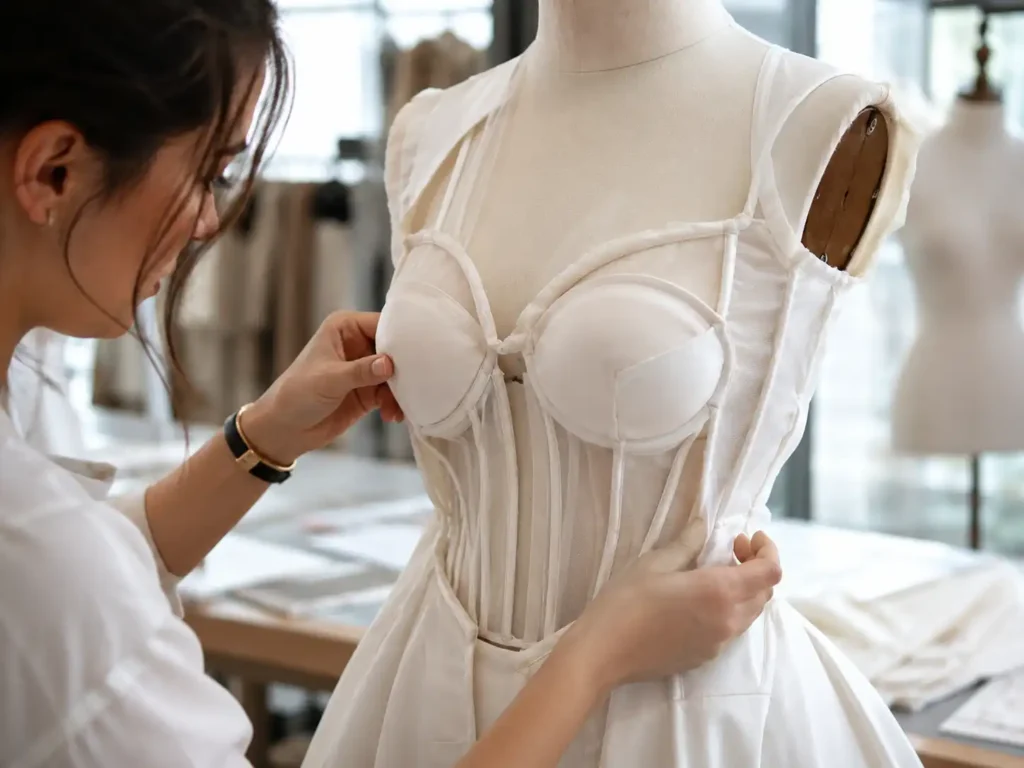
Corset and structured bodices may use moulded cups, foam, underwire, plastic boning, steel support or combinations. Cup position, underbust line, boning length and end protection affect shape and comfort. Internal construction is confirmed in the sample, then mapped for consistent bulk placement and finishing.

Lining and Coverage

Lining controls opacity, comfort, seam appearance and garment movement. Colour, weight, stretch and length must match the shell fabric and wearing occasion. Short lining under a pale or sheer dress can appear clearly in photography. Bulk checks include lining exposure, twisting, attachment, colour and hem position.

Zippers and Openings

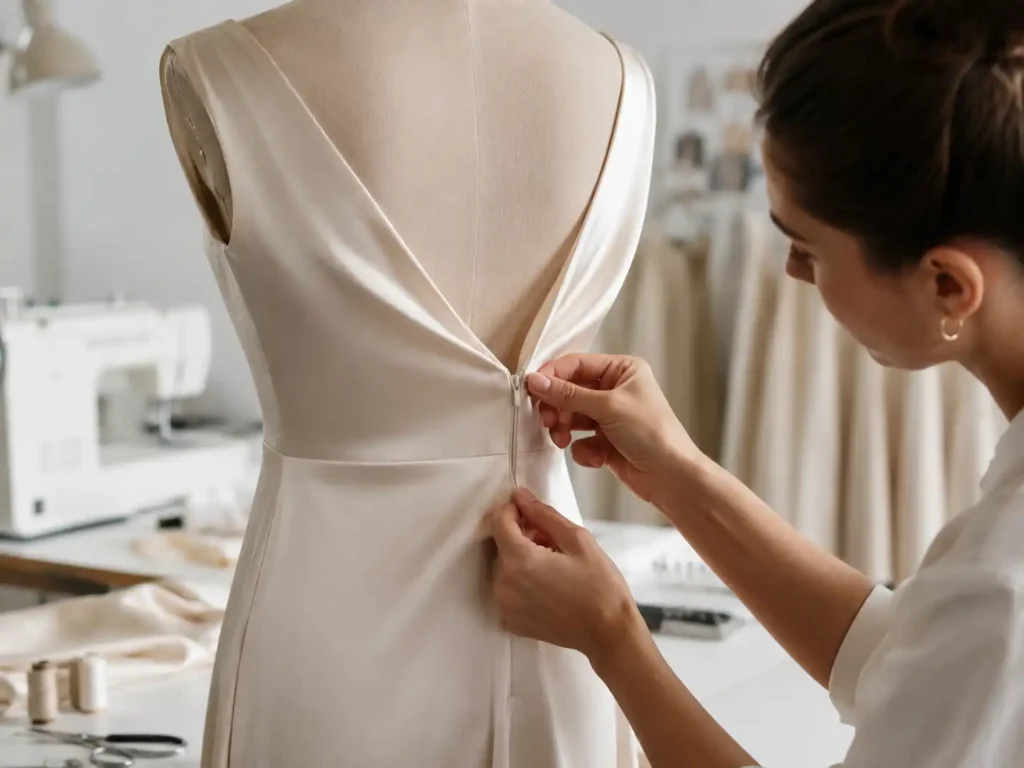
Invisible zippers, metal zippers, hooks, buttons and snaps are chosen according to fabric, fit and appearance. Zipper bulging often results from seam tension, fabric stretch or incorrect reinforcement. Samples verify opening length and comfort; production checks cover alignment, smooth movement, top finish and seam shape.

Slits and Hemlines

Slit height influences movement, coverage and brand styling. Reinforcement must prevent tearing without creating visible stiffness. Mini, midi and maxi hems use different methods based on fabric weight and curve. Bulk inspection checks slit symmetry, top reinforcement, hem width, balance and finished length.

Ruching and Draping

Ruching density, direction and tension create the silhouette. Production notes define placement, finished length and gathering control so bulk garments do not appear flatter or more compressed than the approved sample. Draped sections also require grain and seam control to maintain flow and symmetry.

Lace Placement

Motif direction and seam placement are approved before bulk cutting. Centred or mirrored placements may increase fabric consumption but protect the intended visual result. Scalloped edges, appliqué and panel joins need clear workmanship standards. QC checks matching, symmetry, holes, edge finish and lining alignment.

Sequin Protection

Sequin surfaces require careful cutting, seam preparation and protective handling. Internal scratch points are covered, loose decorations are removed or secured, and embellishment loss is checked before packing. Tissue, garment separation and reduced compression can protect surface quality during UK delivery.

A Sampling System for 10-30 Style Collections

Multi-style development is managed as a programme, not a queue of unrelated garments. Styles are grouped by material, pattern complexity, trim dependency and launch priority, with approval status recorded at each stage.

Project Intake and Technical Review

Development can begin from a tech pack, line sheet, original sample, sketch or reference image. A stronger starting file reduces interpretation and allows faster risk identification.

Each style is reviewed for silhouette, construction, fabric direction, trim requirements, size range, MOQ and production feasibility.

  • Style classification: Woven, stretch, corset, lace, mesh, sequin, bias, draped or jumpsuit construction.
  • Risk points: Bust support, lining, transparency, stretch recovery, placement, zipper, slit, hem and comfort.
  • Commercial inputs: Quantity by style and colour, launch date, target price, packaging and delivery destination.
  • Output: Development route, sample priority, material direction and initial timing plan.

Technical review avoids blind acceptance. Where a reference cannot achieve the intended result within the selected fabric or cost range, the team proposes a construction or material adjustment before sampling.

Multi-Style Grouping and Priority

A 10-30 style collection can overload development when every sample enters the same queue. Jinfeng Apparel groups styles according to shared materials, silhouettes, trim packages and pattern complexity. Priority is assigned according to launch date, hero SKU status, campaign needs and material readiness.

  • Fabric group: Satin styles can share colour and lining review; mesh or lace groups can share coverage and placement standards.
  • Style group: Bodycon, corset, slip, occasion and resort silhouettes follow different fit and construction routes.
  • Trim group: Shared zippers, cups, boning, labels and packaging can be consolidated after approval.
  • Priority group: Photo-critical and commercially important styles move first, followed by extensions and secondary colourways.

A revision tracker records sample version, open issues, approval status and next action. Consolidated comments prevent conflicting instructions from reaching pattern and sample teams.

From First Sample to Fit Approval

The first sample confirms whether the design structure, fabric direction and preliminary pattern work together. It is not automatically the bulk standard. Fit review combines garment measurements, on-body photos, movement observations and brand comments.

  • First sample: Tests silhouette, construction, fabric and initial cost logic.
  • Fit sample: Focuses on body proportion, comfort, coverage and movement.
  • Revised sample: Shows pattern, fabric, trim or workmanship corrections.
  • Photo sample: Prepared for campaign or ecommerce photography when appearance and timing require a dedicated sample.

Comments should identify the location, direction and target result. For example, “raise neckline 1.5 cm at centre front while retaining side coverage” is more actionable than “make neckline better.” Jinfeng Apparel converts approved feedback into updated patterns, measurements, BOM and sewing notes.

PP Sample and Golden Sample Lock

The PP sample is the final pre-production approval for fabric, colour, trims, construction, measurements, labels, finishing and packing. Changes after PP approval may affect material, pattern, cost and lead time, so the approval should be treated as a production lock rather than another exploratory sample.

  • Final pattern: Includes approved structure, lining, placement and grade reference.
  • BOM and trim card: Records shell, lining, closures, support materials, labels and packaging.
  • Measurement chart: Defines critical points and tolerances.
  • Golden sample: Provides the physical reference for production, finishing and inspection.

Bulk production is released only after PP approval, material confirmation, size and colour breakdown, packing instructions and quality requirements are complete.

MOQ, Quotation and Margin Control by Style

Accurate pricing is built from the approved product specification. Fabric, lining, construction, trims, size range, colour count, packing, quality requirements and timing all influence the final garment cost.

Cost DriverWhat Changes CostMargin-Control RouteApproval Needed
FabricComposition, weight, width, colour, print, certification, MOQ and yieldCompare equivalent fabrics without weakening drape, opacity or recoverySwatch, specification and colour approval
Lining and layersFull lining, partial lining, double layers, cups, interfacing and supportUse support only where the silhouette and coverage require itConstruction sample and BOM
Pattern complexityCorsetry, cut-outs, bias, draping, ruching, asymmetry and jumpsuit balanceSimplify hidden construction while protecting the visible resultPattern and fit approval
TrimsZippers, boning, cups, underwire, crystals, chains, lace and branded itemsConsolidate trim standards or replace non-critical decorative partsTrim card and durability review
Order structureQuantity per style and colour, size ratio and number of SKUsConsolidate colours, align fabrics and set commercial size ratiosConfirmed quantity plan
Quality and testingAQL, extra inspection, lab tests and special toleranceDefine required checks by product and market riskQuality manual or inspection standard
PackingLabels, hangtags, barcodes, tissue, special folds and destination splitsStandardise common packaging while preserving channel requirementsPacking artwork and warehouse guide
DeliveryProduction window, air/sea split, multi-batch shipment and termsApprove earlier to retain economical freight optionsLaunch date and destination

Multi-Style Bulk Production With Controlled Allocation

A 20,000-80,000 piece collection is divided into manageable production groups. Allocation follows product structure, material readiness, quality risk and launch priority rather than sending every style through one identical route.

Production Readiness Before Cutting

Bulk preparation begins after PP approval. Final patterns, graded size files, BOM, fabric and trim approvals, sewing instructions, QC points, colour-size breakdown and packing requirements are checked before material is released.

Any conflict between the tech pack, PP sample and production file must be resolved before cutting.

  • Material readiness: Shell, lining, trims, labels and packaging are checked for quantity, specification and colour.
  • Marker and consumption: Cutting layout is reviewed to control fabric usage, motif direction, nap or sheen direction.
  • Factory allocation: Styles are assigned according to product fit, capacity and required workmanship.
  • Production file: Each style receives an approved specification and inspection focus.

Starting production without a complete file creates avoidable variation. Jinfeng Apparel treats PP approval as the point where design intent becomes a controlled manufacturing standard.

Grouping 10-30 Styles Into Workable Batches

Large collections are grouped to reduce complexity and protect launch priorities. Shared fabrics, trims and silhouettes can move together, while high-risk styles receive separate control. A 24-style programme may be divided into satin occasion, stretch bodycon, lace and mesh, resort woven and embellished groups, each with its own schedule.

  • Fabric group: Controls shade, shrinkage, print direction and material arrival.
  • Complexity group: Separates corsetry, sequins, lace placement and simpler commercial styles.
  • Launch group: Prioritises campaign pieces, opening drop and replenishment-ready styles.
  • Factory group: Matches sewing and finishing experience to the approved product.
  • Packing group: Aligns labels, SKU data and delivery destination.

Group planning avoids a single delayed trim or complex style holding the entire collection. It also creates clearer inspection and packing milestones.

Typical Production Planning Range

Bulk timing is confirmed only after style review, PP approval and material readiness. Standard dresses with available materials often require about 30-50 days for bulk production.

Multi-style programmes of 20,000-80,000 pieces commonly require 45-75 days, depending on complexity, colour count, factory allocation, finishing, inspection and delivery-batch structure.

  • Pre-production: Final file check, material arrival, colour and trim verification.
  • Cutting and sewing: Scheduled by style group and factory allocation.
  • In-line QC: Issues are corrected before the whole batch progresses.
  • Finishing and packing: Pressing, appearance, labels, barcodes and carton ratios are verified.
  • Shipment preparation: Packing lists, carton data and export documents are aligned.

The planning range is not a blanket promise. Custom dyeing, prints, special lace, sequin surfaces, complex corsetry, extensive handwork, additional testing or late approval can extend the schedule.

Milestone Updates for Key Programmes

For major or complex programmes, updates can be provided at agreed stages rather than through unstructured daily messages. Typical milestones include material arrival, cutting, sewing start, in-line QC, finishing, packing, carton-mark verification and shipment preparation.

  • Evidence: Progress photos, issue notes and completion status can support key updates.
  • Escalation: Material, construction or quality risks are communicated with proposed action.
  • Decision points: Brand approval is requested where a change affects appearance, cost or timing.
  • Version control: Current files and approved revisions remain aligned across merchandising, factory and QC teams.

A milestone system gives merchandising and operations teams enough visibility to plan launch activity without creating communication noise that distracts production.

Quality Control Built Around Dress-Specific Risk

Quality is controlled from incoming material through shipment preparation. Inspection points change by product: satin needs surface and shade control; mesh needs transparency and hole checks; bodycon needs recovery and measurement stability.

Incoming Material QC

Fabric, lining and trims are checked against approved specifications before cutting. Review may cover colour, hand feel, weight, width, stretch, recovery, surface condition, defects and quantity. Labels and packaging are also compared with approved artwork and specifications. Material issues are isolated before they reach production.

Cutting QC

Cutting controls grain, print direction, lace placement, velvet nap, satin sheen, shade grouping and pattern accuracy. High-risk panels are checked against the final pattern and marker. Incorrect orientation can create visible colour or reflection differences even when the fabric batch is the same.

In-Line Sewing QC

In-line inspection identifies seam, zipper, lining, ruching, symmetry, support and measurement problems while correction is still manageable. Findings are classified, returned to the production team, corrected and rechecked. The aim is to stop one repeated error from spreading across the full order.

Measurement Inspection

Critical measurements vary by style and can include bust, waist, hip, length, strap, neckline, armhole, slit, lining and jumpsuit crotch. Selected sizes are checked against the approved chart and tolerances. Stretch garments are handled consistently before measurement to reduce misleading results.

Garment Appearance

Finished garments are reviewed for shade, stains, damage, snagging, wrinkles, asymmetry, seam shape, zipper bulging, exposed lining, lace misplacement, mesh deformation, sequin loss, twisting and uneven hems. Product-specific defect standards can be aligned with the brand’s quality manual.

Pressing and Finishing

Thread trimming, cleaning, pressing and final shape affect ecommerce presentation. Heat and pressure are adjusted for satin, velvet, sequins, mesh and coated trims. Finishing should improve the garment without creating shine marks, flattened texture, stretched seams or sharp packing creases.

Packing QC

Main labels, size labels, care labels, hangtags, barcodes, size stickers, polybags, fold method, carton quantity, colour-size ratio and carton marks are checked before shipment. Packing errors are treated as quality failures because they can interrupt warehouse receiving and stock availability.

AQL and Third-Party

Internal AQL sampling or third-party pre-shipment inspection can be arranged according to the agreed standard. AQL level, critical/major/minor definitions and acceptance rules must come from the brand or appointed inspection provider. Jinfeng Apparel can support SGS, Intertek, BV, ITS or another nominated party.

Private-Label Packing Ready for UK Ecommerce Operations

Brand presentation and warehouse accuracy continue after garment finishing. Labels, barcodes, SKU separation, folding, polybags, carton ratios and receiving instructions are integrated into the production file.

Woven Brand Labels

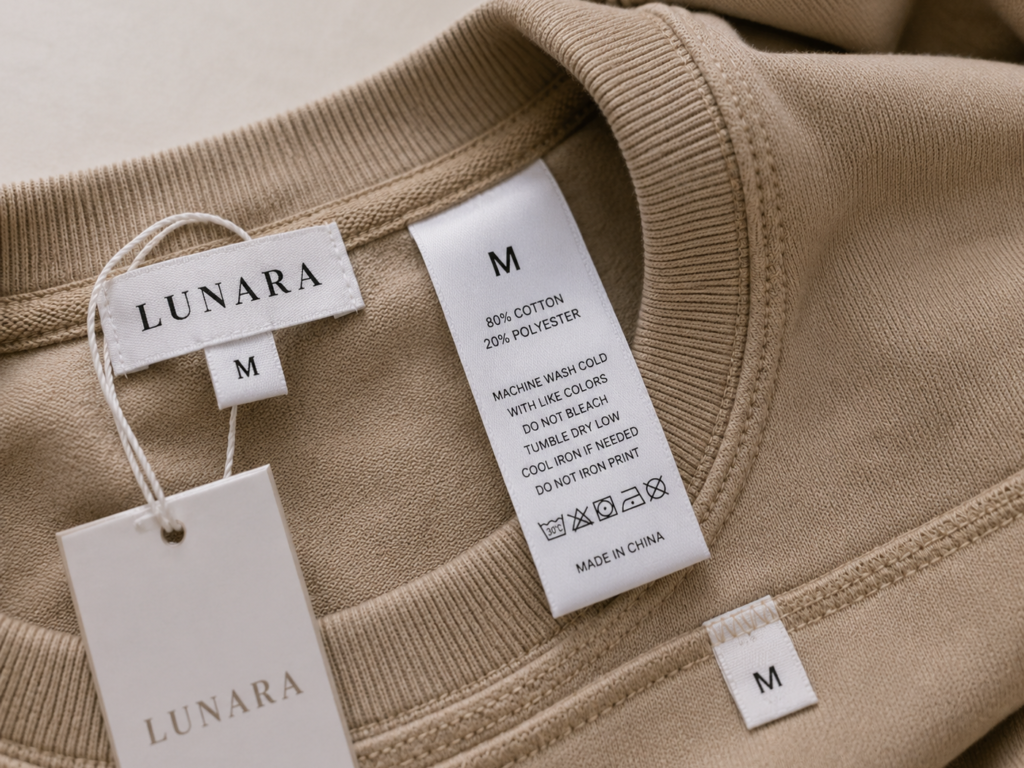
Woven or printed main labels are developed from approved artwork, dimensions, colour and fold type. Placement and attachment method are confirmed on the sample. Bulk checks focus on orientation, spelling, colour, stitch security and skin comfort. Brand files remain confidential and are used only for the approved order.

Care and Size Labels

Care labels can include fibre composition, care symbols, country-of-origin information and other approved wording. Final legal content should be confirmed by the brand or its compliance adviser for the UK market. Size labels must match the garment, barcode data and packing ratio.

Hangtags and Tickets

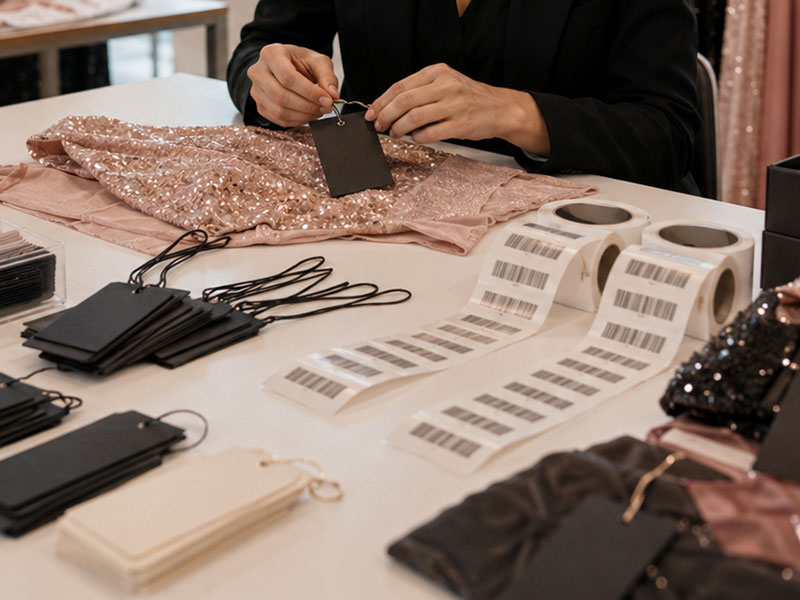
Hangtags, price tickets, spare-button bags and promotional inserts are matched to approved artwork and placement instructions. String, pin, safety and contact points are selected to avoid fabric damage. Quantities and style-colour allocation are checked during packing.

Barcode and SKU Control

Barcode stickers, colour codes, size stickers and SKU identifiers are checked against the order breakdown. Multi-style and multi-colour programmes need controlled data files so the correct code follows the correct garment and polybag. Scannability can be checked where the brand provides the required system or format.

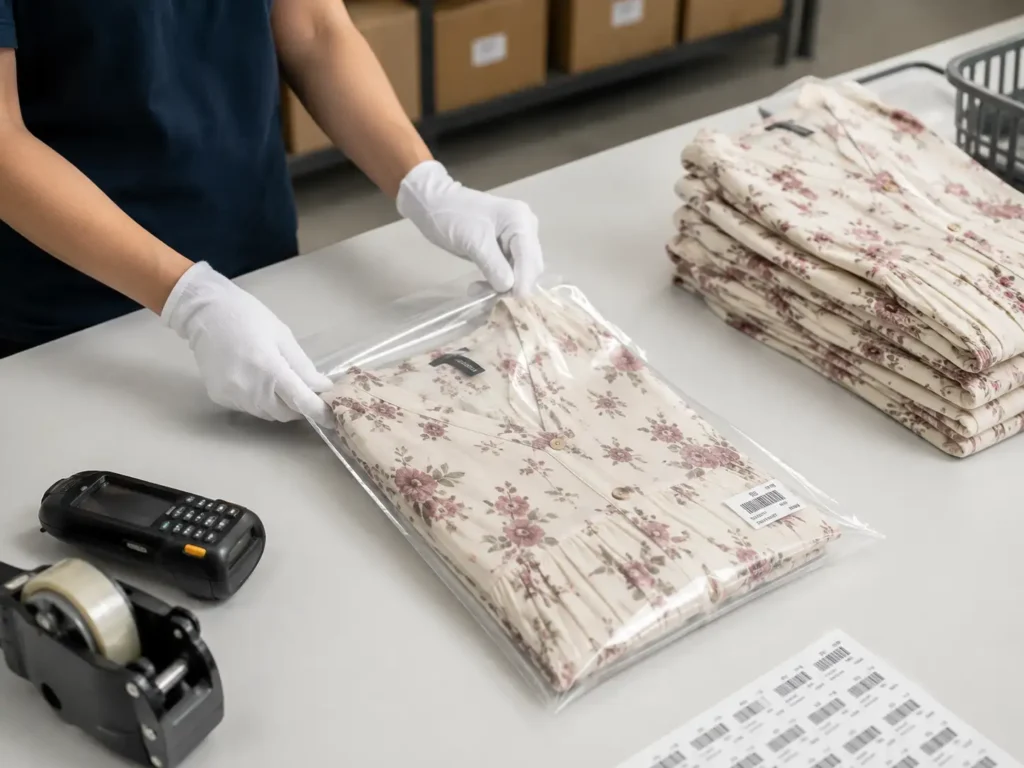
Folding and Polybags

Fold method affects crease visibility, garment size and carton efficiency. Satin, embellished and structured dresses may need tissue, protective layers or reduced compression. Polybag size, warning text, ventilation and sealing method follow the approved packing specification.
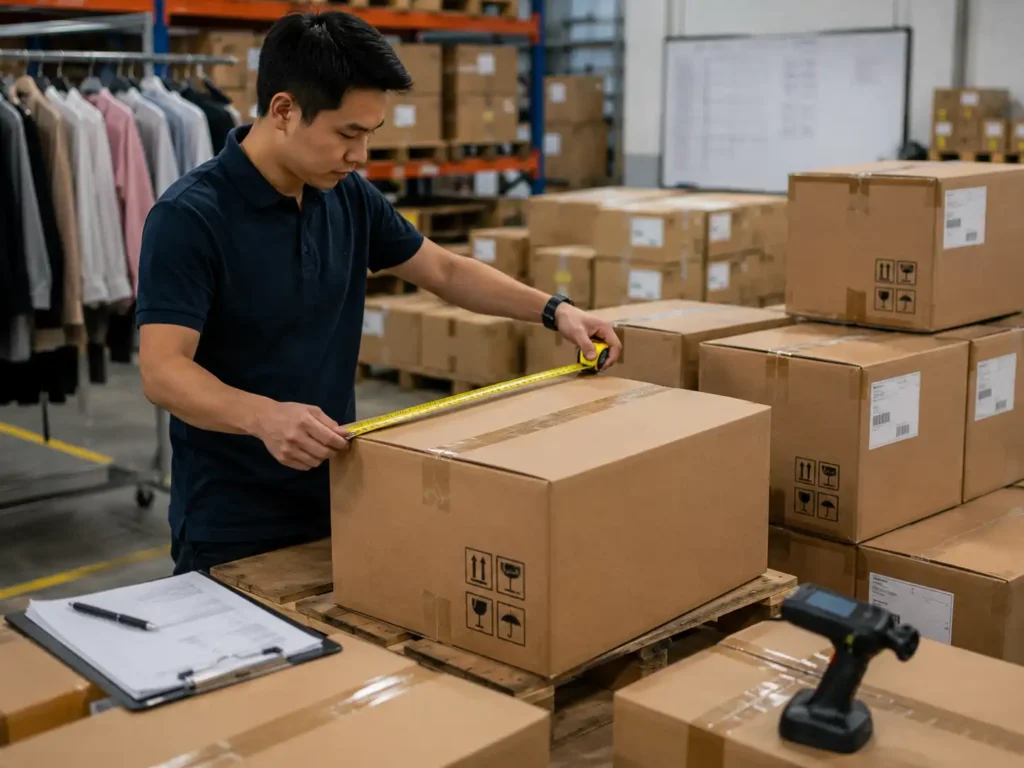
Cartons and Warehouse Rules

Carton quantity, colour-size ratio, gross weight, net weight, carton dimensions and carton marks are prepared for each delivery batch. Destination-specific or channel-specific packing can be organised when the order file clearly separates warehouse, region and launch priority.

Compliance Support Matched to the Assigned Programme

Compliance claims are verified by factory, material source, certificate scope, validity period and order requirement. Jinfeng Apparel supports documentation and testing coordination without presenting every factory or fabric as universally certified.

Quality Management

Jinfeng Apparel follows ISO 9001-related quality management principles across material review, production control, inspection records, packing verification and pre-shipment checks. A brand’s quality manual, tolerance chart and defect classification can be integrated into the inspection plan.

Sedex Review Support

Sedex-related compliance documentation and brand audit review can be supported according to the assigned factory and available records. Requirements should be submitted before factory allocation so production capability, audit status and timing can be evaluated together.

BSCI Review Support

BSCI-related documents and audit coordination can be reviewed for relevant programmes. Availability depends on the actual factory selected for product type, capacity and delivery window. Jinfeng Apparel does not represent every production partner as holding identical audit status.

Certified Fabric Resources

OEKO-TEX, GOTS and GRS-related fabric resources can be sourced through the material network when required. Availability, MOQ, lead time and certification scope must be checked by composition, colour, supplier, batch and certificate validity before approval.

Laboratory Testing

Testing can be coordinated according to product, material, market and brand standard. Common areas may include composition, shrinkage, colour fastness, pH, formaldehyde, azo, pilling and strength. SGS, Intertek, BV, ITS or another appointed laboratory may be used.

Label and Document Support

Jinfeng Apparel can prepare garment descriptions, composition information, packing data, commercial invoice and packing-list support for export coordination. Final UK labelling, HS classification, import and compliance decisions should be confirmed by the brand, freight partner or appointed adviser.

UK Delivery Planning From Carton Data to Warehouse

Production completion is only one milestone. Packing accuracy, document alignment, freight selection and delivery-batch control determine when stock becomes available for sale.

Delivery Window Planning

The launch calendar is worked backwards through sample approval, material arrival, production, QC, packing and freight. Earlier PP approval protects economical transport choices. Late design or colour changes can force air freight or reduce the time available for correction.

Air Freight

Air freight is often selected for campaign-critical styles, opening drops or replenishment. A typical planning range is around 5-10 days in transit, excluding production, booking, customs and final delivery. Actual timing and cost depend on route, chargeable weight, season and destination.

Sea Freight

Sea freight supports larger planned volumes and lower unit logistics cost. A typical China-to-UK planning range is around 25-40 days port-to-port, with additional time for booking, customs, handling and final delivery. Freight schedules should be confirmed by the appointed forwarder.

Split Shipment

A programme can be divided by launch priority, style group, destination or air/sea method. Priority styles may move first while later groups use a more economical route. Each batch needs its own packing list, carton data, quantity breakdown and document set.

Carton and Volume Data

Carton quantity, dimensions, gross weight, net weight and style-colour-size breakdown are prepared after final packing. Volume and chargeable weight influence freight cost. Oversized cartons or excessive compression can damage garments, so packing efficiency must remain compatible with product protection.

Export Coordination

Jinfeng Apparel can support commercial invoice, packing list, product description, composition and carton information. HS code guidance may be discussed, but final classification and clearance should be confirmed by the importer, customs broker or freight forwarder responsible for the UK entry.

UK Programme Cases With Measurable Scope
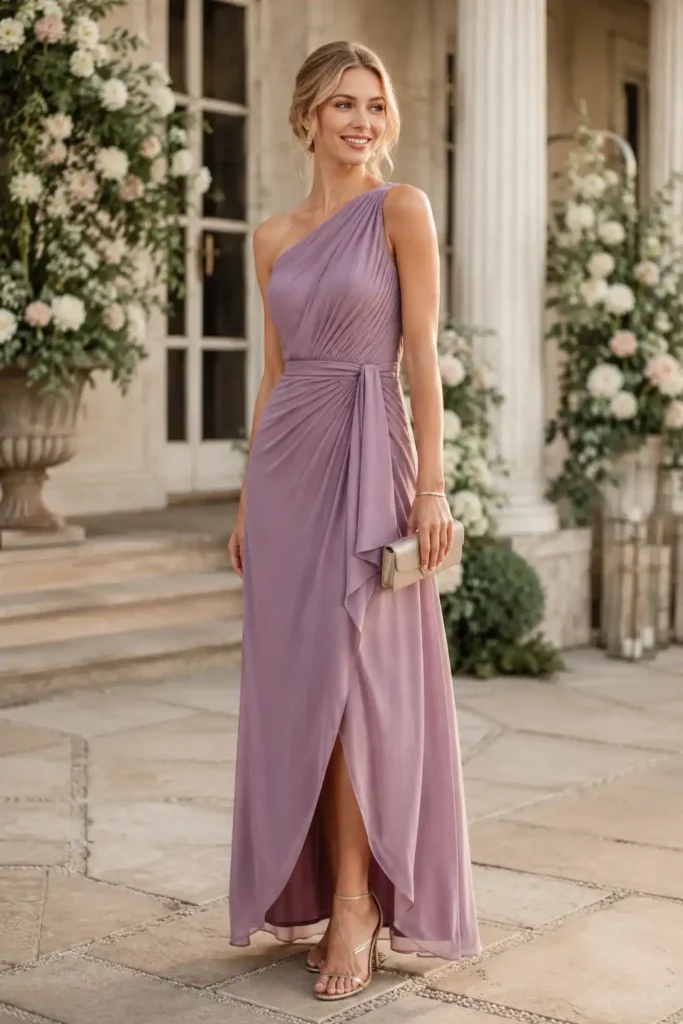
The following cases illustrate how multi-style online womenswear programmes can be organised without exposing brand names, unreleased designs, pricing, label artwork or private order information.

Wedding Guest Programme

An anonymous UK premium ecommerce label developed an 18-style wedding guest and occasion dress programme of approximately 36,000 pieces. The range included matte satin midi dresses, lace panel styles, draped crepe maxis and one-shoulder silhouettes across five colour families. Key risks were lace motif placement, pale-colour lining, satin drape, midi length proportion and photo-sample timing. Jinfeng Apparel grouped the range into satin/crepe and lace/mesh development tracks. Hero styles moved first for photography, while shared linings, zippers and label specifications were consolidated after approval. One-shoulder and fitted midi patterns received extra on-body review, and lace placement maps were attached to cutting and QC instructions. Bulk production was divided into two delivery batches. The first batch supported the opening launch, while the second carried extended colours and lower-priority styles. Approved pattern, fabric, trim and packing records were retained for the following wedding season.

Going-Out Dress Range

An anonymous UK online going-out label planned a 24-style programme of approximately 54,000 pieces across stretch satin, power mesh, jersey, sequins and corset-inspired structures. The main commercial pressure was maintaining strong product imagery while controlling fit variation and production risk across many SKUs. Styles were grouped into stretch bodycon, corset, mesh overlay and embellished categories. Fit control focused on bust, underbust, waist, hip, strap, neckline and mini length. Sequin styles received surface protection and comfort checks; mesh styles received transparency maps and lining confirmation; corset styles required cup, boning and zipper alignment approval. A staged sample tracker prioritised eight campaign styles, followed by core commercial styles and colour extensions. In-line QC concentrated on measurement, seam recovery, neckline stability, decoration security and SKU packing. The programme shipped in coordinated batches aligned with launch priority.

Resort and Summer Drop

An anonymous UK multi-channel womenswear brand developed a 14-style resort dress programme of approximately 28,000 pieces. Products included printed rayon maxis, chiffon midis, linen-blend minis and lightweight satin slip dresses. Risks centred on transparency, shrinkage, print direction, maxi hem balance and packing creases. Fabric approval included lining colour, print placement, shrinkage review and drape comparison. Printed styles used directional cutting instructions, while maxi dresses were allowed to settle before final hem levelling. Folding methods were adjusted by fabric group to reduce sharp creases without increasing carton volume excessively. The programme combined ecommerce and retail-channel packing. Barcode, size sticker, colour identification and carton ratios were separated by channel. Fabric, colour and pattern records were retained so selected resort shapes could return in new prints during the next season.

Records and Replenishment for Long-Term UK Growth

A successful style should not restart from zero. Jinfeng Apparel retains approved development and production records so repeat orders, new colours and seasonal extensions can be reviewed faster while preserving control.

Pattern Records

Approved first, revised, PP, bulk and graded patterns can be retained with notes for lining, boning, cups, straps, slits, cut-outs and hems. Reuse is reviewed whenever fabric, fit or construction changes because an old pattern is not automatically valid for a new material.

Fabric Records

Fabric name, supplier, composition, weight, width, stretch, drape, transparency, colour, batch, MOQ, price history, lead time, shrinkage risk and approval references can be recorded. New batches are checked because colour, hand feel and availability can change.

Trim and BOM Records

Zippers, cups, boning, lining, labels, hangtags and packaging specifications are saved with placement and colour information. A repeat order still needs confirmation of supplier availability, current cost and compatibility with any new colour or fabric.

Quality Records

Measurement charts, tolerance points, defect focus, inspection findings and corrective actions can support repeat-order consistency. Historical records help identify areas requiring extra attention, but each new batch still passes material and production checks.

New Colourways

Colour extensions require shade approval, lining and trim colour matching, barcode updates and packing-file revision. Satin, lace, mesh and printed fabrics may show colour differently, so visual and material approval remain necessary even when the pattern is unchanged.

Multi-Batch Replenishment

Bestseller replenishment can be organised by available fabric, launch priority, warehouse destination and production capacity. Earlier demand signals allow material reservation and more stable scheduling. Urgent replenishment timing is reviewed against fabric lead time, factory allocation and freight options.

Frequently Asked Questions for UK Online Brands

MOQ starts from 200 pieces per style and colour. The requirement is calculated by style/colour, not by adding different styles together. Custom dyeing, prints, special lace, sequin fabrics, certified materials, trims or packaging may carry separate supplier minimums.
Yes. Development can begin from reference images, sketches, original samples, line sheets or tech packs. More complete files allow more accurate structure review, fabric direction, sample costing and timing. Jinfeng Apparel evaluates feasibility before committing the style to sampling.
Standard first samples often require 7-14 working days after materials and specifications are ready. Complex corset, lace, sequin, mesh or engineered styles commonly need 12-20 working days. Revised, photo and PP samples are planned separately according to comments and material availability.
Yes. Jinfeng Apparel develops from the brand-approved size chart, fit block or graded measurement standard. Bust, waist, hip, length, neckline, strap, slit and other critical points are reviewed by product category. A universal UK chart is not imposed.
Bulk standards are built from the approved PP sample, final pattern, grade rules, BOM, fabric and trim approvals, measurement chart, QC points and Golden sample. Incoming, cutting, in-line, measurement, appearance and packing checks are used during production.
Yes. Multi-style programmes are grouped by fabric, silhouette, trim package, complexity, launch priority and factory allocation. A sample and production tracker records material status, version, approval and delivery stage so one delayed style does not obscure the rest of the range.
Yes. Woven labels, size labels, care labels, hangtags, barcode stickers, size stickers, polybags, folding methods, carton ratios and carton marks can be produced to approved specifications. UK legal wording and warehouse requirements should be supplied or confirmed by the brand.
Jinfeng Apparel can support Sedex/BSCI-related documentation review, certified fabric sourcing and third-party testing according to the assigned factory, material supplier, certificate scope and programme requirement. Availability and validity are confirmed before production.
NDA-based cooperation is supported. Tech packs, samples, patterns, fabric plans, private-label artwork, barcodes, quantities and launch information are used only for the approved project. Public case use requires permission; otherwise examples remain anonymised.
Yes. Air, sea and split-shipment options can be coordinated with the selected freight partner. Jinfeng Apparel prepares packing and carton data and supports export documentation. Final freight timing, customs clearance, HS classification and import requirements should be confirmed by the appointed logistics parties.
Ask Kelly

Build Your Next UK Dress Programme With Jinfeng

Send the product information already available, even when the range is still under internal review.

Kelly will organise the files for an initial manufacturing assessment covering style structure, fabric direction, sample route, MOQ, cost drivers, production allocation, quality requirements, private-label packing and delivery planning. Clear input makes the assessment faster and gives the development team enough information to identify risks before sample work begins.

  • Product files: Tech pack, line sheet, sketch, original sample or reference images.
  • Commercial plan: Quantity by style and colour, size range, launch date and UK delivery destination.
  • Material direction: Preferred composition, hand feel, weight, colour, print or approved swatch.
  • Brand execution: Main label, care label, hangtag, barcode, packing and warehouse requirements.
  • Quality requirements: Measurement tolerance, defect standard, AQL level, testing or third-party inspection needs.


Tell Us About Your Dress Project

Share your product details, estimated quantity and development requirements. Our team will review your project and provide practical OEM/ODM production feedback.

Premium Women’s Apparel Production for Fashion Brands

From dress sample development to bulk production, JF Apparel supports fashion brands with confidential OEM/ODM manufacturing, reliable quality control and scalable production support.

START YOUR DRESS PROJECT

Ready to Develop Your Next Dress Collection?

Share your design concept, product requirements or sourcing plans with our team. We’ll review your project and provide practical feedback on development, materials, MOQ and production.

7-10 Days

Sample Development

200 PCS

Starting MOQ

Fast Response

Professional Follow-Up