 Skip to content
Dress Manufacturer for UK Boutique Fashion Brands
Custom dress development for established UK labels that need stronger fabric choice, refined fit, controlled bulk production and retail-ready delivery.
- Collection scale: structured for 10-30 styles and seasonal order programs commonly ranging from 20,000 to 80,000 pieces.
- Development capacity: 2 sample rooms, 7+ senior pattern makers and 20+ sample machinists support parallel style development and revision tracking.
- Production network: 6 owned women’s fashion factories and 10+ long-term production partners are matched by fabric, construction, order size and delivery schedule.
- Commercial starting point: MOQ begins at 200 pieces per style and colour, subject to fabric, trims, construction and packing requirements.
- UK-market support: approved size charts, private-label details, carton information, export documents and nominated-forwarder coordination can be built into the project plan.
Manufacturing Capacity Built for Boutique Dress Collections
Collection development needs more than sewing capacity. Jinfeng Apparel combines product development, sampling, production, QC, finishing, packing and export coordination so UK fashion teams can manage complex dress programs through one accountable manufacturing structure.
Since 2008
Six Owned Factories
Ten Plus Partners
Two Sample Rooms
Fifteen Plus QC
MOQ From 200
Built for Established UK Boutique Fashion Teams
Boutique Fashion Brands
Premium Online Boutiques
Ecommerce-led labels need dresses that photograph well, fit consistently and arrive with accurate SKU, barcode and packing details. Photo samples, size-chart control, garment measurements, finishing and ecommerce-ready packaging are managed as part of the same product program.
Occasionwear Labels
Regional Boutique Chains
Designer-Led Labels

Full-Package Manufacturing for UK Fashion Brands
UK labels often compare local CMT, sourcing agencies and overseas full-package manufacturers. The right model depends on design maturity, material access, internal sourcing resources, order scale and repeat-order requirements.
Local CMT Production
UK CMT can be valuable for local fittings, fast physical communication and Made in Britain programs. Many CMT operations expect the brand to provide production-ready patterns, graded nests, fabric, trims, labels and technical instructions. The model works well when an internal production team already controls sourcing and documentation.
- Best suited to local development, limited editions and products carrying a British-made positioning.
- Brand team remains responsible for material purchasing, technical files and production readiness.
- Capacity, labour cost and specialist fabric handling should be reviewed by style.
- Moving from a local sample to overseas bulk still requires production-standard transfer files.
Sourcing Agency Management
A sourcing agency can simplify communication across several factories, but transparency matters. Brand teams should confirm the actual production location, material suppliers, quality responsibility, audit documents, approval process and corrective-action ownership before placing orders.
- Confirm whether production is placed in owned facilities or external factories.
- Request visibility into sample room, production line, QC checkpoints and packing location.
- Clarify who approves fabric, signs off PP samples and pays for preventable rework.
- Keep final tech packs, measurement charts and packing specifications under brand control.
Jinfeng Full-Package Model
Jinfeng Apparel combines Guangdong material access with dress-focused development and coordinated production. The model is strongest when a UK label needs wider fabric choice, complex dress structures, 10-30 style programs, multi-colour orders, private-label packing and repeatable bulk output.
- Pattern, sample, material, production, QC and packing stages are managed under one project timeline.
- Styles are allocated by woven or stretch structure, fabric behaviour, workmanship and capacity.
- Sample comments, PP approval, Golden sample standards and production files are connected.
- Approved patterns, fabrics, colours, trims and packing records support later repeats and seasonal extensions.

Production Risks Boutique Brands Cannot Ignore
Samples Miss Design
Sizes Lose Proportion
Fabric Looks Ordinary
Bulk Drifts From Approval
Launch Dates Slip
Packing Creates Errors
Evaluate a Boutique Dress Manufacturing Partner
A supplier should be assessed through evidence that connects development, production and delivery. The checklist below helps UK fashion teams compare capability without relying on broad claims such as premium quality or fast service.
| Evaluation Area | What to Confirm | Jinfeng Apparel Evidence |
|---|---|---|
| Dress specialisation | Relevant products, fabrics and construction experience | Dresses, skirts, jumpsuits, matching sets and private-label womenswear are core categories |
| Development depth | Pattern, fabric, trim and sample support | 2 sample rooms, 7+ pattern makers, 20+ sample machinists and structured revision stages |
| Order structure | MOQ by style and colour | From 200 pieces per style and colour, subject to material and construction conditions |
| Fit control | Size chart, grade rules and key measurements | Base-size review, UK size-chart execution, grading confirmation and measurement QC |
| Bulk consistency | PP sample, Golden sample and inline checks | Approved standards are transferred into production files and QC references |
| Private label | Labels, hangtags, barcode and packing control | Client-approved artwork, placement, SKU mapping and carton instructions are managed before packing |
| Delivery support | Forwarder, documents and warehouse instructions | Commercial invoice, packing list, carton details, shipment photos and nominated-forwarder coordination |
| Repeat orders | Retained patterns, materials and packing records | Pattern versions, fabric references, trim details, colour records, QC notes and packing requirements are archived |
Dress Categories for Boutique Collection Development

Mini Dresses
- Common directions: fitted party mini, A-line mini, ruched mini, corset mini and long-sleeve occasion mini.
- Development focus: coverage, movement, bust-to-waist balance and sitting comfort.
- Bulk focus: consistent length, straight hems, stable necklines and matching linings.
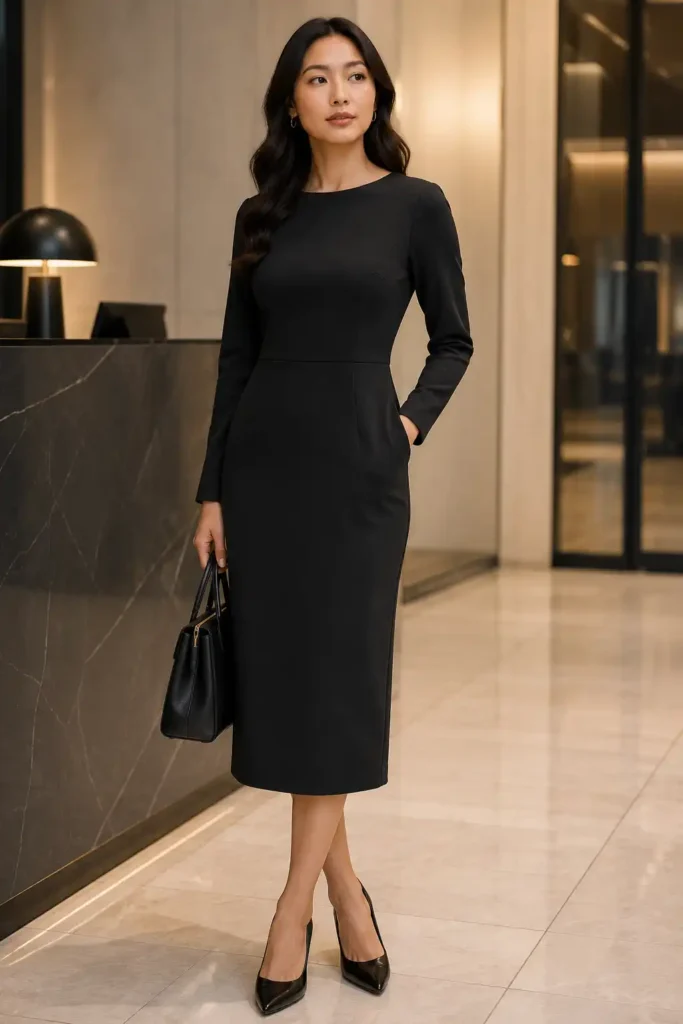
Midi Dresses
- Common directions: satin cowl midi, one-shoulder midi, lace midi, ruched bodycon midi and bias-inspired slip midi.
- Development focus: waist-hip line, walking movement, slit security and hem balance.
- Bulk focus: length consistency, zipper position, drape and pressing quality.
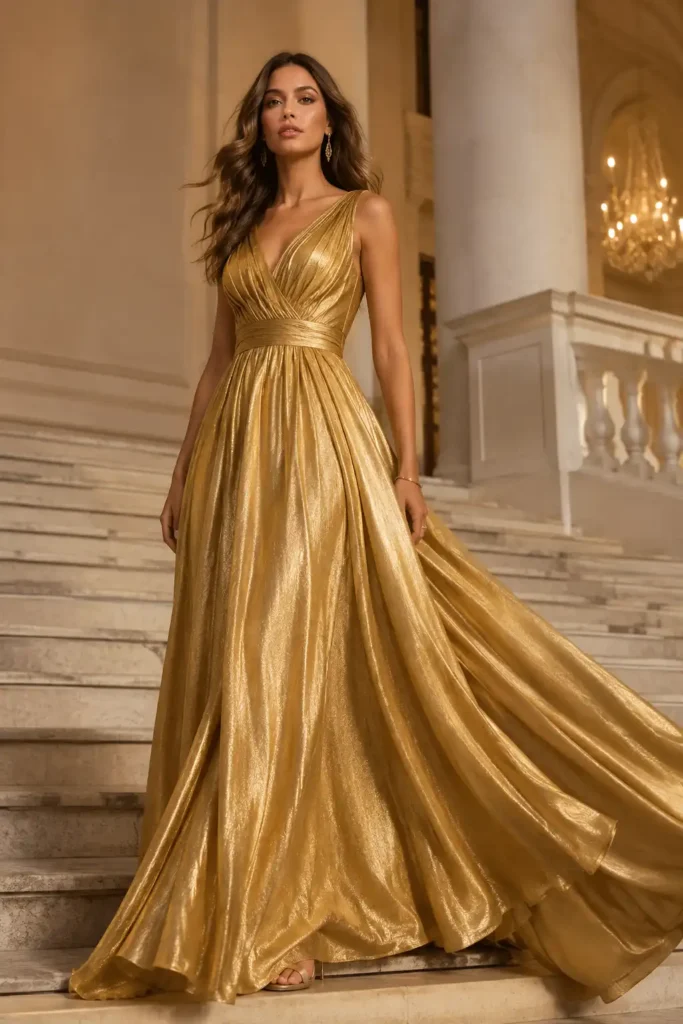
Maxi Dresses
- Common directions: resort maxi, occasion maxi, printed wrap maxi, halter maxi and mesh evening maxi.
- Development focus: overall proportion, train or sweep, transparency and movement.
- Bulk focus: hem level, print direction, lining, hanger pressure and carton folding.

Party Dresses
- Common directions: ruched mini, cut-out dress, sequin dress, corset party dress and draped satin dress.
- Development focus: body coverage, internal support, visual symmetry and comfort.
- Bulk focus: surface protection, secure trims, fit consistency and photo-ready finishing.

Occasion Dresses
- Common directions: wedding guest midi, cocktail dress, formal maxi, one-shoulder dress and lace event dress.
- Development focus: refined proportion, lining colour, seam placement and elegance in motion.
- Bulk focus: colour consistency, clean zippers, pressing and packaging presentation.

Bodycon Dresses
- Common directions: jersey bodycon, ponte midi, mesh-overlay bodycon and ruched bodycon.
- Development focus: stretch map, recovery, waist placement, hem grip and movement.
- Bulk focus: measurement tolerance, side-seam stability, elastic tension and recovery checks.

Corset Dresses
- Common directions: corset mini, satin bustier dress, mesh corset midi and lace corset occasion dress.
- Development focus: cup shape, boning position, waist support, closure and comfort.
- Bulk focus: symmetry, boning security, cup placement, top-edge stability and lining finish.

Fabric-Led Dresses
- Satin requires shine-direction and snag control.
- Mesh requires transparency, recovery and edge stability control.
- Lace requires placement, colour and lining coordination.
- Chiffon requires handling, transparency and hem control.
- Sequins require surface protection and secure construction.
Build Balanced Collections Across Every Season
Commercial Core Styles
Statement Occasion Pieces
Social-First Party Styles
Seasonal Colour Stories
Photo-Ready Samples
Reorder-Friendly Winners
Fabric and Colour Development for Dress Collections

Satin
- Review: composition, weight, width, surface shine, drape and opacity.
- Sample risk: neckline collapse, zipper rippling, seam impression and lining show-through.
- Bulk control: dye lot, cutting direction, surface protection, pressing and folded packing.
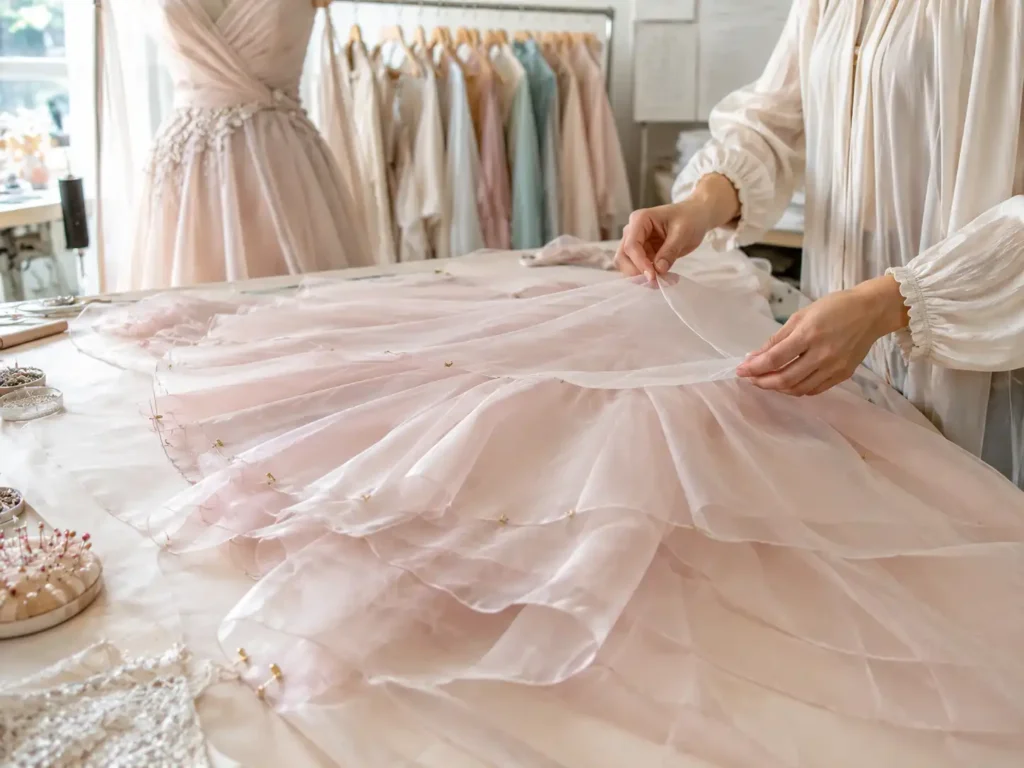
Chiffon
- Review: transparency, softness, print, width, shrinkage and lining compatibility.
- Sample risk: twisted seams, uneven hems, visible seam allowance and insufficient coverage.
- Bulk control: cutting support, bundle handling, seam finish, hem level and packing creases.
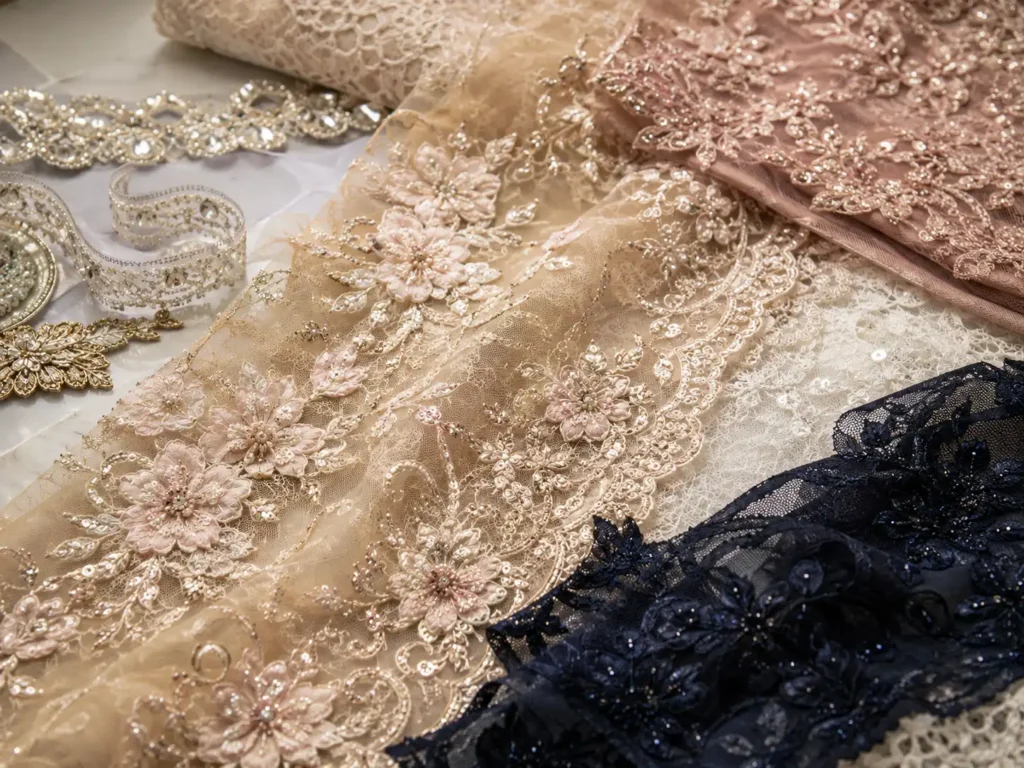
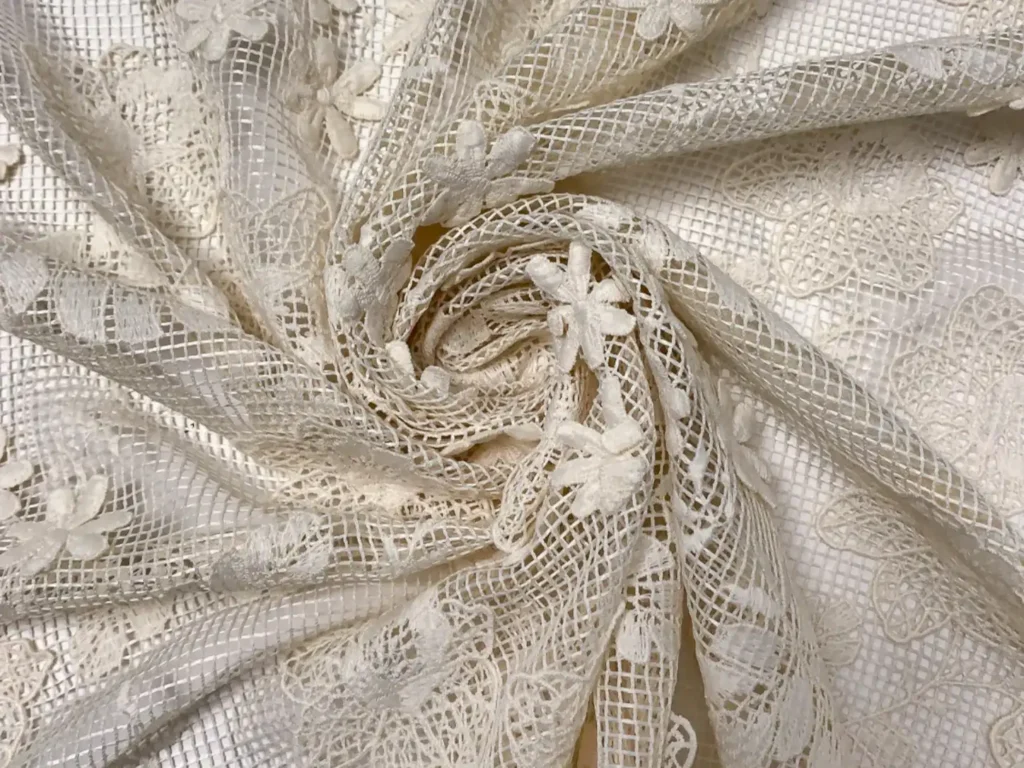
Lace
- Review: motif size, stretch, edge, hand feel, transparency, colour and supplier availability.
- Sample risk: broken motif flow, exposed lining, scratchy seams and uneven placement.
- Bulk control: panel orientation, defect marking, placement reference, lining colour and edge finish.
Mesh
- Review: stretch percentage, recovery, transparency, weight and colour under tension.
- Sample risk: excessive exposure, neckline growth, loose ruching and poor bust support.
- Bulk control: grain direction, elastic tension, layer matching, measurement and seam recovery.

Sequin
- Review: sequin attachment, backing, weight, stretch, direction and colour consistency.
- Sample risk: scratching, bulky seams, broken needles, weak closures and poor drape.
- Bulk control: surface inspection, seam protection, secure trims, repair process and protective packing.
Jersey and Ponte
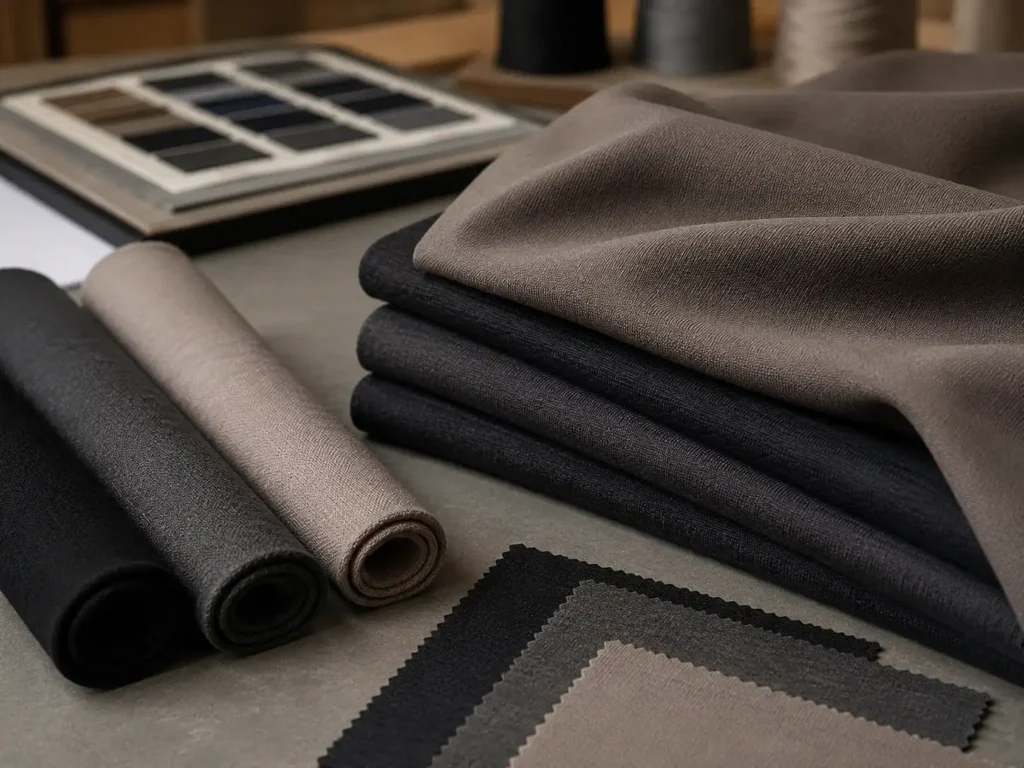
- Review: GSM, stretch, recovery, width, shrinkage, pilling and colourfastness.
- Sample risk: ride-up, bagging, side-seam twist and neckline growth.
- Bulk control: relaxation, cutting, stitch stretch, measurement and recovery comparison.
Crepe and Rayon
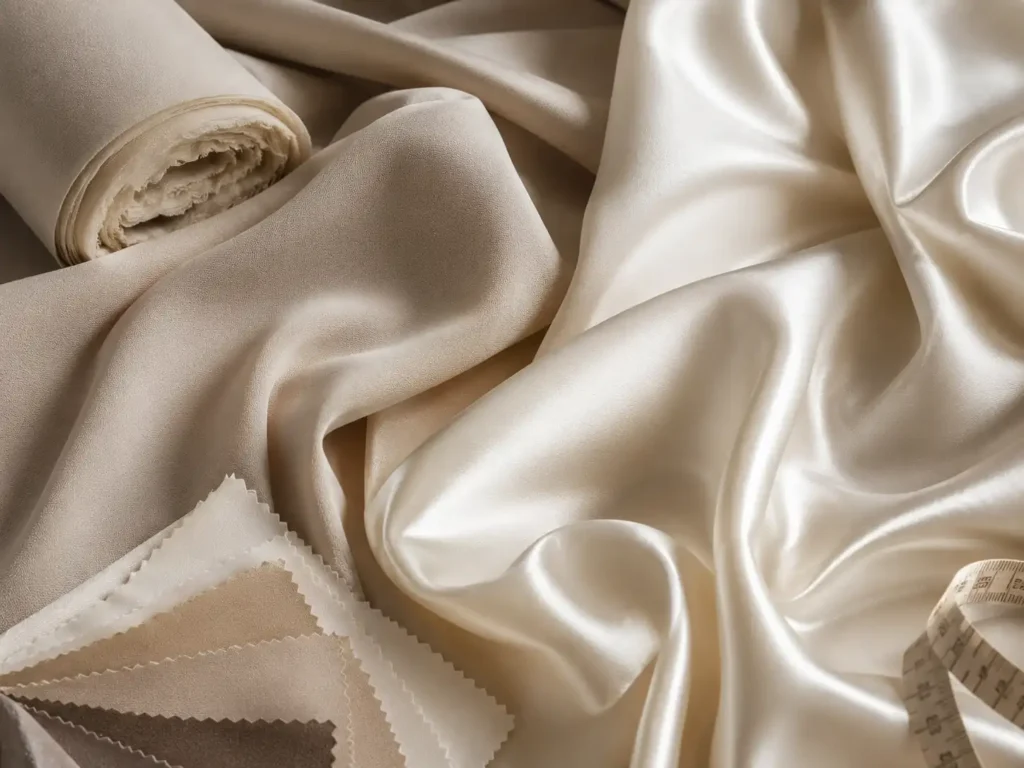
- Review: drape, opacity, shrinkage, recovery, wrinkle behaviour and colour.
- Sample risk: seam slippage, unstable length, show-through and shape loss.
- Bulk control: fabric relaxation, shrinkage allowance, seam construction and pressing.

Custom Colour and Print
- Colour approval: Pantone, lab dip, physical swatch, light-source review and bulk lot.
- Print approval: artwork, repeat size, placement, strike-off and cutting direction.
- Commercial control: material MOQ, development time, wastage, replacement risk and order split.
Fit Engineering for UK Boutique Dress Sizing
UK sizing is not one universal block. Jinfeng Apparel works from the approved brand size chart, base size, grade rules and fit comments so each collection follows the label’s established proportion and market position.

Bust, Waist and Hip Balance
Fit starts with a clear base size and intended silhouette. A bodycon dress uses controlled negative ease, while an occasion midi may require shaped seams with movement allowance. Corset dresses need internal support without forcing the outer fabric to carry all tension. Each style is reviewed through bust, underbust, waist, high hip, full hip and garment length rather than relying only on a generic size label.
- Base-size input: brand measurement chart, fit model data, garment measurements or approved reference sample.
- Construction input: stretch, lining, cups, boning, seam position, darts and closure.
- Fit review: neckline security, bust shaping, waist placement, hip contour, sitting comfort and movement.
- Bulk control: key measurement tolerances are set by product and construction, then checked during production and final inspection.

Neckline, Strap and Armhole
Neckline depth, strap length and armhole shape influence appearance, support and returns. A low neckline may look balanced on one sample size but expose too much when graded. Halter, one-shoulder, strapless and backless dresses need specialised balance through the bust and upper body. Adjustable components should still have controlled minimum and maximum settings.
- Neckline review: depth, width, gaping risk, modesty position and lining edge.
- Strap review: finished length, stretch, hardware, attachment strength and size progression.
- Armhole review: coverage, movement, underarm comfort and bra compatibility where relevant.
- Stability options: clear elastic, stay tape, internal support, boning, cups or edge reinforcement according to the style.

Length, Slit and Hem Balance
Mini, midi and maxi lengths should be defined through actual garment measurements rather than names alone.
Slit height must balance movement, coverage and seam stability.
Bias, chiffon, rayon and stretch fabrics can change length after hanging, steaming or wear, so sample approval may include a rest period or material-specific review before the hem is finalised.
- Mini: front and back coverage, sitting comfort and lining relationship.
- Midi: calf position, slit proportion, waist placement and heel versatility.
- Maxi: shoulder-to-floor balance, sweep, lining, train and packing method.
- Hem control: level checking after pressing, size progression and tolerance by fabric type.
Size Grading and Ratios
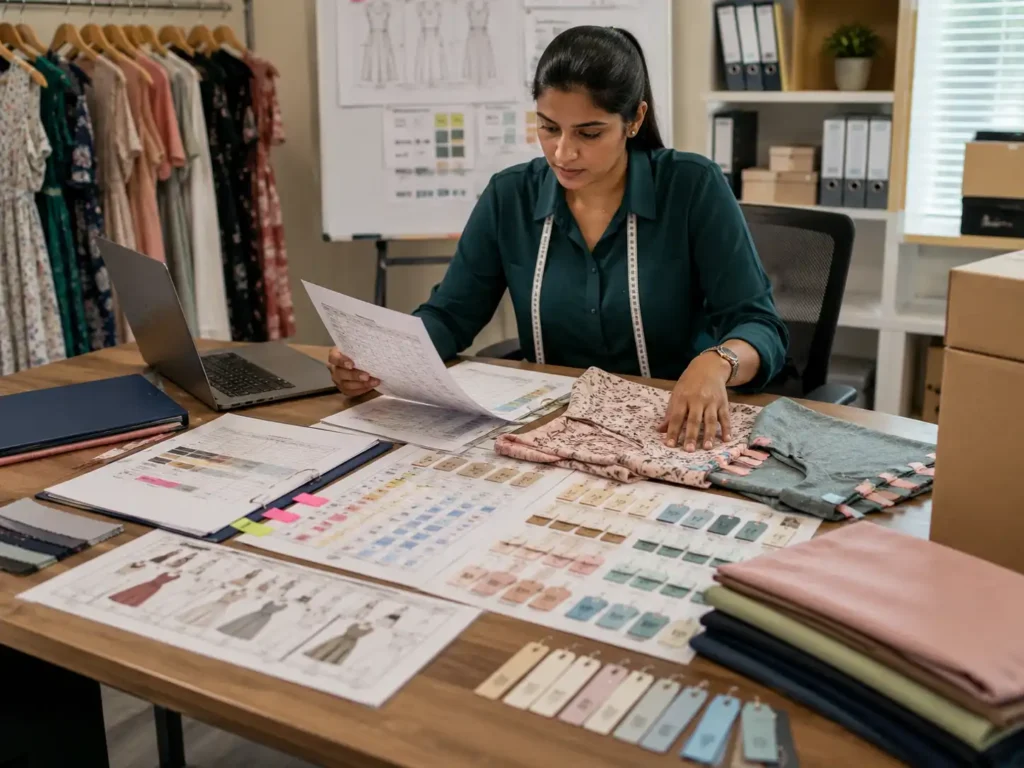
Grading follows the approved UK size chart and garment intent. Straight numeric increments are not enough for corset bodices, shaped necklines, fitted hips or long lengths. Critical points may need adjusted grade rules so the style remains visually balanced from the smallest to largest size.
- Typical range planning may cover UK 6-16, UK 8-18 or an approved extended range.
- MOQ can be divided across several sizes once the style-colour minimum is met, but the ratio must remain workable for cutting, measurement, labelling and packing.
- Petite, tall or extended-size blocks require separate review when proportions change beyond ordinary grading.
- Size labels, carton breakdown and warehouse data must match the final production ratio.
Construction Details Protect Premium Brand Presentation
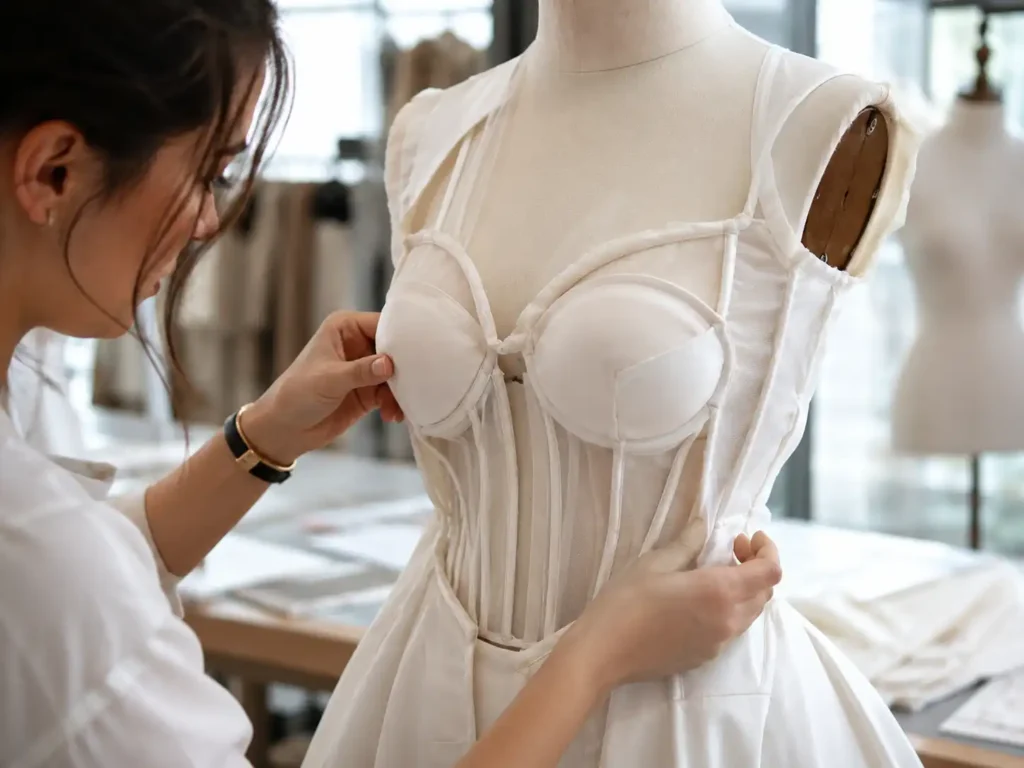
Cups and Boning
- Materials: moulded cup, removable cup, sewn cup, plastic boning or sew-through support according to style.
- Bulk control: left-right symmetry, secure ends, correct channels, stable top edge and consistent cup position.
- Comfort check: seam coverage, boning pressure, cup edge and skin contact.

Lining and Coverage
- Review: composition, stretch, hand feel, colour, opacity and shrinkage.
- Construction: full lining, partial lining, bodice lining, double layer or power-mesh support.
- Bulk control: seam concealment, hem relation, neckline roll, armhole finish and colour consistency.

Zippers and Closures
- Sample review: zipper length, tape colour, puller, seam allowance, top finish and waist alignment.
- Strength review: stress points, hook position, tie reinforcement and button security.
- Bulk control: smooth operation, flat insertion, matched seams, secure ends and colour consistency.

Ruching and Pleating
- Ruching control: start and end points, density, direction, seam security and left-right balance.
- Pleat control: width, depth, pressing, stitch position and retention.
- Bulk control: approved visual reference, measurements and inline comparison before volume errors spread.

Lace and Sequin Work
- Lace: motif direction, scallop placement, seam matching, defect marking and lining colour.
- Sequin: orientation, density, seam preparation, skin protection, repair and shedding control.
- Bulk control: approved placement photos, panel references, surface inspection and protective handling.

Pressing and Hem Finish
- Hem options: narrow rolled hem, baby hem, blind hem, coverstitch, clean-finished lining or bound edge.
- Pressing control: temperature test, seam shaping, crease prevention, hanger support and final cooling.
- Final review: hem level, surface cleanliness, thread trimming, shape and packing readiness.
From Design Reference to Approved Production Sample
A professional sample process separates visual exploration from production approval. Every stage has a different purpose, and all comments should be consolidated into a controlled version record before the next sample begins.
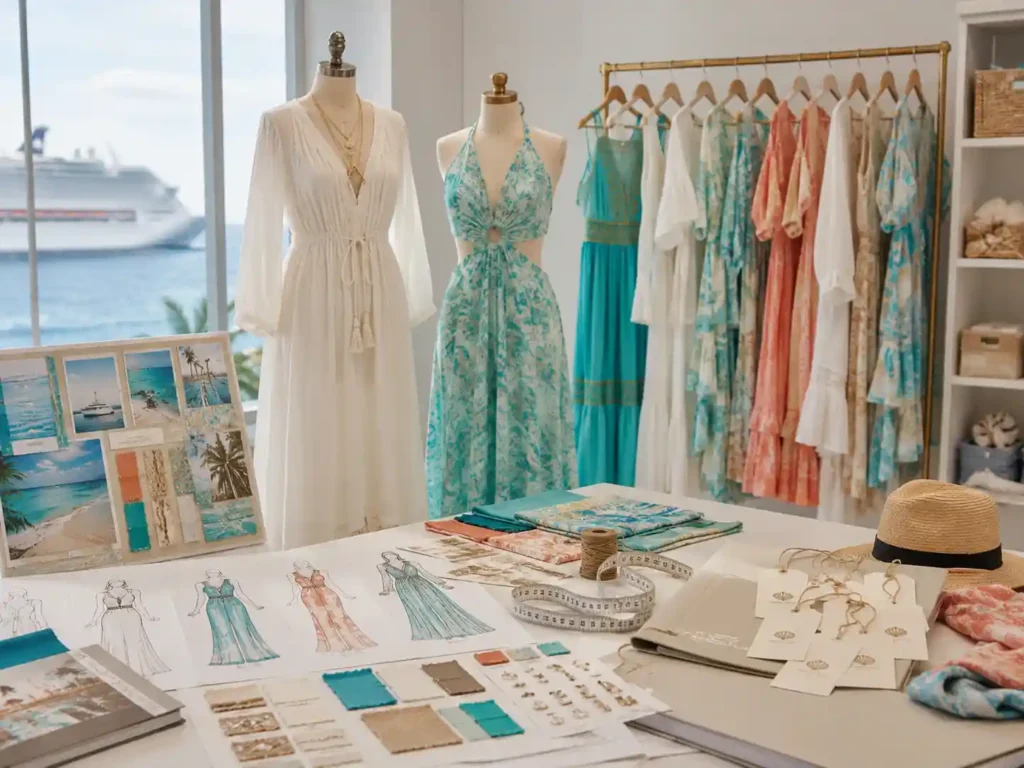
Project and Feasibility Review
A complete review normally begins within 1-2 business days after reference images, tech pack, target quantity, size range, fabric direction, packing needs and launch timing are received. The first response focuses on structure, material options, trim requirements, MOQ fit, development risk and missing information rather than offering an unsupported final price.
- Style structure: neckline, support, closure, lining, seam layout, drape, cut-outs and hem.
- Commercial structure: quantity by style and colour, size ratio, fabric minimums and packaging.
- Development route: standard first sample, fit sample, photo sample or direct PP route only when adequate production references already exist.

First Sample Development
For standard dresses using available materials, a common planning reference is 7-15 working days after sample payment, material direction and technical information are confirmed. Complex corset, lace, sequin, draped or multi-layer styles may need a longer window. The schedule is confirmed by style because material sourcing and pattern complexity create larger differences than sewing alone.
- Pattern development follows the selected base size and construction method.
- Internal review checks measurements, balance, workmanship and visible defects before feedback.
- Photos or videos can be provided for an initial review, but physical fitting remains important for close-fit or structured garments.

Revision and Fit Control
Revised samples commonly require 5-10 working days after consolidated comments and material decisions are received, subject to the scale of changes. Comments should identify each measurement, pattern, fabric, trim, colour, construction and packing change. Scattered messages and late additions increase version risk and make the launch calendar less predictable.
- Record the approved change beside the affected pattern or specification.
- Recheck linked areas when one measurement changes, such as strap, neckline and armhole.
- Re-cost the style when fabric, lining, trims or construction are materially changed.
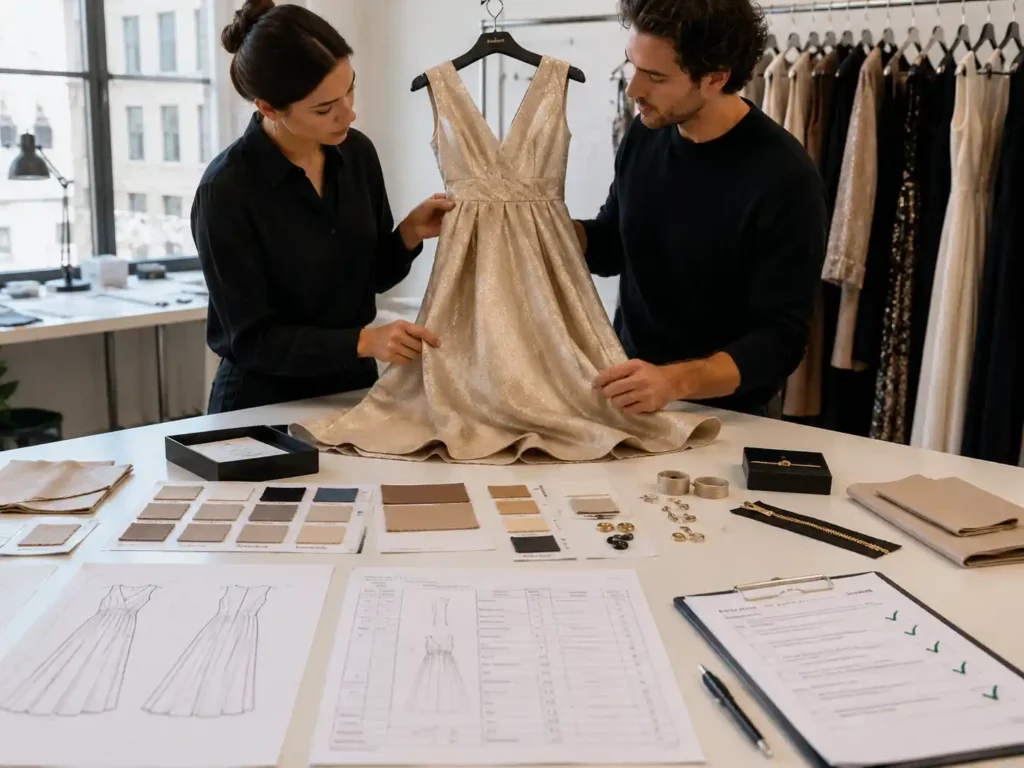
PP and Golden Sample Lock
The PP sample confirms bulk fabric, colour, trims, measurements, sewing method, label position, hangtag, packing direction and carton information. A Golden sample or approved physical reference is then used by production, QC and merchandising teams. Material changes after PP approval require a new assessment and may affect cost, delivery and consistency.
- Bulk planning begins only after essential approval points are clear.
- PP comments become production instructions and QC references.
- The approved sample is not treated as permission for uncontrolled substitutions.
Keep Multi-Style Launch Calendars Under Control
Seasonal collections move through several dependent approvals. Early grouping by fabric, complexity and launch priority makes a 10-30 style program easier to track and reduces late pressure on PP approval, production and shipment.
| Stage | Brand Input | Jinfeng Apparel Action | Planning Reference |
|---|---|---|---|
| Collection review | Line sheet, references, target quantity and launch date | Group styles by fabric, complexity and priority | Initial review in 1-2 business days after complete files |
| Material direction | Fabric hand feel, composition, colour and price level | Prepare available options, risks and supplier minimums | Commonly 3-7 business days for available directions; custom development varies |
| First samples | Approved direction, base size, measurements and sample payment | Pattern, sample making, internal check and visual feedback | Commonly 7-15 working days for standard styles after materials are ready |
| Revisions | Consolidated fit and construction comments | Update pattern, sample and revision record | Commonly 5-10 working days, depending on change depth |
| PP approval | Bulk fabric, trims, labels, packing and final measurements | Lock production standard and QC references | Required before bulk release |
| Bulk production | Confirmed PO, deposit, material arrival and approved PP | Cutting, sewing, inline QC, finishing and packing | Common planning range of 30-45 days for regular programs; multi-style and peak-season orders are scheduled separately |
| UK delivery | Forwarder details, warehouse guide, trade term and priority | Prepare cargo data, invoice, packing list and shipment coordination | Transit reference comes from the selected route and forwarder; express, air, sea or split shipment can be compared |
MOQ Planning for Styles, Colours and Sizes
MOQ begins at 200 pieces per style and colour. Collection size, material minimums, colour development, trim sourcing, size ratio and packaging can change how the order should be grouped and quoted.
Style and Colour Logic
A style in black at 200 pieces can enter standard evaluation. The same style split into black 100 and ivory 100 does not normally meet the per-colour minimum. Four styles at 50 pieces each also do not create one 200-piece production unit because each pattern, material allocation, cutting marker, label set and QC process remains separate.
- One style, one colour, 200 pieces: standard evaluation basis.
- One style, two colours, 200 pieces per colour: 400-piece total program.
- One style, two colours, 100 pieces per colour: normally below the standard structure.
- Multi-style programs: each style-colour combination is reviewed, even when the total order is large.
Material and Trim Minimums
Stock satin, mesh, chiffon, jersey, ponte and crepe directions are often easier to align with the standard MOQ, but actual colour, batch, width, hand feel and available quantity still need confirmation. Custom dyeing, printing, lace, sequins, specialised hardware and printed packaging may have supplier minimums above garment MOQ.
- Confirm material availability before costing and sample approval.
- Group styles around shared fabrics where the design direction allows.
- Avoid excessive colours that weaken each colour quantity.
- Separate material development minimums from garment production minimums.
Size Ratio Planning
A 200-piece style-colour can normally be divided across an approved range such as UK 6-16 or UK 8-18, provided the ratio is workable. Very wide size ranges, petite and tall blocks or extended sizing may require additional pattern, grading, fit and measurement work.
- Submit the intended size ratio with the RFQ.
- Keep size labels, barcode files, carton breakdown and warehouse data aligned.
- Use sales history to protect depth in priority sizes rather than dividing every size equally.
- Confirm separate blocks where body proportion changes beyond ordinary grading.

Product-Specific Quality Control for Fashion Dresses

Incoming Fabric Inspection
- Check roll identity, colour lot and available quantity.
- Compare physical fabric with approval reference.
- Record defects and decide replacement, isolation or cutting avoidance.

Shade and Surface Review
- Use Pantone, lab dip or physical swatch reference where applicable.
- Check shell, lining and trims together.
- Protect sensitive surfaces from friction and contamination.

Cutting Accuracy
- Bundle by style, colour and size.
- Check notches, pair components and trim placement marks.
- Control lace motifs, stripes, print direction and stretch grain.

Sewing and Construction
- Compare line output with PP and Golden sample.
- Confirm stitch type, thread colour and seam method.
- Hold affected work when a repeated issue appears.

Measurement Control
- Check base size and selected graded sizes.
- Review measurements during production and final inspection.
- Investigate patterns when repeated deviation appears.
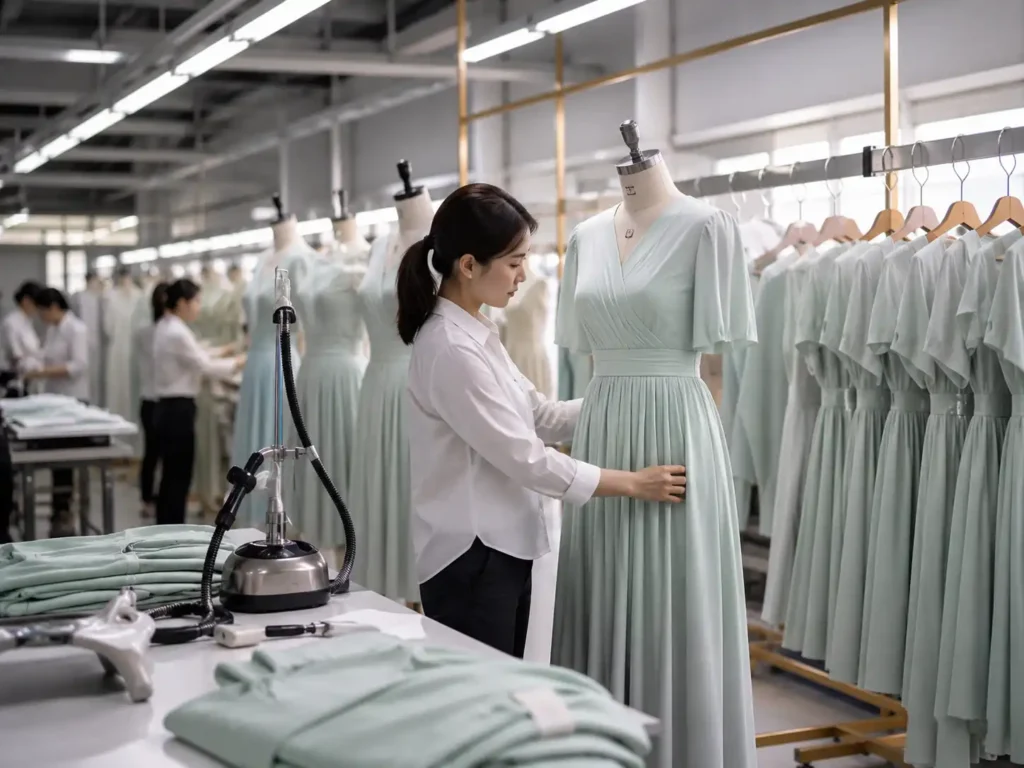
Garment Appearance
- Front, back and side appearance.
- Hanger and flat presentation where relevant.
- Loose thread, stain, shine mark and surface defect review.
Pressing and Finishing
- Test temperature and protective method.
- Allow garments to cool and settle before measurement or packing.
- Keep hangers, clips and folds from marking sensitive areas.
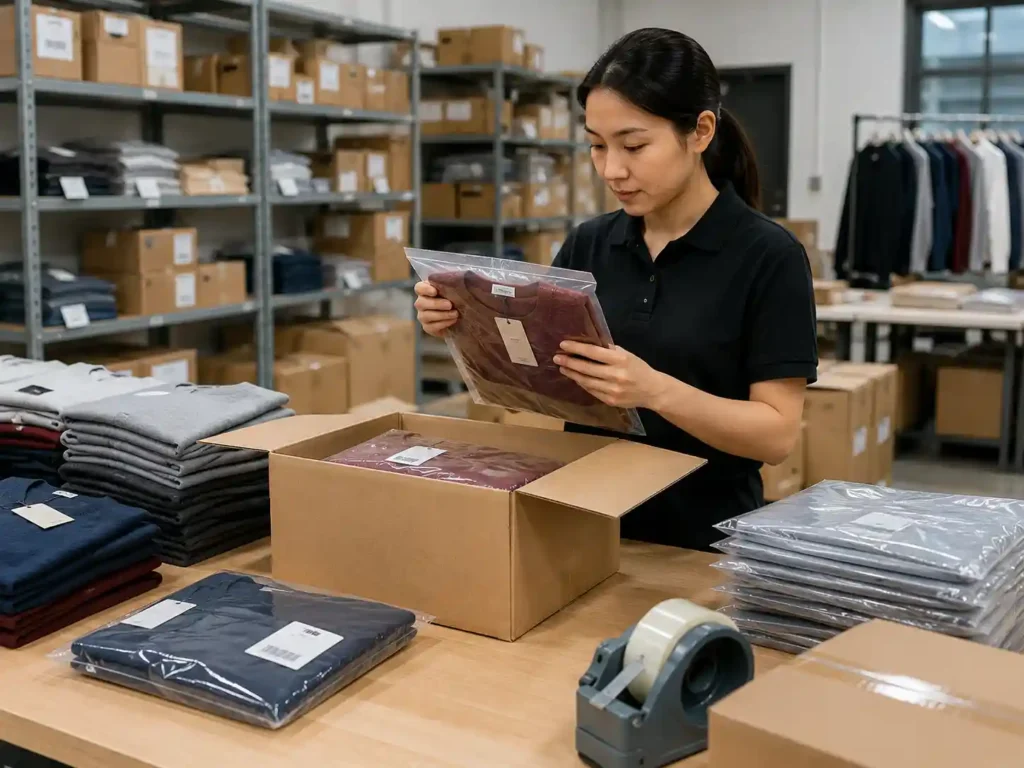
Packing and AQL Review
- Match barcode and SKU with style, colour and size.
- Check carton weight, dimensions and quantity breakdown.
- Provide inspection support and corrective-action records when required.
Private-Label Finishing for Retail and Ecommerce Delivery

Main Brand Labels
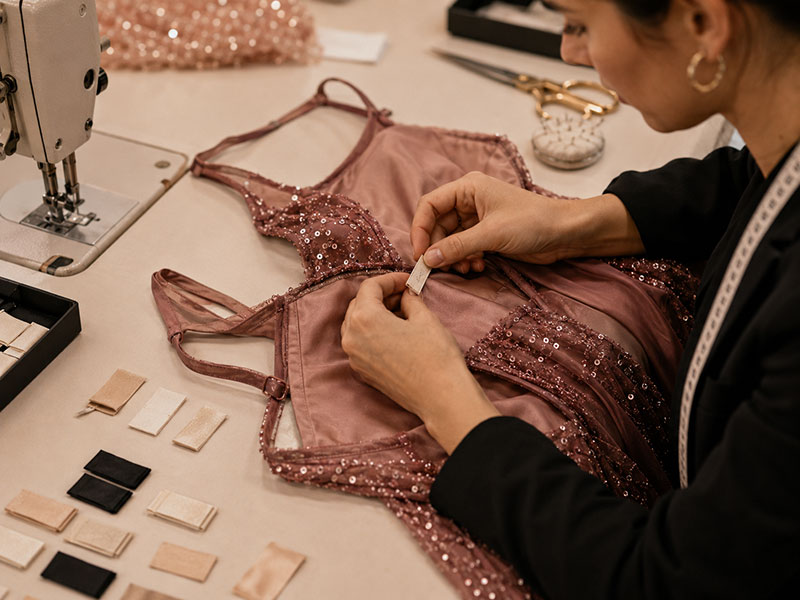
Care and Content Labels

Size Labels

Hangtags
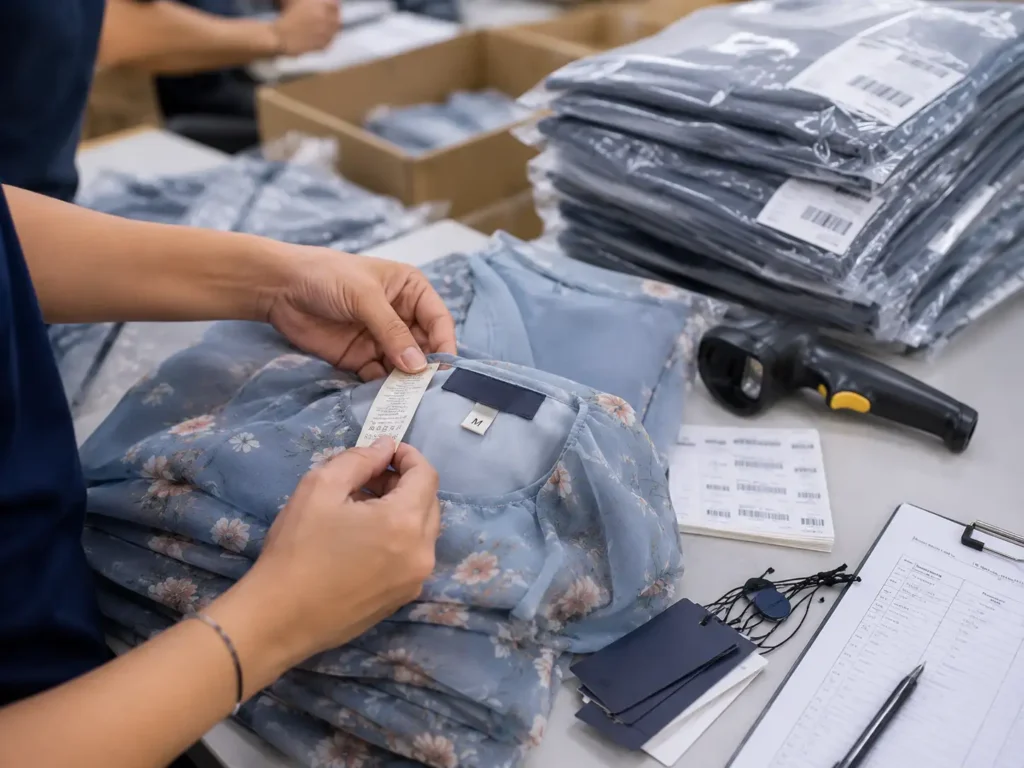
Barcode Stickers

Polybags and Cartons
NDA, Design Protection and Compliance Support
Design Confidentiality
Jinfeng Apparel supports NDA-based cooperation and protects tech packs, line sheets, original samples, patterns, measurements, fabric directions, trim details and unpublished designs. Brand names and unreleased products are not used publicly without authorisation.
- Anonymous production examples can be prepared without exposing identity.
- Sensitive design files remain limited to relevant development and production teams.
- Physical samples and pattern records are handled as project materials.
Private-Label Protection
Brand labels, hangtags, packaging artwork, barcodes, quantity, target price, launch dates and supply-chain information are treated as confidential project data. Approval files should identify the latest version so outdated artwork does not enter production.
- Label and packing records support repeats without public disclosure.
- Shipment images are shared through project communication, not used automatically for promotion.
- Brand-specific materials are separated and controlled by project.
Compliance by Project
Material certifications, factory-audit records and third-party testing depend on the actual factory, fabric supplier, colour, batch, certificate scope, validity and order requirement. OEKO-TEX, GOTS, GRS, SMETA, BSCI, SGS, Intertek or BV-related support is confirmed only where relevant documents and project conditions are available.
- Submit supplier-audit and testing requirements before quotation.
- Confirm certificate scope against the actual material or facility.
- Include added MOQ, lead time and testing cost in the project plan where applicable.
Dress Programs for Established Fashion Brands
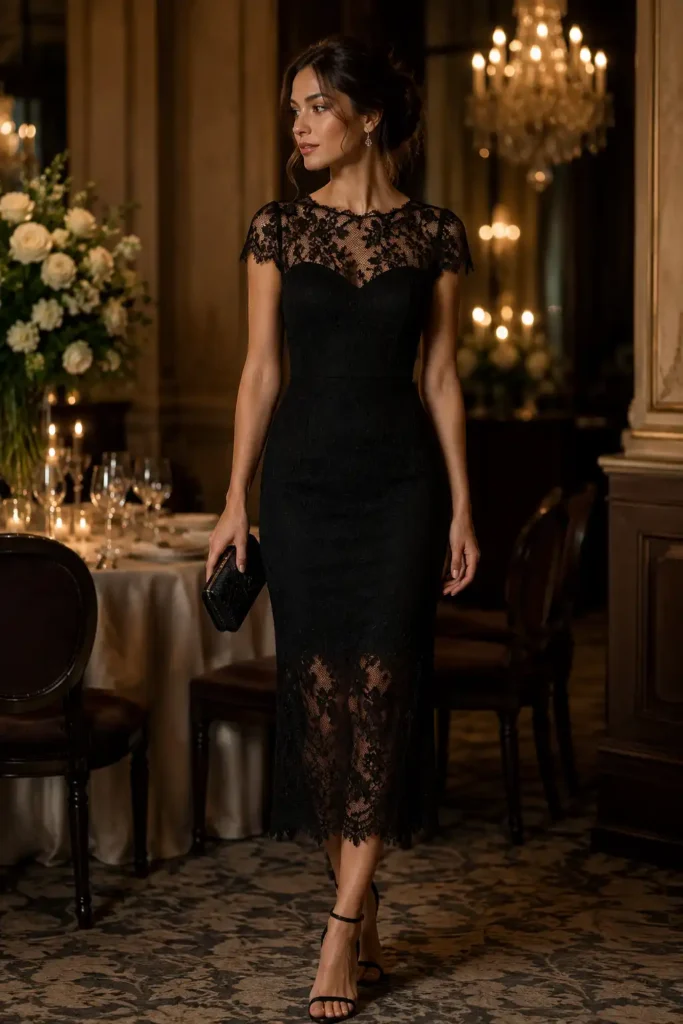
UK Occasionwear Collection
An anonymous UK occasionwear label developed 16 styles across satin cocktail dresses, lace wedding guest midis, one-shoulder dresses and crepe occasion pieces, with a total order of approximately 32,000 garments.
The range used four core colour groups and UK 6-16 sizing.
Development focused on lace placement, lining colour, satin drape, midi proportion, one-shoulder balance and photo-sample presentation.
Styles were divided into three fabric groups, with hero products prioritised for first sampling. Revised samples recorded neckline, waist, slit and lining changes before PP approval.
Bulk control covered satin shade, invisible-zip flatness, lace motif orientation, size measurements, pressing and barcode packing.
Priority colours were prepared for the first shipment, while remaining bulk followed under the agreed forwarder plan.

Premium Ecommerce Party Program
An anonymous premium ecommerce brand developed 24 styles across mesh bodycon dresses, ruched minis, corset party dresses, sequin statements and satin draped styles, totalling approximately 58,400 garments. The key commercial need was strong campaign appearance without losing size consistency and bulk repeatability.
Regular mesh, power mesh, stretch lining and satin weights were compared before sample approval. Corset styles received cup and boning review, while cut-out products were checked for coverage, edge stability and movement. Photo samples and production samples were tracked separately so visual changes did not enter bulk without technical approval.
Production was allocated by stretch, corset, sequin and woven groups. Inline inspection focused on neckline growth, ruching distribution, zipper, cup position, measurement and surface damage. Private-label packing used SKU-level barcode, size sticker and carton breakdown controls.

Boutique Bestseller Replenishment
An anonymous multi-channel boutique brand placed a 12-style repeat program of approximately 26,000 garments after reviewing sales by colour and size.
The repeat covered satin midis, ponte bodycon dresses, printed maxis and two lace occasion styles.
Original pattern, measurement, fabric, trim and packing records were retrieved, then compared with current material stock and supplier conditions.
Two original colours remained available, one satin colour required a new bulk approval, and one printed rayon quality was replaced after hand-feel and shrinkage comparison. A revised sample was made only for the affected material change.
Size ratios were adjusted toward stronger-selling sizes, and the order was divided into a priority replenishment shipment and a planned main shipment.
Barcode data and carton instructions were updated to match the new PO rather than copied from the first order.
Frequently Asked Questions for UK Boutique Brands

Start Your Boutique Dress Manufacturing Project
Send Jinfeng Apparel the collection information already available, even when a few technical details still need development. Kelly and the project team will review the style structure, fabric direction, quantity plan, size range, colour split, private-label requirements, sample route, production risk and target delivery window before proposing the next step.
A complete tech pack supports faster costing, while a line sheet, reference images or an original sample can also be assessed for development. Formal quotations are prepared after the key material, construction, quantity, packing and trade conditions are clear.
Please include:
- Reference images, sketches, original sample or tech pack
- Line sheet with 10-30 style priorities where applicable
- Quantity by style and colour
- UK size range and planned size ratio
- Fabric, colour and trim direction
- Main label, care label, hangtag, barcode and packing requirements
- Target sample date, launch date and delivery location
- Preferred trade term or nominated-forwarder details


