
Dress Manufacturer for UK Boutique Fashion Brands
Curated dress development and scalable private-label production for established UK boutique labels, premium online stores and regional retail groups.
Jinfeng Apparel develops boutique-focused dress collections from Guangdong, China, linking fabric direction, pattern engineering, sample approval, bulk control, branded packing and export delivery. The operating model is built for established fashion businesses managing original products, seasonal launches and repeat orders where style identity must remain consistent across every approved SKU.
- Collection programmes can cover 10-30 styles and approximately 20,000-80,000 garments across one coordinated brand order.
- Development resources include 2 sample rooms, 7+ senior womenswear pattern makers and 20+ sample machinists.
- Production is supported by 6 owned women’s fashion factories and 10+ long-term satellite production partners, allocated by product and workmanship requirements.
- MOQ starts from 200 pcs per style/colour; fabric, trim, colour development, construction and branded packing are reviewed before the commercial plan is locked.
Manufacturing Facts UK Boutique Brands Can Verify
Since 2008
Six Owned Factories
Ten Plus Partners
Two Sample Rooms
Seven Plus Pattern Makers
Fifteen Plus QC
Built for Established UK Boutique Fashion Businesses
Boutique Chains
Premium Online Boutiques
Occasionwear Labels
Multi-Channel Brands
Private-Label Programmes
Seasonal Dress Teams
What Boutique Dress Programmes Need From a Manufacturer
Distinct Product Identity
Commercial Style Mix
Reliable UK Fit
Fabric-Led Quality
Launch-Date Control
Retail-Ready Delivery

A Guangdong Dress Partner for UK Boutique Programmes
Jinfeng Apparel provides an overseas manufacturing route for UK boutique fashion businesses seeking dress-focused development, scalable production and retail-ready delivery. Manufacturing is based in China and should be evaluated on transparent capability, process and project control.
Dress Specialisation Before Broad Capacity
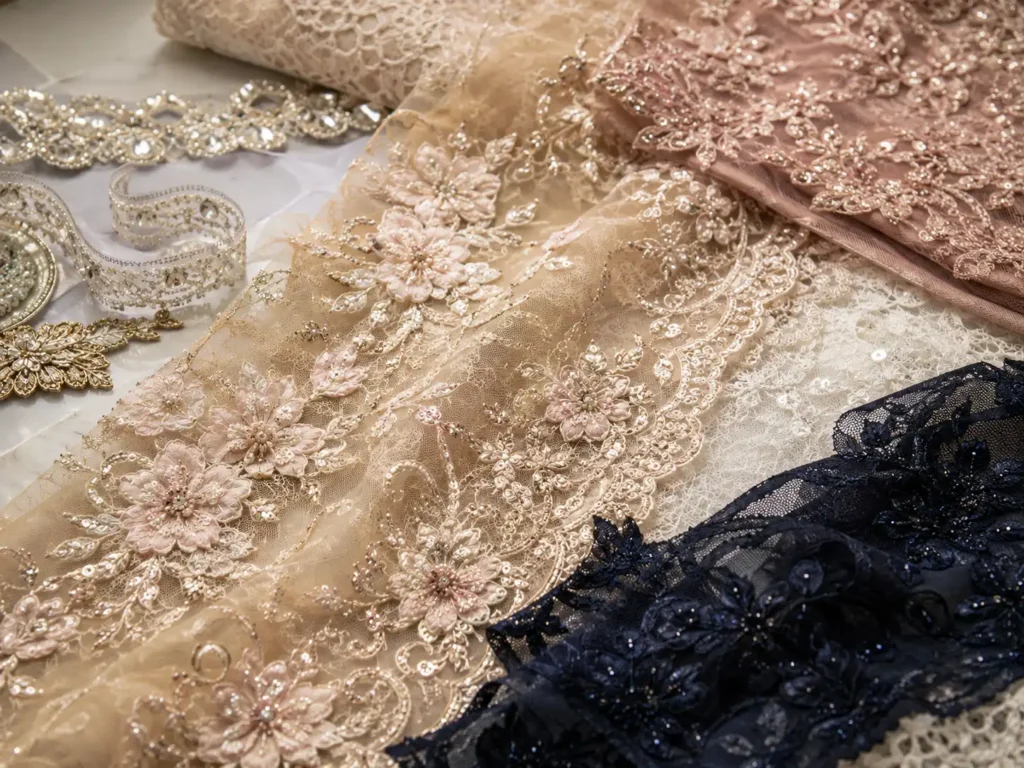
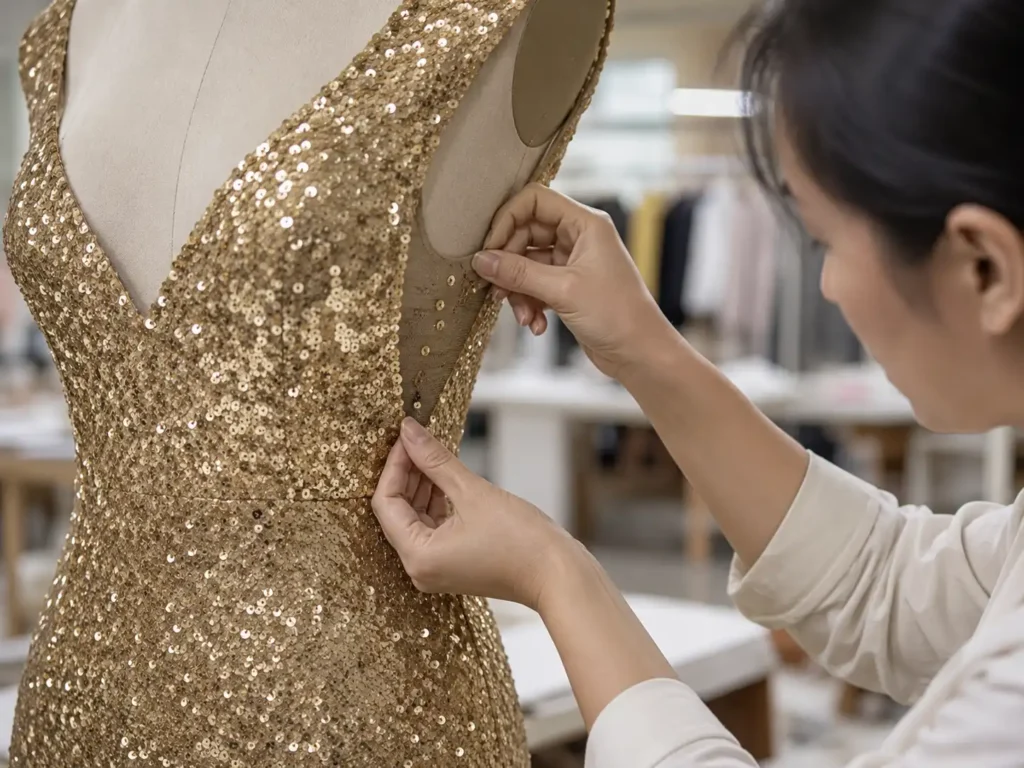
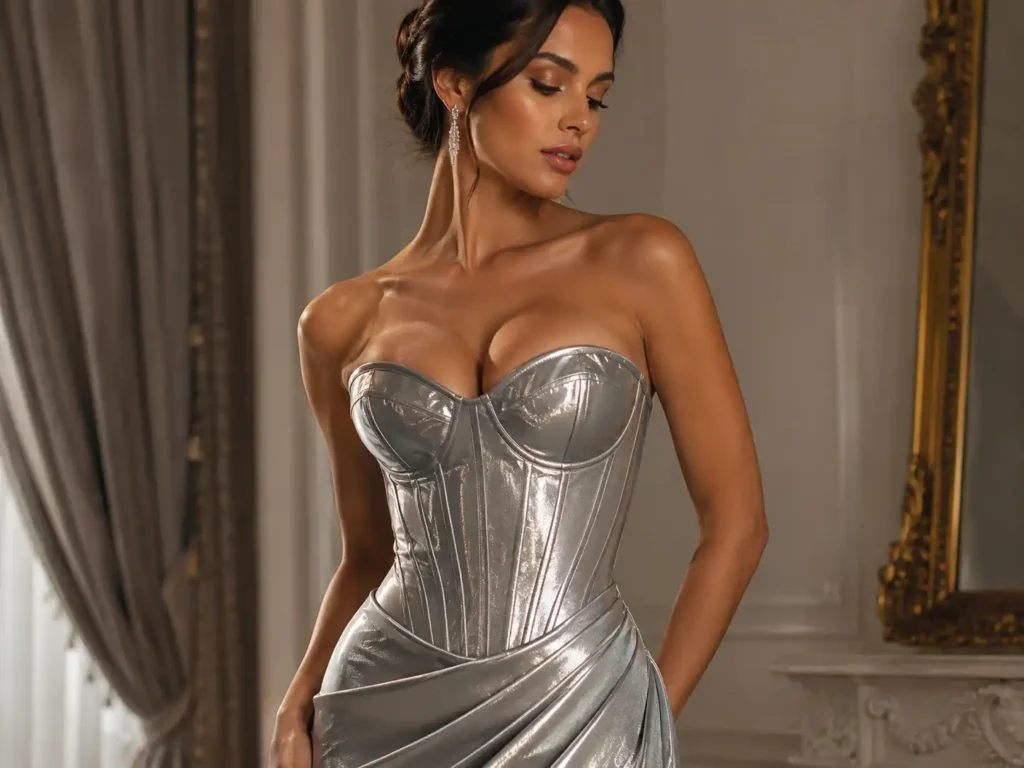
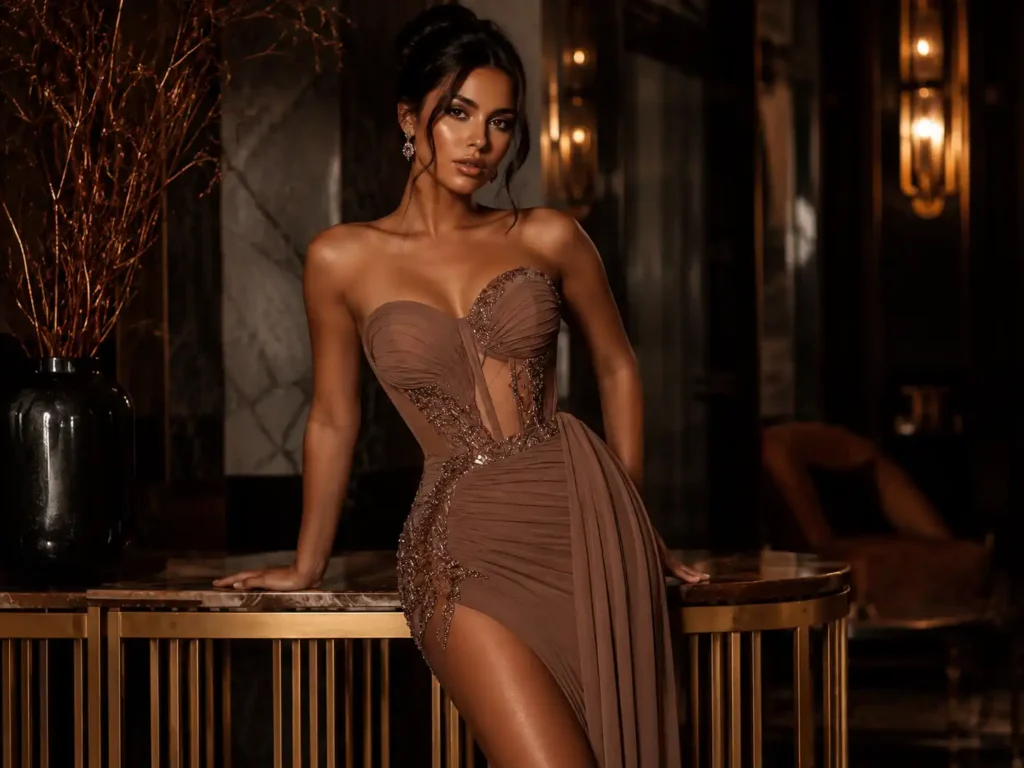
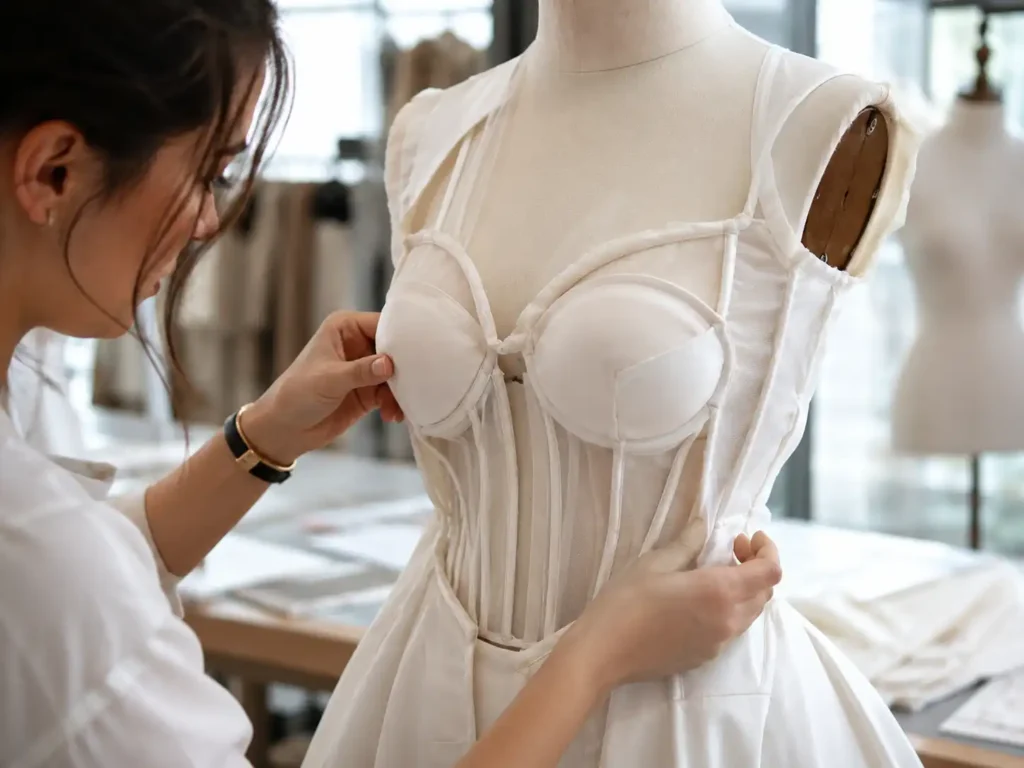
The strongest product field is premium custom womenswear, particularly dresses, skirts, jumpsuits, matching sets and collection extensions. Development experience covers wedding guest, party, cocktail, evening, resort, bodycon, corset, satin, mesh, lace and sequin directions. Every category receives its own technical route. A power-mesh mini needs stretch recovery and neckline stability; a satin slip needs grain, drape and pressing control; a corset dress needs cup position, boning, upper-bust security and lining support. Listing a product is easy. Converting it into a reliable SKU requires pattern, material and QC decisions suited to the specific construction.
Guangdong Supply Resources Support Development
Guangdong’s established apparel supply network gives access to woven and knitted fabrics, linings, zippers, elastic, bra cups, boning, lace trims, labels, hangtags and packaging resources. Access alone does not guarantee a suitable result. Jinfeng evaluates supplier availability, colour, quality level, MOQ, development time, cost and bulk stability before an option is approved. Stock fabrics can support faster commercial planning, while custom dyeing, exclusive lace, special sequins, certified materials or developed hardware may require separate supplier minimums and longer preparation. The product team receives clearer trade-offs before the sample route is locked.
Development and Production Remain Connected
Project review, fabric direction, pattern development, sample revision, PP approval, bulk production, inspection, private-label packing and shipment coordination operate as one connected sequence. Fit comments update patterns and measurement files. Trim substitutions update the BOM, cost and sewing instruction. Barcode or polybag changes update the packing file and QC checklist. Six owned factories and long-term production partners extend capacity, but every style is assigned according to material, construction, workmanship and schedule. The purpose is controlled scale, not a claim that every factory can make every dress equally well.
Dress Categories for Curated Boutique Collections

Occasion Dresses
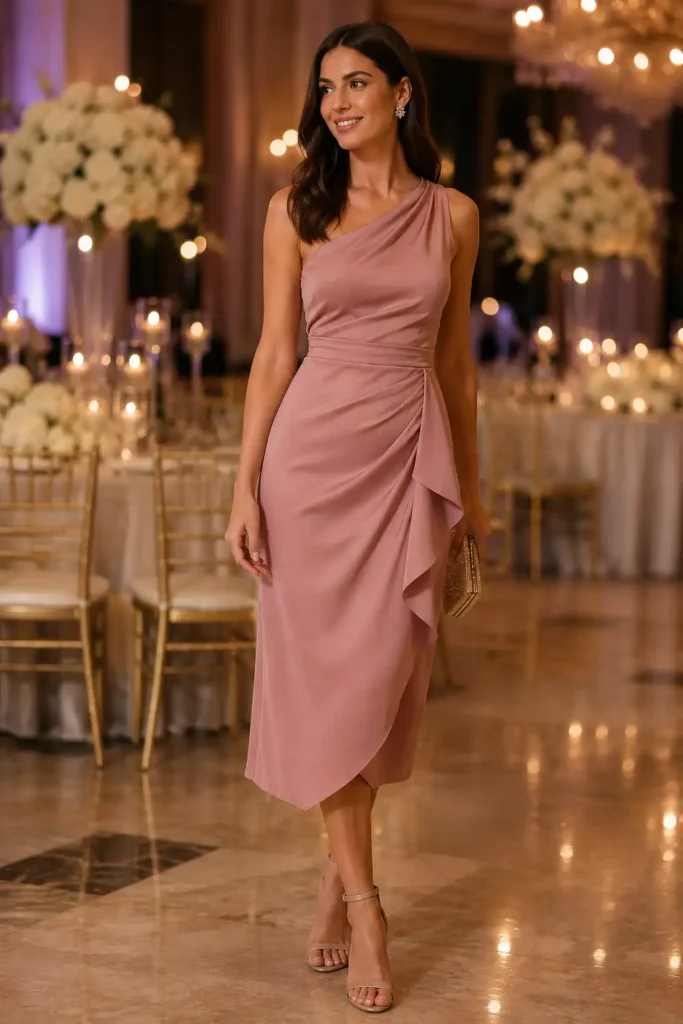
Wedding Guest Dresses

Party Cocktail Dresses

Bodycon Dresses

Corset Dresses

Satin Slip Dresses
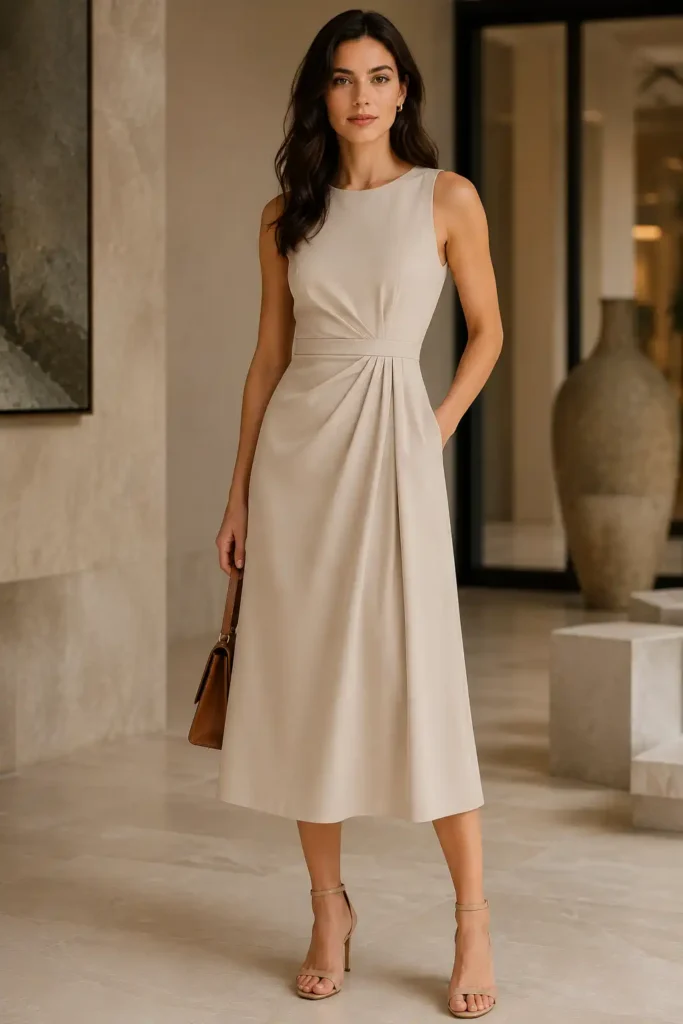
Midi Dresses
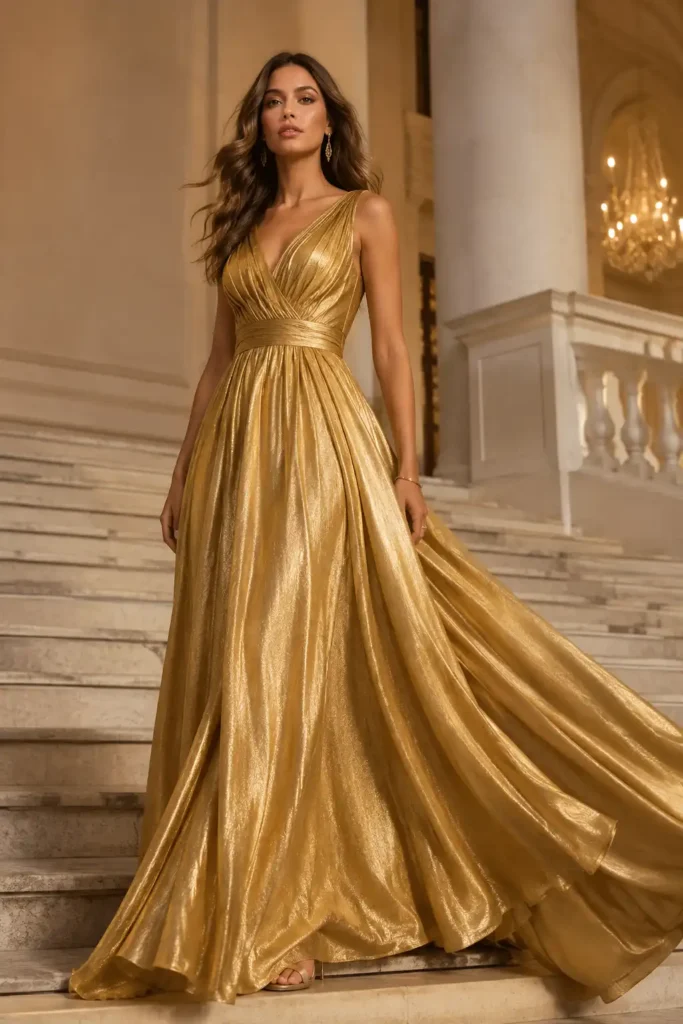
Maxi Dresses

Resort Dresses

Evening Dresses

Office Evening Dresses

Jumpsuit Extensions
Build a Boutique Assortment With Clear Commercial Roles
A boutique dress programme becomes easier to develop when every style has a defined commercial role. Hero products create attention, core silhouettes stabilise sales, seasonal products support launch moments, and repeatable shapes provide replenishment value.
| Assortment Role | Typical Products | Commercial Purpose | Manufacturing Focus |
|---|---|---|---|
| Hero styles | Corset mini, sequin party dress, sculpted midi | Campaign imagery, social visibility and brand recognition | Complex samples, movement, support, decoration, photo-ready finish |
| Core styles | Midi, wrap, A-line, jersey bodycon | Reliable conversion and repeat selling | Stable measurements, fabric continuity, efficient workmanship, reorder records |
| Occasion styles | Wedding guest, cocktail, evening | Higher-value seasonal demand | Colour story, lining, fit security, event-calendar delivery |
| Entry price styles | Simple mini, jersey or woven day dress | Accessible opening price point | Material efficiency, clean construction, controlled trim cost |
| Collection extensions | Jumpsuit, skirt, top, matching set | Increase outfit building and average order value | Shared fabrics, compatible colours, aligned labels and packing |
| Reorder styles | Approved bestsellers and new colourways | Replenishment and seasonal continuity | Pattern retention, fresh fabric approval, shade review, packing consistency |
Fabric Directions for UK Boutique Dress Programmes

Satin and Stretch Satin
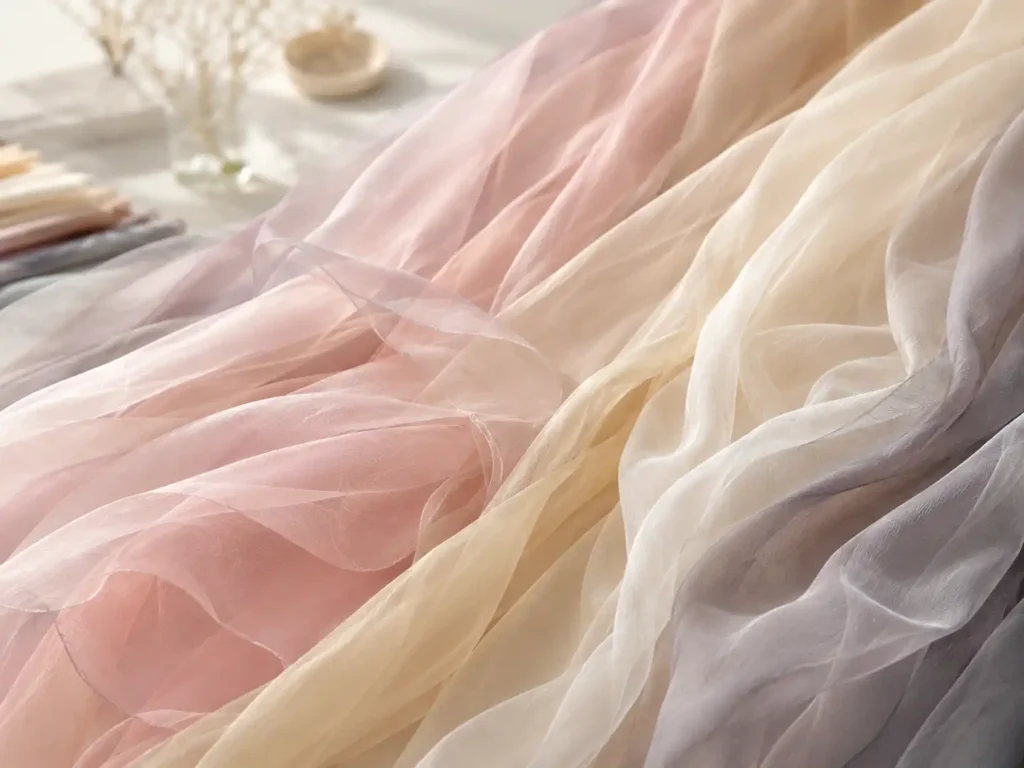
Chiffon
Lace

Mesh and Power Mesh

Jersey and Rib Knit
Ponte and Crepe
Sequin and Embellished Fabric

Velvet, Organza and Tulle
Fit and Size Development for UK Boutique Ranges
Dress fit is controlled through measurable points, pattern balance and movement. Jinfeng can follow an approved brand chart, an original sample or a defined base size, while grading remains linked to silhouette and fabric behaviour.
Bust, Waist and Hip Balance
Fitted dresses rely on the relationship between upper bust, full bust, under bust, waist, high hip and full hip rather than one circumference. Excessive negative ease can pull side seams forward, distort necklines or raise hems. Corset styles need upper-bust security without uncomfortable compression. Slip dresses may use softer shaping but still depend on cowl depth, back width and strap placement. Jinfeng reviews measurements together with front, side and back fit images. General comments such as “too tight” are converted into specific actions: releasing a measurement, reshaping a curve, moving a seam, changing dart intake, revising cup position or reassessing the fabric stretch assumption. Final changes are recorded in the pattern, size chart, grade rule and PP sample.
Neckline, Strap and Movement Control
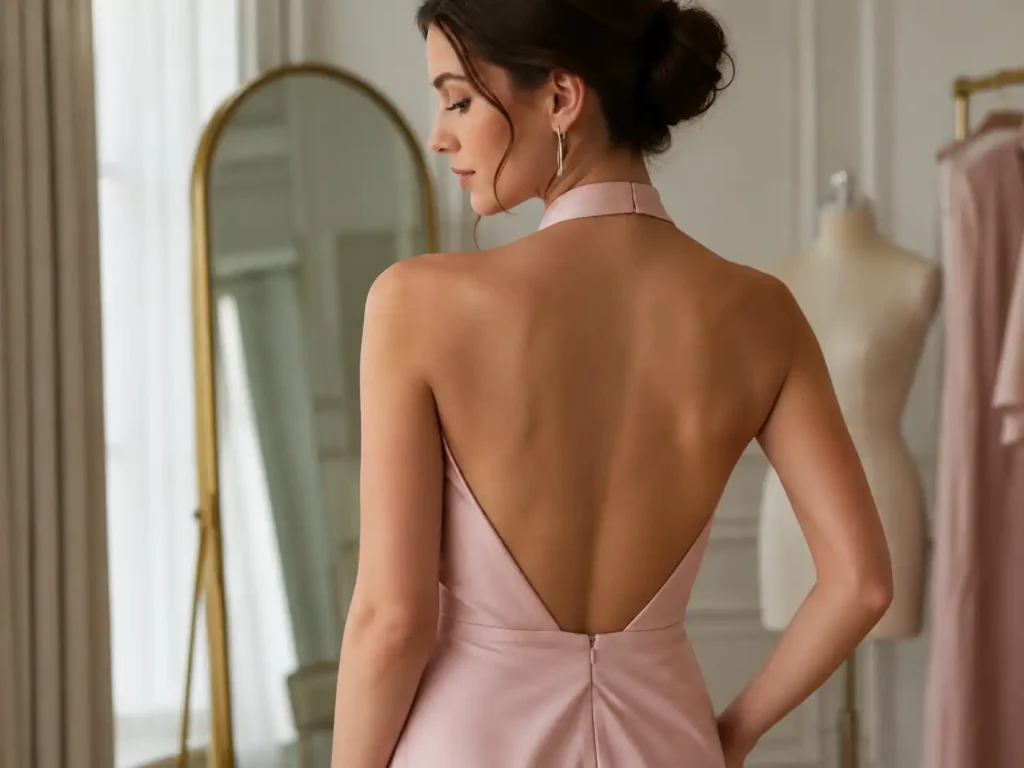
Neckline design affects appearance, wear security and return risk. Halter shapes must control neck pressure and side-bust coverage. Strapless dresses require upper-bust shaping, internal support and grip.
Deep-V, cut-out and backless dresses need stable coverage through movement. Adjustable straps require approved finished length, slider size, attachment position and load strength.
Fit review should include sitting, walking, arm movement and side-view checks where relevant. Movement observations are translated into measurable pattern or construction changes rather than treated as styling preferences.
Length, Grading and Bulk Tolerance
Mini, midi and maxi lengths create different commercial and technical risks. Mini dresses need movement allowance and lining coverage.
Midi shapes must preserve the intended leg proportion, while maxi hems require balanced front, back and side lengths. Slit height should be measured from a fixed garment point and reviewed during standing and sitting.
Jinfeng can support XS-XL and wider size structures where agreed, but bust, waist, hip, strap, armhole, neckline and length do not always grade at the same rate. Bulk measurement inspection follows the approved chart and tolerance, with size labels, barcode data and carton breakdown linked to the same ratio.

Design Details Engineered for Wearability and Bulk Repeatability
Halter and Backless
Strapless and Corset
Deep V and Cut-Out

Ruching and Draping

One Shoulder Asymmetry

Pleats Slits and Ruffles
Trims, Workmanship and Finishing for Boutique-Level Presentation
Zippers and Closures
Cups Boning Support

Lining and Coverage

Straps Elastics Sliders
Lace Stones Sequins
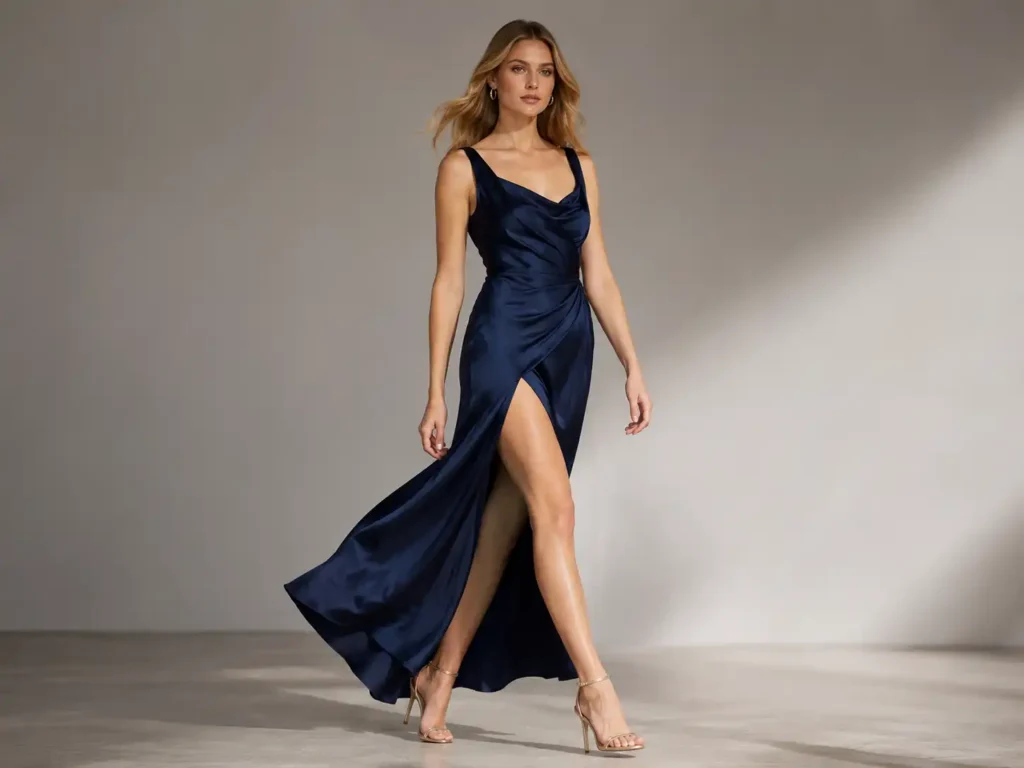
Seams Hems Pressing
From Line Sheet to a Production-Ready First Sample
Project Review
Fabric Direction
Trim Direction
Pattern Development
Sample Construction
Internal Review
MOQ, Quotation and Commercial Order Planning
MOQ is calculated by style and colour, while quotation reflects the approved product structure. Clear quantities, fabrics, trims, size ratios and packing information allow costs to be assessed without weakening the intended brand appearance.
| Planning Item | Jinfeng Baseline | Main Variables | Recommended Preparation |
|---|---|---|---|
| MOQ | Starts from 200 pcs per style/colour | Fabric stock, custom colour, print, lace, sequins, trims, packing | Prepare quantity by style, colour and size ratio |
| Sample cost | Charged by development scope | Pattern work, fabric, trims, complexity, revision type | Send complete files and define sample purpose |
| Bulk quotation | Built from approved construction | Fabric, trims, sewing time, lining, finish, QC, packing, wastage | Confirm BOM, measurements, quantity and delivery terms |
| Colour planning | Each colour is assessed separately | Dye lot, supplier minimum, trim matching, shade risk | Concentrate volume in commercially meaningful colours |
| Size planning | Distributed within approved style-colour quantity | Range width, grade complexity, special size ratio, labels | Provide brand size chart and sales-based size ratio |
| Special materials | Reviewed by supplier requirement | Certified fabric, custom dye, print, lace, sequin, hardware | Approve backup options and long-lead items early |
| Packing materials | May carry independent minimums | Woven labels, hangtags, printed bags, boxes, stickers | Provide final artwork and warehouse guide before bulk |
| Delivery terms | Confirmed by project | EXW, FOB, CIF, DAP or DDP, freight route, destination | State warehouse date, port, forwarder and document needs |
Bulk Production and Factory Allocation for Multi-Style Orders
Collection-scale production requires controlled allocation, not a single line promise. Styles are grouped by material, construction, workmanship, delivery priority and inspection needs before release.
Factory Allocation Follows Product Requirements
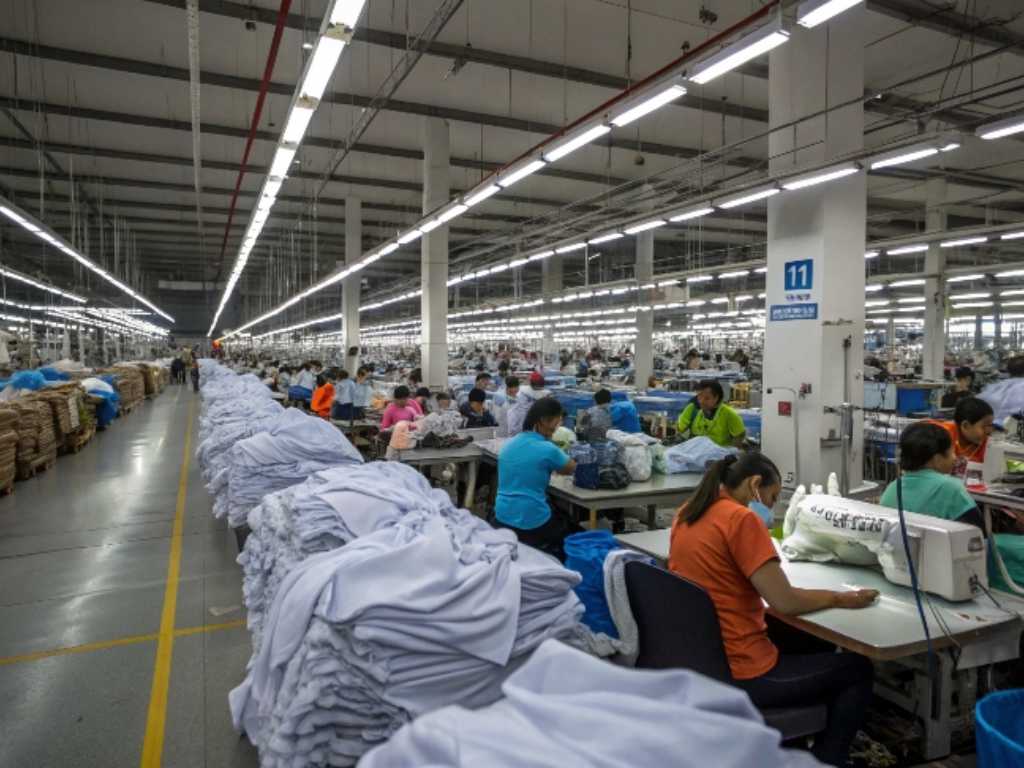
Six owned women’s fashion factories form the core production base, supported by more than ten long-term satellite production partners. Knit bodycon dresses, woven satin styles, lace occasionwear and embellished evening pieces may require different operators, handling and line preparation. A 10-30 style programme is grouped by fabric family, structural complexity, colour plan, launch priority and workmanship level. Approved patterns, BOMs, sewing instructions, trim cards, measurements and QC checkpoints travel with each style. The satellite network is used as controlled production capacity, not informal outsourcing. Factory suitability, available line timing, sample handover and quality scope are reviewed before allocation.
Capacity Is Planned Against Complexity and Calendar
Jinfeng’s structured system includes 18+ sewing lines, 6+ flexible production lines, 2 sample rooms and a regular monthly capacity reference of 100,000+ pieces across suitable womenswear programmes. The figure is not applied equally to every complex dress. A simple jersey range and an embellished corset collection have different output rates, labour content and inspection windows. Capacity planning therefore considers approved quantity, fabric arrival, style mix, operator skill, finishing time, packing materials and required shipment date. Peak wedding, graduation, party and holiday seasons should be booked early, especially for special fabrics, custom colours and complex private-label packing.
Project Teams Keep Information Connected
Production is supported by 12+ merchandisers, 15+ QC inspectors and 30+ finishing and packing workers, together with development, pattern, material and logistics teams. Merchandisers track samples, materials, approvals, bulk progress and open decisions. Production teams manage pre-production meetings, cutting, sewing and finishing. QC teams inspect materials, in-line workmanship, measurements, final garments and packing. Packing teams follow labels, barcodes, size ratios and carton instructions. Logistics teams coordinate courier, air, sea, forwarder and export documents. The purpose of team data is not to show headcount; it is to define who owns each decision and reduce information loss between sample approval and delivery.
Production Controls That Protect Approved Dress Standards

Material Approval

Pre-Production Meeting
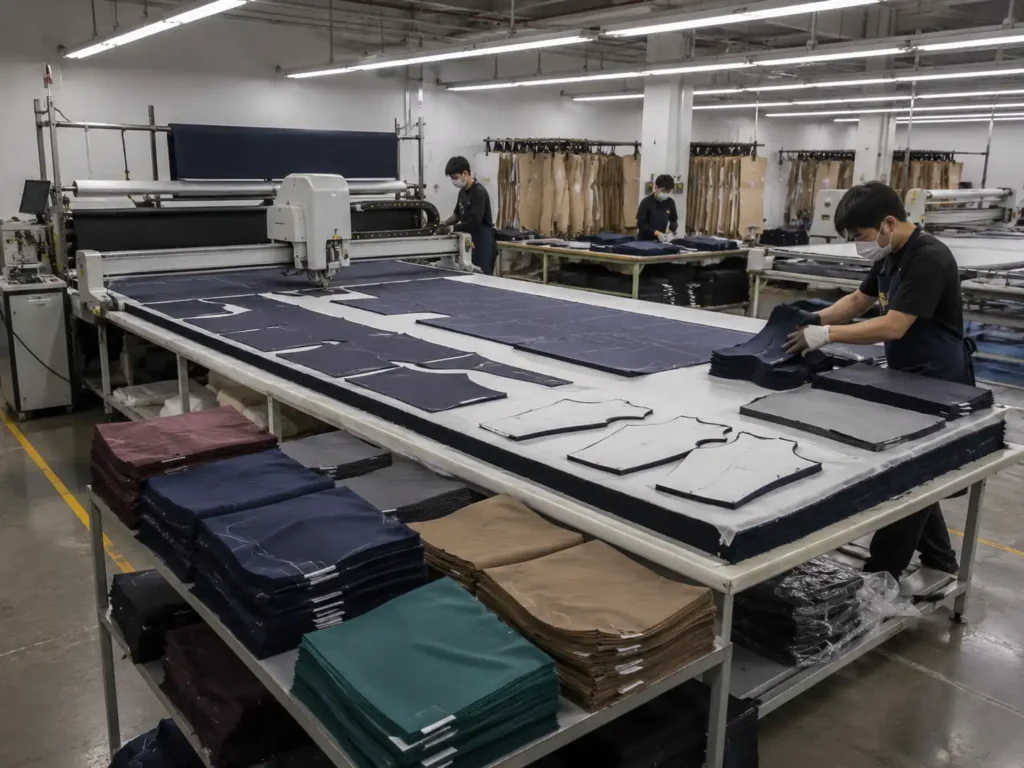
Cutting Control

Sewing In-Line Control

Finishing Pressing

Packing Release
Quality, Compliance and Brand Protection Controls
Fabric Inspection
Cutting Inspection
In-Line Sewing QC
Measurement Control
Final Garment QC
Packing and AQL
Compliance Support
NDA and Design Protection
Private Label, SKU Control and Retail-Ready Packing
A finished boutique collection includes brand identity, data accuracy and warehouse acceptance. Labels and packing are managed as production specifications, not last-minute decoration.
Brand Labels and Garment Information
Jinfeng can support woven labels, satin labels, printed labels, heat-transfer labels, size labels, care labels and hangtags. Artwork, dimensions, fold type, colour, content, placement, supplier MOQ and lead time are confirmed before bulk printing. Fibre content, care wording, importer details or market-specific legal text should be reviewed and approved by the brand or appointed compliance team. Label placement is checked against the garment structure so the component does not show through pale fabric, scratch the wearer or interfere with fit. Spare buttons, trim bags or special instruction cards can be added where defined in the approved packing file.
Barcode and SKU Accuracy
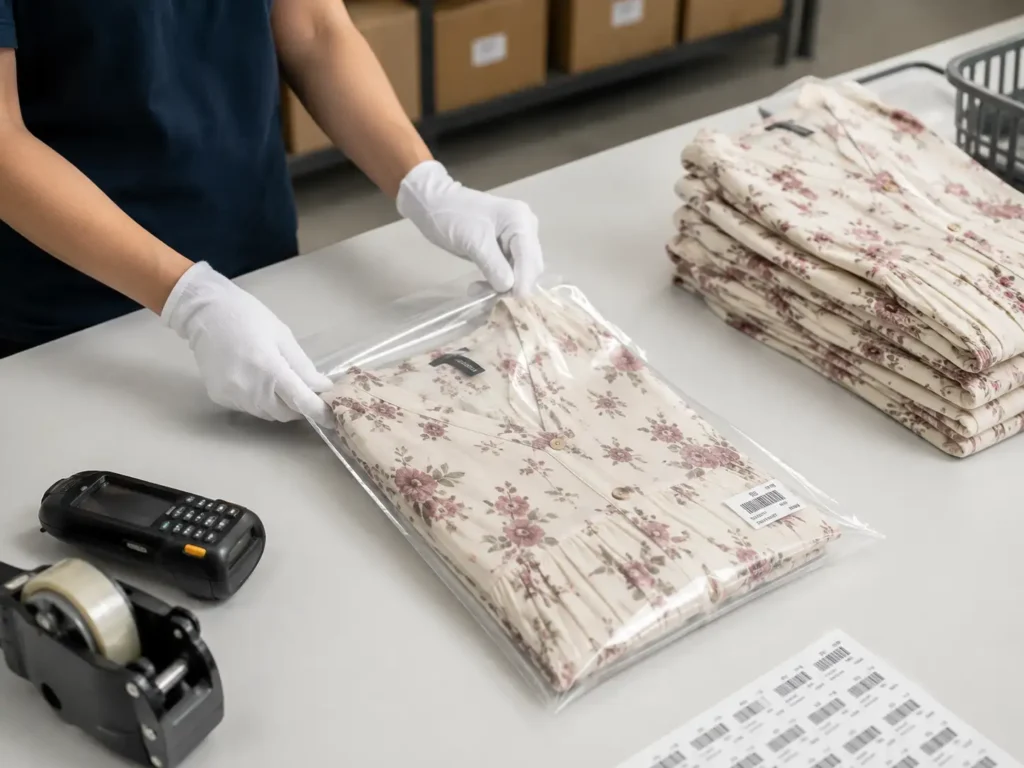
Barcode and SKU data connects style, colour, size, price, channel and warehouse records. Artwork or spreadsheet data should use one approved naming structure. Informal colour renaming or inconsistent size labels can cause inventory errors even when garments are correct. Jinfeng maps barcode stickers, polybag labels, carton labels and packing lists against the approved style-colour-size breakdown. Scan verification, visual checks and carton-level quantity review can be included according to the programme. Multi-channel brands may require separate labels or carton routes for ecommerce, stores, wholesale accounts or marketplaces, which should be identified before packing starts.
Polybags, Cartons and Warehouse Guides
Packing can include clear or branded polybags, tissue, garment bags, size stickers, barcode labels, carton dividers, carton marks and warehouse-specific labels. Material thickness, dimensions, ventilation, warning text, recycling marks and supplier MOQ are reviewed by project. Satin, velvet, sequins and structured dresses may need added protection against snagging, crushing or hardware contact. Carton quantity, gross weight, net weight and dimensions affect freight cost and warehouse handling. Receiving guides, appointment rules, purchase-order references and carton label formats should be supplied early enough for proof approval and packing preparation.
UK Launch Planning, Freight and Delivery Coordination
Launch Calendar
Air and Sea Strategy
UK Delivery Documents
Representative Boutique Dress Programme Profiles

UK Occasion Boutique Chain

Premium Online Boutique Drops
A premium UK online boutique planned 24 dress styles and 58,800 pieces across four campaign drops. Products included power-mesh minis, bodycon jersey, satin slips, ruched midis, sequin party dresses and relaxed resort maxis. Each drop had its own content deadline, but all styles shared one barcode structure, care-label format, polybag standard and carton naming rule. Jinfeng separated the programme into hero content styles, commercial core products and later-drop extensions. Photo-ready samples were scheduled early but remained separate from PP approval. Bodycon patterns were reviewed against fabric stretch and recovery, mesh necklines were stabilised, and sequin edges received lining and protection changes. The brand supplied a UK and international size chart covering XS-XXL. Grading review concentrated on bust, waist, hip, mini length, strap and neckline depth. Production progress was reported by material arrival, cutting, sewing, in-line QC, finishing and packing rather than one overall percentage. Priority quantities for the first launch moved by air, while the larger balance used the brand’s forwarder. Reorder review later used retained patterns and packing files, with new bulk shades approved before release.

Regional Multi-Channel Boutique Group
Frequently Asked Questions for UK Boutique Fashion Brands

Start Your UK Boutique Dress Programme
Send the information available for your collection and Kelly will organise an initial project review. A useful submission normally includes the style list or line sheet, tech packs or reference images, quantity by style and colour, intended size range, fabric direction, private-label requirements and the date the garments need to reach the UK warehouse.
The team can then review product complexity, material availability, MOQ fit, sample route, quotation inputs, likely production allocation, packing requirements and delivery planning. Incomplete concepts can receive an initial feasibility response, while accurate commercial quotations require enough information to confirm fabric, trims, construction, quantity and packing. NDA-based review is available for unpublished designs and protected development files.
- Style list, line sheet, tech pack, sketch, reference image or original sample details
- Quantity per style/colour and proposed colour-size ratio
- Fabric preference, target hand feel, lining and key trims
- Brand labels, hangtags, barcode, polybag, carton and warehouse requirements
- Target launch date, required UK warehouse date and preferred delivery term


