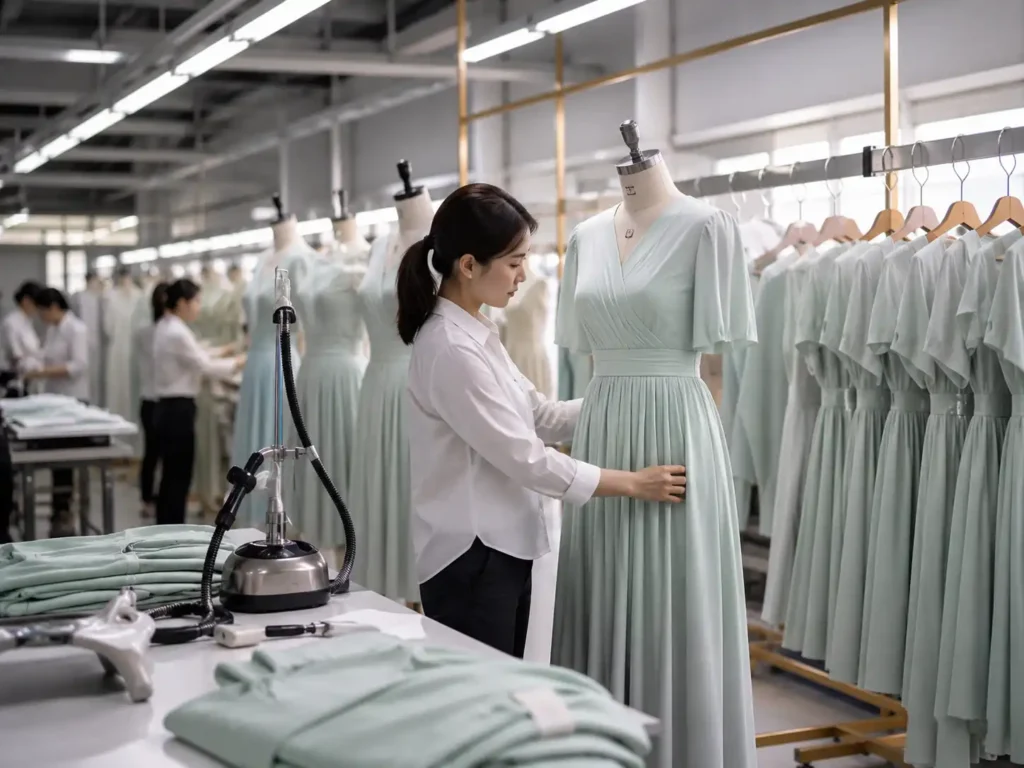
...

Dress Manufacturer for Technical Pack Review Teams

Technical review that turns dress specifications into controlled samples, approved standards and repeatable bulk production.

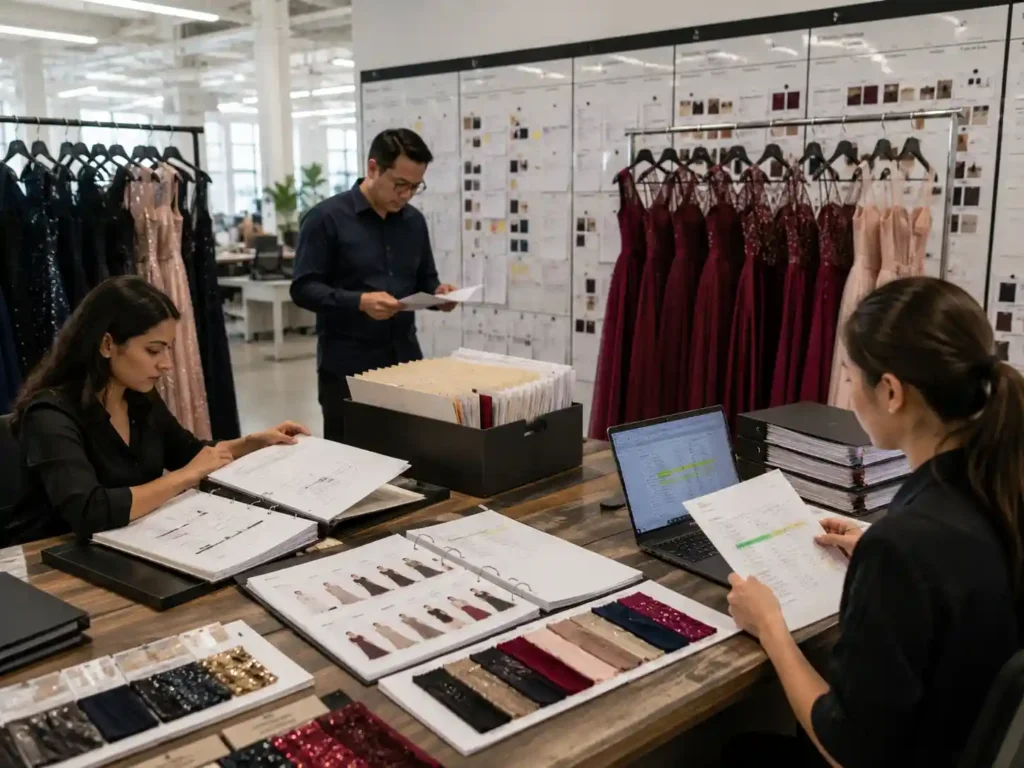
Jinfeng Apparel works with technical design, product development, fit, sourcing and quality teams that need more than a factory reading a PDF. Each project begins with a structured review of drawings, BOM details, measurement logic, fabric direction, construction notes and production assumptions before pattern work or sampling moves forward.

  • 2 sample rooms, 7+ senior pattern makers and 20+ sample machinists supporting dress development.
  • 15+ QC inspectors carrying approved measurements, construction and finishing standards into bulk production.
  • MOQ starts from 200 pcs per style/color, subject to fabric, trims, construction and production scheduling.

Support for 10-30 style seasonal programs and brand orders commonly totaling 20,000-80,000 garments.

Technical Development Capacity Behind Every Review

A reliable review depends on people who understand patterns, sewing, fabrics, measurements and production handover. Jinfeng Apparel combines sample-room expertise with bulk-production management so technical comments remain connected to the garment that will eventually be cut, sewn, inspected and packed.

Since 2008

Long-term womenswear manufacturing experience helps the team separate minor document gaps from issues that can change fit, cost or production stability. Review comments are shaped by dress development, sampling and bulk execution rather than by document formatting alone. Historical pattern, fabric, trim and quality records also support repeat orders and seasonal extensions.

2 Sample Rooms

Two sample rooms support parallel development across woven dresses, stretch styles, occasionwear and private-label collections. Projects can be prioritized by launch date, sample purpose and construction complexity, allowing photo samples, fit samples and PP samples to follow different approval needs without losing the agreed technical standard.

7+ Pattern Makers

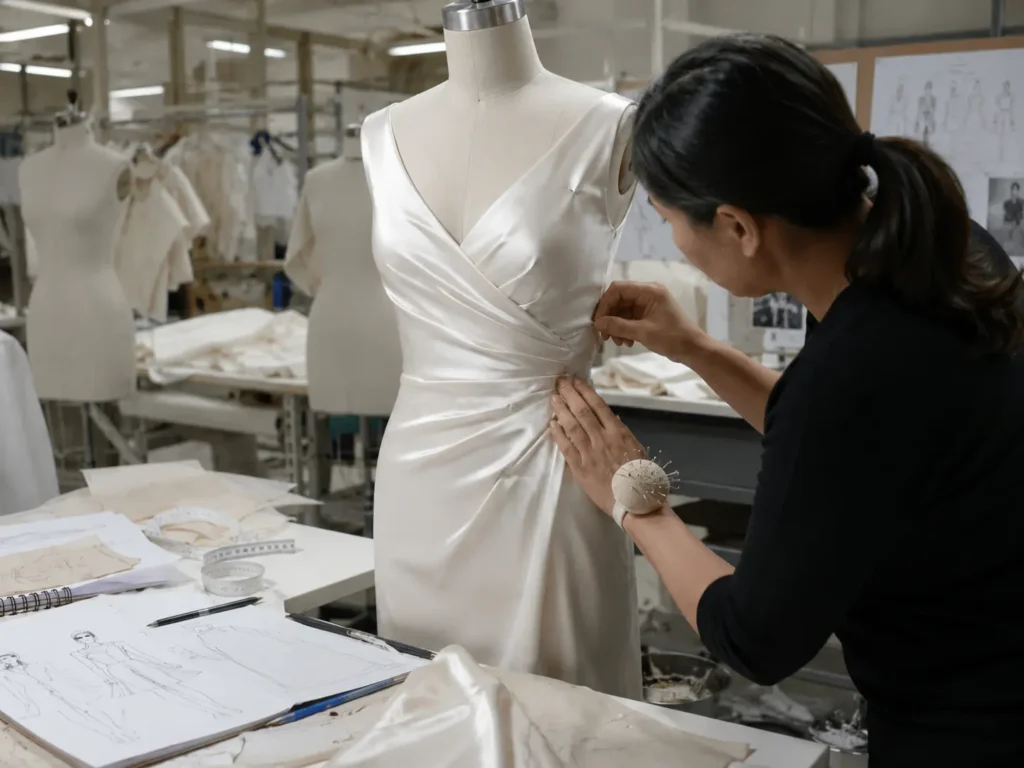
Senior pattern makers review silhouette balance, bust shaping, waist position, hip allowance, neckline, armhole, strap length, slit placement and hem balance. Their role is not to redesign a brand concept, but to translate approved intent into pattern geometry that can be fitted, graded and repeated in production.

20+ Sample Machinists

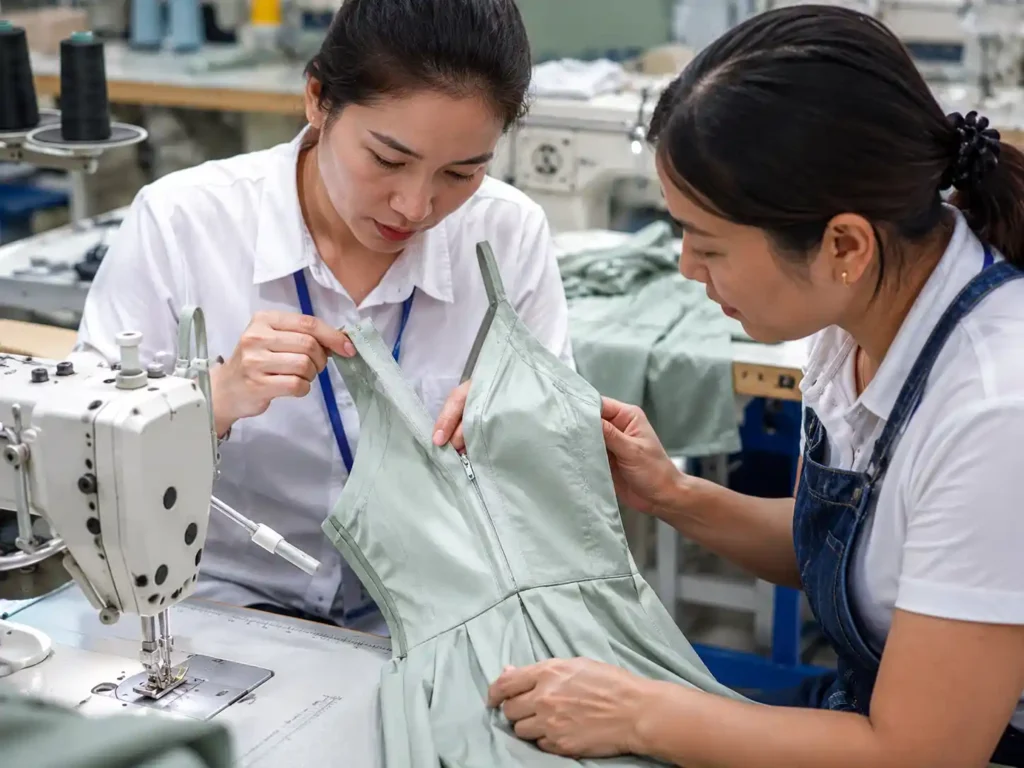
Experienced sample machinists expose construction risks that drawings may not reveal, including seam bulk, lining attachment, zipper behavior, boning channels, mesh distortion and difficult finishing sequences. Early sewing feedback helps technical teams decide whether a callout is production-ready or requires a clearer instruction.

12+ Merchandisers

Merchandisers coordinate file versions, fabric and trim confirmations, sample comments, approvals, costing assumptions, production dates and packing requirements. A clear information trail prevents one department from working from an outdated BOM while another uses revised measurements or different label instructions.

15+ QC Inspectors

Quality inspectors use approved samples, final measurements, construction notes, trim references and packing instructions as production-control documents. Review findings are therefore not isolated comments; they become measurable checkpoints for incoming materials, cutting, sewing, finishing, final inspection and shipment preparation.

Built for Technical, Fit and Product Teams

Different roles enter a dress project with different risks. Jinfeng Apparel organizes communication around the responsibility of each team, keeping measurements, materials, construction, costing, approval and production status visible to the people who need them.

Technical Designers

Technical designers need drawings, callouts, measurement points and construction standards interpreted consistently. The review focuses on whether front and back flats match written instructions, whether seam and edge details are measurable, and whether later sample comments can be traced back into a controlled specification.

Product Developers

Product developers balance appearance, fabric, cost, sample timing and launch readiness. They receive feedback on material availability, trim feasibility, pattern risk, sample sequence and quotation assumptions so design decisions can be made before avoidable sample rounds or material bookings create delay.

Garment Technologists

Garment technologists require clear fit logic and evidence from the garment. Jinfeng Apparel supports point-of-measure review, tolerance discussion, sample measurement, pattern correction and grade-rule confirmation, with comments linked to revised samples and approved production references.

Fit Teams

Fit teams need a supplier capable of turning body observations into measurable actions. Feedback on bust capacity, waist balance, hip restriction, neckline gaping, strap tension, side-seam position and hem level is reviewed against both the pattern and the stated POM method before revisions are closed.

Sourcing Teams

Sourcing teams need technical confidence before comparing prices. Review notes clarify fabric assumptions, trim specifications, special operations, testing, packing and quantity structure, reducing the risk of a quotation that appears attractive but excludes important construction or material requirements.

Quality Teams

Quality teams need approved standards transferred into factory controls. Final patterns, size charts, BOM records, sewing instructions, PP references, tolerances and packing details are aligned with inspection checkpoints so production decisions do not depend on memory or informal messages.

Problems We Resolve Before Sampling Starts

A dress tech pack can look complete while still containing conflicts that affect fit, cost or production. The strongest review identifies those conflicts early, assigns an owner to each question and records the approved answer before fabric is cut.

Flat And BOM Conflict

A drawing may show an invisible zipper, lined bodice or adjustable strap while the BOM omits the component. The review compares visual details, construction callouts and material records so costing, sourcing and sewing teams work from the same component list.

Unclear Measurement Logic

A size chart may list values without a POM diagram, measurement method or garment state. Ambiguity around half chest, stretched waist, relaxed elastic, neckline drop or skirt length can create large differences even when the numeric value appears clear.

Fabric Structure Mismatch

A design developed around stretch satin cannot be transferred directly to a rigid woven without changing ease, opening, seam behavior or support. Material direction is reviewed against silhouette, fit target, lining and construction before the pattern is treated as final.

Trim Specification Gaps

Zippers, cups, boning, elastic, hooks, lace trims and decorative pieces require dimensions, colors, finishes and placement rules. Missing trim detail can change garment appearance, sewing sequence, lead time and unit cost after sampling has already started.

Version Control Breaks

A revised size chart, updated BOM and old construction sheet may circulate together. Jinfeng Apparel tracks revision numbers, dates and approval status so pattern, sample, costing and production teams are not working from mixed versions.

A Dress-Focused Alternative to Generic Review

Technical pack support varies widely across the apparel supply chain. Jinfeng Apparel occupies a focused position: hands-on dress review supported by pattern development, sample making, bulk production and private-label delivery.

Enterprise Manufacturing Groups

Large manufacturing groups can offer broad capacity, digital platforms and multi-country sourcing, yet individual styles may move through complex account structures. Jinfeng Apparel offers a more direct development route for dress programs that need detailed discussion around fit, fabrics, trims and sample revisions while still requiring meaningful bulk capacity.

Development Studios

Local studios often provide close pattern and fit collaboration, especially during early concept development. Their production scale and cost structure may not suit 10-30 style seasonal programs totaling tens of thousands of pieces. Jinfeng Apparel connects review and sampling to a factory network built for ongoing bulk orders.

Execution-Only Factories

Some factories quote from the visible style and begin sampling without challenging unclear measurements, incompatible materials or missing components. Jinfeng Apparel reviews assumptions before execution, records clarification points and carries approved decisions into pattern work, samples, PP standards, QC and packing.

What We Check in a Dress Tech Pack

Review depth is organized around the information needed to quote, pattern, sample, approve and manufacture a dress. Each category is checked against the others because the most expensive errors usually appear where drawings, measurements, materials and construction instructions disagree.

Technical Flats

Front, back and detail flats are checked for construction visibility, symmetry, opening method, seam placement, panel shape, lining coverage and internal support. A flat should show enough information for a pattern maker and sample machinist to understand the intended garment without guessing hidden structure.

Construction Callouts

Callouts are reviewed for seam type, seam allowance, topstitching, edge finishing, hem method, gathering, pleating, ruching, boning channels, cup attachment and reinforcement. Language must be specific enough to become a sewing instruction rather than a visual description.

Bill Of Materials

The BOM is compared with the garment drawings and construction notes. Fabric codes, lining, interlining, zipper length, elastic width, cup size, boning type, thread, labels, hangtags, polybags and carton requirements need clear specifications and consistent color references.

Points Of Measure

POM names, diagrams and measurement methods are checked for repeatability. Critical points include bust, waist, high hip, low hip, shoulder, neckline, armhole, strap length, bodice length, skirt length, slit height, sweep and lining length.

Size Specifications

Base-size measurements are reviewed against the intended silhouette, fabric stretch and opening method. A bodycon dress, corset dress and relaxed maxi require different ease logic. Tolerances also need to reflect construction difficulty and the effect of pressing or elastic recovery.

Grade Rules

Grade increments are checked across the planned size range so proportions remain stable. Bust, waist and hip cannot always increase at the same rate; strap positions, neckline width, armhole depth, waist seam and dress length may require controlled non-linear grading.

Color And Material

Colorways are reviewed across outer fabric, lining, zipper, thread, elastic, cups, boning casing, labels and decorative trims. Fabric composition, weight, width, stretch direction, shrinkage, drape, transparency and surface sensitivity are considered before an approved material is locked.

Labels And Packing

Main label, size label, care label, country-of-origin wording, hangtag, barcode, SKU, polybag warning, folding method, carton ratio and carton mark are checked as part of the product specification. Retail and warehouse requirements must be confirmed before final packing materials are ordered.

Files That Support an Accurate Review

A complete file set allows technical questions to be resolved faster and quotations to be built on clear assumptions. Projects can begin with partial information, but missing documents should be identified before sample cost, material booking or delivery timing is treated as final.

File or InputReview PurposePriority
Latest tech pack revisionPrimary technical reference and revision baselineRequired
Front, back and detail flatsConfirms silhouette, seams, openings and internal structureRequired
BOM with fabric and trim codesSupports sourcing, costing and color coordinationRequired
Measurement chart and POM diagramDefines fit, measurement method and toleranceRequired
Target size range and grade rulesChecks proportional growth across sizesRequired
Fabric specification or approved swatchConfirms weight, stretch, drape, transparency and handfeelRequired
Original sample or reference garmentProvides physical fit, construction and finishing referenceHelpful
Fit photos and comment sheetLinks observed issues to measurable pattern changesHelpful
Color standards or Pantone referencesSupports lab dip, bulk shade and trim matchingProject dependent
Label and packaging guideConfirms brand presentation, barcode and carton requirementsProject dependent
Order quantity by style/color/sizeSupports MOQ, costing, factory allocation and packing planRequired
Launch date and delivery destinationSupports sample priority, production schedule and freight planningRequired

Dress Categories Requiring Deeper Technical Review

Dress categories create different technical priorities even when the file format is identical. Jinfeng Apparel reviews the pack through the behavior of the intended garment, focusing on the measurements, materials and construction points most likely to affect appearance, comfort and bulk consistency.

Bodycon Dresses

Bodycon packs require a clear relationship between fabric stretch, recovery, negative ease and finished measurements. Critical review points include bust-waist-hip balance, side-seam position, skirt ride-up, neckline stability and lining stretch. A 1 cm change can feel minor in a relaxed silhouette but become visible and uncomfortable in a close-fitting style. Sampling checks movement, recovery after wear and whether the intended size range remains consistent when fabric batches vary slightly.

Corset Dresses

Corset and bustier dresses need panel geometry, cup shape, boning placement, support level, waist shaping and opening method defined together. The pack should identify cup type, boning material, channel position, lining, seam allowance, zipper or hook-and-eye specification and skin-contact protection. Sample review verifies support without excessive pressure, symmetry across front panels and stable transitions between a structured bodice and softer skirt.

Satin Slip Dresses

Slip dresses expose small errors because the silhouette is clean and the surface reflects light. Review priorities include satin weight, shine direction, bias or straight grain, neckline depth, strap length, bust coverage, lining, zipper choice, hem balance and pressing method. The pack should also state whether the approved sample is expected to use bulk-equivalent satin, since drape and seam behavior can change significantly between substitute and production fabric.

Mesh And Lace Dresses

Mesh and lace require transparent-area mapping, lining coverage, motif placement, seam positioning and edge-finishing instructions. Stretch mesh needs direction and recovery confirmed; lace needs motif scale, repeat, scallop use and matching tolerance defined. Technical review also checks where raw edges, coverstitch, narrow binding, appliqué or clean lining finishes are required so sensitive areas remain comfortable and production teams do not improvise.

Party And Occasion Dresses

Party and occasion styles combine visual impact with strict control of fit, trim security and finishing. Sequins, rhinestones, metallic surfaces, ruffles, bows, draping and cut-outs can create long operation sequences and packing risks. The review identifies reinforcement points, trim placement tolerances, lining requirements, press limitations and handling instructions before costing and scheduling are finalized.

Maxi And Evening Dresses

Long dresses require reliable vertical balance from shoulder to hem. Review covers total length, waist placement, slit height, lining length, skirt sweep, grain direction, train or hem shape and footwear assumptions. Drape, fabric weight and packaging folds can alter the finished appearance, so pattern and sample approval must consider movement, hanging behavior and final pressing rather than flat measurements alone.

Fabric Decisions Reviewed Against Dress Construction
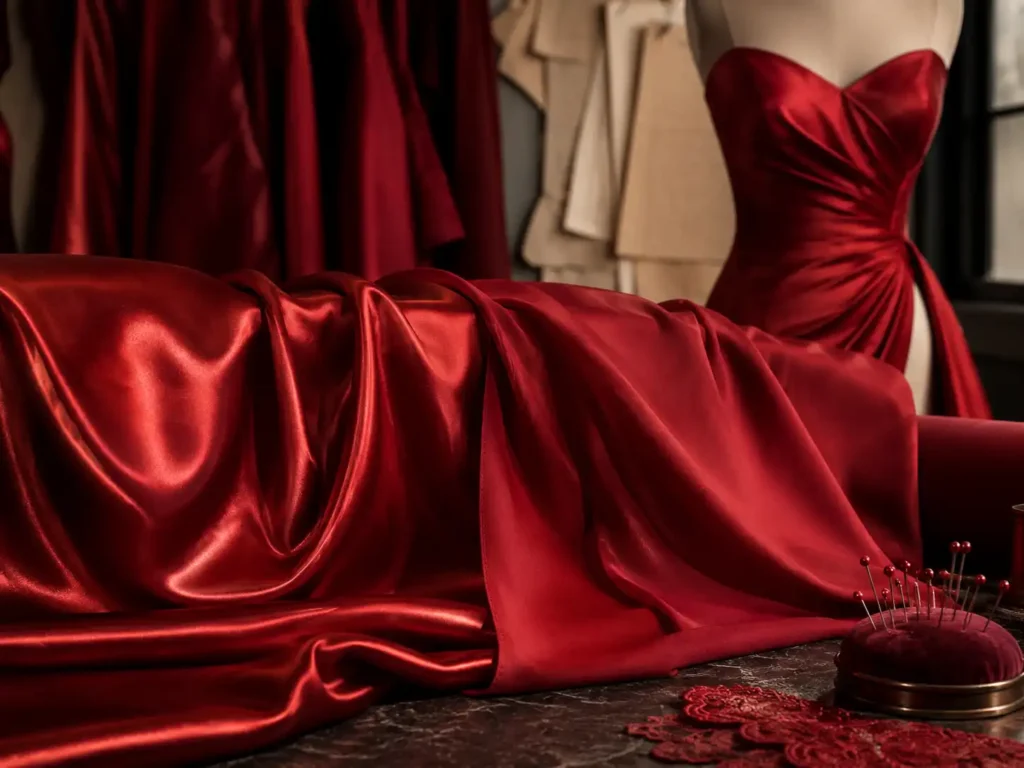
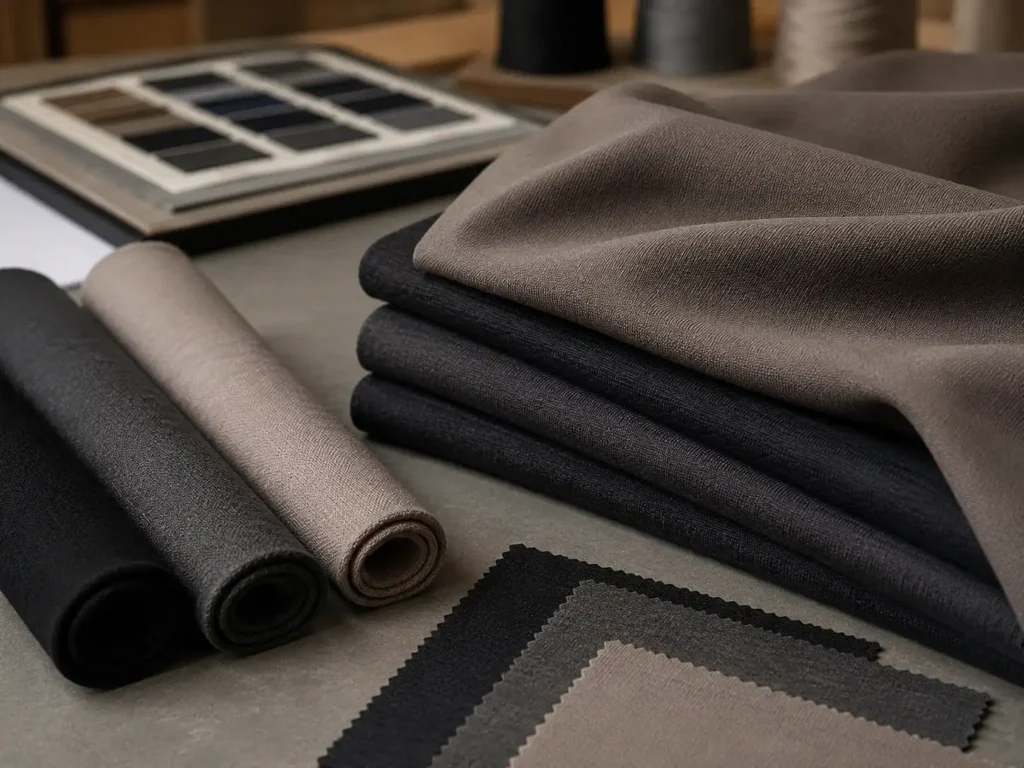
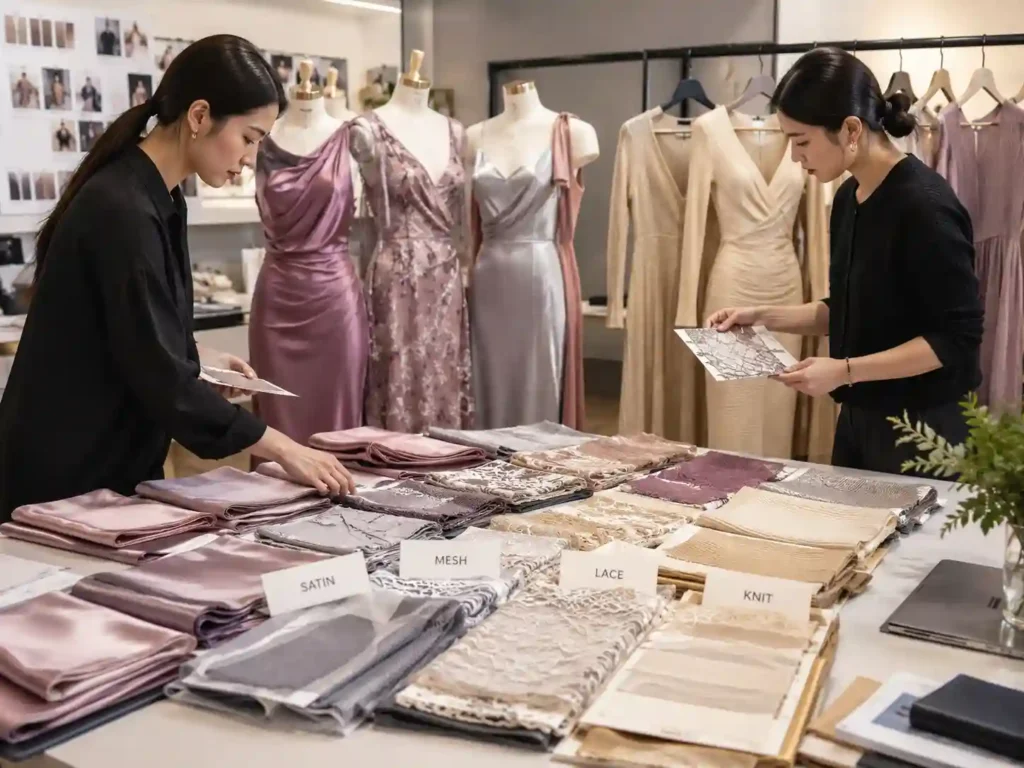
Fabric approval is not a separate purchasing decision. Weight, stretch, recovery, drape, transparency, shrinkage, surface sensitivity and width influence pattern dimensions, seam methods, lining, pressing, cost and production lead time. Material ranges below are commonly reviewed references, while final selection remains style-specific.

Stretch Satin

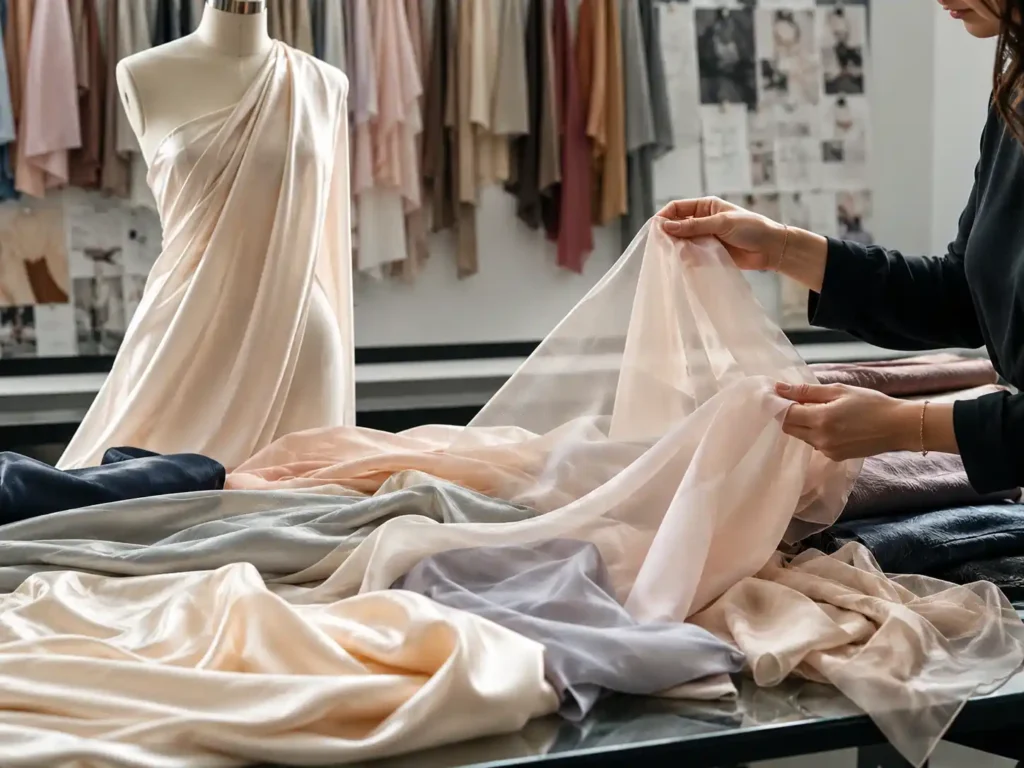
A commonly reviewed range of 120-250 gsm can support fitted cocktail, bodycon and corset dresses, but the exact result depends on fiber blend, elastane level, weave density and finish. The pack should state stretch direction, recovery expectation, shine face, grain direction and lining plan. Review also covers snagging, seam puckering, shade variation, zipper waviness and heat sensitivity during pressing.

Jersey

Jersey commonly falls around 140-240 gsm for fashion dresses. Technical review focuses on two-way or four-way stretch, recovery, growth, spirality, shrinkage and edge behavior. Finished measurements must be linked to fabric performance, especially at bust, waist, hip and hem. A sample that fits in one jersey quality may not remain valid when bulk fabric has a different stretch modulus or surface finish.

Mesh And Power Mesh

Mesh specifications should identify composition, weight, stretch direction, recovery, openness, surface texture and intended transparency. Power mesh used for support behaves differently from lightweight fashion mesh used for layering. Review checks whether lining panels, bindings, seam allowances and reinforcement match the chosen mesh, and whether printed or patterned mesh requires placement control.

Lace And Lace Trim

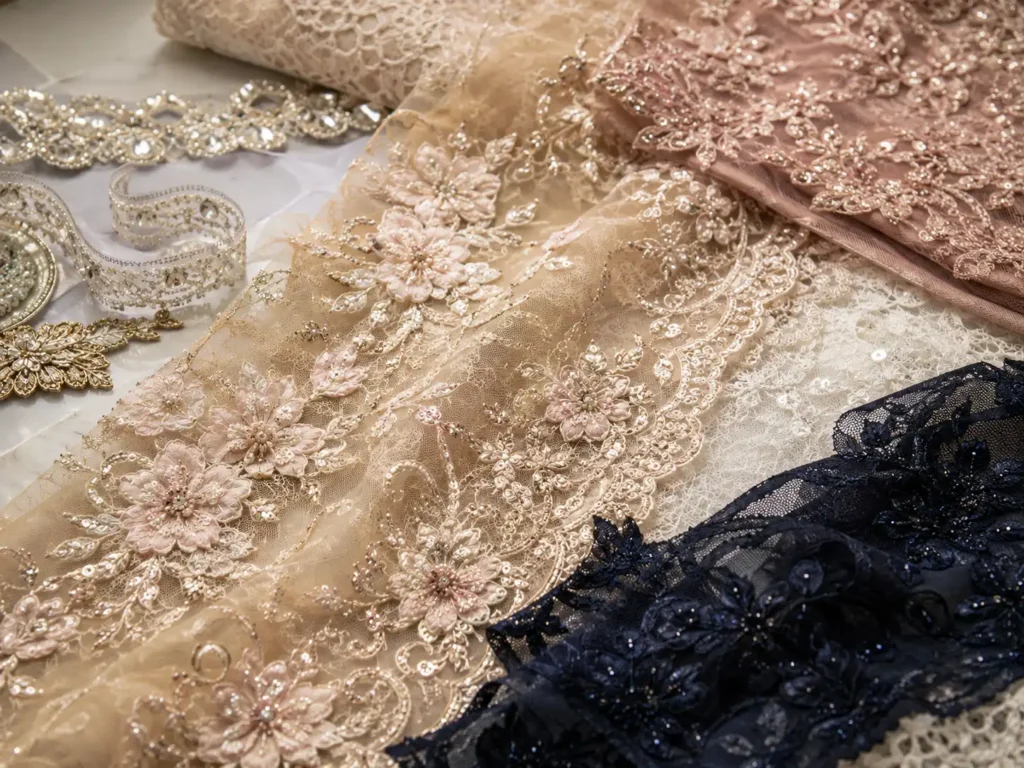
Lace review begins with width, motif repeat, scallop edges, stretch, handfeel and color. The pack should show whether motifs must match across center front, side seams or cups; whether scallops form a neckline or hem; and where appliqué is expected. Lining color, seam position and trim softness are checked because contrast, bulk and skin irritation can alter the intended premium appearance.

Chiffon And Crepe

Light chiffon requires attention to transparency, grain stability, narrow hems, seam show-through, static and lining. Crepe can provide stronger structure and wrinkle resistance, yet weight and texture still influence drape and zipper flatness. Review determines whether gathers, pleats, ruffles or bias sections are compatible with the selected quality and whether extra handling or cutting control is required.

Ponte And Structured Knits

Ponte and Roma qualities are reviewed for thickness, stretch balance, recovery, compression and seam appearance. They can support structured bodycon, office and midi dresses while reducing the need for heavy internal construction. The pack should state finished fit, lining expectation, edge treatment and pressing limits; excess seam bulk or poor recovery can distort side seams, necklines and waist shaping.

Measurement and Fit Logic for Production-Ready Dresses

A numeric size chart becomes useful only when every value has a repeatable method and a clear relationship with the pattern, fabric and intended silhouette. Jinfeng Apparel reviews measurement logic before sampling, then uses garment measurements and fit comments to close the final pattern.

Base Size Integrity

The base size is checked as a connected shape rather than a list of isolated values. Bust, underbust, waist, high hip, low hip, bodice length and skirt length must support the intended silhouette together. Opening size, stretch and internal structure are considered because a dress can match the chart on a table yet remain difficult to put on, unstable at the neckline or restrictive during movement.

POM Method Control

Each critical measurement needs a defined start point, end point, garment position and tension condition. Strap length may be measured including or excluding hardware; elastic waist can be relaxed or stretched; curved neckline and armhole measurements can follow seam lines or edges. POM diagrams and written methods reduce disagreement between technical teams, sample rooms and QC inspectors.

Tolerance By Operation

Tolerance should reflect the construction and measurement point. A simple straight hem can hold a different tolerance from gathered mesh, elasticized edges or long bias-cut skirts. Critical fit points may require tighter control than decorative or non-functional areas. Jinfeng Apparel discusses measurement feasibility before a tolerance becomes a production standard that cannot be consistently achieved.

Grade Rule Review

Grade rules are evaluated across the full size range, not only adjacent sizes. Neckline width, strap position, cup volume, armhole depth, waist placement, hip shaping and total length may need different increments. For extended sizes, internal support and panel proportions can also require changes rather than simple enlargement. Final rules are linked to approved patterns and size-set confirmation.

Fit Comment Translation

Fit comments work best when photos, pins, body observations and numeric changes agree. A note such as ‘waist too high’ should identify the required position change and any effect on bodice length, skirt balance, zipper and lining. Pattern makers review whether one requested adjustment creates secondary changes elsewhere before a revised sample is produced.

Bulk Measurement Plan

Final production measurements are carried into cutting, sewing and finished-garment checks. QC plans define critical POMs, sample size, tolerance, measurement method and escalation route. Approved PP and Golden samples remain physical references, while final size charts and grade rules remain numeric references for production and repeat orders.

Manufacturability, Cost and Timing Reviewed Together

Technical approval must work commercially as well as visually. Jinfeng Apparel reviews how material availability, operation sequence, trim development, order structure and approval timing influence quotation, sample progression and production scheduling.

Production Feasibility

Construction is assessed for repeatability across operators and production lines. Very narrow seam allowances, unstable draping, hand-tension-dependent ruching, difficult hidden support or fragile trim placement may be possible on one sample but inconsistent in thousands of pieces. The team proposes clearer methods, reference points or controlled alternatives while preserving the approved design direction.

Transparent Cost Assumptions

Quotations are built from fabric, lining, trims, pattern work, sampling, cutting, sewing time, pressing, QC, packing, wastage, testing, logistics and quantity. The review identifies features that materially affect price, including double layers, corset structure, hand placement, special zippers, placement prints, broad size ranges, many color splits and complex packaging. Assumptions are documented before price comparison.

Schedule Risk Mapping

Project timing is mapped around fabric approval, trim approval, pattern development, sample making, revision feedback, PP approval, material arrival, cutting, sewing, QC, packing and shipment. Custom dyeing, special lace, molded trims, intricate labels or delayed fit comments can move the critical path. A realistic schedule protects launch dates more effectively than a single unsupported lead-time promise.

Our Technical Pack Review Workflow

A controlled workflow gives every question a place, an owner and an approval status. The sequence below can be adjusted for the maturity of the file set, the number of styles and the purpose of the first sample.

File Intake

Kelly receives the latest tech pack, line sheet, original sample details, quantity plan, size range, launch date and destination. Files are logged by style and revision so the development team begins from a known baseline.

Completeness Check

The team confirms whether drawings, BOM, measurements, fabric, trims, colorways, labels and packing information are available. Missing items are separated into information required before review and information that can be confirmed during sampling.

Cross-Document Review

Flats, BOM, callouts, measurements and color records are compared side by side. Conflicts are marked with the affected style, document location, production impact and question requiring brand confirmation.

Dress Risk Review

Pattern, fit, fabric and sewing risks are assessed for the specific dress category. Priority is given to areas affecting support, movement, transparency, symmetry, opening, lining and production repeatability.

Clarification List

Questions are consolidated into a readable list rather than scattered across messages. Each item states the current interpretation, the risk of leaving it unresolved and the decision needed from the responsible team.

Technical Alignment

Answers are reviewed with technical design, product development, sourcing or QA as appropriate. Agreed decisions are reflected in the working specification, sample instruction and quotation assumptions.

Sampling Plan

The team confirms sample purpose, material level, size, color, expected review points and target date. First sample, fit sample, photo sample and PP sample are planned according to project need rather than treated as identical garments.

Review Closeout

Approved changes, open points and next actions are recorded. The project moves into pattern work or revised sampling only after the required construction, measurement, material and timing assumptions are sufficiently clear.

What Your Team Receives After Review

A useful review produces decisions, not only comments. The exact output depends on file maturity and project scope, but the following records create a clear bridge from technical discussion to pattern, sampling, quotation and production.

Clarification Register

A consolidated list identifies missing, conflicting or uncertain information by style and document section. Items are marked open, answered, pending sample verification or approved, allowing several internal teams to follow the same decision trail.

Construction Notes

Construction feedback covers seam sequence, edge finishing, lining, reinforcement, closures, support components, trim attachment and repeatability. Notes are written to support pattern and sample execution rather than to replace a brand’s complete technical manual.

BOM Confirmation

Fabric and trim assumptions are recorded with color, size, finish, placement and sourcing status where available. Substitutions, minimums or lead-time concerns are separated from approved components so later costing and purchase decisions remain visible.

Measurement Notes

POM definitions, size-chart questions, tolerance concerns, grade-rule observations and sample measurement targets are summarized. Critical points requiring fit verification are highlighted before pattern approval or size-set development.

Material Direction

Fabric weight, stretch, drape, transparency, lining, surface risk and trim compatibility are assessed against the dress structure. Swatch, lab dip, strike-off or bulk-color approval needs are identified where relevant.

Project Basis

Sample purpose, quotation basis, MOQ, size and color structure, approval path, packing assumptions and timeline milestones are recorded. The document gives merchandising and sourcing teams a shared foundation for commercial decisions.

How Jinfeng Teams Work With Yours

Technical files move through several disciplines before a dress reaches production. Clear role ownership keeps questions from disappearing between sales, pattern, sample, sourcing, manufacturing and quality functions.

Kelly - Project Entry

Kelly coordinates the first file receipt, confidentiality needs, product direction, quantity plan and communication route. The role includes confirming which documents are current, arranging internal review and keeping major commercial questions visible to the brand team.

Merchandising Coordination

Merchandisers maintain style lists, revision status, sample calendars, fabric and trim progress, quotation assumptions, approval records and delivery milestones. Multi-style programs are separated by fabric group, construction complexity and launch priority so one delayed component does not hide the status of every style.

Pattern Review

Pattern makers focus on silhouette, balance, fit, measurement method, grading and construction geometry. They translate approved comments into pattern changes and identify when a requested fit adjustment also requires changes to lining, zipper, cup, boning or skirt panels.

Sample Verification

Sample machinists test sewing sequence, seam behavior, trim handling and finishing. Their feedback helps distinguish a documentation issue from a pattern issue, material issue or operation issue before the next sample round is authorized.
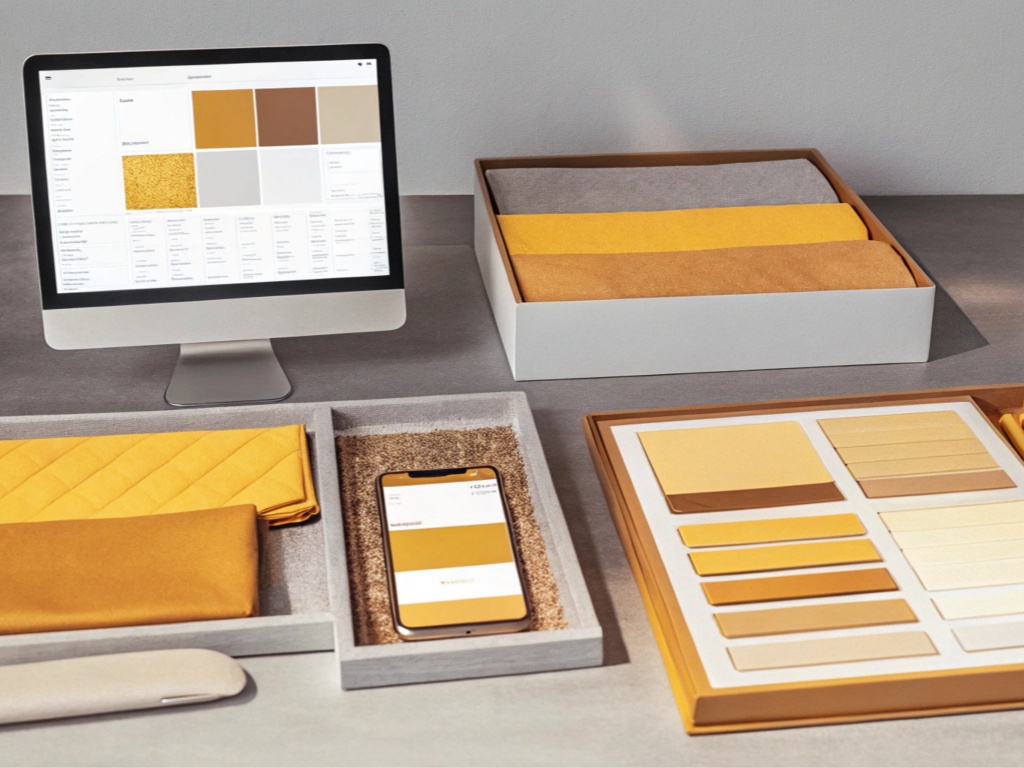
Computer and smartphone with yellow fabric and material samples on a table.

Material Coordination

Fabric and trim teams confirm availability, specifications, color, minimums, development timing and bulk consistency. Potential substitutes are presented with their effect on appearance, fit, cost and lead time rather than treated as silent replacements.

Quality Handover

QC inspectors receive approved measurements, construction standards, material references, PP and Golden samples, label positions and packing instructions. Inspection findings are reported against those standards, keeping bulk decisions connected to the technical review.

From Reviewed Pack to Approved Dress Sample

Sampling verifies assumptions that cannot be closed on paper alone. Jinfeng Apparel uses different sample stages for structure, fit, appearance, selling presentation and production approval, with each stage documented against the latest technical decisions.

First Sample

The first sample validates pattern direction, construction order, material behavior, silhouette and major cost assumptions. Its purpose is to expose issues early, not to pretend every garment will be perfect in one round. Typical timing depends on fabric and trim readiness, style complexity and the completeness of the pack; a project timeline is issued after review.

Fit Sample

Fit samples focus on body balance, movement, comfort and critical measurements. Technical teams can provide model measurements, photos, pinned changes and comment sheets. Jinfeng Apparel measures the garment, reviews the pattern effect and separates requested style changes from corrections needed to achieve the approved fit.

Revised Sample

A revised sample verifies agreed changes and reveals secondary effects. Moving a waistline can alter bodice length, skirt balance, zipper position and lining; changing fabric can alter stretch, drape and seam behavior. Revision notes are checked against the updated pack before approval status is assigned.

Photo-Ready Sample

Photo-ready samples prioritize surface finish, pressing, trim appearance and visual presentation for campaigns, lookbooks or sales meetings. They should still identify whether every fabric and trim is bulk-equivalent. A visually refined photo sample does not replace PP approval when production materials or internal construction differ.

PP Sample

The PP sample is the final pre-production reference for fabric, color, measurements, construction, trims, labels, packing and quality expectations. Major structural changes should be closed before PP approval. Any approved exception is recorded because material purchasing, production instructions and capacity planning rely on the locked standard.

Golden Sample

The Golden sample provides a physical reference for production, QC, repeat orders and dispute review. It is used together with the final pattern, size chart, grade rules, BOM, sewing instruction and packing guide. A sample alone cannot carry every standard, but it gives production teams a shared visual and tactile benchmark.

Revision Control That Protects Every Approval

Multiple styles, colorways and sample rounds create risk when changes are not recorded consistently. A revision register connects comments, document updates, sample status and production release, giving technical, merchandising, sourcing and quality teams one approval trail.

FieldExample EntryControl Purpose
Style IDDR-24018Links comments and samples to one garment
Revision numberRev 04Prevents mixed technical files
Revision date2026-08-14Shows timing of the approved update
Changed itemFront neckline dropIdentifies the exact technical area
Previous value18.0 cmPreserves change history
Approved value16.5 cmDefines the current production target
ReasonFit review – excess exposureExplains the decision
Responsible teamTechnical DesignIdentifies decision ownership
Sample verificationRevised sample approvedConfirms physical validation
Related filesSize chart / flat / patternEnsures every affected document is updated
Approval statusClosedSeparates final decisions from open questions
Production releaseIncluded in PP standardConfirms transfer into bulk controls

Bulk Quality Control Built From Approved Standards
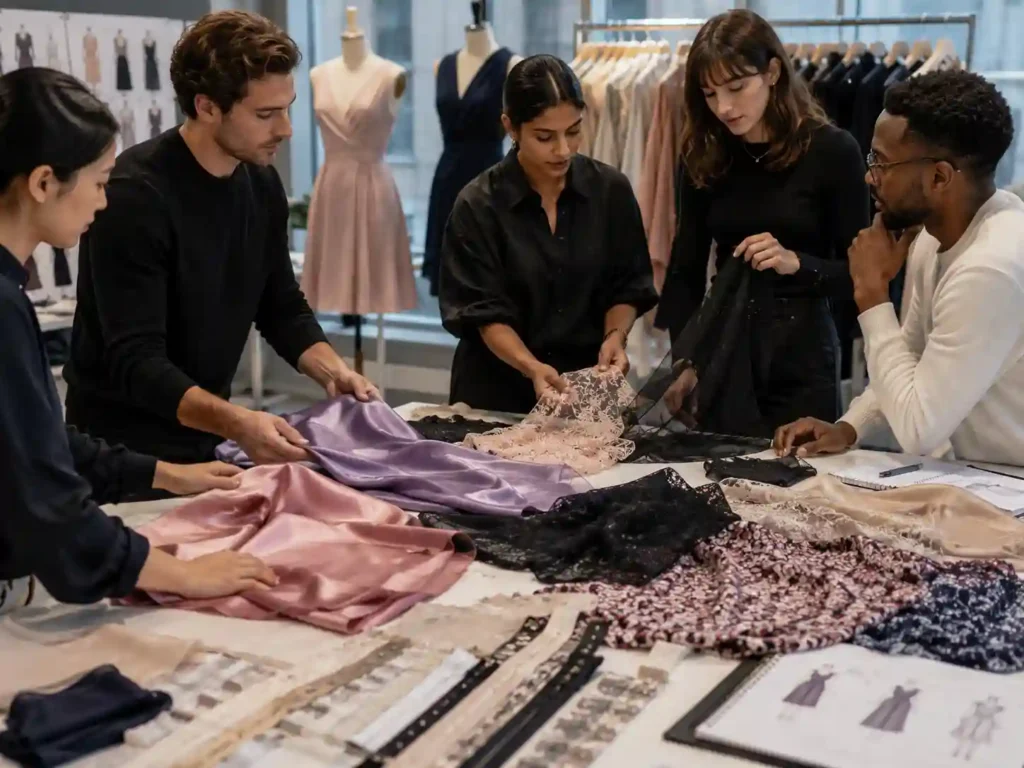
A technical review creates value only when approved details survive bulk production. Jinfeng Apparel transfers final patterns, measurements, materials, sewing methods, PP references and packing instructions into a staged quality plan rather than relying on final inspection alone.

Material Inspection

Incoming fabric is checked against the approved quality for color, handfeel, width, weight, stretch, recovery, defects and batch consistency as relevant. Lining and trims are checked for color, dimensions, finish and function. Material concerns are escalated before cutting because later correction can require rework or replacement across thousands of garments.

Fabric Relaxing

Knits, stretch fabrics and selected woven qualities may require controlled relaxing before cutting. The production plan considers shrinkage, roll tension and lay conditions so panels are not cut while the material remains distorted. Approved shrinkage or testing information is linked to pattern and measurement decisions.

Cutting Control

Marker direction, grain, nap, shine, print placement, lace motif and fabric defects are controlled during spreading and cutting. Bundle identification protects style, color and size separation. Cut panels can be checked at critical points before sewing begins, reducing the spread of dimensional errors.

First-Piece Approval

The first production pieces are reviewed against the PP standard, final pattern, BOM, sewing instruction and measurements. Zipper flatness, neckline, support, lining, symmetry, hem and trim placement receive attention according to style risk. Production continues after critical deviations are corrected.

Inline Inspection

QC inspectors monitor sewing quality, construction sequence, measurement drift, puckering, skipped stitches, seam strength, gathering balance, ruching symmetry and trim attachment. Findings are communicated while work remains in progress, allowing correction before the entire order reaches finishing.

Measurement Control

Finished garments are measured at critical POMs using the approved method and tolerance. Results are tracked by size, line or batch when needed. Repeated deviation triggers pattern, cutting, sewing or pressing investigation rather than simple acceptance based on appearance.

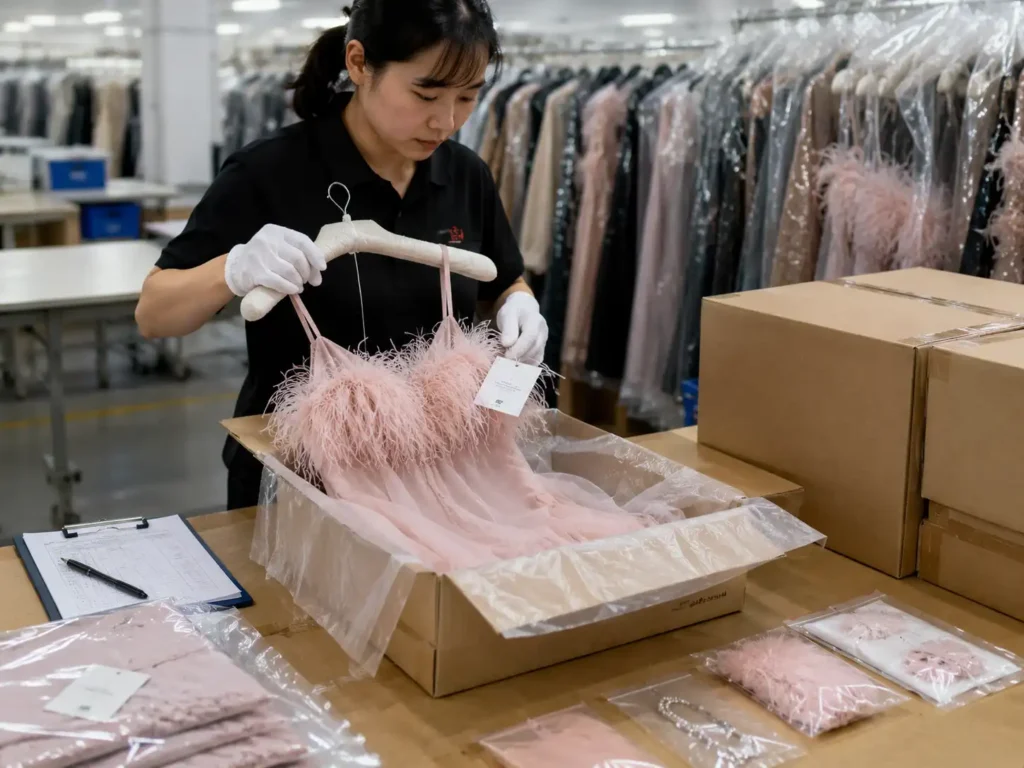
Finishing And Packing

Pressing, thread cleaning, surface protection, label placement, folding, polybag, barcode, SKU and carton ratio are checked against the approved packing guide. Sensitive satin, sequins, lace or structured bodices may require added protection to prevent snagging, crushing or transfer marks.

Final Inspection

Final inspection uses the agreed quality level, critical defects, measurements, workmanship, appearance, quantity and packing requirements. AQL may be used for shipment inspection when specified, while process checks and targeted measurements continue throughout production. Inspection records support release, corrective action and repeat-order comparison.

Production Scale for Multi-Style Dress Programs

Technical depth must be supported by real production capacity. Jinfeng Apparel allocates styles according to fabric, construction, quantity, approval status and delivery window, using owned factories and long-term production partners under coordinated project, quality and packing management.

6 Owned Factories

Owned women’s fashion factories provide a stable base for sampling-to-bulk transfer, production scheduling and quality accountability. Factory selection considers woven or knit construction, dress complexity, operation skill, order quantity and approved delivery plan.

10+ Satellite Partners

Long-term satellite partners extend category and seasonal capacity. Allocation is controlled by product fit, materials, workmanship requirement and QC readiness rather than by sending styles to whichever line appears open.

100,000+ Monthly Capacity

Monthly capacity supports ongoing womenswear programs, yet confirmed output is calculated by style complexity, fabric handling, color and size mix, finishing and inspection requirements. Structured corset dresses and sequin styles cannot be scheduled at the same rate as simpler woven dresses.

18+ Sewing Lines

Multiple sewing lines allow styles to be grouped by construction and delivery priority. Line planning considers operator skill, operation sequence, first-piece approval and inline QC so multi-style orders remain visible and traceable.

6+ Flexible Lines

Flexible lines support fashion programs with varied styles, shorter production runs within a larger order and launch-date priorities. They are suited to coordinated capsules where 10-30 styles may share fabrics, trims, labels or packaging but require separate technical standards.

30+ Finishing Staff

Finishing and packing teams manage pressing, thread cleaning, label checks, folding, polybags, barcodes, carton ratios and shipment preparation. Dedicated finishing capacity is important for satin, occasionwear and retail-ready programs where presentation and packing errors can undermine approved garment quality.

Technical Review Programs Across Multi-Style Orders

The following anonymized program examples reflect the scale and technical structure commonly managed for established fashion brands. Brand names and proprietary files remain confidential; order quantities, style counts and project logic are presented to show how technical review supports commercial production.

US Occasionwear Program

An American occasionwear brand submitted 18 styles covering satin minis, mesh midis, corset dresses and long evening silhouettes. The planned order totaled 42,600 garments across 4-7 sizes and 1-3 colors per style. Review identified inconsistent zipper lengths, missing lining references, mismatched neckline measurements and unclear boning callouts. The team issued a consolidated clarification register, grouped fabrics into five sourcing families and prioritized six campaign styles for photo and fit approval. After revised samples and PP lock, bulk QC focused on neckline stability, waist position, satin shade, mesh transparency, zipper flatness and packing protection.

Premium Ecommerce Drop

A premium online fashion brand developed 12 fitted styles totaling 28,800 garments, including jersey bodycon, stretch-satin cocktail and cut-out mesh dresses. The initial files used one tolerance range across every POM and did not separate relaxed from stretched measurements. Jinfeng Apparel reviewed fabric stretch, recovery and negative-ease assumptions, then helped define critical measurements for bust, waist, hip, strap and dress length. Size-set review confirmed grade behavior before production. Inline measurement checks and side-seam balance controls reduced the risk of inconsistent fit across sizes and color batches.

Seasonal Party Collection

A multi-channel fashion brand planned 24 party and holiday styles totaling 68,400 garments. The range combined sequins, metallic fabric, satin, power mesh, rhinestone trims and private-label packaging. Review separated open design questions from sourcing risks, identified trims requiring early booking and created style-specific handling notes for delicate surfaces. Eight high-priority styles entered first sampling, followed by grouped approval rounds for the remaining collection. Bulk production used PP and Golden samples, trim placement references, inline workmanship checks, barcode verification and air-sea split shipment planning around the brand’s launch calendar.

Project Fit, MOQ and Design Protection

Jinfeng Apparel is structured for fashion brands and apparel groups with clear product direction, professional development requirements and planned bulk production. Project boundaries are discussed early so technical resources, sample priorities, material development and production capacity can be assigned responsibly.

Program Fit And MOQ

MOQ starts from 200 pcs per style/color, depending on fabric availability, custom color, trims, construction complexity, packing and production schedule. The model works well for branded dress programs with tech packs, original samples, line sheets or defined product direction; paid sample development; planned size and color structures; and a realistic launch calendar. For 10-30 style collections, style priority and shared material groups can be planned before every sample is started.

NDA And File Protection

Jinfeng Apparel supports NDA-based cooperation and protects tech packs, line sheets, original samples, patterns, measurements, fabric and trim direction, labels, packaging, order quantities and unpublished designs. Internal and public-use images should remove brand names, barcodes, style numbers and unreleased details unless written permission is provided. Anonymous process examples can be used without exposing proprietary design information.

Technical Pack Review Frequently Asked Questions

Yes. The team can begin with the available flats, measurements, BOM, reference sample, fabric direction and order plan, then identify missing information. A partial pack may support an initial feasibility review, but accurate quotation, pattern work and sample approval require critical construction, material and measurement questions to be closed.
PDF tech packs, Excel measurement sheets, annotated images, line sheets, artwork files, photos and videos can be reviewed. The latest revision should be clearly marked. When several files contain overlapping information, a short index showing the current source for measurements, BOM and construction notes helps prevent version conflict.
Yes. Fabric, lining, zippers, cups, boning, elastic, hooks, lace trims, decorations, labels, hangtags, polybags and carton requirements can be checked against drawings and construction notes. Availability, color matching, dimensions, minimums and lead time are confirmed during sourcing and project planning.
Yes. Pattern makers can review silhouette balance, bust-waist-hip proportion, neckline, strap, armhole, length, slit, support and grade logic. Recommendations are based on the approved design direction, fabric behavior, sample measurement and fit comments. Brand technical teams retain approval authority for final fit and styling decisions.
Each revision should include a number, date, changed item, approved value, responsible team and sample status. Jinfeng Apparel tracks updated files and links approved comments to patterns, sample instructions and production references. Major changes after PP approval require a new impact review for cost, materials and schedule.
Sampling time depends on file completeness, fabric and trim readiness, pattern complexity, sample purpose and feedback speed. The project timeline normally includes file confirmation, material confirmation, pattern completion, first sample, brand comments, revised sample and PP sample milestones. A style-specific schedule is issued after technical review.
A PP sample is strongly recommended and is the normal production-release reference. It confirms final fabric, color, measurements, construction, trims, labels, packing and quality requirements. Major structural changes should be closed before approval because production orders, material booking and QC standards rely on the locked PP basis.
MOQ starts from 200 pcs per style/color. Final requirements depend on fabric minimums, custom dyeing, lace or sequin supply, trim development, size and color splits, construction, packing and scheduling. Multi-style programs are reviewed as a complete order so shared materials and production planning can be evaluated.
Yes. Multi-style orders can be managed through style lists, revision records, fabric and trim groups, sample priorities, BOM files, production orders, QC checklists, packing instructions and shipment plans. Programs totaling 20,000-80,000 garments require phased approval and capacity planning rather than starting every style at the same time.
NDA-based cooperation is supported. Tech packs, original samples, patterns, measurements, brand labels, packaging, order quantities, target prices and unpublished designs are treated as confidential project information. Public photography or case content should use authorized products or anonymized process details with brand identifiers removed.
Yes. Final size charts, grade rules, patterns, BOM records, sewing instructions, PP and Golden samples, label positions and packing requirements are transferred into production and inspection controls. Incoming material checks, first-piece approval, inline inspection, measurement review, finishing and final inspection use the approved standards.
Yes. Jinfeng Apparel can coordinate sample courier, air freight, sea freight, air-sea split shipment, EXW, FOB, CIF, DAP and DDP by project. Commercial invoice, packing list, carton marks, label information, shipment tracking and client-nominated forwarder coordination can be supported according to the confirmed trade terms and destination requirements.

Send Your Dress Tech Pack for Review

Send the latest technical files to Kelly for an initial project assessment. Jinfeng Apparel will review the available information, identify the main clarification points and confirm whether the style set is ready for detailed review, costing, pattern work or sample planning.

For collection programs, include a style list and priority sequence so campaign, fit and PP samples can be scheduled around the launch calendar. Clear quantity, size, color and delivery information also helps the team evaluate material minimums, factory allocation, packing and shipment options.

  • Company name, contact details and target market
  • Latest tech pack revision and style list
  • Technical flats, BOM, measurements and POM diagrams
  • Fabric preference, approved swatches or material references
  • Color plan, size range and quantity by style/color
  • Sample purpose and required approval stages
  • Private-label, barcode and packing requirements
  • Launch date, delivery destination and preferred trade terms
  • NDA request or internal confidentiality requirements

Two people walking and talking inside a modern garment factory.

Tell Us About Your Dress Project

Share your product details, estimated quantity and development requirements. Our team will review your project and provide practical OEM/ODM production feedback.

Premium Women’s Apparel Production for Fashion Brands

From dress sample development to bulk production, JF Apparel supports fashion brands with confidential OEM/ODM manufacturing, reliable quality control and scalable production support.

START YOUR DRESS PROJECT

Ready to Develop Your Next Dress Collection?

Share your design concept, product requirements or sourcing plans with our team. We’ll review your project and provide practical feedback on development, materials, MOQ and production.

7-10 Days

Sample Development

200 PCS

Starting MOQ

Fast Response

Professional Follow-Up