Dress Manufacturer for Sourcing Directors

A dress-focused manufacturing partner for structured development, controlled bulk production and long-term vendor continuity.

  • 6 owned womenswear factories and 10+ long-term satellite production partners for style-to-factory allocation.
  • 100,000+ pieces of regular monthly capacity across 18+ sewing lines and 6+ flexible production lines.
  • 2 sample rooms, 7+ senior pattern makers, 20+ sample machinists and 15+ QC inspectors.
  • Multi-style programs commonly cover 10-30 styles, with order totals planned from 20,000 to 80,000 pieces by collection.

Jinfeng Apparel helps sourcing directors move dress programs from line sheet or tech pack to approved samples, production-ready files, bulk manufacturing, quality control, private-label packing and export coordination. Development decisions are linked to fabric behavior, fit risk, construction time, order mix and launch priorities, giving procurement teams a clearer basis for vendor qualification and production planning.

Manufacturing Facts Your Sourcing Team Can Verify

A sourcing decision becomes stronger when capacity, development resources and quality responsibility can be traced to defined teams rather than broad claims.

Factory Network

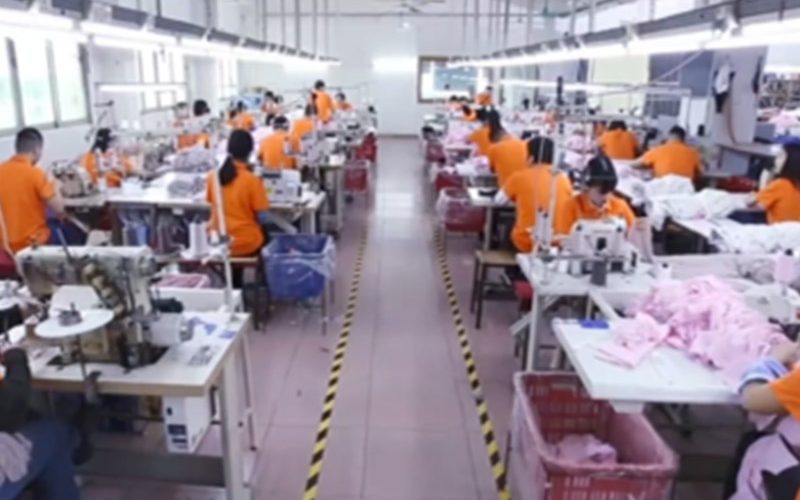
Jinfeng Apparel operates 6 owned womenswear factories and works with more than 10 long-term satellite production partners in the Guangdong apparel supply region. Owned production units support core dress categories, complex development and quality-sensitive programs. Long-term partner factories add controlled capacity for suitable styles, repeat orders and phased deliveries. Allocation is based on fabric type, garment structure, workmanship level, quantity, delivery window and prior experience with the approved sample rather than assigning every style to the same line.

Development Resources

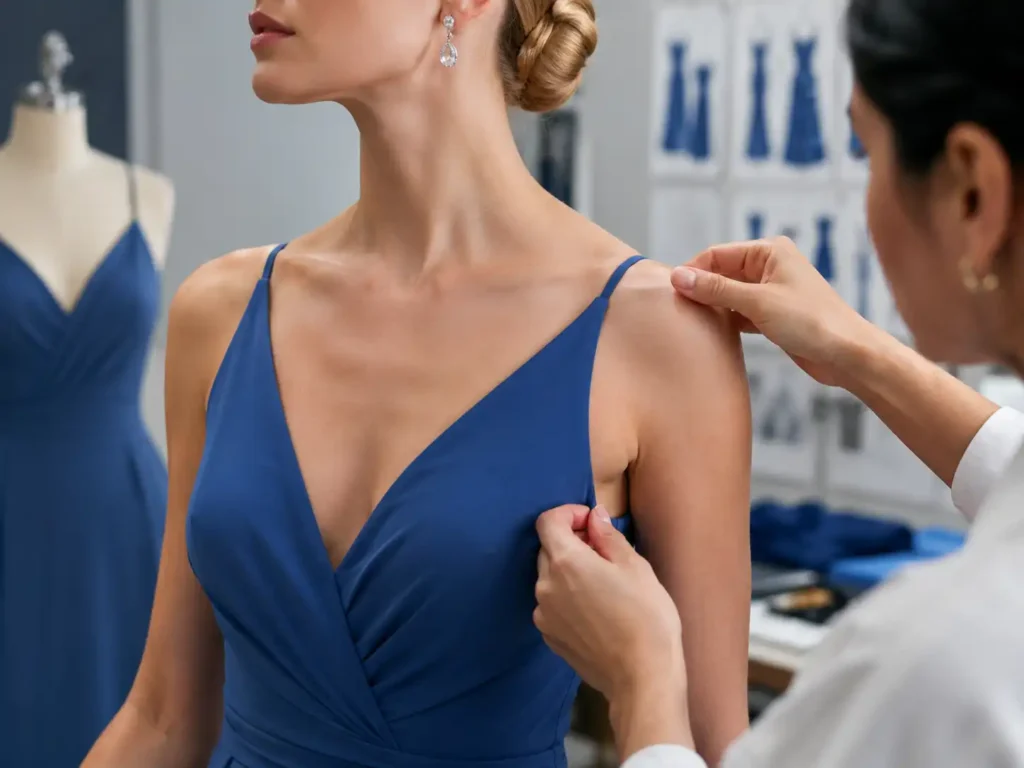
Two sample rooms, 7+ senior pattern makers and 20+ sample machinists support style review, pattern development, first samples, fit correction, revised samples, PP samples and sealed production references. The team can start from tech packs, original samples, sketches, reference images or line sheets. More complete files improve speed and costing accuracy, while incomplete files receive a feasibility review before pattern work begins. The objective is not simply to make one attractive sample, but to create a repeatable construction standard for grading and bulk production.

Production Control

Regular monthly capacity exceeds 100,000 pieces across 18+ sewing lines and 6+ flexible production lines. A team of 12+ merchandisers coordinates approvals, material status, production files and schedule updates. Fifteen or more QC inspectors cover material, cutting, sewing, measurement, finishing and packing checkpoints, while 30+ finishing and packing workers support retail-ready presentation. Available capacity is confirmed against the actual style mix, line loading, material readiness and required delivery sequence before an order schedule is accepted.
  • CTA 1: Review Capacity Fit
  • CTA 2: Share Style Mix

What Sourcing Directors Need From Dress Manufacturing

Large dress programs require more than a competitive quotation. Vendor performance depends on product specialization, capacity discipline, cost visibility, quality governance, compliance coordination and continuity across repeat orders.

Product Specialization

Dress manufacturing combines silhouette, fit, surface appearance and wearing safety. Satin, mesh, lace, sequin, jersey and structured woven styles do not share the same production logic. A sourcing director needs evidence that the assigned team understands fabric direction, lining, stretch, neckline stability, bust shaping, slit height, zipper behavior, hem balance and pressing requirements. Jinfeng evaluates these variables before sampling and matches styles to suitable development and production teams.

Capacity Reliability

A monthly capacity figure has limited value without a style mix and loading plan. Ten simple jersey styles and ten corset or sequin styles require different line hours, inspection levels and finishing space. Jinfeng reviews projected units by style, color and delivery date, then considers material lead time, sample approval status, sewing complexity and line availability. The accepted plan identifies which styles can run together, which require specialist handling and whether delivery should be phased.

Cost Transparency

Price needs to reflect fabric consumption, lining, trims, pattern work, sampling, cutting, sewing time, pressing, QC, packing, testing, wastage and order quantity. Jinfeng separates visual requirements from avoidable complexity and can propose material or construction alternatives when commercial targets need adjustment. Any alternative is reviewed through swatches or samples because a lower material cost can change drape, stretch, opacity, color appearance or fit.

Quality Governance

Quality control starts before cutting. Material approval, shrinkage risk, color direction, pattern correction, PP sample comments, measurement charts and workmanship notes need to enter the production file. During bulk production, inspection moves through incoming materials, cutting, inline sewing, measurement, final garment appearance, pressing and packing. Defect classification, AQL requirements and tolerances can be aligned with the brand’s quality manual or appointed inspection company.

Compliance Coordination

Factory documents, material certificates, test reports, labels and inspection records must match the actual production unit, supplier, batch, color and certificate scope. Jinfeng supports project-based review for audit documentation, material testing, garment testing, care label information and third-party inspection. Claims are confirmed against current documents rather than treated as universal across every factory or material.

Vendor Continuity

Repeatability depends on records. Jinfeng keeps approved patterns, size charts, grading notes, fabric references, trim details, workmanship instructions, packaging requirements and order history for future production. Reorders still require revalidation when a dye lot, fabric weight, stretch, lining, color, trim or design detail changes. The record system shortens repeated communication while protecting the approved standard from silent changes.

A Clear Fit for Structured Dress Programs

Jinfeng Apparel is organized for brands and sourcing teams managing defined collections, professional sample approval and planned bulk production.

Strong Program Fit

The best fit includes brands with a line sheet, tech packs, original samples or clear reference direction; planned quantities by style and color; an identified size range; quality and packing requirements; and a real launch calendar. Programs may include a single strategic dress category or a seasonal assortment of 10-30 styles. Jinfeng can support OEM execution, ODM development input, private-label production, multi-color planning, phased delivery and repeat-order management when commercial and technical requirements are shared early.

Information Needed Early

Accurate review starts with product references, expected quantity per style and color, fabric direction, size range, target market, label and packing needs, desired delivery window and any audit or testing requirements. A target cost is helpful when it reflects the intended product level. When information is incomplete, Jinfeng can first identify feasibility, likely material options and areas requiring clarification. Final pricing and production timing are confirmed only after construction, materials, approvals and order breakdown are sufficiently defined.

Dress Manufacturer Qualification Scorecard

Use measurable evidence to compare dress suppliers before sampling, factory review or vendor onboarding.

Qualification AreaWhat Procurement Should VerifyJinfeng Apparel EvidenceRecommended Next Step
Dress specializationRelevant categories, fabrics and construction experienceDresses, skirts, jumpsuits, matching sets and private-label womenswear; strong focus on party, occasion, bodycon, satin, mesh, lace, sequin and resort stylesShare the planned category mix
Factory controlOwned capacity, partner capacity and allocation rules6 owned factories plus 10+ long-term satellite production partnersRequest proposed factory allocation
Available capacityCapacity for the exact style mix and timing100,000+ regular monthly capacity across 18+ lines and 6+ flexible linesSubmit unit plan and delivery window
Development teamPattern, sample and revision resources2 sample rooms, 7+ senior pattern makers and 20+ sample machinistsSend tech packs or reference files
Fabric capabilityMaterial sourcing, risk review and substitutionsChiffon, satin, stretch satin, lace, mesh, power mesh, jersey, ponte, crepe, velvet, sequin, organza, tulle, rayon, viscose, linen, denim and blendsProvide fabric direction and target hand feel
Fit controlPattern correction, grading and measurement processBust, waist, hip, neckline, strap, armhole, length, slit and lining review linked to final pattern and size chartShare fit standard and size range
Costing logicCost drivers and commercial alternativesFabric, trims, pattern work, sewing time, pressing, QC, packing, wastage, testing and logistics consideredShare target cost and non-negotiable details
QC structureInspection stages and named responsibility15+ QC inspectors covering materials, cutting, sewing, measurements, garments and packingSend quality manual and AQL level
Compliance supportCurrent documents tied to actual factory and materialProject-based audit document, testing and certificate review supportSubmit vendor compliance checklist
Private labelLabel, barcode, packing and carton controlsWoven labels, care labels, size labels, hangtags, barcodes, polybags and carton marksShare artwork and warehouse rules
Delivery supportForwarder coordination and export documentsCommercial invoice, packing list, carton data, booking support and shipment photosShare incoterm and forwarder contact
ConfidentialityDesign and commercial information protectionNDA support for tech packs, patterns, samples, labels, packaging and unpublished stylesSend NDA for review
Repeat ordersRecord retention and change controlPattern, fabric, trim, measurement, workmanship and packing records retainedRequest repeat-order control plan

Dress Programs Built Around Commercial Categories

Product specialization is organized by selling occasion, fabric behavior, structure and production risk rather than a long list of interchangeable dress names.

Party and Occasion

Party, cocktail, wedding guest, graduation and event dresses often combine strong visual impact with close fit and demanding surfaces. Satin, mesh, lace, sequin, crepe and layered constructions may appear within one assortment. Development focuses on photo-ready proportions, neckline security, bust coverage, lining length, slit balance and clean finishing under direct light. Bulk control places extra attention on color consistency, embellishment damage, zipper shape, pressing marks and protective packing.

Bodycon and Corset

Bodycon styles depend on stretch percentage, recovery, negative ease and stable side seams. Corset styles add cup shape, boning position, neckline support and comfort requirements. Sample review measures bust, underbust, waist, hip and length together because correcting one area can change another. Bulk production uses approved stretch direction, panel matching, reinforcement points and measurement tolerances so close-fitting dresses remain consistent across the size run.

Satin and Slip

Satin dresses require control of face direction, shade, snagging, seam puckering, zipper waves, pressing temperature and fold marks. Slip dresses add neckline drape, strap length and bias behavior. Fabric swatches and sample testing are used to compare shine, weight, opacity and drape before production. During bulk handling, surfaces need clean work areas, careful bundling and packaging that avoids excessive compression or permanent crease lines.

Mesh Lace Sequin

Transparent and decorated materials need product-specific handling. Mesh requires stretch direction, hole prevention, seam support and lining coverage. Lace needs pattern placement, matching, edge finishing and protection from broken motifs. Sequin fabric introduces abrasion, missing pieces, needle risk and skin comfort concerns. Construction plans determine where decorations are cleared from seam allowances, where lining is required and how garments are protected during pressing and packing.

Resort and Printed

Resort dresses often use lightweight woven fabrics, rayon, viscose, linen blends, chiffon or printed materials. Commercial success depends on drape, print position, shrinkage, opacity, travel creasing and comfortable movement. Development reviews print scale, panel placement, hem balance and size grading. Production planning considers print repeat, fabric yield, color approval and packing methods that preserve a relaxed presentation when garments reach a distribution center or retail environment.

Mini Midi Maxi

Length categories change fit, consumption, movement and inspection. Mini dresses need secure coverage and stable hems. Midi dresses require balanced proportions around waist, hip, slit and calf. Maxi dresses need controlled side length, hem sweep, lining length and floor clearance. Grading cannot rely on proportional enlargement alone; length rules, slit position, strap length and neckline depth must be checked across the selected size range.

Manufacturing Allocation Based on Product Risk

Owned and partner capacity is assigned through product logic, approval status and delivery requirements rather than sending every order to the nearest open line.

Owned Factories for Core Control

Owned production units are the primary base for high-priority development, quality-sensitive styles and programs requiring close coordination between pattern, sample, merchandising, production and QC teams. Styles with corset structures, transparent panels, mixed fabrics, placement lace, sequin surfaces, high stretch or demanding fit are reviewed for the production unit with the most relevant experience. Early factory selection also allows the sample team to consider real sewing capability and line methods before the PP sample is approved.

Allocation does not depend only on quantity. A 1,500-piece satin slip dress can require more surface protection and pressing control than a larger run of a stable jersey style. A 2,000-piece corset dress may need specialist operators, more inline inspection and slower output per line. The production proposal therefore considers sewing minutes, handling risk, finishing needs and the cost of switching between unrelated constructions.

Long-Term Partners for Controlled Capacity

More than 10 long-term satellite production partners support capacity expansion, regular styles, repeat orders and phased delivery when their capabilities match the approved product.

They are not treated as anonymous spot suppliers. Production files, PP comments, measurement standards, trim placement, packaging instructions and inspection requirements remain under Jinfeng project management. A partner unit must receive the same approved references used for owned-factory production.

Complex first orders are not divided merely to accelerate output.High-risk styles generally stay within a suitable specialist unit until workmanship and measurement stability are established. Repeat styles or lower-risk groups may be allocated across approved capacity when the production plan includes consistent materials, sealed references and defined QC checkpoints.

Style-to-Factory Decision Rules

The allocation review considers woven or knit construction, fabric sensitivity, embellishment, fit complexity, quantity, color count, size ratio, delivery priority and repeat-order history. Styles sharing fabric, trims or construction may be grouped to reduce changeover and improve material control. Launch-critical styles can be scheduled earlier, while visually complex or fit-sensitive styles receive longer development and inspection windows.

Before commitment, the sourcing team receives an indicative plan covering proposed production units, sample status, material timing, expected line loading and delivery sequence. Final allocation can change if approvals, material arrival or quantity breakdown changes. Any change should preserve the approved quality standard and remain visible to the project team.
jinfeng-factory22

Managing Multi-Style and Multi-Color Programs

A collection of 10-30 styles needs grouped approvals, clear priorities and controlled data flow to prevent sample congestion and production mistakes.

Style Grouping

Styles are grouped by fabric family, silhouette, construction risk and intended production unit. A group may contain satin dresses with related linings, stretch styles with shared fabric behavior or resort dresses using one print base. Grouping reduces repeated material decisions and helps the pattern, sample and production teams apply consistent methods. Unrelated styles remain separate when shared processing would create more risk than efficiency.

Fabric Grouping

Using common fabric bases across selected styles can improve shade control, purchasing efficiency and repeat-order continuity. The approach still respects style-specific requirements such as stretch, opacity, drape and lining. Every proposed common material is checked against each silhouette. A satin suitable for a loose slip dress may not provide enough structure for a fitted corset dress, even when color and surface appearance match.

Sample Priority

Not all styles enter sampling on the same day. Photo-shoot styles, long-lead materials, fit-critical silhouettes and commercial hero pieces receive defined priority. A common planning sequence starts with 20-30 percent of key styles, followed by the remaining groups once fabric direction and base fit decisions are clearer. This reduces repeated corrections across a full assortment and protects important launch dates.

Revision Records

Every revision should identify the issue, root cause, approved action and affected file. Fit comments, photos, measurements, pattern corrections, fabric changes, trim substitutions and construction updates are recorded before a revised sample is made. Approved changes flow into the final pattern, measurement chart, BOM, workmanship notes and QC checklist. Production should never rely on scattered email comments alone.

PP Approval

The PP sample represents the agreed production direction for materials, fit, workmanship, trims, labels and finishing. Approval comments must be closed or clearly identified before cutting. If a late change affects consumption, pattern, price, timing or QC, the schedule is reviewed rather than silently absorbed. A sealed golden sample or approved reference remains available for production and final inspection comparison.

Production Allocation

Styles are loaded according to approval readiness, material arrival, line suitability and launch priority. Large collections may use phased start dates or split delivery to protect high-priority launches. Each production group keeps separate style, color and size breakdowns, labels, carton marks and packing lists. The sourcing team receives milestone updates around material readiness, cutting, sewing, finishing, inspection and shipment preparation.

Structured Development From Brief to Approved Sample

Development converts creative direction into measurable patterns, materials, construction files and production references. Timing is planned by style complexity and approval speed.

Project Review and Feasibility

Development starts with a review of tech packs, line sheets, original samples, sketches or reference images. The team identifies silhouette, likely fabric, lining, trims, closure, internal structure, decoration and target fit. Areas that cannot be confirmed from visuals are listed before pattern work. Quantity per style and color, intended size range, target market and delivery window are also reviewed because they influence material options, MOQ and construction choices.

A first sample is commonly planned in about 7-15 working days after the development direction and usable sample materials are confirmed. Simple styles using available fabrics may move faster, while corset, sequin, lace placement, custom print, special-dye or mixed-material styles may need additional time. The date is confirmed per style group rather than promised as one standard for an entire collection

Pattern and Sample Engineering

Pattern development controls bust, waist, hip, neckline, shoulder, armhole, strap, length, slit and lining relationships. Close-fitting dresses also require negative ease and stretch recovery review. Corset and cup styles add underbust, cup position, boning and support. Jumpsuits add torso and crotch balance. Patterns are built around the approved base size and intended fabric behavior; a pattern made for stable woven material cannot be transferred blindly to high-stretch jersey.

The first sample tests proportion, construction feasibility, material direction and visual intent. A fit or revised sample follows when comments affect pattern, measurement, material or workmanship. Revision rounds commonly require around 5-10 working days after complete comments and replacement materials are available. Multiple changes sent at different times can extend the schedule because pattern, BOM and construction notes must remain aligned.

PP Sample and Production Lock

The PP sample brings together the confirmed shell fabric, lining, trims, label positions, measurements, workmanship and finishing direction. A typical PP sample window is around 5-8 working days after earlier revisions are closed and production materials are available. Complex final details or late material changes can extend the window. Approval should include measurements, fit, color, appearance, construction, labels and packaging details relevant to production.

After PP approval, the final pattern, size chart, grading rule, BOM, construction notes, trim placement, QC points and packing instructions are released. A sealed golden sample or approved reference is retained for line setup and inspection comparison. Production does not start from a visually approved photo alone; the technical files and material approvals must support the same decision.

Development, Fit and Material Decisions​

Fabric and Trim Control Before Bulk Production

Material decisions determine appearance, fit, cost, production speed and return risk. Each fabric family requires its own checks before cutting begins.

Satin Chiffon and Fluid Wovens

Satin is reviewed for composition, weight, face direction, shine, opacity, drape, snagging, seam puckering, color variation and pressing response. Stretch satin also needs stretch and recovery data. Chiffon and other fluid wovens require checks for transparency, shrinkage, seam slippage, static, fraying and hem behavior. Bias-cut or draped styles may need hanging time during sample assessment because length can settle unevenly.

Bulk approval includes the selected face direction, lining relationship, color reference and handling method. Cutting markers must respect fabric direction where visual shade changes occur. Bundles should avoid rough surfaces and excessive compression. Sewing methods are chosen to reduce puckering or seam damage, while pressing settings are tested on production material rather than assumed from the sample room fabric.

Mesh Lace and Transparent Layers

Mesh is assessed for stretch direction, recovery, hole resistance, transparency and skin feel. Power mesh can support bodycon structures but may change fit significantly compared with soft mesh. Lace is reviewed for motif scale, placement, matching, edge treatment and batch variation. Transparent layers must be assessed together with lining color and length because the same outer fabric can look different over nude, tonal or contrasting foundations.

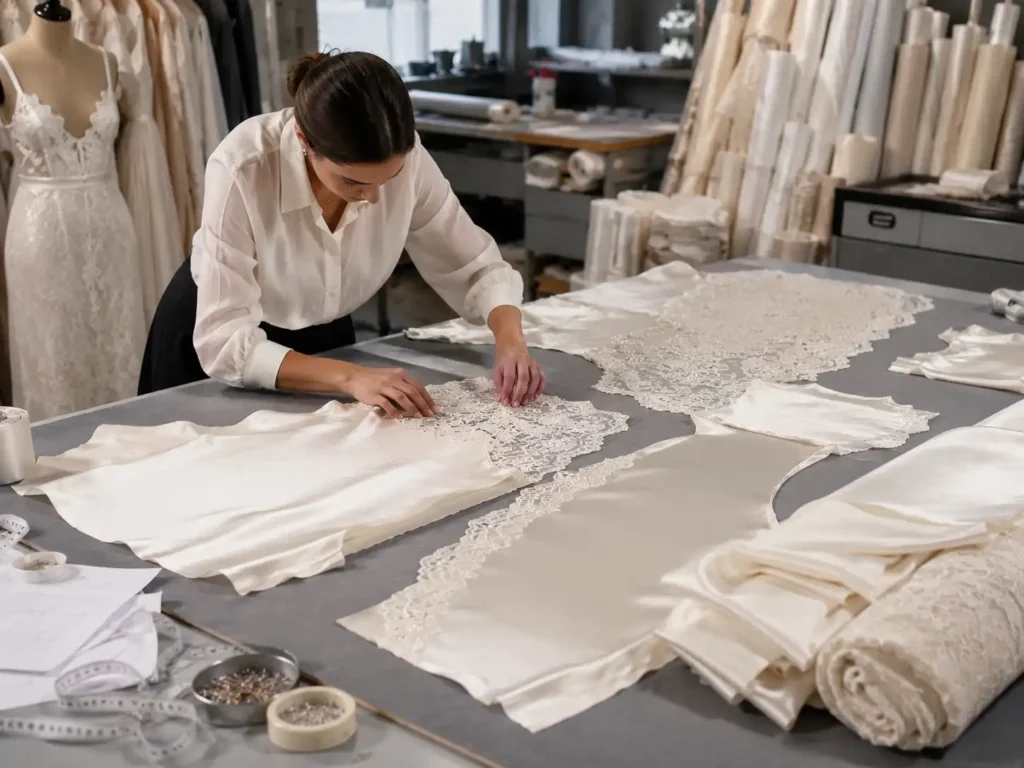
Sample approval should mark critical motif positions, coverage boundaries, seam support and reinforcement. Cutting requires attention to placement and material width. Bulk QC checks holes, pulled yarns, mismatched motifs, exposed seam allowances, uneven lining and distortion at zippers or side seams. Any substitute lace or mesh needs a new comparison because density, stretch and motif can change consumption and pattern behavior.

Sequin Velvet and Sensitive Surfaces

Sequin materials introduce missing pieces, abrasion, broken needles, sharp seam allowances and surface damage. The construction plan identifies where sequins must be cleared from seam lines, whether edges require binding or lining and how skin contact will be protected. Velvet requires nap direction, shade consistency, pressure control and careful pressing. Both materials need packing methods that reduce crushing and surface marking.

Production handling includes clean work surfaces, protected bundles and limited stacking pressure. Inline inspection checks decoration loss, seam damage, uneven nap, zipper waves and comfort points. Final inspection should include appearance under suitable light because surface direction and pressure marks may be less visible during line work than after pressing.
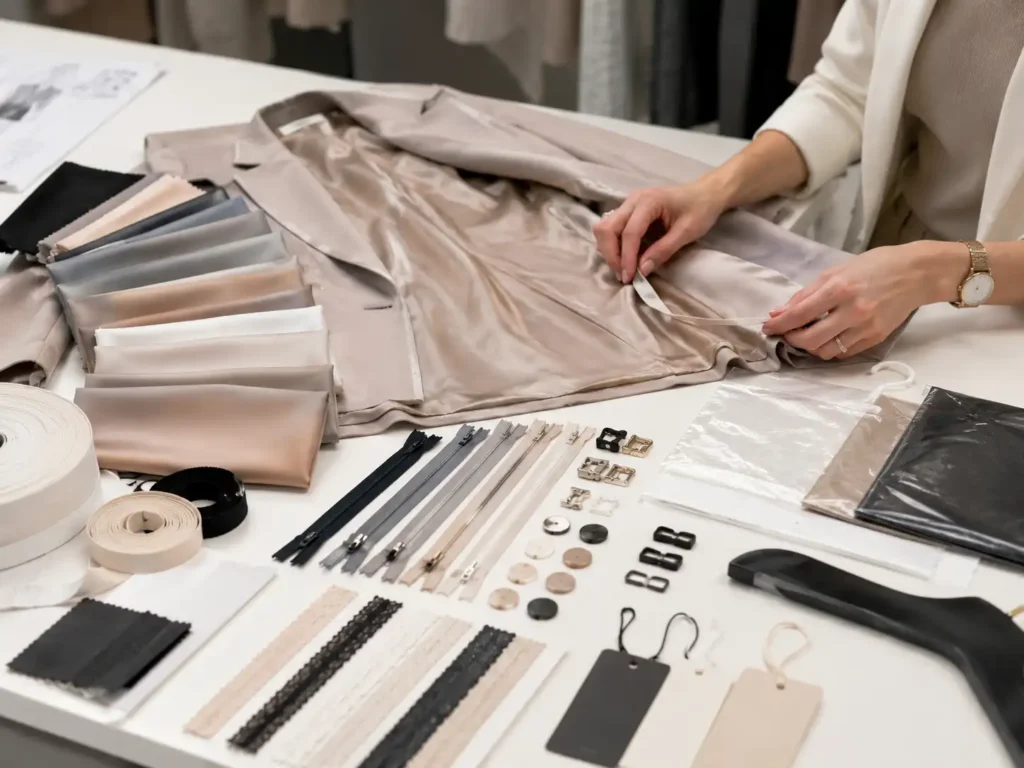
Linings Trims and Private Label Components

Lining selection affects opacity, comfort, recovery, static, drape and fit. Stretch shell fabrics generally need compatible lining behavior. Corset and occasion styles may use cups, boning, elastic, stabilizers, hooks, adjusters or special zippers. Trims are assessed for function, color, strength, skin contact and compatibility with pressing or washing. Label and packaging components add artwork, position, language and SKU requirements.

A trim approval record should identify supplier, color, size, placement and approved sample. Customized trims or packaging may carry separate MOQs and lead times. Barcodes, care labels, size labels, hangtags, polybags and carton marks are checked against the purchase order and packing instructions before bulk packing. Substitutions are not made without approval when appearance, compliance or brand presentation could change.

Fit and Construction Controls Across the Size Run
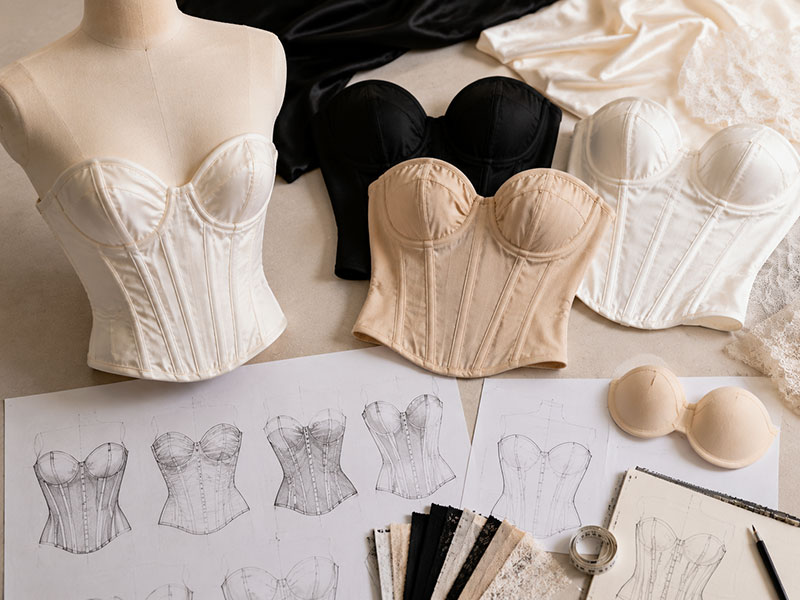
An approved base-size sample must become a stable commercial size range through controlled pattern correction, grading and measurement inspection.

Bust and Cup Shape

Bust fit depends on circumference, dart or panel position, neckline, cup shape, underbust support and fabric stretch. Corset dresses require controlled cup placement and boning alignment, while slip or mesh styles need secure coverage without flattening the silhouette. Review includes front and side appearance, movement and neckline security. Changes are transferred into the pattern and measurement chart before grading.

Waist and Hip Balance

Waist and hip measurements determine silhouette, side-seam position, ruching distribution and movement. Bodycon styles need enough negative ease to shape the body without overstretching seams or distorting prints. Woven styles need controlled ease and stable closures. Fit is checked together with fabric recovery, lining and seam placement, since a correct flat measurement can still create twisting or drag lines on body.

Neckline and Straps

Neckline depth, width, gaping and support are reviewed with the intended market and wearing occasion in mind. Strap length and attachment position affect bust placement, armhole shape and back balance. Adjustable hardware needs secure attachment and correct color. Strapless styles require internal support and top-edge stability. Production checks focus on symmetry, reinforcement and consistent finished length.

Lining and Coverage

Lining must support opacity, comfort and the outer silhouette. Length is checked against the shell, slit and movement. A lining that is too short can expose seam allowances or create an unfinished appearance; a lining that is too long can show below the shell or restrict drape. Stretch compatibility, static and skin feel also matter. Bulk inspection checks attachment, twisting, exposure and hem relationship.

Length and Slit

Mini, midi and maxi dresses use different length rules. Slit height must balance movement, sitting coverage and visual intent. Reinforcement is added at stress points where required. The position of a slit relative to lining, seam and body measurements is checked in the sample and grading process. Bulk measurement includes overall length and slit opening, with tolerances agreed before production.

Grading and Measurement

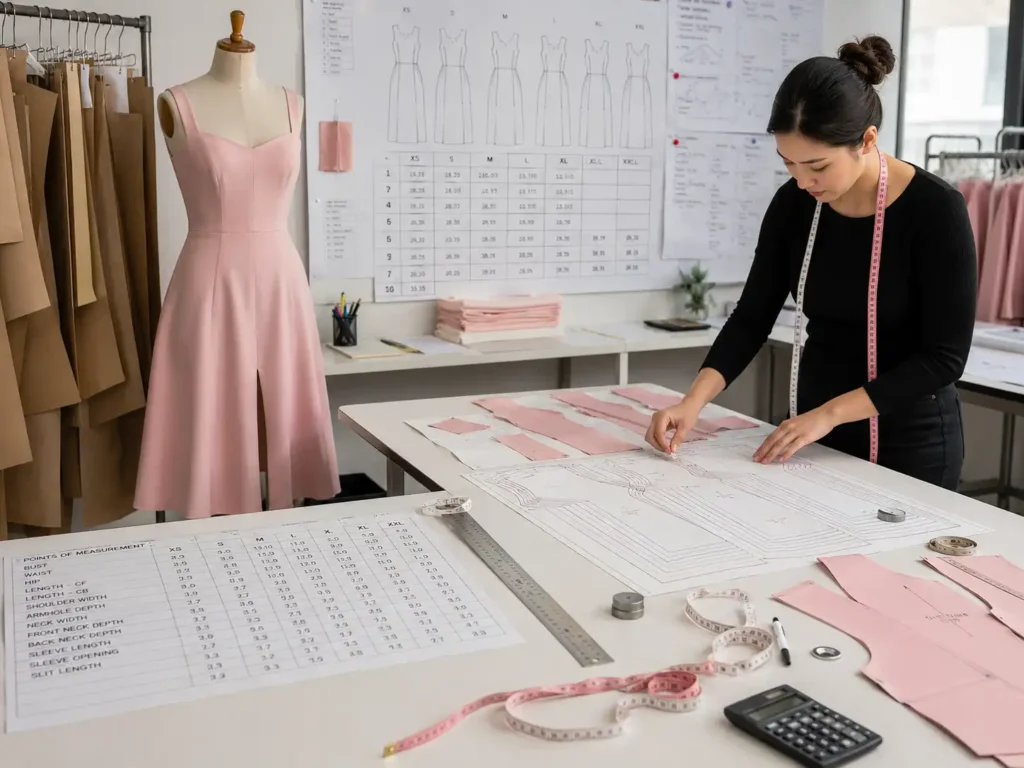
Standard programs often grade from an approved base size through XS-XL, with extended ranges reviewed by project. Bust, waist, hip, length, strap, armhole, neckline and slit cannot always increase at the same rate. Plus-size or proportion-specific ranges may require separate corrections rather than simple enlargement. Measurement QC uses the approved chart, defined points of measure and agreed tolerances across sampled units from each size.

Commercial Planning References for Dress Programs

The ranges below support early planning. Final timing and order structure are confirmed after style, material, approval and delivery requirements are reviewed.

Planning ItemCommon ReferenceMain Variables
Core MOQFrom 200 pcs per style/colorFabric availability, dyeing, print, trims, complexity, packaging and schedule
Multi-style collection10-30 styles per programShared fabrics, sample priority, quantity per style and launch calendar
Collection order total20,000-80,000 piecesStyle count, color count, size ratio, replenishment and delivery plan
Base size developmentUsually S or M, according to brand standardTarget market, sample model, body measurements and silhouette
Standard gradingCommonly XS-XLBrand grade rule, fabric stretch, dress length and fit category
Extended sizingReviewed by projectSeparate proportion work, fit samples and measurement standards
First sampleAbout 7-15 working days after direction and material confirmationComplexity, custom materials, print, trims and file completeness
Revised sampleAbout 5-10 working days after complete commentsPattern change, replacement materials and number of issues
PP sampleAbout 5-8 working days after revision closure and material readinessFinal trims, labels, workmanship and production material
Bulk productionCommonly about 30-45 days after PP approval and material arrivalQuantity, style mix, line loading, workmanship and inspection plan
Final inspectionPlanned before packing release or shipmentAQL level, brand manual, inspection company and recheck needs
Express sample transitCommonly about 3-7 daysDestination, courier service and customs
Air freight transitCommonly about 7-15 daysRoute, booking, destination handling and customs
Sea freight transitCommonly about 25-40 days to major U.S. portsPort pair, sailing schedule, congestion and customs
Split deliveryAvailable by projectStyle priority, carton plan, documents, air/sea mix and warehouse rules

The ranges below support early planning. Final timing and order structure are confirmed after style, material, approval and delivery requirements are reviewed.

Production Readiness Before Line Loading

PP approval is followed by a controlled handover that aligns patterns, materials, workmanship, quality points and packing instructions before cutting.

Approved Technical Package

The production package includes the final pattern, size chart, grading rule, BOM, fabric and trim approvals, construction notes, label positions, artwork references and packing instructions. Revision history is checked so obsolete measurements or construction methods do not remain in circulation. Any open point is assigned an owner and closure date. A photo approval without updated technical files is not sufficient because line teams need measurable and repeatable instructions.

Marker planning and consumption are reviewed against production fabric width, direction, shrinkage and placement requirements. Printed, lace, velvet and directional satin styles may need special marker rules. Size ratios and quantity breakdowns must match purchase orders and labels. When material batches arrive, shade, hand feel, width and approved reference are checked before full cutting is released.

Pre-Production Alignment

Merchandising, production and QC teams review the PP sample, key construction points, measurement tolerances, critical defects and packing requirements. Fit-sensitive or surface-sensitive styles receive highlighted control points. Examples include cup placement, boning, zipper waves, mesh holes, lace matching, sequin clearance, satin snagging, slit reinforcement, lining exposure and hem balance.

The production unit confirms line suitability, expected output, special handling and inspection frequency. When several styles share a line, changeover risks are considered. Labels, tags and packaging components are verified before packing begins, while barcode and carton data are compared with the final SKU breakdown. Any late change affecting cost, consumption, timeline or quality is recorded and approved.

Material and Schedule Release

A production start date depends on PP approval, material readiness and line availability. Partial material arrival can support limited preparation, but full cutting should not proceed without clear shade and quantity control. A common bulk window is about 30-45 days after approvals and materials are ready, although complex collections, customized fabrics, large quantities or phased deliveries require a project-specific schedule.

Milestones are planned for cutting, sewing, inline review, finishing, final inspection, packing and shipment preparation. The schedule also includes time for corrective action when inspection finds an issue. Launch-critical programs benefit from early approval of labels, packaging and warehouse rules, preventing finished garments from waiting for non-garment components.
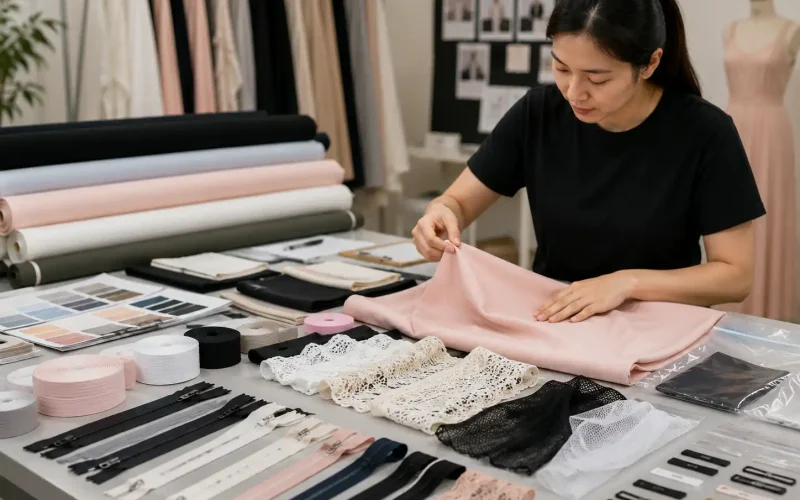
Material Procurement and Inspection

Bulk Production Control at Visible Checkpoints

Quality risk is managed through defined stages from incoming materials to packed cartons, with records linked to the approved production standard.

Incoming Materials

Shell fabric, lining, trims and private-label components are checked against approved references. Review covers color, hand feel, weight or structure where relevant, width, stretch, visible defects and quantity. Sensitive fabrics receive attention to snagging, holes, motif variation, sequins, nap or surface pressure. Material concerns are isolated before cutting rather than allowed to become finished-garment defects.

Cutting Control

Cutting follows the approved marker, size breakdown, fabric direction and shade grouping. Directional satin, velvet, prints and placement lace require additional control. Cut panels are checked for quantity, notches, matching points and visible defects. Bundles remain identified by style, color, size and shade group so pieces are not mixed during sewing.

Sewing Control

Line setup uses the PP sample, workmanship notes and critical control list. Early output is reviewed for seam appearance, symmetry, fit-related measurements, zipper behavior, lining, reinforcement and trim placement. Sensitive materials receive handling instructions. Issues found at the start are corrected before large quantities move through the line.

Inline Review

Inline inspection samples work in progress and identifies recurring defects while correction is still efficient. Checks may include measurement, seam puckering, skipped stitches, tension, holes, decoration loss, twisted seams, neckline shape and component placement. Findings are communicated to production with recheck requirements, not left for final inspection alone.

Finishing and Pressing

Finishing includes thread cleaning, shape correction, pressing and appearance review. Temperature and pressure are matched to the fabric. Satin, velvet, sequin, lace and mesh require special care to avoid shine marks, crushing, melting or deformation. Garments are checked after pressing because some surface or balance issues become visible only when the garment hangs naturally.

Packing Release

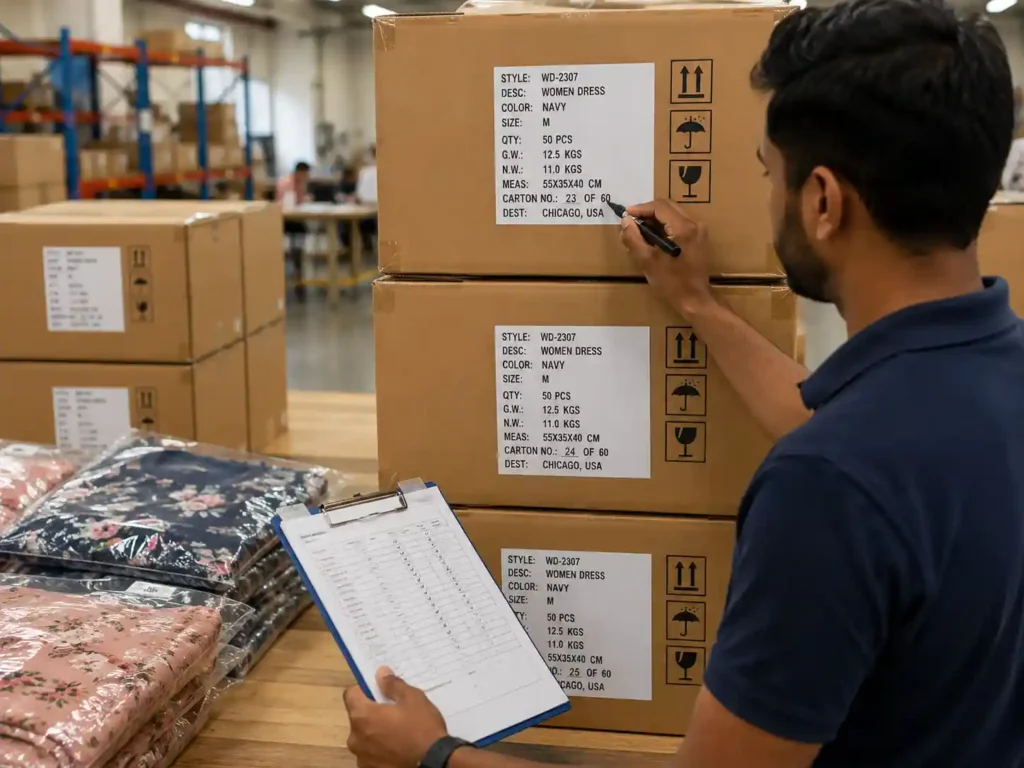
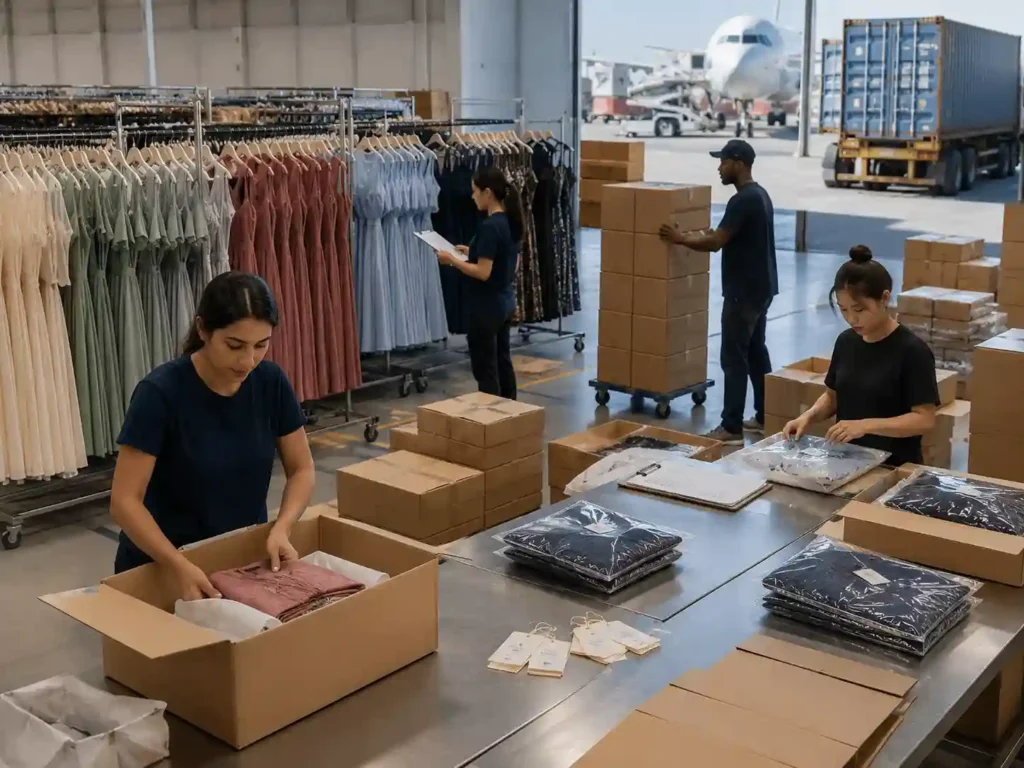
Packing begins after garment approval and component verification. Size labels, care labels, hangtags, barcodes, polybags, SKU stickers and carton marks are checked against the order file. Cartons are organized by approved assortment or solid-size rules. Final carton quantity, dimensions, gross weight, net weight and shipping marks support logistics planning and warehouse receipt.

Quality Standards AQL and Inspection Readiness

Quality management combines product-specific prevention, measurement discipline, defect classification and independent inspection support when required.

Product-Specific Defect Prevention

A generic garment checklist cannot cover every dress risk. Satin inspection includes snags, shade direction, seam puckering, zipper waves and pressing marks. Mesh checks include holes, stretch distortion, lining coverage and seam support. Lace checks motif placement, matching, broken edges and color variation. Sequin styles require review of missing pieces, sharp areas, seam clearance and surface protection. Bodycon and corset styles add stretch recovery, side-seam balance, cup shape, boning and close-fit measurements.

Defect prevention begins with sample and PP decisions. The approved production file identifies critical areas and acceptable appearance. When a risk cannot be controlled reliably at the intended cost or timing, the concern is raised before bulk production rather than hidden until final inspection.

Measurement and Tolerance Control

Measurement control uses approved points of measure, size charts and tolerances. The base-size sample establishes fit direction, while grading translates it across the commercial range.
Sampling from each size during bulk production helps identify grade or sewing drift. Close-fitting dresses, strap styles, long dresses and jumpsuits require attention to measurements that strongly affect wearing balance, such as bust, waist, hip, strap length, body length, slit height and crotch length where applicable.

Tolerance cannot be chosen independently from fabric behavior. High-stretch materials may measure differently under tension, while bias or fluid wovens can settle. The measurement method, resting condition and agreed tolerance should be clear before inspection.

AQL and Defect Classification

AQL inspection is a sampling method, not a promise of zero defects. The inspection level, sample size, acceptance number and classification of critical, major and minor defects are set by the brand, inspection standard or appointed third party. Jinfeng can align internal inspection and packing release with the agreed requirement. Product-specific examples should be added to the defect library so appearance decisions remain consistent.

When an inspection identifies failure or a concentrated issue, affected stock is isolated, root cause is reviewed, corrective action is completed and a recheck plan is agreed. The response depends on defect type, quantity, repair feasibility and shipping schedule.

Third-Party and Brand Inspection

Jinfeng supports inspection by brand QA teams or appointed companies such as SGS, Intertek, Bureau Veritas or other approved providers by project. Support can include production access, order files, packed quantity, measurement charts, carton data and corrective-action coordination. The independent party sets its own procedure and issues its own result.

Inspection booking should account for production completion, packing percentage, warehouse or factory location and shipment cut-off. A late booking can compress corrective-action time, so inspection requirements are included in the project calendar as early as possible.

Compliance Support With Documented Boundaries

Compliance review is tied to the actual production factory, material supplier, batch, certificate validity, order requirement and destination market.

Factory and Audit Documents

Jinfeng can coordinate available factory profiles, production process information, QC procedures and audit-related documents for project review. SMETA, Sedex or BSCI-related requirements are checked against the proposed production unit and current records. No single statement is applied automatically to every factory. Sourcing teams should share their vendor manual, required audit platform, validity period and approval process before final factory allocation.

Material and Garment Testing

OEKO-TEX, GOTS, GRS, organic or recycled material resources may be reviewed by supplier, fabric type, color, batch, MOQ, lead time and certificate scope. Availability is confirmed before quotation or material approval. Jinfeng can coordinate fabric or garment testing with laboratories or appointed service providers when requested. Test items, sample quantity, cost, timing and acceptance criteria are confirmed by project.

Labels and Market Documents

Care labels, fiber composition, country-of-origin wording, size labels, barcodes, packaging warnings and shipping documents are prepared from approved brand information. Jinfeng can provide product composition and manufacturing details needed for document preparation, while final legal compliance remains subject to the brand, importer, broker or professional compliance adviser in the destination market. Artwork and wording should be approved before bulk label production.

Private-Label Packing and Delivery Readiness

Retail-ready delivery depends on accurate labels, SKU control, carton data, documents and coordination with the selected freight route.

Brand Labels

Woven labels, printed labels, care labels and size labels are produced from approved artwork, content, color, material and placement. Samples or digital proofs are reviewed before bulk production. Care label information should include approved composition and instructions supplied or confirmed by the brand. Placement is checked against garment construction so labels remain secure and comfortable.
4.-Hangtag

Hangtags and Barcodes

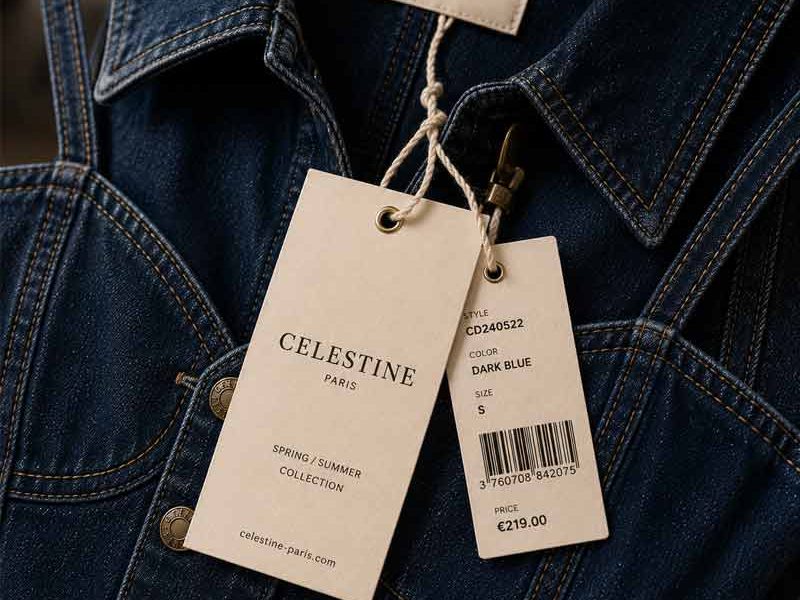
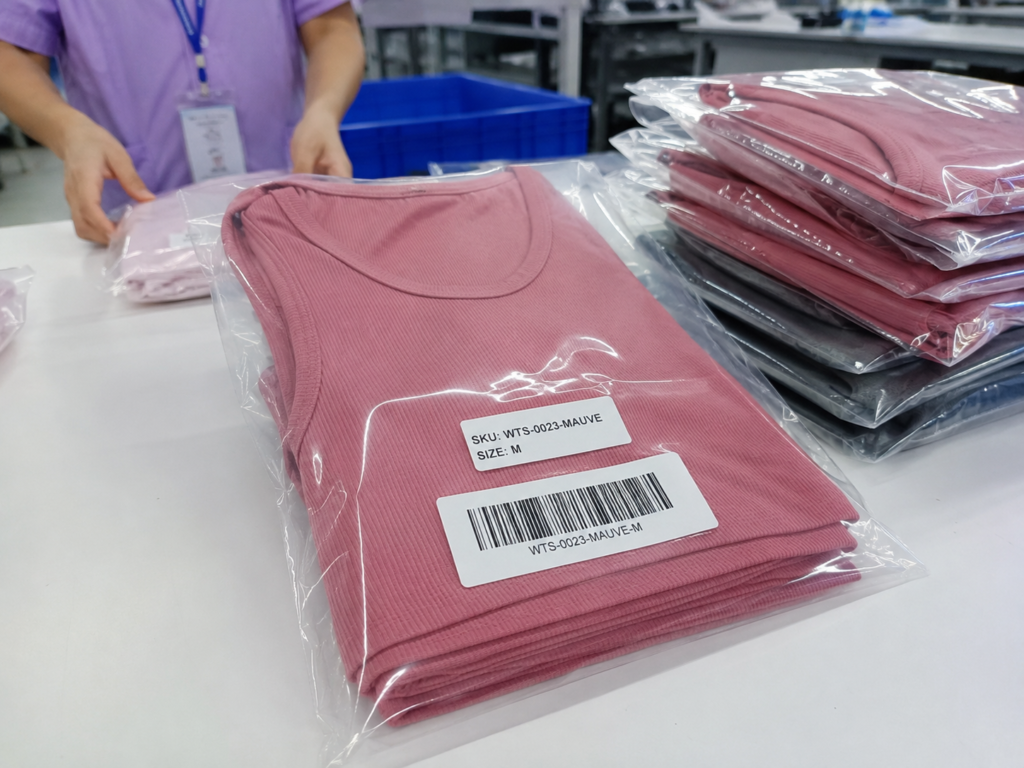
Hangtags, price tickets, barcode stickers and SKU labels must match the final style, color and size breakdown. Barcode lists are compared with packing instructions before use. Application position and attachment method are approved to avoid garment damage or presentation issues. Excess or obsolete components are separated to reduce cross-style mistakes.

Polybag and SKU Control

Each garment is folded and packed according to the approved method, with the correct size, barcode and warning information where required. Polybag dimensions, material, vent holes, sealing and stickers are confirmed by project. Packing staff use style-color-size references so visually similar dresses do not enter the wrong bag or carton.

Carton Marks

Carton marks can include purchase order, style, color, size assortment, carton number, destination and warehouse information according to approved instructions. Carton quantity, dimensions, gross weight and net weight are recorded for booking and freight comparison. Sensitive commercial information is used only for the order and is not displayed publicly.

Export Documents

Jinfeng can support commercial invoices, packing lists, carton details, booking information, shipment photos and coordination with a client-nominated forwarder. Product description, composition and manufacturing details can support HS code discussion, while final customs classification is confirmed by the importer, broker or forwarder.

Delivery Planning

Express, air, sea, FOB delivery, DDP by project and split air-sea plans can be compared according to destination, volume, launch date and warehouse rules. Typical transit references are about 3-7 days for express samples, 7-15 days for air freight and 25-40 days for sea freight to major U.S. ports, subject to route, booking and customs. Final timing is confirmed with the selected forwarder.

Anonymized Dress Programs With Measurable Control

The following programs reflect the scale and operating pattern of multi-style brand orders while protecting brand identity, designs and commercial records.

U.S. Occasionwear Collection

An established U.S. fashion brand developed an 18-style occasionwear program totaling 42,600 pieces. The assortment included satin slip dresses, mesh-lined bodycon dresses, lace midi dresses and selected sequin party styles. Quantities were distributed across 7 core colors and an XS-XL size range, with heavier volume placed in the highest-selling colors and middle sizes. The main sourcing risk was not total volume; it was managing four fabric families without allowing fit, color or finishing standards to drift. Development began with 6 priority styles for campaign photography and fit direction. Fabric approvals were grouped by satin, mesh, lace and sequin families. After the priority styles established base measurements and finishing expectations, the remaining styles moved through first sample, revision and PP approval in controlled groups. Production was allocated by material and construction. Satin styles received surface-handling and pressing controls. Mesh and lace groups used defined lining and coverage checks. Sequin styles received extra inspection for decoration loss and skin comfort. Bulk production and finishing were planned over approximately 38 days after material readiness and PP closure, followed by final inspection and split shipping. The first shipment prioritized campaign and launch styles by air, while the balance moved by sea. Style-color-size packing data remained separate for each shipment.

Multi-Channel Seasonal Drop

A multi-channel womenswear brand planned 26 styles and 73,200 pieces across party, resort, bodycon and fashion day dresses. The program used 5 main fabric bases, 11 colors distributed across the collection and a size range extending beyond the core XS-XL assortment for selected styles. Private-label requirements included woven labels, care labels, hangtags, barcodes, polybags and warehouse-specific carton marks. The major challenge was calendar control. Not every style had the same commercial priority, and several materials carried longer approval or procurement times. Styles were divided into three launch groups. Group One contained 8 hero styles for photography and early launch. Group Two contained 10 core volume styles. Group Three contained 8 fashion extensions with more flexible delivery. Sample resources were assigned to the priority groups first, preventing all 26 styles from competing for the same approval window. Fit comments, fabric changes and trim approvals were captured in revision records before PP samples. Production used both owned and approved long-term partner capacity according to construction risk. High-stretch bodycon and detailed occasion styles remained in specialist units, while suitable repeatable resort styles used controlled partner capacity. Delivery was split into two bulk shipments with separate packing lists and carton data. The phased structure protected the launch sequence without reducing the inspection window for later styles.

Repeat Orders Brand Protection and Vendor Continuity

Long-term sourcing becomes more efficient when approved records are retained, changes are controlled and confidential information remains protected.

Development Records

Jinfeng retains approved patterns, revised patterns, PP patterns, grading information, measurement charts, fabric references, trim details, workmanship notes, QC points and packing requirements. Records help restart repeat orders, extend a successful block into new styles and compare proposed material substitutions. They also reduce dependence on individual email history when merchandising or sourcing personnel change.

Repeat-Order Revalidation

A repeat order is checked against the prior approved standard before production. Fabric availability, dye lot, weight, width, stretch, hand feel, lining, trims, labels, color, quantity and delivery requirements are reconfirmed. A new sample or PP confirmation is recommended when material, fit, length, neckline, support structure or other key variables change. Revalidation protects continuity rather than slowing it.

NDA and Confidentiality

Jinfeng supports NDA-based cooperation and protects tech packs, line sheets, original samples, patterns, measurements, fabrics, trims, labels, barcodes, packaging, quantities, prices and unpublished designs. Files are used for approved project evaluation, development, production, QC, packing and delivery. Brand names, samples and project details are not published without authorization; case descriptions remain anonymized unless written permission is provided.

Frequently Asked Questions for Sourcing Directors

Yes. Jinfeng Apparel operates 6 owned womenswear factories and also works with more than 10 long-term satellite production partners. Factory allocation depends on product category, fabric, construction risk, quantity, timing and prior experience. Owned factories remain central to core development and quality-sensitive work, while suitable partner capacity supports regular styles, repeat orders, peak periods and phased production under Jinfeng project and QC management.
Regular monthly capacity exceeds 100,000 pieces across 18+ sewing lines and 6+ flexible production lines. The figure is not treated as automatically available space. Capacity for a new program is reviewed against the exact style mix, sewing complexity, material readiness, current line loading, inspection needs and required delivery dates. A sourcing team should provide quantities by style and color for a meaningful capacity plan.
Jinfeng supports single-category programs and multi-style collections. Brand programs commonly contain 10-30 styles and total 20,000-80,000 pieces, depending on assortment and commercial plan. Each style and color is evaluated for MOQ, fabric and production requirements. Larger assortments are usually grouped by fabric, construction and launch priority so sampling and production do not become congested.
MOQ starts from 200 pieces per style and color. Final requirements depend on fabric availability, custom dyeing, printing, lace or sequin sourcing, customized trims, packaging, complexity and production scheduling. A multi-style order is reviewed by style group, but total collection volume does not automatically remove material or color minimums for individual styles.
A first sample is commonly planned in about 7-15 working days after development direction and usable materials are confirmed. Revised samples often require about 5-10 working days after complete comments, and PP samples commonly require about 5-8 working days after revisions close and production materials are ready. Complex construction, custom materials, print, dyeing or incomplete comments can extend timing.
Bulk production is commonly planned around 30-45 days after PP approval and material arrival. The final schedule depends on quantity, number of styles, fabric and trim lead times, line allocation, workmanship, inspection plan, packaging and split-delivery needs. A collection schedule is confirmed by milestone, including material readiness, cutting, sewing, finishing, inspection, packing and shipment preparation.
Yes. The project team can review measurement tolerances, critical control points, defect classification, AQL requirements, packing standards and warehouse rules. Internal inspection can be aligned with the agreed framework, and brand QA teams or appointed third-party inspection companies can inspect by project. The inspecting party defines its procedure and issues its own result.
Long-term partner factories receive approved production files, PP references, measurements, workmanship instructions, labels, packing requirements and QC checkpoints. Jinfeng merchandising and QC teams remain responsible for coordination and inspection. High-risk first orders are not divided only for speed; factory selection follows product capability and quality control needs.
Jinfeng can coordinate available factory documents, material certificates, test arrangements, care label information and third-party inspection support. SMETA, Sedex, BSCI, OEKO-TEX, GOTS, GRS or related requirements are checked by actual factory, supplier, material, batch, color, certificate validity and scope. Requirements should be shared before factory and material approval.
Yes. Jinfeng can coordinate with a client-nominated forwarder by providing cargo details, commercial invoice, packing list, carton measurements, weights, carton marks, booking information, warehouse delivery support and shipment photos. The brand should provide forwarder contacts, booking instructions, cargo cut-off, warehouse address and required documents early enough for packing and dispatch planning.
Yes, when the production and packing plan supports the split. Shipments can be organized by launch priority, style group, color group, market, warehouse or air-sea mix. Each shipment needs its own quantity breakdown, carton data, packing list, labels and booking details. Split delivery should be planned before production to avoid rushed repacking or incomplete assortments.
Jinfeng supports NDA-based cooperation. Tech packs, samples, patterns, measurements, fabrics, trims, labels, packaging, prices, quantities and unpublished designs are used only for the approved project. Project images and brand information are not published without permission. Anonymized descriptions may be used only when they do not reveal the brand, design files or sensitive commercial details.

Submit Your Dress Vendor Brief

A useful vendor review starts with enough information to assess product fit, development resources, capacity, quality requirements and delivery risk. Send the available line sheet, tech packs, reference images or original sample photos together with the expected program structure. Jinfeng Apparel will review the style mix, fabric direction, pattern and sampling needs, production allocation, MOQ, commercial variables, QC framework, private-label packing and logistics requirements before proposing the next step.
Please include:

  • Company name, target market, sales channels and planned dress categories
  • Number of styles, quantity per style/color and launch priorities
  • Tech packs, line sheet, reference files and fabric direction
  • Base size, size range, size ratio and target cost level
  • Quality manual, AQL, audit, testing and inspection requirements
  • Label, barcode, packing, destination, freight terms and NDA documents
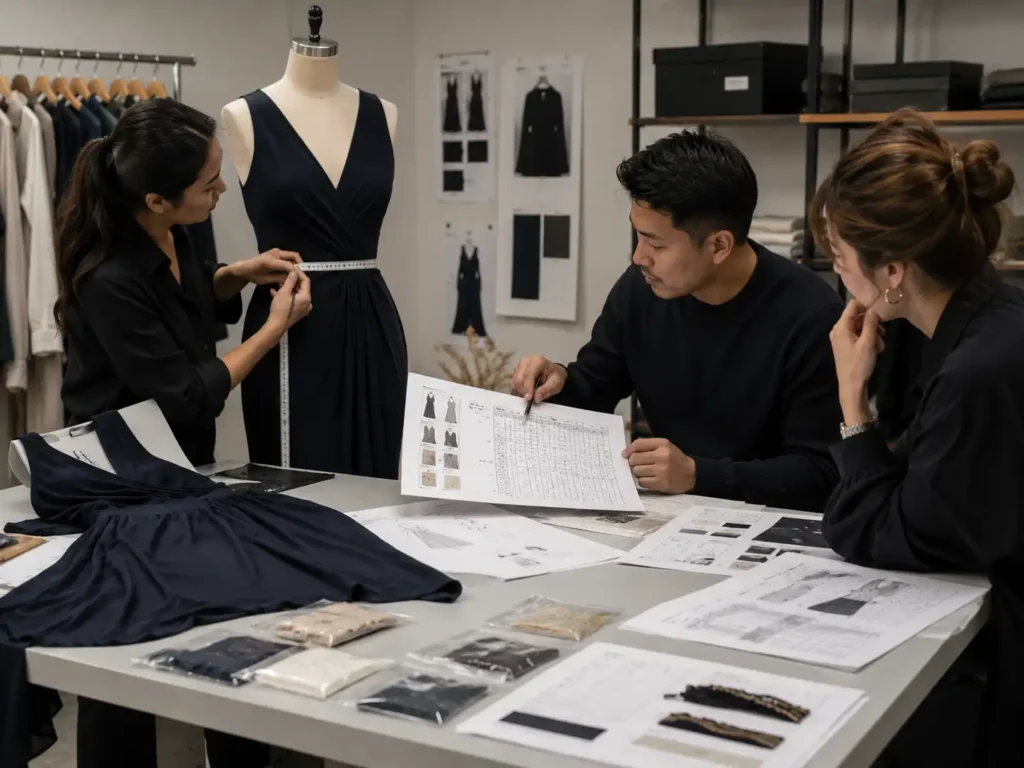
Tell Us About Your Dress Project

Share your product details, estimated quantity and development requirements. Our team will review your project and provide practical OEM/ODM production feedback.

Premium Women’s Apparel Production for Fashion Brands

From dress sample development to bulk production, JF Apparel supports fashion brands with confidential OEM/ODM manufacturing, reliable quality control and scalable production support.

START YOUR DRESS PROJECT

Ready to Develop Your Next Dress Collection?

Share your design concept, product requirements or sourcing plans with our team. We’ll review your project and provide practical feedback on development, materials, MOQ and production.

7-10 Days

Sample Development

200 PCS

Starting MOQ

Fast Response

Professional Follow-Up