Skip to content
Dress Manufacturer for Retail-Polished Fashion Brands
Custom dress development for established fashion brands that need controlled fit, refined construction, consistent bulk production, and retail-ready delivery.
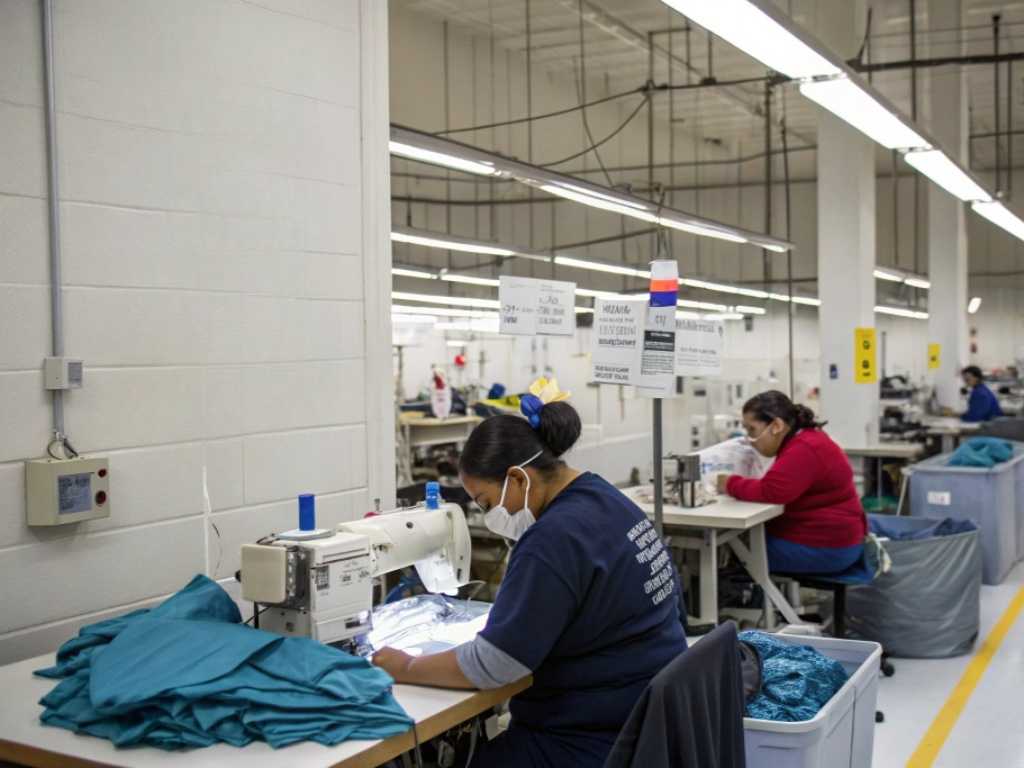
- 6 owned women’s fashion factories plus 10+ long-term production partners for multi-style dress programs.
- 100,000+ pieces of regular monthly capacity supported by 18+ sewing lines and 6+ flexible production lines.
- 2 sample rooms, 7+ senior pattern makers, and 20+ sample machinists for structured sample development.
- 15+ QC inspectors and 30+ finishing and packing workers for measurement, appearance, label, barcode, and packing control.
- MOQ starts from 200 pieces per style/color, with multi-style programs commonly planned around 10-30 styles.
Manufacturing Scale for Retail Dress Programs
Since 2008
Six Owned Factories
Ten Plus Partners
Two Sample Rooms
Quality Team
Finishing Support
Built for Brands Selling Finished Fashion
Established Fashion Brands
Specialty Retail Chains
Premium Ecommerce Brands
Sourcing and Product Teams
What Makes a Dress Retail-Polished?
A retail-polished dress is not simply a completed garment. It combines brand-appropriate fabric, controlled proportion, clean workmanship, repeatable bulk execution, professional finishing, and accurate retail identification. Each layer must support the intended selling price, channel, and wearing occasion.
| Control Dimension | Retail-Polished Standard | Commercial Risk When Missed |
|---|---|---|
| Visual Presentation | Fabric surface, drape, silhouette, color, and details support the brand’s price position and campaign imagery. | Garments look flat, shiny in the wrong areas, poorly balanced, or visually cheaper than the approved concept. |
| Fit and Proportion | Bust, waist, hip, neckline, strap, armhole, length, slit, and ease are controlled through fitting and grading. | High return rates, exposure concerns, restricted movement, uneven proportions, or inconsistent sizing. |
| Workmanship | Seams, hems, zippers, lining, internal support, embellishment, and edge finishing remain clean and stable. | Bulging zippers, visible lining, rough edges, loose decoration, twisted seams, or discomfort. |
| Bulk Consistency | Fabric batch, trims, measurements, construction methods, color, and appearance follow PP and approved standards. | The sales sample looks strong, while bulk units vary across lots, colors, sizes, or factories. |
| Final Finishing | Threads, marks, wrinkles, pressing, garment shape, folding, and protective packing are managed by fabric type. | Goods arrive creased, marked, flattened, contaminated, or unsuitable for immediate photography and sale. |
| Retail Identification | Main labels, care labels, size labels, hangtags, barcodes, SKU stickers, polybags, carton ratios, and shipping marks are accurate. | Warehouse rejection, relabeling cost, mis-picks, inventory confusion, and delayed launch. |
Where Retail Dress Programs Break Down
Sample-Bulk Gap
Unstable Fit
Weak Fabric Presentation
Unrefined Construction
SKU and Label Errors
Poor Arrival Condition
Dress Categories Built for Retail Assortments

Party Occasion Dresses

Mini Midi Maxi

Bodycon Ruched Dresses

Corset Strapless Dresses

Satin Slip Dresses

Mesh Lace Sequins

Resort Wedding Guest

Jumpsuits Matching Sets
Fabrics Chosen for Visual and Wearing Performance
Fabric selection begins with the expected retail result: how the garment should photograph, move, recover, cover the body, survive handling, and remain consistent in bulk. Swatches and sample garments are evaluated before the material becomes a production commitment.
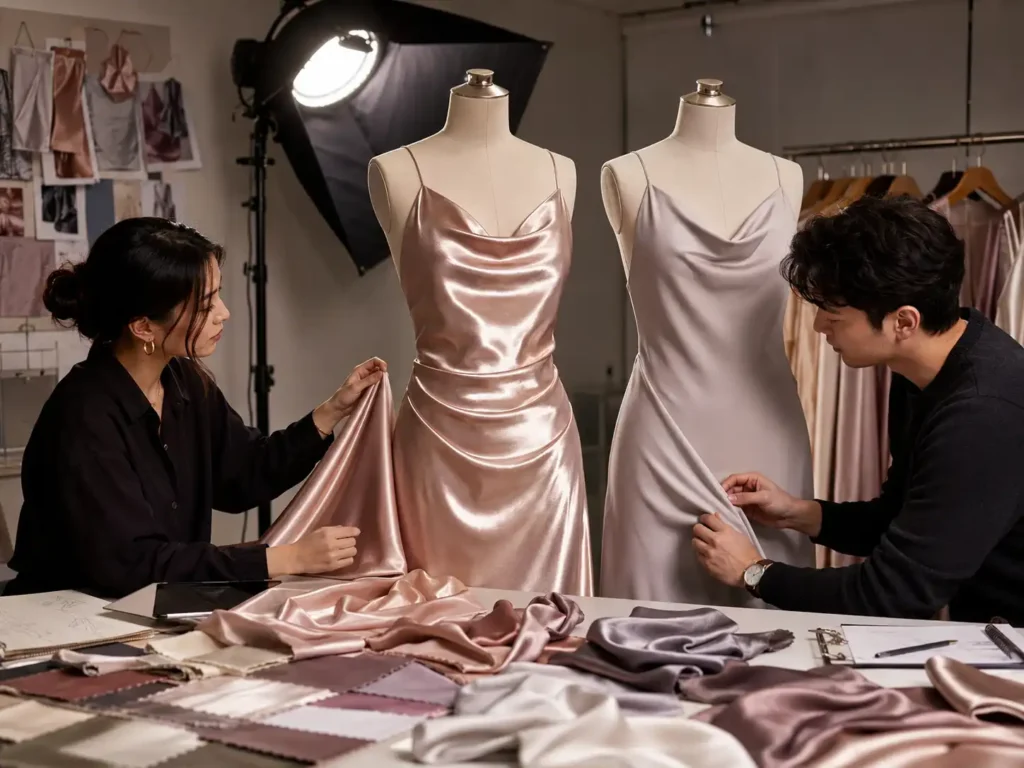
Shine, Drape, and Surface Appearance
Satin, chiffon, crepe, velvet, organza, rayon, and viscose can create very different visual effects even when suppliers use similar commercial names. Jinfeng Apparel reviews surface shine, fabric face, weight, width, drape, opacity, texture, wrinkle response, snagging risk, and color behavior under natural and indoor lighting.
- Satin direction:Cutting direction can change reflected light across panels. Fabric face and grain direction must remain consistent across front, back, sleeves, and production lots.
- Drape and silhouette:A fluid slip dress needs controlled fall, while a structured mini dress may require body and support. Substituting fabric without reviewing pattern behavior can change the entire shape.
- Pressing response:Heat, steam, pressure, and contact surfaces are adjusted by fabric type. Excess pressure can create shine marks, flattened seams, or surface damage.
- Wrinkle and packing:Long dresses, soft rayon, and satin require fold planning, protective layers, or hanging solutions according to the agreed delivery method.
A fabric is approved only when its visual character, construction compatibility, bulk supply, and cost fit the program rather than because the swatch looks attractive in isolation.
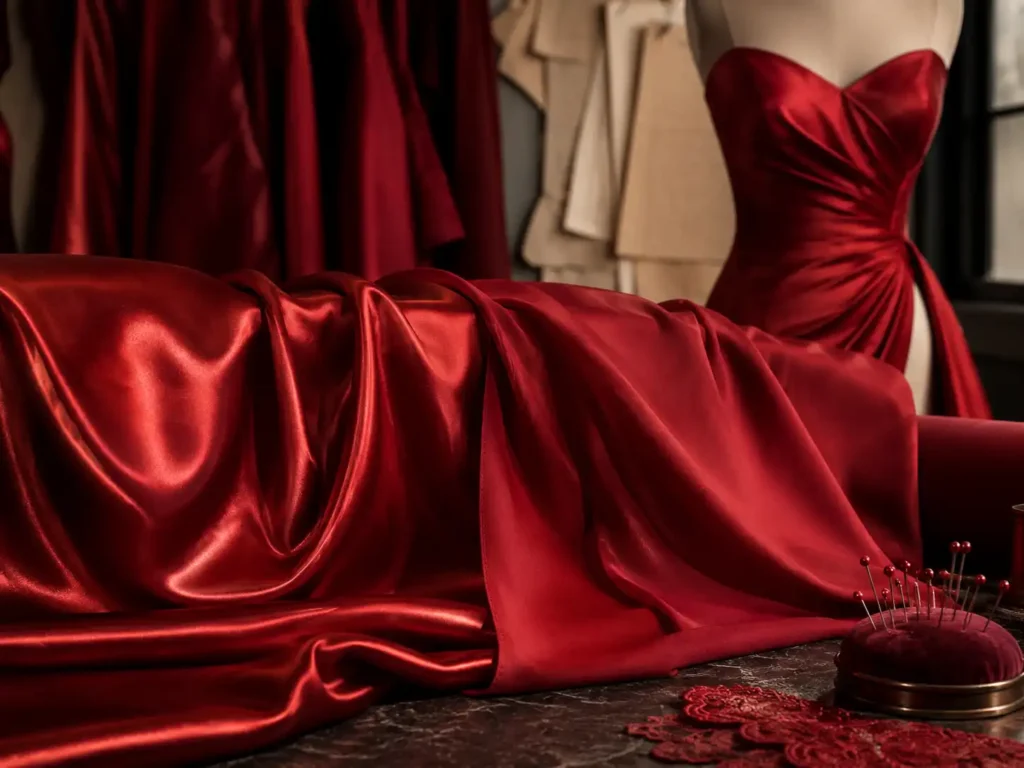
Stretch, Recovery, and Body Fit
Stretch percentage does not fully explain how a fitted dress will perform.
Recovery, weight, directional stretch, compression, relaxation time, and lining interaction influence whether the garment holds shape or becomes loose, twisted, or shorter during wear.
- Jersey and rib knit:Fabric is relaxed before cutting where required, and cutting direction is controlled to reduce side-seam twisting and length change.
- Ponte and compact knits:Heavier structures can support a smooth silhouette, yet pattern ease must avoid excessive pressure at the bust, waist, or hip.
- Stretch mesh and power mesh:Transparency, recovery, edge stability, and lining coverage are reviewed together. Power mesh may provide support where ordinary stretch mesh is too soft.
- Stretch satin:Woven appearance and stretch behavior need joint evaluation. A pattern developed for non-stretch satin cannot automatically move into stretch satin without fit review.
Sample fittings and measurement checks convert fabric behavior into pattern and grade decisions before production.
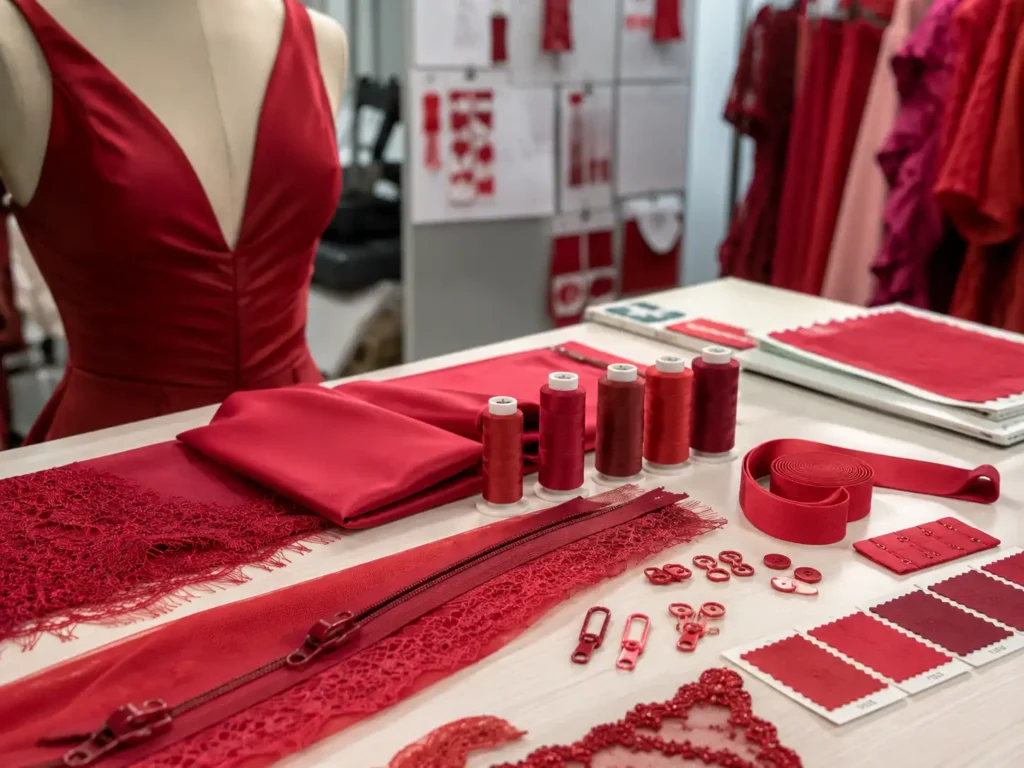
Transparency, Lining, and Coverage
White, ivory, pastel, chiffon, mesh, lace, lightweight rayon, and some satin fabrics can appear acceptable on a table yet become transparent under daylight, flash photography, or body tension. Jinfeng Apparel checks shell and lining combinations on the garment rather than relying only on fabric swatches.
- Lining type:Soft woven lining, stretch lining, double-layer mesh, or partial lining is selected according to movement, comfort, transparency, and construction.
- Lining length:Mini, slit, lace-panel, and mesh-panel products require precise coverage so the lining supports the design without looking accidental.
- Color matching:Shell, lining, zipper, thread, cups, elastic, and trims are compared under suitable lighting. A slight undertone mismatch becomes visible through semi-transparent fabric.
- Attachment method:Lining must remain stable without pulling the shell, rolling at openings, or appearing below the hem.
Coverage decisions are confirmed during sampling and included in the production instructions.

Color, Print, and Bulk Lot Control
Color consistency affects campaign images, product listings, repeat orders, and coordinated collections.
Jinfeng Apparel uses physical references, Pantone information where supplied, lab dips, fabric swatches, dye-lot records, and bulk color approvals according to the project.
- Custom-dyed fabric:Lab dip approval, bulk dyeing, shade bands, lining coordination, trim colors, material MOQ, and lead time are reviewed before commitment.
- Printed fabric:Base fabric, repeat size, print scale, direction, placement, width, shrinkage, and colorfastness requirements are clarified before cutting.
- Multi-color collections:Fabric lots are separated by color; labels, barcodes, stickers, and cartons follow the confirmed color-size matrix.
- Repeat orders:Previous color records help comparison, yet a new fabric batch still requires confirmation because shine, dye lot, and supplier conditions can change.
Fit Control Protecting the Brand Experience
Fit is managed as a relationship between body proportion, fabric behavior, construction, grading, and intended wear. The goal is not one attractive base-size sample; the goal is a controlled size range that performs consistently in movement, photography, and retail use.

Bust, Waist, and Hip Balance
Bust-waist-hip proportion drives the silhouette of bodycon, corset, slip, occasion, and fitted woven dresses. Jinfeng Apparel compares the measurement chart with actual pattern shape, fabric stretch, lining, cups, boning, closure, and desired ease.
- Bust:Coverage, projection, cup shape, neckline tension, under-bust placement, and strap support are reviewed on the body.
- Waist:Waistline position and suppression are balanced against breathing, sitting, zipper movement, and fabric stress.
- Hip:Ease, recovery, lining, slit, and side-seam direction are checked to prevent pulling, riding, or twisting.
- Fit feedback:Photos, videos, garment measurements, and written comments are consolidated into pattern corrections rather than handled as separate messages.
A revised sample or PP sample confirms the corrected relationship before grading and bulk production.

Neckline, Strap, and Armhole Security
Necklines and armholes shape the visual identity of a dress, yet they also control exposure, support, and comfort. Strapless, halter, off-shoulder, one-shoulder, deep-V, cut-out, and backless designs need product-specific review.
- Neckline stability:Height, curve, seam tension, elastic, stay tape, cups, boning, and anti-slip solutions are considered according to the structure.
- Strap control:Length, width, attachment angle, adjuster quality, and bar-tack reinforcement affect bust position and wearing confidence.
- Armhole coverage:Armhole depth and shape must match the intended bra solution, body movement, and target size range.
- Symmetry:One-shoulder and cut-out designs require reference points so left-right alignment remains consistent through production.
Key points are measured and photographed during approval where suitable, then transferred to QC instructions.

Length, Slit, and Movement
Dress length cannot be separated from body proportion and movement. Mini lengths need sitting and walking checks. Midi lengths must hit the intended leg position. Maxi hems require balance around the body and allowance for footwear. Slits must support movement without exceeding the intended exposure.
- Mini dresses:Hem safety, lining length, hip movement, and ride-up risk are reviewed during fitting.
- Midi dresses:Waist placement, slit height, calf proportion, and fabric fall influence the final shape.
- Maxi dresses:Front, side, and back hem balance are checked; bias or fluid fabrics may require controlled hanging before final leveling.
- Jumpsuits:Torso length, rise, crotch depth, waist placement, and closure access receive separate assessment.
Movement notes become part of the fit record rather than remaining subjective verbal feedback.

Grading and Measurement Control
Grading is not a uniform increase around every edge. Neckline depth, strap width, armhole coverage, cup proportion, waist position, slit height, and dress length may require controlled rules across sizes. Petite, tall, and extended-size programs need further proportion review rather than simple length additions.
- Base-size approval:Final pattern and measurement chart are aligned before the grade is released.
- Grade rules:Critical points are defined by silhouette and target market.
- Size-set review:Selected sizes may be sampled or measured according to program complexity.
- Bulk tolerance:Measurement checkpoints and tolerances are issued to production and QC.
- Packing identification:Size labels, stickers, barcodes, and carton breakdowns follow the confirmed size ratio.
Jinfeng Apparel retains pattern and measurement records for repeat orders, while new fabrics and colors are rechecked for their effect on fit.
Construction Details Creating Retail-Level Finish
Refined garments are built through controlled internal and external details. Seam choice, zipper handling, lining, support, decoration, and edge treatment must suit the fabric and silhouette while remaining repeatable on a production line.

Seams, Hems, and Surface Control
Seam construction affects strength, bulk, stretch, drape, comfort, and visual cleanliness. Jinfeng Apparel reviews seam type, seam allowance, stitch density, thread, needle, pressing method, and edge treatment according to the garment.
- Fine woven fabrics:Seam puckering, needle marks, and press shine are monitored on satin, chiffon, and lightweight crepe.
- Stretch fabrics:Stitch selection and seam elasticity are matched to fabric recovery so seams do not break or restrict movement.
- Hems:Rolled hems, narrow hems, blind hems, cover hems, and lined finishes are chosen according to fabric weight and design.
- Ruching and gathers:Distribution, symmetry, anchor points, and fullness are recorded to prevent uneven bulk output.
Surface appearance is checked before packing because sewing can be technically secure yet still look unrefined under retail lighting.
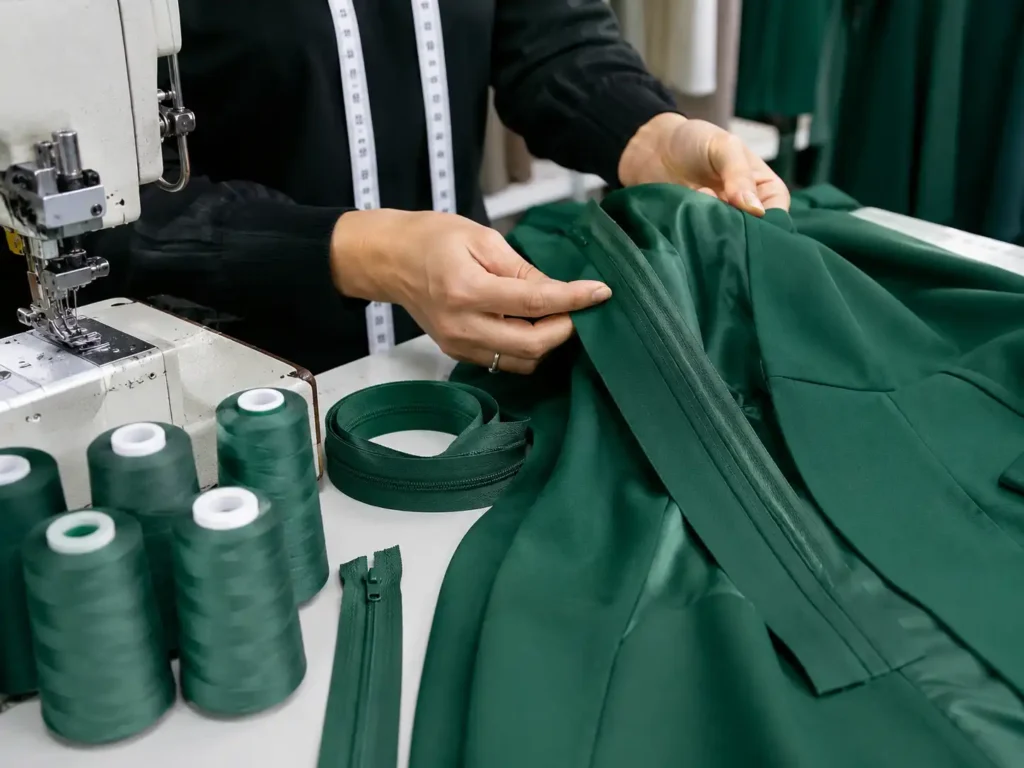
Zippers, Lining, and Internal Support
Internal construction determines whether a dress keeps its shape throughout wear. Invisible zippers must sit flat; lining must cover the body without pulling the shell; cups and boning must support without creating discomfort or visible ridges.
- Zippers:Length, tape color, slider quality, seam alignment, top closure, and waistline matching are checked.
- Lining:Color, stretch, length, seam attachment, static behavior, and movement are reviewed with the shell.
- Bra cups:Cup size, shape, placement, edge transition, and compatibility with the neckline are tested during fitting.
- Boning:Position, length, hardness, channel construction, end protection, and body comfort are assessed.
- Anti-slip details:Grip tape or elastic placement is used only where it supports the design without irritating the wearer.
Approved internal details are included in trim cards and sewing instructions.

Lace, Mesh, and Embellishment Placement
Decorative materials create high visual value but magnify inconsistency. Lace motifs, mesh panels, sequin direction, rhinestone straps, beads, and appliques require clear placement standards and protective handling.
- Lace:Motif balance, seam placement, edge finish, lining color, holes, fraying, and snagging are checked.
- Mesh:Stretch direction, transparency, panel shape, seam tension, edge stability, and hole risk are controlled.
- Sequins:Cutting areas, seam clearances, loose pieces, skin contact, needle breakage risk, and packaging protection are planned.
- Rhinestones and beads:Weight, pull resistance, symmetry, comfort, replacement pieces, and anti-scratch layers may be reviewed by project.
Visual references and measurements are used where decoration placement must remain consistent across sizes.

Wearable Design Details
Retail polish includes how the garment behaves in real use. A dramatic design loses value when straps twist, a slit opens too far, a cut-out shifts, or a zipper cannot move smoothly. Jinfeng Apparel reviews design details through wear, movement, fastening, and care considerations.
- Backless and halter styles:Neck pressure, tie length, bust support, and back coverage are assessed.
- Cut-outs:Shape, placement, reinforcement, lining, and grading are controlled.
- Slits:Height, overlap, seam strength, and movement are checked.
- Adjustable details:Straps, ties, drawcords, hooks, snaps, and buttons are reviewed for range and durability.
- Pockets:Opening, bag depth, position, lining, and silhouette impact are evaluated.
Construction is simplified only when the revised method preserves the intended selling appearance and receives approval.
Sampling Turns Concepts Into Approved Products
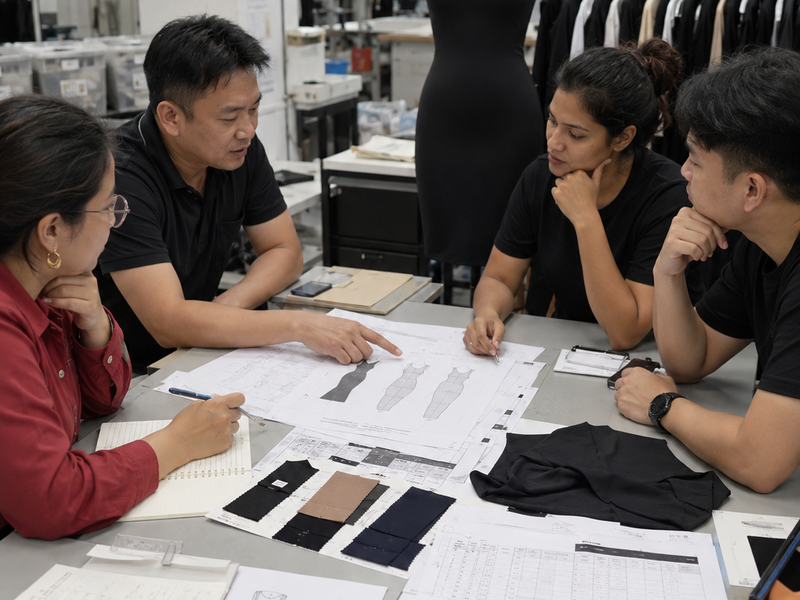
Project Review
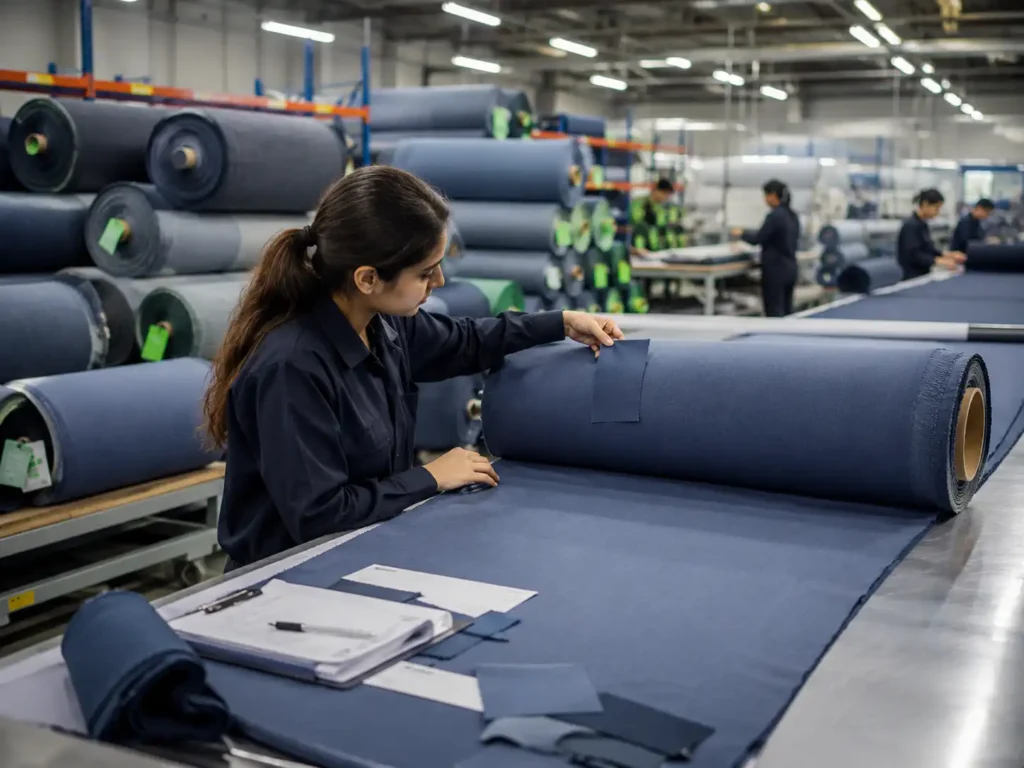
Fabric Trim Direction

Pattern Development

First Sample

Revision and Fit
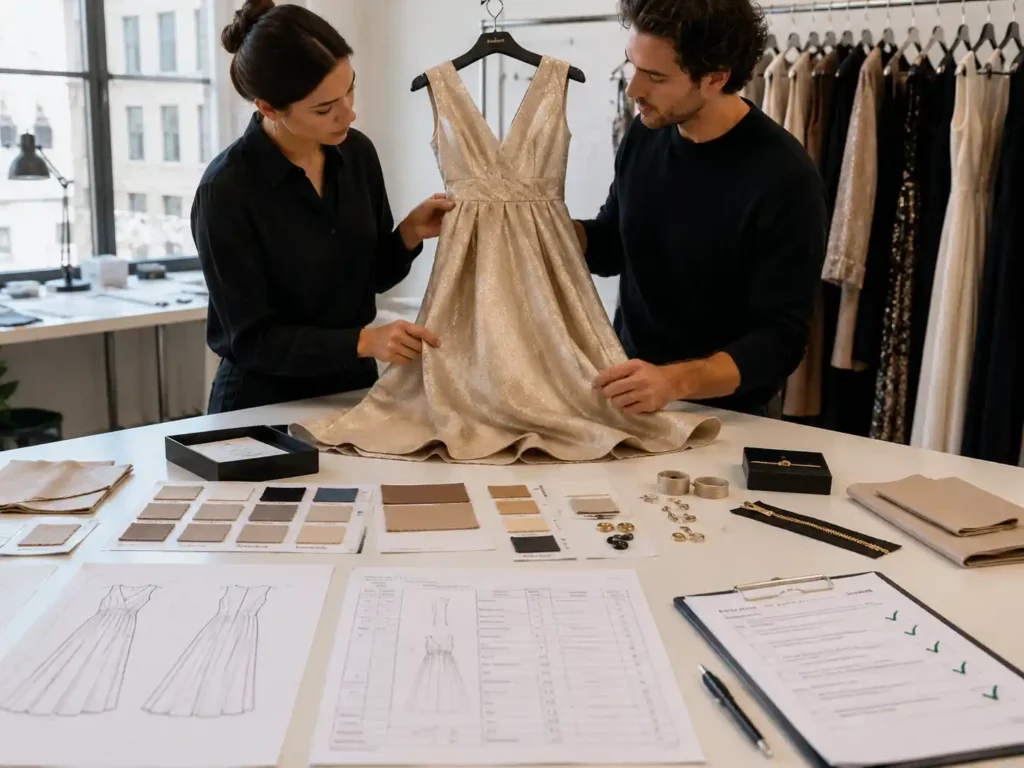
PP Golden Approval
Production Capacity Matched to Style Complexity
Woven Dress Lines
Stretch Product Lines
Structured Dress Lines
Special Fabric Lines
Multi-Style Programs
Repeat and Replenishment
Bulk Consistency Controlled at Every Quality Gate
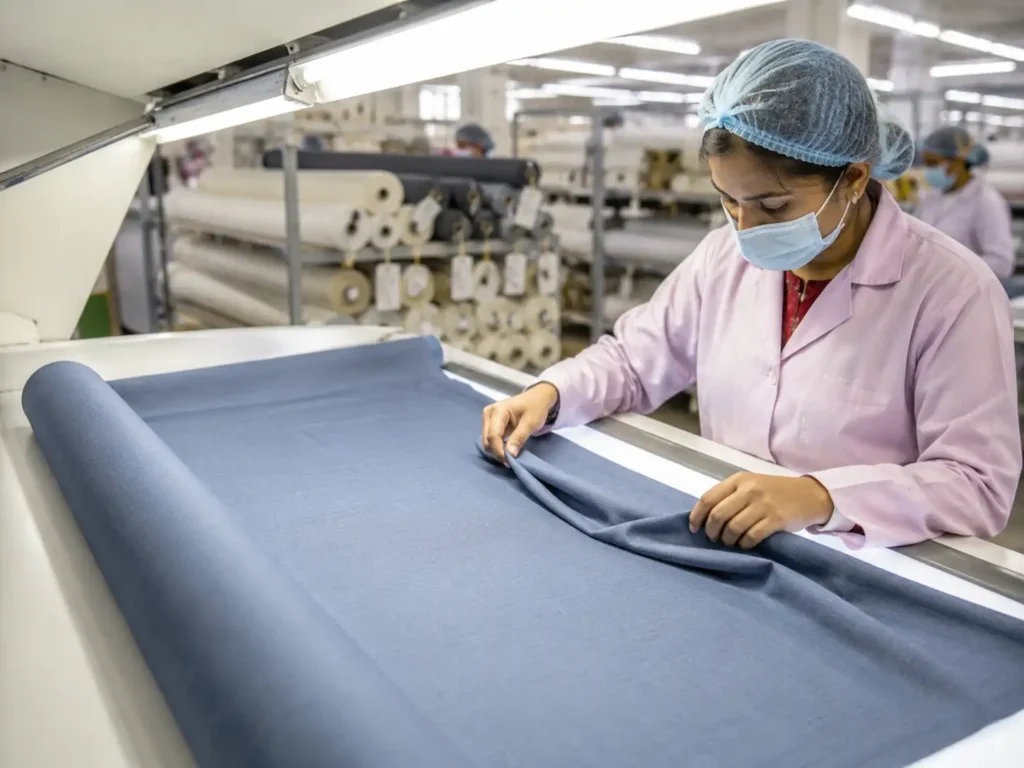
Incoming Fabric Inspection
Key checks:
- Fabric face and direction
- Dye lot and shade grouping
- Surface defects and contamination
- Stretch and recovery for fitted products
- Print repeat, scale, and direction
- Shell-lining color coordination

Color Lot Control
Key checks:
- Approved color reference
- Batch and dye-lot separation
- Shell, lining, zipper, thread, and trim match
- Natural and indoor light comparison where needed
- Color-name and SKU consistency
- Records retained for repeat orders

Cutting Inspection
Key checks:
- Correct pattern version
- Front and back fabric face
- Grain and stretch direction
- Size and quantity bundle accuracy
- Motif, border, or print placement
- Defect marking and panel replacement
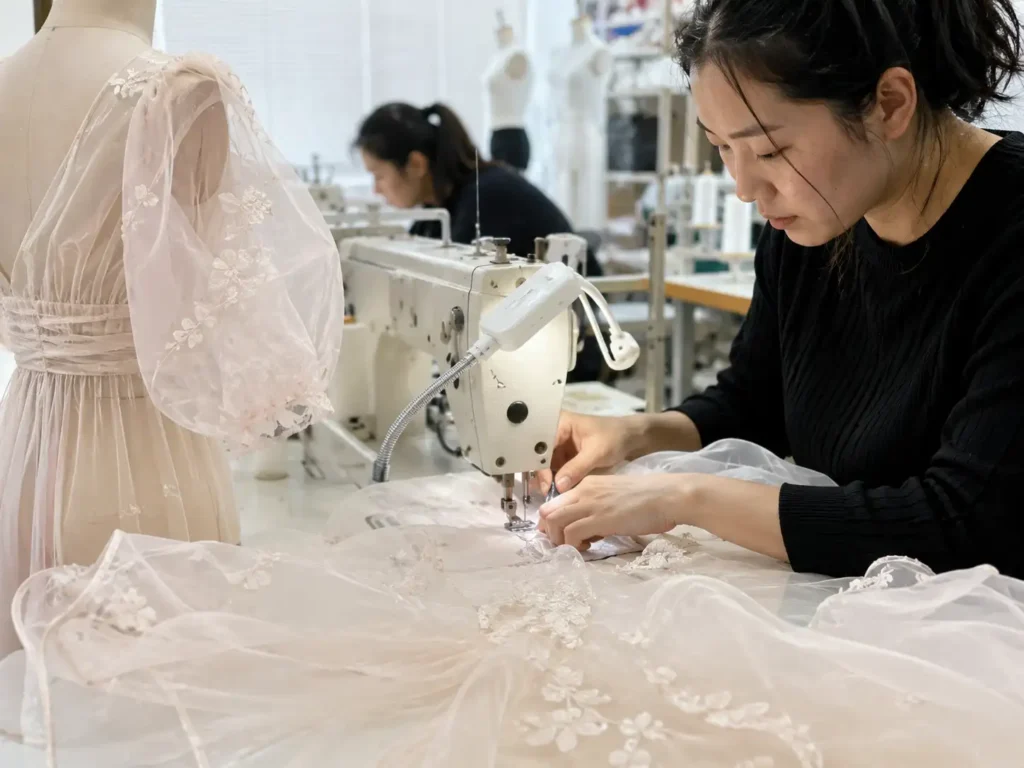
Sewing Inline Inspection
Key checks:
- Sewing method against PP instructions
- Stitch and seam appearance
- Critical construction positions
- Left-right symmetry
- Fabric damage during handling
- Corrective action and recheck

Measurement Inspection
Key checks:
- Approved measurement chart
- Defined tolerance by point
- Base size and graded sizes
- Fabric relaxation where relevant
- Size-label correspondence
- Corrective review for repeated deviation
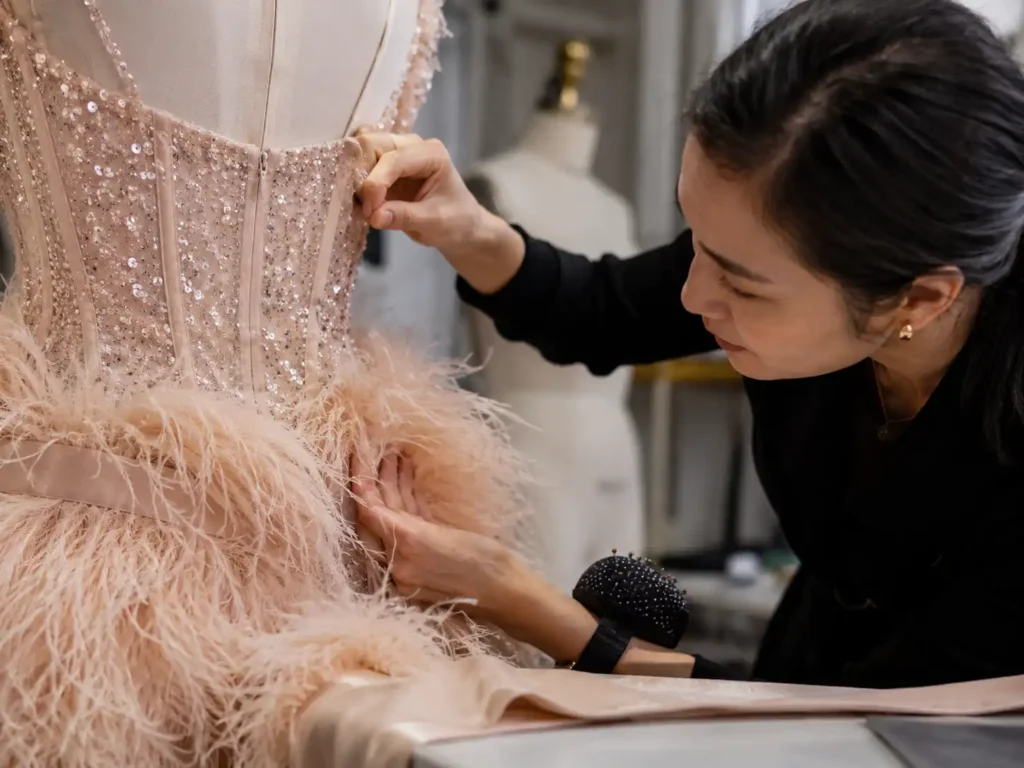
Workmanship Appearance Review
Key checks:
- Front, back, and side appearance
- Closure operation
- Internal and external cleanliness
- Decoration security and comfort
- Pressing suitability
- Comparison with approved reference
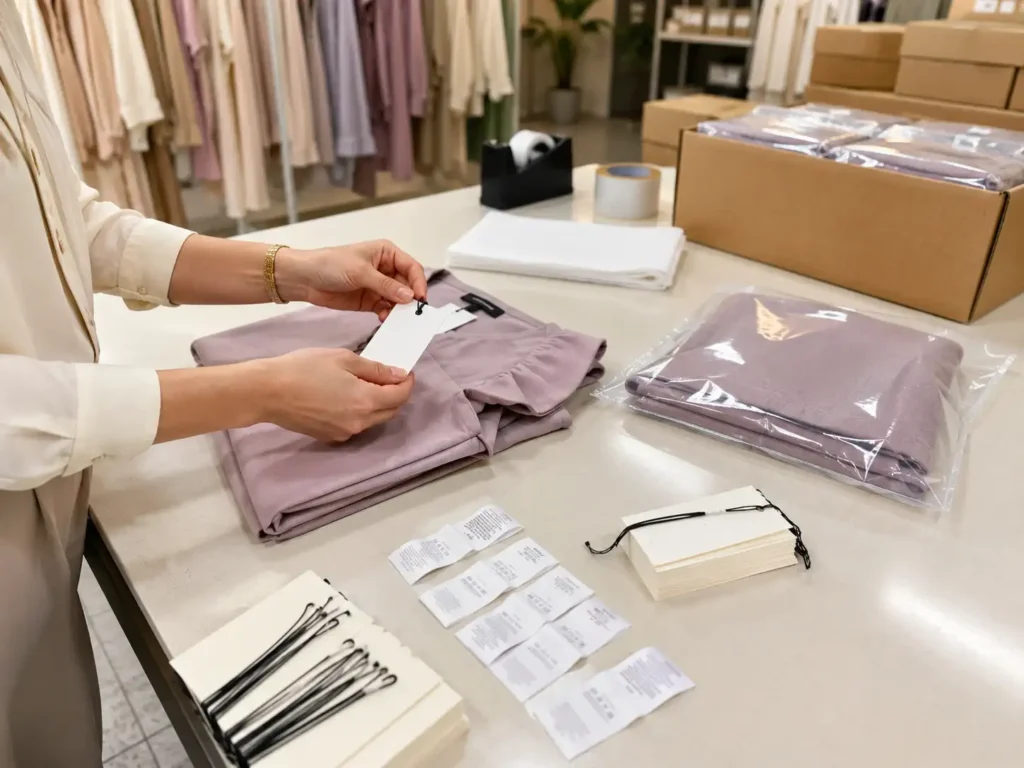
Finishing Packing Review
Key checks:
- Thread and surface cleanliness
- Pressing without shine or damage
- Correct labels, hangtags, barcode, and stickers
- Folding, tissue, hanger, or protection method
- Size-color ratio per carton
- Carton mark and packing-list alignment

Pre-Shipment Inspection
Key checks:
- AQL level by agreement
- Quantity and assortment
- Measurement and workmanship sampling
- Packing and carton verification
- Corrective action closure
- Shipment-release record
Final Finishing Before Every Dress Is Packed
Finishing is where a correctly sewn garment becomes presentable retail inventory. Fabric surface, seam shape, wrinkles, decoration, garment volume, and folding behavior are reviewed before labels and packaging hide the product from view.

Thread and Surface Cleaning
Loose threads, chalk marks, dust, oil, adhesive residue, sequin fragments, and handling marks are removed before final presentation checks.
Light colors and smooth satin surfaces reveal contamination quickly, while lace and mesh can trap threads or show damage around seams. Garments are reviewed under appropriate lighting, and affected pieces are cleaned, repaired, or separated rather than packed automatically.
- Thread ends are trimmed without damaging seams.
- Surface marks are handled according to fabric and care risk.
- Lace, mesh, and sequin areas are checked for snagging or loose parts.
- White and pastel garments receive added cleanliness attention.
- Internal surfaces are reviewed where rough trims could affect comfort.

Pressing by Fabric Type
Pressing methods are adjusted according to fiber, surface, structure, lining, and decoration. Heat and steam can improve shape, yet excessive pressure can create shine, flatten texture, distort mesh, damage sequins, or leave seam impressions on satin.
- Satin uses controlled temperature, pressure, and contact protection.
- Chiffon and mesh require light handling to avoid distortion.
- Velvet and textured fabrics need methods that protect the pile or surface.
- Ruching, pleats, ruffles, and corset shapes are restored rather than flattened.
- Pressing tools and tests are selected by fabric risk, not by one universal setting.
The goal is a stable silhouette and clean surface without changing the approved fabric character.
Shape and Detail Recovery
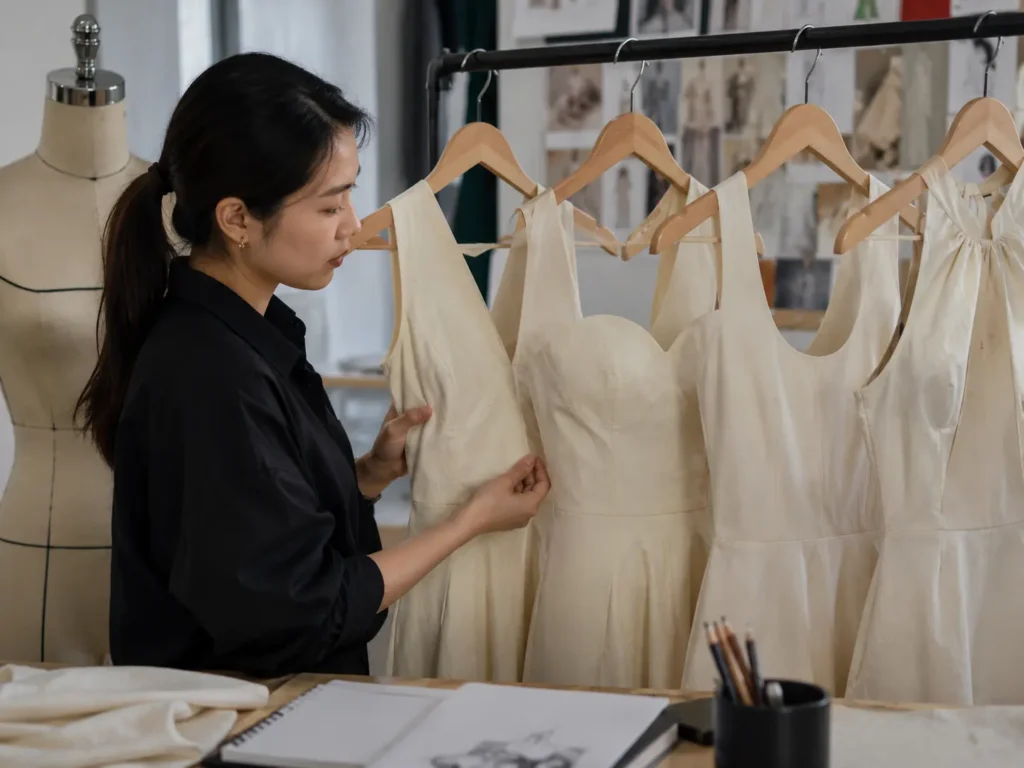
Transport between sewing, QC, and finishing can flatten or distort parts of a garment. Necklines, cups, boning, sleeves, shoulder shapes, ruffles, gathers, bows, pleats, hems, and tulle volume are restored before packing. Symmetry and garment balance are checked again because pressing can reveal issues that were less visible during sewing.
- Corset cups and neckline curves are shaped to the approved profile.
- Long hems are leveled and checked for twisting.
- Ruffles and gathers are arranged evenly.
- Adjustable straps and ties are positioned consistently.
- Decorative elements are aligned and protected.
Folding or Hanging Preparation
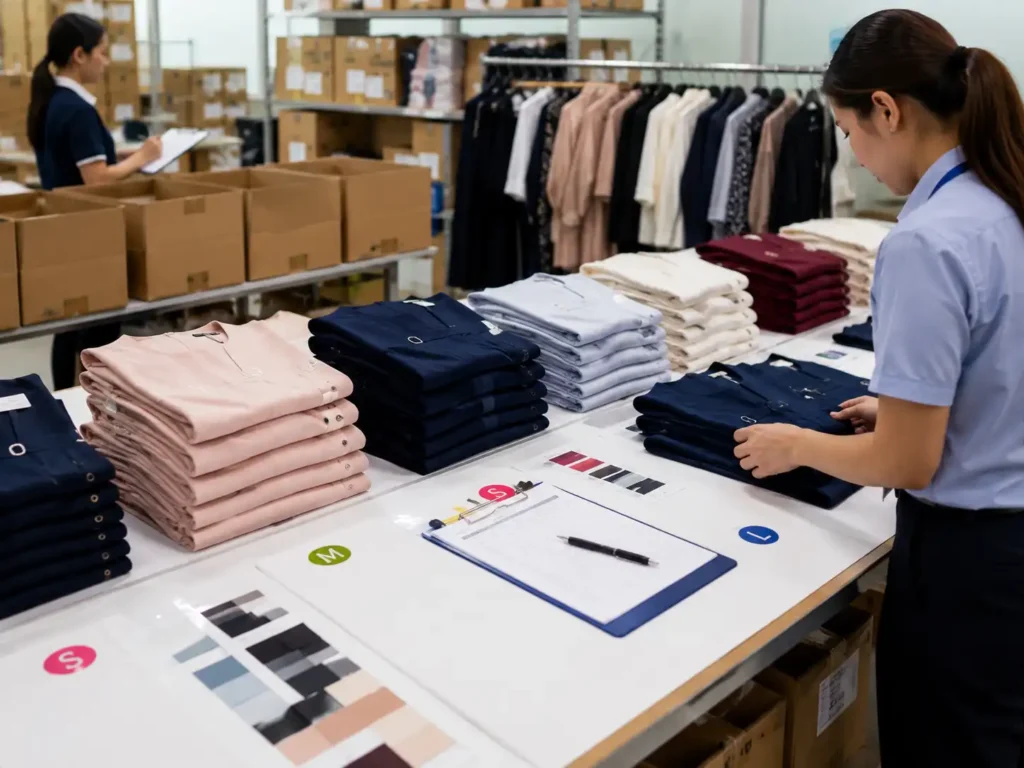
Packing method is selected according to garment structure, fabric, warehouse rules, freight method, and cost. Folded packing may suit compact styles, while hanging or added internal support may better protect structured occasion dresses. Long dresses need fold positions that reduce hard creases; rhinestones and sequins may require tissue or protective layers.
- Size and color stickers remain visible and accurate.
- Polybag dimensions support the garment without excessive compression.
- Hangers, tissue, inserts, or protective films are used by agreement.
- Fold guides help maintain consistency across units.
- Carton fill is balanced to reduce crushing while controlling freight volume.
Retail-Ready Labels, Packaging, and Warehouse Accuracy
Retail delivery connects the garment with the brand’s inventory system. Labels, barcodes, SKU stickers, polybags, carton ratios, and shipping documents must describe the same style, color, size, quantity, and purchase order without contradiction.

Garment Label System
Main labels, size labels, care labels, composition information, country-of-origin information where required, and special warning labels are developed or applied according to approved artwork and placement instructions. Label material, fold type, size, color, softness, sewing position, and bulk availability are reviewed before production.
- Woven, printed, heat-transfer, or other label options are assessed by garment and brand standard.
- Care and composition information follows the files approved for the target market; final legal review remains with the brand or appointed compliance party.
- Label placement is included in the sewing instruction.
- Labels are checked for correct style, size, orientation, and secure attachment.
- Repeat orders recheck the latest artwork and legal information rather than assuming old files remain current.

Hangtags, Barcodes, and SKU
Hangtags, price tickets, barcode stickers, SKU labels, color stickers, size stickers, and anti-theft device positions are managed against the approved purchase-order matrix.
Barcode data can be supplied by the brand, retailer, or authorized system; Jinfeng Apparel checks print legibility and placement but does not invent commercial codes.
- Style-color-size data is cross-checked before printing or application.
- Barcode samples can be scanned or reviewed according to the agreed procedure.
- Hangtag strings, fasteners, placement, and presentation are confirmed.
- Price tickets and market-specific labels are separated by destination where needed.
- Mixed orders use controlled identification to prevent style, color, or size swaps.

Garment Packing Method
Packing protects the product and supports warehouse handling. Options may include clear polybags, printed polybags, recyclable material by project, hangers, tissue, folding boards, protective sleeves, dust bags, or gift packaging. Packaging-supplier MOQ can differ from garment MOQ, so artwork, material, dimensions, print, and timing are confirmed early.
- Folding diagrams define consistent presentation.
- Air holes, warnings, suffocation text, adhesive position, and bag thickness are reviewed where applicable.
- Smooth or embellished fabrics receive anti-scratch and anti-transfer protection.
- Sets and accessory pieces are packed together according to the confirmed unit definition.
- Polybag labels remain aligned with the garment and carton breakdown.
Carton Warehouse Files
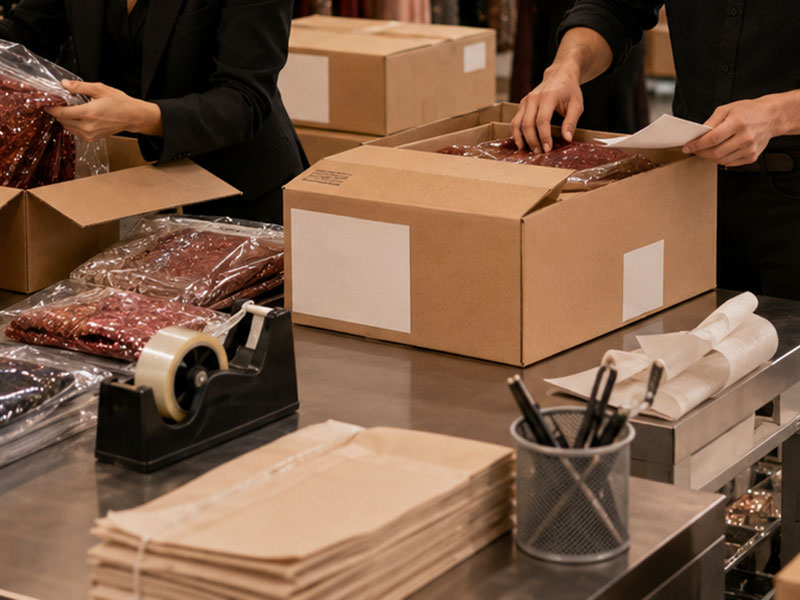
Carton marks, purchase-order numbers, destination codes, style information, color-size ratios, gross weight, net weight, carton dimensions, CBM, packing lists, commercial invoices, and pickup details are prepared according to the agreed trade and warehouse requirements.
Large programs may require split shipments, separate warehouses, or different ticketing by market.
- Carton ratios are checked against the packing instruction.
- Shipping marks distinguish POs, destinations, colors, and delivery batches.
- Packing lists match physical cartons and garment quantities.
- Client-nominated forwarders receive cargo details and pickup coordination.
- Urgent and sea-freight quantities are separated clearly when a split shipment is used.
Production Timing Aligned With Retail Launch Windows
Sample Approval Window
Material Production Window
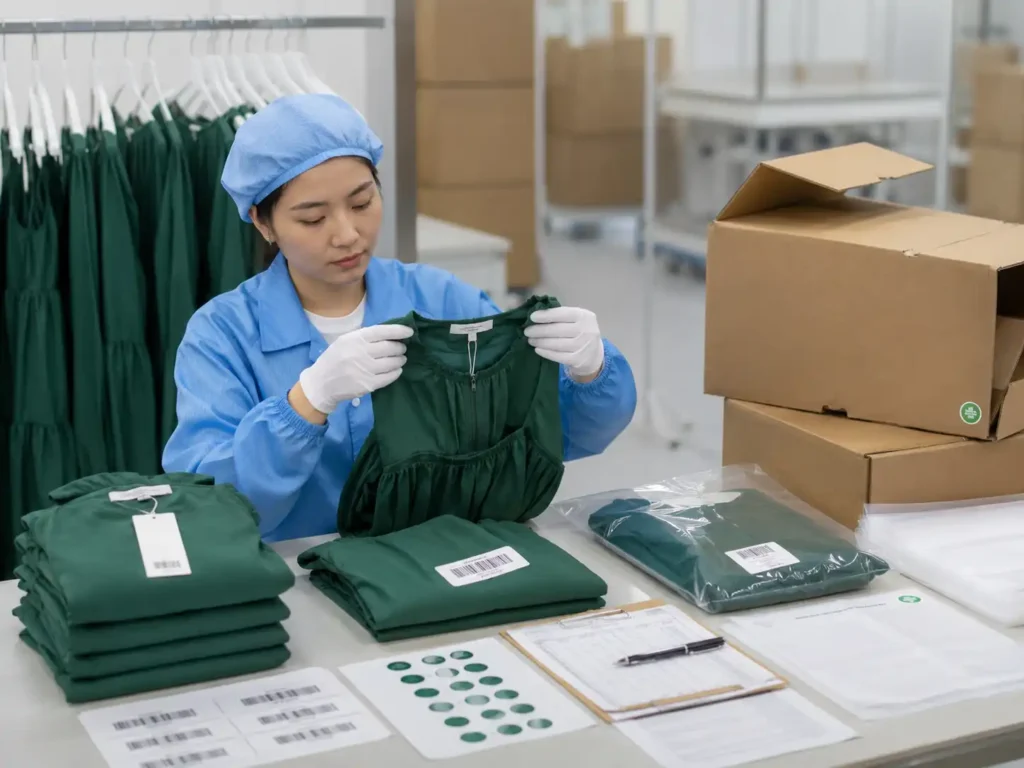
QC Packing Window

Shipment Strategy
Cost Control Without Weakening Retail Presentation
Dress cost is shaped by material, construction, order structure, quality requirements, packaging, and timing. Jinfeng Apparel reviews where cost creates visible retail value and where a controlled adjustment can improve manufacturability without weakening the approved design direction.
| Cost Driver | Effect on Garment and Production | Controlled Optimization Route |
|---|---|---|
| Fabric Weight and Width | Changes drape, coverage, consumption, cutting efficiency, and freight weight. | Compare suitable fabrics, usable width, marker efficiency, and visual result through swatches and samples. |
| Lining and Layering | Improves opacity, comfort, structure, and internal finish but adds material and operations. | Adjust lining type, coverage area, attachment, or layer structure while protecting wearability. |
| Corset and Support | Cups, boning, channels, grip, lining, and closures increase operations and fitting needs. | Refine support positions, component specifications, and construction without removing required stability. |
| Lace, Sequins, Beading | Placement, cutting loss, handwork, skin comfort, and protection add labor and risk. | Concentrate decoration, revise placement, use stable alternatives, or simplify hidden complexity after approval. |
| Color Count | Each color affects fabric MOQ, dye lot, trims, labels, SKU, QC, and packing. | Prioritize core colors, confirm per-color volume, and expand successful colors in repeat orders. |
| Size Range and Ratio | Wider ranges affect grading, cutting bundles, measurement, labels, and carton assortment. | Confirm commercially grounded size ratios and identify measurements requiring special grade rules. |
| Private-Label Packing | Custom labels, tickets, printed bags, boxes, inserts, and warehouse files may have separate MOQ. | Build the necessary retail system first, then add packaging complexity where it supports the channel. |
| Testing and Inspection | Material tests, garment tests, third-party inspections, and special documentation add cost and time. | Define required markets, standards, test scope, sample quantity, and inspection level before quotation. |
| Delivery Window | Late approval can force priority production, air freight, split handling, or rebooking. | Lock key approvals earlier and use planned split shipments for launch-critical quantities where suitable. |
Retail Dress Programs Managed in Real Production
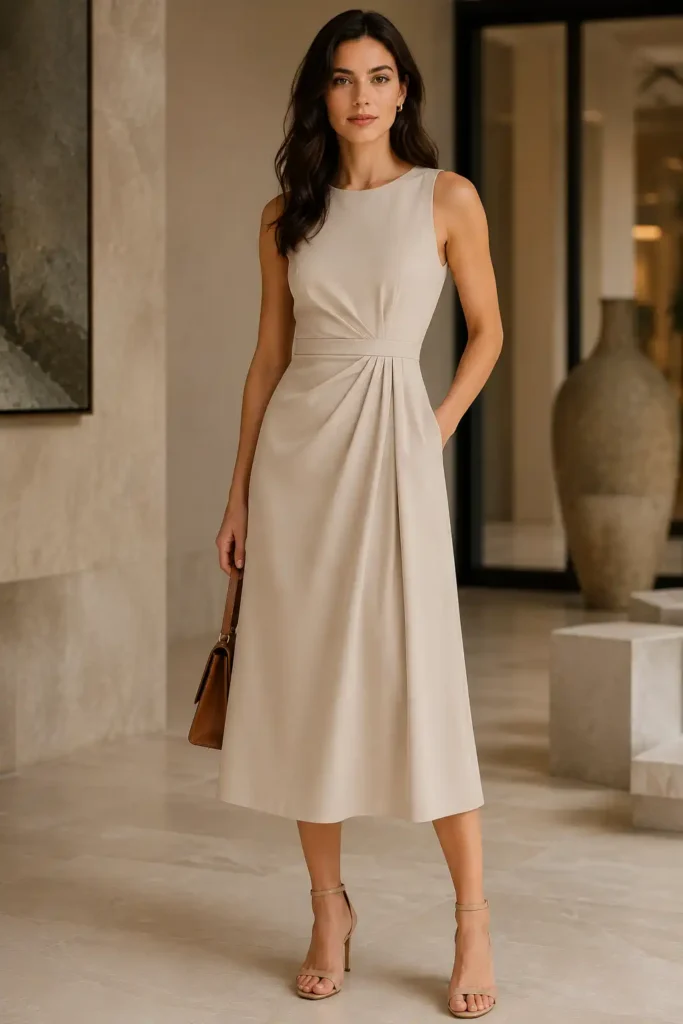
US Multi-Channel Collection
Program scope: 24 dress styles, approximately 64,800 pieces, covering satin mini dresses, mesh bodycon dresses, ruched midi dresses, corset occasion dresses, and coordinated jumpsuits across several seasonal color groups.
The main risk was keeping one visual standard across different fabric families and production units.
Satin needed shine-direction and pressing control; mesh required transparency and recovery review; corset products needed cup and boning consistency; all styles required aligned size labels, barcodes, polybags, and carton ratios.
Jinfeng Apparel grouped the collection by fabric and construction, ran first sample, fit, revised, and PP approvals, then issued style-level sewing and QC points.
Bulk lots were separated by color, critical measurements were monitored by silhouette, and packing files were checked against the SKU matrix. Priority launch quantities were separated from the main sea-freight shipment so the brand could begin campaign and retail allocation without moving the entire order by air.

UK Premium Ecommerce Program
Program scope: 16 styles, approximately 32,000 pieces, focused on wedding-guest midi dresses, satin cocktail dresses, lace-panel styles, and structured minis in coordinated shades.
The product team needed consistent color, secure necklines, clean internal construction, and packaging suitable for direct ecommerce fulfillment. Early samples showed that several pale satin and lace combinations required different lining colors and coverage lengths. Strapless styles also needed cup, neckline, and anti-slip adjustments before grading.
Jinfeng Apparel reviewed shell-lining combinations, revised bust and neckline patterns, confirmed zipper and boning specifications, and locked PP standards before bulk allocation. Labels, care information, barcode stickers, color-size labels, and folding instructions were approved before finishing began. Final review focused on shade grouping, zipper smoothness, lining exposure, pressing marks, size identification, and carton assortment. Successful styles were retained with patterns, BOM, trim, color, QC, and packing records for later replenishment.
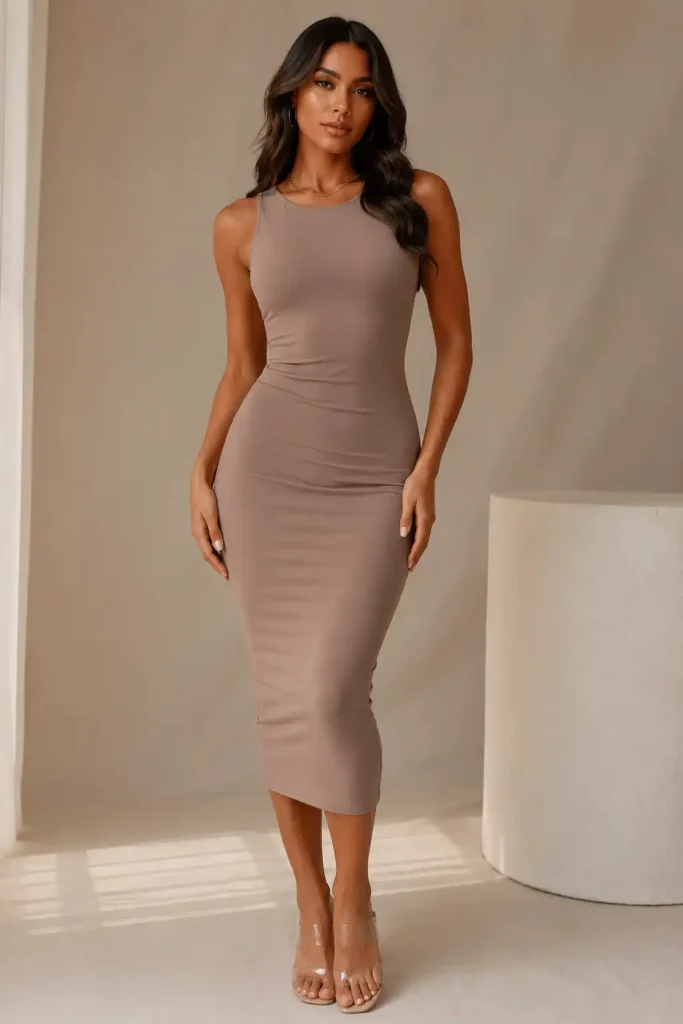
European Retail Group
Program scope: 28 styles, approximately 78,400 pieces, including printed resort dresses, chiffon maxis, jersey bodycon styles, satin slips, and matching sets for several delivery windows.
The scale created coordination risk across print direction, rayon shrinkage, maxi hem balance, stretch recovery, set pairing, barcode accuracy, and split warehouse deliveries.
The retail group also required different ticketing and carton marks by destination.
Jinfeng Apparel organized the program by fabric group, launch priority, trim family, and destination.
Printed and fluid woven styles received direction, shrinkage, lining, and hem checks; fitted knit styles received relaxation, side-seam, recovery, and measurement controls; matching sets were packed as paired units. A shared production tracker connected material arrival, PP approval, line allocation, QC window, packing files, and forwarder cutoff.
Separate packing lists and shipping marks supported staged deliveries while maintaining one master style-color-size record.
Compliance, Confidentiality, and Supplier Qualification

Quality Testing Support

NDA Brand Protection

Qualification Checklist
A qualified dress manufacturer should be able to explain its factory structure, sample room, pattern workflow, material review, PP approval, bulk instructions, inline inspection, measurement control, finishing, private-label packing, warehouse documents, complaint handling, and repeat-order records. Jinfeng Apparel can provide project-level answers and supporting files during supplier evaluation, subject to confidentiality and available documentation.
Frequently Asked Questions for Retail Dress Programs
Retail-polished manufacturing means controlling the product beyond basic sewing. Fabric appearance, fit, construction, bulk consistency, thread cleaning, pressing, labels, barcodes, SKU identification, packing, carton assortment, and warehouse documents are managed as one delivery standard. The result should be ready for the brand’s photography, inventory, fulfillment, or retail receiving process according to the agreed specifications.
Jinfeng Apparel supports established fashion brands, premium ecommerce operations, specialty retail chains, sourcing offices, brand groups, occasionwear labels, resortwear businesses, and other mid-to-large apparel programs with clear product direction, sample development needs, and bulk production plans. The manufacturing model is built around custom development and repeatable production rather than ready-made inventory sales.
MOQ starts from 200 pieces per style/color. Quantity is calculated for each style and each color rather than combined across unrelated styles. Fabric availability, custom dyeing or printing, special lace or sequins, trims, labels, packaging, construction difficulty, and production schedule can raise the required quantity. Multi-style programs are supported when each confirmed style/color has a commercially workable production quantity.
Yes. Development can begin from a tech pack, original sample, sketch, line sheet, or clear reference images. More complete information produces a more accurate feasibility review and quotation. Recommended inputs include desired fabric, target quantity, colors, size range, fit priorities, label and packaging requirements, selling market, target launch date, and any testing or warehouse instructions.
Approved sample decisions are transferred into the final pattern, measurement chart, grade rules, BOM, fabric record, trim card, sewing instructions, label placement, packing method, QC checkpoints, PP sample, and Golden Sample where applicable. Materials are inspected before cutting, production is checked inline, critical measurements are monitored, and final garments are compared with the approved standard before packing and shipment release.
Yes. Jinfeng Apparel supports multi-style collections commonly organized around 10-30 styles. Styles are grouped by fabric family, construction complexity, trim family, color story, launch priority, and suitable production unit. Sampling and bulk schedules are planned according to material readiness and approval status. Each style remains controlled through its own pattern, BOM, measurements, QC points, labels, and packing data.
Yes. Sizes are distributed within the confirmed quantity for each style/color according to the approved size ratio. The brand should provide a measurement chart, grade expectations, and size breakdown. XS-XL, extended sizes, petite, or tall options may require different pattern and grading review. Size labels, stickers, barcodes, measurement checks, and carton ratios are managed against the final breakdown.
Yes. Support can include main labels, care labels, size labels, hangtags, price tickets, barcode stickers, SKU labels, color stickers, printed polybags, carton marks, and warehouse information. Packaging suppliers may have separate MOQ and lead-time requirements. Artwork, placement, data, dimensions, material, print, and packing instructions should be approved before bulk application.
A simple first sample may require about 7-10 days, a regular dress about 10-15 days, and a complex corset, lace, mesh, sequin, or evening style about 15-25 days. Revised samples and PP samples often require about 7-15 days after clear comments, final materials, and instructions are available. Timing is confirmed by style and material rather than promised as one fixed schedule.
Bulk timing is issued after the PP direction, fabric, trims, quantity, colors, size ratio, construction, quality requirements, packing method, and current production schedule are sufficiently confirmed. Custom dyeing, printing, special trims, complex decoration, retailer ticketing, third-party testing, corrective work, and split shipments can change the plan. Early approvals provide more control over the launch window.
Yes. Jinfeng Apparel can coordinate with a client-appointed forwarder and provide cargo details, packing lists, commercial invoices, carton marks, carton dimensions, gross and net weight, pickup contact, and shipment photos according to the agreed terms. Air, sea, and split air-sea shipments can be reviewed by program. Final route, cost, transit time, customs responsibility, and delivery terms depend on the forwarder and destination.
Yes. Jinfeng Apparel supports NDA-based cooperation and confidential handling of tech packs, patterns, samples, measurements, materials, trims, labels, packaging, barcodes, quantities, pricing, supplier information, and unpublished designs. Anonymous case descriptions can discuss product type and manufacturing challenges without revealing brand identity or protected commercial details.

Start Your Retail Dress Manufacturing Project
A complete brief helps Jinfeng Apparel evaluate fabric direction, pattern and fit risk, sampling scope, production allocation, private-label requirements, quality checkpoints, packing, and delivery planning before a formal quotation is prepared.
Useful files include a tech pack, line sheet, original sample photos, sketches, measurement chart, BOM, color references, label artwork, barcode or SKU matrix, packing guide, and target launch calendar. Please include:
- Product categories and number of styles
- Target quantity per style/color
- Fabric and trim direction
- Color plan and size range
- Fit priorities or target measurements
- Main labels, care labels, hangtags, and barcode needs
- Polybag, carton, and warehouse instructions
- Required testing or inspection arrangement
- Sample deadline and target delivery window
- Preferred trade terms or nominated forwarder