Skip to content
Dress Manufacturer for Retail Planning Teams
Turn seasonal dress assortments, quantity plans and launch dates into controlled manufacturing programs built for repeatable retail delivery.
Jinfeng Apparel supports established fashion brands that need more than isolated dress production. Retail planning inputs are translated into fabric feasibility, sample priorities, style-color order structures, production allocation, retail-ready quality control and phased shipment plans. The operating model connects commercial planning with pattern making, sample approval, bulk execution, packing accuracy and repeat-order records, allowing planning, merchandising and sourcing teams to work from one defined manufacturing path.
- 10-30 styles can be coordinated within one seasonal program when fabric groups, sample priorities and production windows are confirmed.
- Recent multi-style programs commonly fall within 20,000-80,000 total pieces, depending on style count, color depth, fabric readiness and delivery waves.
- 100,000+ pieces of monthly capacity are supported through 6 owned women’s fashion factories and more than 10 long-term satellite production partners.
- Development control includes 2 sample rooms, 7+ senior pattern makers, 20+ sample machinists and 15+ QC inspectors.
Planning-Relevant Manufacturing Facts
Since 2008
6 Owned Factories
10+ Production Partners
100,000+ Monthly Capacity
2 Sample Rooms
15+ QC Inspectors
Built for Retail Planning and Merchandising Teams
Retail Planning Managers
Merchandise Planners
Assortment Planners
Inventory Planners
Buying and Planning
Multi-Channel Teams
Where Dress Plans Break During Manufacturing
MOQ Fragmentation
- Review color depth before costing.
- Group compatible styles around shared fabrics.
- Keep hero colors deeper than secondary colors.
Approval Drift
- Prioritize commercial and campaign styles.
- Set comment deadlines by sample round.
- Lock the PP sample before bulk release.
Fabric Uncertainty
- Confirm swatches before pattern lock.
- Keep approved alternatives for key styles.
- Review bulk availability before final buy.
Capacity Mismatch
- Group work by sewing complexity.
- Separate structured and soft dresses.
- Reserve windows for priority styles.
Bulk Inconsistency
- Use approved patterns and size charts.
- Keep PP and golden sample references.
- Define product-specific QC points.
Replenishment Delay
- Archive pattern and BOM records.
- Record color and trim references.
- Recheck material and line availability early.
A Strong Fit for Established Retail Programs
Best Program Fit
- Clear product and market direction.
- Professional sample development budget.
- Batch production and repeat-order potential.
- Defined approval and warehouse milestones.
Operating Requirements
Accurate evaluation depends on more than a reference image. Style construction, fabric, lining, trims, size range, color count, labels, packing and delivery terms all influence feasibility and cost. MOQ starts from 200 pieces per style/color. Special fabrics, custom colors, printing, exclusive trims and packaging may require separate review with the relevant supplier.
- Quantity by style and color.
- Target cost or retail tier.
- Launch and receiving dates.
- Required inspection or audit process.
Turning Retail Plans Into Executable Dress Production
Commercial planning and manufacturing use different data. Jinfeng Apparel converts line-level information into style-level decisions so each dress has a clear route from review to delivery.
Planning Inputs We Receive

A useful manufacturing brief starts with the commercial structure behind the collection. Line sheets, style images, tech packs, original samples and size charts identify the product. Quantity by style/color shows where the initial buy is deep or shallow. Target market and retail tier guide fabric, workmanship and packaging decisions. Campaign, launch and warehouse dates create the schedule boundary. Replenishment expectations show which hero or core styles may need retained material references and production records.
- Style list with product role: hero, core, seasonal or statement.
- Color plan and quantity by style/color rather than only a total order quantity.
- Size range, grade rules and planned size ratio by market.
- Fabric preference, approved alternatives and any certification requirement.
- Target cost, private-label scope, inspection method and delivery terms.
- Photo sample, PP approval, warehouse receipt and launch milestones.
Manufacturing Decisions We Return
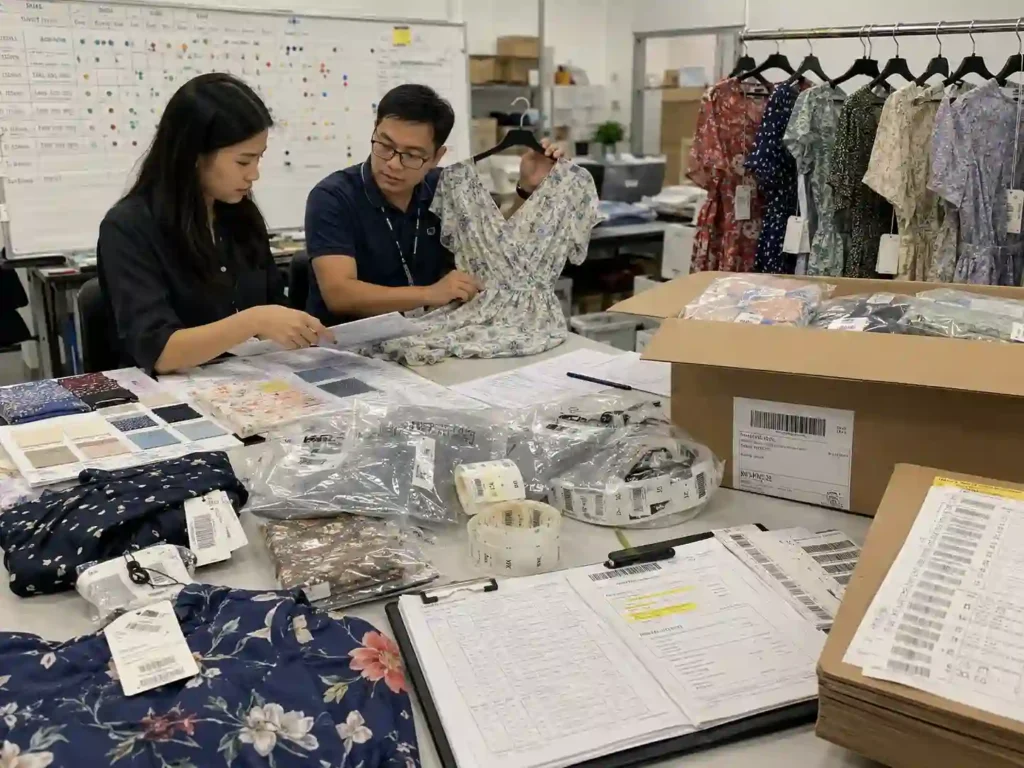
The project team reviews how the collection can be produced without breaking the intended assortment. Styles are grouped by fabric, construction and sewing risk. Material teams identify available or developable options. Pattern and sample teams set the priority sequence. Costing highlights where fabric, lining, structure, trims, finishing or packing affect the target. Production managers allocate suitable factory resources. Merchandisers track approvals and change records, while QC prepares product-specific checkpoints for bulk production and retail-ready packing.
- Feasibility by style, fabric and color.
- MOQ exceptions or supplier restrictions requiring early decisions.
- Sample sequence and approval dependencies.
- Cost drivers and alternative routes.
- Production allocation and delivery-wave options.
- Risk items requiring written approval before bulk release.
Supporting a Balanced Seasonal Dress Assortment
A retail assortment is stronger when product role, price tier, color purpose and launch timing are translated into manufacturing choices. The matrix below shows how planning decisions influence development and production.
| Planning Dimension | Retail Example | Manufacturing Impact |
|---|---|---|
| Length Mix | Mini / Midi / Maxi | Pattern length, fabric consumption, hem construction, packing and target cost change by silhouette. |
| Product Role | Hero / Core / Fashion | Hero styles receive earlier sample priority; core styles need repeat-order records; fashion styles may carry higher material risk. |
| Price Tier | Entry / Main / Premium | Fabric grade, lining, support trims, workmanship, finishing and packaging must match the intended retail position. |
| Color Role | Core / Seasonal / Statement | Core colors may justify deeper quantity; statement colors require careful MOQ, shade and replenishment review. |
| Launch Wave | Early Drop / Main Launch / Replenishment | Sample deadlines, PP approval, production release and shipment booking are separated by milestone. |
| Channel | E-commerce / Stores / Wholesale | Barcode, SKU label, polybag, warehouse label, carton mark and delivery instructions may differ by channel. |
| Market | US / UK / Europe / Australia / Canada | Size expectations, care labels, testing requests, seasonality and warehouse requirements should be confirmed by destination. |
How the Matrix Becomes a Manufacturing Brief
The matrix is not used to decide sales demand for a brand. Its purpose is to expose manufacturing consequences before the assortment is locked. A premium satin hero dress may need earlier fabric approval, stricter color review and more sample attention than a commercial jersey core style. A statement sequin style may remain narrower in color count because material continuity and damage risk are higher. A replenishment style needs retained pattern, fabric, trim, measurement and packing records from the first order. By defining these differences early, planning teams can preserve assortment logic without forcing every dress through the same cost, sample or production route.
Dress Categories Across Retail and Occasion Tiers

Core Mini and Midi
- Key role: core volume.
- Main controls: fit and repeatability.
- Typical extension: new colors or fabric updates.

Party and Occasion
- Key role: seasonal hero.
- Main controls: structure and finish.
- Typical extension: holiday or event capsules.

Bodycon and Ruched
- Key role: high-visual commercial style.
- Main controls: stretch, grading and symmetry.
- Typical extension: mini-to-midi variations.

Satin and Slip
- Key role: premium visual style.
- Main controls: direction, shade and pressing.
- Typical extension: color-led occasion capsules.

Mesh Lace Sequin
- Key role: statement assortment.
- Main controls: material-specific workmanship.
- Typical extension: party and event drops.

Resort and Seasonal
- Key role: seasonal breadth.
- Main controls: drape, print and packing.
- Typical extension: coordinated sets and jumpsuits.
Controlling Multi-Style, Multi-Color Dress Programs
Style Master List
Fabric Family Map
Trim Matrix
Sample Priority
Revision Log
PP Approval Status
Production Allocation
Packing Matrix

Planning Initial Buys Around Manufacturing MOQs
MOQ should be reviewed before the assortment is locked. A total order can be large while individual style-color quantities remain too fragmented for stable material purchasing, cutting and production.
How MOQ Is Calculated
Jinfeng Apparel’s basic MOQ starts from 200 pieces per style/color. The calculation is not based on the combined total of unrelated styles or colors. One black style at 200 pieces forms one standard evaluation unit. The same style in black and white normally requires 200 pieces in each color. Four styles at 50 pieces each do not form one 200-piece manufacturing unit. Special fabrics, custom dyeing, custom weaving, printing, lace, sequins, exclusive trims and private-label materials may have separate supplier MOQ requirements.
- 1 style x 1 color x 200 pieces: standard MOQ structure for evaluation.
- 1 style x 2 colors x 200 pieces per color: 400 pieces total.
- 1 style x 2 colors x 100 pieces per color: normally below the standard structure.
- 4 styles x 50 pieces: not equivalent to 200 pieces per style/color.
Planning Without Excess Fragmentation
Retail breadth can be preserved without forcing every style into the same color depth. Hero and core products can carry deeper quantities, while statement styles use fewer approved colors. Compatible styles may share fabric families, lining colors or trim standards when function and quality allow. Stock fabrics are usually easier to evaluate than custom dyeing or exclusive development. Size ratios should reflect the intended market, but overly fragmented size-color combinations can increase cutting, sorting, packing and inventory complexity. Jinfeng Apparel reviews the quantity plan before final costing so material restrictions and production risks are visible early.
Protecting Target Cost Without Weakening the Product
Target cost control begins with a transparent product build. Fabric, trims, structure, workmanship, size range, color count, packing and delivery requirements should be reviewed together rather than forcing a late price reduction after sampling.
What Builds the Dress Cost
Dress pricing is affected by fabric type, weight and width; lining or double-layer construction; pattern work; fabric consumption; cutting direction; sewing time; ruching; corset structure; lace or sequin placement; trims; pressing; QC; packing; wastage; testing; logistics and total quantity. Maxi lengths, bias cutting, motif matching and wide hems can increase fabric consumption.
Structured bust areas, cups, boning and inner support add development and workmanship. Multiple colors and short style-color runs reduce purchasing and production efficiency.
Where Cost Can Be Adjusted
Cost reduction should preserve brand-level appearance, fit and wearing function. Suitable adjustments may include an approved fabric substitute with similar drape or stretch, a simplified internal structure, a more stable trim, improved cutting layout, shared material groups, consolidated colors, refined size ratios or a different shipment split. Every change is checked for visual, fit, comfort and bulk-production impact. Removing lining, support or workmanship without reviewing the product can lower the quote while increasing returns, complaints or inconsistency later.
- Separate essential product function from decorative complexity.
- Compare material alternatives by hand feel, appearance and bulk availability.
- Review cost at style-color level, not only against the total program value.
- Confirm any change through sample or written approval before bulk production.
Working Backward From Launch and Warehouse Dates
A reliable calendar is built from approval gates and material readiness. Exact timing is quoted after style, fabric, trim, sample and order review; the sequence below shows the planning logic used to protect launch windows.
| Retail Milestone | Manufacturing Gate | Control Requirement |
|---|---|---|
| Campaign or E-commerce Shoot | Photo sample approved | Priority style, correct fabric direction, visual finish and photo-ready packing confirmed before dispatch. |
| Final Buy Confirmation | Cost and quantity structure locked | Style-color quantity, size ratio, fabric, trims, labels and target delivery route confirmed. |
| Production Release | PP sample approved | Final pattern, size chart, grade rule, material, workmanship and critical measurements locked. |
| Bulk Start | Materials received and inspected | Fabric shade, width, quantity, trims and packing materials checked before cutting. |
| Shipment Booking | Bulk and QC status verified | Packing completion, inspection window, carton data, documents and forwarder cut-off aligned. |
| Warehouse Receipt | Delivery buffer protected | Transit mode, destination, peak season, customs and warehouse appointment considered. |
| Replenishment Decision | Material and capacity rechecked | Approved pattern, BOM, fabric references, color records and line availability reviewed before commitment. |
Time Data Should Be Quoted by Stage
Sample and delivery timing should never be presented as one fixed number before material and construction are known. A simple stock-fabric dress and a corset, lace or sequin style do not require the same development path. One clean first sample may move to PP quickly, while a fit-sensitive style may require one or more revised samples. Shipping time also changes by express, air, sea, destination, customs, season and warehouse booking. Jinfeng Apparel therefore issues a stage-based project timeline after reviewing material readiness, sample sequence, approval responsibility, production loading and freight route.
Prioritizing Samples Around Retail Decision Deadlines
Sample development is a decision system, not a single garment request. Each sample type answers a different question before the style can enter bulk production.
Sample Types and Decision Purpose

The first sample checks design interpretation, fabric direction, proportion, construction and initial cost logic.
A fit sample focuses on body measurements, balance and movement. A revised sample confirms agreed changes.
A photo-ready sample is prepared for campaign or e-commerce use and should not automatically be treated as the final bulk standard.
A salesman sample may support wholesale or internal selling when requested. The PP sample locks material, construction, measurements, labels and critical appearance points before bulk release. A golden sample and approved records support production and repeat-order comparison.
How Priorities Are Set Across 10-30 Styles

Hero products, campaign looks and high-risk constructions move first. Fabric-shared styles can be sequenced after the common material direction is approved. Bodycon, corset, strapless, lace, mesh and sequin styles receive focused development because fit or material behavior can change the entire commercial result. Sample comments should include measured differences, marked photos and clear priorities. Pattern corrections are transferred into the final pattern, size chart and grade rule before PP approval. Bulk production does not begin from an unresolved first sample.
- Sample timing depends on style complexity and material readiness.
- Complete tech packs and decision-ready feedback reduce avoidable delay.
- Sample fees cover development, pattern work, materials, sewing, checking and communication.
- Fee deduction may be discussed when the same approved style reaches qualifying bulk production.
Reducing Assortment Risk Through Fabric Planning
Fabric planning connects product appearance, target cost, MOQ, fit, color and delivery. Jinfeng Apparel reviews both the selected material and the backup path before a dress program moves too far into development.
Fabric Direction by Dress Category
The fabric system covers chiffon, satin, stretch satin, lace, mesh, power mesh, jersey, rib knit, ponte, crepe, velvet, sequin fabric, organza, tulle, rayon, viscose, linen, denim, suiting and blended materials.
Selection is based on silhouette, drape, hand feel, stretch, transparency, lining need, target price and bulk risk. A bodycon dress needs recovery and stable stretch direction. A satin slip dress needs controlled shine and grain. A resort maxi dress needs drape, transparency and shrinkage review. A lace or sequin style needs motif, direction, damage and loss control.
Eight Fabric Checks Before Bulk
- Availability: stock, repeat availability, dyeing or custom development route.
- MOQ: fabric supplier requirement by color, batch, print or certification scope.
- Width and consumption: impact on cutting layout, hem sweep, print direction and cost.
- Weight and hand feel: suitability for the intended retail tier and season.
- Stretch and recovery: compatibility with pattern, grading and wearing movement.
- Transparency and lining: coverage, comfort and appearance under different light.
- Color and shade: Pantone, physical standard, lab dip, dye lot and lining match.
- Bulk risk: shrinkage, snagging, pilling, color transfer, sequin loss or lace damage.
Backup Material Without Resetting the Collection
An alternative fabric is only useful when it preserves the design intent. Jinfeng Apparel compares drape, stretch, transparency, surface appearance, width, color, MOQ, cost and lead-time impact.
A major material change may require pattern adjustment and a new sample because the same pattern does not behave identically across satin, jersey, mesh or woven crepe.
Approved swatches, videos, lab dips and physical samples create a clearer decision trail before bulk color approval.

Allocating Production Resources by Dress Type
Woven Soft Dresses
- Key input: fabric direction.
- Key risk: distortion or puckering.
- Allocation factor: line experience.
Stretch Dresses
- Key input: stretch test.
- Key risk: growth and twist.
- Allocation factor: knit handling.
Structured Dresses
- Key input: fit and support.
- Key risk: discomfort or instability.
- Allocation factor: structured experience.
Decorated Dresses
- Key input: placement standard.
- Key risk: variation and damage.
- Allocation factor: workmanship time.
Multi-Style Programs
- Key input: master style list.
- Key risk: version confusion.
- Allocation factor: grouped calendar.
Repeat Orders
- Key input: historical records.
- Key risk: batch difference.
- Allocation factor: current availability.

Preparing Bestselling Dresses for Faster Repeat Orders
Replenishment performance depends on records created during the first order. Jinfeng Apparel keeps the technical and packing information needed to evaluate a repeat program without rebuilding the style from memory.
Records Retained for Repeat Production
- Approved pattern, size chart and grade rules.
- BOM, sewing instructions and critical workmanship notes.
- Fabric name, supplier reference, color standard and bulk batch information.
- Zippers, cups, boning, elastic, labels and trim specifications.
- PP and golden sample references, measurement records and QC comments.
- Barcode, SKU label, polybag, carton mark and warehouse packing requirements.
What Must Be Rechecked Before Reorder
Repeat production is not an automatic copy command. Fabric and trim availability can change. A new dye lot may create shade differences. A new color needs lining, zipper, thread and label review. A new fabric may alter stretch, drape, shrinkage or pattern balance. Capacity windows must be checked against the requested warehouse date. The fastest route is usually an approved style using the same material and packing standard with complete historical records. Significant construction or material changes should be treated as a controlled development update.
Repeat-Order Path
A retail program can move through Test -> Launch -> Repeat -> Replenish -> Extend. Test confirms product viability. Launch establishes the first bulk standard. Repeat uses retained technical records. Replenishment responds to sell-through while materials and capacity remain available. Extension adds new colors, lengths or coordinated pieces after reviewing whether the existing pattern and material platform can support the change.
Coordinating Initial Buys, Reorders and Delivery Waves
Initial Buy
Priority Styles
Phased Production
Air and Sea Split
Warehouse Separation
Forwarder Coordination
Quality Controls That Protect Retail-Ready Consistency
Quality control protects more than appearance. Measurements, shade, labels, SKU data, packing and batch consistency all affect sellable inventory and warehouse acceptance.
Incoming Material and Cutting Control
Fabric is reviewed for shade, width, quantity, visible defects, direction, surface condition and project-specific risks before cutting. Trims are checked for type, color, size and function.
Cutting control verifies pattern version, grain or stretch direction, panel pairing, print or lace placement and bundle identification. Errors at this stage can affect every garment in the batch, so correction after sewing is far more expensive.
Sewing and In-Line Control
Production follows the approved pattern, size chart, PP sample and workmanship instructions. In-line checks focus on construction, seam quality, symmetry, measurements and product-specific points. Satin requires puckering and press control. Mesh requires recovery and layer alignment. Lace requires motif and edge control. Bodycon and ruched styles require measurement, stretch and left-right consistency. Corset and strapless dresses require support, bust coverage and wearing stability.
Final Garment and Packing Control
Finished garments are reviewed for measurements, appearance, pressing, loose threads, stains, damage, label accuracy and agreed tolerances. Packing inspection verifies size and color assortment, barcode, SKU label, hangtag, polybag, carton ratio, carton mark and destination instructions.
Client or third-party inspection can be coordinated according to the agreed project. AQL or other inspection requirements should be confirmed before the inspection window.
Eight Retail-Ready Checkpoints
- Incoming fabric and trim review.
- Pattern and cutting verification.
- Bundle and style-color identification.
- Sewing in-line inspection.
- Measurement and fit-point checks.
- Garment appearance and pressing review.
- Label, barcode and packing inspection.
- Final release and shipment document verification.
Keeping Planning Teams Informed Before Delays Grow
Style Status
Material Status
Approval Status
Change Log
Production Status
Quality Status
Packing Status
Shipment Status
Protecting Designs and Supporting Retail Compliance Reviews
NDA and Design Protection
Project-Specific Compliance
Inspection and Documents
A Multi-Style Retail Program From Plan to Delivery
The following anonymous project reflects the scale and control requirements common in established retail programs. Brand identity, pricing and proprietary product information remain confidential.
Program Profile

An established US private-label womenswear program included 18 styles and approximately 28,000 pieces across satin, mesh, jersey, lace and crepe dresses. The assortment combined visual occasion styles with more commercial silhouettes. Multiple fabrics, colorways, size ratios, private-label elements and delivery requirements had to remain aligned under one seasonal timeline.
- 18 styles across five main fabric groups.
- Approximately 28,000 pieces in the approved bulk program.
- Multiple sample versions and PP approval by style.
- Private-label hangtags, barcodes, polybags and carton marks.
- Client inspection support and phased shipment coordination.
Main Planning Risks
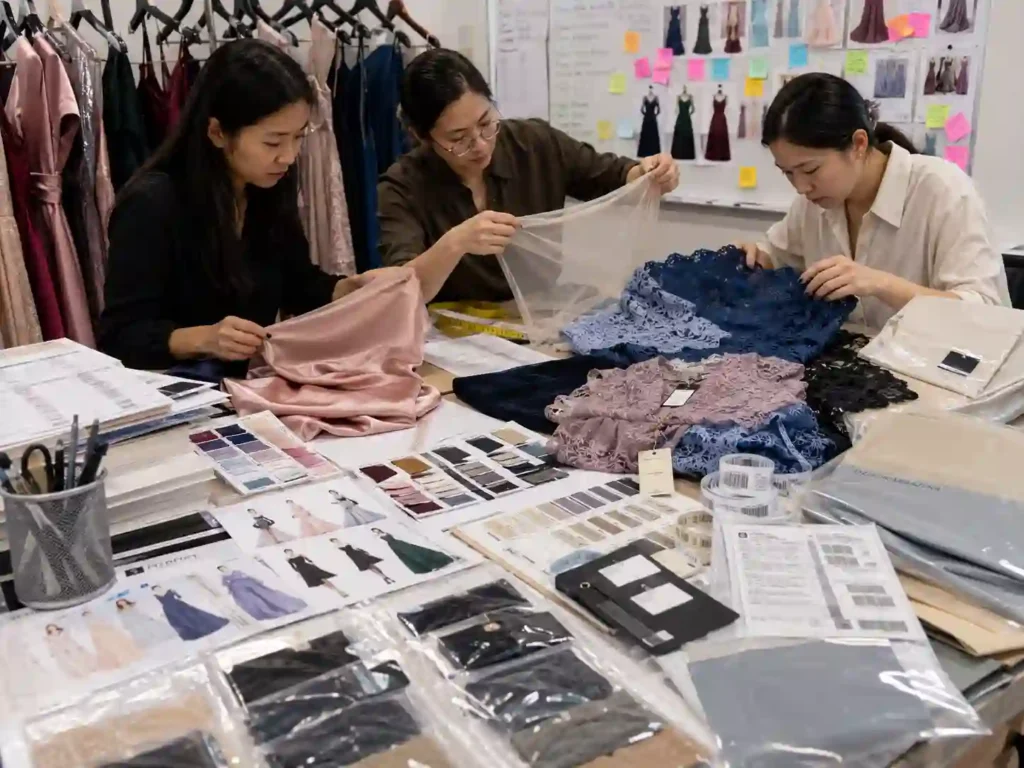
The largest risks were not sewing capacity alone.
The program required control of style versions, fabric differences, sample priority, SKU information, packing consistency and inspection timing. Satin needed color and surface control.
Mesh and jersey required stretch and measurement review. Lace required placement and lining attention.
A late change to one packaging file could have affected multiple SKUs and warehouse receiving.
Jinfeng Apparel Actions
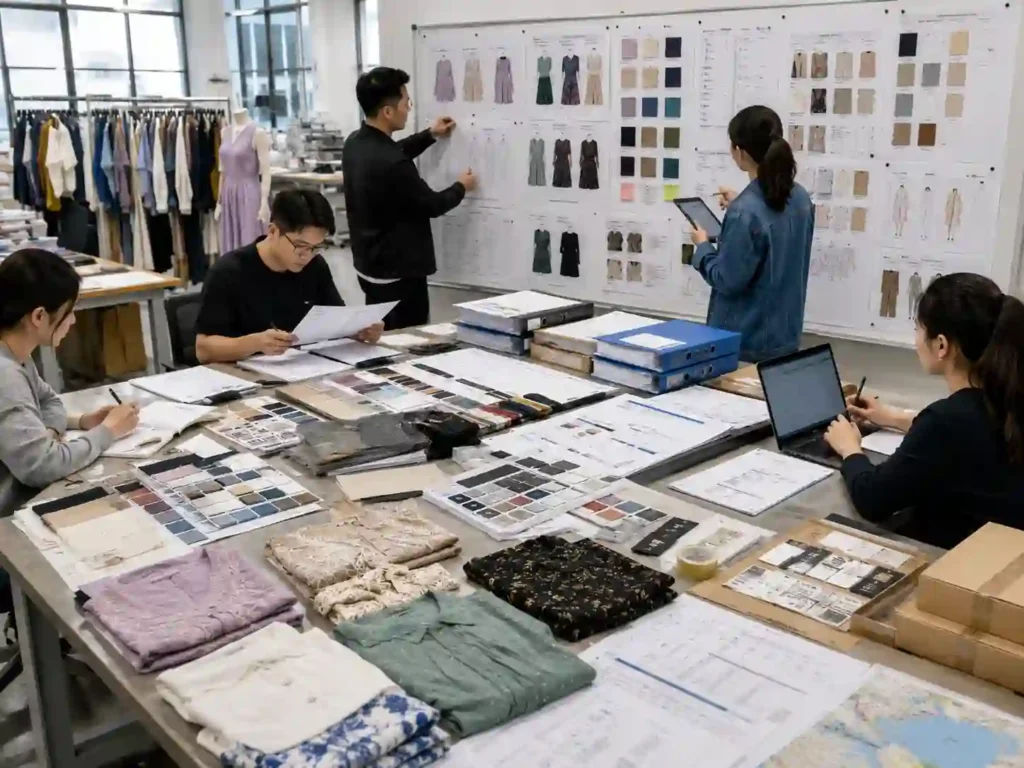
The project team built a master timeline and style register, grouped materials, tracked sample versions and PP status, recorded label and packing specifications, coordinated client inspection and separated shipment waves. Fabric and trim status was managed by style. Approved patterns, measurements, BOM details, packing files and QC notes were retained for repeat evaluation. Production allocation reflected material and construction rather than sending all 18 styles through one route.
Delivery Result

The program moved through development, approvals, bulk production, inspection, private-label packing and phased shipment with one coordinated information structure. The most transferable result was not a single production number; it was the ability to keep 18 styles, five fabric groups, retail packing data and delivery milestones aligned. Such control allows a retail planning team to evaluate future repeats, new colors and line extensions from documented manufacturing records rather than restarting the style history.
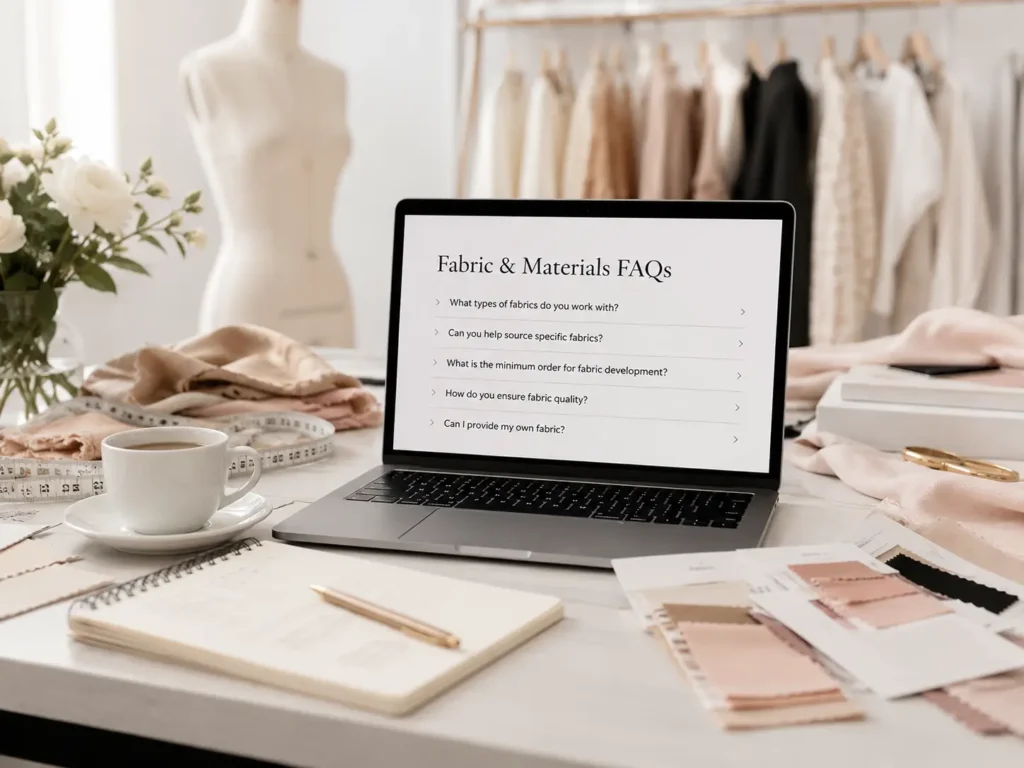
Frequently Asked Questions for Retail Planning Teams
Send Your Dress Assortment and Production Plan
A useful review begins with enough information to understand the dress program as a complete manufacturing plan. Send the line sheet, style images or tech packs, quantity by style/color, size range, fabric direction, target cost, sample deadline, launch date, warehouse receiving date and private-label requirements. Jinfeng Apparel will review product structure, material availability, MOQ, sample priorities, costing inputs, production allocation, QC needs and delivery risks before recommending the next step. When information is incomplete, the first response will be a preliminary feasibility review rather than a final quotation. Kelly coordinates the initial project review and routes technical questions to the development, merchandising, production or QC team as needed.
- Line sheet, tech packs, reference images or original sample information.
- Estimated style count and quantity per style/color.
- Size range, size ratio and target market.
- Fabric, lining, trims and private-label packing requirements.
- Sample, campaign, launch and warehouse receiving dates.
- Inspection method, trade term, freight plan and file-upload attachments.