
Dress Manufacturer for Regional Fashion Retailers
Multi-style dress development, controlled production, retail-ready packing, and repeat-order support for established regional fashion retail programs.
- Seasonal programs commonly contain 10-30 dress styles, with total order volumes typically planned between 20,000 and 80,000 pieces.
- MOQ starts from 200 pieces per style and color, with sizes distributed inside the confirmed quantity according to the approved ratio.
- Development covers line-sheet review, fabric direction, pattern work, samples, PP approval, bulk production, QC, labels, barcodes, cartons, and shipment coordination.
- Jinfeng Apparel combines 6 owned women’s fashion factories with 10+ long-term production partners for style-specific factory allocation.
Retail Program Capacity Built Around Measurable Operating Facts
Since 2008
6 Owned Factories
10+ Production Partners
2 Sample Rooms
7+ Pattern Makers
15+ QC Inspectors
Regional Retail Formats Supported by Jinfeng Apparel
Regional Womenswear Chains
Specialty Fashion Retailers
Boutique Store Groups
Private Label Retailers
Omnichannel Retailers
Department Store Programs
Six Risks That Disrupt Regional Dress Retail Programs
Assortment Mismatch
A dress range can look attractive in a line sheet yet fail to match regional climate, price position, local occasions, store presentation, or expected body proportions. Risk control begins by separating hero products, commercial products, seasonal products, and repeatable core silhouettes before sample priorities are set.
- Review selling occasion and target retail level
- Group products by fabric and construction
- Identify styles needing market-specific length or coverage
Missed Launch Windows
Graduation, wedding guest, holiday party, resort, and summer dress programs lose value when goods arrive after the selling window. A credible schedule starts with fabric availability, trim lead time, sample rounds, PP approval, bulk material arrival, QC, packing, transport mode, and warehouse cut-off dates.
- Lock photo-sample and PP deadlines
- Reserve bulk and packing windows
- Separate priority air freight from planned sea freight when needed
Multi-SKU Confusion
Ten to thirty styles can quickly become hundreds of style-color-size combinations. Confusion around codes, labels, barcodes, size ratios, and carton breakdowns can cause wrong packing, warehouse rejection, or slow receiving.
- Maintain one approved SKU master
- Match labels and barcodes to style-color-size records
- Verify packing list and carton marks before shipment
Bulk Quality Drift
A strong sample does not automatically create stable bulk production. Fabric batch changes, sewing interpretation, measurement movement, trim substitution, pressing, and packing pressure can alter appearance.
- Transfer final pattern, BOM, PP sample, and sewing notes
- Conduct in-line measurement and workmanship checks
- Compare finished garments with the approved standard
Warehouse Receiving Errors
Retail warehouses need identifiable cartons, accurate quantities, and correct documents. Missing carton numbers, incorrect SKU labels, mixed packing without approval, or inconsistent packing lists delay receiving and can create chargebacks.
- Confirm carton ratio and label format
- Record carton dimensions and gross/net weight
- Follow consignee and appointed-forwarder instructions
Slow Replenishment
A bestseller is difficult to replenish when patterns, fabric references, trims, colors, QC records, and packing instructions were not retained.
Rebuilding the style from old photos wastes time and increases variation.
- Keep approved pattern and measurement records
- Retain material and trim references
- Reuse packing and QC files for repeat production
A Manufacturing System Designed for Retail Execution
Assortment Review
Line sheets are reviewed by product role, silhouette, fabric group, color plan, construction difficulty, target retail position, and launch priority. The review helps identify which styles should lead photography and launch, which styles can share materials, and which styles need separate development because their structure or risk level is different.
- Hero and commercial style grouping
- Fabric and trim consolidation
- Development priority and risk notes
The review can also flag products whose expected retail price is difficult to support with the proposed fabric or construction. Cost discussions then focus on material alternatives, construction changes, and product-role priorities instead of reducing quality after the assortment has already been approved.
Fabric Direction
Fabric is considered together with fit, cost, MOQ, color, lining, pressing, packing, and repeat-order feasibility. A lighter satin may improve drape but increase transparency; a stronger mesh may improve recovery but change hand feel; a softer rayon may improve movement but require shrinkage control.
- Swatch and hand-feel review
- Stretch, transparency, and drape evaluation
- Bulk availability and color-batch planning
Material approval is recorded against the specific style or fabric group. A fabric accepted for a flowing maxi is not automatically accepted for a structured mini, even when composition is similar.
The silhouette, support, transparency, finish, and packing method remain part of the decision.
Multi-Style Sampling
- Sample tracker by style and version
- Measurement and photo feedback
- PP lock before bulk release
Sample status is reported by active version and next action, preventing an old photo sample or first sample from being mistaken for the approved PP standard.
Coordinated Production
- Factory and line allocation
- Material and trim tracking
- In-line progress and quality updates
When timing changes, the allocation decision is reviewed with material status, line loading, QC workload, and shipment priority rather than shifted informally.
Retail Packing
- Private-label artwork confirmation
- SKU and barcode verification
- Carton and receiving-data control
Packing samples and artwork versions carry approval dates, making the active label, barcode, polybag, and carton instruction clear to the packing team.
Repeat-Order Records
- Same-style repeat support
- New-color and new-fabric evaluation
- Selected-size replenishment planning
Current barcode, care-label, warehouse, and commercial instructions are reconfirmed even when the garment construction remains unchanged.
Dress Categories for Regional Retail Assortments

Everyday Mini Dresses
- Control finished length across sizes
- Check lining and opacity in light colors
- Keep hem, zipper, and neckline stable

Commercial Midi Dresses
- Review waist-to-hip balance
- Set slit height for movement and coverage
- Confirm hem balance after hanging

Seasonal Maxi Dresses
- Check skirt drop and hem leveling
- Control lining length and transparency
- Protect long garments during folding and transport

Party Occasion Dresses
- Verify support, coverage, and movement
- Protect embellishment and delicate surfaces
- Lock pressing and packing methods before bulk

Resort Vacation Dresses
- Group prints and seasonal colors
- Review wrinkle and shrinkage behavior
- Optimize folding for travel-oriented garments
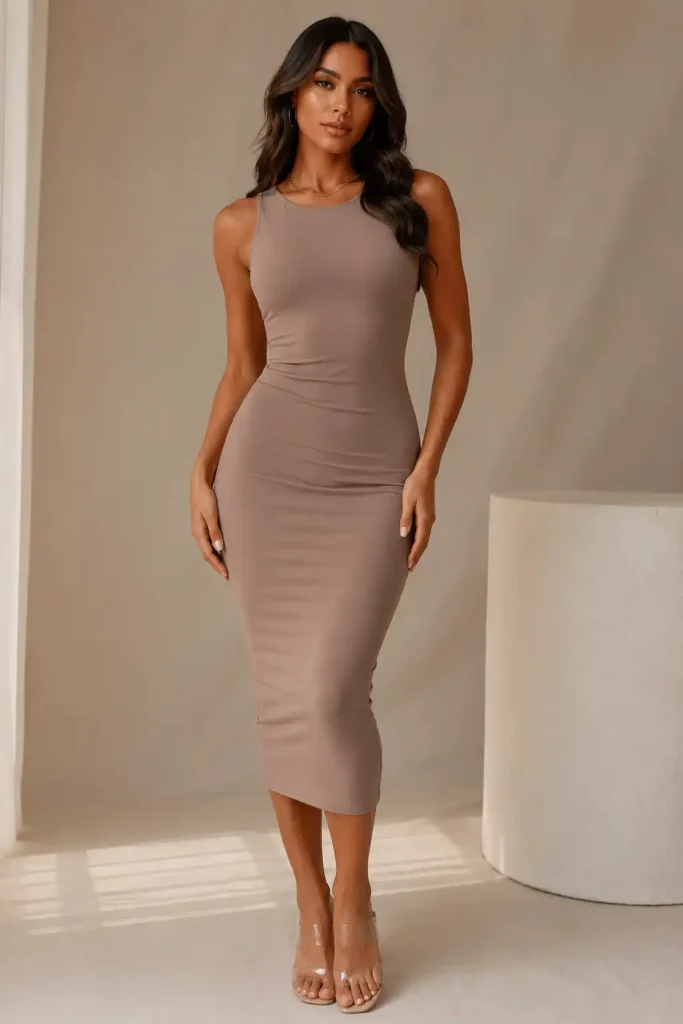
Bodycon Corset Dresses
- Measure stretch and recovery
- Review bra cups, boning, lining, and closures
- Test sitting, walking, and arm movement

Satin Slip Dresses
- Cut panels in a controlled direction
- Test seam and zipper flatness
- Use clean pressing and protective packing

Mesh Lace Sequin
- Approve material placement during sampling
- Control lining coverage and comfort
- Inspect embellishment before and after packing
Build a Seasonal Assortment Instead of Isolated Styles
A coherent retail collection balances image-making styles, dependable commercial styles, controlled materials, and delivery windows. Product planning before sampling reduces duplicated work, fragmented fabric purchasing, and late decisions.
Define Hero and Commercial Style Roles
Hero styles create visual energy for campaign photography, store windows, social content, and launch messaging. They may include a directional corset mini, an embellished party dress, a dramatic maxi, or a distinctive printed resort silhouette. Commercial styles support broader conversion with easier fit, repeatable fabrics, and more stable selling occasions.
A regional retail program should not allocate identical development effort to every style. Hero products may need earlier photo samples, more detailed on-body review, and tighter construction control. Commercial products may benefit from fabric sharing, repeatable blocks, and clearer margin targets.
Jinfeng reviews line sheets by product role, silhouette, material, complexity, and launch date. A style matrix can identify which products need original patterns, which can use an adapted approved block, which materials can be grouped, and which trims create separate sourcing risk. The result is not a design decision imposed by the factory; it is a manufacturing map that gives the merchandising and product teams clearer cost, timing, and production information before development becomes congested.
Merchandising teams can use the same matrix to discuss order depth. A visually strong style may deserve early development without automatically receiving the largest unit quantity. A commercial style may receive deeper size and color coverage because its fit and occasion are broader. Linking role, quantity, sample priority, and delivery wave creates a clearer plan for both margin and production.
Group Fabrics Colors and Construction
Fragmented material planning is one of the fastest ways to increase cost and slow a multi-style dress program. Twenty styles using twenty unrelated materials, ten custom colors, and multiple special trims create separate supplier minimums, shade-control tasks, lab-dip schedules, and production risks. A coordinated collection can still look varied while using disciplined material families.
Satin styles may share a controlled base quality across mini, midi, and slip silhouettes. Mesh styles may use one approved stretch mesh with different lining coverage and construction. Printed resort styles may share one base cloth with several approved prints. Jersey and ponte groups can support different fit levels while maintaining predictable recovery and measurement behavior.
Color planning also affects production. Core colors can carry higher quantities, while fashion colors can be limited to selected styles. Each color still needs its own fabric, thread, zipper, label, SKU, and QC control. Jinfeng reviews color count, material availability, dye-lot exposure, and expected quantity per style/color before confirming the production approach.
Shared material planning also improves repeat-order decisions. When several styles use the same approved base fabric, the retail team can evaluate sell-through by silhouette without introducing a new material variable. If one style later needs replenishment, the team already knows which other products may compete for the remaining fabric or dye lot.
Set Sample Priority by Launch Value
A 10-30 style program should not enter the sample room without sequence. Priority is usually determined by campaign timing, photography, hero-product status, fabric readiness, structural difficulty, and the amount of commercial risk attached to the style. A complex corset dress may need early technical validation even when its launch is later, while a simple printed midi may wait until the final print and color are approved.
Jinfeng uses version records to separate first samples, revised samples, photo samples, and PP samples. Feedback should identify measurement changes, pattern changes, material changes, trim changes, construction changes, and approval status. Consolidated feedback is more reliable than scattered comments across email, messaging apps, and unmarked photos.
A sample schedule can release styles in waves. Wave one may contain hero products and high-risk structures. Wave two may contain commercial products sharing approved materials. Wave three may contain color extensions or lower-priority seasonal styles.
The approach gives retail teams earlier visibility into key products while protecting sample-room capacity.
Sample priorities are reviewed as information changes. A delayed print may move one style to a later wave, while a successful high-risk sample may release related silhouettes sooner. The tracker should show the current priority and reason so the product team understands the effect of late artwork, material, or fit decisions on the wider collection.
Connect Delivery Windows to Selling Windows
Retail timing should be calculated backward from warehouse receiving, store allocation, ecommerce launch, photography, pre-sale, and campaign dates. A factory completion date alone does not show whether the product will reach the selling channel on time. Sea freight, air freight, customs clearance, warehouse appointments, and internal allocation all consume time after packing.
Jinfeng builds project schedules around fabric approval, trim approval, pattern completion, sample review, PP approval, bulk material arrival, cutting, sewing, in-line QC, finishing, packing, inspection, and shipment. Complex lace, sequin, custom-dyed, or heavily structured products need earlier material and production decisions than a commercial jersey dress using available fabric.
When a launch window is tight, selected hero styles, priority colors, or priority sizes can be evaluated for an air shipment while the main volume moves by sea. Split shipment only works when SKU separation, carton planning, packing lists, and warehouse instructions are confirmed before packing.
The same schedule should identify decision owners. Fabric approval, sample feedback, PP sign-off, barcode files, packing instructions, inspection booking, and freight booking often sit with different people. Assigning dates without assigning responsibility creates false confidence. A usable timeline names the required input, approval owner, production action, and consequence of delay.
A schedule review is triggered when a key approval slips, allowing product priority, shipment mode, or launch sequence to be changed while useful options still remain.
Fabric Decisions That Protect Margin and Product Performance
Material selection controls drape, fit, comfort, appearance, production risk, packing method, and final cost. Fabric direction should be confirmed with the silhouette and retail position, not selected from price alone.
Satin Chiffon and Lightweight Wovens

Satin, chiffon, rayon, viscose, crepe, and other lightweight wovens support a large part of regional dress retail, yet their risks are very different. Satin needs sheen-direction control, clean cutting, seam-pucker prevention, careful zipper insertion, low-pressure pressing, and snag protection. Chiffon needs opacity review, lining decisions, stable cutting, balanced hems, and print-direction control. Rayon and viscose can provide fluid movement but require shrinkage and dimensional review before pattern and bulk confirmation.
Material weight should be considered with the silhouette. A slip dress needs enough drape without becoming transparent or showing every seam. A maxi dress needs movement without excessive stretching at the hem. A structured mini may require a more stable woven and a lining that supports the shape.
Cost is affected by usable width, cutting loss, lining, special color, print, shrinkage allowance, and handling time. Jinfeng can compare alternative materials when the original direction creates an avoidable cost or production risk, but replacement decisions should preserve the expected hand feel, drape, color depth, and retail appearance.
Retail handling should also be considered. Satin and chiffon can be damaged by rough hangers, store clips, steam, or repeated packing. Care labels, internal loops, hanger selection, folding, and carton pressure may need product-specific instructions. A material that performs well in sewing can still create complaints when it reaches stores with snags, shine marks, or persistent creases.
Mesh Lace and Embellished Materials

Mesh, lace, sequin fabric, tulle, organza, rhinestone trims, bead chains, and decorative components create strong visual value but require early technical review. Stretch mesh must be checked for extension, recovery, transparency, edge behavior, and compatibility with lining. Power mesh may improve support but can feel firmer against the body. Lace requires decisions on motif placement, edge finishing, seam location, transparency, and matching between panels.
Sequin fabric introduces direction, cutting loss, broken sequin risk, needle damage, skin contact, pressing limits, and protective packing needs. Ornamented products also need clear replacement tolerances because hand-applied or surface-decorated components naturally show more variation than plain fabric.
MOQ and lead time may be controlled by material suppliers rather than garment quantity alone. Special lace patterns, sequin colors, custom mesh, or certified materials can require higher minimums. Jinfeng reviews actual stock, usable width, color availability, supplier MOQ, and expected loss before confirming the material plan.
Comfort evaluation is essential for products worn directly against the skin. Lace edges, sequin backs, bead chains, rhinestone settings, and stiff tulle can scratch or catch. Lining, facing, binding, tape, backing, or placement changes may be needed. These additions affect construction, cost, thickness, and appearance, so they should be confirmed during sample development rather than added after complaints.
Jersey Ponte and Stretch Structures

Jersey, rib knit, ponte, stretch satin, spandex blends, and stretch woven materials are important for bodycon, fitted midi, ruched, and comfort-led dress ranges.
The fabric must be judged by stretch direction, stretch percentage, recovery, weight, surface stability, opacity, and response after sewing and pressing. Two fabrics with similar composition can produce very different fit and return performance.
Pattern measurements cannot be separated from fabric behavior. A fitted dress developed in a firm ponte cannot move unchanged into a soft high-stretch jersey. Necklines, armholes, waist shaping, hem width, zipper decisions, and lining may need adjustment. Poor recovery can create bagging at the seat, waist, or knees, while excessive compression can reduce comfort and increase return risk.
Jinfeng compares fabric behavior during sample development and uses measurement review, fitting feedback, and movement checks before PP approval.
Bulk fabric should be checked against the approved reference for hand feel, weight, stretch, recovery, color, and surface appearance.
Wash and recovery expectations should be discussed for the intended retail use. A party dress worn occasionally may have different performance priorities from a repeat-wear commercial midi. Care instructions, fabric testing, lining, elastic, and seam selection should reflect the actual garment rather than a standard knitwear assumption. Fit decisions are therefore connected to product use and expected handling.
Color Cost and Supply Planning

Color strategy affects both visual merchandising and manufacturing efficiency. Each color creates a separate material batch, thread match, zipper match, label or barcode record, cutting group, packing record, and QC task. A color range should therefore reflect expected sales role and quantity rather than being expanded without production logic.
Core shades can be used across several silhouettes, while seasonal shades may be concentrated in hero products. Custom dyeing requires Pantone direction, lab dips, dye-lot minimums, approval time, and shade-control planning. Stock colors can reduce development time, but stock quantity, batch consistency, hand feel, width, and replenishment availability still need confirmation.
Cost control is strongest when it protects brand-level appearance. Options include material substitution within the same visual direction, construction simplification, trim consolidation, color reduction, size-ratio planning, cutting-layout improvement, and shipment planning. A quote should reflect fabric, trims, construction, sewing time, pressing, QC, packing, expected loss, testing, and logistics rather than one undifferentiated garment price.
Regional retailers can also plan color by store cluster. A core black, navy, ivory, or neutral may carry broad distribution, while brighter seasonal colors move to selected markets or ecommerce. The factory still needs one consolidated color and quantity file. Commercial allocation can vary by destination, but production control must retain a single approved identity for each color.
Size Grading and Store Ratio Control
A dress can fit the approved sample and still fail at retail when grading, size ratios, labels, or measurement tolerances are not controlled across the full order. Size planning connects fit with cutting, packing, and store inventory.
| Control Area | Retail Team Input | Jinfeng Control | Retail Outcome |
| Base Size | Approved size chart, fit model notes, key POMs | Pattern review for bust, waist, hip, length, neckline, strap, armhole, slit, and hem | A clear reference size for sample and bulk control |
| Grading Rules | XS-XL or extended-size rules, increment expectations | Grade review by silhouette and fabric behavior; fitted and loose styles are handled differently | More consistent proportions through the size range |
| Size Ratio | Planned quantity by size for stores or warehouse | Cutting breakdown, bundle control, size labels, packing ratio, and carton records | Stock mix aligned with expected regional demand |
| Measurement Tolerance | Approved tolerance by POM | Sample measurement, in-line measurement, finished-garment checks, and correction records | Reduced size variation and avoidable returns |
| Petite or Tall | Separate length and proportion requirements | Separate pattern or graded adjustments where the difference cannot be solved by hem length alone | Better market fit for specific regional segments |
| Carton Breakdown | Store packs, warehouse packs, or mixed-size rules | Style-color-size verification, carton ratio checks, packing-list reconciliation | Faster receiving and cleaner store allocation |
Multi-Style Sampling Managed by Priority and Evidence
Sample development converts product direction into measurable fit, construction, material, and production decisions. A 10-30 style program needs version control, priority control, and technical feedback rather than one sample date for every style.
Start with Complete Development Inputs
A line sheet gives collection structure, but accurate sample development also benefits from reference images, tech packs, original samples, size charts, fabric direction, color plan, trim requirements, label artwork, packing instructions, quantity by style/color, target market, and launch date. Missing information does not always stop review, but it should be identified before pattern work starts.
Jinfeng checks whether the design information is internally consistent. A tech pack may show one neckline depth in the drawing and another in the measurement chart. A reference image may imply bias-cut satin while the requested fabric is a stable woven. A trim may be unsuitable for the garment weight. The review records conflicts and questions so the first sample tests a defined direction rather than guesswork.
Typical first-sample planning is commonly 7-15 working days after the selected fabric and trims are available. Corset structures, engineered lace placement, heavy embellishment, custom colors, or multiple linked samples require separate scheduling. Timing begins after development inputs and material direction are confirmed, not when an incomplete image is first received.
Before formal sampling, the retailer can receive a feasibility view rather than a blind promise. The review can identify styles needing original sample shipment, close fabric matching, custom trim development, revised measurements, or additional construction details. Early clarification gives the sample room a more accurate target and allows the merchandising team to decide where full development effort is justified.
Prioritize Hero High-Risk and Photo Styles
sales meetings. High-risk styles may need early validation because boning, cups, cut-outs, lace placement, mesh coverage, bias cutting, or sequin handling can affect commercial feasibility. Photo styles may require final color and surface appearance before other production details are locked.
Jinfeng can group the line sheet into waves. Wave one usually contains high-value hero products and technically uncertain silhouettes. Wave two contains commercial products using confirmed materials or adapted blocks. Wave three contains color extensions, lower-priority products, or styles dependent on later material decisions.
Each style receives a version status such as first sample, revised sample, photo sample, PP sample, or approved.
A sample tracker should also show fabric status, trim status, comments received, next action, and approval date. The format reduces duplicate revisions and prevents an outdated sample from being used as the production reference.
Sample waves also support internal approval meetings. Key styles can be reviewed as a coherent group rather than arriving randomly over several weeks. When products share a fabric, color story, or construction direction, reviewing them together helps the retail team compare proportion, price position, and assortment balance before issuing scattered individual comments.
Turn Fitting Feedback into Pattern Changes
Fit feedback is useful only when it becomes a controlled pattern or construction change.
Comments should identify the location, direction, and amount of change whenever possible: raise neckline 1.0 cm, reduce waist 1.5 cm total, increase back coverage, shorten strap 0.8 cm, move slit upward or downward, change cup position, or rebalance front and back length. Photos and videos help explain visual proportion but should be linked to measurements.
Jinfeng reviews bust, waist, hip, dress length, strap length, armhole, neckline depth, back coverage, slit height, hem sweep, and product-specific points. Fabric behavior is considered because a measurement change in stretch jersey may produce a different result in satin or crepe.
Revision records should show the original issue, approved change, updated pattern, updated size chart where needed, and next sample version. A fabric change during sampling may require pattern adjustment and a new sample because drape, stretch, thickness, lining, pressing, and shrinkage can all move the fit.
Fit approval should record the fitting condition: model measurements, sample size, undergarment, footwear where relevant, and whether the garment was steamed or rested. Without that context, later teams may interpret photos differently. A concise fitting record improves the accuracy of pattern changes and becomes a reference if the same block or style is reused.
Use PP Samples to Protect Bulk Production
The PP sample is not another creative prototype. It should represent the confirmed fabric, color, measurements, construction, trims, labels, hangtags, polybag information, carton-mark direction, and packing method intended for bulk. Any unresolved point should be listed before production is released.
The approved PP sample works together with the final pattern, size chart, grade rules, BOM, sewing instructions, placement references, QC checklist, and packing instructions. The Golden Sample record provides a physical or documented comparison standard during production and final review.
Changes after PP approval can affect material usage, cost, pattern, line setup, packaging, timing, and quality. A formal change record should identify the requested revision, affected styles or colors, cost and lead-time impact, and revised approval. Clear PP control protects both the retail team and the factory from late-stage assumptions.
For a large program, PP approval can be organized by style group instead of waiting for every style to finish at once. Confirmed styles may enter material and production planning while unresolved styles remain blocked. The release status must be explicit, preventing urgency on one product from causing an unapproved product to enter cutting by mistake.
Approved release status is shared with production, material, QC, and packing roles so urgency on one style cannot accidentally move an unresolved style into cutting.
From Approved Sample to Repeatable Bulk Standard
Bulk consistency depends on how accurately approved sample decisions are transferred into production files, material controls, sewing instructions, measurements, QC checkpoints, and packing requirements.
Lock Final Pattern Measurements and Grade Rules
The final pattern should reflect every approved fit and construction change. Key POMs are transferred to the confirmed size chart, and grade rules are reviewed according to silhouette, fabric stretch, support structure, and target size range. A bodycon dress, corset dress, relaxed resort dress, and fitted jumpsuit should not use the same grading logic.
Measurement tolerances need to be realistic and product-specific. Bust, waist, hip, dress length, strap length, neckline depth, armhole, slit height, and hem sweep may carry different tolerances. In stretch products, the measurement method and garment-resting condition should also be consistent.
Before cutting, production and QC teams need the same revision of the final pattern, size chart, and grading information. Old files should be removed from active use. Any change made after PP approval must be recorded and redistributed so the sewing line, QC team, and packing team do not work from different standards.
Grade review may include a size-set sample or selected edge sizes for fitted, structured, or extended-size products. The need is assessed by style risk and target market. Sampling every size is not always necessary, but high-risk silhouettes should not rely only on mathematical grading when coverage, support, or length can change the wearing result.
For high-risk fitted or extended-size products, selected edge-size samples may be reviewed when mathematical grading alone cannot confirm coverage, support, or finished length.
Confirm Materials Trims and Approved Substitutions
Bulk material control begins with the approved fabric and trim references. Fabric should be checked for color, hand feel, weight, width, stretch, recovery, transparency, shrinkage, print direction, surface condition, and batch variation according to product type. Trims should be checked for size, color, function, placement, and compatibility with the garment.
Invisible zippers need smooth operation and flat insertion. Bra cups, boning, underwire, anti-slip tape, hooks, strap sliders, lining, lace trims, rhinestones, bead chains, and sequins each affect comfort, structure, or appearance. A substitution should not be made because a component looks similar from a distance.
When an approved material becomes unavailable, the replacement is evaluated for visual effect, performance, MOQ, cost, and timing. A replacement swatch, component, or sample may need approval before production continues. The approved substitution is added to the BOM and production file.
Material references should include enough information for repeat comparison: supplier, article, composition, width, weight where relevant, color, finish, stretch direction, and approved physical swatch or sample. A color name alone is not sufficient, especially for black, ivory, nude, chocolate, metallic, or other shades where visual differences are commercially important.
The approved reference is identified by supplier, article, color, composition, width, weight or stretch information where relevant, and a physical or documented standard.
Translate Construction into Sewing Instructions
A finished sample contains many details that may not be obvious from a photograph. Seam type, seam allowance, stitch density, elastic tension, gathering ratio, ruching placement, lining attachment, zipper method, boning channel, cup position, slit reinforcement, lace edge, sequin clearance, pressing direction, and hem method should be documented for production.
Complex dresses are separated into technical checkpoints. Corset products require support and symmetry checks. Mesh products require transparency, edge, and tension control. Satin products require grain, seam, pressing, and surface protection. Chiffon products require stable cutting and level hems. Sequin products require direction, handling, and missing-sequin checks.
A pre-production meeting aligns merchandising, production, technical, QC, and packing roles. Risks, inspection points, approved references, and escalation methods are confirmed before line release. The objective is not more paperwork; it is fewer interpretation differences during bulk.
Operation sequence can affect appearance. A zipper inserted before or after lining control, a ruched panel distributed by marks, or a satin seam pressed at the wrong stage may create variation even when the same machines are used. The production method therefore explains not only what the garment contains but how critical appearance is built in sequence.
Critical operation sequence is included where the order of sewing, lining, pressing, or decoration can change the final appearance and stability.
Connect QC and Packing to the Same Standard
Quality and packing must use the same style-color-size identity as production. The QC checklist identifies product-specific workmanship, measurement, appearance, material, pressing, and function points. Packing instructions identify labels, barcodes, folding, polybags, warnings, size stickers, carton ratios, carton marks, and warehouse information.
In-line checks compare actual production with the PP and Golden Sample standard while correction is still possible. Finished-garment checks confirm measurements, appearance, construction, stains, damage, pressing, and function. Packing checks verify that the correct garment enters the correct branded packaging with the correct SKU identity.
A product can pass garment inspection and still fail retail receiving if labels or cartons are wrong. Linking QC, SKU, and packing records protects the complete delivered product, not only the sewing result.
Release responsibility is separated from production completion. A garment quantity may be sewn but not yet accepted for packing because measurement, pressing, label, or trim issues remain open. Packed quantity is reported only after the garment and identity checks are complete, giving the shipment plan a more accurate status.
Release status separates sewn quantity from accepted and packed quantity, giving the shipment plan a more accurate view of what is genuinely ready.
The release record therefore connects quality acceptance, SKU verification, packed quantity, and shipment readiness in one controlled status.
Production Allocation by Product Risk and Delivery Window
Woven Commercial Dresses
- Suitable line by woven product type
- Material-batch and color control
- Commercial-volume planning with defined QC points
Stretch Fitted Dresses
- Stretch and recovery reference
- Bust-waist-hip measurement control
- Neckline, armhole, and hem stability checks
Structured Occasion Dresses
- Cup, boning, lining, and closure control
- Symmetry and support checks
- PP and Golden Sample comparison during production
Delicate Surface Dresses
- Clean handling and protected work areas
- Product-specific pressing methods
- Surface inspection before and after packing
Seasonal Volume Programs
- Style and factory responsibility map
- Wave-based cutting and sewing plan
- Consolidated packing and shipment records
Priority Replenishment Runs
- Confirm retained standard and current material
- Review selected size or color demand
- Plan air, sea, or staged delivery
Control Multi-Style Bulk Without Losing SKU Accuracy
Large retail orders are managed through grouping, responsibility, records, and checkpoints. Style variety should not create uncontrolled fabric batches, mixed measurements, incorrect labels, or packing errors.

Group Styles Before Material and Cutting Release
Multi-style production starts with a style matrix that connects product type, fabric, color, size range, quantity, complexity, assigned factory, PP status, and delivery wave. Styles sharing a fabric or trim family may be coordinated for sourcing and color control, while styles with different technical risk remain separated for production responsibility.
Material release should follow approval status. Buying all fabric before sample and PP decisions are stable can create unusable stock or force the product team to accept an unresolved direction. Delaying all material until the last style is approved can also threaten launch timing. Jinfeng can separate confirmed materials from pending materials and align purchase timing with the development tracker.
Cutting plans identify style, color, size ratio, fabric batch, panel direction, print direction, and special placement needs. Satin sheen, velvet nap, engineered print, lace motifs, and sequin direction are marked before bulk cutting. The cutting output is reconciled with order quantities and planned packing ratios.
Responsibility mapping is important when several production units participate. Each style has one assigned production unit, one active file set, one QC plan, and one packing instruction. Consolidation happens through the project tracker and shipment records, not by allowing factories to exchange styles informally when schedules become tight.
Each assigned production unit receives one active file set and one responsibility record; any change in allocation requires the tracker and control documents to be updated.

Control Color Batches Trims and Identity
Each color creates its own material, thread, zipper, lining, label, barcode, SKU, and packing identity. Shade bands or approved color references should be used when batch variation is possible. Light colors require added transparency and stain checks; deep colors may require rub or colorfastness attention; satin and velvet can show visual shade differences caused by direction rather than dye alone.
Trims are controlled by style and color. A black invisible zipper used across several styles may still require different lengths. Strap sliders, hooks, cups, boning, elastic, lining, lace, and decorative trims must be linked to the correct BOM. Bulk substitutions need approval and file updates.
Identity checks prevent a correct garment from receiving the wrong care label, size label, hangtag, barcode, or polybag sticker. Jinfeng links style-color-size records from production through packing and compares packed quantities with the SKU master and packing list.
A color master should use clear naming and codes. Terms such as nude, champagne, ivory, chocolate, or red can mean different shades to different teams. Pantone references, approved swatches, supplier color numbers, and product-specific photos reduce interpretation. The approved name is then carried consistently into barcode, label, packing, and document files.
Clear approved color names, codes, swatches, and supplier references reduce interpretation across production, labels, barcodes, packing, and shipment documents.

Manage Size Ratios Measurements and Corrections
Size ratios affect material usage, cutting efficiency, bundle control, inspection workload, and store inventory. The approved ratio is converted into cutting and packing breakdowns. If a retailer changes the ratio after cutting, available adjustments depend on material, cut quantity, and production stage.
Measurement control is conducted during production, not only after completion. Early in-line measurements show whether seam allowance, elastic tension, pressing, or operator interpretation is moving the garment away from the standard. Corrections are recorded and verified in later output.
Critical POMs are selected by product. Bodycon dresses emphasize bust, waist, hip, length, neckline, and hem. Strapless or corset dresses add cup position, top edge, boning, and support points. Maxi dresses emphasize total length and hem balance. Jumpsuits add rise and inseam. Inspection methods should remain consistent across factories and production waves.
Correction records should state when the line was checked again and whether the change affected already completed pieces. Sorting, repair, recutting, or tolerance decisions are documented by issue. The goal is to contain the problem at a known quantity instead of allowing uncertain garments to move into packing.
Correction records identify the affected quantity and the recheck result, helping prevent uncertain pieces from moving forward with accepted production.

Coordinate Packing Production and Shipment Waves
Packing should not be treated as a final task added after sewing. Labels, barcodes, polybags, carton ratios, carton marks, and warehouse files often have separate approval and supplier lead times. Packing materials are tracked alongside garment production so finished goods are not held because an artwork or label decision was late.
Large programs can be separated into shipment waves by style, launch priority, color, size, or destination. Each wave needs its own quantity control, packing list, carton numbering, dimensions, weight, and freight instruction. A partial air shipment can carry hero styles or priority sizes, while the main order moves by sea.
Shipment splits are agreed before packing. Last-minute carton opening and SKU extraction increases damage, mispacking, and document errors. Planned separation protects both speed and inventory accuracy.
Packing capacity can become a bottleneck in large private-label programs. Thousands of garments may require several labels, tags, barcode scans, folding steps, stickers, and destination-specific carton rules. Packing labor and materials are planned against production waves so finished goods do not accumulate unprotected or miss freight cut-offs.
Packing labor and material readiness are scheduled against production waves because thousands of label, barcode, folding, sticker, and carton operations can become a delivery bottleneck.
Launch Timeline Planned Backward from Warehouse Arrival
The schedule below is a planning framework, not a universal promise. Actual dates depend on style complexity, material availability, feedback speed, order volume, packaging, inspection, freight mode, and destination.
| Stage | Typical Planning Range | Main Approval or Output | Main Timing Risk |
|---|---|---|---|
| Program review | 2-5 working days | Line-sheet questions, quantity review, fabric direction, development priorities | Incomplete files or unclear quantity by style/color |
| First samples | 7-15 working days after materials are ready | First physical sample, measurements, construction and fabric assessment | Complex structures, custom materials, missing trims |
| Revision and PP | 7-14 working days per round where required | Updated pattern, revised sample, PP approval, production-standard files | Scattered feedback or late design changes |
| Bulk materials | 10-30+ days depending on source | Approved fabric, trims, labels, packaging materials at production location | Custom dyeing, printing, special lace, sequin, certified material |
| Bulk production | 30-45+ days after PP and material readiness | Cutting, sewing, in-line QC, finishing, packing | Order complexity, quantity, color count, factory loading |
| Inspection and release | 3-7 working days | Final QC, AQL or appointed inspection, packing list, carton data | Correction, repacking, document mismatch |
| International transport | By freight mode and destination | Air, sea, split shipment, or appointed forwarder arrangement | Late booking, cut-off dates, warehouse appointments, customs |
Quality Control Focused on Retail Failure Points
Quality is controlled through product-specific checkpoints from material receipt to packed cartons. The aim is to detect variation while correction remains possible and protect both garment performance and warehouse accuracy.
Material and Cutting Controls

Material inspection is adjusted to the fabric. Satin is checked for shade, sheen direction, snagging, crease marks, and surface damage. Chiffon is checked for transparency, holes, snags, print direction, and batch color. Mesh is checked for stretch, recovery, transparency, edge stability, and surface defects. Lace and sequin materials require motif, direction, missing-decoration, usable-width, and damage review. Jersey and ponte require weight, stretch, recovery, color, and surface consistency.
Cutting control confirms fabric relaxation where required, grain, direction, print placement, lace placement, panel identity, size identity, and cut-piece condition. Delicate or unstable materials need controlled stacking and handling. Directional materials are marked to prevent mixed sheen or nap in one garment.
Cut quantity is reconciled with the order and size ratio. Cut panels are checked before sewing so print, direction, or material damage does not move deeper into production.
Fabric inspection results also inform cutting decisions. A defect map, usable-width issue, shrinkage result, or shade separation may require marker changes and quantity adjustment before cutting begins. Recording the response prevents unexplained shortages and gives the merchandising team visibility when material yield differs from the quotation assumption.
Inspection findings that affect usable width, shrinkage, shade separation, or defect allowance are reflected in the cutting plan and reported when expected material yield changes.
Sewing and In-Line Controls

Sewing quality is monitored while the line is producing, not only at final inspection. Early output is compared with the PP and Golden Sample standard for construction, measurements, trim placement, seam quality, symmetry, and pressing response. Problems are corrected before they repeat across the full quantity.
Product-specific points include zipper flatness, neckline stability, strap length, cup and boning position, lining coverage, ruching distribution, lace alignment, sequin clearance, slit reinforcement, hem method, elastic tension, and stitch appearance. Stretch garments are checked for seam stretch and recovery. Lightweight woven garments are checked for puckering and distortion.
In-line measurements focus on critical POMs. When results move outside tolerance, the cause is investigated through pattern, cutting, seam allowance, elastic, operator method, or pressing rather than only sorting finished pieces.
Line checks include the condition of tools and handling where relevant. Sharp surfaces, dirty tables, unsuitable clips, or excessive bundle pressure can damage satin, light colors, lace, and sequins even when sewing itself is correct. Work-in-progress protection is therefore part of quality control for delicate dress categories.
Work-in-progress handling is included for satin, light colors, lace, and sequin products because dirty surfaces, sharp clips, or excessive bundle pressure can damage garments before final inspection.
Recorded rechecks confirm whether the corrective action held through later production, rather than closing the issue after one improved bundle.
Finished Garment and Pressing Controls

Finished garments are reviewed for measurements, workmanship, appearance, function, damage, stains, thread ends, pressing, and overall balance. Dresses are hung or laid according to product type to assess hem level, drape, twist, and symmetry. Closures, hooks, snaps, zippers, sliders, and support components are operated rather than visually checked only.
Pressing methods are adapted to the material. Satin can show shine, water marks, or seam impressions. Chiffon can distort or retain creases. Velvet requires nap-aware handling. Sequin and decorated surfaces may not tolerate direct heat or pressure. The approved appearance and pressing method should be established during sampling.
Light-colored garments receive added cleanliness and opacity attention. Delicate surfaces are protected after inspection so the packing process does not reintroduce damage.
Garment balance is evaluated on the intended wearing form where needed. A hanger can hide neckline gaping, bust tension, twisting side seams, back riding, or slit movement. Fit-sensitive styles may be checked on a dress form, model, or through approved on-body evidence during development and PP stages, with final QC focused on the measurable production standard.
Fit-sensitive products may be reviewed on a dress form or through approved on-body evidence during development, while final QC follows the locked measurable standard.
Approved folding or hanging conditions are also considered so pressing quality is not lost before the garment reaches inspection and packing.
Packing AQL and Shipment Verification

Packing QC confirms style, color, size, main label, size label, care label, hangtag, barcode, price or SKU sticker, polybag marking, folding, warnings, carton ratio, carton mark, and total quantity. Packing-list data should reconcile with packed cartons before freight documents are finalized.
AQL inspection or an appointed third-party inspection can be coordinated according to project requirements. AQL sampling does not replace in-line process control, and it is not the same as claiming every unit is defect-free. Internal checks, final inspection, and packing verification build the order before the formal release decision.
Shipment photos, carton data, packing lists, commercial documents, and forwarder coordination provide a final record. Any client-specific warehouse or compliance instruction should be confirmed before release.
Inspection findings should be closed before shipment release. Repairable issues are corrected and rechecked; systemic issues are traced to the affected production or packing range. The release record identifies inspected quantity, sampled cartons where relevant, outstanding approvals, and final document status so logistics does not move ahead of quality closure.
Repair, recheck, approval, document completion, and shipment release are closed as separate steps so logistics does not move ahead of unresolved quality findings.
Final release includes confirmation that corrected and repacked goods have been reinspected where the finding affected the shipment standard.
Private Label Packing Ready for Retail Receiving

Main Brand Label
- Confirm artwork and dimensions
- Approve placement on the PP sample
- Check attachment, orientation, and skin comfort

Size Label
- Link size label to SKU master
- Verify label position and readability
- Cross-check during packing QC

Care Content Label
- Review composition against approved fabric
- Confirm language and artwork
- Check placement and durability
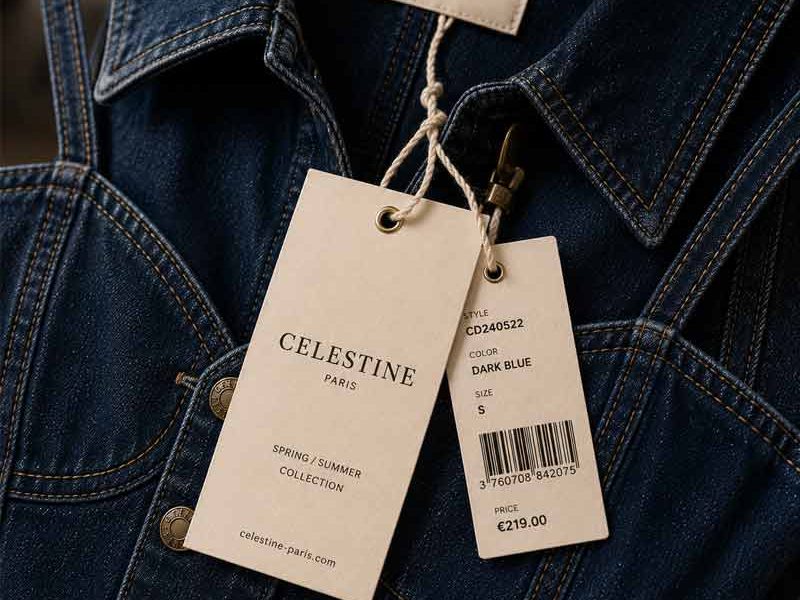
Hangtag Set
- Confirm print file and finish
- Approve attachment location
- Match price or SKU data where used
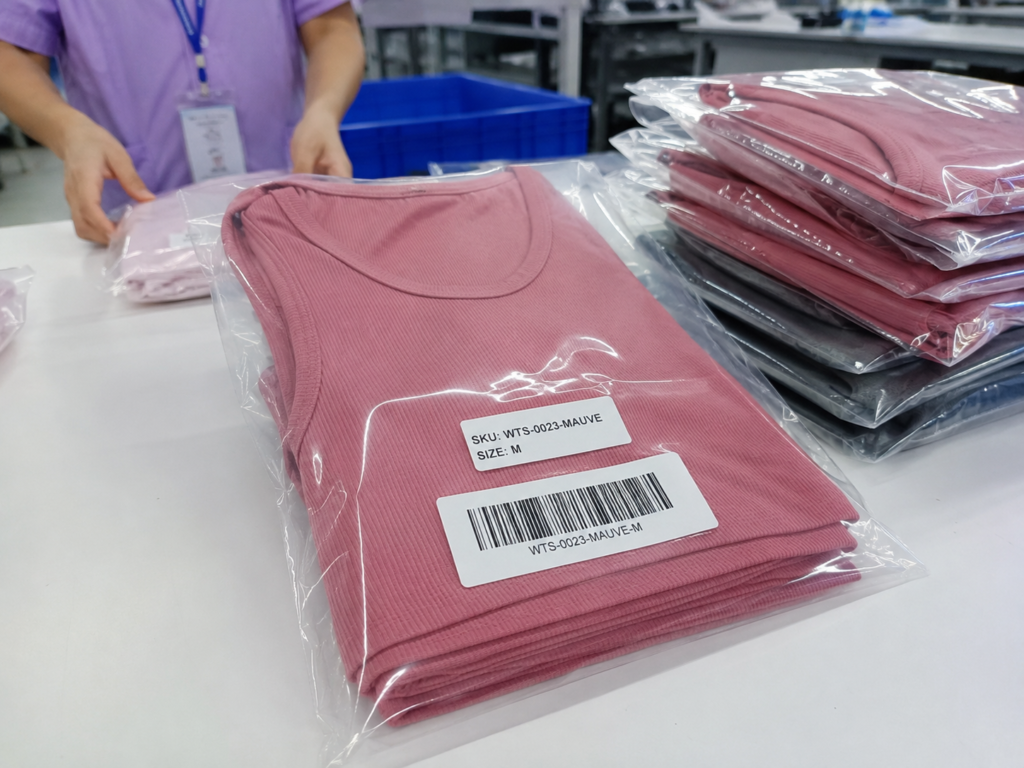
Barcode Sticker
- Use approved barcode master
- Check print contrast and size
- Verify scanned identity by SKU

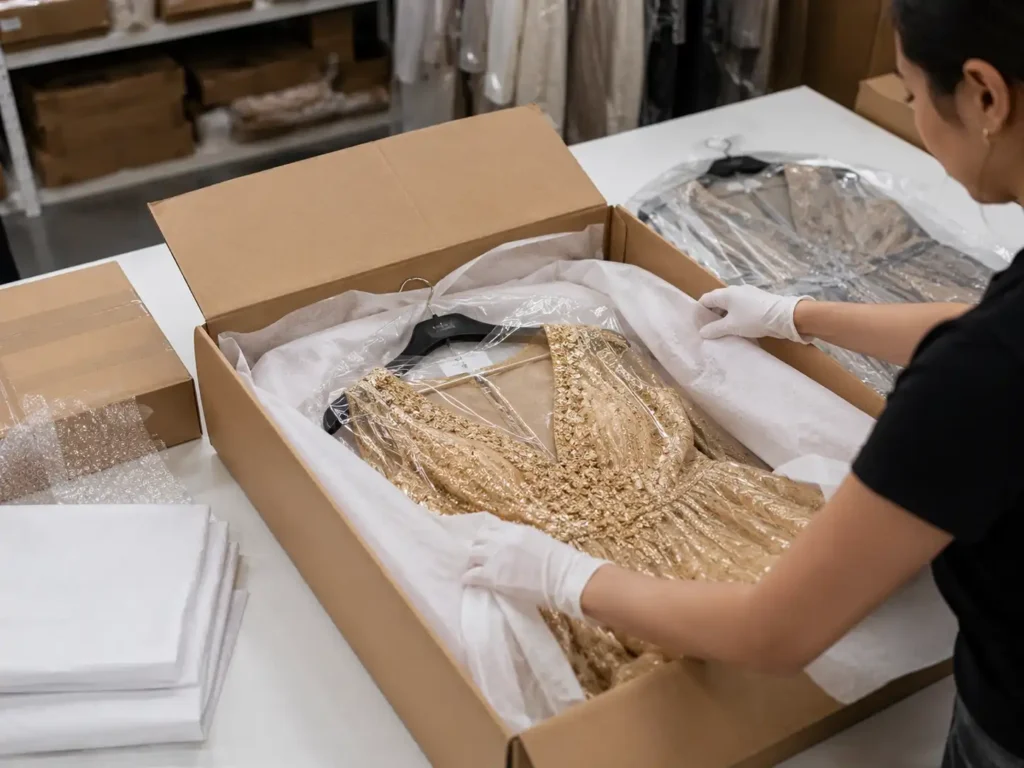
Individual Polybag
- Select bag size by garment volume
- Protect satin, sequin, lace, and long hems
- Confirm sticker and warning placement
Carton Marking
- Confirm mark layout and carton numbering
- Match contents to printed data
- Photograph marks before shipment release

Packing Ratio
- Convert order ratio into carton plan
- Separate special destination or store packs
- Reconcile packed cartons with order totals
Warehouse Receiving and Multi-Batch Delivery Coordination
Retail-ready delivery includes accurate garment identity, carton data, documents, freight instructions, and receiving requirements. Shipment planning starts before packing, especially when orders are split by launch priority or destination.
Prepare Packing Lists and Carton Data
The packing list records style, color, size, quantity, carton number, pieces per carton, carton dimensions, gross weight, net weight, and total shipment quantity. Data should be built from actual packing records rather than estimated after cartons are closed.
Carton dimensions and weights support freight quotation, booking, warehouse planning, and customs documentation. Air freight also considers volumetric weight, while sea freight planning may consider total cubic volume, LCL or FCL structure, and loading arrangements.
Jinfeng reconciles packed quantities with the order and SKU master before final documents are released. Differences should be identified and approved rather than hidden inside a revised total. Carton photos and marks can be recorded for shipment reference while protecting brand and order confidentiality.
When the shipment contains several POs or delivery waves, document structure is agreed with the retailer or forwarder. Separate packing lists may be required by PO, warehouse, container, or air/sea portion. Clear file naming and carton numbering reduce the chance that correct physical cargo is paired with the wrong receiving document.
For several POs or delivery waves, file naming and carton numbering are structured by the retailer or forwarder requirement so the correct cargo is paired with the correct document.
Document totals are checked once more after any inspection repair, shortage, or carton change so freight data reflects the final released cargo.
Follow Existing Forwarder and Warehouse Rules
Established retail groups often use appointed freight forwarders, consolidation centers, overseas warehouses, or fixed receiving systems. Jinfeng can coordinate cargo details, packing lists, commercial invoices, carton marks, carton measurements, gross and net weights, pickup schedules, shipment photos, and other agreed files with the appointed contact.
The retail team should provide the forwarder name, contact, booking instruction, pickup location, cut-off time, required documents, warehouse address, receiving labels, appointment rules, and any PO-specific instructions. Requirements need to be reviewed before final packing because some labels or carton formats cannot be added cleanly after closure.
Respecting the existing logistics structure is especially important when several suppliers consolidate into one shipment or when different POs move to different destinations.
Freight coordination also includes readiness communication. Cargo-complete dates, inspection status, carton count, volume, and pickup availability are shared with the appointed forwarder according to the agreed process. Booking should not be based on an optimistic sewing date when packing or inspection remains incomplete.
Cargo readiness is communicated through actual packed and inspected status rather than an optimistic sewing-complete date.
Pickup coordination begins only after the cargo, documents, inspection status, and required warehouse labels are confirmed ready.
Named contacts, cut-off dates, pickup references, and document recipients are kept in the active shipment instruction.
Use Air and Sea by Commercial Priority
Air freight protects speed but carries a higher cost. Sea freight controls cost for larger volumes but requires earlier planning. A mixed strategy can support launch timing when selected hero styles, priority colors, or priority sizes need to arrive before the main order.
A split should be defined by SKU before packing. The air portion receives its own carton plan, packing list, shipment data, and warehouse instructions. The sea portion remains intact and traceable. Randomly removing pieces from completed cartons increases mispacking and document risk.
The value of split shipment is commercial: launch a first wave, support photography or store opening, then replenish with the main volume. Feasibility depends on completed quantities, carton structure, freight booking, destination, and cost approval.
The quantity chosen for air freight should be commercially meaningful. Sending a few random pieces may not support a launch if core sizes, top colors, or complete store packs are missing. The retail team identifies the selling priority, and Jinfeng translates it into a producible and packable SKU split.
The air portion is selected as a commercially usable SKU mix, not a random extraction that leaves the launch without core sizes or top colors.
The approved split is retained in the SKU and carton records so later receiving can distinguish the first launch wave from the main stock.
Plan Receiving Before the Selling Window
Warehouse arrival is not the same as retail launch. Receiving, inspection, put-away, store allocation, ecommerce inventory activation, and internal transport may add days or weeks after import arrival. Regional retailers should therefore set a required warehouse date and work backward through freight, inspection, packing, production, and development.
Seasonal products with fixed windows – graduation, prom, wedding guest, holiday party, resort, and summer dresses – need earlier buffer than continuous core products. Custom materials, heavy embellishment, and special packaging also need longer preparation.
Jinfeng uses the warehouse date as one of the planning anchors. Schedules are reviewed when feedback, material, or order changes occur so the retail team can decide whether to adjust product priority, shipment mode, or launch sequence.
Buffer decisions should reflect product risk. A repeat jersey dress using an available fabric may carry less development risk than a new sequin corset style with custom color and packaging. Schedules can therefore use different internal deadlines by product group while maintaining one final warehouse objective.
Different product groups can carry different internal buffers while remaining tied to one required warehouse date and launch objective.
The retail team can then protect the selling date with decisions based on actual risk rather than one uniform buffer for every dress.
Repeat Orders and Bestseller Replenishment with Retained Standards
A repeat order should preserve the approved product while responding to current fabric, color, quantity, size, capacity, and delivery conditions. Retained records shorten preparation and reduce avoidable variation.
Retain the Product Record Beyond Shipment
Jinfeng retains approved patterns, size charts, grade rules, fabric references, color information, trim details, sewing instructions, label and packing requirements, QC notes, and Golden Sample records according to project management needs. The record creates a controlled starting point for a repeat order.
A repeat order is not released from memory or old product photos. The latest approved files are identified, and after-shipment feedback is added where relevant. If a retail team reports a zipper issue, packaging difficulty, measurement preference, or store-return pattern, the note should be reviewed before the next production.
Confidential information remains protected. Brand names, unpublished designs, barcodes, quantities, prices, and private files are not used for unrelated marketing without authorization.
File retention also supports supplier transitions inside a large organization. When a new merchandiser, product developer, or sourcing manager takes over the program, the approved record gives a clearer history than relying on personal message archives.
Version dates and approval status help identify the correct production standard.
Version dates and approval status help a new merchandiser, developer, or sourcing manager identify the correct standard without relying on personal message history.
The retained file also identifies superseded versions, preventing old measurements, labels, or packing instructions from being reused accidentally.
Repeat Same Style and Same Color
Same-style, same-color repeats can move more efficiently because pattern and construction development are already completed. Fabric availability, color batch, trim availability, packaging materials, line capacity, and requested delivery date still require confirmation.
The new fabric batch is compared with the approved reference for hand feel, weight, stretch, recovery, color, sheen, transparency, or print according to product type. Trims and labels are checked against the retained BOM and current artwork. The production file is reissued with the new order quantity, size ratio, packing ratio, and shipment plan.
MOQ normally continues to follow the 200 pieces per style/color principle. Urgent replenishment is evaluated against available material and production capacity rather than promised automatically.
The retailer should reconfirm whether labels, care wording, barcodes, prices, carton marks, or warehouse instructions have changed since the previous order. A repeat garment can still require new retail data. Jinfeng separates the retained garment standard from the new commercial and packing instructions.
The garment standard is retained, while new barcode, price, care-label, carton, and warehouse files are reviewed as current-order information.
A repeat PP or confirmation sample can be requested when the new material batch, trim source, or destination requirement creates meaningful risk.
Any change is recorded before production release.
Extend into New Colors or Fabrics
A proven style can be extended into new colors, but each color creates separate material, thread, zipper, SKU, barcode, label, cutting, packing, and QC work. New-color MOQ and timing depend on stock availability or custom-dye requirements. Shade approval should be completed before bulk.
Changing the fabric is a larger development decision. A new material can alter drape, stretch, opacity, shrinkage, seam appearance, support, pressing, cost, and fit. The pattern may need adjustment, and a new sample or PP sample may be required.
Jinfeng reviews whether the retained style can transfer directly, needs a limited fit check, or needs full redevelopment. The objective is to preserve the selling silhouette without assuming all materials behave the same.
New colors may also reveal transparency, dye, or surface differences that did not exist in the original shade. Ivory satin, white mesh, metallic fabric, or deep velvet need color-specific evaluation. The approved construction may remain, while lining, thread, zipper, pressing, or packing decisions change by color.
Color-specific transparency, shade, lining, thread, zipper, pressing, and packing decisions are reviewed even when the original pattern remains suitable.
The updated approval becomes a new controlled reference instead of silently replacing the original production standard.
The original reference remains archived for comparison.
Replenish Selected Sizes and Delivery Waves
Regional sales rarely move evenly across all sizes, colors, and stores. A replenishment request may concentrate on selected sizes or priority colors. The production plan reviews whether the remaining ratio is workable for cutting, material, packing, and MOQ. Very narrow size replenishment may require separate evaluation because it changes marker efficiency and carton planning.
Delivery can be staged by priority. Selected sizes or top-selling colors may move first by air, followed by the main replenishment by sea. The SKU split, carton plan, packing list, and warehouse instruction must be prepared before packing.
A repeat-order program becomes stronger when sell-through data, return reasons, fit feedback, and store inventory patterns are shared early. Manufacturing records and retail data then support a more accurate next order.
When demand is uneven, the retail team can provide current stock, open sales, and required warehouse dates. Jinfeng does not need proprietary sales-system access; a clear quantity and priority file is enough to review material, capacity, MOQ, cutting, and shipment options for the replenishment.
Current stock and priority quantities can be summarized in a simple file, allowing material, capacity, MOQ, cutting, and freight options to be evaluated without access to private sales systems.
The confirmed replenishment file then becomes the basis for cutting, labels, cartons, packing lists, and the selected transport plan.
Factory Review Material Compliance and Design Protection

Factory Review Support
- Confirm required audit type and validity period
- Match project to an appropriate production unit
- Coordinate available records and review questions

Material Testing Support
- Confirm fabric composition and intended market
- Review certificate scope and supplier documents
- Define testing responsibility, sample quantity, cost, and timing

NDA Design Protection
- Restrict project files to assigned teams
- Avoid public use of unreleased designs
- Confirm image and case permissions before publication
Anonymous Regional Retail Dress Program Case
The following anonymized program reflects a realistic regional-retail order structure. Brand identity and proprietary files remain confidential, while the operational data illustrates how a large multi-style collection can be controlled.
Program Scope and Commercial Requirements

An established US regional womenswear retailer planned a seasonal dress program covering 22 styles and 48,600 pieces. The assortment included commercial midi dresses, satin mini and slip dresses, printed resort maxis, fitted jersey styles, mesh party dresses, and selected lace occasion products. Most styles used one or two colors, with sizes distributed from XS to XL according to the retailer’s store and ecommerce ratio.
The program had three commercial deadlines: campaign and ecommerce photography, first warehouse receipt for the launch wave, and the main warehouse receipt for store allocation. Private-label requirements included main labels, care labels, size labels, hangtags, barcode stickers, individual polybags, carton marks, and SKU-level packing lists.
The main operational risk was not total volume alone. Twenty-two styles created separate fabric groups, sample priorities, measurement points, labels, barcodes, packing ratios, and delivery dependencies. The program needed one master tracker connecting development, material, production, QC, packing, and shipment status.
Before development started, responsibilities were assigned for design comments, fit approval, barcode data, packaging artwork, warehouse files, and freight instruction. The calendar showed not only factory actions but also the dates when the retailer needed to respond. That structure reduced the risk that a delayed internal approval would appear later as an unexplained production delay.
Development and Material Control

The line sheet was divided into four groups: high-priority campaign styles, high-risk structural styles, commercial styles using shared fabrics, and later color extensions. The first sample wave covered eight hero or technically sensitive styles, including satin bias silhouettes, mesh cut-out dresses, and a structured lace mini. Commercial woven and jersey styles entered the second wave after core fabrics were selected.
Satin quality was reviewed for sheen direction, seam behavior, snagging, and color. Mesh was compared for transparency and recovery. Printed resort fabric was checked for direction, usable width, and shrinkage. Jersey and ponte were compared for stretch, recovery, opacity, and bodycon fit. Lace placement and lining coverage were approved through sample photos and physical review.
Revision records separated pattern changes, measurement changes, material changes, trim changes, and visual comments. PP samples locked the final material, color, measurements, construction, labels, barcodes, polybags, and packing method before bulk release.
The product team also reviewed the price and role of each style after the first sample. Some visual details were retained for hero products, while selected commercial styles used a simpler lining, consolidated trim, or more efficient construction without weakening the intended appearance. Cost control was carried out by product role rather than applying one reduction method across the full collection.
Bulk QC and Retail Packing Execution

Styles were allocated by fabric and construction rather than order quantity alone. Stretch bodycon products, commercial woven products, satin products, and lace or mesh occasion products followed separate production and QC focus. Early in-line reviews checked key measurements, sewing method, trim placement, and appearance against the approved standards.
QC attention included satin seam puckering and surface protection, mesh transparency and neckline stability, jersey recovery and body measurements, lace placement, zipper flatness, lining coverage, dress length, slit height, and hem balance. Light colors received added stain and opacity checks.
The retailer supplied a SKU and barcode master. Jinfeng matched each style-color-size combination to the correct labels, hangtag, barcode sticker, polybag mark, carton ratio, and packing-list record. Cartons were separated by the approved warehouse plan, and carton dimensions, gross weight, net weight, and marks were recorded before release.
Progress was reviewed by style group and delivery wave. Reports identified material status, cutting, sewing, in-line findings, finishing, packing materials, packed quantity, and inspection status. The retailer could therefore see which products were physically complete and which were waiting for correction, labels, barcodes, or final packing approval.
Status reporting separated material, cutting, sewing, checked, finished, packed, and released quantities, giving the retailer a clearer view of each delivery wave.
Two-Wave Delivery and Repeat Preparation

The first delivery wave contained selected hero styles and priority commercial sizes for campaign launch and initial online stock. The main volume followed in the second wave for store allocation. SKU separation, carton planning, packing lists, and freight instructions were established before packing so the first shipment did not require reopening and mixing completed cartons.
After shipment, the approved patterns, size charts, fabric references, trims, sewing instructions, packing requirements, barcode structure, QC notes, and Golden Sample records were retained. The record allowed selected top-selling styles to be reviewed for same-style repeat production and new-color extensions without rebuilding the product from the beginning.
The strongest result was operational control: development priorities were visible, approved standards moved into bulk files, SKU identity remained connected through packing, and replenishment decisions could start from retained evidence. No public brand name, proprietary design, unit price, or unreleased product image is disclosed.
The case structure demonstrates why regional retail manufacturing requires more than capacity. Product decisions, technical standards, identity files, packing labor, documents, and freight priorities had to remain connected across the order. The retained record did not replace a new feasibility review, but it gave the next order a controlled and commercially useful starting point.
Operational reporting remained anonymized, with brand files, barcode lists, prices, shipment data, and unreleased product images restricted to assigned roles.
Frequently Asked Questions for Regional Retail Programs

Send Your Regional Retail Dress Program
Share the information that defines the program: company and retail region, number of stores or sales channels, product categories, line sheet, number of styles, quantity per style and color, size range, target price direction, preferred fabrics, private-label files, warehouse instructions, launch date, and intended delivery method. Tech packs, reference images, original-sample photos, size charts, BOMs, label artwork, barcode lists, and packing guides can be uploaded for review.
Kelly and the Jinfeng Apparel team will assess product fit, material direction, pattern and sample requirements, MOQ structure, production allocation, quality checkpoints, packaging work, and schedule feasibility before recommending the next step. Files are used only for project evaluation, development, production, QC, packing, and delivery coordination under the agreed confidentiality arrangement.


