Dress Manufacturer for Quality Control Teams

Quality standards translated into controlled dress development, production, inspection, private-label packing and documented release decisions.

  • 15+ QC inspectors support incoming material checks, cutting control, sewing inspection, garment review, pressing verification, packing QC and inspection preparation.
  • 2 sample rooms, 7+ senior pattern makers and 20+ sample machinists help convert fit comments, measurement tolerances and construction requirements into approved production standards.
  • 6 owned women’s fashion factories, 18+ sewing lines and 100,000+ pieces of regular monthly capacity support multi-style dress programs with factory allocation based on fabric, structure and quality risk.

Quality Capacity Built Around Dress Production

A quality team needs more than a final inspection promise. Jinfeng Apparel connects development resources, production capacity and inspection personnel so approved standards remain visible from first sample through packing and shipment release.

15+ QC Inspectors

The QC team covers material receipt, cutting, sewing, in-line review, finished-garment inspection, pressing, labels, packing and inspection preparation. Each program can adopt the brand’s quality manual, measurement tolerance, defect categories and packing checklist. Quality decisions are compared with the approved sample, final production files and project-specific acceptance criteria rather than relying on a vague idea of good workmanship.

2 Sample Rooms

Two sample rooms support first samples, fit samples, revised samples, photo-ready samples, PP samples and Golden Sample management. Early quality work begins here: fabric behavior, construction order, lining coverage, zipper installation, strap balance and critical measurements are reviewed before a production line receives the style. Sample findings become production instructions and inspection checkpoints.

7+ Pattern Makers

Seven or more senior pattern makers support dress structure, fit correction, measurement review and grading preparation. Their work is especially important for bodycon, corset, strapless, backless, maxi and jumpsuit styles, where small pattern errors can create repeated defects across an entire order. Final pattern versions are linked to approved measurements and sample comments before bulk release.

20+ Sample Machinists

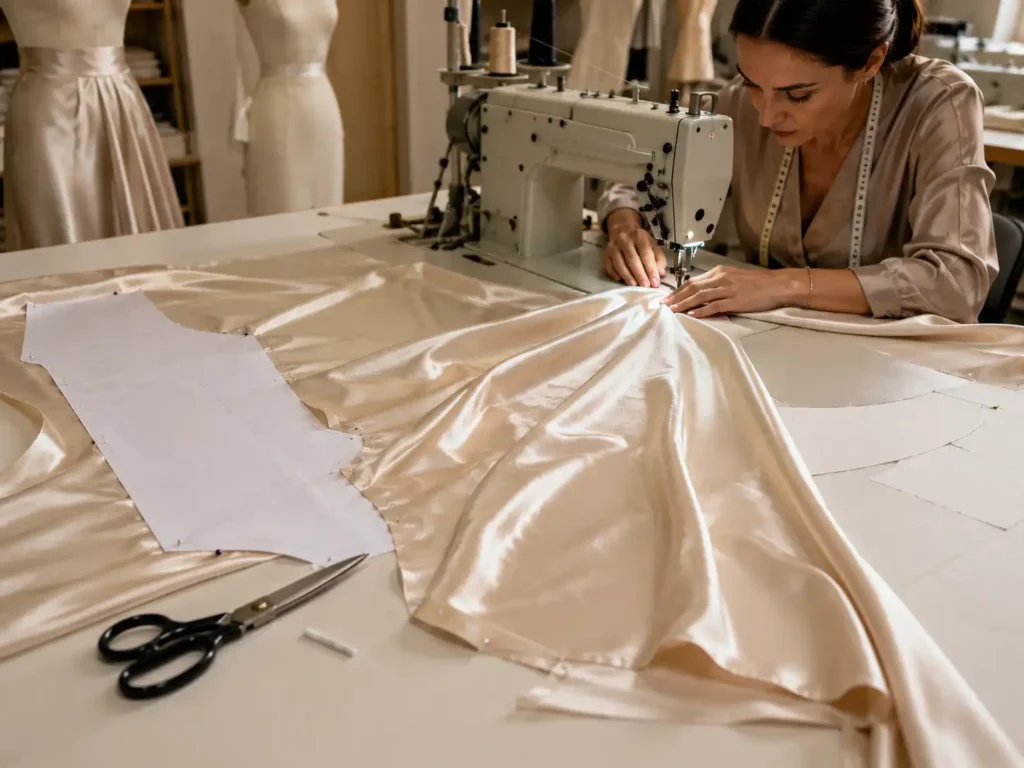
More than twenty sample machinists handle different fabrics and constructions, including satin, mesh, lace, sequins, stretch jersey, boning, cups, lining and cut-out details. Their role is not limited to sewing a visual prototype. They test construction sequence, seam stability, bulk repeatability, pressing response and finishing requirements before a style is considered ready for production.

18+ Sewing Lines

Eighteen or more sewing lines allow production to be allocated according to product structure and order rhythm. Satin, lace, mesh, sequin, bodycon, occasion and resort dresses require different handling. A nominated factory and line are confirmed according to fabric, construction, quantity, launch timing and QC requirements, with production files controlled by style and version.

100,000+ Monthly Capacity

Regular monthly capacity above 100,000 pieces supports multi-style, multi-color and multi-size programs without treating every dress as the same product. Capacity planning is paired with material readiness, PP approval, line allocation, inspection timing and packing requirements. Large capacity is useful only when quality gates remain clear, so production schedules are built around confirmed standards rather than output volume alone.

Built for Brand Quality and Technical Teams

Different quality roles examine different risks. The manufacturing workflow supports inspection execution, prevention, fit control, technical accuracy, factory governance and compliance preparation without forcing every role into one generic factory conversation.

Quality Control Managers

QC managers need clear checkpoints, accessible samples and consistent defect decisions. Jinfeng Apparel can work with a brand defect list, measurement tolerance, inspection checklist and release process. Incoming materials, cutting, sewing, finished garments and packing can be reviewed against the same approved references, while affected units are separated, reworked and reinspected before release.

Quality Assurance Managers

QA managers focus on preventing recurring problems. Requirement review, fabric approval, pattern correction, PP Sample lock, production briefing and change control are placed before final inspection. Quality records can be organized by style, material batch, sample version and production stage, helping the team examine root causes instead of repeatedly correcting the same symptom at the end of production.

Garment Technologists

Garment technologists can align points of measurement, measuring methods, fit comments, seam construction, lining behavior, closure placement and grade rules with the development team. Critical areas such as bust, waist, hip, neckline depth, armhole, strap length, slit height and hem balance are reviewed as measurable production requirements, not subjective fit descriptions.

Technical Managers

Technical managers often control tech pack accuracy, sample approval and production handover. Jinfeng Apparel can organize pattern versions, BOM details, fabric and trim references, sewing instructions, label placement, packing requirements and QC checkpoints around the approved PP and Golden Sample. Later changes are assessed for cost, lead time and quality impact before implementation.

Vendor Quality Teams

Vendor quality teams need visibility into the actual production location and the controls applied there. Jinfeng Apparel assigns factories according to dress category and project requirements, confirms the nominated production unit, and prepares style-specific files for the selected line. Multi-factory programs are managed by style rather than relying on a single generic factory profile.

Compliance Teams

Compliance teams can request factory profiles, audit-related documents, material certificates, testing coordination, care-label information and export documentation according to the intended market. Availability and scope are confirmed against the nominated factory, material supplier, certificate validity, order batch and testing requirement, avoiding unsupported claims that every document covers every product.

Quality Files We Can Build Into Production

A strong manufacturing handover starts with the right source files. Each document below serves a different production purpose, allowing the brand standard to reach pattern, material, sewing, inspection and packing teams in a controlled form.

Quality FileHow It Is UsedProduction Output
Quality manualDefines the brand’s operating principles, inspection expectations and escalation rules.Program-level QC framework and factory briefing points.
Tech pack and BOMDefines construction, materials, trims, labels and style details.Production order, material list and operation requirements.
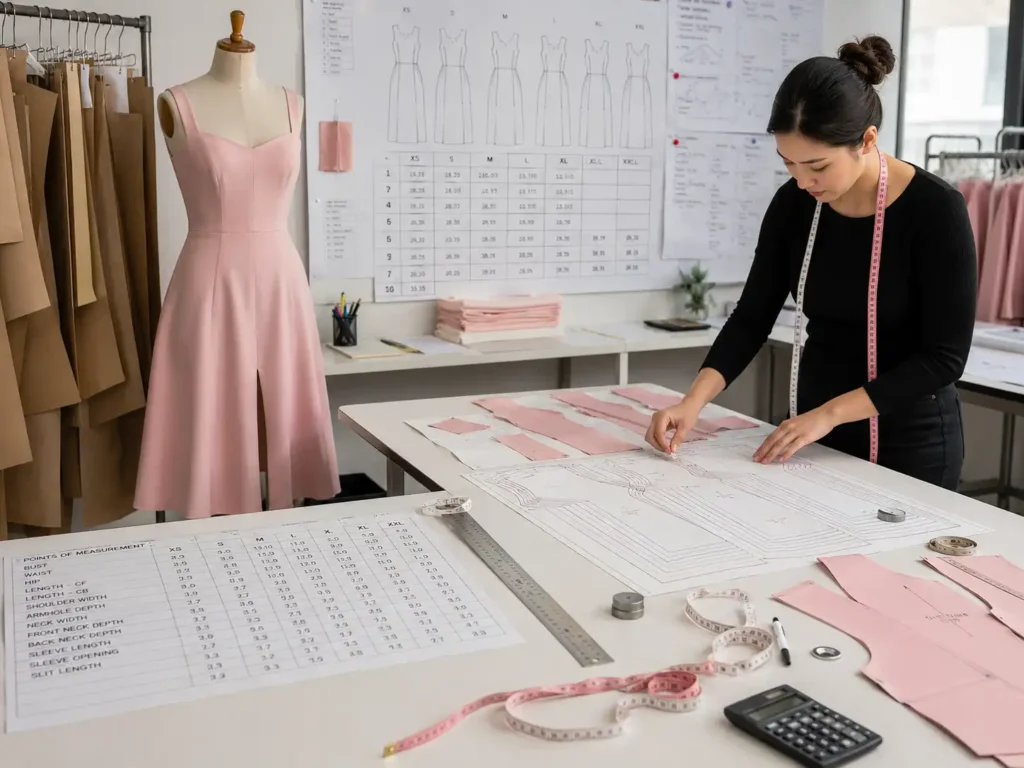
Size chart and POM guideDefines dimensions, measuring positions and size range.Sample measurement sheet, pattern control and bulk measurement plan.
Measurement toleranceDefines acceptable plus or minus variation by measurement point.Pass, hold, rework or escalation decisions during inspection.
Defect classificationSeparates critical, major and minor defects according to brand policy.Consistent defect decisions across factory QC, client QC and third parties.
AQL requirementDefines sampling level and acceptance criteria for final inspection.Inspection preparation, sample selection and release documentation.
Approved PP or Golden SampleConfirms final appearance, fit, construction, materials and finishing.Physical reference for line briefing, QC comparison and repeat orders.
Packing and warehouse guideDefines labels, barcodes, folding, polybags, cartons and receiving rules.Packing instruction, SKU checks, carton marks and packing-list verification.
Testing requirementDefines fabric, garment, chemical or performance tests for the target market.Test sample preparation, third-party coordination and report tracking.

How Brand Standards Enter Dress Production

Files only create value when they change factory actions. The following workflow converts written requirements into sample approvals, controlled production instructions, inspection points and release records that line teams can understand and execute.

File Review

Quality manuals, tech packs, size charts, defect lists, AQL requirements and packing guides are checked for missing or conflicting information. Questions are raised before pattern work or material purchasing begins, reducing the risk of production teams following an incomplete or outdated instruction.

Risk Mapping

The style is reviewed by product category, fabric, structure and wearing function. Satin shade, mesh transparency, lace placement, sequin protection, bodycon stretch, corset support and maxi hem balance create different checkpoints. High-risk operations are identified before the sample is used as a production standard.

Measurement Alignment

Points of measurement, measuring method, base size, tolerance and grade expectations are aligned with the pattern and sample team. Bust, waist, hip, dress length, strap length, neckline depth, armhole, slit height and hem width receive clear definitions to prevent inconsistent measurement decisions.

Material Approval

Fabric, lining and trims are reviewed for specification, color, hand feel, stretch, transparency, surface condition, batch risk and bulk availability. Material changes after sampling are not treated as simple substitutions because they can alter fit, sewing method, cost, testing and production timing.

Sample Standard

First sample, fit sample and revised sample comments are recorded by category. Approved corrections are transferred into updated patterns, measurement charts, BOMs, sewing instructions and QC checkpoints. Regular first samples commonly require about 10-15 days; complex corset, lace, mesh, sequin or evening styles commonly require about 15-25 days, subject to materials and structure.

PP Sample Lock

The PP Sample confirms final fabric, color, trims, measurements, construction, lining, labels, packing and QC requirements.

Once approved, the agreed standard is locked for production. Later changes require a controlled review of cost, timing, material availability and bulk consistency risk.

Line Briefing

The nominated production unit receives the final pattern, production order, BOM, fabric and trim references, sewing instructions, measurement chart, approved sample and packing guide.

Critical operations are reviewed with the line and QC team before output increases, especially where repeated errors could affect an entire lot.

Inspection Closeout

Incoming, cutting, sewing, garment, pressing and packing findings are checked against the agreed standard. Open issues are isolated, corrected and reinspected.

Final release is based on the agreed AQL or inspection requirement, completed packing checks and any client or third-party inspection decision.

Quality Planning Before the Production Line Starts

The most expensive quality problems are often created before sewing begins. Structure, materials, fit, sample approvals and change control require a documented plan before fabric is cut or production capacity is committed.

Structure Risk Review Before Sampling

Every dress is reviewed as a construction system rather than a collection of visual details. A satin slip dress may appear simple but can fail through bias movement, zipper rippling, seam puckering, lining drag or uneven hem balance. A corset dress may require cup shape, boning position, top-edge grip, lining stability and closure strength to work together. Mesh and lace designs need coverage, stretch direction, seam support and edge treatment to prevent tearing or distortion. Sequin garments add weight, abrasion and needle-breakage concerns. Jumpsuits introduce torso length, crotch depth and movement requirements beyond ordinary dress fit. The development team maps these risks to pattern, material, sewing and inspection decisions before the first sample is treated as a production reference.

  • Construction review: neckline, armhole, bust support, waist seam, hip ease, lining, closure, slit, hem and decorative placement.
  • Production review: operation sequence, seam access, reinforcement, bulk repeatability, pressing method and packing protection.
  • Inspection review: critical measurements, symmetry points, visual defects, comfort risks and high-risk operations requiring earlier checks.

Fabric and Trim Approval Plan

Material approval goes beyond matching a color or fabric name. Fabric weight, width, stretch, recovery, drape, transparency, shrinkage risk, colorfastness requirement, surface sensitivity and lot consistency can change pattern behavior and finished appearance. Trims such as zippers, cups, boning, elastic, grippers, hooks, decorative chains, labels and hangtags also influence comfort, durability, cost and lead time. The approval plan identifies which items require swatches, lab dips, bulk color approval, trim cards, test reports or physical comparison with the sample. Certified fabric resources can be reviewed when required, but certificate scope, color, supplier batch, MOQ and validity must be confirmed before any claim is attached to the order.

  • Bulk material cannot be substituted solely for cost or availability without reviewing fit, sewing, appearance and timing impact.
  • Different fabric lots are identified and managed to reduce mixed-shade or mixed-performance risk.
  • Special trims and private-label materials are checked against their own development time and supplier MOQ before the bulk schedule is finalized.

Fit Standard and Measurement Method

Fit comments become reliable only when they are tied to a defined measurement method and an updated pattern. Phrases such as tighter waist, lower neckline or shorter strap can produce different results across teams unless the change is converted into measurable points and a revised pattern version. Jinfeng Apparel uses sample rooms, senior pattern makers and sample machinists to connect on-body review with bust, waist, hip, dress length, strap length, armhole, neckline depth, slit height, hem width and other style-specific measurements. Extended sizes or numeric size systems are assessed according to the brand chart, fabric behavior and grade rules rather than scaling every area by the same amount.

  • Base-size approval comes before full grading whenever the style has fit-sensitive structure.
  • Each revision should identify the changed measurement, pattern effect, sample version and approval status.
  • Tolerance is applied by measurement point; a single tolerance for every dimension can hide serious fit problems.

PP and Golden Sample Lock

The PP Sample is the final production gate, not another visual sample. Fabric, color, lining, trims, measurements, construction, labels, hangtags, barcode position, folding, polybag and carton instructions are confirmed together. The Golden Sample then serves as the sealed physical reference for production, QC, repeat orders and dispute review. Production files must match the approved sample version, and any later design or material change is logged before implementation. A controlled lock protects both sides: the brand knows which standard the factory will reproduce, and the factory avoids receiving late changes after materials, patterns or line plans are already committed.

  • No major design or material change should enter bulk production through an informal message alone.
  • The approved standard is transferred through final pattern, BOM, sewing instruction, measurement chart, QC checklist and packing instruction.
  • Repeat orders can reuse retained pattern, material, trim, packing and Golden Sample records, subject to fresh material and color confirmation.

Dress Quality Risks Require Different Controls

Generic inspection language misses the defects that matter most in fashion dresses. Product-specific checkpoints help the quality team direct attention toward materials, structure, fit, finishing and packing risks with the greatest commercial impact.

Dress CategoryTypical Quality RisksControl Focus
Satin dressShade variation, reversed luster direction, snagging, seam puckering, zipper rippling, pressing shine and packing creases.Lot and luster direction control, protected handling, needle and seam review, zipper flatness, pressing temperature and packing protection.
Mesh dressHoles, stretched edges, transparency mismatch, distorted neckline, weak seams and lining exposure.Incoming mesh inspection, stretch direction, edge stabilization, lining coverage, seam support and finished transparency review.
Lace dressBroken motifs, poor placement, visible joins, left-right imbalance, unsuitable lining color and unfinished edges.Motif direction, placement map, symmetrical cutting, controlled joining, lining approval and edge treatment.
Sequin dressMissing sequins, abrasive seams, heavy seam allowances, needle damage, zipper obstruction and surface damage in transit.Incoming surface check, sequin clearance at seams, lining protection, closure testing, missing-piece review and protective packing.
Bodycon dressWeak recovery, unstable side seams, incorrect bust-waist-hip proportions, seam popping and post-wash distortion.Stretch and recovery review, relaxation, cutting direction, fit-sensitive pattern, elastic stitching and bulk measurement monitoring.
Corset dressCup distortion, misplaced boning, weak support, top-edge slipping, asymmetry and uncomfortable internal structure.Cup and boning map, support review, symmetry check, gripper and closure control, fit sample and PP confirmation.
Maxi dressUneven hem, twisted body, poor drape, lining imbalance, excessive transparency and movement restriction.Pattern balance, fabric hanging behavior, side-seam alignment, lining length, hem review and movement check.
Printed dressIncorrect motif direction, mismatched panels, mixed shade, off-center placement and inconsistent color.Marker direction, panel matching, cut-part pairing, lot control, placement approval and bulk color comparison.

Material and Trim Controls Before Cutting

Fabric and trims create many of the defects later blamed on sewing. Material control separates approved specifications, incoming condition, batch identity, performance requirements and change decisions before affected units reach production.

Fabric Lot and Shade Control

Incoming fabric is reviewed against the approved description, color reference and project requirement. Checks may include color, lot identity, width, weight, hand feel, surface condition, stains, holes, snags, stretch, transparency, print direction, lace damage, mesh holes, sequin loss and satin shade or luster differences.

The relevant checks depend on the material rather than following one fixed list for every fabric. Lots or dye batches are identified so cutting teams do not mix visibly different shades within the same garment or shipment group. Linings, zipper tapes and sewing threads also require color coordination because a small mismatch becomes highly visible on light, satin or sheer dresses.

Performance and Testing Plan

Testing requirements are confirmed by market, product, fabric and brand standard. Possible items include fiber composition, colorfastness, shrinkage, dimensional stability, pH, formaldehyde, azo dyes, appearance after care, seam performance or other client-specified tests.

Jinfeng Apparel can coordinate with SGS, Intertek, Bureau Veritas, ITS or another nominated laboratory. Test sample quantity, method, cost and timing are confirmed before scheduling. Internal material review remains valuable for early risk screening, but it does not replace a required third-party test or a certificate whose scope must match the exact fabric, supplier and batch.

Trim Compatibility and Durability

A dress can meet fabric and measurement requirements yet fail through a weak or unsuitable trim. Invisible zippers are checked for tape color, puller movement, length, seam integration and bulk consistency. Cups, boning and grippers are reviewed for support, comfort and placement. Hooks, snaps, buttons, shoulder adjusters and decorative chains require size, finish and attachment confirmation.
Labels and hangtags require approved artwork, position and readable content. Trim decisions are connected to the sample because an apparently minor replacement can change closure strength, skin comfort, appearance, sewing method or retail presentation.

Controlled Material Change Process

Material changes during sampling or bulk preparation are treated as controlled changes. A new fabric can alter drape, stretch, recovery, shrinkage, transparency, lining need, seam choice, pattern dimensions, target price and lead time. A new trim can alter attachment method, comfort, durability or packing. The proposed replacement is reviewed, documented and approved before the BOM or PP standard is updated.

When the effect is significant, a revised sample or focused construction test may be required. Silent substitution is avoided because the most damaging inconsistencies often begin with an unrecorded material change made after sample approval.

Pattern, Fit and Measurement Control for Dresses

Dress quality cannot be separated from fit. Pattern versions, measuring methods, grade rules and bulk measurement data must work together so approved proportions remain stable across sizes, colors and production batches.

Points of Measurement and Methods

Measurement control begins by defining where and how each point is measured. Bust may be measured flat at a stated distance below the armhole; waist can follow a seam or a natural position; hip depth must be defined; dress length can start from high point shoulder, center back or another reference. Strap length, neckline depth, armhole, bicep, sleeve opening, slit height, hem width and jumpsuit inseam also need consistent methods. Diagrams or written POM guidance prevent factory QC, brand QC and third-party inspectors from producing different results on the same garment. Tolerance is assigned by measurement point and construction sensitivity rather than applying one universal figure across the style.

Pattern Correction and Fit Logic

Fit correction is converted into pattern action, not stored only as a sample comment. Bust gaping, tight hip, shifting waist seam, slipping strap, low neckline, uneven hem, exposed lining or unsafe slit height may come from pattern balance, fabric behavior, construction or measurement error. The development team identifies the cause before making a change. Seven or more senior pattern makers and two sample rooms support revised patterns, fit samples and complex structure checks. For stretch dresses, recovery and negative ease are considered; for corset or strapless styles, support and top-edge stability are considered; for maxi styles, vertical balance and fabric hang are considered.

Grading and Size-Range Review

Grading is reviewed after the base size is approved. Size ranges such as XS-XL, extended sizes or numeric systems are handled according to the brand chart and target market.
Not every area should grow at the same rate. Bust, waist, hip, armhole, neckline, strap, length and support structures may require different grade behavior. Plus and extended sizes can affect fabric consumption, cup and boning proportions, strap strength, opening size and fit validation. A size-set sample or selected size review can be used when the product risk justifies it. Grade rules are retained with pattern and measurement records for repeat orders.

Bulk Measurement Monitoring

Bulk measurement control combines early checks and final confirmation. The first pieces from production are compared with the approved measurement chart and Golden Sample before output increases. In-line measurement checks look for trends such as growing side-seam length, shrinking waistband, inconsistent straps or changing skirt length. Finished garments are measured according to the agreed sampling plan and tolerance. An isolated outlier may require rework; a repeated trend requires process correction and broader review. Measurement records are organized by style, size, color or production lot as required, supporting client inspection and future repeat-order comparison without claiming an unverified defect or pass rate.

Cutting Controls Prevent Repeated Production Defects

Cutting errors multiply quickly because one marker or bundle can affect many garments. Direction, shade, placement, symmetry, identification and component accuracy are checked before cut parts enter sewing.

Grainline Direction

Woven drape, stretch direction, satin luster, velvet nap and printed orientation can change the appearance or fit of a dress. Markers and cut parts are reviewed against the required direction. Reversed panels can create visible shade changes, twisting or uneven stretch even when the fabric comes from the same roll.

Shade Separation

Fabric rolls or dye lots are identified before spreading and cutting. Shade groups are kept separate where visible variation exists, with linings, zipper tapes and threads considered where relevant. Mixed shades within the front, back, sleeve or skirt panels can make a finished garment unacceptable even when each individual panel is otherwise defect-free.

Print Placement

Placement prints, floral direction, borders and engineered motifs require approved positioning before full cutting. Center-front motifs, neckline placement, waist joins and left-right symmetry are checked against the approved sample or placement guide. Random prints may allow more flexibility, while directional or panel-matched designs require tighter control.

Lace Matching

Lace cutting considers motif direction, pair symmetry, scalloped edges, panel joining and the relationship between lace and lining. Left and right pieces are paired where necessary, and broken motifs or damaged cut parts are removed before sewing. Accurate cutting reduces visible joins and uneven decorative balance later in production.

Bundle Identification

Cut parts are identified by style, color, size, lot or bundle requirement so similar components do not become mixed across variants. Clear bundle control is especially important for multi-style collections, repeated black fabrics, similar linings and private-label programs with many SKU combinations.

Component Checking

Main fabric, lining, facing, cups, mesh panels, straps, waist sections and decorative components are counted and reviewed before release. Missing or incorrect pieces cause line interruption and improvised substitutions. Component checking also confirms notches, drill marks and left-right orientation needed for consistent assembly.

Sewing Quality Controlled While Production Is Running

Final inspection is too late to correct a repeated operation across thousands of pieces. First-piece release, critical-operation checks, in-line review and controlled reinspection keep defects visible while corrective action remains manageable.

First-Piece Release Before Output Increases

The first completed pieces are checked against the approved sample, pattern, measurement chart, sewing instruction and material references before line output grows. Review points include seam appearance, stitch balance, seam allowance, symmetry, zipper flatness, strap length, gathering position, lace joining, lining attachment, slit height, cup and boning placement, label location and key measurements. A first-piece review protects against repeating an incorrect operation across an entire order. When a result does not match the approved standard, the operation is corrected and verified before normal production continues. The release decision and any adjustment are communicated to relevant line and QC personnel.

Critical Operations Receive Earlier Checks

Not every operation carries equal risk. Satin zipper seams, mesh necklines, lace joins, sequin seam areas, corset cup and boning channels, strapless top edges, deep-V stabilization, ruched panels, concealed openings and maxi hems can create defects that are difficult to repair after full assembly. Critical-operation checks are placed close to the operation rather than waiting for finished garments.
The line can review attachment security, symmetry, distortion, coverage, comfort and visual balance at a stage where access is still possible. Brand-specific checkpoints can be added to the factory checklist when a style or prior order history identifies a repeated risk.

In-Line Inspection Tracks Defect Patterns

In-line inspection looks for both individual defects and developing patterns. Uneven straps, growing seam puckering, incorrect waist placement, repeated lining exposure or unstable measurements may signal a method, material or handling problem rather than isolated workmanship. Affected units are identified, the operation is reviewed and the correction is checked on subsequent output. Jinfeng Apparel does not publish unverified DHU, RFT or pass-rate figures. The meaningful evidence is whether the nominated production team can show the agreed inspection method, defect decisions, corrective action and reinspection records for the program under review.

Rework Is Followed by Reinspection

Rework is not complete when a defect has merely been touched. Units are separated, the required correction is defined, and the repaired area is reinspected for both the original issue and any damage created during repair. A zipper replacement may affect seam appearance and measurement; stain removal may affect color or surface; sequin repair may create abrasion; pressing correction may leave shine. Where a repeated defect is found, a broader quantity may need sorting or inspection. The closeout record shows the issue category, affected quantity or lot, correction method, reinspection status and any prevention action for later output or repeat orders.

Finished Garment, Pressing and Packing Verification
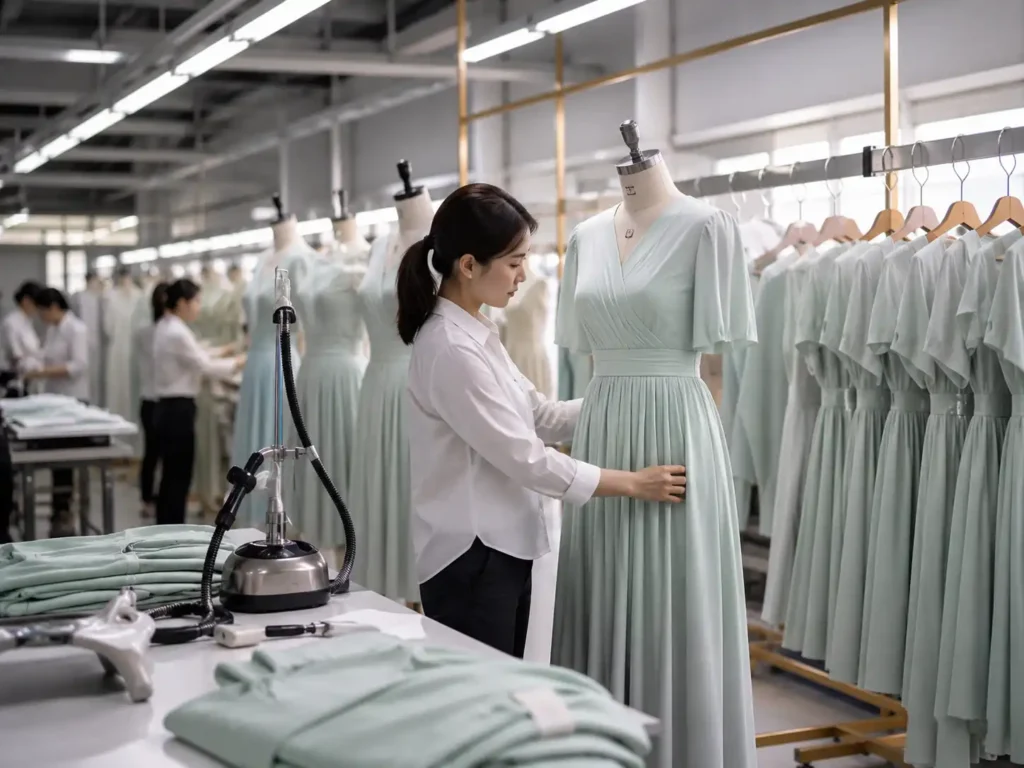
A dress is not ready when sewing ends. Appearance, measurements, closures, pressing, private-label details and carton accuracy determine whether finished stock can pass inspection and enter retail or ecommerce operations without avoidable corrections.

Garment Appearance

Finished garments are checked for color difference, stains, holes, snags, loose threads, seam distortion, uneven gathers, exposed lining, asymmetry and other product-specific defects. Satin, mesh, lace, sequin and light-colored dresses receive material-sensitive handling because surface damage or transparency issues can remain visible after ordinary finishing.

Final Measurements

Selected garments are measured according to the approved points of measurement, tolerance and sampling requirement. Results are compared with the size chart and Golden Sample where relevant. Repeated trends are investigated rather than treating every measurement failure as an isolated piece.

Zippers and Closures

Zippers, hooks, buttons, snaps, straps, adjusters and other closures are checked for function, position, security and appearance. A zipper may operate smoothly but still ripple or distort the seam; a strap adjuster may hold but sit at the wrong position. Functional and visual requirements are reviewed together.

Pressing Review

Pressing is controlled according to fabric sensitivity and garment structure. Satin can develop shine, seam impressions or water marks; sequins can deform; mesh can stretch; lace can flatten; structured cups can lose shape. Final appearance is reviewed after pressing and before the garment is folded or protected for packing.

Labels and Barcodes

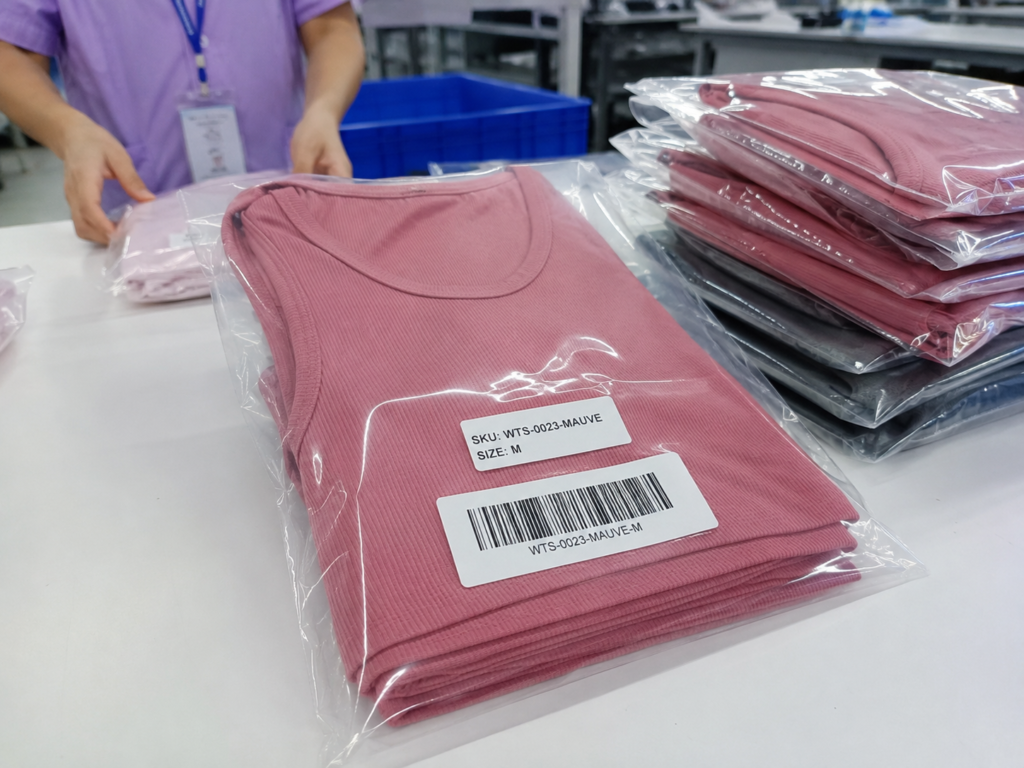
Main labels, size labels, care labels, country-of-origin information, hangtags, barcode stickers, SKU labels and color labels are checked against approved artwork and placement. Barcode files and SKU tables must match the packed style, color and size. Scan checks can be included when required by the warehouse guide.

Cartons and Packing

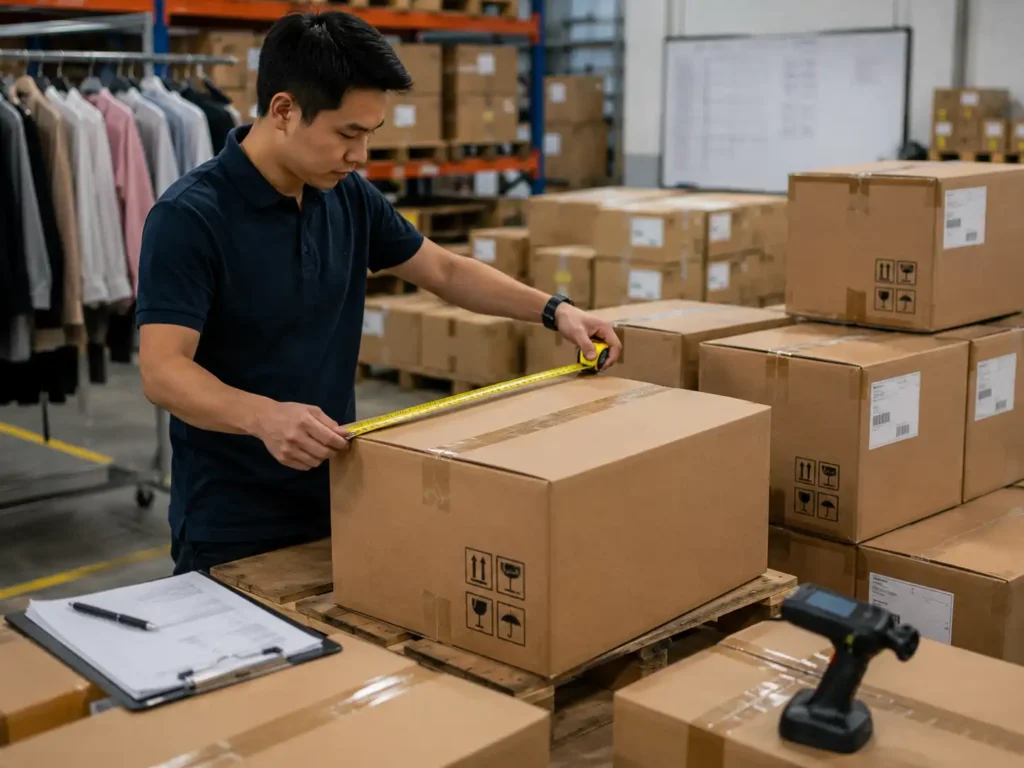
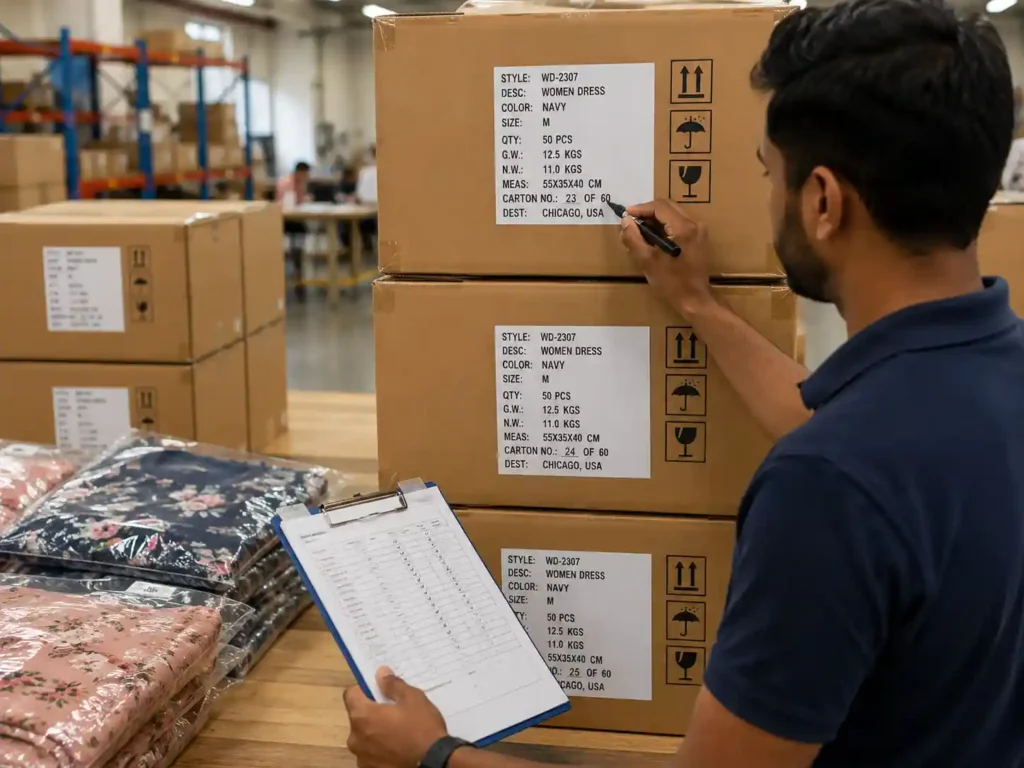
Folding, polybags, tissue, protective layers, size ratios, color ratios, carton marks, carton numbers, gross and net weight, carton dimensions and packing-list data are checked against the packing instruction. Satin, sequin, corset or embellished garments may require additional shape or surface protection during transit.

AQL, Client Inspection and Third-Party Coordination

Inspection requirements vary by brand, product and market. Jinfeng Apparel prepares the nominated order around the agreed sampling level, defect categories, measurement rules, packing status and inspection access rather than applying one fixed AQL statement to every program.

Inspection Plan Alignment

The inspection plan confirms when goods will be ready, which quantity is available, what packaging completion level is required, which defect classification applies, which measurements are checked and which AQL or sampling plan governs release. Critical, major and minor defect definitions follow the brand or agreed project standard. AQL is not automatically fixed at one number because product category, risk, retail policy and quality manual differ. The plan also clarifies whether visual, measurement, functional, label, barcode, packing and carton checks form part of the final decision. Open sample, material or document issues are closed before an inspector is asked to assess a supposedly finished order.

Client QC Access and Readiness

Brand QC personnel can request inspection support for the nominated factory and order. Preparation may include available quantity, carton status, approved sample, tech pack, measurement chart, packing instruction, PO or SKU list, inspection area and factory contact. When an inspection occurs during production, the available quantity and inspection objective are clarified so findings are interpreted correctly. When an inspection occurs before shipment, goods are prepared to the agreed completion level. The goal is not to stage an appearance for inspection; it is to make the actual production status, references and records accessible enough for a professional release decision.

Third-Party Inspection Coordination

Jinfeng Apparel can coordinate with a client-nominated inspection company or other agreed third party. Coordination covers factory location, contact person, booking information, order details, quantity, inspection date, available references, packing status and document preparation. The inspector remains independent and follows the client instruction. Any failed, held or conditional result is reviewed against the report, approved standard and affected goods. Corrective action, sorting, rework and reinspection are planned according to the issue rather than assuming a third-party report can be closed through explanation alone.

Release Records and Shipment Decision

A shipment decision considers the agreed inspection result, unresolved defects, measurement status, label and barcode accuracy, packing completion, carton information and any testing or document conditions. Final release may follow factory QC, brand QC, third-party inspection or a combination defined by the program. Jinfeng Apparel can prepare packing lists, commercial invoices, carton marks, shipment photos and related production or inspection records as required. No claim is made that every order is defect-free or automatically passes inspection; the value lies in a clear standard, visible findings, controlled corrections and an informed release decision.

Corrective Action Closes Quality Problems Properly

A credible quality system does not hide defects or promise perfection. It identifies affected goods, understands the cause, controls the correction, confirms the result and updates the process so the same problem is less likely to return.

Detect the Issue

The issue is described with enough detail to support action rather than using a general note such as bad sewing. Records may include style, color, size, lot, operation, defect location, photo, measurement or packing reference. Clear detection prevents unrelated units from being treated as if they share the same cause.

Isolate Affected Goods

Affected pieces, bundles, cartons or material lots are separated from accepted goods. Isolation protects already-approved stock and helps estimate the true scope. The hold status remains visible until a decision is made. Mixed goods are not returned to normal flow simply because a correction has been discussed.

Classify the Defect

The defect is classified according to the brand standard or agreed project categories. Classification considers safety, function, appearance, fit, labeling, packing and market impact. Consistent classification helps factory QC, brand QC and third parties reach comparable decisions and prevents serious issues from being downgraded informally.

Identify Root Cause

Root-cause review looks beyond the visible symptom. A twisted seam may come from cutting direction, feeding, pattern balance or operator method. Shade mismatch may come from mixed lots or incorrect bundling. Wrong barcodes may come from SKU data, printing, packing or carton control. The correction should address the source.

Correct and Rework

The approved correction defines what can be repaired, what must be replaced, what requires sorting and what cannot be accepted. Rework instructions consider possible secondary damage. Repairs to satin, mesh, sequins, lace, zippers or pressed surfaces require extra care because an aggressive correction can create a new visible defect.

Reinspect and Record

Corrected units are reinspected against the same standard that identified the problem. The record closes the issue only after the original defect and any secondary risk have been checked. Prevention actions, changed instructions or added checkpoints can be carried into remaining production and repeat orders where the finding has wider relevance.

Quality Consistency Across Multiple Production Units

Six owned factories and more than ten long-term satellite production partners provide product and capacity options. Quality governance must keep the nominated factory, approved standard and project records clear whenever more than one unit supports a collection.

Product-Based Allocation

Factories are selected according to product category, fabric, structure, workmanship risk, quantity and schedule. Satin, mesh, lace, sequin, bodycon, jumpsuit and resort products are not allocated solely by available capacity. The nominated production unit is confirmed for the style or program under review.

Controlled Handover

Final patterns, BOMs, material references, measurements, sewing instructions, labels, packing files and QC checkpoints are issued to the production unit in a controlled handover. A sample-room approval does not remain disconnected from the factory expected to reproduce it.

Physical Standard

The PP or Golden Sample provides a physical reference for appearance, structure, materials and workmanship. Where multiple units are involved, each relevant unit must receive or access the controlled standard and the same final files before production begins.

Unified Version Control

Styles, colors, sizes, sample versions and change status are tracked separately. Later changes are reflected in the documents used by the nominated unit. Informal messages do not replace the final production file because version confusion can create different results across lines or factories.

Style-Specific Checklists

QC checklists are adapted to the style risk rather than copied unchanged across the network. A satin dress checklist emphasizes shade, direction, snagging and pressing; a corset dress checklist emphasizes support, cups, boning and top-edge stability; a maxi dress checklist emphasizes balance and hem.

Repeat-Order Records

Pattern files, measurement charts, fabric references, color records, trim details, packing instructions, QC notes and Golden Sample references can be retained for repeat production. Fresh material, color and availability are reconfirmed, while previous records help reduce unnecessary redevelopment and inconsistent interpretation.

Compliance and Testing Support With Clear Boundaries

Large apparel programs often combine quality, social compliance, material claims, testing, labeling and export documentation. Each item is confirmed against the selected factory, supplier, certificate scope, order batch and destination requirement.

Quality Management

Jinfeng Apparel can describe ISO 9001-related quality management through requirement review, process control, inspection records, measurement checks, packing verification and pre-shipment review. Any certificate supplied must be checked for the issuing entity, applicable site, scope and current validity.

Audit Documentation

SMETA, Sedex, BSCI or other audit-related support can be reviewed according to the nominated factory and program requirement. Factory profiles, production information, QC processes, packing processes and available audit records can be prepared for client or third-party review where applicable.

Certified Fabric Resources

OEKO-TEX, GOTS, GRS, organic cotton or recycled-fabric resources can be sourced through the material network when required. Availability depends on fabric type, color, supplier batch, certificate scope, transaction-document needs, MOQ, price and lead time. No claim is made that every fabric automatically carries every certificate.

Third-Party Testing

Fabric or garment testing can be coordinated with SGS, Intertek, Bureau Veritas, ITS or another nominated laboratory. Test methods, sample quantity, cost, report timing and pass criteria are confirmed according to the intended market and brand standard before samples are submitted.

Labels and Market Files

Care labels, fiber content, size labels, country-of-origin information, barcodes, SKU labels and other market files can be prepared from client-approved data. Jinfeng Apparel supports production and placement, while final legal wording and market compliance remain subject to brand or specialist confirmation.

Export Documentation

Commercial invoices, packing lists, carton marks, shipment details, forwarder coordination and other agreed export information can be prepared for bulk delivery. Document content is checked against actual goods, quantities, cartons, trade terms and destination instructions to reduce warehouse and customs discrepancies.

Quality Records That Make Production Verifiable
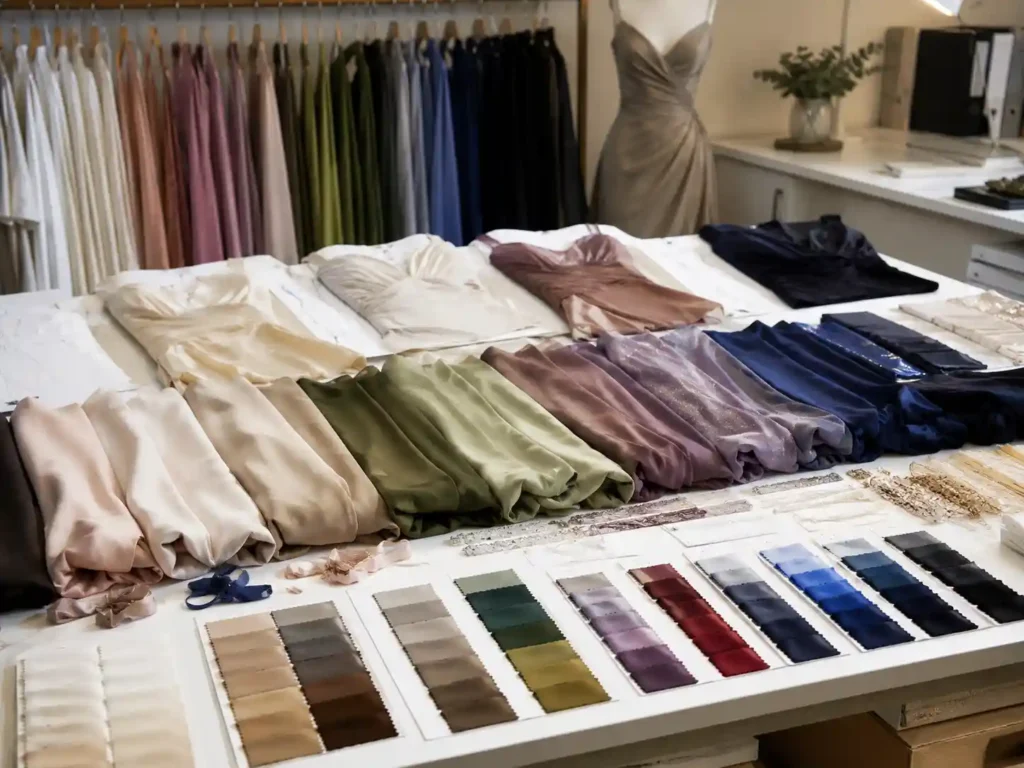
Professional quality teams need evidence connected to the actual order. Controlled, anonymized records can show how materials, samples, measurements, defects, rework, labels and cartons were handled without exposing brand names or unreleased designs.

Fabric Lot ID

Roll, lot or batch identification helps explain shade and material differences and supports controlled cutting. A record should link the incoming material to the relevant style, color and production group without exposing unrelated supplier information.
From Approved Sample to Bulk Production​

Approved Sample

The approved PP or Golden Sample provides a physical benchmark for appearance, construction, fit, materials and finishing. Sample version and approval status should remain clear so production and inspection teams do not compare goods with an outdated prototype.

Measurement Record

Measurement sheets show the size, POM, target, tolerance and result used for inspection. Records are meaningful only when measuring methods are aligned. They support trend review, client inspection and repeat-order comparison without relying on memory.

In-Line Inspection

In-line records can identify the operation, defect, quantity reviewed, correction and follow-up. The most useful evidence shows how a production finding changed the process, not merely a photograph of an inspector standing beside a line.

Defect Photo Record

Clear photos can show defect location, scale and product context while protecting confidential branding. Photos support classification, communication and reinspection, especially when quality personnel in different locations need to make a consistent decision.

Rework Verification

Rework evidence connects the original finding with the correction and reinspection result. The record should confirm that repaired units were checked again and that secondary risks, such as surface damage or measurement change, were considered.

Barcode Check

Barcode and SKU verification can compare the printed or applied label with the approved data and packed garment. Scan evidence may be included where required, reducing costly warehouse rejection caused by correct garments carrying incorrect retail information.

Carton Review

Carton marks, quantities, size or color ratios, carton numbers, weights, dimensions and packing-list information are checked before release. Photographs and records help confirm retail or ecommerce receiving requirements and support forwarder coordination.

Quality-Controlled Dress Programs for US Brands

The following anonymized programs show how multi-style orders can be organized around fabric risk, fit standards, PP approval, in-line control, packing accuracy and staged delivery without exposing brand identities or unreleased designs.

US Occasionwear Collection

Program profile: 14 satin, mesh and lace mini and midi dress styles; 26,400 total pieces; 6 colors; 5 sizes; regular monthly launch calendar; two delivery waves. The quality team supplied a measurement guide, defect categories, approved label files, barcode data and a final inspection instruction. Main risks included satin shade and luster direction, zipper rippling, mesh coverage, lace symmetry, lining comfort and consistent waist placement across the size range. Jinfeng Apparel organized style risk notes before sampling, converted fit comments into revised patterns and measurement charts, and locked fabric, trims, construction and packing through PP approval. Incoming material checks separated satin lots and reviewed mesh or lace surface condition. Cutting control focused on luster direction, lace pairing and bundle identification. First-piece and in-line checks concentrated on zipper flatness, neckline stability, lining attachment and waist measurement trends. Finished-garment review included pressing marks, surface damage, barcode accuracy and carton ratios. Production was planned within a 60-day window after PP and material readiness, with launch-critical SKUs prioritized in the first delivery wave. No shipment wave was released until the agreed inspection, corrective-action and packing records were closed.

Multi-Fabric Private Label Program

Program profile: 22 styles across satin, crepe, jersey, mesh and sequin dresses; 58,800 total pieces; 8 colors; 7 sizes including an extended-size group; three staged shipments. The brand quality and technical teams required separate measurement tolerances by POM, size-set review for selected fit-sensitive styles, third-party final inspection and warehouse-specific barcode and carton rules. Jinfeng Apparel allocated products by fabric and construction risk, while final patterns, BOMs, sample versions, label files and packing instructions were controlled by style. Sample development ranged from approximately 10-15 days for regular dresses to approximately 15-25 days for corset, sequin and complex mesh styles, subject to material availability. Bulk control included fabric-lot identification, first-piece approval, in-line review of recurring operations, finished measurements, pressing checks and SKU verification. A 78-day production and staged-dispatch plan began after the relevant PP approvals and material readiness. Findings from one early mesh neckline issue were isolated, the edge-stabilization method was adjusted, affected units were reworked and later output received an added checkpoint. Each shipment proceeded only after its own inspection and packing closeout rather than treating the full collection as one undifferentiated lot.

Download the Dress Supplier Quality Checklist

A structured checklist helps quality, technical and sourcing teams compare suppliers with the same questions before sample approval, factory nomination or production commitment. The file can also support an internal RFI or factory-review meeting.

Supplier Qualification Review

The first section covers factory identity, nominated production location, dress-category experience, product allocation, sample resources, pattern support, QC responsibilities, material control, subcontracting disclosure, inspection access, audit documents and repeat-order records. It helps distinguish a broad company presentation from the specific factory and team expected to handle the program. The review can be used before a sample request or expanded during a factory audit.

Dress Risk and Inspection Map

The second section covers satin, mesh, lace, sequin, bodycon, corset, maxi and printed-dress risks; sample approval; PP lock; POM and tolerance alignment; incoming, cutting, sewing, finished-garment and packing checks; AQL planning; defect classification; CAPA; barcode and carton verification. Teams can edit the checklist according to their own quality manual and market requirements before sending it with an RFQ or inspection brief.

Quality Control Frequently Asked Questions

Yes. Jinfeng Apparel can review a brand quality manual and translate relevant requirements into sample comments, production instructions, measurement checks, defect decisions, packing controls and inspection preparation. Conflicts or missing details are raised before production so the factory team does not rely on assumptions.
Yes. AQL level, sampling plan and defect categories can follow the brand or project requirement. AQL is not fixed at one universal number. The inspection plan should confirm available quantity, packing status, critical, major and minor definitions, measurement checks and release authority.
Consistency is supported through the approved PP Sample, Golden Sample, final pattern, BOM, fabric and trim approvals, measurement chart, sewing instruction, QC checklist and packing instruction. Later design or material changes are reviewed and documented before the production standard is updated.
Tolerance is confirmed by point of measurement and measuring method. Samples are checked against the size chart, and pattern corrections are recorded. First pieces, in-line output and selected finished garments can be measured according to the agreed plan. Repeated trends trigger process review rather than isolated rework only.
Yes. In-line inspection can cover stitch and seam quality, symmetry, zipper flatness, strap length, gathers, lace joins, lining, slit height, cups, boning, label position and key measurements. Style-specific risks are added according to fabric and construction.
Yes, subject to project scheduling and factory coordination. Jinfeng Apparel can prepare the nominated factory, order status, available quantity, approved references, inspection area and relevant documents. The timing and scope should be agreed in advance so the inspection reflects the intended production stage.
Yes. Coordination can include factory contact, booking details, order quantity, packing status, approved samples, measurement charts and inspection requirements. The third party remains independent and follows the client instruction. Failed or held findings require corrective action and, when needed, reinspection.
The issue is identified, affected goods are isolated, the defect is classified, root cause is reviewed, a correction is approved, rework or sorting is completed, and corrected units are reinspected. Repeated problems can lead to wider inspection or added checkpoints for remaining production.
Pattern files, measurement charts, BOMs, fabric references, color records, trim details, packing instructions, QC notes and Golden Sample references can be retained for repeat production. Fresh material availability, color and order requirements are reconfirmed before a repeat order starts.
Yes. Jinfeng Apparel supports NDA-based cooperation and protects tech packs, patterns, samples, measurements, trims, private-label files, barcodes, order information and unreleased designs. Public case material is anonymized unless written authorization permits brand disclosure.

Send Your Quality Standards for Review

Quality-control cooperation can begin before a formal quotation or sample order. Send the available style and quality files so Kelly and the development team can review dress structure, fabric direction, fit sensitivity, material risks, sample route, inspection checkpoints, packing requirements and the information still needed for a controlled production plan. Useful files include a tech pack, reference image, original sample notes, size chart, POM guide, measurement tolerance, defect classification, AQL instruction, approved label artwork, barcode or SKU table, packing guide, testing requirement, target quantity and launch or warehouse date. Regular first samples commonly require about 10-15 days, while simple styles may be about 7-10 days and complex corset, lace, mesh, sequin or evening styles commonly require about 15-25 days, subject to material and trim availability. Bulk production timing is confirmed after PP approval, material readiness, quantity, color, size, packing, inspection and shipment requirements are aligned.
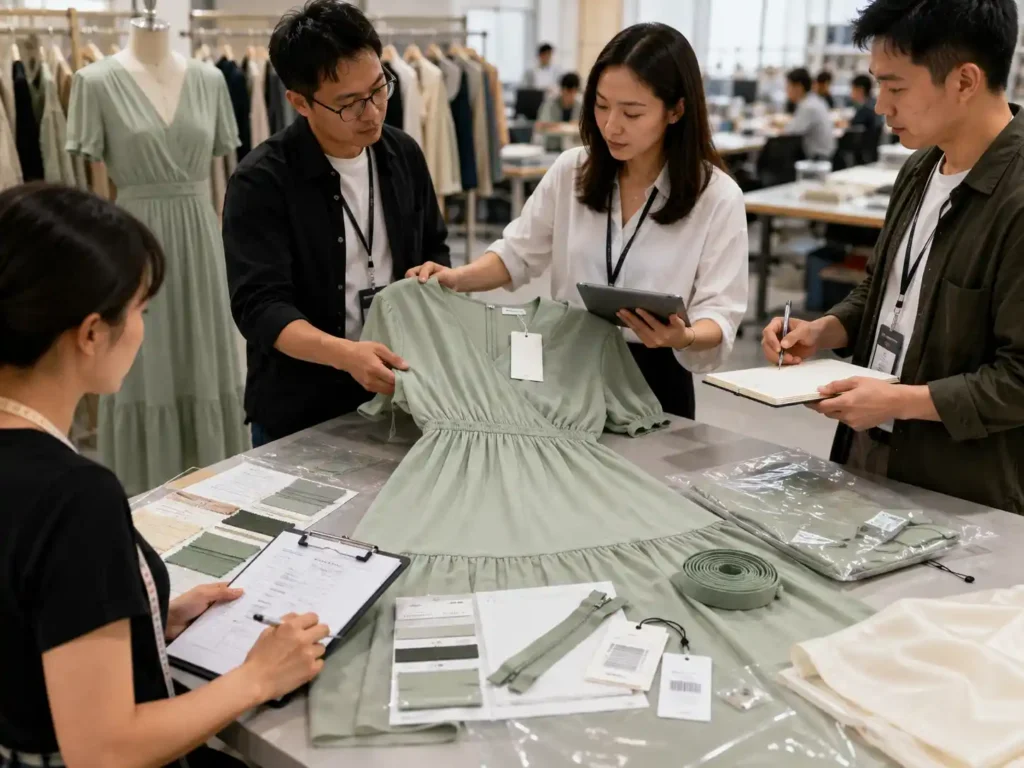

Tell Us About Your Dress Project

Share your product details, estimated quantity and development requirements. Our team will review your project and provide practical OEM/ODM production feedback.

Premium Women’s Apparel Production for Fashion Brands

From dress sample development to bulk production, JF Apparel supports fashion brands with confidential OEM/ODM manufacturing, reliable quality control and scalable production support.

START YOUR DRESS PROJECT

Ready to Develop Your Next Dress Collection?

Share your design concept, product requirements or sourcing plans with our team. We’ll review your project and provide practical feedback on development, materials, MOQ and production.

7-10 Days

Sample Development

200 PCS

Starting MOQ

Fast Response

Professional Follow-Up