
Dress Manufacturer for Product-Led DTC Brands
Custom dress development built around differentiated products, reliable fit, repeatable bulk quality and long-term collection growth.
- Built for 10-30 style collection programs and brand orders commonly totaling 20,000-80,000 garments.
- 2 sample rooms, 7+ senior pattern makers and 20+ sample machinists for first samples, fit samples, photo samples and PP approvals.
- MOQ starts from 200 pcs per style/color, subject to fabric, color, trims, construction and production planning.
- From product brief and fit review to bulk production, private-label packing, repeat orders and multi-batch delivery.
Built for Serious Dress Development
Since 2008
6 Owned Factories
10+ Production Partners
100,000+ Monthly Capacity
15+ QC Inspectors
12+ Merchandisers
Is Jinfeng the Right Manufacturing Fit?
Best Fit For
Not Designed For
The factory system is not positioned for ready-stock buying, one-piece fulfillment, dropshipping, no-MOQ requests or 1-50 piece testing. Projects driven only by the lowest unit price are also a poor match because fabric performance, pattern work, construction, finishing, quality control and packing all affect the delivered garment. MOQ starts from 200 pcs per style/color, with higher requirements possible for custom colors, exclusive prints, special trims or fabric-mill minimums.
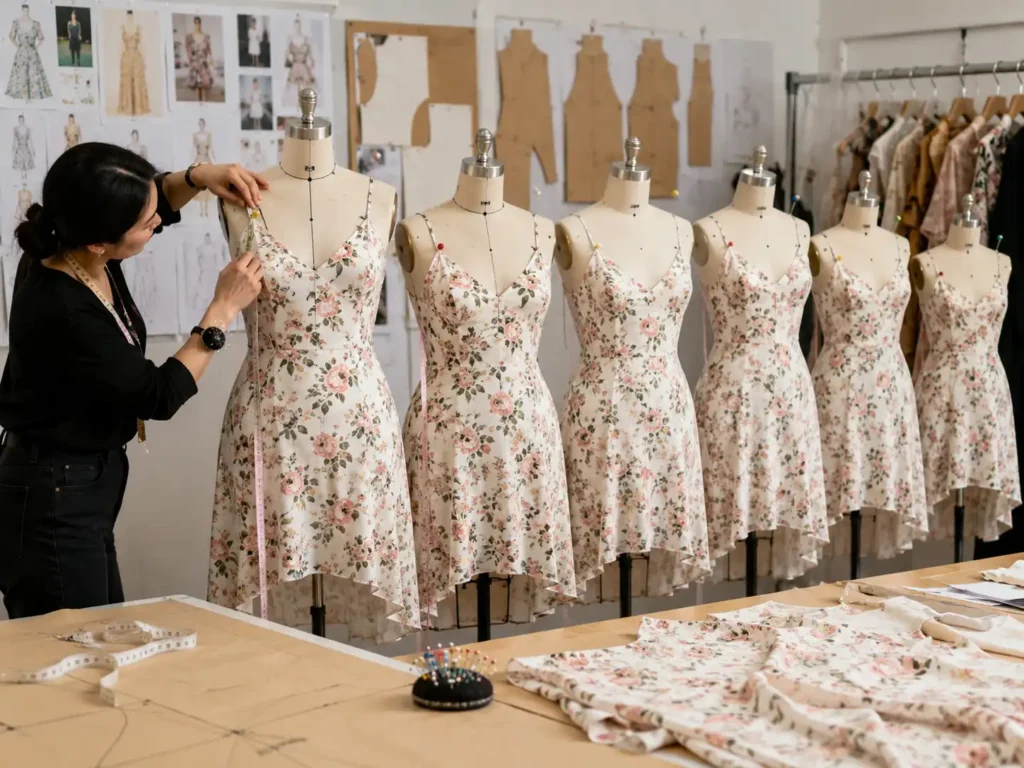
What Product-Led DTC Brands Need
Distinctive Products
Reliable Fit
Photo-Ready Samples
Repeatable Bulk
Feedback-Based Revision
Hero Product Growth
Where Strong Dress Concepts Break Down
Sample-to-Bulk Drift
Fit Becomes Returns
Reorders Lose Identity
From Product Insight to First Launch
A defined path prevents development from turning into disconnected messages, untracked revisions and late production decisions. Each stage creates an approval or record that supports the next one.
Product Brief and Commercial Goal
The project begins with a tech pack, original sample, sketch, reference image or line sheet.
The team also reviews target market, intended retail position, launch date, expected quantity, color plan, size range and private-label requirements.
A hero style intended for long-term replenishment is assessed differently from a seasonal fashion statement. Core fit, repeatability and material continuity carry greater weight for a permanent product.
Structure, Fabric and Cost Review
Pattern proportion, internal support, lining, closure, stretch direction, seam placement and finishing are reviewed before sample cutting. Fabric options are compared by weight, hand feel, stretch, recovery, drape, opacity, width, shrinkage, color availability, MOQ and lead time.
Potential cost conflicts are identified early. Construction simplification, fabric substitution, trim adjustment, color consolidation and packaging choices can be discussed before the sample becomes expensive to change.
Pattern, Sample and Fit Approval
Pattern development converts the design into measurable garment geometry. First sample, fit sample and revised sample stages address appearance, body proportion, movement and construction. Major revisions are recorded instead of remaining only in messages.
Once fabric, trims, measurements, workmanship, labeling and packing are confirmed, the project moves toward PP sample approval and Golden Sample sealing.
Bulk Launch and Delivery Preparation
Production planning assigns the style to a suitable unit according to fabric, silhouette, construction complexity, quantity and timing. Incoming materials, cutting, in-line sewing, measurements, garment appearance and packing are checked through defined control points.
Commercial invoice, packing list, carton information, style-color-size breakdown and appointed-forwarder requirements are prepared around the agreed shipping terms.
Dress Categories Built for Product Growth
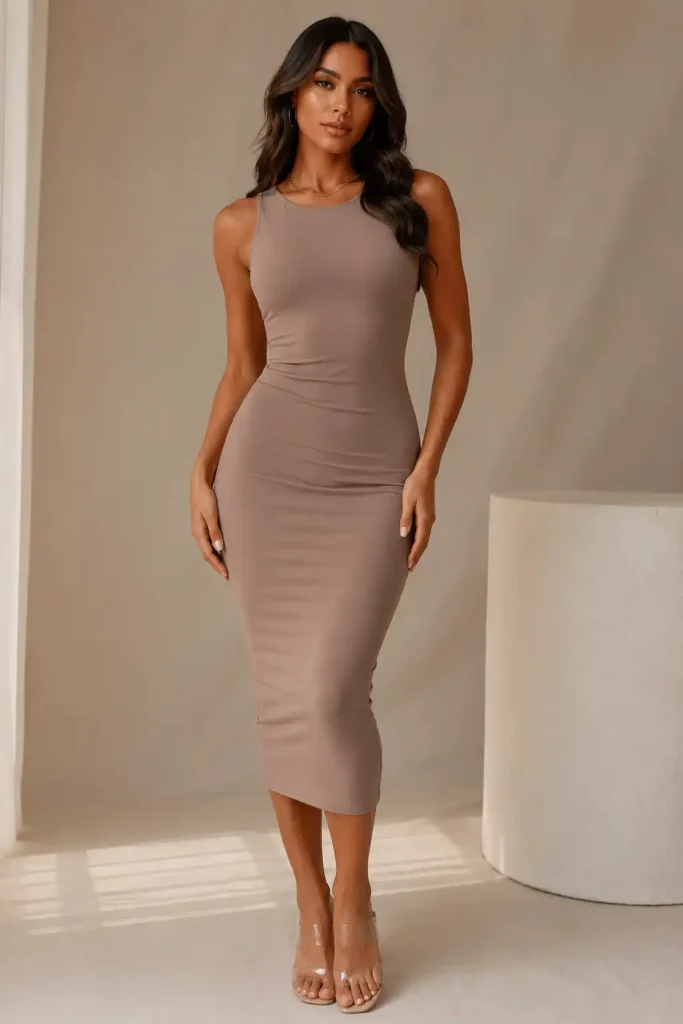
Bodycon Dresses
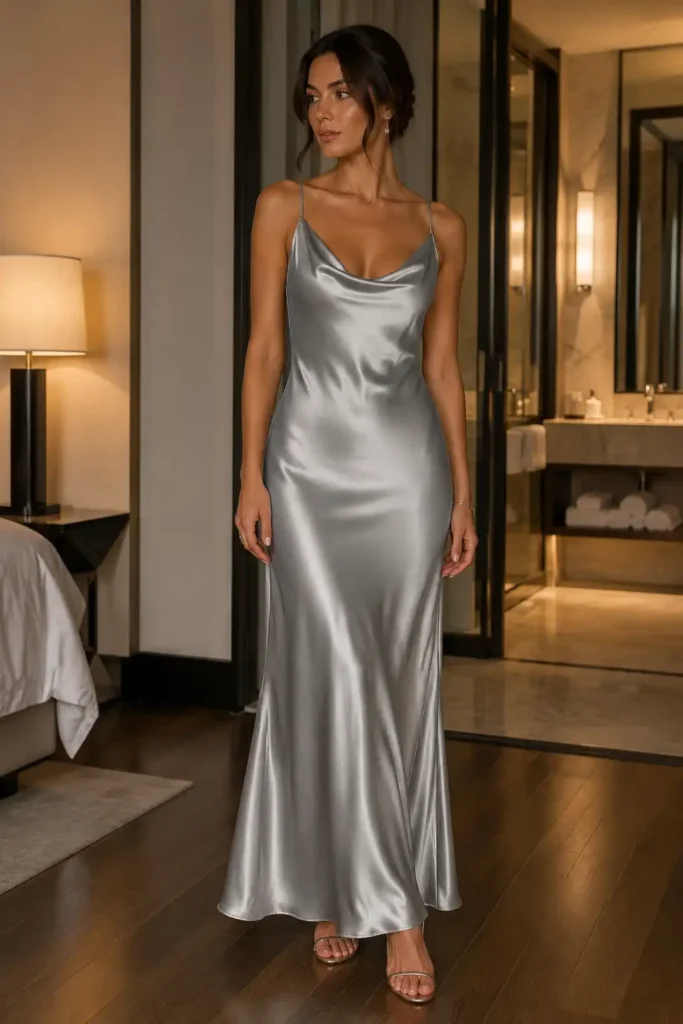
Satin Slip Dresses

Corset Dresses

Mesh and Cut-Out

Party and Occasion

Mini Going-Out
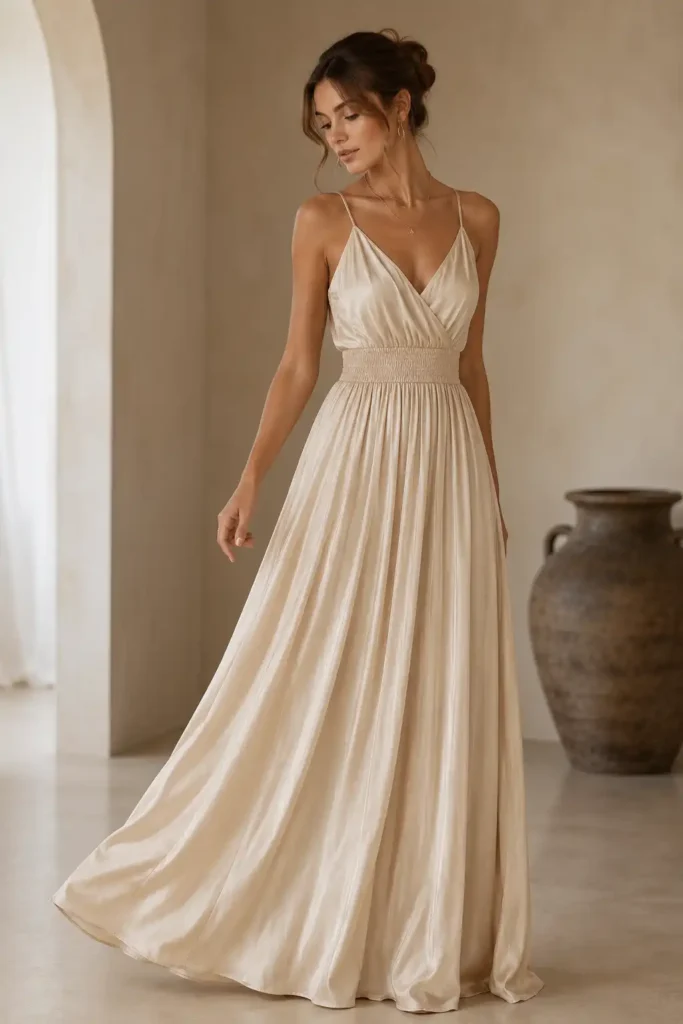
Resort and Maxi

Sets and Jumpsuits
Match Dress Concepts With Fabrics
Fabric selection determines drape, support, opacity, stretch, finish, cost and production risk. The strongest option is not always the most expensive one; it is the material that supports the intended silhouette and remains controllable in bulk.
Dress Direction | Recommended Fabric Direction | Main Manufacturing Controls | Use Carefully |
Bodycon | Jersey, ponte, power mesh, stretch satin | Stretch, recovery, negative ease, side seams, wash stability | Low-recovery knits or unstable stretch |
Corset | Structured satin, crepe, stable woven, lace overlay | Cup shape, boning, lining, support, seam symmetry | Very soft fabric without support |
Slip | Satin, crepe, lightweight woven | Grain, bias growth, straps, neckline, pressing, hem balance | Very shiny fabric with weak snag resistance |
Mesh | Stretch mesh, power mesh, layered mesh | Transparency, lining, stretch direction, hole prevention | Open fragile mesh without support |
Lace Occasion | Lace, lace overlay, stable lining | Pattern placement, joining, edges, holes, lining color | Large-repeat lace without placement plan |
Sequin Party | Sequin mesh, embellished woven | Sequin loss, skin comfort, seam clearing, zipper, packing | Sharp or heavy sequin without testing |
Resort Maxi | Rayon, chiffon, linen blend, printed woven | Shrinkage, print direction, drape, hem, packing | High-shrinkage fabric without testing |
Structured Midi | Crepe, suiting, ponte, stable woven | Waistline, zipper flatness, panel shape, pressing | Overly soft fabric for sharp structure |
Fit Control That Protects Retention
Fit-sensitive dresses need a documented relationship between the brand size chart, base-size approval, grade rules, fabric behavior and garment construction. Jinfeng supports US, UK, EU, AU and alpha-size systems based on supplied standards rather than forcing a universal block.
Bust, Cup and Neckline Stability
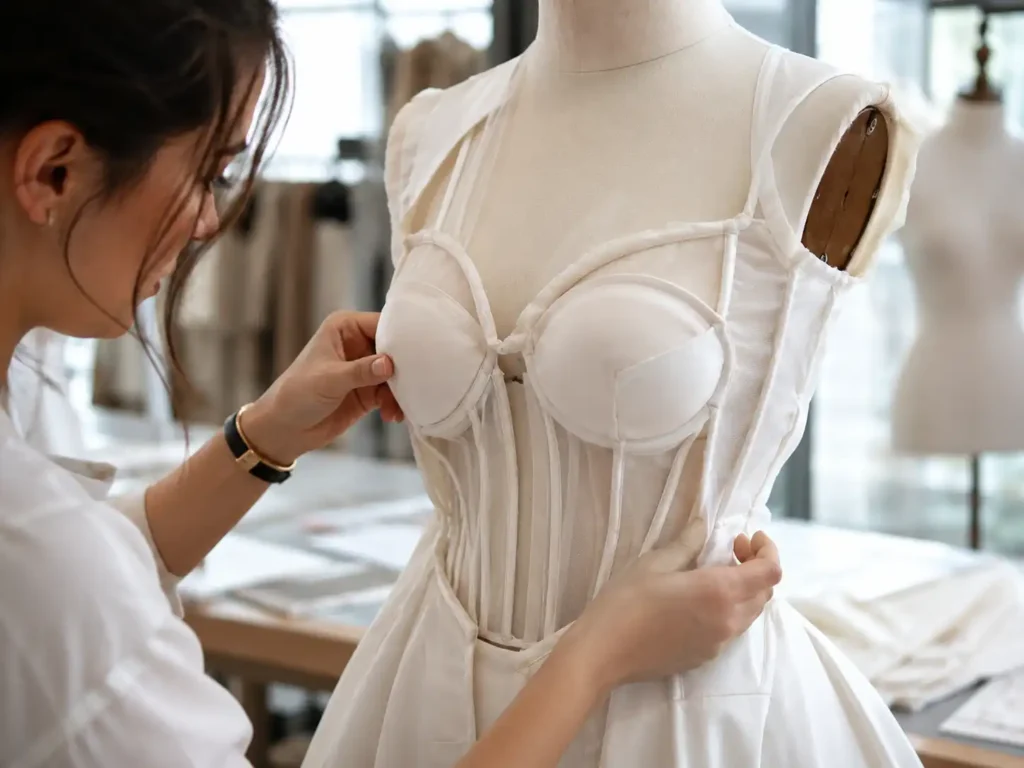
Bust circumference alone does not define upper-body fit. Cup position, neckline depth, armhole shape, under-bust level, lining coverage and support materials influence security and appearance. Strapless, halter, corset and deep-V styles require additional attention to anti-slip structures, neck pressure, bra cups, boning and closure placement.
Fit review uses front, side and back views plus movement feedback. Changes are transferred to the pattern and measurement chart so the solution can be graded and inspected in bulk.

Waist, Hip and Silhouette Balance
A dress may match the flat measurements yet still look wrong when waist placement, hip shape and fabric stretch are not aligned. Bodycon and jersey products require stretch-and-recovery assessment; woven occasion styles need appropriate ease and seam shaping.
Side seams, darts, panel lines, ruching and zipper tension are reviewed together. The aim is a controlled silhouette across the size range rather than a single sample that only fits one model.

Length, Slit and Movement
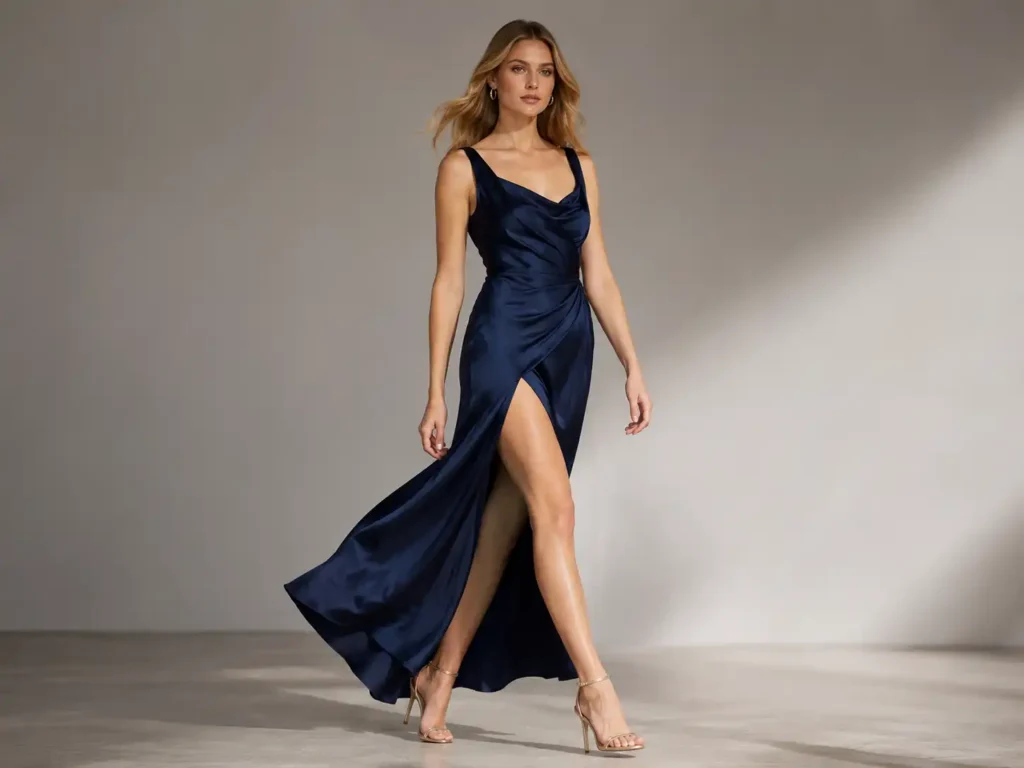
Mini, midi and maxi styles carry different movement risks. Front and back length can separate when the hip shape is not accommodated. Slit height changes during walking, sitting and stair movement. Maxi hems can become uneven through bias growth or fabric relaxation.
Key measurements may include high-point shoulder length, center-front and center-back length, slit opening, hem width and strap length. Tolerances can be aligned with the brand quality manual.

Grading and Market Standards
Jinfeng develops from the supplied base size, grade rules and fit preference. Alpha sizes such as XS-XL, numeric US/UK/EU/AU systems, extended sizes, plus-size, petite or tall requirements are assessed by project.
Grade increments are reviewed against fabric stretch, construction and style category. A strapless corset dress cannot use the same grading assumptions as a loose rayon maxi dress.
Design Details Engineered for Bulk
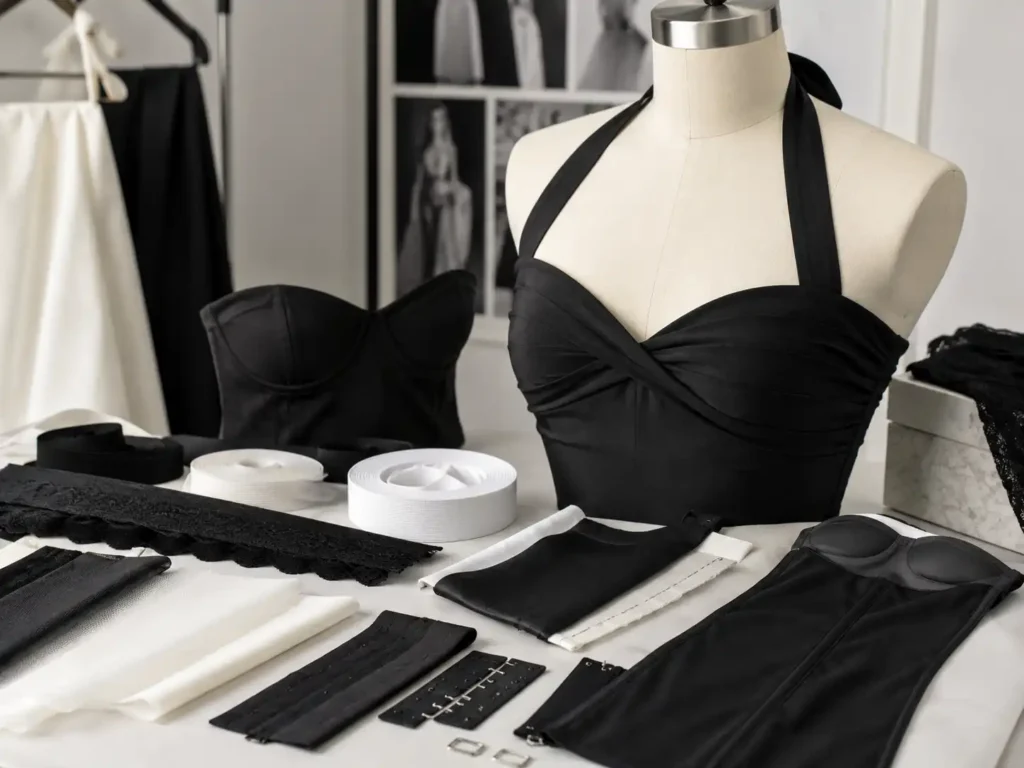
Small visual details often carry most of the brand identity, yet each one introduces a measurable construction and QC requirement. Development protects the design while removing avoidable production instability.

Ruching and Draping

Boning and Cups

Zippers and Closures

Linings and Coverage
Straps and Hardware
Hems and Finishing
Sample Stages and Planning Windows
Sample timing depends on fabric availability, custom colors, trims, pattern complexity, revision scope and approval speed. The ranges below are planning references after the required materials and files are available, not fixed promises for every product.
Stage | Main Output | Typical Planning Range | Key Variables |
Initial Project Review | Feasibility, risk list, sample path | 1-3 working days | File completeness, style count, response speed |
Fabric and Trim Sourcing | Material options and approvals | 3-15 working days | Stock, custom color, special trims, courier time |
First Sample | Initial garment for structure and fit review | 7-15 working days after materials are ready | Pattern complexity, fabric behavior, workmanship |
Revised Sample | Updated fit, fabric or construction | 5-10 working days | Revision scope, replacement materials, re-patterning |
PP / Golden Sample | Final bulk production standard | 5-12 working days | Final trims, labels, packing, approval cycle |
Bulk Production | Cutting, sewing, finishing, QC and packing | 25-45 days after PP approval | Quantity, style count, complexity, peak season, inspection |
Delivery Planning | Shipment booking and export documents | Confirmed by route and destination | Air/sea/express/DDP terms, warehouse window, customs |
Multi-Style Sampling Without Lost Details
Group by Development Logic
Prioritize Commercial Styles
Track Every Revision
Protect Margin Without Weakening the Product
Cost Drivers
Controlled Optimization
Quotation Discipline
Bulk Production Planned by Product Risk
Production capacity is useful only when styles are assigned to units that understand the fabric and construction. Jinfeng operates 6 owned women’s fashion factories, 10+ long-term satellite partners, 18+ sewing lines and 6+ flexible lines within a coordinated production system.

Product-Based Factory Allocation
High-requirement woven samples and complex first developments are directed toward teams experienced in satin, chiffon, lace, mesh and structured dresses. Party and occasion products require different skills from jersey bodycon styles, resort dresses, matching sets or repeat-order basics.
Allocation considers fabric behavior, silhouette, construction steps, quantity, workmanship level, launch timing and quality requirements. Not every factory is treated as suitable for every style.

Controlled Capacity Expansion
Long-term satellite partners support planned overflow, regular styles, repeat batches and seasonal capacity. They are not presented as temporary unknown subcontractors. Production files, approved samples, QC requirements, label standards and packing instructions remain under Jinfeng project control.
Complex first-time styles stay with the most appropriate development and production unit before any wider allocation is considered.

Pre-Production Alignment
Before cutting, the team confirms the approved sample version, fabric and trim status, measurement chart, construction points, color and size breakdown, label placement, packing method and required inspection standard.
Potential risks are translated into line-specific checkpoints. A satin slip dress may prioritize grain, seam tension and pressing; a mesh bodycon dress may prioritize stretch, hole prevention, lining and side-seam balance.
Progress and Exception Management
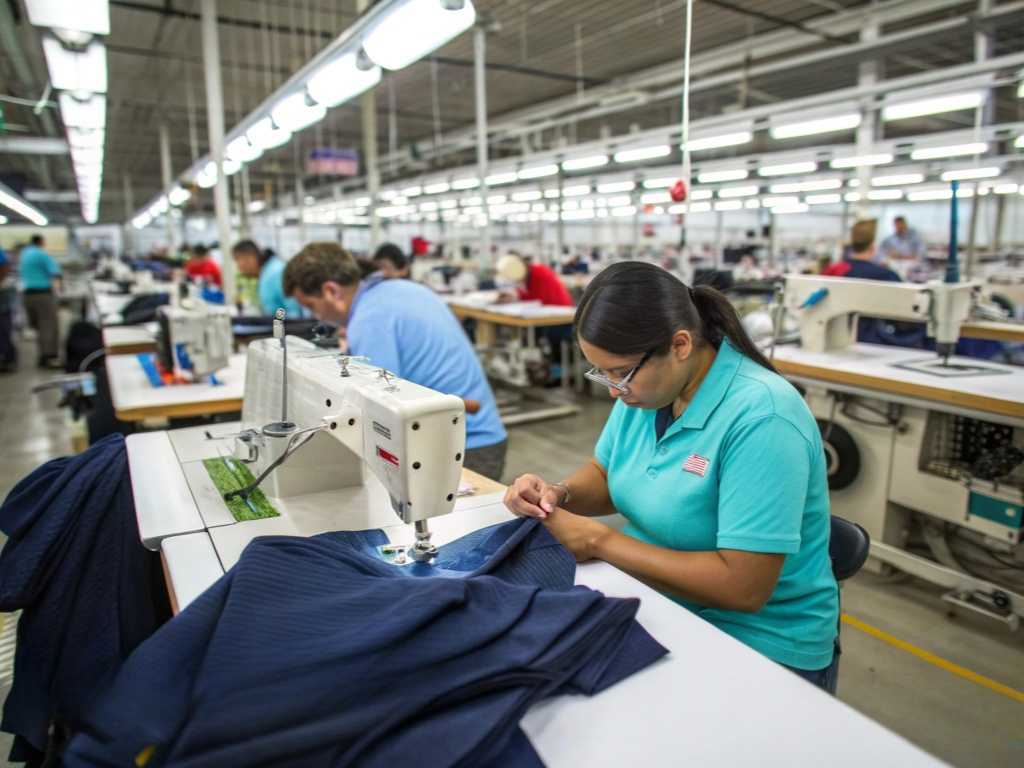
Merchandising, production, QC, finishing and packing functions coordinate schedule updates and issue handling. Deviations in fabric delivery, color, measurements, workmanship or packaging are raised for action rather than hidden until final inspection.
Rework and reinspection are documented when required, helping the approved standard remain visible throughout production.
Quality Control From Fabric to Packing
Incoming Materials
Cutting Control
In-Line Sewing
Measurement Review
Garment Inspection
Packing Verification
Keep Photo Samples and Bulk Aligned
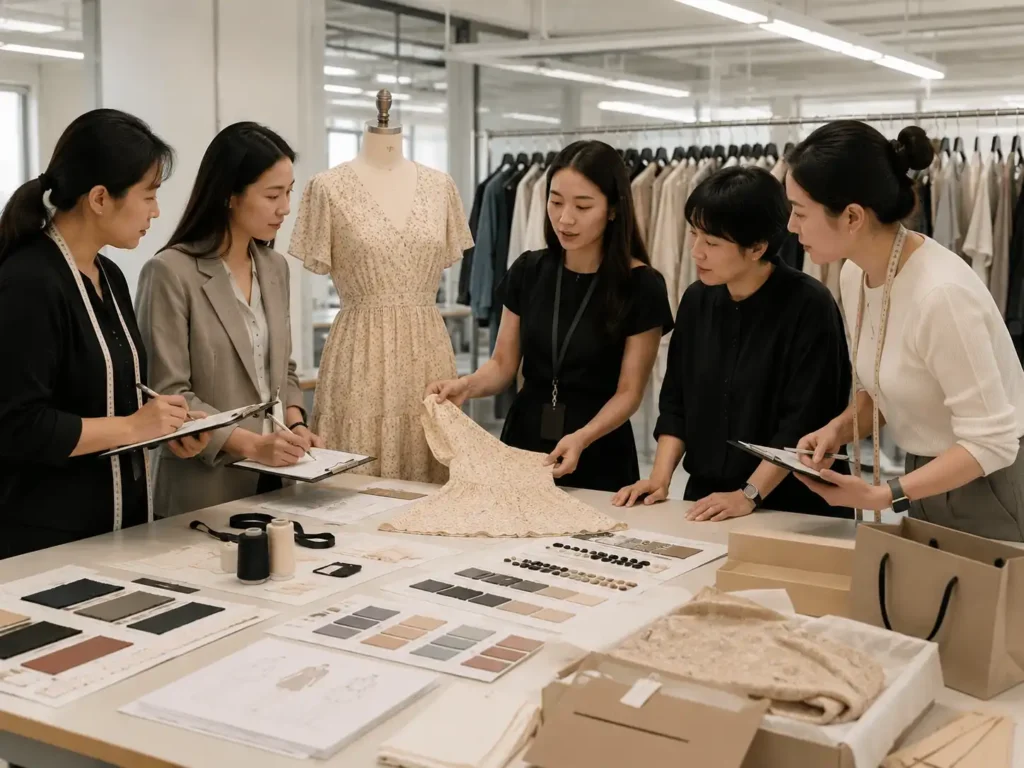
For an online fashion brand, the product image establishes an expectation before the garment arrives. The photo sample, PP sample, bulk fabric and production method therefore need a controlled relationship.
Separate Visual Approval From Production Approval
A photo sample may be selected for the best drape, fit and camera appearance, but production approval must also confirm manufacturability. Fabric source, color, lining, trims, construction, seam method, measurements, pressing and packing need separate written confirmation.
When the photography sample uses temporary material or hand-corrected details, those differences are recorded rather than assumed to represent bulk.

Convert Comments Into Files
Approved revisions update the pattern, size chart, BOM, fabric record, trim record, sewing instruction, QC checklist and packing instruction.
The production team receives a controlled version instead of screenshots and informal comments.
Version naming and approval status reduce the risk of an old sample comment reappearing after a newer correction.

Use PP and Golden Standards
The PP sample confirms the final combination of fit, fabric, trims, construction and packing before bulk. A Golden Sample or sealed approved reference supports production and inspection comparison.
Material-batch differences, new colors and replacement trims still require review even when the silhouette has already been approved.

Protect the Unboxing Result
Pressing, folding, polybag size and carton pressure affect how satin, lace, sequin and structured dresses arrive. Packing is therefore part of product presentation, not an afterthought.
Fold lines, crushed cups, snagging surfaces and hardware abrasion can be reduced through product-specific packing instructions.
Turn Market Feedback Into Better Product
Collect Structured Evidence
Classify the Root Cause
Update the Product Standard
Validate Before Reorder
Build Hero Styles Into Repeat Programs
Preserve Core Pattern
Recall Material Records
Protect Golden Details
Expand Color Carefully
Extend the Silhouette
Plan Multi-Batch Delivery
Private Label Ready for Ecommerce Operations
Brand Labels
Hangtags and Inserts
Barcode and SKU
Polybags and Folding
Cartons and Marks
Shipping Documents
Product-Led DTC Dress Manufacturing Case Studies
Product-led DTC brands grow through products that attract attention, deliver reliable fit, receive positive customer feedback and continue generating sales after launch. Jinfeng Apparel supports brands from product concept review and sampling to bulk production, repeat orders and collection expansion.

Case Study 1: Developing a Hero Dress Product for a Growing DTC Brand
A growing DTC womenswear brand wanted to create a signature dress that could become a core online sales product.
The brand focused on:
- Strong visual identity
- Social media promotion
- High conversion product pages
- Repeat seasonal demand
The collection included:
- Satin slip dresses
- Bodycon mini dresses
- Corset-inspired styles
Program scope:
- 12 styles
- 28,000 pieces
- Multiple colorways
- XS-XL size range
- Private-label packaging
Product Challenge
The brand had strong creative direction but needed manufacturing support to make the concept commercially viable.
Main challenges:
Visual Impact
The product needed:
- Strong silhouette
- Premium fabric appearance
- Photography-ready finishing
Commercial Repeatability
The style also required:
- Stable fit
- Reliable sizing
- Repeat production capability
Jinfeng Solution
Jinfeng developed the product through a structured process.
Product Review
Analyzed:
- Silhouette
- Fabric direction
- Target customer
- Price positioning
- Production feasibility
Result
The brand achieved:
- Signature dress styles ready for launch
- Stable online presentation
- Repeatable production standards
- Future color extension capability
The successful styles became foundation products for the brand.

Case Study 2: Improving Product Performance Through Customer Feedback
A DTC fashion brand had several popular dress styles but received repeated customer feedback regarding fit and wearing experience.
Products included:
- Bodycon dresses
- Mesh dresses
- Strapless occasion dresses
- Stretch satin styles
Product Challenge
Customer feedback showed several recurring issues:
Fit Complaints
Including:
- Straps slipping
- Tight armholes
- Waist position problems
- Different sizing between colors
Material Issues
Including:
- Reduced stretch recovery
- Transparency concerns
- Different fabric feel between batches
Jinfeng Solution
Jinfeng converted customer feedback into production improvements.
Feedback Analysis
Reviewed:
- Return reasons
- Customer comments
- Size exchange data
- Product photos
Technical Adjustment
Updated:
- Pattern measurements
- Stretch allowance
- Strap length
- Lining coverage
- Fabric selection
Revised Production Standard
Updated:
- Pattern files
- Size chart
- BOM
- Sewing instructions
- QC points
Result
The brand achieved:
- Improved customer wearing experience
- More consistent sizing
- Reduced repeat complaints
- Stronger product reviews
The improved styles continued into future collections.
Case Study 3: Expanding Bestseller Dresses Into a Full Product Line
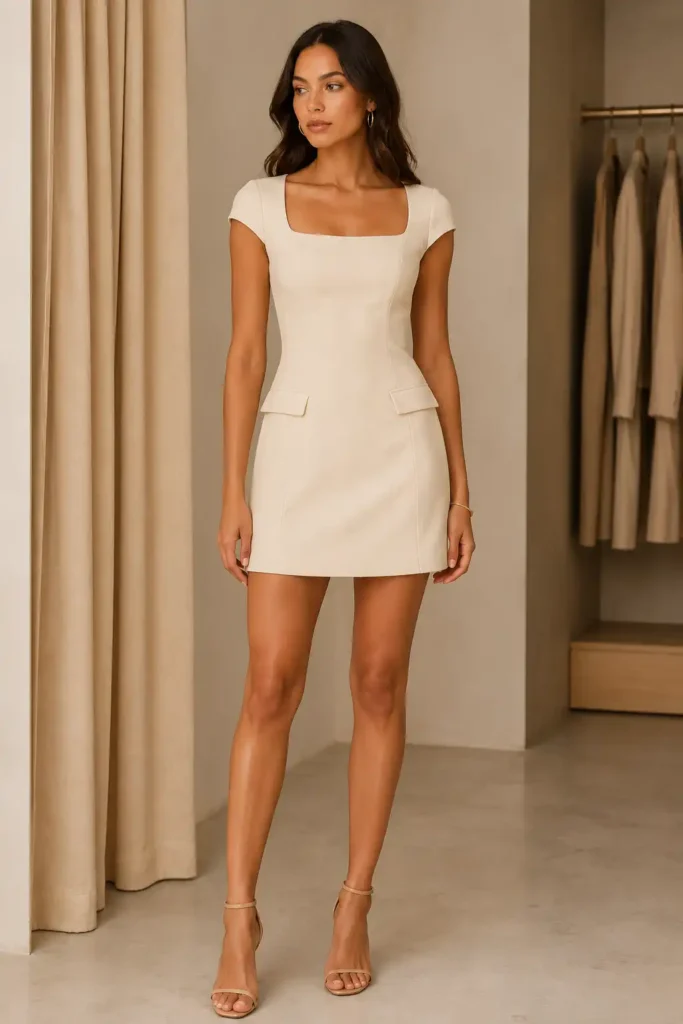
A successful DTC brand wanted to expand several bestselling dresses into a wider collection.
The goal was:
- Increase average order value
- Build seasonal collections
- Create related products
Original bestseller:
- Satin mini dress
Expansion included:
- Midi version
- New colors
- Matching skirt
- Coordinated top
- Resort variation
Product Challenge
The brand needed to expand without losing the original product identity.
Main risks:
Fit Drift
Changes in:
- Length
- Fabric
- Construction
could affect the original silhouette.
Brand Consistency
New products needed to maintain:
- Same design language
- Same customer expectation
- Same quality standard
Jinfeng Solution
Jinfeng created a controlled product extension process.
Existing Product Analysis
Reviewed:
- Original pattern
- Fit standard
- Fabric records
- Customer feedback
New Product Development
Controlled:
- Updated patterns
- New fabric options
- Revised measurements
- Related silhouettes
Result
The brand successfully expanded:
- Bestseller styles
- Seasonal colors
- Related categories
- Higher-value collections
The original hero product became the foundation of a broader product ecosystem.
Compliance Support and Brand Protection
Project-Based Compliance
Material and Testing
NDA and Design Security
Frequently Asked Questions
Yes. Development can begin from reference images, sketches, original garments, line sheets or tech packs. A reference image is reviewed for structure, fabric direction, fit risk, trims, construction and likely bulk challenges before a sample plan is proposed.
MOQ starts from 200 pcs per style/color. Fabric availability, custom colors, exclusive prints, special trims, complex construction, packing and production timing can increase the requirement. A total collection quantity cannot automatically be divided into many under-MOQ styles or colors.
US, UK, EU, AU, alpha sizes such as XS-XL, extended sizes, plus-size, petite and tall requirements can be evaluated. Development follows the supplied size chart, base size, grade rules, fabric behavior, target market and fit preference.
Straightforward first samples are commonly planned around 7-15 working days after required fabric and trims are ready. Corset structures, custom colors, lace placement, sequin work, special trims or major revisions need separate timing. Approval response time also affects the schedule.
Many commercial dress programs are planned around 25-45 days after PP approval and material readiness. Quantity, number of styles, fabric, construction, private-label packing, inspection and peak-season capacity can change the schedule. A project timeline is confirmed before production.
Yes. Photo-ready samples can be developed for campaign and product-detail photography. Visual approval and production approval are managed carefully so temporary material, hand-corrected details or unconfirmed construction do not become an unclear bulk standard.
Yes. Structured return reasons, reviews, fit photographs and support comments can be classified by pattern, measurement, fabric, trim, workmanship or packing cause. Approved corrections are transferred into updated files and revised samples before the next order.
Repeat production uses historical patterns, measurements, Golden Sample references, fabric and trim records, labels, packing instructions and previous QC notes. Current fabric batches, colors, trims, prices and delivery conditions are still reconfirmed.
Yes. Multi-style collections can be managed by fabric group, silhouette, construction, priority and launch timing. Each style/color still follows its applicable MOQ and approval requirements. A line sheet and quantity breakdown help create a realistic plan.
Yes. Woven labels, care labels, size labels, hangtags, barcodes, SKU stickers, polybags, carton marks and packing documents can be coordinated. Artwork, content, placement, scan requirements and warehouse instructions must be approved before bulk packing.
Relevant factory, material, testing and export documents can be reviewed by project. Availability depends on the actual production unit, fabric supplier, batch, color, certificate validity and requested market. No blanket certification claim is made for every style.
Yes. NDA-based cooperation is supported. Client names, tech packs, samples, patterns, labels, packaging, quantities, prices and unreleased designs are not published without authorization. Anonymous case information is used for capability explanation.

Start a Product-Led Dress Program
Send the files currently available for your collection, hero style, supplier transfer or repeat-order program. Kelly will coordinate an initial review with the relevant development, fabric, pattern, production and QC teams so the response addresses manufacturing feasibility rather than a generic estimate.
The review covers product structure, fabric behavior, fit risk, trim requirements, MOQ per style/color, sample path, private-label work, expected order scale and delivery window. For a 10-30 style line, identify priority styles, campaign dates and planned total volume so commercially important samples can move first.
An early assessment can outline missing information and likely production risks; final bulk pricing and timing are confirmed after fabric, trims, construction, size range, color breakdown, quality standard, packaging and shipping terms are sufficiently defined. NDA-based cooperation protects unpublished designs, tech packs, patterns, quantities and label files.
- Reference image, tech pack, original sample or line sheet
- Target quantity per style/color and expected total program volume
- Fabric preference, color plan and required size range
- Fit standard, quality manual or inspection requirement
- Private-label, barcode, SKU and packaging files
- Target launch date, delivery window and shipping destination


