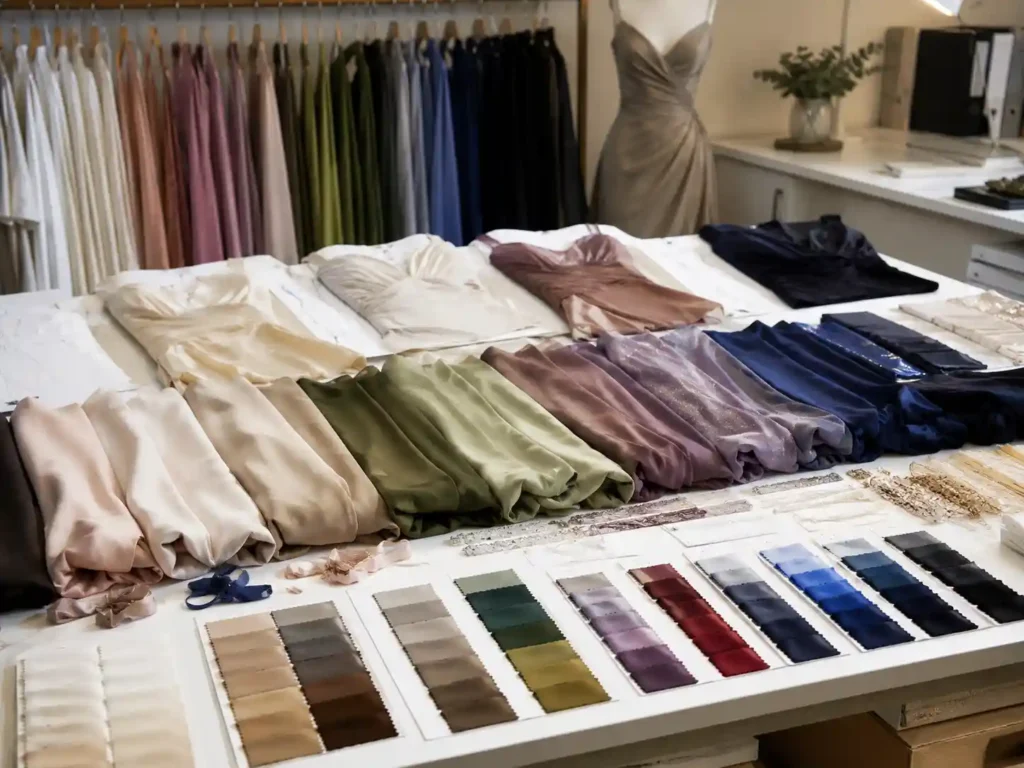
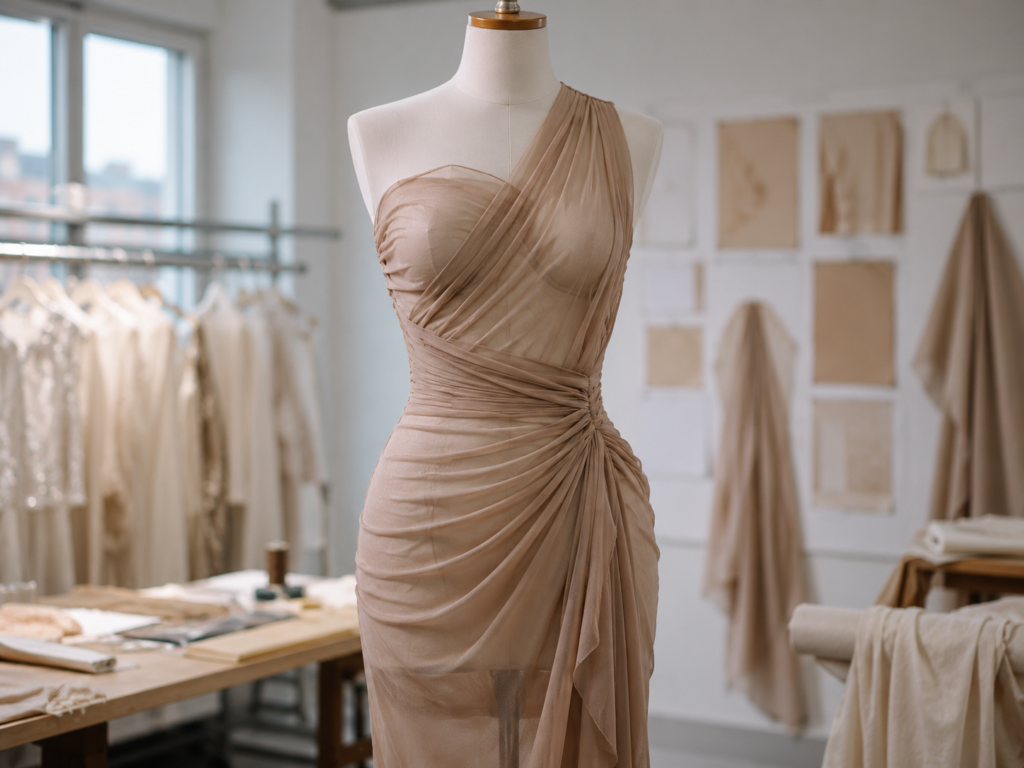
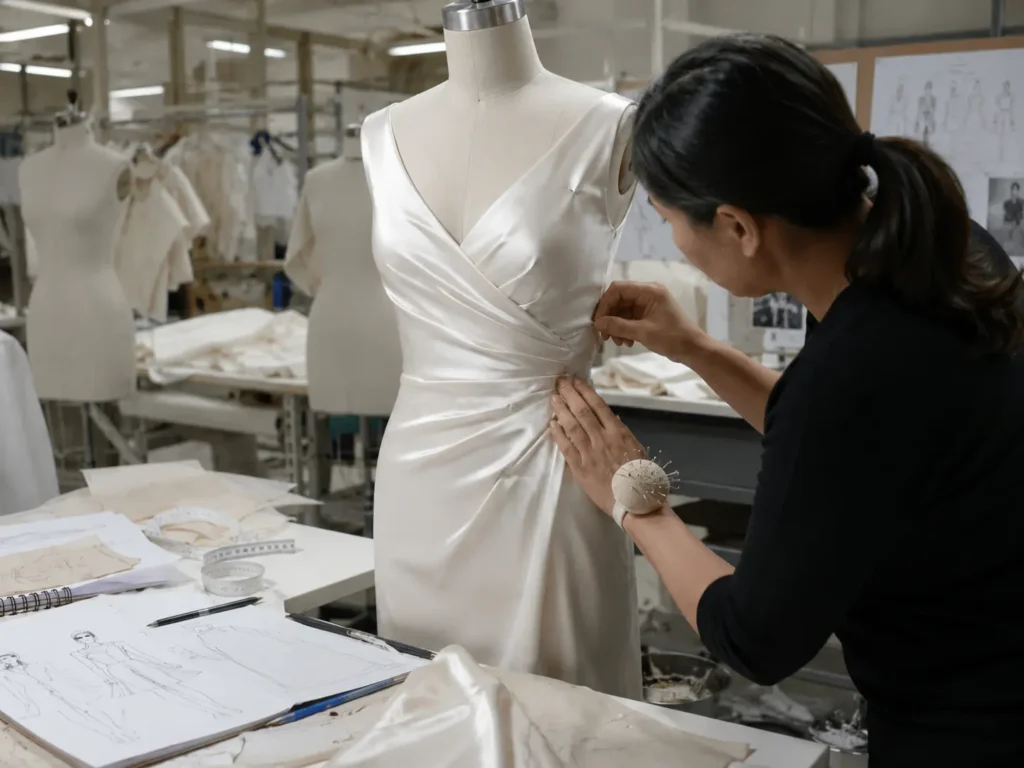
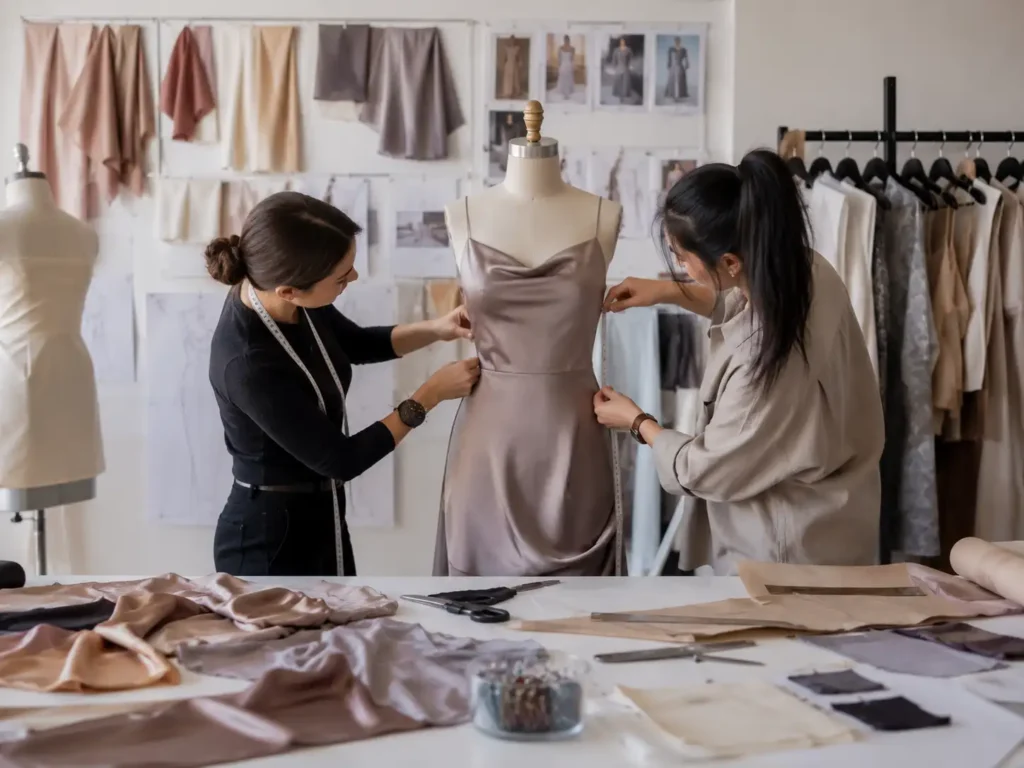
Dress Manufacturer for Premium Boutique Labels

Premium dress development for established fashion labels that need distinctive products, disciplined sampling, controlled bulk production and retail-ready private-label delivery.

Jinfeng Apparel supports boutique dress programs built around original silhouettes, refined fabrics, consistent fit and repeatable production standards. Development can begin from a tech pack, line sheet, reference garment, sketch or approved visual direction. Each project is reviewed for fabric behavior, pattern risk, construction method, size range, labeling and production feasibility before sampling begins.

  • Typical brand programs: 10-30 styles with 20,000-80,000 total pieces across planned colors and sizes.
  • Development support: 2 sample rooms, 7+ senior pattern makers and 20+ sample machinists.
  • Production structure: 6 owned women’s fashion factories, 10+ long-term satellite partners and 100,000+ pieces of normal monthly capacity.
  • Commercial entry point: MOQ starts from 200 pieces per style/color, subject to fabric, trim, construction, packaging and schedule.

A Manufacturing System Built for Boutique Dress Programs

Premium labels need more than a sewing line. Jinfeng combines development, production, quality control and finishing teams so a collection can move from design files to approved samples, controlled bulk output and brand-ready packing without losing the original product direction.

Development Engine

Two dedicated sample rooms are supported by 7+ senior pattern makers and 20+ sample machinists. The team reviews garment structure before cutting, checks how fabric behavior affects the intended silhouette, builds the first pattern, measures the completed sample and records every approved revision. Priority styles can be sequenced around campaign photography, sales presentations or launch dates, while corsetry, mesh, lace, sequins and engineered draping receive separate risk review before a production commitment is made.

Production Network

Six owned women’s fashion factories and more than 10 long-term satellite production partners support woven dresses, stretch styles, occasionwear, skirts, jumpsuits, matching sets and private-label collections. Jinfeng allocates work by fabric, construction, required finishing, order size and delivery window. The network includes 18+ sewing lines and 6+ flexible lines, with normal monthly capacity above 100,000 pieces. Capacity for a specific style is confirmed only after material readiness, PP approval and line allocation are reviewed.

Project Control

A 15+ person QC team, 12+ merchandisers and 30+ finishing and packing workers coordinate measurements, workmanship, labels, barcodes, SKU ratios, folding and carton marks. Merchandising records connect comments from the brand, pattern room, sample room, production floor and packing team. The goal is not simply to finish garments; the goal is to preserve the approved product standard across multiple styles, colors, sizes and shipment batches.

Built for Established Boutique Fashion Labels

Different fashion businesses assess a dress supplier through different commercial pressures. Jinfeng aligns development and production support with the product role, sales channel, launch rhythm and quality expectations behind each collection.

Established Boutique Labels

Labels with a defined aesthetic need proprietary silhouettes, controlled fabric choices and production records that protect continuity across seasons. Jinfeng supports original dresses rather than open-market stock, with pattern files, size charts, fabric references, trim records and packing instructions retained for repeat production. Product decisions remain tied to the brand’s price architecture, fit standard and visual identity.

Occasionwear Collections

Occasionwear depends on fabric surface, internal support, lining coverage, movement and photographic impact. Wedding guest, cocktail, graduation, evening and event dresses often require structured sampling before the commercial order is released. Jinfeng reviews neckline security, bust support, waist position, slit height, hem balance and packing protection so a strong sample can be reproduced in bulk.

Designer-Led Labels

Designer-led programs often contain asymmetric lines, cut-outs, engineered drape, unusual closures or mixed-material construction. The development team converts creative direction into a manufacturable pattern and records where design intent must be protected. Material substitutions, seam changes or lining decisions are discussed before use because a small technical change can alter the intended silhouette.

Premium Ecommerce Lines

Online fashion performance relies on fit consistency, image-ready samples, size clarity, barcode accuracy and packaging discipline. Jinfeng can prioritize photo-ready samples, manage size ratios within each style/color quantity, inspect garment presentation before packing and support SKU-based polybags and cartons. The process helps reduce avoidable variation between product photography, delivered stock and repeat orders.

Boutique Retail Groups

Retail groups need assortment depth, consistent labeling, reliable cartons and clear replenishment records. A collection may combine core dresses, visual statement pieces, seasonal colors and different size ratios by store or warehouse. Jinfeng coordinates style-level production data, carton-level SKU control and repeat-order references so store programs can expand without rebuilding every instruction from the beginning.

Product and Sourcing Teams

Experienced product teams expect clear technical feedback instead of automatic approval. Jinfeng reviews fabric availability, construction feasibility, MOQ by style/color, sample type, target cost, production risk and packing requirements before the project moves forward. Open issues are recorded early, giving internal teams a stronger basis for range decisions, budgeting and launch planning.

Is Jinfeng the Right Manufacturing Fit?

A clear supplier fit protects development time on both sides. Jinfeng is structured for fashion labels with defined product direction, professional sampling needs and realistic bulk plans.

Strong Project Fit

The strongest fit comes from brands that can provide a tech pack, reference garment, line sheet, sketch, approved inspiration or detailed product direction. A workable project normally includes a planned quantity by style and color, target size range, fabric direction, launch window, private-label requirements and budget logic. Jinfeng is well suited to seasonal collections, multi-style dress programs, ongoing replenishment, retail-ready packing and long-term supplier development where product records matter beyond one order.
  • Original or proprietary dress collections
  • MOQ planning from 200 pieces per style/color
  • Paid sample development with defined approval stages
  • Bulk production, repeat orders and multi-batch delivery
  • NDA-based cooperation and private-label execution

Outside Our Production Model

Jinfeng does not operate as a ready-stock wholesaler, single-piece fulfillment service or personal tailoring studio. Projects without product direction, sample budget, production planning or a realistic quality-cost relationship are unlikely to move efficiently. Micro quantities split across many styles and colors also prevent stable material purchasing, cutting, sewing, QC and packing. The production model is designed for branded garments that require development discipline and repeatable bulk standards.
  • Ready-stock purchasing
  • Single-piece fulfillment
  • Personal custom garments
  • One-off micro orders
  • Projects driven only by the lowest unit price
Check Project Fit

What Premium Boutique Labels Need From a Manufacturer

A premium dress program succeeds when product distinction, commercial logic and supply reliability are managed together. Attractive samples alone cannot protect margin, delivery or repeat-order consistency.

Product Distinction

Premium labels need more than a logo sewn into a generic silhouette. Distinction may come from proportion, neckline shape, fabric hand, drape direction, corset structure, lace placement, custom color, lining treatment or finishing. Jinfeng evaluates which elements create the strongest visual value and which elements add cost without improving the final garment. Development choices are recorded so the approved identity survives pattern changes, production handover and future reorders.

Commercial Discipline

A well-designed dress still needs an achievable cost, MOQ, size plan and delivery route. Fabric width, garment consumption, lining, trims, handwork, color count and packaging can change the landed cost significantly. Jinfeng reviews cost drivers before approval and proposes alternatives only when the brand-level appearance can be protected. Quantity planning by style/color is also addressed early so material orders and production allocation remain efficient.

Reliable Execution

Reliable execution means the final pattern, approved fabric, trim card, measurement chart, PP sample, label artwork and packing method are all connected. Jinfeng builds a documented path from sample comments to bulk production, inline checking, final inspection and carton verification. Repeat orders benefit from retained records, but fabric availability and production schedule are reviewed again because a previous result cannot be copied blindly into a new season.

Where Premium Boutique Dress Programs Commonly Fail

Most expensive problems begin before bulk sewing. Weak fabric decisions, incomplete pattern correction, uncontrolled sample changes and packing errors can damage product quality long after the original design was approved.

Generic-Looking Product

A premium concept can lose its identity when the supplier replaces fabric, changes seam placement or simplifies construction without understanding which details carry the design. The finished garment may be wearable but visually ordinary. Jinfeng identifies the non-negotiable elements during development, records approved details and discusses cost alternatives before substitution. The review covers silhouette, fabric surface, drape, neckline, waist position, trims, lining and finish so commercial optimization does not erase the brand’s intended value.

Poor Fit Balance

Incorrect bust-waist-hip balance can create gaping, pulling, twisting, zipper bulging or unstable hemlines. Fit issues often become more visible after grading because a weak base pattern is multiplied across sizes. Jinfeng checks key measurements against the supplied chart, reviews fit photos or fitting comments and corrects pattern balance before PP approval. Bodycon, corset, slip and cut-out styles receive additional attention because small proportion errors can affect comfort, exposure and return risk.

Wrong Fabric Choice

A reference image does not reveal fabric weight, stretch, opacity, recovery or shrinkage. Choosing by color alone can lead to weak drape, excessive shine, transparency, snagging or a silhouette that collapses. Jinfeng reviews available swatches and explains the effect of fabric structure on pattern, lining, seam method and cost. A fabric change during sampling triggers a new evaluation because pattern shape, consumption, pressing behavior and bulk tolerance may also change.

Sample-Bulk Drift

A strong sample can fail in bulk when the final pattern version, approved fabric batch, trim standard or sewing method is not locked. Drift may also appear when production begins before PP approval or when a substitute material is introduced without review. Jinfeng transfers the approved standard through pattern files, BOM details, trim references, measurement charts, sewing instructions, PP samples and QC checkpoints. Unapproved changes are treated as production changes, not informal adjustments.

Private Label Errors

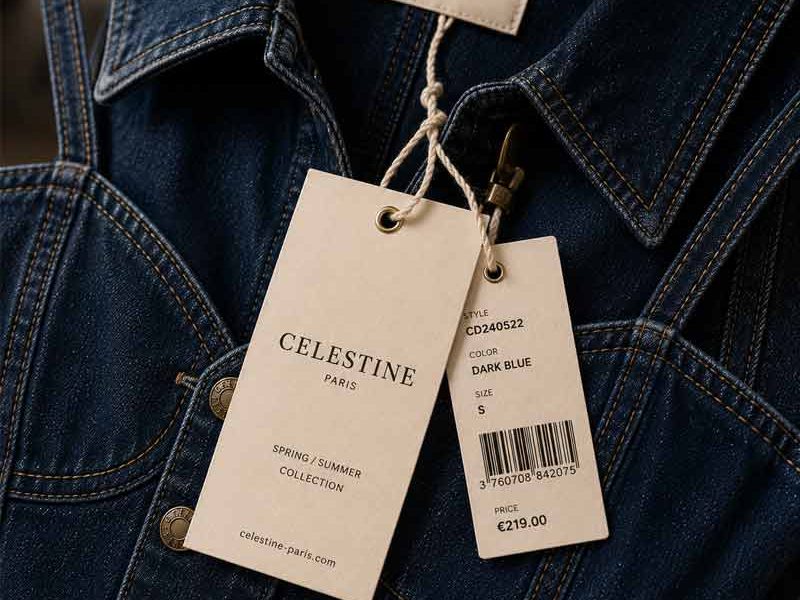
A premium garment loses credibility when the care label is incorrect, the barcode does not match the SKU, the size sticker is wrong or the carton ratio conflicts with the warehouse instruction. Jinfeng reviews label artwork, position, spelling, dimensions and packing files before bulk application. Garment-level labels, polybags and carton marks are checked against the order breakdown so the branded presentation and warehouse data remain aligned.

Missed Launch Timing

Late fabric approval, repeated design changes, unconfirmed labels or delayed PP sign-off can compress production and QC windows. A shorter sewing period does not recover time lost in development without adding risk. Jinfeng builds a launch plan around material booking, sample priority, revision status, PP lock, line allocation, finishing, inspection, packing and shipment method. Urgent styles can be reviewed for split shipment, but feasibility depends on material readiness and production status.

Premium Dress Categories We Develop and Manufacture

Jinfeng focuses on dress categories where fabric behavior, fit, structure and finishing define commercial value. Each product family follows a different development and QC route rather than a single generic sewing standard.

Party and Cocktail

Party and cocktail dresses rely on immediate visual impact, secure wear and controlled finishing. Common directions include fitted mini silhouettes, asymmetric necklines, cut-outs, ruching, sequins and statement trims. Development focuses on bust coverage, waist shaping, zipper behavior, slit safety and movement. Bulk inspection checks symmetry, surface damage, trim attachment, measurement stability and pressing marks. Packing must protect embellishment and keep the garment presentation close to the approved sample.

Occasion and Evening

Occasion and evening dresses often combine longer lengths, fluid fabrics, structured bodices, lining and special finishing. The team reviews hem balance, train length, neckline support, underarm coverage, internal construction and the way the garment moves during walking and sitting. Satin, chiffon, lace, mesh and tulle require separate handling rules. Bulk production is controlled against the PP sample, with attention to shade consistency, seam smoothness, drape and packing protection.

Bodycon and Corset

Bodycon and corset dresses need a close relationship between fabric stretch, pattern reduction, bust support and waist-hip shaping. A fabric with poor recovery can distort after wear, while aggressive reduction can create pulling and exposure. Corsetry may require cups, boning, interfacing, lining and reinforced seam positions. Sampling tests comfort, support and silhouette before grading. Bulk checks focus on stretch direction, panel symmetry, bone position, cup placement, zipper smoothness and finished measurements.

Satin and Slip

Satin and slip dresses appear simple, yet every error is visible. Grain direction, shine direction, bias behavior, seam puckering, press marks, snagging and color variation can weaken the result. Development confirms fabric weight, lining choice, neckline stability, strap position and hem method. Cutting and sewing require careful surface control, while final packing must reduce sharp folds and pressure marks. Color approval should be based on the intended fabric batch rather than a screen reference alone.

Mesh and Lace

Mesh and lace dresses depend on controlled transparency, motif placement, stretch direction and edge finishing. The team reviews where skin should remain visible, where lining or a second layer is needed and how seam placement affects the design. Lace motifs may need matching at center front, neckline or hem. Bulk production checks hole damage, uneven tension, motif shift, lining exposure and scratch risk. Softness and recovery are also important for fitted styles.

Sequin and Embellished

Sequin and embellished dresses need protection from missing decoration, skin abrasion, excessive weight and seam damage. Development determines whether sequins should be cleared from seam allowances, whether a lining is required and how embellishment continues across panels. Hand-applied details require clear placement references. Final inspection checks missing pieces, loose threads, sharp edges, symmetry and surface marks. Packing may use tissue, protective layers or a larger polybag to reduce crushing.

Resort and Printed

Resort and printed dresses are built around color, movement, travel use and seasonal delivery. Printed placement, repeat direction, opacity, shrinkage and wrinkle behavior influence both pattern and production. Long flowing styles need balanced hems; shorter styles need secure coverage and comfortable movement. The team reviews print scale, panel matching, lining, washing behavior and folding method. Travel-oriented packing should reduce deep creases while remaining efficient for ecommerce or retail distribution.

Wedding Guest Graduation

Wedding guest and graduation dresses must look polished in photography while remaining secure during extended wear. Graduation collections often include white or light colors where opacity, lining and undergarment visibility require careful review. Wedding guest styles may use satin, chiffon, lace, drape and asymmetry. Development checks bust coverage, skirt length, slit position, movement and color consistency. Seasonal deadlines require early fabric approval and a clear PP lock before bulk allocation.

Build a Balanced Boutique Dress Collection

A successful range needs clear product roles, not a random group of attractive sketches. Jinfeng can help organize development around visual impact, sales depth, fabric families, price levels and reorder potential.

Core and Statement Styles

Core styles should carry dependable fit, manageable construction and repeat potential, while statement styles create campaign impact and collection identity. A balanced program may use stable satin slips, fitted bodycon silhouettes or proven midi shapes as volume drivers, then add corsetry, sequins, drape or engineered cut-outs for visual elevation. Jinfeng reviews which styles deserve early sample priority, which share pattern blocks and which need separate technical development. The approach helps protect launch focus without forcing every style into the same complexity or cost level.

Mini Midi Maxi Mix

Length affects fabric consumption, balance, movement, lining and packing. Mini dresses need coverage, sitting comfort and secure hems; midi dresses need proportion and movement around the calf; maxi dresses need balanced hem sweep, walking clearance and packing protection. A collection can use the same neckline or bodice direction across several lengths, but each version still needs pattern and measurement review. Jinfeng develops the assortment around the intended channel, climate, occasion and target price rather than treating length as a simple extension.

Fabric and Color Tiers

Using too many unrelated fabrics can slow approval, raise MOQ pressure and make the collection feel disconnected. Jinfeng can group styles into fabric families such as satin, stretch jersey, mesh-lining combinations, chiffon or lace. Core colors can support volume and repeat orders, while seasonal colors or custom shades create distinction. Color planning must consider supplier MOQ, shade consistency, lining match, trim availability and warehouse SKU count. The strongest ranges use fabric and color variation with controlled operational complexity.

Launch and Reorder Planning

Photo samples, salesman samples, PP samples and bulk units serve different commercial purposes. Priority launch styles may need earlier photo-ready samples, while repeat-oriented core styles require stronger production records and fabric continuity. Jinfeng can stage the program so key images, range reviews and approval deadlines are not blocked by lower-priority styles. Reorder planning begins with retained patterns, size charts, BOM details, trims, QC notes and packing files, then confirms new fabric availability and line capacity before production is restarted.

Fabric Selection for Premium Boutique Dresses

Fabric selection controls silhouette, comfort, opacity, finish, cost and production risk. Jinfeng reviews material behavior with the garment structure instead of approving a swatch by appearance alone.

Satin

Satin is selected by fiber, weight, weave, shine, drape and intended construction. A light satin may suit a bias slip, while a heavier satin can support a structured bodice or formal silhouette. Key risks include shade variation, snagging, seam puckering, shine direction, press marks and deep packing creases.
Control points:
  • Approve color on the intended fabric quality
  • Mark grain and shine direction during cutting
  • Review needle and seam behavior during sampling
  • Confirm lining and interfacing compatibility
  • Use packing methods that reduce pressure marks
Chiffon

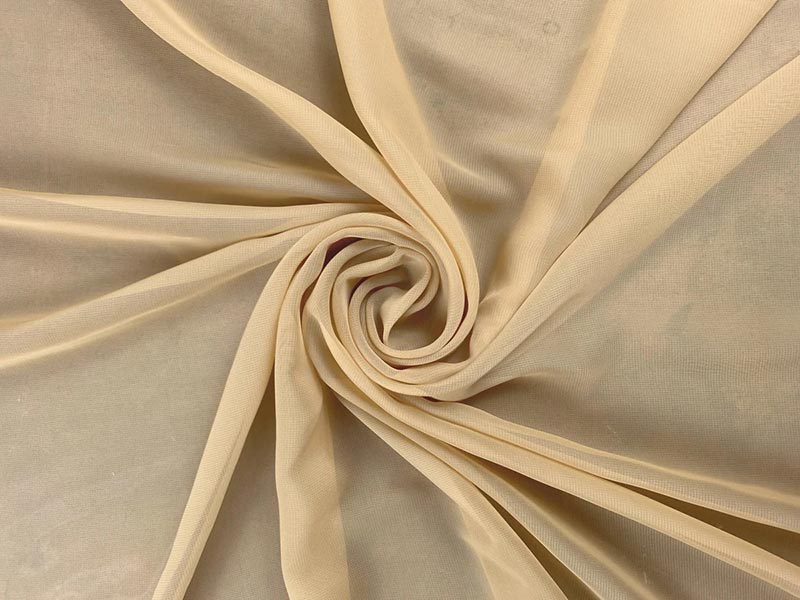
Chiffon provides movement and softness but introduces transparency, seam distortion, fraying and uneven hems. Layer count, lining color, print behavior and edge finish must be decided before the pattern is finalized. Bias sections may grow during hanging and require stabilization before hemming.
Control points:
  • Confirm opacity under normal lighting
  • Review lining coverage and color
  • Allow for hanging and hem balancing
  • Check seam slippage and edge finish
  • Protect lightweight garments from rough trims and packing compression
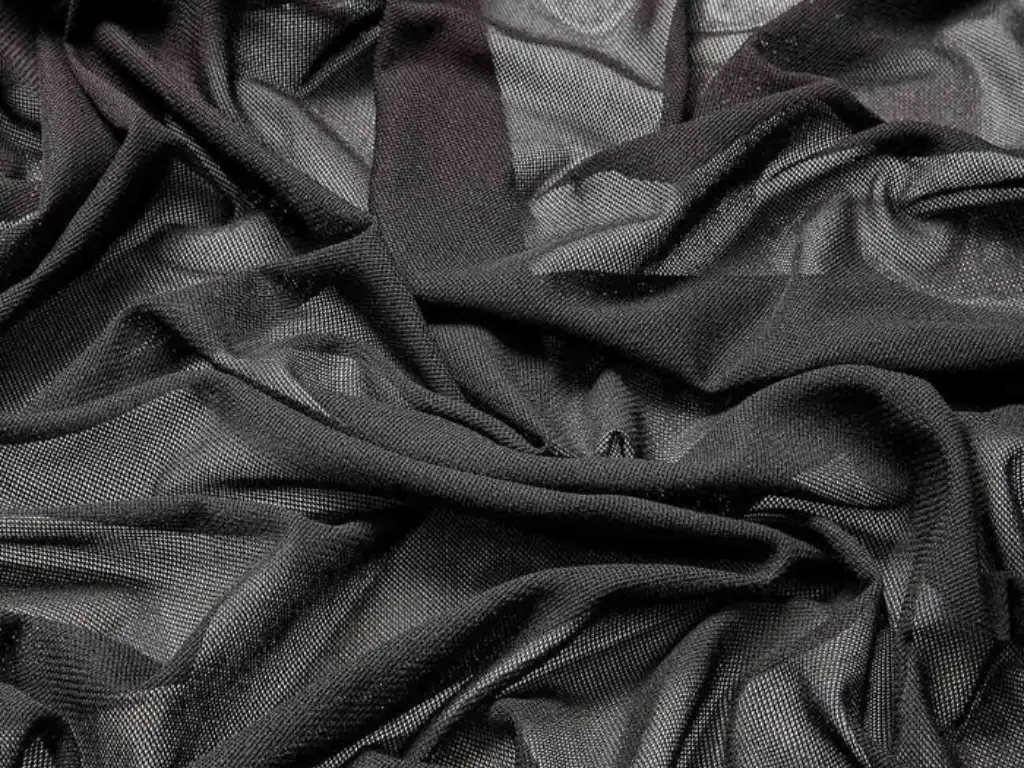
Mesh

Mesh can create body-conscious fit, layering or controlled transparency. Stretch direction, recovery, hole size, softness and lining coverage determine the final result. A visually similar mesh can behave very differently during sewing and wear.
Control points:
  • Test stretch and recovery in both directions
  • Define visible and lined zones
  • Stabilize necklines, armholes and cut-outs
  • Check seam tension and hole damage
  • Reconfirm pattern reduction if the mesh quality changes
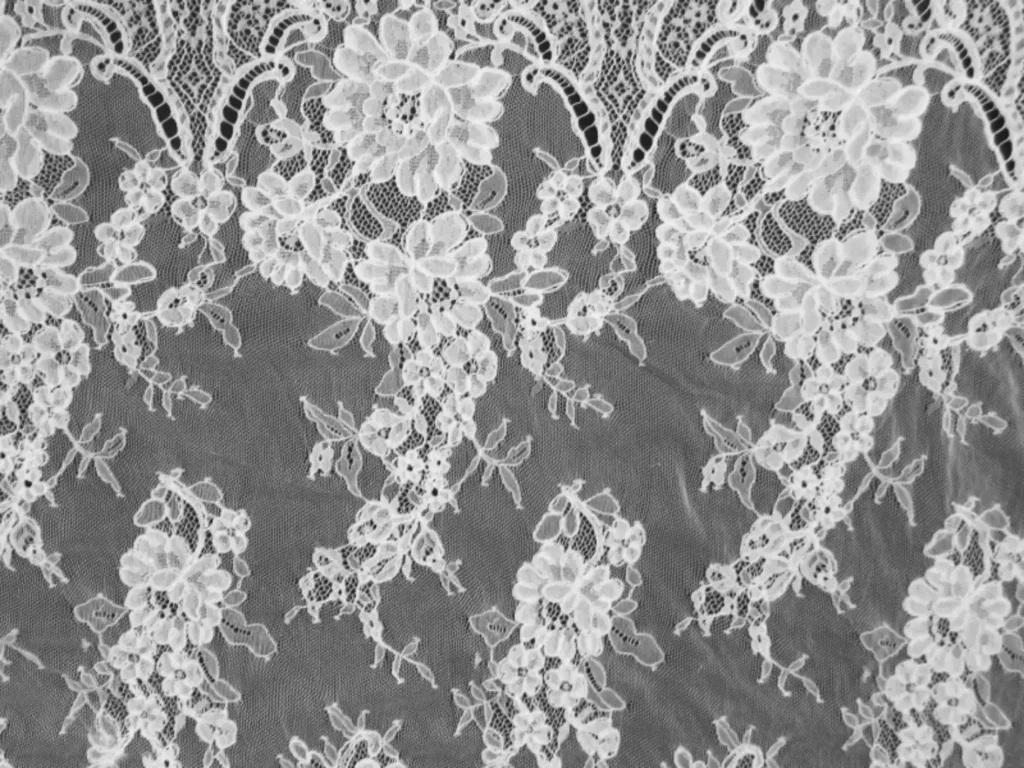
Lace

Lace value comes from motif, hand, scale and placement. Pattern pieces may need to align motifs at center front, neckline, waist or hem, increasing consumption and cutting complexity. Scratchy edges, fraying and uneven placement can reduce comfort and perceived quality.
Control points:
  • Approve motif placement on the garment
  • Match lining color and coverage
  • Review edge finishing and seam allowance
  • Check symmetry and panel continuity
  • Confirm supplier MOQ for special lace qualities or colors

Sequin and Tulle

Sequins create strong visual impact but add weight, abrasion and surface-loss risk. Tulle may support volume, transparency or layered skirts, yet softness and recovery vary widely. Both materials need clear handling and packing instructions.
Control points:
  • Clear or protect seam allowances where needed
  • Add lining or facing against the skin
  • Confirm embellishment continuity across seams
  • Inspect missing decoration and sharp edges
  • Use tissue or protective packing for delicate surfaces
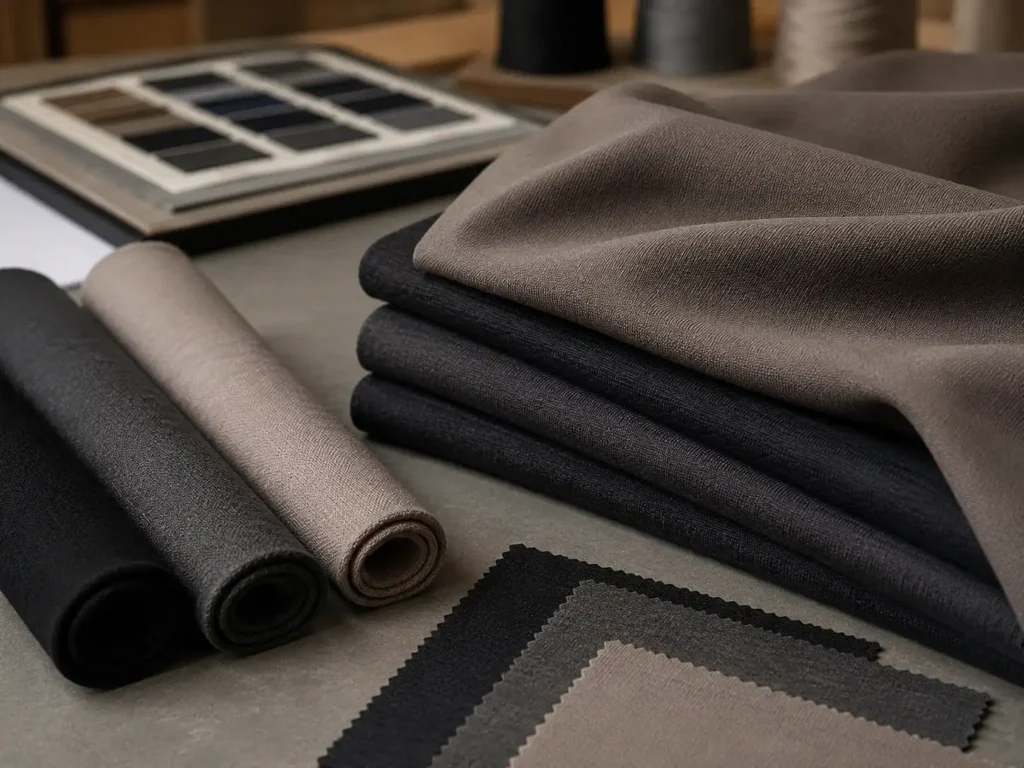
Jersey and Ponte

Jersey and ponte support fitted dresses, clean shapes and comfortable movement. The main variables are stretch percentage, recovery, thickness, surface stability and shrinkage. A weak recovery rate can create bagging at the hip, waist or neckline.
Control points:
  • Confirm stretch direction and recovery
  • Test shrinkage before grading decisions
  • Match pattern reduction to fabric behavior
  • Stabilize zippers, necklines and shoulder seams
  • Measure bulk garments after pressing and before packing

Pattern and Fit Control for Premium Dress Silhouettes

Fit is reviewed as a system rather than a single bust, waist or hip measurement. Pattern balance, fabric behavior, internal support, neckline depth, strap position and hem geometry work together. Jinfeng can develop multiple sizes from the approved base pattern and supplied size chart, including standard, extended, petite or tall ranges when the program requires them.

Fit AreaCommon RiskDevelopment Control
Bust and UnderbustGaping, collapse or excessive compressionDart, cup, seam and internal-support correction
Waist and HipPulling, twisting or excess easePattern balance, fabric stretch and reduction review
Neckline and ArmholeExposure, gaping or restricted movementDepth, shape, coverage and stabilization check
Strap and ShoulderSlipping, pressure or unequal lengthPosition, angle, length and reinforcement correction
Zipper and Side SeamBulging, waviness or uneven tensionSeam allowance, stabilization and fit balance
Slit and HemExposure, uneven height or poor movementSlit position, hem measurement and walking review
Size GradingLarger sizes lose the intended shapeProportional grading and key-point measurement checks
Petite or TallWaist, bust and hem fall in the wrong positionVertical proportion review, not simple length addition

Construction Details That Define a Premium Dress
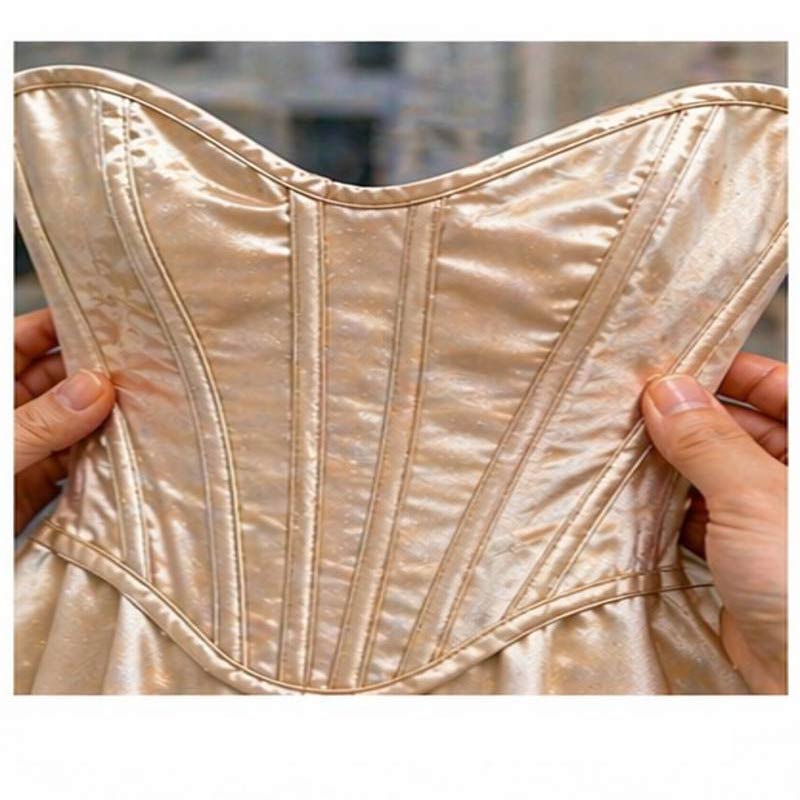
Premium appearance often comes from internal decisions that are invisible in product photography. Support, lining, seam control, closures and finishing determine whether a dress feels refined, wears securely and remains repeatable in bulk.

Corsetry and Boning

Boning supports the bodice, controls vertical shape and helps keep necklines stable. The material, width, length, channel construction and placement must match the intended support level. Poorly placed boning can twist, poke or create visible ridges. Sampling checks body contact, seam alignment and movement before the structure is approved. Bulk QC confirms bone count, location, channel security, symmetry and finished bodice measurements.

Cups and Support

Bra cups, foam, underbust seams, elastic, interfacing and lining can create support without exposing the internal construction. Cup shape and position must follow the target size chart and neckline. A cup that appears correct on a dress form may shift during wear. Fit samples assess coverage, lift, side support and comfort. Production checks cup pair matching, placement, stitching, lining closure and size-level consistency.

Lining and Coverage

Lining controls opacity, comfort, drape, seam visibility and garment structure. The lining quality must work with the shell fabric rather than simply match the color. Satin, lace, mesh, chiffon and sequins often need different solutions. Development defines full, partial or double-layer coverage and records where lining should stop. Bulk inspection checks exposure, twisting, seam attachment, length relationship and color harmony.

Ruching and Draping

Ruching and draping create shape through controlled fullness, tension and anchor points. Uneven distribution can alter body proportions or make paired garments look inconsistent. Pattern pieces, notches and sewing instructions must show where fullness begins and ends. The PP sample establishes the visual standard. Bulk QC compares placement, direction, density and symmetry rather than checking only the finished measurements.

Zippers and Closures

Zipper type, tape, color, length and installation affect fit and appearance. Lightweight satin may show zipper waves, stretch fabric may pull around the opening and corsetry may place high stress on the closure. Sampling confirms seam stabilization, top finish and ease of use. Bulk inspection checks smooth movement, tape alignment, top and bottom stops, seam flatness and closure security.

Hems and Edges

Hem method must suit fabric weight, garment length and visual direction. Chiffon may need a narrow finish, satin may show press marks, lace may use motif edges and stretch fabrics need controlled tension. Long dresses require hang time and balancing before final hemming. QC checks circumference, evenness, skipped stitches, waviness, thread visibility and the relationship between shell and lining.

From Your Design Brief to a Development Plan

Development begins with a technical review, not an automatic quotation. The team first identifies what is known, what remains unclear and which decisions may change cost, fit, MOQ or production feasibility.

Design Inputs

Jinfeng can review tech packs, line sheets, sketches, reference images, original garments, fabric swatches, trim cards, measurement charts and packaging files. Strong inputs shorten interpretation time, but incomplete files can still be assessed when the visual and commercial direction is clear. The first review separates confirmed requirements from assumptions so pattern makers and merchandisers do not build a sample around unapproved details.

Technical Review

The review covers silhouette, seam structure, fabric suitability, lining, closures, internal support, trims, finishing, size range, color plan, target quantity and intended market. Risks such as satin puckering, mesh transparency, lace placement, sequin abrasion or unstable cut-outs are flagged before sample work begins. The team also checks whether supplier MOQ for fabric, labels or packaging matches the planned order structure.

Development Plan

After the review, the project can be organized around fabric sourcing, pattern development, sample type, revision priorities, cost boundaries, approval points and production preparation. A 10-30 style range may be grouped into priority samples, shared fabric families, common pattern blocks and high-risk styles. Clear sequencing prevents every style from competing for the same approval deadline and keeps the launch plan connected to real material and sample status. Send Development Files

A Structured Sampling System for Boutique Collections

Different samples answer different commercial questions. Jinfeng separates fit, photography, sales, pre-production and bulk-reference purposes so approval is based on the correct garment rather than a sample made for another stage.

Fabric Swatch Review

Fabric swatches establish hand, weight, drape, stretch, opacity, surface and color direction before the garment is built. The swatch review also checks supplier availability, MOQ and whether lining or support materials are needed. Screen colors and reference photos cannot replace a physical approval when shine, texture or transparency carries the product value.

First Sample

The first sample tests the initial interpretation of silhouette, construction and material direction. It is not treated as the final bulk standard. The team measures the garment, reviews visible issues and records comments on fit, neckline, waist position, length, structure, trims and finish. Major design or fabric changes after this stage may require a new development route.

Fit Sample

A fit sample focuses on body proportion, comfort, movement and exposure. Front, side and back views are reviewed along with sitting, walking or arm movement when relevant. Bodycon, corset, strapless, cut-out, slip and jumpsuit styles need stronger fit evidence because a small error can affect both appearance and wearability.

Revised Sample

The revised sample verifies recorded changes rather than repeating the entire first-sample discussion. Pattern adjustments, measurement changes, fabric replacements, trim updates and sewing-method changes are tracked. Each revision should have a clear purpose and approval status, preventing multiple comment versions from being mixed during later development.

Photo-Ready Sample

A photo-ready sample is prepared for campaign photography or ecommerce content. Surface condition, pressing, color, fit and visual details need close attention, but the garment may still differ from the final PP standard if production materials or packaging are not fully locked. Photography approval therefore does not automatically release bulk production.

Salesman Sample

Salesman samples support showroom, wholesale or internal range review. They may be produced across selected colors or styles and can help finalize commercial decisions before bulk allocation. Quantities, materials and timing are planned separately because these samples serve selling and presentation needs rather than production control.

PP Sample

The PP sample confirms the standard before bulk production. Fabric, color, trims, measurements, construction, labels, hangtags, polybag, carton marks and packing method should be locked or clearly referenced. Any later change can affect cost, material orders, line preparation, QC and delivery, so changes after PP approval require formal review.

Golden Sample

The Golden sample is the approved physical reference used during bulk production and inspection. Production teams compare workmanship, construction, measurements, labels and finishing against the sealed standard. It supports consistency, but bulk fabric variation and size-level measurements still require inspection; a single reference garment cannot replace production QC.

Sample-to-Bulk Control Map

Sample approval creates value only when every approved element is transferred into production. Jinfeng connects pattern, material, workmanship, measurement, labeling and packing records before cutting begins.

Locked StandardBulk ControlWorking Evidence
Final PatternCutting and size-level verificationPattern version and graded files
Approved FabricBatch, shade, direction and defect reviewFabric approval and batch reference
Trim CardColor, size, material and placement matchApproved trim reference
PP / Golden SampleWorkmanship and finish comparisonSealed physical sample
Measurement ChartInline and final measurement checksApproved size chart and tolerance
Label ArtworkContent, position, spelling and SKU matchApproved artwork and placement file
Packing StandardFolding, polybag, barcode and carton ratioPacking instruction and carton mark

Cost Planning Without Weakening Brand-Level Appearance

Dress pricing is built from the full production route rather than a single sewing estimate. Jinfeng reviews where the product creates visible value and where an alternative can reduce cost without lowering the intended market position.

Fabric Consumption

Fabric weight, width, pattern layout, directional nap, print placement and long skirt sweep affect consumption. Narrow fabric, large motifs or shine direction may reduce cutting efficiency. Jinfeng reviews marker logic and construction before suggesting a lower-priced fabric because reduced material cost can create new fit, drape or QC risks.

Lining and Structure

Full lining, double layers, corsetry, cups, boning, interfacing and internal elastic add material and labor. Removing structure may lower cost but also weaken support or opacity. The team evaluates whether partial lining, adjusted interfacing or a different construction can protect the visible result while simplifying production.

Surface and Handwork

Sequins, beading, lace placement, appliqué, ruching and draping increase cutting, sewing, inspection and wastage. Cost depends on density, placement and whether work is machine-assisted or manual. Clear design priorities allow the brand to keep high-impact details in visible areas while simplifying less important zones.

Size and Color Plan

More sizes and colors increase grading, material division, line changeovers, labels, SKU control and packing complexity. MOQ is calculated by style and color, while sizes are distributed within the confirmed quantity. Consolidating low-volume colors or building a stronger size ratio can improve efficiency without reducing assortment quality.

Private Label Packing

Woven labels, care labels, hangtags, barcodes, printed polybags, inserts, tissue, dust bags or gift boxes carry separate material and labor costs. Packaging suppliers may also impose their own MOQ. Jinfeng compares the brand experience, warehouse requirement and unit cost before final packing is approved.

Testing and Delivery

Third-party testing, inspection, special certificates, air freight, split shipment and warehouse labeling can affect the final landed cost. These items are reviewed by market, destination and project requirement. Early logistics planning prevents a late airfreight decision from absorbing margin that should have been protected during the development stage.

Production Capacity Matched to Product Complexity

Capacity is useful only when the assigned line can reproduce the approved garment. Jinfeng matches each program to the production unit, team experience and delivery window required by its fabric and construction.

Factory Allocation

Six owned factories support core women’s fashion production, while more than 10 long-term satellite partners provide controlled capacity for suitable styles, repeat orders, seasonal peaks and multiple shipment batches. Complex first-time styles are prioritized for production units with relevant material and construction experience. Allocation decisions consider woven or stretch structure, embellishment, lining, finishing, order size and QC needs rather than moving work to whichever line is empty.

Multi-Style Coordination

A 10-30 style collection rarely moves through production as one identical block. Styles may have different fabric lead times, PP approval dates, sewing complexity and packing instructions. Jinfeng groups styles by material family, risk level and delivery priority, then coordinates cutting, sewing, finishing and inspection status through merchandising records. Shared trims or labels are consolidated where possible, while style-specific details remain separately controlled.

Capacity and Scheduling

The production system includes 18+ sewing lines, 6+ flexible lines and normal monthly capacity above 100,000 pieces. These figures describe the wider women’s fashion network, not a fixed promise for every dress. Final capacity depends on approved materials, style complexity, quantity, PP status, production season and inspection window. Line booking becomes firm only after the project standard and material plan are sufficiently locked. Check Capacity Plan

Quality Control Across Every Dress Production Stage

Quality is checked before problems become expensive. Jinfeng uses material, cutting, sewing, measurement, finishing and packing controls so defects are found near the process where they originate.

Fabric Inspection

Fabric is reviewed for shade, surface defects, width, stretch direction, print direction, holes, snagging and visible contamination before cutting. Satin, mesh, lace, sequins and printed materials require category-specific checks. Shade or batch concerns are separated early because mixing materials in one color order can create visible variation across finished garments.

Cutting Inspection

Cutting control checks pattern version, grain direction, nap or shine direction, print placement, size markers, panel count and fabric defects. Directional satin, lace motifs and placement prints need stronger control than non-directional solids. Incorrect cutting cannot be repaired by better sewing, so high-risk panels are checked before bundles move to the line.

Inline Sewing Check

Inline inspection reviews seam construction, stitch condition, symmetry, zipper installation, lining attachment, ruching, boning, cups, trims and visible surface handling during production. Early checks allow the line to correct methods before the same defect spreads across hundreds of pieces. Findings are connected to the approved PP or Golden sample and sewing instruction.

Measurement Review

Key measurements are checked during production and again on completed garments. Bust, waist, hip, length, strap, neckline, armhole, slit height and other style-specific points are compared with the approved chart and tolerance. Size-level checks are important because grading or fabric behavior can create problems that are not visible in the base size alone.

Final Garment Inspection

Final inspection covers measurements, workmanship, symmetry, zipper function, lining, trims, stains, loose threads, pressing, surface damage and overall presentation. Delicate fabrics are checked under suitable light because snagging, shade or press marks may be difficult to see in poor conditions. Inspection scope can also be aligned with the brand’s own standard or third-party requirement.

Packing Inspection

Packing control verifies style, color, size, brand label, care label, hangtag, barcode, SKU sticker, folding method, polybag, quantity ratio and carton mark. Carton-level totals are checked against packing data before shipment. Retail and ecommerce programs may also require warehouse labels, warning text or special carton instructions supplied by the brand.

Private Label and Retail-Ready Dress Delivery
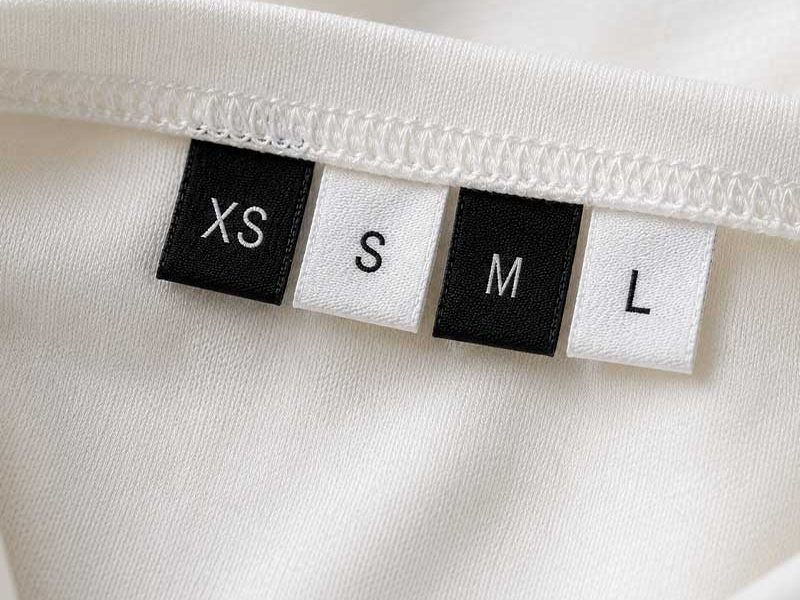
Private-label delivery connects garment production with brand presentation and warehouse accuracy. Jinfeng manages labels, tags, barcodes, polybags and cartons as production-controlled components rather than last-minute accessories.
4.-Size-Labels

Brand and Size Labels

Woven, satin, printed or heat-transfer brand labels can be reviewed by material, dimensions, color, artwork and placement. Size labels must match the garment and order breakdown. A placement sample or approved reference helps prevent crooked application, visible stitching or inconsistent distance from the neckline or seam.

Care Labels

Care labels may include fiber content, care instructions, country of origin, importer details and other market information supplied or approved by the brand. Jinfeng checks artwork, spelling, size, print clarity and placement before bulk use. Final legal content remains subject to the destination market and the brand’s compliance review.
4.-Hangtag

Hangtags and Strings

Hangtags, hang strings, safety pins, seals or brand cards contribute to retail presentation. Hole position, string length, attachment point, barcode area and printed information are reviewed before ordering. Bulk packing checks that the correct hangtag is attached to the correct style, color and size without damaging delicate fabric.

Barcode and SKU Labels

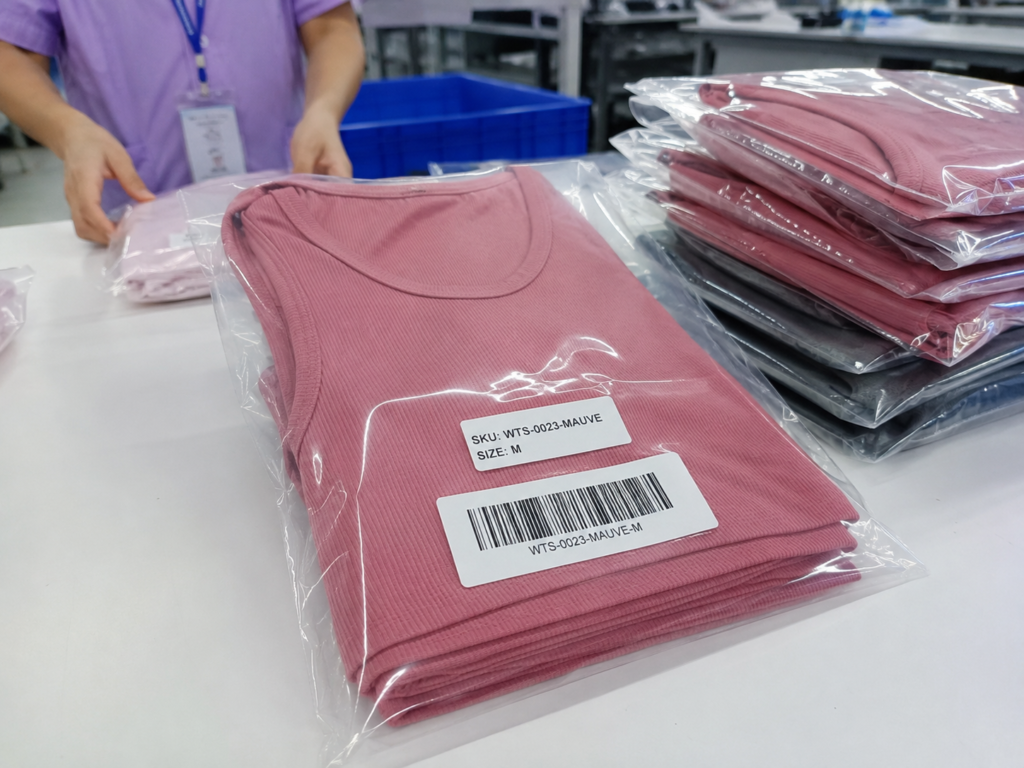
Barcode and SKU accuracy is essential for ecommerce, retail and warehouse receiving. Jinfeng can work from the brand’s barcode list and packing matrix, applying the correct sticker to each polybag or hangtag. Scannability, style-color-size match and duplicate prevention are checked before carton sealing.

Polybags and Inserts

Each garment can be folded and packed in a standard or custom polybag with size, color, barcode, warning text, sticker, tissue, thank-you card or other approved insert. Bag dimensions and folding method should protect garment shape without creating unnecessary volume. Satin, sequins and structured bodices may need additional packing care.

Cartons and Marks

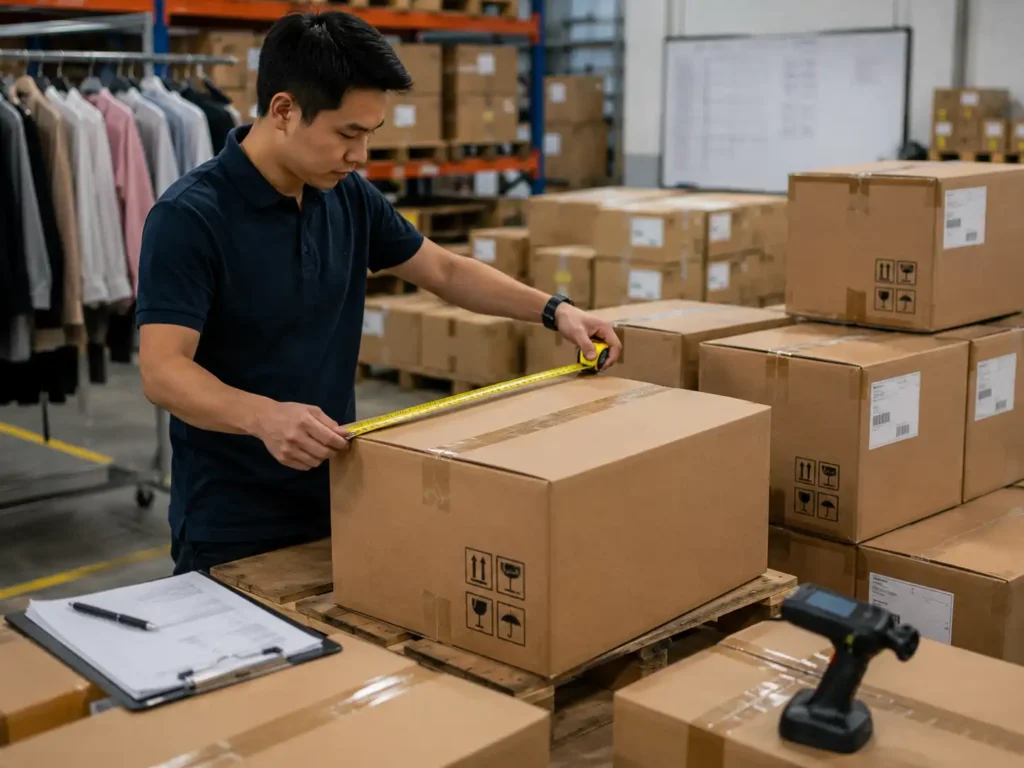
Carton size, quantity ratio, PO information, destination mark, warehouse label and handling symbols are controlled against the packing instruction. Jinfeng checks carton-level style, color, size and quantity before shipment. Mixed-SKU cartons, store allocation or warehouse-specific labels require a clear matrix supplied before packing begins.

Brand Protection and Compliance Support

Premium labels share unreleased designs, commercial plans and packaging files long before launch. Jinfeng supports confidential development and project-based compliance coordination without making blanket claims across every factory, material or market.

NDA and Design Protection

Jinfeng supports NDA-based cooperation and protects tech packs, original samples, patterns, size charts, fabric and trim plans, label artwork, packaging files, quantities, prices and unpublished styles. Brand names, original files and unreleased garments are not presented publicly without permission. Case studies can be anonymized so manufacturing experience is shown without exposing confidential identity or product information.

Audit and Test Coordination

Factory profiles, production-process information, QC records, packing-process information and available audit-related documents can be reviewed according to the assigned production unit. Third-party inspection or laboratory testing can be coordinated by project. Available records must be confirmed against the actual factory, material supplier, batch, certificate scope and validity rather than assumed across the whole production network.

Market Label Support

Jinfeng can prepare garments and packing according to approved files for the United States, United Kingdom, Europe, Australia, Canada and other destinations. Support may include fiber content, care instructions, country of origin, importer information, barcodes, carton marks and warehouse labels. Final legal wording, product claims and market compliance remain subject to brand approval or local professional review.

Project Management Around Your Launch Calendar

A launch plan is built from approvals and material readiness, not a generic delivery promise. Each milestone identifies what must be confirmed before the next stage can move safely. Prepare Your Launch

Project Review

Design files, quantities, colors, sizes, target cost, launch date and private-label requirements are reviewed. The team identifies missing information, high-risk styles and material constraints before sample commitments are made.

Fabric and Cost

Swatches, trims, lining and structural materials are reviewed with supplier MOQ and availability. A preliminary cost direction can be discussed, while the final quotation is locked after key construction, material and packing details are confirmed.

Sample Development

Patterns and samples are sequenced by priority. Fit comments, measurement changes, fabric updates and approval status are recorded. Complex styles may need additional validation before a PP sample can be prepared.

PP Approval

Fabric, color, trims, measurements, construction, labels and packing are locked or referenced through the PP standard. Late changes are reviewed for their effect on materials, cost, line booking and delivery.

Bulk and QC

Production moves through material inspection, cutting, sewing, inline checks, finishing, final inspection and packing. Status can be tracked by style group, factory unit or shipment batch depending on the collection structure.

Packing and Shipment

Packing lists, commercial documents, carton marks, warehouse labels and freight instructions are prepared against the confirmed shipment plan. Express, air, sea, split shipment, client-nominated forwarders or project-based DDP options can be reviewed.

Built for Repeat Orders and Seasonal Collection Growth

Repeat production becomes faster and more predictable when product records are preserved, but every new batch still needs material, color, schedule and quality confirmation.

Repeat Order Records

Jinfeng keeps approved patterns, size charts, fabric references, trims, sewing instructions, label positions, packing requirements, QC notes and revision history for future production. The record base reduces interpretation risk and helps the team restart familiar styles efficiently. Reorder timing still depends on material availability, current line capacity and whether the brand requests any change.

Style and Color Extension

A proven style can be extended into a new color, length, trim or fabric, but each change has technical consequences. New fabric may alter stretch, drape, shrinkage, opacity, consumption and pattern balance. New colors may introduce supplier MOQ or shade challenges. Jinfeng reviews the extension as a controlled development rather than assuming the previous pattern and cost can be reused without validation.

Seasonal Programs

Long-term cooperation can move from initial styles to repeat orders, replenishment, color extensions and seasonal collections. A retained product library helps preserve fit and brand standards across new drops. Multi-style programs can also be planned around shared fabric families, common trims and defined sample priorities, giving the brand more assortment depth without allowing technical information to become fragmented.

Inside a Premium Boutique Dress Development Program

The following anonymized program reflects a realistic order structure for an established United States boutique fashion label. Brand identity and proprietary designs remain confidential.

Program Scope

The seasonal order included 18 dress styles, 38 style-color combinations and 42,600 total pieces across XS-XL. Product groups covered satin slip dresses, structured corset minis, mesh-lined bodycon styles, lace occasion dresses and two sequin statement pieces. Six fabric families and multiple lining qualities were used.

The brand required photo-ready priority samples, custom labels, care labels, hangtags, SKU barcodes, individual polybags and carton marks for two warehouse destinations.

  • 18 styles and 42,600 total garments
  • 38 style-color combinations
  • Five-size range: XS, S, M, L and XL
  • Six fabric families with separate approval references
  • Two shipment batches to different warehouse instructions

Development and Delivery

Styles were ranked by launch importance and technical risk. Eight priority styles moved through first-sample development during days 5-16 after initial fabric and trim confirmation. The remaining 10 first samples and early revisions were completed during days 17-24. Fit revisions, label placement and PP preparation were closed during days 25-32. Bulk production was released only after style-level PP lock. The first shipment of 18,000 pieces left on production day 34, followed by the remaining 24,600 pieces on day 41 after final inspection and carton verification. Risk control focused on satin shade separation, corset boning position, mesh lining coverage, lace motif balance, sequin protection, size-level measurements and SKU packing. Production records connected each style to its final pattern, approved fabric, trim card, PP reference, measurement chart and packing instruction. The program was completed as two coordinated shipment batches rather than compressing all styles into one uncontrolled deadline. Discuss Similar Programs Review Order Capacity

Frequently Asked Questions From Boutique Fashion Labels

Jinfeng specializes in premium custom dresses, including party, cocktail, occasion, evening, wedding guest, graduation, resort, bodycon, corset, satin, mesh, lace, sequin, mini, midi and maxi styles. Product suitability is reviewed by fabric, construction, target quantity and production risk. The strongest fit comes from branded collections that require pattern development, structured sampling, bulk control, private-label packing and repeat-order support.
MOQ starts from 200 pieces per style/color. The quantity is calculated by each style and each color, not by combining several styles into one total. A black style at 100 pieces plus the same style in white at 100 pieces normally does not meet the standard. Custom dyeing, printing, certified fabric, special lace, sequins, trims or packaging may have separate supplier MOQ.
Yes. Development can begin from a reference image, sketch, line sheet, tech pack or original garment. Images alone do not show fabric weight, stretch, lining, internal construction or measurements, so the team will identify assumptions before sample work begins. Better results come from adding target fabric, size chart, quantity, color plan, target price and launch date.
Yes. Bulk orders can be produced in multiple sizes according to the supplied size chart and confirmed size ratio. MOQ remains based on style/color, while sizes are distributed within the confirmed quantity. Standard, extended, petite or tall ranges can be reviewed. Each range requires grading, measurement checks, labels and packing data that match the order breakdown.
Sample timing is confirmed after style complexity, fabric readiness, trims, pattern work and sample priority are reviewed. A simple woven dress with available materials follows a different schedule from corsetry, lace placement, sequins, custom color or multiple revision rounds. For multi-style collections, priority samples can be sequenced around photography or sales deadlines rather than opening every style at once.
Available sample stages may include fabric swatch review, first sample, fit sample, revised sample, photo-ready sample, salesman sample, PP sample and Golden sample. Each serves a different purpose. A first or photo sample does not automatically become the bulk standard. Production should be released against an approved PP standard with pattern, material, measurements, labels and packing sufficiently locked.
Yes. Jinfeng can review satin, chiffon, mesh, lace, jersey, ponte, sequins, tulle, linings, cups, boning, zippers, elastics and other dress components. Availability, color, MOQ, certificate scope and lead time depend on the supplier and batch. Swatches are assessed with the garment structure because a visually similar material may behave differently in drape, stretch, sewing or pressing.
Yes. Private-label support can include brand labels, size labels, care labels, hangtags, hang strings, barcode stickers, SKU labels, custom polybags, inserts, cartons and carton marks. Packaging components may have separate supplier MOQ. Artwork, placement, barcode lists, folding and warehouse instructions should be approved before bulk packing begins.
Yes. NDA-based cooperation is supported for tech packs, original samples, patterns, size charts, fabric plans, trims, label artwork, packaging files, quantities, prices and unreleased styles. Brand names and confidential products are not shown publicly without permission. Anonymized process examples can be used only when proprietary identity and design information remain protected.
Consistency is controlled through the final pattern, approved fabric reference, trim card, PP or Golden sample, measurement chart, sewing instruction, label artwork, packing file and QC checkpoints. Materials are inspected before cutting, workmanship and measurements are checked during production, and completed garments are inspected before packing. Any change after PP lock is reviewed for cost, material and delivery impact.
Yes. Jinfeng retains pattern, measurement, fabric, trim, construction, label, packing and QC records for future production. Repeat orders can move more efficiently, although fabric availability and line capacity must be reconfirmed. New colors, fabrics, lengths or trims are reviewed because they can alter MOQ, cost, fit, drape and lead time.
Send the style image or tech pack, target quantity by style/color, fabric direction, color plan, size range, labels, packaging, destination and required delivery window. An initial range can be discussed when details remain open, but the final quotation requires confirmed material, construction, trims, packing and quality requirements. Complex products cannot be priced accurately from one image alone.

Send Your Boutique Dress Brief

Share the files and commercial details behind your next dress collection. Kelly and the Jinfeng team will review product structure, fabric direction, MOQ fit, sample route, production risk, private-label requirements and the information needed for a workable quotation. A complete brief helps the team identify high-risk styles early, prioritize samples around your launch calendar and separate confirmed requirements from open decisions. Attach a tech pack, line sheet, reference garment photos, size chart, fabric swatches, trim details or packaging artwork when available.

  • Style images, tech packs or line sheet
  • Target quantity by style and color
  • Fabric and color direction
  • Size range and size ratio
  • Brand labels, hangtags, barcodes and packing
  • Target launch or delivery window
  • Destination market and warehouse instruction
  • Testing, audit or inspection requirements
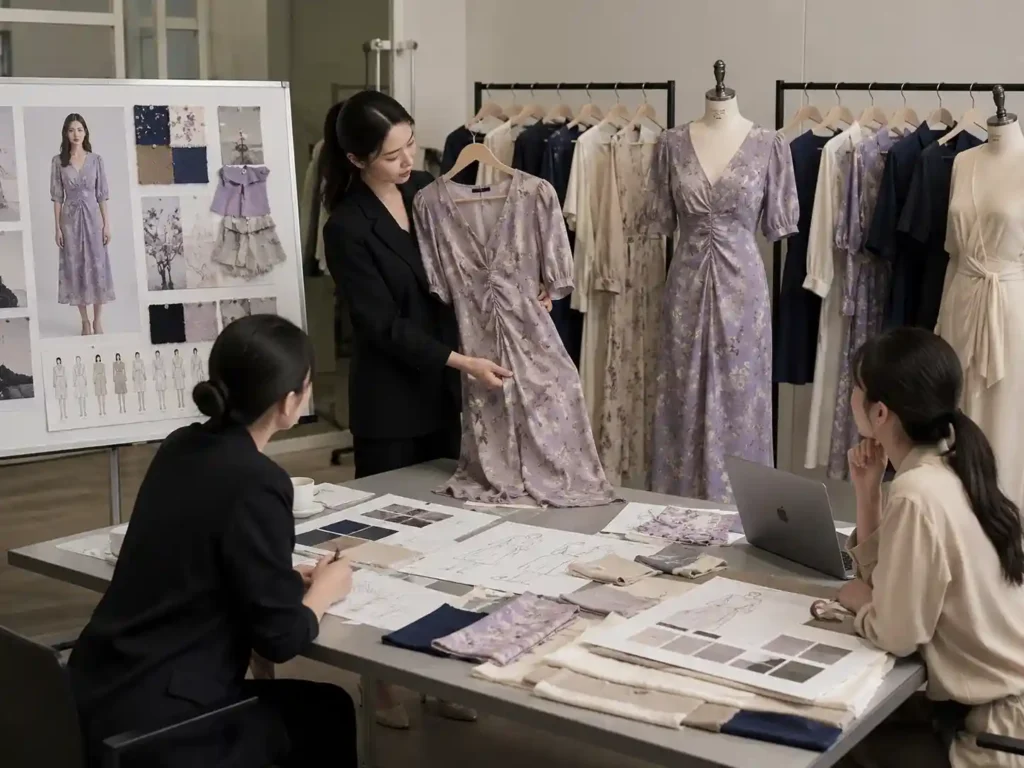
Tell Us About Your Dress Project

Share your product details, estimated quantity and development requirements. Our team will review your project and provide practical OEM/ODM production feedback.

Premium Women’s Apparel Production for Fashion Brands

From dress sample development to bulk production, JF Apparel supports fashion brands with confidential OEM/ODM manufacturing, reliable quality control and scalable production support.

START YOUR DRESS PROJECT

Ready to Develop Your Next Dress Collection?

Share your design concept, product requirements or sourcing plans with our team. We’ll review your project and provide practical feedback on development, materials, MOQ and production.

7-10 Days

Sample Development

200 PCS

Starting MOQ

Fast Response

Professional Follow-Up