Dress Manufacturer for Multi-Channel Fashion Brands
One dress manufacturing system for collections sold through brand websites, marketplaces, wholesale accounts, retail stores, and social commerce.
Jinfeng Apparel develops and manufactures premium custom dresses for established fashion brands running several sales channels at the same time. Product development, fabric sourcing, pattern correction, sampling, bulk production, quality control, private-label packing, and repeat orders are managed as one connected program rather than separate factory jobs.
- Structured production network: 6 owned women’s fashion factories and 10+ long-term satellite production partners.
- Scalable monthly planning: 100,000+ pieces of regular monthly capacity across 18+ sewing lines and 6+ flexible production lines.
- Development depth: 2 sample rooms, 7+ senior pattern makers, and 20+ sample machinists support multi-style collections.
- Commercial order fit: MOQ starts from 200 pieces per style and color, subject to fabric, trims, construction, and schedule.
Manufacturing Facts for Multi-Channel Dress Programs
Since 2008
Six Owned Factories
Ten Plus Partners
Development Team
Quality Team
Order Follow-Up
Built for Established Multi-Channel Fashion Operations
Best Fit
Jinfeng Apparel is structured for fashion brands that manage product development as a commercial program rather than a one-off sample request. Strong-fit projects normally include a seasonal line sheet, reference images or tech packs, expected quantities, sales-channel plans, target launch dates, and private-label requirements.
- Established ecommerce and DTC fashion brands
- Marketplace programs with barcode and warehouse rules
- Wholesale collections supplied to boutiques or retailers
- Regional retail brands and boutique chains
- Product development, sourcing, and merchandising teams
- Long-term collections requiring repeat-order records
Clear Operating Boundaries
- No ready-stock dress catalog for immediate resale
- No one-piece dropshipping fulfillment
- No unreviewed production from a single reference photo
- No blanket promise that every factory suits every dress type
- No fixed timing before fabric, trims, and construction are reviewed
- No public display of unpublished designs without permission

Dress Manufacturing Across Six Sales Channels
Brand Website
Online Marketplaces
Wholesale Accounts
Retail Stores
Boutique Chains
Social Commerce
Where Multi-Channel Dress Programs Commonly Break Down
Inconsistent Product Standard
- One approved measurement chart
- One sealed sample reference
- Controlled version changes
SKU Packing Errors
- Style-color-size mapping
- Barcode and sticker review
- Destination carton checks
Shade Drift Between Batches
- Lot-level material records
- Shade grouping before cutting
- Repeat-order color review
Launch Timing Misalignment
A collection may have one date for campaign photography, another for marketplace inbound booking, and another for wholesale delivery. Treating all dates as one final shipment deadline hides risk. A working calendar should connect sample approval, fabric arrival, bulk start, inspection, packing, and transport to each channel milestone.
- Sample and photo deadlines
- PP and fabric gates
- Channel receiving dates
Replenishment Without Records
- Pattern and grade records
- BOM and trim references
- Packing and QC history
Uncontrolled Factory Allocation
- Factory matched by product
- Common project documents
- Unified QC checkpoints
Channel Requirements Translated Into Manufacturing Controls
Sales channels create different receiving and presentation rules. Manufacturing remains efficient when garment standards stay unified and only the necessary packing, allocation, and shipment instructions change by channel.
Sales Channel | Product Priority | Packing and Allocation | Main Control Point |
Brand website | Photo-ready finish, stable fit, accurate color | Branded polybag, SKU sticker, ecommerce carton | Return-risk control and repeat-order readiness |
Marketplace | Consistent specification across high SKU count | Barcode, warning text, warehouse label, inbound carton | File accuracy and receiving compliance |
Wholesale | Commercial fit and reliable size ratios | Pre-packs, account labels, price tickets, carton ratios | Allocation accuracy and delivery window |
Retail stores | Presentation, pressing, hanger or folding standard | Retail labels, store grouping, display-ready handling | Sales-floor condition and size availability |
Boutique chains | Curated statement styles plus repeatable core items | Store packs, color grouping, replenishment cartons | Mixed-style coordination and later repeats |
Social commerce | Camera-ready sample and rapid bestseller response | Branded direct-to-consumer pack or channel pack | Launch timing and controlled repeat production |
Dress Categories for a Balanced Multi-Channel Collection

Everyday Dresses
Party Dresses

Occasionwear

Resort Dresses

Fit-Led Dresses

Seasonal Event Dresses
Fabric and Construction Decisions That Protect Channel Performance
Fabric determines more than appearance. It changes fit, construction, pressing, packing, repeatability, and return risk. Material selection should be approved together with the intended product role and channel mix.
Satin, Crepe, and Fluid Wovens
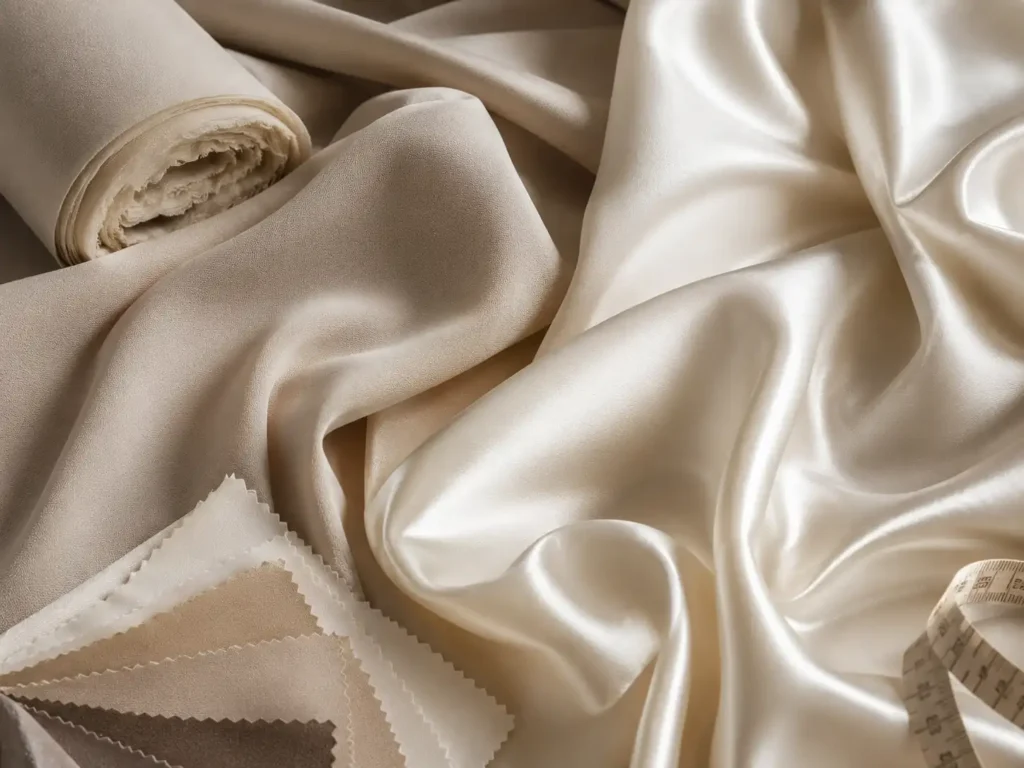
Satin and fluid woven dresses can create premium visual impact across ecommerce, occasionwear, and retail, but the same surface that photographs well can expose manufacturing faults. Before sampling, fabric weight, face direction, luster level, stretch, opacity, snag sensitivity, and crease recovery are reviewed against the design. A bias-cut slip dress needs different grain control from a structured satin corset dress. A long satin gown also needs enough body to hang cleanly without creating excessive seam drag or zipper waves.
- Cutting direction: Panels are aligned to the approved face and grain direction so luster does not change between garment sections.
- Shade management: Fabric lots and shade groups are recorded before cutting, especially when one style is split across production batches.
- Seam behavior: Needle, tension, seam allowance, and pressing methods are adjusted to reduce puckering, shine marks, and edge distortion.
- Packing effect: Folding lines, hanger use, tissue, garment bags, and carton pressure are reviewed according to the destination and product value.
Crepe can offer more forgiving drape and crease resistance, while still requiring control of surface texture, stretch, and shrinkage. Material substitution should be evaluated through a sample, not only a swatch, because a seemingly similar fabric can change neckline stability, waist shaping, or hem movement.
Mesh, Lace, and Layered Transparency
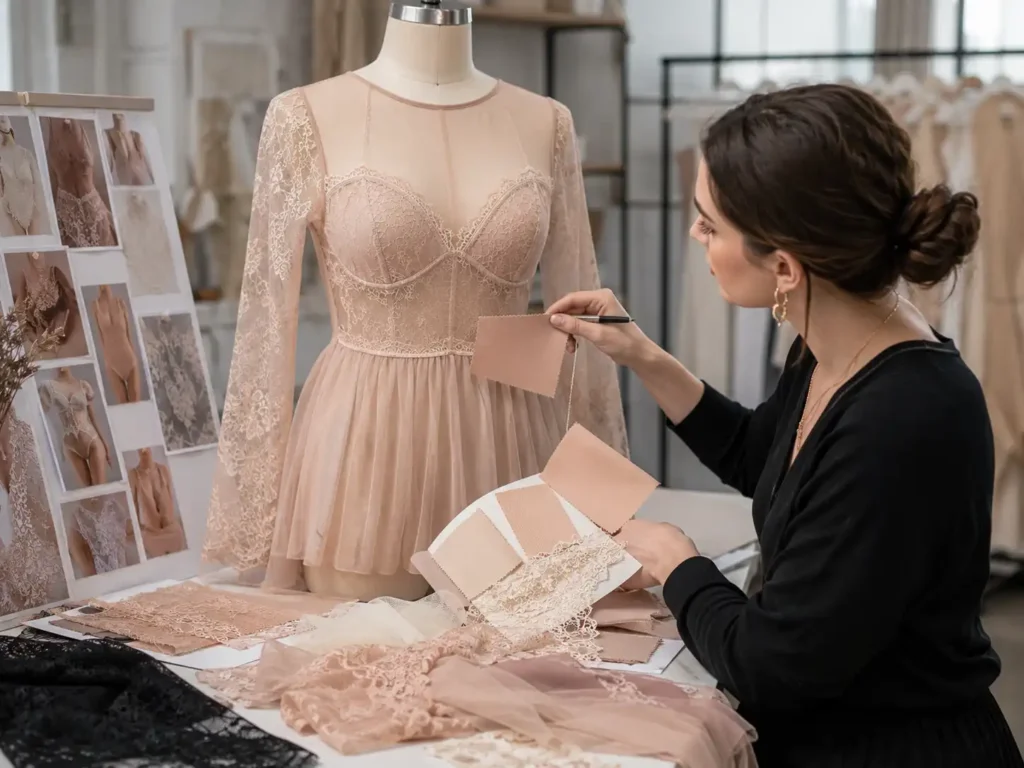
Mesh and lace products are sold through visual channels because transparency, texture, and placement create immediate impact. Production risk begins when the design does not define coverage, stretch direction, motif position, lining shape, and edge finishing. For fitted mesh dresses, recovery and power influence bust support and side-seam stability. For lace dresses, motif scale and border placement affect every panel, especially when the style includes cups, cut-outs, curved seams, or asymmetrical details.
- Coverage map: Sample comments identify where lining, cups, modesty panels, or double layers are required for the intended market.
- Motif placement: Lace repeats, borders, and visible joins are planned before bulk cutting; visual balance is checked at center front and key seams.
- Edge control: Binding, narrow hems, elastic finishes, overlocking, or clean-finish methods are selected according to stretch and comfort.
- Bulk inspection: Snags, holes, broken motifs, uneven transparency, and distorted panels are checked before packing.
Layered transparency also changes size grading. A lining that fits the base size can become too short or narrow in larger sizes if the grade rule is copied mechanically. Outer and inner layers must be reviewed as a garment system.
Jersey, Ponte, and Stretch Knits
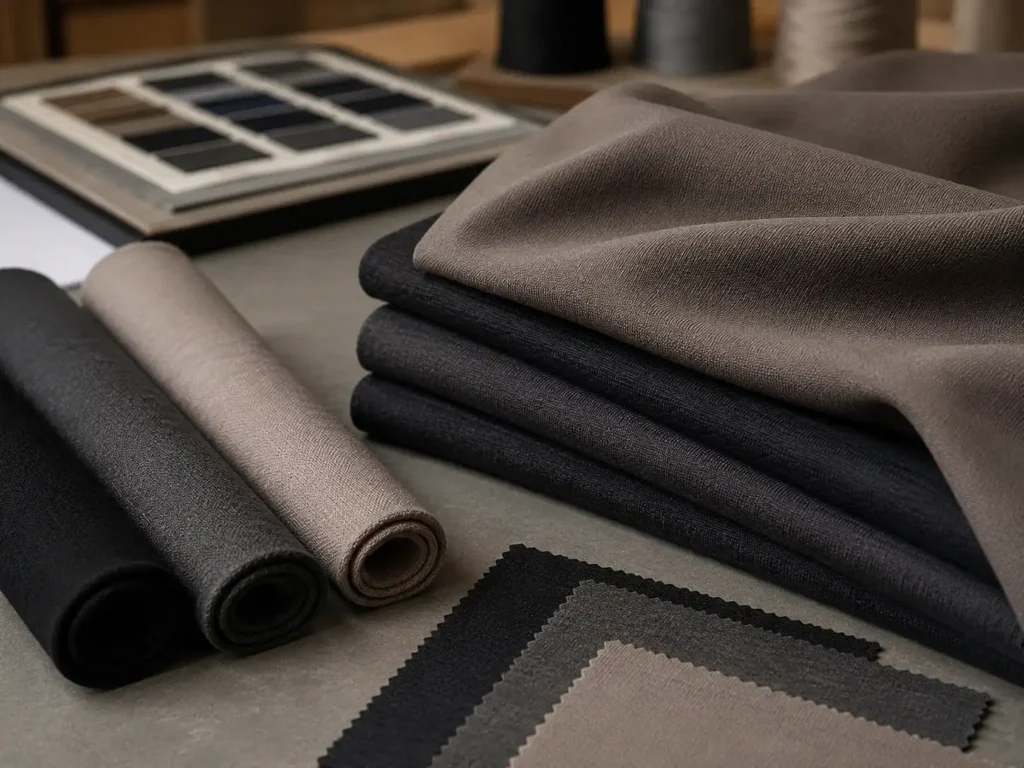
Knit dresses are often chosen for wide channel coverage because they combine comfort, compact packing, and repeat potential. Fabric composition alone does not predict performance. Weight, stretch percentage, stretch direction, recovery, torque, shrinkage, surface pilling, and opacity need review. A ruched bodycon dress may require high recovery and controlled negative ease, while a relaxed jersey midi needs stable shoulder and neckline construction to avoid growth during wear.
- Fit block: Bust, waist, hip, armhole, and length are developed around the actual stretch and recovery of the approved fabric.
- Seam selection: Stitch and seam types are selected to allow movement without popping, waving, or producing bulky edges.
- Wash behavior: Shrinkage and dimensional stability are considered before final measurements are released for bulk.
- Repeat orders: The fabric reference, composition, weight, stretch direction, and approved hand feel are saved for future production review.
Ponte and heavier knits can support cleaner shaping and more formal product positioning, but they can also create thick seams at ruching, waist joins, or concealed zippers. Construction should be simplified where needed without flattening the design concept.
Sequins, Chiffon, and Special Surfaces
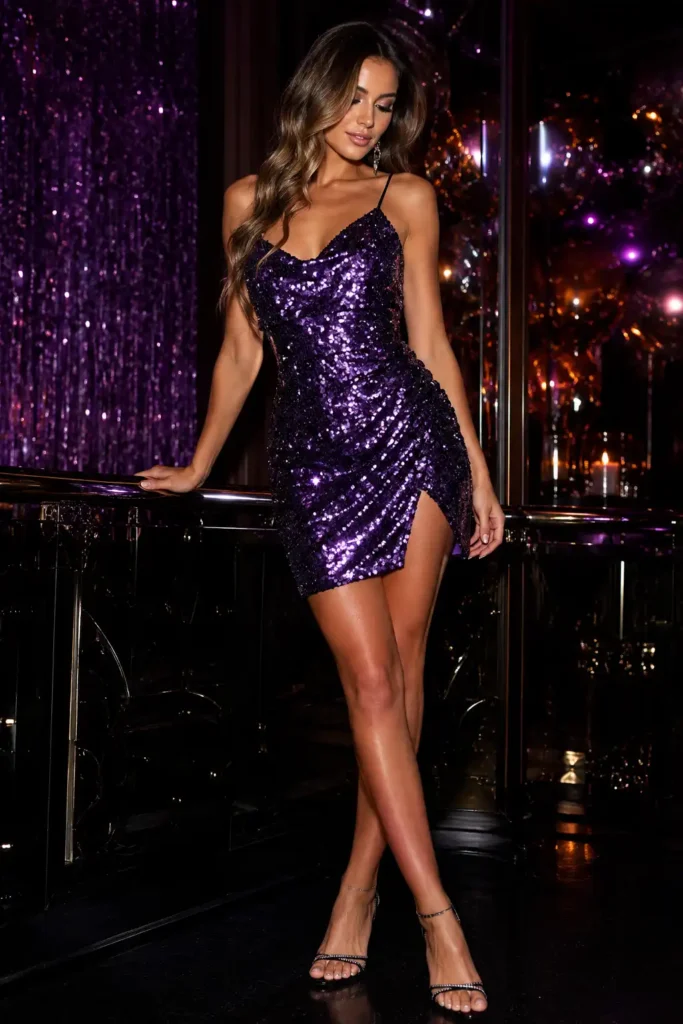
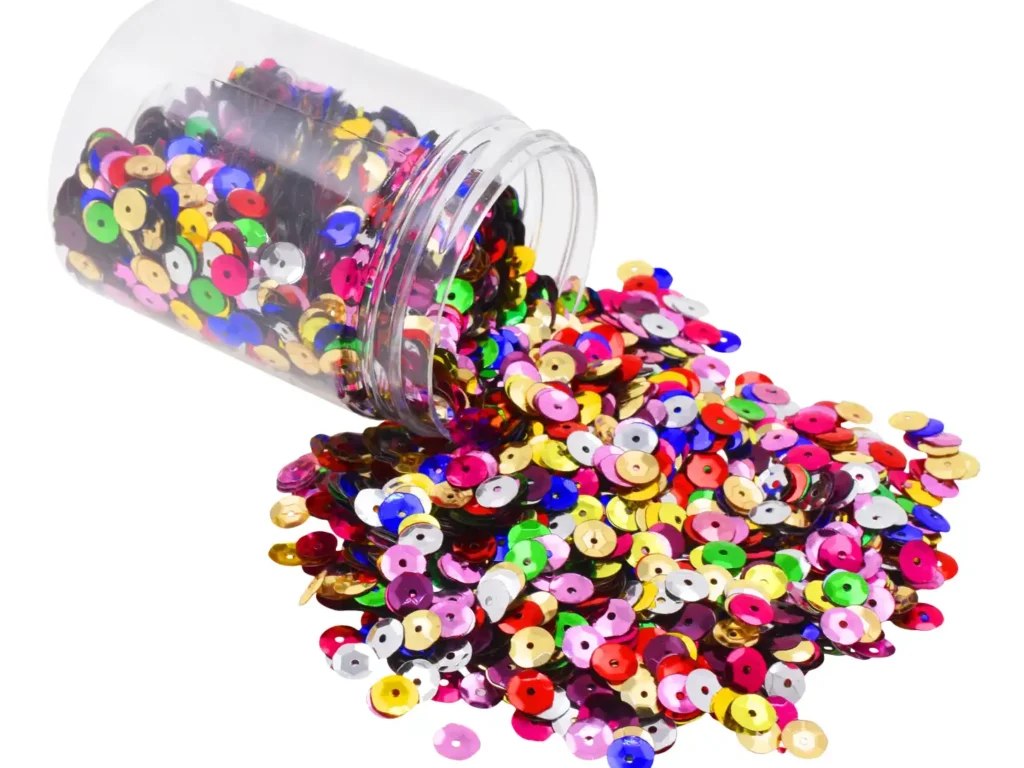
Sequins and chiffon sit at opposite ends of material weight, yet both demand careful handling. Sequin fabric requires protection from abrasion, sharp edges, broken threads, heavy seam buildup, and pressure during packing. Chiffon requires control of slippage, transparency, grain, narrow hems, lining, and hem balance. When combined in occasionwear, the production route becomes more complex because each layer responds differently to cutting, sewing, pressing, and movement.
- Sample validation: Embellishment placement, lining coverage, seam thickness, zipper clearance, and skin contact are reviewed before bulk.
- Workmanship control: Loose sequins, broken threads, skipped areas, uneven narrow hems, and twisted layers are included in the QC checklist.
- Pressing limits: Temperature, pressure, and protective layers are adjusted to avoid melting, flattening, shine, or fabric distortion.
- Transport protection: Folding, tissue placement, garment covers, and carton density are selected to reduce crushing and snag transfer.
Special surfaces can increase fabric MOQ, sample time, production time, and packing cost. Early review gives the merchandising team enough information to protect the visual result while deciding where construction or material substitutions are commercially sensible.
Project Review Before Pattern and Sample Development
Project Inputs
- Reference image or technical drawing
- Expected quantity by style and color
- Target size range and market
- Fabric or hand-feel direction
- Launch and delivery priorities
Feasibility Review
The development team reviews silhouette, fabric suitability, support needs, transparency, stretch, trims, closure method, finishing, packing risk, and production allocation. A tech pack is not executed mechanically when its construction would create poor fit or unstable bulk production. Risks and alternatives are discussed before the sample route is confirmed.
- Construction and fit risks
- Fabric and trim availability
- MOQ implications by component
- Sampling complexity
- Bulk production suitability
Development Plan
After the review, the next step may be fabric sourcing, pattern development, an original-sample analysis, a first sample, or a costed construction adjustment. The plan should identify the sample purpose, priority styles, approval gates, and information still required. A collection of 10 to 30 styles is normally prioritized rather than released into sampling without order.
- Priority by launch and photography
- Sample type and approval gate
- Open questions and responsibilities
- Estimated project-based timing
- Bulk planning assumptions
Sampling and Fit Control Before Channel Launch
Sampling converts a visual concept into an approved production standard. Each sample should answer a defined question about fit, construction, photography, grading, or bulk readiness rather than becoming an endless series of unrecorded changes.
From First Sample to Approved Standard
The first sample establishes silhouette, proportion, construction direction, fabric behavior, and initial cost reality. A fit sample focuses on body relationship and movement. A revised sample confirms agreed corrections. A photo-ready sample is prepared for campaign or ecommerce photography when the brand needs a strong visual garment before the bulk schedule is complete. A PP sample checks production-ready materials, trims, labels, workmanship, measurements, and packing direction. The Golden sample becomes the sealed reference for bulk production and inspection.
- First sample: Confirms the basic pattern, structure, fabric direction, and major design interpretation.
- Fit sample: Reviews bust, waist, hip, armhole, strap, neckline, length, slit, and movement on the intended fit standard.
- Revised sample: Confirms that written comments have been translated into pattern or construction changes.
- Photo-ready sample: Prioritizes visual finish and camera presentation while preserving a clear path to bulk execution.
- PP and Golden sample: Seal the production standard after materials, measurements, workmanship, and labels are confirmed.
For planning only, a straightforward first sample may require around 7 to 12 business days after suitable fabric and trims are available, while a complex corset, lace, sequin, or multi-layer style may require around 10 to 18 business days. Actual timing is reviewed by project because custom fabric, special trims, repeated fit corrections, or a large sample queue can change the schedule.
Fit Review by Garment Structure
Fit review is not limited to checking the bust, waist, and hip against a chart.
A strapless dress needs secure upper-body support and neckline stability.
A bodycon dress needs controlled stretch, recovery, and side-seam balance.
A maxi dress needs hem balance and safe movement.
A jumpsuit needs torso length, crotch depth, and seated comfort.
A corset dress needs cup position, boning direction, waist shaping, back closure alignment, and lining coverage.
- Upper body: Neckline depth, shoulder position, strap length, armhole coverage, cup placement, and back height.
- Torso shaping: Bust ease, waist placement, dart or princess-seam shaping, boning, ruching, and side-seam balance.
- Lower body: Hip ease, skirt sweep, slit height, hem movement, lining length, and seat comfort.
- Wear testing: Walking, sitting, raising arms, zipper operation, pull-on movement, and fabric recovery.
Written fit comments should refer to a measurement, location, or visible effect. Comments such as “make it better” or “more fitted” create inconsistent pattern decisions. Clear instructions such as “raise the front neckline 1.5 cm” or “reduce waist circumference by 2 cm while keeping hip ease” create an auditable sample history.
Size Grading for Wider Channel Coverage
A sample size that fits well does not automatically produce a stable XS to XL or extended-size range. Grade rules must consider how body proportions change across sizes. Bust projection, waist position, hip depth, armhole shape, strap width, neckline coverage, slit height, and overall length may need different increments. Stretch fabrics also require grade decisions based on actual recovery rather than a fixed woven rule.
- Core sizes: The base size and adjacent sizes are checked for proportional balance before the full run is released.
- Extended sizes: Support, coverage, ease, strap width, and length are reviewed rather than simply enlarged.
- Petite or tall: Waist position, bodice length, armhole, strap, slit, and total length may need separate adjustments.
- Measurement control: The approved grade rule and tolerance become part of the bulk inspection checklist.
Channel expansion often increases the size range because a brand website, marketplace, and wholesale network may serve different body profiles. Early size planning protects fit consistency and prevents packaging or barcode files from being created around an incomplete size list.
Sample Priority Across a Collection
A 10 to 30 style program should not move through sampling as one undifferentiated queue.
Priority can be assigned by campaign date, commercial importance, material risk, fit-block reuse, and production lead time. Hero styles needed for photography may move first, followed by core volume shapes, complex material styles, and color extensions. Shared base blocks can speed later styles, but only when the structure and fabric behavior are genuinely compatible.
- Priority A: Campaign, line-sheet, or key account styles with fixed review dates.
- Priority B: Core commercial products expected to carry the largest bulk quantity.
- Priority C: Complex or material-sensitive styles requiring early risk validation.
- Priority D: Colorways, print extensions, or related styles built from an approved base.
Priority does not mean skipping approval. It means focusing development capacity where a delay would create the greatest commercial impact. Weekly sample status should show fabric availability, pattern stage, sewing stage, review comments, next action, and required decision date.
Managing Multi-Style Programs Without Losing Detail

Style Master Record
- Style code and version
- Approved sample status
- Material and trim references
- Channel allocation record

BOM Confirmation
- Shell and lining details
- Trims and support materials
- Private-label components
- Packaging materials

Color and Size Plan
- Quantity by color
- Size ratio by style
- Channel quantity split
- Carton breakdown basis

Approval Gate
- Sample and fit approval
- Color and material approval
- PP and Golden sample sealing
- Packing and shipment release
Factory Allocation
- Product-type matching
- Capacity and timing check
- Document handover
- Common inspection standard

Status Reporting
- Milestone by style
- Open decision and owner
- Risk and corrective action
- Next scheduled update
Capacity Allocation by Dress Type and Construction
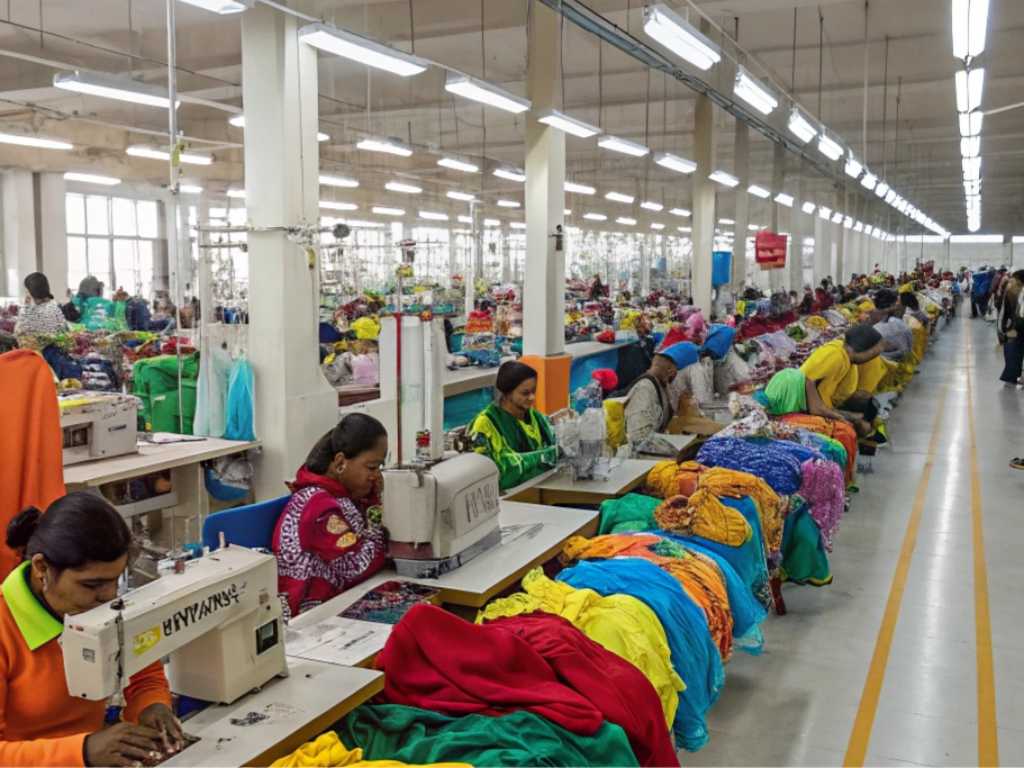
Capacity should be matched to product structure rather than quoted as one universal number. Jinfeng Apparel uses its owned factories, flexible lines, and long-term production partners according to material, workmanship, quantity, and schedule.
Product Group | Preferred Production Route | Primary Planning Focus | Typical Risk to Review |
Woven fashion dresses | Owned factories 1, 4, and 6 as primary woven resources | Fabric grain, darts, closures, lining, pressing | Puckering, balance, shade, and hem consistency |
Knit and jersey dresses | Owned factories 3 and 5 as primary knit resources | Stretch, recovery, shrinkage, seam selection | Growth, torque, seam waving, size drift |
Occasion and evening dresses | Owned factories 1 and 2 for structured or formal styles | Support, layers, long hems, finishing, packing | Fit failure, uneven hem, crushing, delayed approval |
Complex material styles | Factories 1, 2, and 3 plus suitable long-term partners | Lace, mesh, sequins, cups, boning, special handling | Damage, placement errors, seam buildup, rework |
Flexible repeat or replenishment | 6+ flexible lines assigned after record and material review | Saved pattern, BOM, color, size, and pack records | Material discontinuation or batch difference |
Large multi-style program | 6 owned factories plus 10+ long-term partners under one project plan | Priority, allocation, QC gates, multi-batch delivery | Uncontrolled handover or inconsistent standards |
Bulk Production Control From PP Approval to Packing
Bulk production starts only after the product standard is clear. Material, cutting, sewing, finishing, inspection, and packing controls are connected to the approved PP and Golden samples for each style.

Material Arrival and Pre-Production Review
Bulk fabric and trims are checked against the approved references before cutting. The review may cover color, hand feel, weight, width, stretch, shrinkage, surface defects, print direction, lace motif, sequin condition, zipper color, elastic recovery, labels, and packaging materials. Material lots are identified so shade groups can be separated. For custom-dyed or printed fabrics, approval records should link the selected color or print to the production lot.
- Fabric inspection: Visible defects, shade, width, hand feel, and relevant performance points are reviewed before release.
- Trim verification: Zippers, cups, boning, elastic, labels, hangtags, and packaging are checked against approved details.
- Pre-production meeting: Pattern, construction, measurement, workmanship, and packing risks are reviewed with the assigned team.
- Production documents: The factory receives the sealed sample, pattern, BOM, operation notes, size chart, and QC checklist.
Material approval is not a guarantee that every roll behaves identically. Fabric lot and shade controls remain active during cutting and sewing, especially for satin, dyed lace, chiffon, and stretch knits.

Cutting and Bundle Control
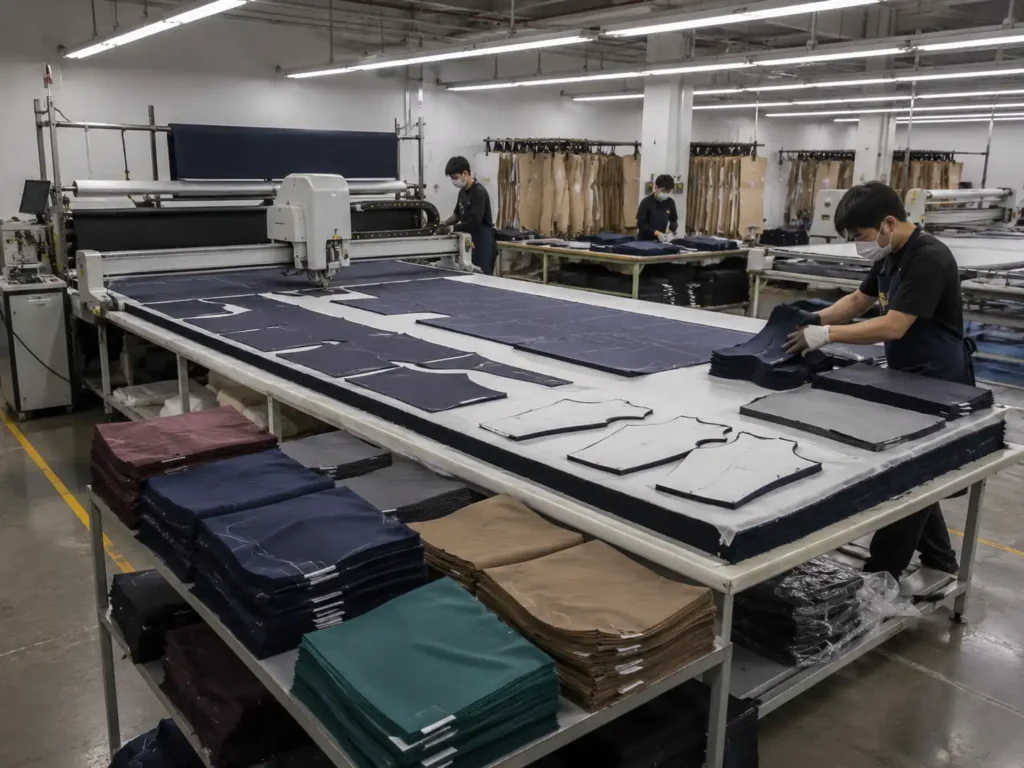
Cutting determines whether later sewing can produce balanced garments. Fabric relaxation may be required for knits or stretch materials. Grain direction, nap, print placement, satin face direction, lace motif, and panel matching are confirmed before bulk cutting. Cut parts are checked for shape, notches, size identification, and visible defects. Bundles stay separated by style, color, size, fabric lot, and production batch.
- Marker and grain: Pattern placement follows the approved direction and material behavior.
- Shade separation: Panels from different shade groups are not mixed into one garment.
- Bundle identity: Style, color, size, and quantity remain traceable through sewing.
- Cut-panel check: Critical pieces are reviewed before the entire quantity moves forward.
For print, lace, stripe, or placement-sensitive styles, selected panels may be matched or inspected separately. The level of matching is agreed during development because it influences material consumption and cost.

Sewing and In-Line Correction
The sewing team works from the approved construction and sample reference. In-line inspection looks for issues while the order is still adjustable: seam puckering, skipped stitches, tension problems, uneven ruching, twisted straps, zipper waves, cup or boning displacement, lining pull, hem distortion, and measurement drift. Early findings are communicated to production so corrections happen before the defect spreads across the full order.
- First output review: Initial garments are checked against the Golden sample before the line builds speed.
- Critical operations: Necklines, cups, zippers, slits, gathering, lace joins, and visible topstitching receive focused attention.
- Measurement checkpoints: Key dimensions are reviewed during production, not only after finishing.
- Corrective action: The cause, affected quantity, correction method, and recheck are recorded where needed.
Complex styles may need a slower start or a dedicated operation sequence. A realistic line plan protects workmanship better than forcing every product into the speed assumptions of a basic dress.

Finishing, Final Inspection, and Packing
Finished garments are trimmed, cleaned, pressed, measured, and inspected before packing. Pressing method must suit the material: satin can show shine or pressure marks, sequins can flatten or transfer heat, and chiffon can distort. Final inspection reviews appearance, workmanship, measurements, function, labels, and packaging. Channel-specific packing instructions are checked against the SKU list and carton plan.
- Appearance: Color, balance, drape, cleanliness, pressing, and visible workmanship.
- Function: Zippers, hooks, buttons, elastic, straps, closures, and movement.
- Measurements: Key points checked against the approved chart and tolerance.
- Packing: Labels, barcode, size sticker, folding, polybag, carton mark, and quantity.
For project planning, standard bulk production may be scheduled around 30 to 45 days after PP approval and material readiness, while complex occasionwear, special materials, or large multi-style programs may require around 45 to 60 days or more. Final timing depends on quantity, fabric lead time, sample approval, factory allocation, packing, and the requested shipment plan.
Production Schedules Built Around Commercial Deadlines
A delivery date is only the final result of several earlier gates. The working schedule should show when fabric, samples, approvals, production, inspection, packing, and transport must be completed for each sales channel.
Milestones That Control the Launch
A useful schedule begins with the campaign, inbound, wholesale, or store date and works backward.
Sample review, color approval, PP approval, fabric arrival, cutting, sewing, final inspection, packing, booking, and transit are given separate milestones.
Each milestone has an owner and a decision deadline. The schedule becomes a shared operating tool rather than a general promise.
- Campaign or line-sheet photography date
- Marketplace booking and warehouse receiving window
- Wholesale cancel date or retail delivery window
- PP approval and bulk material release date
- Inspection, packing, and shipment booking date
Risks That Move the Calendar
Most schedule pressure begins before sewing. Late sample comments, changing color quantities, unavailable fabric, unapproved labels, revised size ranges, delayed deposits, or a last-minute packaging guide can shift the critical path. The project team should show the likely schedule effect when a decision changes. Quietly absorbing every change creates hidden risk and usually causes a larger delay later.
- Material risk: Custom dyeing, printing, special lace, sequin, or trim development can extend preparation.
- Approval risk: Open fit, color, artwork, or packing decisions can stop material commitment or production release.
- Capacity risk: Peak-season line availability must be checked before the planned bulk start.
- Transport risk: Air, sea, and DDP routes have different booking, transit, customs, and receiving requirements.
Weekly Status by Style
Multi-style orders need a status view by style rather than one general percentage. The report should show current stage, completed quantity, open issue, next action, owner, and expected decision date. A style waiting for an approved zipper color should be visible separately from another style already in sewing. Clear status supports faster decisions from product, sourcing, merchandising, and operations teams.
- Fabric and trim readiness
- Sample or PP approval status
- Cutting and sewing progress
- QC findings and correction status
- Packing and shipment readiness
Schedule Recovery Options
When risk appears, recovery should protect the commercial priority rather than simply pushing all styles faster. Options may include resequencing sample priorities, moving an approved style ahead, consolidating colors, separating a complex style from the main drop, using an available equivalent fabric after approval, splitting shipment methods, or delivering part of the order to the highest-priority channel first. Every option has a cost, quality, or assortment effect that should be discussed before action.
A realistic recovery plan is more valuable than an unchanged promise. Jinfeng Apparel reviews available factory capacity, material status, QC requirements, and transport options before confirming a revised path.
Quality Control Across Product, SKU, and Channel

Incoming Material QC
- Fabric lot and shade records
- Trim and label verification
- Project-specific test support
Cutting QC
- Direction and placement
- Panel accuracy
- Bundle traceability

In-Line Inspection
- Early-output review
- Critical operation checks
- Correction before spread
Measurement Control
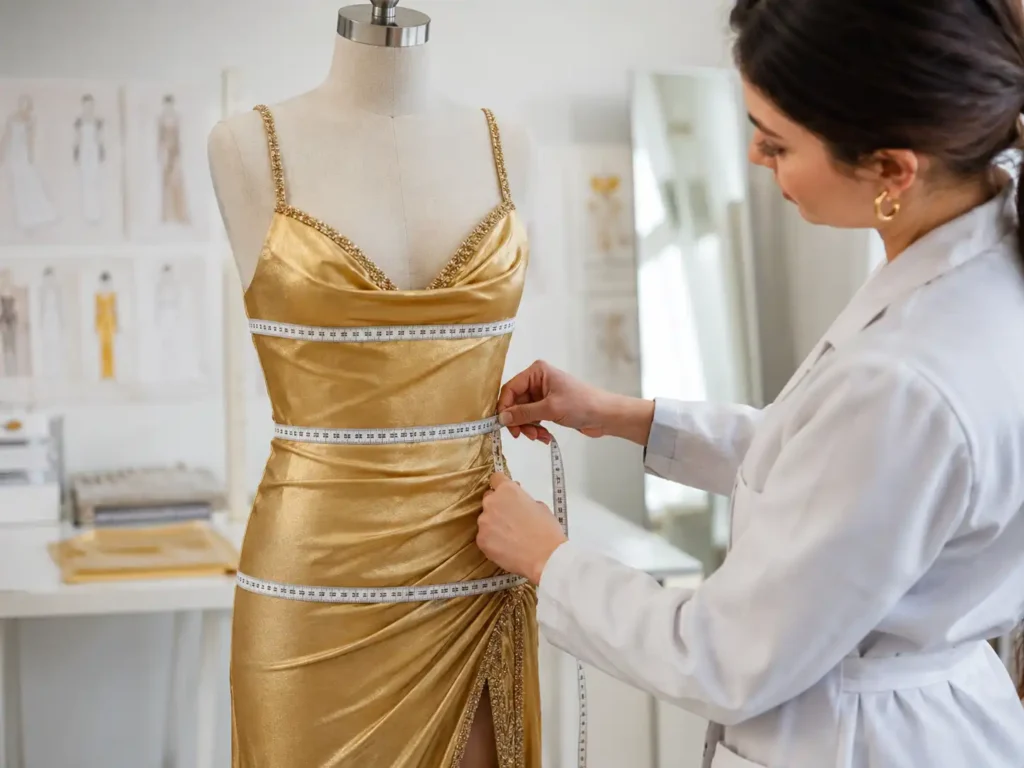
- Approved point-of-measure
- Size and grade consistency
- Tolerance-based review
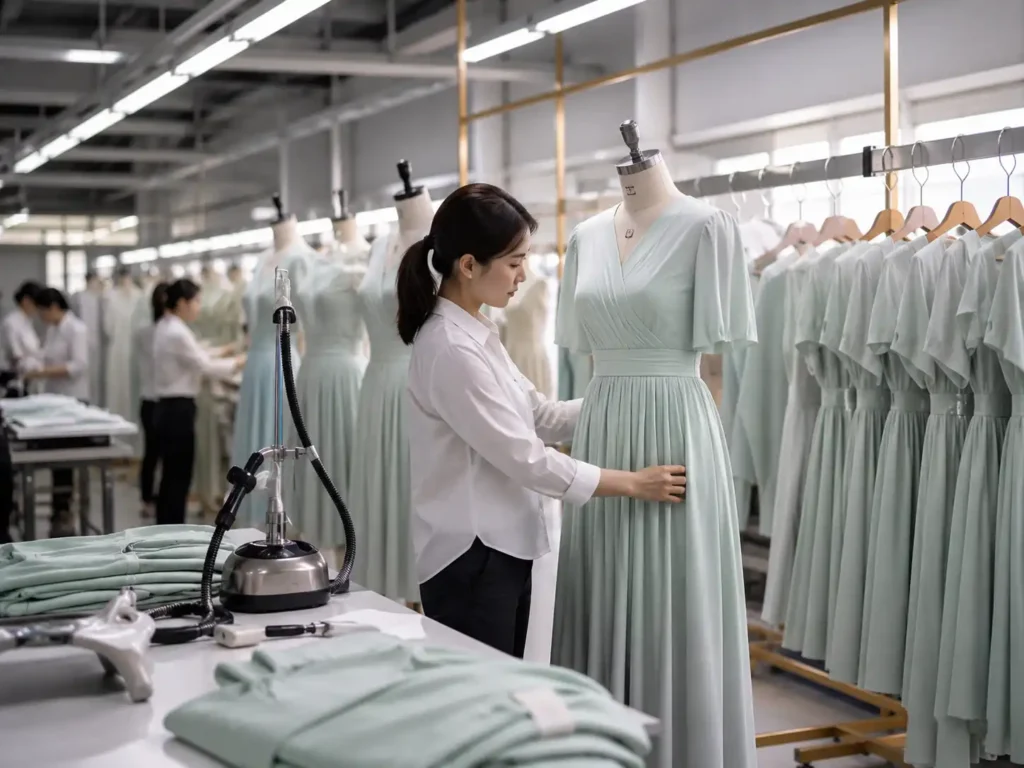
Garment Inspection
- Appearance and function
- Client quality manual support
- Third-party inspection coordination

Packing QC
- Style-color-size verification
- Barcode and label match
- Carton and destination check
Multi-Color, Multi-Size, and SKU Control
Color Approval
- Approved physical reference
- Material-specific color review
- Lot and batch identification
Shade Grouping
- Roll and lot separation
- No mixed garment panels
- Allocation record by batch
Size Grading
- Base and adjacent-size review
- Critical-point increments
- Extended-size adjustments
Bundle Identity
- Style-color-size code
- Material lot reference
- Production batch tracking
Barcode Mapping
- Master SKU file
- Pre-print verification
- Pack-line cross-check
Carton Breakdown
- Channel-specific ratios
- Destination carton marks
- Final quantity reconciliation
Private-Label Packaging for Every Sales Channel
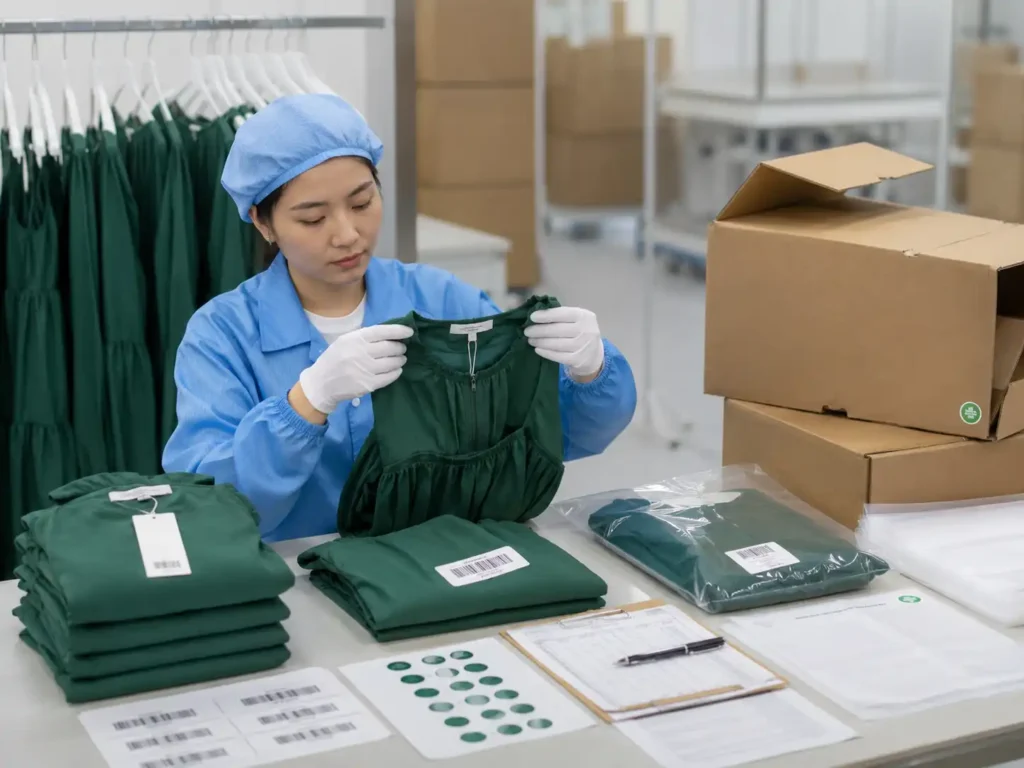
Ecommerce-Ready Packing
- Fold and protection standard
- SKU identification
- Warehouse carton mark
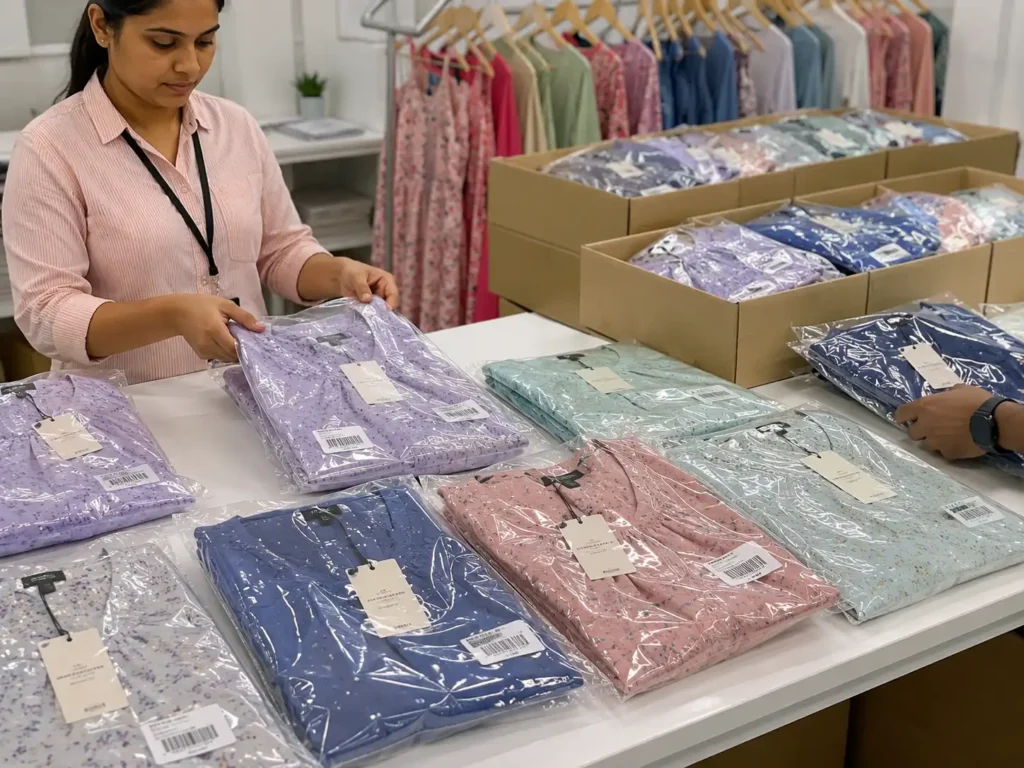
Marketplace Packing
- Platform barcode and warning
- Inbound carton label
- Receiving-file accuracy

Wholesale Pre-Packs
- Approved pre-pack ratio
- Account and price ticket
- Carton allocation record
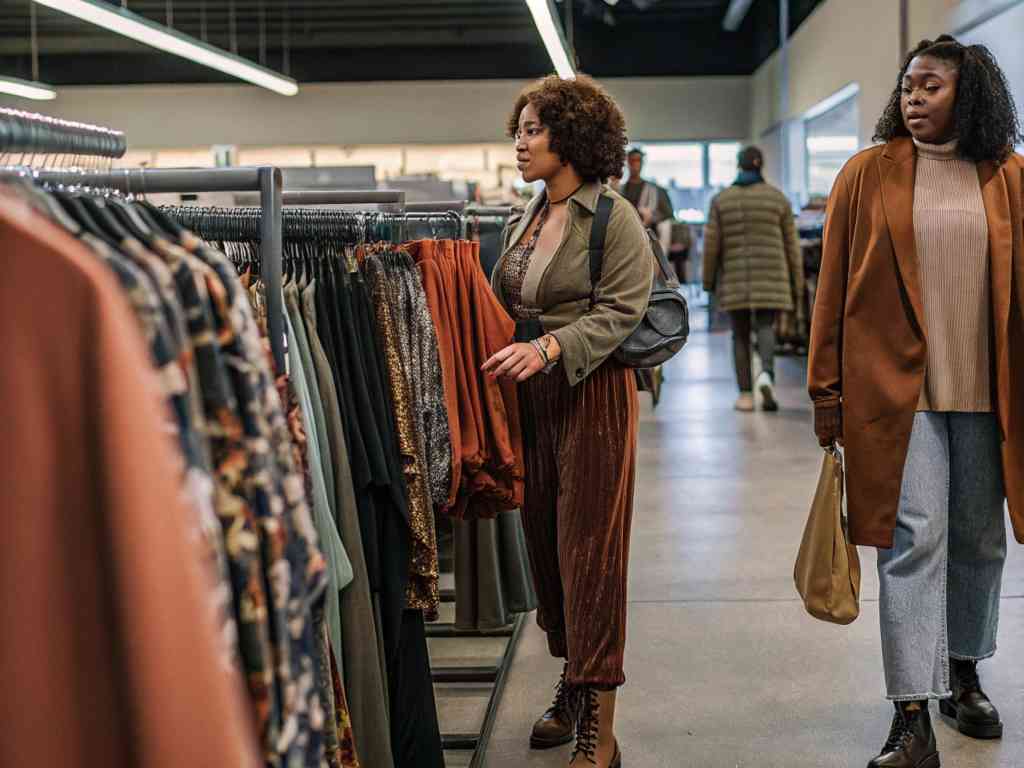
Retail-Ready Presentation
- Hanging or folding method
- Tag and security placement
- Presentation after transit

Boutique Chain Packs
- Store-level allocation
- Mixed-style pack control
- Style-specific protection

Export Carton Control
Export cartons connect the garment order to logistics documents. Carton dimensions, gross and net weight, carton mark, quantity, country of origin information, and destination reference are confirmed by project. Commercial invoice, packing list, and shipping instructions should match the final packed quantity.
- Carton marks and quantities
- Packing-list reconciliation
- Forwarder instruction support
Launch Calendars and Multi-Batch Delivery Planning
Multi-channel launches rarely move through one shipment date. Photography, marketplace inbound, wholesale delivery, retail launch, and replenishment may require different release points from one production program.
Build Backward From the Sales Date
A planning window often needs 14 to 20 weeks or more from initial development to commercial delivery, depending on style complexity, fabric lead time, sample rounds, order size, and transport.
A backward plan can place concept and file review first, followed by material sourcing, first samples, fit correction, PP approval, bulk material release, production, inspection, packing, and transit.
Complex occasionwear or custom materials should be opened earlier than repeatable core styles.
Dates are confirmed by project rather than used as automatic promises. The critical principle is to protect each approval gate. A compressed calendar without approved fit, material, or PP standards usually transfers time pressure into rework, air freight, or delayed channel receiving.
Separate Channel Delivery Windows
A brand website may need early units for launch stock, a marketplace may require a fixed inbound booking, and wholesale accounts may follow a cancel date. The order can be divided into planned shipment groups while production remains coordinated. Allocation should be decided before packing so the correct styles, colors, sizes, and labels enter each channel shipment.
- Launch stock: Priority quantity for brand ecommerce or campaign-related release.
- Marketplace stock: Quantity packed to the platform barcode and inbound guide.
- Wholesale or retail stock: Account or store packs with delivery-window control.
- Reserve or replenishment stock: Quantity retained or produced for later channel demand where planned.
Air, Sea, and Split Transport
Transport is selected according to commercial priority, garment value, volume, and receiving deadline. Air freight may protect a small launch quantity while the balance moves by sea. Sea freight supports larger planned stock when the calendar allows. DDP or other destination arrangements can be reviewed by project, with the exact route, duties, customs scope, delivery address, and receiving requirements confirmed before quotation.
Split transport should not be treated as a late emergency without cost review. Packing and documents must clearly identify which cartons belong to each route. The shipment plan also needs enough time for inspection, rework if required, booking, and document preparation.
Multi-Batch Production With One Standard
A collection may be produced in several batches because of channel launches, fabric availability, factory allocation, or repeat demand. Every batch should refer to the same approved pattern, graded measurements, BOM, color reference, workmanship standard, and packing instruction unless a controlled revision has been approved. Material batch differences are reviewed before production because exact appearance cannot be assumed months later.
- Golden sample and pattern record
- Approved size chart and tolerance
- Fabric, trim, and color references
- QC checklist and known-risk notes
- Channel pack and shipment history
Multi-Channel Dress Manufacturing Case Studies
Multi-channel fashion brands need a manufacturing partner that can maintain one product standard while adapting packaging, SKU management, and delivery requirements across different sales channels. Jinfeng Apparel supports ecommerce, marketplace, wholesale, retail, and social commerce programs through connected development and production systems.

Case Study 1: DTC Brand Launching Dresses Across Website and Marketplace Channels
A growing womenswear DTC brand planned a seasonal dress launch across:
- Brand website
- Online marketplace platforms
- Social commerce campaigns
The goal was to create products that could perform visually online while maintaining consistent bulk quality.
Program scope:
- 18 dress styles
- 42,000 pieces
- 5 color groups
- XS-XL size range
- Ecommerce and marketplace packaging
Products included:
- Satin slip dresses
- Mesh bodycon dresses
- Corset mini dresses
- Ruched jersey dresses
Channel Challenge
The brand needed one product standard but different channel requirements.
Website Requirements
Focused on:
- Photo-ready appearance
- Premium packaging
- Customer unboxing experience
Marketplace Requirements
Focused on:
- Barcode accuracy
- SKU identification
- Warehouse receiving rules
- Platform packaging requirements
Social Commerce Requirements
Focused on:
- Fast launch timing
- Visual impact
- Bestseller replenishment
Jinfeng Solution
Jinfeng created a unified product-control system.
Product Standard
Controlled:
- Final pattern
- Size chart
- Fabric approval
- PP sample
- Golden sample
Result
The brand achieved:
- One consistent dress standard across channels
- Accurate SKU management
- Successful multi-channel launch
- Clear replenishment foundation
The approved product records supported future seasonal drops.

Case Study 2: Wholesale and Retail Distribution Program for a Regional Fashion Brand
A regional womenswear brand supplied products through:
- Boutique stores
- Wholesale accounts
- Retail partners
The brand required reliable production while allowing different channel allocation.
Collection included:
- Occasion dresses
- Midi dresses
- Resort dresses
- Matching sets
Program scope:
- 26 styles
- 65,000 pieces
- Multiple store allocations
- Retail-ready packaging
Channel Challenge
Different buyers required different delivery formats.
Wholesale Requirements
Needed:
- Size ratio packing
- Account allocation
- Delivery windows
- Price ticket requirements
Retail Requirements
Needed:
- Store-ready presentation
- Labels
- Hanging or folding standards
- Consistent inventory
Jinfeng Solution
Jinfeng separated production and distribution control.
Manufacturing Standard
Maintained:
- One approved sample
- One measurement standard
- One QC system
Allocation Management
Controlled:
- Account quantity
- Store quantity
- Size ratio
- Color allocation
Packing Management
Prepared:
- Wholesale cartons
- Retail packs
- Channel-specific labels
- Shipping documents
Result
The brand achieved:
- Stable wholesale delivery
- Retail-ready products
- Reduced packing errors
- Better inventory coordination
The manufacturing system supported future regional expansion.

Case Study 3: Multi-Channel Bestseller Replenishment Program
An established fashion brand identified several bestselling dress styles across:
- Ecommerce
- Retail stores
- Marketplace channels
The brand wanted faster replenishment without losing the original product identity.
Core products:
- Bodycon dresses
- Satin occasion dresses
- Resort maxi dresses
Program scope:
- 10 repeat styles
- 28,000 pieces
- New seasonal colors
- Multiple shipment batches
Replenishment Challenge
The brand needed to maintain:
Original Product Identity
Including:
- Fit
- Fabric feel
- Color appearance
- Construction details
Channel Inventory Balance
Required:
- Website stock
- Retail inventory
- Marketplace availability
Jinfeng Solution
Jinfeng used previous production records.
Historical Product Files
Maintained:
- Patterns
- BOM
- Size charts
- Fabric references
- Trim details
New Color Control
Reviewed:
- Dye lots
- Fabric batch
- Lining matching
- Photography appearance
Multi-Batch Delivery
Planned:
- Priority channel shipment
- Retail replenishment
- Marketplace stock update
Result
The brand achieved:
- Faster repeat production
- Consistent bestseller quality
- Controlled new-color expansion
- Improved inventory flexibility
Successful styles continued as long-term commercial products.
Frequently Asked Questions for Multi-Channel Dress Production
Yes. The garment can follow one approved pattern, measurement chart, material standard, PP sample, and Golden sample while packaging, barcode, allocation, and shipment instructions vary by channel. Any product variation must be documented as a controlled version.
Each channel receives a separate approved packing instruction covering labels, barcode, stickers, folding, polybag, pre-pack ratio, carton marks, and destination references. Packing QC verifies the actual package against the relevant file before shipment.
Yes, subject to project review and capacity. Styles are prioritized by launch date, material risk, complexity, and quantity. Every style keeps its own sample version, BOM, grade rule, QC checklist, packing instruction, and production status.
MOQ starts from 200 pieces per style and color. Final MOQ depends on fabric availability, custom dyeing or printing, trims, construction, color split, size ratio, packaging, and the production schedule.
Timing is reviewed after fabric, trims, construction, sample purpose, quantity, and approval route are known. Straightforward first samples may take around 7 to 12 business days, while complex styles may take around 10 to 18. Bulk timing is confirmed after PP approval and material readiness.
Yes, by project. Please provide the defect classification, measurement tolerance, sampling plan, inspection level, and reporting requirements. Third-party inspection by a client-nominated agency can also be coordinated when included in the order plan.
Approved patterns, graded measurements, BOMs, fabric and color references, trims, workmanship notes, QC records, labels, and packing files can be retained. Material availability, dye lots, price, capacity, and any design change are reconfirmed before a repeat order.
Yes, when the split is planned and approved. Quantity, SKU, packing, carton marks, documents, route, and receiving deadlines must be clear for each shipment group. Air, sea, client-nominated forwarder, and DDP arrangements can be reviewed by project.
Yes. Jinfeng Apparel supports NDA-based cooperation and protects tech packs, samples, patterns, labels, packaging files, quantities, and launch information. Unpublished styles are not publicly displayed without permission.
Send available tech packs, reference images, line sheets, quantities by style and color, size range, fabric direction, target launch date, sales channels, labels, packing guide, and destination. Partial information can begin a feasibility discussion when the product direction is clear.

Start Your Multi-Channel Dress Manufacturing Review
The team will examine style complexity, fabric direction, fit and grading requirements, sample priorities, quantity by style and color, production allocation, private-label packing, channel-specific barcode or carton rules, launch timing, and the proposed delivery route. A useful review does not begin with a blind unit-price promise.
It begins with enough product and commercial information to identify the correct development and production path. Files are used for evaluation, sampling, manufacturing, quality control, packing, and delivery coordination, with NDA-based protection available for unpublished designs and brand materials.
- Company and brand name
- Tech pack, line sheet, or reference image
- Quantity per style and color
- Target size range and market
- Fabric and trim direction
- Sales channels and destination countries
- Private-label, barcode, and packaging requirements
- Campaign, launch, inbound, or delivery date
- Shipping destination and preferred route