 Skip to content
Dress Manufacturer for Monthly Drop Fashion Brands
Rolling dress development, production and replenishment built around a recurring launch calendar.
Jinfeng Apparel coordinates overlapping dress drops for established fashion brands that need new styles moving through development while approved styles enter bulk production and proven sellers return for replenishment.
- Program scale suited to 10-30 styles per release cycle and total order plans commonly ranging from 20,000 to 80,000 pieces.
- 2 sample rooms, 7+ senior pattern makers and 20+ sample machinists support parallel first samples, revisions, photo samples and PP samples.
- 6 owned women’s fashion factories, 10+ long-term satellite partners, 18+ sewing lines and 6+ flexible lines support product-based capacity allocation.
- 15+ QC inspectors and 12+ merchandisers coordinate fabric approval, production status, measurement control, packing accuracy and delivery milestones.
A Manufacturing System Built for Recurring Fashion Launches
Since 2008
Six Owned Factories
Ten Plus Partners
Two Sample Rooms
Pattern and Sampling
QC and Merchandising
Designed for Brands With a Defined Release Calendar
Best Program Fit
- Recurring dress launches with a visible three- to six-month calendar.
- Multi-style orders requiring sampling, revisions, PP approval and coordinated bulk production.
- Brands needing labels, barcodes, SKU control, packing ratios and export delivery.
- Programs with repeat-order potential and consistent fit or construction standards.
Information That Starts Planning
A useful initial review does not require every technical detail to be finished, but enough information must exist to judge feasibility and sequence.
A reference image explains silhouette and construction direction; quantity per style and color supports MOQ and capacity planning; launch dates determine sample priority; fabric preference defines material risk; size range affects grading; packaging requirements influence cost and lead time.
Clear early inputs allow the development team to identify missing decisions before sampling begins, reducing avoidable revisions later.
- Style list, tech packs, sketches, original samples or reference images.
- Quantity by style, color and size range.
- Photo sample, PP sample, warehouse and launch deadlines.
- Fabric, trim, label, barcode, packaging and freight requirements.
Six Risks That Can Break a Monthly Drop Calendar
Sample Congestion
Material Readiness
Approval Delays
Bulk Variation
Capacity Conflict
SKU and Packing Errors
A Rolling Production Model for Every Active Drop
Monthly fashion programs move several releases through different stages at once. Jinfeng Apparel separates development, approvals, production, replenishment and delivery into controlled workstreams so one late style does not automatically stop every other style.
Parallel Workstreams Replace One-Order-at-a-Time Production
A recurring program rarely follows a straight line. While one group of approved styles is being cut and sewn, another group may be receiving first-sample comments, a third may be waiting for final trims, and a proven bestseller may need urgent replenishment. Each workstream receives its own style list, version status, responsible team and target milestone. Product development remains connected to bulk production, but active work is not forced into one queue. The approach allows commercial priorities to move without losing control over styles that need more development time.
Typical workstreams include concept and feasibility review, fabric and trim direction, pattern development, first sample, revised sample, photo sample, PP sample, bulk material preparation, cutting, sewing, finishing, QC, packing and shipment. A style advances only when the information required for its next stage is available. For example, a photo sample may move forward for campaign timing while the final PP sample remains subject to bulk fabric, trim and measurement confirmation. The two purposes are recorded separately to avoid treating a presentation sample as the production standard.
Approval Gates Keep Speed From Turning Into Rework
Every active style needs clear gates. Fabric approval confirms composition, weight, color, hand feel, stretch, drape and bulk availability. Pattern approval confirms shape, balance and fit direction. PP approval confirms final materials, workmanship, measurements and appearance before bulk production.
Golden Sample sealing gives the production and inspection teams a physical reference. Packing approval confirms labels, barcodes, polybags, carton quantities and marks. Skipping a gate may create apparent speed at the beginning but usually transfers risk into bulk production, where correction costs rise sharply.
Jinfeng Apparel does not treat approval as a message buried in a chat thread. Comments are translated into updated patterns, measurements, BOM entries, sewing notes, trim specifications, packing files and QC checkpoints.
When a late design change affects material usage, seam construction, production efficiency or lead time, the change receives a formal review before implementation. A controlled gate protects both creative intent and launch timing.
A Weekly Control Rhythm Maintains Visibility
A structured weekly review covers style status, missing information, material readiness, sample completion, approval dates, production allocation, inspection plans and shipment milestones.
The purpose is not a long meeting; the purpose is early escalation. A delayed custom zipper, an unapproved lining color or an incomplete size chart should be visible before cutting begins. Active styles can then be re-prioritized without allowing hidden issues to surface at the end of the month.
For larger programs, the 12+ merchandising and order-follow-up team coordinates development and production records across multiple factories. The brand team receives a clearer view of what is ready, what is blocked, which decision is required and how a change may affect the launch. Rolling control is most effective when both sides maintain named decision owners and agreed response windows.

Dress Categories Planned for Continuous Monthly Releases

Commercial Mini and Midi

Bodycon and Corset

Party and Occasion

Satin and Slip

Mesh Lace Sequin

Resort Maxi and Sets
Plan Backward From Warehouse and Launch Dates
A manufacturing calendar becomes useful when it starts from the required warehouse receipt and works backward through shipment, packing, inspection, production, PP approval, sampling and material preparation. Every deadline must connect to a defined approval owner.
Start With the Commercial Date, Not the Sewing Date
A monthly launch normally includes more than the website release. Campaign photography, influencer seeding, showroom appointments, content production, marketplace setup, warehouse booking and regional distribution may each need product earlier than the public launch. The first planning step is therefore a date map: photo sample deadline, PP approval deadline, bulk completion target, final inspection window, cargo handover, warehouse receipt and release date. Once the map is visible, each style can be classified by urgency and commercial importance.
Bulk production timing is confirmed after PP approval, final fabric and trims are available, order quantities are fixed, packaging files are approved and the production unit is allocated. Providing a single delivery promise before these conditions exist creates false precision. Jinfeng Apparel issues a project schedule based on actual style complexity, quantity, material readiness, color and size splits, packing requirements, QC and logistics route.
Use Sample Windows That Reflect Product Complexity
Internal reference windows help plan development, but they are not blanket guarantees. A simple first sample commonly needs about 7-10 days. A standard dress normally requires 10-15 days. A medium-complex dress, set or jumpsuit often requires 12-18 days. Corset, strapless, lace, mesh, sequin and evening styles generally require 15-25 days. Styles needing custom fabric or special trims may require 20-35 days or the material supplier’s own schedule. Revised samples commonly require 7-15 days, while a PP sample normally requires 7-15 days after final materials are ready.
Development time is affected by fabric availability, custom color, print development, trim sourcing, pattern complexity, label preparation, comment quality and response speed. A monthly program gains time by preparing fabric platforms, size standards and trim directions before every style arrives at the sample room.
Protect the End of the Calendar With Real Buffers
No production calendar should assume every step will finish on its theoretical earliest date. Material reinspection, sample revision, repair, packing correction, inspection scheduling, export documents and cargo booking all need space. Buffers are assigned according to product risk. A basic jersey dress may need less finishing protection than a floor-length sequin dress with delicate surface work and individual packaging. Air freight may protect priority SKUs, while the remaining quantity moves by sea, but freight is a recovery tool rather than a substitute for controlled development.
Early warning rules are agreed before production. A missed approval date triggers a schedule review; an unavailable fabric triggers replacement or calendar re-sequencing; a failed inspection triggers repair and reinspection; a warehouse change triggers packing and document verification. The goal is a launch plan based on decisions, not optimism.

Prioritize Samples Across Ten to Thirty Active Styles
Large monthly programs need a visible order of work. Sample priority should reflect launch impact, material readiness, design risk and approval dependencies rather than the order in which messages arrive.
Rank Styles by Commercial Impact and Readiness
Hero products, campaign styles and high-volume commercial bodies receive early visibility because delays affect photography, advertising and revenue. A style with confirmed fabric, measurements and trims may move ahead of a visually urgent style that still lacks essential decisions. Priority is reviewed against five factors: launch date, commercial role, photo requirement, material readiness and construction complexity. The resulting queue gives both teams a reasoned view of which style should enter the sample room next.
For a 10-30 style order, not every design needs the same development path. Repeat bodies in new colors may require material and color confirmation rather than full pattern redevelopment. New silhouettes need first samples and fit review. Complex corset, lace, mesh or embellished styles need extra construction analysis. Separating these categories keeps repeatable styles moving while protecting enough development time for high-risk products.
Group Styles Around Shared Development Platforms
Style grouping improves speed without reducing control. Several designs may share a satin family, stretch jersey quality, base bodice, sleeve block, lining system, zipper specification or label package. Grouping creates consistent decisions and reduces repeated sourcing. A shared platform does not mean automatic approval: each new combination still requires review for garment weight, stretch, drape, transparency, seam stress and silhouette.
Grouping also improves cost planning. Fabric quantities can be consolidated when color, quality and supplier requirements align. Core trims can be reserved across several styles. Pattern teams can reuse approved balance points while adjusting neckline, skirt, sleeve or length. Production units receive more coherent style families instead of unrelated one-off instructions.
Control Revisions With a Single Version Record
Revision control is essential when several styles move at once. Each comment should identify the style number, sample version, measurement or construction point, requested action and approval owner. A revised neckline, changed waist measurement or new lining choice must appear in the updated pattern, size chart, BOM and sewing instructions. Old files are archived rather than mixed with the active production version.
Jinfeng Apparel can support photo samples, revised samples and PP samples, but their purposes remain distinct. A photo-ready sample may prioritize visual finish for campaign use. A PP sample must represent final bulk fabric, trims, workmanship and measurements. Naming and documenting each sample prevents a beautiful presentation piece from being mistaken for the production standard.

Reusable Fabric and Trim Platforms With Product-Level Control

Satin Platform
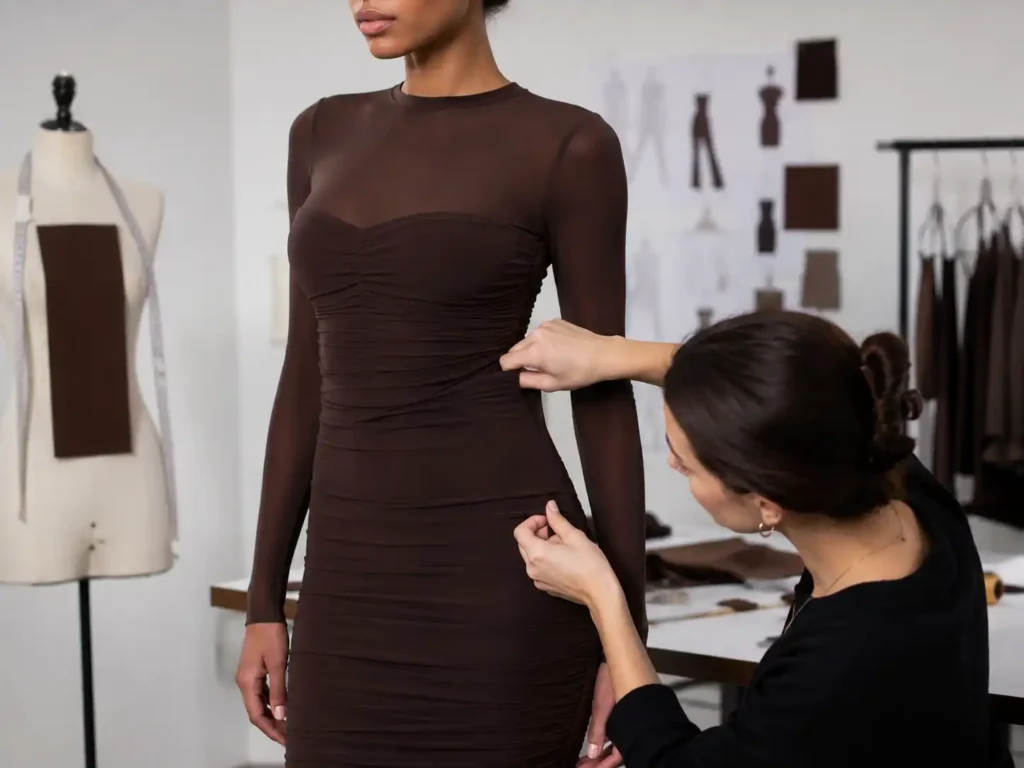
Stretch Jersey
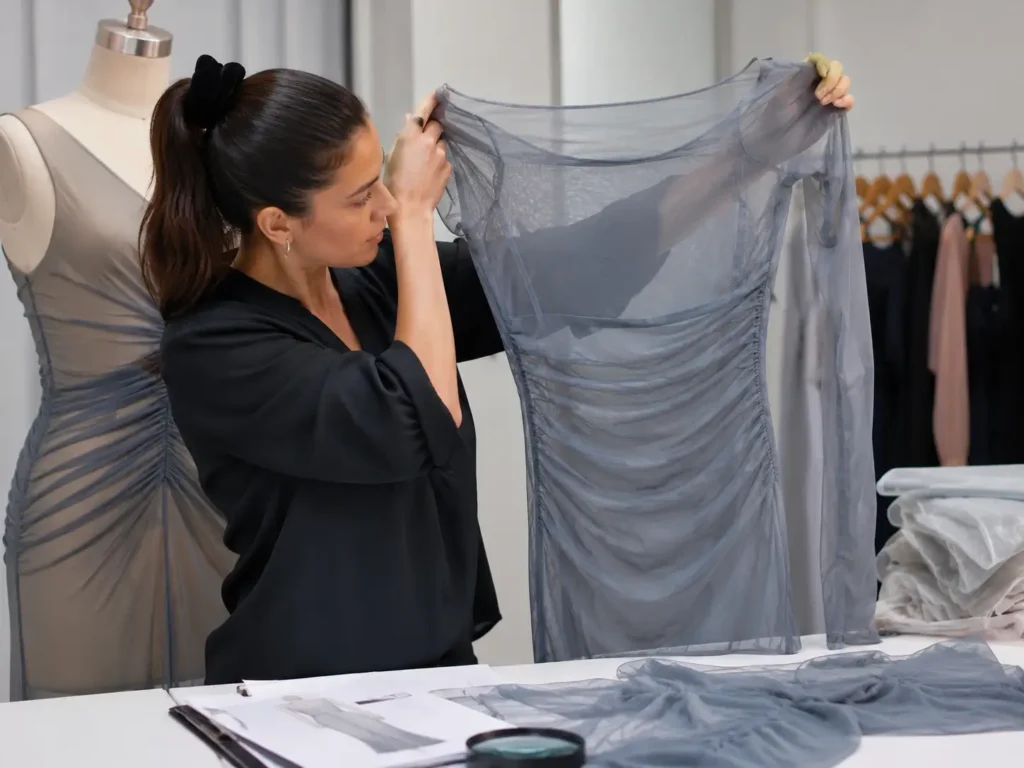
Mesh and Lining
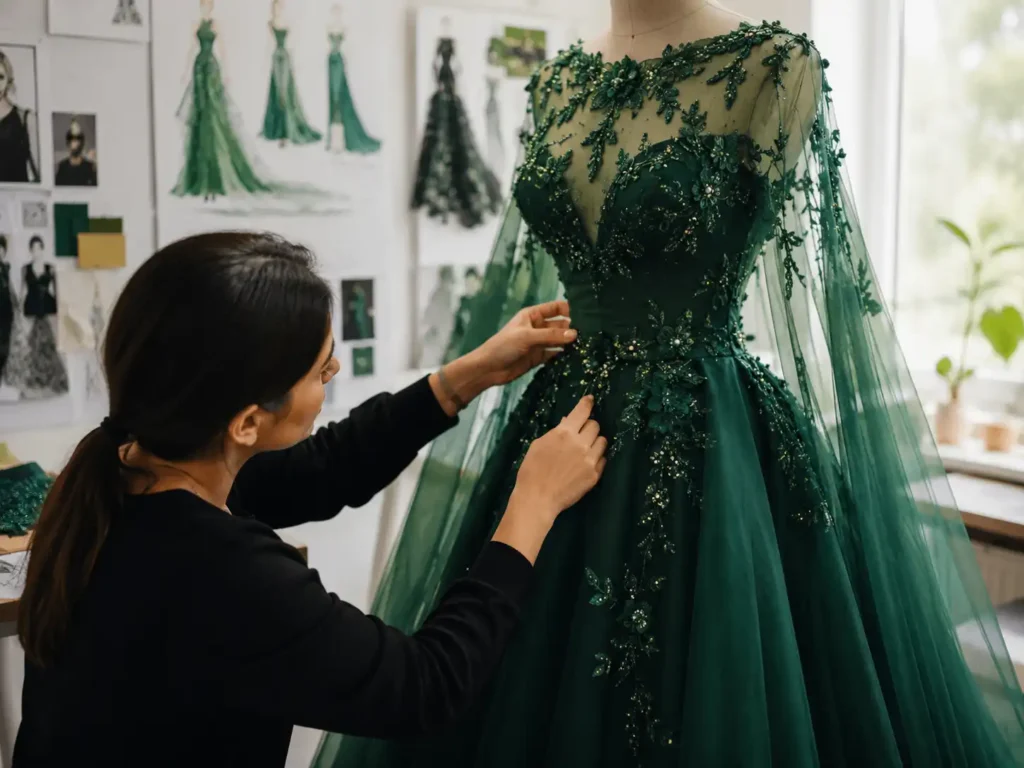
Lace and Embellishment
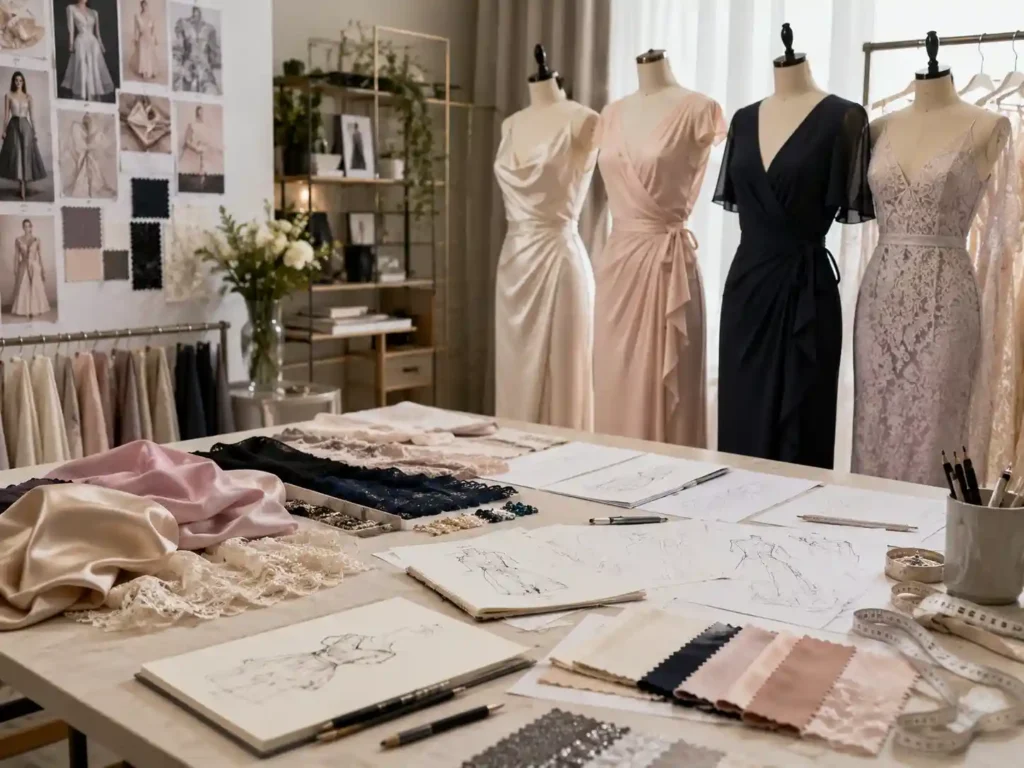
Resort Wovens

Structured Components
Keep Fit Consistent Across New Styles and Reorders
A monthly program can change silhouettes without changing the brand’s underlying size logic. Fit control links base patterns, measurement standards, grading, fabric behavior, sample comments and bulk tolerances across every active release.
Create a Stable Base Size Architecture
Fit begins with an agreed base size, target market and measurement method. Bust, high bust, underbust, waist, high hip, full hip, shoulder, armhole, strap, neckline, sleeve, dress length and slit position are reviewed according to the product.
A bodycon mini, woven corset midi and bias-cut satin maxi cannot use identical ease rules, yet their size progression should still feel coherent within the same brand.
Approved bodies can become pattern references for future releases. A familiar bodice may support a new sleeve, neckline or skirt.
A proven bodycon block may support a new fabric after stretch and recovery are verified. Reuse saves development time only when the pattern version and fabric assumptions are recorded clearly.
Control Grading and Measurement Tolerance
Size grading translates the approved base size into a complete range. Grade rules should protect proportion, not simply add the same amount everywhere. Neckline width, strap position, cup placement, waist level, slit height and garment length need deliberate progression across sizes. Extended sizes may require additional fit review rather than relying only on mathematical grading.
Internal reference tolerances include approximately +/-1 cm at bust and waist, +/-1.5 cm at hip, +/-0.8 cm at shoulder width, +/-0.5 cm at strap length, +/-1 cm at standard dress length and slit height, and +/-1.5 cm at long-dress length and hem circumference. Stretch, lace, mesh, chiffon, sequin and complex structures require product-specific confirmation. When a tech pack defines a different tolerance, the approved brand standard takes priority.
Validate Fit Against Fabric Behavior
A pattern is not independent from material. Stretch percentage changes fitted measurements; recovery affects whether the garment returns after wear; drape changes waist and hip appearance; slippery satin affects seam stability; mesh layers affect compression; lining may restrict movement. First samples therefore evaluate both shape and material behavior. When fabric changes, Jinfeng Apparel rechecks pattern, lining, construction, cost and schedule impact rather than assuming the approved fit will remain unchanged.
Preserve Reorder Consistency
Repeat orders use retained pattern versions, measurement charts, BOM, approved fabric references, trim details, sewing instructions, packing requirements and Golden Sample records. New material batches are still checked for color, hand feel, stretch, weight and shrinkage. A reorder is faster because prior decisions are available, but it is not exempt from incoming inspection and production control. The goal is recognizable fit across releases, even when the calendar moves quickly.
Allocate Capacity Across New Drops and Replenishment
Capacity planning must reflect product structure, required skill, material arrival and commercial deadline. Jinfeng Apparel combines owned factories, specialist partners, standard lines and flexible lines to place each style in a suitable production route.
Route Products by Construction and Workmanship
The production system includes 6 owned women’s fashion factories, 10+ long-term satellite partners, 18+ sewing lines and 6+ flexible production lines. Standard commercial dresses can use efficient lines with stable operation sequences. Multi-style runs, mixed fabrics or changing quantities can use flexible lines. Corset, lace, mesh, sequin, satin and evening products are directed to teams familiar with their workmanship and finishing requirements. Product routing aims to protect quality and schedule rather than placing every garment in the first open line.
A routing decision also considers fabric handling, cutting difficulty, operation count, pressing, inspection and packing. Slippery satin needs different control from stable jersey. Sequin cutting and seam cleaning require different labor from a basic woven mini. Long occasion dresses use more finishing space and packing attention. Matching the product to the production unit reduces avoidable learning during bulk production.
Reserve Capacity Through Rolling Forecasts
Monthly programs become more reliable when the next three to six months are visible, even if final quantities remain under review. Forecasts show expected style count, product mix, target quantity range, fabric families, launch sequence and probable replenishment.
Jinfeng Apparel can then identify where material booking, sample-room capacity, sewing lines, QC windows and packing resources may become tight.
Regular monthly capacity exceeds 100,000 pieces across the coordinated system, depending on product mix and schedule. Capacity is not treated as unlimited.
A release with 20 heavily embellished evening dresses requires a different allocation from 20 commercial jersey dresses.
Final planning follows approved styles, material readiness and confirmed order quantities.
Separate Replenishment From New Development
A bestseller reorder should not automatically displace a scheduled launch, and a new drop should not make a proven seller unavailable for months.
Replenishment is reviewed against retained patterns, material availability, required quantity and selling urgency. Smaller urgent quantities may use a flexible line or priority batch; larger quantities may return to the original production unit. The chosen route is recorded alongside the new-product calendar.
Contingency planning may include alternate qualified production units, approved material substitutes, split shipment, priority sizes or colors, and phased packing. Any change remains subject to brand approval and the same production files, Golden Sample references and QC standards.
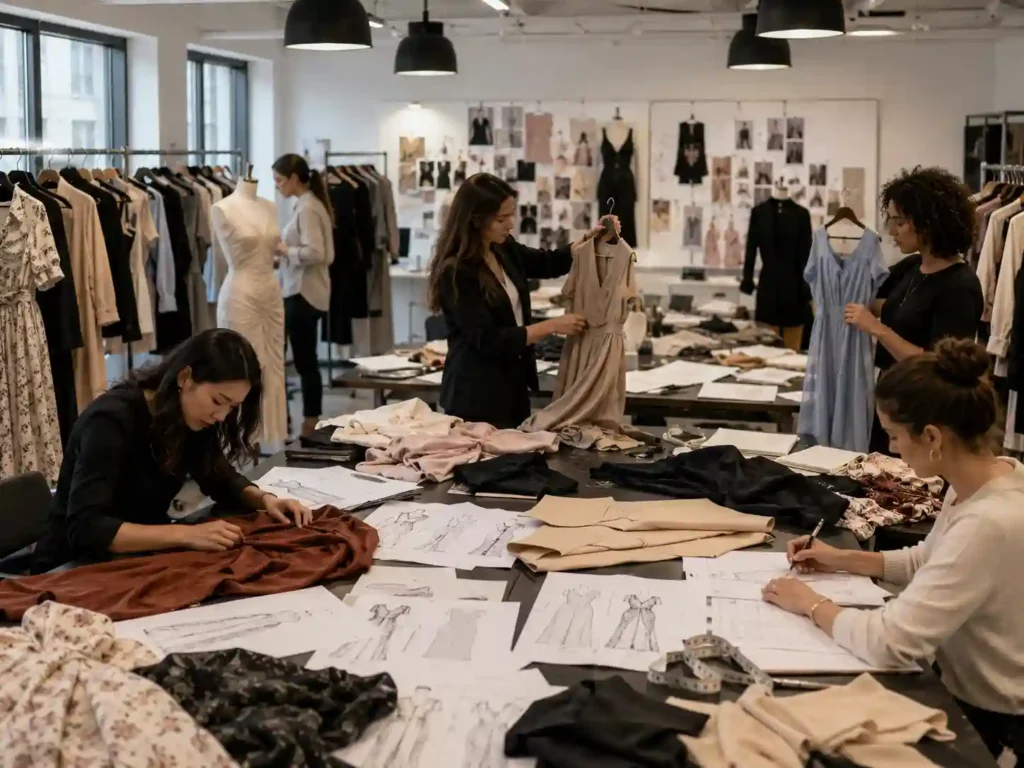
Transfer Approved Samples Into Repeatable Bulk Production
Sample approval becomes commercially valuable only when every approved decision reaches the production and QC teams. Jinfeng Apparel uses controlled files, PP approval and Golden Sample references to reduce drift between development and bulk garments.
Lock the PP Sample Before Cutting
The PP sample represents the final production direction. Fabric, lining, trims, color, measurements, construction, labels and visible finish should match the intended bulk standard. Open issues are listed and closed before cutting. A photo-ready sample may support a campaign, but it does not replace PP approval when its material, construction or measurements differ from bulk requirements.
Major changes after PP approval – such as new fabric, changed neckline, revised length, added embellishment or different packaging – require cost, material, pattern, production and schedule review. Formal change control prevents one late request from reaching only part of the production team.
Build a Complete Production File
The production file includes the approved pattern version, size chart, grade rules, measurement tolerance, BOM, fabric approval, trim approval, sewing instructions, label placement, packing instructions, order quantity, color and size breakdown, QC checklist and shipment requirements. Visual details are supported by photos or marked diagrams where written instructions alone may be misunderstood.
Every style remains separated by style number, color, size, sample version and production order. Multi-style programs use clear file naming and revision dates. Production does not rely on a single image, a chat message or an outdated tech pack.
Use the Golden Sample as a Physical Standard
A sealed Golden Sample gives cutting, sewing, finishing, QC and packing teams a physical reference for shape, workmanship, appearance and presentation. It is especially valuable for satin shine, ruching, lace placement, corset structure, neckline shape, slit height and complex trim position. Inspection findings can be compared against the same reference rather than personal judgement.
Carry Approved Details Into Reorders
Repeat production uses the approved pattern, measurement chart, BOM, material references, sewing instructions, packing file and Golden Sample record. New fabric batches and replacement trims are approved before use. Historical defect findings and repair notes are reviewed so a resolved issue does not reappear in the next monthly replenishment.

Quality Control Built Around Each Dress Category

Incoming Materials

Cutting Control

Sewing and Inline

Measurement Control

Finishing Review

Packing and Final
Plan MOQ and Cost Across a Multi-Style Drop
MOQ starts from 200 pieces per style and color. Final quantity, cost and lead-time conditions depend on material availability, color development, construction, trims, size split, packing and production schedule. Early consolidation can improve efficiency without weakening product direction.
| Planning Variable | MOQ Effect | Cost and Timing Effect | Recommended Direction |
|---|---|---|---|
| Stock fabric and colors | Best support for the standard starting MOQ. | Lower development risk and faster material confirmation. | Build several styles around approved core qualities and available color groups. |
| Custom dyeing or printing | May increase according to mill minimums and color quantity. | Adds lab dip, strike-off, bulk approval and supplier lead time. | Consolidate volume by fabric quality and confirm colors before sample priority is locked. |
| Special lace or sequins | Supplier minimums may exceed garment MOQ. | Higher material waste, workmanship and inspection intensity. | Reserve material early and limit unnecessary variation across one release. |
| Custom trims or hardware | May require component-level minimums. | Tooling, color matching and development can extend timing. | Use approved core components where they suit the design and comfort requirement. |
| Complex construction | Does not always change fabric MOQ, but affects production allocation. | More operations, slower line output and stronger QC needs. | Separate commercial bodies from corset, embellished and formal styles during planning. |
| Many colors and sizes | Excessive splitting can make each SKU inefficient. | Increases cutting, label, packing and inventory complexity. | Prioritize commercially important colors and use a planned size ratio. |
| Private-label packing | Custom packaging suppliers may set their own minimums. | Adds artwork approval, barcode control, packing labor and materials. | Finalize labels, polybags and carton marks before PP approval. |
| Split shipment | Garment MOQ remains style/color based. | Air and sea combinations change freight, packing and document work. | Reserve air freight for priority SKUs and move the main quantity by the planned route. |
Control Labels, SKUs and Packing for Every Release
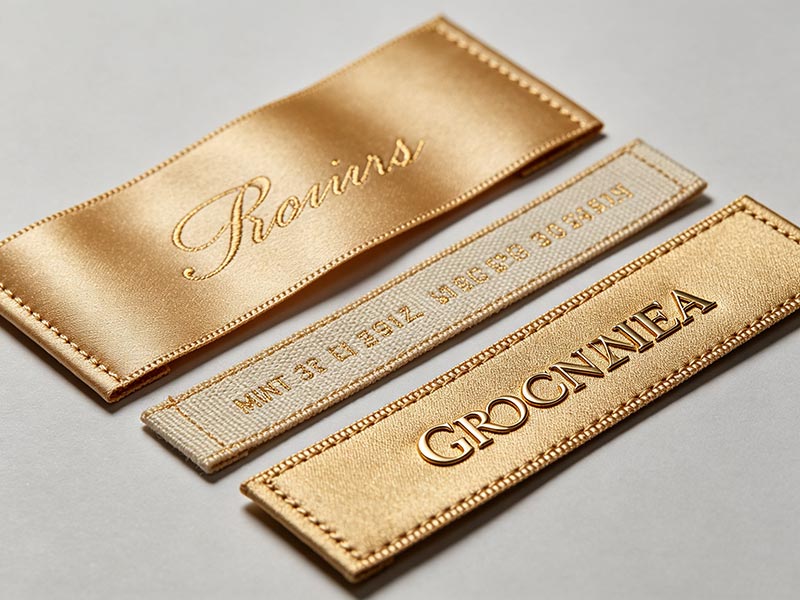
Main Brand Labels

Size and Care Labels
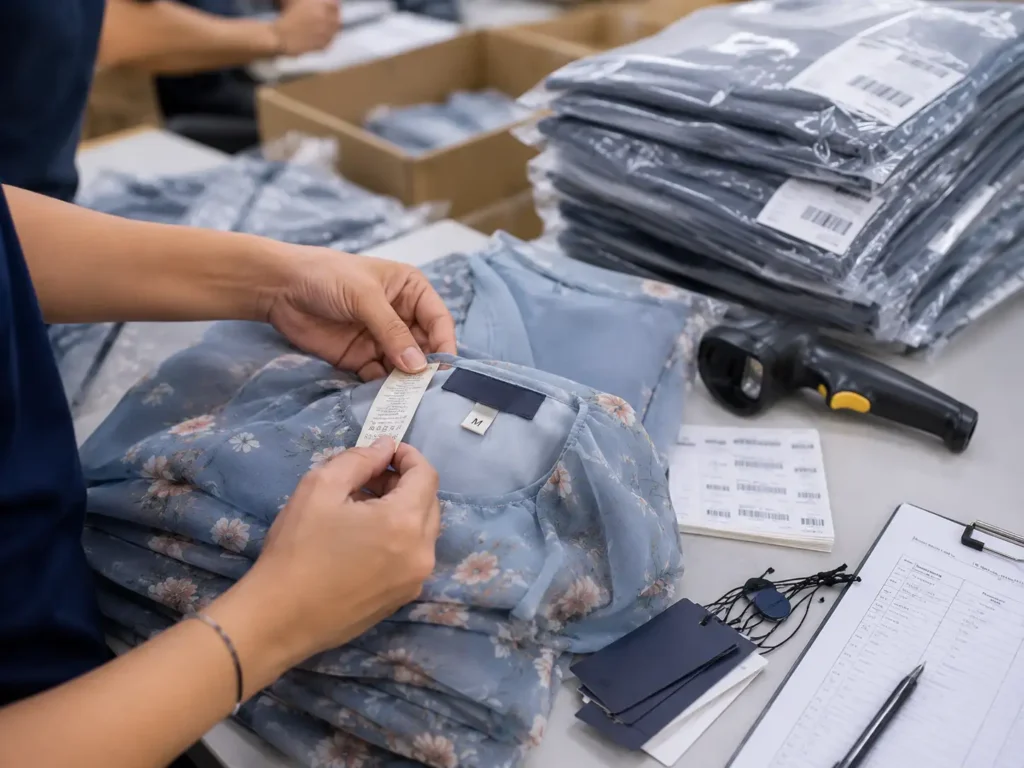
Hangtags and Tickets
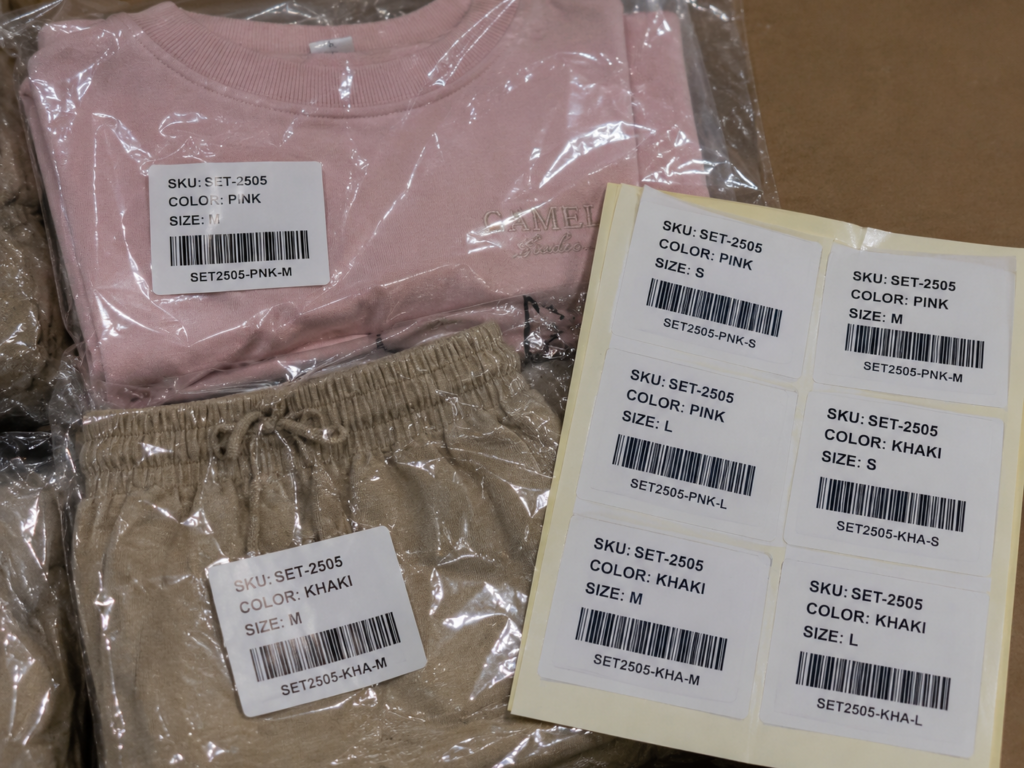
Barcode and SKU Labels
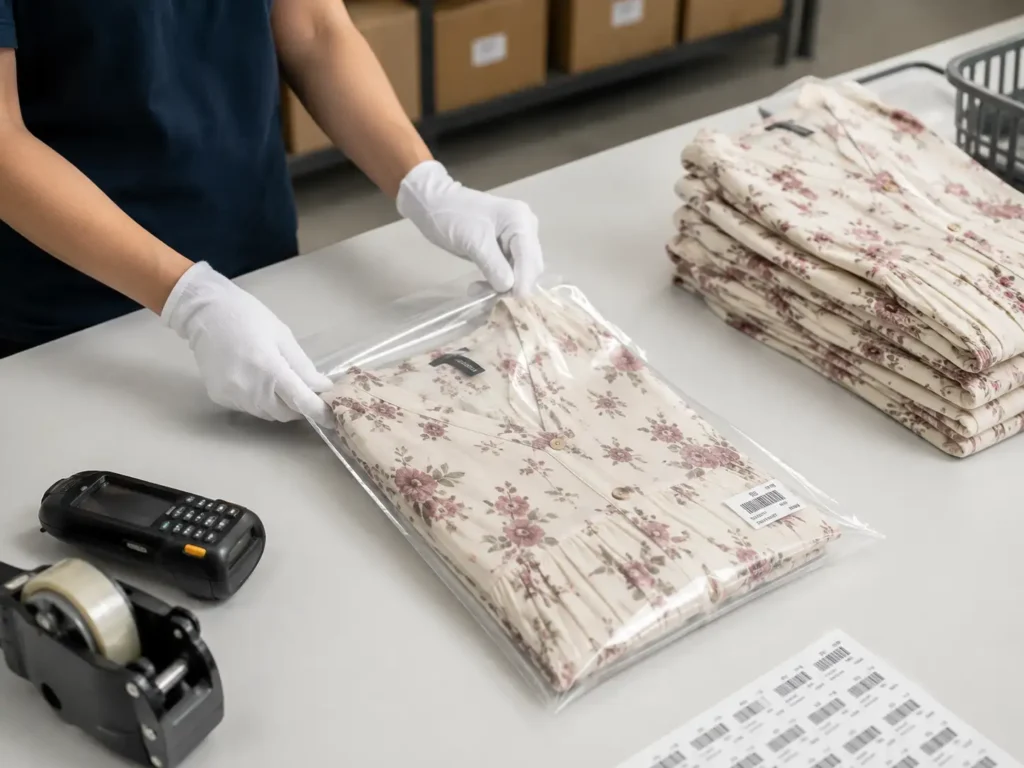
Polybags and Protection
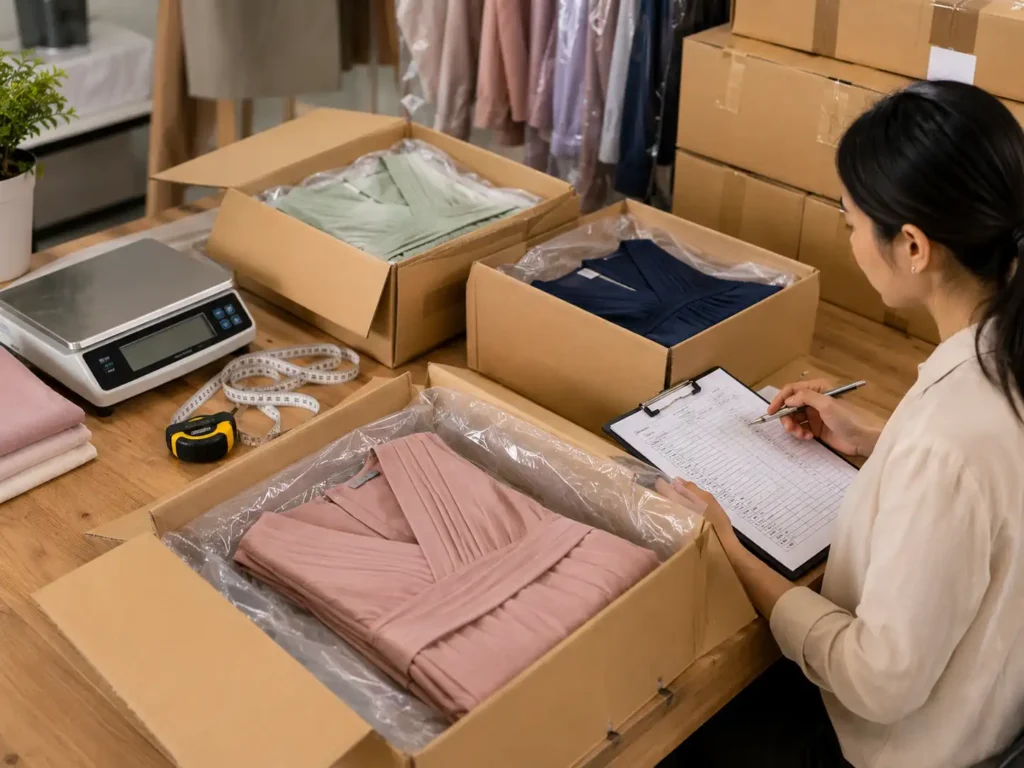
Cartons and Ratios
Use Multi-Batch Delivery to Protect Launch Priorities
One shipment method does not suit every style in a monthly program. Delivery planning can separate campaign samples, priority selling SKUs, main bulk quantities and regional warehouse orders while preserving packing and document accuracy.
Release Priority Styles First
Hero styles, launch colors or critical sizes may need an earlier production and packing sequence. Priority release is feasible when materials, PP approval and line allocation are complete. The first batch receives its own final inspection, packing list, carton marks and shipment record. Remaining styles continue through the main calendar instead of being forced into an unrealistic common completion date.
Combine Air and Sea Around Commercial Value
Air freight can protect photography, early sales or urgent replenishment. Sea freight remains more efficient for the main order. A split route should be planned before packing so carton quantity, weight, labels, documents and warehouse destinations remain correct. Freight decisions are reviewed against product value, margin, required date and quantity rather than applying the fastest route to every piece.
Match Packing to Warehouse Requirements
Warehouses may require specific barcodes, carton labels, size ratios, advance packing information, pallet rules or delivery appointments. Jinfeng Apparel can coordinate commercial invoice, packing list, carton marks, forwarder handover and shipment documents according to the agreed trade and logistics arrangement. A destination change after packing requires renewed label and document review.
Keep Every Batch Traceable
Each delivery batch is linked to style, color, size, quantity, inspection status, carton range and freight route. Traceability supports warehouse receiving, issue investigation and later replenishment. A partial shipment is not treated as a collection of loose cartons; it remains a documented part of the total order.
Maintain Visibility Across Development, Production and Delivery

Development Control
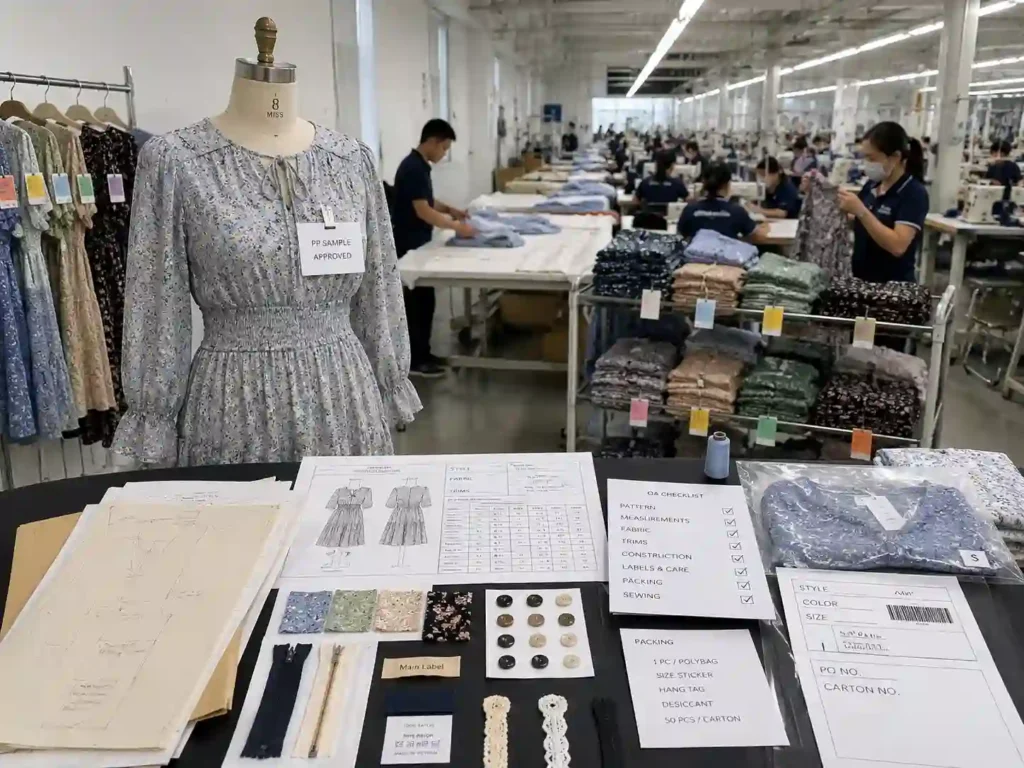
Production Control
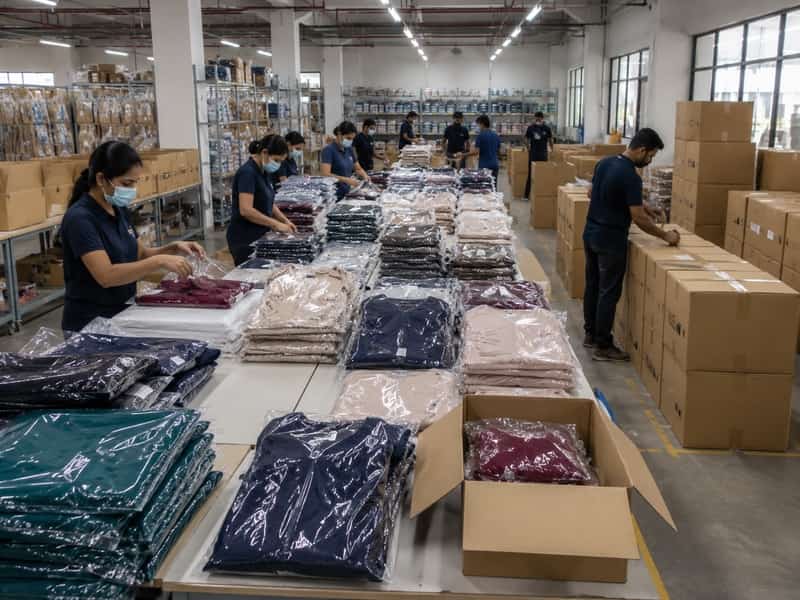
Delivery Control
Protect Designs and Qualify Every Production Route
NDA and Design Protection
Factory and Team Evidence
Inspection Transparency
Compliance by Project
Representative Monthly Drop Program With 18 Active Styles
The example below reflects a common operating scale for established fashion programs: 10-30 styles and total order quantities between 20,000 and 80,000 pieces. Figures illustrate planning logic rather than identify a named brand or promise an identical schedule for every order.
| Workstream | Style and Unit Plan | Development or Production Status | Primary Control |
|---|---|---|---|
| New launch styles | 7 styles / 13,800 pcs | Three first samples, two revised samples and two PP-ready styles move in parallel. | Priority based on campaign date, fabric readiness and construction risk. |
| Carryover bodies | 6 styles / 16,200 pcs | Approved blocks updated through new colors, sleeves, lengths or surface details. | Recheck fabric behavior, color, labels and any pattern change. |
| Bestseller replenishment | 5 styles / 12,600 pcs | Retained patterns and production files used after new material-batch approval. | Protect fit consistency and separate urgent quantities from the main shipment. |
| Fabric families | 6 core qualities | Satin, stretch jersey, mesh/lining, lace, resort woven and structured components. | Consolidate purchasing where quality and color requirements align. |
| Color plan | 5 core colors plus 3 limited colors | Core colors support volume; limited colors remain concentrated in selected styles. | Avoid inefficient SKU splitting and confirm all lining and trim color matches. |
| Size range | XS-XXL | Base-size fit approval followed by grading and measurement control. | Use approved grade rules; fitted and complex styles receive closer review. |
| Packing and delivery | 3 shipment batches | Campaign pieces first, priority selling SKUs second, main bulk third. | Separate barcodes, carton marks, packing lists, inspection status and freight route. |
| Program governance | Weekly cross-stage review | Development, production, replenishment and delivery remain in one rolling tracker. | Record approvals, blockers, owners, revised dates and commercial impact. |
Monthly Drop Manufacturing Frequently Asked Questions

Start Your Monthly Drop Production Review
Send the current release calendar, style list and production requirements to Kelly for an initial project review. The most useful package includes reference images or tech packs, quantity by style and color, fabric direction, size range, sample priorities, photo deadlines, PP approval target, bulk delivery requirement, private-label details and warehouse instructions.
Jinfeng Apparel will review product structure, material availability, sampling sequence, MOQ, capacity route, QC points, packing and delivery dependencies before proposing the next step.
- Company name and primary contact
- Monthly style count and quantity plan
- Reference images, tech packs or original samples
- Target colors, size range and fabric direction
- Photo sample, PP sample, launch and warehouse dates
- Main labels, care labels, hangtags, barcodes and packaging
- Preferred freight route or appointed forwarder information


