Skip to content
Dress Manufacturer for Marketplace Operations Teams
Custom dress development built around assortment accuracy, bulk consistency, branded packing, warehouse handoff and repeat-order continuity.
- 6 owned factories + 10+ long-term production partners: capacity can be allocated by dress category, fabric type, construction complexity and launch window.
- 100,000+ pieces monthly capacity: supports multi-style seasonal programs, planned replenishment and multi-batch delivery when product specifications are approved.
- 2 sample rooms, 7+ senior pattern makers and 20+ sample machinists: fit, fabric behavior and construction risks are reviewed before bulk production.
- 15+ QC inspectors and 30+ finishing and packing workers: measurement, appearance, labeling, SKU, barcode, polybag and carton checks continue through final shipment.
Jinfeng Apparel supports established fashion brands and large apparel programs from tech pack, original sample or line sheet through fabric sourcing, pattern development, sampling, PP approval, bulk production, quality control, private-label packing and export coordination. Marketplace teams gain one manufacturing partner for dresses that must look correct online, arrive under the right SKU, match the approved size data and remain repeatable across later production batches.
Production Facts Marketplace Teams Can Evaluate
6 Owned Factories
10+ Production Partners
100,000+ Monthly Capacity
18+ Sewing Lines
6+ Flexible Lines
Complete Project Team
Built for Teams Managing Marketplace Dress Programs
Marketplace Operations
Ecommerce Operations
Catalog and SKU Teams
Inventory Planning
Fulfillment and Warehouse
Sourcing and Merchandising
Where Dress Production Creates Marketplace Problems
Listing and Bulk Mismatch
Unstable Dress Sizing
Measurement drift across colors, sewing lines or production batches can increase fit complaints and distort size-level inventory.
Pattern version control, grade-rule review, fabric relaxing, cut-panel checks, in-line measurement and final tolerance review are used to keep the approved size structure through production.
Wrong SKU or Barcode
A correct garment placed in the wrong polybag is still an operational error. Style number, color, size, SKU and barcode must match at unit level and carton level.
Jinfeng checks client mapping files, label content, barcode readability, pack ratios and carton records before sealing.
Packing Instruction Errors
Missed Launch Windows
Unstable Repeat Orders
Is Jinfeng the Right Manufacturing Fit?
Strong Program Fit
Outside Our Production Model
The manufacturing model is not designed for one-piece fulfillment, ready-stock purchasing, personal custom dresses or 1-50 piece trial runs.
Multiple styles totaling 200 pieces do not meet the standard per-style and per-color structure. Programs driven only by the lowest unit price, without allowance for fabric quality, fit validation, PP approval, QC and branded packing, are also unlikely to match the required process.
Dress Categories for Marketplace Assortments

Mini Dresses

Midi Dresses

Maxi Dresses

Bodycon Dresses

Corset Dresses

Party and Occasion

Satin and Slip

Mesh and Lace
Structuring Multi-Style Marketplace Dress Collections
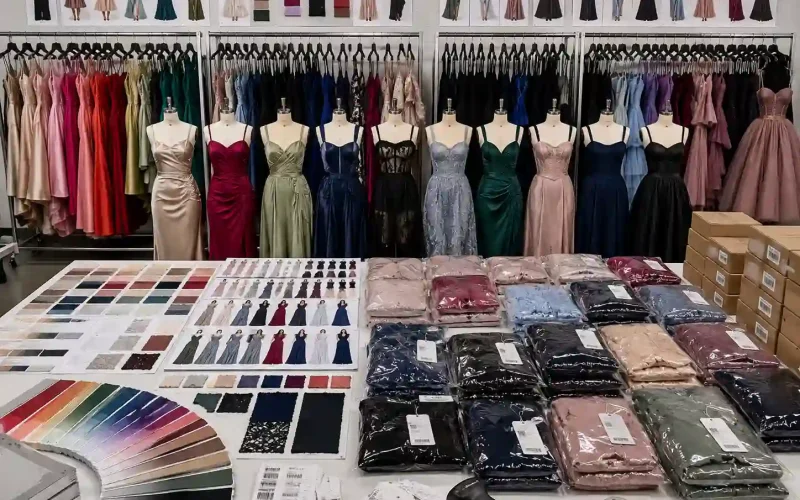
A 10-30 style order becomes manageable when product, material and launch logic are organized before sampling. Jinfeng groups the work so approvals, factory allocation and packing data remain connected across the full collection.
Assortment Architecture Before Sampling
The first review separates hero styles, core commercial dresses, supporting silhouettes and possible repeat-order products. Length, occasion, fabric, construction and target price are compared across the line sheet. A collection containing satin minis, mesh bodycon dresses, lined maxis and knit midis should not follow one identical sample or production route. Style grouping helps the team identify which garments need early fit validation, which need fabric testing, which require special trims and which can move through a more direct development path.
· Hero styles: prioritized for visual impact, photo samples and launch content.
· Core volume styles: reviewed for stable materials, size consistency and repeatability.
· Complex styles: scheduled with additional pattern, trim and sewing validation.
· Replenishment candidates: built around records and material directions that can be sourced again.
Fabric and Construction Grouping
Grouping styles by fabric family reduces uncontrolled variation and improves material planning. Satin styles can share color and shine-direction controls; mesh styles can share transparency and lining decisions; stretch styles can share recovery and measurement methods. Construction grouping also guides factory allocation. Corset structures, hand-applied details and lined evening dresses need different operators from clean jersey or simple woven dresses. Each group receives its own PP reference, critical QC points and packing precautions rather than a generic factory note.
- Material grouping: composition, weight, color lot, stretch, drape and transparency.
- Construction grouping: lining, boning, ruching, zipper, lace placement and decoration.
- QC grouping: measurement points, surface defects, symmetry, seam handling and packing protection.
Launch Priority and Production Waves
Marketplace launches often benefit from a controlled sequence instead of waiting for every style to finish together. Priority styles, campaign colors or core size ranges can be prepared first when the order plan, materials and inspection method support split delivery.
Remaining styles can follow in a planned wave. SKU and carton separation must stay exact, and every shipment needs a matching packing list. A split plan is confirmed before production so rushing one group does not weaken inspection on another.
From Dress Brief to Marketplace-Ready Delivery
Project Review
Assortment Plan
Fabric and Cost
Pattern Development
Sample and Fit
PP and Bulk Plan
QC and Packing
Shipment and Records
Samples That Support Product Launch Decisions
First Sample
Tests the initial structure, fabric direction, basic fit and sewing feasibility.
A first sample identifies development issues; it is not automatically the bulk standard and may use provisional material when final fabric is unavailable.
Fit Sample
Focuses on bust, waist, hip, length, straps, armholes, neckline, back coverage, slit height and jumpsuit rise when relevant.
Fit comments and measurements are translated into pattern and size-chart revisions.
Revised Sample
Confirms agreed corrections to pattern, measurements, fabric, trims or construction.
Revision records identify what changed, who approved it and whether another review is needed before PP preparation.
Photo-Ready Sample
Salesman Sample
Used for internal sales meetings, showroom review, wholesale presentation or range decisions.
Quantities and timing are planned separately from bulk so sales samples do not disrupt PP and production-critical work.
PP Sample
Confirms final fabric, trims, pattern, size, construction, label placement, packing direction and approved workmanship before bulk production.
Unresolved changes after PP approval require written review because they can affect price and schedule.
Golden Sample
Acts as the highest-priority physical reference for sewing, final inspection, repeat orders and dispute review.
The approved version is linked to pattern, measurement, material, sewing and packing files.
Timing and Priority
Sample timing is confirmed after style complexity, material availability, trim development, color approval and revision scope are reviewed. Complex corset, lace, sequin, custom-color and custom-trim styles need more development than clean jersey or woven styles. Multi-style programs use priority tiers so campaign and fit-critical samples move first.
Size Control for Lower Marketplace Fit Risk
Size accuracy is built through linked records rather than a final inspection alone. Pattern, fabric behavior, cutting, sewing and measurement checks must all follow the approved size system.
Control Point | What Jinfeng Reviews | Marketplace Operations Value |
Base Size | Approved body and garment measurements, intended fit and reference sample. | Establishes one defined fit target before grading. |
Grade Rules | Size-to-size progression for bust, waist, hip, length and style-specific points. | Keeps the size range proportionate rather than simply enlarging every area. |
Pattern Version | Final pattern identification and revision status before cutting. | Prevents old or unapproved patterns entering a later batch. |
Fabric Behavior | Stretch, recovery, shrinkage, drape, weight and relaxing requirement. | Reduces measurement drift caused by material behavior. |
Critical Points | Bust, upper bust, under bust, waist, hip, front/back length, strap, armhole, neckline and slit. | Links size data to the areas most likely to affect fit reviews. |
Cut-Panel Check | Panel dimensions, grain direction, symmetry and bundle identification. | Finds size and cutting errors before sewing adds value. |
In-Line Measurement | Selected key points during sewing and first output from the line. | Allows correction before a complete batch is finished. |
Final Tolerance | Finished measurements against the approved, style-specific tolerance. | Creates a clear pass, repair or rejection decision. |
Golden Sample | Appearance, proportion, construction and measurement comparison. | Supports consistent QC and future replenishment. |
Repeat-Order Review | Pattern, fabric, color, size range and prior QC notes before restart. | Protects continuity while recognizing changes between batches. |
Tolerance is confirmed by style, fabric and construction. Stretch bodycon dresses, structured corset styles and bias-cut satin dresses cannot share one generic measurement rule. Jinfeng records the approved method before bulk release and rechecks any fabric or size-range change that can alter fit.
Fabric Risks That Affect Online Dress Performance

Satin Direction
Mesh Transparency

Lace Placement

Jersey Recovery

Sequin Protection

Velvet and Pile
Construction and Workmanship Built for Repeatability
Seams and Closures

Lining and Support

Ruching and Draping

Pressing and Finishing
SKU and Variant Accuracy Before Shipment
Marketplace operations depend on a clean match between garment, label, barcode, unit pack, carton and packing list. Jinfeng follows client-provided mapping files and verifies the physical execution before shipment release.
Data Field | Required Input | Factory Verification |
Style Number | Approved style code and PO reference. | Matched with garment, label, packing instruction and carton record. |
Color | Color name, code and approved swatch or standard. | Checked against garment, size/color sticker and packing list. |
Size | Approved size range and size-label artwork. | Verified on garment, unit pack and carton breakdown. |
SKU | SKU mapping by style, color and size. | Cross-checked before label application and during carton packing. |
Barcode | Approved barcode file and symbology requirement. | Print clarity, content and scan readability checked before use. |
Hangtag | Artwork, attachment method and placement. | Content, placement and connection to the correct variant verified. |
Polybag | Bag size, warning text, sticker and folding guide. | Garment fit, label visibility and pack cleanliness reviewed. |
Pack Ratio | Quantity by color, size and carton. | Physical counts compared with carton breakdown and packing list. |
Carton Mark | PO, style, color, size, quantity, destination and mark layout. | Mark content checked before sealing and shipment photos. |
Warehouse Label | Client warehouse guide and approved label file. | Placement, legibility and carton association checked by project. |
Platform-specific EDI, ASN, SSCC, routing portal or warehouse rules are reviewed by project. Jinfeng does not assume one format fits every channel. The brand provides the current guide, and the team confirms what can be executed before labels or cartons are produced.
Ecommerce-Ready Packing for Branded Dresses
Brand and Size Labels

Care Labels
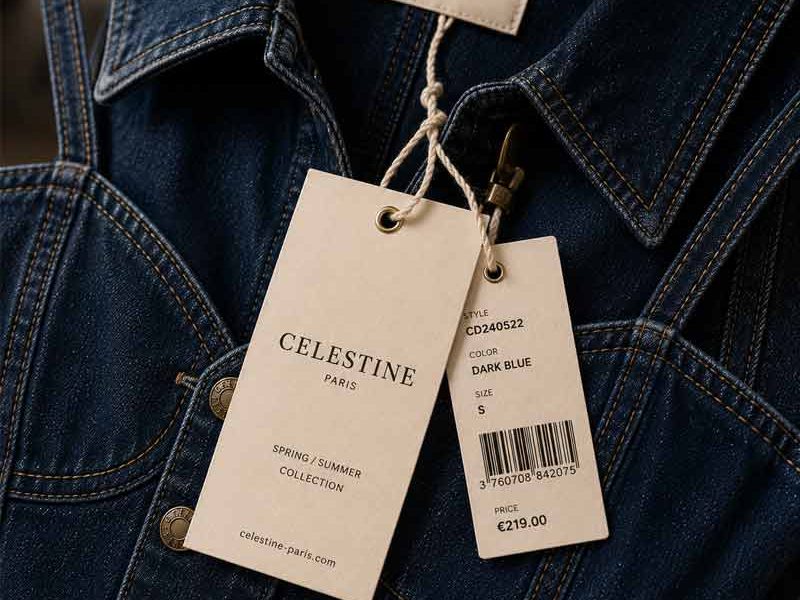
Hangtags
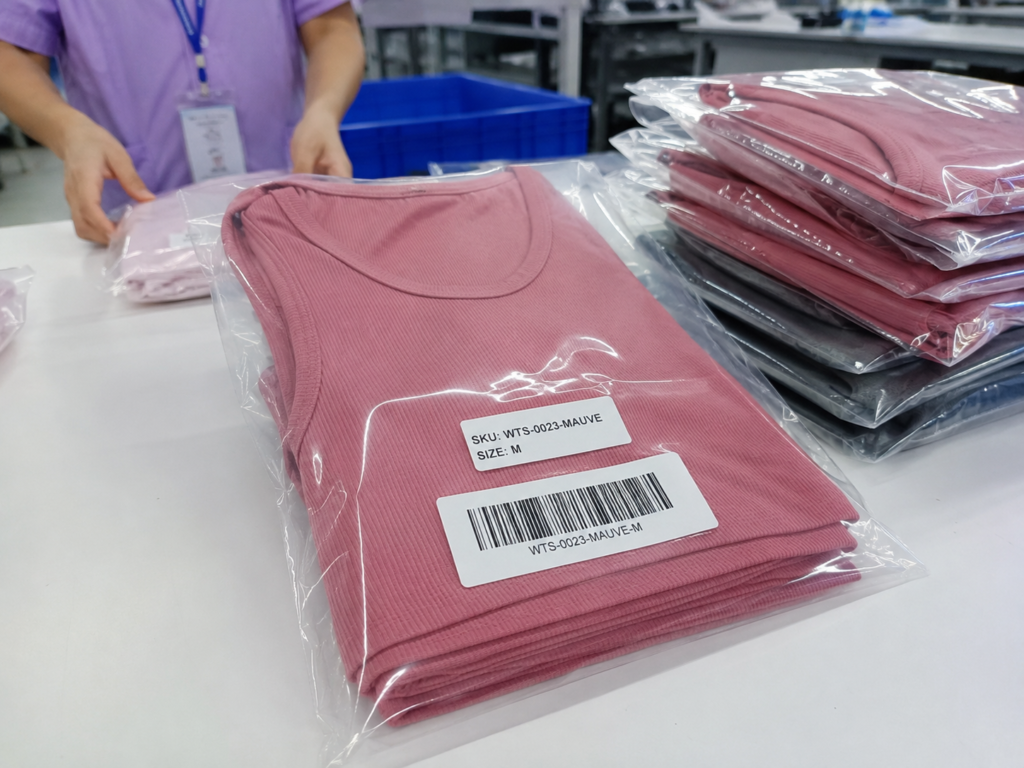
Barcode and SKU
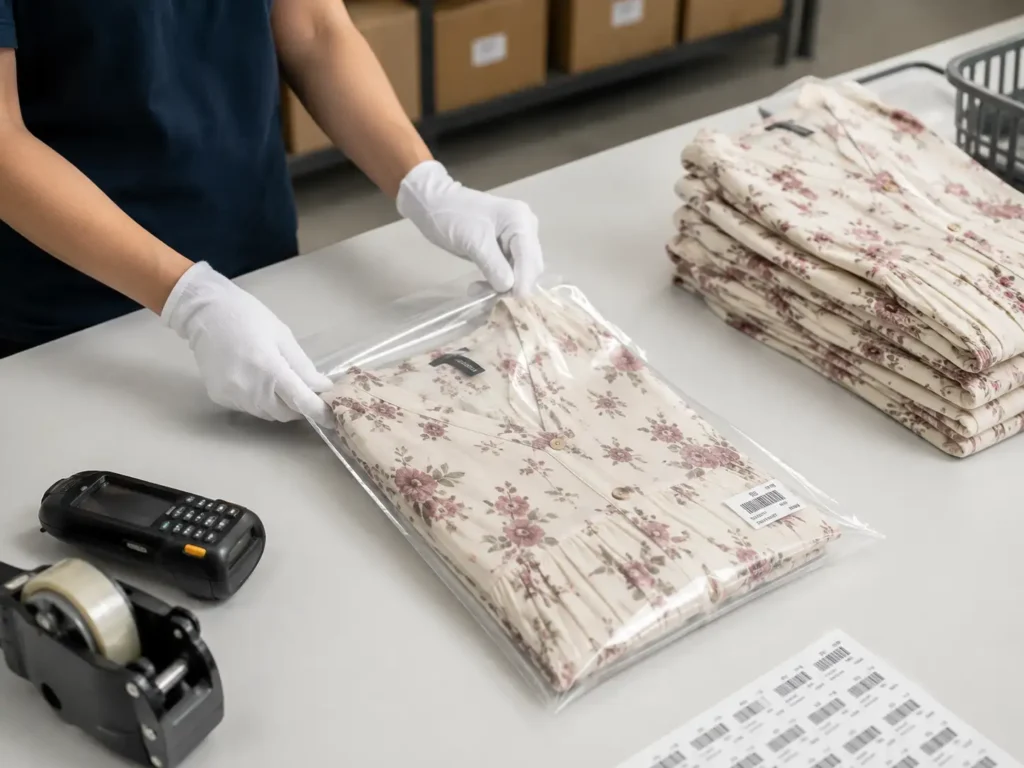
Individual Polybags
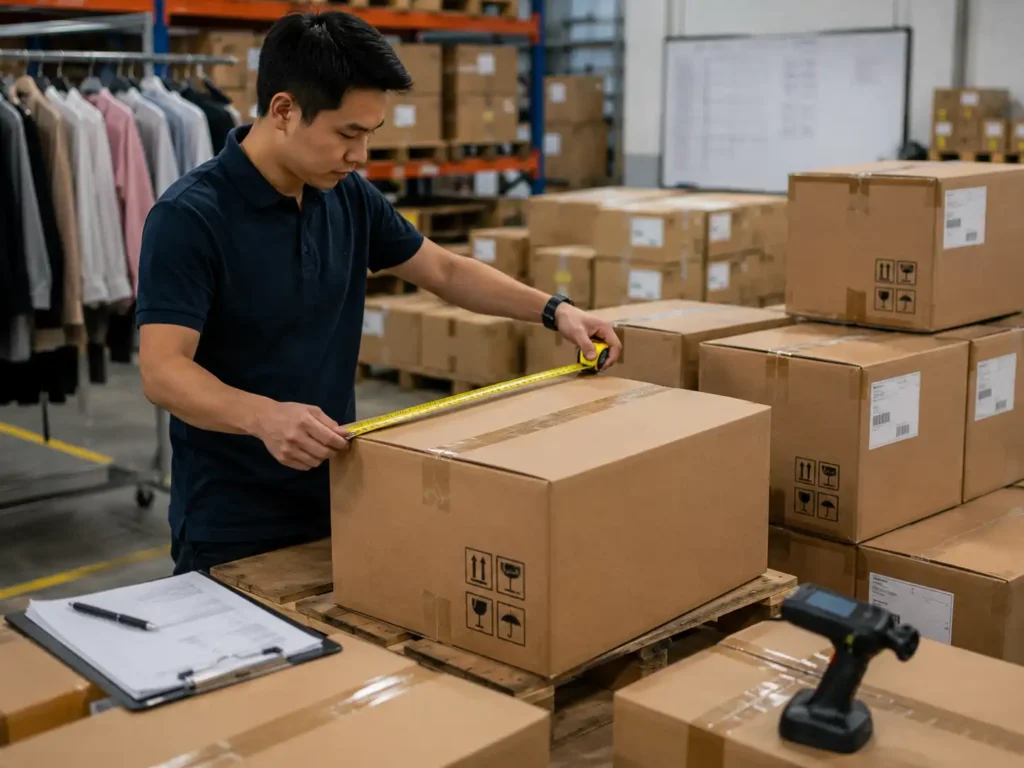
Cartons and Warehouse
Quality Checks Before Dresses Reach Your Warehouse
Quality control begins before cutting and continues through packing. Jinfeng links material, construction, measurement and variant checks so defects are found at the stage where correction remains possible.
Material and Pre-Production Approval
Bulk production does not begin until the required PP standard, fabric, trims, color, size chart, labels, packing, BOM, production order, sewing instruction and quality points are approved. Fabric inspection reviews visible defects, color lot, width, hand feel and relevant stretch or shrinkage concerns. Trims are checked for type, color, size, function, comfort and bulk availability. Any late change is assessed for cost, schedule, pattern and sample impact before release.
Cutting and Sewing Control
Fabric is relaxed when required, then cutting follows the approved pattern version, grain or shine direction and size marker. Cut panels are checked for identification, symmetry, placement and visible defects. Sewing control begins with first output and in-line review. Critical points include seam method, zipper, lining, support construction, ruching, lace or mesh placement, decoration security, measurement and garment balance. Problems are corrected before the full quantity moves forward.
Final Garment Inspection
Finished garments are reviewed for measurement, workmanship, appearance, pressing, stains, thread ends, closures, lining, decoration, symmetry and comparison with the PP or Golden Sample. AQL inspection can be coordinated according to the agreed project requirement, and brands may arrange their own inspection. Products requiring repair are separated, corrected and rechecked; unresolved issues are not hidden inside packed cartons.
Packing and Shipment Release
Packing QC checks brand label, size label, care label, hangtag, SKU, barcode, sticker, folding, polybag, carton quantity, carton mark and packing-list consistency. Shipment release also requires aligned commercial documents and freight instructions. Testing, compliance documents and special market requirements are reviewed by product, material, destination and the actual factory handling the order; unverified certificates are never treated as automatic coverage.
Managing Multi-Style Dress Production at Scale
Large programs need allocation and control, not a single capacity claim. Jinfeng plans production around product category, material, complexity, quantity, approval status, packing work and required shipment sequence.
Factory Allocation by Product
Six owned women’s fashion factories and more than 10 long-term production partners provide a wider production base, but allocation remains selective. Woven dresses, stretch knit dresses, structured corset styles, lined occasionwear and embellished products require different line experience. Jinfeng reviews the style package and assigns approved groups according to capability, capacity and quality requirements. Satellite partners are not presented as owned factories, and project control remains connected through merchandising, PP standards and QC instructions.
Line Planning and Capacity
lines and 6+ flexible lines support multi-style programs, production waves and repeat-order batches. The combined monthly capacity exceeds 100,000 pieces, while actual program capacity depends on complexity, material supply, color and size splits, line changeover, inspection and packing.
Complex dresses are not calculated at the same output as clean basic styles. Capacity is reserved after the key specifications and launch plan are clear.
Project Tracking and Escalation
A 12+ person merchandising team tracks material, sample, revision, PP, production, QC, packing and shipment milestones. Progress updates are linked to action: late fabric, failed color approval, unresolved fit comments or incomplete barcode files are reported with the effect on the next milestone. Mature programs need transparent constraints more than optimistic promises. Kelly coordinates the initial brief and routes the project to the relevant development, production and logistics functions.
Finishing and Packing Resources
Thirty-plus finishing and packing workers support thread trimming, pressing, appearance review, folding, hangtags, stickers, individual polybags, carton packing and shipment preparation. Packing workload is planned with the order, especially when the program contains many SKUs, multiple warehouse destinations or detailed labels. Final capacity therefore includes the time needed to identify and pack units correctly, not only sewing output.
Repeat Orders Without Rebuilding Every Detail
Replenishment works faster when approved product knowledge remains accessible. Jinfeng retains development and production references while rechecking variables that may change between batches.
Records Retained for Reorders
Pattern files, size charts, grade rules, BOMs, fabric references, color records, trim specifications, sewing instructions, label files, packing requirements, QC notes and Golden Sample references can be retained for approved programs. The records reduce repeated explanation and help new production teams understand the original standard. NDA-based handling protects unreleased designs, quantities, pricing, packaging files and supply-chain information.
Changes That Need Reapproval
A repeat order is not treated as a blind copy when conditions change. A new color, replacement fabric, extended size range, different trim, revised care label, new warehouse guide, changed pack ratio or long gap between orders can affect fit, cost, MOQ and schedule.
Jinfeng identifies the changed variables and confirms whether a fabric swatch, lab dip, revised sample, PP sample or packing sample is required.
Replenishment Priorities
Core colors, priority sizes and high-performing styles can be planned as a distinct production wave when material supply, line availability and inspection capacity support the request. Split shipment may release urgent units by air while the balance moves by sea. SKU and carton separation are planned before packing, and every shipment keeps a matching packing list and destination instruction.
Seasonal Extension
A successful pattern may be extended into a new color, length, fabric or related silhouette, but each extension is reviewed as a product decision rather than a casual copy. Changes in stretch, weight, transparency, shine or lining can alter the pattern and measurement standard. Long-term cooperation therefore combines retained records with disciplined reapproval.
Shipping and Warehouse Handoff Support

Urgent Air Freight
Air freight can support launch quantities, campaign-related stock, priority colors, core sizes or urgent replenishment. The shipment plan confirms which SKUs move first, how cartons are separated and whether the packing list matches the partial quantity. Cost and feasibility depend on destination, volume, chargeable weight, season and flight availability.

Planned Sea Freight

Air and Sea Split
A split plan can move a controlled first wave by air and the main quantity by sea. Hero styles, best-selling colors or priority sizes may be selected, while the remaining assortment follows later.
SKU, carton, document and destination separation must be confirmed before packing so one shipment does not create errors in another.

Forwarder and Documents
Jinfeng can work with a brand-appointed forwarder or provide logistics options for review. Supported documents and information include commercial invoice, packing list, carton details, marks, bill of lading or air waybill coordination, certificate of origin by request, HS-code support, warehouse labels, pickup coordination and shipment tracking. DDP is evaluated by project, destination and cargo conditions.
Dress Programs Managed from Sample to Reorder

18-Style Launch Program

12-Style Fit Recovery
A mature online womenswear label moved a 12-style, 25,200-piece program after repeated fit variation from a previous source. The range included bodycon minis, corset midis and lined maxis. Jinfeng reviewed base-size measurements, grade rules, pattern versions and stretch behavior, then rebuilt fit and PP references for the most sensitive styles. In-line measurement focused on bust, waist, hip, length, straps and slit height. Final packing used separate color-size ratios and retained measurement and Golden Sample records for replenishment.

27-Style Seasonal Reorder
Frequently Asked Questions for Marketplace Dress Programs

Review Your Marketplace Dress Program
Send Jinfeng Apparel the working files behind your dress program for a structured feasibility review. A clear brief allows the team to assess fabric direction, pattern and sample work, production allocation, MOQ, private-label packing, warehouse requirements and delivery planning before a formal development or quotation route is confirmed.
- Tech pack, line sheet, original sample or reference images
- Style count and quantity per style and color
- Color plan, size range and preferred size ratios
- Fabric, lining, trim and construction requirements
- Target launch date and required warehouse window
- SKU mapping, barcode files and platform or warehouse guide
- Brand label, care label, hangtag and polybag artwork
- Destination, forwarder details and expected replenishment plan